

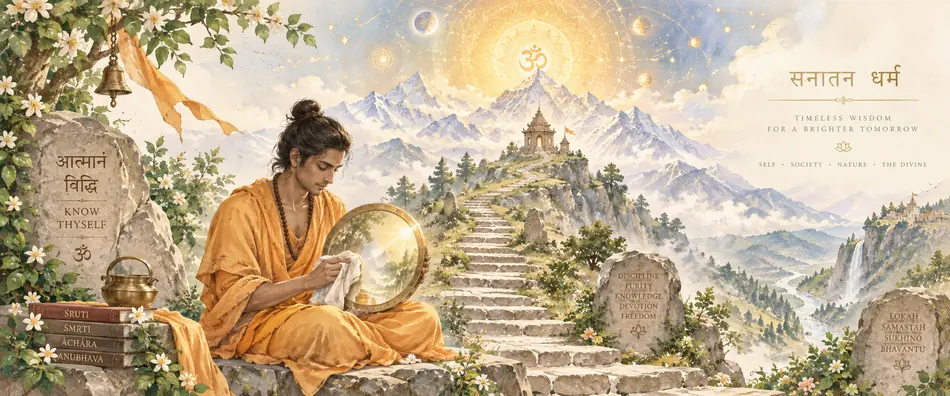
There are special instructions on how to chant the mantra “Om,” which sounds to focus on, what it means to fold one’s hands in this way, and why it is done so. All these are mysteries and secrets. Everything we do is a great secret that you have yet to unravel. For example, when we fold our hands, the lunar and solar channels close at the level of the heart, and we enter contemplative presence. There are an enormous number of secrets in spiritual life and spiritual practice. It is mystery upon mystery, nothing but mysteries. These are very profound things, and they are to be unraveled in the course of practice. The entire Universe is a mystery because the Universe is divine. To walk the spiritual path is to unravel the mysteries of the Universe. Masters know these mysteries, which is why communicating with them is always very valuable.
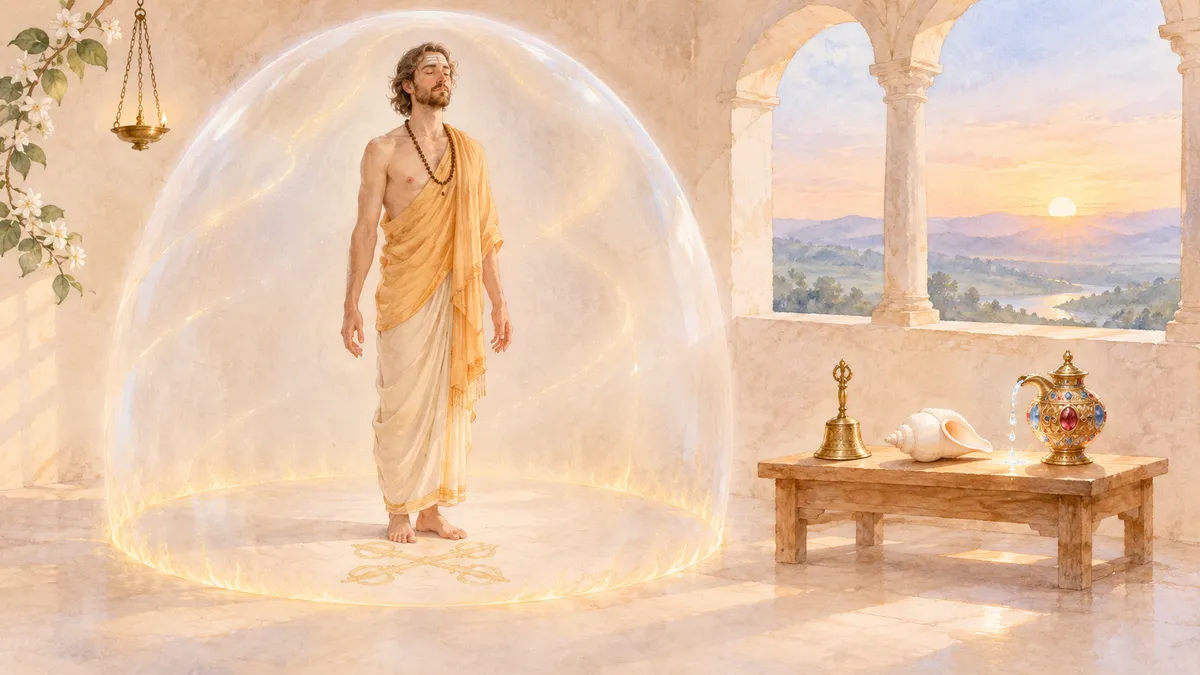
In the same way, you can purify the space by imagining a bell in your right hand and mentally ringing it. When we do this, all the devatas, the pure spirits, are invoked and purify the space by their very presence. This already belongs to the section of secret practices that will be given during initiation (samskara diksha). But to some extent, since you are here and there is a connection between us, you may do this.
Then, once you have purified the space in this way, you can also imagine a conch shell in your right hand and imagine that you are blowing into it. A wondrous, beautiful sound of “Om” emanates from the conch, not merely the sound of a conch shell. This also purifies the space. Then you should imagine in your hand a precious vessel filled with medicinal potions and a wondrous elixir of immortality, as best you can. Pouring a few drops of water from it, sprinkle the area around you. Your visualization has power if you believe in it. If you receive the transmission and consolidate this visualization, it begins to work, and you can actually do this. In this way, we prepare the place for the transmission of the Dharma.
Then you should imagine a large dome like this one, only white and pure. At its base is a crossed vajra, the golden weapon of the god Indra. They are all supported by these vajras. Imagine that we are in the Pure Land at the summit of Mount Meru, and imagine the Guru in the form of Bhagavan Dattatreya. If you do not know who Dattatreya is or what he looks like, then you can simply imagine him in beautiful, pure garments. Then imagine yourselves in the same way: in divine illusory bodies, in the Pure Land. The entire ground consists of gold and precious stones, the Guru is seated upon a golden throne, and you are seated upon lotuses. Your illusory body is divine, the Guru’s body is divine, and the action takes place in a pure dimension. And seal this circle. Around this magical vajra pavilion, create a circle of flames and light that protects it. Thus, we have purified the place.
Invoking the Blessing of the Refuge Tree
After purifying the place, you can invoke the blessing of the Refuge Tree. Of course, this is if you have taken Refuge. Even if you have not formally taken Refuge, but Refuge is present in your heart and you have faith, you can use visualization to invoke the blessings of the lineage.
How is the blessing of the Refuge Tree invoked in our lineage? I do not know how it is done in other lineages, but I know exactly how it is done in ours. You can imagine a radiant sphere above, symbolizing the Absolute, Parabrahman. Below it are the three deities: Brahma, Vishnu, and Shiva—the three fundamental forces of the Universe. Even lower are the four Kumaras, the eternal youths and celibates: Sanaka, Sanatana, Sanandana, and Sanat Sujata—those who, despite Brahma’s command, refused to enter the material world, become Prajapatis, the progenitors of the Universe, and propagate humanity, because they wished to remain forever pure and divine.
Below the four Kumaras are the seven rishis of the Vedic tradition, the founders of the Vedic tradition of Sanatana Dharma, who are revered in every spiritual school: Vasishtha, Vishvamitra, Gautama, Jamadagni, Kashyapa, Atri, and Bharadvaja. You may imagine them in radiant bodies, seated in the lotus posture on lotus thrones, unadorned, naked or half-naked. This means that they abide in a dimension beyond the World of Forms, where there are no forms whatsoever. The analogue in Tibetan Buddhism is the dharmakaya. We call these deities jnana-dehas, beings with bodies of wisdom. The deities of the World of Forms wear ornaments. The deities of the Formless World are always depicted naked, without ornaments, pure and empty.
Below the seven rishis, you may visualize Bhagavan Dattatreya, if you know who he is. Still lower, visualize Sri Adi Shankaracharya, the original teacher of Advaita Vedanta. And if you have taken Refuge, you may visualize Guru Brahmananda and your root Guru.
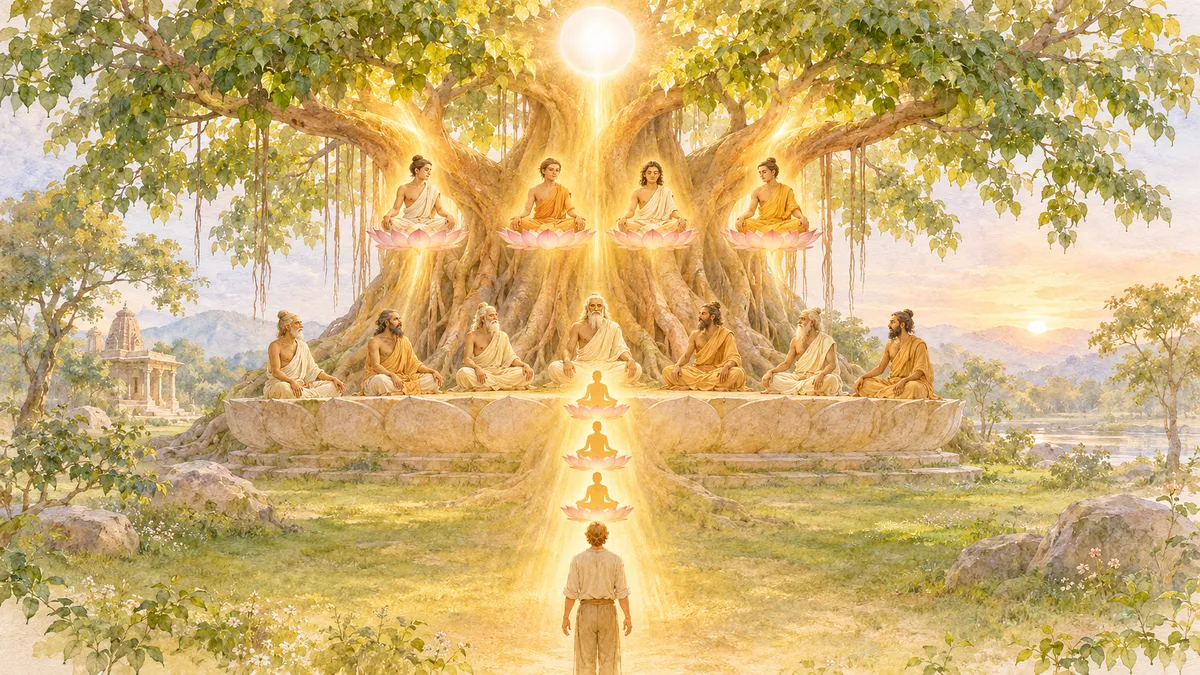
Once you have visualized the Refuge Tree, you should invoke its blessings and cultivate strong devotion to the Refuge. Feel that all the deities and saints are present here and bestow such blessings upon you; establish a channel of connection with the divine energies. They radiate a dazzling light and bless you. They all sing songs of blessing for an auspicious destiny and shower you with a gentle rain of flowers and jewels that fall in every direction.
This is how the Refuge Tree can be invoked. Now that we have generated motivation, purified the space, and invoked the blessing of the Refuge Tree, we are already in a somewhat different dimension. It is precisely in this dimension that one can study the Teaching and receive instructions from the Master; such a dimension is suitable for this.
Receiving Instructions: Three Principles of the Spiritual Path
When we are spiritual seekers and follow the spiritual path, we should strive to receive as many instructions from the Master as possible. We must receive, receive, and receive instructions until they penetrate within. This is a very important period in our lives, because we need to choose the right direction and form the right values.
Receiving instructions is the profession of a spiritual seeker. A spiritual seeker truly exists when they receive instructions. Everything else is unimportant; these moments are what matter, because at such a moment something very important appears in our lives, and something changes. Instructions should be received in the state of an “empty vessel,” with openness, faith, and trust; then they will work. One must not be an unsuitable vessel.
There are three types of unsuitable “vessels”:
An “overflowing vessel”—when instructions cannot be poured in. The Master tells you something, but you are not ready to receive it; you are closed off
A “closed vessel”
An unclean vessel—when something interferes with perception
A seeker tries to avoid these three types. When we begin to receive instructions, this period of life is called shravana, listening. Such a period may last from one to twelve years. We listen and listen, and gradually we comprehend what we hear. During this time, we need to listen and read as much as possible, receive the Master’s instructions, and make this our profession if we want transformation.

The next principle is called manana: we must comprehend all of this, pass it through ourselves, and somehow weave it into our daily lives, into our own life. This is the second principle—manana.
The third principle is nididhyasana, when we must live by this continuously, strive to maintain a certain state of consciousness and awareness without interruption, and continuously abide in bhava. These three golden principles—shravana, manana, and nididhyasana—are the cornerstone of Sanatana Dharma and Vedic philosophy, whether Dvaita, Advaita, or Vishishta Advaita; it does not matter. All these principles are very important. They are also found in Tibetan Buddhism, although they are called by different names.
In the teachings of Laya Yoga, these principles are interpreted in a special way. In conventional teachings, shravana is when the teacher explains the philosophy, manana is when it must be intellectually comprehended, and nididhyasana is the attempt to practice sadhana constantly. In the teachings of Anuttara Tantra, to which the siddhas’ Laya Yoga belongs, however, shravana is above all a process of non-conceptual transmission and natural presence; it is somewhat subtler and deeper. Manana is when you discover this transmission within yourself by generating the principle of awareness. Nididhyasana is when you continuously maintain non-conceptual awareness—that is, a mind wide open like the sky—while standing, sitting, lying down, and in every aspect of daily life.
Nevertheless, we will begin with concepts, because non-conceptual transmission is not so easy to grasp.
The Five Qualities of the Jiva and Their Corresponding Energies
We can consider five qualities of the jiva, the soul. The jiva is our soul, our subtle body. It possesses certain qualities or states:
Jagrat — the waking state, when the mind, as it is now, comes into contact with external reality
Svapna — sleep with dreams, when direct contact is absent and the process of perception takes place at the subconscious level
Sushupti — dreamless sleep. In deep sleep, the mind exists at the unconscious level. It is at rest, without experience; there are no vikalpas, no modifications of the mind
Turya or Chaturya — that which lies beyond dreamless sleep
Turyatita — that which transcends the four. This is absolute abiding in Brahman, the transcendent, the experience of Aham Brahmasmi
Each state corresponds to a particular type of energy. If we activate this type of energy in the body, we are able to enter this experience, this state:
The waking state corresponds to prana
Sleep with dreams corresponds to apana-vayu, the downward-moving wind in the area of the knees
Dreamless sleep corresponds to samana, located in the navel area and responsible for digestion
The fourth state, the formless state of Nirvana, corresponds to turya, udana-vayu. If we practice concentration and visualization here, we activate this wind and enter a state close to it
The fifth state, turyatita, absolute identity with Brahman, corresponds to the energy that pervades the entire body, vyana-vayu, the aura
The task of spiritual practice is to realize all the dormant qualities of the jiva. The soul possesses these qualities and these states, but they have not been awakened and are inaccessible; only jagrat, the waking state, is accessible. The other four—svapna, sushupti, turya, and turyatita—are inaccessible. Mastery of these pranas provides the key to realizing them.

The Path of Samadhi and the Unique Method of Laya Yoga
How can this be done? One must pass through several types of samadhi: savikalpa samadhi, nirvikalpa samadhi, and sahaja samadhi.
What does samadhi mean, and how can samadhi be attained? Samadhi cannot be attained simply by reasoning about it. Samadhi is preceded by a profound experience of dhyana. If you can remain in dhyana for twenty-nine minutes, you can enter samadhi. Dhyana is meditative absorption. If you have a profound ability to enter dhyana, samadhi comes by itself.
How can dhyana be attained? Dhyana must be practiced and cultivated through concentration. This is the usual traditional path for realizing our five inner qualities of the jiva (soul).
But Laya Yoga, as the principle of the highest tantra, Anuttara Tantra, also has another, secret or hidden path. It says that you can follow not only the path of savikalpa, nirvikalpa samadhi, and sahaja samadhi; you can proceed directly to sahaja samadhi, bypassing exercises in dhyana, if you learn contemplation and do not become absorbed in dhyana, but instead maintain contemplative presence at the level of access concentration. If you become a master of contemplation, you can arrive at sahaja samadhi. This is the unique path of Laya Yoga.
Where does this path of Laya Yoga begin? It begins when we receive from the Master an introduction to the View and the nature of Mind, followed by direct introduction and then methods for maintaining contemplative presence, practicing this throughout our lives.
The Nature of Mind as a Mirror
What, then, is the nature of Mind? The nature of Mind can be compared to a mirror. This mirror possesses primordial purity and perfection. Yet there is dust on it, various impurities and various vibrations. Therefore, we cannot clearly see the essence of this mirror. We can see what is reflected in it, but we cannot see the surface of the mirror itself. We seem to overlook the surface of the mirror itself and see the objects that are reflected in it. We then attach great importance to those objects. We think they are real. In fact, there is nothing in the mirror, no objects at all; it is all an illusion. Only the surface of the mirror is real. Here we may see a tent and grass, but in reality there is no tent. It is an optical illusion. But when we do not understand this, we try to establish a connection with the objects inside the mirror while ignoring the mirror itself.
The nature of reality is the same. We ignore the nature of Mind, the primordial foundation of all existence, the foundation of the Universe, yet we become attached to objects that are unreal. We fail to recognize the mirror of our mind.
The Three Impurities of the Mirror of the Mind
Why do we fail to recognize it? Because there are certain impurities on this mirror. In the tradition, these impurities are called mala, vikshepa, and avarana:
Mala is as if there were a thick layer of dust here. This layer of dust does not conceal the objects; it conceals the mirror itself. These are our recollections, the memory of the subtle body, samskaras, and impressions from past lives. When we look at the world, we look through the impressions of past lives. We look through memory. Our perception is already conditioned. We do not look at the world as it is, like a child, without evaluations or judgments; we immediately impose our own assessments and projections
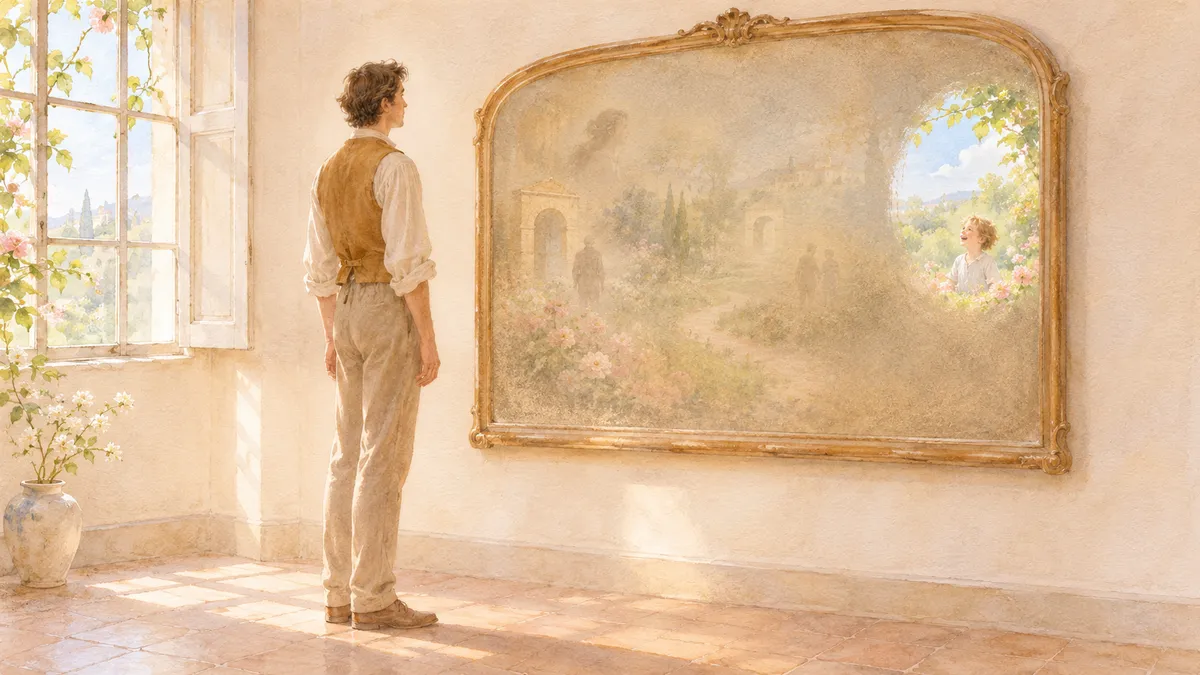
Vikshepa is as if the mirror were constantly vibrating, preventing us from clearly seeing its surface. This occurs when our mind is restless. Our mind is constantly in rajas, rushing about, and we are unable to recognize its nature
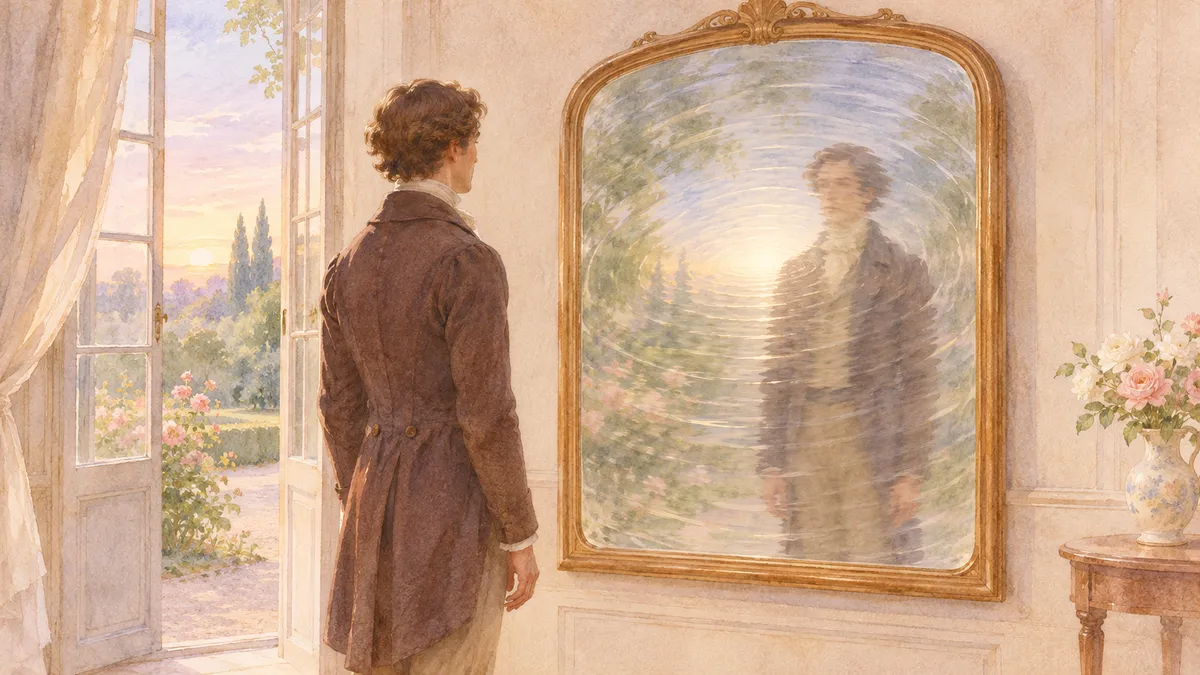
Avarana is as if there were yet another veil completely covering the mirror. These are various obscured states: kleshas, anger, ignorance, attachment, lust—everything that conceals our true nature altogether
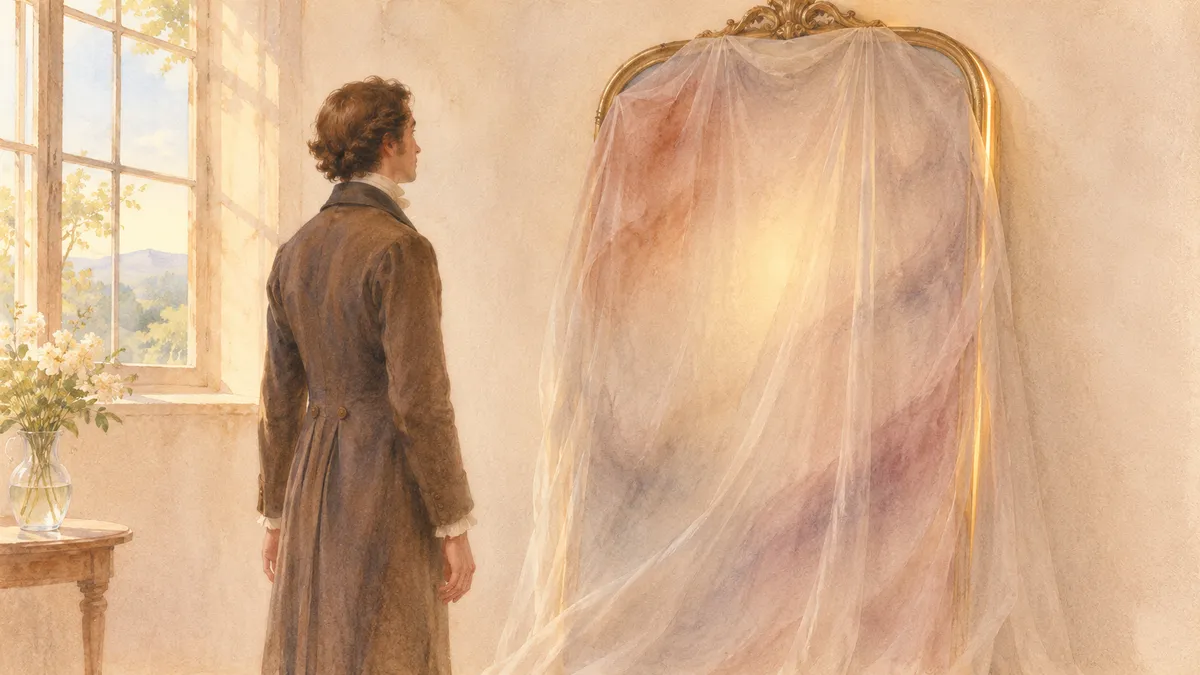
We all possess an enlightened nature. But because of these three limitations, it is completely concealed. It is as though we possess it and yet do not possess it at all. Therefore, we cannot make use of it and cannot be happy. We do not control our life or rebirth. We are like a poor man who possesses a precious gem but cannot buy anything with it; he does not even know that it exists.
The Immutable Nature of Enlightenment
But in fact, our enlightened nature has always existed. It cannot be tainted by anything. Suppose the Buddha is reflected in this mirror, and after the Buddha a dog or a pig is reflected in it; the mirror will reflect the Buddha, the dog, and the pig equally. This will not alter its nature in any way. It will not say, “I will reflect the Buddha, but I will not reflect the dog.” It naturally reflects all objects. In the same way, our consciousness reflects all the phenomena of this world without limitation.
Or, for example, one object may be reflected in this mirror, followed by a billion objects or ten billion objects; the mirror will not grow tired or become soiled. It is not stained by anything. In the same way, our nature of Mind can reflect countless objects, yet it is never obscured or stained. It always exists. It is immutable, it exists right now, and it does not depend on our efforts. We do not create it through our efforts.

The Role of Effort on the Spiritual Path
So what do our efforts accomplish on the spiritual path? On the spiritual path, our efforts remove limitations, obscurations, and impurities. Our efforts are necessary. If someone tells you that no effort is needed, stay away from that person—unless they clarify that this applies to the view, not to conduct. Otherwise, you may waste your life. Effort is necessary. Sadhana is necessary, tapasya is necessary. But do not think that through effort you will attain Enlightenment or create Brahman within yourself. It cannot be created. It exists before you.
Through your efforts, you can remove the dust, remove the veil. That is what you can do through effort. Your efforts work on everything that stands in the way. But beyond that, your efforts no longer work. The divine principle of grace and blessing comes into play. There is nothing more you can do there; it is no longer your concern. Your efforts serve only to remove all impurities. Then other divine forces come into play: they take you up and bless you when you are sufficiently prepared.
Thus, effort is indispensable, yet Enlightenment cannot be attained through effort. Such is the paradox. If we rely solely on effort, we are mistaken. If we rely on the opposite extreme, non-effort, we are also mistaken. We will not be able to purify and transform ourselves. So we make efforts, while knowing that awakening comes through blessing.
Types of Behavior Among Spiritual Seekers
There are several types of behavior among spiritual seekers. The first type is called the “bee” behavior. Just as a bee flits from flower to flower collecting nectar, so at this stage the spiritual seeker searches for truth in various sources.
The second type of behavior is called the “dove” behavior. A dove begins building a nest for itself out of various twigs and feathers, creating a place to live. This is the stage when a person prepares for something and accumulates merit. For example, if we wanted to go to India, we would immediately get down to business: we would discuss visas, passports, money, the route, where to stay, and so on. We need to prepare in practical terms. If we only read about India, we will never get there; we need to make preparations, obtain tickets, and so forth. Likewise, in spiritual life, the “dove” stage is when a yogi prepares a place for retreat, builds up potential, develops qualities within, purifies themselves, and performs foundational practices.
Finally, the third type of behavior is the “deer” behavior, like a wounded deer hiding in the forest. The “deer” behavior is when, for a time, one must hide from everything: from the entire world, from all conversations about spiritual life, from all people, and even from oneself. One must go inward, very deeply, and find one’s true Self. Because if this is not done, everything will remain on the surface. It need not be for an entire lifetime, but at least for a while. This is the “deer” behavior. Monks who practice the “deer” behavior do so for one week every month, for three months every year, and for an additional three years over the course of twelve years. This is a very important type of behavior, regardless of whether one is a monk or a layperson. If you are able to spend some time in solitude somewhere outside the city, for one or three days, observing silence, that is very good. Do not communicate with anyone; focus entirely on sadhana, contemplation, and meditation. Then increase the duration and frequency of such periods, so that afterward you can return to the world and continue your contemplation.

Stages of Deepening the Practice
When you practice in this way, the next stage is the stage of the “mute.” The “mute” means that you not only observe mauna, but your mind is silent as well. You have realized the non-mental, non-conceptual state.
When you recognize this non-mental, non-conceptual state for a long time, the stage called the “madman” arrives. This means that you break through beyond the mind, outside the mind. It does not mean that you go insane. The Guru’s guidance is very important here. Because if you try to do this on your own, it may not end well. You should not think that you can do it by yourself. This can lead to undesirable outcomes. “Instead of deities, orderlies may come with straitjackets,” as one Master said.
The life of a hermit harbors many dangers and pitfalls. Anyone who undertakes a retreat must receive blessings for it, consult with the Master, and receive guidance. I am referring to extended retreats. If you are going away for three days, there is no problem. I am talking about one year, three years, about serious, intensive sadhana. Here, a connection with the Master and direct guidance are important. Those who do not practice are unaware of this, while those who do practice know it very well. They know: expect temptations, expect delusions. This is described very well in the Christian tradition. A hermit, a powerful meditator, is always surrounded by temptations, demons, and delusions; they are always nearby. Great vigilance is required to overcome all of this.
When he passes through this and becomes established in the non-mental essence of mind, he moves on to the next stage, the stage of the “lion.” He realizes Enlightenment and can freely express his enlightened nature, like a lion. As they say of the Buddha, he roared like a lion before the assembly. This is typically the conduct of teachers who have realized Enlightenment and go out into the world.
Finally, the last stage of conduct is the stage of the “pig or dog,” when everything must be regarded with equanimity: bad and good, benevolent and evil, pure and impure. Just as everything is the same to a dog or a pig, everything is nondual, everything is absolutely perfect.
These are the stages of conduct that a spiritual seeker passes through in the Tantric tradition of Anuttara Tantra. We begin as the “bee,” but the “bee” is not where it all ends; it is only where it begins. You can proceed further if you have a Master, if you trust him; he will show you all these paths. The main thing is not to remain a “bee” for your entire life. There are various systems that show you how to proceed and where to go. The Teaching primarily consists of the sixteen stages of development of the moon of inner awareness (the teaching of the sixteen kalas) and the seven grounds of wisdom. The seven grounds of wisdom are better known; they belong to the generally accepted Vedic tradition. The teaching of the sixteen kalas belongs to the teaching of Laya Yoga.

When we embark on the spiritual path, it is very important to understand what you are doing, where you are going, and why. The spiritual path is intuitive; it lies beyond logic, concepts, and explanations. Nevertheless, it is better to understand it at the level of the mind as well.
Evolution from Human to Sadhu
A sadhu is one who follows the spiritual path with a clear understanding of where he is going. Our evolution proceeds from ordinary people to sadhus. We strive to become sadhus. A sadhu is one who practices sadhana and has his own culture, ethics, civilization, and path, which he respects. In India, for example, one can see thousands, hundreds of thousands of sadhus. It is an entire civilization of sadhus, an entire culture.
The path of evolution leads from being ordinary people to becoming sadhus. This is because an ordinary person cannot attain Enlightenment. A sadhu can attain Enlightenment; an ordinary person cannot. Because an ordinary person is just an ordinary person. There are different values, meanings, and goals. One must cease to be an ordinary person and become a sadhu-human. A sadhu is a person who follows the path. He is one who seeks something different. Ordinary people seek one thing, while sadhus seek another. These are different values and must not be confused. There is no need to say that ordinary people are bad or sadhus are good; everything simply has its proper place. A duck belongs on the water, an eagle in the sky. A duck is well suited to the water, an eagle to the sky. But you cannot toss a duck into the sky and expect it to fly like an eagle. It must change and become something different. In the same way, if a person aspires to realize awakening, he must first strive to become a sadhu. He should not aspire to become a Buddha immediately; that is impossible. If a person becomes a Buddha while remaining in an ordinary environment of mind and energies, it may not end very well for him. He should first strive simply to become a sadhu.
Stages of Spiritual Evolution
If a sadhu continues to advance along his path, he will become a jnani—enlightened and realized. A jnani differs from a sadhu in that he has realized nondual vision. But this is not the end of evolution either. A jnani also continues to advance in the relative dimension.
Someday he will become a siddha, a perfected being, one who can manifest not only enlightened consciousness but also the fullness of various energies and divine powers: the powers of knowledge, freedom, will, divine authority, and divine action (jnana, iccha, kriya, aishvarya, svatantrya, the fivefold kriya).
But a siddha is not the end of evolution either. As a siddha evolves, one day they may become a deity, a god, a devata. In this world, everything is governed by the gods; everything is subject to them. Not to people, nor to local authorities. The gods are the creators of our world. Therefore, this world is also divine. When a siddha develops their consciousness, they become one of the enlightened devatas. The devatas are the geometers of our Universe, the galactic stellar architects of time and space. These are the next stages of our evolution.
But the devatas, too, are in the process of evolution. When a devata gains sufficient spiritual power, they become Brahma, the Creator, a new Creator of the Universe.
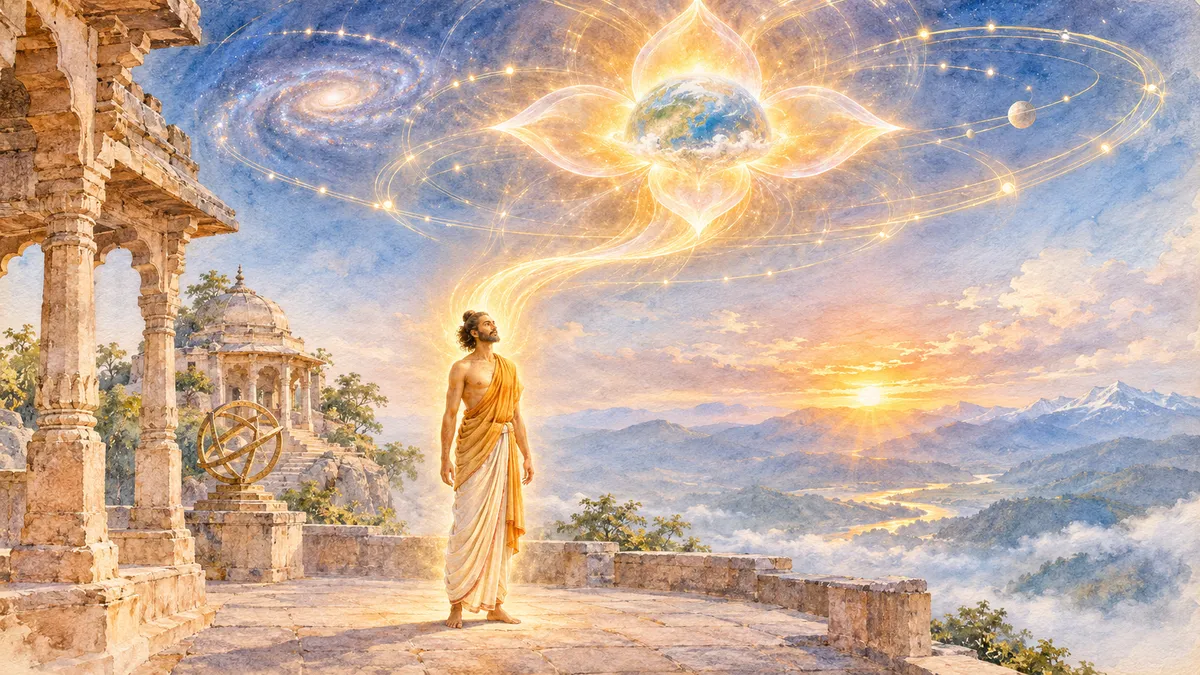
Thus, the path of our evolution is:
from being human to attaining the state of a sadhu
from a sadhu to attaining the state of a jnani
from a jnani to attaining the state of a siddha
from a siddha to a devata, a deity
from a deity to the god Brahma, the Creator
The sixteenth phase of the moon, according to the teaching of the sixteen kalas, is precisely to become Brahma, the Creator. We are all moving along this path. This is the great common evolutionary corridor for all living beings. In this life, we pass through only one particular stage. We should not think that we will achieve everything in this life and that our evolution will be complete. Of course not. Masters, siddhas, and devatas, in the relative dimension, are always moving forward and progressing along the path of evolution. Nevertheless, in this life, by making use of our precious human birth and practicing sadhana, we can make a major breakthrough and achieve a great deal.
The Preciousness of Human Life
Where will our next life take place? That is a major question. What should we buy, what should we wear, how much money should we have in the bank? These are not major questions. They are very minor questions. Where will you live in your next life, in what body, in what status—these are very serious questions. A sadhu is one who reflects on this and remembers impermanence. Everything is being determined right now: how we train our minds, which direction we take, how well we manage to purify ourselves, and what we take refuge in. That is why it is called a precious human life. It is like a launch pad. Life is like an airport: no one stays there for long. But everyone boards some flight and flies somewhere. The preciousness of human life means that we can board a good plane, take a certain flight, and fly to a beautiful place if we choose the right direction.
Two Parallel Civilizations
Humans are a certain class of beings who are deeply preoccupied with this life and the material values of this world. Therefore, they cannot practice sadhana and move toward awakening, because they have different interests and different values. All their attention, energy, and time are consumed by these things. A sadhu has different interests and different values. They are not overly absorbed in consumption; they are absorbed in evolution. Their passion is evolution, evolution, evolution. A true sadhu is an evolution enthusiast. One must become fanatical about evolution.
Humans and sadhus are like two civilizations existing in parallel. Sadhus know that humans exist; humans can only guess that sadhus do. It is like ordinary people and the Yeti. It seems to exist, everyone has heard of it, but no one has really seen it. A mystery. In the same way, a sadhu is a mystery to ordinary people. A sadhu is a mysterious being. It is a being who lives according to the laws of another world. Even if they are not a monk and live in society, they are still already a being walking the path of mystery. They cannot simply be assessed and figured out.
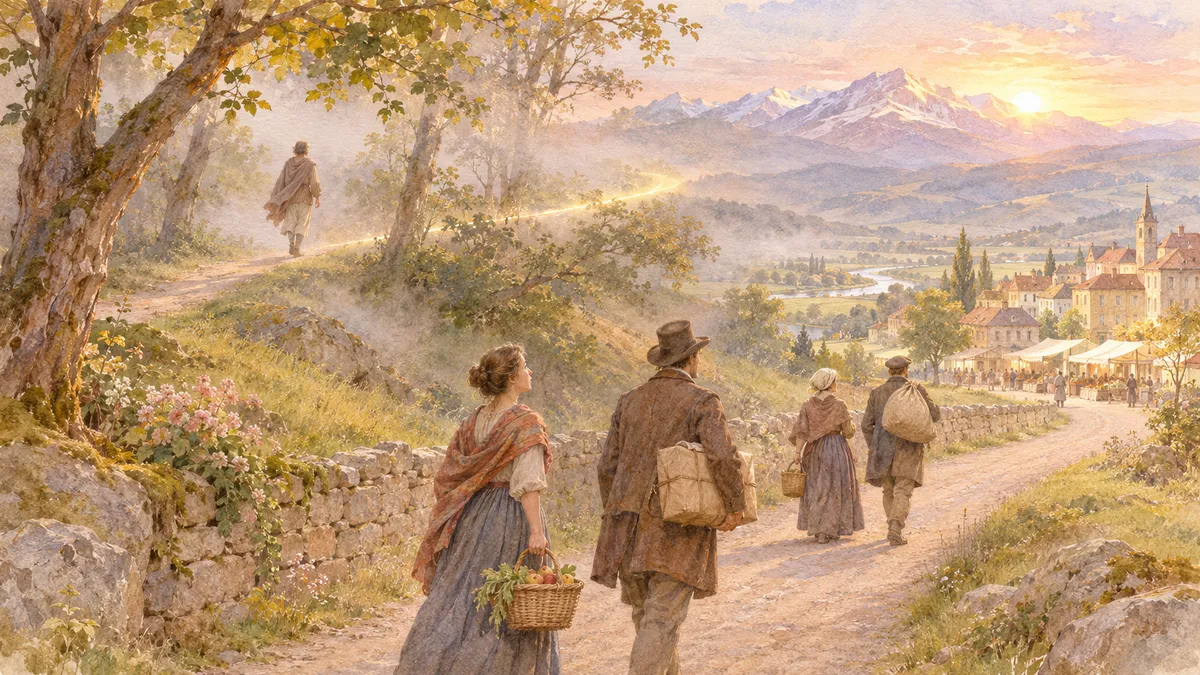
Usually, humans make up ninety-seven percent of the world, perhaps ninety-nine. True sadhus make up one percent. To enter the world of sadhus is to enter the world of a minority. For now, sadhus are a minority on Earth. But sadhus have their own culture, their own civilization, ethics, laws, and way of life.
I wish all of you success in following the path of evolution. From humans to sadhus, from sadhus to jnanis, and so on. May the blessings of all the saints be with you.
