

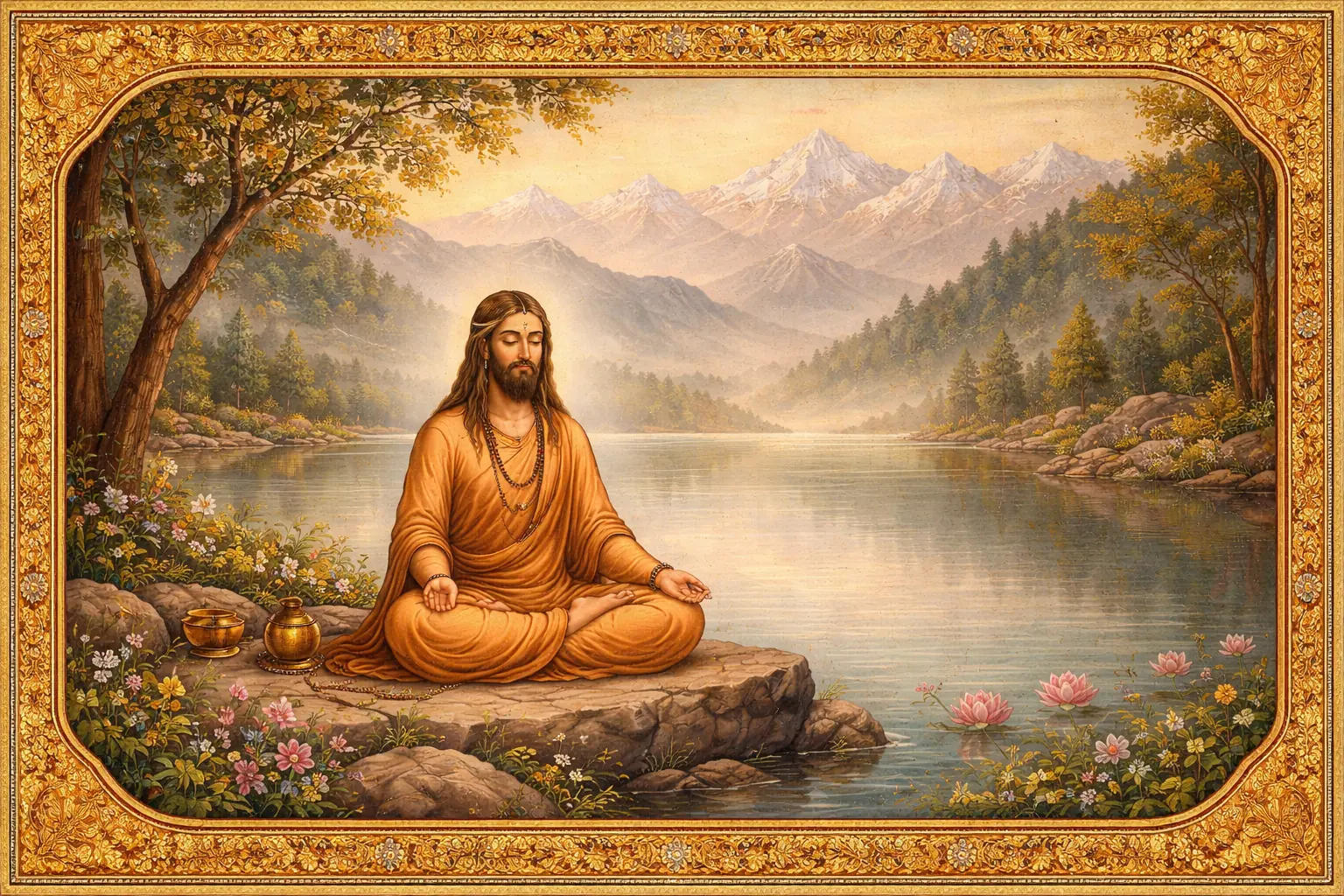
The three dimensions in which we exist are freedom of the body, freedom of speech, and freedom of consciousness.
Freedom of consciousness means that we abide in the natural state of mind, beyond all fabrications or mental constructs. It is very important to understand what the natural state of mind means. When you hear “the teachings of Laya Yoga,” this does not mean some doctrinal concept or religious teaching belonging to a particular group of people. The natural state is not something external; it is not connected with doctrines. The Anuttara Tantra teachings of Laya Yoga concern our own consciousness. And it is our own consciousness that is recognized in the teachings as the Absolute. Freedom of mind means abiding in one’s own awareness, which is beyond mental constructs. In other words, we are not particularly interested in the ideology, philosophy, or metaphysics of the teachings. We are interested in the structure and map of consciousness, as well as in the way to deepen it.
Freedom of speech means that on the spiritual path our speech is free from the necessity of reciting mantras or prayers.
Freedom of the body means that the body is allowed to remain spontaneous and natural, without the need for any mandatory rituals or practices.
Thus, when we preserve these three dimensions of freedom—the body, speech, and mind—the natural state is genuinely integrated with every aspect of our lives. At the same time, we are also free to apply any method. Freedom from something does not mean that we cannot use it. Of course, in the initial stages, it is beneficial and useful to apply various methods that help the mind or body. For example, it is beneficial to use techniques that help the body control the five principal pranas. It is beneficial to use certain meditative practices that help control the mind and enter the natural state; nevertheless, when we use them, we are not bound by them. This is the main distinctive feature of our teachings. In other words, all these practices are auxiliary; one might say that they serve the fundamental freedom of the natural state.
The Teaching on Sankalpas
There is a teaching on how to develop contemplation through the use of sankalpas. If you practice contemplation, you encounter the fact that it is not easy to maintain and control the mind, especially in distracting situations. You then realize that certain anchors or supports for practice are needed. Such anchors and supports for practice are called sankalpas. In the section on contemplation, there are eight principal sankalpas: “Atma-vichara,” “Dream,” “Space,” “Pure Vision,” “Divine Pride,” “Everything Is One with the Mind,” “Descending Power,” and “Light.”
In the course of practice, the student first works with the sankalpa that is closest to them. Once they learn to contemplate with the support of a sankalpa and become established in this practice—that is, once they have already achieved some success—they can deepen their practice and apply two or three sankalpas simultaneously. In this way, their contemplation develops, and their mind becomes deeper, more versatile, and freer.
When you try to contemplate with the support of a sankalpa, your practice has two aspects. The first aspect is pure consciousness, which needs no support, and the second aspect is the relative method. Within this relative method, you choose a particular combination of sankalpas. In accordance with your inclinations, you select the sankalpas that are easiest for you to practice.
I often recommend the sankalpas “Dream,” “Atma-vichara,” and “Infinite Space” to beginners. Of course, before proceeding to such a complex practice as the triple sankalpa, you should complete the basic practices and learn to contemplate with the help of at least one sankalpa, such as “Atma-vichara.”
I myself practiced Atma-vichara alone, one-pointedly and without interruption for even a moment, for about two years. Then I practiced the double sankalpa “Atma-vichara”—“Dream,” and later moved on to the practice of the triple sankalpa “Atma-vichara”—“Dream”—“Infinite Space.” After that, I practiced each sankalpa one-pointedly for at least six months. I then abandoned all sankalpas and simply abided in unfabricated presence in accordance with my teacher’s instructions. Later, I saw that under certain conditions I needed one sankalpa or another, and I chose whatever was beneficial for me in a particular situation. Nevertheless, the fundamental state remained unobscured and was sustained. This is how contemplation usually develops as you practice. I then placed emphasis on the sankalpas “Divine Pride” and “Pure Vision.”
As your contemplation deepens, it transforms from human into divine. Our task is to transform ourselves from limited human consciousness into the Divine. If we choose to become immortal, we have no alternative but to transcend these limitations.
Pure and Impure Dimensions

There are two dimensions: pure and impure.
The impure dimension is conditioned by karma. It contains suffering and subject-object relationships; the gross elements of nature dominate and are difficult to control. It contains death, suffering, and reincarnation.
Pure dimensions are dimensions inhabited by awakened beings, deities, and gods. These are worlds of harmony, founded on love, compassion, and beauty. In them, the elements of nature are arranged in such a way that they never cause suffering. In these dimensions, there is no reincarnation, suffering, or death. Everyone in them is enlightened, though in different ways—that is, they are at different levels. In these worlds, everyone directly beholds the supreme Source. In other words, unlike the human world, these worlds contain no delusions, no dreams of the mind.
In the human world, as one of the worlds of impure vision, there is ignorance, dreams of the mind, fantasies, and illusions. That is, among living beings, few are awakened and connected to the supreme Source. This is generally considered the preserve of saints. But in the worlds of the pure dimension, there is no ignorance, illusion, or dreaming of the mind, because they are inhabited by beings who have attained the level of holiness.
To enter a world of different karmic vision, a pure dimension, we must radically transform our consciousness. Such a transition into another dimension is called the process of liberation from samsara, enlightenment, and realization of the Absolute. Of course, this transition is not geographical; it does not involve moving anywhere. One might say that it is a transition to a new level of awareness, a new level of identification and self-identification. We make this transition by cultivating the natural state. And when the natural state gains strength through contemplation, positive awakened qualities—that is, the qualities of gods—begin to manifest within us. This is called the development of pure vision or the manifestation of divine pride.
Transforming Consciousness and Entering the Mandala
So, what does it mean to transform consciousness?
It means beginning to operate with new categories, such as eternity, infinity, the global nature of consciousness, spatiality, vastness, play, paradox, the single “taste” of all phenomena, harmony, purity, sacredness, transcendence, sublimity, and immortality. One might say that when new principles of perceiving the world and new concepts become established in our consciousness, when we change the operating system of our consciousness and begin to live according to these new concepts, then we will truly enter this new pure dimension. In Sanskrit, such a pure dimension is called a mandala. Therefore, liberation is always a transition into another world—into the mandala, the world of pure vision.
When we are in the mandala, we unite with the supreme Source. To unite with the supreme Source (with the unified Sphere) means to free oneself from the constraints of the linear concepts of subject and object, from the law of cause and effect, from the three categories of time (past, present, and future), from the three dimensions of space, and from paired categories (good-evil, pure-impure, right-wrong, truth-falsehood, samsara-nirvana, life-death, etc.), and to begin operating with such concepts as nonduality, play, the spontaneous perfection of all phenomena, the single “taste,” pure vision, eternity, and infinity.
In fact, samsara is a factor of consciousness. We are in samsara because we ourselves allow our minds to contract under the influence of circumstances, perception, and other factors. Right now, we are perfect in our foundation; right now, all the qualities listed above are present within us. The problem is that we refuse to believe this and do not allow it to manifest. Our limitless potential is already perfect, realized, and pure right now. We cannot attain enlightenment a second time, since even before our birth we possessed primordial consciousness, the Atman. Nevertheless, we feel that our potential is blocked, as if some kind of neural implant had been inserted into us, and therefore we lack the ability to perceive time as a single flow, space as a unified space, and the aspect of consciousness, perfection, and purity. This happens because our creative consciousness, the Supreme Source within us, is blocked by five types of karma. And practice consists primarily not in creating anything, but in displacing these blocks, which consist of residual karmas.
When the habit of abiding in pure vision, divine pride, and the natural state, and of seeing the world through the eyes of a single “taste,” becomes rooted within us, the blocks and limitations imposed on our limitless potential disappear. And we understand: “Indeed, the external and the internal are one. I can create through the power of thought; I can direct events through the power of my intention. The past, present, and future actually exist simultaneously. I can change the present if I return to past samskaras and change something in the past. Time is not some fixed process.” We begin to understand these things. Indeed, everything that exists is absolute, infinite, unfathomable, and eternal. Indeed, the world is the unfathomable play of the energies of the Absolute.
If we restructure our thinking in this way, we enter a new perception and draw closer to entering this new dimension, the mandala of pure vision.
The Teaching as the Transmission of the Saints
The teaching is what leads us, step by step, behind the siddhas and saints into this new dimension. This is the essence of the principle of taking Refuge and establishing samaya. If you have a samaya connection with the teaching, it guarantees that you will enter this dimension if you practice.
When you listen to texts and instructions, perceive them far more deeply than mere lectures that clarify something. Perceive them in pure vision as a precious transmission, as a teaching that conveys the living energy of the holy siddhas, which you can use and on which you can build your life.
I regard texts and teachings as jewels, as treasures, as the secret of my heart. This is the approach characteristic of the tantras. All teachings were transmitted as a very profound and innermost secret, either by siddhas and saints or by gods. They contain the greatest depth of realization. And sometimes, having read a text once, we return to it ten years later and discover something new in it, sensing the depth contained within the teaching. This is precisely how oral instructions should be received. When you have such depth of perception, openness, trust, and an understanding of the preciousness of the teaching, the principle of the sacred bond (samaya) begins to operate, and the transmission begins to work. Then the teaching becomes genuine and effective.
The Principle of Samaya
In all the highest divine teachings, great importance is attached to the principle of samaya. Samaya is a sacred bond. Samaya means that when we touch upon mystery, depth, and the innermost, we must approach it with great respect, dignity, and profundity, understanding that it is something very precious and very profound.
It is generally held that there are two principal types of samaya. The first is relative samaya; the second is absolute samaya.
Relative samaya describes how to build relationships with the teaching, with the teacher, and with one another, and how to perform various practices. One might say that these are the rules of the game.
The absolute samaya is freedom from all rules; it is the commitment to abide in contemplation. In other words, the absolute samaya means continuously abiding in the spontaneous freedom of consciousness, in the natural state, having first clarified, of course, how to do this correctly.
When we practice the path of Laya Yoga, we say that we not only observe the Vinaya rules but also follow two samayas: the relative and the absolute. For us, the absolute samaya is more important. If you observe the absolute samaya, you always self-liberate. If you observe the relative samaya, you always follow the path of the teaching correctly.
Initiation and Transmission
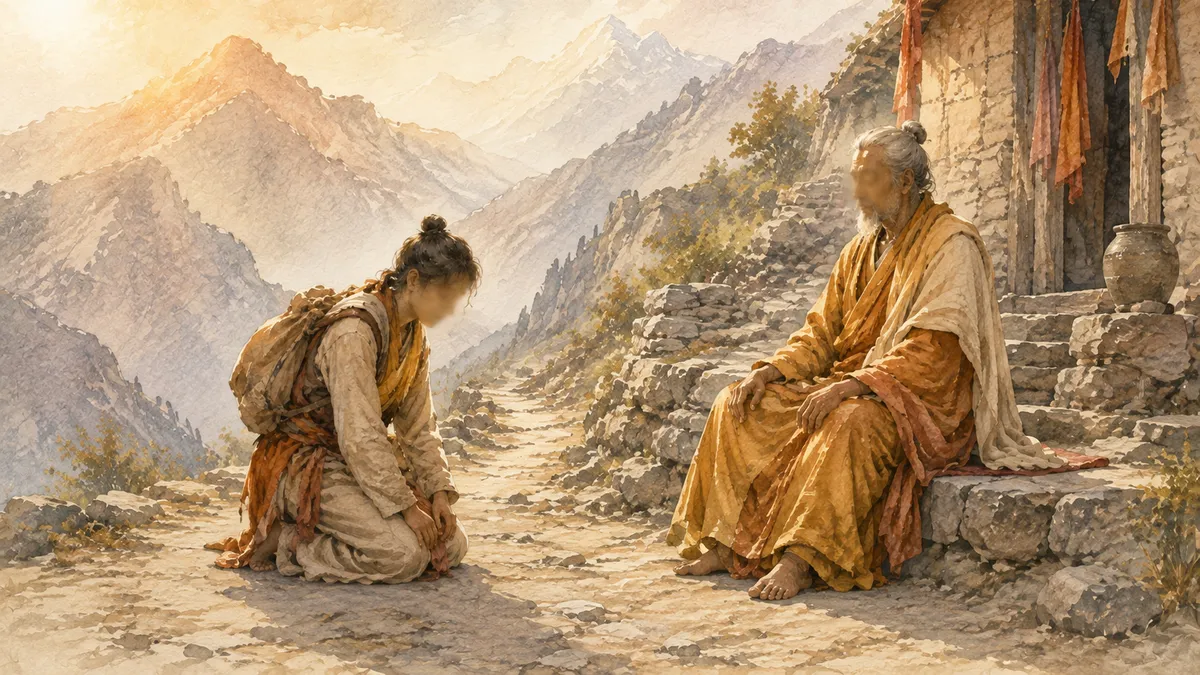
“In order to practice the natural state, one should receive initiation from an experienced guru. The purpose of such an initiation is to help the disciple realize the illuminating emptiness of their mind. Only after comprehending this ‘contentless’ awareness can the disciple correctly practice the natural state.”
It is said that Saint Naropa asked Saint Tilopa for initiation for twelve years. Only after he had passed through various trials did Tilopa agree to give him such an initiation. During those twelve years, Naropa was given many different tasks that tested his devotion, willpower, steadfastness, and determination to follow the path. It is said that he often jumped from mountaintops and performed tasks after which he was frequently beaten or insulted by other people. At times, things were truly difficult for him. His teacher Tilopa applied to him a method called “holding the mind like an iron chain” in order to dispel his pride, conceit, and attachment to the ego.
It was only thanks to Naropa’s great determination that he managed to pass through all these trials. After Naropa had completed most of them, Tilopa gave him a direct transmission simply by waving a smoldering rag in front of him and then striking him on the head with a shoe. This was the culmination, the finale, because Naropa had already purified many of his dualistic notions. It is said that afterward Naropa entered samadhi for five hours. Within six months, he attained supreme awakening and siddhis. In other words, the preliminary practice had been completed, so only a push was needed for Naropa to awaken. This is the meaning of initiation.
In the Laya Yoga tradition, a disciple may receive initiation immediately, even if they are not particularly ready for it. The principle is that the highest is given first. If the teacher sees that the disciple is not ready to practice the highest teaching right away, then something simpler is given to them.
Pure Self-Awareness and Nonduality
“Until then, it will be difficult for the disciple to avoid becoming involved in dividing everything into subject and object and to bring their mind into a state of nonduality and nonattachment. In order to deepen this awareness of illuminating emptiness, the disciple must practice regularly according to the instructions set forth below. One who is capable of abiding with their mind in pure self-awareness, without being distracted by anything else, will be able to accomplish everything.”
It says here: “to abide with one’s mind in pure self-awareness.” To understand what “pure self-awareness” is, you should apply the method that best suits your inclinations. I usually recommend that all beginning disciples practice Atma-vichara and view the world as a dream, an illusion.
When you practice Atma-vichara, you concentrate on the sense of “I.” At the same time, in relation to the external world, you maintain the attitude, “All of this is a dream.” When you work with the sankalpa in this way for a long time, a subtle level of awareness awakens within you. Of course, you must thoroughly clarify exactly how to perform this practice so that you have no uncertainty.
As you practice, various experiences arise: bliss, clarity, emptiness, and much more. But the disciple must not cling to any of them.
“In order to practice the natural state, the disciple must renounce the dualistic worldview and discard habitual thoughts of acceptance and rejection.”
To abandon the dualistic worldview means, at least on the level of view, to regard the world as nondual, to regard everything as one.
There are such concepts as view, meditation, and conduct. View is our outlook, our worldview, the way we look at the world. Meditation is what we sustain within; it is our process of awareness. Conduct is how we behave in relative life, how we apply the teaching in life. And initially, at least on the level of worldview, we try to understand what “the one Spirit permeating everything” means, what the Absolute means. At the very least, we logically accept that everything is nondual, that everything perceived is Brahman, the play of the Absolute. We think approximately as follows: “For now, I do not yet see this fully because I remain in illusion.”
To reinforce such a view, we can use the works of Shankara (“Atma Bodha,” “Tattva Bodha,” “Vivekachudamani”), the works of Dattatreya (“Tripura Rahasya,” “Avadhuta Gita”), and the works or sayings of modern saints (for example, Sri Ramana Maharshi). At least on the level of understanding, we must clarify for ourselves what the view of nonduality means.
From the standpoint of nonduality, there is neither you nor me; there are only manifestations of the Absolute. There is no lecture here; rather, this is the play of Absolute consciousness. This is how the Absolute, playing through its bodies, manifests its lila. In dualistic thinking, we perceive this lila as a lecture. And to have the correct view means to understand deep within that although this is how we see it, in reality everything is much deeper; everything is the lila of the Absolute.
Meditation is when we sustain awareness, sankalpa, or seated meditation with the aim of realizing this view. Although we have acquired it, it is still only intellectual, whereas we need to acquire it genuinely, through direct experience; therefore, we sustain awareness and meditation.
Integrating View, Meditation, and Conduct

Finally, conduct is what we must manifest in everyday life and integrate with it. Even if we believe that everything is Brahman or meditate, moments often arise in relative life when we do not think this way at all. For example, if someone steps on our foot or we lose a certain sum of money, we will think, “This is no illusion.” But conduct means that we integrate awareness and our view with life. We try to maintain this state while eating, talking, undergoing difficult trials in life, experiencing bodily needs, stress, illness, and suffering—that is, throughout the entire spectrum of experiences. Then it is said that we continuously practice view, meditation, and conduct.
A master who has integrated view, meditation, and conduct into one, merging these three aspects, can be recognized by the fact that his mind is always unwavering. He always abides in awareness; neither joy nor sorrow can strike his heart. He is always joyful because he constantly contemplates the supreme Source; he is never distracted, and he makes no dualistic judgments. Even if he says something, it is no more than a play. In other words, he says it while manifesting in the relative dimension, for some reason or with some hidden purpose, but deep within, his consciousness is completely self-liberated. He is always flexible, never experiences friction with other people, is attached to nothing, and has no particular preferences for anything. Nevertheless, while playing, he may pretend for the benefit of others that he needs this or that.
He has three levels of conduct: external—for others; internal—for the circle of samaya disciples or Dharma brothers; and secret—for the deepest consciousness itself. His consciousness also has three levels.
Sahaja Samadhi—the Samadhi of a Flowing River

“He must strive to attain a state in which samadhi and everyday activity become one.”
In the teachings of Laya Yoga, the concept of sahaja samadhi is very important. It is also called the samadhi of a flowing river. This means that presence is integrated into everyday life. This is the highest attainment apart from saruba samadhi.
As you know, there are different levels of samadhi.
The first, lowest level is savikalpa samadhi. If you can remain with the mind stilled for twenty-nine minutes and enter the first dhyana in tranquility meditation, you will experience the beginning of savikalpa samadhi. If you can sit motionless in tranquility meditation for five hours with the breath suspended, you can enter the third dhyana. The samadhi of the third dhyana is also savikalpa samadhi. Your subtle body, or mind, will move to one of the realms of the gods, or to the human realm if there is impure karma. Savikalpa samadhi is a modification of the mind.
When you transcend the third and fourth dhyanas and move into the fifth and sixth dhyanas during tranquility meditation, you can enter the realm of the formless gods. You feel as though consciousness is expanding to infinity and there is no sensation of the body. The samadhi of the formless gods is the domain of experienced meditators who have been meditating for a long time. Once the higher levels of the formless gods have been passed, nirvikalpa samadhi is attained—a samadhi in which there are no distinctions or modifications, and pure emptiness is experienced. This is already a high-level attainment, characteristic only of very experienced meditators. However, this attainment is not an end in itself, since even after reaching such a level of samadhi, one may lose the attainment upon emerging from it. The genuine single “taste” arises at the level where the two types of samadhi (sahaja and nirvikalpa) merge, when the states of meditation and non-meditation become equal during the post-meditative period. In other words, presence—illuminating emptiness—is maintained both while awake and during seated tranquility meditation.
This level, this state of sahaja samadhi, is also called the samadhi of the flowing river. In other words, we can move, walk, talk, eat, drink, and act, yet remain deeply immersed in the natural state. Such a yogi is highly flexible; he does not live but flows with the river (this expression is often used). He simply responds to events. This yogi does not plan for the future, cling to the past, or make judgments and assessments: this is bad or good, this is right or wrong. He constantly abides in the paradoxical, the incomprehensible, the infinite, the non-mental, the realm beyond thought. The focal point of his consciousness is situated on this paradoxical, unthinkable plane. He does not block thoughts and feelings; he can think, make decisions, and exercise his will, yet all of this is like a game. The essential focal point of his consciousness, however, remains in the clear light. One might say that while alive, he abides in dreamless sleep. Even when he acts, his brain waves resemble those of a person in the phase of deep sleep. This is the principle of sahaja samadhi.
He abides at the point where there is no agitation or fluctuation. At the periphery of his consciousness, thoughts arise and instantly self-liberate; his experience does not crystallize. Just as snowflakes fall into the ocean and immediately dissolve, thoughts, sensory impressions, and dualistic judgments do not settle in his mind. When such a yogi falls asleep after acting, his mind instantly enters the realm of clear light. He acts spontaneously, proceeding from intuitive consciousness. He is resourceful, yet without attachments. His mind is highly flexible, clear, and luminous. One might say that he is constantly balancing between two worlds without clinging to either of them. Such is the principle of sahaja samadhi.
The Path to Attaining Sahaja Samadhi
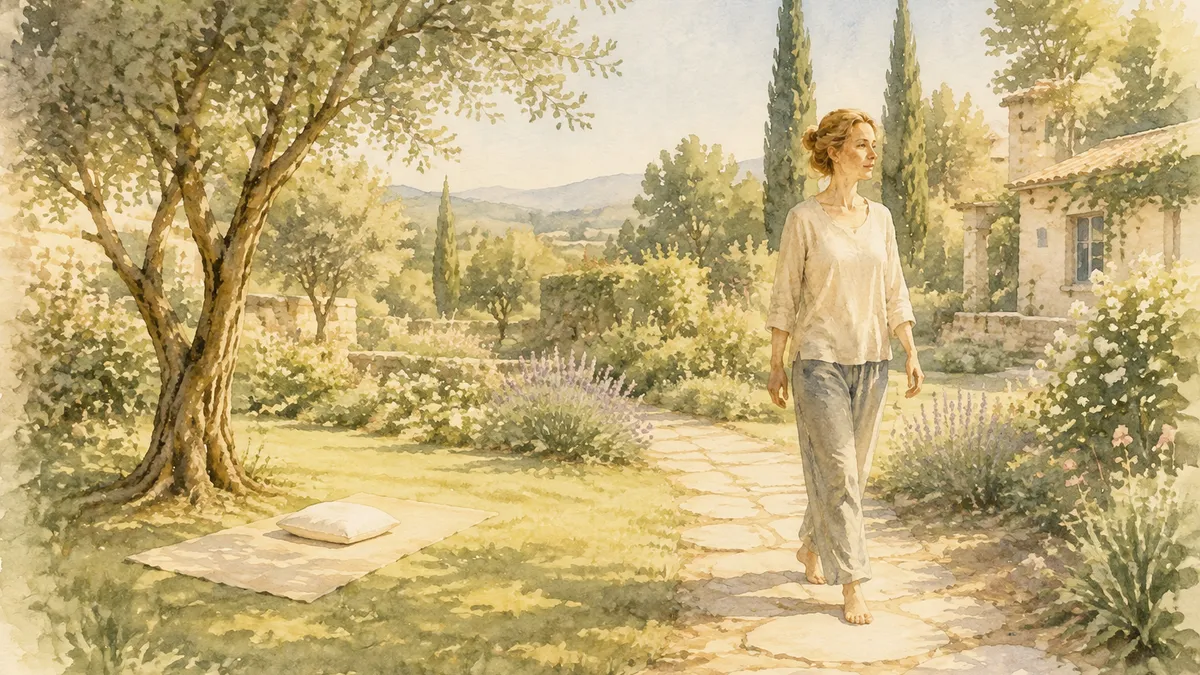
“Until he has attained this, he must first give primary attention to tranquility meditation and then, as an additional practice, apply his awareness of the natural state to all his daily activities.”
Thus, until we have grasped this principle, we need to train in what is known as the disciple’s meditation. The disciple’s meditation is tranquility meditation (mahashanti). When we achieve success in tranquility meditation, we try to equalize the state of mind during tranquility meditation with the state of mind in the post-meditative period. However, the teaching on sankalpas makes it possible to train awareness even without possessing the ability to practice tranquility meditation. Even if you are not an outstanding seated meditator, but apply sankalpas well and make progress in chankramanam (meditative walking in contemplation), you also have the opportunity to attain sahaja samadhi.
Three Types of Equilibrium

“The practice of the natural state involves developing balance, relaxation, and naturalness. The first implies attaining balance of body, speech, and mind. The way to attain balance of the body is to relax it; the way to attain balance of speech is to slow down the breath. And attaining balance of the mind means not clinging to anything, not relying on anything, and having no support in anything.”
To attain the first factor (balance of the body), we must learn to relax. There is a saying: “If you are half-relaxed, you will enter contemplation only halfway.”
Relaxation of the physical body while sitting means that we allow the winds to begin entering the central channel. The correct experience of relaxation enables us to understand the taste of sahaja-tattva.
What does balance of speech mean?
It is related to breathing and control of the five main pranas. When you purify the channels through vase-breathing techniques, the three bandhas, and asanas, and bring your channels under control, your breathing changes.
At the monastery, the breathing of monks and novices is measured once a month. The duration of breath retention, the length of the exhalation, and the breathing rate are measured. If your channels are being purified, your mind is becoming calm, and you are contemplating well, your breathing becomes shallow and infrequent. For example, instead of sixteen finger-widths, the exhaled air extends twelve or eleven finger-widths. Reducing the length of the breath by even one finger-width leads to growth in intuitive consciousness and supernatural abilities. Instead of eighteen or sixteen inhalations and exhalations per minute, your breathing rate drops to fifteen or twelve; for some, it is seven or eight, six, or even four. This means that you breathe infrequently.
In other words, a master differs from a beginning practitioner in that they breathe shallowly and infrequently. It is believed that the minimum breath retention for a yogi trained in kumbhaka lasts two minutes, the intermediate retention four minutes, and the maximum five minutes. These are the breathing benchmarks.
If your pranas and mind become calm and balanced, and your breathing parameters improve, this is an indication that you are practicing contemplation correctly.
Balance of the mind means that the inner center (inner point) has been found and a certain degree of stability in it has been attained; the mind does not focus, contract, cling to anything, or make plans.
Thus, when you have realized all three kinds of balance, your capacity for contemplation deepens, and you are then ready to approach sahaja-samadhi (the samadhi of the flowing river).
Relaxation and Acceptance of Reality
“To attain relaxation means to release the tension of the mind, leaving everything as it is and casting aside all ideas and thoughts. When a person’s body and mind become relaxed, they can remain effortlessly in the natural state, which is inherently nondual and unaffected by distractions.”
We often disagree with reality, make dualistic judgments, and believe that things must be exactly as we think and not otherwise. Since reality does not want to be the way we want it to be, various obstacles and sufferings arise. The ability to leave everything as it is, to abide in awareness without making judgments or evaluations, to accept reality and remain open to it—this is what brings us closer to the natural state.
One monk prayed to God, saying: “Lord, please make two times two equal five.”
He prayed so fervently that God descended and said: “Very well, since you are praying so earnestly, I will make it so. But do not be offended if three times three equals one hundred and forty-nine.”
When we do not wish to accept reality as it is and believe that our judgments or evaluations are more important than what actually exists, it means that we enter into profound dissonance with the universe, become eccentric, lose touch with reality, and are unable to accept the situation or integrate with it. We have a certain fixed point of view from which we judge that some things should be one way and others should be another. And the moment we have precisely such a fixed point of view, we lose contact with the supreme Source.
The Master has no focused point of view. He simply abides in reality, lives with it, flows with it; he has no ideology that would limit him. He has no personal opinion that would hold him in its grasp. For to have anything means allowing one’s mind to contract and become limited. He simply abides in being as it is, playing with whatever manifests. Abiding in awareness, he rejoices when joy comes, and when suffering comes, he makes it the path. Thus, he has no duality, no judgments about what is bad and what is good. Of course, this does not mean that, in the relative dimension, he does not follow certain rules of the human world’s game. He follows them for the sake of harmony with others, but not because he himself believes them to be true. This is the principle of “leaving everything as it is and abiding in presence.”
Naturalness and Effortlessness

“To attain naturalness means neither accepting nor holding on to anything. In other words, the yogi does not make the slightest effort of any kind. He allows the mind and thoughts either to stop or to flow on their own, neither assisting nor restraining them. To practice naturalness means to make no effort and to be spontaneous.”
For the most part, the practice of naturalness becomes possible when we let go of effort. Someone may say, “How can I let go of effort if I have not even really begun to make any?” That is true. But here we simply need to distinguish between the relative and absolute dimensions of practice. Of course, on the relative level, it is good to make an effort in one’s practice, to practice concentration, perform techniques, and do much more. Nevertheless, even when we make an effort, effortlessness should still be the foundation of everything we do. If we make no effort whatsoever, we will most likely be unable to enter the primordial state and discover effortlessness, since the mind is such a tangled thing that it needs to be cleansed. But if we understand the principle of distinguishing between the relative and the absolute, we do not become confused. We know that even when we make an effort, deep within consciousness there is no attachment, no striving for results, no being caught up in effort; instead, there is effortlessness.
It is precisely this effortlessness that permeates all the yogi’s actions when he engages in any practice: asanas, pranayamas, concentration, and so on. Then, proceeding from effortlessness, we are free to apply any effort, yet we do not become bound by it. It is then like a game: we can use any method, but it will culminate in sahaja-tattva.
