


The Nature of the Soul in the Material World
Shiva-jnana is the knowledge of God; Shiva-pada is the abode of God. The soul is filled with sins on the one hand, and these sins are imprints (samskaras), rather kleshas. This is not so much a moral-value social definition as an energy that holds the soul. From the absolute point of view, what is considered sins is simply the dense energy of Shiva, in which the soul has been caught like a fish in a net. Simply dense energy, dense rajas, dense tamas, mixed sattva.
How did the soul get caught, and by what is it held? The soul was placed into a body; at first it was an astral body, which was formed under the influence of very subtle energies. The jnana-indriyas, karma-indriyas, the mind, the apparatus of the ego, the apparatus of the mind were formed, and the soul created its own mental copy. Then the subtle body began the process of seeking a physical body, implantation into the physical body; pranas appeared, the energy body (pranamaya-kosha), the five main pranas, and the five additional ones bound the soul even more.
Then, finally, the physical body, the five gross elements, and the soul is as if in a snare, like a bird in a cage, like a fish in a net—the network of channels, chakras, the physical body, the pranic body holds the soul in the astral body, and in the astral body the soul is held by a dense network of images. These images are also dense for the soul; for us images seem not dense—they are, after all, mental representations—but for the soul itself they are subtle-material, yet sufficiently dense. Plus the external culture, the external social environment, the society of upbringing, neural connections in the head, in the brain, neural networks, patterns of perception, patterns of thinking, sociocultural patterns, education, upbringing, the goals and meanings of society.
All this has enveloped the soul in a very multilayered, dense way, and somewhere it has completely lost itself, lost itself greatly, fallen into oblivion. As happens in a dream: we dream that we are going somewhere or are late somewhere, or that we have lost our wallet, that we are late for a train, or we dream that we are meeting a friend. But everything is somehow absurd, nonsensical, unclear, and we do not know how we ended up here or what we should do.
The Difference Between the Material and Heavenly Worlds
The material world is also such a state in which the soul has lost itself very greatly. The heavenly worlds, for example, are a place where souls have found themselves, and everyone always abides in divine love, in divine awareness, in conscious service to God. There, serving God is normal, while not serving God is like being insane. There are some outcasts in society, somewhere out on the periphery they are not even admitted; they are not quite normal, they somehow got there strangely, and the guards make sure that they do not disturb the other gods, devas, angels. It is normal to be in divine love, and not to be in the divine is abnormal people, spirits and demons that have broken through from the lower worlds.
This does happen; that is, they get to heaven, put on a mask for a while, try with all their might to make the right face, an angelic one, as if they are devoted to God, to utter certain truths. But divine beings quickly recognize them, since they focus on the area between the eyebrows, where the entire essence of the soul is considered to be recorded, and all the images are recorded, and they understand that these souls do not have within them either divine wisdom or divine love; they merely put on a mask for a time.
But they are allowed to do this to a certain extent, to remain in divine communities, so that perhaps they may change, receive some lessons—this is even like a challenge for some, like an interest in what will happen to them, whether they will be able to or not, what the divine plan is, how the divine plan will manifest. But the general mass consists of wise gods, wise angelic beings, gandharvas, those for whom it is normal to abide in divine love, to abide in divine wisdom. There the divine Source is manifest, this principle is manifest, but in earthly life everything is different. The soul is strongly entangled in all these things, as if it has lost itself.
Features of the Subtle World and Earthly Life
In the subtle world there are also many souls that have likewise lost themselves, since in the subtle world the nature of the soul manifests as it is. Whatever a person loves most of all, whatever he is most inclined toward, that is what manifests—no one can lie, no one can deceive, no one can go against his own nature, the nature that exists in the subtle body and that was cultivated in earthly life.
Earthly life is an opportunity for change; here there is freedom of will. For many souls, the subtle world is the impossibility of change. We are not speaking about sadhus—sadhus do have certain possibilities; the higher the level, the more possibilities there are, but for an ordinary soul there are none. In a certain sense, an ordinary soul is a slave to its nature, to its energy, to that toward which it has an inclination. The inclinations of each soul in the subtle world manifest vividly, strongly, clearly, irresistibly; that is, if there is some karma to love something, to be predisposed toward something, to be attached to something, it manifests very vividly and is reflected in the body and on the face.
If in this life in the physical body it is not always reflected on our face, then there the soul has precisely such an appearance as expresses its predisposition. This state of the soul in earthly life, in heavenly life, and among divine angelic beings is different, since in earthly life the soul is considered to be more strongly entangled. But, on the other hand, in the subtle world the soul becomes hostage to its own tendencies and cannot correct anything until they are exhausted over a long period of time, except for high sadhus who have advanced on the spiritual path, realized self-liberation, presence, who are capable of changing and have already changed sufficiently. Therefore, life in the physical body is an opportunity for change. There is freedom of will to change one’s own predisposition, the structure of the soul.
The Necessity of Divine Grace
The soul, while abiding in earthly life, must make maximum use of all the opportunities of this life in order to purify itself, dissolve all kleshas, dissolve all bonds, acquire divine love, acquire devotion, self-surrender to God, and acquire a deep capacity for contemplation of God; that is, to become established in the view, in contemplation, and in carrying out the divine will. But when the soul begins to do this by itself, it encounters the fact that it is very limited. Even by willpower, concentration, and its own practice, it cannot overcome all the things that entangle it. The entangling karmas are strong enough that it cannot cope with them on its own, and it understands that the work it is doing, even if it practices a great deal... For example, the monastic rule—everyone has probably heard of it—seven twelve-year cycles of monastic training. In each cycle we practice quite a lot, but no matter how much effort the soul makes, its efforts are insufficient. Therefore the soul’s main hope is still not in its own efforts, but in the descent of divine grace. Efforts must be made, but the soul is liberated by divine grace, while efforts attract divine grace; therefore it is said that Shiva purifies the soul of sins.
The Nature of Lord Shiva
Shiva-nama is the true soul of all mantras. Lord Shiva manifested sixty of His various aspects in the world. Vrishabharudha, Harihara, Nataraja, Bhairava, Dakshinamurti, Ardhanarishvara, Bhikshatana, Somashekharamurti, Urdhvanatana, Kalasamharа, Jalandhara, Surasamharа, Lingodbhava—all these are His forms. “Shiva” means “the one who is eternally happy and auspicious,” parama-mangala. Om and Shiva are one.
Eternally happy and auspicious. Shiva is the source of all goodness—this is an absolutely positive state, an absolutely positive center of the universe, an absolutely positive energy. It is not some neutral, undifferentiated state; it is precisely absolutely positive, but it is empty in the sense that the five elements, the ego, and the pranas are absent in it. The state of Shiva’s profound being is characterized by the word paripurna (total fullness and wholeness), purnatva (total self-sufficiency). This center of being is the sole sakshi (witness) of the entire universe. Shiva Himself cannot be observed by anyone; He is the only lord and sovereign over all living beings, and there are no other rulers above Him. He is the only self-dependent one (svatantra); all other living beings depend on Him.
The Soul’s Dependence on God
For example, as living beings we are not self-dependent; we are always dependent (asvatantra). This can be characterized by such an example as a telephone handset. For example, there is some mobile phone (an iPhone); it has many functions, but in reality it depends on the telephone network, on the Internet, on radio waves; it is only a receiver, it depends on something global, and in itself it does nothing. As soon as the large network is switched off, or it is disconnected from the large network, it is simply an iron box, a useless iron box. In the same way, our body can be likened to a telephone handset, but the main thing in a phone is not the hardware, but the software. In the same way, the main thing in the body is not the physical aspect, but the subtle software; we are connected by millions of different threads with the subtle world, with the causal world, with subtle energies; we are part of the universe.
We are so dependent that we do not even suspect how dependent we are. We are completely dependent; it is simply that the familiar environment makes us forget about this, and it seems to us that we are very independent. Often people, being deluded, think: “I am an independent person,” but where does this striving for independence come from? It comes from the inner nature of Shiva within us; we subconsciously feel this independence. A particle of Shiva’s svatantra is inherent in us, but it is not connected with the subtle body, with the energetic and physical bodies—all five sheaths are dependent, whereas the particle of Shiva, the Atman —that is independent. But aviveka (the absence of discriminating wisdom) forces us to attribute the independence of our Atman to the gross physical sheaths; therefore a person often constantly fights for independence, defends something, demands certain rights, freedom; he wants to expand the circle of his influence, power, money. All of this, in reality, is a veiled way of obtaining a little more of this freedom. But they are mistaken in the sense that this true freedom exists only in the Atman.
When a person crosses the boundaries of the material universe, he begins to feel his dependence acutely. For example, you climb to 5,800 meters on Kailash, you feel that there is not enough air, and the pressure is somehow not right, and it is almost impossible to walk; you feel that something is wrong with this body altogether—usually such a strong body runs, but here it can barely move—dependence is immediately apparent. If the body rises into a vacuum, whoever you may be, you feel: that’s it, you are dependent. This independent particle of Shiva within us is the Atman, and it is svatantra. Shiva, as the deepest goodness, the deepest freedom, the deepest wholeness, the deepest omniscience, the deepest omnipresence, permeates every dependent soul, every dependent jiva. The soul is not simply dependent on God—it is totally dependent on God. It is simply total, and the illusion that it can somehow settle here independently of God, do something, is simply a fabrication like the horns of a hare, like the city of the gandharvas, like a snake seen in a rope, like a hairy turtle, like an egg laid by a horse—an absolutely invented state. The soul is totally dependent on God.
The True Nature of Self-Surrender
The doctrine of atma-nivedana, self-surrender to God, is a conditional doctrine, allowing for the fact that the soul has gone greatly astray and needs to be told that it must surrender itself to God. In reality, it has already always belonged to Him; it belonged to Him in the past, belongs to Him in the present, and in the future will belong to Him totally. It is like when Gypsies can try to sell a peasant his own horse—that is self-surrender. Shiva laughs when we practice self-surrender; He sees: “My own souls are practicing self-surrender to Me,” and they have always been surrendered; there was not even a single moment when they were not surrendered. But there are complex notions that in the process of self-surrender illusions, false ideas, are surrendered, and since there are so many of them, they must be surrendered and surrendered and surrendered. These illusions are unreal, but they make a great impression on the soul and determine its path, reincarnation, karma; they confuse it greatly. Therefore, in reality, in the process of self-surrender we surrender to the soul what never truly belonged to it, but we surrender it. For example, right now we might decide that we have resolved to offer the National Bank of America. It never belonged to us, but we think so and have decided to offer it. Self-surrender is approximately the same thing.
Question: Om, Guruji. Let us say, visualization—we offer the universal elements, yet they do not belong to us, but we offer them anyway.
Yes—this is a way to understand that consciousness includes all the universal elements, that it is higher than the universal elements. In the “Mandukya Upanishad” it is said:
“Shantam Shivam Advaitam.” Even people of the lower castes, the untouchables, can meditate on the name of Lord Shiva. Shiva manifests Himself in the Gayatri mantra, Agni, and the Sun. By repeating the Gayatri and venerating Agni and the Sun, you meditate on Lord Shiva. Japa of the Panchakshara and meditation on Lord Shiva should especially be performed during pradosha-kala, that is, just before sunrise. Pradosha on the thirteenth tithi after the full moon or new moon is Maha-pradosha. At this time the devas visit Shiva temples to worship the Lord. By visiting temples during Maha-pradosha, you can also venerate the devas. Devotees of Lord Shiva observe an absolute fast on the days of Maha-pradosha.
Thus, maha-pradosha is the morning time before dawn, on the thirteenth day after the full moon. At this time, if you come to a temple, your sensitivity, your sensitiveness, increases, and many divine souls come to the temples, and one can receive certain profound experiences, deep blessings. In the universe there are always periods when divine souls descend to earth, when the spirits of ancestors appear on earth, or when the connection between worlds works better, between the physical world and the subtle one.
A devotee of Lord Shiva should apply vibhuti to his body and forehead. He should wear a rudraksha mala. He should worship the Shivalingam with bilva leaves. He should perform japa of the Panchakshara “Namah Shivaya” and meditate on it. By any of these actions one can propitiate Lord Shiva. Vibhuti (bhasma) is very sacred. Lord Shiva Himself anoints Himself with it. A bead of the rudraksha mala symbolizes the third eye in the forehead of Lord Shiva. Bilva leaves are considered one of the five abodes of Lakshmi, the goddess of prosperity.
The Divine Play of Liberation
Shiva binds the jivas with strong bonds, and He also grants them mukti. It is Shiva who makes the jivas realize their essence—the divine nature. Shiva turned maya into the body, the senses, and the Universe, and cast the jivas into maya. He implanted in them the idea of egoism, of selfhood. He bound them with karma and made them experience pleasure and pain according to the nature of their karmas, their good deeds or sinful actions. This is the stage of the jivas’ bondage. It is Shiva who gradually frees them from the fetters of egoism, karma, and maya, and makes the jivas shine with the light of Shiva. This is the stage of moksha (freedom). Only by the grace of Lord Shiva can they attain final liberation.
Shiva became the jiva, Shiva immersed Himself in samsara, Shiva reincarnates, is born, dies, lives, experiences desires, Shiva falls into ignorance, becomes conditioned, abides in duality. Then Shiva decides to become a sadhu, and Shiva decides to attain liberation; with the help of the divine grace of Shiva and the efforts of Shiva, liberation comes. All of this is one single divine play, but in the process of this divine play the jiva, as a part of Shiva, realizes itself. It realizes its God-identity, develops within itself the ability always to be in brahma-aham-bhava, to be in divya-bhava, in mukti-bhava, even while immersed in dense matter, in the physical body and in the five sheaths.
The jivas are not independent, since they are under the influence of the three impurities (anava, karma, and maya). They possess shallow knowledge (alpa-jnana). In order to attain the grace of Lord Shiva, the jiva must first know its own nature and its relationship with the Lord. In the body there is life (prana). Lord Shiva is in prana. He is the Prana of prana, and yet He is distinct from the pranas and the body. A body devoid of prana becomes a corpse. It cannot perform any actions. Shiva sustains the existence of the body, the pranas, and the jiva. Without Shiva, the jiva cannot act. It is Shiva who illumines the intellect. Just as the eye, though endowed with sight, cannot see without sunlight, the intellect cannot function apart from the radiance of Lord Shiva.
The Fundamental Principles of the Universe
Thus, the fundamental principle of this universe is the being of God, which permeates everything. Shiva permeates everything, and this is an immutable fact. For a sadhu, one fact is enough to begin meditating and abiding in ananda; one God is enough for the soul to turn toward Him and begin building a relationship with Him, a connection, and to meditate. The second immutable principle is the divine will that moves the universe. The divine will of Ishvara permeates everything, beginning at the cellular, atomic level, at the level of the tiniest particles, and ending with macro-objects, galaxies, universes, metagalaxies; the divine will manifests as kala-shakti (the energy of time), and this is also called niyati. It is the principle of the divine self-organizing will, which structures everything in this universe, from microparticles, atoms, and electrons to enormous universes. Everything is subject to the divine will; everything manifests in accordance with the divine will.
Nothing can go against the divine will, and if it seems that something is going against the divine will, then there is also divine will in that: that there was some destructive element initiating, catalyzing the processes through which that same divine will passes. Sometimes the asuras rise up against the gods, but in reality this is the same divine will. The asuras are needed by the gods just as the gods are needed by the asuras—these are two dynamic forces (rajas and tamas) that balance each other—this is like apana and samana. Without the asuras, the gods would fall into stagnation and decline; without the gods, the asuras would have no vision of where to grow and move toward sattva. Thus, the divine will permeates all creation.
The third principle is that the entire universe is the body of God; we live inside the body of God. There is a complex term in Sanskrit that describes the universe as the body of various gods who create one single body of God, one single superintelligent being. Various laws operate within the body of God; these laws are described by the term “rita.” Rita means harmonious laws that unite the whole single body of God into one integral vision, and when we do not see this, do not understand these laws, and do not understand the unity and wholeness of the body of God, this is called anrita-chaos (world chaos). The asuras are characterized by a vision of the world in which they do not see rita. They see chaos, they see the cosmos, but they do not see rita, the divine wholeness, the fullness based on an understanding of the subtle laws of God.
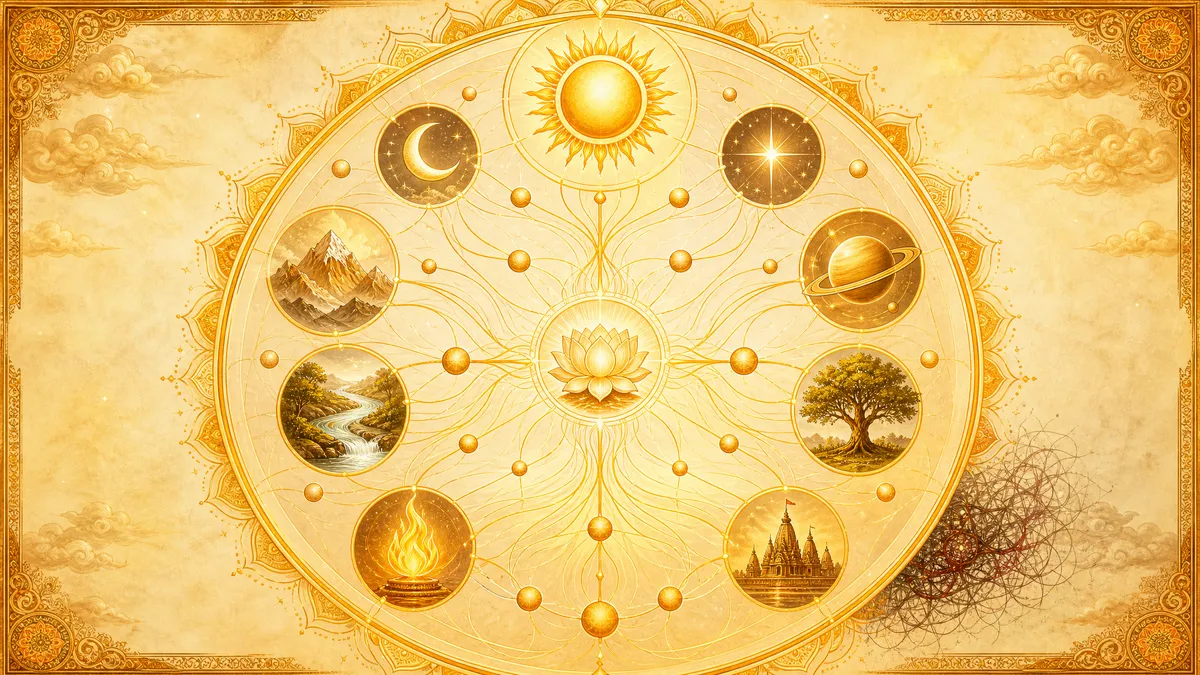
The gods are characterized by the vision of rita; they understand the laws of God and follow the divine will. They know that it is better to follow the divine will; if you follow the divine will, everything will be well. The asuras, possessing many abilities, nevertheless attribute these abilities to themselves; not seeing rita, they see the world as chaos—this is a fundamentally different vision. Many of them are in sahaja-samadhi, in many high states, but they see the world as anrita and ascribe significance to their own will in opposition to the divine will; therefore they can never reach the level of the gods. Rita and anrita are two polar opposites. But in reality, from Shiva’s point of view, both rita and anrita are also his will.
Question: Guruji, but those who are in sahaja-samadhi are no longer asuras, are they?
No, they only have the body of asuras, but they act as asuras; after all, they have nowhere else to go. For example, Prahlada, after attaining enlightenment and sahaja-samadhi, still remained the king of the asuras, since their body, their sheaths, are still asuric, but their consciousness does not identify with them.
Dharma and adharma
When in the human world people recognize rita as the divine will and live in accordance with the divine will, with the world rhythms and cycles, revere divine energies and powers, and take divine principles into account in their lives, this is called dharma. Dharma means that we understand the laws of creation, and we live in accordance with these laws. Dharma expresses the principle of satya (divine truth), and when people do not understand the divine will and see the world as anrita, as chaos, this is called adharma. Adharma means going against the divine will, against the intention of the supreme divine being who created this universe.
It is like going against the wind, against a mighty hurricane, or against the current. Then chaos sets in, problems arise, and whenever there are problems in a person’s family, in society, or in humanity as a whole, it means there is no understanding of dharma, and there is adharma. People are, roughly speaking, going against the wind, against the divine will in some way. It is impossible to truly go against the divine will; it will be embodied in any case, as they say: “With people or without people.” Sometimes it is worth understanding the divine will so that fate may change; sometimes it is worth clarifying for oneself what the divine will is and going in another direction, and then dharma is restored, balance in life is restored, fate changes for the better, and everything begins to go well.
A sadhu is one who tries to understand the divine will and move in unison, in accordance with the divine will. But it often happens that the burden of accumulated karma is strong enough, and walking the path of the divine will, the path of dharma, is not easy, because in the muladhara chakra there is an angry dakini. She says: “What divine will do I need? I am my own mistress. I want to satisfy my desires,” or some angry being. In the svadhisthana chakra there is an angry rakini; in the manipura chakra there is a greedy lakini, who says: “What divine will? I want to be rich, to possess, to rule—everything.” In the anahata chakra there is the deity of attachment—Tatpurusha, personifying egoism; it says: “I have heard about the divine will—I know only myself. That’s it, I am the center here,” that is, many different energies oppose it both in the body and in the mind. The mind of the sadhu decides, the soul decides to follow the path of the divine will, but the energies of the body, the energies of prana, and the ego do not decide this, and therefore such a revolutionary situation begins, when the upper levels want to go toward God, but the lower levels cannot.
Spiritual Warfare and the Path of Liberation
A spiritual battle, spiritual warfare, and victory in this revolutionary situation, if it ends with the power of God, with the victory of the divine will—this is the path of liberation and enlightenment. A sadhu is in fact in a difficult situation—it is as if a revolutionary situation is constantly taking place within him; there he constantly directs himself toward the divine will, and various energies sabotage this for him. The inner asuras and the inner devas fight, but when the divine will finally prevails, suddenly the sadhu feels that nothing is capable of knocking him off the path anymore, that he understands the divine will well, follows it, and eternal harmony reigns in his soul. With his consciousness he begins to encompass vast world cycles of the past, future, and present, to realize kalpas and eons as his own consciousness. With his consciousness he penetrates the subtle world, the causal world, and the dimension of turiya. When consciousness expands, it is a sign that the sadhu has become one with the divine will.
Unity with the divine will expands consciousness, expands possibilities, and connects us with the divine being. As soon as we become one with the divine will, we are one with Shiva, we are one with the great divine being. Separation from the divine will narrows us; accordingly, our consciousness also narrows. When we are one with the divine will, we are one with the source of happiness; our own happiness also increases, our possibilities also increase. The absence of happiness means one thing—the absence of unity with the divine will, when the divine will is in one direction and we are in another. Then a person feels some kind of disharmony, that he is going the wrong way, that he is thinking incorrectly, that there is no happiness in life, as people say. No happiness in life means no Shiva in life, because happiness is Shiva.
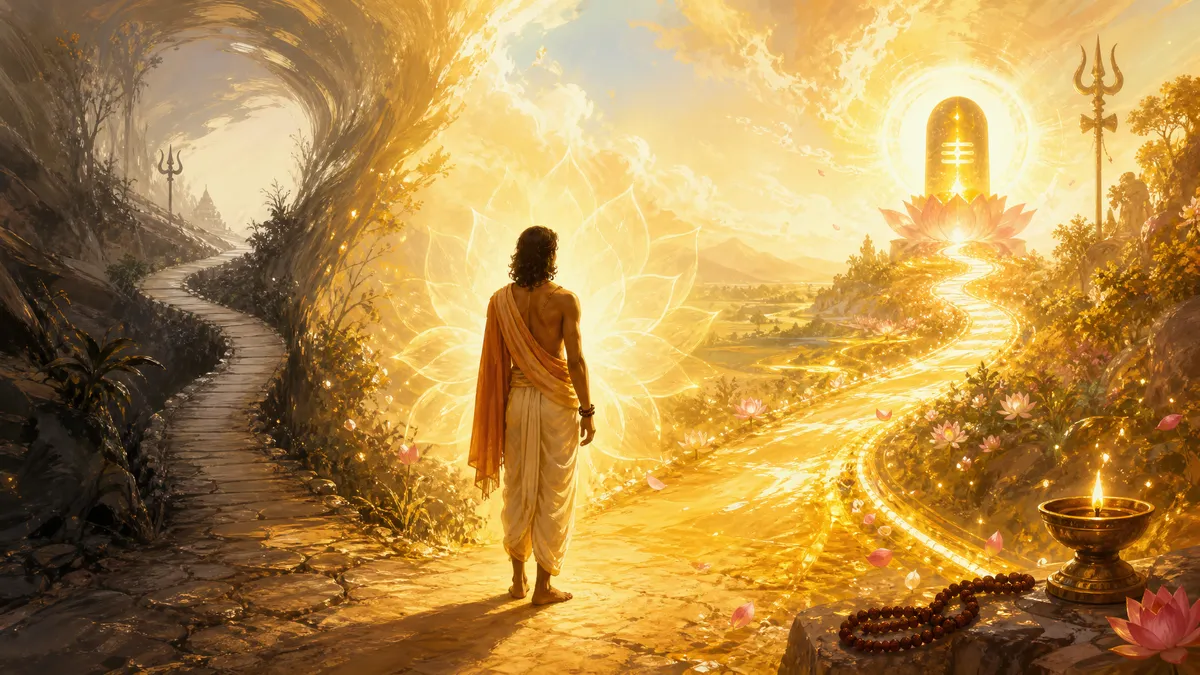
When the soul consciously submits itself to the divine will, it begins to move toward this happiness. But on this path it must overcome many tempting, gross energies (Prakriti), which are not Shiva himself, but are his gross, separated energies. It must pass through spiritual warfare, through spiritual struggle, and be victorious in it. Here the sadhu must act as a strategist; he must constantly have strategic thinking and tactical thinking. If there is spiritual warfare, then ignorance here is the enemy, and this enemy must either be crushed or defeated in some way; therefore sometimes the sadhu attacks bravely and fearlessly, presses the enemy, then defeats him and sets his own conditions. Sometimes his enemy attacks, and the sadhu takes shelter in a fortress, and he must hide so that the enemy simply does not see him, does not find him; that is, the enemy attacks—for example, lust comes—and that is it, you can do nothing.
But what you need to do is simply hide, take shelter in the fortress, simply so that he does not find you, and this enemy prowls about; you know you cannot cope with him, but you can take shelter in the fortress by reciting a mantra, practicing meditation or pranayama, and he will pass by. Sometimes you have to deceive him, pretend that you are retreating, and then strike decisively. Sometimes you have to pause and retreat, and sometimes you have to shift the entire war into the diplomatic sphere of negotiations and try to come to an agreement. There are many strategies here. Sometimes you need to seek strong allies so that a united coalition can deliver its strikes and push back the enemy; therefore the life of a sadhu is constantly a life within various such strategies, in tactics and strategies, how to win or at least not lose, because Shakti is constantly moving.
Ignorance is not phrases from philosophy; it is not empty words about ignorance. What does ignorance mean? It is a specific energy, a specific attachment, a specific pride, a specific lust, a specific dullness, a specific problematic situation, a specific poverty when there is not even anything, when vision is lacking, a specific constraint by something, or a specific illness. It is a specific relationship with energy; ignorance manifests as a complex relationship with the power of the universe, with Prakriti (material nature), and a sadhu must constantly play with this power. At the very least in order to survive, and at the most in order to win, attain freedom, and reign like a deity—this is spiritual warfare.
Three Types of Spiritual Temperament
Here one must have the mood of a spiritual warrior; a complacent, vague mood, a cocky “we’ll-throw-our-caps-at-them” attitude—there are various wrong moods—will not do at all. One who has such a cocky attitude simply gets knocked out immediately, in the very first second. A complacent mood leads to his simply starting to run away; maya runs after him, and he just runs. Indifference will not do either—this is the mood of a spiritual warrior, and in accordance with this there are three temperaments in tantra. The specifically expressed mood of a spiritual warrior is called vira-bhava. Vira-bhava means a special mentality in which a sadhu sees everything as a spiritual path; in everything he sees a spiritual challenge and a means of spiritual advancement. Pashu-bhava is the worldview of an ordinary sadhu, an ordinary person who is very susceptible to social stereotypes, desires, patterns, kleshas, upbringing, and karma; about such people they say: “They do not reach for the stars.” He is good, he chants a mantra, practices, eats prasada, does seva—just like an ordinary person; but a vira is something completely different.
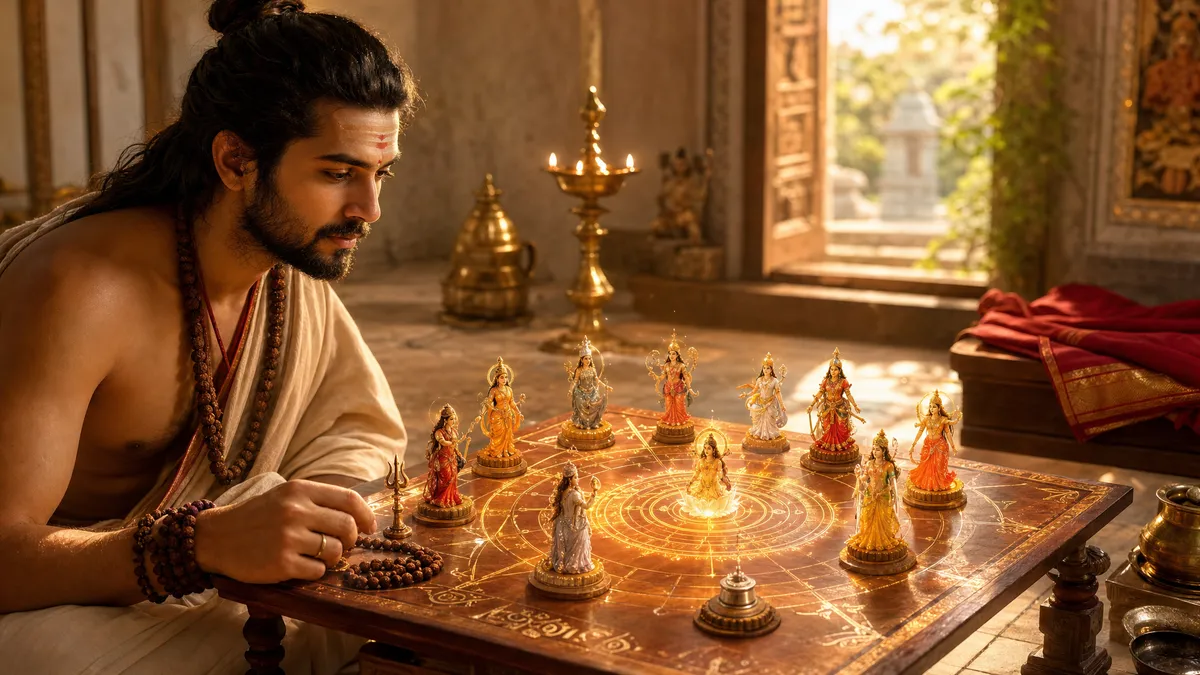
A vira is already a tactician and strategist of the spiritual path. He is the one who tries to play with the divine power of Shiva’s ignorance. He tries to outwit it, surpass it, and defeat it; he is always in search of new strategies. Why new ones? One might say, after all, the teaching is one, the mantras are the same, the practices are the same—what is new here? Everything is one and the same. But in fact, no: the practice is one, but the challenges are constantly new, because your channels are constantly changing; ida and pingala change within the course of an hour. Within an hour the five elements, one after another, replace each other in dominance; astrology, the various planets are constantly different, and your state is constantly changing. Understanding this, a sadhu is always in search of adequate responses to the challenges of karma, to the challenges of time, in search of various good strategies and tactics. When a sadhu is always in a good, proper search, this does not mean that he is constantly prowling around and changing methods, rushing from one thing to another—no. Rather, he maturely analyzes the situation, the circumstances, what to emphasize; he always has aspiration.
He does not jump from method to method, yet there are still different nuances; he is awakened, he assesses the circumstances, he is always playing with Shakti. When a sadhu plays with Shakti, his aspiration for practice is born from this play. He is immersed in practice all the time; there is not a single second when he is not immersed. I have a good example from my youth, when I had an acquaintance, a friend, and he was a fanatic of martial arts. He watched all the films with Bruce Lee and Chuck Norris; he was simply absorbed in that world. When I came to visit him, he opened doors only with his feet, and instead of simply turning off the light, he would strike it—that is, he was constantly in meditation. His conversations always came down to one thing: one must train. And if someone else came to him and did not train, did not practice at all, he would say: “How can that be? One has to train.” He did not want to talk about anything else; he was a fanatic of his own path. He was constantly looking for some new techniques, new strategies, new strikes, new blocks, combinations. When someone told him, “Someone has come there,” who could show a new block, he would travel to the other end of the city.
Such awakenedness in spiritual life is what a vira-yogin, a vira-sadhu, must have. It is being absorbed all the time in strategies of victory, because material Shakti always seeks to condition, always to defeat the sadhu—that is her seva. If a sadhu does not know this, does not think about it, if he just sort of lives with the flow, does not build his own strategies, is not absorbed in practice, then he is gradually carried away by the current; he loses. Only this kind of attitude of a vira-yogin allows one to play adequately with Shakti. Another example is a game of chess. In chess, energy constantly makes moves, and we must analyze the situation on the board and make countermoves; better still, we ourselves should devise certain strategies several moves ahead and outplay it ourselves. All of this is called vira-bhava.
The Four Stages of Sadhana
The four sadhanas (charya, kriya, yoga, and jnana) are the four stages on the path to salvation. They are like a bud, a flower, an unripe fruit, and a ripe fruit. Lord Shiva gradually frees individual souls from egoism, karma, and maya. Jivas gradually turn away from sensual pleasures. They become calm in pain and enjoyment. By the Lord’s grace, they come to know that karma is the cause of births and deaths. They begin to perform actions for the Lord, serve the Lord’s devotees, and attain purification of the mind. They understand that the soul (jiva) is distinct from the body, the senses, and the mind, and is beyond the reach of reason and speech. They receive initiation into the realization of the meaning of “Om Namah Shivaya,” and meditate on Shiva. They practice Shiva Yoga. Their hearts melt. The seer, seeing, and the seen disappear. All activity of the senses, reason, and intellect ceases.
Their hearts melt—this indicates that the egoistic heart, personifying accumulated karma (ahamkara), comes into contact with the light of devotion, love for God, with the Clear Light of contemplative presence, and gradually dissolves in the process of such union. When the egoistic heart (ahamkara) melts, this means a very great deal. It means that all the resentments of the past melt, all the attachments of the past melt, all hopes for the future—the worldly samsaric future—melt; pride melts, egoism melts, lust melts, greed and attachment melt, envy melts. “Melts” is not only a word as a figure of speech—it is also accompanied by the real melting of subtle drops in the chakras, the real introduction of pranas into the sushumna. On the energetic level, their own processes take place; at the level of the subtle body, vasanas and samskaras dissolve. When all this melts, the yogin discovers that within him there are no impure memories left, no darkening memories; he has no ambitions left, no fears, phobias, or complexes left; the eight pashas have melted.
He has no clinging left, he has no undissolved conceptual judgments left; all conceptual judgments become playful. He has nothing coarse and undissolved left—everything has melted. It is like a snowflake falling into the ocean. He suddenly feels that when everything in him has melted, when there are no coarse concepts—past or future—no fears, hopes, or clingings, suddenly his consciousness becomes very light, very fluid, very free, freely flowing, very open and blissfully inspired. Suddenly he feels: “So here it is—bliss! Here it is—joy! Here it is—the open state! Here it is—the experience of God in unity.” Such melting, self-liberation, deep self-liberation opens to him another side of life; he begins to see the world through the eyes of the awakened, because there is no longer strong duality. When there is no strong duality, and there is some nondual perception, a period of grace begins, the period of divya-bhava, when love, bliss, happiness, rapture, refinement, genius, sublimity, beauty, and purity naturally begin to open in the soul, and begin to open outwardly.
Here a gentle transition into divya-bhava begins. Vira-bhava has played its role: the vira-yogin has conquered ignorance, dissolved many dualistic notions that have melted away, and the quality of divya begins to awaken spontaneously. Divya is very subtle; he understands shakti very subtly, he plays with her very subtly. He no longer fights with her as a vira-yogin does; he also constructs various strategies and tactical methods, but he already plays in unity with shakti. Shakti is no longer separate and does not harm him, because his consciousness is open and abides in unity with Shiva, and everything he does becomes gracious, happy, joyful; he already plays very subtly, without leaving the natural state. Divya is characterized by self-surrender; he is constantly in devotion, constantly absorbed in love; his devoted heart is totally surrendered to Shiva, since he feels himself to be Shiva, and he is one with her, and divya already embodies in his life the dharma and the universal principle of rita.
They bathe Lord Shiva with the stream of divine love that has arisen in their hearts, and offer Him their hearts as one offers flowers. They hear the divine sound of His name and, moving toward this sound, contemplate the vision of Nataraja in the chidakasha and immerse themselves in the ocean of Shivananda. They become one with the Lord, like camphor melting in fire.
