

Commentary on the text “The Master’s Code”
The meaning of life for a person who has embarked on the spiritual path of yoga is the attainment of complete freedom.
Chapter 7. The Meaning of Life for a Person of the Path.
1. Attaining complete freedom means leaving the dreams of the mind and reuniting with the Infinite.
The state in which we now find ourselves and live is called samsara in Sanskrit, the world of illusions; it can be called the dreams of the mind, when we dream while awake. We consider the world, ourselves, and our life to be reality, but this is not so. And only those who are unfamiliar with the texts of spiritual traditions and do not belong to a lineage of transmission of saints fail to understand this. All saints have known this for a long time. In the world of saints, this is an axiom, just as in physics the law of universal gravitation is an axiom.
To attain complete freedom means to leave the dreams of the mind, to leave the world of illusions, and to reunite with the Infinite, with the Absolute. And as long as we have dreams of the mind, we are separated from the Absolute.
3. Throughout his life, a person touched by the Spirit seeks the Path to the Infinite.
This is about you. The Spirit has touched you, and you are seeking the Path.
Therefore he is called a person of the Path. Having found the Path, he strives to walk it worthily, in order to truly achieve his goal.
Billions of people around the world seek the path to the Infinite, but very few find it. As a rule, a person encounters many difficulties, obstacles, illusions, and traps, and therefore he does not manage to walk his path to the end in a single lifetime. Nevertheless, if we follow the Teaching properly and walk the path worthily, we truly achieve our goal. For us as spiritual practitioners, it is very important whether we will be able to achieve this goal in this life or not.
For a person of the Path, to live means only one thing: to seek the Infinite.
The Infinite is a translation from Sanskrit of the term Brahman. Brahman has the Sanskrit root “brihan,” from the word “to expand,” therefore the most adequate translation of the term Brahman into Russian would be the Infinite, the Primordial Ground, absolute Mind, the Supreme Essence, the original Source that has no boundaries.
For a spiritual practitioner, to live means to continually seek God.
4. A person walking the Path cannot imagine himself outside this search. The attainment of complete freedom comes to a person of the Path naturally, as the result of his life wholly devoted to the search for the Infinite.
5. Of all dreaming beings, only the life of a person of the Path has personal meaning, since the personal meaning of his life as a human being is aligned with the meaning of the Infinite.
Only when we begin to seek the Absolute do we acquire personal meaning. Before we began to seek the Absolute or a connection with the supreme Source, our life as yet had no personal meaning; it had a meaning set by goals and forces other than ourselves. These goals and forces are called karma.
In the world there are many powerful beings and forces that guide the development of people; they are called devas, gods. And until a person has found his own meaning of life, he is governed by the collective samskaras of humanity, directed by divine forces. In other words, he follows the material program, which is called prakriti. It is like a conveyor belt.
The process of attaining freedom means liberation from this conveyor belt, from the karmic program of humanity, which is not directed by the human being, and the acquisition of a personal meaning of life. But personal meaning in life can be acquired when there is a sufficient level of awareness, when you begin to decide, rather than karma deciding for you. One must struggle for this. Not everyone is given the opportunity to realize the personal meaning of life. In order to have the right to a personal meaning of life, one must prove that right. Unfortunately, such are the laws of samsara.
6. The meaning of life of a dreaming being is entirely determined by dreams, and this means that a dreaming being has no personal meaning of life. This is so because dreams are governed by powerful forces—patrons. Powerful forces have their own incomprehensible goals. These goals arise from their roles in the Games of the Infinite. The goals of the Games of powerful beings are so profound and global that they never take into account the insignificant goals of a person who sees the dreams of the mind.
7. Only when the personal meaning of the dreaming person’s life enters into resonance with the Boundless do the dreams and goals of the powerful beings directing them lose their power.
At present, the minds of people abiding in samsara are greatly ruled by dreams—that is, maya, illusion, the veiling force that prevents one from seeing the world as it is. This illusion is governed by subtle samskaras that reside in the subconscious of every living being. It can be said that these are mental imprints coming from past lives. These mental imprints are distributed and grouped by deities in the subtle bodies of a person.
There are patron deities within the human body that determine one’s lineage, personal destiny, the time to live and the time to die. There are deities that govern the karma of a lineage, a nation, an ethnic group, large peoples, nations, or races.
Dreams lose their power when a person decides to embark on the path of freedom and develops sufficient willpower and awareness. Then mental imprints cease to determine the course of his life and govern it; then he can become liberated from mental imprints.
What is karma, what are mental imprints? They are like neural implants embedded in the brain. If neural implants are embedded in the brain, a person carries out their program. Samskaras are something similar, only they are much subtler. We ourselves created these samskaras in past lives. The samskaras of a past life wholly determine our present life. And what we do in our present life, we will manifest in the next life. Therefore there is a saying: “If you want to know who you were in a past life, look at yourself as you are now. If you want to know what you will be doing in your next life, analyze the course of your thoughts.”
Thus, these samskaras can be neutralized, purified, and removed. They lose their power if we develop a sufficient level of awareness.
Samskaras are governed by various powerful beings, of whom we have already spoken.
Even the most powerful patrons treat with respect and admiration the dreaming being who has dared to seek the Boundless.
8. The firmer and more sincere the spirit of a person of the Path, the more friendly the powerful forces become toward him, and some even become his servants, worshipers, or patrons.
9. At first they arrange a series of great trials and tests. And if a person of the Path passes them successfully, and their pride is satisfied, they unconditionally recognize the greatness of his personal goal. For nothing can surpass in greatness the goal of one who has decided to seek complete freedom, to seek the Boundless.
When we begin to engage in spiritual practice, we may encounter various kinds of obstacles that may come from karmic creditors. Usually, within the human body there are various subtle connections with spiritual beings. These beings may be both positive and negative, and the connections with them may be both positive and negative. If it is a connection with devatas, deities in the channels, then it is positive. If it is a connection with karmic creditors, then it is a negative connection that entails obstacles. But when the yogin’s spirit is tempered, he can completely surpass all obstacles, receiving only blessings from the deities in the channels.
What are deities in the channels? They are called patron spirits, protector gods. They are subtle creative energies located in the subtle body of a person. It can be said that they are ourselves in our purest manifestation, only we have not yet revealed this potential.
The Search for a Master and Entering the School
Thus, when we have understood that the meaning of life for us is the path of freedom, then after that begins the search for a master and entry into the master’s school. Without the master’s school, it is impossible to attain freedom, except perhaps in a dream, but freedom in a dream has never saved anyone. When we enter the master’s school, we begin to learn.
Chapter 45. The Beginning of the Path. The Disciple’s Vow.
1. At the beginning of the Path, entering the gates of the school, the disciple takes a vow of loyalty to the Path, promising to be a disciple worthy of the Lineage of Masters.
2. Although the disciple takes the vow before the Master and companions—other disciples—this vow is needed not by them, but by himself. He needs it in order to believe in his choice and respect it.
3. For, even having set out on the Path, the disciple does not yet fully believe that he has embarked upon it, and that his life has begun to change irreversibly.
4. Taking the vow, the disciple swears to follow the Path according to the Master’s explanations.
5. This is necessary, for the Path is very deep and incredibly subtle; it has unpredictable facets. And the slightest carelessness or error in understanding can nullify decades spent on study and preparation. And a self-respecting person of the Path cannot allow himself this.
6. In taking the vow, the disciple promises to respect his choice, the Master, and his companions. He expresses the intention not to dishonor the ancient Masters and to walk his Path to freedom worthily.
When you enter the teaching of laya yoga, you connect with such a path of the ancient masters. The tradition of the masters is an entire world that we discover when we begin spiritual practice. In this tradition there are various principles that are revealed to us as we mature spiritually.
Stages of spiritual growth
When we follow the path, we have a certain algorithm of growth. At first you are an ordinary person; then you become a practitioner—a layperson, a monk, a hermit. You practice, that is, you apply the teaching you have learned. When you achieve success in practice, you become a master—one who has attained a certain perfection, provided, of course, that you have enough intention and willpower to walk the path in order to become a master. Masters test disciples to see how ready they are to become masters. When such tests are passed, masters may call themselves masters.
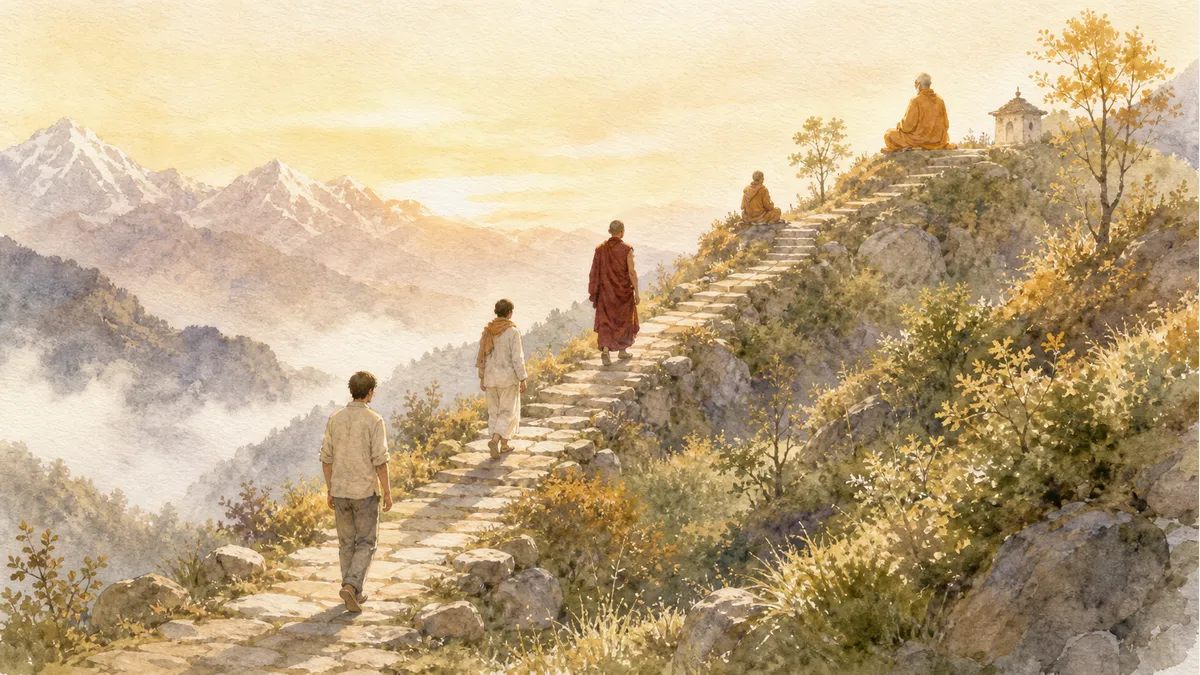
The goal of the spiritual path is to become a master from an amateur beginner; otherwise our spiritual path will always remain unrealized. One cannot be an amateur, a beginner, for twenty or thirty years. At some point one must become a master, a professional. The school of masters sets precisely this goal—the training of masters.
When we become a master, the next stage is the stage of a siddha, a perfected one. It can be said that a siddha is a more perfected master, possessing control over various forces.
The next stage is a mahasiddha, a great master. The degree of his control over powerful forces is even greater. For example, there are the well-known eighteen Tamil siddhas, the eighty-four Indo-Tibetan mahasiddhas, and the nine Naths revered in the canon of the laya yoga tradition. All of them departed in their bodies into the clear light. The famous siddha Virupa became renowned for stopping the sun with his magical powers. Other siddhas passed through walls or walked on water.
Finally, the next stage after the level of mahasiddha is a deity realized in the rainbow body. Many mahasiddhas attained the rainbow body. To attain the rainbow body means to completely transmute the elements of one’s physical body into light. This is not metaphysics and not stories about certain lords appearing to us. These are actually documented cases in our time, when monks experienced in contemplation attained the rainbow body and disappeared from the physical body. Such cases have been confirmed repeatedly.
The next stage is a creator deity. A creator deity is a yogin who has attained the highest level and who, by the power of his consciousness, can create universes, new worlds.
Finally, the next stage is a deity, indivisible and nondual with the Absolute.
Such is the line of spiritual growth when you follow the path of the masters. It can be called a “spiritual career.”
Qualities of a true master
What are the qualities of a true master?
Chapter 17. Qualities of the Master.
1. The Master walks the Path of Perfection day and night without interruption.
2. The true Master long ago left behind all the Games of this world: entertainment, wealth, power, rivalry with others, the search for fame. For him, only continuous movement toward perfection matters.
3. The true Master knows nothing of pettiness, pride, or self-love, for he feels himself to be part of an infinite mystery, equal with all beings.
4. The true Master will not make a single unnecessary movement, will not utter a single unnecessary word, will not allow a mistake even in a small thing, for he knows that small things do not exist, since he is a Master, the embodiment of perfection.
It can be said that masters are gods among people.
15. Loyalty to his Path for a Master is not a duty; it is his life and breath. It simply does not happen that Masters lose loyalty to the Path. Such people simply cannot become Masters.
16. The true Master always lives in the world of his method and mastery. If he does not live in the world of his method and mastery, then he is not a Master, for this is an error inherent in an amateur.
In other words, the circle of masters is another dimension of consciousness, which can be entered by those who have prepared themselves properly. Neither ordinary people nor novice amateurs can approach the circle of masters. Not because there are fences around the masters, but simply because it is another consciousness. Even if you are nearby, you will not be able to connect with this consciousness.
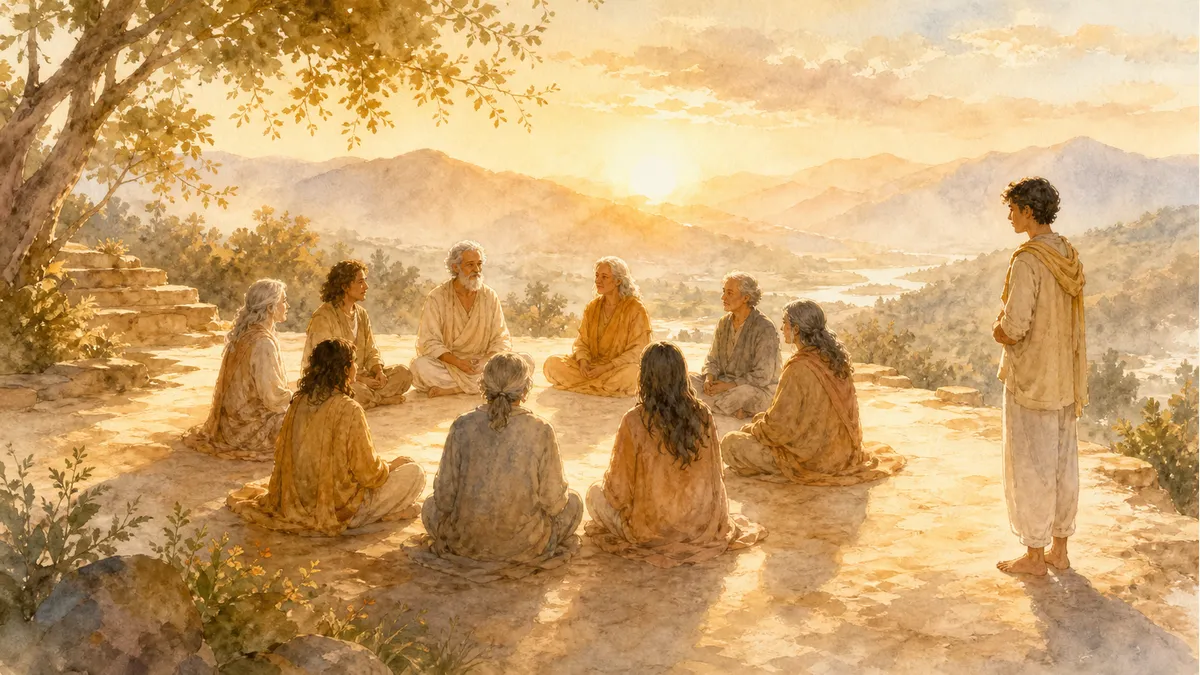
So, when we follow spiritual practice, we understand that we should become masters in spiritual life in order to attain freedom. When we decide to become masters, our attitude toward spiritual practice and spiritual discipline changes radically. We understand that if the requirements for a master are high, then we must take spiritual practice very deeply. A masterful approach is always very thorough and deep. It is not the approach of a beginner. When we understand that in spiritual practice we should acquire a masterful approach, this advances us very well. The level of self-discipline available to masters is simply incredible for an ordinary person. Nevertheless, by engaging in spiritual practice and training ourselves, someday we will be able to aspire to become a Master.
So, who is a master?
A master is one who possesses the art of awareness. If he does not possess the art of awareness, he is certainly not a master, at least in the tradition of the teachings of Laya Yoga, since to be a master means to possess this art, and to possess it perfectly.
The Art of Awareness and Self-Remembering
What does the art of awareness mean?
We will begin with the principle of self-remembering.
Chapter 64. Gazing at the Sun. Self-Remembering.
1. To remember oneself is the subtlest art of the Masters; the Master teaches it to the disciple when the disciple has already understood the empty essence of things.
So, awareness begins with the principle of atma-vichara—self-remembering.
For example, you are given transmission into a practice called atma-vichara. It is performed while sitting and while walking. It is assumed that if you have properly heard and received this transmission and begin to work with it, then after some time you must definitely have results: your level of awareness should grow, and you can confirm these results.
So, what is self-remembering?
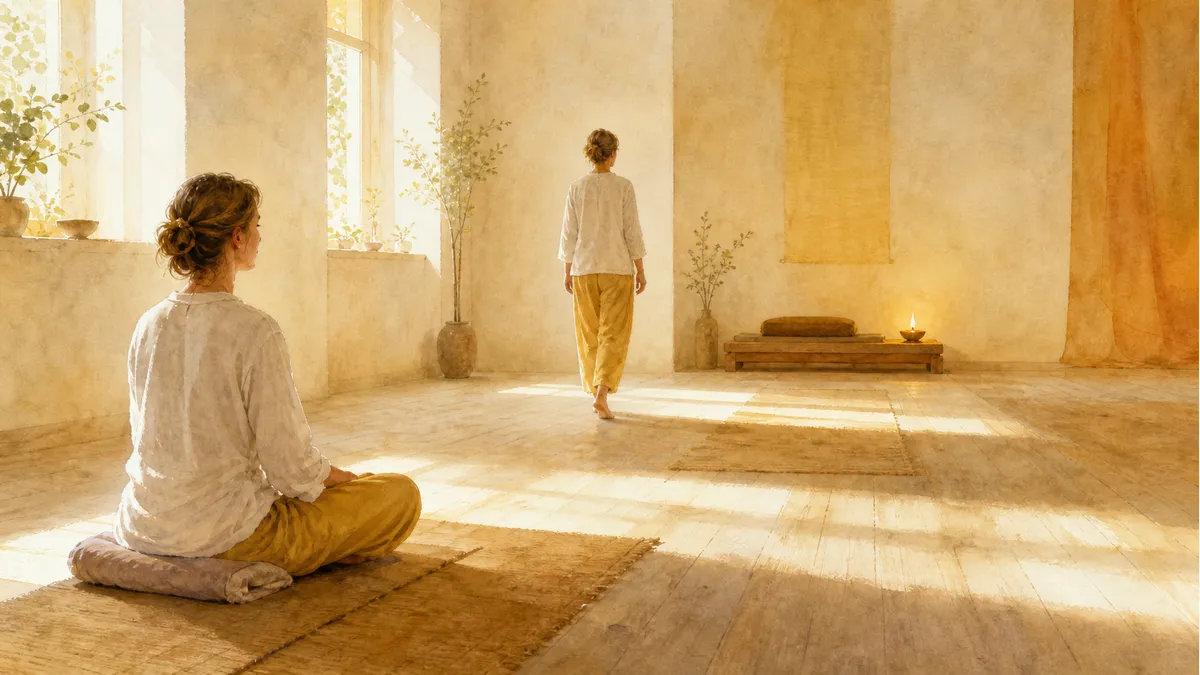
2. Without remembering oneself every moment, no one can attain complete freedom, even if the essence of things has become known to him.
3. A true Master remembers himself day and night, in heat and in cold, in joy and in sorrow, while walking and while speaking. There is no thing in the universe that could make a Master forget himself, for the Master is ready to give up everything except self-remembering.
4. Self-remembering is the key that opens the door to the Infinite for the disciple. Self-remembering is the secret entrance to the treasures of the Spirit. Only by remembering themselves did the Masters of the past attain freedom. Only by forgetting themselves did beings lose it.
5. One who remembers himself becomes one with the Infinite. Therefore, self-remembering is called “listening to the voice of the Spirit.”
6. To remember oneself always and everywhere—such is the rule of the disciple, given by the Infinite.
When I teach disciples, I give them a basic practice of recollection called atma-vichara. The training of monks after completing the basic practices consists of continuous attentiveness to self-remembering. It can be said that this is their inner alchemy, the monastic work that should be performed from morning until evening.
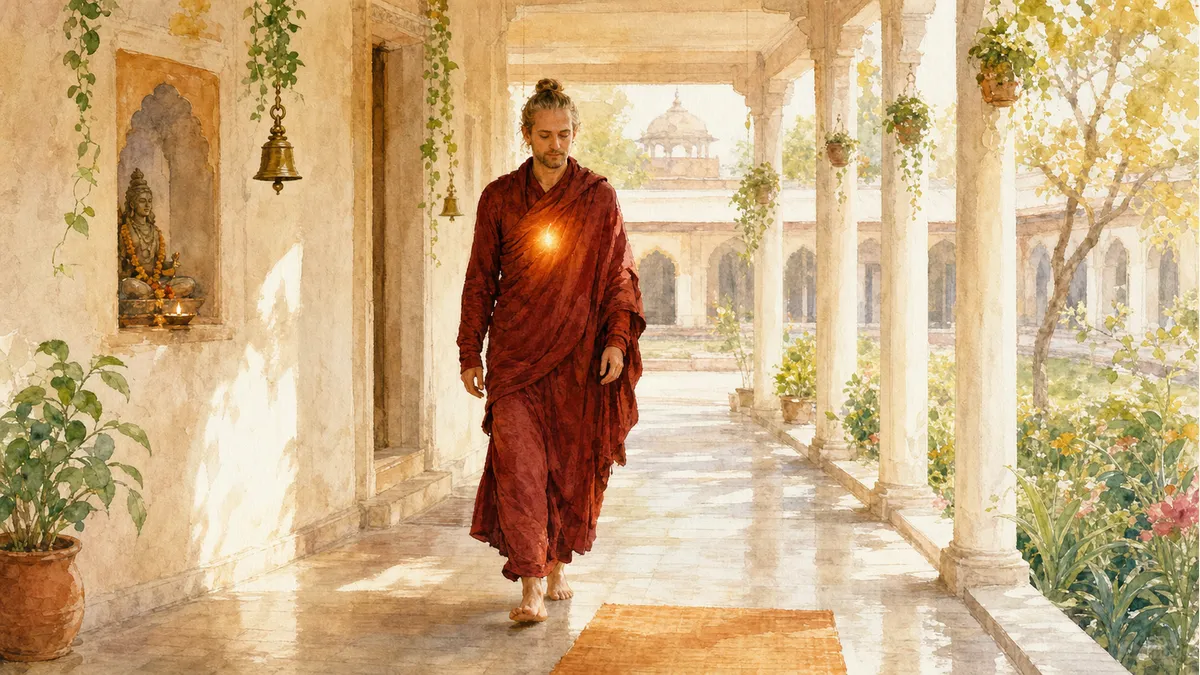
Ordinary living beings do not remember themselves; that is, they are scattered, unconscious, inattentive. The development of awareness begins with self-remembering, or atma-vichara. A Master remembers himself every second. There is not a single moment in which he would forget himself; even in sleep he remembers himself.
Self-remembering is the very beginning that opens all doors to realization. And in fact it is very easy to check or discover how aware a person is—it is enough to see whether he remembers himself or is lost in emotions, concepts, and external objects.
So, what is self-remembering?
Usually our mind is turned outward, toward external objects. If we look at something, we see external objects. At the moment of perceiving external objects, we lose our own awareness; that is, we do not remember ourselves while perceiving external objects. And when we lose awareness, this is the beginning of samsara. On the other hand, we can remember ourselves at the moment of perceiving an object. This means that I see the object, but at the same time a part of my consciousness is aware of the subject, that is, the “I,” myself. In other words, the arrow of consciousness is directed simultaneously at the object and at the subject. And when this happens, while seeing the object, I also remember myself. This is called the principle of self-remembering, or atma-vichara.
When we do not remember ourselves, this is samsara. When we begin to remember ourselves, this is the beginning of nirvana, its seed.
7. At first, the disciple does not understand, thinking that to remember oneself means to remember one’s human part.
8. Therefore, at first he remembers himself as a human being. When the Infinite reveals itself to him, he sees that what should be remembered continuously does not belong to the human being, for it is the Infinite.
When we practice concentration on the feeling of “I” and sustain awareness with a slight effort, we, of course, first concentrate on the feeling of “I” as a person, as the ego (ahamkara). But gradually the feeling of “I” grows stronger and begins to disperse ahamkara, and then within the feeling of “I” a boundless space is discovered.
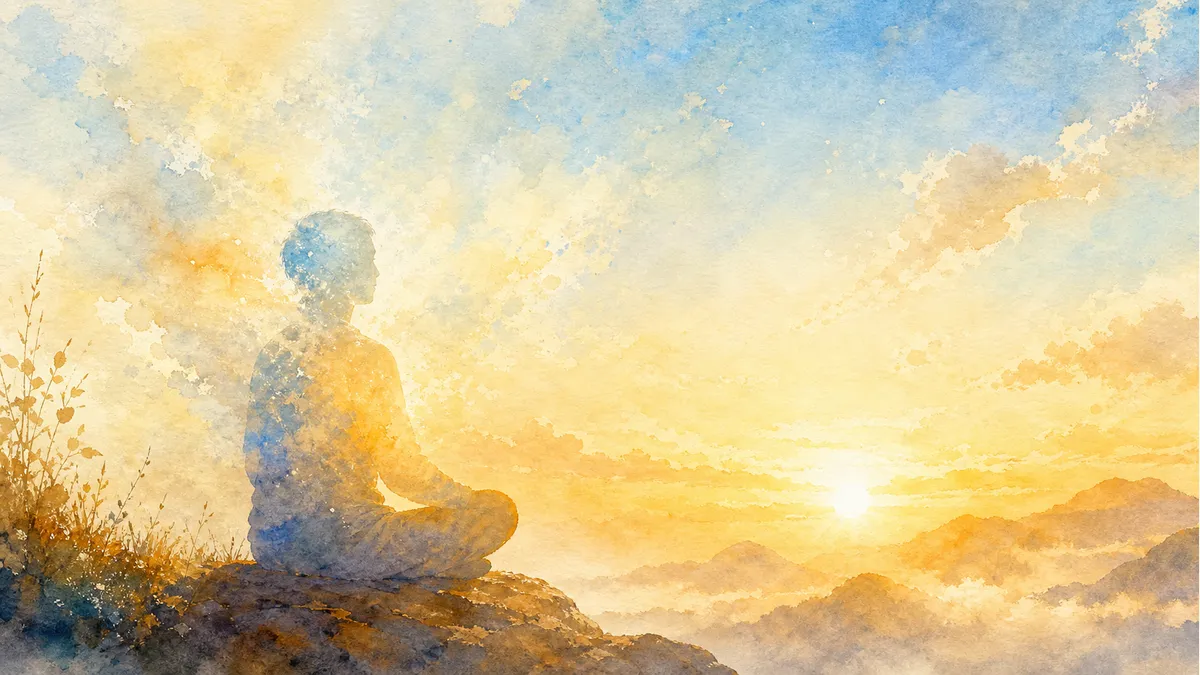
At first, what I am talking about may seem to be something very subtle. In fact, the feeling of “I” is naturally inherent in us, but if we do not notice it and sustain it, we fall asleep in the sleep of samsara; that is, our awareness closes. Conversely, if we develop, train, and nurture it, our awareness grows.
9. When a person remembers the Infinite within himself, he relates to the human within himself with humor.
10. The human is a very insignificant part of the Infinite. Nevertheless, the Master does not reject it, knowing that it too is a precious gift of the Infinite Spirit.
11. Beginning with remembering himself as a human being, the Master over time comes to know himself and begins to remember himself as the Infinite. Then it is said that he “contemplates the natural,” “has vision,” or “knows.”
Thus, the beginning of the practice of awareness starts with atma-vichara, self-remembering. If you have the ability to master the art of self-remembering, then laya yoga is within your reach. But if you fail to develop self-remembering, then further discussion of contemplation, the natural state, self-surrender, and the descending force will be hieroglyphs to you.
This means that self-remembering is a very important basic practice, which should be approached very seriously if you intend to achieve serious success in the practice of the teaching.
Rules of Conduct in Sacred Space
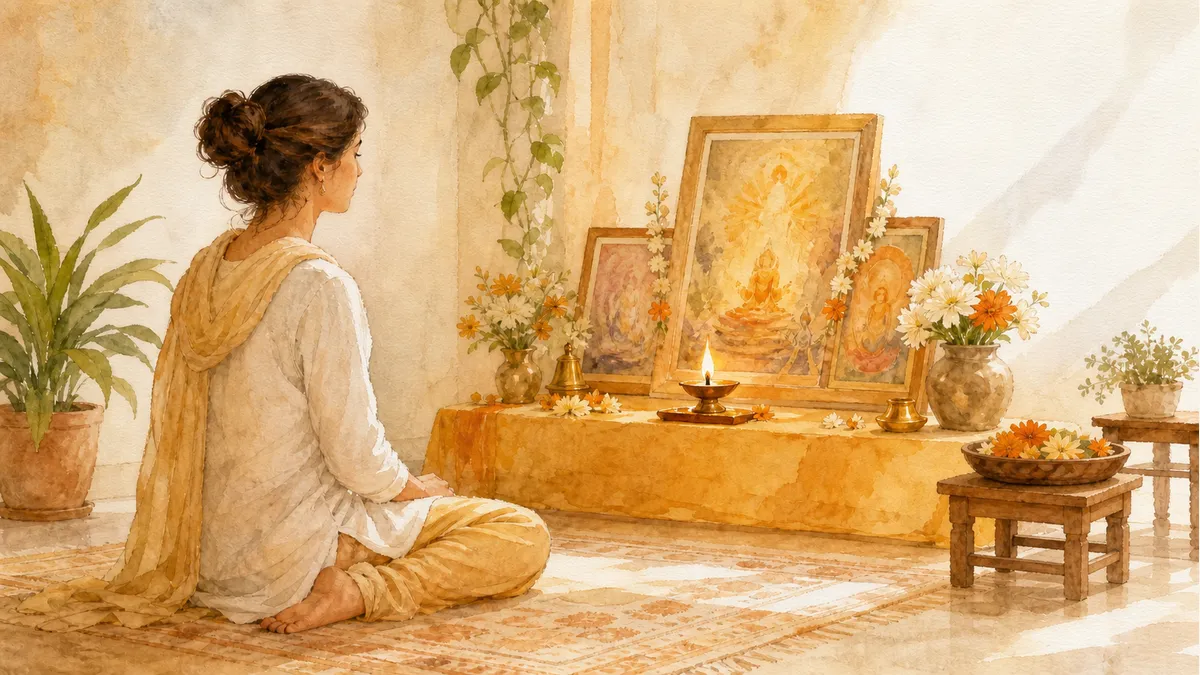
When you are sitting before the altar, you should not stretch your legs out toward the altar, as this is considered an aparadha. It is better to direct them to the side. One should also not turn one’s back toward holy, pure objects. Near statues and sacred images, it is undesirable to eat, drink, or sleep. One should always treat pure images with care, since one may unknowingly commit an aparadha, that is, some impure movement of the mind that can create an obstacle in practice.
Basic Practices of the First Stage
Now we begin our practical part. It includes the basic practices of the first stage, which begin with the Refuge mantra, followed by prostrations, the OM mantra, concentration, anapanasati meditation, analytical meditation, atma-vichara meditation, and the first-stage yoga technique.
The Refuge Mantra and the Three Jewels
So, we begin with the Refuge mantra.
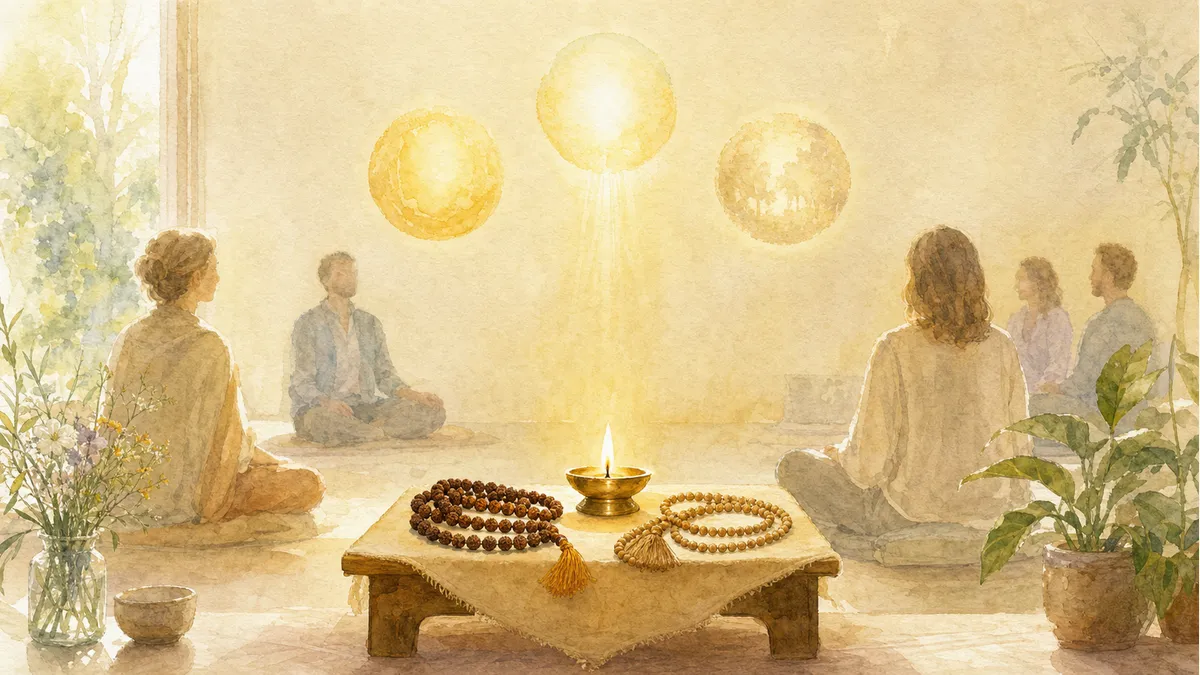
When we recite the Refuge mantra, we establish a connection with the Three Jewels. What are the Three Jewels? Guru, Dharma, Sangha.
In the absolute sense, the guru is the Absolute, your higher “I”; in the relative sense, it is also the lineage of saints whom you address, and the direct master from whom you learn.
Dharma in the absolute sense is boundless consciousness, the capacity to be aware; in the relative sense, it is the teaching that you study.
Sangha in the absolute sense is all living beings, when you see them in pure vision; in the relative sense, it is a specific group of practitioners, a tantric community with which you are connected by sacred bonds.
When you recite the mantra, record the number recited on some kind of counter. In the basic practices for purifying consciousness, the OM mantra should be recited one million times. This will take you approximately from six months to two years.
Asana Practice
Now we move on to the next basic practices — a set of asanas.
Why should asanas be performed?
In the eight-limbed yoga of Rishi Patanjali, asanas are the third limb, which follows the first two (yama and niyama).
Asanas should be performed in order to purify your energy channels within the body. Having been purified, they will become wider, so energy will be able to circulate freely through them.
If you master asanas, kundalini energy can awaken and rise through the central channel. Performing asanas makes your body stable for further meditation practices.
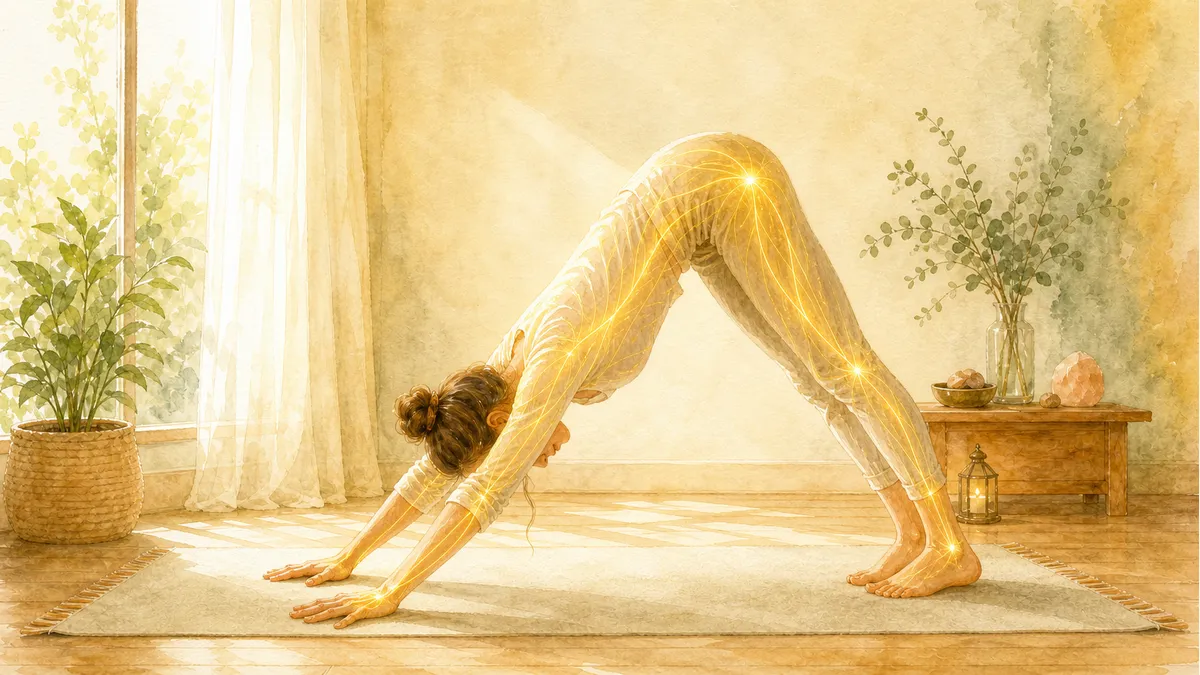
In our tradition there are two basic sets of asanas. You will now be invited to perform the first set of asanas.
When you perform asanas, the channels gradually begin to be purified, energy circulates freely, the Brahma knot in the area of the muladhara chakra, the Vishnu knot in the area of the anahata chakra, and the Shiva knot between the eyebrows are untied. Asanas are the beginning of the practice of kundalini yoga, that is, the second section of the five yantras of laya yoga.
Pranayamas and Working with Energy
After purifying your body with asanas, you proceed to pranayamas. With the help of pranayamas, the energy channels ida and pingala are purified, and kundalini is also awakened.
When the energy is awakened, you raise it along the spine to the head. When it enters the head, the upper chakras are purified, spiritual vision opens, and nectar appears. When the nectar begins to drip from the center of the head, it purifies your body, energy circulates freely, and then the pranas gradually begin to transmute from impure klesha-pranas into pure pranas of wisdom, or jnana-pranas.
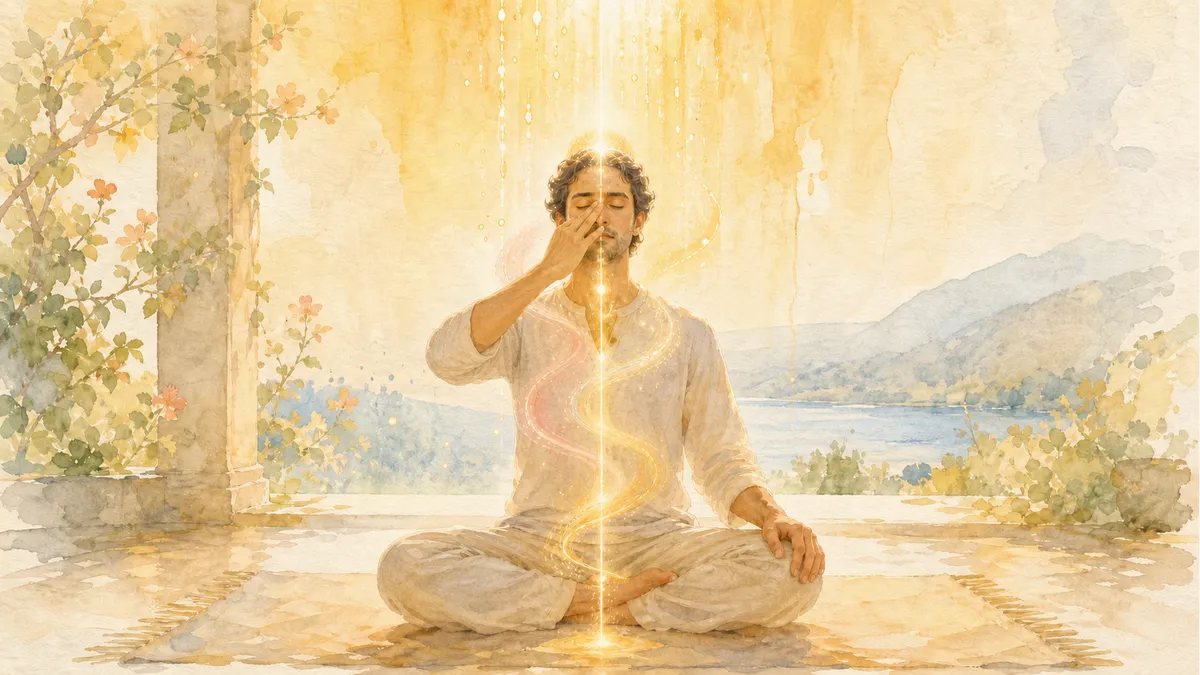
You can perform the first set of asanas daily for an unlimited period of time, even throughout your entire life.
Signs of the Purification of the Channels
What are the signs that your channels are being purified?
- The amount of sleep you need decreases
- The body becomes light
- The amount of food and water consumed decreases
- You gain lightness and the ability to sit in meditation for a long time
- Diseases disappear from the physical body, if they are not karmic
There is a beginner and an advanced set of asanas.
In the beginner set of asanas you do not hold the breath, while in the advanced set of asanas you do. At an even higher level, double breath holds are performed.
