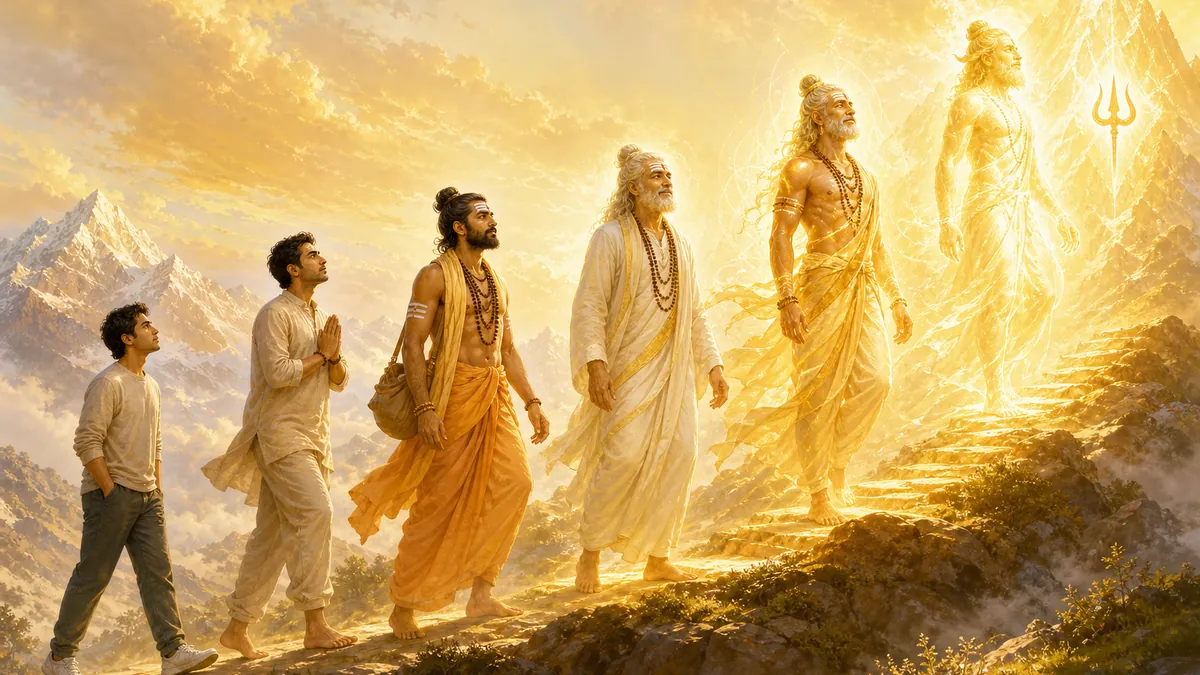
Disillusionment with Samsara and the Beginning of the Spiritual Path
At first we become disillusioned with samsara, and this disillusionment does not come immediately, but gradually, because we have a strong faith in samsara, even despite the fact that we suspect something, that something is wrong with it. But we believe in it thoroughly — the surrounding world and society have taught us to believe, and our karma is not averse to enjoying samsara. But gradually we become disillusioned with samsara.
Disillusionment with samsara is the condition that enables us to take the next step on the path to liberation, because it is impossible to combine a samsaric vision and an enlightened vision, although many try — it is like darkness and light. Samsaric vision is an unawakened vision based on the ego, on worldly desires, and on goals outside divine reality, outside enlightenment.
Since samsaric vision is inherent in the common reality tunnel of people, we too forget why we were born into this world, what the purpose of our incarnation is, what we wanted and expected from our incarnation on earth — all of this is forgotten.
The Incarnation of the Soul and Karmic Vision
Many souls were born into this world, incarnated on earth, and received the precious human body in order to use it for the sake of liberation. But then the maternity hospital, the mother, survival in the physical body — all of this is a great shock for the soul upon incarnation into material reality, and the subtle levels of consciousness that contain all its inner vows, promises, and inner aspiration become, as it were, blocked.
It is difficult to control the body; the body has powerful energy, powerful impulses. The Upanishads describe the process of how the embryo appears in the womb, and then all that remains accessible is the conceptual mind and some memory of past incarnations. If the soul does not have a strong connection with the inner Atman, it falls under karmic vision — this is called loka-drishti.
Loka-drishti means a shared vision, a shared reality tunnel, as it is seen by the living beings inhabiting this reality tunnel, this plane of existence. For example, Bhuvar-loka (the world of humans) is a plane of existence in which there is a common vision of people, and attachment to such a vision arises — this is called loka-vasana. Attachment to corporeality arises — it is called deha-vasana, and many other vasanas arise, and after this it is difficult to remember why we were born, what our purpose is.
Recognizing the Flaws of Samsara
But when we begin to reflect on the preciousness of human birth, impermanence, and the law of karma, we begin to see the flaws of samsara. For example, there are old age, suffering, illness, and death. Suffering is inherent in samsara — that is, it may seem that happiness and other things are inherent in it, but happiness and other things are not attributes of samsara; they are attributes of higher worlds. The attributes of samsara are precisely ignorance and the suffering that flows from it. Then we begin to become disillusioned with the samsaric vision of the world.

We begin to aspire along the path — how to become free, how to be liberated from samsara. We set ourselves the goal of knowing God, attaining enlightenment, achieving liberation, attaining samadhi, and even if it is not entirely clear how, we have heard of these goals. The very fact that we have heard of these goals indicates that we have the destiny of connection with these teachings.
Taking Refuge
When we have set such goals, reconsidered our values, and acquired a different meaning of life, from that moment the path begins; then we take Refuge. Refuge becomes support and protection on the spiritual path until we ourselves have awakened the Sadguru (inner awareness) within ourselves and, as Atman, have become Refuge, support, and protection for ourselves.
For ourselves means that God, the Absolute, has awakened within us. A person cannot be support or protection for himself as the ego, as ahamkara, as the mind, but his inner Atman, his true essence, can be Refuge, support, and protection.
But until the inner Atman is awakened, we find Refuge in the ishta-devata, in the Guru-shishya-parampara, in the Guru, in the sangha, in the Dharma, in the lineage of saints, in the teaching. Thanks to this, the possibility appears to receive blessings, receive the teaching, accumulate merit, perform sadhanas, receive meditative experiences — all of this is Refuge (sharanam).
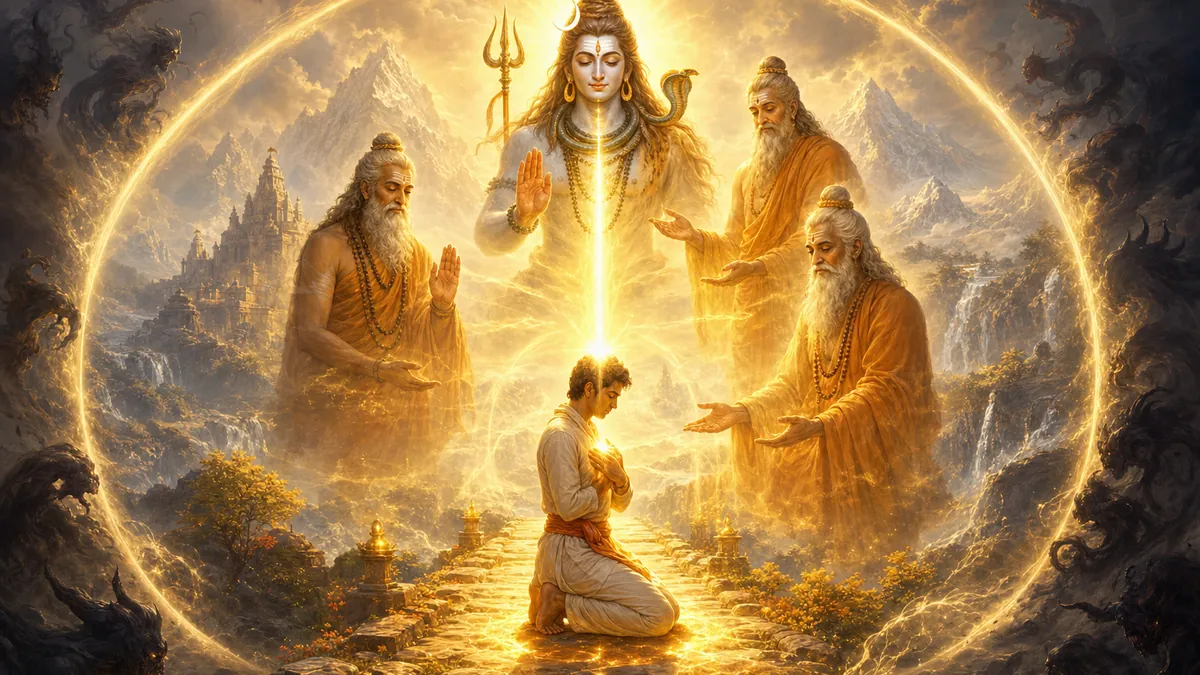
Three Levels of Refuge
Having once taken Refuge, we then clarify it throughout our lives. Refuge is the acceptance of a symbol of faith; Refuge is also the acceptance of a spiritual Teacher, the establishment of a proper connection with him; it is the establishment of contact with the ishta-devata (chosen deity), and the establishment of a connection with the teachings and sacred texts, the study of sacred texts, the absorption of the methods of the teaching.
Refuge is also the establishment of a connection with the sangha, with the Guru-shishya-parampara, the assembly of saints. That is, the sangha can be earthly and heavenly. The heavenly one is on the altar; besides my image, I am here, that is, according to tradition it is considered that a portrait of the spiritual Teacher is also placed there. The earthly sangha is here; it is we ourselves, samaya brothers and sisters who establish samaya relationships with one another — all of this is Refuge.
The External Level of Refuge
At first it seems to be something external: the Guru seems to be an external, separate person from whom you learn; the deity seems to be a sculpture on the altar; the teaching seems to be a printed text — all of this is the external level of Refuge. The sangha seems to be friends, brothers and sisters in practice sitting next to you, who sit nearby during a retreat.
The Internal Level of Refuge
Then we discover a subtler, internal level of Refuge, and we discover a new dimension of Refuge — that the deity can be within us, it can appear to us. It is our pure mind in our pure vision, our enlightened mind — this is Dattatreya, and he can take such a form.
Our inner Sadguru can manifest within us as the natural awareness of the nature of Mind, as intuitive clarity, as brahma-aham-bhava. The teaching can manifest within us as viveka, vichara, as vairagya, as the ability to distinguish truth from untruth. The sangha (assembly of saints) can manifest as deities in the channels.
Then we discover the inner pure level of Refuge and begin to look purely at the external objects of Refuge. We begin to understand the subtle interconnection between external and internal Refuge — that, as it turns out, external Refuge is only the visible part of the iceberg. There is also a subtle level of Refuge, and it is connected precisely with me; it is not somewhere far away from me.
It is not external, and these are my subtle, pure elements: the Guru outside is an expression of my Atman Guru within; the chosen deity is an expression of my pure mind within; the surrounding brothers and sisters, the saints of the lineage, are an expression of my pure, enlightened inner energies. Then we may be able to look at external Refuge just as purely and establish such subtle, pure, trusting relationships.
The Secret Level of Refuge
When we have revealed the two levels of Refuge — the external and the internal — we become ready, capable of revealing the secret level of Refuge. What is the secret level of Refuge? The secret level of Refuge is connected with the experience of non-duality, when we recognize the inner and the outer as one consciousness.
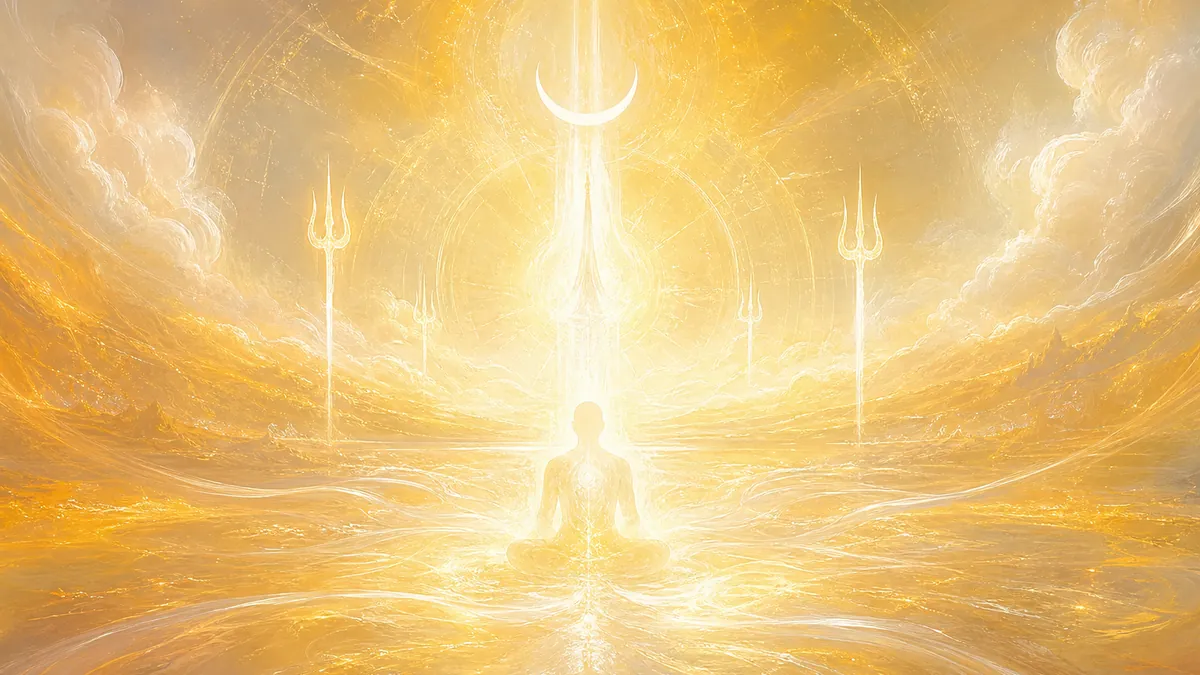
When we recognize our own self as light, the principle of the Guru as light, the principle of the ishta-devata as light, the principle of the saints of the lineage as non-dual light. When, behind all external diverse phenomena, we recognize the Dharma as the play of the radiance of this light, evoking in us subtle clarity, understanding, and viveka.
When all this merges and becomes one, where there is no division into subject and object, when all forms playfully self-liberate in the emptiness of non-duality, and then from the emptiness of non-duality manifest again, but they no longer mislead us.
In fact, all forms and names are manifesting right now from the emptiness of non-duality, but our perception is still not quite in order, and therefore they constantly mislead us. But when we come to know the secret level of Refuge, recognize non-dual light as the essence of all Refuge, we finally see God directly, we directly see that in which we believe, since we begin with believing in what we do not directly see.
We see indirectly — we see through sacred texts, through the mind, we see through the eyes of the Guru, the deities, the teaching, Dharma brothers; we comprehend our own path with the mind, and our acceptance of the symbol of faith is at first external in this way. But at the stage of discovering the secret level of Refuge, we directly perceive that in which we believe, and we believe in what we perceive — it becomes one, unified, non-dual, absolute consciousness.
The Principle of Tantric Upasana
All our expression of respect, invocation, veneration, puja, arati, pada-namaskar, bhajan-mandala, theurgical practices — this is the invocation of this inner and secret level of Refuge. When we express respect for something, for certain energies, these energies manifest in our life, increase in our life — this is the basis of the principle of tantric upasana, tantric worship.
Whatever energy you take, if you begin to express respect for it, to show it great reverence, it will begin to grow within you. Therefore, according to tradition, it is customary for us to express respect for everything connected with the Dharma:
- We do not place sacred texts on the floor, step over them, or step on them; that is, we take care of them — thanks to this, sacred texts have the magical power to bless
- We express respect for methods, for mantras, for transmissions, preserve them properly, do not reveal them to just anyone, and respect them in our soul — thanks to this, mantras and methods preserved properly carry great spiritual power; they give experiences
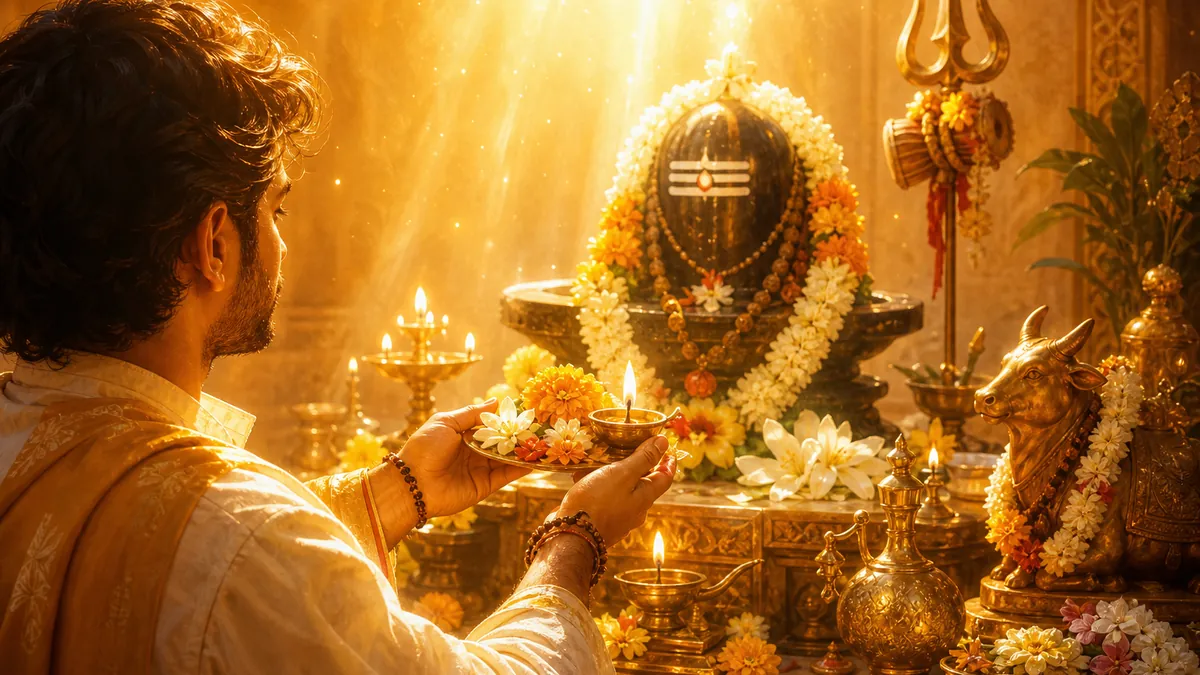
- We express respect for divine beings on the altar, make offerings — thanks to this, we come into contact with their essence of consciousness, come into contact with their enlightened dimension
Because all divine beings are enlightened dimensions; they are meta-minds abiding in the samadhi of pure light.
The Nature of Divine Beings
It is very difficult for us to understand how there can be entire hosts of beings abiding in the samadhi of pure light, in boundless bliss, happiness, liberation. For us this is something unattainable; where do we draw our idea of deities from — from books, from external drawings, from icons, from iconographic images, from films.
But tantric upasana makes it possible to establish a connection with deities and truly understand what divine beings are. They are divine meta-minds, omnipresent, eternal, immortal, possessing pure luminosity, abiding in samadhi. Guru Brahmananda, Dattatreya, Rishi Vasishtha, the great gods — they all abide as all-encompassing consciousnesses in the dimension of pure light.
By expressing respect for them, invoking them with hymns, stotras, prayers, mantras, and making offerings, we come into contact with their enlightened bodies of wisdom, which dwell in the dimensions of pure light. When this contact is favorable, it is as if certain rays fall upon us from their divine wisdom and illuminate our minds and karmas.
It will not necessarily be the case that Dattatreya himself will personally appear for you and begin to bless you in some way. This can also be possible, but I am afraid that a different level of tapasya is needed. If you have watched a film of the Vedic tradition, you have seen how a person withdraws to the Himalayas, stands on one leg in vrikshasana, or raises one arm, while with the other he recites a mantra on a rosary, or holds both hands in namaste: “Rudraya Namaha.” Winds blow, rains descend, months and years pass, he feeds on leaves, water, and air, already like some dried-up skeleton, and one day the deity appears to him in the radiance of glory, in splendor amid the heavens. Smiling an auspicious smile, sparkling with attributes and garments, he says something like: “Well done, you are performing austerity well; what do you want?” — that is roughly how it is shown.
For a deity to manifest itself as an avatar, to reveal itself — guna-avatar, lila-avatar, purna-avatar, shakti-avesha-avatar — to us as an amsha-avatar... We too are avatars of deities, only very small ones. Every living being, every person contains a particle of deity, therefore we have the right to call ourselves an amsha-avatar. But an amsha-avatar differs from a purna-avatar just as a speck of dust differs from the moon — in principle, there is dust on the moon, and a speck of dust is also dust, but the difference is enormous.
For a deity to appear as some particle of itself, we ourselves must manifest great respect and great strength in tapasya. But this also happens, and blessing in such practices occurs differently. We unite with the dimension of the deity, and this dimension of the deity possesses natural innate luminosity, natural bliss (ananda), natural awareness (chit), natural depth of being (sat), and it possesses the natural playfulness of forms.
When, through mantra, visualization, and worship, we unite with this dimension of being, its rays naturally send us certain experiences through the channel of connection, and our minds become enlightened, and this we call the impulse of Anugraha-shakti. It is like receiving a radio signal or an image from a distant star. The star shines on everyone, but in order to receive its image, its light — for example, a star two thousand light-years away — we must tune and direct our telescope toward the star; then we will receive a radio signal from it. All of this is upasana — the principle of worship and respect.
Seven Acharas — Stages of Worship
In the tantrism of Shaiva Siddhanta, in Advaita Vedanta, and in Anuttara Tantra, upasana is always practiced in a non-dual way. There are seven stages, or seven acharas, described in the “Maha Nirvana Tantra” and in other tantras.
Vedachara
The first is called Vedachara. Vedachara is following the ritual Vedic tradition, Smartism of the Brahmanical type of worship. Vedachara is when God is far away, and there are prescriptions, rules of conduct, and rituals — this is Vedachara. Vedachara is a kind of childlike, initial level of perceiving God through discipline, through rituals, through mental philosophy.
Vaishnavachara
Another level of perceiving God is Vaishnavachara. Vaishnavachara is the worship of God Vishnu, the sattvic manifestation of the divine. The worshiper and the worship are always separate; the bhakta and the one he worships — God — are in the positions of servant and master, or in other positions: in the positions of beloved, child and parent, but there is always duality between them — this is Vaishnavachara. Vaishnavachara is the worship of the sattvic aspects of being in order to receive blessing.
For Vaishnavachara, bhakti (devotion) is important. When you see people practicing the worship of Krishna — this is Vaishnavachara. In Vaishnavachara, the form of the deity is very important; worship in the sattvic aspect implies ritual worship of sattvic forms, an emphasis on devotion, not on jnana and not on yoga.
When you talk with a Vaishnava about yoga, he will say: “No, no, that is mystical yoga; we are interested only in bhakti, pure devotion. We do not practice mystical yoga — it develops the ego,” as they say; this is a feature of the path of Vaishnavachara.
Shaivachara
The next is Shaivachara. Shaivachara is the worship of Shiva. Shiva embodies the principle of the Absolute, the principle of non-duality, the formless Absolute. If Vishnu embodies the principle of form, of the manifested, sattvic God who has attributes, a personal aspect (this is the aspect of Ishvara), then Shiva embodies emptiness, the Absolute, nirvana, the Brahman of Vedanta, non-duality.
Here, worship is performed not only in the spirit of bhakti yoga, but also in the spirit of jnana yoga. Here jnana, observation, awareness, analysis, yoga, meditation, samadhi are important. Therefore Shaivachara is a kind of masculine path, the path of asceticism, meditation, concentration, yoga, tapasya, jnana yoga, analytical meditation, and the attainment of samadhi.
Here, the one who goes toward Shiva and Shiva strive to unite. Worship in the spirit of non-duality is expressed in the tantras as follows:
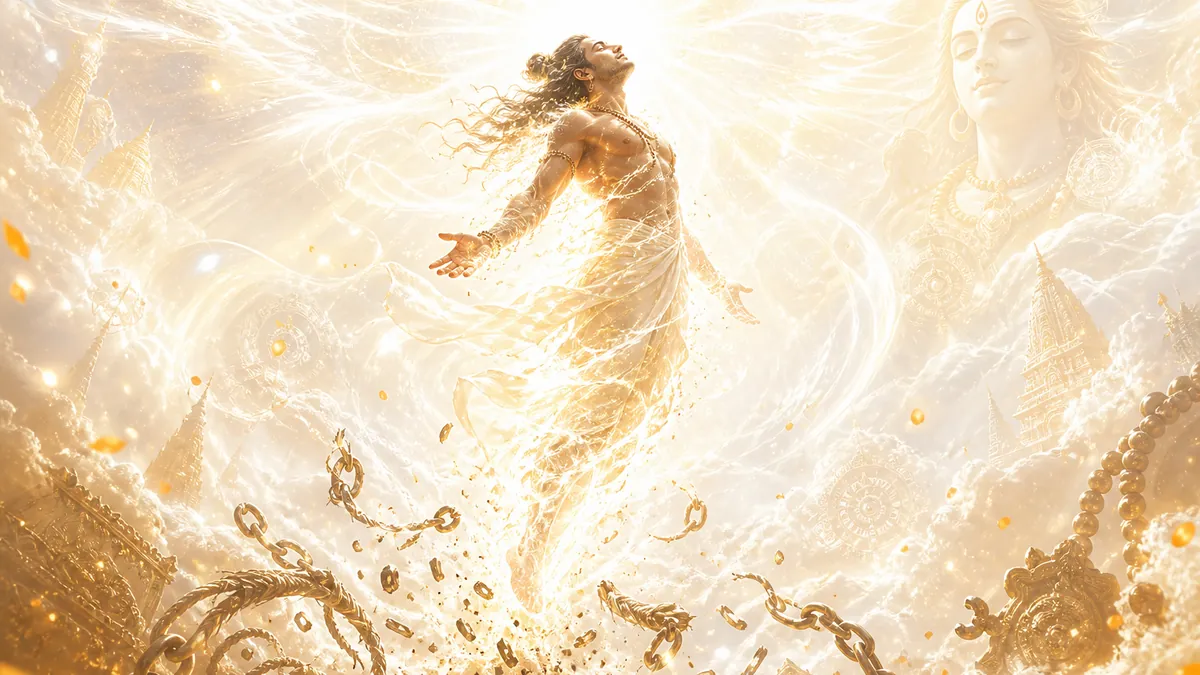
“Shivam Bhutva, Shivam Yajet” (you can truly worship Shiva only when you yourself become Shiva).
If you say this to someone who is on the path of Vaishnavachara, he will say: “No, no, I do not strive to become Vishnu, I strive to worship Vishnu,” — they say this: “we do not strive to be sugar, we strive to eat sugar and enjoy it; we strive always to remain at a distance.”
But on the path of Shaivachara, veneration in the spirit of Advaita, in the spirit of jnana yoga, means merging with the object of veneration, and our practice begins with Shaivachara. Shaivachara means: yoga is important to us, effort in yoga is important, concentration is important, the development of awareness is important, and tapasya is important according to one’s strength, at least inner tapasya.
Vaishnavachara says this: “Surrender yourself to God’s mercy, and God will save you.” However, surrendering to mercy is for those who possess the level of divya, who abide in divya-bhava. If a pashu with impure karmas surrenders to mercy, then he cannot receive this mercy — it exists, but it is inaccessible to him. It is like having money on a card, but the card is blocked, and you gain no benefit from it — it is blocked by karmas.
In the same way, pashu-bhava — our karmas have blocked divine mercy, and although it would seem that we possess the Atman, there is no benefit from it. Therefore Shaivachara is the application of effort in order to purify one’s karma.
The Nature of the Absolute in Shaivachara
On the path of Shaivachara, God is the Absolute; this is not the God who has form and attributes, personal aspects, descriptions, and games. God is the Absolute, which unites all gods within itself. This is Brahman beyond subject and object; it is non-dual awareness, which is empty by its nature, but can manifest in many ways as the entire diversity of gods, and here one deity can transition into another.
Thus it is said:
“Shivasya Hridayam Vishnoh, Vishnoscha Hridayam Shivah” (Shiva is in the heart of Vishnu, Vishnu is in the heart of Shiva, and one who does not understand this will not attain liberation).
Further on, the “Maha-nirvana-tantra” describes other charas as well: dakshinachara, vamachara, siddhantachara, and kaulachara.
Enlightened Wisdom and Its Meaning
When, on the path of shaivachara, a yogi attains enlightenment, he gains the wisdom of the Absolute; therefore, among the enlightened, none of them seeks wisdom. Why? Because there is no need to seek what has already been found.
Before enlightenment, it is very important to seek wisdom; wisdom is the main thing, everything else is unimportant. One must attain enlightened wisdom at all costs, because without enlightened wisdom it is like driving without a map, without a navigator—you basically do not even quite understand where you need to go, or whether you need to go at all.
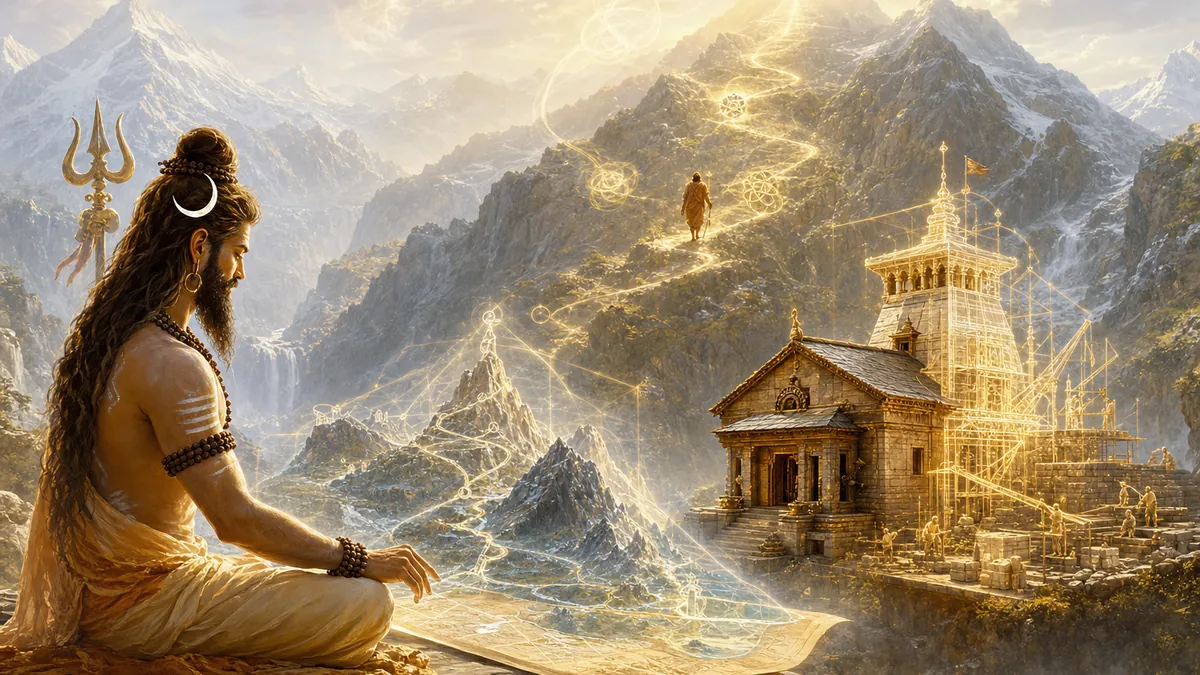
Enlightened wisdom is brahma-jnana, the realization of the Upanishadic ideal “Aham Brahmasmi.” When, at the level of shaivachara, the natural purity of awareness is comprehended and nondual consciousness is comprehended to some extent, the next stage is the development of the depth of this natural purity of consciousness, when wisdom also requires power (shakti), energy.
Dakshinachara and Vamachara: Veneration of Energetic Aspects
Dakshinachara, vamachara is the veneration of God in His power aspects, in His energetic aspects, the recognition of God as the play of the energy of the Absolute in the universe.
Here the recognition of tattvas is important. For example, there is a classification of thirty-six tattvas characteristic of Shaivism—both Shaiva Siddhanta Shaivism and Kashmir Shaivism. The first five pure tattvas are what constitutes the goal of yogins. What are these first five pure tattvas? They are the first five primordial natural energies of the universe:
- Chit-shakti — the energy of awareness. When we become aware of the “I” within ourselves, for example, when practicing atma-vichara—this is the manifestation of chit-shakti
- Ananda-shakti — when the Absolute becomes aware of itself as “I am.” “I am” means that the primary reflection takes place, and bliss arises from this
- Jnana-shakti, iccha-shakti, and kriya-shakti — the subsequent reflections “I am this”; thus the reflection becomes increasingly divided, and these powers awaken
These primary five powers are called pure tattvas, and they are also called Shiva, Shakti, Sadashiva, Sadvidya, and the primary five tattvas. The comprehension of the primary first principles of the Absolute is the task on the path of those who worship God as energy.
Siddhantachara: Attaining Perfection
Finally, siddhantachara arrives. Siddhantachara is the attainment of perfection, when wisdom has been realized, when the universal primary energies of being have been realized, and perfection is attained in changing reality, in controlling the elements, in controlling time and space. A sadhu, a jnani, moves into the status of a siddha, and the comprehension of these acharas is an evolution from one being into another.
The Path of Spiritual Evolution
For example, we too are now on the path of evolution; everyone is on their own path of evolution. And how does evolution take place in our human body?
An ordinary person, then a sadhu—when we, through practice, take Refuge, study the teaching, and purify our karma, this means that from an ordinary person we strive to become a sadhu. There are descriptions of the qualities of an ordinary person and there are descriptions of the qualities of a sadhu, and we must clearly understand what a sadhu is, what qualities he should have, and which he should not have.
The Stage of the Spiritual Seeker
On the path from a person to a sadhu there is an intermediate stage—it is the most interesting and amusing one; it is called the spiritual seeker. There are different classifications of spiritual seekers—this means that we are searching, and various adventures happen to us. Sometimes we search at random, not quite for the right thing, not quite in the right way, but somehow we strive toward it. We evolve—it is like a chrysalis striving to become a butterfly; this is also called “the path of the bee.”
This means visiting different teachers, taking photographs with them, receiving various initiations, accumulating teachings, mantras, and transmissions indiscriminately, being in different traditions, studying different schools. Teachers sometimes joke about this; they say: “Even if your head becomes flat from the touch of the ritual vessel during initiation, if you do not understand the meaning, it will not work.”
This stage is amusing because the living soul seeks perfection, but it does not yet fully understand how; therefore its various karmas get mixed in, various serious situations arise, and many different adventures occur. But when this path has been passed, this is called a person becoming a sadhu; he has already taken shape.
Overcoming Karmic Obstacles
As long as a person is a seeker, the world pulls him in one direction, spiritual life in the other, and he is like that soldier who is on guard, a sentry at his post — he wants to sleep, yet he feels sorry for his homeland. He wants to walk the spiritual path, but samsara still attracts him so strongly; there are still many different karmas that have not been worked through.
This is at the same time the most difficult period, when one must overcome the gravity of karma, the gravity of samsara — all the old rina-bandhana connections become activated at this time. All unpaid karmic creditors somehow awaken precisely at this moment and begin to worry that we will not repay our karmic debts.
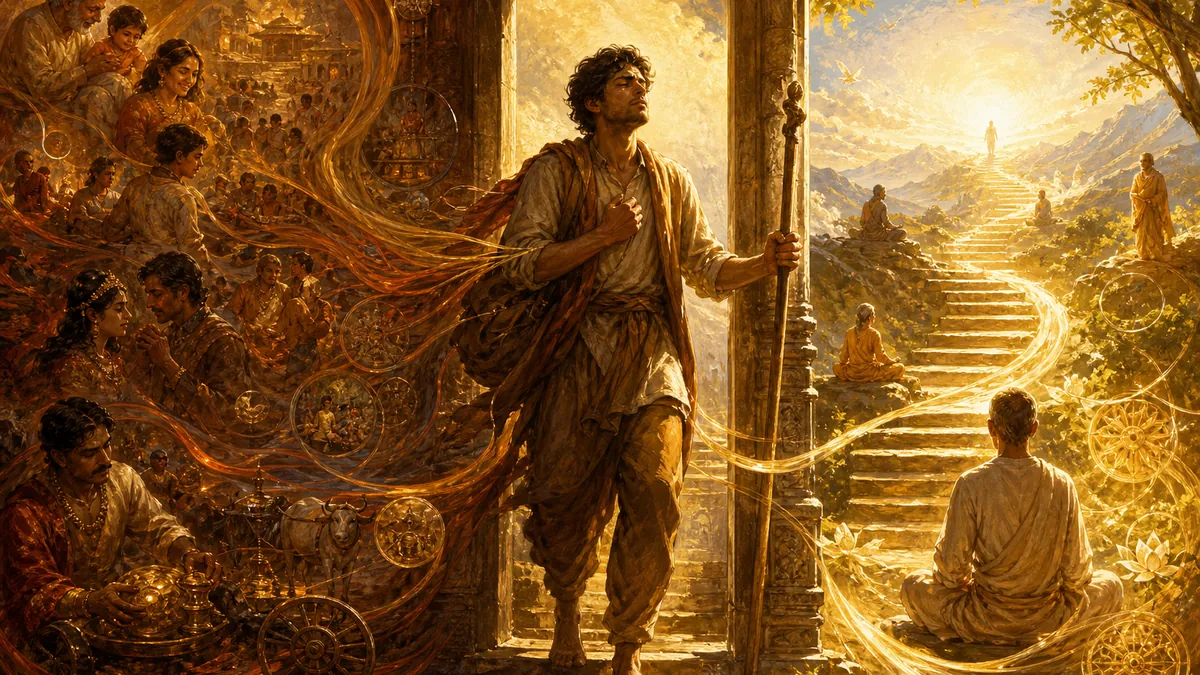
Sometimes it seems that a person lived a trouble-free life, everything was fine and settled, and suddenly he decided to become a spiritual seeker — and then everything came crashing down. This means that the karma of many lives began to be washed away in one life; those karmas that were supposed to be washed away in future lives evenly and gradually become compressed into a short period. In a person’s life this is like rebooting a computer system — some kind of small hard drive happens at this time, but one should not be frightened or despair.
Here one must be fearless, courageous, and flexible in order to pass through this period. When this reboot takes place — that is, when the shaking up of karmas occurs — unnecessary connections will fall away, necessary ones, on the contrary, will become established, true values will appear, and false ones will fall away. This means that you are correcting the vector of your life, the vector of movement of your intention, in the right direction.
The Qualities of a Sadhu
When this evolution is complete, the seeker is as if remelted; he becomes a true sadhu, a person of dharma, a person of the spiritual path. A sadhu is one who lives only by God, who practices the path of samadhi. It does not matter — one can be a sadhu as a purna-sannyasi, a monk, live in an ashram, be a karma-sannyasi, even have a family and children.
But a sadhu is one who no longer seeks worldly goals, one who lives by dharma for the sake of dharma, who serves God for the sake of God, one who cannot think of himself in any other way, and whose entire life is dedicated to spiritual practice.
At the same time, outwardly he may be a householder, a brahmachari, a vanaprastha, or a purna-sannyasi. It is usually considered that a sadhu is only someone who is a purna-sannyasi in orange robes, that is, monks who have renounced worldly life, left home, have no family or personal possessions, take vows, and perform tapasya — in principle, this is so. But in principle, karma-sannyasa is also an opportunity to be an excellent sadhu, a monk in the world, a hidden secret yogi.
Even if you do not take purna-sannyasa, but you have cultivated these qualities in yourself, you practice — you are a full-fledged sadhu, because what makes us sadhus is not external circumstances or orange clothing, but the state of mind, our impeccability, our discipline, our faith, devotion, our purity, control of desires, our ability to work on ourselves, our impeccable devotion to dharma and the path — this is what makes us sadhus, and what status is chosen is another matter.
Thus, a sadhu is one who is impeccably devoted to dharma.
Jnani: Realization of the Absolute
Finally, when a sadhu receives the first fruits of realization and attains enlightenment, he is called a jnani. When he attains the samadhi of light, experiences deep dhyanas, when his dualistic notions dissolve, his karmas dissolve, he becomes a jnani. He ceases to be an ordinary person and even an ordinary sadhu — he realizes the Absolute in his personal experience, and dualistic notions leave him.
A jnani lives only by God, he lives only in God, he does not see subject and object — for a jnani the whole world is a manifestation of his consciousness. A jnani abides in the dimension of turiya with his main consciousness, although he, like other people, has a body, walks, eats, and sleeps. For a jnani there is no longer his personal ego, and there is no karma that accompanies him. All his actions are his play, the manifestation of his Atman for the benefit of other living beings.
For a jnani there is no mind, no assessments or judgments; for him there are none of those notions that bind other living beings. However, evolution does not end here — a jnani also has somewhere to move.
The Path of the Siddhas
This is movement toward the siddhas, the maha-siddhas; therefore our evolution, when we attain enlightenment, is movement along the path of the siddhas, along the path of Brahmananda, Rishi Pambatti, along the path of Shankara, Dattatreya. After enlightenment, liberation — the attainment of perfection and depth; and all the holy trees of Refuge point to this path.
Siddhis are divine beings, although they may very well have human bodies. It is not so easy to become acquainted with a siddhi, to meet a siddhi, to have a connection with him, since they do not advertise themselves. Some of them play the role of ordinary people; some may manifest as holy fools — for example, Dattatreya is a great master of such manifestations, of testing his disciples.
Some play the role of jnanis and teach others; some play the role of sadhus — they do not support ordinary vision, ordinary consciousness. The light of their consciousness can be so strong and so shocking that it cannot be accessible to an ordinary person, because the life of an ordinary person who encounters the light will be completely shaken.
Respect for Free Will
Even at your stage, you probably understand: if you begin speaking about spiritual values with people who are not ready, it is a challenge to their entire system and worldview, and it is not necessary to speak with everyone, because their values and faith will be shaken — faith in samsara and so on, and another person’s faith must be respected. We cannot impose our ideas about life, even if we consider them ignorant — that is, every living being has the right to this.
Holy teachers say this:
“Allow sentient beings in samsara to be sentient beings in samsara.”
That is, if someone wants to remain in ignorance, if someone wants to be deluded — he has the right to do so, and he can do it for as long as he likes. This is free will; Brahma allows it, and only if he himself asks: “Free me from suffering, help me find the path,” then we can say: “You are a fool; you have the right, by free will, to be a fool, but it would be better for you to become wiser, better for you to follow the path of spiritual liberation.” When he himself asks, when he expresses it, then we do not impose it — this is the path of the siddhis.
Connection with the Refuge Tree
The path of the siddhis is transcendently high, extraordinarily high, and when we invoke the Refuge Tree, the lineage, we establish a connection with the pure elements of the siddhis, with the pure elements of Guru Brahmananda, maha-siddha Pambatti, Avadhuta Dattatreya, and rishi Vasishtha.
These are not simply beings — they are divine beings, meta-minds that consist of the pure elements of wisdoms.
Divine Beings
Finally, the evolution of the siddhis continues toward deities. Divine beings are those who form the basis of the structure of creation and of our universe. Divine beings govern time, the five elements, space, destinies, the reincarnations of living beings, and all processes — physical, chemical, and biological.
All global, universal processes, rhythms, cycles, the rotation of stars, planets, galaxies, the great cycles of creation and destruction of universes. And someday we too will become divine, enlightened beings, and we will have the service that we ourselves formulate with our own mind.
We are creating the causes for becoming jnanis, siddhis, maha-siddhis, or divine beings now. That is, our future depends on what goals and values we choose now — the tunnels of reality that will become our future.