Commentary on the text “Chaturashiti-siddha-pravritti”
Kalapa
Kalapa was born in Rajapura and studied with a yogin skilled in the discipline of the mind. Having meditated a great deal and felt compassion for living beings even in his previous life, Kalapa received an attractive appearance. Because of his beauty, many people always followed him around. Utterly exhausted, he went to live in a charnel ground. One day the yogin asked him:
“Why do you not leave the charnel ground?”
“People cannot leave me in peace,” Kalapa answered.
“And now,” the yogin nodded, “you need the Dharma.”
“Yes, but who will teach me?”
“If you need the teaching, you will receive it,” said the yogin. He initiated Kalapa, explaining to him the purposes of the stages of development and completion in meditation.
When Kalapa had finally dissolved thoughts of “self” and “other” and accomplished the unification of all the stages, his actions became spontaneous and arising from inner energy. The people in Rajapura called him mad, but he himself spoke as follows:
“Something here seems to be ‘self,’ and something ‘other.’ Perhaps everyone is right in their own way, but, when checked without reservations, these contortions around the letter ‘I’ disappear like a rainbow in the naked sky. Appearance, abiding somewhere, the end — I am not about that, I have gone mad. My energy gives rise to directness, my attitude gives steadfastness; I meditate continuously on the six gatherings and have no time to notice what I have gained.”
Then he rose two meters into the air and did other things no less astonishing. He was called Teacher Kalapa. Later he departed into the Clear Light.
Dhombipa
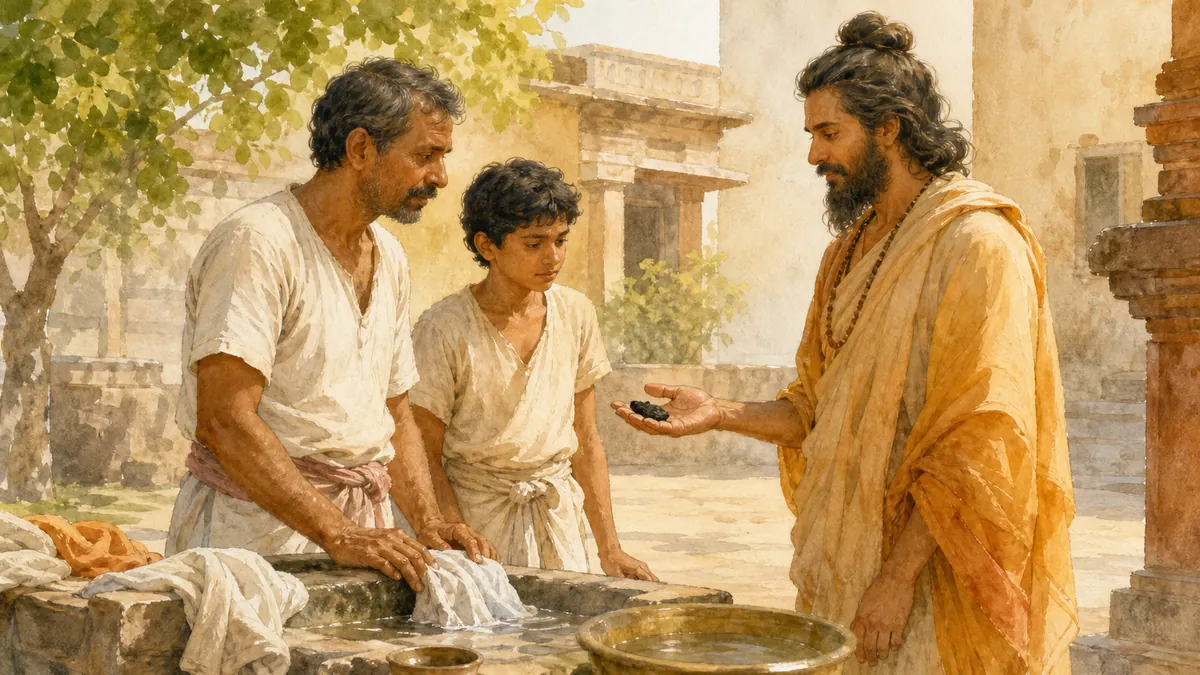
In Saliputra there lived two washermen—a father and a son. One day a yogin asked them for food, and they not only fed him but also offered to wash his clothes. He took a piece of charcoal in his hands and asked:
“Can you wash this clean?”
“It is black by nature,” said the son. “It can no longer be made white.”
“Yes, and you wash only the outside,” said the yogin, and continued, “if I am wholly covered inside with stains from the three poisons, a clean façade will not make me better. And furthermore: washing is usually done in several stages. But I have instructions with which a second washing is no longer needed. Would you like me to transmit them to you?”
“Indeed we would,” the washermen replied.
The yogin gave them the Chakrasamvara initiation, instructions, and blessings with mantras, mudras, and samadhi. They meditated for twelve years, purifying their bodies by means of mudras, speech by means of mantras, and mind by means of samadhi. This is the meaning of these means:
Immersed in the boiling water of mudra, the body is cleansed of all impurities; in the stream of the sounding mantra, faults of speech disappear; the samadhi of the union of the victor and his consort eliminates the delusions of the mind.
The washermen diligently performed mudras and recited mantras. Meditating on their mind as the unity of the stages of development and completion, they freed themselves from the impurities of mind, body, and speech. When they attained siddhi, their clothes began to clean themselves, and there was no need to do anything with them. Gradually this became known, and the washermen became famous. They were called Dhombipa. They acted for the benefit of all living beings and, a hundred years later, departed into the Clear Light.
Mahipa
Mahipa, “the bully,” was born in Magadha, in a family of low caste. He was bursting with physical strength and pride, convinced that he could subdue any person, or indeed any living being at all. One day a yogin passing by asked him what he was thinking about.
“I am not thinking about anything,” Mahipa snapped.
“And what about ‘I can handle everyone!’?”
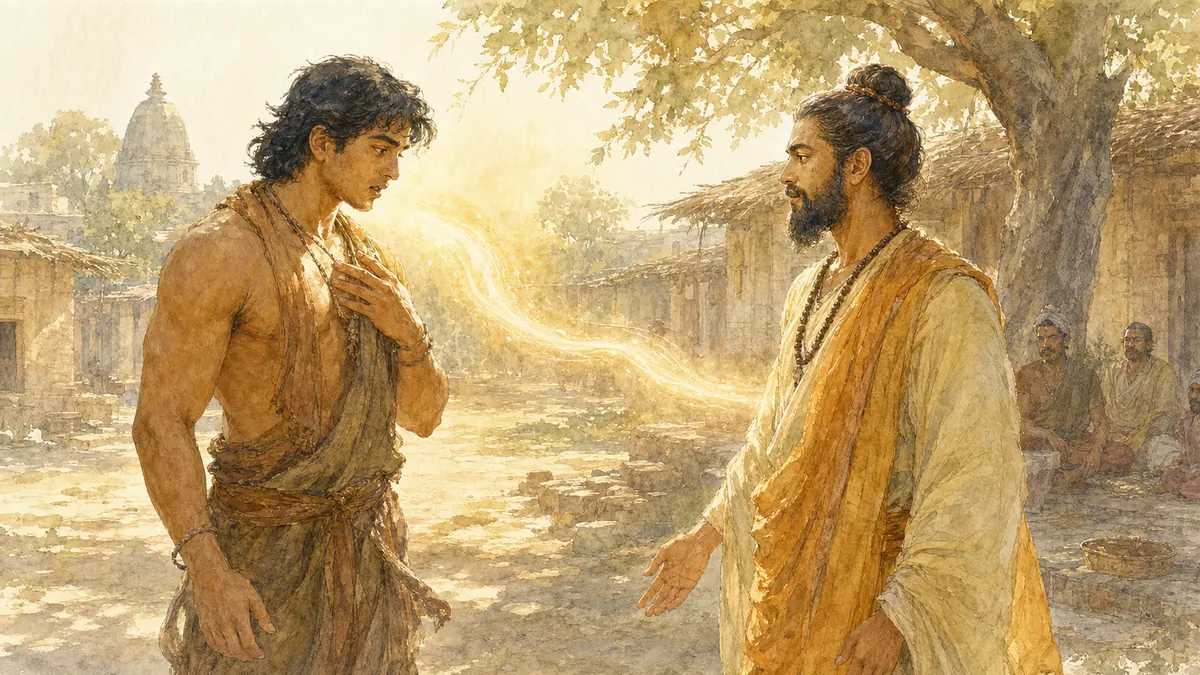
Mahipa liked this and promised the yogin rich offerings. The yogin advised him to overcome pride and arrogance and, to reinforce his words, gave him a direct transmission of energy. Mahipa had not expected such a powerful effect and was subdued. Having received initiation, he began to listen to the teacher’s instructions:
“Everything appears in the space of the mind, but it itself is empty, is not created, and is not destroyed. Meditation holds this feeling, and there is nothing that cannot be mastered.”
“I do not understand,” Mahipa replied.
The yogin continued:
“Although you are strong, there is nothing that can be subdued. Know that these three—phenomena, breath, and wisdom—are simply the expanse of the sky.”
Thus the yogin taught him through contradictory images. In the end, Mahipa found himself entering the path. He could not find a single thing around him that had any significance whatsoever, and therefore he stopped thinking of himself as a conqueror. Through emptiness, boundless as the sky, he attained siddhis. For three hundred years Mahipa gave his especially energetic instructions to countless living beings in Magadha. Surrounded by two hundred and fifty disciples, he departed into the Clear Light in his body.
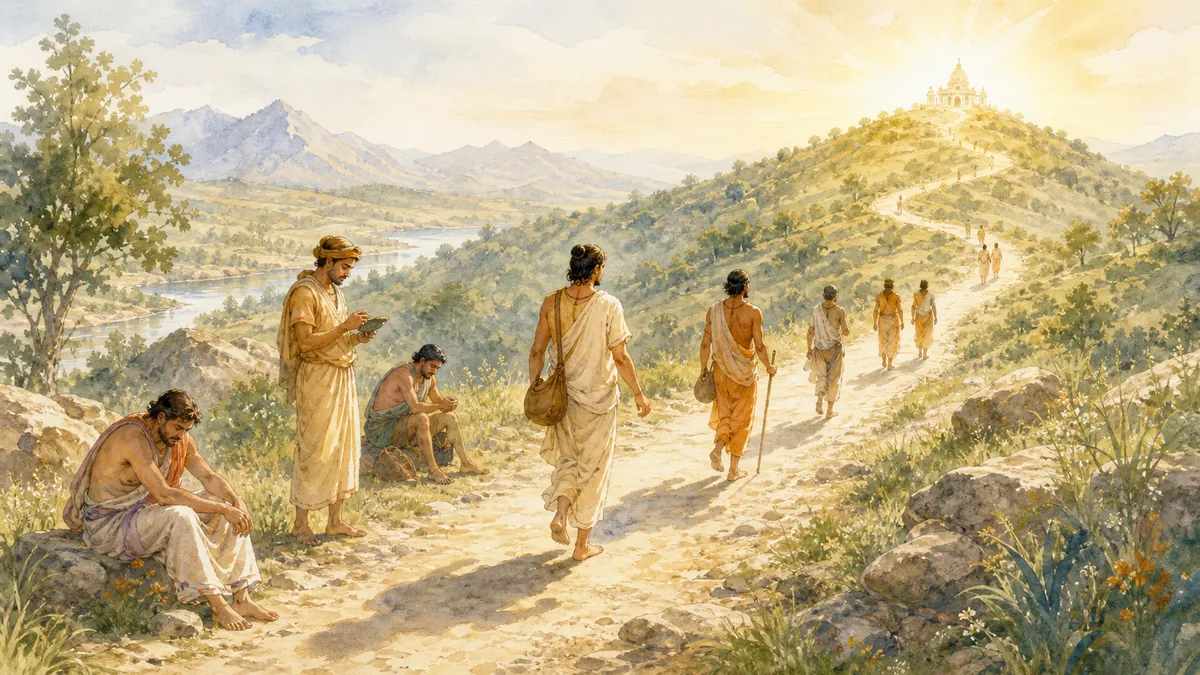
The Path of the Siddhas
The path of the siddhas is transcendent. To follow it, one must repeat this path. This path is expressed in the rule. In essence, to fulfill the rule of practice means to begin repeating this path. Without fulfilling the rule, it is difficult to say that you can repeat this path.
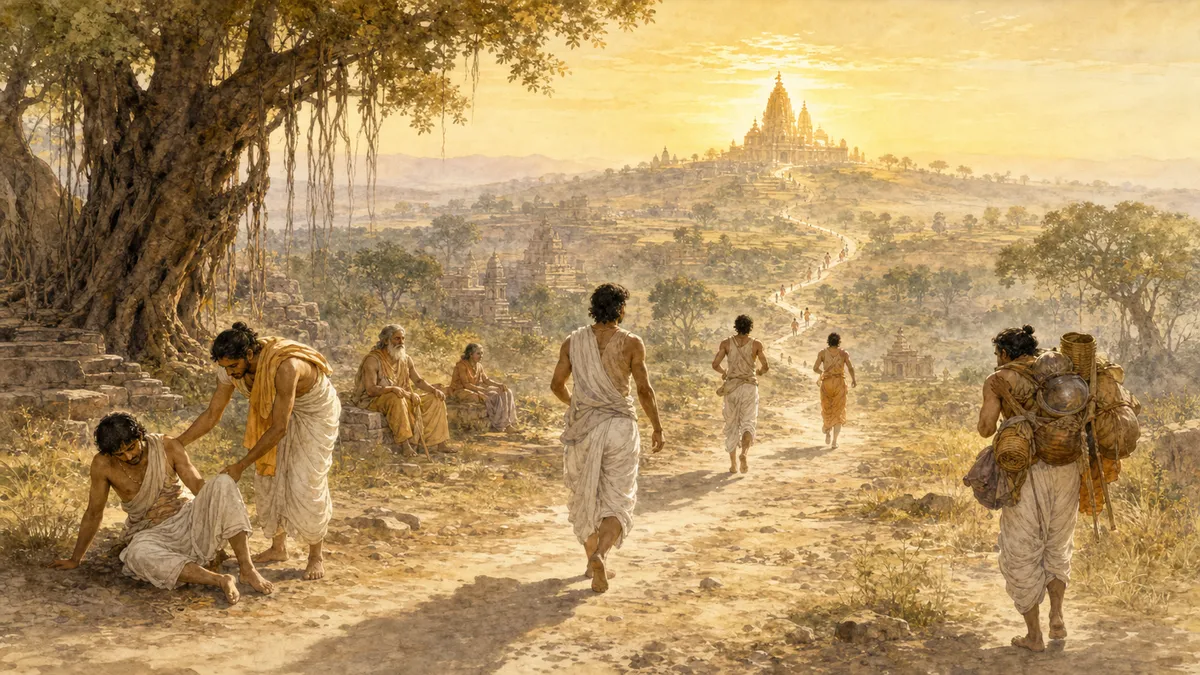
Spiritual practice is like a marathon race: some make a false start, some run out of breath halfway, some, while running, try to do some other task as well and completely forget their goal. Only a few reach the finish: the most persistent, the strongest, the happiest, the most devoted. The very best make it to the end, while the rest content themselves with participant T-shirts. It is precisely the very best who receive the medals, honor, triumph, and everything else.
At a marathon race, at first a great many participants are running, because in the beginning everything is very beautiful. In the middle, only the best remain, because it has already become difficult. And at the end, only the very best remain, those who make it all the way to the finish. Exactly the same thing happens on the spiritual path. If many people are invited, then those wishing to see the ashram will come here from all over the CIS. In reality, only one third of them will be able to practice the teaching. And only those who have been practicing constantly for a long time will be able to fulfill the entire rule. I wish for you to become one of those very best.