The Path of Light: The Life and Teachings of Saint Ramalinga Swamigal
20.06.2026
0 мин. чтения
0
Share
copy
search
add
share
As monks and novices, you have an extraordinarily great blessing, which consists in the fact that you have a precious human birth, that is, suitable conditions of body, mind, and circumstances for practicing the Dharma. However, this blessing also consists in the fact that you have a karmic connection with the greatest saints, and in the fact that you have the opportunity to practice the teaching of the three sections (sutra, tantra, and anuttara-tantra), which in itself is a great rarity.
Once a monk-teacher from Tibet came to visit us. I asked him:
— What do you practice?
He said:
— Sutra and tantra.
I did not want to tell him that we practice sutra, tantra, and anuttara-tantra.
The teaching is not only knowledge or empowerments; it is also initiations and a method of practice or a system of spiritual practice, that is, the method of retreats and meditations, in which the essence of monasticism lies. This is an extraordinarily effective method of practice, which many saints who attained the highest realization have experienced for themselves. It is also the Sangha—the community of spiritual practitioners, in other words, the Three Jewels.
One should always be aware of such a blessing in which one finds oneself. Of course, it is only a seed that must blossom and bear fruit in the form of a tree.
One of such saints with whom we have a karmic connection is Saint Ramalinga. Sri Aurobindo, a renowned saint of India, spoke of the supramental evolution of all humanity, which will come about if a sufficient number of people are able to invoke the light of awakening. Mirra Alfassa, his disciple, described the process of such transformation. What we call Anugraha, Sri Aurobindo called the “supramental.” It is the light of higher awareness, which descends beyond your effort, gradually illuminating the mind, the astral body, and the physical body up to its complete transformation. One could say that it is the impulse of the natural state to manifest or respond in answer to our tendency to awaken. Saint Ramalinga is one of the greatest siddha saints who fully realized such an impulse.
Ramalinga Swamigal
(A monk’s report)
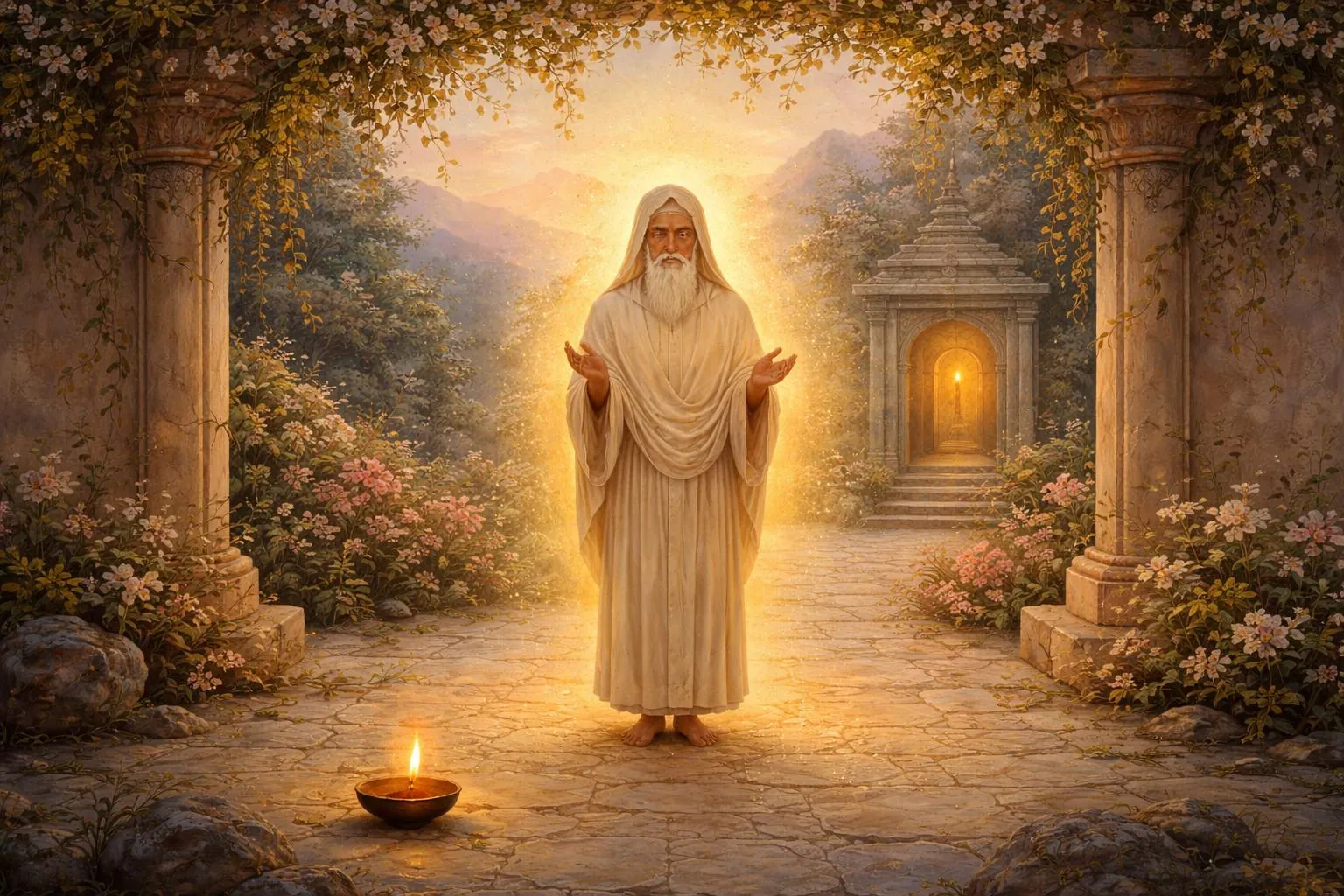
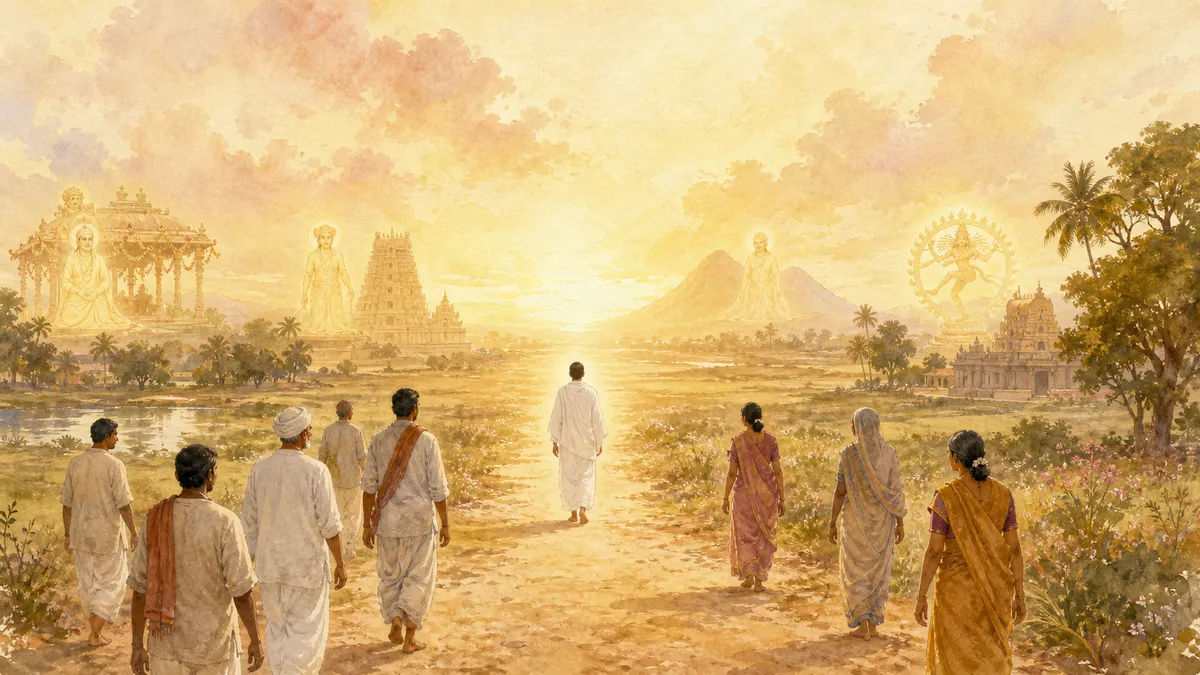
There are several great souls of our time who have attained the divine state of saruba-samadhi. Among them is Ramalinga Swamigal, the saint of Vadalur. Through personal experience, he came to know the various stages of divine transformation and recorded his experiences in forty thousand verses. Ramalinga became one of the most celebrated saints of South India. He is also revered throughout the world for his great holiness, his victory over death, and for his inspiring songs in praise of Shiva. These songs are sung today by millions of bhaktas as an act of worship to Arut Perum Jyoti, the Light of Supreme Grace—the beloved name of God used by Ramalinga.
A Brief History of Ramalinga’s Life
Ramalinga was born on October 5, 1823, in the village of Marudur, located about ten miles north of Chidambaram, where the great Temple of Nataraja, the dancing Shiva, is situated. When he was five months old, his father, Ramiya Pillai, and mother, Chinnammai, brought him to the temple to perform the rite of consecration.
In his poem “Thiruvarutpa,” “The Divine Song of Grace,” the moment is described when the curtain before the image of Nataraja was raised and tongues of flame began to dance; Ramalinga’s loud laughter was heard in the temple, and an atmosphere of extraordinary solemnity and reverence prevailed. Seeing such a connection between the child and the image of the Supreme, the temple priest ran up to the boy and, embracing him, declared that this was a child of God. In another verse of the same poem, Ramalinga says that God was so gracious to him that even in childhood He revealed to him the true essence of everything.
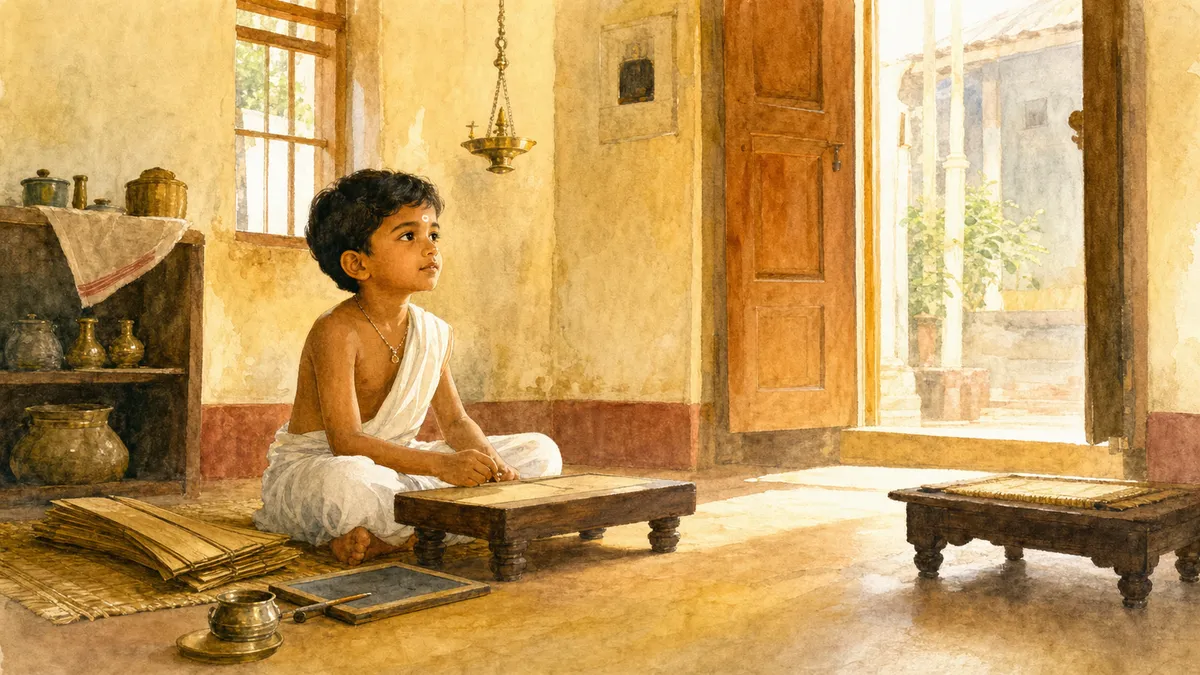
About a month later, his father died. The family moved to Madras, where they lived on the earnings of Ramalinga’s elder brother. Their house was on Veeraswamy Pillai Street. When the boy turned five, his brother arranged for Ramalinga to study with one of the most renowned teachers. After only a few lessons, the boy began composing poems in praise of God, filled with ecstatic joy.
One of them says the following:
What a wonder it is, Lord!
You have given me all knowledge. You have endowed me with ardent love for You.
You have convincingly shown me that the whole world is nothing but a mirage.
O my gracious One, You are within me and shower me with Your Grace.
You agreed to be my spiritual guide and gave me a blessing, freeing me from desires and from the need to ask others for alms.
Seeing the child’s extraordinary spiritual development, the teacher stopped giving him lessons. His elder brother, in order to prove to Ramalinga the necessity of education, drove him out of the house. However, the brother’s wife continued to secretly feed the boy until one day he yielded to her pleas to return home and resume his studies.
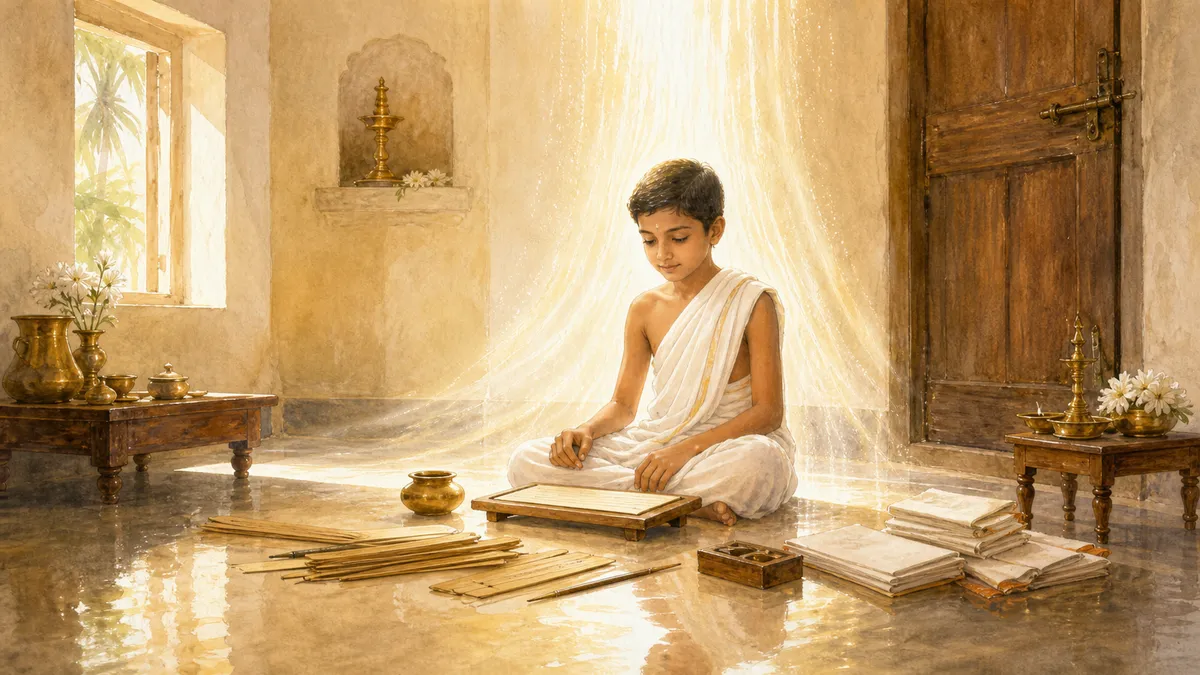
At that time he was nine years old. Taking everything necessary for study and writing, he locked himself in his room. A vast stream of inspired psalms and hymns began to pour through him. In Ramalinga, as in a mirror, the Light of Supreme Grace was reflected; omniscience descended upon him. His song sounded thus:
You endowed me with all knowledge, so that I did not even have to study.
And now even the most educated and learned people come to me to learn still more.
O Lord, who gives me strength!
You have bestowed upon me the Light with which I comprehended all knowledge, all wisdom, and everything else, taught by no one.
When Ramalinga was twelve years old, his elder brother fell ill and asked him to temporarily take his place as a teacher of theology. Ramalinga’s commentary on a verse by one of the medieval Shaivite saints, Tirujnana Sambandar, made such a strong impression on those assembled that they insisted he deliver the entire series of planned lectures. Seeing this proposal as the will of the Supreme Lord, so that he might begin his mission in the world, Ramalinga accepted it.
Little is known about the next twelve years of his life. Most likely, however, this was a period of great aspiration and deep longing for divine grace. He himself described this period as follows:
Why should I speak of pain and longing, when You Yourself are witness to all my sufferings.
You permeate my mind both within and without.
In 1849, Velayutha Mudaliar, a renowned Tamil poet and scholar, an expert in Sanskrit, became his closest disciple. Over the next twenty-five years, Velayutha wrote many books, including works about Ramalinga. Around this time, Ramalinga had to marry Thannamal, the daughter of one of his sisters. But all attempts by his relatives to make him lead a worldly life proved unsuccessful. His wife remained a virgin until the end of her life.
During the next ten years, spent in Tiruppathiripuliyur and Chidambaram, he created a large number of passionate and inspired poems in which his deep aspiration toward the Light of the Lord’s Grace was expressed. While in Vadalur, Ramalinga held long conversations with his disciples. Many visitors flocked to him to see with their own eyes the miracles he performed. The hungry received food, the sick were healed. Even scholars representing various philosophical schools came to him. All their doubts disappeared after such meetings. Ramalinga was the founder of a society called “Samarasa Veda Sanmarga Sangam,” which he later renamed “San-marasa Shuddha Sanmarga Sathya Sangam.” He took the name “sanmarga” for his philosophical school from Tirumular’s book “Tirumandiram.”
Divine Transformation of the Body
“The Divine Song of Grace” is one of the greatest masterpieces of Tamil literature. Its melodious verses tell of the nature and qualities of God and the soul, and of the harmony of life. It describes the various stages of self-realization and the transformation of Ramalinga’s mortal physical sheath into an immortal divine body.
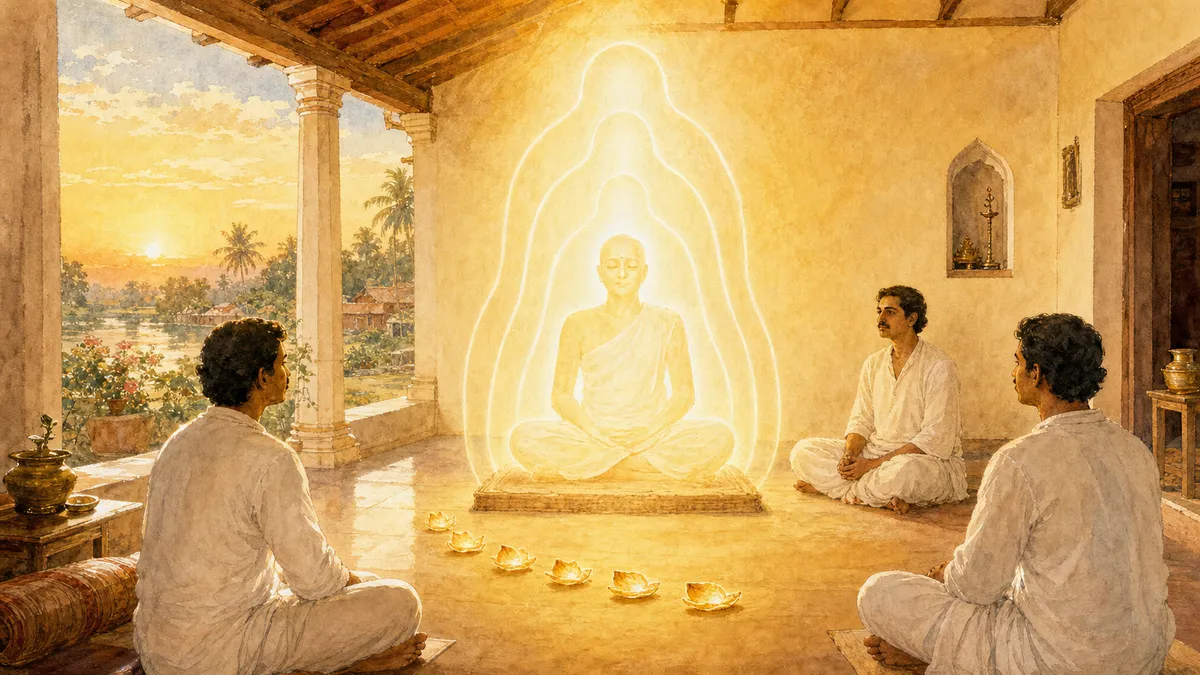
Ramalinga wrote that his body was filled with a golden radiance and was transformed into a body of love, shuddha-deha. In ecstatic rapture, he sang unrestrainedly, glorifying the flow of Divine Grace. His body of love turned into a radiant body, known as the body of grace, pranava-deha, or the body of light. Unlike the former, this body is intangible, imperishable, and not subject to the destructive action of the forces of nature. At this stage he attained what he had aspired to — union with the Supreme God. He testifies:
I prayed for a radiant body that would be eternal, that would withstand the action of wind, earth, sky, fire, water, sun, moon, planets, death, disease, deadly weapons, evil deeds, or anything else.
He fulfilled what I prayed for, and now I have such a body.
Do not think that this gift is a trifle.
O people, seek refuge in my Father—the Lord of Indescribable Splendor, who makes even the material body immortal!
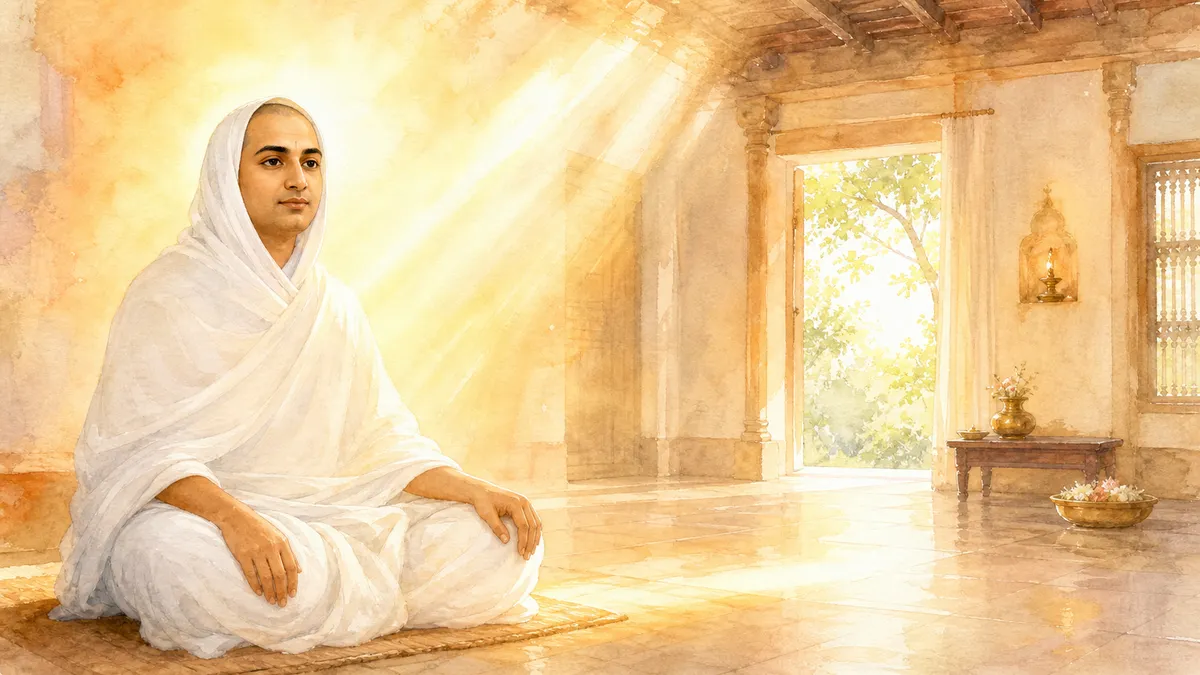
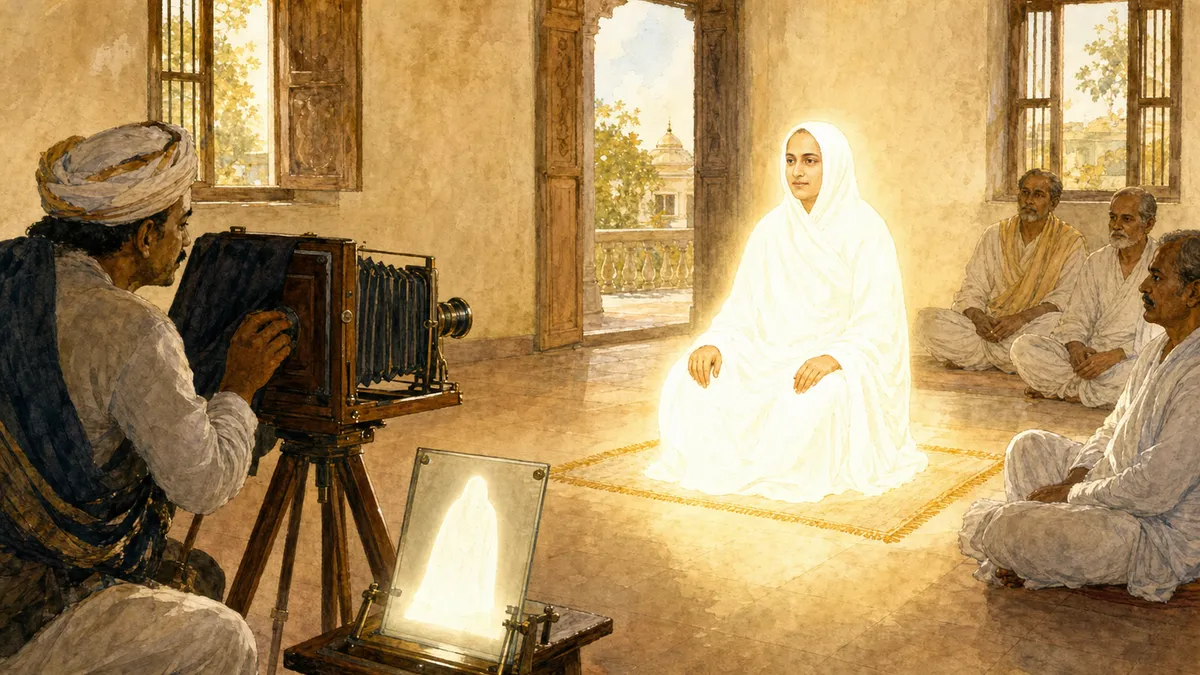
Around this time, Ramalinga’s disciples tried to photograph him. A famous photographer named Masilamani Mudaliar was invited. Eight times he tried to take Ramalinga’s picture, but only his clothing appeared on the photographic plates; not a single part of his body was visible. One of Ramalinga’s disciples, Kandaswami Pillai, explained this by saying that their Teacher’s body had already been transformed into a body of divine light, and therefore it was not captured on the photographic plate. His body cast no shadow. To avoid excessive commotion over this fact, Ramalinga covered his head and body with a white cloth.
He had a straight, slender figure of medium height, a long and sharp nose, and wide-set eyes that radiated peace and spiritual light. He ate very little, taking food once every two or three days. He could easily read the thoughts of others and often performed miracles, such as healing the sick. He would often disappear for many days. Ramalinga was simple, gentle, humble, and loved all living beings.
The Temple of Wisdom and the Final Years
In 1870, Ramalinga settled in a small hut in the village of Mettukuppam, located three miles south of Vadalur. This hut has survived to this day and is known as Siddhi Valaga Thirumaligai (the Sacred Palace of Miracles).
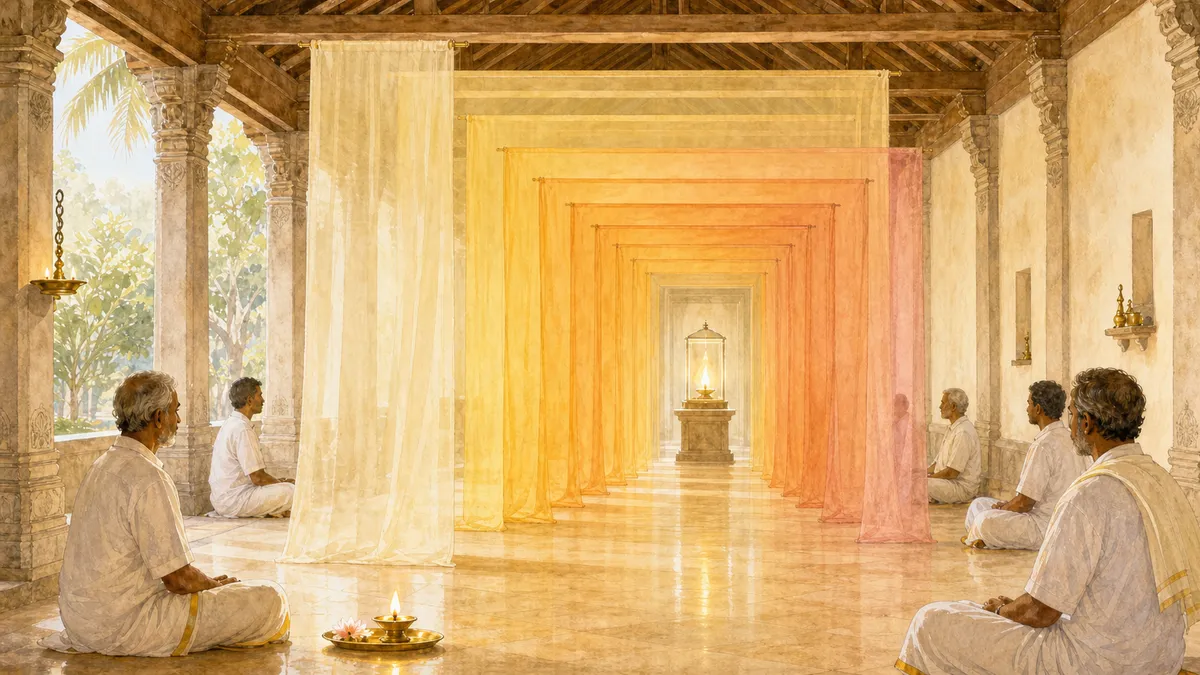
In 1871, Ramalinga asked his disciples to build a “Temple of Wisdom” according to his design. Six months later the temple was completed, and on January 25, 1872, its solemn opening took place. The temple has survived to our time. Its unique architecture, in the form of symbols, contains a description of the process of self-realization as Ramalinga experienced it.
Seven curtains, symbolizing human passions and ignorance, conceal a constantly maintained fire and a series of inner chambers, each representing, respectively, the human personality, life, the space of reality, the space of God, and various spiritual experiences.
Behind all these curtains stands a glass case, symbolizing the purity of the soul; within it burns an inextinguishable flame—the symbol of the soul in its true splendor, in its union with the Light of Supreme Grace—Arut Perum Jyoti.
According to Ramalinga’s instruction, his disciples were not to perform any rituals except the lighting of camphor. They were to pray silently, filled with deep love for God, entering into ecstasy.
From the time the temple’s foundation was laid, Ramalinga alternated between spending several days in solitude and giving captivating lectures on spiritual communion.
At the end of 1873, he raised the flag of his Sanmarga as a sign of attaining the Light of Supreme Grace. He appealed to his listeners to meditate on the Lord of Light, abiding in the heart of everyone, and to pray to the Light of Supreme Grace.
At that same time, at the end of 1873, he hung, on the outside of the door of his room, the oil lamp he used in the house, and called upon his disciples to worship it and continuously maintain its flame, in which they were to see the manifested Light of Supreme Grace and pray for this Grace. But when it became clear that his spiritual mission had not taken deep root, Ramalinga sadly remarked:
We have discovered a priceless treasure, but no one strives to possess it. We are leaving.
Even earlier he had declared:
It seems, my dear ones, that you have decided not to listen to me. You cannot hear me now. Far in the north there are several enlightened people who will come here. They will study this philosophy and then preach it to you. Then, perhaps, you will listen.
O Lord of life, why should I speak of my desires when you already know everything that is on my mind?
When will the whole world, having come to universal spiritual unity, be able to enjoy eternal happiness, unclouded by sorrow and death?
When, seeing their joy, will I be happy?
On the memorable day of January 30, 1874, Ramalinga, who by that time had reached the age of fifty, addressed a letter to his disciples:
My beloved ones, for a while I will have to leave you. Do not worry. Constantly keep the flame burning in the lamp, Jnana Deepam. Imagine that God Himself is there, and worship the Light. You will be immeasurably rewarded. Now I am in this body, and after some time I will enter into all the bodies of His creation.
Close the door and lock it from the outside. If, by anyone’s order, the room is opened, it will be completely empty.
Then Ramalinga locked himself in his room in the hut at Mettukuppam. That same evening, while his followers were singing in the courtyard:
Arut Perum Jyoti
Light of Supreme Grace! Light of Supreme Grace! Pour down upon us, Light of Supreme Grace!
Suddenly everyone saw a violet light flare up in Ramalinga’s room. This meant that Ramalinga’s merging with all the bodies of His creation had taken place. When the room was finally opened, it was indeed empty. Ramalinga had disappeared without a trace.
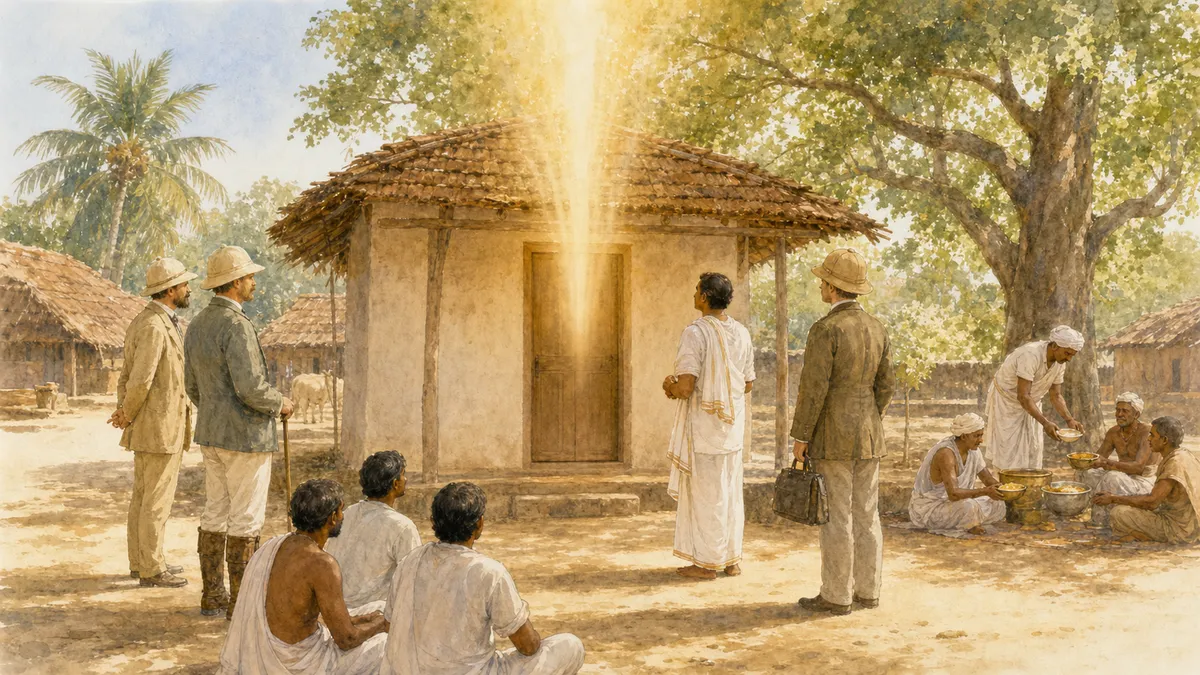
A few days later, having received a police report, the head of the British administration and tax inspector of the South Arcot district, J. H. Garstin, together with the district medical inspector, J. Banbury, and the tahsildar (head of the local taluk, that is, district) Venkataraman Ayyan, hurriedly arrived on horseback in Mettukuppam to investigate the disappearance. A thorough investigation was conducted. All the villagers were deeply saddened. The officials who had arrived walked around the hut, carefully inspecting everything around it. In the end they came to the conclusion that Ramalinga had truly been a great yogi and had literally disappeared, dissolving into thin air. No evidence that the matter had been otherwise could be found. Garstin asked the disciples what instructions the Swami had left them. It turned out that the Teacher had asked them to distribute food to the poor; both British officials gave the disciples twenty rupees each for this purpose and returned to Cuddalore.
In the South Arcot district gazetteer published in 1878, Garstin described Ramalinga’s disappearance as follows:
In 1874, Swami Ramalinga entered his room in Mettukuppam and asked his disciples to lock it from the outside. He never came out again. The disciples believe that he merged with God.
Ramalinga’s disappearance very much resembles the way in which four great Shaivite saints of Tamil Nadu, also known as the Nayanars, left the physical plane. None of them fell dead to the ground and was buried or cremated. They all disappeared. Tirujnana Sambandar disappeared, dissolving into the Divine Light that appeared during his wedding ceremony. Appar merged on the physical plane with the absolute form of the Lord in Pugalur. Sundarar united with Lord Shiva on Mount Kailash, while Manikkavasagar merged with the image of Nataraja in the sanctum sanctorum of the temple in Chidambaram.
Unlike them, Ramalinga did not keep the idea of immortality secret. He openly declared it and invited every person to share with him the ecstasy of immortality and the Light of Supreme Grace.
Stages of Divine Transformation
Ramalinga left more than forty thousand lines of verse in which he described the stages of his transformation. From the brief description of these stages given below, it follows that the teachings preached by Babaji and the eighteen siddhas are a God-inspired process capable of leading to the realization of the highest of human possibilities — union with God on all levels: spiritual, intellectual, mental, vital, and physical.
Ramalinga describes the sequence of transformation as follows:
The transformation of the mortal human body, its conversion into shuddha-deha (the perfect body), which is achieved through spiritual development and devotion to God.
2. The transformation of shuddha-deha into pranava-deha (the body of grace and light).
3. The transformation of pranava-deha into jnana-deha (the body of wisdom), and then into deva-deha (the body of God).
The possibility of attaining such a transformation is evident from the fact that it happened to Ramalinga’s own body. He indicated that Saint Manikkavasagar, who dematerialized in the Nataraja temple in Chidambaram in the 7th century CE, had also passed through these stages of transformation.
Connection with the Teaching of Dharma
(Guru)
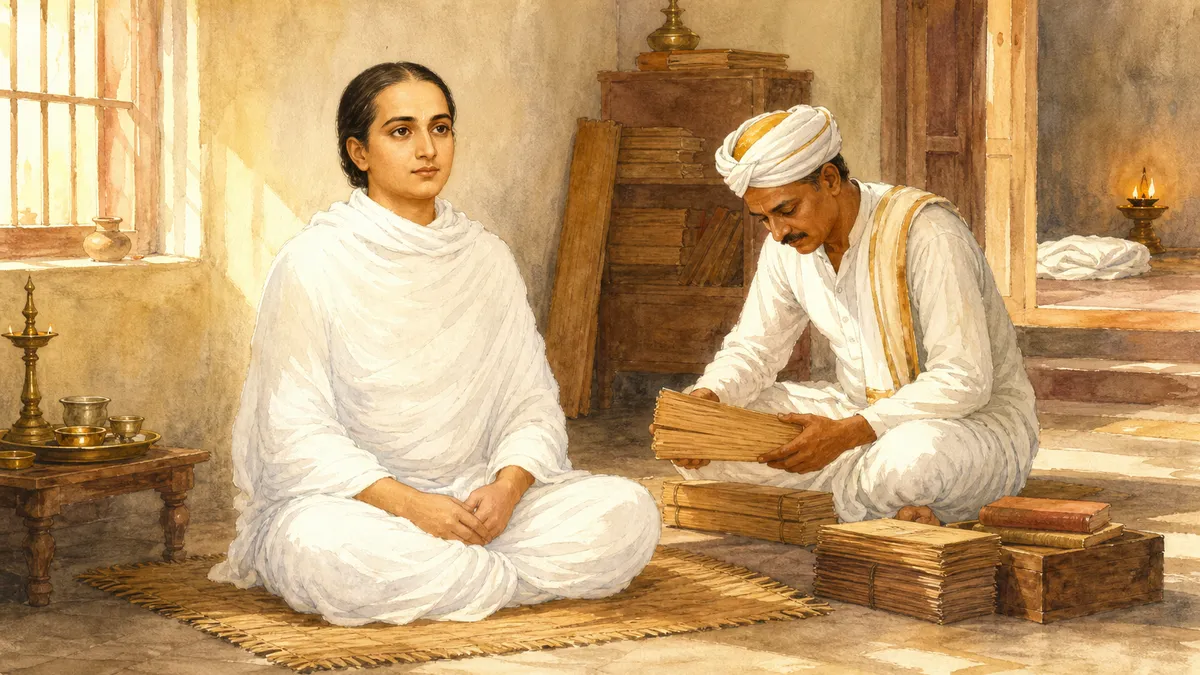
About two years ago, I said to translate the books of Ramalinga that had been brought to us. When I read these translations, I saw in them views on the one religion of humanity, on going beyond concepts, and on an integral vision of all spiritual paths. In fact, these are the views that my spiritual Teacher explained to me and that are the very core of the Dharma teaching in the sangha.
Then, in the same place, it spoke of the path of contemplation and of the Light that penetrates as a result of such contemplation, bestowing transformation. In his prophecies he says that far in the north people will appear who will speak about his teaching and practice it. Based on my own experiences and meditations, I think that this prophecy most likely refers to the “Guhya Samaja” sangha. And in fulfillment of this prophecy, perhaps after some time the monks will travel to India and also bring back texts and sacred objects connected with Ramalinga, since I have repeatedly had visions of Ramalinga’s blessings.
The teaching on light and contemplation that Ramalinga taught is the teaching of Laya Yoga. In particular, it is the practice of Jyoti Yoga. Thanks to the teaching, each of you can practice in the same way and realize the highest stages of attainment.
Saints of the highest level, like Ramalinga, realize all three bodies, leaving the world already in the realized body of light. Saints of another level realize such a body at the moment of death. Usually, within seven days, their physical body completely contracts, transforming into the divine body of light.
Whether such a body of light will be fully realized or not depends on the degree of depth of the yogin’s contemplative presence and the revelation of the subtle manifestations of sound and light. If such a saint has consciously left karma in order to remain in this world for the sake of others, then he realizes one of the bodies, which is called jnana-deha, or the body of wisdom.
Thanks to the many transmissions, teachings, meditations, and texts that exist in the sangha, it can be said that you are blessed threefold or fivefold. The question is to remain constantly open to this blessing. You will be able to be open to this blessing if your mind is constantly abiding in diligent devotion, self-giving, and contemplation.
Read 14 times
Articles
Vidya AI
Search
Lectures
November 5, 2026
Mantra of the day
ОМ ЭКАЙА НАМАХ ОМ Единому – поклонение!
Auspicious Times(Rome)
Brahma Muhurta:
04:56 - 05:51
Abhijit Muhurta:
11:33 - 12:14
Sayam Sandhya:
16:40 - 17:21
Mokshada Ekadashi (6 November)
Ekadashi of liberation. Helps to achieve spiritual enlightenment.