

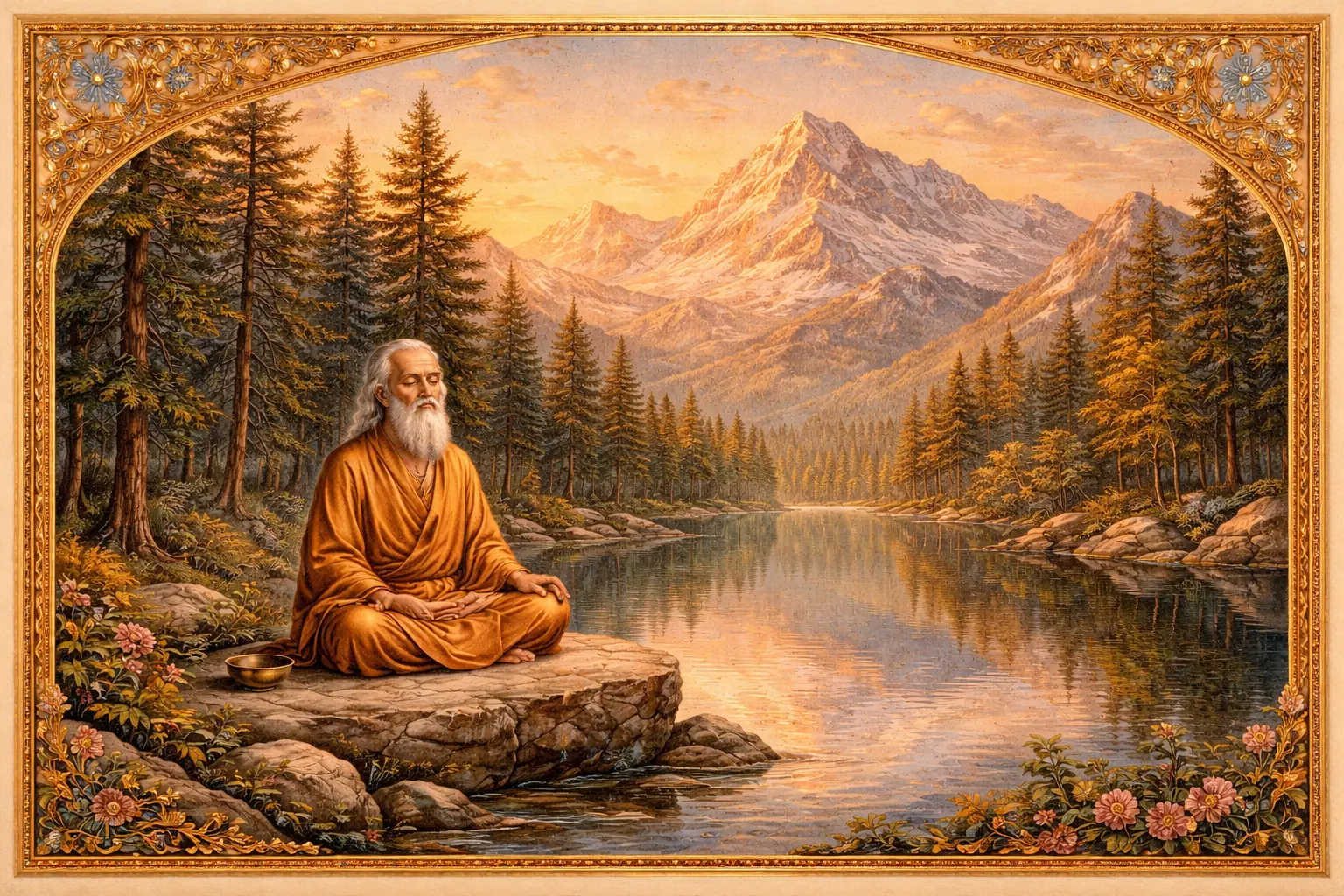
Commentary on the text “Yoga Vasistha,” selected shlokas. The teachings of Rishi Vasistha to Prince Rama.
The impure mind is as restless as the wind. It is not satisfied with what it has and grows more restless with each passing day. A sieve cannot be filled with water, and likewise the mind cannot be pacified by acquiring ever more worldly objects. The mind constantly jumps from one thing to another and cannot find happiness in anything. The mind chases pleasures, yet fails to attain even them. Like a lion in a cage, it is always troubled, having lost its freedom without becoming happy. Alas, O holy one, I am bound by the knots of desire to the net cast by the mind. Just as a swiftly surging river uproots the trees on its banks, so the restless mind has overturned my entire being. The wind of the mind carries me like a dry leaf and gives me no rest anywhere. Only while the mind is mired in desires do endless errors arise in the darkness of misunderstanding. These desires drain all the good and noble qualities of the mind and heart. Although I use various techniques to suppress these desires, they overcome me in an instant and carry me away like a straw in a storm. No matter how much I hope to cultivate dispassion and other good qualities, desires shatter my hopes like a rat gnawing through a cord. I revolve hopelessly in the wheel of desires. Like a bird caught in a net, we cannot fly toward our goal—the abode of Self-realization—even though we have wings with which to do so. These desires cannot be satisfied even if one were to drink all the nectar in the world. These desires have no direction: now I want one thing, and a minute later, another. They race like maddened horses. Desires spread out before us like a vast web of human relationships: son, friend, wife, and so on. Although I am a hero, desire turns me into a frightened coward. Although I have eyes with which to see, it blinds me. Although I am full of joy, it makes me unhappy. It is like a terrible monster. This monster leads me to misery. It binds a person, breaks his heart, and drives him into delusion. Caught by this monster, a person cannot even enjoy the pleasures available to him. This desire is like an aging actress who is incapable of performing anything good or noble onstage and ruins every act, yet nevertheless continues to dance on the stage. Desire raises the soul to the heavens of the gods, and the next moment it falls into the depths of the underworld. At times, a spark of wisdom and understanding is kindled in the mind, but desire immediately extinguishes it with misunderstanding. It is astonishing how sages are able to cope with all this.
This is King Rama’s confession to Rishi Vasistha. It took place a very long time ago, yet it seems as though it is about a modern person. Rama confessed to Vasistha perhaps ten thousand years ago; nevertheless, what he says is strikingly relevant to our lives.
The Loss of Original Wholeness

Rama says that because of desire, identification with the body, and egoism, a person has lost the prabandha (wholeness) that was originally inherent in them. Originally, a person possesses the pure, sacred qualities inherent in the Absolute. But the moment their consciousness slipped to the level of identification with their ego, they lost their wholeness, and what is called bhranti (error) arose. This error arose as something unreal, as a game. In other words, in the absolute sense there was no error whatsoever; in the absolute sense there was not even any person or any ego. In the absolute sense, we do not exist as personified individuals. We are all one immensely great Being. We are not what we believe ourselves to be. We are mistaken about our lives, about having been born, and about dying. Our views are erroneous and conditioned. In the absolute sense, from the perspective of Advaita as taught by the holy rishis and siddhas, we as egos are merely something unreal, something virtual, an illusory personality that is temporarily created and will disintegrate after some time. We are a single Being, a unity that implies no duality whatsoever. The personality, the ego, is an illusion. It appeared at the moment of birth and, having identified itself for a long time with the physical body and with a complex of concepts and ideas, always considered itself to be something separate, and therefore began to reincarnate from one body into another. It is precisely because of this error (bhranti) that crept in that what is called “bad infinity” occurs—the repetitive cyclicality of history, samsara. When we regain and restore this wholeness, we leave this “bad infinity” and enter the true infinity that belongs by right to our higher Self. A person in their present state is like a king who has falsely begun to consider himself a commoner, who has come to believe that he is a commoner and suffers because of it.
The Three Rudras—Three Limiters
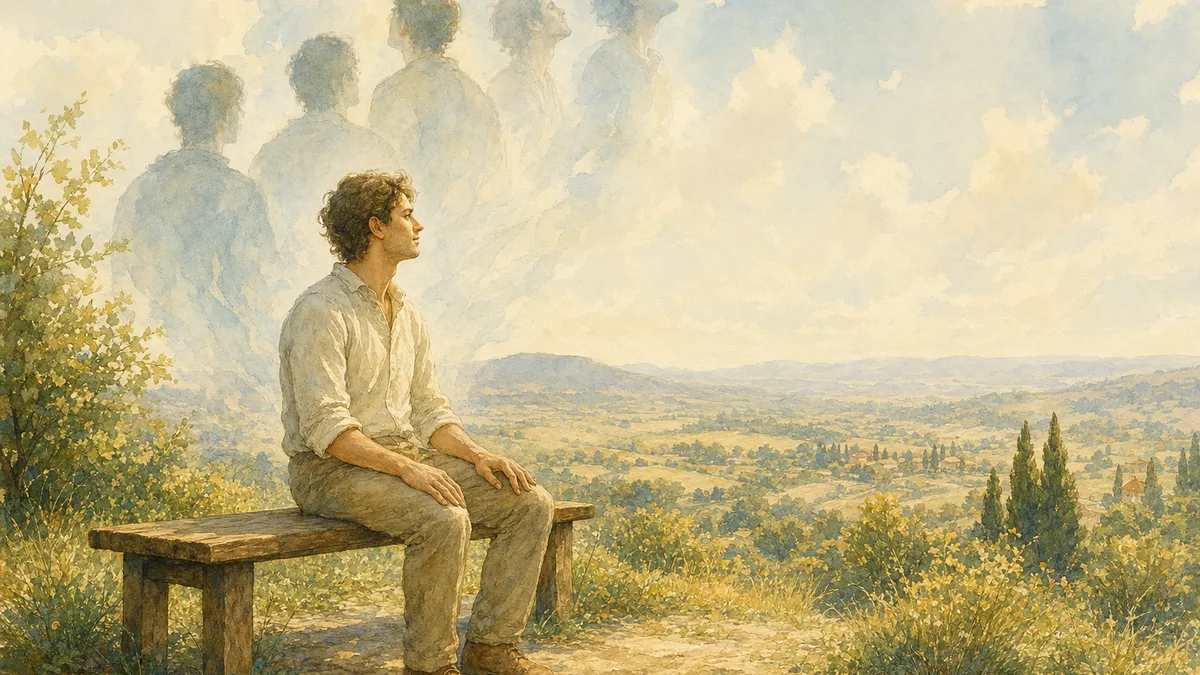
Why did this happen? There is a concept known as the “three Rudras.” In this case, Rudra is one of the names of Shiva, who acts as a limiter. A person has fallen under the influence of three limiters—the three Rudras. Rudra here means self-identification with the false self, with the false ego.
The first Rudra is the ego, confusion, ignorance, when we say “I”: “I want, I think, I am such-and-such, I am certain, I act.” When we speak this way, we imply that there is some real “I,” and we fail to notice that at the very first moment we have already made an a priori false assumption and are acting on the basis of a false premise, because we assert the existence of an “I,” while the “I” as such is itself an illusion and a delusion. We have not even tried to investigate what this “I” is, yet we confidently say “I”: I am the body, I am speech, I am the mind. This is the first Rudra—the Rudra of the ego. But if a person were asked, “Who are you, then? Could you say who you are? Are you your thoughts? Are you your will? More specifically, who exactly are you?”, such a person, upon engaging in self-inquiry, would arrive at the astonishing conclusion that they are not the body, not speech, not thoughts, and not even the will, but are like a certain empty, pure space of consciousness that is inactive, unborn, undying, without qualities or attributes, and unrelated to any of these things.
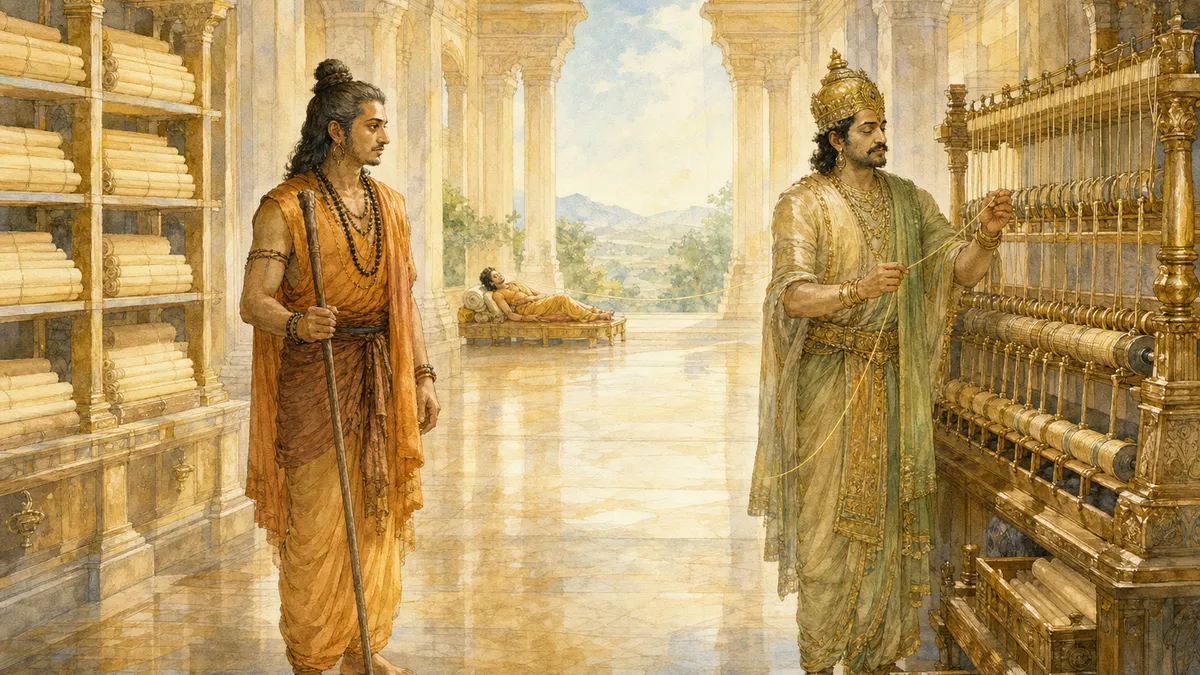
The first Rudra is the Rudra of the ego, confusion, and ignorance. When we confuse the true essence with this limitation—the ego—we remain in a state of confusion. And the practice of the teaching is the taming of this Rudra. The ego appropriates the body, speech, and mind, securing its own safety and expanding its influence. But fundamentally, the ego is something ephemeral; it is secondary. If our true Self, the Atman, is likened to a king, then the ego is like a cunning minister who has bewitched the king, immobilized him, and taken his place on the royal throne, donned the royal mantle, and pretends to be a great sovereign, while the true king himself sleeps. This is exactly what happens in this case. Such a false king issues various orders. These orders are contradictory and ultimately bring the kingdom into decline, because this cunning minister is in fact nothing, possesses no genuine qualities, and his entire position is false. The true king, the magnificent lord, somehow always retains his self-awareness; nevertheless, he seems to be asleep and inactive, deprived of his throne and of the ability to act by this minister—the ego.

Another Rudra is the Rudra of the body. The Rudra of the body means identification with the body. For example, there is a clear connection between the mind and the body. This is the bodily aspect of consciousness. We are very strongly attached to the body; we very much consider ourselves to be the body. Our ego needs constant confirmation and reinforcement of the idea, “I am this body.” However, the body should be regarded as a mechanism, a kind of intricately designed bio-cyborg. Consciousness travels from one body to another. There are magical techniques that make it possible to successfully transfer consciousness from one body to another, into an inanimate object, into the body of an animal—anywhere at all. With the appropriate technologies, it can even be transferred into a computer. The body is simply a mechanism; it is like clothing or a car that one can enter or leave.
The third Rudra is the Rudra of speech. The Rudra of speech is prana, that is, the sensation of energy, fixation on emotions and energetic sensations. This, too, is something that binds our consciousness.
Finally, the Rudra of the ego, which we have discussed, is belief in one’s own understanding, belief in clarity, concepts and the efforts of the ego, and in the idea that attainment involves producing more than revealing.
The Path of Self-Liberation
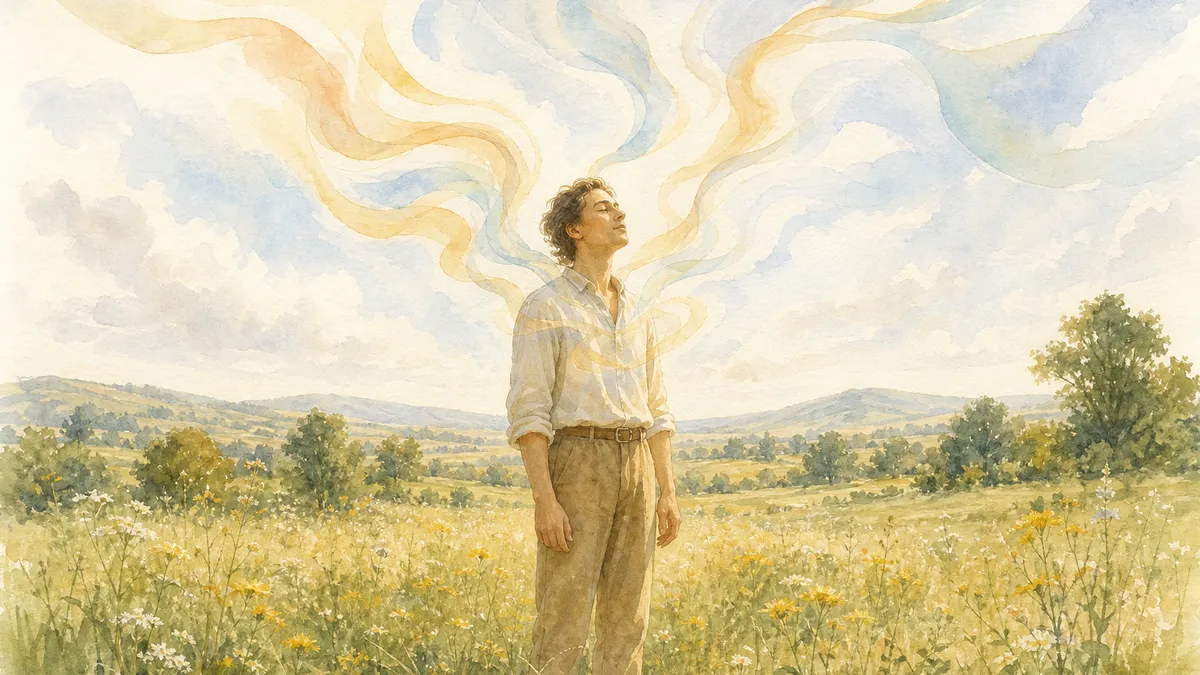
These three Rudras—the Rudra of the body, the Rudra of speech and the Rudra of the mind—are, as it were, binding factors that bind our higher Self. The process of liberation is the pacification and transformation of these three Rudras. When we pacify these three Rudras and untie these three kinds of ropes, they are transformed into three awakened pure bodies: the siddha body (siddha-deha), the body of sound vibration (pranava-deha) and the body of enlightened wisdom of emptiness (jnana-deha). In fact, when such a transformation takes place, we see that these Rudras were, as it were, unreal from the very beginning. They bound us only conditionally, because we ourselves helped them bind us.
For example, Saint Tilopa said to Naropa: “You know, Naropa, the reason you are conditioned by samsara is very simple: you yourself are holding on to it—there is no other reason. Your clinging to samsara is what creates this samsara. It is like a tree that you have grabbed and then cry out that it has caught you. But why are you holding on to it?”
Through practice, we transform the three Rudras into three bodies, and the three bodies into three mandalas (pure enlightened dimensions): the mandala of the body, the mandala of speech and the mandala of the mind. How do we move toward liberation by purifying these bonds of the three Rudras? The principal path in the practice of Laya Yoga is the principle of self-liberation.
Self-liberation means that we reveal the emptiness of these three Rudras. We discover their complete illusoriness and lack of inherent essence; we discover that their source is emptiness (shunya).
Emptiness as the Source of Everything

Someone may think that emptiness (shunya) is an exclusively Buddhist concept. This, of course, is not so. I would immediately refer such a person to various sacred texts: the canonical texts “Atma Sakshatkara” and “Devikalottara,” as well as many others. It is simply that in Advaita, emptiness is viewed somewhat differently than in Buddhism. In Advaita, emptiness is not the primary attribute of the Absolute, although it is highly significant. In Advaita, emptiness has the character of fullness; it does not have the nihilistic undertone found in some Buddhist teachings. This emptiness is living, eternal and creative; it is the source of everything. It constantly manifests, generating from itself various energies that appear continuously. This emptiness is the principle of Shiva, while the energy being generated is the principle of Shakti (energy).
Self-liberation consists in recognizing the emptiness of these three limiting factors, these three Rudras. We discover that all three limitations do not truly exist; they are manifestations of the play of energies of the supreme Source, our higher Self. When we do this and these three Rudras are transformed into three enlightened dimensions, three kinds of divine bodies and three kinds of mandalas arise: the peaceful mandala, associated with the sattva guna; the joyful mandala, associated with the rajas guna; and the wrathful mandala, associated with the tamas guna. Our conditioned being is transformed into a multidimensional, playful and free being possessing three awakened bodies and three pure states.
Spiritual Practice as Transformation
Spiritual practice in the tradition of the Laya Yoga teachings is nothing other than the development of awareness, overcoming confusion, cutting through limitations, and completely remaking oneself—a total transformation, the elimination of error (bhranti), and the restoration of wholeness and primordial unity with the Supreme Source.
A saint, for example, is not a human being. A saint is a threefold deity possessing various enlightened bodies and playing in pure dimensions. The saint's world is a unified world of wholeness. When we see saints depicted in mandalas and thangkas, we come into contact with their transformed, enlightened bodies and dimensions. For example, in our iconographic tradition, these saints are depicted as manifesting the pranava-deha, that is, a sound body composed of vibrations and light. But the manifestation of saints is not limited to such bodies alone. Saints also possess the empty wisdom body (jnana-deha)—a vast empty space, devoid of qualities, form, and image, yet possessing tremendous potential for emanation. Saints also have the ability to manifest another, coarser body, the so-called siddha-deha. When you see certain siddhas depicted in this more human-like form, it is the manifestation of another aspect of their being—the siddha-deha. Nevertheless, saints themselves are multidimensional beings, not limited to any single body or to a human body. They are able to manifest in different ways. They act by spontaneously responding to the course of events: sometimes they may manifest as a deity, at other times as an animal or a human being. This cannot be anticipated or predicted in any way.

Our teaching is a teaching of transformation. The result of our practice should be, at the very least, a change in the meaning-defining vector of our lives, followed by a change in our prana, our environment, and the world in which we live. Engaging in spiritual practice is not so much about philosophizing as it is about building a new life, a new reality tunnel. If we merely philosophize, this may develop our awareness somewhat; nevertheless, spiritual practice and the teachings must be approached practically. For example, even though I am a practicing monk, I always take a very sober and practical approach to sadhana, believing that the teaching is not something to be studied, but something to be lived; it is something that must be truly embodied in your life, something that must transform your limitations and even your surroundings in the literal sense of the word. This is the genuine teaching.
Genuine religious teaching is quite radical in a positive sense, because it brings about real change—real transformation rather than virtual or imaginary transformation. When we view the principle of the teaching in precisely this way, we truly follow the path of the siddhas and saints. It is a transformation on every level. When we embark upon the teaching, we must always understand that practicing it means transformation. The form this transformation will take is a secondary matter, which is why I always try to attune my disciples to a deeper vision of the Dharma. Do not wait for enlightenment to come; do everything you can to attain it. When we do everything for the sake of enlightenment, such transformation begins to draw near. The teaching is something exceedingly precious—at least, that is how the siddhas and saints of our tradition regard it—because our destiny, our future life, our next life, or, one might say, our future depends on it. Nothing determines our future as profoundly as the teaching and spiritual philosophy we practice. Since this is the most serious thing in the world, it must also be treated with the utmost seriousness.
Qualities of a Disciple

When our meaning-defining vector changes, it is always accompanied by an immense shift in worldview. But for this transformation to truly take place, one must have the proper attitude toward the teaching. Having the proper attitude toward the teaching means cherishing it as dearly as one's own heart, being devoted to it, being in love with it, and remaining in a boundless state of openness and trust toward transformation.
This is precisely the meaning of the teacher-student relationship, the meaning of receiving instructions from a teacher. When a student receives instructions, naturally, they must possess certain qualities. If they do not possess certain qualities, they are first advised to cultivate them, such as faith—that is, openness and trust. If we are closed off and skeptical, the transmission of the teaching will most likely not take place. For the teaching is something very intimate and very subtle; it is even subtler than human love. It is connected with openness, with a state of mind. In the teaching, this principle is called samaya.
The second quality of a student is diligence. Diligence means the ability to make considerable efforts. What is actually expected of you as students is that you will be able to make not merely small but great efforts in the teaching on your own. If we make sufficient effort, training diligently and properly, results naturally appear. If our diligence is insufficient, the results will be commensurate. But I always tell students: “You yourselves must decide what level of effort to make. Diligence must come from you and depend on you.” The teacher transmits the instructions, but how you use them depends on you, because you always have free will, given to you by the Creator, and no one can dispute it. But you yourselves must decide how to use this free will.
The next quality is attentiveness. Attentiveness means being receptive and sensitive when receiving the teaching, taking every detail into account. For example, if a student is inattentive, they may let some of the teacher’s instructions go in one ear and out the other, including certain complex, subtle points.
For example, a student asks the teacher’s blessing to enter a retreat. The teacher’s first response is: “You should not undertake long retreats; try a three-month one first.” But the student is so captivated by their prospects, so inspired by their own potential, that they let this go in one ear and out the other. The teacher speaks to them again, gently and indirectly, hoping the student will understand the hints. The student listens, but is so absorbed in their own inner notions that the teacher, laughing inwardly, says: “Well then, go ahead.” In other words, the student was not attentive enough. Had they been attentive enough, they would have understood that the time or their current state of mind was not suited to a long retreat practice and that they needed to follow a different practice for now.
It often happens that we do not show due attentiveness. It is said that the gods, looking at people, are always laughing because they can see in advance that people’s plans may fail. Nevertheless, people often blindly persist in achieving their goals, showing perseverance but not attentiveness.

The next quality is understanding. Understanding means the student’s subtle attunement to the teacher. This is not only intellectual understanding, but also intuitive awareness, when you perceive speech not at the verbal level, but at a deeper one. Naturally, it also includes intellectual understanding. For example, when we speak about the teaching, intellectual understanding means that we understand the three main rules; or that we understand how to contemplate with naked awareness or work with energy. However, intellectual understanding is not the whole of it. Genuine understanding connected with your contemplative practice is required.
The siddha Saraha said:
“Only when you go beyond words and concepts will you truly understand the value of words and concepts.”
Finally, the next quality is cooperation. Cooperation means that the student interacts with the teacher and reaps the fruits of that cooperation. In ancient times, when a teacher instructed a student, relationships were simpler. Often a teacher had one student, or three or five, although some had thousands of students. But relationships were simpler in the sense that there was no email or airplanes. A student who decided to study knew what they were committing themselves to. They traveled great distances, came to the teacher, and said: “Please allow me to live with you, eat, and study.” The teacher would say: “Very well, here is a broom or an axe—go chop some wood and get accustomed to things.” Over the course of several months, the student gradually settled in; then the teacher would summon them and transmit various methods, wisdom, teachings, initiations, and so on. This continued for years. It resembles the relationship between a master and an apprentice in the practice of painting or music, when the student, staying close to the teacher, absorbs all the subtleties while perfecting their skill over a long period of time.
However, the world has changed; things are different now. People travel a great deal, but their minds are unsettled. They have many attachments, and sometimes they are not prepared to learn in precisely this way. Sometimes they may ask questions by email or mobile phone. They may receive teachings while periodically immersing themselves in their lives again. We must consider how to learn under these changed circumstances. When a student possesses such qualities, it is said that they can truly benefit from the teaching.
Duality and Two Types of Vision
Thus, when we begin studying the teaching, we exist in duality. This duality, if divided into its components, is associated with awareness and unawareness. It is usually expressed as follows: there is samsara and there is nirvana—these are the principal features of duality. Enlightenment is the elimination of this duality and the establishment of the unity of samsara and nirvana, the establishment of wholeness.
In the state of samsara, reality appears profane and mundane; in the state of awakening, reality appears holy and sacred. In sacred reality, relationships are connected with samaya—with a spiritual bond. In mundane, profane reality, relationships are based on blood ties, a sense of belonging to a particular group, and emotional attachments; sometimes they are based on commercial and monetary relations. This is a characteristic of profane, mundane reality. In sacred reality, relationships are based neither on attachments, nor on commercial and monetary relations, nor on blood ties, although these are not denied either. In sacred reality, all relationships are connected with the principle of spiritual connection. This is a magical or mystical spiritual bond called the principle of samaya.
These two dimensions exist as long as the ego exists. The task of spiritual practice is to move from one dimension to the other and then to transcend all dimensions altogether. The dimension of samsara consists of elements subject to decay, the so-called mrityu-tattvas. Mrityu-tattvas are elements that are unstable and disintegrate. For example, our physical bodies consist of mrityu-tattvas, that is, unstable, decaying elements. In the worlds of Brahma-nirvana, the pure worlds, by contrast, the elements are divine—deva-tattvas. They do not disintegrate. For example, gods may be immortal and live for as long as they wish because their bodies consist not of flesh and blood, but of divine, subtle elements.
Impure Karmic Vision

This division into samsara and nirvana is associated with different types of vision. In fact, this is not a geographical location; rather, it is pure and impure vision: pure, purified consciousness connected with the supreme Source, and impure consciousness that has lost its wholeness and become separated from the supreme Source.
Impure karmic vision is always connected with duality and subject-object relations. As soon as we position ourselves as “I am a human being,” “this is a human being,” and establish any kind of relationship while ignoring the fact that, first and foremost, this person is the Absolute, I am the Absolute, and our relationship is a manifestation of the play of the Absolute’s energies, this can already be called impure vision, or a relationship based on impure vision.
Impure karmic vision means that the external world is seen as alienated from the “I”; it is perceived as a kind of heap of static objects entirely unrelated to consciousness. Impure karmic vision means that we are all disconnected and separate; there is multiplicity, but no wholeness or unity. In impure karmic vision, there is no single “taste” in the perception of all phenomena, no samarasa, no sense of the unity of everything with the primordial light that is the source of all reality.
Pure Karmic Vision
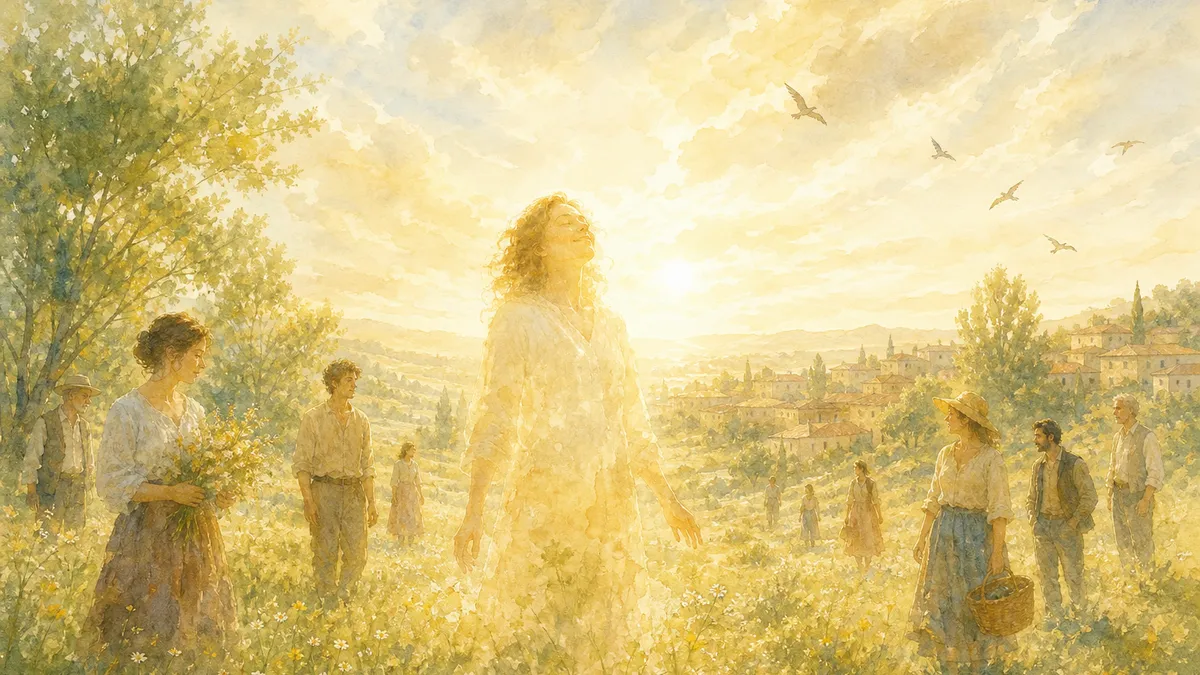
In pure karmic vision, everything is seen as unity, as a single substance, a single essence manifesting itself in multiplicity and playing with a multitude of energies. In pure karmic vision, there is unity with the primordial light. For example, gods, siddhas, and enlightened deities live precisely in this dimension—the dimension of pure vision. When they live in it, they are not aware of themselves in the same way as humans are. While humans clearly perceive themselves as connected with the body and the ego (ahamkara), gods perceive themselves as connected not so much with the body as with space, with the boundless space of light. For them, the ego (ahamkara) is no more than a costume, something they can play with, change, and manifest in any way they wish. In pure vision, the supreme Source is seen as the sole foundation of everything. In other words, always and in everything, they see only God.
We use the word and concept of God with caution, because Brahman in the Indian tradition and God the Father in the Christian or Jewish tradition are not quite the same thing. The Christian or Jewish tradition is monotheism, whereas the Advaita tradition is monism. Monotheism is not the same as monism, since monotheism presupposes a duality between the soul and God, while monism is identity, in which there is neither a soul as such separate from God nor a God positioned separately from the soul, but only one substance—the Absolute, Brahman. Therefore, from a philosophical standpoint, it is not entirely correct to equate the Judeo-Christian God the Father with Brahman, the Absolute in Advaita; however, from the standpoint of spiritual practice, they may be equated if certain philosophical tenets are disregarded.
If we disregard these philosophical differences, then, in simple terms, we can say that in pure vision everything is seen as God, everything is seen only in relation to God, everything is seen as a manifestation of God’s energies—there is nothing but God. Everything is seen as God’s blessing and grace, everything is always seen as the Abode of God, and one always realizes oneself as one with God, realizing that one is God. Apart from God, His manifestations, His plays, His purity and holiness, nothing exists. Pure vision means that this continues uninterruptedly: morning and evening, continuously and always. Desires and manifestations of the ego and energies do not lead one astray.
In impure karmic vision, the substance called God is not recognized. Ahamkara (the ego) is at the center—that is, delusion and misunderstanding, which drive living beings. For example, desires exist, and these desires bind living beings and even destroy them. They cannot safely satisfy their desires: every desire is always followed by some form of retribution. For example, sexual desire experienced incorrectly is followed by retribution in the form of energy loss and a decline in vitality and mental abilities. Enjoyment of food is followed by a feeling of overeating and heaviness, and so on.
But if desires are experienced in a state of pure vision, such desires become empty and self-liberated; they do not destroy the body or shorten one’s lifespan, but serve as a creative driving force. This is precisely what happens with the gods. For example, the gods have no desire. What manifests as desire in the human world manifests among the gods as the play of creative power, as the play of creative energy. This play is completely pure, sacred, and empty. Desire is the play of this creative power.
Two Types of Spiritual Path

Corresponding to these two types of vision, there are two types of spiritual path. The first type is called “manushya” (human), and the second is called “divya” (divine).
The human spiritual path is very difficult, as you can judge from your own experience. The human spiritual path is when we begin the path from the standpoint of our own limitations and constantly encounter limitations. It is based on the “I”-concept and constrained by thought and kleshas. A human being is conditioned and constrained, lacking harmony and in dissonance with the universal course of things. A person always develops through suffering and conflict; that is, no other path exists for them until they reach a certain level of spiritual purity. This is simply the human path. But there is another path—the path of the gods’ development.
For example, on the spiritual path, the gods are characterized by purity, beauty, harmony, love, majesty, a sense of the sacred, spontaneity, flourishing, abundance in every manifestation, creativity, and joy. They evolve through creativity, joy, and freedom. For divine beings, the divine path always looks different. They, too, engage in spiritual development and practice. But since most of their delusions have been purified, spiritual practice does not look the same for them as it does for humans; for them, it manifests as pure vision, as a mandala. For them, it is more like a game than arduous sadhana. Practitioners will most likely be unable to do without a certain amount of persistent effort. But when a person enters pure vision and the level of their contemplative presence becomes very deep, practice involving effort, tension, or suffering ceases to exist for them; practice becomes play and creativity.
Limitations of the Human Path
In the human world, in impure karmic vision, there is always insufficiency and limitation. For example, one often encounters the following most common limitations: “I would practice, but I do not have the right conditions—I live with three family members,” or “I would like to come to a retreat, but I do not even have money for a donation or travel expenses”—all these are different kinds of limitations. But is such a thing conceivable in the pure vision of deities? It is inconceivable, because their creative energy is such that all their manifestations are realized as flourishing, as abundance, since in pure vision there are no limitations and no problems whatsoever.
The greatest problem with the impure vision of samsara is that a person living in it is mortal. And since they are mortal, all their goals, plans, and attachments are meaningless. In fact, as long as death exists, nothing has been resolved. A person in impure karmic vision, even as they grow and develop, is moving toward their death. Each day they simply come one step closer to it, because impermanence and death cut all their plans, hopes, ambitions, and so forth off at the root. But people often lack the power of reason to understand this. Instead of developing their awareness, they chase after ephemeral, petty, relative plans. Yet history demonstrates this very clearly: if we analyze the lives of outstanding military commanders, kings, magnates, and others from past centuries, we will see that all their efforts were ultimately destroyed by time, even though they, too, made far-reaching plans. By analogy, we can also reflect on our own lives.
Possibilities of the Divine Path
In pure vision, death does not exist. In pure vision, there is immortality. In impure vision, a person is highly dependent on events, on cause-and-effect relationships, on sequences of events—that is, on the laws of karma. Their will is undeveloped, meaning they cannot control space, time, or the elements. Causes and effects are difficult to control in impure vision because a person lacks sufficient awareness, sufficient sankalpa-shakti (free will), and sufficient kriya-shakti (the power of action). They act as though in a fog of unconsciousness.
But if we consider beings who abide in pure vision, such as deities or siddhas, they act differently. They possess divine power over events and time. This power is called aishvarya-shakti. For example, they can shape the future themselves, alter and control chains of events and cause-and-effect relationships. Their boundless will (sankalpa-shakti) can control events, time, and space. They are not dependent on the elements. The law of karma that applies to humans does not apply to them. It is said that the law of karma is absolute, but it is absolute only for those whose minds have not awakened. For awakened gods and siddhas, the law of karma effectively does not exist, because they are not bound by causes and effects. Their immense energy and immense wisdom enable them freely to take any chains of cause and effect and connect them to one another, alter them, shape the future, change the past, and remain independent of all this.
For example, Saint Goraksha changed the destiny of his teacher Minonath. Having traveled to the realm of Yama, he used his yogic power to force Yama to strike Minonath’s name from the Book of Death, even though, according to the law of his karma, Minonath was supposed to die in three days. Possessing incredible sankalpa-shakti and aishvarya-shakti, an immense power of spiritual might, Goraksha simply changed his destiny. This is the principle of the manifestation of consciousness in pure vision.
The Goal of the Spiritual Path
Thus, realizing the teaching means that we transition from this impure, conditioned, karmic vision, from the state of mortality, to pure vision, where there is no mortality, no dependence on time and space or on the gross elements, where everything is perceived differently—in unity with the Supreme Source, where love, purity, beauty, and harmony reign, and where everything is based on spiritual connection. This transformation truly occurs if we move confidently along the path of the teaching. If, of course, we move uncertainly along the path of the teaching, we remain stuck in this impure karmic vision for a long time. Even if we practice many techniques or study texts, it is still a certain dimension that keeps us in this conditioned state.
To embark on the path of Dharma, the path of the teaching, is, in a sense, to enroll in an institution of higher learning where one is “trained” to become a god. When you enroll, you must understand that the standards here are quite high, and everything depends on you. You have complete freedom of will, but if you want to rise even one step higher, great demands may immediately be placed upon you. However, this is the only way and the only path to develop your awareness so as to make this transition, to accomplish this transformation from the impure karmic vision of a conditioned human being to the pure vision of the gods. Whether we do this now or after many lifetimes depends on good fortune, merit, and the degree of our understanding.
Practice as a Holistic Path of Transformation
This retreat is another step for you toward making this transition from samsara to nirvana, from impure, conditioned karmic vision to the pure dimension. However, such a transition does not consist solely in attending practice or training retreats. In fact, it encompasses an entire life. Reducing practice solely to retreats would be simplistic.
Practice includes many different aspects. For example, it includes the study of philosophy and intellectual growth. If you only practice and experience no intellectual growth, this is a sign that you should reflect on your approach. As your practice progresses, of course, your intellectual understanding of the texts and the teaching must necessarily increase.
The Principle of Service and Levels of Relationship with the World

Practice is also connected with changing the direction of your life, when you reconsider your values and begin to do something different. This principle is also called service. We begin to ask ourselves: What goals and values do I serve? What energies do I open myself to? How necessary is this for me?
- Do I serve myself (my ego)?
- Or am I focused exclusively on my family and interested only in its well-being?
- Or am I interested in the development of my own group of practitioners, whom I regard as my companions, brothers, and sisters?
- Or do I try to expand the principle of my service and begin to include the deities, saints, and siddhas in it?
- Or do I begin to think about how I can help all humanity through my Dharma?
- Or do I open myself to global universal energies that transcend the Earth, the Solar System, and the Universe, and that I seek to channel through my body?
These are all different levels of relationship with the world, which can be expressed by the phrase “the principle of service.”
