Five wisdoms and the element of space as the basis of liberation
24.05.2026
0 мин. чтения
0
Share
copy
search
add
share
In the section on shakti yantras, it is very important to grasp the principles of the five elements. In the “Precepts of Goraksha” it is said:
What can a yogin hope for if he does not know the five spaces within his body?
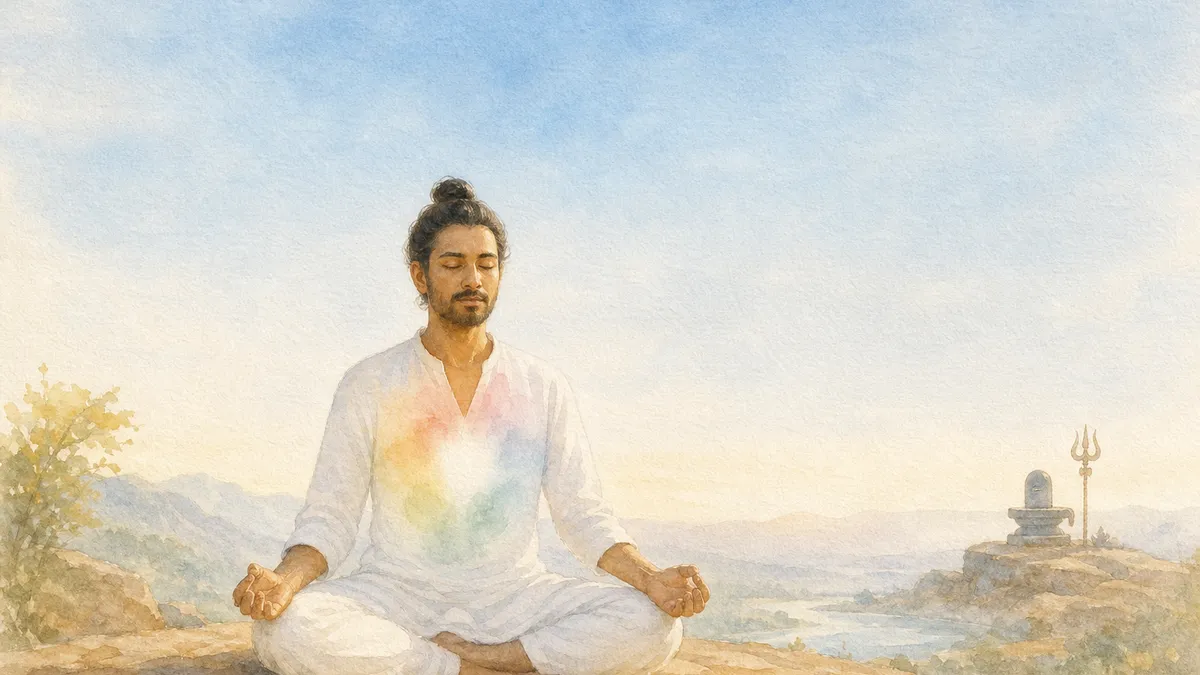
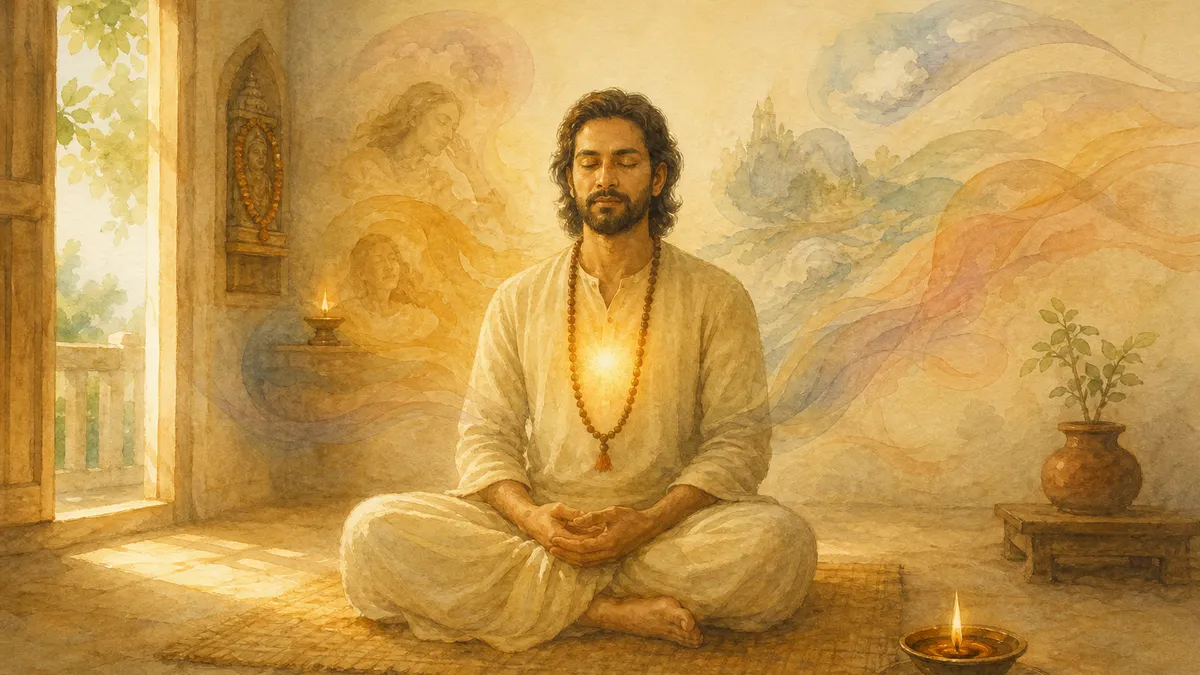
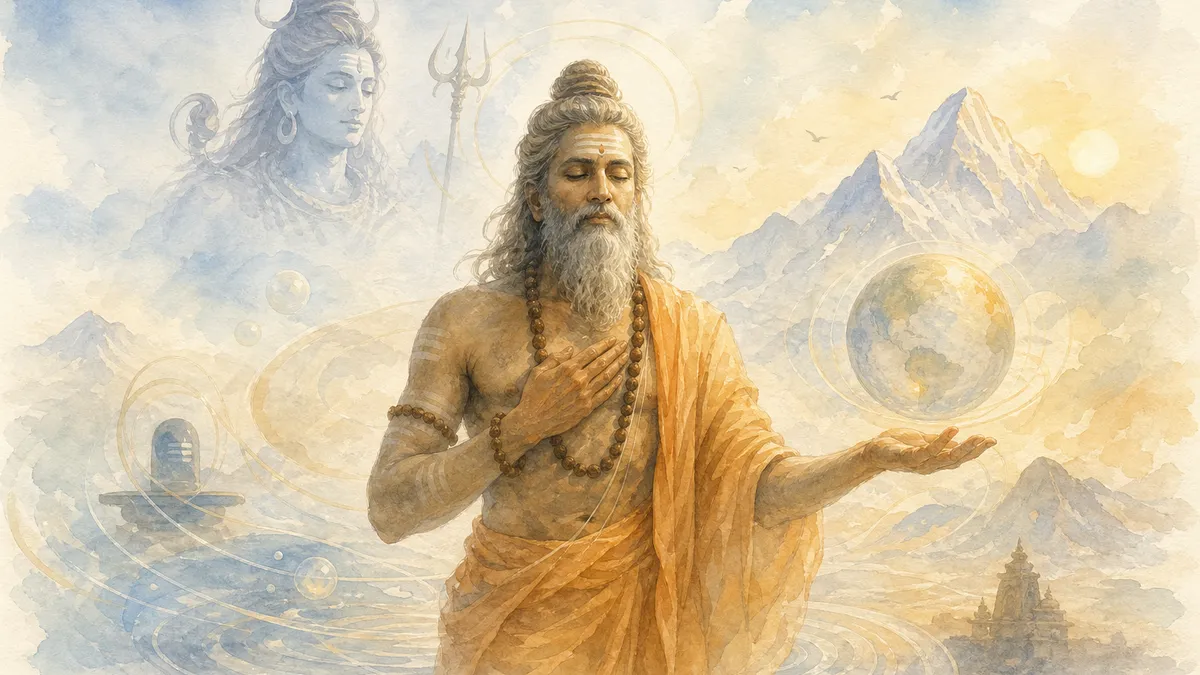
What is meant is that until one comes to know the five spaces within one’s body, liberation does not come. We could spend the rest of our lives reflecting on these words. The five chakras, the five elements, the five spaces, the five wisdoms—all these are manifestations of one and the same thing. In the subtlest dimension, the five elements are the five spaces of pure light. In the conditioned physical body, they are the five main chakras. In general, there are seven elements, but since the last two are too subtle for ordinary human perception, they are not spoken of; only the five are discussed.
In the conditioned physical body, the five pure spaces are represented by the five elements, the five chakras with their karmas within them. The process of liberation means untying the knots in the chakras, untying the karmas. If all the knots are untied and the elements melt away, a person returns once again to the state of the five pure spaces. And when a yogin returns to the state of the five pure spaces, the five wisdoms appear. It can be said that the five wisdoms are active even now, but only in a clouded, not fully enlightened form.
Ekarasa Vidya — the Wisdom of One Taste
The first wisdom is connected with the earth element, with Muladhara. This is ekarasa vidya, or the wisdom of one taste, unified wisdom. When Muladhara is completely purified and the earth element is enlightened, the yogin attains the state of one taste. This means that he can see everything with equanimity. Good or evil, honor or insult—all of this is seen by him as one and the same. He is so deeply immersed in contemplation that all phenomena are of the same order for him and are perceived as a blessing. But for an inexperienced practitioner, pleasure is one thing, and pain in the physical body is another.
Sometimes a practitioner may be so attached to himself that if he falls ill, he begins to regard it with great suspicion, and a very strong anxiety of mind arises in him: “Oh, this is such a problem! Now I won’t be able to practice and won’t attain liberation; everything is collapsing! My entire life path is under threat because I have fallen ill! All is lost!” Instead of remaining in presence, liberating, and relating to it with equanimity, understanding that different manifestations exist in this world, he begins to panic, thereby moving even further away from the capacity for contemplation. Instead of using suffering as a path, as a trial, as training, as a test of his contemplative strength, he does everything not to use it as a path, falling into confusion because of suffering. But this is not at all the path taught by the saints.
When you study with the Guru, you should adopt his mastery not only in certain technical practices, in philosophy, in the teaching, but also in his vision of life and in his perception of the world as such. For example, the Guru’s principle is this: “This is the very best thing that advances me. Right now, this is the shortest path for me. The trial that has befallen me now is the very best thing. The higher powers are leading me by the shortest path.” When we relate in this way to all suffering, hardships, trials, illnesses, and so on, this is the best principle, because in this way our hopes and grasping are cut off. And the more they are cut off, the better it is for us, since our true essence remains, while everything false and superficial falls away. This method allows us to test ourselves. It was precisely this method of practice that the saints followed.
Samarasa vidya, or the state of one “taste,” allows one to see equanimity in all manifestations. But this does not mean that one should not take care of one’s physical body. In India there are ascetics who think that the worse it is for the body, the better it is for the spirit. They not only fail to care for the body because it is temporary and dies, but even deliberately torment it. For example, there was a saint who had worms in a festering wound on his leg, and he would gather them with great love when they fell out of the wound. He allowed them to eat his body, thinking: “I offer my body to all living beings. The worms are hungry; let them eat my body.”
In India, this approach of asceticism and violence toward the body was very widespread. However, the approach of tantra is different: it forbids treating the body badly and says that the body should be regarded as a divine instrument. Of course, this does not mean having attachment and practicing a worldly approach to the perception of suffering. It means a state of equanimity, in which you care for the body as for a good machine that you maintain, but do not fall into panic if something is wrong with it. Such dispassion is given by the wisdom of equanimity, samarasa vidya.
Pratibimba-vidya — Mirror-like Wisdom
Another wisdom is connected with the element of water. It is called pratibimba-vidya, or mirror-like wisdom. It is the ability to reflect all things. A yogin who has mastered mirror-like wisdom can reflect any phenomenon in the Universe within his consciousness.
When the element of water is completely mastered, it becomes a white-colored space in this area, an infinite space of the presence of white-colored consciousness. And within it there is mirror-like wisdom, that is, the ability of this space to reflect all phenomena in the Universe. Such a person, upon seeing even the most ordinary thing, can reflect it in a very divine way, for example, write a wonderful poem about it. He can see the most insignificant detail in a very divine way and reflect it.
Viveka-vidya — Discriminating Wisdom
The third wisdom is connected with the element of fire. This is viveka-vidya, or discriminating wisdom. A yogin who has mastered discriminating wisdom can clearly understand the subtlest nuances of any thing in the Universe, without confusing them.
Discriminating wisdom means the subtlest understanding of the difference in shades between various energies in the Universe. A person who does not have discriminating wisdom may confuse one method with another, one teaching with another; for him everything seems to be the same. Suppose, if he has a strong element of space, the vishuddha chakra, but weak discriminating wisdom, he will have a tendency to think that everything is one, but at the same time he will not distinguish the teaching. That is, for him bhakti and jnana are one, kundalini yoga and raja yoga are also one, but he cannot deeply understand the subtlety of each teaching. Elders, juniors, and all people in general appear the same to him, but he does not understand how to relate to some and to others. When there is no discriminating wisdom, it is difficult to grasp different nuances or states. A yogin who has discriminating wisdom can put everything in its proper place, on its own shelf, while he does not become attached to his discrimination, knowing that all this is a manifestation of the single space of consciousness.
Discriminating wisdom is the completely purified element of fire; it is a red-colored space in the body. For example, if a yogin concentrates on the manipura chakra for a long time, through samyama he can see the red-colored space and enter it.
All-accomplishing and All-embracing Wisdoms
The next element in the body is wind. When completely purified, it is perceived as a green-colored space in the body. The element of wind gives all-accomplishing wisdom, since prana is the carrier, the basis of everything. It is considered that all-accomplishing wisdom, or the ability to accomplish any actions in the Universe, comes last of all, and if a person has not become fully enlightened, then this type of color does not manifest when the perfect wisdoms appear in the bardo.
Finally, all-embracing wisdom is connected with the element of space. The element of space in its pure form is like an infinite blue-colored space. And the wisdom connected with it, all-embracing wisdom, is synthesizing, that is, uniting everything into one. For example, if a yogin’s all-embracing wisdom is weak, he cannot bring various teachings under a single consciousness, a single basis. All teachings appear fragmented to him. But if all-embracing wisdom is strong, then the yogin sees unity in everything. This wisdom is especially important for the practice of laya yoga, since the natural state and presence are based on the wisdom of the element of space. The ability to see the one in all practices and methods and the ability to unite everything with contemplation is a manifestation of the wisdom of the element of space.
The Element of Space and the Natural State
Space.
Everything arises from space and exists in space. Within us, this sacred element, space, manifests as the natural state. Experience is the content of the natural state.
There is awareness. It is like space. The content of this awareness is everything we experience, that is, all external objects and their energies. But the basis of any experience is the mind, which is like space. It is very easy to determine whether a person has discovered the mind that is like space, the basis of all experiences, or has not. If a person has discovered the basis of all experiences, then he can be in the midst of them, yet they do not seize or hook him. Such a person can absorb everything, yet he is not colored by anything, that is, his consciousness does not change. He is always relaxed and serene; he is oriented toward the basis of everything, that is, not toward what is perceived, but toward the one who perceives. He always sees the single basis in everything, and this single basis is awareness, the perceiver. This perceiver is pure space, in which all phenomena in the Universe float.
If a person has not discovered the natural state, on the contrary, he is oriented toward perception and toward what is perceived. The perceiver is not yet known to him, and therefore the inner fluctuations of the soul can capture him. One person may be captured by emotions. This means that he has not yet freed himself from the influence of the lower chakras. Another may be captured not by emotions, but by some coarse desires, for example sexual desires, food, sleep, that is, the pashupatic qualities of muladhara. If, however, a person has become free, he is no longer captured by either coarse states or emotions, but he may still not be free from the intellect, from clarity of mind; with his mind he tries to sort everything out and get to the essence. In doing so, he does not use the clarity of awareness, but uses logic and intellect, which are limited. Such a person is seized by concepts. But one who has freed himself from all this is seized by nothing and constantly abides in unity with space, with the basis of his consciousness. And then true complete freedom comes. Such a person is oriented toward nothing except awareness. If a yogin is inexperienced, nihilism may arise in him toward the external; but if he is experienced, then all experiences that arise will be regarded by him as inseparable from his awareness. He has neither attachment nor rejection toward what he experiences.
The Harmonious State of the Element of Space
If the element of space within us is balanced, there is room for everything in life. Whatever arises finds shelter for itself. We have plenty of time, sufficient emotional capacities, and sufficient tolerance. All experiences are appropriate; there are neither too many nor too few of them. All experiences are not separate from us, but they do not possess us either. We do not strive to obtain experiences, but we do not avoid them either; instead, we rely more on ourselves, that is, on the one who receives experiences.
Usually, when speaking of the elements, it is said that there is the following arrangement: a state in which the elements are harmonious, a state in which the elements are in excess, and a state in which the elements are deficient. Depending on which elements are present in the body, so a person perceives himself. A person in whom the element of space is harmonious can be said to be in contemplation from birth; all the other elements in him are also balanced. Such a yogin is oriented toward the subtle essence of consciousness, toward the basis of everything. Behind all phenomena, he sees this basis.
Excess of the Element of Space
A person in whom space predominates is not of this world. He has no connection with the contents of space, that is, with the other elements. This state is not union with the nature of the Mind. Such a person simply loses connection; a loss of meaning occurs. But not from depression, which happens when earth predominates, but from a shallow connection with life, because of which we become rootless. The result of an excess of the element of space can be the element of mindfulness, the element of presence.
If a person has an excess of the element of space and it is not compensated by other elements, then such a person is lost; he does not feel the ability to manifest either through the element of fire or through the element of water. He is alienated from any manifestations of life. He is not of this world, but he is not in presence either. He is as if suspended between heaven and earth. At times he develops a desire for strong solitude or unmanifest emptiness. Since he cannot maintain the state of a single space and foundation among objects, he does not know what to do with this external Universe. The state of desiring the unmanifest is one of the manifestations of an excess of the element of space. Such a person cannot build relationships with others, because he is lost in himself and in this emptiness; he does not know how to manifest it outwardly and what to do with the other elements. He cannot take the position of another person, look at the situation from other points of view. He has no identifications with anything, but he has no roots either; he cannot take up anything seriously. He has a superficial attitude toward everything; he cannot draw energy from what he perceives. This is how the excessive state of the element of space manifests.
Question: I am listening and cannot understand anything. Since you are speaking about the vishuddha chakra and the harmonized element of space, do all the elements automatically become harmonized if the vishuddha chakra is harmonized? Or does each element need to be developed separately, as it were?
If a person is at the level of a developed vishuddha chakra, this implies that the other elements are also in fairly good condition. This does not mean that they are fully developed, but at least the level of such a yogin is high, since he has reached the vishuddha chakra. That is, he is no longer quite an ordinary person; he is above the world of humans. If a person has not reached the vishuddha chakra, he looks at the world through the eyes of anahata or manipura; he has no wisdom as such. Even if he begins practicing, in terms of his qualities he is completely different from a person of the vishuddha chakra. These people may perform the same practice, but they see it with different eyes. Suppose a person at the level of vishuddha instantly grasps the state of contemplation, presence, the single foundation, self-liberation. He had already felt this within; he was simply given hints, and he quickly grasped it. But a person at the level of manipura will examine everything thoroughly, yet will not be able to unite it. He will have intellectual clarity, but going beyond concepts will occur for him later.
Deficiency of the Element of Space
If there is too much of the element of space, this leads to the loss of the qualities that arise in our space.
An excess of the element of space leads to the fact that the yogin cannot connect with all the energies that manifest in him. At best, this is a loss of orientation in the relative dimension, that is, a loss of action in the view, a loss of action in awareness. But sometimes one can hear about holy fools. This is a typical example of the manifestation of the element of space, when the wisdom of the element of space cannot manifest harmoniously in the other elements, and therefore a person chooses the path of ignoring the relative dimension and becoming a man of God.
But if there is too little of it, then everything that arises begins to have power over us; everything seems solid and impenetrable. Small obstacles can seem disproportionately large.
If there is little of the element of space, this means that the yogin is seized by this life; material objects have an influence on him. He cannot expand his consciousness. What he sees influences his mind and contracts his consciousness. For example, he is standing in the kitchen and sees plates; his mind is absorbed by the plates and the kitchen, and this leaves an imprint in him, contracting his consciousness. He communicates with those who live near him, and this contracts his consciousness. He cannot find the foundation of all experiences; experiences influence his consciousness, the mind clings to them and becomes attached to them. And clinging, in turn, gives rise to suffering. And the reason for all this is that the single foundation is not visible behind the experiences. Even when such a yogin practices, he has duality: he sees a statue, but does not see what is behind it; he hears the words of the sutra, but does not understand its deep meaning. It is difficult for such a person to understand what is hidden behind all experiences, and therefore external objects influence his mind and condition it. This is how a deficiency of the element of space manifests.
A lack of space leads to another element beginning to predominate and determine our reactions. A person with balanced space can work all day, meditate, engage in spiritual practices, and also contain everything within themselves. They have room for everything. Another person under the same circumstances, but with a lack of space, would not be able to withstand it.
Manifestations of an Imbalance of the Element of Space
For example, there are people who become confused if they are given a complex service. Their mind begins to worry intensely. They lose meditation, lose awareness. There are people who can perform complex service, yet their consciousness remains stable; they maintain awareness perfectly and have no difficulties. This is due to whether the element of space is present or not.
For example, one person is capable of managing themselves while doing some simple service, but if the service becomes slightly more complex, confusion arises in them, and they cease to control themselves. By contrast, another person can perform some complex service, do practice, take care of themselves and others. And at the same time they have no confusion at all, because everything fits within their consciousness as if it were infinite. And then they calmly go into retreat and practice. Whatever such a yogin is engaged in, he always sees the single foundation and essence, and everything that manifests he connects with contemplation. This is a factor of the opened element of space.
In fact, the ability to connect any situation with contemplation depends precisely on understanding this foundation of the element of space. If your element of space is strong and harmonious, you do not get tired. In general, when Vishuddha is activated, the body is always very vigorous and light; there is no strong hunger, physical fatigue, or tamas. While doing various tasks, such a person does them as if playfully, very easily. He is not attached to anything, since all these tasks are immersed in the natural state. For him, they are no longer tasks as such, but the practice of play.
Excess of the Element of Space
A person with a predominance of space simply goes with the flow of life. Work has no importance for him.
Conversely, if a person has an excess of the element of space, then he is lost in it. He loses himself as a personality; his yogic ego dissolves into this space. For example, an inexperienced monk or novice who has received a powerful experience that shook him so deeply that he is constantly with it, afterward cannot focus on service, on proper relationships with others, or on studying the relative teaching. He is, as it were, lost in this boundless state. He has lost the incentive to do practices in the relative dimension. This is called losing action in the view. His consciousness is approximately like this: everything is emptiness, everything is illusion, everything is useless. He simply goes with the flow, surrendering to this state. It is difficult for him to make efforts in order to continue practice correctly. If you practice, you must have a strong relative yogic ego that can cope with the element of space. This is also called the experience of emptiness in meditation.
Lack of the Element of Space and Psychological Continuity
Usually we identify ourselves with external circumstances: work, interests, relationships, our body—that is, rather with the contents of space, with experiences, than with the one who experiences. In this case, of course, having lost something from the above, we consider ourselves lost. Relationships break off, relationships end, and then we say that we feel lost.
If a person has a lack of the element of space, that is, if he has not yet formed his psychological continuity at the level of awareness, it is easily broken. His ego, his personality, is based not on the element of space, but on certain external experiences. And if something happens, such psychological continuity disintegrates; the illusion of his wholeness as a personality disintegrates. For example, if a person has no awareness connected with the element of space, then he feels that he is lost as a personality when an ideology collapses, relationships change, status changes, or the external environment changes. He then has to restore himself again and determine who he actually is.
But if a person has a strong element of space, this in principle cannot happen, because no matter how circumstances change, he always has an inner center connected with the foundation of any experiences. He is oriented first and foremost toward the one who experiences, and not toward what is experienced or the experience itself, and therefore he is able not to lose himself in any situation.
When a yogin realizes continuous consciousness and light, his psychological continuity cannot be destroyed by anything at all—neither while awake, nor in sleep, nor at the moment of death. This is the highest state of the element of space.
Complete Union with the Element of Space
If we completely unite with the element of space, then we come to know the nature of Mind. Then we are free, because we are no longer bound by what arises in experience. We comprehend our true nature, we are one with our essence, and we do not look outside ourselves for the causes of our problems.
When a person lacks the element of space, he always looks outside for various problems and hooks. For example, in disharmonious relationships, someone else appears to him to be at fault; for him, everything is always connected with external events. Such a person does not understand that everything is in his consciousness, that all problems and joys arise from his consciousness, that he can change the situation by changing himself from within. Such a person may falsely believe that there is something external, independent of his consciousness, and enters into such illusory relations with the external.
If, however, the element of space is completely purified, the yogin is fully oriented toward awareness; he, as it were, accepts responsibility for everything. In fact, as a person, he truly appears only from the moment when he genuinely takes responsibility for something. If he has said something, then he will answer for his words and do everything necessary.
When one monk came to our ashram, I gave him the task of sweeping the floor, and when he could not do it, I spoke with him for a long time. He was surprised: “Is the question of cleaning so important to the Guru?!” But this is not a question of cleaning; it is a question of responsibility for what you do. If the higher part of you has made a decision, then that decision must be total; it must be carried out no matter what, even if the entire Universe is collapsing, because this decision was made from the deepest state. What matters is not what you do, but that you show responsibility for the decision you have made. This means that if the deep part of your “I” has made a decision, then neither feelings, nor the ego, nor the mind, nor external circumstances can shake it—such is the yogic power of carrying out what has been conceived. Nothing can oppose your intention if you have made a decision. Your mind possesses this tremendous power because you are aware of the Source of the mind, the deepest state. Such a yogin is unwavering and can attain siddhis, the fulfillment of his desires, and receive mystical experiences.
The Practice of Self-Liberation
We know that any unpleasantness we encounter is simply something arising in space. We do not need to become this problem ourselves; we can rely on our own experience of being, and not on how others see us. We can accept ourselves and what we encounter with approval.
Any experience that occurs is something arising in the space of our consciousness. To self-liberate means to shift the focus of one’s mind to this space at the very moment of the experience. When a yogin performs the practice of asceticism, he as it were intensively prompts himself to shift his consciousness from the body or circumstances to this space of consciousness.
We do not need to become this problem ourselves.
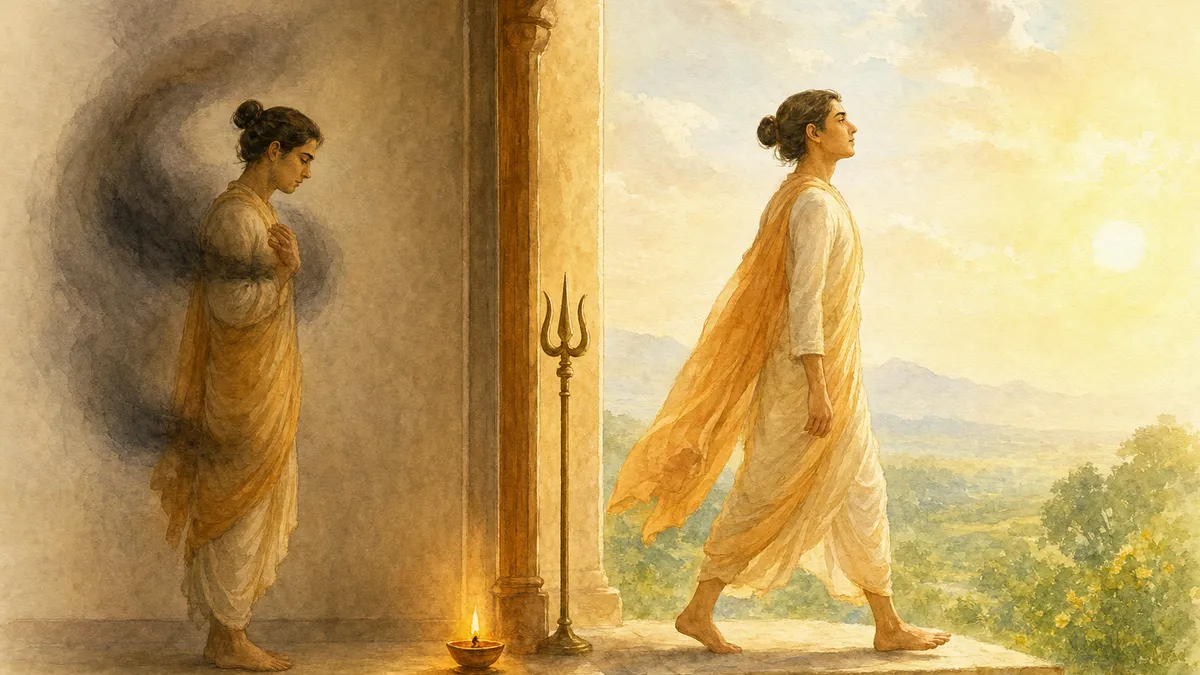
When we do not have awareness of this space, then the problem arises. It can be said that we ourselves become this problem. In fact, we cannot liberate it, and instead it takes possession of our mind. And here there is a subtle distinction: when we become the problem, samsara begins; when, at the moment of experiencing the problem, we liberate it and become space, nirvana begins.
We can rely on our own experience of Being, and not on how others see us.
Our own experience of Being means that we have great trust in the inner state of presence; we have already become rooted in it, and it no longer leaves us. And how others see us is no longer so important; what is important is how we are aware of this space. The karmic vision of the world of people ceases to have such an effect on us. We can change our karmic vision simply through the power of abiding in presence, like space.
For example, a practitioner who has not yet discovered awareness needs semi-worldly friends, relationships with whom are built on the basis of attachment, that is, those who can comfort or support him. His consciousness may fall into despondency or confusion, so he needs to be encouraged in his practice. All this takes place when space-like awareness has not been revealed. Such a practitioner may change his decision, his faith is weak, and he does not yet possess the qualities of a vira-yogin, an uncompromising hero, a sadhaka.
On the contrary, when time passes and he discovers the awareness of space, he becomes free from the need to be supported by others. He does not need comfort or encouragement; he himself can lend a shoulder to another. He does not change his decision, his faith is unshakable, he can take on heavier services than others and consider this not a disadvantage but an advantage. He shows great diligence in practice and has enormous spiritual strength. He needs no support of any kind, because he has support within himself, that is, he has already fully formed as a yogin. The opinion of worldly society or of his parents is unimportant to him. Even experiences cannot disturb him. Whether he sees demons or gods in the astral body, whether bad or, on the contrary, pure signs appear in his dreams—all this cannot disturb him at all, because he knows that everything has a single basis, the space of awareness. Simply by connecting everything experienced with the space of awareness, he always emerges from any situation as a true victor.
Acceptance of All Energies
We are ready to accept ourselves and what we encounter with approval.
Usually the mind of a yogin is divided, that is, it has a pure and an impure part, a holy and a tamasic one. When we practice, there is clarity in meditation, but there is also tamas; there are kleshas, but there are also merits. And the yogin feels this dividedness: in moments of holy states he experiences profound experiences, while in moments when kleshas manifest, he feels like a low being.
But when the element of space and awareness are opened, this dividedness disappears. Then the yogin can accept any energies in his mind, body, or outside. He can unite with them, work with them, and completely purify them. Even the most tamasic energies are seen by him as one with presence, and then desires and tamasic energies are subdued, since they no longer have power over the yogin. For example, before the discovery of awareness, greed for food would arise in the yogin during prasad, so he would lose awareness and then feel bad. When space is opened, whether he eats a lot of food or little, awareness is not lost and the level of energy does not decrease.
Expansion or Contraction of the Personality
For example, a person who identifies himself with one thing or another suddenly loses both. In such a situation, depending on his relation to space, he can either lose himself or reveal himself. Suffering can produce either a negative or a positive outcome. It all depends on how one relates to it. Having lost an external support, the object of his identification, the personality may contract or expand beyond its usual boundaries through union with the space in which the experience arises.
Thus, there are always two possibilities: the personality can either contract or expand. One who has discovered true space always knows how to expand his personality. One who has not discovered it and is inattentive has his personality contract with any experience.
In many monasteries there are very strict rules. For example, in Christian monasteries or in those monasteries where martial arts are practiced. There, a novice or monk is deliberately placed before a choice: either his personality will finally contract, or he will surpass himself, and then self-transcendence will occur, that is, he will move to a subtler level and his personality will expand significantly. He will undergo many trials, but he will change himself.
The art of contemplation consists in constantly allowing one’s personality to expand, perceiving any experiences as that which contributes to such expansion.
In the practice of meditation, the result of the imbalance of space is a lack of concentration and presence. The mind is easily distracted by whatever arises, because the practitioner identifies himself with the experience rather than with the basis of the experience.
Natural State
Awareness
Chakras
Self-liberation
Five Wisdoms
Five Elements
Tattva-vidya
Five Spaces
Space Element
Read 15 times
Articles
Vidya AI
Search
Lectures
November 5, 2026
Mantra of the day
ОМ ЭКАЙА НАМАХ ОМ Единому – поклонение!
Auspicious Times(Rome)
Brahma Muhurta:
04:56 - 05:51
Abhijit Muhurta:
11:33 - 12:14
Sayam Sandhya:
16:40 - 17:21
Mokshada Ekadashi (6 November)
Ekadashi of liberation. Helps to achieve spiritual enlightenment.