Five Bodies: The Path of Purification on the Way to Liberation
18.07.2026
0 мин. чтения
0
Share
copy
search
add
share
Commentary on the text “Chaturashiti-siddha-pravritti.” Manibhadra
“She was also called Yogini Bahuri. Once, a wealthy householder lived in Agartse. His thirteen-year-old daughter was married to a man of the same caste and social standing. One day, when she came to visit her parents, the teacher Kukkuripa stopped by the house and asked her for something to eat.
‘You are in excellent shape,’ she told him, ‘and rags and begging do not suit you at all. In fact, you need a woman. You should marry, but it must be a virgin from your own caste.’
He replied:
‘I fear life in samsara, and, spurred on by fear, my work carries me toward great liberation. If I do not do everything now, in these brief moments that smile upon me, how will I ever experience them again as someone else? If this precious time of diamond-like existence is seized and covered over by something alien, such as family, a wife, and so on, then that which is the passion of my life will be destroyed, and all manner of rubbish will appear. Knowing that this is what will happen, I remain without a woman.’
Hearing this, the woman suddenly felt that she believed in him. As she served the teacher food and drink, she asked:
‘Show me how liberation is attained.’
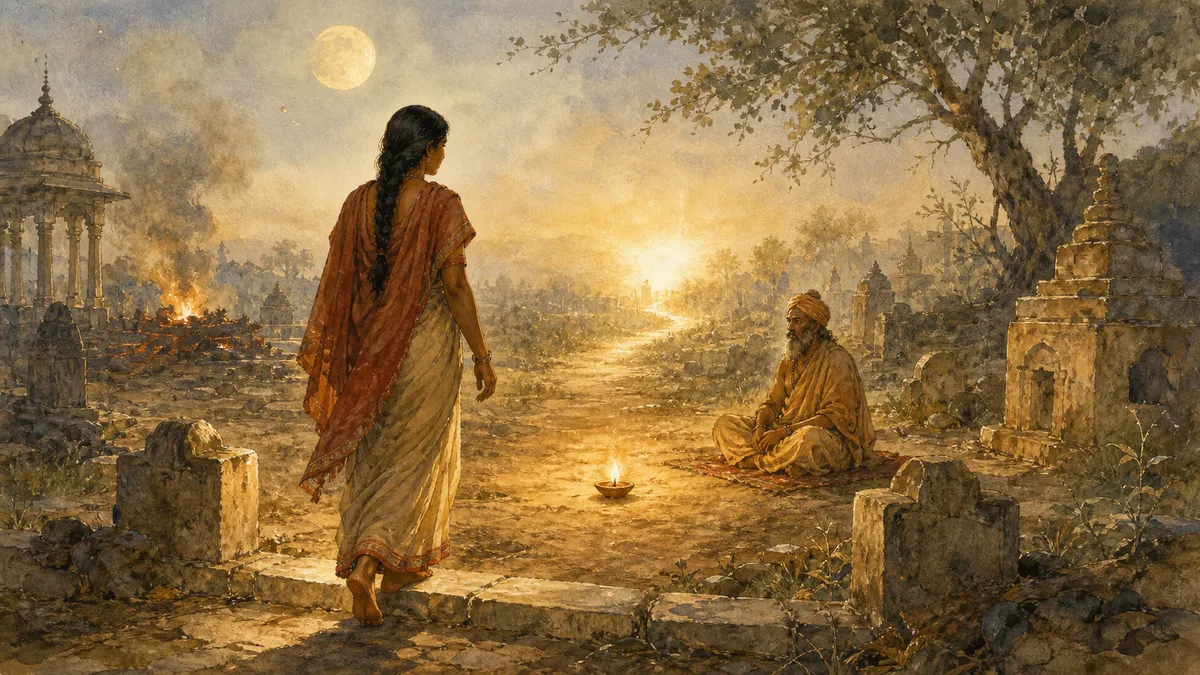
‘I live in the cemetery,’ he said. ‘Come there if you wish.’
Although it was almost impossible for her to do so, that very night, shortly before midnight, the woman came to the cemetery. Kukkuripa saw that she was truly ready to receive the teaching and gave her initiation. He then explained to her the practices of the generation and completion stages and the methods for fully uniting them. She practiced with him for several days. When she returned home, her parents showered her with abuse and beat her. She told them:
‘In all three worlds, there is not a single living being who has not been my father or mother. Even with your caste and lineages, you cannot escape samsara and always fall back into it. But I am going toward liberation, supported by my teacher. And your blows are pushing me forward!’
After listening to her, her parents decided that all this was nonsense and left their daughter alone. She meditated according to the instructions she had received, and the effects of karma gradually disappeared from her mind.
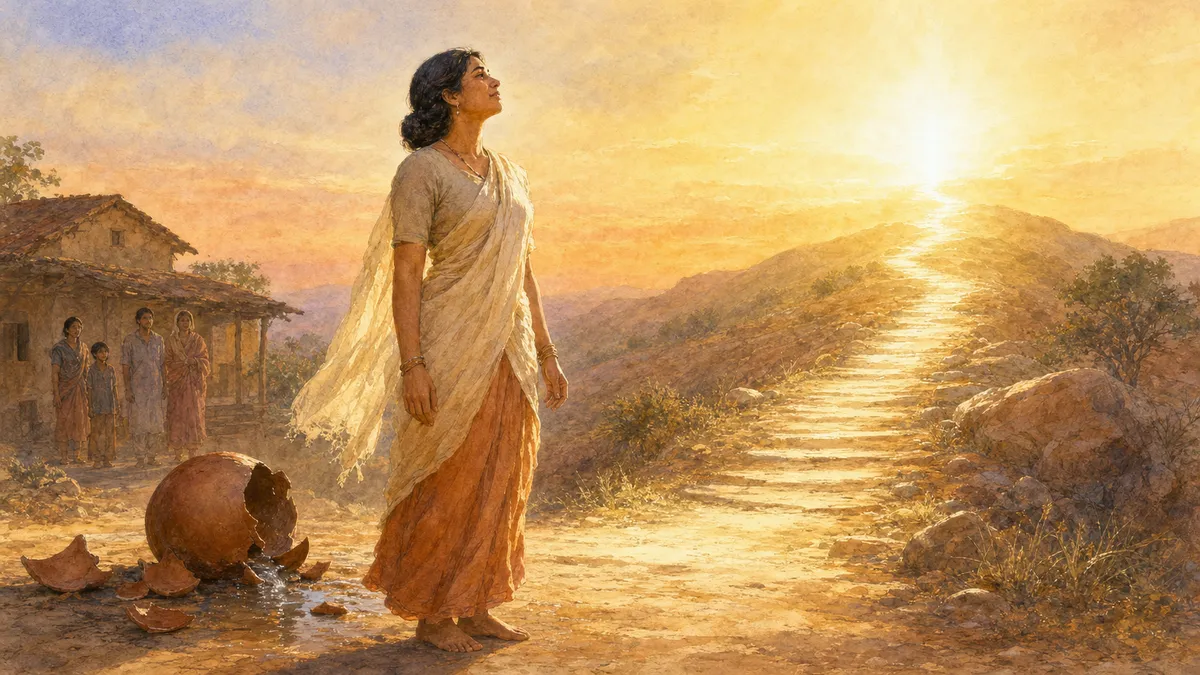
A year passed. Then her husband took her back. She fulfilled all the duties of worldly life, always remaining restrained and charming. She gave birth to a son and two daughters. When she wanted the boy to receive a blessing, she met her teacher. This was twelve years after their first meeting. One day, while returning home with a water jug, she tripped over the roots of a tree and dropped her burden. The water seeped into the ground among the clay shards. In the evening, when the woman had not returned home, her husband found her in the same place. No matter who spoke to her, she seemed not to hear. She continued staring at a single point. At last she said:
‘What are you saying? Are you all possessed?’
At sunset, she said:
‘All living beings break the jug of their body. Why should I return home? My jug is broken. I will not return to samsara again; I am going toward immense happiness. Look, O Teacher, upon this little miracle: in search of supreme bliss, I seek refuge in you.’
For twenty-one days, she rose into the air and gave instructions to the people of Agartse. Then she departed into the Clear Light.”
Two Paths of Practice
The path of practice is a path of continuous purification. This is precisely why we become monks. The path is divided into two main types: instantaneous and gradual. The gradual path is called vika, and the instantaneous path is called laya. Vika is the path of effort; laya is the path of self-transcendence and self-surrender. Vika is the path of gradual perfection; laya is the path of the leap. They are also called the “baby monkey” path and the “kitten” path.
On the path of gradual enlightenment, one begins with the physical body, with controlling and purifying the mind, and so on. On the instantaneous path, one begins with the nature of Mind and ends with the nature of Mind; one begins with self-transcendence and ends with self-transcendence.
The path of purification means that we must purify our subtle bodies. Naturally, we must understand that they are impure. Ordinary people do not realize that their subtle bodies are impure, so they live without restraint, however they please, wasting their lives. Yogis, however, strive to purify their subtle bodies, knowing that if they fail to purify them and unite them with the Clear Light, existence is meaningless. In yoga, these subtle bodies are known as the etheric, astral, mental, and causal bodies. This is all elementary, the basic doctrines.
The Etheric Body — Pranamaya
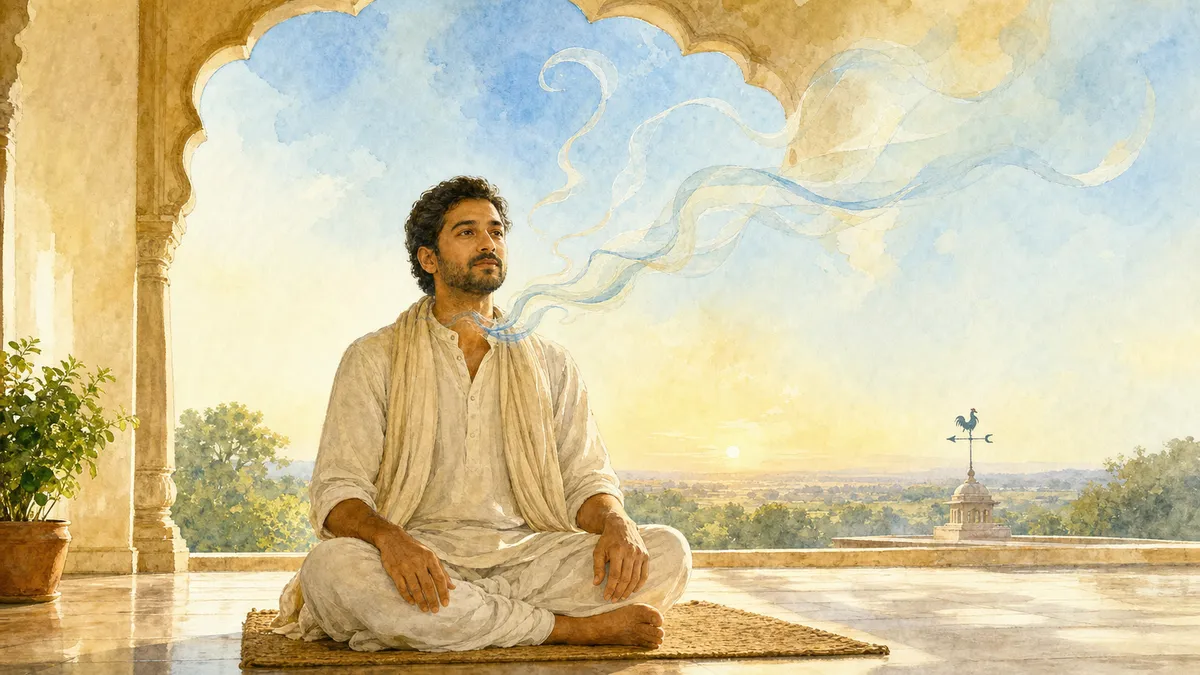
The etheric body is called pranamaya. It is considered the energetic sheath of the physical body. If someone trains in concentration practices, they will eventually be able to draw the etheric body out of the physical one. The etheric body resembles the physical body, except that it is somewhat more diffuse and consists of luminous fibers. It is the energetic double of the physical body.
When we practice kundalini yoga, the channels are purified. This means that our etheric body is being purified. When the etheric body is impure, its pranas are not pure, so tamas predominates in a person; they have many worldly desires, tire quickly, sleep a lot, and breathe rapidly and erratically. But when the channels are purified through the practices of detachment, observance of the precepts, and kundalini yoga, there is no fatigue or tamas, sleep is brief, the yogi's body has a pleasant fragrance, desires do not trouble them, energy circulates throughout the body, bodily secretions decrease, and the appetite is good, yet there is no need to eat much.
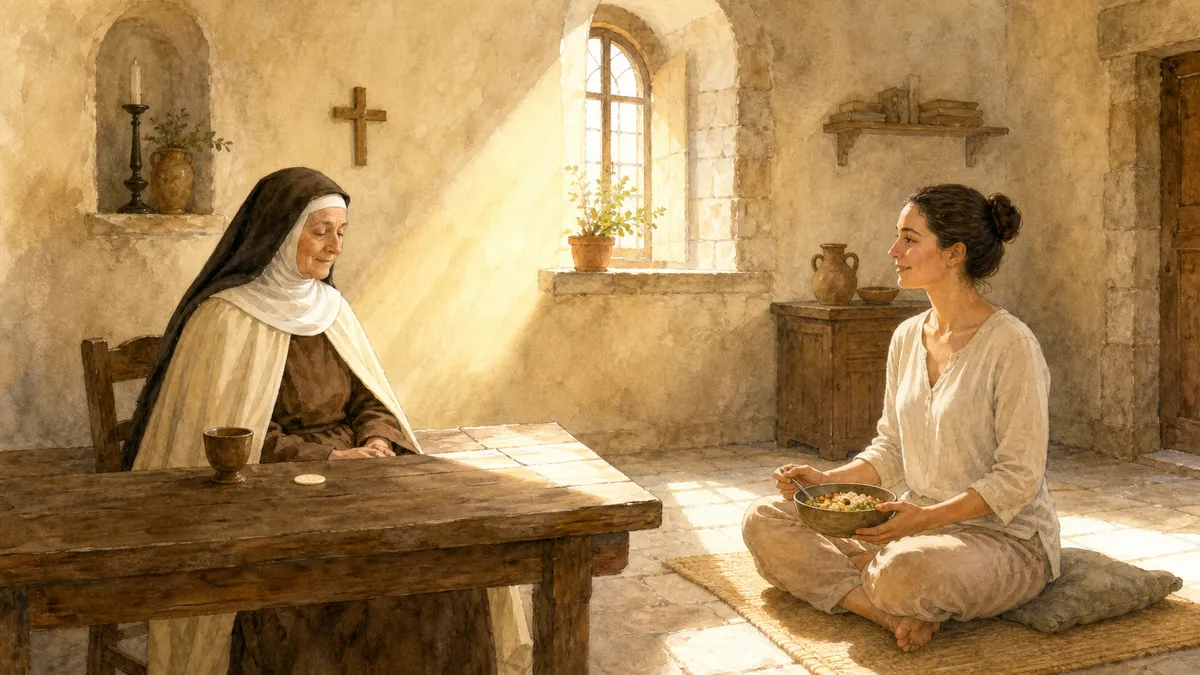
It is said that Saint Teresa could eat a small communion wafer the size of a five-kopeck coin once every two days. She was of advanced age and had already spent decades practicing self-purification. Until your energy level becomes like that of the siddhas, I do not recommend eating only a small wafer, because in yoga, especially if you practice techniques, eating too little is unfavorable.
Nevertheless, a point comes naturally when neither sexual desires nor attachments trouble you. Mula and uddiyana bandhas begin to occur spontaneously in the yogi's body, the coccyx grows warm, and within the sushumna a taut string—his energy—seems to vibrate; the nadis are felt by themselves, and the sounds of nada are heard in the right ear. Then the energy reaches the upper chakras of the head, and mystical abilities awaken on their own: dreams of past lives arise, along with visions of future lives, and clairvoyance manifests spontaneously. And when there is even more energy, nectar begins to pour forth like water from the soma chakra, descending and bestowing bliss upon the body. As it is absorbed into the chakras, this nectar produces great bliss that spreads throughout the body. At this time, the fire element becomes very subtle and powerful and burns away the mucus in the body; then there are no obstacles to the wind, and the wind moves and circulates very freely through the channels. Such a yogi can emit prana from their fingers.
When Gampopa meditated under Milarepa's guidance, Milarepa gave him the following task to test his level: he poured out a small pile of dust and told him to train in emitting prana until signs appeared. One day, Gampopa emitted prana from his fingertips, and the dust began to swirl. Milarepa then told him to stop practicing kundalini yoga.
When the channels are purified, absorption into samadhi (light) and abiding in that samadhi arise. The subtle body is projected by a simple effort of will. When there is a great deal of energy, the yogi can use the power of the mind to concentrate consciousness at the point of the anahata chakra, vishuddha chakra, or manipura chakra. Whether sitting or lying down, the yogi feels a spinning sensation, followed by a kind of clouding of consciousness, and then finds themselves outside the body. This is astral savikalpa samadhi. Dardri siddhi arises, and when the energy exits through the crown of the head, breathing stops. Such a yogi can immerse themselves in the light. When they immerse themselves in the light frequently, their energy does not descend even when they fall asleep at night, and therefore their consciousness remains continuous.
All the manifestations listed above are signs of the purification of the etheric body. If you practice correctly, you will experience all of them after twelve or twenty years of practice. One should not rush kundalini yoga. If you try to purify the channels abruptly by performing mudras and pranayamas, you will awaken kundalini, because the techniques do work. However, the energy may become uncontrollable, and if you have not mastered presence, problems may begin or obstacles may arise. Therefore, it is said that purification should be practiced slowly, without haste. But purifying the etheric body is not enough.
The Astral Body — Manomaya
The astral body is called manomaya. When your astral body is purified, there is peace in your heart and no agitation; your emotions no longer trouble you. You possess serenity, in which sorrow and joy are the same to you. You experience a single joy that continues without interruption; it is very quiet and gentle, and you have no emotional instability. When there is emotional instability (anger, hot temper, irritability, and so on), it is a sign of an uncontrolled astral body. For a true yogi, this is a shortcoming.
When the astral body is purified, everything is seen clearly: pure or impure, bad or good, yet the emotion is always the same. It is like the Four Immeasurables, when there is only devotion, rapture, joy, and divine pride. The astral body changes a person's inner state (bhavana). If, for example, you previously experienced despondency, dissatisfaction, and irritation in worldly life, then once the astral body is purified, you always feel subtle joy and serenity. One whose astral body is purified has only pleasant dreams.
The astral body is purified through the recitation of mantras, visualizations, the practice of bhajan mandala, worship, prostrations, meditation on the Four Immeasurables, pure samayas, and Guru Yoga.
The Mental Body — Sambhogakaya
The next body is the mental body. It is also called sambhogakaya or pranava-deha. The mental body is located in the vishuddha chakra. What does it mean to purify the mental body? It means going beyond concepts. One whose mental body is purified is no longer caught in the illusion of their own mind or bound by thoughts; they continuously self-liberate them. Thus, purifying the mental body means mastering true self-liberation. As thoughts arise, they no longer distract the yogi from presence. The yogi has understood the principle of self-liberation in its true sense.
The mental body is purified through contemplation, mindfulness, and meditation of the mahashanti type, in which you observe thoughts, then stop them, and once again abide in emptiness. One who has not understood the principle of the self-liberation of thoughts is like a weather vane that follows their own mind, while the mind constantly deceives them. One thought or another arises, and they are affected by it; but one who has understood the principle of self-liberation and contemplates correctly is always serene.
The Causal Body — Anandamaya
Finally, the last body is the causal body, anandamaya or karana-sharira. What does it mean to purify the causal body? It means relinquishing hope and fear, selfish motivation itself, the ego, and the sense of “I” that is rooted in the causal body and connected with the will. Thus, purifying the causal body means relinquishing your own will and surrendering it to the Universal Source. It is precisely the purification of the causal body that constitutes awakening and enlightenment. One who has purified the causal body lives without a past or a future. They have no notion of a personal “I”; they feel a great light emanating from the Atman flow into their awareness.
The causal body is purified through service and self-surrender—that is, through activities in which the ego does not seek gratification but, on the contrary, relinquishes its own will—and, of course, through Laya Yoga and contemplative presence. The causal body contains many karmas that will inevitably surface one day, sprout, and lead to a new birth if they are not purified within a single lifetime. These karmas are called “bijas.” These bijas arose in the past because of karmic debts—rinanubandhana. Rinanubandhana is a karmic debt. For instance, if you kill and eat an animal, then according to karmic debt, you grant that animal the right to kill and eat you someday—such is the law. Such rinanubandhanas reside in the causal body even if we are unaware of them. Purification means that we scorch these seeds of karma, as it were, so that they can no longer sprout. One who attains the third level of self-liberation (self-transcendence) purifies the causal body.
It is also believed that Jyoti Yoga and the meditation of contemplative presence provide the most effective purification of the causal body.
The Result of Purifying the Subtle Bodies
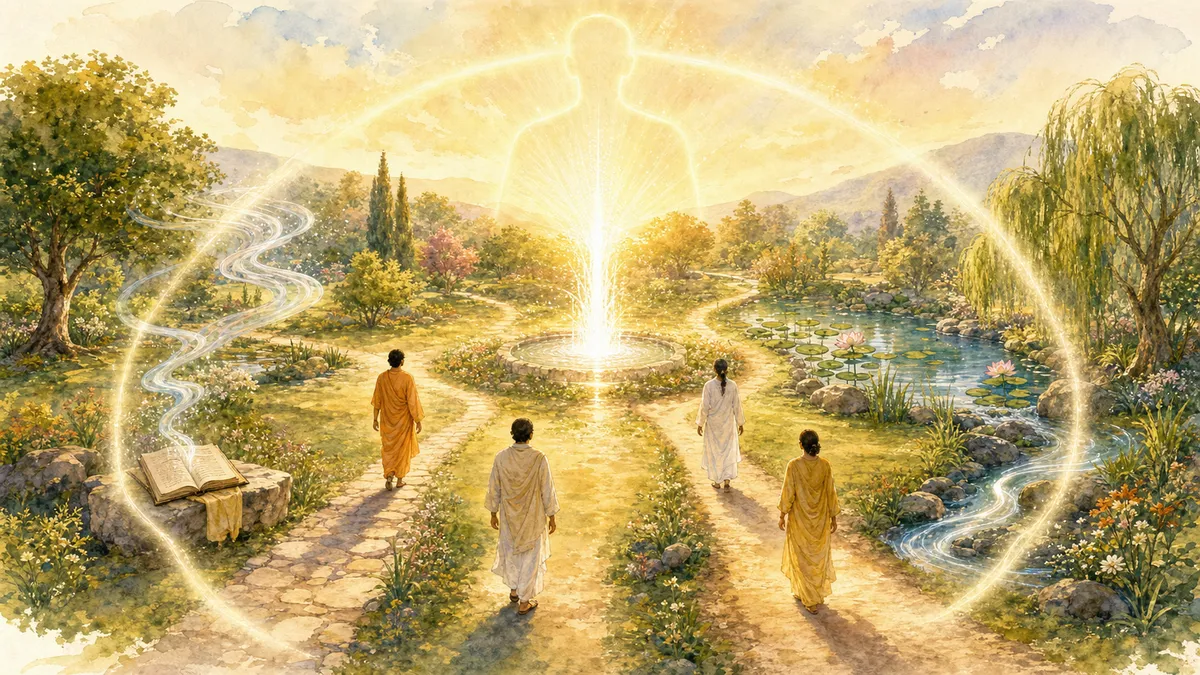
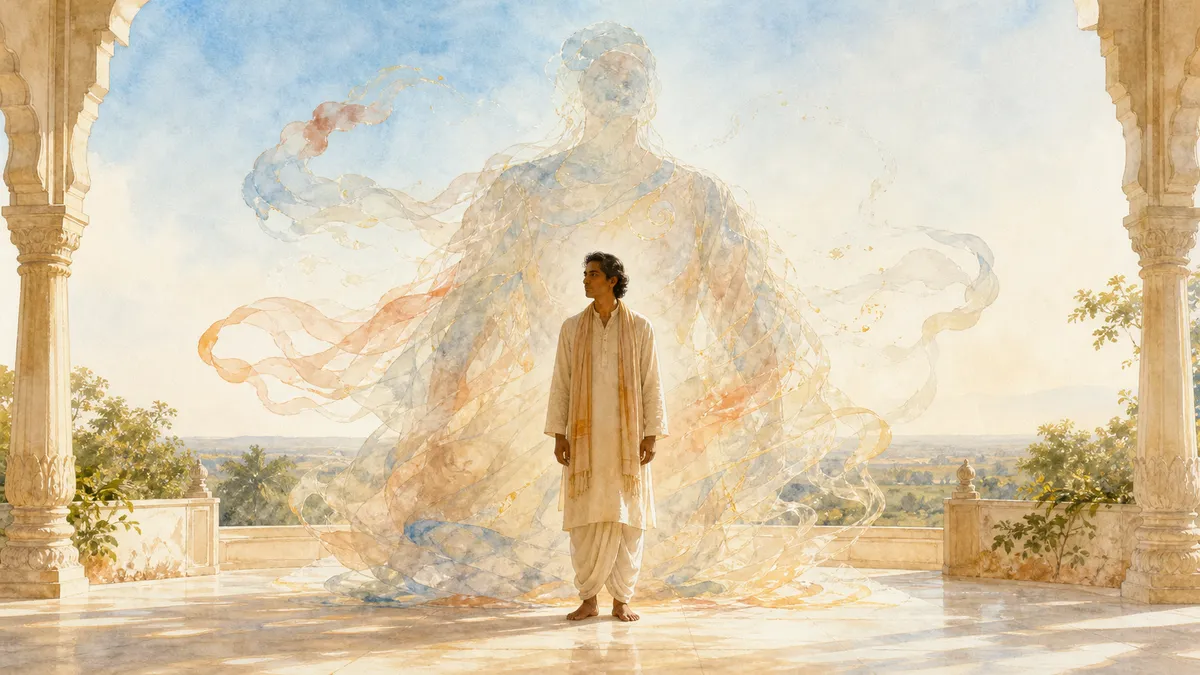
When, through practice, we purify our four bodies (or three bodies, since the astral body is sometimes combined with the mental body), we become pure, empty, and transparent. Peace arises in the heart, serenity in the mind, and circulation in the energy. Then the light of primordial Wisdom encounters no obstacles and begins to flow into us, and we ourselves become bearers of this light. Such purity is the result of impeccable monastic practice. When our subtle bodies are completely pure, there are no obstacles to the light, so it begins to flow into us by itself; our subtle bodies do not resist it. Then we can relinquish personal effort and fully enter the path of laya.
At first, while training in the path of laya, we inevitably follow the path of effort (vika). But we understand that the path of laya is not enough, since we are not yet very skilled at contemplation and self-transcendence, so we need the path of vika. Once we are pure, however, we can fully transition to the path of laya and entrust everything to this primordial light.
In fact, spiritual practice is the most ordinary thing: purify your subtle bodies and surrender to the primordial light. Difficulties arise when our old karmas begin to resist purification. It is then said that a yogi must summon heroic effort and courage to achieve such purification regardless of anything.
Individual Predispositions Toward Purification
The body that was pure in past lives is the easiest to purify. It is like making an opening somewhere, then widening it, and light flows in through that opening. Therefore, each person’s inclination toward a particular practice is determined by the purity of one body or another.
An intellectual will quickly purify the mental body, understand the principle of self-liberation, and become established in it.
Someone whose astral body is pure will quickly understand the principle of devotion and self-surrender, and because of this, it will be easy for them to practice other things.
Someone with pure channels will be capable of controlling the winds and practicing kundalini yoga; having a high level of energy, they will make rapid progress in meditation.
Finally, someone whose causal body is pure has neither hope nor fear; through awareness alone, they are capable of self-transcendence and can then purify their lower bodies.
Ultimately, the result is always the same, because we attain such purity on every level. When all our bodies are purified, the most powerful level of contemplation arises, at which point the physical body also begins to be purified.
Two Approaches to Purification
When we speak from the perspective of the path of vika (the gradual path), purification is indeed important, and there are stages of purification. When we speak from the perspective of the path of laya (instantaneous awakening), however, we must adopt the view that all our bodies are already primordially pure, and therefore there is nothing to purify. We must take the absolute position and place complete trust in the primordial light. But even if we have these limitations, we adopt the position of absolute purity by meditating on the primordial light, opening ourselves to it, and abiding in contemplative presence beyond concepts. We allow this light to flow into us and eliminate this impurity. If your mind is flexible, you understand how to practice the instantaneous path and how to practice the gradual path without confusing the two.
From the perspective of the absolute perfection of the instantaneous path, there is no impurity, because this body is primordially the body of a deity and is already fully awakened. One need only recognize this fact and remember it continuously; and while remembering it, remain attentive to the presence, allowing the light of this purity to fill us continuously. In other words, the path of laya means that even if you are not a buddha, you must regard yourself as a buddha; you must become accustomed to regarding yourself as such. This is different from pride, self-deception, or anything else. Outwardly, of course, you should remember that you are a monk and a human being. This concerns your inner state.
The instructions for this case are as follows: even when your mind is like that of a buddha, behave like an ordinary person; even when you feel fully realized, as though you were God, manifest in accordance with your situation. Nevertheless, with regard to one’s inner state, the path of laya entails focusing solely on the causal body and continuously meditating on absolute perfection.
At first, we think that abiding in contemplation simply means maintaining complete attention to the body and thoughts and self-liberating them. Later, we understand that contemplation is deeper. Contemplation means continuously perceiving the great Source, surrendering to it, and transcending oneself.
At the highest stages, when there is no difference between you and the great Source, it is simply a matter of abiding as the Absolute day after day, feeling yourself to be the Absolute, living as the Absolute, and walking as the Absolute.
Artificial and Authentic Absolute States
Of course, this does not mean at all that we generate some created absolute state. If we sit down and think, “Aham Brahmasmi, Aham Brahmasmi. I am the Absolute,” we will become pompous and grand; we may even artificially expand our body and artificially engender immense divine pride. These are methods of the lower tantras, in which a person imagines themselves to be a deity until their subtle body transforms into a deity.
However, this will be something artificial, fabricated, and constructed, and it will not be regarded as absolute realization. At best, this path will make it possible to become a deity of the upper realm of form. It is something made, because it consists of mind.
To be the Absolute means that by this point our “I” must disappear completely. In a sense, it means disappearing ourselves, when we completely relinquish our “I,” our petty desires, preferences, and judgments. Suddenly, we feel that we have become completely empty, completely transparent, and then the absolute state flows into us of its own accord. This is not an artificial but an authentic state, and we abide in such an absolute state.