

Commentary on Padmasambhava’s text “The Inevitable”
When one practices the Dharma, certain things are inevitable.
Jomo asked:
“And what does that mean?”
The Teacher replied:
“If you recognize the co-emergent Wisdom present within you, the attainment of enlightenment is inevitable.”
Recognition in Shankara’s language is called viveka (discernment). The whole point is whether we have sufficient discernment to recognize this co-emergent Wisdom (prajñāna). Co-emergent Wisdom is also called sahaja. “Saha” means natural, together, and “ja” means born. All living beings fail to recognize their co-emergent Wisdom.
Obstacles to Recognition in Different Worlds
Beings in hell do not recognize co-emergent Wisdom because of strong conditioning by suffering, which was caused by intense rejection, anger toward some situation, irritation, and malice. This anger was caused by the concept of “I,” of “self.” When a person is strongly centered on themselves, everything that obstructs their ideas is seen as life-threatening, and therefore anger and malice arise. Because of this clinging to the “I,” strong duality, and rejection, a tendency arises to harm others — this is how living beings fall into the hells.
When you have any irritation, think:
“How foolish! I am being deceived by my own karma! Everything around is so wondrous and transcendental, yet I stubbornly refuse to see it. Instead, day and night I cherish my beloved ‘I,’ and at the slightest thing not going my way, I fall into melancholy and become irritated.” These are the seeds of hell.
Once, a practitioner said:
“If I were planting carrots, it would not be like it is for practice. It would be the way it should be.” I thought: “What an understanding. Then she would be better off as a farmer.”
Why, then, are we doing all this? Is it not for practice? What does “the way it should be” mean? Even if you grow five tons of carrots per hectare, who will need them? Will you take them with you into the bardo? Such views are simply ridiculous.
For us, everything is subordinated to practice. Whatever manifestations you encounter, think:
“These are wonderful ways to break my fixed ideas and lead me to liberation.”
Whatever you face in everyday life — harsh living circumstances, anger, irritation directed at you (when your karma is being cleansed), various unpleasant circumstances, illnesses of the body, various events — all of this should be regarded as wondrous manifestations that contribute to your enlightenment. Thinking this way, you will turn everything into spiritual practice. Even in difficult situations, you will remain a practitioner and become like the sages, for whom even poison is nectar. In other words, you will be invincible on earth, in water, and in the air. Everything will contribute to the revelation of your self-born Wisdom.

Cutting Off Perverted Will
When we think incorrectly, it means that we lack viveka, that is, we do not recognize the co-emergent Wisdom present within us. Why is the necessity of service and the like spoken of? Moreover, at the beginning of the spiritual path this is especially important. Because we must learn to discard our perverted will, since it is precisely at the level of one’s own will that subtle forgetfulness arises. Christians say:
“We have generated a perverted will that caused us to move away from God.”
The point is to learn to ignore this perverted will, which we have nurtured for a very long time, and which therefore did not allow us to recognize co-emergent Wisdom.
In order to learn to discard it, the disciple first trains by external means. It does not matter what they do or how, as long as they learn to discard this perverted will. Perverted will advances when we follow something untrue within ourselves, when we make a mistake and follow thoughts or the subtle movements of the subconscious. We fundamentally do not understand that this is harmful to us, that it will ensure that we receive a new body in the bardo.
When we have learned to cut off our own perverted will, the recognition of self-born Wisdom suddenly awakens within us. Therefore, from the point of view of the Dharma, it is better to plant a carrot with its roots upward, but with the correct cutting off of perverted will and with the unfolding of self-born Wisdom, than to plant it correctly while remaining in illusion. Because there is not, and never has been, either a carrot or one who plants it; there have only existed various kinds of karma that manifest. Of course, we must be effective in bhakti and manifest discriminating wisdom at a sufficient level, but it must be subordinated to the essential principle, that is, to the cutting off of dualistic vision and egoism. Only in this case will we be able to recognize the co-born Wisdom present within us.
Pretas do not recognize the co-born Wisdom that is present. Because of this, their mind turns inward, passionately desiring something. Take, for example, sexual desires. Paramahansa Yogananda said that these are perverted manifestations of the soul’s passionate longing for God, only it does not know where to seek Him, and therefore moves toward the place where, in its opinion, something arises. When the mind is purified, the yogin becomes free from any desires.
In the human world, self-born Wisdom is not recognized because of the tendency toward attachment. Asuras do not recognize self-born Wisdom because of envy and struggle. People confuse self-born Wisdom with family duties, family, and relatives. Asuras confuse it with a sense of self-worth, with pride. Gods confuse self-born Wisdom with freedom of the inner plane, with beauty, grace, comfort, enjoyments, and pleasures. Because of these various kinds of delusion, living beings fall into one of the six lokas.
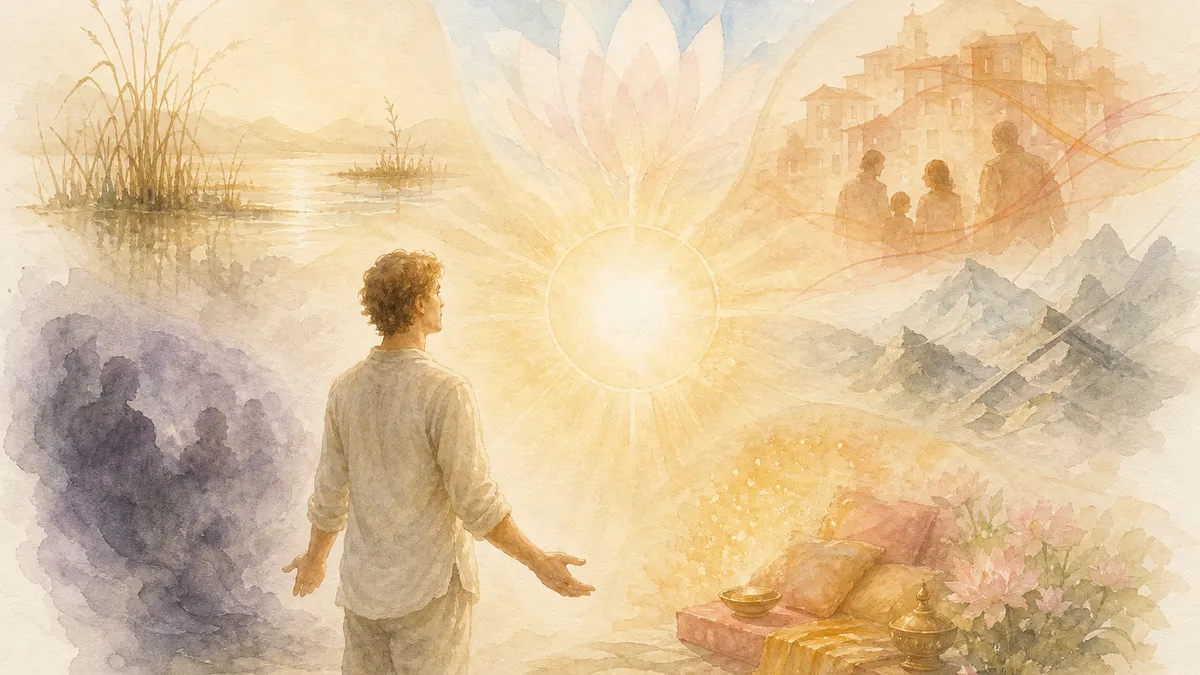
When we cut off our perverted will, we already understand that none of this can be confused with self-born Wisdom. We also have another insight: we understand that self-born Wisdom rests on nothing and does not depend on conditions, that it can manifest under any circumstances and anywhere; it does not need any external vehicles.
One monk in a Zen monastery practiced very diligently and with great effort for about fifteen years. He was very wise and knew the sutras. However, time after time, nothing worked out for him. Those who were behind him and were more foolish attained liberation. About twenty years passed; many of his companions with whom he had begun became awakened and were already instructing others, while he still remained in ignorance. Then he fell into despair and one day took a vow to become a rice monk in the kitchen. A rice monk is one who simply sits in the kitchen from morning until evening and husks rice. This is the most humble occupation, and therefore beginners were most often assigned to this service. He took on this service and, despite his learning, decided to be a rice monk for the rest of his life. About ten years passed. One day, while walking through the garden, he brushed against a small stone, and it struck a jug. When this happened, a sound rang out that suddenly resonated within him in such a way that his whole being was turned upside down. In a single instant, dualistic notions left him, and self-born Wisdom awakened.
Stages in the Development of Contemplation
What is needed in order to recognize self-born Wisdom? A correct and continuous orientation in contemplation, the ability to unite any actions with contemplation. At first, we are not able to meditate continuously throughout the day, and our meditation has glimpses lasting only a few seconds. Nevertheless, in about five years we must learn to remain in meditation continuously.
When a yogin, without interruption, remains in meditation and presence all the time except during sleep, this is called “maintaining clarity in movement.” Whatever such a yogin is doing, his mind is constantly immersed in the serene state of contemplation. It can be said that while he is not asleep, he is like the saints. All his activity revolves around a single center. He acts as if not acting, speaks as if not speaking, sees as if not seeing. However, in dreams he still forgets himself; in them, he acts habitually.

At the second stage this can be done in dreams, and then dreams cease to mislead; self-born Wisdom and clarity remain, and discrimination is not lost. However, in deep sleep this state is still lost.
At the third stage, the yogin makes a breakthrough and can remain aware in deep sleep, where there are no dreams at all. When he is aware in deep sleep, it is like learning to die while still alive. Death is no longer beyond his reach, because recognizing oneself in deep sleep is the same as knowing the depth of death. This is called “maintaining the hot eye in dreaming.” It is a very intense state of awareness that penetrates dreamless sleep. However, when he returns from dreamless sleep to everyday reality, these two states are not yet aligned, and therefore he is not yet fully awakened.
Finally, when the difference between sleep with dreams and dreamless sleep is completely erased, such a yogin lives in this world as if in deep sleep. He becomes fully awakened (a tathagata). Again and again, such a yogin trains in recognizing the co-emergent Wisdom present within him.
The closeness and naturalness of awakening
At first it seems that this is very far away, that it will require countless kalpas. However, the saints say that it is so close that it is difficult for us to believe it, that this nature is no farther than one’s own palm, and that is precisely why it so easily misleads us. In the beginning, the yogin thinks that he can attain this state through diligence, through intense will directed toward the future, and that someday he will achieve it. From the relative point of view, this is so. If you practice kriya yoga, mudras, and bandhas, your energy level will increase, and you will begin to see light in meditation. When, thanks to kriyas, you see light in meditation, it can be said that you are continuously in a state of awareness.
But when we discover this light and this awareness, we feel it as something that has always been inherent in us. We did not recognize it only because we allowed our mind to make many judgments and cling to them. Therefore the saints say that it is not so much necessary to strive to attain this reality as it is necessary to learn not to make judgments and assessments, not to cling to them, but to relax in the natural state. Then, in an instant, reality will begin to shine before you. However, the whole point is that we cannot relax and refrain from making judgments. It seems to us that we can, but in fact we cannot do this.
One novice once said:
“It seems to me that I have discovered my self-born Wisdom, and therefore there is nothing more to do; everything should be left as it is. I feel that absolutely nothing needs to be done. I am experiencing such happiness! I think I could help living beings reveal this state.”
I answered her:
“For now, you still do not understand what you are talking about. With your level of awareness, you cannot refrain from making judgments and leave everything as it is.”
She asked:
“Why? It seems to me that now it is all the same; everything has a single ‘taste,’ there is neither pure nor impure, neither good nor evil. There is not even any me as such.”

I explained to her where she was mistaken. The point is that we may feel this way at the superficial level of consciousness, but within us there are very subtle states of mind of which we are not even aware, and therefore we must cast aside all arrogance and self-confidence and practice with humility, understanding this.
The devatas of inner vision
Within us there exist the devatas of inner vision. Devatas are extremely subtle states of mind that we do not feel during life. It can be said that they are gods. The teaching says that they are not external gods, but internal ones. They are subtle states of our mind that are much more conscious than we are now. It can be said that we contain within ourselves certain subtle parts that surpass our understanding; we do not even suspect the existence of these parts. They seem to have their own existence, live their own life, and have their own opinion about the structure of the world and about our destiny as well.
These devas of inner vision are like super-beings within us; they are subtle parts of our mind with which we have not yet reunited, not yet integrated. For example, we do not want to suffer; we want happiness. Sometimes we want one thing, and sometimes another. But the subtle states of mind (devas, lords of karma) think differently; they believe that this mind and this body need to be this way. In accordance with a person’s past, they observe the observance of the laws of karma. This is their dharma, and therefore they direct the body and its activities according to their own criteria. Or we believe that it would be good for us, for example, to live a thousand years, but these subtle states of mind oversee the law of cause and effect (karma) and consider that this body must live within this karma for such-and-such a length of time, and therefore they direct it accordingly. It is usually said that these are the lords of karma, the servants of Yama, and various other gods. They surpass us in the power of clarity, intelligence, and energy. They are like super-beings; nevertheless, they are part of our mind.
And now consider that, through the power of presence, we must self-liberate them; we must surpass them. There are also wrathful gods connected with our lower karmas, the lower chakras. They direct certain aspects of our consciousness associated with the lower worlds. Or there are gods connected with merits, with our clarity, awareness, creativity, and art. They direct our consciousness in the higher worlds. All of these are numerous states of devata, which in the bardo manifest as wrathful and peaceful deities. All of them surpass our understanding. And if we do not have self-born Wisdom in order to liberate them, these subtle states of mind in the bardo or in dreams will simply not even listen to us, let alone engage in any kind of dialogue with us. For example, if a person without understanding tries to approach the gates of Yama’s heavens, the guards there will say to him: “Who are you? Go away!” They will not even speak with him; they will have superior energy and superior understanding. Even if he manages to come close, they will still drive him away.
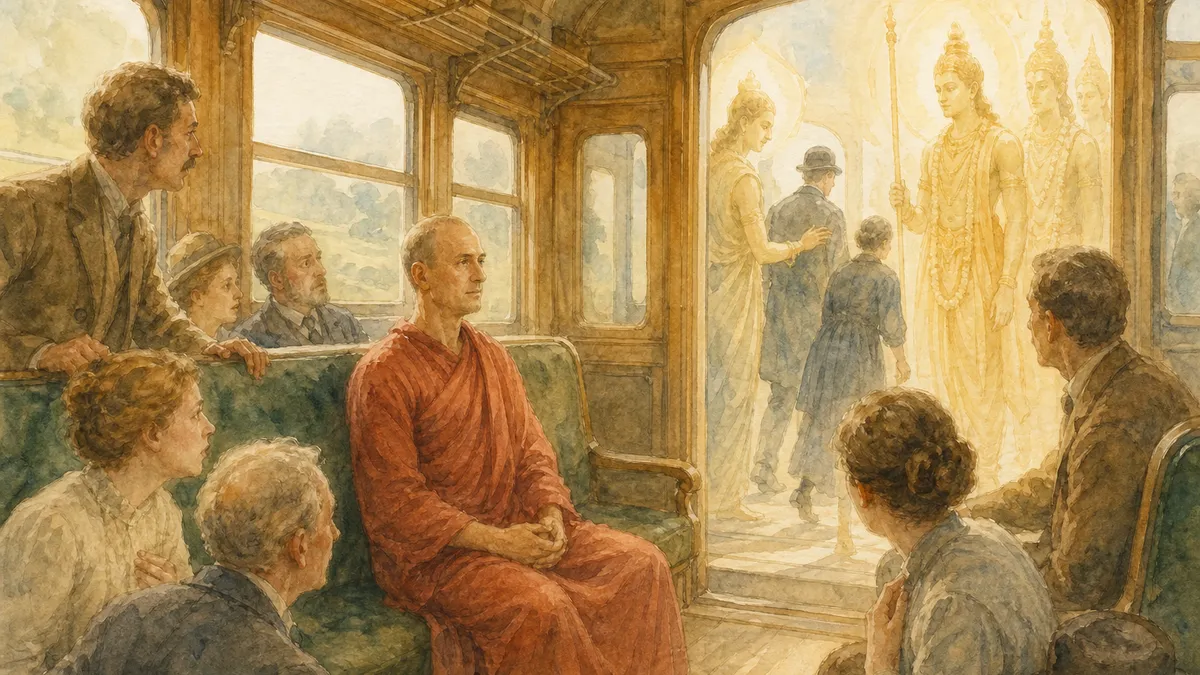
One monk had a similar experience when people were sitting unconsciously in a train carriage. He was the only one there who was aware, while all the other people had ordinary human consciousness. Suddenly the carriage opened, and several beings entered who surpassed human consciousness. The people were paralyzed; they were simply in horror and panic. These beings selected several human beings and led them out of the carriage. The feeling was that they were lords of karma who were sending them to the lower worlds. All the people riding in that carriage could not even utter a word. Only this one monk remained aware, and his mind did not waver. He saw that if you are sufficiently aware, then these beings will not cause you any harm. Ordinary people, however, were unconscious, and they were seized by wild fear when they encountered these lords.
Reuniting with the Devatas and Pacifying Them
When we encounter such things, we must understand that all these manifestations are aspects of our own mind, or devatas of inner vision, with which we must establish a connection, as if reuniting with them. And having reunited with them, we must tip the scales in our favor through the power of presence. This can be done only when self-born Wisdom is recognized within us, when we recognize the devatas of inner vision as our own “Self,” when we are not mistaken about them.
How can you test your ability for such recognition? If you meet someone who surpasses you in physical strength or material power, will you be able to maintain your composure? Will you be able to recognize this as an illusion or as a manifestation of your own mind, and maintain pure vision? If you are able to do this, then it can be said that you are trained in this practice of presence.
When self-born Wisdom is recognized and the yogin continuously abides in it, then at the stage of dreams such a yogin learns to subdue various spirits, beings, and devatas of inner vision. This is called pacification or taming.
In the “Shiva Samhita” there are these lines: “If a yogin recites this mantra a million times, then gandharvas, pretas, rakshasas, and dakinis will serve at his feet.” What does it mean to serve at his feet and obediently carry out his instructions? This is precisely what it means: that various aspects of his mind begin to submit. Previously they were disobedient, drained energy, created obstacles, caused suffering, or plunged him into illusions, but now all of them begin to serve at the yogin’s feet, that is, to submit; they begin to integrate into the mandala of awareness. When the yogin has developed self-born Wisdom to such an extent, then by the power of self-born Wisdom in the subtle body he can change the consciousness of these beings, attracting them and arousing their respect. Then, recognizing his leading position, they voluntarily submit to him.
The Practice of Awareness in Dreams
An example can be given. If you are not conscious in a dream, then you may have various dreams in which you may see relatives or friends who are angry with you and with whom you are sorting things out, or you may see beings who pursue you, make some kinds of claims against you, or various unpleasant stories may happen to you.
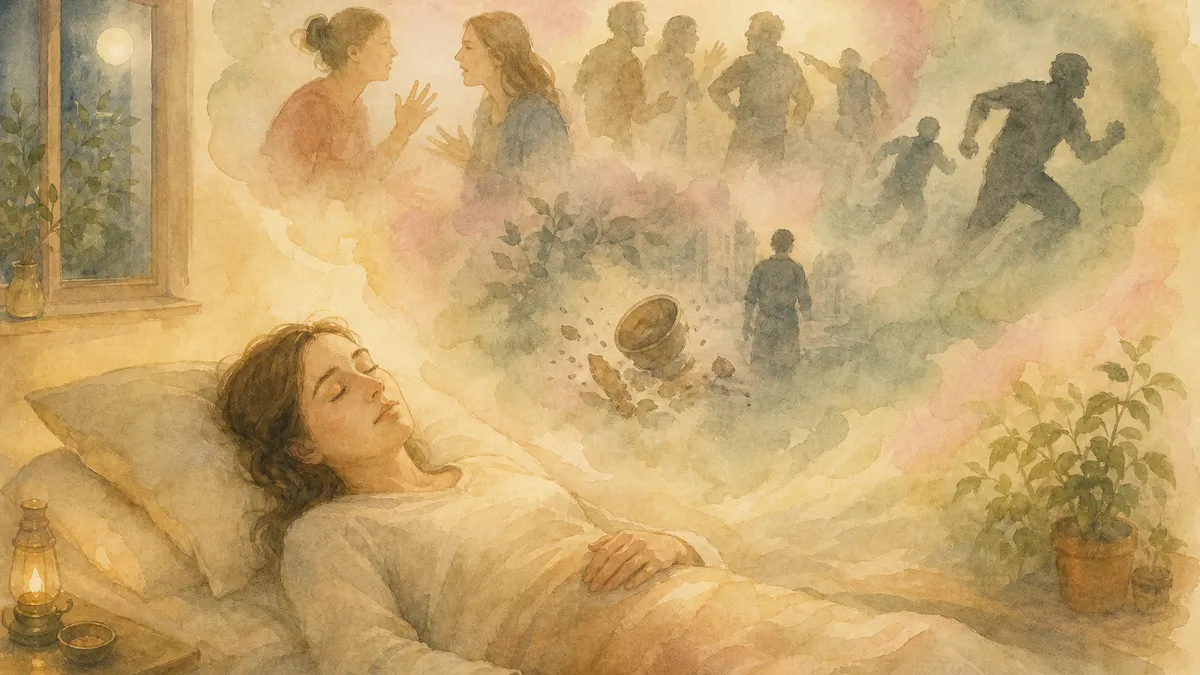
If, however, self-born Wisdom is recognized in dreams, then, when encountering such manifestations, you will always perform a transference of consciousness; you will change the consciousness of these beings. For example, by the power of your awareness you can stop their consciousness, remind them that they are in an illusion, that this is a dream, and that they do not recognize the Source of their being. As soon as you do this, these beings will be stopped; they will reflect and be amazed by your understanding. They will be as if paralyzed by your clarity and will submit to you, that is, the entire dream situation will immediately change. Then you will suddenly see that they are turning into something more pleasant, or the surrounding environment is turning into a pure land.
This is how self-liberation occurs in dreams. It is believed that if such a level of meditation can be maintained by a yogin during life, then he can be liberated in the bardo. That is, in the intermediate state he recognizes various kinds of karma as the play of his self-born Wisdom.
Continuous Abidance in the Source
What does it mean to recognize self-born Wisdom? Without clinging to the “I,” to always abide in the supreme Source, to be immersed in God twenty-four hours a day, to see His will, His play in everything, and constantly surrender to it. Whatever happens, do not allow your consciousness to fall into forgetfulness, thinking thus: “To fall into forgetfulness means to fall asleep.”
I read a dialogue between two Christian monks. One experienced monk approached his teacher, an elder, and said:
“It seems to me that I have already realized something. Whatever I am doing, my mind is constantly with God.”
The elder smiled and said:
“Is that an attainment? When you place every creature above yourself and see yourself as lower than every creature, then it can be said that you have made progress.”
What does it mean to “place every creature above yourself”? It means to eliminate one’s own “I,” one’s perceptions and evaluations, to such an extent that all of this begins to seem nonexistent. Then every creature will be a manifestation of this supreme Source; then your “I” and the “I” of others will become equal.
Why do saints say that one must become like a straw mat or a bundle of dry branches thrown onto the road? Because then you will be able to realize the supreme Source. In other words, you must learn to continuously eliminate your “I,” to eliminate this evil spirit, the demon of egoism. How is this done? Through surrender to this supreme Source, through the elimination of liking and disliking.
This should be recognized as the highest practice, even surpassing seated meditation. Sometimes it seems that it would be preferable to meditate. On the one hand, this is so. On the other hand, if you eliminate this “I” while engaging in service, then this is an excellent formless practice, in which your awareness is preserved but you cast aside your own preferences.
That is, over time, through meditation or through letting go, you realize such recognition of self-born Wisdom that it is not lost and remains one and the same. You will be surprised, but when it is realized in you, then regardless of whether you are sitting in meditation or engaged in service, it remains one and the same.
The Four Infinite States of Brahma
A true practitioner uses the Four Infinite States of Brahma to abide in self-born Wisdom.
When he sees something he does not like, he practices infinite love, thinking as follows: “In reality, this is a manifestation of pure self-born Wisdom; I simply do not see it because of karma and my own illusions.”

When a practitioner encounters something that does not bring him joy but, on the contrary, plunges him into despondency, he applies infinite joy, thinking as follows: “In reality, all of this is wonderful; it is Brahman itself, absolute Reality, whose essence is Ananda. I am simply unable to see it because of illusions.” Yet this is indeed so; by practicing infinite joy, he enters the state of contemplation.
When something arises that makes him lose his temper, he practices impartiality or infinite equanimity, thinking as follows: “All these phenomena are fundamentally the same. I am simply losing my temper because of my dualistic vision.” Thinking in this way, he returns his mind to the state of equanimity.
Thus, with the help of the four Infinite States, he is never distracted from abiding in self-born Wisdom.
Signs of Establishment in Self-Born Wisdom
When you become established in self-born Wisdom, you discover a center of attraction behind all situations. And this center is one—the natural Mind. Then your breathing becomes short and infrequent, your energy high, your sleep clear, your body flexible, your mood always joyful, and your consciousness sky-like. Such a yogin, though he is human, is himself like the devas.
