

Commentary on the text “Brahmabindu Upanishad”
Abandoning Attachment to Objects of Perception
“When a person in whom attachment to objects of perception has been cast off and the mind is enclosed in the heart attains ascent beyond the mind, this is the highest state.”
Here it is said: “Attachment to objects of perception has been cast off and the mind is enclosed in the heart.” This phrase expresses the essence of the practice of contemplation on the path of Sahajayana in our tradition: to enclose the mind in the heart, having cast off attachment to objects of perception. By heart here is meant the empty nature of the “I,” the nature of the Mind. By casting off attachment to objects of perception is meant uniting the objects of perception with the empty nature of reality (that is, viewing them in contemplation, and not with ordinary eyes).
When we view objects not in contemplation, we are like ordinary people, even if we consider ourselves practitioners, and then objects truly influence us. But if we view objects in contemplation, then we are like buddhas. Everything begins to appear before us in pure vision and to reveal its true nature.
For example, if we view objects of perception with ordinary eyes, then someone saying something to us in the kitchen may anger us. But if we look with the eyes of a contemplative, and we have no attachment to objects of perception, then we will interpret his speech, even if it is inharmonious, as a wrathful form of praise, and we will interpret him himself as the energy of the deity or the energy of the Absolute playing with us, training our presence. And depending on our interpretation, our further actions will unfold; we will build one or another line of destiny.
A saint is one who sees the world through the eyes of contemplation and is detached from objects of perception, who interprets them purely in pure vision. At some point he made such a decision and entered into such vision, and therefore interprets any objects of perception on the basis of nonduality, although this does not prevent him from seeing the relative, conditional side of things. Nevertheless, the conditional side of things never obscures his authentic vision.
Subduing the Mind and Dissolving in the Heart
“Therefore one should subdue the mind until it reaches destruction in the heart. This is both knowledge and liberation. All else is learned verbosity.”
One should subdue the mind again and again until it reaches dissolution in the heart. When we subdue the gross mind, a subtle form of the mind arises, which still strives to manifest. Various kinds of subtle deviations, temptations, traps, and obstacles arise. Therefore a monk is one who tirelessly watches over himself day and night, noticing and dissolving all these traps, temptations, and deviations in the heart of the natural state. And the deeper we go, the more elusive, subtle, and invisible these traps are. Nevertheless, if the teaching is understood correctly, we will be able to dissolve them all and reach the very center of reality.
The Paradoxical Nature of Brahman
“Unthinkable and not unthinkable, at once unthinkable and thinkable—then Brahman is attained, free from attachment.
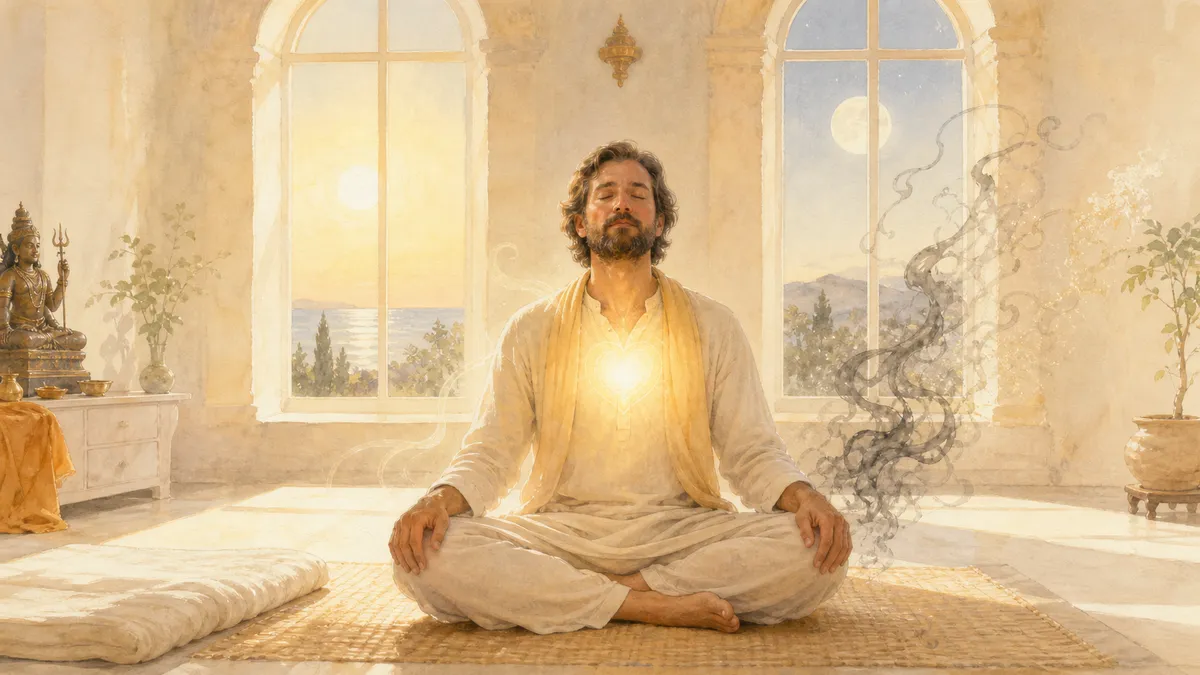
Let a person set about yoga with the help of the sound Om; let him abide in the supreme silence, for through abiding in silence the supreme Being arises, and not non-being.”
Brahman as “unthinkable” means that its nature is beyond thought. Only when you have penetrated this paradoxical realm beyond thoughts can you say that this is the Absolute, Brahman. As long as you are bound by the realm of mental constructs, this cannot be said.
Another term is also used here: “not unthinkable.” This means that Brahman also has the nature of thoughts. For the ignorant this is a paradox, but for those who know, there is nothing difficult in it. It means that although the Absolute has a completely beyond-thought nature, transcendent to mental constructs, nevertheless thoughts and the movement of energies are not rejected, but are part of it.
The Absolute essence also possesses the capacity for manifestation in the form of energies. This energy manifests as thoughts, sounds, speech, the subtle form of prana, as the elements of the five elements, as the external visible universe. And this energy is not separate from the absolute essence; therefore, although the Absolute is beyond thoughts, nevertheless it has the nature of thoughts. At the same time, thoughts are its dynamic creative play, its manifestation.
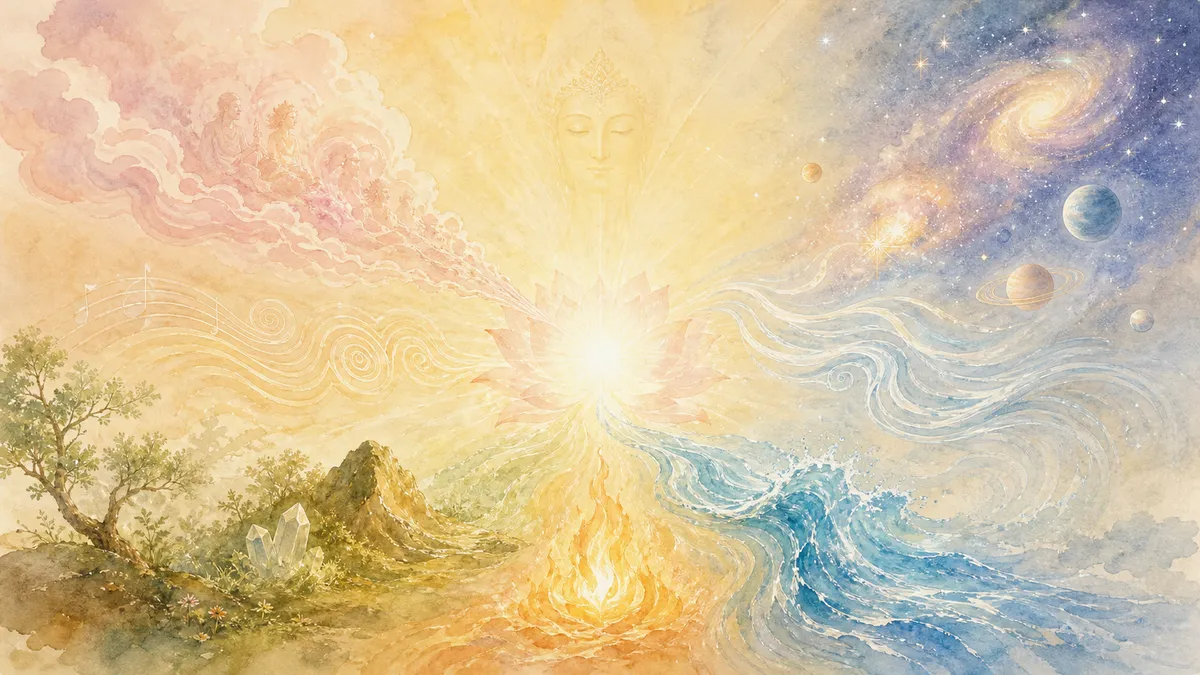
Therefore, it is said here that it is both conceivable and inconceivable at the same time. The natural state is simultaneously beyond mental constructs, in a completely empty, unmanifest state, yet at the same time it permeates, unites with, and blends with the ordinary mind, with mental movements. When such understanding and union occur, it is said: “Then Brahman, free from attachments, is attained.”
Knowledge of the true nature of the “I”
“This is Brahman, without parts, unchanging, unstained. Knowing: ‘I am this Brahman,’ a person undoubtedly attains Brahman.
Having recognized the unchanging, infinite, causeless and matchless, immeasurable and beginningless, one also realizes the supreme good.”
There is a Tibetan tale. Once, a hare was sitting under a tree on the bank of a pond, admiring the smooth surface of the lake. Suddenly, a branch broke off in the wind and fell into the water with a loud noise. The hare, not understanding what had happened and frightened by the loud sound, ran off as fast as he could. As he was running away, mice saw him and asked: “Who are you running from?” But he was running so fast that he did not have time to tell them anything. The mice thought that they too had to save themselves. As the mice were running away, squirrels and other animals saw them. And the mice were running so fast that the animals did not have time to ask anything properly, but simply started running too. After some time, the whole forest was running in great confusion, fleeing from no one knew whom. Finally, when they reached the lion, he asked: “Who are you running from?” The hare answered that he had heard a terrible noise under the tree. The lion said: “We should simply go and see what the source of that sound was, and whether it was worth running away at all.”

In the same way, when we examine the nature of the “I,” we see immutability, infinity, immeasurability; we discover this supreme good. And it should be recognized. Because we do not recognize it, confusion from samsara arises; when we recognize it, such confusion does not arise.
The Supreme Essence beyond duality
“Here there is neither destruction nor arising, neither worthy of praise nor deserving of punishment, neither striving for liberation nor liberation — such is this supreme Essence.
One should contemplate the Atman as one in waking, light sleep, and deep sleep. For one who has transcended these three states, there is no more birth in the world.”
Creation, destruction, growth, preservation, arising — all these five stages inherent in the transformations of samsara are visible to the dualistic mind. Every thing goes through birth, a stage of growth, a stage of maintenance, decline, and destruction. If the mind is dualistic, there are past and future, there are these five phases. But when, through contemplation, we penetrate into the single nature, all these five phases are recognized as unreal.
In reality, this is a play of energies that manifests diversely and simultaneously. It seems that time flows from the past to the future; however, the past and the future exist simultaneously. Only when the dualistic mind notices some part of the play of energies does it see it as a stage of birth, growth, abiding, preservation, and destruction. But when the mind, through nondual vision, has entered the single Sphere, it does not see all these things, or it sees them differently — as the play of one Consciousness, as a single field of constantly transforming energy. This is not creation, not growth, and not destruction; it is simply the play of energies, gunas, and tattvas, which has been unfolding from the beginningless past and will never cease.
For us in the relative world, this is difficult to understand, since we are born, live, and die, considering this to be our life. But from the standpoint of absolute vision, we are neither born nor do we die; rather, there is the play of energies and tattvas, which takes on diverse forms. We are born and die only because we think that we are we, that there is some real “I,” some real person limited by ideas, by the birth of the body and its death. However, this is a delusion, an illusion, because we are not we, but the Absolute, which plays in the body and mind. The idea of the ego (ahamkara) arose from a false inference in the process of upbringing, education, and sensory experience, when the ego came to the conclusion that it exists.
The process of replacing false knowledge with true knowledge
If you reflect deeply on this, you experience a cognitive shock from realizing that everything you thought about yourself, that the very thought that you are a person, is an error, a delusion. From the very beginning, you are not you, but the Absolute. However, the knowledge that you are you is not so easy to eradicate, because you remember it continuously (from morning to evening and even in dreams) for years, for decades.
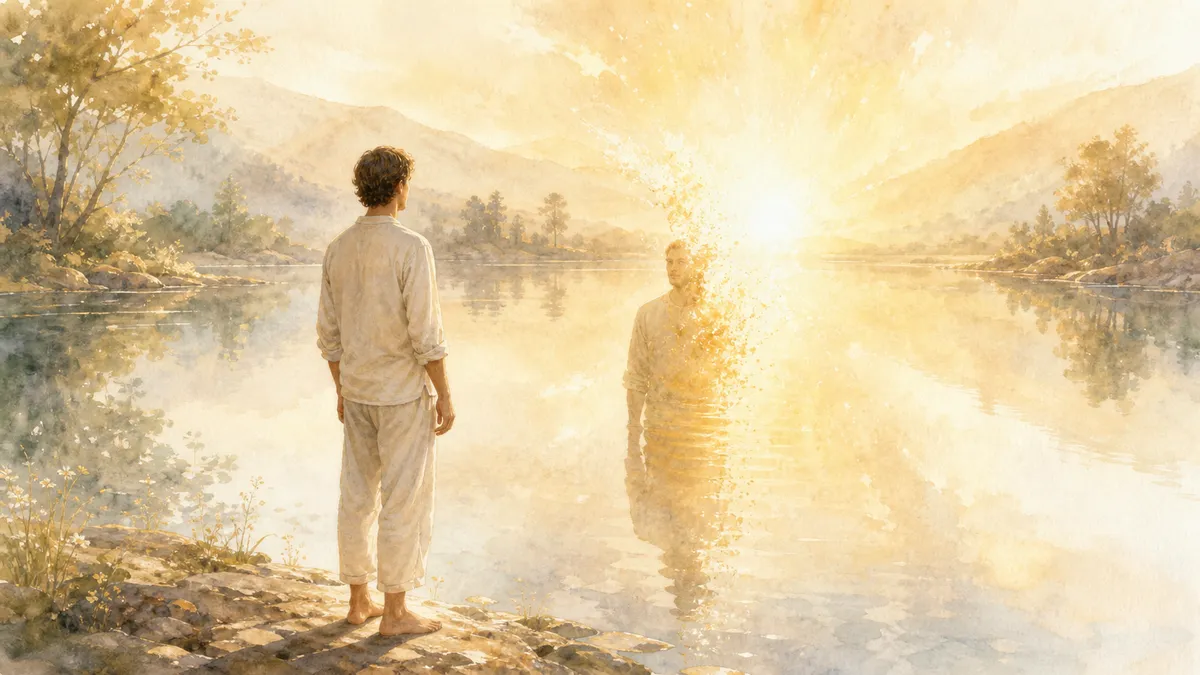
One should not think that it is so simple to displace the knowledge that you are you by replacing it with new knowledge, that you are Brahman. Contemplation is precisely the process of such continuous implantation of new knowledge, the continuous replacement of old false knowledge with subtle, true knowledge. And even if we practice and try to implant such knowledge, our old identification desperately clings to its notions, unwilling to give up its positions somewhere deep inside. Here it is very important to understand the principle of letting go of oneself, of the emptiness of the heart, the elimination of the “I,” the elimination of preferences and judgments. If we do not understand this principle, then our “I” will successfully hold the line even after decades of practice; it will continue to cherish such illusory notions.
Emptiness of the Heart and the Ability to Let Go of Oneself
When I test students, I ask them certain questions. Some students cannot answer, believing that they do not know the answer. Some answer and give lengthy explanations of what “that” means, what “this” means. I asked one student the question: “What is the gaze of the child of a barren woman?” or “What is the name of the child of a barren woman?” He gave an answer of about ten pages along roughly these lines: the child is the ego, and the barren woman is the true nature; one follows from this, that from this. That is, he showed very deep clarity and thought that I would approve such an answer. But this is a different kind of answer.
Those students who have truly known the true nature try to give answers on a fundamentally different plane. And those students who fully abide in the true nature answer instantly, without even thinking. For them, everything is immediately clear. But sometimes their answers are still inflexible. Finally, students of the highest capacities answer instantly and flexibly, perfectly manifesting the necessary bhava and understanding.
What is the difference? Why can some not give an answer, others give an answer from the mind, and still others give a deeper answer, but one that is nevertheless not flexible? The difference lies in the emptiness of the heart, in the ability to let go of oneself. If the heart is empty, then you can instantly merge with the question, grasp its bhava, and manifest your own. If, however, you cannot displace the knowledge “I am I” and demonstrate the emptiness of the heart, then such merging will not occur. There will always be a distance between the question and you. The answer can be given by one who abides in the true state, having let go of oneself, and then the true state simply responds; therefore, their answer is always unerring.
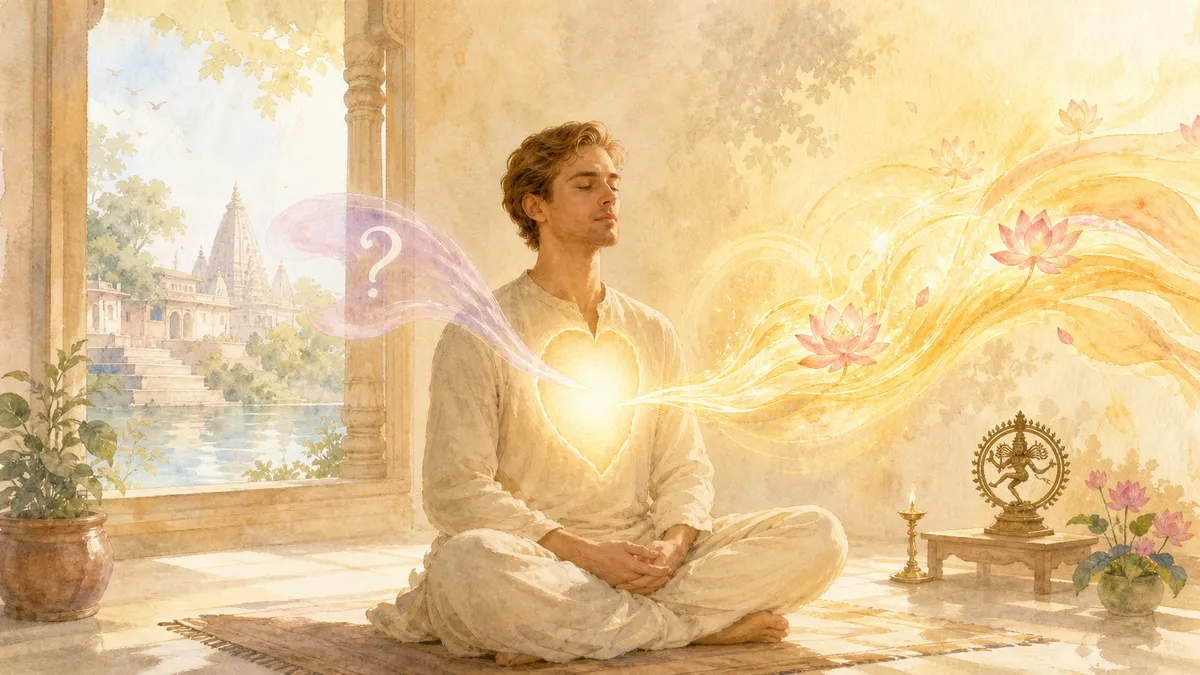
It is said: “For one who has overcome the three states, there is no more birth in the world.” This means that when contemplation has become deep and has penetrated waking, dreaming, and deep sleep, there are no longer any causes for rebirth. All karmas in the subtle bodies have been liberated; the mind will no longer get lost in the channels of the subtle body and will always find the way to the clear light. No karmas will lead it into delusion anymore.
The One Atman and the Space in a Pot
“For the one Atman of beings abides in every being; it appears as one or as many, like the reflection of the moon in water.
When space is enclosed in a pot and the pot is broken, it is the pot that is broken, not the space—so too is life, like a pot.
Like a pot, various forms are destroyed again and again, yet he, the Atman, does not know that they are broken, and at the same time eternally knows.”
This body is a pot within which space is hidden. Those who know this space are called jnanis (knowers), and those who do not know it and overlook it are called karmis (people subject to causes and effects). In the middle are sadhus, monks—that is, those who seek this space day and night.
When we discover this space, the veil falls from our eyes. We think something like this: “Everything I saw before is mistaken, wrong. Everything I was previously attached to was a delusion. Everything I thought about myself is a complete illusion. How blind I was! It turns out that only this space is important, and everything else is either not important at all or important only to a certain degree, only in a relative sense.”
The awakening of the king and enthronement in the mandala
When we contemplate this space, it gives us bhava (a worldview), and bhava, permeating the mind and pranas, gives a new sense of self. The delusions “I am that” or “I am this” disappear; we become like a king who has finally awakened on his throne. The king did not attain the throne, although in a dream it seems that way. The king was always on the throne, but before he was simply asleep.
With the opening of this space comes the awakening of the king who has always been sitting on the throne. Then all the ministers, advisers, and servants come and greet him, rejoicing that the king has awakened. The ministers, servants, and advisers are the inner deities, the pure inner energies that come to greet the yogin at the moment of enlightenment.
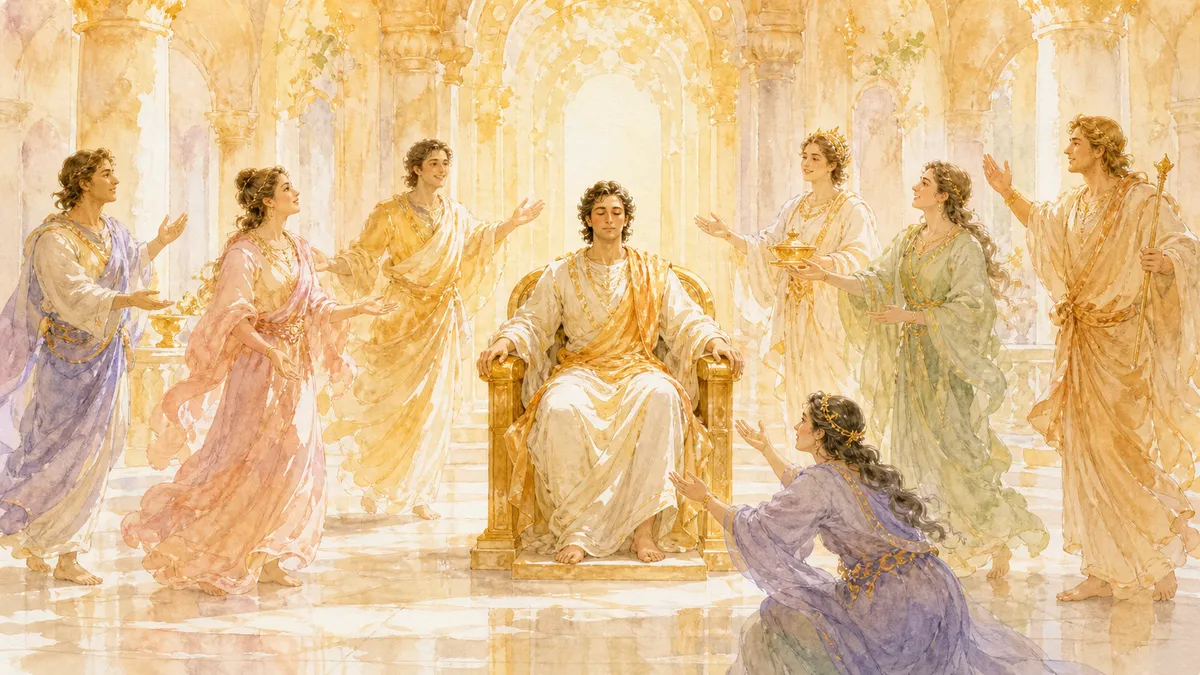
At the moment of awakening, all pranas and subtle states unite with the natural nature, and then the yogin is enthroned as a deity at the center of the mandala, while all his inner energies are the deities of the retinue; the world in which he lives is transformed into the space of pure vision, into the sacred world of the mandala. This world is not outside; it cannot be seen with ordinary eyes; it is within consciousness.
In this world other laws operate; there is no duality in it. This world consists of pure contemplation; pure vision, a single “taste,” operates within it. In it there are no causes and effects, but rather a causeless play of energies. In it there are no actions or goals, but the manifestation of play, lila. In it there are no ordinary dualistic relationships and connections, but the principle of samaya. To attain liberation means to enter such a world, and then everything becomes sacred, pure, auspicious, absolute, while the yogin himself is enthroned at the center of this world.
