

Nourishing the Subtle Part of the Mind
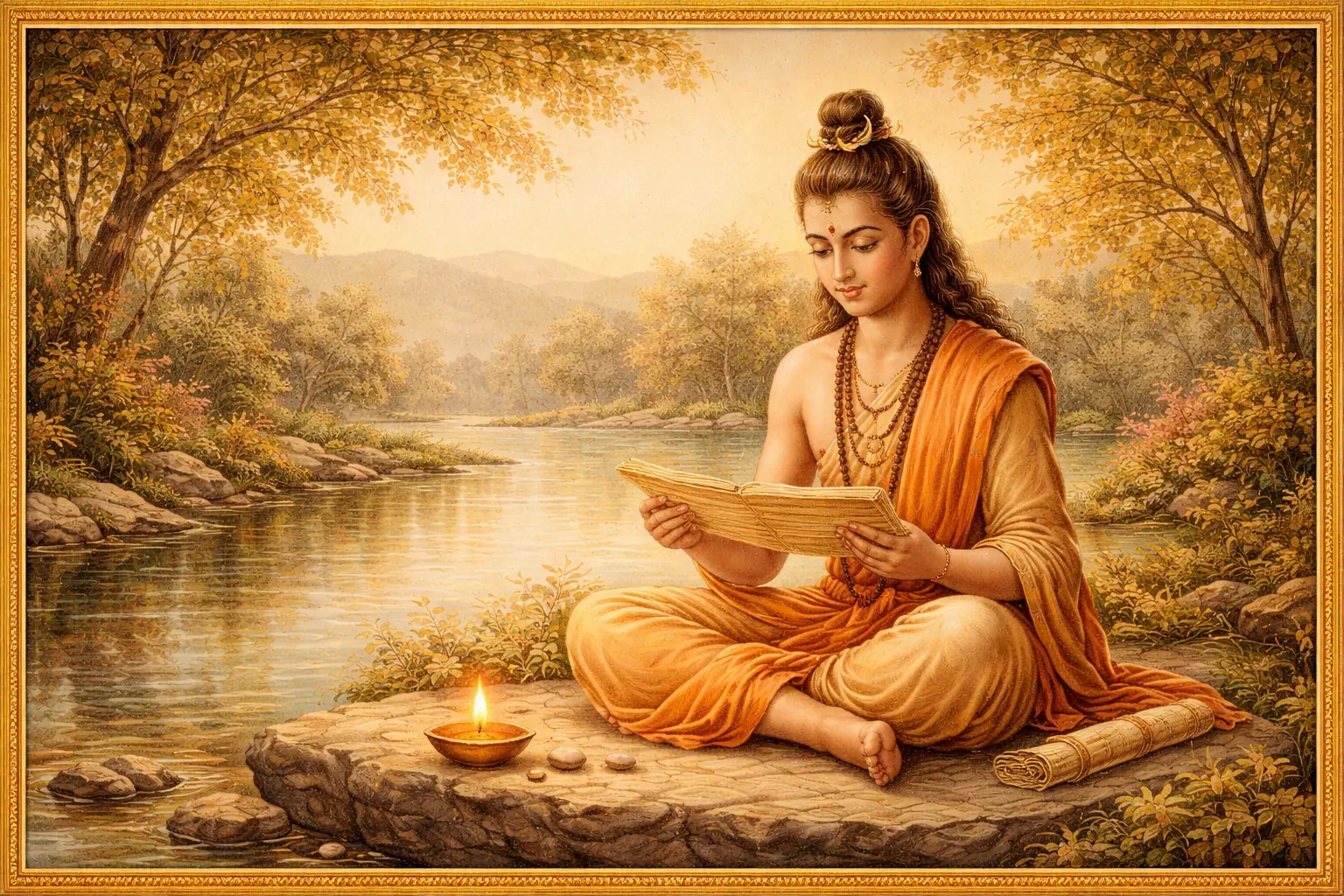
Prostration, upasana, meditation, contemplation, and working with energy are things that can be practiced forever, right up to complete liberation, things that never become tiresome if you practice as a sadhu. At a certain level, our mind, accustomed to samsaric tendencies and entertainment, becomes bored because its vasanas are not being fulfilled, but this is good and normal. This is how it should be; this is precisely the essence of asceticism and monastic life.
When the mind is bored, it means that it is practicing restraint, tapasya: “It serves it right”—this is what you should say. It wanted to amuse itself in samsara and kept accumulating karma—now it must endure. At the same time, along with the mind’s boredom, there arises a subtle joy, subtle freedom, and subtle awareness of the subtle; and the subtle part of consciousness that is above the mind, higher than the mind, is not bored. On the contrary, it becomes inspired and filled with strength and grace. Gradually, we increasingly recognize this subtle part as the principal part of our “I,” and the mind no longer rules over you; desires no longer rule over you. Although there is great energy behind them, they no longer have any power, there is no belief in them, and there is no identification with them.
Prostration, upasana, mantra, meditation, contemplation, manana (reflection), and shravana all nourish the subtle part of our mind. It is very important to nourish it, because we do not yet have the ability to nourish it directly with grace, the light of the Atman, aparoksha-jnana, or samadhi; that is, we must nourish it with what we are able to absorb and receive.
When there is samadhi, when there is aparoksha-jnana, then generally this is sufficient, and this subtle part of the mind is nourished solely through sahaja-samadhi and abiding in grace; nothing else is needed. Therefore, sannyasis of the highest category, avadhutas, have no need for sandhya-upasana, daily rituals, or the recitation of the Gayatri mantra.
In fact, when I received sannyasa, Acharya Swami Avdheshananda said to the sannyasis: “Now you no longer need to recite the Gayatri mantra in the mornings.” That is, after transmitting the four mahavakyas (“Prajnanam Brahma,” “Aham Brahmasmi,” “Tat Tvam Asi,” “Ayam Atma Brahma”), he said: “Now you need not recite the Gayatri mantra,” because a sannyasi is one who always meditates on “Aham Brahmasmi.”
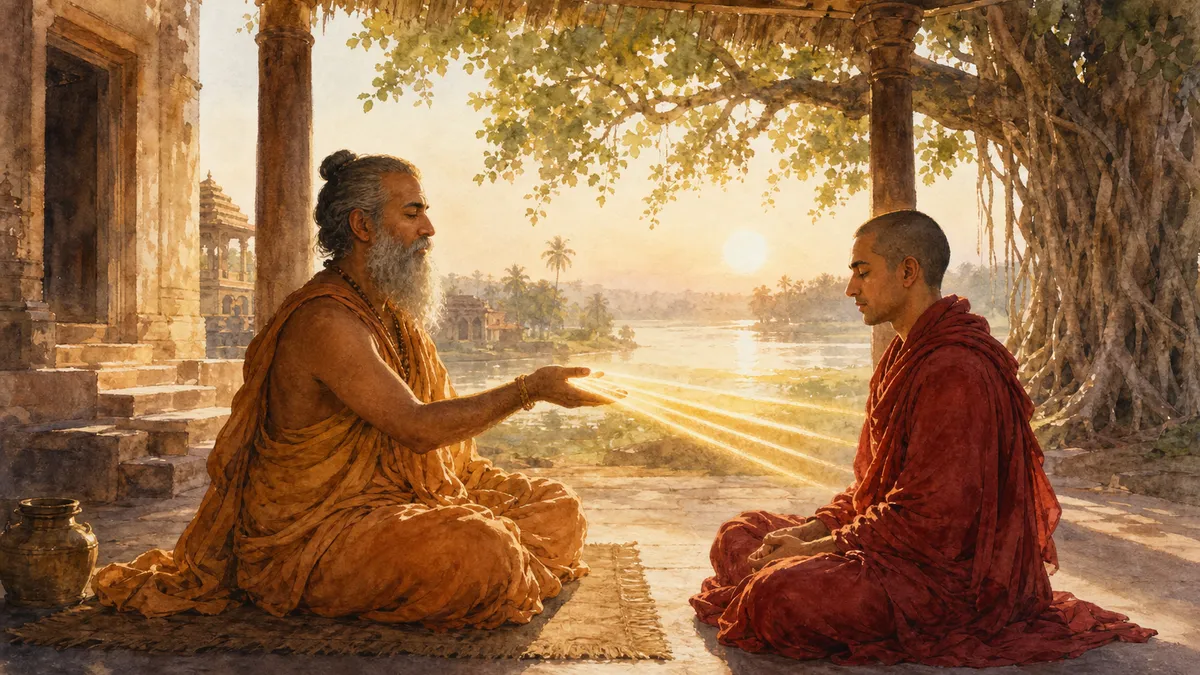
What this means is that if you abide in knowledge, in jnana, then you perform all rituals, carry out all rites, and have recited all mantras; nondual awareness itself, brahma-aham-bhava itself, divya-bhava, and abiding in sahaja-sthiti are your principal practice.
However, before reaching such a level, you must seriously purify your mind and nourish its subtle part by every available means. Later, a sannyasi usually performs these practices for others—for others, and no longer for self-knowledge, but to attract energy, to serve, and to invoke the power of grace. Not for one’s own jnana, but for shakti. For example, if I possess jnana and my jnana is nourished by contemplation, then to attract shakti for service I may perform Lakshmi upasana, Saraswati upasana, or Shiva upasana. I can perform it through inner natural awareness, but inner natural awareness is insufficient for shakti, so various kinds of external practices are performed. Such a sadhu does this not because he is dissatisfied, but because he seeks to serve the world, conduct various energies, attract shakti, help others, and accomplish specific tasks and a particular mission of the Dharma in his own role.
The Essence of Advaita Vedanta and Shaivism
Until this subtle part of the mind is nourished by natural awareness in samadhi, it must be nourished continuously. When we nourish this subtle part of the mind, it rejoices within us, blossoms, becomes liberated, and subdues the gross part of the mind filled with vasanas. First it subdues it, and then it completely transforms the vasanas—this is vasana-kshaya, which we have reflected upon.
The two most powerful teachings—Advaita Vedanta and Shaivism—are the essence of Sanatana Dharma. Shankara conquered all of India through Advaita Vedanta. Shaivism is the essence of Sanatana Dharma, and Shankara also professed Shaivism.
In the course of your training, you must master at least the yukti of Advaita Vedanta, its discourse, as well as the discourse of Shaivism, so that you can freely discuss matters of Advaita Vedanta and profound questions of Shaivism with anyone in the world, with a deity, or with a siddha, anywhere—this is yukti. You should be able to establish within yourself an inner foundation in yukti and inner reasoning, learn to think in the categories of the Dharma, and thereby develop discernment, viveka.

However, this is merely the external aspect of studying the teaching. The most important thing is to realize within oneself the essence of Advaita Vedanta and Shaivism, and that is vasana-kshaya, mano-nasha, and bodha. These three concepts are the essence of Advaita Vedanta. For example, if a scholar or pandit speaks about Advaita Vedanta and can speak well about it, one may ask him: “What about vasana-kshaya? Have the vasanas been destroyed? What about mano-nasha? What about bodha (enlightening experience)?”
“With the knowledge of the Atman, all knots (pashas) are destroyed.”
“Having known the Atman through Adhyatma Yoga, a person endowed with discernment casts aside both joy and suffering.”
“An Atma-jnani transcends suffering.”
“When knowledge of the Self, or the Atman, has been realized, what room is there for illusion—suffering—for one who perceives all beings as the one Atman?”
“Having realized the Atman, a person is freed from all bonds.”
As long as vasanas hold a person in their firm grip, it is impossible to destroy the shackles of suffering. The assertion that Self-knowledge destroys vasanas must be understood precisely in this sense.
The Criterion of Genuine Spiritual Experience
Thus, knowledge of the Atman (bodha) destroys vasanas and leads to vasana-kshaya; that is, a genuine spiritual experience must necessarily transform our tendencies and destroy our vasanas, our kleshas, our identifications, and all our attachments—it must eliminate and dissolve them. This destruction occurs on many levels: through realizing their emptiness and illusory nature, through detachment from them, through devotion to the Atman, and through becoming so saturated with grace that this grace deprives the vasanas of their power. It also occurs through the clarity that understands the harm arising from the vasanas. In general, genuine spiritual experience is always effective; it always works.
It often happens that some people practice and, if they have mystical experiences, they tend to exaggerate them, attach significance to them, and even become attached to them. They may make the experience, the images that appeared, or the sensations into some kind of support; they may talk about them, perhaps use them to assert themselves, or cling to them—but this is entirely unimportant. The effectiveness of any experience is determined by the extent to which vasana-kshaya has occurred. This means that an experience has truth and power behind it; if vasana-kshaya has not occurred, such an experience is questionable. Even if it is genuine, it has no power behind it and must be repeated and experienced many times until vasana-kshaya occurs.

Vasana-kshaya (the destruction of tendencies) is the criterion of genuine experience, and this can sometimes come as a cold shower to mystically inclined people. Mystically inclined people are always prone to having their heads in esoteric and mystical clouds. From this perspective, they become carried away by what is inessential, overestimating certain experiences; conversely, they underestimate the importance of vasana-kshaya and fail to notice that their vasanas have not been destroyed.
A genuine experience is one that destroys vasanas. And how does this destruction occur? One aspect of this destruction is called drishya-vilaya, a term we mentioned yesterday. Drishya-vilaya is the dissolution of the visible, that is, of the objective world. “Drishya” means external objects, and “vilaya” means dissolution. The dissolution of the objective world, the dissolution of the visible, is a very subtle process that begins, for example, with awareness, because we are extremely dependent on external objects. We may not even realize how dependent we are, but our entire life is built through interaction with external objects.
Drishya-vilaya—the Dissolution of the Visible World
One of the principles, or facets, of vasana-kshaya is the dissolution of the visible objective world (drishya-vilaya). For example, we begin to recognize the emptiness of external objects, their illusory nature, their innate purity, their manifestation as a play of energy, and their luminosity—these are the signs. Even if only at the level of a premonition or at the level of yukti, we gradually begin to free ourselves from these objects. In particular, there are practices such as the Dream sankalpa, in which we meditate on the illusory nature of the external world, as well as the Pure Vision sankalpa, space, and others. They help accomplish drishya-vilaya. This dissolution has different phases, including the detachment of the seer, that is, the subject, from the seen, while the seen becomes increasingly subtle.
By becoming subtler, we gain insight into the purity of the external world, its emptiness; we see more and more deeply, and our penetrating wisdom grows deeper and deeper until the seen disappears altogether for the inner seer. The seen and the seer are inseparable (drik and drishya). Drishya is the seen, drik is the seer, but between them there is also the process of perception, the power of the mind; and this power of the mind, based on ignorance, lends such strength to both the seen and the seer, endowing both with the status of self-existence. Eternalism is precisely the attribution of self-existence to both the seen—the external world—and oneself as the seer. Whenever the world is real, I, as the seer, am also real, and the two are bound together. Vasanakshaya must lead to the dissolution of both the seen and the seer, and this occurs through viveka (discriminating wisdom).
Shri Shankaracharya has a text called “Drik-Drishya-Viveka.” It is very beneficial to read it and reflect on how ignorance is destroyed through understanding the distinction between the seen and the seer, and through understanding that both are Brahman.
Once Shankara entered a temple through its southern gate. Before him, previous acharyas had passed through all the other gates, but no one had entered through the southern one; in other words, there had been no representatives from southern India. He entered through the southern gate. Before opening it to him, the Brahmins there tested him by asking various tricky questions about philosophy, rituals, and so forth. He answered them all and defeated them in debate. He was then seated on the throne of Dharma; that is, he attained the highest position in southern India, sitting upon the throne of Dharma in that temple and imparting the teachings.
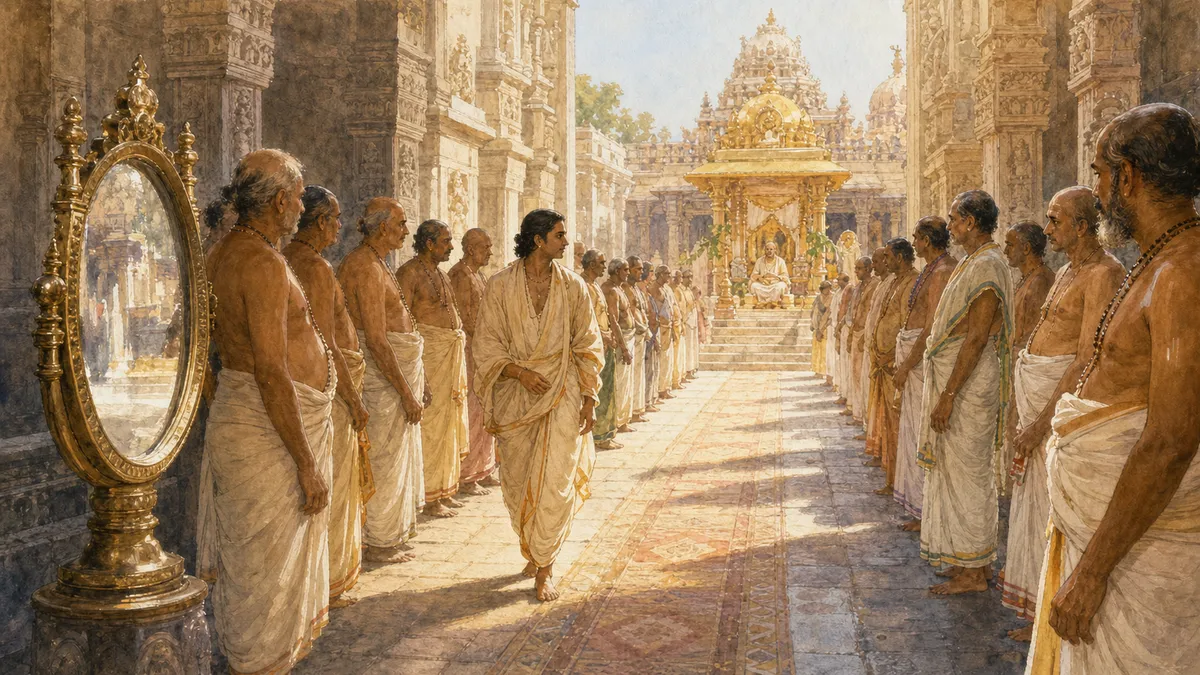
Before he sat down, the local goddess of that temple said, “You are not pure, because before defeating Mandana Mishra, you had to experience sexual relations with a woman”—there is such a story. Shankara said, “In this body, I have never experienced sexual relations; I observed the vows of a sannyasi, while what was experienced took place in the body of a king.” This is a well-known story: using the method of parakaya-pravesha, he entered the body of King Amaruka in his subtle body in order to defeat Bhaya Bharati (Mandana Mishra’s wife) by answering her question. She was the goddess Saraswati incarnate, and he defeated her husband, after which the husband took sannyasa, became one of his first disciples under the name Sureshwara, and headed one of the mathas. Then only his undefeated wife, Saraswati incarnate, remained, and he defeated her on every issue, leaving her with nowhere to turn. She began asking questions about the “Kama Shastra,” and he requested a month’s delay, found the body of a suitable deceased king, and entered it through the magical method of consciousness transference (parakaya-pravesha). This goddess then challenged him on that account. Shankara said, “That does not concern this body; moreover, I am not the body.” He granted the darshan of viveka, revealing the distinction between the body and the Atman. He could do so, as it were, because he could actually demonstrate it through samadhi. The goddess fell silent, struck to the heart by the darshan, and he triumphantly ascended the throne of Dharma and was acknowledged by all as the world Guru.
This is viveka, by means of which any vasanas are dissolved, when you can say, “This body did it, but I did not.” When vasanakshaya occurs, drishya-vilaya takes place: the visible world dissolves, and the seer dissolves.
Why must the visible world be dissolved? Could one not simply detach oneself from it, leave it alone, do nothing, meditate, close one’s eyes, become a hermit, and sit in a cell? The point is that the visible world and the seer are interconnected. If we dissolve the visible world and our relationship to it—the vasana based on attachment to the visible world—then the seer also dissolves. The seer must dissolve. Conversely, when we dissolve the seer within ourselves, the experiencer, our relationship to this world also changes. The principle of atma-vichara is based on this.
Thus, one of the principles of vasanakshaya is drishya-vilaya (the dissolution of the seen), a change in one’s relationship to the visible world. When renunciation and pure vision arise within us, it means that our relationship to the visible world is changing: we can act without attachment, our goals become altruistic, we do not hope for fruits or results, and we live without hope or fear—all of this is vasanakshaya.
The Single “Taste” as a Criterion of Correct Practice
There is another concept—prapancha-upashama (the smoothing out of the phenomenal diversity of the world). When we calmly accept the diversity of the world, a single “taste” grows within us. The growth of a single “taste” is also a criterion indicating that vasanakshaya is taking place. This is a test of whether an experience is genuine: if an experience in meditation or contemplation brings us vasanakshaya (the destruction of vasanas, tendencies) and gives us a single “taste,” then even if we do not experience any breathtaking immersions in light or out-of-body experiences in the subtle body, the emergence of these qualities means that we are practicing correctly.
Conversely, if we have experiences of spheres of light, with Buddhas and gods sitting inside them, and we fly into some kind of violet light, then green light, then golden light, but at the same time display some wild reactions, attachments, resentments, fears, doubts, and hopes, and confuse experience with the external world, then something is wrong with these experiences. Our tendencies remain, vasanakshaya does not occur, we have neither equanimity nor a single “taste,” and we are confused by distinctions: we overvalue some things, undervalue others, and become mired in the confusion of this world. This means that we lack a single “taste,” and that our vasanas and ingrained tendencies of mind have not been eradicated; therefore, these experiences are not jnana.
Thus, even without seeking confirmation from a spiritual Teacher or asking for advice, you can understand inwardly whether an experience is genuine or not. For example, when there is no opportunity to contact the Guru or senior sadhus, you can apply viveka yourself and analyze your experiences; such situations do occur. This simply means partial knowledge—vishesha-jnana.
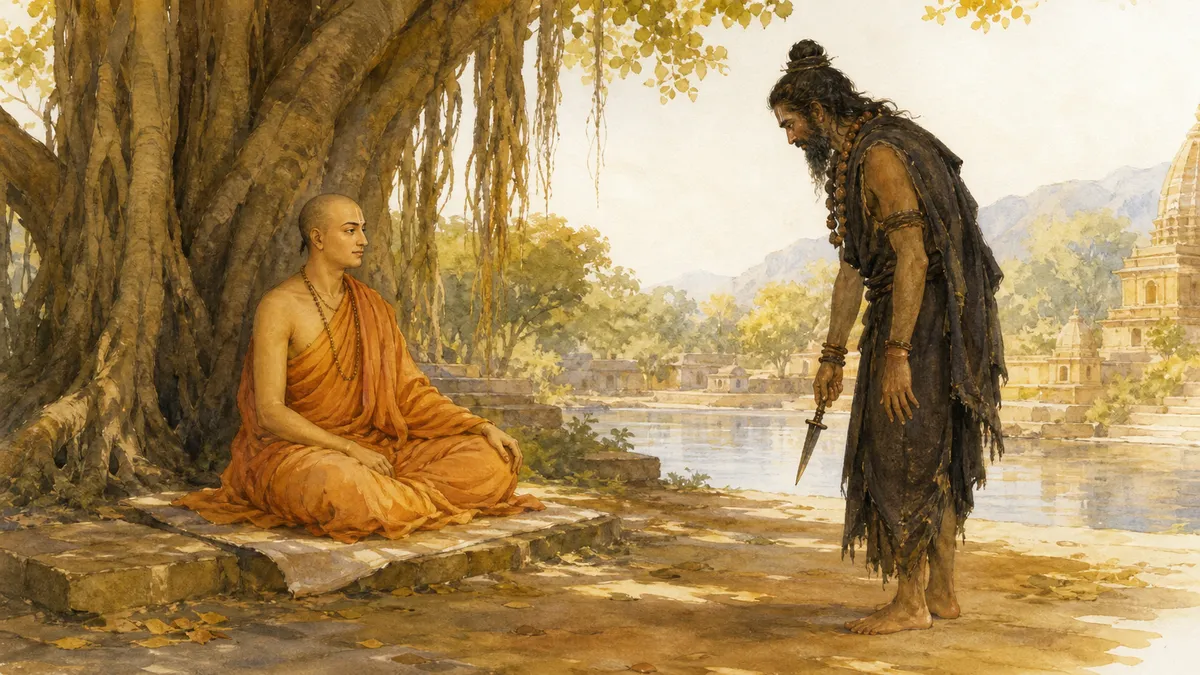
Shankara’s example: once, a Kapalika came, bowed to Shankara, and said, “You are a great saint, and saints possess a single ‘taste,’ nondual vision, and vairagya. I want to perform a Bhairavi ritual, and this ritual requires the offering of a human head—not the head of an ordinary person, either, but that of a king or an omniscient one, the greatest person in India. I cannot take the king’s head because he has a large army, and I would lose my own head. But you are omniscient and acknowledged by everyone. Give me your head; I want to perform such a ritual.” Shankara said, “No problem, take it. Just do it in secret so that no one knows; otherwise, the disciples may beat you up.”
At the appointed time, Shankara sat down in meditation and thought, “Perhaps my mission is already complete.” But one of his disciples, Padmapada, while in samadhi, saw the entire situation, understood the whole course of events, and flew into a tremendous rage. He transformed himself into the wrathful deity Narasimha, assuming an illusory body, and arrived at the same place. There, the Kapalika raised his weapon to strike, and Padmapada simply tore him apart. When another disciple—Sureshvara, I believe—arrived, he saw that Narasimha had simply torn the Kapalika apart, and the Kapalika himself had lost his head and everything else. When Shankara emerged from samadhi, he had to sing hymns and stotras to Narasimha and pacify his disciple, bringing him out of his wrathful samadhi.
This is an example of Shankara’s vairagya: his deha-vasana had been shattered and destroyed; there was no clinging or attachment, and he had also realized the single “taste” of life and death. He saw the world as an abhasa, as a reflection in a mirror. He abided in the mirror but was not captivated by the reflections—this is the criterion of genuine experience.
Question: Guruji, what does it mean to dissolve the visible world? How should this be understood?
As your awareness deepens, the illusion of diversity gives way to the direct vision of the space of pure consciousness. Your subjective I-am awareness comes to the forefront, and you can perceive this subjective I-am awareness not only within but also without. Then distinctions such as blue or green, round or angular, man or woman, attractive or unattractive recede into the background and become less important. This single I-am awareness, like space, becomes more important; it comes to occupy 50% or 60%, and you attach less and less significance to these distinctions.
Here is a statement from the Shruti indicating that Self-knowledge is the cause of “manonasha”: “When, for the knower of Brahman, everything becomes his own Self, how can he smell, and by what means? What can he see, and by what means? And so on.”
The Nature of a Jnani’s Perception
It is well known that the presence of the mind depends on its state, while the perception of names and forms depends on ignorance, whether present in the mind in a manifest or an unmanifest form.
This is a statement that is difficult to comment on unless you have received teachings. For one who sees Brahman, how can smells and the other objects of the senses exist? Does a jnani perceive smells and other objects or not? A jnani does perceive them, but then why is this said in the Upanishads? That is, either the jnani is not genuine or the Upanishads are mistaken. The Upanishads cannot be mistaken, yet jnanis possess true jnana—so what is the answer?
Spanda is recognized—this is valid for an interpretation in the spirit of Shaivism, but what about an Advaitic interpretation? It is precisely an interpretation in the spirit of Advaita that is given here. In this state there is always detached awareness, which truly does not perceive colors, smells, or tastes; for it, they are either illusory or manifestations of the one consciousness. The body and the indriyas may discern colors, smells, and tastes, but the consciousness of the one Brahman, separate from the body, is not involved in colors, smells, or tastes; it is transcendent in relation to them and completely independent in the state of vairagya. There is flawless viveka, separating this transcendent consciousness from the body, the indriyas, and objects.
The Dissolution of Avidya in Brahma-Vidya
The mantras under consideration show that when ignorance is destroyed by the knowledge of Brahman, nothing remains except the Atman. Shankaracharya explains in his commentary that when avidya is destroyed by brahma-vidya, nothing remains except the Atman, because all names and forms dissolve into the Atman.
Thus, avidya dissolves in brahma-vidya. In relation to the external world, avidya manifests as maya-mala (the illusion of diversity). When brahma-vidya (knowledge of Brahman) arises, maya-mala is destroyed, and the illusion of diversity is destroyed.
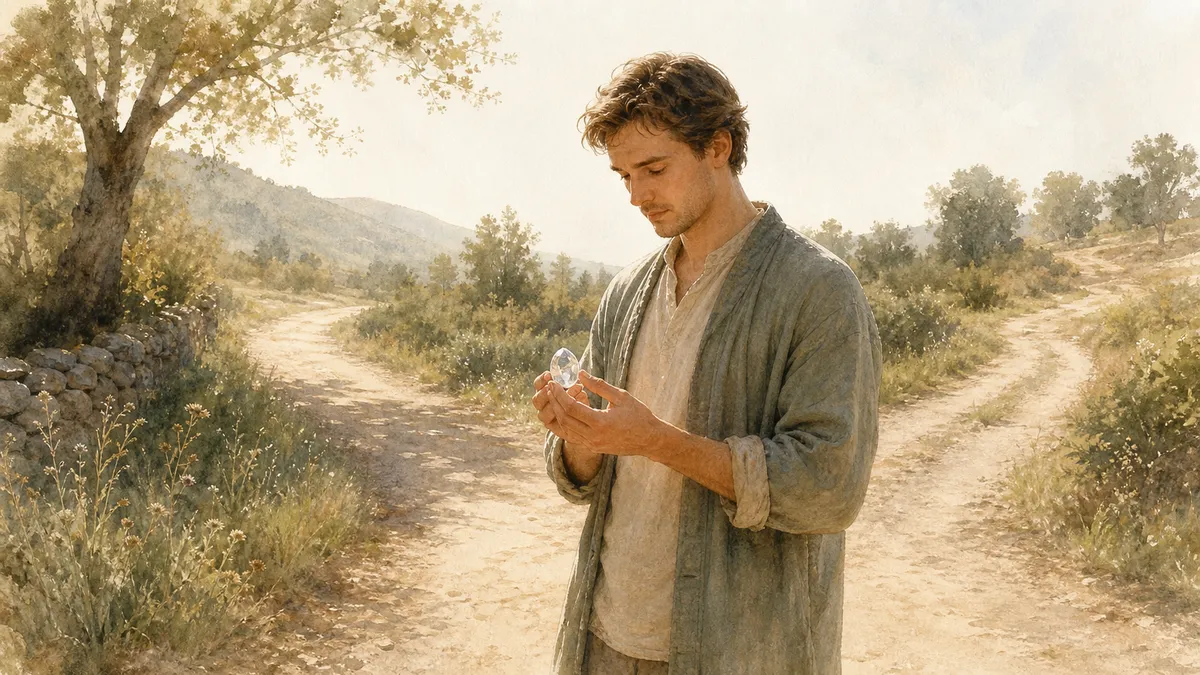
There is a term, mayura-andara-nyaya—what does it mean? When teachers, including myself, sometimes give a symbolic transmission and show a peacock’s tail, a mirror, and a crystal, these are three symbolic objects shown to a disciple in order to transmit the nondual view. When a peacock’s tail is shown, it is an allusion to the principle of mayura-andara-nyaya. “Mayura” means peacock; the peacock’s variegated tail, with all its magnificent adornment, exists in a state of undifferentiated mixture in the plasma of the peacock’s egg. In the same way, the entire diversity of things exists in perfect unity, as an undifferentiated mixture.

In other words, brahma-vidya destroys ignorance, and all energies and all objects are perceived at the level of undifferentiated consciousness, an undifferentiated state. In the case of an Advaitin, no significance whatsoever is attached to them; they are like maya (illusion), while Brahman, as the one consciousness, is the source of them all. In Shaivism, they are perceived as being within an egg: the peacock’s tail, the peacock itself, and its coloring are all contained in a potential, intermixed, quantum, as-yet indeterminate state. In the potential state, everything is in an embryonic condition; therefore, brahma-vidya means that you reach the level of the universe’s embryonic state, when time, space, and the five elements have not yet separated or differentiated, and you always perceive the world in this way. In essence, this is what the world looks like: if you do not set the mind in motion, you will see it exactly this way.
A Practical Example Using a Hologram
There is an interesting image by some Japanese designer or artist-scientist—a hologram—and it can be used to determine whether your state is poor, average, or good. If you look at this hologram and everything moves quickly, it means your mind is in rajas and you are in a poor state. If you look at the hologram and it moves only slightly, but still moves, then you are in an average state. Finally, if you look at the hologram and it does not move at all, you are in an excellent state: your mind is calm, and everything will be fine.
It really is so: if you look at this image, you will see that if your mind is slightly agitated, the image moves; but if you stop your thoughts and enter shambhavi mudra, the image will stop. It is excellent training—you can display this image and use it to check whether your shambhavi mudra is good or not. And if our mind is agitated, we see external objects. Complex and tangled relationships with them arise, and we develop tendencies toward these objects. But if our mind is still, if we abide in vairagya and viveka, then everything outside also comes to a standstill, and we enter undifferentiated vision; maya-mala (the illusion of diversity) disappears, and we see the universe as it is, just as both the feather and the peacock itself exist in an embryonic state within a peacock’s egg.

Discovering the True Nature of Creation
We make our way to the level of the primordial person before birth—to the universe before its birth. When we see all diversity in its embryonic state, an astonishing discovery awaits us. For example, we truly see that the universe was never created, that it was created only by minds that began to move; and if the mind does not move, then time was not created either, nor did air emerge from space, nor fire, water, or earth, and none of this diversity emerged, because the mind did not move. For some souls, it was created because their minds moved, while for other souls it was not created because their minds did not move; and for those whose minds did not move, it was not created.
For the nitya-siddhas, for Dattatreya, the mind did not move; for him, the universe was not created. But for those whose minds moved, a body appeared—first subtle and then gross—and they incarnated; for them, it was created. We begin to understand that everything depends on our consciousness, and the universe is created or not created only for you personally. There is no single universal creation of the universe; but for those whose minds move in rajas, it is created—it seems to them that it is being created. For those whose minds do not move, it is not created; there is only a play of energy, but it is empty and illusory.
An even greater discovery is not merely that the universe was never created, but that there has never been anything except Brahman, that the question of any creation did not even arise, and who could have raised this question at all? There was not even anyone who could have asked this question—there was only the one Brahman. Yet the play of its diverse energies may exist depending on the mind, and the mind may see these energies either as supremely subtle or as gross.
Absence of Mental Projection
In this state, when knowledge is present, there is neither perception nor action, since there are no senses, nor is there anyone who perceives or acts. This means that the mind does not project the universe of names and forms.
The mind does not project the universe of names and forms—the mind projects the universe, and then it seems that the universe exists. When, for example, seven billion people with roughly similar modes of consciousness gather in the same place, their minds project the universe in the same way. This vision merges into a common karmic vision, loka-drishti, and a shared conception arises that the universe was created, along with laws governing the creation of the universe; science is developed, the Big Bang is discussed, or a spiritual theory satisfying the mind at this level is presented, describing step by step how the universe was created, and so on.
In other worlds, among deities or siddhas whose minds have been stilled, there are no such theories, no such concepts concerning the creation of the universe. If you approach some deity and ask about the creation of the universe, they will ask: “What universe? What are you talking about? All my life I have known only the one Brahman,” because their minds vibrate differently, and they see no creation whatsoever. They see the play of Brahman’s energy: there is one Brahman, and its energy plays a little; there is one Shiva, and the pure tattvas and pure shaktis play, but no gross universes are created.

Then they will say: “You are simply immersed in your own illusory vision; purify your mind, and your question will disappear. Just purify your mind. Eliminate ignorance, and your problems will disappear.” Manana is the elimination of ignorance, and in Advaita Vedanta, manana is especially important. It is not only meditation, contemplation, concentration, and upasana, but also proper yukti, which makes it possible to rethink reality and develop viveka (penetrating wisdom). Developing penetrating wisdom is very important for vasanakshaya.
Manonasha and Drishya-Vilaya
Consequently, “manonasha,” or “drishya-vilaya,” arises upon the awakening of the atman’s “aparoksha-jnana.”
Thus, when the direct vision of reality awakens, the vision of external visible objects and the external world dissolves, and one’s own element of the antahkarana, the element of mind, also dissolves (manonasha).
The above passage from the shruti does not describe “badha”—the disappearance of names and forms—because one who has attained this knowledge can realize the falsity of the jagat. It may be said that these mantras do not mention “badha.” Yajnavalkya told his wife Maitreyi that Brahman is “vijnana-ghana”—the pure principle of knowledge, apart from which nothing exists. The word “ghana” indicates that only this one reality is present, to the exclusion of everything else. At the same time, he says that in Brahman there is no “samjna”—“vishesha-jnana”—knowledge of any particular thing.
Not understanding the meaning of what she has heard, Maitreyi complains to Yajnavalkya that he has confused her with contradictory statements. From her point of view, one and the same thing could not be only knowledge and, at the same time, not be knowledge. In the first part of the statement, Yajnavalkya explains how partial knowledge (vishesha-jnana) of false names and forms is possible in the state of ignorance. In the remaining part, he speaks of the absence of names and forms when knowledge of the Self is realized.
The Interdependence of Consciousness and Perception of the Universe
Our perception of the reality of the external world and its laws are interconnected and directly depend on our own level of wisdom or ignorance. There is no universe separate from our consciousness. The universe and our vision, connections, and relationships depend directly on the level of our wisdom or the level of our ignorance. They have an interdependent existence. When the level of our ignorance changes—for example, when vasanas are destroyed—the universe is also seen differently.
Eternalism means believing that the universe is the same for all beings, that it exists independently of consciousness, and that it contains immutable laws—but this is not so. Our consciousness changes, and our vision of the universe changes. It is simply that our consciousness changes very slowly, so our vision of the universe also progresses very slowly. Through certain practices—for example, deity yoga, pure vision, the illusory body, contemplative sankalpa practices, and jyoti yoga—the vision of the universe gradually changes, and we can recognize deities, luminosity, emptiness, illusoriness, spaciousness, and tanmatras. Gradually, a vision arises in which the universe depends on the one who sees it.
The external and internal worlds are interconnected; the seer projects precisely the vision that corresponds to their vasanas, which is why karmic vision exists. For example, even in worldly or everyday life, one can see that each person projects their own world, and if a person has certain beliefs, they will act in accordance with them, and an atmosphere corresponding to those beliefs will be created around them.
For example, if a person is poor, their psychology is: “You can never earn wealth. Rich people are those who have stolen it,” and so on. They project such a world of hungry ghosts around themselves. We are not speaking of sadhus who have consciously renounced the world, but specifically of such a person. And if a person is wealthy and has received a different upbringing in the spirit of Lakshmi, their vision is: “The universe is abundant. Wealth is something naturally inherent in every living being, and wealth is divine energy, a divine power intended to serve people,” and so on, and they live in a prosperous reality tunnel.

If you compare these two people, their minds dwell in different atmospheres, in different auras. It is like a hungry ghost and a samsaric deity of the god realm of samsara. If you place them side by side, they will be unable to find common ground and will find it unpleasant to be with each other because their karmic visions do not coincide.
That is why people who teach how to become wealthy say, “Do not associate with poor people; they will take away your good fortune.” But I do not know what poor people, with the karma of hungry ghosts, teach. Yet if we take a sadhu, a sadhu sees the world in an entirely different way. They see it neither as a poor person nor as a rich person does, but as one who understands the nature of the mind and understands that the mind can paint any picture, that in principle any picture can be painted, but one should not become attached to it; one must manage the situation.
The karmic vision of every living being paints its own picture of the world; there is no single common picture of the world. When we understand this, we accept responsibility for the world and for the picture of the world in which we live. This opens up possibilities for managing reality, for parasattarka logic, and for manifesting various shaktis and siddhis, because we understand that if we paint our own picture of the world, then by changing ourselves, we can change our own picture of the world. There is even a saying among sadhus: “If you do not like something, change it—it is your dream, after all.” And you are aware; if you have accepted responsibility, there are no problems: you are the lord, the master of your world. Change your mind, and the world will change.
In reality, it is not so simple. Millions of people try to play this game, but they come to the conclusion that it is impossible to play it; real tapas is needed to achieve even minor changes. Why? Because the tendencies are so strong that it is very difficult to change the picture of the world from the outside; you will not change your own tendencies, which you have cultivated for forty years or forty lifetimes. You recite one mantra or perform one puja—the puja lasts twenty minutes, while the tendencies have been cultivated for twenty years. Therefore, this change is not so easy, and this principle is not understood because of the inertia of the mind and the picture of the world. The stronger we become as sadhus, the more clearly this becomes visible, like a fruit in the palm of one’s hand.
Question: Om, Guruji, please tell me: if nama and rupa disappear, does some quality of the object still remain, or when nama and rupa disappear, do all qualities disappear as well? For example, sugar and salt: if the name and form of sugar disappear, it will still remain sugar, its sweetness will remain; but if the sweetness disappears and, for example, it changes into salt, then both the name and form will change, as I understand it.
Nama and rupa do not literally disappear when you apply the method of viveka. They recede into the background so that you can become aware of the subtler dimensions of the object—asti, bhati, and priya, that is, to discern sat-chit-ananda—but salt does not lose its taste, at least not for you at this stage. Nor does it lose its granular quality; you simply relegate its qualities to the background in order to delve more deeply into the study of its subtle qualities. It should not be taken literally that nama and rupa disappear.
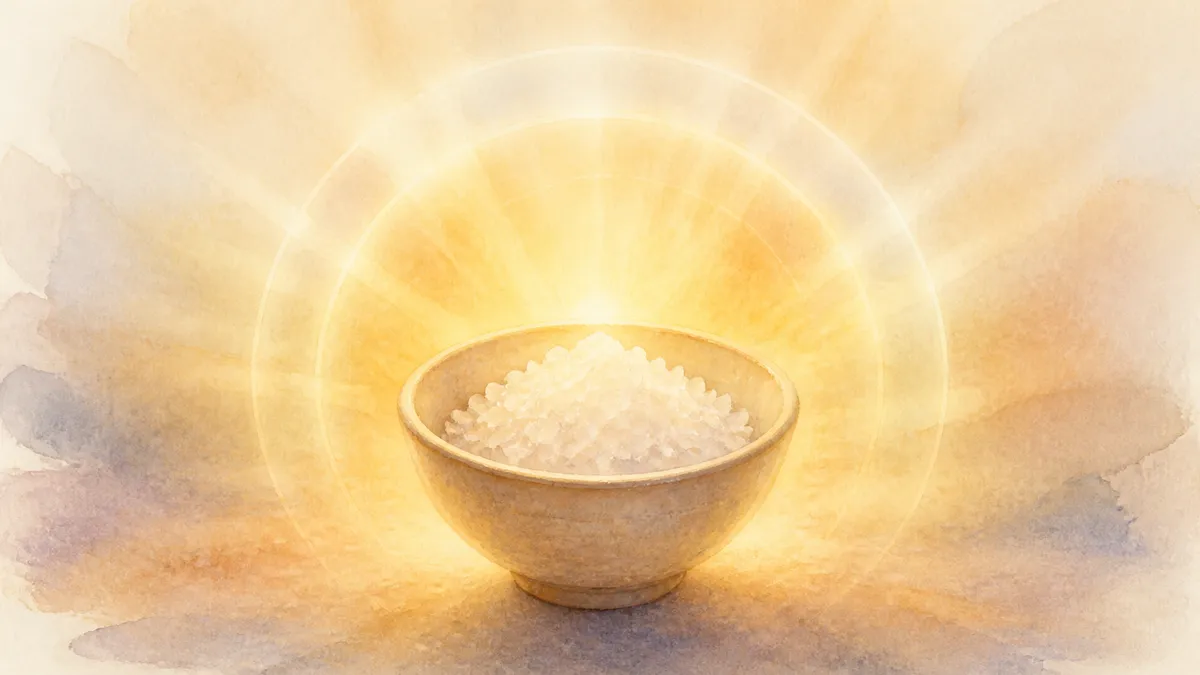
Nama and rupa will disappear only when the body with its indriyas disappears, when it dissolves into rainbow light or transforms into an illusory divine body. Then even salt will appear as nectar, and its qualities will change completely; however, some kind of energy underlying it will remain, though it will be transformed. As long as there is a body and indriyas, nama and rupa cannot disappear, because the indriyas exist.
Vasanakshaya and Manonasha as Means of Attaining Moksha
What, then, do statements such as “only vasanakshaya” or “manonasha is moksha” mean? The point is that these are means of attaining the final result, not the final result in themselves. It has become common practice to apply the name of the final result to all the means that contributed to its attainment. Therefore, both “vasanakshaya” and “manonasha,” which help prepare the mind to receive knowledge of the Self, are extolled as “moksha.” This is similar to the statement, “antahkarana-shuddhi is moksha,” in light of the fact that without it, “aparoksha-jnana” is impossible.
Antahkarana-shuddhi means a sattvic antahkarana, a pure mind. Once we have purified the mind and attained antahkarana-shuddhi, we can congratulate ourselves: we have created within ourselves a sattvic instrument for knowing Brahman. Such a sattvic instrument can generate brahmakara-vritti (vibrations attuned to Brahman), or, to put it very simply, thoughts of God, a spirit of devotion to God, and attunement with God. Only a sattvic antahkarana can generate brahmakara-vritti, and brahmakara-vritti ultimately brings about vasanakshaya and ultimately destroys ignorance.
When brahmakara-vritti is steadily sustained, the yogi attains sahaja-nishtha (the natural state). Our twelve sankalpas, the Shiva-sankalpas, and the fifteen Shakti-sankalpas—all these are brahmakara-vritti. When they are steadily sustained, the yogi attains sahaja-nishtha (the natural state). This natural state, or that which sustains it—brahmakara-vritti—is also called svajatiya-vritti, a continuous stream of ideas concerning the one true “Self” alone. When we are absorbed in contemplation, we always experience a continuous stream of perceptions of the one true divine “Self” alone.
When you have such a stream, it means that the descent of divine grace is not far off; divine grace will soon arrive. Before divine grace descends, there is such a stream—it is a sign that the descent of shaktipata (Anugraha) is imminent. Swami Sivananda also says: “Maintain brahmakara-vritti, the awareness of the idea of the Infinite, while walking, talking, eating, and so on.”

The Role of Knowledge in Spiritual Practice
This does not mean that knowledge is unnecessary. It is inadvisable to quote such statements out of context, without mentioning the other two factors, while the Shruti clearly explains the role of each of the three. We shall now examine other meanings of these statements.
The following description of the completion of “vairagya, bodha, and uparati” (that is, manonasha) also sheds light on the roles of “vasanakshaya,” “bodha,” and “manonasha”:
The disappearance of vasanas is the state of absolute vairagya.
Slightly different terms are used here: vasanakshaya is presented here as vairagya, described as vairagya.
The disappearance of vasanas is the state of absolute vairagya. The result of bodha—Self-awareness—is the absence of the arising of ahamkara. The restraint brought about by uparati, or manonasha, is the non-recurrence of extinguished vrittis.
The Nature of Manonasha
Manonasha means that the mind ceases to sustain vrittis and vasanas. Normally, we have tendencies, but there is also the mind. The mind can be both a helper and a betrayer. It is a betrayer when it thinks, “It would be nice to indulge my vasanas”—having nothing to do, it starts searching. Our mind is like a computer with many files, and it is also like a user sitting inside us who enjoys rummaging through them and looking at them. A kind of inner browsing.
But when the mind dissolves and manonasha occurs, it no longer wishes to sustain vasanas. It always looks toward Brahman and has lost its function of sustaining vasanas. It is devoted to Brahman, devoted to God; it is empty, illusory, pure, there is no identification with it, and it no longer has the desire or power to sustain vasanas—this is manonasha (the dissolution of the mind). It has not lost its ability to think, but it has lost its ability to sustain vasanas; it always abides in Brahman, and all its impure faculties are paralyzed.
This quotation states that “vasanakshaya” is the state of perfection in “vairagya”—dispassion—while “manonasha” is intended to free the mind from vrittis.
The Difference Between Vasanakshaya and Manonasha
Thus, vasanakshaya is renunciation of tendencies. You have separated yourself from tendencies and know: “Anger, lust, greed, attachment, pride, and envy can no longer take hold of me, because I am separate.” Manonasha means that the mind no longer gives rise to vrittis; it does not generate these vrittis in order to sustain all these tendencies, does not create new tendencies, does not invent things, and does not engage in projection.
By contrast, the result of bodha, when ignorance and its effects have been destroyed, is the absence of any further identification with the bodies.

Different Paths to Liberation
Bodha means that you have discovered knowledge of the Self and do not identify with the five koshas, and through this knowledge of the Self grace comes, shaktipata comes, and the flow of Anugraha begins.
Sometimes a yogi first attains vasanakshaya, then manonasha occurs, and only afterward does he enter into grace—this is the traditional method described in Patanjali’s “Yoga Sutras.” In bhakti yoga, it sometimes happens the other way around: first comes bodha, the receiving of grace; then the mind becomes calm and manonasha occurs; and only afterward do the tendencies change and vasanakshaya takes place.
In the practice of natural awareness, we emphasize both bodha (the revelation of awakened awareness) and manonasha—the cessation of the generation of vikalpas—which is self-liberation and self-surrender. Then the vasanas dissolve through the very prolonged application of this state, while at the same time we curb them through a yogic monastic life.

Questions and Answers
Question: Om, Guruji, before manonasha, can vasanakshaya look like this: a vasana arises and we keep it on the periphery, for example, and work with it somehow, dissolve it, or detach ourselves from it, as you described earlier—is that correct? That is, they still occur; the main thing is to work with them. With manonasha, they do not arise at all.
At the level of manonasha, the mind that used to cling to them is absent; it is completely devoted to God. These vasanas find no support, and if they find no support, they fade away, because it is the mind that kindles the vasanas.
Question: So they still arise and may float somewhere on the periphery. The main thing is not to react to them?
They are present in the subtle body, but if the mind does not support them, they are like seeds that cannot grow. It is as if you planted a tree, but the soil is unsuitable: the seed is there, but it cannot grow.
Question: It is difficult to understand when it actually arises and where the difference lies between perceiving it as such—there is a vasana, anger wants to arise, or there is greed—and when the mind actually clings to it and fuels it. Is the very fact of perceiving it part of the process of thinking about it, or not?
You are expressing yourself in overly complex constructions. When you can remain detached while observing a vasana, and it does not blossom, and the mind is not swayed by vasanas, this means that vasanakshaya has not yet occurred—the vasanas are still there—but the mind has already been pacified, and the vasana does not develop. Therefore, if you continue to act in the same way, vasanakshaya will occur sooner or later.
Question: Guruji, does this mean that all three of these processes can occur in parallel?
Yes, each one nourishes the others; there is no sequence among them. You cannot say that one comes first and then the second—they can proceed together.
Question: Om, Guruji, can it happen, for example, that some event occurs and a person experiences a klesha or vasana arising, and then keeps thinking it over and turning it around in their mind for a long time, until eventually it becomes worn out and no longer seems interesting? Is that vasanakshaya, or is it a somewhat different process?
Yes, that is also vasanakshaya through manana (reflection, analysis). Manana is very important—it can destroy many vasanas. You simply begin to relate to your vasanas differently and discover their illusory nature and emptiness; you reflect on them and deprive them of their power over you.
Even if you have not yet attained enlightenment, but are a good analyst, you can deprive kleshas and vasanas of their power over you and wrest your soul from their grasp. For example, if some spirit obstructs you in a dream and you engage in rigorous analysis and begin discussing with it its unreality and emptiness, and the playful nature of its behavior, then eventually that spirit will begin to retreat and grow embarrassed, and in the end it will take Refuge. I mean this literally—it works. If you explain to it who it really is, it will stop harming you altogether.

Conclusion
Thus, “vasanakshaya” and “manonasha” can serve only as means that bring one closer to completion—namely, abiding in true knowledge—but not as completion itself.
