

Commentary on the text “Shri Siddhanta Shikhamani.” Chapter 14. “The Abode of Unity”
Prostration, bowing, pada-namaskar, dandavat — these are symbols of the spiritual path. A symbol of surrender, of prapatti-yoga (the yoga of self-surrender), of casting oneself aside. The saints say that if you can give up your ego, cast yourself aside, you will become liberated. The question of how to do this, what needs to be given up, to whom it should be given up, what self-surrender is, what God is, and how not to be deceived by self-surrender — all of this greatly troubles the mind, because it is a very new concept for the mind. How can I give everything up and be happy, and what will I have? — the mind immediately asks. To cast aside the ego — but how will I live without an ego? — this immediately raises a great many questions, which is why a process is needed; one needs to learn such self-surrender.
The process begins with establishing a connection with the Guru, with upasana. All spiritual practice proceeds in the spirit of self-surrender if it is genuine practice. The spirit of self-surrender means that from the very beginning we abide in God. How can one become liberated by practicing in an unliberated state, hoping to become liberated someday? From the outset, such a state will not be the right one.
It is like this: you arrive at a five-star hotel, check in, and are given a luxurious suite with two bathrooms, a bar, televisions and a refrigerator, along with a view, and they say: “Pay and move in.” In response, you say: “In the future I will become a very wealthy person, so may I stay here for now?” It is the same when we come to the spiritual path without self-surrender: we are like such a person trying to move into something great and immense. He says: “In the future I will attain liberation and enlightenment, but right now I am trying to do this with my shrunken and egotistical mind, with hopes and fears” — of course, this will be an erroneous position from the very beginning, and self-surrender resolves this issue.
The Right State of Mind Through Self-Surrender
Self-surrender means that we immediately enter the original enlightened state of unity with God; we immediately arrive in the right state. As soon as you have entered the right state, suddenly everything begins to go well, and even if things are not going very well, through self-surrender they become good; through self-surrender you immediately become the wealthy person who abides in a state of wealth.
It is said that in the right state of mind even an incorrect mantra works. Even if you practice yoga incorrectly while in the right state of mind, liberation comes; and conversely, even all the correct mantras, all the correct transmissions, and all the correct methods do not work in the wrong state of mind — it is impossible.
The difference between right and wrong is surrender to God, self-surrender to God. From the perspective of anuttara tantra, we should surrender to natural awareness, sahaja-samadhi, and enter sahaja-samadhi right now. Simply proclaim “Aham Brahmasmi” and that is all, never stepping out of it — but everyone understands that this is impossible, that it is too high a stage of surrender to achieve all at once. Then we need to surrender to Ishvara (God) through devotion, to Shiva, for example, to our ishta-devata; upasana and a process are needed. If this is impossible, then one can surrender to the Guru; at least the Guru is visible, one does not have to attain him — he is already here.
The Ego’s Resistance to Self-Surrender
Sometimes it is difficult for a disciple to give his ego to the Guru, because after giving his ego to the Guru, he will have to continue living without an ego, and this is difficult for many, because for so many lifetimes they have placed their bets on the ego, with so many attachments, and the ego is still preparing so many pleasures for the future. The ego says: “Wait, wait, you will surrender, but then look at what I have prepared for you — this and this: money, power, fame, wealth, pleasures, entertainment, the Maldives, the Canaries, women, the next life. Wait, wait, everything is impossible in this life; in the next one we will enjoy ourselves, we still have time to have fun, there is also Svarga-loka, apsaras, heavenly palaces, the position of Indra — we still have so much ahead of us. Wait, do not hurry; you will always have time to surrender, and afterward there will be no turning back.” The ego presents such arguments, and the mind thinks: “Yes, indeed, this is all so serious; perhaps I should wait a little longer before surrendering” — and so it continues to remain in its wrong state.
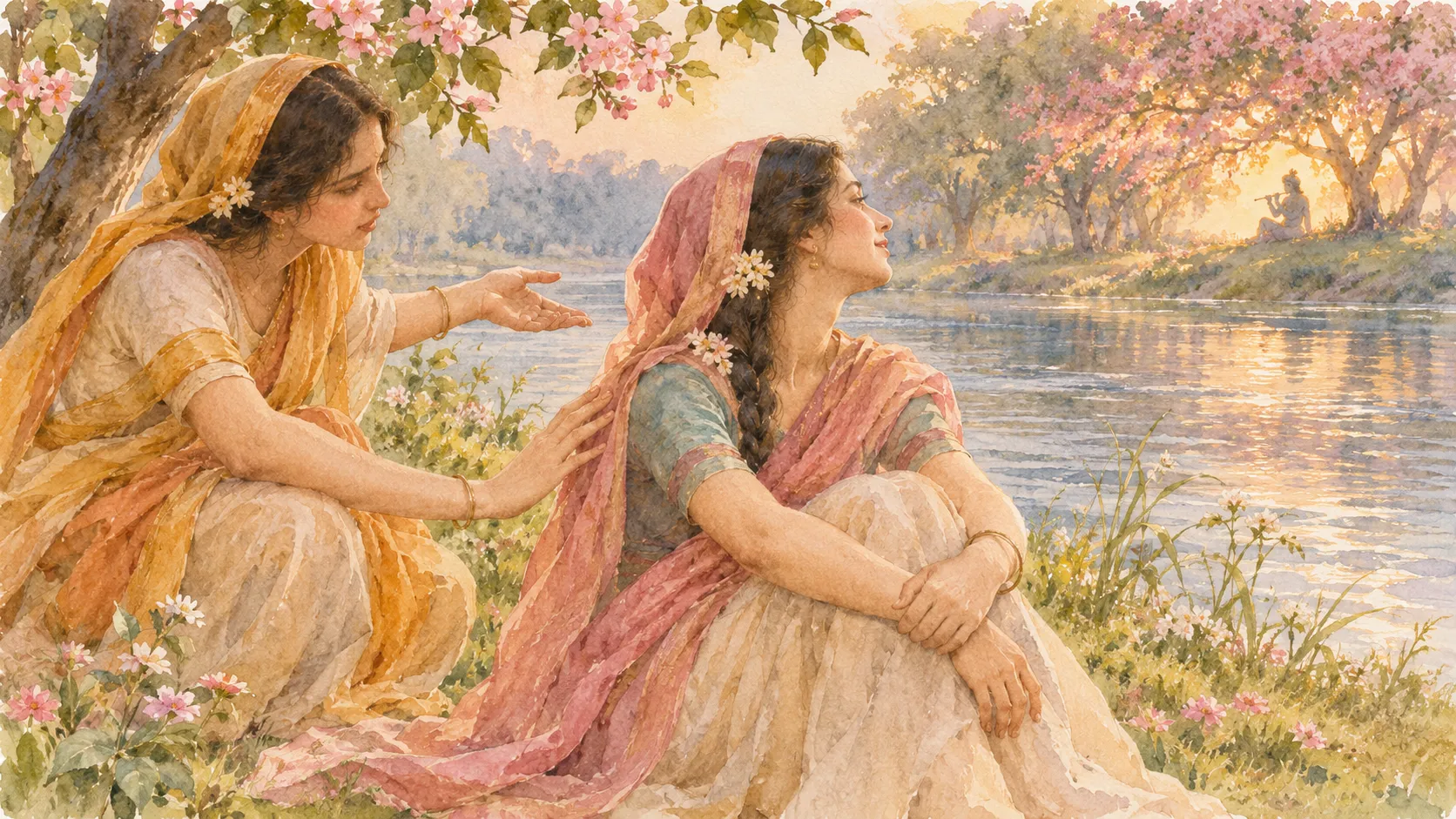
Once, two gopis saw Krishna on the bank of the Yamuna River, and one gopi said to the other: “You know, you’d better not go there, to the bank of the Yamuna, because Krishna is there. If you want happiness, a normal family life, in general, then absolutely do not even come near him or start talking to him. As soon as you go there, you will lose all of that; you will no longer need or be interested in any of it—you will simply go mad with devotion and love for him. Don’t even think about it, otherwise all your happiness will go downhill. But I myself will not agree to that; I myself have decided this way, I have decided to give everything completely” — this is devotion.
The ego does not allow us to do this—to accept our destiny in a state of self-surrender and be happy—because the ego has many plans. These plans are not only for this life; they also extend into the next life. The ego is a very cunning, subtle mechanism. We do not know it, but it sits deep inside, very deep inside; we do not even realize what it is doing, while it is already making plans for the next life and for the life after that. It has very grand plans for enjoyment.
The Hidden Work of the Mind
It is like having a computer and not knowing what it does at night, while it downloads something, updates something, and then—bam!—in the middle of the night, the antivirus program says: “Update complete.” Very nice, but you did not ask for it and were not planning on it. It does something, constantly communicates with someone, downloads something, reports something. It is supposedly your computer, and you think: “But how much is it really mine? It seems to live its own life, and who knows what it is planning.” It is constantly doing something and then merely presents you with the fait accompli: “Accept the license agreement?” But you did not even ask for this—this is similar to the way our mind (antahkarana) works: it is a kind of computer that also does something internally, carrying out its own hidden work, of which we are poorly aware.
Why? Because we do not look within. We look outward; everything outside is interesting to us, while the mind is downloading various programs and then presents us with: “Accept the license agreement”—that is, enter into certain relationships with copyright holders, get involved in something. Getting involved in something again—this is the antahkarana, and it has its own plans.
That is why a sadhu does not listen to the mind. He knows that it is not a friend; sometimes, with friends like these, you do not even need enemies. You have to deal with it like this: keep it on a leash—or better yet, give it away, surrender it, do not listen to it, because it has its own program of sensual pleasures, enjoyments, and ignorance, its own program of attachment: “Why don’t we cling to this, and then to that as well?”
We must say: “All right, stop. Who, after all, is the master here?”—and we must stop it. When we try to stop it, we see that this is impossible. Try stopping a computer while it is turned on—if it is switched off, yes, but if it is on, it will constantly do something on its own, download things, run antivirus checks, and perform many other secret operations that you do not even know about. You can ask programmers—they will tell you that it may even be a zombie, that is, a zombie computer: one that has been subjugated by another computer.

Some powerful hacker’s computer has subjugated a thousand computers, turned them into zombies; they download things, mine bitcoins, hack other people’s servers, and carry out DDoS attacks. In other words, your mind can be exactly the same—it can be a zombie, like a zombie computer, only it has been programmed by certain social programs and certain karmic programs. You do not even know it, but it nevertheless follows these patterns, unconsciously and secretly, because your conceptual mind is unaware of the degree to which it is identified with these subtle, conditioning programs.
Then we feel that it is impossible to stop it; it seems to live some kind of life of its own. And the saints say: “It is impossible to stop it, but it is possible to surrender it, and it is possible to place it under another authority through self-surrender.”
The place of unity.
“The devotee (sharana) has pure intentions; he does not strive for those crumbs of happiness that the objects of perception give a person. When such a person is completely immersed in the ocean of Shiva’s bliss, those who have attained unity reach him. Whoever has shaken off all impurities, whose thoughts are completely pure, firmly establishes himself in unity with Shiva through the feeling ‘I am Shiva.’”
To shake off all impurities means to free oneself from the dictates of all karmic programs that abide below the Atman, but when we begin such liberation, we will see how difficult it is. For example, one has to sit in mahashanti meditation, and even if we sit perfectly, like the Buddha, the mind still continues to function. However, self-surrender means that we allow the mind to function, allow the senses to move. The principle of the natural state is not blocking the mind; it is not the principle of Patanjali’s “Yoga Sutras”—chitta-vritti-nirodha.
The Art of Redirecting Allegiance
Self-surrender is redirecting allegiance, redirecting everyone and everything to serve the Supreme Source. Self-surrender: one’s own opinion without God is poison, one’s desire without God is a snake, one’s concept without God is a fetter, one’s will without God is darkness—we must understand this principle. As soon as anything manifests without God, these energies become fetters, snakes, poisons, and darkness, because they lead the soul into a state of ignorance. Yet we cannot live without them. If we cannot live without our own opinions, desires, concepts, and will, then how would we be better than trees? We live and evolve through these things, so what are we to do?
We should not suppress their activity, but we must subordinate them to God, offer them to God, unite them with God. For example, snake venom is dangerous, but in small doses it becomes healing instead. In the same way, one’s own opinion leads to delusion if we identify with it, but if it unites with God and carries out the divine will, it becomes a path to awakening. One’s own will is the embodiment of karmic programs, but if we unite it with God and surrender it to God, then we unite our will with the divine will, and it becomes a path to liberation.
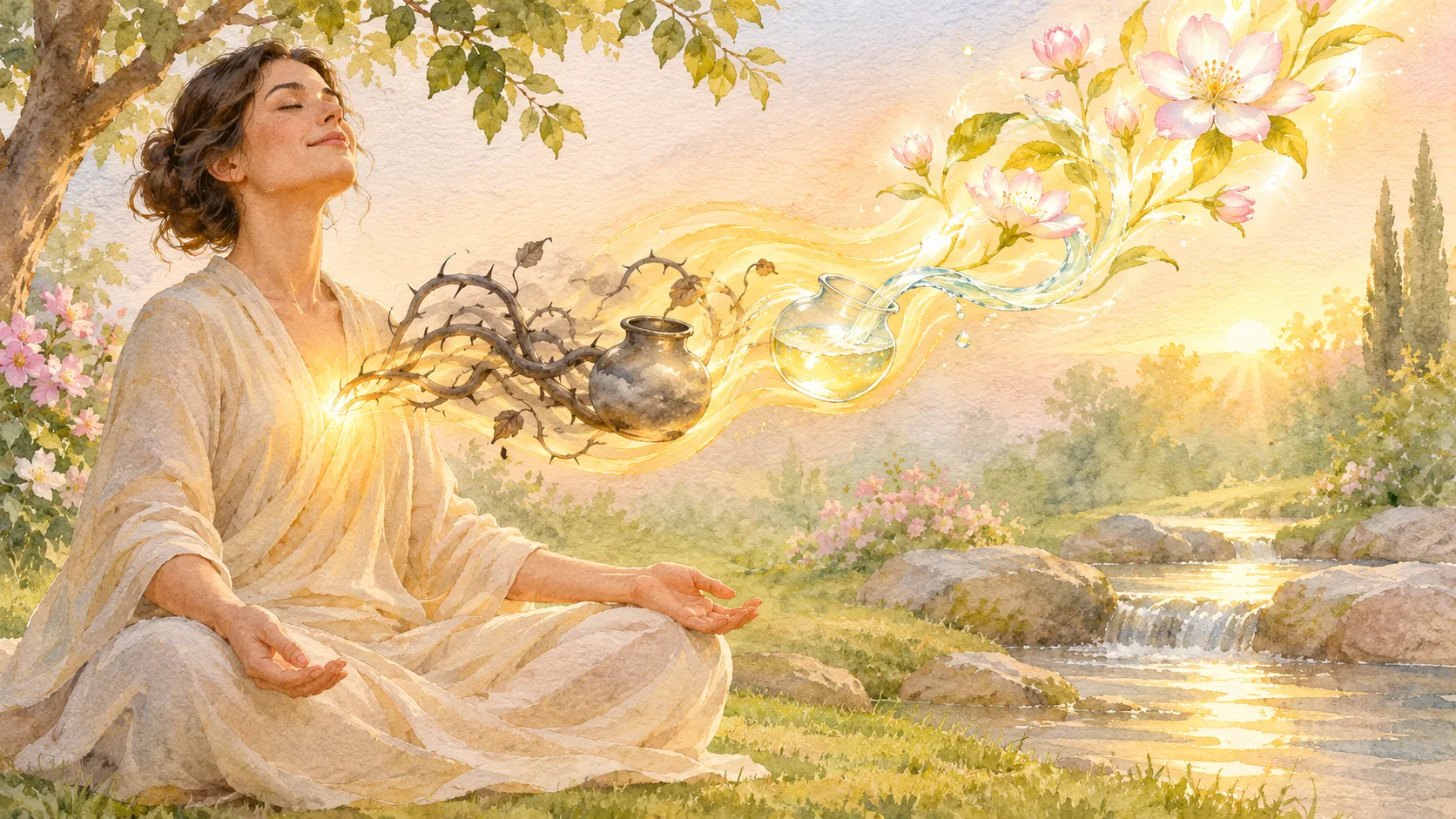
Desires are poison that intoxicates the soul, but when they unite with God, they are transformed into the nectar of prana, which nourishes the sushumna nadi and gives life. Concepts are fetters that cloud the mind when we identify with them, but when we surrender them to God, they become a play of illuminating clarity, allowing us to comprehend non-duality through the shastras, meditation, and contemplation. Thus, the art of self-surrender means the art of redirecting the allegiance of that which binds us and transforming it into that which liberates us—the art of redirecting allegiance, transforming poisons into nectars.
Destroying the Veil of Illusion
“Having attained unity with Shiva, whose nature is joy and awareness, a person ceases to notice the net of the world, whose power is created by illusion. In the ocean of illusion, the foam is all the worlds, while the waves are the elements of creation (tattvas). This ocean disappears in the submarine fire of unity with Shiva. The veil of illusion (maya-shakti) creates an imagined difference between the Atman and Shiva. When this veil is destroyed, nothing remains but non-duality.”
Thus, this veil of illusion is destroyed through self-surrender and self-recognition. Self-surrender means that our nature shines brightly; it follows immediately after self-surrender. Self-recognition means realizing one’s nature in the spirit of the mahavakya “Aham Brahmasmi” or “Shivoham,” but before self-surrender such self-recognition is impossible.
The Practice of Self-Surrender in the Present Moment
What does self-surrender mean? Self-surrender means that we must come into contact with the Supreme Source right now, without waiting for the future, without placing our hopes in the future, right now, without postponing it until the future, without projecting it into the future, without creating expectations. We must look reality directly in the eye and try to perceive God, divine reality, directly, entering the divine state right now, so that, having learned this, we can act in this way constantly, never again leaving this state, always acting in the right state.
For example, if a student has self-surrender to the Guru, then they perceive the Guru’s view, contemplate the Guru, and can continue to act in this state. Or there is devotion to an ishta-devata, for example, Dattatreya—the student surrenders themselves to Dattatreya’s view, contemplation of Dattatreya, and his will, his manifested energy; the same applies to Shiva. Finally, if someone is incapable of surrendering to Brahman, Ishvara, or the Guru, they should surrender themselves to a sadhu. In general, the principle of self-surrender, no matter to whom, although there is an established tradition, means that we try to see God right now and surrender ourselves to Him.
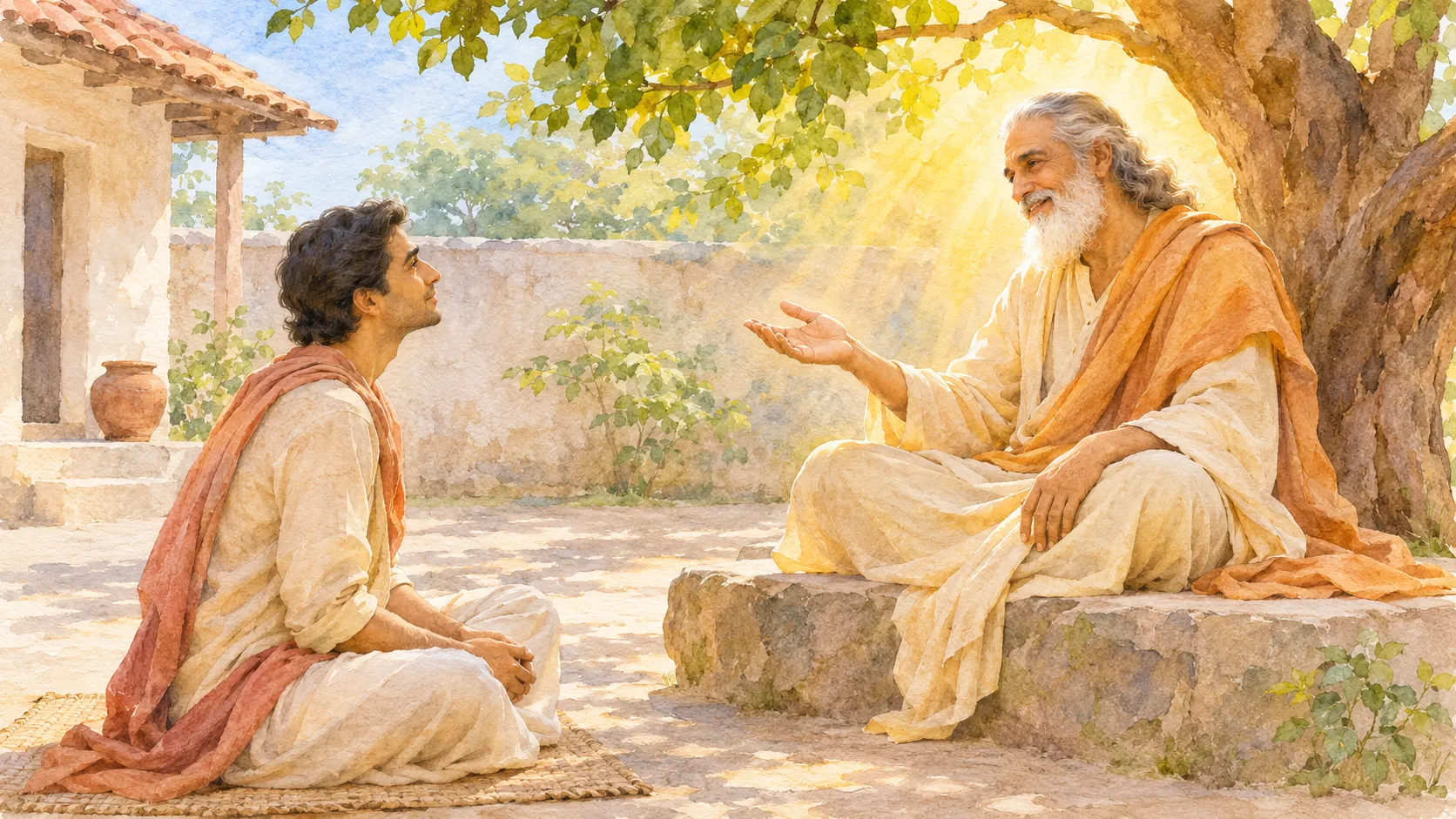
If you surrender yourself to a sadhu, you serve the sadhu, you care for the sadhu, you genuinely care, and you make this your sadhana. You do not do it to obtain a result or fruit, to receive approval, because it is the accepted ethic, or because the sangha needs to be supported somehow so that you can live and survive; you do it as your own practice—self-surrender and service to the sadhu. This is called seva, and it is a very important process of self-surrender.
The Naturalness of Self-Surrender
Gradually, as we practice self-surrender to God, self-surrender to the ishta-devata, self-surrender to the Guru, and self-surrender to the sadhu, we become accustomed to it, and acting in the spirit of self-surrender becomes very easy. On the contrary, acting without the spirit of self-surrender is somehow very tense and uncomfortable in general.
We become accustomed to the thought that:
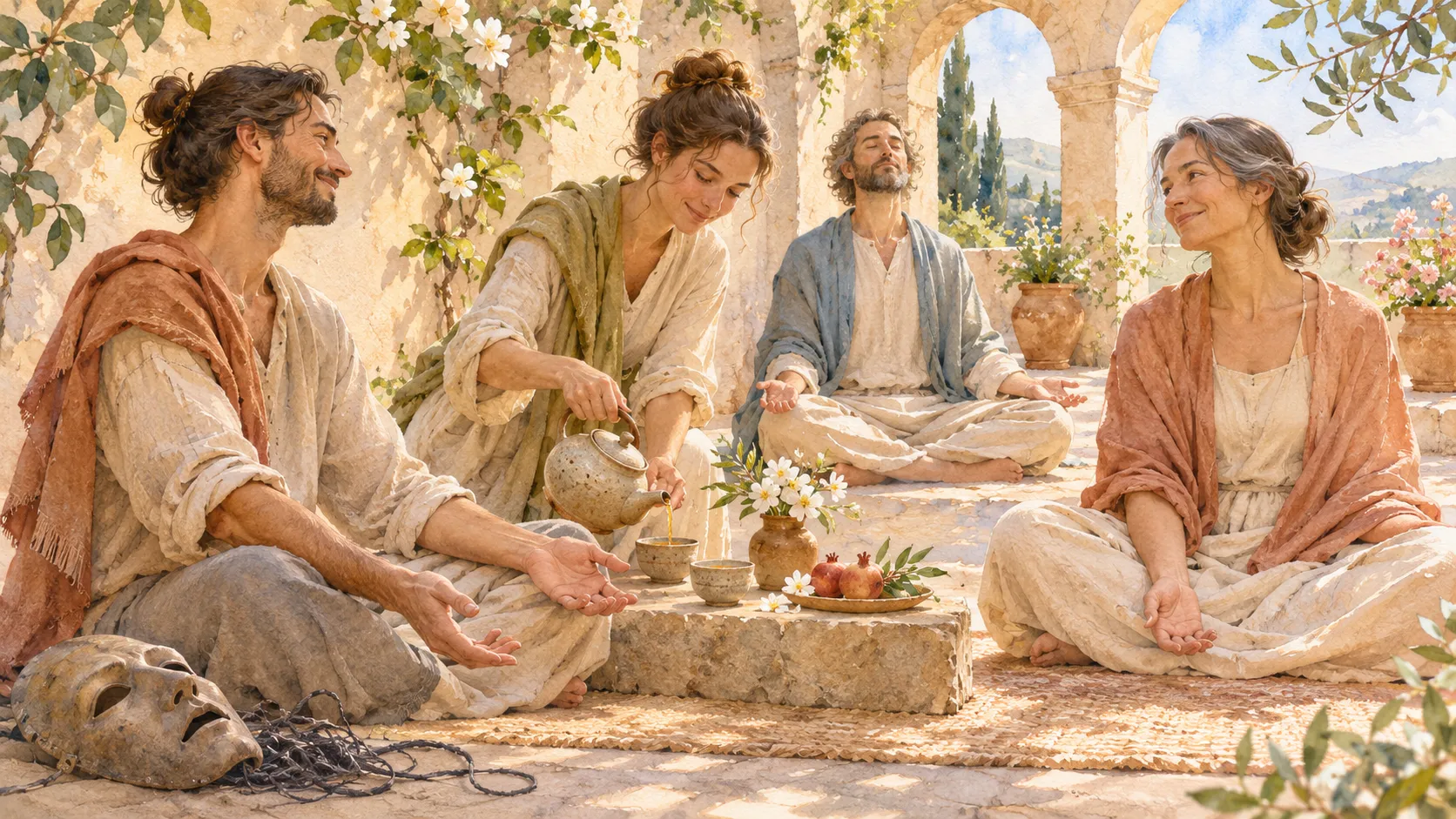
Practicing in the spirit of self-surrender is easy, while practicing without self-surrender is difficult
Meditation and self-surrender proceed naturally, whereas meditation without self-surrender is extremely difficult, no matter how much you try to stop the mind
Performing service in the spirit of self-surrender comes effortlessly, while without self-surrender it turns out rather poorly, because we are constantly hoping for fruits and results, and various obstacles arise
Communicating with people in the spirit of self-surrender is very easy, while without self-surrender there are nothing but misunderstandings
We come to the conclusion that acting in the spirit of self-surrender is in fact the normal, proper way to see the world, a way of living, a way of perceiving the world, and a way of practicing. Without acting in the spirit of self-surrender, it is impossible to practice properly or build relationships, because the ego will be acting, and the ego is not meant to perform sadhana. The ego is meant for self-gratification; it can only pretend that it is doing sadhana, while in reality it will seek a way to gratify itself, even through sadhana.
A Shift in Consciousness
Thus, self-surrender is actually the ordinary, normal, natural state of a liberated soul. All eternally liberated souls, all saints, abide in the dimension of self-surrender, and when we think this way, the question is as follows: one must decide to surrender oneself and reaffirm this decision every day. Not acting according to the ego’s karmic programs, but acting in the spirit of self-surrender—this is a major shift.
If a layperson decides to act in the spirit of self-surrender, they will have to consider what it means to act in the spirit of self-surrender. If a monk decides to act in the spirit of self-surrender, it is the same—the monk has already advanced quite far along the path of self-surrender, but there are still many subtle questions, because when you act in the spirit of self-surrender, you begin to be a saint right now, if it is genuine self-surrender, because you begin to see God right now.
This does not mean that you immediately become a saint, because the ego and karma still remain, but you see God, and at the moment when you surrender yourself to God, you act as a saint, because when you see God, it is impossible not to be drawn to Him, to carry out His will, to act in the spirit of God’s view and in the spirit of contemplating God—it is impossible; that is, the soul cannot go against its nature.
God is its nature. When it sees God, it cannot deceive itself, and at the moment self-surrender takes place, the soul begins to carry out the divine will—immediately; it begins to carry out the divine will right away. It happens quickly.
Service to God
It is like there was an American spy, but British intelligence turned him. As soon as they turned him, he became a British spy; he was no longer an American spy, he was serving someone else. Outwardly, he might pretend that he was still an American spy, but in reality he had become completely British inside — it is the same here.

As soon as we decide to surrender ourselves — outwardly, nothing has changed, but we are God's spies; we secretly serve Him, and no one and nothing else, we act in the spirit of God, carrying out the divine will. Nothing has changed yet, but we are already continuously abiding in God. Self-surrender changes everything within without immediately changing anything outwardly; externally, it takes some time for reality to be restructured.
In other words, in any spy thriller, the fundamental question is: “Who do you work for?” When he asks, “Who do you work for?” and the answer is, “I work for God; that's it, I have no other motives in my life” — this is self-surrender.
The Reciprocity of Service and Divine Qualities
When we continuously work for God, God begins to work for us, in the sense that He begins to send grace, becomes our essence, becomes very close to us, sends ananda (bliss), wisdom, happiness, spiritual power, and all the qualities that exist in God gradually begin to manifest in us — this is the meaning of self-surrender.
Purnatva (self-sufficiency) begins to manifest because, if you serve God, you feel that there is no longer any point in fulfilling desires; you do not need anything apart from God, and you begin to resemble God inwardly, with God being the same within you.

Svatantrya (freedom) appears because self-surrender means that there is no master over you other than God. Outwardly, there are ethics and relationships, but psychologically, inwardly, there is no master over God at all; therefore, only God is the master over the soul. The soul is no longer conditioned by anything or anyone — neither spirits, nor the ego, nor the mind, nor ideologies, nor others; it is free — svatantrya. Even time and space, even subordinate gods, have no power; even Yamaraja has no power, and therefore liberation comes.
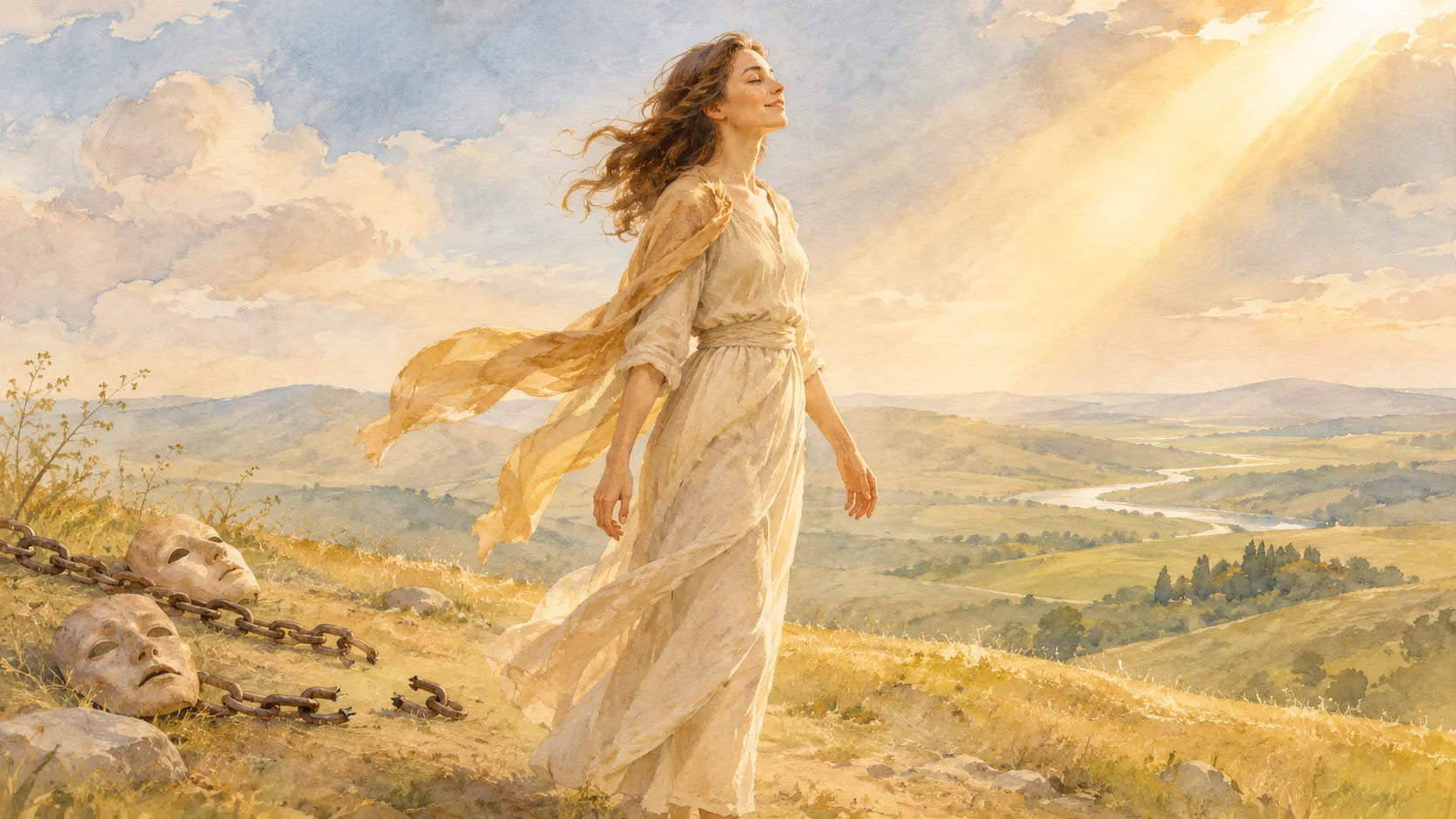
Nityatva (eternity) is when the soul has surrendered itself to God and ceases to think in human categories, because God does not divide things into human concerns; He laughs when He looks at people fighting over a piece of land, money, or power on this earthly globe. Nityatva means seeing the world on a vast, global scale, within, for example, the cycle of the Universe's existence, at least four billion years into the future. It means seeing it not from the perspective of a small “I,” but from the perspective of the Universe of fourteen worlds and all beings. Have you ever planned your activities on the scale of the fourteen worlds of the vast Universe, thinking about what you would do with them at all? It probably never occurred to you, whereas God thinks approximately in this way, beyond the human perspective; this very broad consciousness is nityatva (abiding in eternity).

In eternity, our human life is very small, but our Atman always abides in eternity, and then you begin to look at human life differently, from another angle. The games of human beings no longer impress you in the same way; entertainment seems limited, because nityatva is the ability to look higher. You naturally develop detachment; you think, “If I am in God, and God is eternity, why should I amuse myself with all these sandbox games?” Thus, detachment naturally arises.
Other qualities — sarva-jnyatva (omniscience) — also gradually begin to appear, because, having surrendered itself to God, the soul begins to acquire His qualities, little by little, very gradually, not immediately, but they do appear.
Aishvarya (vyapakatva) is omniscience, omnipresence, the omnipotence of manifestation, fullness, freedom, eternity; having drawn near to God, the soul begins to melt little by little and gradually perceive these divine qualities, although its personal karmas often interfere as well. But if the soul unwaveringly surrenders and continually submits to God, freeing itself from karma, from the kleshas, from the ego, and giving itself over, it gradually begins to attain godlikeness; it begins to change its perception of itself and to know itself.
Self-Recognition and the Need for Persistence
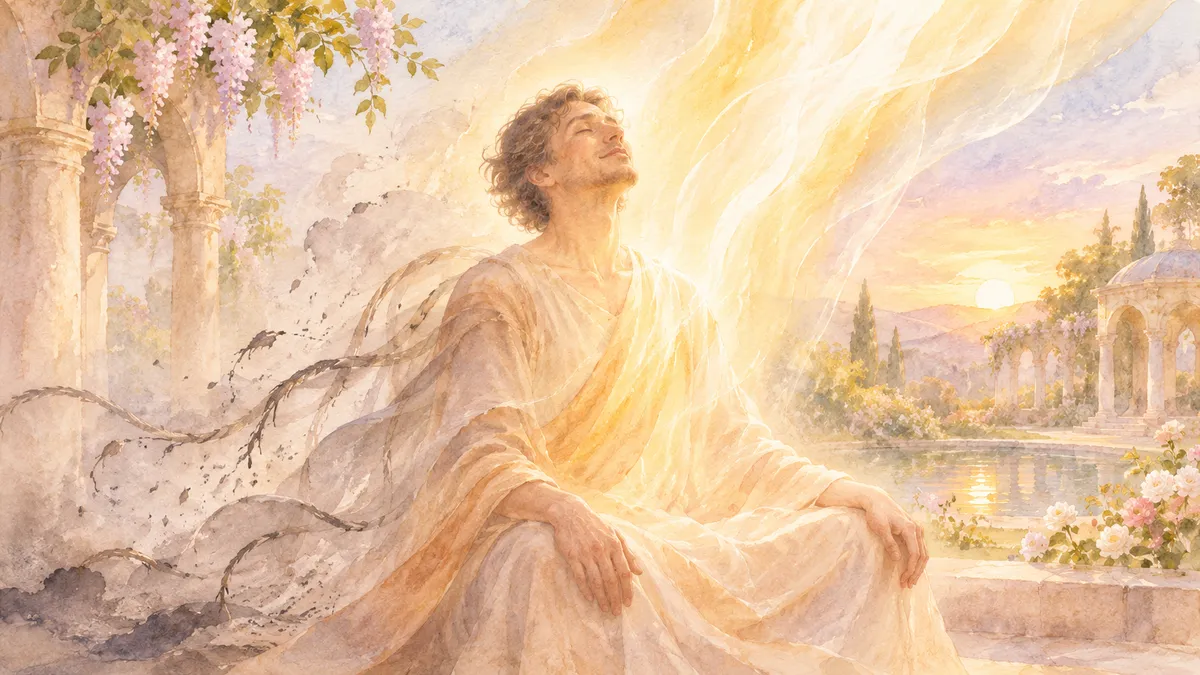
The next stage arrives — self-recognition (pratyabhijna), and persistence is needed here. Persistence means that the soul must do its work, while God does His; God alone cannot do everything—the soul must do its own work. There is a saying: “There are no lazy champions,” meaning that the soul must not be lazy in this respect. In terms of self-surrender, one must constantly work to be highly sensitive to the divine will, to carry out the divine will, to cut off everything that obstructs it, and to rely on divine grace. We surrender ourselves to divine grace, we submit to it, but this requires constant effort, regulated sadhana, and viveka.
“The concept of ‘animal’ (pashu) and the concept of ‘master’ (pati) are imagined under the influence of the spell (maya); when this illusion is dispelled, then who is the animal (pashu) and who is the master (pati)?”
At first, the soul is pashu, and Shiva is initially God, initially the master (pati), but in the process of self-surrender these distinctions disappear; all these distinctions existed only because, through its ignorance, the soul had moved too far away from God. As soon as the soul draws near to God in the process of self-surrender, these distinctions disappear, and the soul begins to acquire divine qualities; unity begins to arise.
For example, as long as a dog leads a wild lifestyle and does not obey its master, it is put on a leash and kept outside in a kennel. But if the dog becomes obedient and devoted to its master, and the master also trains and raises it, taking pleasure in doing so—in other words, if it surrenders to its master—the dog becomes closer to its master. The master may then let it into the house; it already lives in the house, gradually becomes more refined, and ceases to be a completely wild dog; it becomes more humanized. In the same way, the soul becomes more divinized through self-surrender.

One man was playing chess with a dog in a park. Another man was very surprised, came over, and said: “What an intelligent dog you have.” The man replied: “What do you mean, intelligent? It keeps losing.” Nevertheless, the soul will never become equal to God, but it can gradually become divinized under the influence of divine grace.
Nonduality as the Foundation of Self-Surrender
“The state of supreme nonduality is the best remedy protecting one from the terrible serpent of rebirths (samsara), lying upon the anthill of distinctions. The great ocean of samsara is born from awareness of distinctions; the saint crosses this ocean in the boat of awareness of nonduality.”
Such self-surrender begins with self-awareness of the spirit of nonduality. In Shaiva Siddhanta, bhakti yoga is practiced in the spirit of nonduality, and self-surrender is performed in the spirit of nonduality, unlike Vaishnava bhakti, which categorically forbids nonduality in bhakti yoga. In Shaiva Siddhanta, and in the path of Shiva in general, the view of nonduality is prescribed in bhakti yoga and in self-surrender. It is expressed approximately as follows: “One who is not Shiva cannot worship Shiva”—that is, if you want to worship Shiva, you must be one with Shiva (Shivam bhutva, Shivam yajet).
What does this mean? It means that we must enter the dimension of nonduality right now, enter the enlightened view and the state of unity with God, and then enter a state of contemplation, a state of clear, sharp, vigilant awareness—here and now—of this unity, into the dimension of the space of consciousness, which is like the sky.
When we enter into such awareness, a third aspect will also manifest—ananda (bliss), as the result of such surrender to the view and contemplation. The first—the view—is sat, contemplation is chit, and ananda—bliss—is that which is experienced in the manifested through the channels and winds. When we experience this, it means that to some extent we have managed to surrender to God, to some extent we have united with chit-shakti; then awareness of the divine will will begin. If I have surrendered to God, whose will should I fulfill—the will of the ego or the divine will? Of course, the divine will, because it is my own nature. And what does the divine will consist of? This is where investigation, clarification, and understanding are required. This means that we have come into contact with ichchha-shakti, with perception, with the direct personal perception of the divine will—this too is surrender, when our will and the divine will unite.
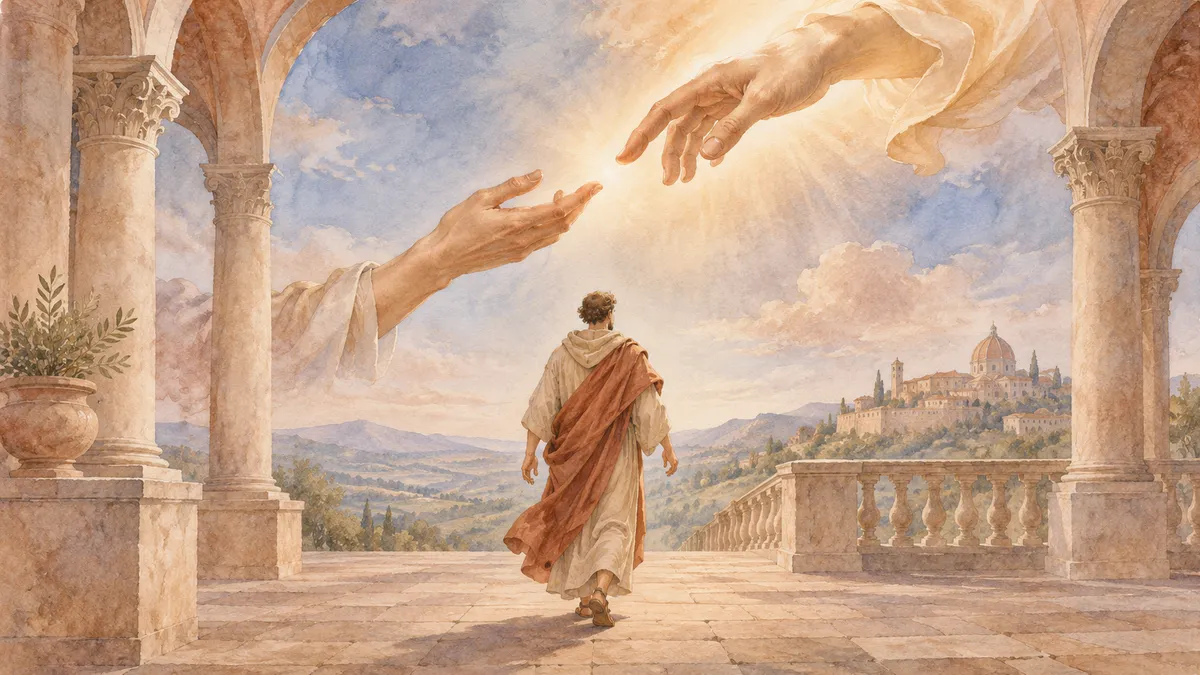
There is a painting by Michelangelo depicting a naked man reaching out his finger toward God the Father, who reaches toward him—this is the same as when the soul unites with the divine will, with the transcendent will (ichchha-shakti). It understands that my will is secondary, lesser; it must be surrendered to God, it must be subordinated. That is why it is said that saints are the hands and feet of God, the hands and feet of the Absolute. They do not act on their own; they act by transmitting the divine will. Therefore, saints, jangama, and jnana-sadhus should be regarded as God Himself, because if their will has united with the divine will, then God acts through them—this is the principle.
Practicing Nonduality in Everyday Life
“The night of worldly existence, samsara, is dark; this darkness of ignorance conceals the actions of the demon of desires. Only the sun of nonduality can dispel this darkness; therefore, for yogins there is no better means of protection from the great sufferings of the terrible cycle of rebirth than the realization of nonduality. The happiness granted even by a moment in the state of nonduality cannot be obtained in hundreds of thousands of years by those who delight in worldly objects.”
The realization of nonduality right here, right now—is surrender. This does not mean that one has to sit in some special way, strain one’s eyes, and somehow invent a kind of nonduality or imagine space. Surrender means recognizing divine existence right now as pure consciousness, removing all evaluations, all judgments, all ambitions, all attachments, casting everything aside, abandoning all hopes, abandoning all fears, abandoning all judgments, abandoning every desire except the desire to be one with the divine source, leaving behind everything that leads us in some other direction—this is a state of complete self-renunciation, complete self-renunciation. And if we are not afraid, then suddenly we feel our mind becoming free. Leave all attachments, leave all opinions—then an opening to the Source takes place.
Once, in 1998, we were driving through Moscow with a female disciple, and she asked: “What is surrender?” She had a small sports car and was very proud of it. I told her roughly the following: “Surrender is if you get out of the car under that tree in the little park, sit there for the rest of your life, and be happy about it”—that is the taste of surrender. She said: “I probably couldn’t do that”—but saints can. So what is the difference? For saints, God is very important, whereas for us the material world is very important. As soon as God becomes very important to us, we will be able to do this too. But for that to happen, we must truly surrender ourselves to God, so that God can nourish, inspire, and satisfy us to such an extent that we think of nothing else; and even if we do something, we do it not for ourselves, but only in connection with God, for God’s sake, fulfilling the divine will.

Surrender and Inner Renunciation
Surrender leads to total vairagya (renunciation). If surrender has truly taken place, renunciation will inevitably follow—not necessarily external renunciation; external renunciation depends on the place, time, and circumstances. For example, we cannot walk around here smeared with ash, dressed in orange, carrying prayer beads and a trident—the culture is different. We can live somewhat in our own way, but inner renunciation is essential. This means that you have no other plans, ambitions, or interests besides God, and no desires or intentions other than serving God and the divine will—this is inner renunciation.
Even if you act, you do not act for the sake of plans and ambitions, because you do not place yourself at the center—you place God at the center. Therefore, the first thought of a sadhu is not what I am going to do now, but how God is, how I can become more one with Him, and how I can better carry out the divine will. Such a sadhu does not live by his own plans; he lives by God's plans, tries to learn more about them, tries to understand how to manifest them through himself, and how to better become an instrument of the divine will.
At the moment when we remain in self-surrender to God, we are almost enlightened; when we forget, our karma returns again. The question is how to make this continuous, how never to stop acting in the spirit of self-surrender—to live, think, be aware, remain and contemplate. The first sign that you have learned this is that you have no problems. Of course, they exist, but you know where to surrender them, and you deal with problems within half a second. You have no problems, you have no attachment, you do not cling to opinions, ambitions, ego, plans, hopes and fears; you have opened your heart and are able to live through it continuously.

You are happy in any clothing, in any place, in any role, with any food, under any circumstances; you have inner renunciation. The initial signs that self-surrender is working for you are that you always remain in a joyful, happy state, and that you easily get along with others because you can understand them, you can understand their soul, and you can put your ego aside. Your ego no longer hinders you, and your karma does not hinder you either—these are signs of the initial stage of self-surrender.
Remaining in Grace and Bliss
“For a Shiva yogi, the entire world dissolves in his inner vision, and the all-consuming experience of the bliss of Shiva, of unity with Shiva, is called liberation.”
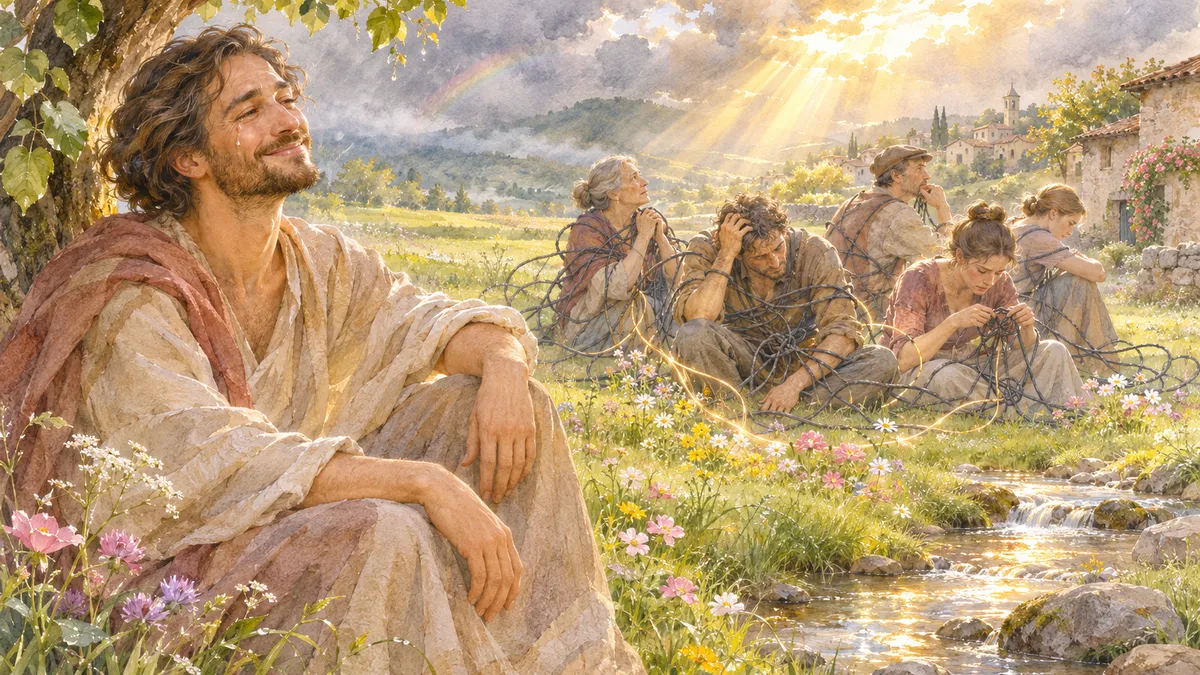
What are the next signs after the initial ones? You remain in bliss, in grace; you feel that you are experiencing certain good states, and they never leave you. They may be attacked by various forces of the subtle body, by the forces of karma; the body may try to knock you off course, and the pranas are changeable—all of this is impermanent, but subtle grace never leaves you. Remaining in grace is a different view of the world. Remaining in grace means that you are not merely satisfied, calm and serene, but that you abide in inner joy, and this joy is not conditioned by anything. You feel good, and the fact that you feel good is motivated by nothing.
You remain in happiness and understand that happiness depends on nothing, that this happiness is within you and everywhere, and that it depends absolutely on nothing—on nothing at all. You simply feel happy, and you marvel: “How everything is arranged! I thought it depended on something, but it turns out that it is right here; you just have to remove the ego, surrender to God, and it is always with you.” And when you remain in happiness and joy for a long time, there becomes so much of it that it turns into bliss even on the level of prana, on the level of the mind.
There becomes so much of it that it turns into delight; there becomes so much of it that you want to share it. Calmness, contentment, happiness, joy, bliss, delight—and when delight grows, it becomes ecstasy. This is not simply delight; these are very high states, elevated bhavas. You think: “How can it be that living beings suffer and do not understand this? How do they even manage not to be happy?” You feel tremendous joy, but on the other hand, you want to cry because others do not understand this. That is why they say that buddhas look upon the world with great compassion and, at the same time, with humor. With compassion because they see how living beings suffer, and with humor in the sense that they think: “How do they manage to suffer? How do they even succeed at it? One would have to distort things so much, twist oneself into such knots,” because divine grace is the law of the Universe, whereas suffering is not the law of the Universe—it is a perversion of the fundamental law of the Universe.
Glorification and Revelation
Self-surrender means that the soul dwells in such grace, in continuous rapture. It has no choice but to glorify God constantly. The glorification of God may take place formally, during pujas, aratis, and bhajans, or informally, in poems, songs, or in the soul; one can even glorify God by throwing snow with a shovel—in principle, it no longer matters. The forms of glorification are unimportant; one can draw Om in the snow—everything is glorification. One may write great poems, paint, or deliver inspiring lectures, but this is unimportant; there is no fixed form of glorifying God—it is a spontaneous outpouring, like a cloud carried by the wind, pouring water from itself—that is all. It is like the way Ramalinga wrote his poems: there is simply so much grace that it wants to play and dance, and it pours itself out upon anyone, without asking.
Revelation follows glorification: penetration into divine mysteries, transcending time and space, and penetrating into the pure essence of being, enlightenment and purification of karma, and the complete dissolution of what the ego had represented. This is preparation for penetrating into the five pure tattvas, the five great powers of the Universes, into the essence of pure realms of existence, and there self-recognition begins—this is the result of surrendering oneself to God. That is why such people understand that those who have not surrendered themselves to God are deeply unhappy—and thus great compassion arises. It is from here that the desire to help others is born, the desire to preach, to serve the Dharma in some way, so that other people may also come to know this process of self-surrender.
The Great Decision and Entering into Great Non-Action
When the soul has tasted this nectar of self-surrender, it no longer wants to return. It thinks: “I will no longer be without God; I will no longer be deluded; I no longer want to live this way. It is far better to live in a state of happiness, joy, rapture, ecstasy, bliss, awakening, than in various mental states of dissatisfaction, opposition, anger, suffering, restlessness, laziness, tamas, conflict, fear, and apprehension—a completely different spectrum of emotional states.” Then the soul begins to value service to God, to value self-surrender, to value the circle of sadhus as a magical jewel within which this is possible—yes, it is possible—to value sadhana, through which it is possible to experience surrender to God, and it gives birth to a mission.
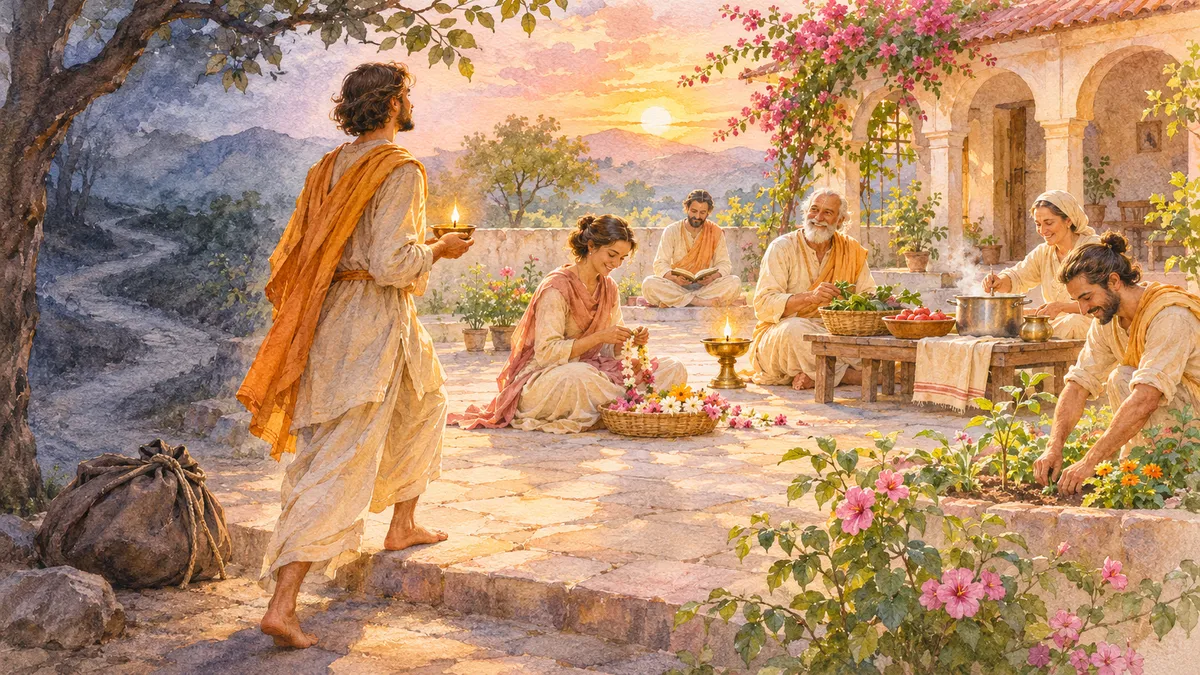
At this stage, the soul makes a decision: “May I now and in all lives serve God; may I be an instrument of the divine will, serving God, the Tree of Refuge, and the sadhus, since God manifests visibly in the world through them. In whatever way and wherever I may be, I will always be an instrument of the divine will; I will no longer be an instrument of the selfish will of my karma.” This is called making the great decision and entering into great non-action.
