

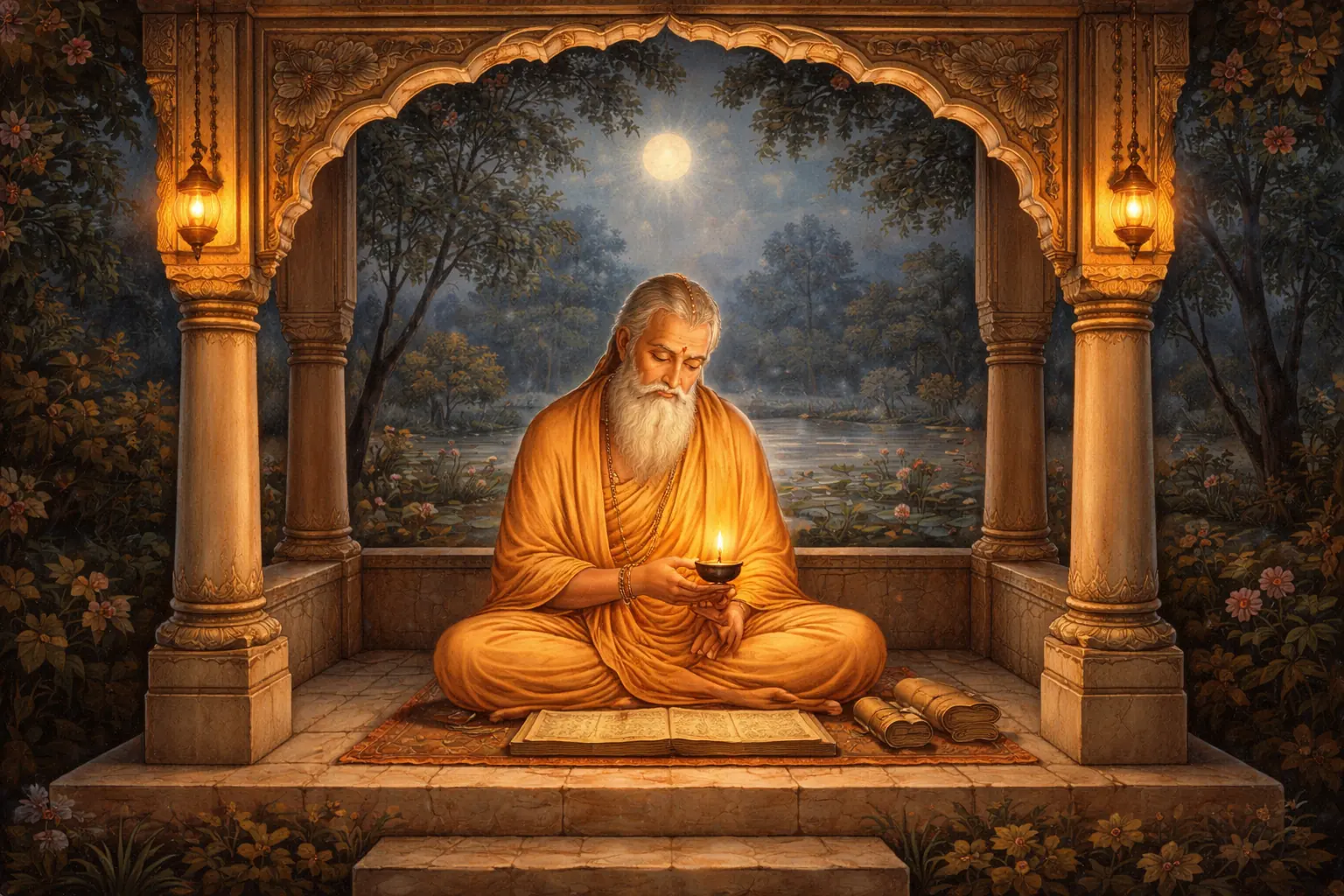
Commentary on the “Sanatsujata Parva”
The “Sanatsujata Parva” is a series of conversations between Dhritarashtra, Vidura, and Sanatsujata. Sanatsujata is an ancient mythical brahmarishi, an eternally youthful kumara, a boy-sage. He is one of the deities who patronized Vedic civilization at that time. The “Sanatsujata Parva” is one of the principal philosophical texts of the “Mahabharata.” It is precisely with this text that the “Mahabharata” begins.
Before the battle on the field of Kurukshetra, the blind king Dhritarashtra, king of the Kauravas, asks questions of the sage Vidura, his younger brother. In answering these questions, Vidura tells him about his experiences of meeting Sanatsujata, the boy-sage, the eternal youth. Burning with curiosity and a desire to clarify subtle questions of dharma, Dhritarashtra greatly wished to meet Sanatsujata himself and speak with him in person. In response to this desire, Sanatsujata appeared before him and conversed with him.
The Importance of Studying Ancient Texts
Why is the study of texts and mythology important to us? First, for us, this is not mythology but reality. Second, if we do not know where we came from and are cut off from the roots of our ancient civilization, we are unlikely to acquire profound insight into the present, let alone the future. In essence, for us, studying mythology means clarifying our own state and discovering who we are and where we came from. To understand who you are from the perspective of Laya Yoga, you must go back to the roots. It is not so much a matter of doing or creating something in the future as of turning back a little and looking at where you came from. The teaching says that everything is already perfect even before your birth. You only need to recognize the state you once had and then lost.
From the perspective of the Anuttara Tantra teachings, we already possess perfection. Possessing free will, we misused it and fell away from this perfection. In other words, the process of liberation is a return to the perfection we once possessed. Of course, in the course of this misuse, we accumulated a certain degree of wisdom and experience. Our consciousness became more mature, although we paid a rather harsh price for it—thousands of rebirths. Studying mythology is the very process of recognizing our own primordial state.
During the Kali Yuga, human civilization did not develop but, on the contrary, degraded. In other yugas, it was more elevated and advanced. Our development proceeds in such a paradoxical way that our future is a return to an exalted past. Our ancestors were gods, immortals, brahmarishis, and siddhas. They could easily transform time and space, live for millions of years, travel to different worlds in vimanas, communicate with gods, and attain the levels of gods. Unfortunately, unlike our ancient ancestors, we cannot boast of the same achievements. Our future lies in realizing what our ancestors achieved. By our ancestors, we mean the ancient Aryan-Vedic civilization, which is, in fact, a proto-civilization that unites all the world’s cultures.
Aryan-Vedic Civilization
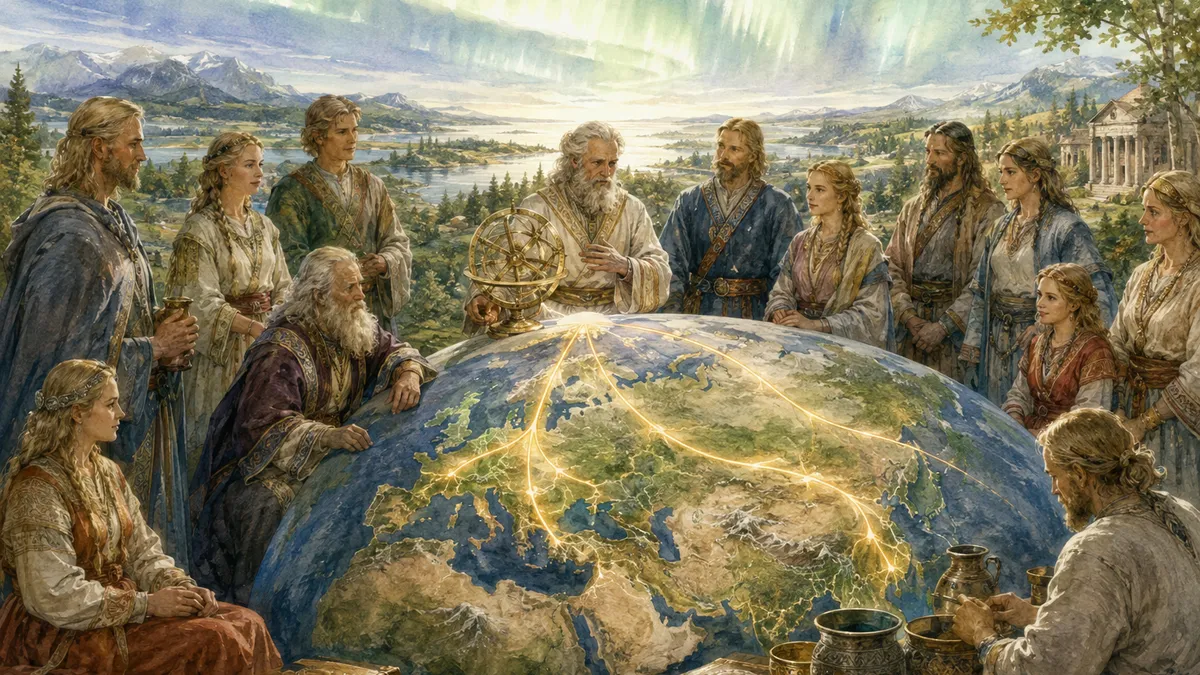
Aryan-Vedic civilization is not some ethnic group associated exclusively with India. Moreover, the descendants of the ancient Aryans reached India much later as a result of the well-known migration from the north, intermingling with the local Dravidian tribes. Before the descendants of the ancient Aryans moved south, they passed through Russia’s Volga region and Vologda, and through Ukraine in the area of Melitopol. Some of them settled across Europe, some settled in Iraq and Afghanistan, giving rise to new cultures, while others moved farther into India, where they intermingled with the local Dravidian tribes. Some of the centers of this civilization were located precisely in the territories of the modern-day Volga region, Vologda, and Melitopol, as well as in the northern regions around Murmansk. This was because the original settlement began in the northern region. There is a book on this subject by the Indian scholar Gangadhar Tilak, “The Arctic Home in the Vedas.” This research theory is now becoming generally accepted. Archaeological research and analysis of various texts indicate that the original Vedic civilization was located roughly beyond the Arctic Circle, in the northern regions of Russia. At that time there were no glaciers; instead, there was an entire flourishing continent with a unique and distinctive culture. Migration began only after global cooling.
The teaching we follow is called Sanatana Dharma, that is, the eternal dharma. This means that it has neither a founder nor a specific date of origin. Christianity, for example, has a specific date of origin. Buddhism and Islam have founders, and Judaism does too, I believe. But the Vedas—the teaching of the Vedic Aryan civilization—have no single specific founder, whether human or even divine, and no specific date of origin; their beginnings are lost in the depths of time. As you explore this teaching, you venture into such distant realms, such wildernesses, and see that it has no end. Millions of years, billions of years, kalpas. It is not the teaching of any one particular saint; it is an entire civilization, an entire world with which you gradually come into contact. It is a different tunnel of reality, a higher karmic vision.
Incidentally, many people in India do not call themselves Hindus; they call themselves Hindusamaya, that is, those who share the common samaya of the inhabitants of that region.
Dhritarashtra’s Conversation with Vidura
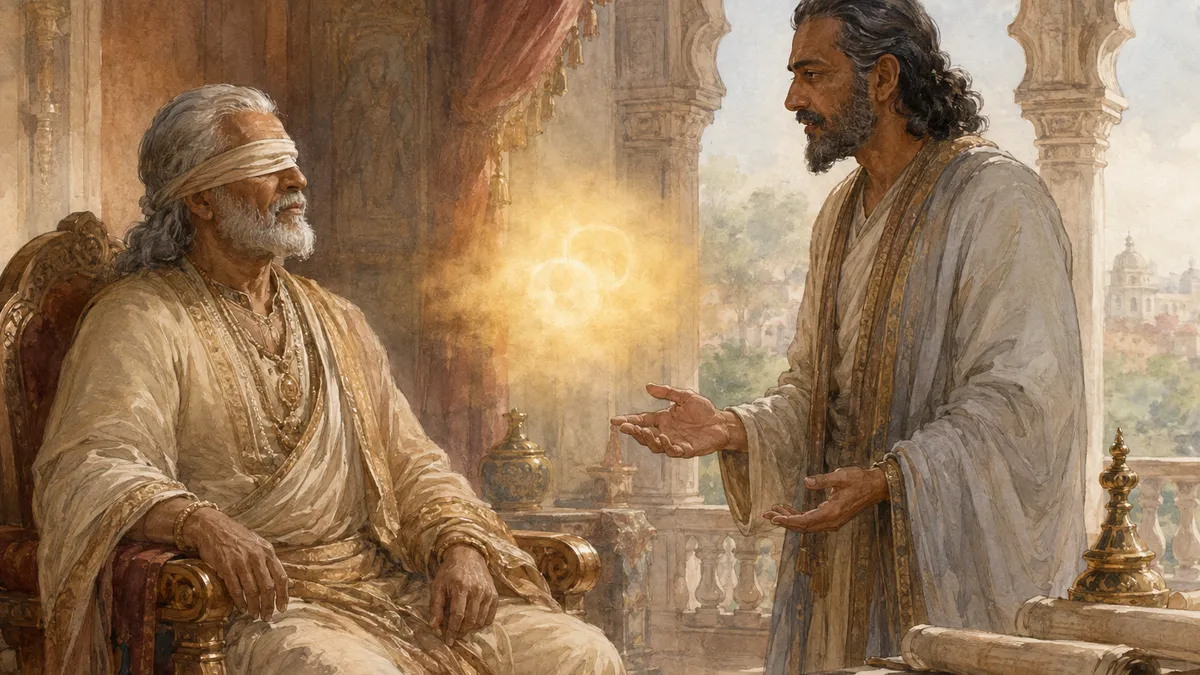
Thus, the Mahabharata begins with Dhritarashtra, the blind king of the Kauravas, asking questions of his younger brother Vidura before the war. He says:
— If there is anything about dharma that you have not told me, then tell me, for you are very knowledgeable in dharma.
Vidura says:
— The last time I spoke with Sanatsujata, he told me that there is no death.
Dhritarashtra asked:
— What else did he tell you? Perhaps you are hiding something? Perhaps he told you something even more secret?
Vidura replied that he could say no more because he was not of a high caste. He had been born of a mixed marriage and was often called the son of a seamstress, a steward. It used to be believed that a child automatically belonged to a low caste if born of a mixed marriage in which the man was of low caste. But if the man was from a higher caste and the woman from a lower one, the child remained in the father’s caste. Vidura was born to a Shudra mother and a Kshatriya father. He says:
— If I were a Brahmin, I could reveal this secret to you, because one who belongs to the Brahmin estate may speak of various mysteries without incurring sin. Others would condemn me for teaching you, a king, when I am the son of a Shudra.
Then Dhritarashtra said:
— Perhaps it would be better for me to meet Sanatsujata myself and speak with him? While in this body, I would very much like to meet this highly renowned rishi.
Then Sanatsujata learned by his spiritual power that they were thinking of him and appeared before Dhritarashtra. Vidura and Dhritarashtra received him with great reverence. Vidura said:
— Great doubts have arisen in the heart of King Dhritarashtra. I myself am unable to resolve them or instruct him. Could you instruct him so that he may be freed from fear, despondency, lust, and anger, and so that all worldly sensual temptations may no longer have power over him?
Sanatsujata’s Teaching on Death and Immortality
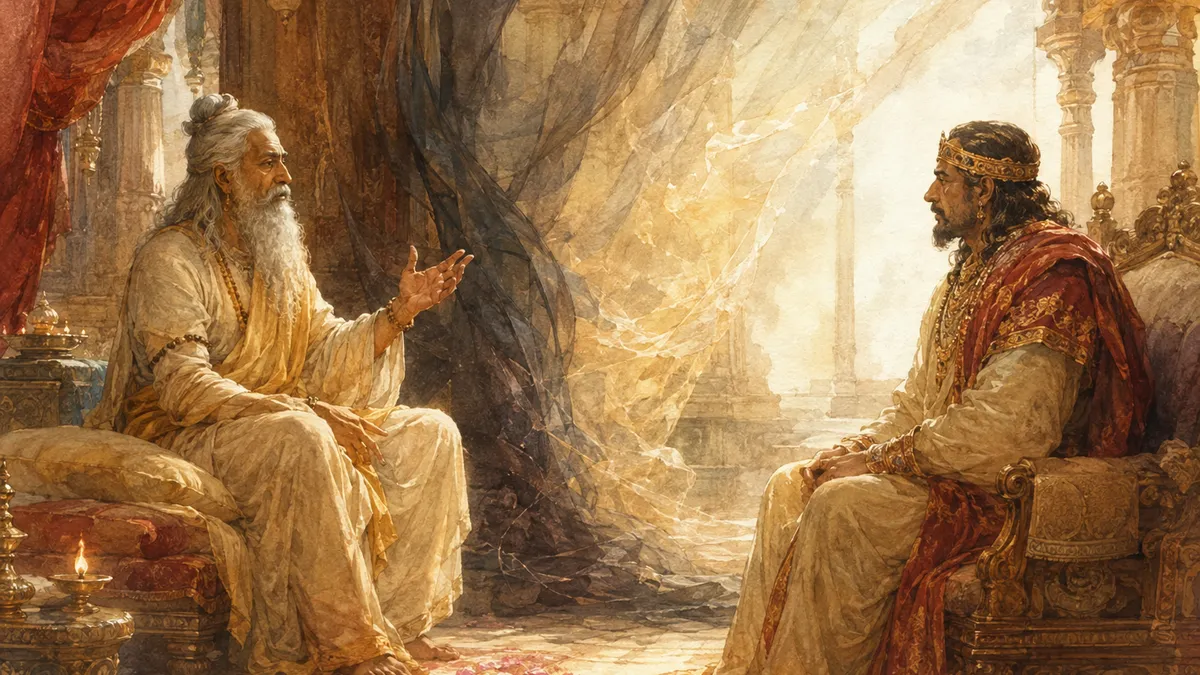
After paying homage to Sanatsujata, King Dhritarashtra began to question him. Dhritarashtra asked:
— I heard that you said there is no death. But I do not understand this! Even the asuras and the gods seek to attain immortality through brahmacharya. So which of these is true?
Sanatsujata replied:
You have asked in accordance with the rule and with reverence, so I shall dispel your doubts. Know that both are correct. Those Brahmins who abide in delusion teach that death exists. I, however, hold that death is deception, while truth and freedom from deception are immortality. The asuras perished through self-deception, but through truth, existence in Brahman is attained. Death is not a tiger that devours those who are born. It has no form as such. It is a person’s perception, a particular way of seeing. Some believe that the god Yama is distinct from death and that immersion in Brahman grants immortality. Others believe that this god is the king in the world of the ancestors and spirits; that he is favorably disposed toward those who accumulate merit and purify their minds, and treats those who accumulate evil deeds accordingly. It is believed that it is by his command that anger, delusion, and death manifest in people. Everyone strays from the path because of their egoism and therefore fails to attain union with the Atman. Under the power of death, those who are deluded travel along this road. And after dying, they return there again and again. In the same way, the gods of the sense organs follow them and stray from the path; therefore, death is called Marana.
It is believed that every person has deities of the internal organs—that is, deities of sight, taste, hearing, smell, and touch. This is indeed so: each of us possesses subtle, creative, superintelligent energies associated with the five senses. These energies are inner deities. A person is not actually what they think themselves to be. The body is merely a biocyborg. It is a stream of subtle energies and images unfolding from the past into the future and actualized through manas and buddhi. For example, if you enter the subconscious, you will realize how many subtle images you possess. You can unfold and freely control them if your mind does not limit you. And if you go even deeper, you will see that you are full of deities. Those who know how to enter deeply can manifest and invoke inner deities. In other words, you are overflowing with subtle energies, images, and deities, but they are sealed very deeply within you. Reaching them is not easy. You cannot reach subtle images or the subtle levels of deities simply because your surface mind is still very active, and the subtle cannot be discerned. Yet you are an entire colossal tunnel of reality, a psychic universe filled with an infinite volume of images, information, space, and deities. The body is merely the embodiment in the tattvas (elements) of a given state of samskaras. That is, certain samskaras have emerged and become embodied in the five elements, taking on the function and form of the body. Thus, from the standpoint of subtler vision, a person is not so much a body as a subtle astral and causal stream of information generating images of deities, pranas, and so forth. The body is merely one small part of it. This stream of information is infinite and eternal; it unfolds continuously from the past into the future, yet, in essence, the past and future exist within it simultaneously. It is this stream of information that animates the body, acts, and looks through the eyes. We usually identify very strongly with the body, but what matters most is the subtle stream of information of the subtle and causal bodies.
Sanatsujata says:
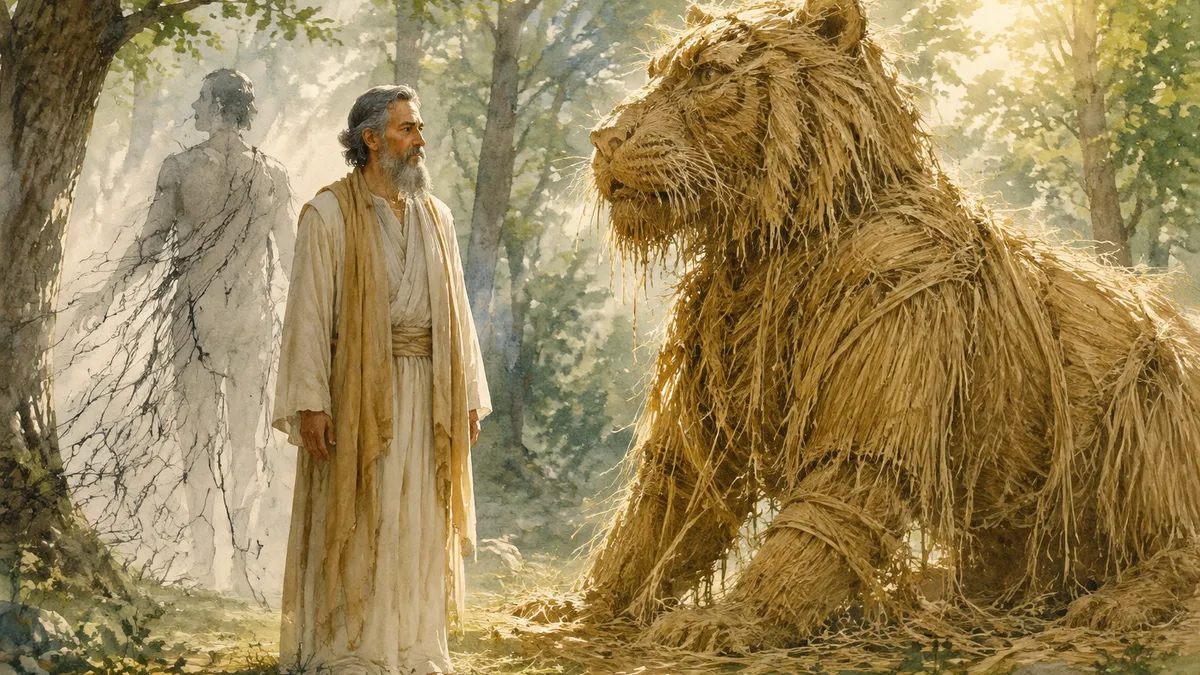
Carried away by actions and pursuing their fruits, they continue along this path and do not overcome death. Instead of striving for righteous aims, the embodied being revolves in the circle of pleasures. This is the great delusion of the senses; uniting with futile aims, they follow a futile road. Stricken by attachment to futile aims and dwelling upon them, the innermost higher Self worships the external world. The first thing that afflicts people is desire for what belongs to others. It soon brings anger and lust in its wake. These three fools lead to death, while the steadfast conquer death through steadfastness. With thought directed toward the goal and the seething senses subdued, one must disregard them and struggle against them. For those who have already transcended death, there is no death, because through their knowledge they have overcome the passions. A person who pursues desire and follows the passions perishes. But having conquered desire, a person each time blows the dust of passion from themselves. To living beings, hell seems like impenetrable darkness. Like madmen, they heedlessly rush toward the abyss. But to a person who has cast off madness, what can death do—a straw-stuffed effigy of a tiger?
Many texts often say, for example: “The visions in the bardo are not dangerous to you if you recognize their nature. They are no more dangerous than an effigy of a lion.” Here, too, it is said that death for such a saint is like a straw-stuffed effigy of a tiger.
Sanatsujata says:
Let one who has renounced possession and attachment think of nothing, having driven out the thirst for life. Anger, greed, and delusions of the higher Self—these are death; they reside in this body.
Thus, Sanatsujata says that death is a concept of duality; it exists for you as long as you are attached to the body. Your higher Self is indestructible, and if you identify with the body, then death exists for you as an interruption of life in its fullness. But the very concept of death exists only in your picture of the world. If you change your picture of the world, you become immortal.
The Structure of Consciousness: Manas, Buddhi, and Atman
A human being has manas (the surface mind). There is also buddhi (intuitive consciousness) and Atman (the higher Self). Buddhi can be likened to a concave mirror, a reflector. This mirror is usually directed toward manas and receives information from it. But if its angle is changed and it is turned slightly upward, it begins to receive information, light, and inspiration from Atman. People are usually not even aware of subtle intuitive consciousness (buddhi). Since they do not even distinguish it, they identify very strongly with the surface mind (manas). Manas, possessing neither spiritual power nor clarity, easily becomes confused under the influence of the sense organs. Like five thieves, the sense organs mislead it by becoming attached to objects. In this case, the sense organs are like five dogs that have broken loose from their leashes. And manas, not being subdued, obeys these five dogs; since it has no spiritual power of its own, it follows their lead. But the true ruler of manas, that which actually animates and illuminates manas, is buddhi. At the same time, buddhi itself draws the power of light not from itself, but from Atman. But if this mirror of intuitive consciousness is turned strongly toward manas, then buddhi is not even aware of itself, or if it is, only to a very slight degree; although manas dominates, it resembles a king who is completely dependent on his servants and subjects. When we begin to turn this mirror of buddhi and notice the light of Atman, everything begins to change: manas, governed by the five sense organs, loses its power, and self-awareness gradually frees itself from manas, becoming saturated with the light of Atman. When it becomes completely separate from manas and pure, it can perceive Atman in its pure form. Then it is said that the soul communes with God. But if this mirror is not turned toward Atman, does not see it, and is instead turned toward manas, then the soul communes not with God, but with its own thoughts and the external world.
Sanatsujata says:
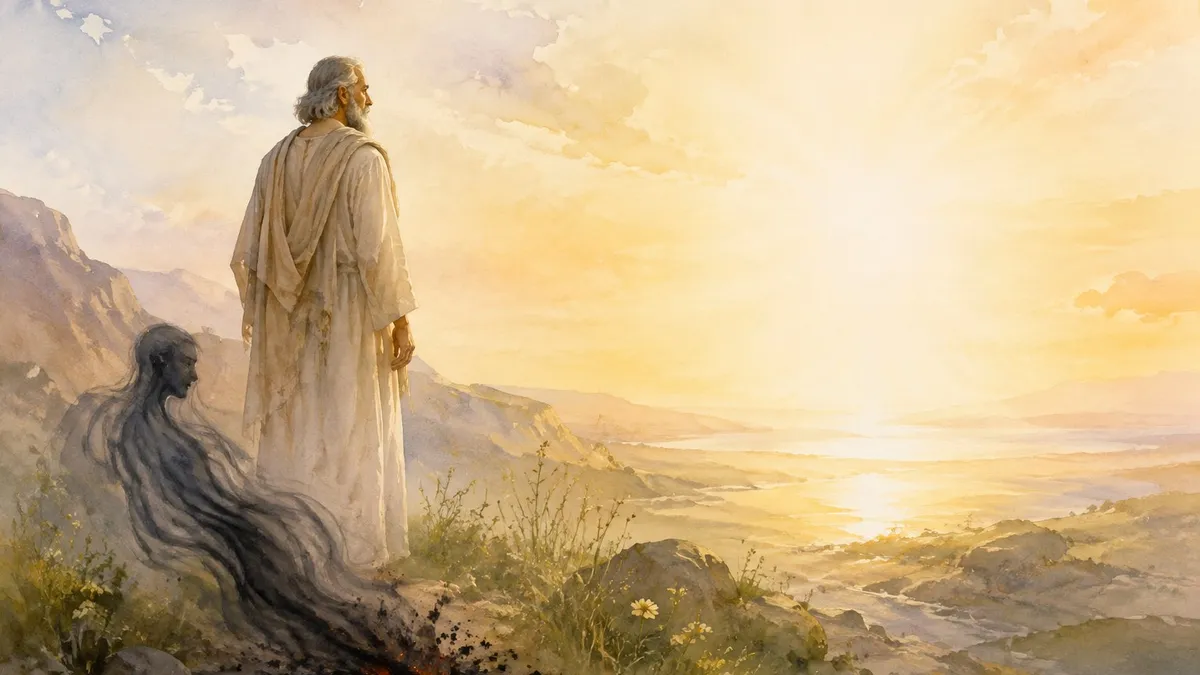
The sage who knows how death arises does not fear death. And in this realm of Atman, death disappears just as a mortal disappears upon entering the realm of death.
On the Higher Worlds and the True Goal
But Dhritarashtra does not understand this, and so he asks:
— But it is said that Brahmins, by performing sacrifices, can attain blessed worlds that are pure and eternal. And the Vedas call these worlds the highest goal. What should one who knows this do?
Sanatsujata says:
Only the ignorant strive to reach them, and for them what is said in the Vedas retains its significance. One who is free from desire aspires higher. Having rejected all other paths, he follows the path of the supreme Atman.
Sanatsujata says that there is no need to strive intensely for the worlds of the samsaric gods. The supreme sage does not even aspire to the pure lands. That is, he may enter the pure lands due to the state of his pranas, but not because of the state of his mind, for with his mind the supreme sage always aspires to Atman.
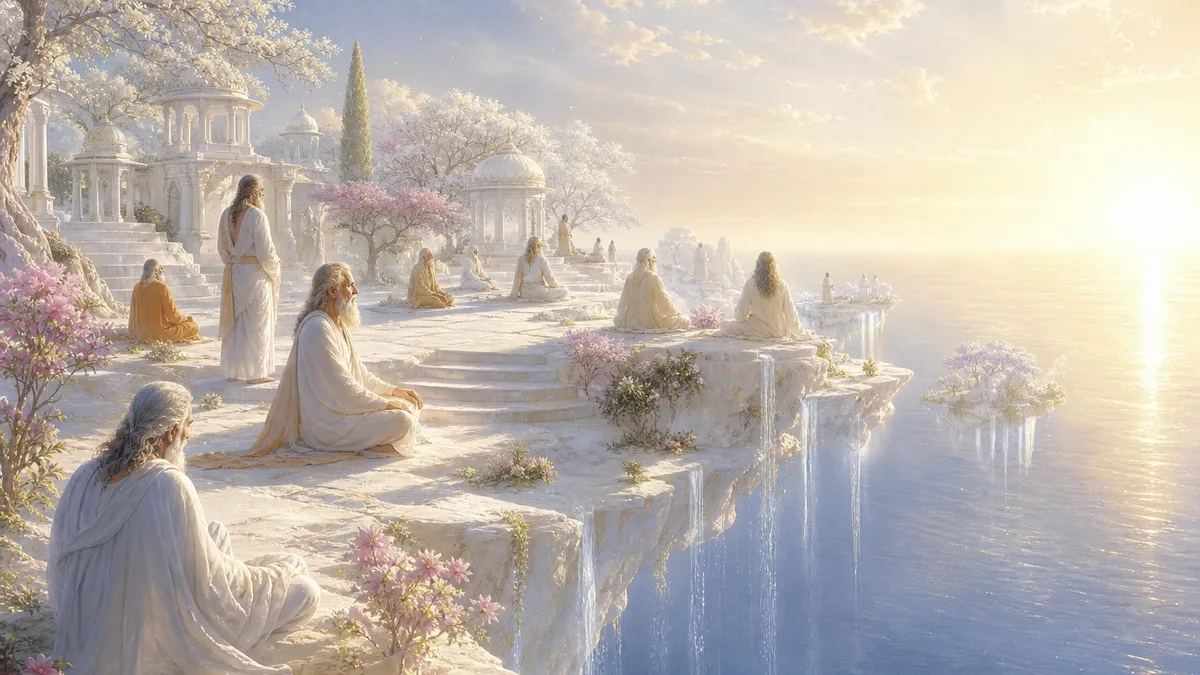
One of the pure lands we may enter is called Shvetadvipa. Since we practice the sadhana of Dattatreya, and Dattatreya is an incarnation of Vishnu and Narayana as the source of the universe, we have a connection with this pure land. Shvetadvipa, the White Island, or the Island of holy sages who are constantly immersed in contemplation of the Supreme Source in the form of light, is one of the pure lands that is truly very close to the teachings of Laya Yoga. One could say that Shvetadvipa is one of the subtle projections of “Divya Loka” in higher dimensions. The holy sages on the White Island, Shvetadvipa, dwell in subtle dimensions in bodies that contain no gross elements and require no food. These sages are constantly immersed in profound presence. They meditate ceaselessly on light and on the Supreme Source, Narayana, in the form of that light and nondual presence. They are so deeply immersed in this samadhi that they do not even seek to notice anything else. They have not yet attained complete unity with Brahman, because they still have bodies and residual karmas of energy that have not been dissolved. Nevertheless, their minds are very deeply immersed in natural presence.
The Illusion of Rapid Liberation
Many people think that if they have experienced a little light in meditation, they will attain liberation and merge with Brahman forever—this is a great illusion. Dissolving all the tattvas and merging with Brahman in a single lifetime may be possible only for Shukadeva. But usually, that is not how it happens.
Even holy sages such as the siddhas are transported bodily to heavenly abodes and pure lands, where they continue to abide in contemplative presence. What more can be said if Eka, Dvita, and Trita, three holy sages, rishis, reached Shvetadvipa and were able to contemplate Narayana only for a short time? Despite having practiced tapas for hundreds of years, they were told: “You are not yet holy enough to be worthy of seeing Narayana. You must continue practicing tapas in order to reach Shvetadvipa once again.” The gods who were there showed them no great reverence; they were so deeply immersed in samadhi that they did not even notice them.
Those who live on Shvetadvipa are continuously immersed in nonduality and, after some time, attain complete union with Brahman. In other words, the dissolution of the residual tattvas is an entirely different domain. A person spends a long time in the worlds of the gods if they have attained a sufficient level. But this does not mean that they aspire to reach these worlds; they arrive there naturally, by virtue of their karmas and the predispositions of the subtle mind and prana. In their own mind, they form no dualistic preferences such as, “I want to reach such-and-such a land.” Their mind naturally abides in nonduality.
The Path of the Supreme Atman
Thus, Sanatsujata says:
Free from desires, one aspires higher along the path of the supreme Atman.
Then Dhritarashtra asks: “Who is capable of uniting with the unborn, the eternal, with the one who is this universe? What should their actions be? In what does their happiness lie? Tell me this, O knower of truth.”
Sanatsujata said:
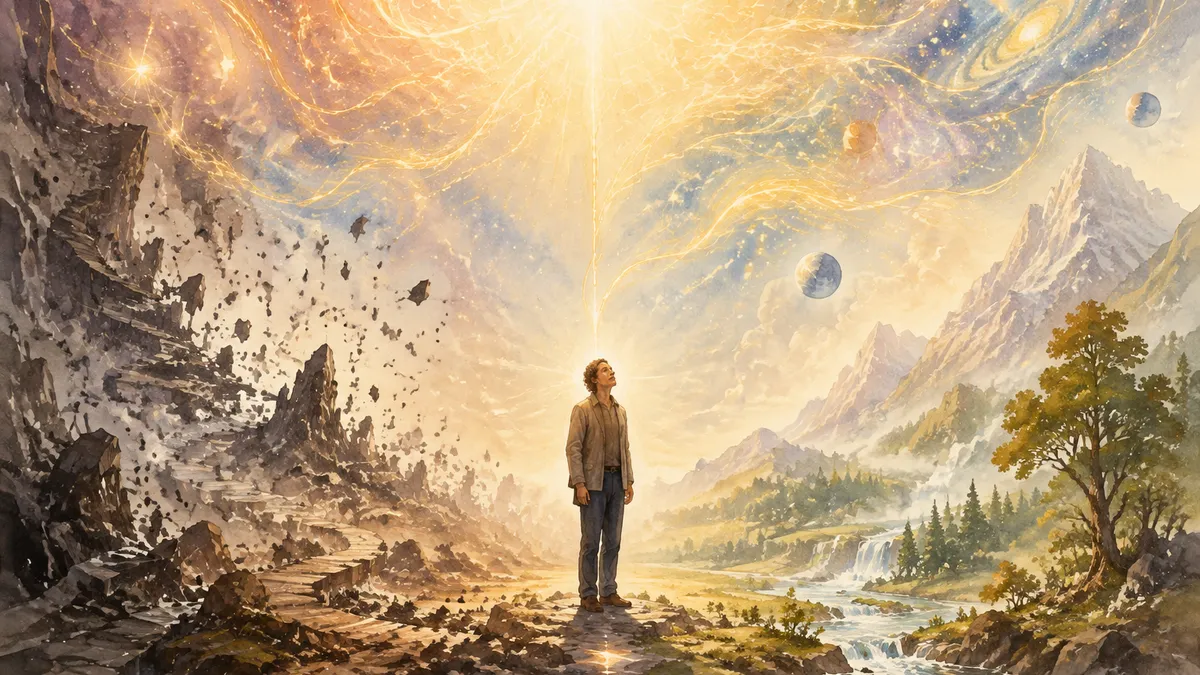
Union with multiplicity gives rise to great sorrow, but one who is united with the beginningless becomes eternal. Through this, one loses none of one’s dignity. By uniting with the beginningless, all people attain eternal life. That existent and eternal One, through the power of his connection with mutability and with energy, created the universe. This mutability is his shakti, his creative power. In the same way, the Vedas arose from conjunction with particular aims.
Dharma and Sin for a Jnani
Then Dhritarashtra asked: “Some, as I see, follow dharma, while others live without law. Can sin truly trample upon dharma? Or does dharma cast down sin in the case of these people?”
Sanatsujata replied:
An action and its opposite yield different fruits. One who abides in That, in Brahman, and knows oneself, forever does away with both attainments. A mortal, however, receives the fruits of both pure deeds and sins. Because one is bound by karma, one who is embodied will, of course, receive recompense for all good and evil as the fruit of one’s deeds. But a jnani, one who has known oneself, drives away one’s sins through dharma, thinking: “Dharma is stronger.” Such is one’s attainment.
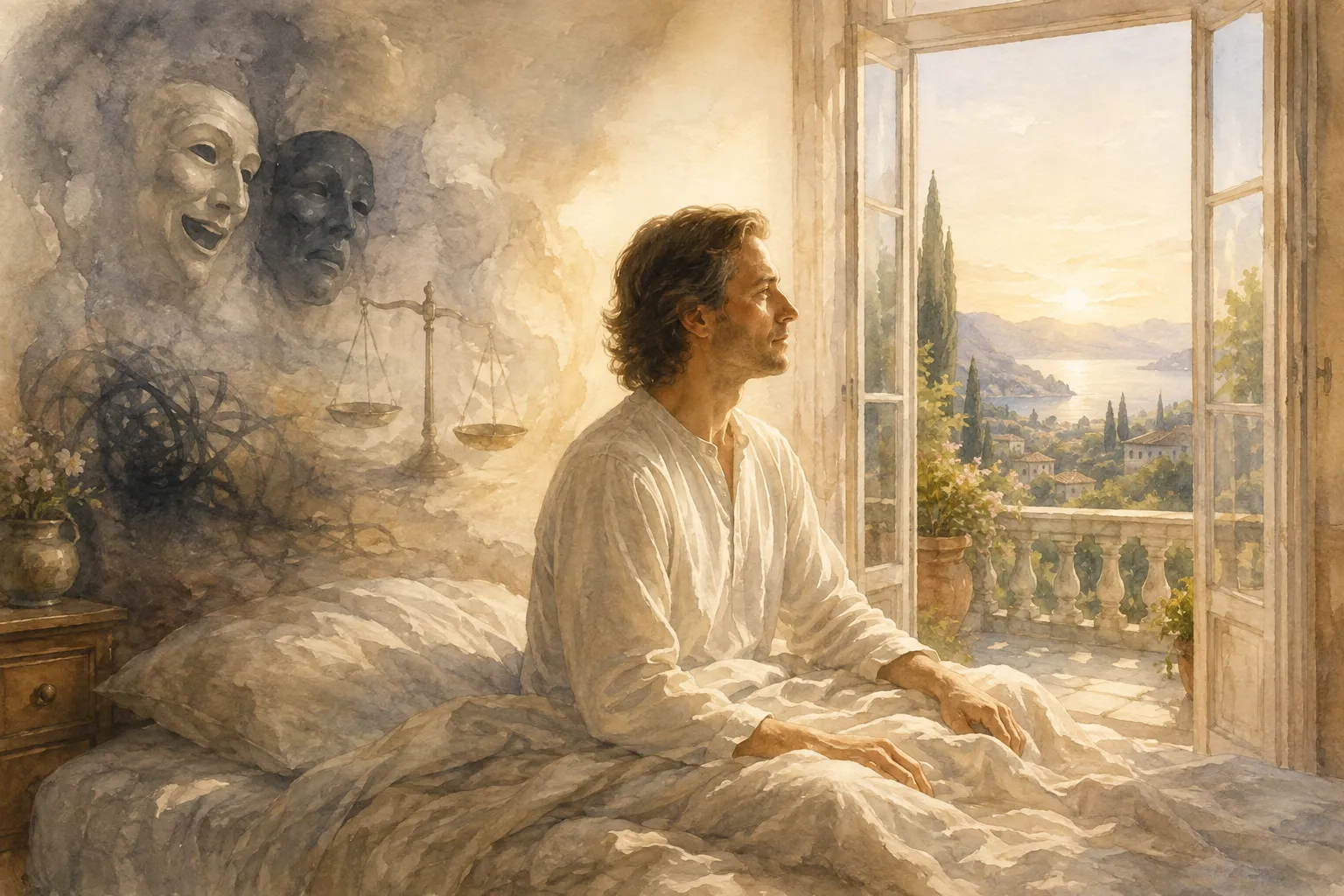
Sin is the obscuration of consciousness. But for a jnani, there is no obscuration of consciousness, whatever one may do, because one abides in the unconditioned state, where even that which is conventionally regarded as sin is seen simply as an illusion, and it does not obscure consciousness.
The division into sins and merits, evil and morality, stems from dualistic notions. These are certain illusions, akin to values in a dream; while you are in the dream, they have some meaning, but when you awaken, the values of the dream have no meaning whatsoever and cannot affect you.
In the same way, one who has realized jnana becomes free from one’s karmas and accumulated sins through the power of one’s jnana, thinking: “Dharma is stronger.” “Dharma is stronger” means that one’s awareness will not be obscured by any sins or past karmas. Such unobscured consciousness is attained through being in love with presence, through deep immersion in presence until presence purifies everything and becomes unshakable.
