

Commentary on the text “Tripura Rahasya”
Now we will talk about the most important topic in the teaching.
You may have various transmissions, techniques, sankalpas, and so on. However, when we practice sankalpa, we must understand what it means in order to use it correctly.
The Human and Divine Parts of the Spiritual Path
The goal of spiritual practice is transmutation, the transformation of oneself into an awakened deity. In spiritual life there is a human part and a divine part. We begin, of course, with the human part. Approximately half or two-thirds of life is spent on passing through the path of a human being: purifying the kleshas, developing patience and will, attaining meditativeness, coming into contact with the intuitive mind (buddhi), revealing it, becoming established in it, changing one’s own vision into pure vision, displacing impure impressions through pure vision, replacing impure pranas (klesha-pranas) with the pranas of wisdom, cutting off fixation on conceptual thinking and attachment to the ego—all of this is the human part.
When we pass through this human part, the divine part begins. This is already the stage not of a disciple, but of a master and then further—a siddha, a mahasiddha, a deity in a rainbow body, a great deity capable of manifesting emanations, and a creator of universes.
The divine part of the spiritual path is very different from the human part. The divine part is play in non-doing. It is abiding with mind and energy in pure vision, in the pure dimension. And when you follow a spiritual teacher and the saints, you simply gradually move from the human part into the divine part, into the space of pure vision. In essence, this is what is called transmutation, liberation.
Those whose will and intuition are sufficiently developed will be fortunate enough to pass from the human stage into the divine one in this very life. Some will manage to do this at the moment of the bardo. Others will continue their spiritual path in the next life. What does this depend on? It depends on our sankalpa (the power of intention) and on what stands behind it. In other words, if our consciousness is deep and one-pointed, then we will turn into that which we want to become.
To begin with, one should understand several things that the saints speak about.
The Nature of the Universe as a Manifestation of Consciousness
In the “Tripura Rahasya,” Dattatreya says:
“The universe is nothing other than phantom consciousness.”
This universe in all its fullness and detail is merely a picture on the screen of the Supreme Being. The universe is not as real as it seems; it is like a magician’s trick, it is like a mirage. It is no different from a dream, except that this dream is more stable and tangible. The main factors of this universe are the categories of time and space. Space pertains to the geographical position of objects; time pertains to the sequence of events. However, time and space are derivatives of consciousness.
Dattatreya says:
“The entire universe is only an image in our consciousness.”
This should be understood. The manifestation of the reality of the universe depends on the strength of will that is invested in this reality. The world becomes what we become accustomed to seeing it as in our thoughts and ideas. This statement is supported by the materialization demonstrated by siddhas, by the ability of yogis to embody intention. The world becomes what we try to see it as. We ourselves become what we try to see ourselves as.
The Upanishads say: “What you think about, that you become.” If you think of yourself as a deity, as Brahman, if you do this one-pointedly, strongly investing all your shakti, then be sure that you will begin to feel yourself to be such, and then you will become such. How long this can continue will depend on your one-pointedness, strength of will, and freedom from distraction.
Creation by the Power of Consciousness
External objects are merely frozen mental images. Beings in the upper world of form or in the bardo, spirits in the intermediate state, spirits of the subtle worlds create objects by the power of their consciousness. For them this is service, work, entertainment. Sometimes they gather together and, by concentrating, create some object from astral matter. In the subtle world, matter is plastic, and therefore there one can literally see that the world around depends on the manifestation of consciousness.
In the world of humans, gross tattvas (elements) dominate; they are quite inert and only with difficulty yield to the force of influence, and therefore here it is difficult to understand that the world is a derivative of consciousness. Only a person possessing enormous sankalpa can change the elements in the world of humans.
A person in this world experiences fear, frightened by samsaric images. This is similar to how a person is frightened by images in terrible dreams. However, upon waking up and realizing that they were only nightmares, he laughs at them and is no longer afraid of them. In the same way, one who has awakened sees life, death, and all other phenomena of this world as illusory images, and therefore is no longer frightened by them either. He simply laughs happily at his own sorrow and at the sorrow of others, knowing that from the very beginning it is not real.
Dattatreya says:
“Take my word for it that this world is simply like the world of a dream. This entire visible universe in the waking state seems so real only because of the habit of seeing it as real. If it is imagined as empty, it will dissolve, turning into emptiness.”
The Process of Embodying Sankalpa
How do manifestations of consciousness occur? At first, a person begins to imagine something; then he reflects on it, repeatedly and for a long time turning to what he imagines. As a result, it becomes fixed in his consciousness and becomes true for him, unless, of course, he encounters something contradictory.
For example, you practice the meditation of divine pride. At first, you simply repeat “Aham Brahmasmi” and generate the corresponding bhava. Then you contemplate this for some time and attune yourself, and then repeatedly and constantly return to this bhava. Gradually, this bhava begins to give you intuitive insight and an understanding of what divine pride and “Aham Brahmasmi” mean.
If you repeatedly hold your consciousness on this experience, then gradually this majestic and exalted feeling begins to manifest within you. This bhava begins to grow in you, unless you stop this practice or encounter any contradictions, something opposite. And it will grow until it floods your consciousness, until it completely displaces everything else from your mind: everything petty, human, egoistic, impure, karmic, created by past lives.
Then you will feel: “In truth, I am a deity! How mistaken I was, imagining myself to be a human being. In truth, I am boundless Brahman. I am completely free.” You will feel this just as clearly as you now feel yourself to be a human being limited by karma. This is the process of the manifestation of sankalpa. If you interrupt the practice, or if something opposite intervenes, causing consciousness to be thrown off course, then, of course, your sankalpa will not be embodied.
Dattatreya says:
“The will conceives effectively or ineffectively according to how homogeneous it is or how much it is interrupted by indecision.”
Willpower and Its Application
If you constantly create an image of yourself in the form of divine pride, your will begins to be embodied. If you constantly direct your mind toward a sankalpa, for example, “May I become a saint!”, constantly holding your mind on this in a one-pointed way, then you will surely begin to become a saint. If you constantly direct your mind toward the sankalpa: “May I attain the siddhis of strong health and longevity,” directing your mind toward this, imagining your body as possessing super-health, then your mind will restructure your body. If you constantly meditate on the sankalpa: “May I become an immortal mahasiddha!”, then your mind will embody this sankalpa as well. Everything depends on the strength with which you apply your will.
If you constantly meditate: “May I attain pure vision, may I continuously abide in pure vision,” then in time you will find yourself in the heavens even while walking on the earth, because these heavens will manifest here; you will abide in continuous pure vision. In other words, there is nothing that cannot be achieved by the power of will (iccha-shakti) using sankalpa.
Mahasankalpa and Divine Pride
When we speak about the use of sankalpa, we say that mahasankalpa is very important for us. Mahasankalpa is the natural state; mahasankalpa is divine pride (bhava), that is, they are one and the same. Of course, one can direct one’s will toward some minor things, for example: “May I attain kumbhaka lasting 10 minutes,” concentrating on this continuously, but this is merely a secondary sankalpa. Mahasankalpa, however, is always a connection with the Absolute: “May I become the Absolute! Aham Brahmasmi.” The natural state, the meditation of divine pride—all of this is mahasankalpa. However, this does not mean that in the relative we cannot use smaller sankalpas.
Thus, Dattatreya says:
“Do you not know that this world is the result of Brahma’s desire? It appears real and permanent because its primordial desire is so powerful.”

Of course, this world is not the result of our creation. Far more powerful, subtle, intelligent, and supremely organized forces worked here before us. We came into this world with everything already prepared; we do not even think about how it was created. This world is the creation of supremely powerful beings who govern the creation of the universe.
The Energies of the Absolute
There is primordial consciousness, which possesses the capacity for emanations, for radiating energy; it is called spanda. These energies are threefold: the energies of knowledge (jnana-shakti), the energy of will (iccha-shakti), and the energy of action (kriya-shakti). In turn, the energy of action is fivefold: the energy of creation, the energy of preservation or maintenance, the energy of destruction, the energy of concealment, and the energy of enlightenment.
For us, the energy of enlightenment is especially important; it is also called Anugraha-shakti. It is also called the energy of self-revelation, of divine self-manifestation. We orient ourselves precisely toward this type of energy, since we are trying to move toward enlightenment.
What is willpower? It is another variety of the energy of the Absolute, called iccha-shakti. Your own willpower, which you develop, is the energy of the Absolute that begins to descend at the moment you develop it.
Conditions for the Effectiveness of Sankalpa
Dattatreya says:
“The world generated by you is taken seriously by no one, and your own distrust makes it futile.”
Our inner world, when we generate it, is not taken seriously because this world is unstable, it is very small, it is inferior to the external world or to the worlds of gods and other higher beings. It is also illusory in the sense that it does not arise from the natural state, but from our peripheral thoughts. Therefore, the task of the practitioner is not to generate some little illusory world of one’s own, but to make oneself empty, to open within oneself intuitive consciousness and boundless presence. And when he has already become a deity abiding in boundless presence, then he has the siddhis of creation, and then he can manifest his emanations and energies in accordance with his sankalpas.
Further, Dattatreya says:
“Thoughts materialize for various reasons. In the case of natural activity, as with Brahma; through possession of living precious stones, as with yakshas, rakshasas, gnomes, demons; with the help of herbs, as with the gods; through the practice of yoga, as with yogis; by spells, as with tantric siddhas, magicians, and sorcerers; by the power of tapas, as with certain sages; and on the basis of a blessing, as with Vishvakarma and others, that is, as a gift from someone.”
In order to make one’s own thoughts effective and manifested, one must forget all old associations. A new concept is strong as long as it is not hindered by some preceding concept that destroys it. For example, you decided to practice pure vision, created a certain attitude, a sankalpa, but your internal data constantly come out and destroy it, so you think: “Should I practice pure vision, or should I judge in the old way?” Thus, you do not manage to establish pure vision. But if your intention to practice pure vision is strong, it displaces the old concepts, and as a result you change.
When a person practices, it can be clearly seen how much his consciousness deepens and changes. Five years pass, and we can see how deep, pure, and wise this person’s consciousness is. He becomes an impeccable monk who truly takes the saints as his ideal, truly knows the Dharma deeply, thereby becoming an ideal for newcomers and novices. By practicing diligently, such a person has completely changed himself; having stopped playing all the games of samsara, he truly became different in just five to seven years. He managed to displace his samsaric consciousness and generate the consciousness of the Dharma. This happens thanks to willpower.
If, however, such a transformation does not occur, if a person does not manage to displace his samsaric consciousness, this means that his willpower (iccha-shakti) has come into conflict with his own karmas, and therefore he is still struggling. And in such a struggle, sometimes he wins, and sometimes his own karmas do. In that case, he can be advised to deepen his willpower and to pursue his goal with greater determination.
Further, Dattatreya says:
“The concept of an ordinary person is not realized when concepts that destroy it arise. Sankalpa acts only when it is strong and full of will. In this way, even great things become attainable.”

Trials as a Test of Willpower
Why is it prescribed in the tantras to test disciples? Because such trials are a kind of test that helps determine whether he has will or not, whether he is capable of holding the sankalpa for transformation for a long time. Why do our novices undergo a two-year trial? So that, first and foremost, they themselves may understand whether they have the necessary will to go further or not.
If they do not have will, then such a disciple will constantly fall into a state of confusion and embarrassment. For example, if snow falls knee-deep, or someone says something not very joyful to him, his mind will immediately turn in another direction; that is, he will quickly change his mind. But if a person, on the contrary, has boundless will to move toward liberation, he will advance in that direction one-pointedly, paying no attention to all possible obstacles.
Overcoming the Laws of the Universe
Further, Dattatreya says:
“As for the diversity that manifests in the universe, all of it is the mental images of those energies that create the universe, of the Creator Brahma. When the creative willpower of the Creator of the universe runs out, dissolution comes and there is a complete absence of the diversity of energies that we see in this world. As for a person’s willpower, it is suppressed by the creative energies of the universe, by the laws of creation. But when this obstacle is overcome by the methods of yoga, the willpower of the yogin also becomes effective.”
In other words, when we move toward liberation, we overcome the inviolable order of this world; we become free from the laws of the universe.
According to the law of the universe, we must die and be reborn—such is the will of the creative forces; but this will is not absolute, it manifests only for a certain class of beings inhabiting this world. For the world of humans, this will acts in this way, but for the world of gods, the will acts differently. It says that the gods have no need to be reborn often; they can live ten thousand or even one hundred thousand years, and be reborn through the power of the transference of consciousness. This means that we can step out of the inexorable laws of the universe if we develop our will and change our qualities into divine ones.
The Manifestation of Sankalpa in Space
Further, Dattatreya says:
“Time, space, and gross creation manifest according to the images of the person conceiving them.”
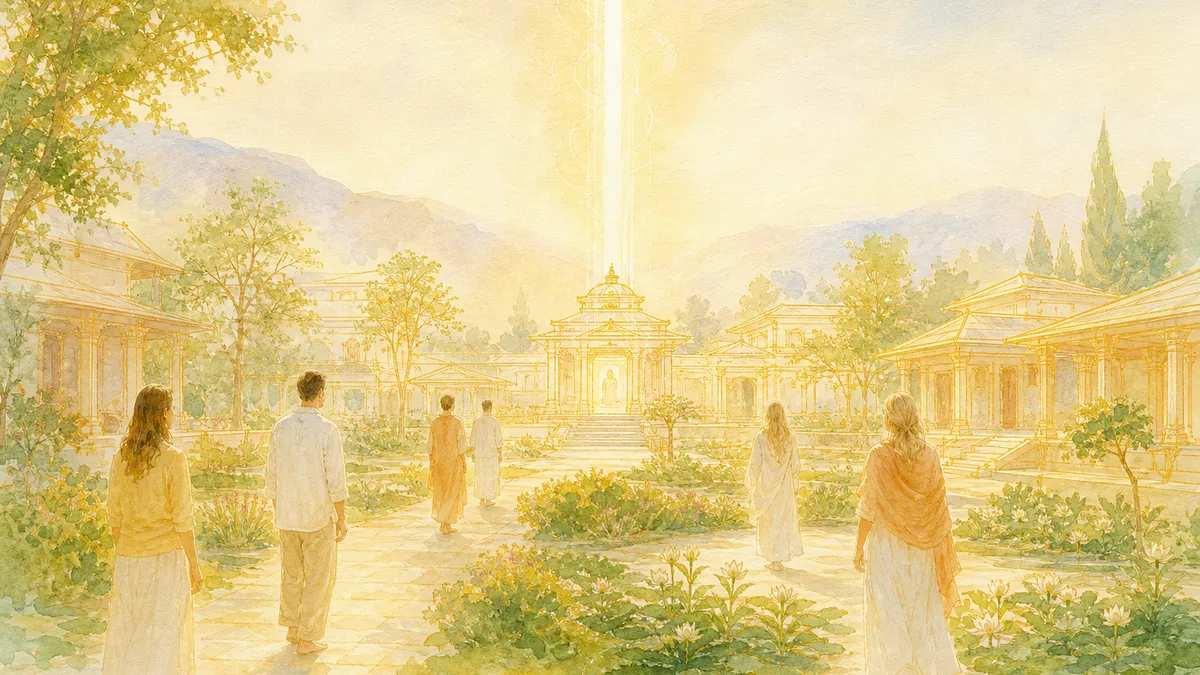
What is the Divya Loka yoga monastery? It is the sankalpa of the Guru and of those who participate in its manifestation. It is the sankalpa of pure vision. The present Divya Loka is only 10% of the Guru’s sankalpa. It will continue to develop and be nurtured progressively and methodically. This means that the space around us will constantly change. And it will change until it reaches a very high point of development. This means that the world in which you live is only the very beginning of pure vision. This sankalpa is embodied thanks to the intention of the Guru and all his disciples, if they too have the corresponding intention.
The Triple Energy of Creation
Thus, originally, energy has three creative aspects. What are they? The energy of knowledge (jnana-shakti), the energy of will (iccha-shakti), and the energy of action (kriya-shakti). In general, this energy is also called chit-shakti. Mahasiddha Gorakshanath says: “The Supreme Light of Reality is the primordial vibration Om, where the triple power abides, consisting of the power of action, the power of will, and the power of wisdom, called Brahmi, Raudri, and Vaishnavi.”
Brahmi, Raudri, and Vaishnavi are the feminine aspects of Brahma, Shiva, and Vishnu, respectively. The feminine aspects signify energy, the masculine aspects signify consciousness; everything in the world consists of these two components. In human bodies, these aspects manifest in such a way that in the bodies of men the white drop, that is, consciousness, predominates, while in the bodies of women the red drop, that is, energy, predominates. This means that their way of seeing the world and their psychology differ. However, both of these drops (the red and the white) are present in the body of every yogin.
What is willpower? The power of creative will, iccha-shakti, is a special subtle universal energy that is projected onto the left channel in the microcosm of the yogin’s body. The ability to control willpower is the ability to govern intention, giving it the necessary form. The ability to govern volitional intention is the key to all attainments in yoga, to transforming impure karmic vision into pure vision, to transmutation from a being limited by karma and the elements into a divine siddha.
Iccha-shakti as a Manifestation of Siddhi
The section on iccha-shakti is a section on siddhi. In other words, it is already a manifestation, an emanation. Manipulation of volitional intention allows the yogin, through the power of reason, to change himself and the karmic space around him, to govern events, achieving what is desired and carrying out what has been conceived. Directing his intention in the necessary direction, the yogin transforms himself and the surrounding world into what he wishes, and in the way he wishes it. Persistently wishing to attain liberation from the cycle of samsara and merge with the Absolute, the yogin achieves his goal by sending intention in this direction.
However, when we speak of sending intention, one must understand a very important fact. Your will and your intention must arise from the natural state. In other words, you must desire without desiring, intend without intending. True willpower arises only from the state of non-action. If your will arises from the mind, from the ego, then it becomes the great horns of a rabbit. It becomes yet another form of subtle attachment, that is, the very same samsara.
There is a great difference between a yogin who abides in presence and knows how to direct his will impeccably, without desiring the fruits, without becoming attached, and a yogin who, not being in presence, passionately dreams of attaining something and suffers because he cannot attain it. This is ordinary deluded consciousness.
A yogin who is not in presence but at the same time tries to direct his will falls into the snares of his very own will and becomes its hostage. His hope and fear intensify, and he loses the natural state, since he cannot abide in it. But a yogin who directs his will from presence, abiding in intuitive consciousness, achieves real results, because his will draws immense shakti from the natural state.
Many spiritual seekers understand what it means to have will. They begin to dream day and night of enlightenment, God, and siddhis. And their dreams are so strong that they cannot rid themselves of them. But the more they dream in this way, the further they move away from their natural nature. In the end, they move so far away from the natural state that liberation is not even a question. This way of directing one’s will is erroneous. It is a typical mistake into which ninety percent of spiritual seekers fall.
Wiser spiritual seekers, who have understood the principle of the natural state (sahajya), abide in that state in which hope, fear, and the desire for attainment have already been cut off, in which they strive for nothing except the natural state itself. This is already absolute, intuitive consciousness. And when they direct the will from it, their intentions begin to be embodied, and they attain everything desired.
The first kind of will comes from the ego. Such will is illusory, although it can help one achieve certain worldly goals. The second kind of will comes from unity with the Absolute. This is no longer egoistic energy; it is the divine will itself (iccha-shakti). At this stage, our intention becomes one with the intention of the Absolute. This is the will of a siddha, the will of a saint.
“Persistently wishing to attain liberation from the cycle of samsara and merge with the Absolute, the yogin achieves his goal by sending intention in this direction. Wishing to become a siddha and gain complete freedom, the yogin achieves his goal by skillfully directing his will.”
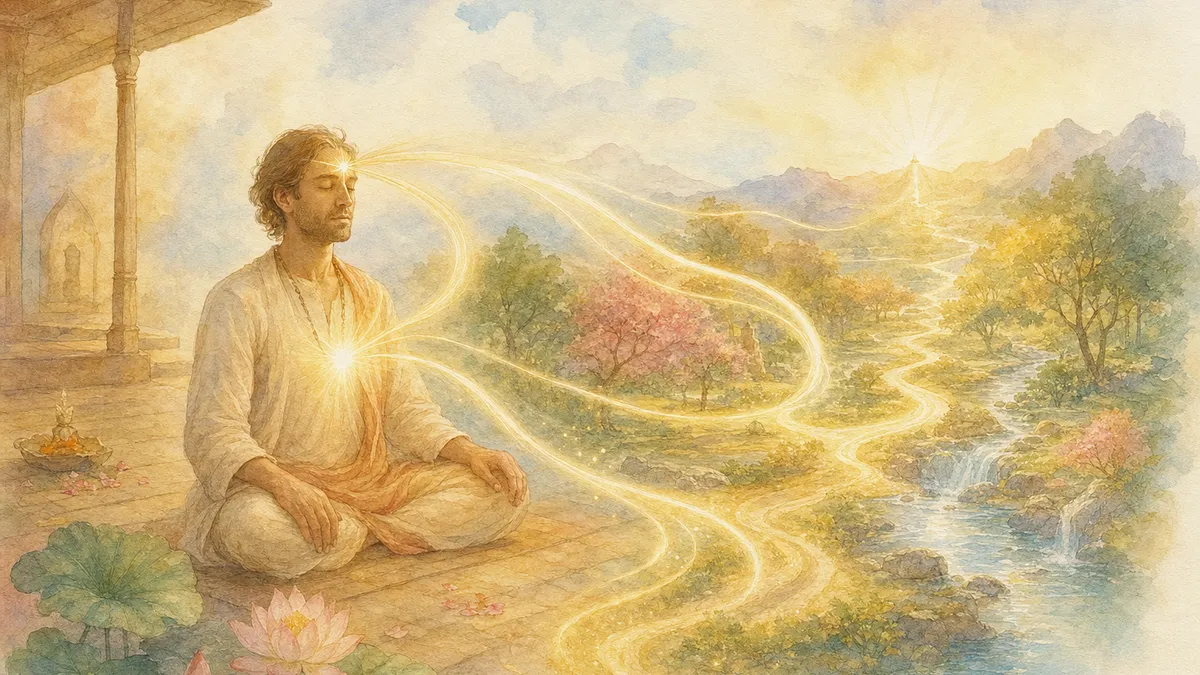
Sankalpa — Volitional Intention
We often speak about sankalpa, but we do not always understand what it is. The term “sankalpa” is translated as volitional intention, resolve, a volitional attitude. Mastery of sankalpa is the key point in changing oneself. In essence, to abide in the natural state means to accept the highest sankalpa. Of all sankalpas, sahaja-sthitthi is the highest; that is, it is mahasankalpa. All other sankalpas are like small streams that flow into the ocean.
In the teaching there is such a concept: “to make the great choice is not to choose,” or “to make the great decision is to enter non-doing.” That is, our genuine spiritual practice begins when we make the appropriate decision and direct our will in this direction. We make the decision to enter non-doing. We make the decision to live consciously, without choosing, and always to follow this choice throughout our whole life.
Among you there are those who have already made this decision and nurture it. And there are those who have not yet made it because certain aspects have remained unclear, and therefore they do not manage to nurture such a sankalpa. However, after some time, if they have the appropriate intention, they will surely make this decision, clarify the natural state, and enter mahasankalpa.
An advanced monk differs from a beginner in that he is in mahasankalpa and cultivates it as carefully as a gardener cultivates a flower dear to him. An inexperienced yogin, on the other hand, is like a person who is only just loosening the soil and choosing which plant to sow.
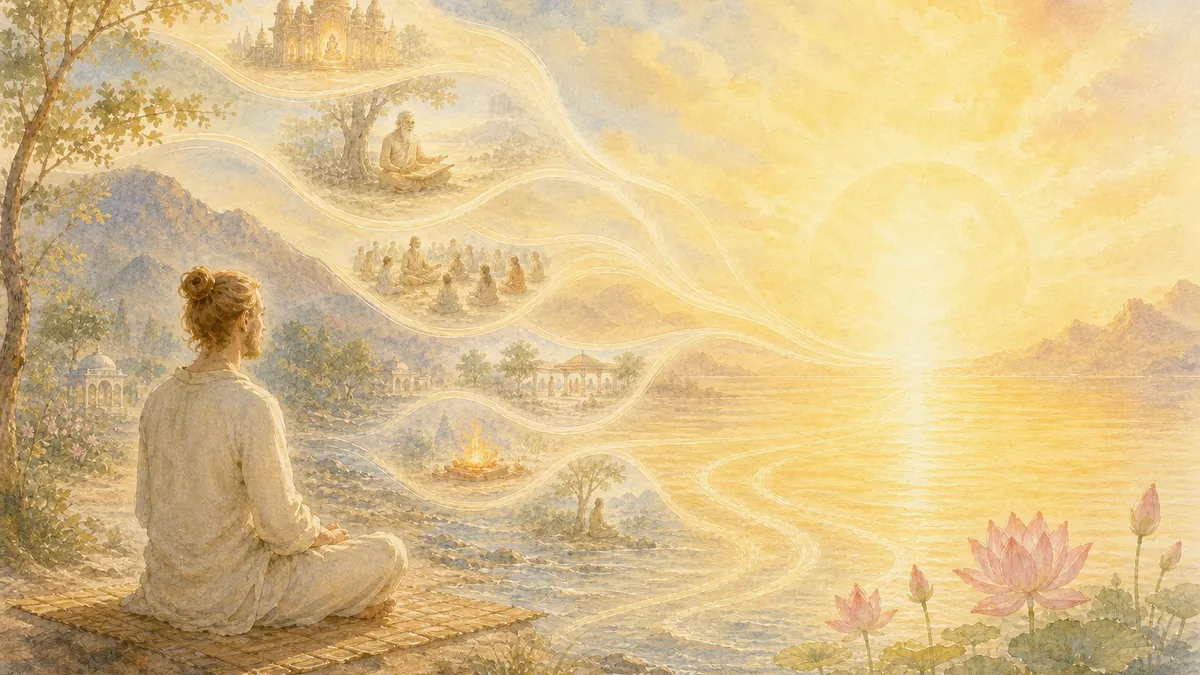
“A yogin who has mastered sankalpa gains power over himself and over the events of the present and the future.”
Sankalpa is a brief mental affirmation repeated many times. Besides mahasankalpa, there are smaller, secondary sankalpas, when you set an attitude in your consciousness in order to realize something and repeat it mentally. For example, the meditation on the four immeasurables is a sankalpa. If you practice it correctly, then I guarantee you that you will become like the God Brahma with the four immeasurable states: you will change yourself, and the world around you will be filled with love, joy, compassion, and impartiality. Everything depends on how carefully you hold your sankalpa.
Through repeated repetition, sankalpa penetrates the subconscious mind and changes the yogin’s subtle karmas. There is nothing that cannot be achieved through sankalpa. By the power of volitional intention, the yogin restructures himself, attains siddhis, changes destiny, achieves liberation, transforms himself into a deity, transforms the world around him into a pure land, and attains everything desired.
Yogins who possess strong will can embody their sankalpas. But yogins whose will is weak cannot embody sankalpas because of their distractedness. The way out of this is to train and temper one’s will again and again.
Lay disciples often tell me that it is difficult for them to change anything in their lives. I tell them: “Do not rush to change things. First you need to develop your will, so practice concentration. And when you develop your will, you will acquire such ichchha-shakti that changing your life will be very easy for you, simply elementary.” A person with a developed will can direct the events in his life so that they are arranged the way he wants. Of course, if a person’s will is not developed, then it is not he who directs events, but events that direct him.
“There is no force more powerful than a correctly expressed sankalpa. Intention is the key to the transformation of the human mind and personality. A person becomes something or suffers as a result of an old sankalpa.”
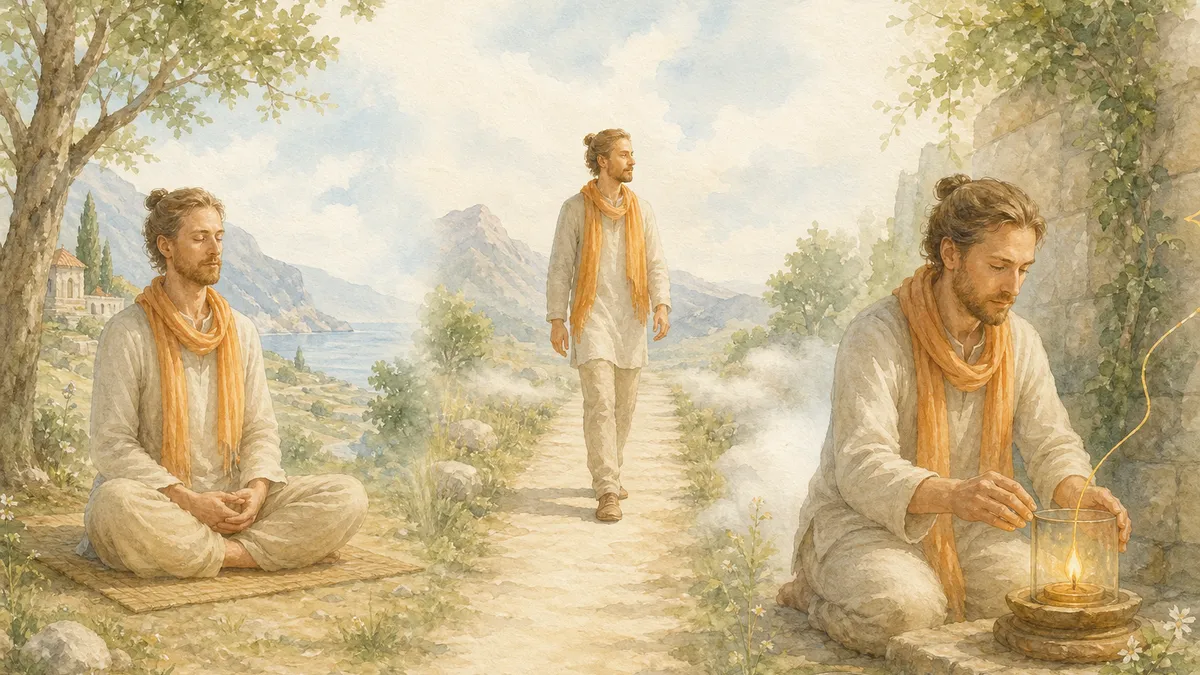
The Influence of Past Sankalpas on the Present
If in this life, on the spiritual path, a person experiences difficulties and suffers, it means that in past lives or in previous years of the current life he generated an erroneous sankalpa: he generated a feeling of guilt, anger, impurity, or evil toward something or toward himself, wished something bad upon himself, or made an incorrect vow. That is, many incorrect sankalpas existed in his consciousness, and now he is reaping their fruits.
Perhaps he generated a negative attitude toward something or laid down a sankalpa that binds him to someone or something, and now this sankalpa is moving his mind in a certain direction. For example, if you develop attachment to someone, know that your mind generated this attachment earlier; that is, long ago you created attachment in your mind, and now it is manifesting in you. If you have generated criticism toward someone, know that earlier you created such a sankalpa, which now simply continues to move by inertia.
Those who live in poverty created the corresponding sankalpa in the past. Those who wage war, suffer, or kill others created in the past the intention to wage war, suffer, or kill others. Those who enjoy themselves like gods created in the past a strong sankalpa to have pleasures similar to the pleasures of the gods. Those who are monks created in the past a sankalpa to become monks. Those who are saints created for a very long time in the past a sankalpa to become saints, and now it has manifested.
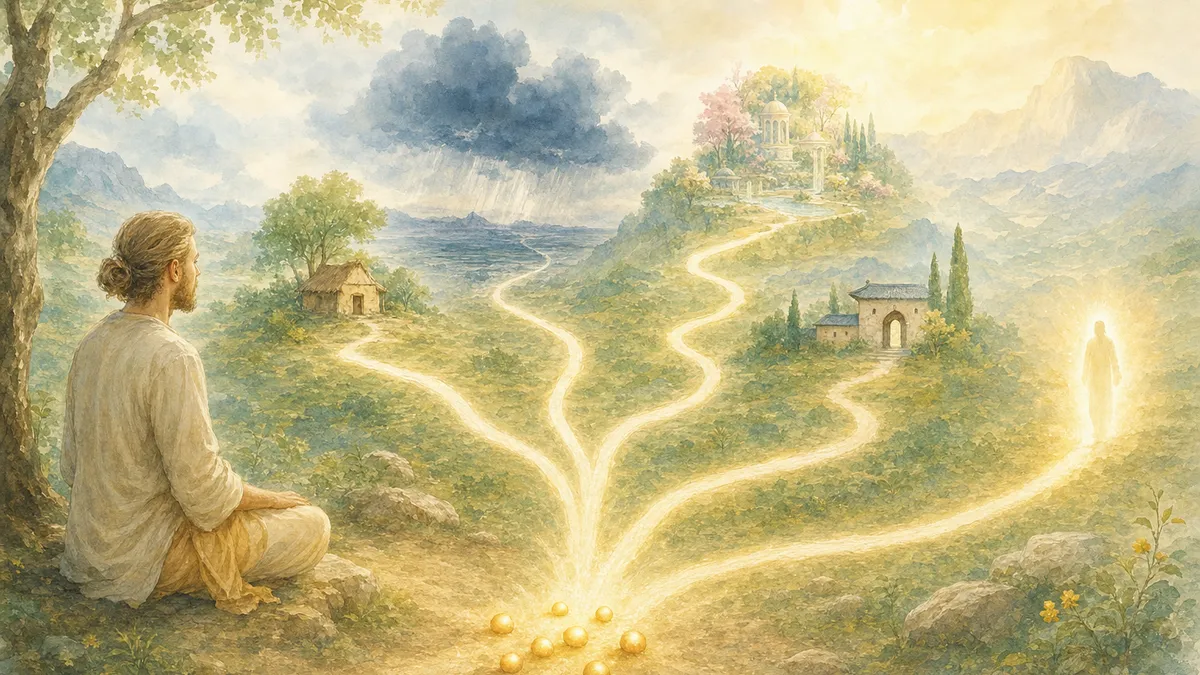
The Practice of Sankalpa
“By controlling volitional intention, the power of sankalpa, the yogin enters into resonance with the universal power (iccha-shakti), and then there is nothing he could not achieve. For sankalpa to have power, the yogin must convince himself of it again and again, imprinting it in consciousness.”
It is not enough to say Aham Brahmasmi. You must convince yourself of this state again and again. You must repeat it again and again, attuning yourself to bhava, until your sense of Aham Brahmasmi becomes one-pointed, until it gives rise to a majestic state, until the experience of divine pride begins to dominate in you and displace the human part, until the way of seeing the world changes. Again and again you must hold the sankalpa of Aham Brahmasmi, continuously repeating and consolidating it until it becomes a living feeling. And such a way of practicing is considered correct.
“When sankalpa is expressed from the pure mind in contemplation, its power is multiplied. How can one endow sankalpa with power? Express it from the natural state.”
If sankalpa is expressed not from the natural state, but from the mind, then it has little power. A sankalpa expressed from the natural state possesses tremendous power.
“Since the world is a manifestation of the past sankalpas of consciousness, by changing himself from within through the power of sankalpa, the yogin changes the surrounding world.”
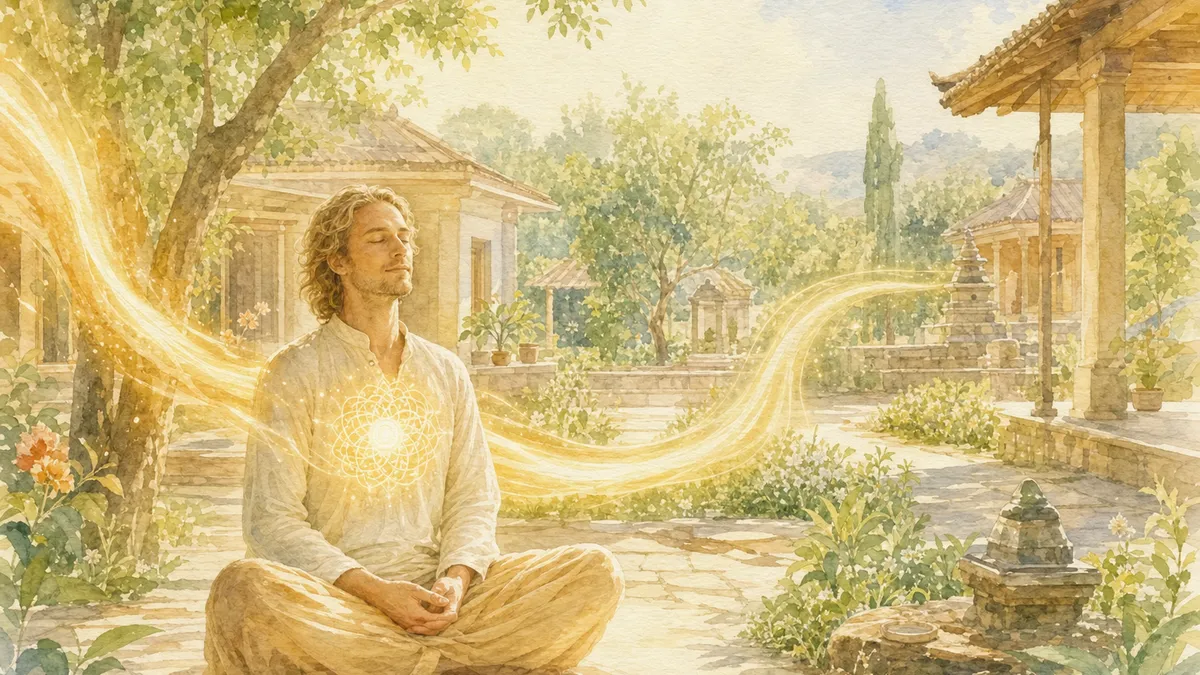
The surrounding world is an expression of inner data. When we change them, the surrounding world is immediately restructured as well. By the power of thought formulated as a powerful sankalpa, the yogin changes his destiny. In essence, you came to the monastery to change your destiny, to nurture sankalpa. One of the main sankalpas is the sankalpa of bhava (divine pride); another is the sankalpa of contemplation, of abiding in non-doing. It can be said that this is one and the same sankalpa; it is divided only conditionally for the convenience of instruction.
The Four Stages of the Practice of Sankalpa
“How does one generate sankalpa? The yogin chooses a sankalpa, wishing to change his destiny and attain liberation. In choosing a sankalpa, the yogin generates a subtle intuitive foundation, entering into contemplation. Having generated the intuitive foundation, the yogin gives form to the sankalpa, expressing it verbally, in the form of an image or a feeling.”
When you relax and enter presence, you generate a volitional intention or feeling, as in the niralambha meditation of Aham Brahmasmi. A state of divine pride arises. Then the yogin expresses the sankalpa mentally or in words.
“As verbal carriers of the highest sankalpa, the great saying, the mahavakya, is taken. Practice involving the nurturing of sankalpa includes four stages. At the stage of ‘beginning,’ the sankalpa is simply born. At the stage of ‘khata’ (vessel), it takes form and is spoken aloud. At the stage of ‘arambha,’ the sankalpa is repeated many times. At the stage of ‘parichaya’ (perfection), the yogin enters the flow of the energy of the sankalpa and manifests it in his life. Having expressed the sankalpa, the yogin must repeat it again and again until it penetrates into the depths of consciousness. Having penetrated into the depths of consciousness, it replaces and displaces old karmic imprints and introduces new ones; thus the yogin’s karma changes. Repeating the sankalpa again and again, the yogin must become convinced of it more and more deeply.”
This pertains to pure vision, to divine pride, to the principle of samaya, to the principle of monasticism. You repeat your sankalpas again and again. You imprint them in the consciousness until they become effective.
“A yogin must avoid thoughts that contradict his sankalpa and destroy it.”
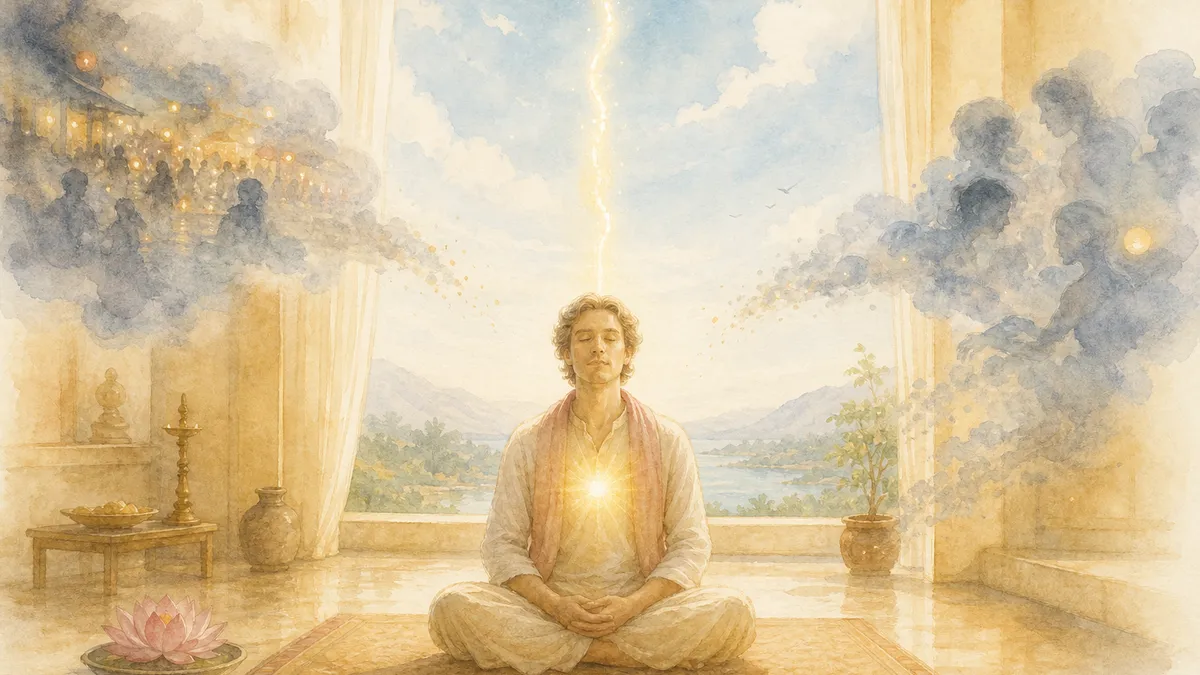
If you allow other thoughts to enter your consciousness that destroy your sankalpa, then it simply does not manifest. For example, you think: “I want to realize liberation and samadhi, to free myself from all illusion.” Then you absorb worldly information, unconsciously allow one desire or another to arise. That is, contradictory information is introduced, so the sankalpa is suppressed, and you feel that your spiritual strength has weakened.
How can sankalpa be strengthened? It can be strengthened through tapas, through self-giving, when for the sake of your volitional intention (sankalpa) you make some great efforts. But the best way to strengthen sankalpa is to abide in the natural state. Abiding in the natural state is like connecting an inexhaustible source of energy to your will, and therefore it begins to manifest. It is no longer you who carry out your sankalpa; the Absolute itself begins to manifest your intentions, because in the natural state you are inseparable from the Absolute.
What does the principle of service mean, the principle of observing samayas and commandments? It means that the sangha lives as one being, that all of us together create a common sankalpa. By the power of consciousness, we create a common holy world. And if everyone’s consciousness is harmonious, if everyone acts in unison, then this is like a gigantic orchestra or choir capable of creating a very beautiful, harmonious, and unique work.
