

Taking Refuge
Namo Guru Deva
Namo Satya Dharma
Namo Arya Sangha
“I take Refuge in the Master and in the lineage of masters, I take Refuge in the Teaching, and I take Refuge in the Sangha, that is, in the spiritual community of practitioners.”
Refuge means that we establish a spiritual connection. When we engage in spiritual practice and receive the teaching, such a spiritual connection is very important. One cannot practice without generating and establishing a spiritual connection, since such practice will be fruitless, and in some cases may even be harmful. But when we establish such a spiritual connection, it means that a certain subtle contact arises, that is, a certain subtle astral connection, like an electric arc, is born between you and the teaching, between you, the Teacher, and the practitioners, thanks to which the teaching ceases to be merely a set of methods and becomes a genuine practice that transforms consciousness.
What is the Guru? It is a specific teacher who instructs you. It is also the lineage of masters, saints, gods, and supernatural beings who preside over the teaching. Finally, the principle of the Guru also means the inner vision in your heart; it is your own awareness, the “I Am” principle present in the depths of your consciousness.
“Satya Dharma” on the relative level means the teaching, that is, the methods and practice you follow, a certain vision that you share by becoming students of a teacher and practicing a particular method. On a higher level, Dharma means your awareness, the realization of your inner guru.
Finally, Sangha in the relative dimension means a group of practitioners. For example, if it is a tantric community, then the sangha is the students of one teacher who share common spiritual principles or commitments (samayas). On a subtler, deeper level, it is also saints, gods, and mahasiddhas with whom you have a karmic connection. And on the absolute level, sangha means the entire world of manifested phenomena, everything that surrounds you, that is, all material energy, which is regarded as inseparable from the natural state.
To obtain Refuge means to establish a connection with a particular vision of the master, the teaching, and the sangha.
So, in order to receive the transmission of the lineage of contemplation, that is, sankalpas, you should recite this Refuge mantra. Reciting this mantra expresses your request for the transmission of the teaching and your readiness to receive it, since the teaching cannot be transmitted if you do not ask for it. In order for me to transmit to you the lineage of contemplation and the basic sankalpas, you must at least address me with such a request. This is very important, since our teaching is not transmitted in the style of a sermon; on the contrary, it is said as follows: “You must prove that you are worthy of the teaching. You must take the initiative yourself in order to receive it.”
Namo Guru Deva
Namo Satya Dharma
Namo Arya Sangha
And then you make a bow, touching your forehead to the floor.
The Teaching on Sankalpas
So, we begin to discuss the teaching on sankalpas, that is, the first line of the prajna-yantra.
What is a sankalpa? A sankalpa is a certain attitude or volitional intention.
There is the term “karmic vision.” What does karmic vision mean? Karmic vision is how we see the world, that is, it is our way of perception. In other words, the world is the way we see it because of karmic vision.
For example, thirsty ghosts (hungry spirits) have the karmic vision of pretas, that is, a state of dissatisfaction, acquisitiveness, and greed. Accordingly, if they look at the world, their karmic vision completely changes this world. Suppose a preta were to enter this hall: he would see not a beautiful hall, but something half-ruined, that is, ruined walls and something else of that kind. He would see it through the eyes of his karmic vision as something impure, unsatisfactory.
And when the world sees a deity possessing exalted karmic vision, then in its vision, on the contrary, there is a sense of purity, harmony, majesty, and sacredness. If, for example, he looked at this hall, then through the eyes of his karmic vision he would see it as a magnificently decorated room with enormous columns, filled with wondrous astral sound. He would see you in the form of eternally youthful deities with golden ornaments and crowns. In his vision, this floor would be finished with fine mosaic, gold, rubies, sapphires, and other precious stones. The sound of my voice would seem to him very enchanting, astral, penetrating without a microphone directly into the central channel. It would branch out, and subtle overtones, melodies, and semitones would emanate from it. The same applies to the perception of light and everything else. Such is the difference in the karmic vision of different beings.
We, however, have the karmic vision of human beings, and therefore we see the world in a certain way. In other words, everything is determined by karmic vision.
There is a saying: “Looking at a river, people will perceive it simply as a river; beings of hell—as molten lava; hungry spirits—as pus, excrement, or streams of impurities; animals—as a habitat; asuras—as some kind of geophysical weapon, as a means of waging war; gods—as nectar (amrita), as something divine, exalted, pure, and holy.” The river remains one and the same substance, yet beings with different karmic vision see it differently. This means that, depending on karmic vision, the world changes. There is no unambiguous world in and of itself. The world changes depending on consciousness. Whatever karmic vision there is in our consciousness, that is how the world appears.

Liberation means entering into the karmic vision of a deity, of a fully enlightened being. When we train in the practice of contemplation, in the practice of the natural state, we try to change our own karmic vision and develop a more exalted karmic vision. When we completely displace the old karmic vision and replace it with a new one, it is said that such a person attains liberation, becomes a saint, immortal.
Thus, sankalpas are certain attitudes for developing contemplative presence and changing karmic vision. One could say that sankalpas are certain intentions that we generate within in order to give our contemplation strength and to sustain it, gradually deepening it. A sankalpa is an attitude in consciousness that allows one to enter contemplation and reveal the natural state; it is the intentional sustaining of awareness based on a small effort.
You can familiarize yourself with the theory and practice of sankalpas on your own. This is a fairly extensive text called “The Path of Divine Consciousness. The Secret Practice of Contemplation Based on Sankalpas.” Since we are limited in time, we will spend minimal time on theory and proceed directly to practice.
The Eight Main Sankalpas
Thus, in the line of contemplation there are eight main sankalpas. They are as follows:
- “Dream”
- “Atma-vichara” (I Am)
- “Pure Vision”
- “Divine Pride”
- “Light”
- “Infinite Space”
- “Attunement to the Descending Power”
- “Everything Is One with the Mind”
These are the eight attitudes with which we work in the practice of contemplation. They are described in various tantric texts, for example in the “Vijnana Bhairava Tantra.”
A certain style of applying these sankalpas has developed in the teaching.
Thus, the “line of the mind” takes the main sankalpa “I am” as its support. The “line of divine pride” consists in maintaining the main sankalpa “Aham Brahmasmi,” “I am the Supreme Source.” Finally, the “line of space” consists in maintaining the feeling of “Infinite Space.”
We begin with the simplest sankalpas, such as “Dream” and “Atma-vichara,” gradually moving on to the practice of more complex sankalpas, making the practice increasingly more complex over the years.
Now I will very briefly give you the verbal transmission into these sankalpas; however, you will have to clarify them for yourselves, since we are limited in time. Then I will transmit the triple sankalpa to you, and afterward we will perform practices for uniting contemplation with the body, speech, and mind.
The Sankalpa “Dream”
So, the first sankalpa sounds like this: “This is a dream.” Looking at the external world, create the attitude: “Everything I see is like a dream.” Regard the external world as if it were a dream; abstract yourself from it. Practicing this sankalpa, we look at external objects, listen to sounds and other sensations, thinking continuously: “All this is an illusion, this is a dream.” We observe external objects, while at the same time the subtle part of our consciousness, the observer, remains. It is said: “Whether you walk, eat, talk with others, or perform prescribed activities, do not forget for a single moment that all this is an illusion, a dream.” Such is the first sankalpa.
You should devote at least three months to the continuous practice of this sankalpa. This means that it must be practiced from the moment of awakening until falling asleep, until such remembrance becomes continuous. When you practice well enough, awareness awakens in you, and then you truly begin to see the world as an illusion; you can perceive those who are asleep in this dream and those who are awakened.
The Sankalpa “Atma-vichara”
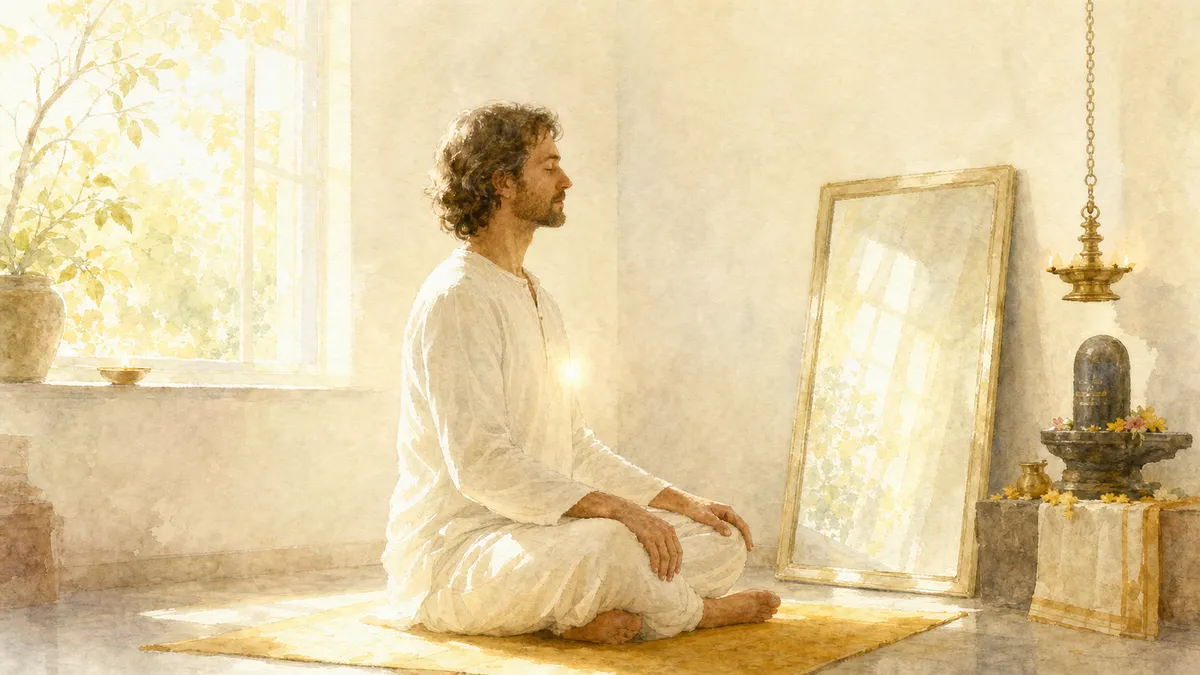
The second sankalpa is the experience of “I am.” You concentrate on the sense of “I,” trying to keep consciousness on the subtle feeling within. To do this, you ask yourself the question: “Who am I?” When you answer such a question, you may feel a certain subtle vibration in consciousness. You need to hold on to this vibration, and when distracting thoughts arise, you need to maintain the sense of “I,” returning again and asking yourself: “Who sees this?”, “Who thinks this?”, “Who hears this?”, instead of following thoughts or external objects. Such is the sankalpa called self-remembering (“Atma-vichara”).
The Sankalpa “Pure Vision”
The third sankalpa is called “Pure Vision.” Pure vision means that we try to look at the world as a mandala; we try to perceive other people as deities playing within it; we try to perceive sounds as mantras or the sounds of bhajans; we try to perceive ourselves as a deity; and we try to perceive all situations that happen to us as lilas, divine plays.
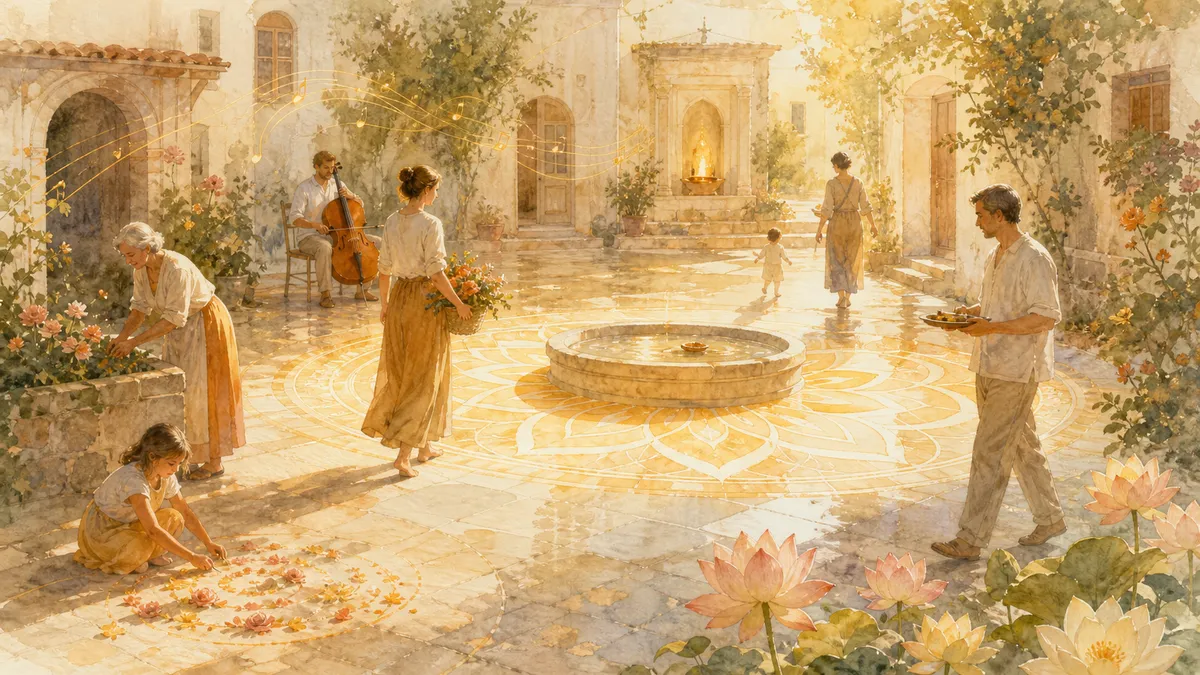
The sankalpa “Pure Vision” is a very powerful practice that changes the karmic vision we spoke about above. One could say that instead of looking at the world through human eyes, we try to look at the world through the eyes of an awakened deity. At the same time, we do not create this in some special way; we do not visualize it. We try to see it as something that already exists and has always existed, without creating any mental constructs or artificial formations. “Pure Vision” means that everything is seen as it truly is.
For example, we see water, earth, houses, trees, or rivers, but the saints say that we are mistaken in seeing in this way. Why? Because from a subtler position, the element of earth is not earth; it is the sacred body of a deity, its manifestation in the aspect of the earth element. The same can be said about water, fire, and so on. In other words, the five external elements are the five external energies of deities. Samsaric beings are characterized by impure vision, while “pure vision” means that we discern the subtle energy behind all manifestations.
For example, when you look at a woman, you can discern the subtle energy, shakti, of which she is a conduit. This woman is a conduit of Durga’s energy, this one of Lakshmi’s, and this one of Saraswati’s. Or when you look at a man, you can see that he too is a conduit of a particular energy.
When you practice “pure vision,” you see their subtle background behind external phenomena. Behind every external event, you can see a subtler foundation; that is, you no longer perceive the world in the ordinary, superficial way.
Karmic vision depends on what mental imprints were created in the past. When we practice the sankalpa “Pure Vision,” we generate new mental imprints in the stream of our consciousness.
For example, when you are studying, students are told right away: “The teaching should be perceived in pure vision,” that is, one should not try to look at the teaching through human eyes, make ordinary critical judgments, and so on, but should try to look precisely from a higher perspective. But it will be good if you try to extend pure vision to the entire world around you, including your relatives, friends, ordinary people, and yourself.
The sankalpa “Pure Vision” allows one to reveal abilities, attain success, increase lifespan, heal illnesses, and discover subtle intuitive consciousness, since by practicing it you become akin to a deity, to the gods, even while still alive. And the gods, as is known, are supernatural beings who possess boundless wisdom, prosperity, immortality, refined qualities, profound understanding, harmony, greatness, and sacredness.
The Sankalpa “Divine Pride”
The next sankalpa is “Divine Pride.” By practicing it, we give rise to the following understanding: “I am the Absolute,” “I am the Supreme Source.” When we meditate in this way, bhava appears in us, an elevated sense of the world. We attune ourselves to and cultivate this sense of the world until it grows, until it fills our consciousness and we change our self-perception.
For example, each of us has a self-perception that can be expressed as a certain sense of the world, a bhava. We feel ourselves to be human beings, but it is precisely this remembrance of ourselves as human, this continuous feeling of being human, that makes us beings suffering in samsara.
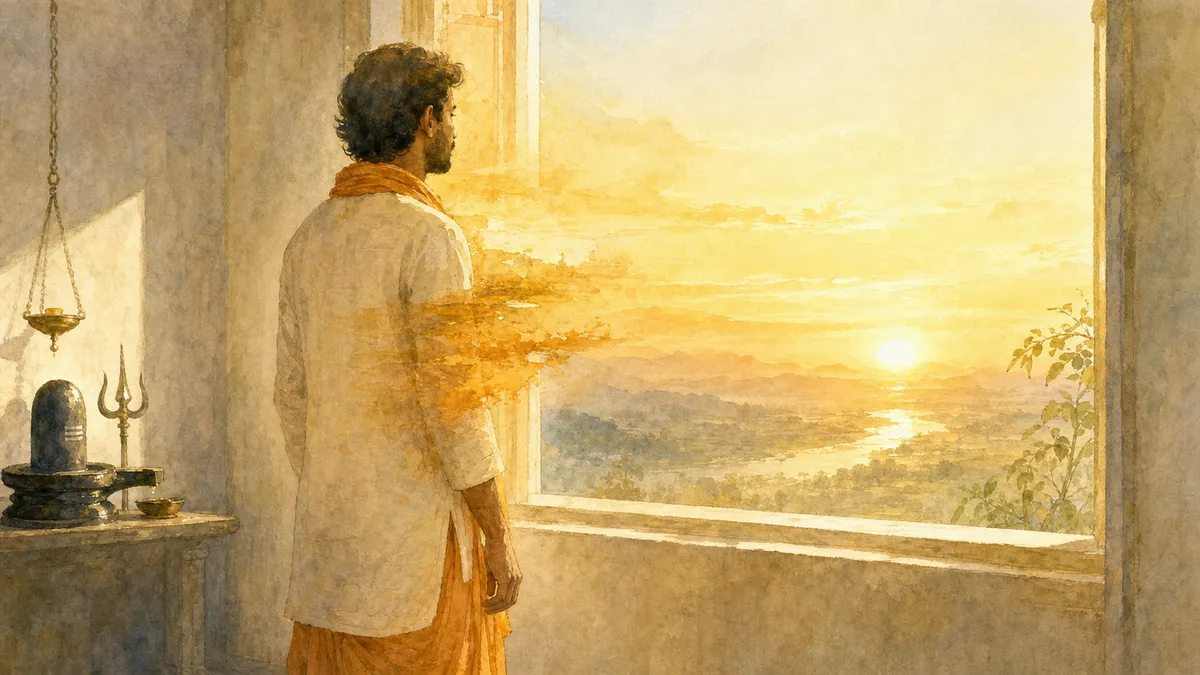
What does it mean to cultivate bhava and nurture divine pride? It means to generate within oneself the feeling “I am a deity, the Absolute.” And if such a feeling grows within us, then inner greatness arises in us, accompanied by a real experience—a sense of globality, eternity, infinity, transcendence, and sacredness. And when we cultivate such a feeling, it gradually completely displaces our old self-perception, and then we discover that we have completely changed our idea of ourselves.
We mention the “line of divine pride” here only briefly. This is the second line from the prajna-yantra section. In reality, it is a very deep, self-sufficient practice of contemplation, which in itself leads to supreme liberation if you apply it correctly.
Of course, divine pride does not relate to the small “I,” to the relative ego. If we can think: “I am the Absolute, I am a deity,” somehow straining and pretending to be a deity, then this, of course, will be ordinary, worldly pride. The experience of divine pride does not relate to our relative ego and “mind.” On the contrary, your ego and your small “I” can be quite modest.
Divine pride relates to the most essential part of consciousness, the deep “I” that we cultivate. When you practice the sankalpa “Divine Pride,” various signs arise in dreams. For example, a yogin may see himself in the form of a deity, in the form of a saint. Or he may have dreams in which he receives offerings and gives instructions. These are signs indicating progress in the practice of contemplation. Or he may experience a sense of transcendent greatness. All these are signs of successful practice of the sankalpa “Divine Pride.” But for now we will not examine this line, this sankalpa, in detail.
The Sankalpa “Light”
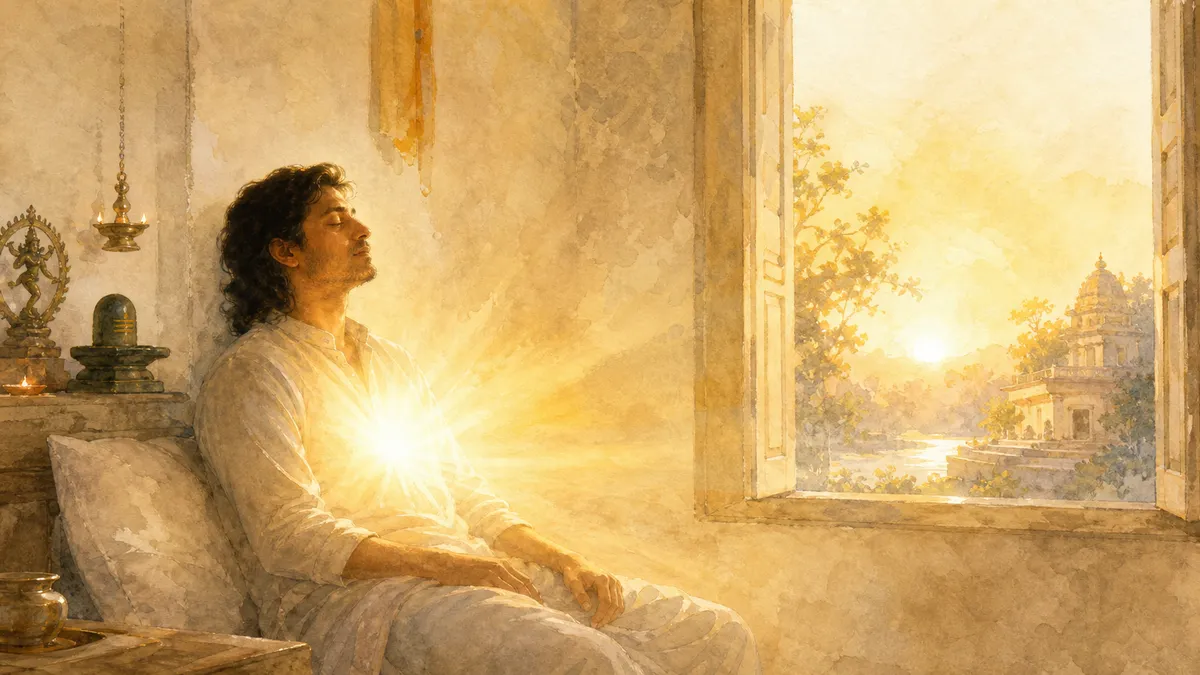
The next sankalpa is “Light.” It is expressed as follows: “When walking, sleeping, or indulging in dreams, contemplate yourself as light.” Imagine how all the surrounding space is filled with light emanating from your heart in all directions. This light is not blindingly bright, but very deep. If you sustain the feeling of light in this way, experiencing it both within and without, then after some time the entire surrounding space gradually begins to be seen by inner vision as radiant, like light. At first we practice the contemplation of light with a slight effort. At the second stage we contemplate the light while relaxed, eliminating our own effort.
The Sankalpa “Infinite Space”
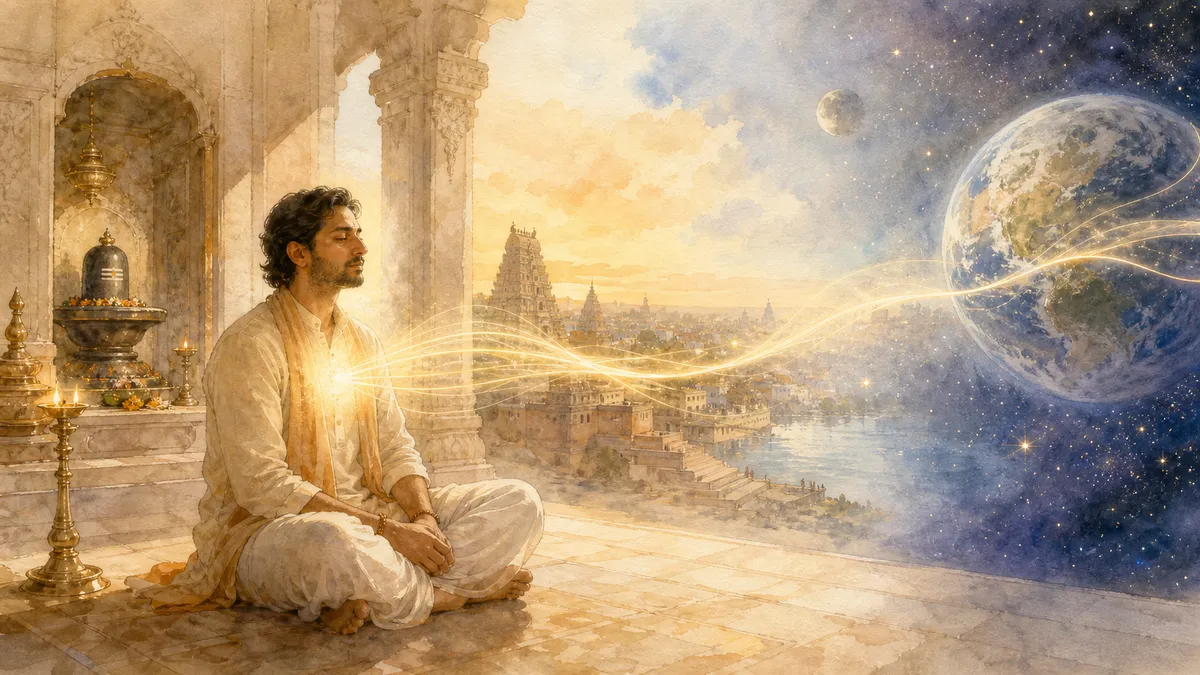
The next sankalpa is “Infinite Space.” It is described as follows: “Feel that the space occupied by the form of your body is infinite and contains everything within itself. Feel yourself permeating all directions of the world—far and near.” Sitting in the correct posture, feel how your inner space begins to expand, as if subtle threads are emanating from the level of the heart, the center of the chest. These threads extend upward, downward, forward, backward, to the right, and to the left. You expand consciousness, gradually embracing with them an ever greater space, going beyond the boundaries of the temple, encompassing the city, the country, the Earth, the Solar System, the Milky Way galaxy, until the feeling of infinite space goes beyond everything conceivable, and you maintain the experience of infinite space. At first you do this with a slight effort, and then you completely relax and contemplate without making any effort.
The Sankalpa “Descending Force”
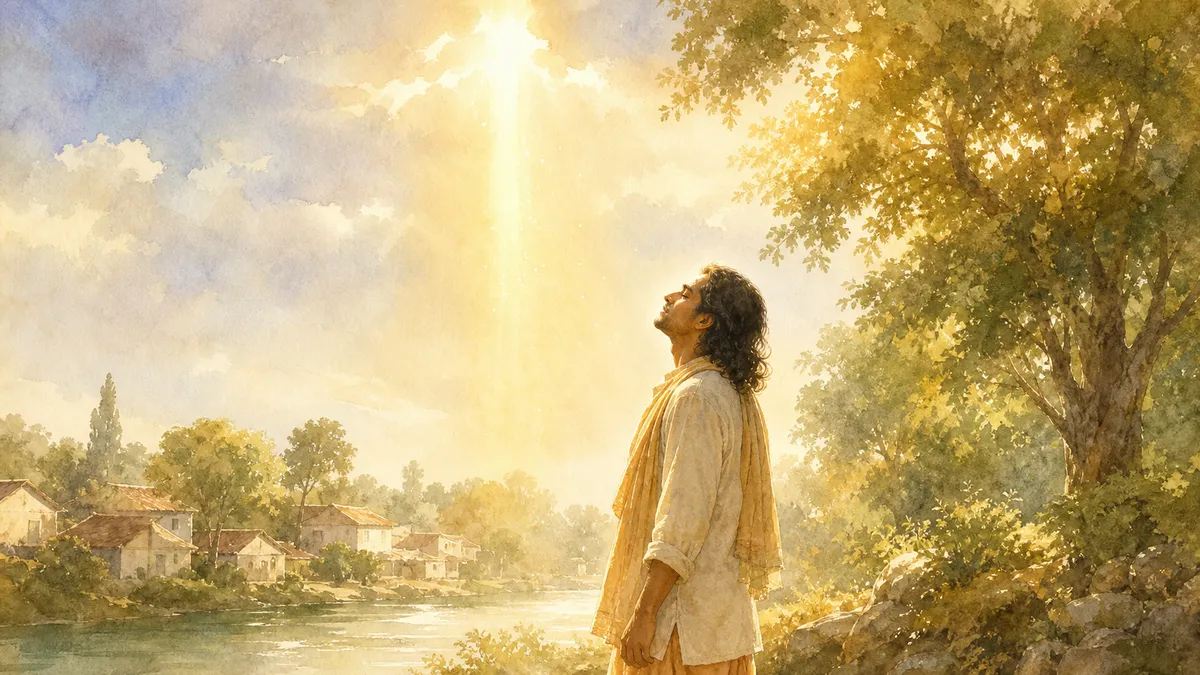
The next sankalpa is called “Descending Force.” We relax and look straight into space, performing shambhavi mudra. When we contemplate, looking at external objects without assessments or judgments, all external objects begin to be seen as a single sphere of consciousness, as something whole and uniform. The sankalpa “Descending Force” is intended for contemplation of external objects, just like the sankalpa “Pure Vision.” This means that these sankalpas can be applied when you are looking at something external. For example, when you look at the sky, houses, or trees, you can use the energy of external objects to attune yourself to the descending force. Such a descending force is also called Anugraha or shaktipatha. The descending force is one of the enlightening energies that is always present, but we do not feel it or reveal it. It is always pouring forth, and if we attune ourselves to it, we receive a powerful “taste” (rasa) of the natural state.
The Sankalpa “Everything Is One with the Mind”
The next sankalpa is “Everything Is One with the Mind.” This sankalpa completes the sankalpas of the line of contemplation and is the deepest, or senior, one. In this attitude, we regard the world as a manifestation of our own “I.” We look at the world, giving ourselves this attitude: “Everything I perceive is my Mind; everything is a manifestation of my consciousness.” We practice sitting or walking with shambhavi mudra, trying to perceive the external world as our own “I.” The subject reunites with the object in the indivisible space of contemplation. As a result of the practice, three signs arise. The outer sign is that we feel as if our body does not exist. The inner sign is that the breath stops. The hidden sign is that any attachment to material objects is cut off. The sankalpa “Everything Is One with the Mind” is the culmination or completion of contemplation. One could say that this is no longer so much an attitude as a realization.
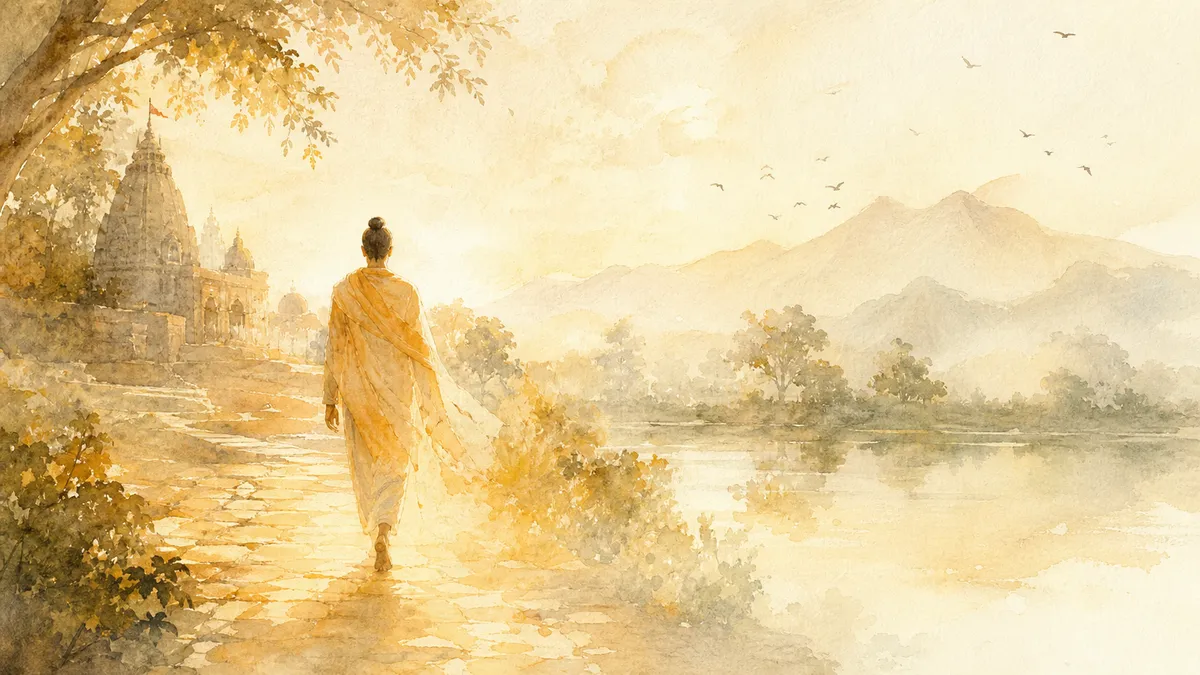
A saint, an awakened yogin, sees the entire world as a manifestation of his own energies. For example, when you see anything, you understand: “This is me myself.” You see some disharmonious situation, but instead of getting involved in it, you understand: “This is a manifestation of some of my disharmonious energies.” And instead of judging them, you simply harmonize them. When you see an image of deities, you understand: “This is a manifestation of pure, creative energies from my subtle body.”
Thus, everything upon which you cast your gaze is seen as one consciousness. One could say that the universe, the Earth, the Sun, the planets, and all people become your one great body. Of course, this is easy to describe, but difficult to realize. That is why we do not immediately begin contemplation of the higher sankalpas. The sankalpa “Everything Is One with the Mind” is the completion of the practice.
Double and Triple Sankalpas
These are the main sankalpas that we cultivate in the practice of our contemplation. At more complex levels, a yogin can maintain double sankalpas and triple ones.
Double and triple sankalpas mean that a yogin can simultaneously hold two or three attitudes in consciousness. One of them is external, another is internal, and the third is secret or nondual. Thus, the practice of contemplation and maintaining the natural state comes down to simultaneously maintaining two or three attitudes in consciousness. Now we will perform the practice of walking with a triple sankalpa, one of the main, fundamental sankalpas.
Responsibility for Practice
You must be prepared for the fact that if you practice correctly, your consciousness changes. Your values will truly change if you work with consciousness correctly, since this is precisely what true practice is intended for. That is, you must take responsibility for your practice.
There is a story about a certain businessman who, after two weeks of attending meditation courses conducted by an Indian swami, said: “I have lost the desire to live in the world and engage in business. I don’t know what to do with this.” The swami replied to him: “You yourself must take responsibility for your meditation; you must know what you are doing.”
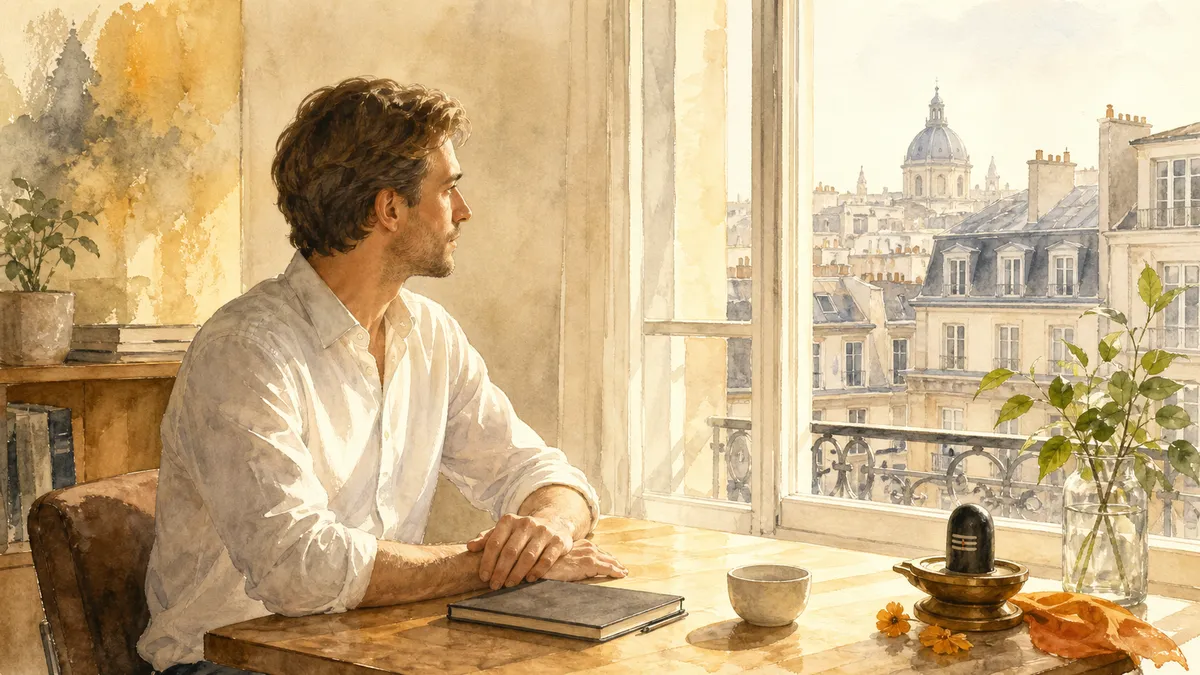
If the desire has disappeared, then this is one of the signs of deeper awareness, which is called “aversion to samsara.” Although from the point of view of Laya Yoga, emphasis is not placed on aversion to samsara. We place emphasis on all-acceptance and say that everything should become the practice of contemplation. But detachment and a reduction of attachments do indeed appear when you engage in contemplation.
