The Secret of the Longevity and Wisdom of the Crow Bhusunda
20.07.2026
0 мин. чтения
0
Share
copy
search
add
share
The text “Yoga Vasistha,” Chapter 6, “The Story of Bhusunda”
Vasistha tells Rama:
In the infinite and indivisible consciousness, in one of its corners, there is a world resembling a mirage. There dwells the Creator Brahma, as the manifest cause of that world. I am his mind-born son. Once, when I was in Indra’s halls, I heard stories of long-lived beings from the sage Narada. During one conversation, the great sage Shatatapa said:
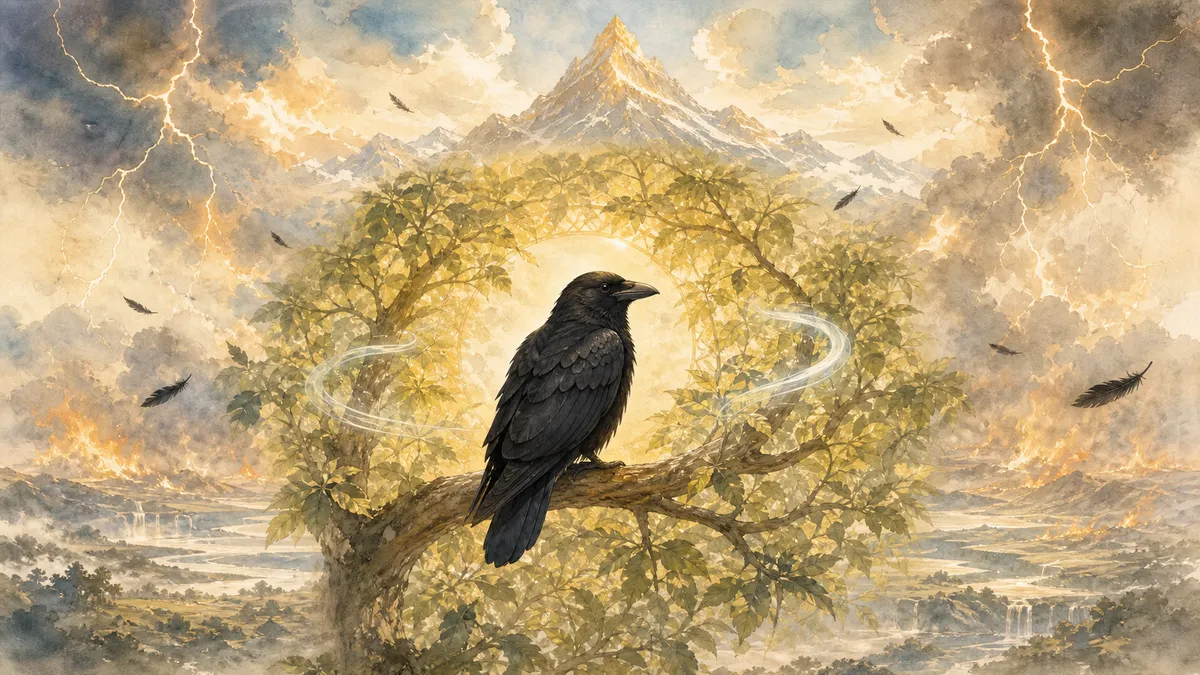
“In one of the corners of Mount Meru grows the wish-fulfilling Kuta tree. Its leaves are made of silver and gold. On this tree lives the crow Bhusunda, completely free from all desires and aversions. No one on earth or in heaven has lived longer than he has. He is not only long-lived, but also an enlightened and peaceful being. If any of you could live like this crow, it would be a wonderful and worthy life.”
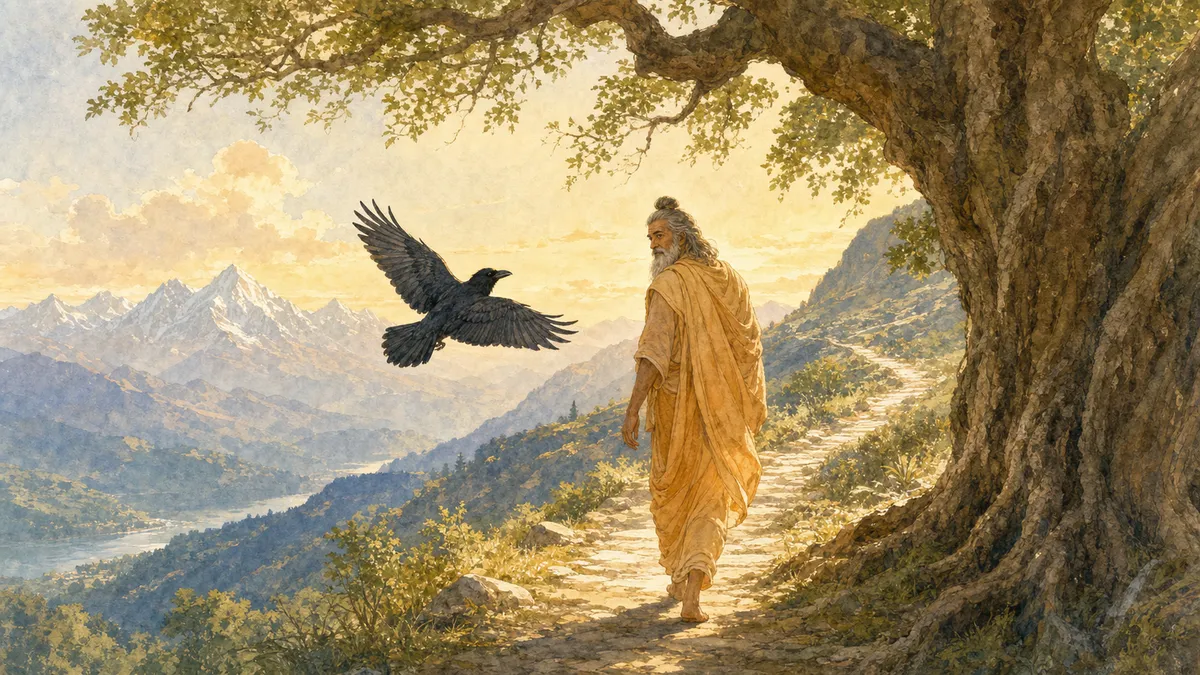
I heard these words and was inspired. I set out in search of Bhusunda. Soon I reached the peak of Mount Meru where Bhusunda lived. The mountain itself was filled with light, like a yogi who, through his practices, had opened the psychic portal at the crown of his head. The mountain reached the heavens.
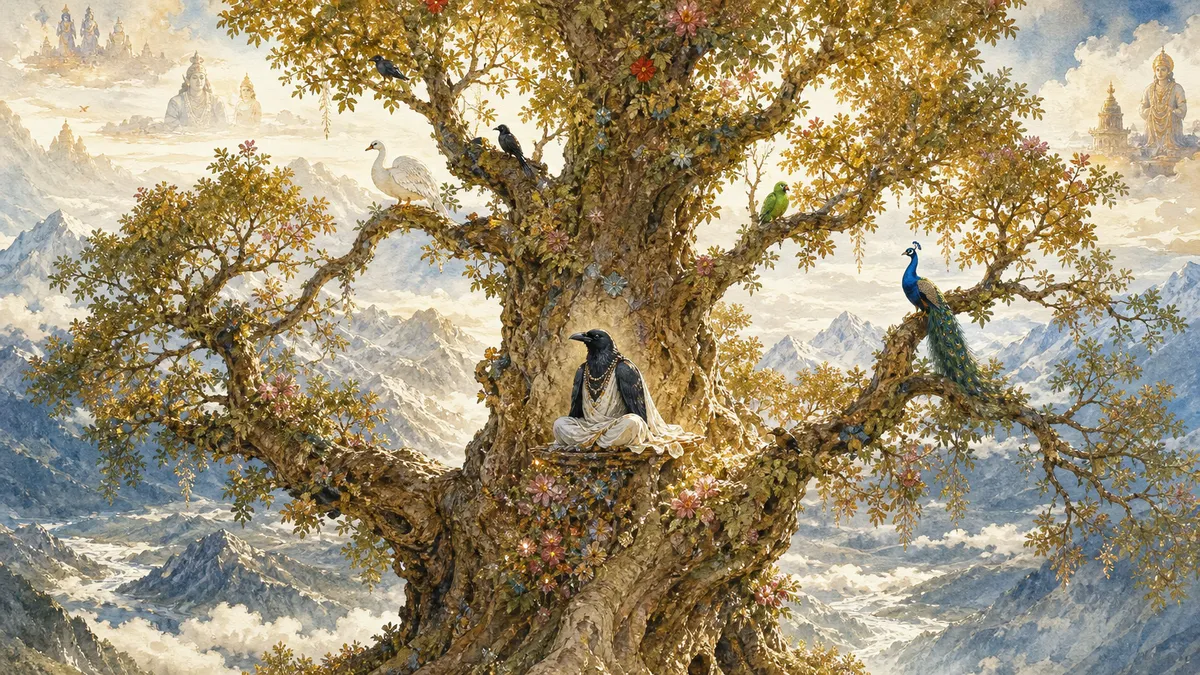
There I saw the Kuta tree, whose flowers and leaves shone like precious stones. Its crown touched the heavens. The celestial beings who lived in its branches filled the air with their songs. Beautiful sages who could assume any form they wished also lived in this tree. It was an immense tree of unfathomable proportions.
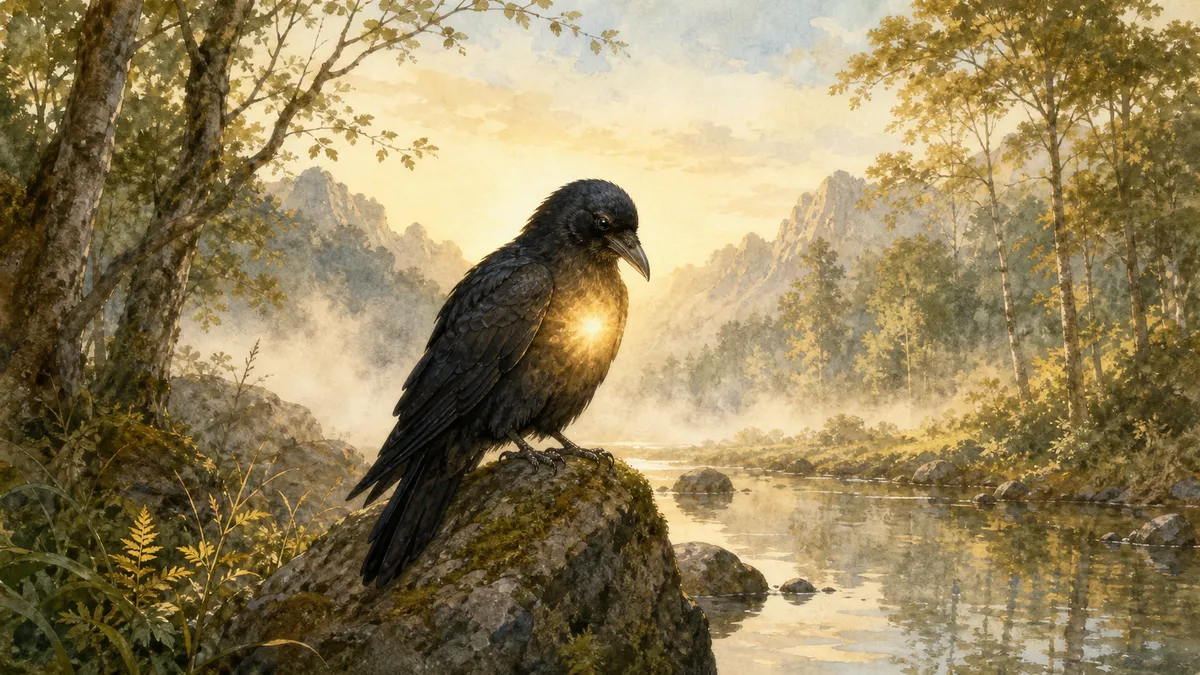
I saw various birds living in the tree; I even saw the famous swan ridden by the creator Brahma. I saw the bird Shuka, on which the god of fire flew and which had studied all the sacred scriptures. I saw a peacock and other birds. From a great distance, I saw crows, and among them the great Bhusunda, sitting in perfect calm and serenity. He was beautiful, radiant, and blissful.
This was the famous long-lived Bhusunda. He had survived several cycles of the world’s creation. He remembered even those who had lived many millennia ago. He was silent. He was free from the notions of “I” and “mine.” He was a friend and kindred spirit to all.
Meeting Bhusunda
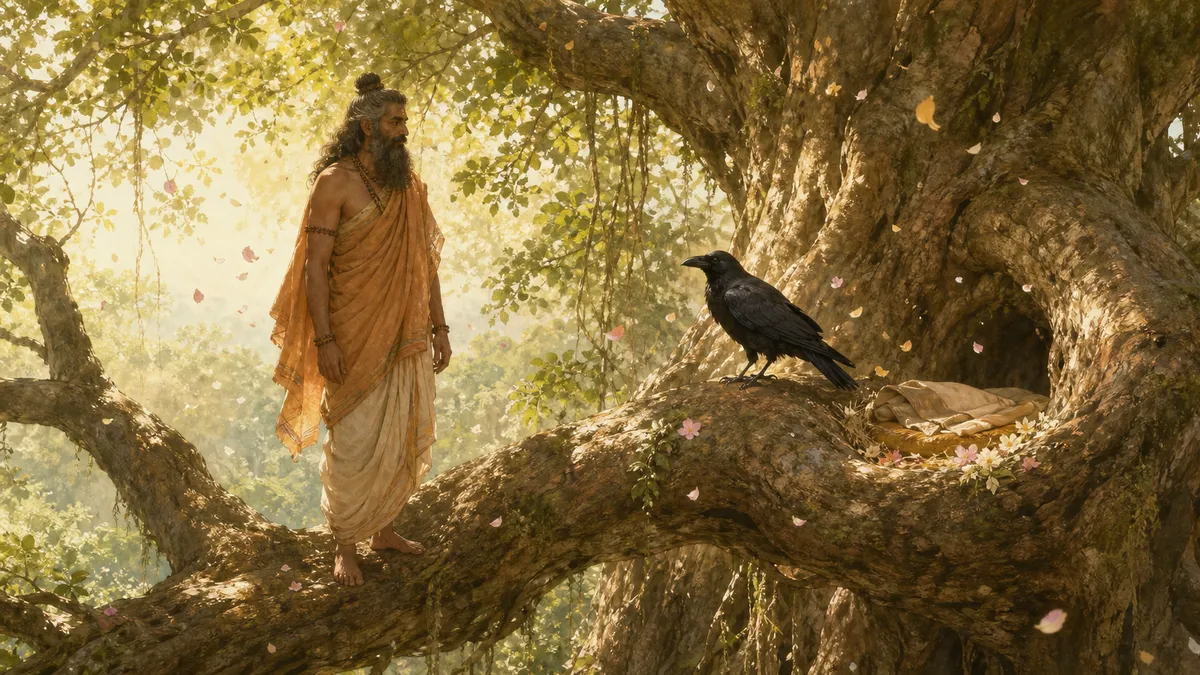
I descended directly in front of Bhusunda. He knew that I was Vasistha and greeted me. By the power of his thoughts, he materialized flowers and showered me with them. He seated me beside him and said:
“It is a great blessing that, after such a long time, you have honored me with your visit. In the nectar of your presence, we have come back to life like a tree. You are the greatest among those worthy of worship, and you have come here only because I have accumulated enough virtue. I pray, tell me the reason for your visit. Clearly, the light of the highest knowledge shines in your heart, kindled by constant and intense inquiry into the nature of this world. What is the purpose of your visit? Ah, from the appearance of your blessed feet, I believe I have guessed your purpose. You have come here in search of the secret of longevity. Nevertheless, I would like to hear the purpose of your visit from you yourself.”
I replied:
“You are undoubtedly blessed, for you enjoy the peace and bliss surrounding you, possess the highest wisdom, and are not caught in the net of the world’s illusion. I pray, tell me about yourself. Into which clan were you born? How did you become enlightened and come to know what is worthy of being known? How old are you now? Do you remember anything from your past? By whose will do you live so long, and why on this tree?”
Bhusunda replied:
“Since you ask about me, I shall answer all your questions honestly. Listen carefully. The story I am about to tell you is so inspiring that it will destroy the sins of all who listen to it and recount it.”
Having said this, O Rama, Bhusunda began his tale. His words were profound and courteous. They possessed tremendous power, for he had risen above his desires and the pursuit of pleasure. His heart was pure because it was fulfilled. He knew the births and destructions of worlds. His words were sweet, and he possessed the dignity of Brahma himself. His words were like nectar, and this is how they sounded.
Bhusunda’s Account of His Origin
Bhusunda said:
In this universe there is a great deity, Hara—the god of gods, worshipped by all the gods in heaven. The sacred Ganges flows from his hair, the moon shines upon his head, and a cobra is coiled around his neck, its venom neutralized by the nectar of the moonlight. His only garment is sacred ash smeared all over his body. He dwells in graveyards and cremation grounds, wears a necklace of skulls, and serpents serve as his amulets and bracelets.
With a single glance, he destroys demons. He cares for the welfare of the entire universe. Mountains and hills, eternally immersed in meditation, are his symbols. He is attended by goblins with heads and hands like razors and with the faces of bears, camels, mice, and so on. He has three luminous eyes. The goblins worship him. And goddesses who feed on the beings of the fourteen worlds dance before him.
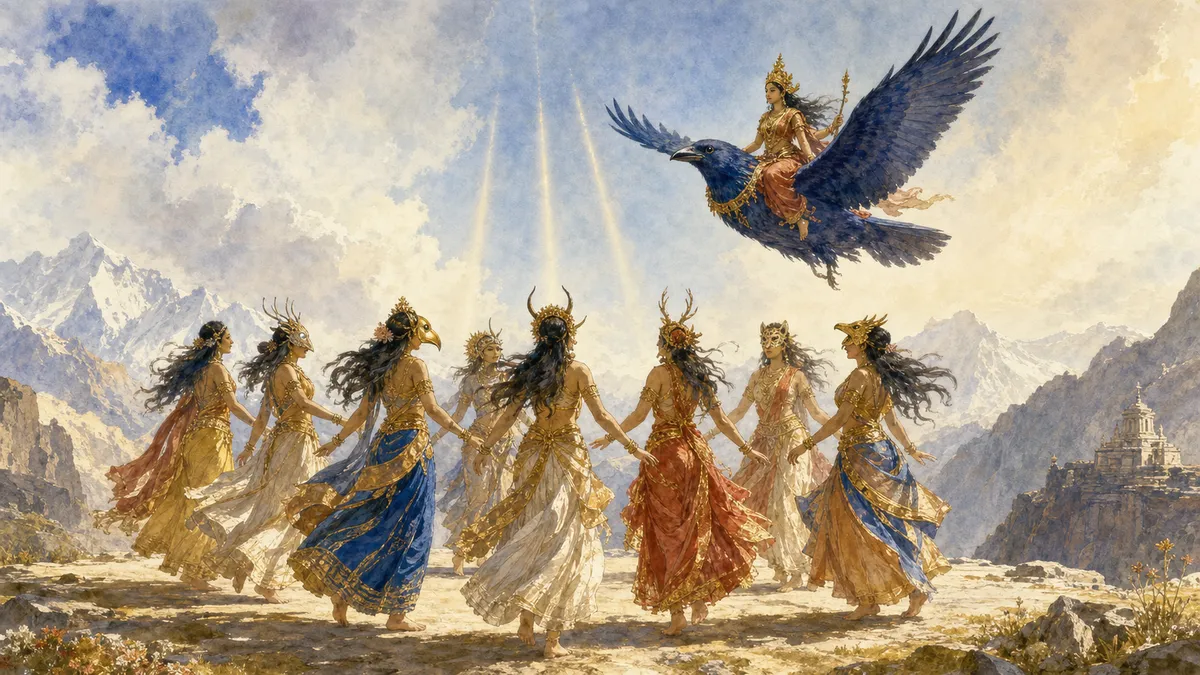
These goddesses dwell in the mountains, in space, in various worlds, at cremation grounds, and in the bodies of different creatures. Their faces resemble those of various animals. Among these goddesses, there are eight foremost ones, named Jaya, Vijaya, Jayanti, Aparajita, Siddha, Raktta, Alambusa, and Utpala. The most renowned among them is Alambusa. She flies upon a mighty blue crow.
One day, all these goddesses gathered together, prayed, and began divining. Soon their state resembled intoxication, and they began discussing why Hara treated them arrogantly. They decided to show him their power so that he would not become conceited. With their magical spells, they enchanted Uma, Hara’s consort, and carried her away. Then all the goddesses sang and danced in ecstasy; some became drunk, some laughed, roared, or ran about, some fell down, and some ate meat. These drunken goddesses caused turmoil and disorder throughout the world.
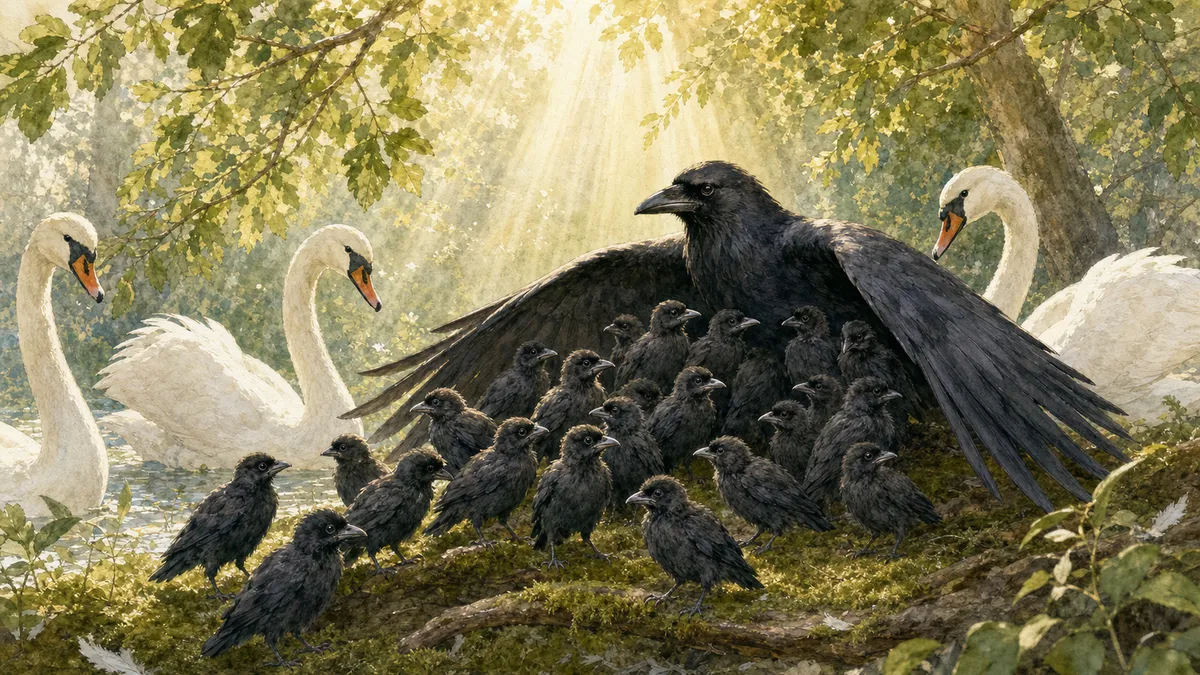
While they were all amusing themselves in this way and rejoicing in their prank, the animals they rode also became intoxicated and began to dance. All the female swans danced with the crow Kanda, and during the dance they were all overcome with lust. One after another, they mated with Kanda because they were drunk and completely unaware of what they were doing. And then they all became pregnant.
When the goddesses had finished amusing themselves, they went to Hara and offered him Uma’s body, which they had transformed into food through their sorcery. Hara saw through everything and became angry at their antics. Then the goddesses restored Uma to her former state, returned her to Hara, and went back to their worlds. The female swans ridden by the goddess Brahmi told her what had happened.
Brahmi said to them:
Because of your pregnancy, you cannot perform your duties, so for the time being go wherever you wish.
Having said this, the goddess sank into deep contemplation.
After some time, the female swans laid 21 eggs and incubated them. Thus, 21 chicks were born into the family of the crow Kanda. Together with our mothers, we worshipped Brahmi. By her grace, we attained supreme knowledge and enlightenment. Then we came to our father, who embraced us all.
Kanda said:
Children, have you escaped the nets of the world by breaking the fetters of tendencies and imagined limitations? If not, then let us go to the goddess, by whose grace you can attain wisdom.
We replied:
Father, by the grace of the goddess Brahmi, we know what is to be known. Now we seek a wonderful, uninhabited place in which to dwell.
Kanda said:
“There is a wonderful Mount Meru that supports the fourteen worlds and all the beings living in them. All the gods and sages dwell there. On that mountain there is a wish-fulfilling tree. On one of its branches I once built a nest while my goddess Alambusa was immersed in deep meditation. It is wonderful and beautiful in every respect. Children, go to that nest and live there. You will never encounter any obstacles there.”
Following our father’s instructions, we all came here and began living in that nest.
Bhusunda continued:
Once, an entire world existed here, and we witnessed it.
Vasistha asked:
What happened to your brothers? I see only you here.
Bhusunda continued:
Much time has passed since then, O sage, and each of my brothers, when his time came, relinquished his physical existence and departed for the heaven of Lord Shiva. For every long-lived being, even one who is holy and blessed, eventually approaches death.
Vasishtha asked again:
How is it, then, that you have remained unaffected by fire, wind, heat, or cold?
The Secret of Bhusunda's Longevity
Bhusunda continued:
Of course, from the human point of view, a crow's body is considered contemptible and wretched, although the Creator provides abundantly for the life of even a humble crow. But we remained immersed in inner bliss and therefore survived even the worst calamities. We remained absorbed within, abandoning useless activities that bring only suffering to the body and mind. In truth, this physical body experiences no suffering either in life or in death, and so we remained as we are, seeking nothing other than what already is.
We have witnessed the destinies of worlds. We no longer identify ourselves with our bodies. Knowing my true nature and remaining on this tree, I have watched time pass. By practicing pranayama, I transcended the bounds of time. Therefore, my heart is calm and peaceful, and the events of this world do not affect me. Whether all beings around us vanish or, on the contrary, appear, we fear nothing. Even if all the creatures of this world enter the ocean of death, we simply sit on the shore of that ocean, and so it does not affect us. We neither accept nor reject anything; we appear to be something, but we are not what we appear to be. Thus we sit upon this tree.
Although our activities are diverse, we do not drown in mental conditioning, and we never lose touch with reality.
O Lord, the nectar for which the gods churned the ocean is nothing compared to the bliss of being in the presence of sages such as you. There is nothing higher or more honorable than the company of sages who are free from all desires and aspirations. O wise one, although I have already attained true knowledge, I believe that my life has only now acquired its ultimate meaning, because today I have seen you and enjoyed your company.
Bhusunda continued:
This wish-fulfilling tree is not shaken by natural cataclysms or by calamities caused by the actions of living beings. There have been several such events when demons tried to destroy or conquer the earth, and when God intervened and saved the earth from those demons. The tree remained unaffected by all of this. Even the flood and the scorching heat of the sun that accompanied the destruction of the earth at the end of the cosmic cycle could not harm this tree. Therefore, all who live on this tree also escaped destruction. The devil has power only over those who live in unblessed places.
Vasishtha asked:
But how did you survive the end of the cosmos, when everything is destroyed?
Bhusunda replied:
At that time, O wise one, I leave this nest as an ungrateful man abandons his friend. Then I merge my consciousness with cosmic space, completely free from all thoughts and mental limitations. When the twelve cosmic suns inundate this Creation with unbearable light, I practice varuni-dharana, and none of it affects me (Varuna is the god of water; the practice of varuni-dharana is union with Varuna). When the wind blows with such force that it uproots even mountains, I practice parvati-dharana, and the destruction does not affect me (parvata means mountain; parvati-dharana is union with the mountain). When the entire universe is filled with the waters of cosmic destruction, I practice vayu-dharana (vayu means wind), and again the destruction does not affect me. Then I remain as if in deep sleep until a new cosmic cycle begins. When the new Creator begins to create a new world, I once again begin to live in this nest.
Vasishtha asked:
Why, then, can others not do what you have done?
Bhusunda replied:
O wise one, it is impossible to go beyond the will of the Supreme Being. It is by that will alone that I am as I am, while others are as they are. No one can measure or imagine what is destined to be. According to the nature of each being, what must happen comes to pass. Therefore, in accordance with the power of my thought or conception, this tree is here in every cycle of creation.
In other words, Bhusunda says that you cannot go beyond Brahma’s sankalpa until you yourself become Brahma.
Memories of Cosmic Cycles
Vasishtha asked:
You have lived so long that you must have attained final liberation. You are wise, courageous, and a great yogi. I beg you, tell me what extraordinary events you remember from this or previous cycles of creation.
Bhusunda said:
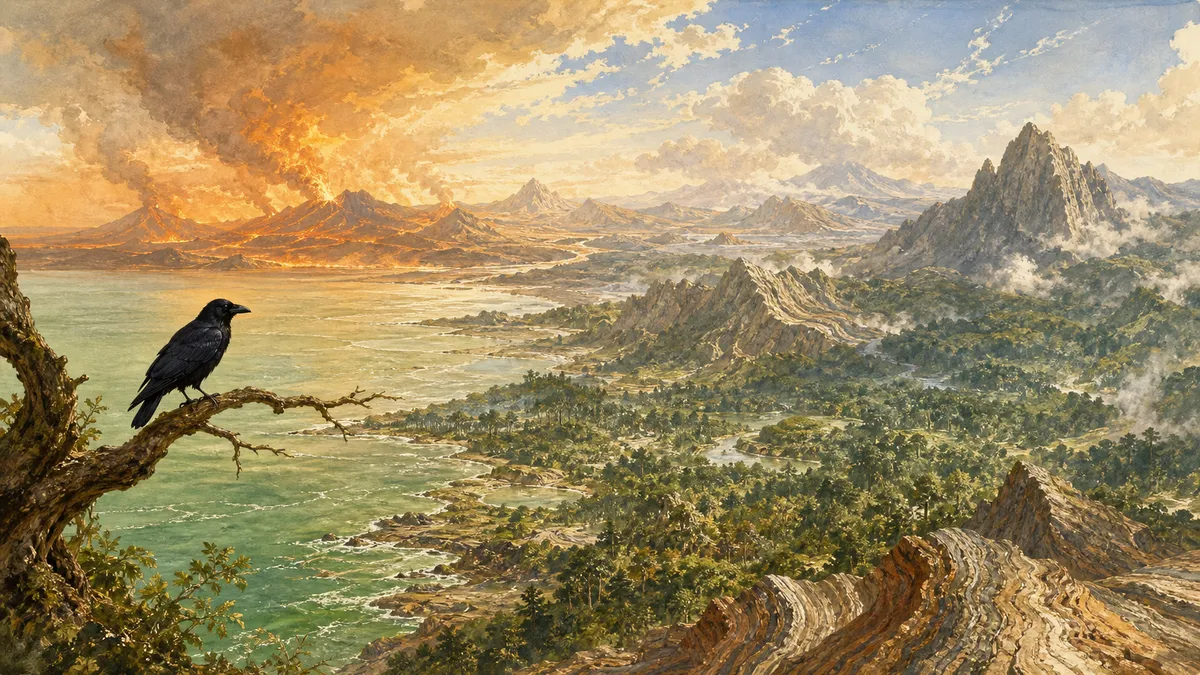
I remember that once there was nothing on this earth—no trees, no plants, not even mountains. For eleven thousand years, the earth was covered in lava. In those days, there was neither day nor night in the region below the polar area, while neither the moon nor the sun shone upon the rest of the earth. Only half of the polar region was illuminated.
At that time, demons ruled the earth—they were foolish, powerful, and wealthy. The earth was their playground.
The entire earth except for the pole was covered with water. Then, for a very long time, the whole earth except for the poles was covered with forests. Later, enormous mountains arose, but there were still no people. For ten thousand years, the earth was covered with the corpses of demons.
Once, the gods who lived in the heavens disappeared from sight in fear. And then the earth became like a single mountain! I remember many such events, but let me tell you what is important.
During my lifetime, I have witnessed the appearance and disappearance of many Manus, the progenitors of the human race. Once there were neither gods nor demons on earth, but there was a single luminous cosmic egg. At another time, the earth was inhabited by clergymen who loved to drink, servants who mocked the gods, and women then had many husbands. I also remember another time when the earth was covered with forests, oceans did not exist even in the imagination, and people arose spontaneously. At another time, there were neither mountains nor the earth itself—the gods and sages lived in the air. At yet another time, there were neither gods nor sages, and darkness was everywhere.
First, the concept of Creation arises. Then light and various divisions arise in the universe. After that, various beings, stars, and planets arise one after another.
At different times, universes were created by different gods—sometimes it was Vishnu, regarded as the preserver, sometimes Brahma, and at other times it was Shiva.
Bhusunda continued:
Of course, I remember sages like you, goddesses, demons, and kings of the recent and distant past. O sage, this is already the eighth time you have been born as the sage Vasishtha, and the eighth time that you and I have met. Once you were born of air, once of wind, water, a mountain, and fire.
Everything that happened in this cycle also happened in exactly the same way in the three previous cycles. But I remember the events of ten such cycles. In every cycle, there were sages who proclaimed the truth and revealed the Vedas. The sacred scriptures were created again and again.
To destroy the demons, the god Vishnu was born again, as was Rama. And he was born for the eleventh time. And the god Vishnu will be born as Krishna for the sixteenth time.
But all this is, as it were, an illusion; the world as such is not reality. It seems real only to the deluded mind. It arises and disappears in the blink of an eye, like ripples on water. All three worlds were alike at one time and completely different at another. Because of all these differences, in each age I have new friends, relatives, servants, and dwelling places. Sometimes I live in the Himalayas, sometimes in the Malaya Mountains, and sometimes I live in this nest.
Even the directions change from time to time. Since I am the only one who has lived through the night of the creator Brahma, I know the truth about these changes. The directions of north and south are determined by the position of the poles and the movements of the stars, the sun, and the moon. When these change, the directions change as well. But I know that this world is neither real nor unreal. The only reality is the movement of energy in cosmic consciousness. It is this that, due to misunderstanding, appears as the creation and destruction of the world—and such misunderstanding causes confusion about relationships and duties. At certain times, a son behaves like a father, a friend like an enemy, and a man like a woman. Sometimes, in the “dark ages,” people behave as they do in the “golden age,” and vice versa.
Question:
Vasishtha asked: O Bhusunda, how is it that your body is not subject to death?
The Secret of Bhusunda’s Longevity
Bhusunda replied:
O sage, you yourself know everything, yet you ask this question so that your servant does not lose his eloquence. I shall certainly answer your question, for obedience is the best way to honor the saints.
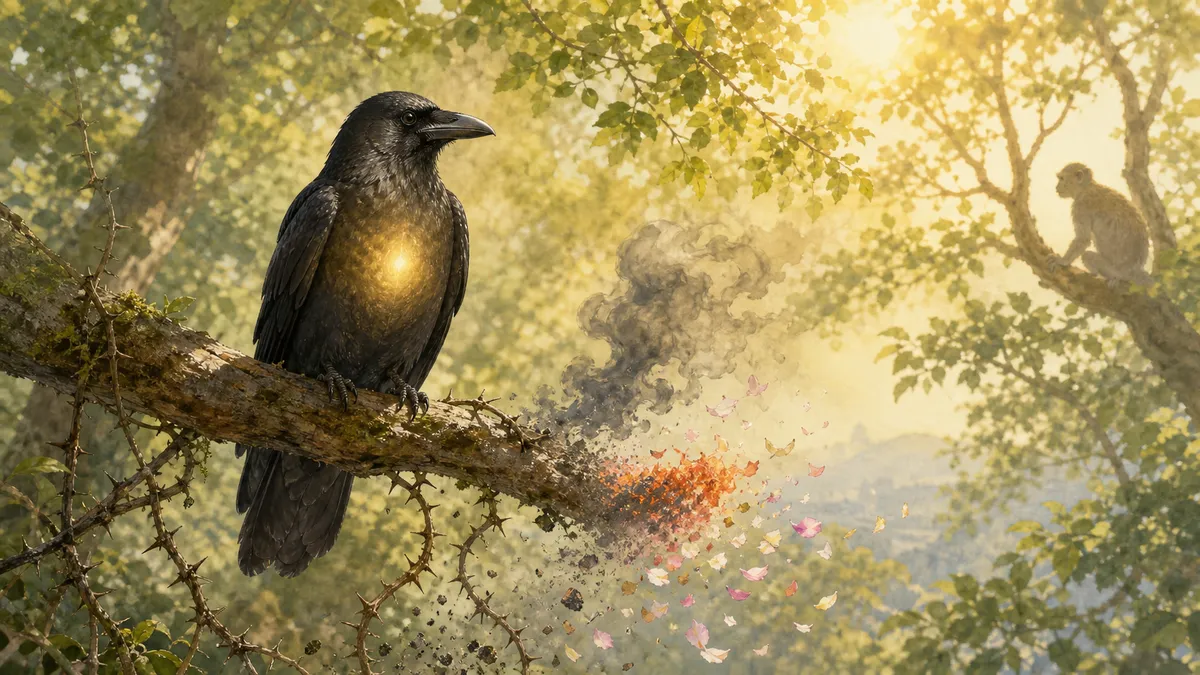
Death does not seek to kill anyone who has neither likes nor dislikes, false notions nor mental habits. Death does not kill those who do not suffer from mental disturbances, who do not harbor desires and hopes that give rise to anxiety and fear, who are not poisoned by envy, whose body and mind do not burn in the fire of malice and hatred, who are not ground in the mill of lust and craving, who are firm and unwavering in their awareness of the absolute Brahman, and whose mind does not leap about like a monkey.
O sage, these vices do not even approach one whose heart abides in a state of perfect bliss, harmony, and peace. Nor can diseases of body and mind assail him. His awareness neither rises nor falls, whether in deep sleep or in the waking state. One whose mind and heart are at peace is not subject to the blinding vices of lust and hatred. He seeks nothing and avoids nothing, never gives up and accumulates nothing, although he constantly does what must be done. He is subject to no vices. All joy and happiness, all the finest qualities, are drawn to him.
Therefore, O sage, everyone should realize the indestructible and eternal truth, free from foolishness and seeking. One must slay the specter of duality and establish the heart in the one truth, which alone is sweet in the beginning, the middle, and the end.
True Happiness Cannot Be Found in the World
The company of gods, demons, or celestial beings does not bring endless happiness. That which is always good cannot be found in heaven, on earth, or even in the netherworld—nowhere in this creation. All actions are bound up with physical and mental illnesses and various forms of misery—endless happiness cannot be found here. Such eternal happiness cannot be found in the sensations of any of the senses, for their sensations have a beginning and therefore will also have an end.
Neither dominion over the entire world, nor the attainment of divine forms, nor the study of scriptures, nor helping others, nor listening to or telling stories, nor longevity or death, nor heaven or hell can compare with the state of mind of a saint.
Bhusunda continued:
The best of all states, O wise one, is the vision of the one infinite consciousness. Contemplation of infinite consciousness allows no anxiety, ends the long sleep of perceiving this world, purifies the mind and heart, and dispels fears and misfortunes. This contemplation is not mere intellectual speculation. It is simple for those like you, but it is quite difficult for me.
Yet this contemplation of consciousness has analogous states resembling such contemplation. Among them is concentration on the life force, or breath, which enables one to overcome suffering and fosters bliss. This is precisely the kind of contemplation I practice.
The Practice of Contemplating Prana
Bhusunda then reveals the secret of his longevity.
Contemplation of the life force brings longevity and understanding of the truth.
The energy vibrating in the lotus of the heart is called prana—it enables the eyes to see, the skin to feel, the mouth to speak, food to be digested, and in general performs all bodily functions. It has two distinct functions—prana and apana, upward and downward—and I am devoted to them, tireless, shining in the heart like the sun and moon, like the wheels of the mind that guards the city of the body, like the beloved horses of the king called the sense of self-importance. Contemplating them, I live as if in deep sleep, eternally abiding in homogeneous consciousness.
One who observes prana and apana is not born again in this world and is freed from all attachments.
Bhusunda then says that he contemplates the infinite consciousness that is present in prana, but is itself neither prana nor anything else.
Devotion to prana purifies the heart and mind of impurities, frees one from delusion, enables one to attain inner awakening and remain oneself while performing the deeds that must be done.
Bhusunda says:
To attain perfection, one need not guard against or defend oneself from the outer darkness, but should strive to destroy the inner darkness of misunderstanding in the heart.
These are very important words of Bhusunda. He says that to live happily, one should neither defend oneself against anything external nor rely on anything external. One must dispel the darkness of misunderstanding in the heart. That is precisely what it is all about. When this darkness of misunderstanding disappears, one can see the true world, and an understanding of the truth arises.
We often look outside ourselves for the causes of our problems. Even after becoming practitioners, we try to engage in such pursuits. We think that the difficulties that arise may be caused by others or by external circumstances. Yet if we simply look into our own hearts, we will see that all difficulties arise because we do not truly understand ourselves.
In one of the texts, Vasishtha says:
One who does not know oneself is accompanied by suffering and misfortune.
But when the darkness of misunderstanding in the heart is dispelled, a vision of truth as it is arises.
Contemplation of Infinite Consciousness
Bhusunda says:
I contemplate this infinite awareness that is present in prana, but which is neither prana nor anything else. I contemplate this infinite consciousness that is the inner presence in apana, but which is neither apana nor anything else. That which IS after prana and apana have ceased to exist, and that which is midway between prana and apana—I contemplate this infinite consciousness. I contemplate this consciousness that is the prana of prana, the life of life, which alone is responsible for preserving this body, the mind of the mind, the intelligence of the intelligence, the reality of the sense of ego. I salute this consciousness in which everything abides and from which everything arises, which is everything and all in all and infinite, which purifies everything and the vision of which is the highest virtue. I salute this consciousness in which prana ceases to move, but apana does not arise, and which dwells in the space in front of the nose. I salute the consciousness that is the source of prana and apana and enables the sense organs to function, which is the essence of the external and the internal, the sole purpose of all practices and the cause of all causes. I seek refuge in this supreme being.
The State of Equanimity
Bhusunda continued:
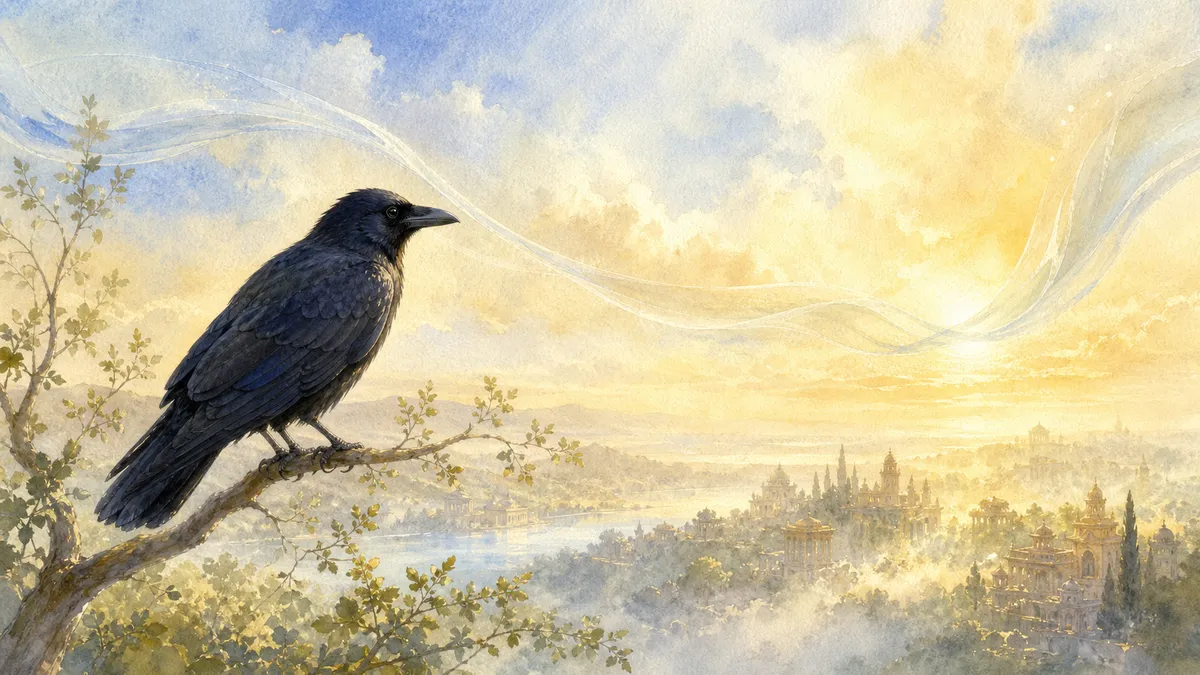
Through the regular and systematic practice of pranayama, I have attained a state of purity. And I remain undisturbed even if Mount Meru or the North Pole should shake. This state of samadhi, or complete equanimity, is not lost whether I walk or stand, sleep, dream, or remain awake. My gaze is turned inward, I know my true nature, and I always abide in it under any external conditions, no matter what cataclysms shake the world. This is how I have lived since the previous cosmic dissolution.
I do not dwell on the past or the future—my attention is constantly in the present. I do what must be done now, without thinking about the results. Without reflecting on what exists or does not exist, what is desirable or undesirable, I remain myself—and therefore I am healthy, happy, and free from illness.
My state is the result of concentrating on the moment when the two functions of prana unite; I have no notions such as “I have attained this and now must attain that as well.” I neither praise nor condemn myself or others; my mind does not rejoice when it attains something considered good, nor does it become depressed when it receives something considered bad—hence my state of happiness and health. I reject even the desire to live, so my mind desires nothing and abides in a state of peace and harmony. I see the one essence in everything (in a piece of wood, a beautiful woman, a mountain, a blade of grass, ice and fire, and space), and I am not troubled by thoughts such as “What should I do now?” or “What will happen tomorrow morning?” I am not concerned with thoughts of old age and death or the pursuit of happiness; I regard nothing as “mine” or “not mine.” I know that everything around me, always and everywhere, is the one cosmic awareness. These are my secrets; this is why I am happy and healthy. I do not think, “I am my body,” even when I am working, for I know that the appearance of this world is an illusion; I live as though in deep sleep. I am troubled neither by wealth nor by misfortunes when they befall me, for I regard them as equal (just as I look upon both my hands simply as hands). Whatever I do is untainted by desire or the impurity of the sense of ego, so I do not lose my head either when I am powerful or when poverty compels me to beg for alms. Hopes and expectations do not affect me, and even when something is old and worn, I look at it with fresh eyes, as though it were new. I rejoice with those who are happy and share the sorrow of those who grieve, for I am a friend to all, belonging to no one, and no one belongs to me. I know that I am the world, all the actions within it, and its intelligence. This is the secret of my longevity.
Parting with Bhusunda
Vasishtha said:
Then I said to Bhusunda, “The story of your life is beautiful and wondrous. Blessed are those who have seen you. You are like a second creator. People like you are rare. I feel immense bliss from meeting you. May blessings continue to shower upon your head. Now allow me to leave you.”
O Rama, on hearing this, Bhusunda bowed to me once more and, despite my objections, accompanied me for some distance, holding my hand firmly and expressing his friendly affection. Then we parted—and parting between friends is truly difficult. All this took place in the previous age.
Such is the tale of Bhusunda, O Rama: you too should practice pranayama as Bhusunda did and strive to live as he did.
The Two Truths: View and Meditation
What does it mean to practice like Bhusunda?
Here Bhusunda gave remarkable instructions on the practice of the two truths: view and meditation. Sometimes the two truths are spoken of as view and conduct, and sometimes as view and meditation. There is an expression: “Spread the wings of the two truths.” The first wing is the view, nondual understanding, and the second wing is meditation. Of course, the most important thing is the view, because practice without the view is delusion. One may stubbornly and senselessly practice something one has not understood or does not know, without knowing how it will all end. This is practice without the view. Conversely, one may master only the view without meditation. Vision, or the practice of abiding in the view without meditation, is likened to a rich man overwhelmed by his own miserliness, unable to obtain the true fruit of his wealth.
Suppose that even if we have the view but cannot arrive at proper meditation, we cannot make use of the wealth of that view. In other words, it does not help us in life at all. We feel that our view is very beautiful, but it is useless. It is far removed from our circumstances, and in life it is of little benefit to us.
The true view is beneficial when put into practice, but if it is not put into practice, it brings no benefit. We become like a rich man who does not know how to use his wealth. When we unite the view with meditation, the precious fruit of practicing the teaching is formed. In other words, to unite the view with meditation means to reunite Advaita with one’s life, to reunite the unconditioned with every moment of one’s perception, with conduct and action, and with one’s circumstances.
Encounter with the Highest Teaching
You have been incredibly fortunate. Thanks to your past merits, in this life you have encountered the highest teaching of the rishi and siddha tradition. But you must also make proper use of this encounter in order to obtain results. And depending on how you yourself make use of this encounter and this teaching, you will reap the corresponding fruits of your practice.
What does it mean to make proper use of it? It means attaining the true view. Until you have attained the true view, your practice will remain highly questionable, even if you practice stubbornly. And once this attainment is complete, you should also attain true meditation. Meditation means that you try always to remain in contact with the view and bring it into your life every second. Then it manifests properly in your conduct, and the circle is complete.
The Art of Manifesting the View
What does it mean to establish contact with the correct view? Of course, it does not mean saying at every turn: “You are God, I am God, everything is an illusion. This or that—everything is an illusion, and therefore it does not exist in the nature of the dualistic mind.” This is acceptable in self-liberation classes, but when we act in life, we should act much more subtly, much more gracefully and carefully.
Sometimes I ask such a person: “If you have realized this, why do you talk about it? Why say what is already obvious?! It is enough simply to abide in it. After all, you do not approach everyone and say, ‘You are a human being, I am a human being, we are human beings.’ If you say such things, it means that something is wrong with you. Perhaps you doubt it yourself? Perhaps you constantly need some kind of proof and confirmation? Why are you so worried about it?”
Often, if a person does not understand how to manifest the view and conduct, they may confuse relative truth with absolute truth. You approach them on the relative level and ask, “Prabhu, please pass the plate.” They say, “You are God, I am God, we are beyond the one who passes the plate, and beyond prasada altogether. Why speak of such things, my friend?” Then you think, “I see... A difficult case.”
But a true practitioner knows how to combine relative and absolute truth. One can act perfectly appropriately in the relative dimension while abiding in the absolute. Everything simply has its place, and everything operates on its own level. After all, you are playing a game, and if you have already accepted this game, there is no need to keep repeating it. You abide in a state of non-duality, but your non-duality is already mature, playful, capable of concealing itself, hiding, revealing itself as much as it wishes, or closing itself off again, interacting with relative objects, having hidden goals, having first-, second-, and third-level goals—the so-called outer, inner, and secret levels of conduct—and harmoniously integrating all of this into external circumstances. Your non-dual view is already multilayered, multifaceted, and playful; at the same time, it does not dissipate or become lost. It has different meanings and goals, and, thanks to impeccable clarity, it incorporates the diversity, spectrum, and polyphony of external energies into this single state without error.
The Metaphor of the Perfect Actor
A good actor who plays the role of a king, then a soldier, then a peasant on stage does not periodically leap out in front of the audience, saying, “Oh, it is all theater! Do not misunderstand me—I am actually a good person. After the theater, I go home to my wife. It is all just a game.” He does not do that. He plays his role sincerely, with feeling, giving himself to it completely, yet never losing awareness for even a second. This is a perfect actor. He feels himself to be a human being, yet he gives himself to his role, he is devoted to his role, he puts his soul into it, and he plays in such a way that others believe as well. He even believes in it himself, because if you do not believe in your role, you will not play it sincerely. In other words, he is already living on stage, not merely acting.
And this is precisely how the circle is completed: life and play become one. It is only at this stage that one can say that view, meditation, and conduct have fully merged. When necessary, we can manifest the absolute level; when circumstances require it, we can manifest the relative level. We abide continuously in meditative awareness.
The True Yogi
The key to attaining harmony by uniting view, meditation, and conduct is to abide in constant meditation, firmly established in the view, and to allow meditation to shape a wide range of wholesome ways of acting in relative circumstances. Then it is said of such a practitioner: “This is a true yogin. He is skilled in contemplation, profound in his view, discerning and refined in his conduct, and impeccable in meditation.”
Consciousness
Nonduality
Vasishtha
Meditation
Behavior
View
Pranayama
Yoga Vasistha
Bhusunda
Longevity
Read 17 times
Articles
Vidya AI
Search
Lectures
November 3, 2026
Mantra of the day
ОМ САДРЩАЙА НАМАХ ОМ Видящему равно – поклонение!
Auspicious Times(Rome)
Brahma Muhurta:
04:54 - 05:49
Abhijit Muhurta:
11:33 - 12:14
Sayam Sandhya:
16:43 - 17:24
Mokshada Ekadashi (6 November)
Ekadashi of liberation. Helps to achieve spiritual enlightenment.