

When we listen to satsang, when we attend satsang, we fulfill our Vedic dharma. Dharma means “path” or “religious duty.” Each status in Vedic society and Vedic culture has its own dharma. An ordinary householder has one, a sannyasi or monk has another, and a vanaprastha has yet another. But in general, all these statuses are united by the fact that satsang is very important on the spiritual path.
The Meaning of the Guru-Disciple Relationship
When we attend satsang, on the one hand we fulfill our spiritual duty, and on the other hand we address our own problems and tasks on the path to liberation. Or rather, the guru fulfills his religious duty, while the disciple addresses his own tasks.
Satsang is a message from the guru that the disciple must perceive. It is not material, mental, or verbal—it is not primarily words; it is a message from the space of infinite consciousness. But since receiving such a message is not so easy, words are needed in order to attune oneself. One must remain attuned for a long time. This is the meaning of the guru-disciple relationship. Such attunement is achieved through samaya, seva (service), sadhana (transmission of the method), and upadesha. But when such a message comes through sooner or later, satsang takes place.
The truth of Advaita says that we are neither the body nor the mind, but infinite consciousness—omniscient, all-pervading, omnipotent, and all-filling. We are not the ego, but something far greater. We are not a small being, but a vast, infinite one. And there are not many of us; rather, we are one unified whole, one divine being. The truths of the Vedas also say that the foundation of the universe is God, the Absolute, and not us as body and ego. We are not sinful, miserable, impure human beings; we are self-luminous, infinite, perfect, divine, superintelligent Consciousness—the one and only being that exists: the Absolute.
But these truths are too great, too shocking, too transcendent for us to feel them and follow them literally. We cannot understand them even when we hear them hundreds of times or read them in the texts of the Upanishads. This is because it is not a process of intellectual understanding or repetition; what is needed is a process of transmutation, tapas, and transformation. This is why satsang, the guru-disciple relationship, and much more are needed. It is important not to bring ordinary human relationships into this relationship. Learning from a master is the transmission of spirit and blessing. It is not linear school-based learning. If we imagine learning as a set of linear school rules, we are mistaken.
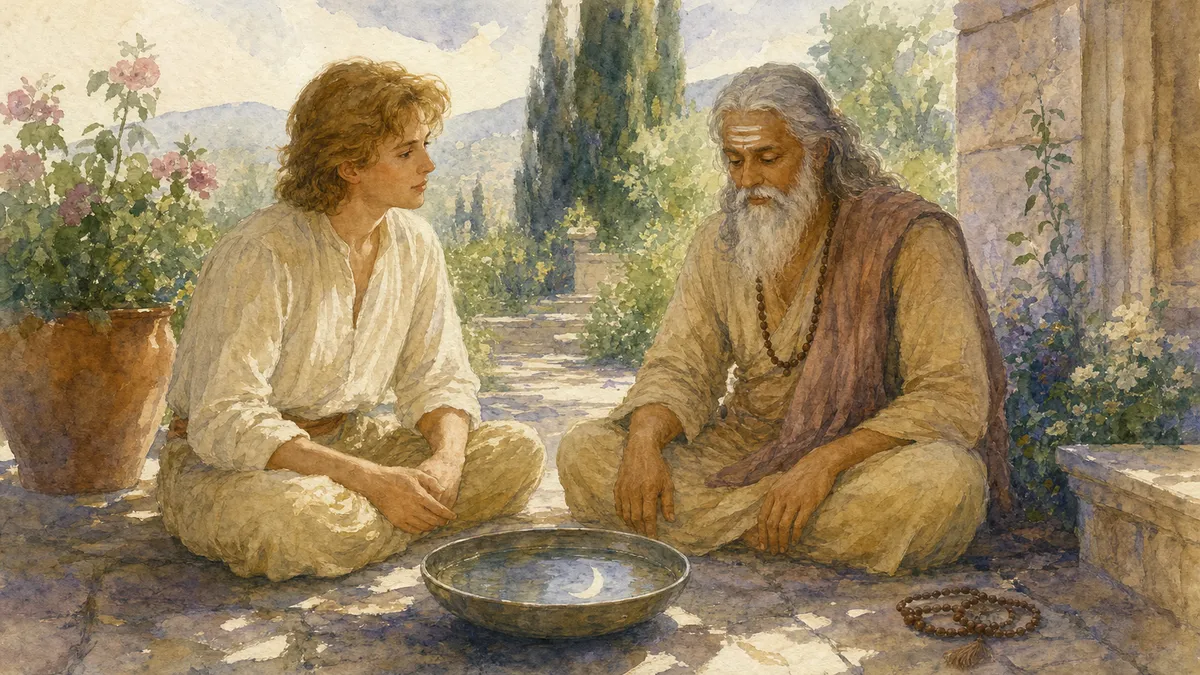
For example, a disciple asks a question. He naively thinks that the master must answer him immediately: “How can this be? I asked a question and I am waiting for an answer, so how can there be no answer?” In his understanding, this is correct. If a student asks a professor questions, then the professor, drawing on his competence and education, simply gives him an answer. That answer is the textbook in the professor’s head. The textbook shows that the answer exists.
But this framework does not work in the master-disciple relationship. Perhaps it would be better to remain silent? Perhaps that is the answer he needs at this particular moment? Or perhaps one should pretend not to pay any attention to the disciple at all—maybe that is exactly the answer the disciple needs? Or perhaps one should say that the question is meaningless and that a different question is needed, changing the subject of the question? This, too, is learning in the Siddha tradition. Or perhaps the answer should not be given now, but when the moon is full or waxing, so that the problem may be resolved, because the purpose of the question is not to receive an answer.
When asking questions, the disciple is not seeking answers of the mind; he is seeking transformation and transfiguration. Is the true answer from the guru really words? Is it really an answer made up of letters, words, and sentences, written in a messenger app or sent by email? Not at all. The true answer from the guru is transformation, a change in consciousness. It may occur in any way whatsoever or through anything at all, through any channel. This nonlinearity of the guru-disciple relationship is satsang; it is transmission.
There is a story about a master who had a disciple. This disciple would sometimes come to him and ask questions. But the master did not answer; he would only say, “Yes, yes.” Sometimes the disciple became angry and demanded an answer. The master would laugh, say, “Yes, yes, of course,” and give no answer. Sometimes the disciple would ask whether there was any possibility of showing him some miracles. The teacher would laugh as well, say, “Yes, yes,” and show no miracles. Sometimes the disciple would cry, lose heart, lose faith, and say that he might go to another master, because apparently nothing could be gained from this one. And the master would laugh just as imperturbably: “Yes, yes, of course, you should go.” Whatever happened in the disciple’s soul, the master simply mirrored it, showed it to him, and smiled all the while.
But one day something happened, and suddenly the disciple realized that it was possible to look at the world through the master’s eyes. And through the master’s eyes, none of his questions mattered, nor did any miracles, any of his searches, or any suffering, because something entirely different was important. It was a completely different dimension of life. It could not be conveyed in words. It could not be conveyed by anything at all except the state itself. And that was what the master was doing. He simply abided in that state for years, days, hours, from minute to minute. And he transmitted it, kept transmitting it. But because of his conditioning, the disciple simply could not understand it at first; he could not grasp it. He was impatient; his mind wanted words, his mind wanted actions and feelings. But everything was much subtler, much deeper. Yet one day it happened. This is transmission; this is satsang.
The Inner and the Outer, Microcosm and Macrocosm
When we listen to teachings about the Divine, that is satsang. We need to accustom ourselves to listening to teachings about the Absolute, about God, about Brahman. And we must listen not only to words, not only with our ears, but in a subtler way as well. Commentaries, texts, words, lectures—all these are a pretext for activating this subtler perception, because initially a person is not ready to listen beyond words, beyond lectures, beyond commentaries. But true shravana is not words; it is transmission.
Thus, a person begins in a state of delusion. And this delusion is avidya, delusion concerning God, the Absolute, the absolute Truth. One needs to comprehend all of this. This can be comprehended under the influence of shravana, when one listens to the guru many times, reads texts, and participates in satsang—all of this is shravana. Then one reflects on it many times and meditates—this is manana. Ultimately, one attains continuity in understanding and in contemplation of the Divine. This is called nididhyasana.
When a yogi begins to undergo these processes, he begins to understand that he is not ready to perceive God directly. He lacks many qualities. He needs to cultivate these qualities, and he needs sadhana. The preparation of oneself begins: tapasya, ascetic discipline. Sadhana and seva are different forms of tapasya. Once he has undergone this tapasya, transmutation takes place, and then he is ready to immerse himself truly in God, in nididhyasana, in samadhi. Then dissolution (laya) and self-surrender (prapatti) occur. It is this that burns away all karma and the entire ego. And only then does the disciple truly gain the right to Advaita, to self-recognition: “I am one with God, I am one with the Absolute.”
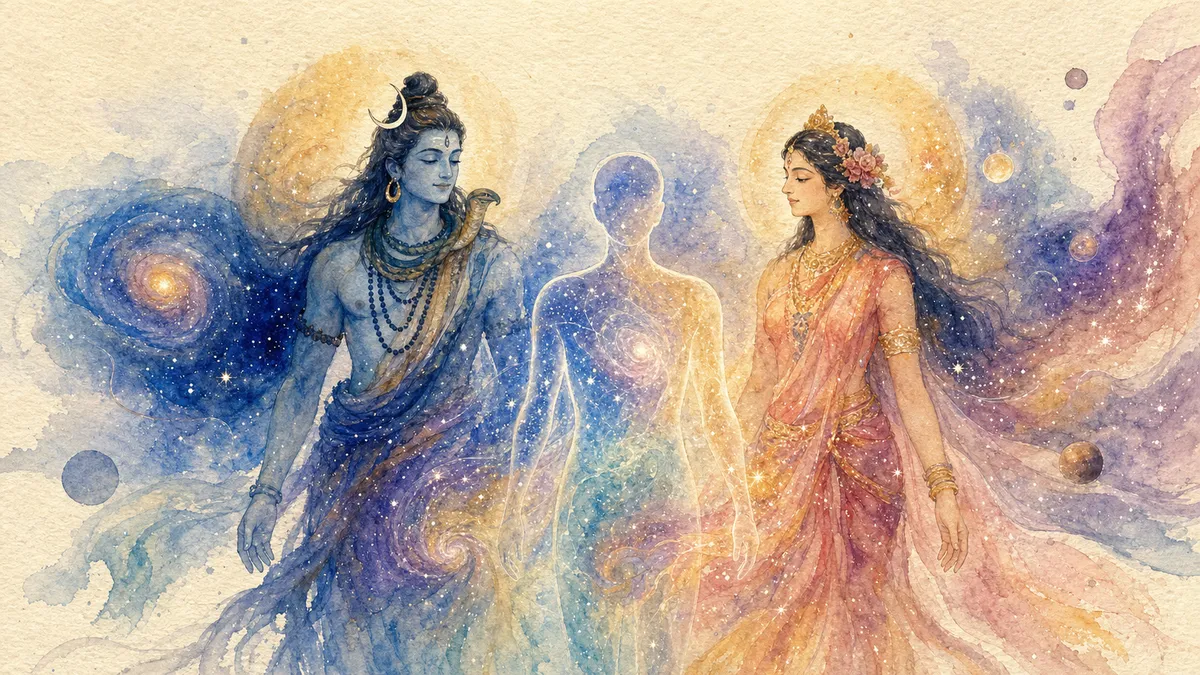
We are discussing the story of Shiva in order to understand how the inner and the outer, the microcosm and the macrocosm, relate to one another. These stories are not, in fact, abstract tales about ancient gods who once dwelled in the past. They are eternal stories. Shiva and Parvati are Purusha and Prakriti, energy and consciousness. These stories, these plays between energy and consciousness, unfold every instant, every second. They unfolded in the past and will unfold in the future. They unfold on the macrocosmic level and on the microcosmic level within our body. Everything that happens within our body also has a macrocosmic counterpart.
For example, we experience anger—it is a reflection of the cosmic anger that arises during the destruction of the universe. We experience attachment—it is a reflection of universal cosmic attachment, when energy follows consciousness. We experience pride—it is a reflection of the great divine majesty, but one that is clouded, limited, and obscured by the ego.
When we hear these stories, they are actually describing the processes that occur within our microcosm during spiritual life, along the spiritual path.
The Meaning of Shiva and Parvati’s Wedding
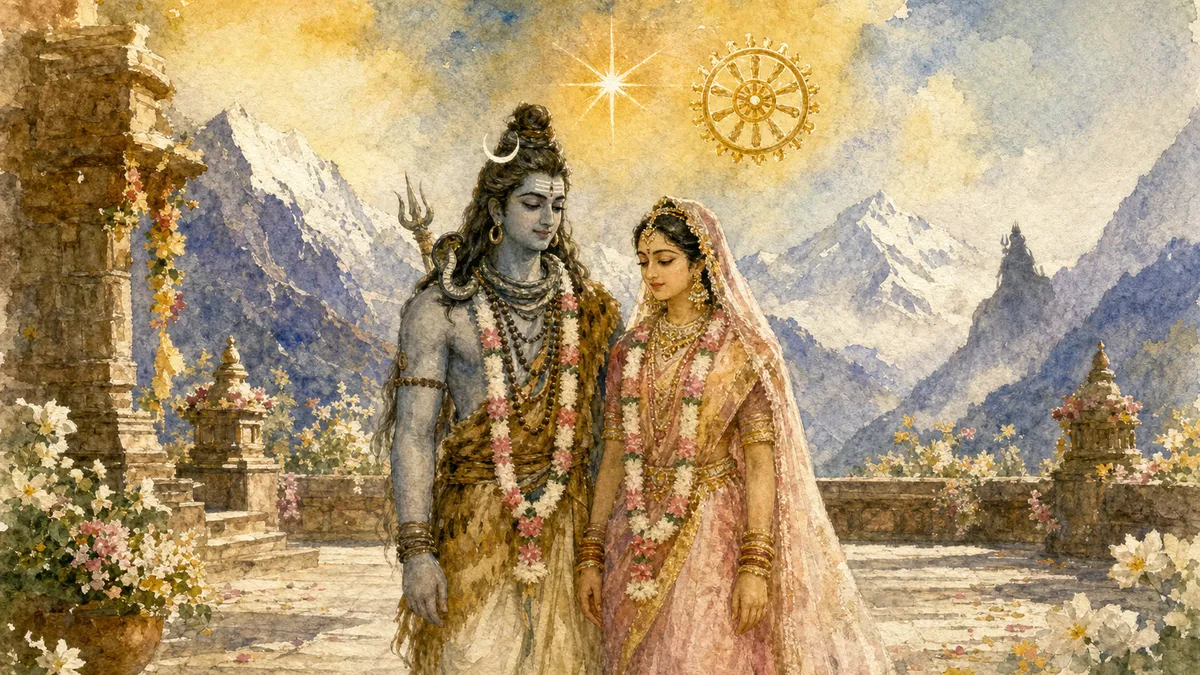
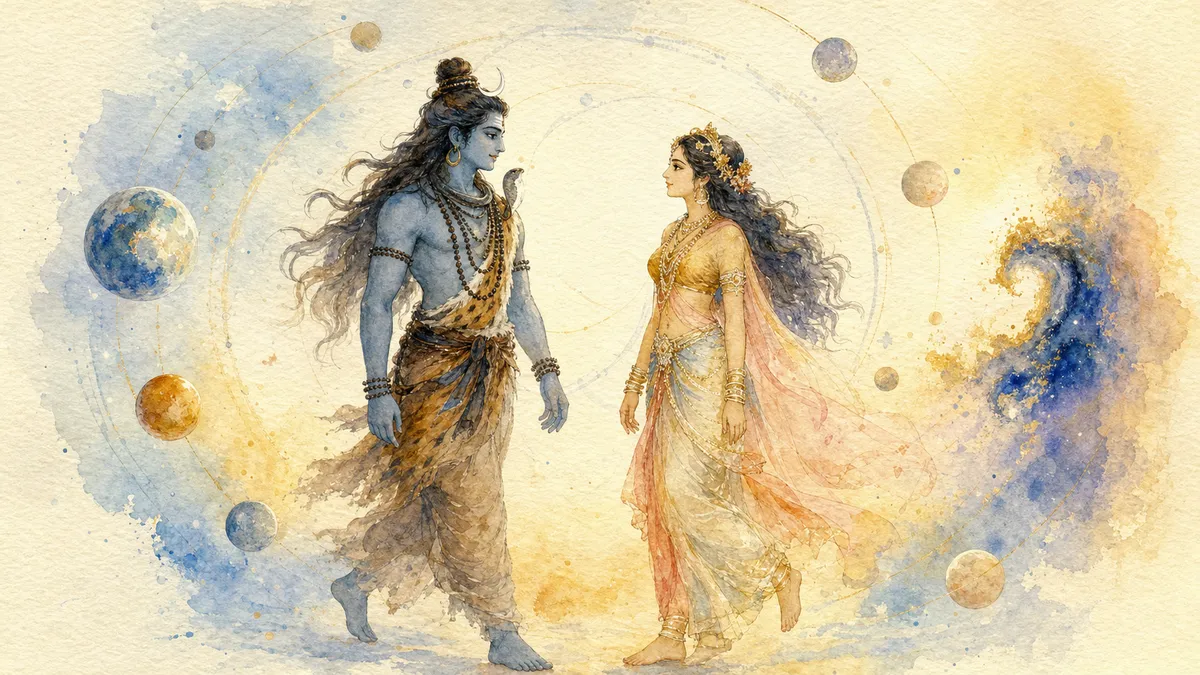
At last, the gods’ elaborate plan to unite Shiva with Parvati succeeded, and the wedding began. Parvata, the king of the mountains, and the wedding guests realized that they stood face to face with the lord of the three worlds, and Parvata gave his daughter in marriage to Shiva. The gods’ dream came true: Shiva united with Parvati, and Karttikeya was born—the one who would slay the demon Taraka, who had oppressed the gods. Taraka symbolizes the ego, while the gods symbolize the subtle energies and sense organs within our body, within our microcosm. Taraka violated rita, the law of universal order.
Rita is established and sustained by the gods. And the gods ensure that rita is upheld. Rita is the foundation of dharma. On the human level, rita manifests as justice, righteousness, and morality. Rita is the foundation of truth in the broadest sense, the foundation of dharma. It is the mula, the root of dharma. Dharma flows from rita. And dharma is the path followed by sadhus and the path that all people should follow. It is, as it were, the soul’s religious duty to the divine.
The devas are manifestations of rita. Their actions are the processes in the universe that they govern. And all the devas stand guard over rita. Rita was established by the devas. It is guarded and sustained by them in their struggle against anrita. Anrita is disorder, chaos, the absence of rita. It is believed that rita is upheld primarily by Varuna and Mitra, as well as by the god Vishnu and all the gods. Dharma, meanwhile, is upheld by Yama. Consequently, the gods observe whether a person follows dharma or adharma, whether they accord with the harmony of the universe, with rita, or with anrita. Anrita is chaos. Rita is the universal cosmic law according to which the cosmos is ordered, the planets move in their orbits, the cycles of time unfold, and the three gunas and five elements are maintained in equilibrium.
Electrons revolve in their orbits, galaxies and the universe rotate; that is, this vast, immense cosmos created by Brahma moves according to the laws of rita and is ordered by the gods. The gods, not humans, are the guardians and custodians of this cosmos. Anrita, on the other hand, is chaos—everything that breaks down structure and disrupts harmony in the universe. Having performed austerities, the asura Taraka became such a destructive force, an element of chaos in the universe. Alarmed, the gods appealed to Brahma, Shiva, and Vishnu, and the supreme gods offered the following counsel: only a son born of Shiva could counterbalance this chaos and destroy Taraka. And for that, Shiva had to unite with energy—with Parvati.
The Importance of Mental Equilibrium When Coming into Contact with Energy
Mastering the Power of Desire
During the wedding ritual, as the newlyweds walked around the sacred fire, Brahma, the chief priest, stared at Parvati’s feet. It was the same weakness that had overcome him at the wedding of Shiva and Sati. This time, the drops of semen that fell did not turn into menacing clouds of doom. Instead, they gave rise to thousands of Valakhilya sages. After greeting Brahma, their father, they set off for Mount Gandhamadana. Shiva, initially displeased by Brahma’s lack of restraint, assured him that he had nothing to fear.
Brahma is the potency of the Absolute, the creative power of the Absolute. And this creative power can be unstable. It is the creative power of the mind. Sometimes our mind reacts to certain things, evaluates them, becomes attached, and displays its lack of restraint. Here, this creative power manifested as a lack of restraint in response to energy. Parvati is energy. Of course, this should not be understood literally. Parvati is a tremendous universal force, energy, while Brahma is the creative potential of consciousness. And this potential of consciousness lost its equilibrium. We often meditate, but our mind loses its equilibrium—the same processes are at work. And the wedding is the union of energy and consciousness.
During the union of energy and consciousness, our mind sometimes loses its balance. Brahma is called upon to create; he is meant to be rajasic—creation is his nature. Likewise, our mind and its potential are meant to be rajasic. The drops of semen that issued from Brahma represent the principle of his intemperance. In the same way, our mind loses its balance, and then reacts intemperately to energy. And when this happened the previous time, in the age of Sati, Shiva said that he would destroy this Brahma and create a new one. But this time he said indulgently, “All right, Brahma, you will not be punished for this.” Shiva embodies the principle of nonduality, the principle of infinite consciousness, the principle of emptiness, which lies deeper than Brahma, deeper than the creative mind. He simply looks on with indulgence.
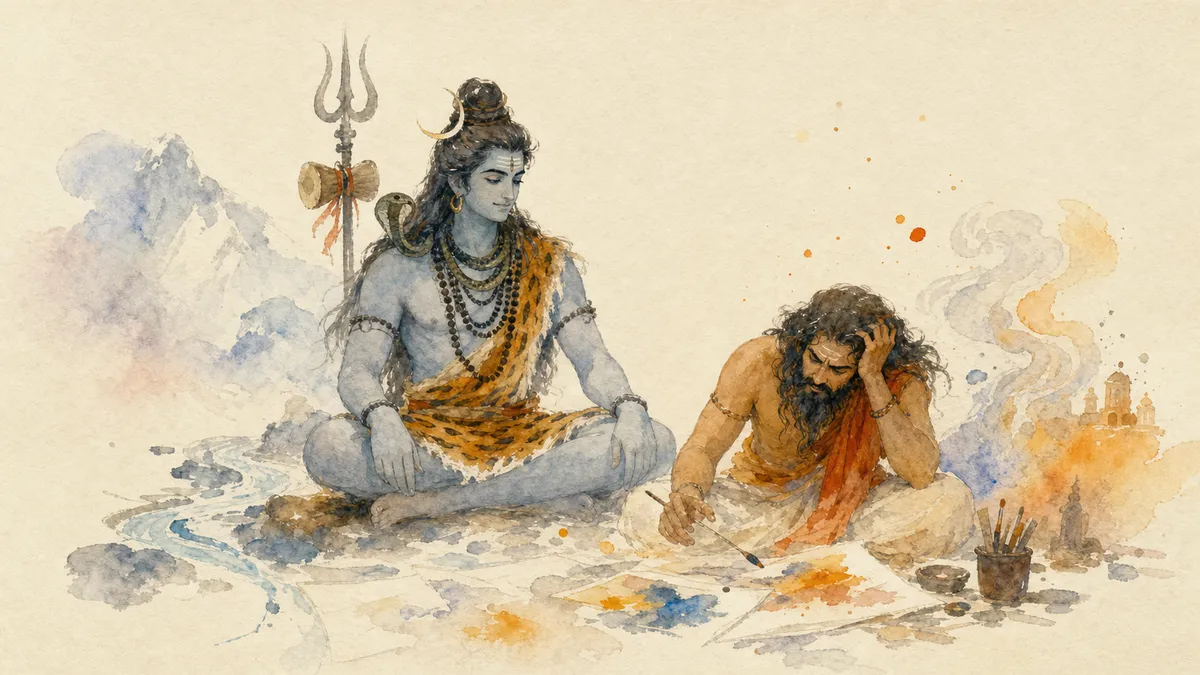
Within us there is a profound consciousness that sees how the mind loses its balance, how it becomes attached, grows angry, competes, and displays envy and pride. If we listen closely, within us there is this deeper, pure consciousness that looks upon all of this with compassion and indulgence. We must find this level within ourselves, the inner Shiva, in order to subdue the intemperance of the inner Brahma, the intemperance of the mind that wants to do something, wants to achieve or obtain something, yet makes mistakes, constantly loses its balance, and brings disharmony into the universe—the mind that has not yet learned to create gracefully, purely, beautifully, in balance and in samyoga.
Shiva behaved more indulgently and contemptuously than threateningly, unlike on a similar occasion at Sati’s wedding, when he declared that, after killing the creator, he himself would create all living beings on earth and create another creator. He had grown accustomed to Brahma’s sexuality, with its lack of the emotional and erotic aspect that Kama’s arrows had released in Shiva’s heart. Rajas is inherent in Brahma. Sexuality is rajas. And the mind, the energies of the mind, are inherently rajasic. But this rajasic quality must be subdued by the power of nondual awareness of emptiness, by the power of Shiva. Shiva embodies the principle of samadhi, the principle of renunciation, the principle of awareness that is bound to nothing and limited by nothing. We must cultivate this principle of Shiva within ourselves. Otherwise, our inner Brahma, our inclination toward rajas, movement, activity, and creativity, will constantly throw us off balance, continually create various problems, and cause suffering.
After the wedding, it was time for Rati. She brought Kama’s ashes. Shiva cast a gracious glance upon them, and Kama, as beautiful as before, with bow and arrows in his hands, rose from the ashes.
Thus, after the wedding of Shiva and Parvati, Kama was resurrected. Kama is the power of desire, the energy of desire. At first Shiva destroyed Kama, reducing him to ashes with the energy of light from his third eye, because Kama, by awakening the energy of desire, prevented him from remaining in samadhi. But now this same Kama, in accordance with Shiva’s promise, was resurrected. In the same way, a yogin first kills the energy of desire within himself in order to attain harmony and a balance between energy and consciousness in samadhi. But then he realizes that the energy of consciousness itself is also part of his energy. This energy is, as it were, resurrected once again, but in a purer state. These are simply pranas that circulate harmoniously through the channels of the body, but no longer trouble him or give rise to any desires.
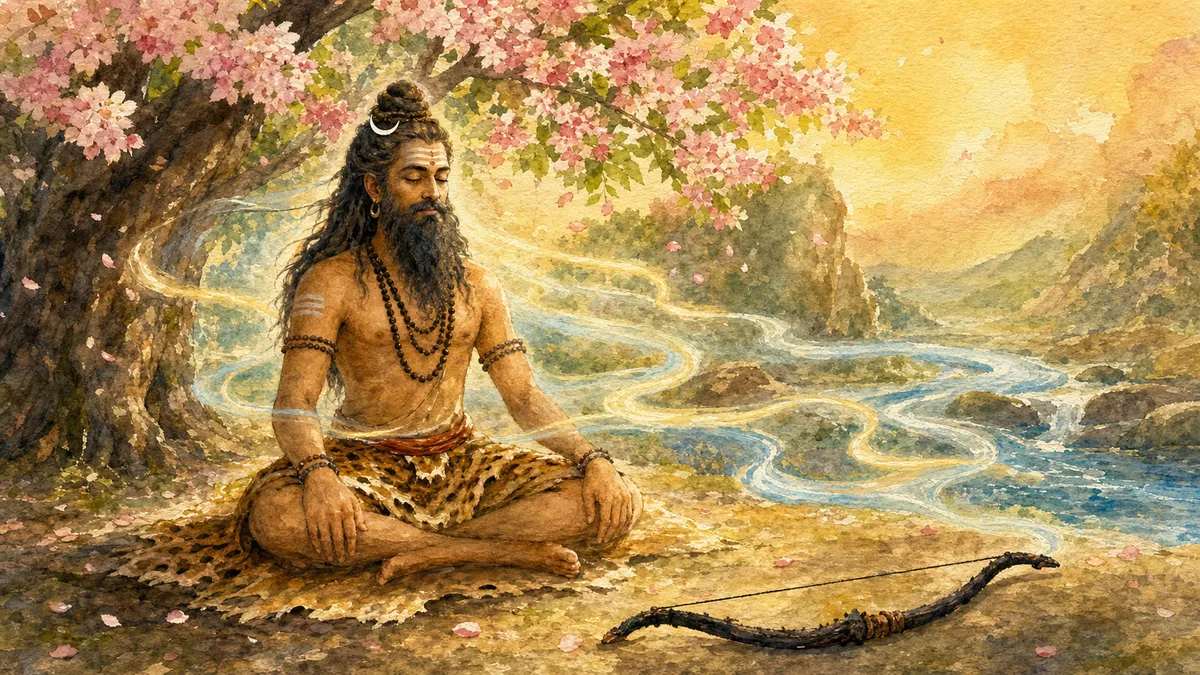
Shiva and Parvati returned to their dwelling in the mountains. In the secluded places of Mount Mandara, in forests and caves, the great yogi and the great goddess roamed and took their pleasure. They were young and carefree. When the time came, Parvati felt a passionate desire to have a son.
What, then, are these mountain caves in which Shiva and Parvati take their pleasure? In the yogin’s body, this cave is called brahmara-guha. It comprises the manas chakra, soma chakra, lavana chakra, and sahasrara chakra. If we enter this region, there is a channel there known in Vedic terminology as the akatha triangle. It is an intersection of subtle channels where the sushumna joins with the subtle channels, forming a point within the head at which samadhi is possible.
When it is said that Shiva and Parvati are enjoying themselves, it means that awareness and energy unite in this triangle, in this cave. And when the yogin's energy is experienced here, he goes beyond the body, beyond conditioning, and enters subtle-material vision. This is called samadhi. The result of this samadhi is transformation, transmutation, and the birth of a new divine “Self” in the yogin's body. However, it is not that simple.
The Symbolism of Ganesha
Intermediate Results of Practice
Once, after bathing, Parvati anointed her body with fragrant oil and powder. Mixing them with flakes of skin, she molded a human figure with the head of an elephant. Then, playfully, she threw the little figurine into the Ganges, where it grew and became as vast as the world. Parvati called her son to her, but the Ganges also addressed him as her son. The gods bowed to him. He was named Vinayaka. And Brahma and Rudra made him the leader of the ganas.
Thus, Ganesha was born first. Ganesha was not Shiva's son—he was Parvati's son alone. It is a strange thing that Parvati, energy, wanted some results from her union with Shiva. She wanted children. In other words, children are certain results in practice. And when we meditate and practice sadhana, our ego and our energy crave experiences and results.
But strangely enough, at first Parvati had no children by Shiva. As we shall see later, she never actually succeeded in having children by Shiva at all. And all the children, the sons she had, were not truly Shiva's sons. They came into being in such a strange way. Ganesha came into being without Shiva's involvement, from her alone.
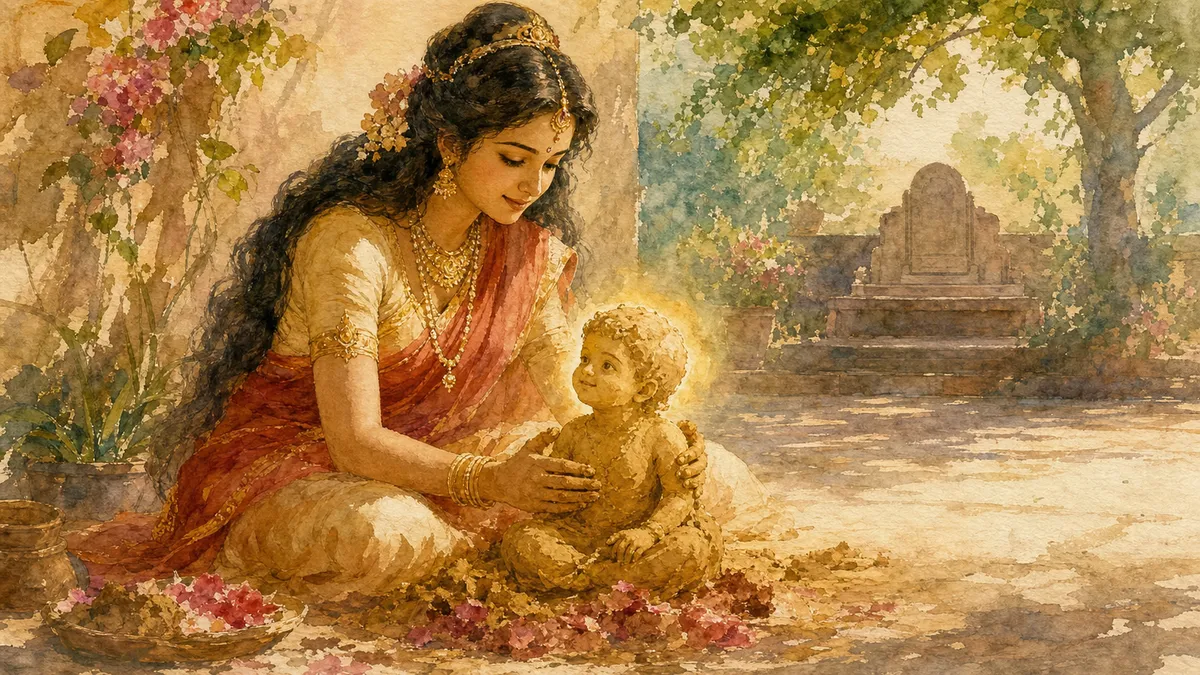
Ganesha is a symbol of an intermediate result; he is not yet Karttikeya. That is, Karttikeya was the goal. Ganesha, however, was a kind of desired child who came about by accident. Karttikeya embodies the divine wisdom, divine strength, and divine power of the yogin, which help the yogin overcome the ego, overcome all ignorance and darkness, and defeat the demon Taraka, who disrupts cosmic harmony and casts the yogin into the abyss of birth and death. Only Karttikeya can prevail. But Ganesha was born. Ganesha cannot prevail; he has a different purpose. And he is not Shiva's son at all. He came into being on his own, born of Parvati, from her sweat—that is, from energy alone.
Ganesha is such an intermediate result in spiritual life. Ganesha symbolizes solidity, clarity, rationality, concentration, and strength, but no more than that. Therefore, he is depicted in the muladhara chakra as a protector from various obstacles. In Buddhism, he is worshiped as Buddha Vinayaka. But Parvati could not be satisfied with this. That is, Ganesha is the first awakening in the muladhara chakra, when the brahma granthi is untied and gross desires are eliminated, but it is not yet the final awakening that occurs in the sahasrara chakra. Therefore, Parvati was not satisfied. He was not the desired son whom the gods wanted and whom she wanted. And other sons, such as Andhaka and Viraka, are also all intermediate results. None of them was Karttikeya.
Likewise, in spiritual life a sadhu attains intermediate results; such alter egos arise that are not, in fact, sons of Truth. And the sadhu must distinguish these intermediate results from the true son, Karttikeya. Only Karttikeya is considered the genuine son of Shiva, the son of the Absolute, the son of God, the son of emptiness, and the son of nonduality. Andhaka was a manifestation of the ego and impure qualities. Viraka was also a manifestation of the impure ego, capable of destruction, an embodiment of anger, an embodiment of the kleshas. And only Skanda was a manifestation of true divine wisdom and energy, the true son of Shiva. In the same way, on the spiritual path we attain intermediate results that do not satisfy us. And we must have the wisdom to discern these intermediate results.
Such was Ganesha's birth from Parvati, although as the kalpas multiply, Ganesha's birth is recounted in different ways. Ganesha was always born as Parvati's son. Shiva was his father only insofar as Parvati felt the yearning for motherhood while being Shiva's wife. Through her own effort, Ganesha was born from the secretions of her body. A certain feeling of resentment that Shiva had not fathered a child may have mingled with the substance from which she molded Ganesha.
The creation of Ganesha, however, did not fully satisfy Parvati. Her passionate desire to give birth to a son remained. Why was Parvati not satisfied? Because this was not the intended result. It was not the result assigned to her by the gods’ mission. The outcome of that mission was to be the birth of Karttikeya, the only one capable of destroying Taraka. Ganesha, on the other hand, represents the first awakening in the muladhara chakra. This is not complete union with the Absolute, nor the complete deification of energy. Parvati was disappointed by this.
Not Settling for the Comfort Zone
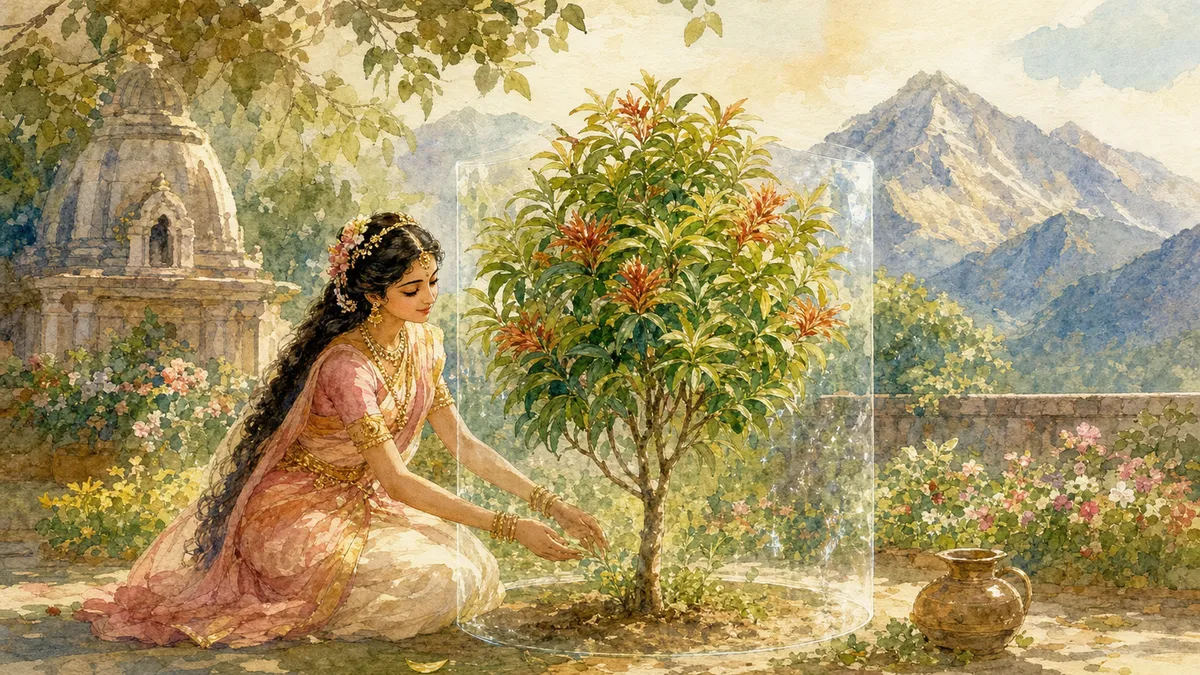
The next time, she suppressed her desire by tending an ashoka tree with great care. The gods reproached her. They longed for her to give birth to a son. “Ashoka” means a state without pain, sorrow, suffering, or fear. Parvati cultivating the ashoka tree means that energy is in a state that is comfortable for it. It does not experience suffering, but neither does it grow or develop.
Sometimes, when a yogi experiences an awakening in the muladhara and this first Ganesha is born—the first awakening of spirit and consciousness—a comfortable, joyful state free from suffering arises. And the yogi grows accustomed to remaining in it. But it is said that the gods reproached Parvati because this tree is a symbol of such stability, permanence, and inviolability; it is a symbol of spiritual inertia and spiritual stagnation, when everything seems to be fine, yet there is no spiritual awakening either. And the gods reproached Parvati, saying that this was not her mission. In other words, her mission was far deeper: she should not be fussing over this tree and wasting her time, but should continue along the path of transmutation. Yet she disappointed them by replying that one tree could be worthier than ten sons. Thus, for the time being, she satisfied her desire to have a son.
One day, Shiva brought her to his palace to play dice. Suddenly, a noise was heard, and Shiva explained that the lords of the ganas were amusing themselves. The ganas are souls who, through asceticism, fasting, abstinence, and pilgrimage, have won Shiva’s favor. They are powerful and dear to Shiva. He cannot live without them. Their favorite city is Khogiya. But they also choose other sacred cities, gardens, abandoned houses, the bodies of demons, children, madmen, and cremation grounds as their abodes. They delight in music and dancing. Some are naked, while others resemble deer or birds. They are reminiscent of the Rudras from the hymn “Shatarudriya.” Parvati was particularly attracted to one gana who wore an antelope skin, a girdle of munja grass, and a necklace of stone heads.
Shiva told her that he was highly respected by the other ganas for his wondrous qualities. His name was Viraka, or Virabhadra. Parvati said that she would like to have a son like him and asked when the blessing would descend upon her so that she might have such a son. Shiva replied that Viraka would become her son if he began calling her mother. It is said that in an earlier manvantara, Viraka, or Virabhadra, appeared when Shiva, in despair over Sati’s death, hurled a lock of his hair against a rock. Virabhadra acted as Shiva’s alter ego and messenger, destroying Daksha’s sacrifice.
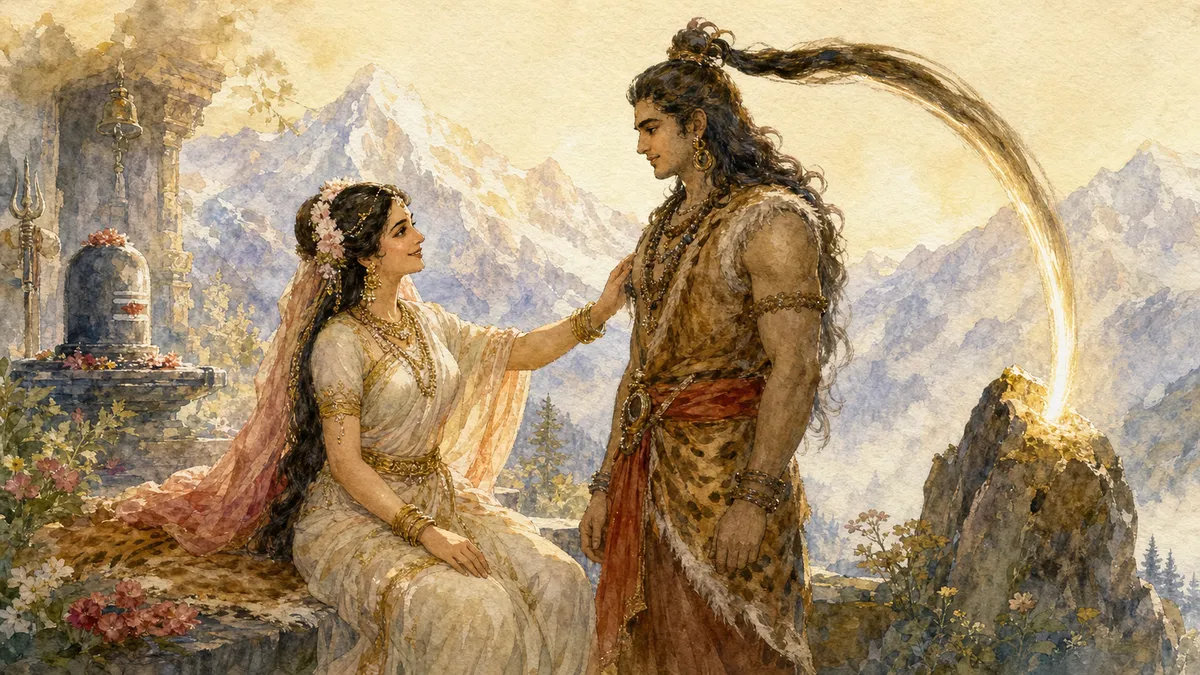
What can Viraka, or Virabhadra, be compared to? He can be compared to an impure illusory body, an intermediate result, or certain siddhis of the subtle body that arise in the course of spiritual practice. This is still not the divine Skanda, nor the divine Karttikeya. These are certain occult powers that arise on the spiritual path and that the yogi wishes to possess. Parvati wants to have at least something, and a son represents a result, a fruit.
Parvati is the embodiment of the soul and energy; she wants to have at least some result. She asks Shiva: “Can I attain such a result? Can I at least obtain siddhis like these, since there is nothing else?” Shiva says: “Yes, you can, but you must not become attached. If this result looks upon you as its mother, if there is no attachment of the mind, then such a result is possible.” With a little asceticism, a little concentration, and non-attachment, such results come.
In the Vaivasvata Manvantara, Viraka became the leader of Shiva’s ganas while still a child. He resembled Shiva, for he wore a necklace of human heads, except that they were made of stone. Viraka playfully juggled boulders. This was what attracted Parvati, the daughter of the mountain or rock. It seemed that Viraka was destined, by calling himself her son, to continue her father’s lineage.
Virabhadra was closely connected with Shiva, to whom he owed his existence, whether he appeared at the moment when Shiva struck a rock with a lock of his hair or poured forth from Shiva’s mouth as the embodiment of his wrath to destroy Daksha’s sacrifice. Whenever Daksha Prajapati performed his sacrifice, he did not invite Shiva. Parvati objected and was distressed by this exclusion. Understanding what was happening in her heart, Shiva himself, together with his terrifying companions, destroyed the sacrifice. Whatever circumstances in which they encountered Mahadeva, they knew him in his supreme reality, even though they might doubt him, quarrel with him, or even resent him.
Anarthas — Undesirable Qualities
Parvati has different kinds of relationships with Shiva. She is our energy. Our energy, our soul, has different kinds of relationships with consciousness, nonduality, nirvana, emptiness, the light of Brahman, the light of the Absolute. Sometimes they quarrel; sometimes they find mutual understanding. And in the course of these transcendental games, various fruits manifest: sometimes Ganesha, sometimes Andhaka as a symbol of the impure ego, and sometimes Viraka as a symbol of Shiva’s alter ego. In other words, these are not yet the true fruits of such relationships.
In the same way, many different fruits appear on our spiritual path. Some may be good, while others may not be so good. If they are not very good, they are called undesirable qualities (anarthas). In other words, during spiritual practice, certain spiritual qualities may be exposed that are not entirely appropriate for a sadhu. And a yogi, a sadhu, must be very vigilant in weeding out these undesirable qualities like weeds and getting rid of them. Some people develop pride. They must notice it, see it as a problem, and work with it so that it disappears. Some people exhibit rivalry. This means that their Vishuddha chakra is being activated. In others, an old attachment reawakens. All of these are undesirable qualities; they are by-products generated through the interaction of our energy and our consciousness. The nature of the soul, the nature of energy, is such that energy always wants some kind of result, something material, something to feel from practice, from tapas, or from anything else. It does not understand that its only result can be Shiva.
In their love, Sati and Parvati felt the Lord’s terrifying majesty in the aspects of time and death, as well as his renunciation in the aspect of the great yogi. Acting like human beings, they remained goddesses—or rather, the Great Goddess, one half of Shiva. He knew their vibrations, which he himself had evoked, and as he recalled them, he smiled mysteriously. In assuming his roles, Shiva did not lose sight of humanity, that is, of his devotees. The great actor and dancer remained wholly himself, even as he varied his role and created new characters from the original dramatis personae.
The Principle of Ananda Tandava, or Chit-Shakti-Vilasa
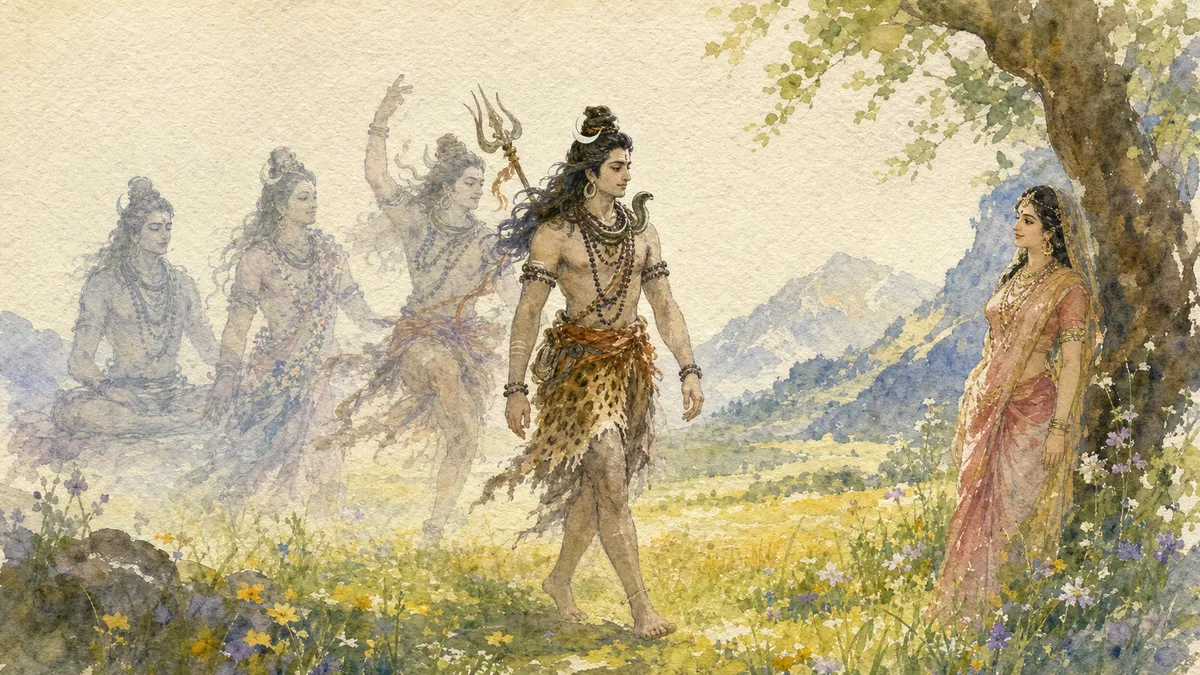
Infinite divine Consciousness—in addition to being nondual, empty, static, nirvana, Brahman, and the Absolute beyond qualities—is also an infinite divine actor, player, and dancer. This is another aspect of the Absolute, and it should not be forgotten. It continually manifests, continually plays various roles, and continually dances. There is even such a concept as the “Dance of Shiva,” as well as Satguru Sivaya Subramuniyaswami’s book Dancing with Siva. This dance of Shiva manifests in two ways. One is destructive: it is tandava, when the elements, gunas, and tattvas disintegrate at the end of the universe’s creation. The other is a manifestation of bliss—ananda tandava, Shiva’s blissful dance. It is also called chit-shakti-vilasa—the play of the energies of awareness.
Since the end of the universe is still far away, we have yet to realize this principle of ananda tandava, or chit-shakti-vilasa. In the teaching, we also call it lila—the divine play. This principle is very important for a yogi. If a yogi does not understand it and understands only the static, unmanifest aspect of Brahman—serene, neither dancing nor playing—then their realization will be only partial.
It is very important to understand this aspect of Shiva’s manifested dance, in which Shiva is an actor, Shiva is a dancer, Shiva is a player, so that we ourselves may become such divine players, divine actors, and divine dancers, understand the principle of shakti-vilasa, and understand what it is all about. It is precisely for this purpose that we perform seva and karma yoga: we train ourselves to act consciously, to act playfully, without becoming attached to the fruits of our labor, to act from a state of non-action, to act without acting, to act selflessly, to act as a manifestation of the divine will. We must learn to act in this way. Until we learn to act like this, our realization will be weak and incomplete; it will be unskillful, and we will be like a bird with one wing or a lame person who can walk with the right leg but cannot walk with the left. And what is this? It is awareness in nonduality; it is self-surrender, self-liberation, and self-recognition manifested in life, manifested in action.
On the internet, someone wrote about one of the European neo-Advaita masters: “But would he have been able to govern Georgia in Saakashvili’s place, finding himself in such a difficult situation?” This is a valid question, because Saakashvili found himself in a difficult situation during the protests against him and during the war with Russia. And would you, with your meditative experience and your meditative consciousness, be able to preserve meditative consciousness and resolve the situation if you found yourself in difficult circumstances requiring wisdom, clarity, strategic thinking, courage, faith, self-surrender, and many other qualities? This is what chit-shakti-vilasa is: whether we can preserve pure vision, playfulness, self-liberation, and ease in action, in relationships, in solving difficult tasks, and in various situations. This is true meditative consciousness. If it is genuine, proper meditative consciousness, it will certainly cope with this. True meditative consciousness makes us wise, free, harmonious, and unattached in life, and delivers us from all problems and suffering.

But sometimes an inexperienced sadhu begins to meditate without knowing how meditation will help him in relative life. And in relative life, he begins to conduct himself even worse than a non-practicing layperson. He withdraws and avoids dealing with even simple problems; he avoids relationships, knowing that as soon as relationships begin, disharmony will arise, so it is better to avoid them. In other words, he develops a problem: instead of resolving something and seeing it as a challenge to his consciousness, he simply withdraws, establishes a certain comfort zone, and within that comfort he can contemplate and meditate. And he knows that beyond this comfort zone difficulties already begin. He does not regard expanding this comfort zone as a challenge to overcome and as a means of training himself.
He simply never leaves this comfort zone and thus becomes like Parvati, who began growing an ashoka tree instead of giving birth, as the gods intended, to the true Karttikeya, the true son of God. Parvati secluded herself and watered her little ashoka tree: there is no fear, no suffering, everything is normal, everything is fine, I am in my comfort zone. But was this the task the gods had entrusted to her? No, it was not. And the gods reproached her for it.
In the same way, a sadhu may have this kind of misunderstanding when he does not know how to bring meditativeness into life, meditativeness into action: into eating, speech, walking, seeing, hearing, smelling, and touching. Bringing this meditativeness into everything is the key principle of true Laya Yoga, of pratyaksha-advaita in the Siddha tradition. This is the key principle with which we begin our training in contemplation. For every time conflicts arise in our relationships with others, every time disharmony occurs—even something minor, such as a careless word, a flash of anger, or a flare-up of greed or envy—we lose these small inner battles. This means that we were unaware, we were not contemplative, and there was no ananda-tandava, no blissful dance of Shiva, no chit-shakti-vilasa, and no lila. Instead, there was karma, there were kleshas, there was ego, and there was tamas or rajas.
And for a yogi, even more important than entering trances and samadhi is the task of bringing awareness into life, the ability to remain aware and meditative while in motion, even when anger arises, when attachment arises, when the mind wanders—whatever may occur. This is the key point. Cultivating this awareness is the central task of yoga. And then, sooner or later, we understand what it means to be a dancer like Shiva, what it means for the soul to perform a dance together with Shiva, what it means to be a divine player and a divine actor. We must learn to be divine actors. And seva, service, karma yoga, is the first step toward learning to be such a divine player, because meditation often does not solve problems through external activity, through sitting inwardly. That is, while we meditate, we have a certain comfort zone, but we do not delve as deeply into these samskaras as we do during service, during karma yoga, or during some kind of active engagement.
The Principle of Learning in the Vedic Tradition
Therefore, the principle of training a disciple in the Vedic tradition has always been to meditate, then come out of meditation and begin to act—but not to act in a worldly way, rather in a different way: to act as one who plays, to act as an actor, to act as a player, to act as a dancer, to act without attachment, while holding deep within oneself the principle of non-action.
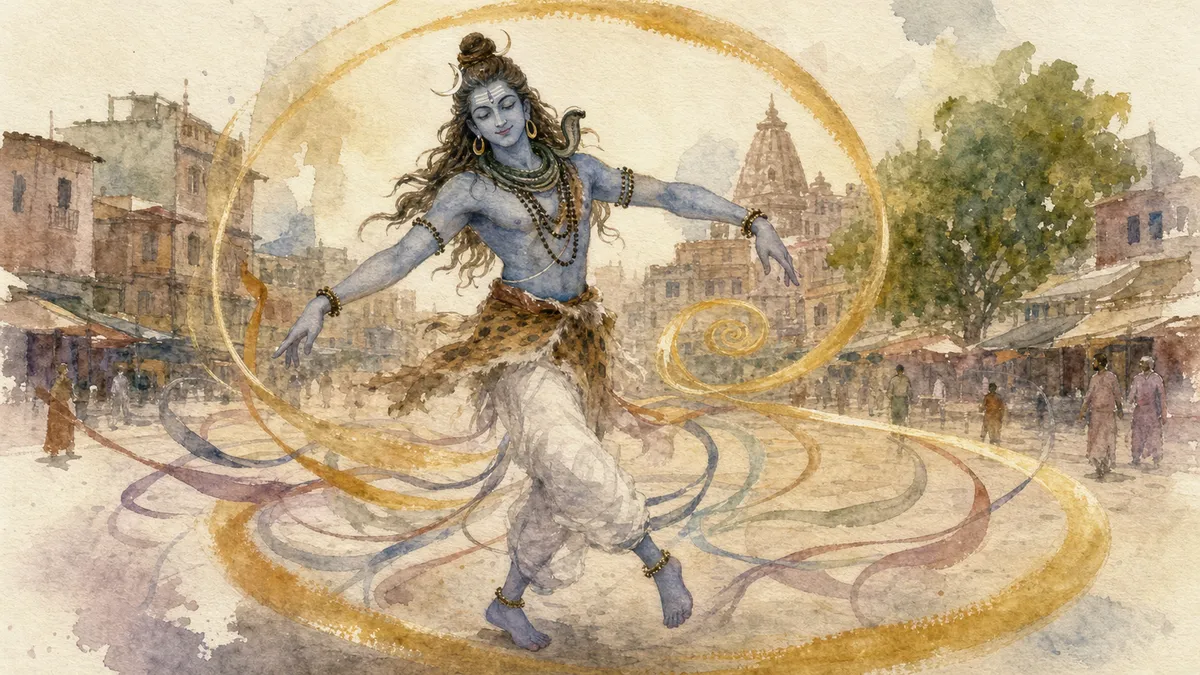
And to act does not mean merely to do something. That is not the point at all, because everything is action. For example, words are action, the movement of thought is action, bodily movements are all actions. And against the backdrop of these unfolding energies, we need to grasp the principle of self-liberation and self-surrender, the principle of how to dissolve all of this, reduce everything to one, and dissolve it all within form so as to transform all this complex commotion, all this entanglement, all these actions into a game, lila, Shiva’s dance, ananda tandava.
Shiva is a flawless role model for us. When we act and become entangled somewhere, we should think: “Shiva would not act this way; Shiva certainly would not become entangled in this.” We become entangled in emotions, we become entangled in thoughts, we become entangled in relationships, we become entangled in desires. We become entangled in how we position ourselves, or in our duties, in our dharma. But Shiva would not become entangled. He is the perfect actor, the perfect player, the perfect dancer of reality. He does not dance on a concert stage; he dances on the stage of life. All of life is a stage for Shiva. He playfully performs his dance in the universe.
Urdhvaretas—One Who Directs Energy Upward
Daksha and Sati are nothing like Parvata, Mena, and their daughter Parvati. Each character acts according to their purpose, draws upon their mythical past, and serves as its living symbol. Sati’s marriage to the great god remained childless. It could not have been otherwise, for the great yogi’s sexual power was under control.
And this is a very important point: the marriage of Shiva and Sati, strange and paradoxical as it may seem, remained childless, even though the gods had set all this in motion; yet this was indeed the case.
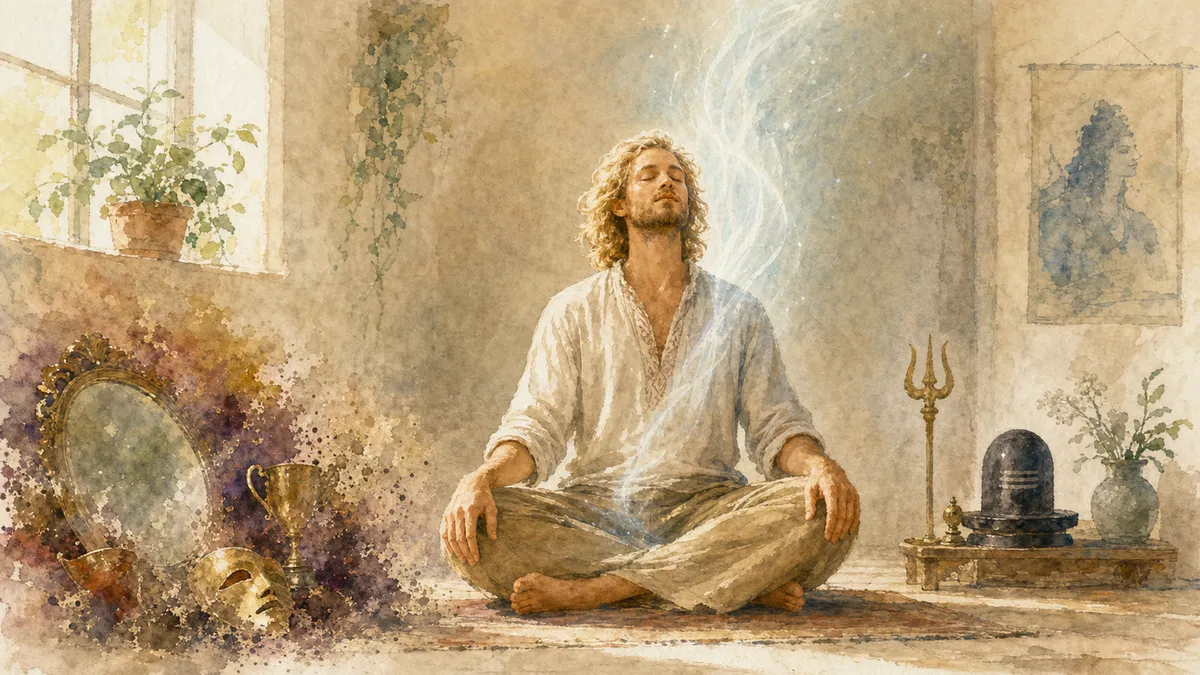
On the spiritual path, we desire material results without understanding that the plane on which our results lie is in an entirely different realm, and that material results cannot be obtained on the spiritual path. But our ego—the human, worldly, attached ego—habitually dreams of obtaining a material result. And we begin to practice, we begin to do this and that, and over time we see that the results we expected are not there. The marriage of Shiva and Parvati proved barren. Some intermediate results appeared, but they were entirely unsatisfactory. And this is a lesson for us in spiritual life: results in spiritual life cannot manifest on the material plane; expecting material results is a complete illusion.
Sometimes people have expectations: they practice hatha yoga, they see a beautiful body—and that is a result. Occult powers can also be attained through this path. But eventually, they become disappointed with it. Because these results will never satisfy them, since the results spoken of by the saints somehow fail to materialize. And rightly so: they should not materialize, because they occur on an entirely different, non-material plane, since Shiva’s energy is directed completely upward. Material results, on the other hand, manifest when energy flows outward. Moreover, visible results manifest more strongly in those whose energy leaks out through a particular chakra. In some Zen monasteries, if someone manifested siddhis, it was believed that their fire element had gone out of control as a result of meditation; this was regarded as a deviation, and they were expelled from the monastery for displaying siddhis.
His seed rose upward, his sexual energy remained within his body, and his substance was transformed into the self-realization of God.
Shiva is known as urdhvaretas. Urdhvaretas is one who raises the energy of the seed upward. The energy of the seed is our kundalini life force, and it must rise upward. If one is a good, genuine yogi who takes care of one’s energy and consciousness and controls desires, one also becomes an urdhvaretas. Urdhvaretas means that the energy, without being lost, travels in its entirety directly to the sahasrara chakra and into the transcendent worlds, beyond twelve finger-widths above the crown of the head. One who is able to retain the energy sees the gods, sees divine reality, sees the past, future, and present as one, and sees transcendent reality. But if this higher energy stops somewhere, does not rise completely, becomes stuck, travels through the side channels rather than the central one, stops in a certain chakra and leaks out, then either pishacha-avesha, obstacles, or some intermediate occult results arise. They are entirely unsatisfactory and are not the fruit of realization.
The Necessity of Mental Discipline
Sati, herself a yogini, knew when Shiva desired her and came to him. When he abided in samadhi, she kept her distance, finding herself in the presence of transcendence itself. Shiva warned her to stay away from his motionless body at such times. After Sati’s death, the great goddess was born as Parvati, the daughter of the Mountain and Mena. From her father, Parvati inherited the firmness of rock. It was not merely a rock, nor even the rock of ages, but an all-encompassing mountain which, according to the myth of Indra, held the future cosmos within itself. This possessive mountain held back the outpouring light of the deity within itself. When the mountain was shattered by Indra, the rays of the sun and the waters of the rivers were released.

Parvata is the mountain that held the divine light within itself. It is a symbol of tamas, a symbol of ignorance that, as it were, veils the divine light. And this mountain was shattered by Indra. Indra personifies mental power. The vajra is Indra’s weapon. The vajra personifies the power of concentration and the power of the clarity of discriminating wisdom. We accomplish the initial shattering of this mountain of material energy through mental power, through mental concentration. This means that before spiritual transformation can occur, we must develop within ourselves such mental strength—the power of clarity, wisdom, will, determination, and concentration.
When we study theory and hone the clarity of the mind, we need this greatly so that we can shatter this mountain of tamas or mountain of rajas—with impeccable mental discipline and impeccable inner yogic self-discipline. If, as sadhus, we have cultivated such impeccable self-discipline and impeccable concentration within ourselves, we can shatter this mountain. Otherwise, we will not be able to overcome it. And then we will not be able to accomplish this transmutation, give birth within ourselves to the divine child Karttikeya, and become a divine actor and dancer like Shiva. Therefore, in ancient times, teachers spent many years encouraging or teaching their disciples to cultivate this impeccable power of thought, strength of mind, concentration, and self-discipline.
Various Energies in the Sadhu’s Body
Parvati was not the mountain's only daughter: her elder sister was Kutila (Ganga), and the third sister was Twilight (Dawn), who joined the Krittikas and the Pleiades. On her father's side, Parvati brought the power of an ancient cosmic myth into her marriage with Shiva. Her sister Ganga was endowed with the same power, and Shiva faced rivalry between the two sisters because of it. Mena, their mother, was a down-to-earth woman; being a daughter of the Fathers, the Pitris, she placed obstacles in the way of her daughter's unusual marriage.
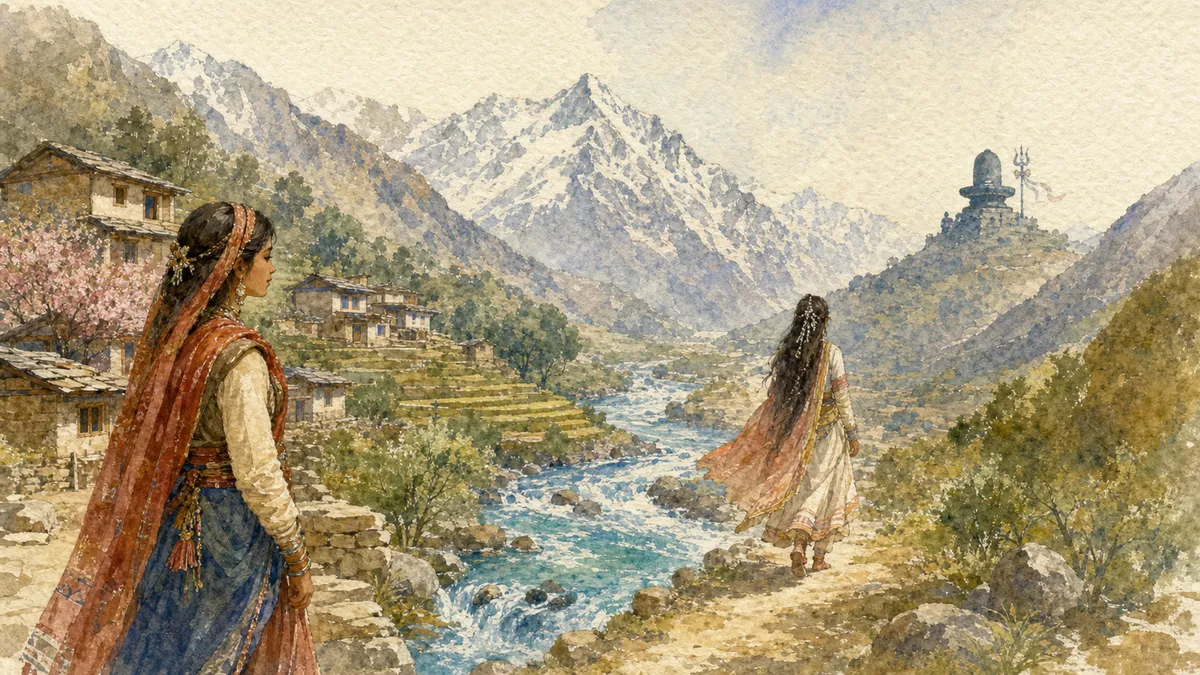
Mena, Parvati, and Ganga—all these sisters are different energies, different shaktis in the body of a sadhu. These shaktis in the sadhu's body also correspond to various cosmic energies at the macrocosmic level. Mena personifies unpurified, worldly energy, while Parvati personifies the purer energy of a practitioner. Ganga personifies the principle of sushumna, the principle of the energy of awareness. Shiva had to deal with all of them, and he had certain relationships with each of them. Mena was, as it were, his mother-in-law, and this mother-in-law did not accept him. When she saw him, she was on the verge of hysteria and shock. In other words, worldly energy cannot accept Shiva, his nondual form, his play, his transcendence. But Parvati is the energy of the practitioner, completely devoted to him and always following him.
Enchanted by Shiva's dance and music in the guise of a beggar, she was nevertheless frightened and flew into a frenzy when Shiva appeared at the wedding in terrifying majesty. Underestimating the absolute wholeness of the great Lord, she eventually agreed to give Parvati to Shiva.
Shiva performed his dance when he asked for Parvati's hand in marriage. He came in the guise of a beggar and danced before Parvati, Parvati's family, and Mena, Parvati's mother, a worldly woman from the lineage of the Pitris. In other words, Mena personifies the ancestral line of karma, ancestral karma. The Pitris, the spirits of the ancestors, are everything that holds a person within karmic bonds and lineages. This is a worldly bond, a worldly line of relationships, ancestral karma. And we all belong to the lineage of the Pitris until the rite of sannyasa is performed over us. When we undergo the rite of purna sannyasa, the Pitris receive satisfaction. Offerings are made to them with roughly this bhava: “Please accept this offering and let us go free, release us.” We are all under the power of the lines of ancestral karma. And it is fortunate if these are ancestral karmic lines of the human race. But sometimes, through some strange circumstances, a person becomes entangled in the ancestral lines of animals.
For example, one rishi became attached to a fawn, and his mind and soul became entangled in the ancestral lines of deer. His soul came into contact with these ancestral lines, and the rishi had to take on the body of a deer; he was reborn as a deer. Everyone knows this story. Mena personifies such a representative of the Pitris, such material energy that embodies the ancestral line, family ties, and so forth.
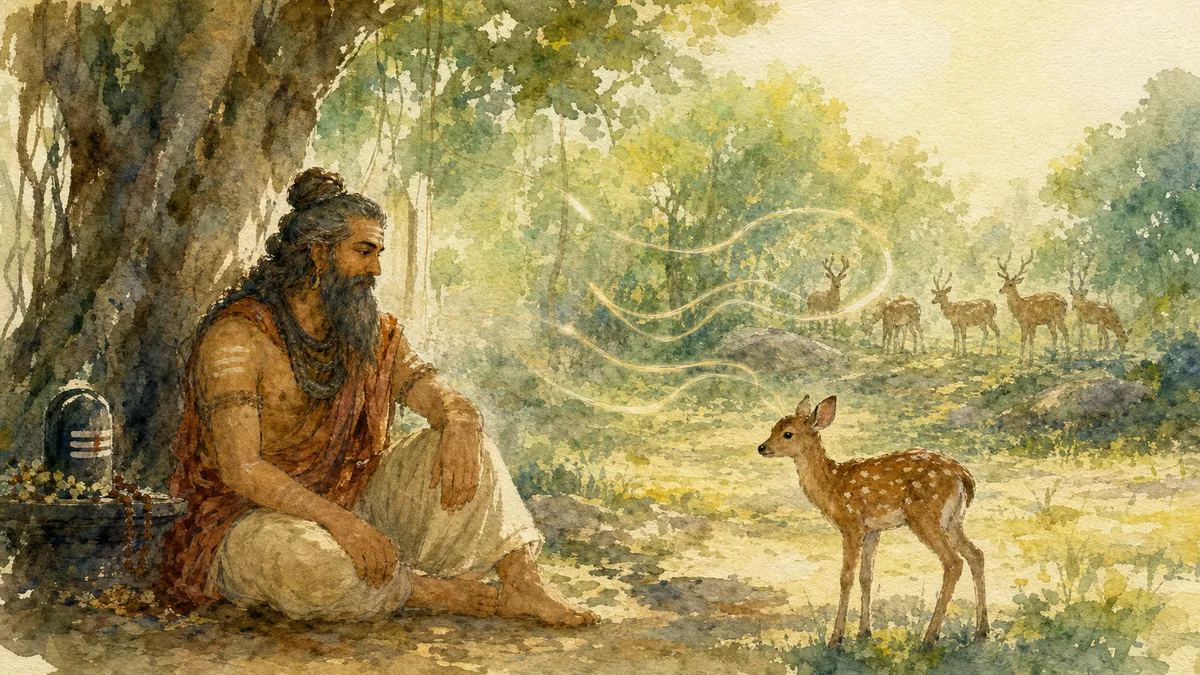
When Shiva first performed his dance, he came in the guise of a beggar, and Mena was shocked by this. In the same way, in our spiritual life as sadhus, we encounter the fact that spiritual life first dances before us in the guise of a beggar: that is, we see only renunciation, only certain negative aspects, only losses. We do not yet see Shiva's beautiful form; we see suffering, privation, what ascetic practice brings us, and we obtain no results. But this is normal; this is Shiva's first dance.
Sometimes a person begins to practice, and something in their material life collapses; they become impoverished. This can happen—it is Shiva's first dance in the form of a beggar. If a person has monastic karma, they accept it with joy; but if they have no monastic karma and are a layperson, they experience it with suffering. But then, as we know, Shiva agreed to show Mena his beautiful form, and Mena accepted him in that beautiful form—that is, the transcendent. The God within us then shows us that this beggar's guise is deceptive, that it is only a mask, merely a test of our faith, devotion, and strength of spirit.
Cultivating Sattva as a Process of Purification
She agreed to give Parvati to Shiva if he assumed a more attractive form. Before the wedding, Parvati displayed none of the character traits inherited from her mother. In strength of mind, will, and depth of feeling, she was Shiva’s equal; she debated metaphysical questions with him and stood her ground. She prevailed and thereby retained the great god. Above all else, what mattered to her was fulfilling her mission to give birth to Shiva’s son.
Parvati personifies the soul (jiva), and this soul (jiva) passionately aspires to the Absolute, its Source, to Shiva. Parvati would sometimes playfully debate metaphysical matters with him, and she satisfied Shiva with her knowledge and competence. Only then did Shiva agree to take her as his wife. She practiced austerities. In the same way, we are the soul, and the soul is feminine in nature because it consists entirely of Prakriti. We, too, must satisfy Shiva so that he will consent to unite with us. We must undertake a certain austerity, a certain purification, and within us there must be devotion like Parvati’s so that we may fulfill our purpose.
And what is our purpose according to Vedic dharma? Our purpose, given to us by the gods, is to conceive the immortal divine child, Karttikeya, and, as it were, give birth to him. This child is conceived and born not outside, but within. He is within us, which means that transformation is necessary. We must transform into this immortal divine child, fulfill the dharma, fulfill the divine Law. But this requires tapas. It is not easy; even Parvati had difficulties with it.
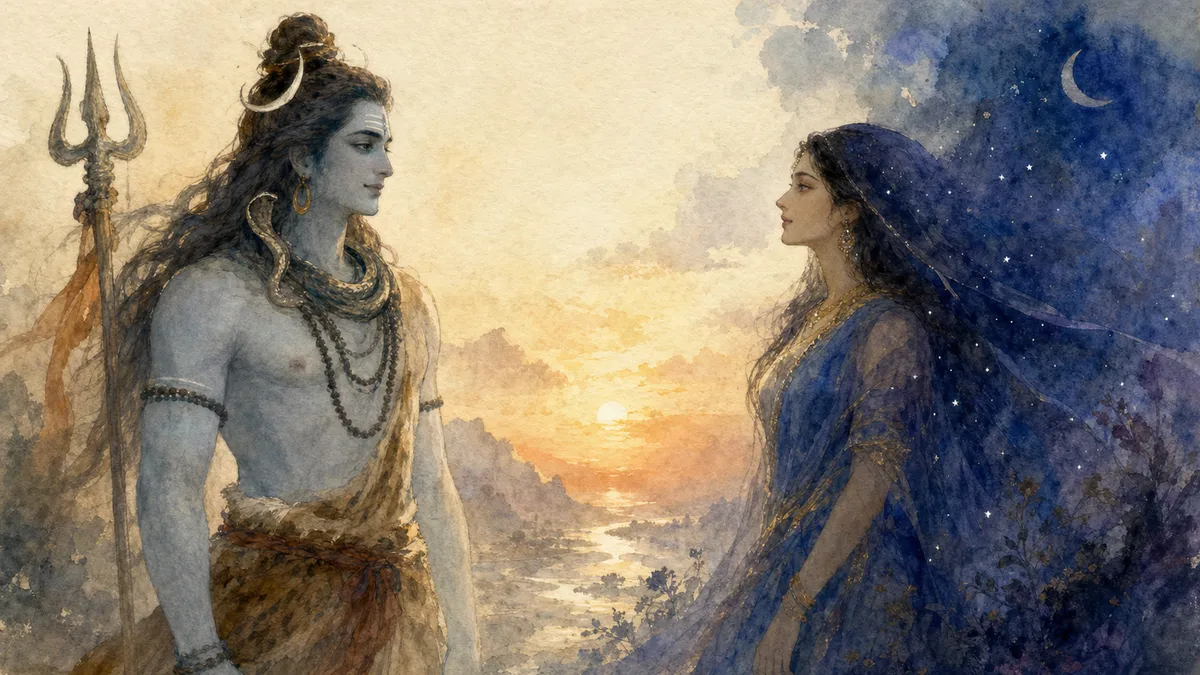
For this purpose, following Brahma’s strategy, the goddess Night colored her black while she was still in her mother’s womb. Before the wedding, Parvati’s dark complexion did not trouble Shiva; rather, her dark beauty enchanted him. One night after the wedding, as they reclined together, there was Shiva in his ashen whiteness, shining with immutable light, and the goddess embracing him. Shiva playfully compared her dark arms to snakes coiling around a tree.
According to the gods’ design, to intensify the passion of Shiva and Parvati so that the divine child would arise from a veritable explosion of passion, the goddess Night, in accordance with Brahma’s plan, made Parvati even darker. What are the goddess Night and darkness? They are tamas. Tamas was artificially added to her. And this attracted Shiva because Shiva was seeking his complete opposite. As transcendent reality, he is attracted to that which is his absolute opposite and a challenge to him. Shiva is the supreme Purusha, while the dark-faced Parvati is tamas. As a result, Shiva was drawn to her.
But once, as they reclined together, Shiva said playfully: you are so black, I look very white against you, and your arms are like two snakes coiling around a tree. It is said that Parvati took offense. But this was another of Shiva’s divine plays. He prompted her to change her nature; that is, he no longer needed a tamasic nature for a wife. He had to transform her through their interaction. He needed a wife composed either of rajas or of sattva, a purer energy. Parvati took offense.
She went away to practice austerities once more, so that her face would become white, pure, and sattvic. In the same way, when we practice, we discover that our rajasic and tamasic qualities no longer satisfy us. We must again undertake austerities, again purify ourselves, in order to become more sattvic. We deliberately cultivate sattva within ourselves. We see that our old patterns of relationships and behavior are no longer suitable, that we lack sattva.
Parvati took offense at Shiva’s words, spoken as the rays of the new moon fell upon her white garments. She looked like the night of the newborn moon, which pours its radiant soma from Shiva’s locks upon the goddess. The goddess herself is soma—the drink of immortality that inundates Shiva, who is fire. But neither her soma nature nor the moonlight flooding the world could calm Parvati.
In the Vedic tradition, Purusha and Prakriti are also identified with two primordial opposing substances: soma and agni. Agni is the absolutely masculine, active, solar principle, while soma is the lunar, absolutely feminine principle. Soma is the elixir of immortality; agni is light, fire, luminosity. And through their interaction, this immortal child of awareness, Vayu, is to be born. Vayu means that it consists of subtle energy. As is known, we have two drops, white and red. These are two energies: soma and agni, Shiva and Parvati. And through their interaction, a kind of alchemy and transmutation takes place.
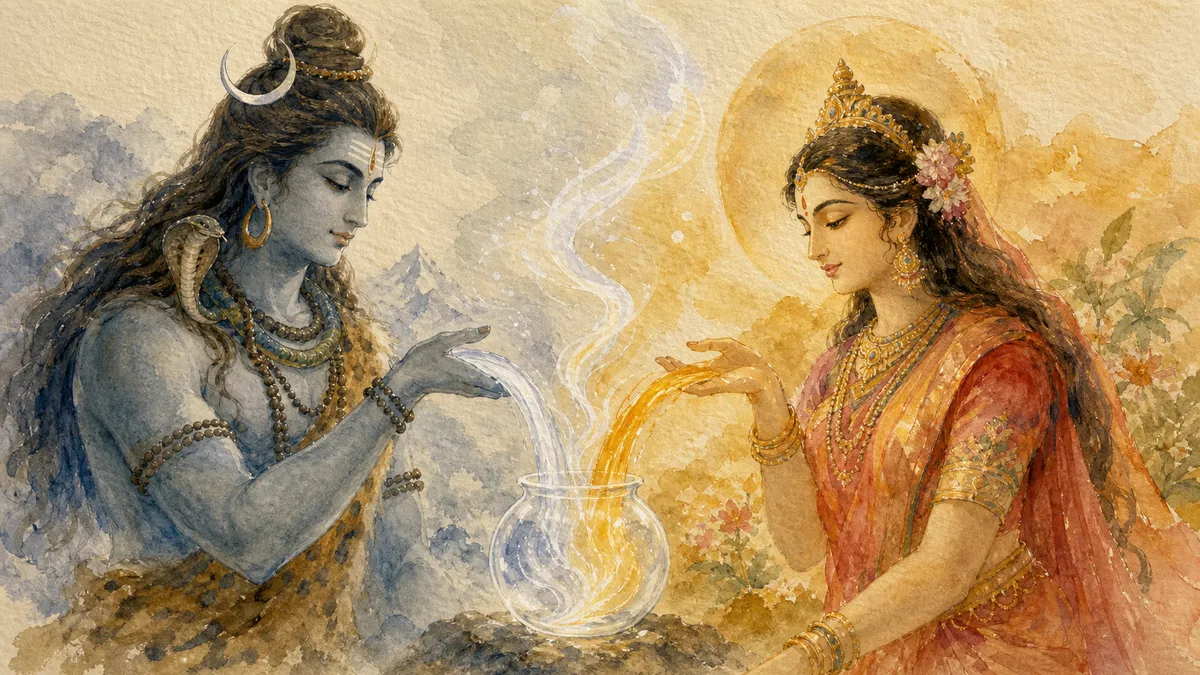
The great god and goddess quarreled, and in anger Parvati left Shiva to devote herself to ascetic practice.
What does “the great god and goddess quarreled” mean? Sometimes this happens in our lives; sometimes our energy quarrels with consciousness, and sometimes our energy parts with awareness for a while. Then a discord arises. We forget about mindfulness, and awareness becomes hidden, receding into the background. Our divine Self—nondual, empty, qualityless, attributeless, dancing, playing roles, all-filling, all-pervading, detached—becomes hidden. And our soul, our mind, as it were, abandons it out of immaturity, because of its desires and inexperience, and rushes toward various objects.
In other words, we exchange God for something else: a loved one, our favorite food, a favorite book, conversations, relationships. We think: “This infinite consciousness, this nonduality, this emptiness, has given me nothing. There is nothing interesting in it; it has given me nothing, no results. But getting a quick result is interesting. Here is a person. I can build a relationship with them; I can eat some food; I can watch a movie.” And we forget about absolute Consciousness. And when this also leaves us feeling unpleasant inside, it means we have already “quarreled” with it.
Asmita—the Atman’s Forgetfulness
And forgetfulness is a common quality of an inexperienced sadhu. This forgetfulness is called asmita, the Atman’s malign forgetfulness. It is not called simply forgetfulness; it is the Atman’s malign forgetfulness because it always leads to suffering, ignorance, and problems. And when we also experience discord, when we feel suffering, it means that we have also “quarreled” with this nonduality; somewhere within our soul we reject it, fear it, and cannot return to it.
The Art of Contemplation and the Union of Shiva and Parvati
The art of contemplation, nididhyasana, consists in never leaving awareness, so that our inner Parvati never quarrels with Shiva and they always walk together. But this is possible only when Parvati changes her complexion from dark to light—that is, when our nature changes, when our energy becomes sattvic.
To be a sattvic person means, simply put, to abide in luminosity, to be benevolent, to love everyone, to be harmonious, to speak harmonious words, to perform actions aimed at benefiting others, and to have pure thoughts and pure vision. But most importantly, all this must be within us, in our soul. And for Parvati within us to change her countenance from dark to light, we must do some work; we must undertake ascetic practice, tapasya.

Parvati’s Tapas—the Purification of Energy
Under the scorching summer sun, she sat amid fires, and during the rainy season she remained in water. Having received from Brahma the desired golden complexion so that she might become an adornment in the hands of her lord, she returned to Shiva, who, after their quarrel, had also been practicing austerities.
Parvati performed pancha-agni-tapasya, working with the sun—the element of fire—and then performed jala-tapasya with water. That is, the ida and pingala channels participate in the process of this tapasya, as our energy gradually changes its nature and becomes sattvic.
In relative life, we can purify our energy by cultivating ourselves. When we feel the urge to express anger but notice it, dissolve it, and learn to love even what we dislike, it is our inner Parvati performing tapasya; her face grows radiant, changing from dark to light. When we feel the urge to express aversion, greed, or lust and work with these impulses, learning instead to manifest love, compassion, awareness, and purity, this is our antar-tapasya, our inner ascetic practice, in which Parvati within us changes her face from dark to light and becomes worthy of approaching Shiva once again, of drawing near to him, because Shiva is highly transcendent.
The Purpose of Material Nature
They met, and their love blazed more fiercely than before. In this respect, the goddess Night fulfilled her task; they made love for thousands of years by the reckoning of the gods, as though it were a single night.
The goddess Night fulfilled her task. This means that tamas, gross material nature, fulfilled its purpose. What is its purpose? This gross material nature—the goddess Night, Mena, the ancestral karmic lineage—gave us a physical body. We were born into the material world. We were not born without reason; we were born according to the design of the gods. And the design of the gods is that, having been born in the material world in a material body, we should create within ourselves the divine child of awareness, the divine Karttikeya, the divine Skanda, and transform ourselves into this divine child by skillfully uniting within ourselves, by bringing about within ourselves the union, the wedding of Shiva and Parvati.
And when material nature has played its role, the role of tamas, it is no longer needed. It is needed for certain everyday needs of the body, but it is no longer needed in consciousness. From then on, we rely on the luminous, pure, sattvic energy that arises within us as a result of tapasya. This is how we follow the path of dharma, the path of rita, the path of fulfilling our divine duty.
The Mystery of Our Life
We should reflect on how profound and mysterious our life is. It turns out that our life itself is the union of Shiva and Parvati; it turns out that this story, in which Taraka—the demon, the ego—harasses and defeats the gods, and in which all the gods decide to bring about the union of Shiva and Parvati, is a story about ourselves. It is a story about our life, our purpose, our spiritual practice, its victories and failures, and the way to overcome those failures.
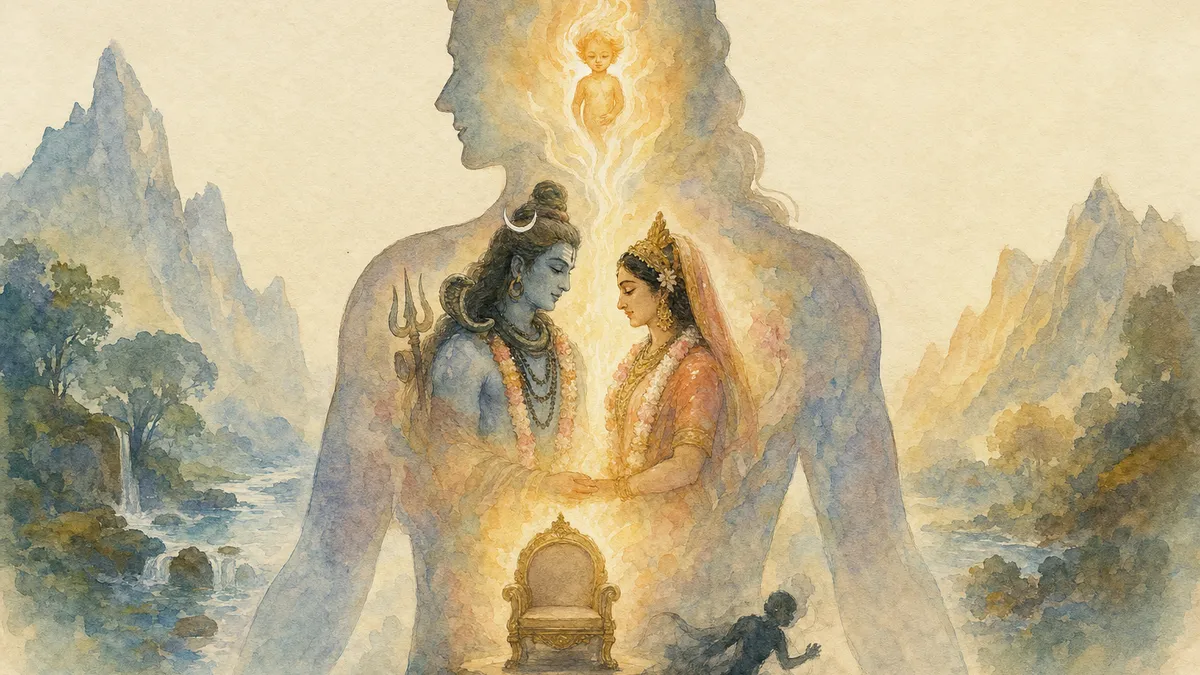
This is the way to achieve our inner victory. This is mysticism, this is a mystery; it reveals what our dharma is, what our religious duty is as a soul born into this world. It is to skillfully unite Shiva and Parvati, to bring about their wedding and give birth to this divine child of awareness, to accomplish inner alchemy and transmutation, and to save creation, to save the universe—and above all, this refers to our own inner universe, our own inner microcosm—and to establish divine harmony by casting the ego, the demon Taraka, down from the pedestal of power.
