

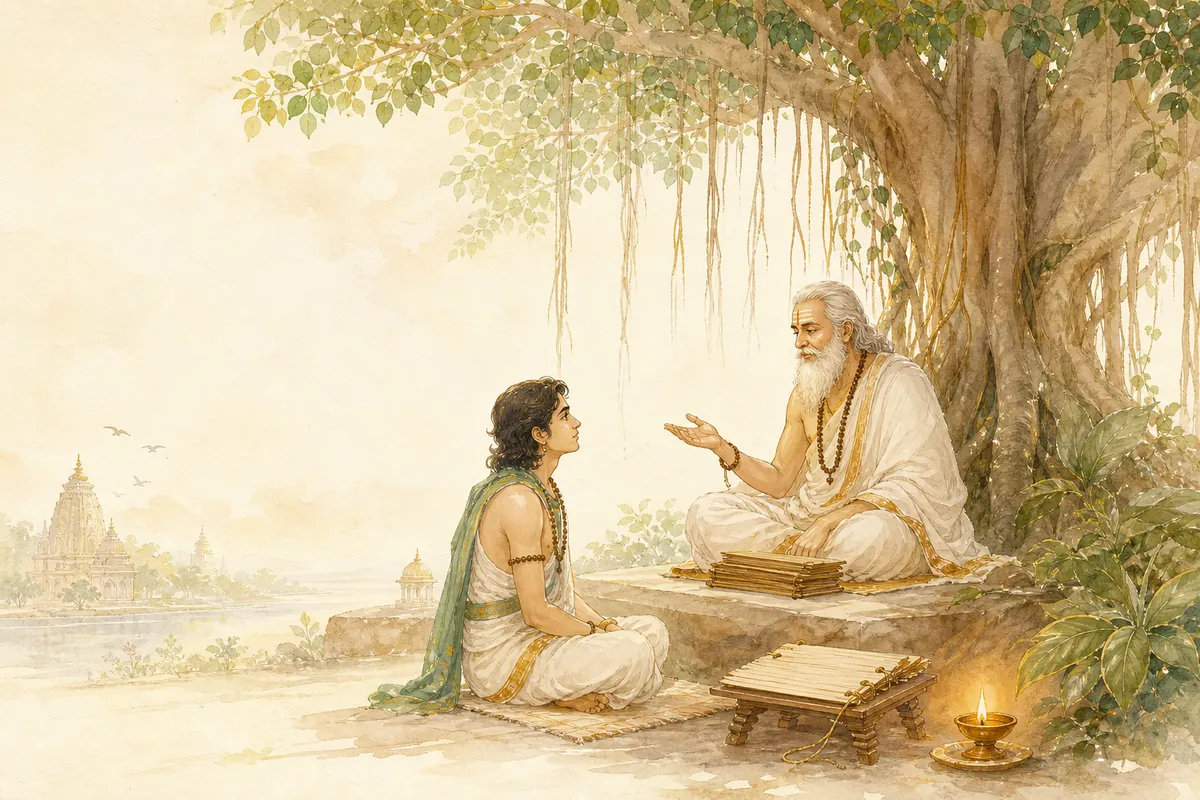
The power of blessing—Anugraha, shaktipatha, the power of God. To follow the spiritual path means to attune ourselves to this power and constantly invoke it. Our efforts are also important, but when we make efforts and apply a method (upaya), that is only half of it. Concentration, meditation, shat-chakra-yoga, kundalini yoga, mantra yoga—all of these are methods (upaya).
In addition to the method, there is wisdom (prajna). And prajna always comes through blessing, through Anugraha; it cannot be invented by the ego or created by the ego. Therefore, no one can reveal prajna (wisdom) without the blessing of the guru, without the blessing of the ishta-devata, without the blessing of God. It is impossible to conceive this with the mind, impossible to create it with the help of the ego; it is always something that comes from above as a blessing. Therefore, in order to reveal this wisdom, we invoke the blessing of the saints, Guru Brahmananda, and the ishta-devata.
What is prajna? Prajna means that we realize “Aham Brahmasmi,” the Divine Light beyond the five sheaths (the five koshas), in which there is neither subject nor object.
Three Essential Principles of the Spiritual Path

Shravana—listening. Everything begins with listening about God and dharma; this is shravana. Shravana means that the guru quotes the scriptures, explains the meaning of the scriptures, or speaks in their own words, but in one way or another, we must receive the initial impulse, and this is shravana.
Manana—reflection. Once we have formed an understanding of God and the Absolute, the next stage is manana. Manana means that we must make this our own experience. We must think everything through and understand within ourselves whether this is such an experience or not, whether we understand God or not, whether our mind is at the feet of God (Brahma-pada) or not. Here it is important to maintain contact with the guru and the sacred scriptures in order to eliminate all doubts, so that God becomes our personal experience, our personal dhyana, our personal samadhi.
Nididhyasana—continuous contemplation. When we have eliminated all doubts, we know where the point of God is, where the feet of God are, and we can already enter this point ourselves at any moment. Then the next stage begins—nididhyasana. Nididhyasana means that now we must not fall out of this experience, but remain in it all the time, always be with God, and never part from God. How to be with God while standing, sitting, or lying down, while walking, working, eating, or talking—all of this is the art of nididhyasana.
Nididhyasana is attained through constant contemplation, when we are able to remain in meditation even while talking or walking, when consciousness independent of the five sheaths is not lost but sustained. But devotion is also very important. Contemplation alone does not have enough power to immediately detach us from samsara. For this, great inspiration, strong emotion, and profound self-surrender are necessary. When meditation and devotion unite, this is nididhyasana. Therefore, a sadhu always abides in contemplation and devotion.
States of Consciousness and Turiya
Contemplation reveals the Nature of Mind beyond waking, dreaming, and dreamless sleep. Jagrat, svapna, sushupti—all of these are states of maya, states of illusion. Brahman, however, is turiya, that is, the fourth state. If we have found this experience of turiya, then it is beyond the mind and beyond the five sheaths.
It is very difficult not to fall out of this state of turiya if you are not in samadhi but are engaged in everyday life, walking and talking. But, on the other hand, we must not fall out of it if we want to be in God. Here devotion is important; the sadhu must become the hands and feet of God, an instrument of the Divine Will. Then this will become sahaja-samadhi (natural samadhi).
Sahaja-samadhi is possible, but certain things must happen for this: our ego must die, surrender to God, and dissolve in Him. As long as even a little ego remains, it is always an obstacle, always duality, always separation from God. And even when we practice, it may still be the ego practicing within us. It often happens that we do a great deal, yet the ego remains within us. Therefore, we must dedicate our practice to God and surrender it to Him.
Question: It is often said that there are two paths in yoga—the path of samadhi and the path of prajna. Could you comment on what these are?
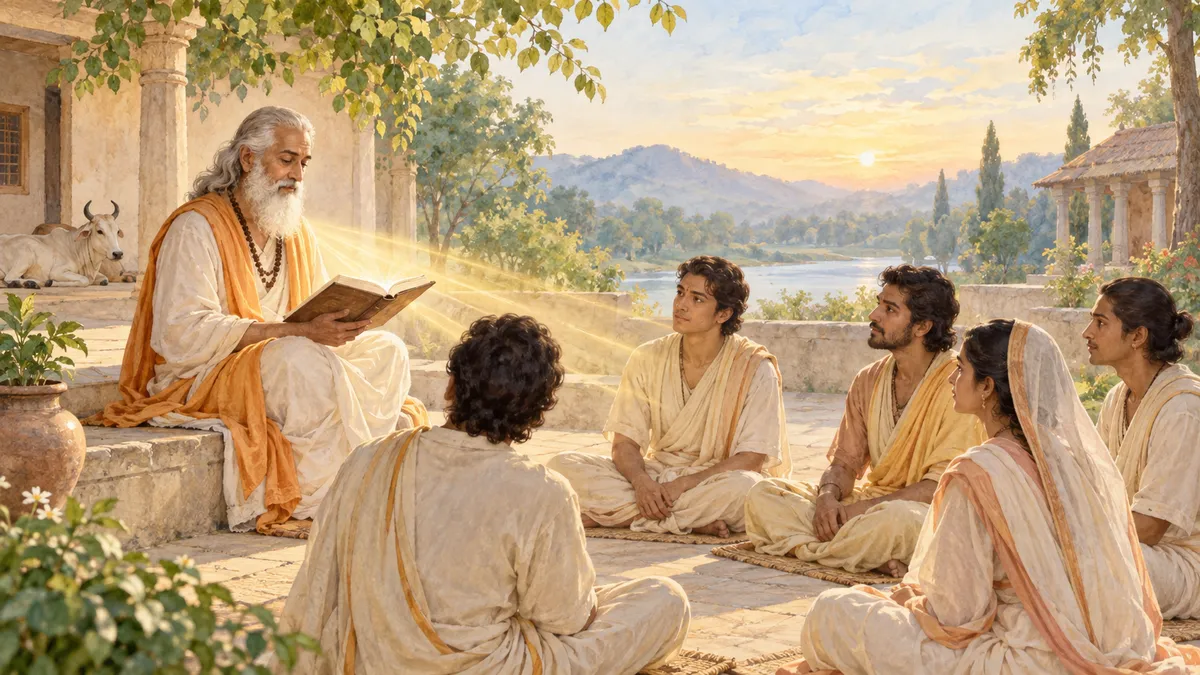
This is what we were talking about earlier. The path of samadhi is concentration through dhyanas, when there are dharana, dhyana, and samadhi (savikalpa, nirvikalpa). The path of prajna is a somewhat different path; it is not a path of concentration. What does prajna mean? It means that you are moving along the path of sahaja-samadhi—not nirvikalpa, not savikalpa, but sahaja-samadhi. Prajna is the state of emptiness and nonduality, when you experience Brahman beyond subject and object, when you become accustomed to prajna. First you study the texts, then you receive an experience from the guru and become accustomed to abiding in the natural state, in the Nature of Mind. All of this is prajna.
The Path of Prajna
What is the path of prajna? First, there must be vichara (inquiry). For example, you ask the question, “Who am I?” or the question, “What is the Absolute, what is God?” If you ask the question, “Who am I?” this is Atma-vichara. If you ask the question, “What is Brahman?” this is Brahma-vichara.
When you have progressed well in vichara, you attain viveka, or pancha-kosha-viveka. This means that you understand that you are beyond the physical, energetic, astral, mental, and causal bodies. In other words, pancha-kosha-viveka means that you know: “I am Brahman; I am not the five sheaths.”
And when you know that you are not the five sheaths, vairagya arises. Vairagya is the consequence of such knowledge. Vairagya is prajna itself. Prajna and vairagya go together. And what is the other side of vairagya? Absolute self-surrender and devotion to God. Why does vairagya arise at all? It does not arise from renunciation, but from devotion, when you are deeply devoted to God. Prapatti, atma-nivedana—these are the true causes of vairagya.
There is a story. When robbers attacked a devotee of Krishna, he began to pray to Krishna. Krishna heard him from Vaikuntha-loka and wanted to send him his attention to help him. He came to his consort and said: “One devotee has gotten into trouble and is praying to me, so I am going to send a part of my consciousness down to Earth to help him.” But this devotee, who had initially been praying to Krishna, then thought that he should fight back himself and picked up a stone. Then Krishna said: “Well, it seems that he can manage without me now, so I will not go down to Earth.”
Prapatti means that we surrender to the will of God. We say: “Let not my will, but Yours, be done.” We accept everything; we say: “I do not belong to myself—I belong to God. I will not cling to the ego; I will hold on to God.” This is very difficult; one has to overcome the ego every second, because it is constantly clinging to something. Even yogis have pride, even sadhus. And God constantly tests sadhus. Dattatreya often tests them in this way. He will manifest in such a way that you will not recognize him, and he will confront you with your illusions. Even the gods are sometimes confused by Dattatreya’s play.
Dattatreya’s Tests
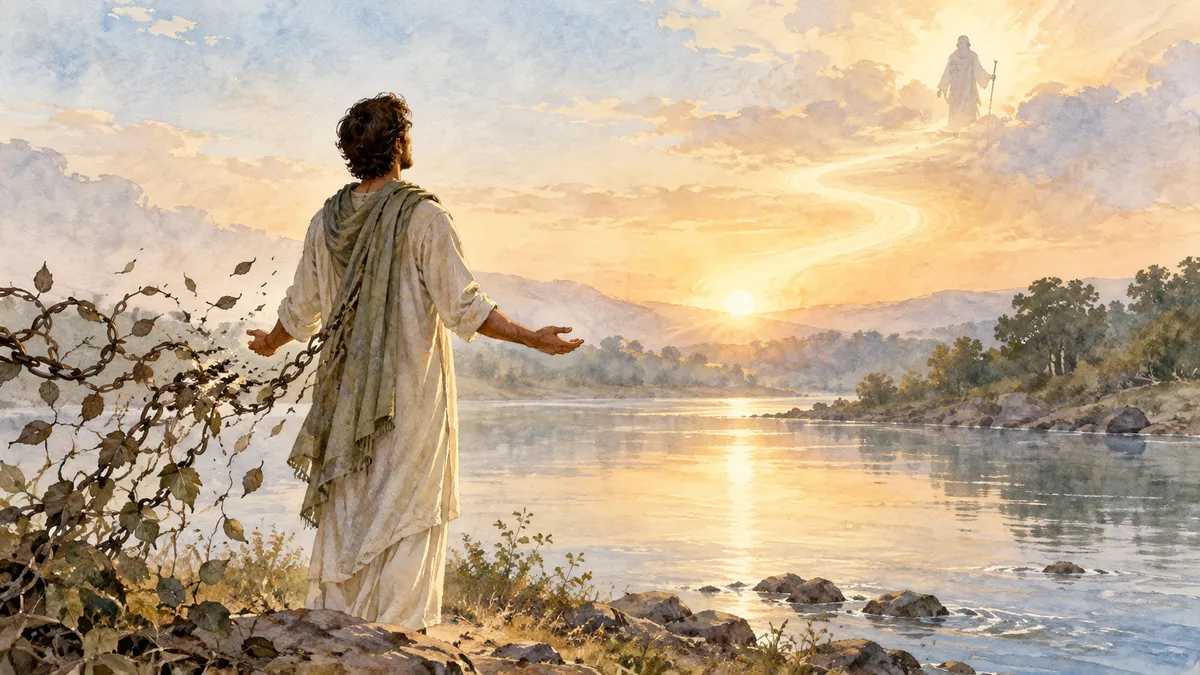
When the gods came to ask Dattatreya for help in the battle with the asuras, Dattatreya said: “Someone said that he would cross the Ganges holding on to a dog’s tail. You too have come to me with a completely pointless idea; I squandered my power on wine and women long ago, so why have you come to me? Therefore, go and look for someone else. Yes, I practiced yoga before, but now I have already lost all my power.” But the gods were devoted to Dattatreya; they did not even want to listen to this. They prayed to Dattatreya, knowing that he would save them. And when their devotion had been tested, Dattatreya said: “Well, all right, what can I do with you? I will help you.” Then he deprived the asuras of Lakshmi and gave her to the gods. Guru Brahmananda also tested his devotees. There are many stories about this.
An avadhuta is one who always comes to test us and bless us. He cannot bless us directly and immediately, because he must prepare us, and there is no other way to prepare us than to provoke us. His wisdom is very powerful, but it is entirely transcendent. There is a saying: “To see what is inside, it must spill out.” Therefore, an avadhuta may sometimes provoke a person so that their karma spills out.
Once, Dattatreya came to a yajna holding a dog in his arms. It is believed that a dog is an impure animal, and that if a dog is present at a yajna, spirits enter it and consume all the results of the ritual. But despite this, Dattatreya played with the dog. There were many saints and rishis at the yajna, standing beside him with great reverence. And one Brahmin thought: “Why is this young man behaving so strangely, while the others respect him so much? Perhaps he is some kind of magician or sorcerer who has enchanted them all?”
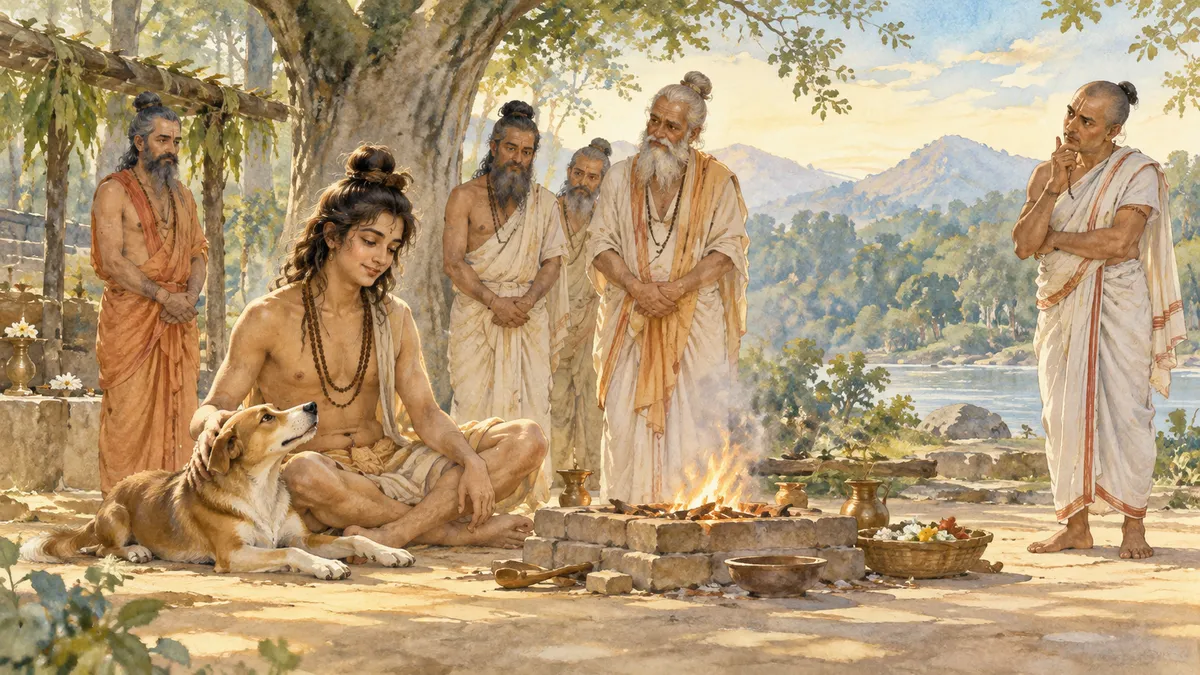
After everyone had left, the Brahmin approached Dattatreya and asked: “Please tell me, who are you? I simply cannot understand who you are, which ashrama you belong to, or which varna you belong to. Are you a brahmachari, grihastha, vanaprastha, or sannyasi?” And Dattatreya replied: “I do not belong to any of the varnas; I belong to the fifth varna, which is not described in the Vedas—I am an avadhuta. I am beyond all rules, all principles, all human castes, and all divisions. Today I participate in a yajna and play with a dog; tomorrow I walk with a woman; the day after tomorrow I drink molten copper; and then I walk across the Sun, because I am free from all limitations.”
The Teachings on the Avadhuta
The mind of an avadhuta is complete freedom; it contains no human concepts and no duality. It is a mind like infinite space, where there is no name and no form—there are only Divine Light and Divine Love. Name (nama) and form (rupa) are maya; the division into subject and object is maya; the division into inner and outer is maya; the division into sacred and non-sacred things is maya. When we think, “Man, woman, wife, husband, children, sons, layperson, brahmachari, grihastha, vanaprastha, sannyasi, guru, disciple,” all of this is also maya. In other words, whenever we divide, it is maya.
But we cannot refrain from making distinctions as long as we live in this body and in this world, so we distinguish between absolute truth (paramartha-satya) and relative truth (samvritti-satya). The absolute is shuddha-jnana, when we can say, “Aham Brahmasmi.” The relative is kriya-jnana, when we must understand what is called desha-kala-patra (place, time, and circumstances).
Question: Is Aham Brahmasmi a mahavakya of sannyasis?
Yes. If a householder begins repeating it, his life will change and he will lose all attachments.
The Difference Between an Avatar and an Avadhuta
Question: What is the difference between an avatar and an avadhuta?
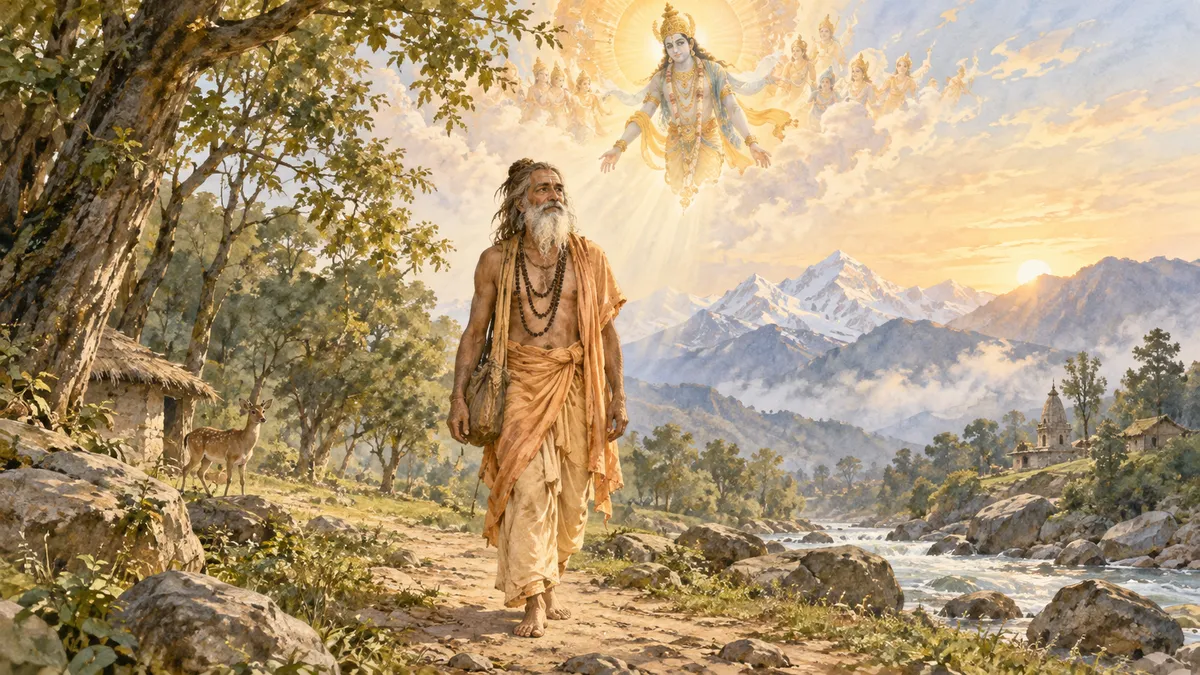
An avatar is God’s intention to descend into this world, when an illusory body is created through the power of sankalpa, and a part of the deity’s consciousness is transferred into it. For example, if the god Vishnu, while residing in Vaikuntha-loka, wishes to descend into the world in the form of Krishna, Parashurama, or Vamana, he creates a sankalpa without leaving his abode.
An avadhuta, on the other hand, is one who has realized the state of nonduality from any state and lives in it. An avadhuta does not necessarily perform any crazy acts; he may even live like an ordinary sadhu, but if he is inwardly free, he is also an avadhuta. Sometimes he may manifest as a mad sage, walk naked, smear himself with ashes, and behave like a holy fool. Dattatreya is an avadhuta. There have also been other great avadhutas besides him. But sometimes an avadhuta may manifest as an ordinary person, like an ordinary sadhu.
I was told that somewhere in India there is a man who is considered a form of Dattatreya. He holds a position equivalent, by Russian standards, to that of a deputy minister, meaning that he is a civil servant. He smokes cigarettes and has guards carrying automatic weapons, but everyone comes to him and says, “Namaste, Guruji.” Sometimes he materializes certain things for them in the office. In other words, if we set aside our mental preconceptions, an avadhuta can manifest in any way. Avadhutas play games that are incomprehensible to people; they are guided from within by their deity or by God, and by nothing else. All social norms are unimportant to them.
But when we speak of an avatar, an avatar is the sankalpa of a particular deity. An avatar comes with the intention of doing something, of changing something; it is always a kind of mission. For example, a doctor comes to a hospital not because he is ill, but because he has come with a mission—to treat patients. For example, there is a shakti-avesha-avatar—one who is endowed with special powers. He may not possess complete realization, but he is a particle of the Divine that has come to manifest something; he is born solely for this purpose. When he fulfills his mission, he disappears.
