

Commentary on the text “Yoga Vasistha,” Chapter 5. The Story of Hiranyakashipu and Prahlada
Vasistha continued:
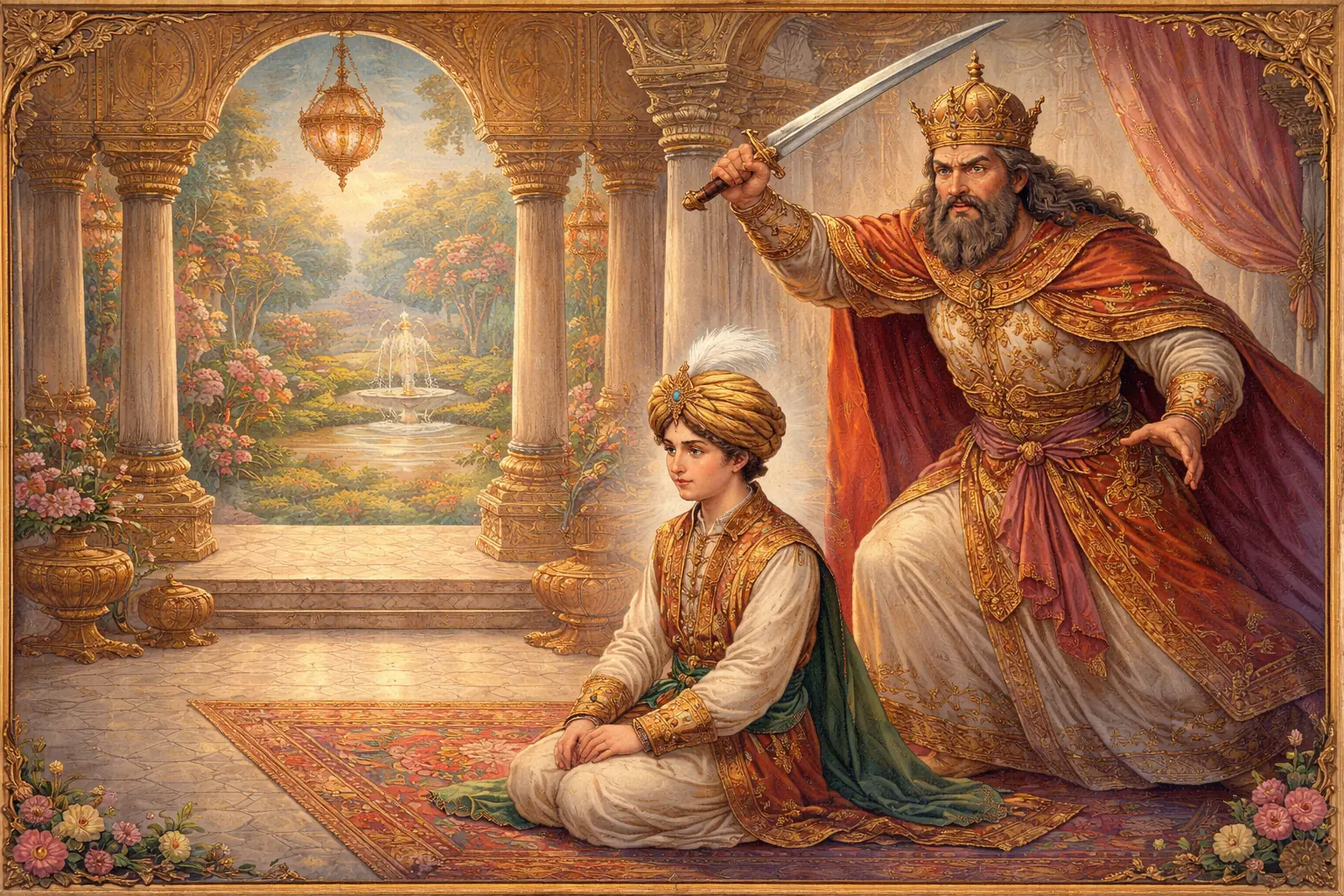
“O Rama, I will now tell you another story that shows the unobstructed path to enlightenment. In a distant world, there once lived a mighty demon king named Hiranyakashipu. He wrested dominion over the three worlds from Indra himself. He had many sons, one of whom was the renowned Prahlada, shining like a diamond among precious stones. The demon king, who had everything—the three worlds, a mighty army, and wonderful children—became exceedingly conceited. His aggressiveness and terrorist methods of rule greatly alarmed the gods, who implored Brahma to save them from such a fate. In response to their plea, the god Hari assumed the form of the mighty Narasimha and destroyed the demon king. Narasimha had an enormous, powerful body and fearsome, sharp teeth and claws.”
Everyone probably knows this story, in which Prahlada, the son of Hiranyakashipu, became a devotee of Vishnu instead of praising Hiranyakashipu himself, who was immeasurably proud and considered himself Shiva’s brother. When he decided to destroy Prahlada, the latter invoked Vishnu in the wrathful form of Narasimha. And since Hiranyakashipu had received a boon that he could not be killed by man, god, or asura, by day or by night, on land, in water, or in the air, a deity appeared who circumvented all these conditions and nevertheless destroyed the demon Hiranyakashipu.
There is a murti known as Ugra Narasimha. This is such a wrathful form of Vishnu that many people are even afraid to make a sculpture of it or install it in a temple, because he is extremely angry and enraged. Narasimha stands with his legs half-bent, ready to leap, and has a very wrathful expression on his face. The Narasimha Kavacha and other texts are recited to invoke him.
Once, when people at a temple in India decided to make his murti for protection from bandits, they found a sthapati, that is, a person knowledgeable in Sthapatya Veda (the art of engineering and sculpture). This man consulted his guru, and the guru told him: “You had better not make this sculpture, or your family will be destroyed. This energy is too wrathful for you to handle.” Nevertheless, they made and installed this murti.
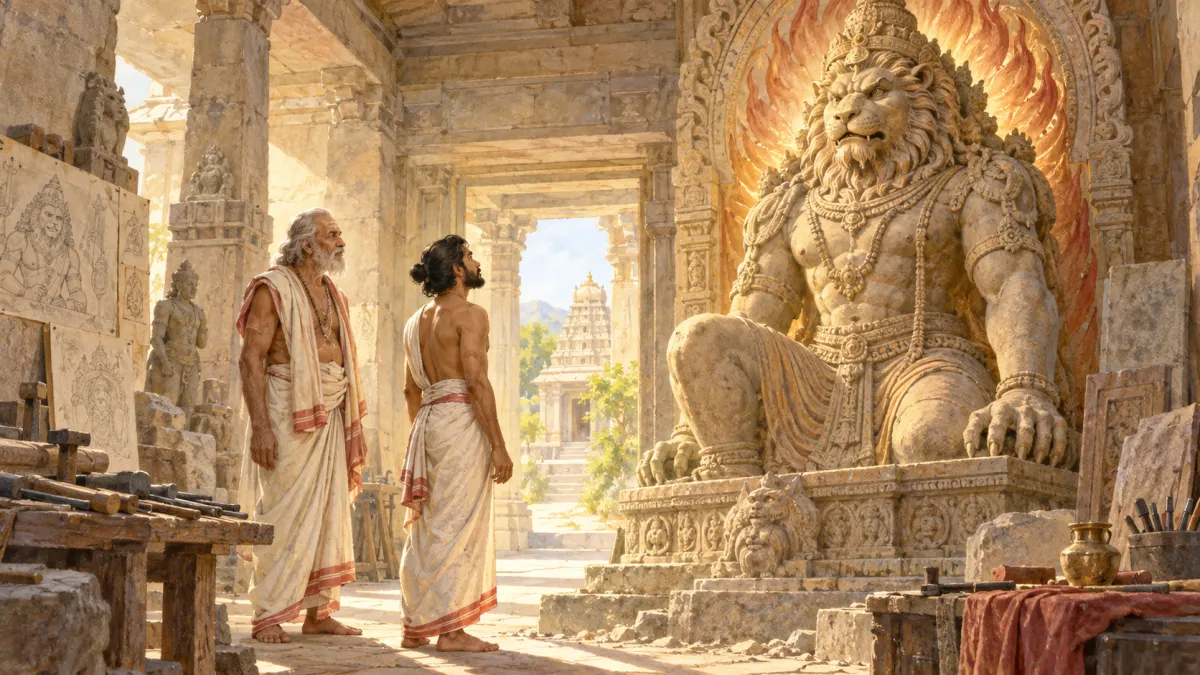
Thus, Vishnu appeared in the form of Ugra Narasimha and destroyed the demon Hiranyakashipu.
“The earrings in his ears were blazing firebrands. His belly was like a mountain, and his breath stirred the peaks. The hair on his body resembled tongues of flame, and his hands hurled fiery missiles. Terrified by Narasimha’s fearsome gaze, the demons scattered in all directions, and the palace was reduced to ashes. Prahlada, who remained alive, buried all his relatives and comforted the wounded. Stunned by the scale of the destruction, the survivors stood motionless for some time.”
The Siddhis of Invoking Deities and Beings
One of the yogic powers is the siddhi of invoking various deities, energies, or beings. It is generally said that one can invoke a great number of different beings depending on one’s yogic training and power.
For example, one can invoke:
The Vasus, guardians of nature: earth, water, air, the element of space, the sun, and so on
A retinue of guardians drawn from the thirty-three gods
A retinue of rakshasa demons
A retinue of gandharvas, the dancers and musicians of the celestial worlds
A retinue of sadhus
A retinue of guardian warrior spirits from the realm of the yakshas, extremely powerful and fierce, possessing superhuman strength
A mystical army: one akshauhini, ten akshauhinis, or one hundred akshauhinis (provided, of course, that one has enough shakti)
An akshauhini is a vast number of war elephants, infantrymen, and so on.
One can invoke a kamayana—a wish-fulfilling chariot (vimana) that, controlled by the mind, transports the yogi to any point in the universe. It is the equivalent of a UFO for interstellar travel through different universes.
One can summon a vahana, a mount that can also be used for travel. For example, Garuda—the mount of Vishnu; the bull Nandi; Indra’s white horse Uchchaihshravas; Ganesha’s Mushika; the bird on which Saraswati travels; or Durga’s tiger. These are all different vahanas, each possessing its own special qualities and capable of serving as guides when traveling between worlds.
At lower levels, such summonings are performed through rituals; at higher levels, they are accomplished through the power of the sankalpa of the natural state.
There are also sadhanas, particularly from the section of the Dhanurveda, that summon weapons, although this is a kshatriya mandala and is not characteristic of yogins versed in the vows of ahimsa. Nevertheless, one can summon weapons known as the “Head of Brahma,” the “Dart of Indra,” the “Weapon of Varuna,” and the “Brahmastra”—these are various extremely powerful weapons that alter the topology of space, the metric of matter, and the balance of elements in the universe.
Of course, such weapons are not given to mortals; the gods watch over them very carefully and guard them. They are bestowed only in exceptional cases upon certain avatars or very powerful beings in extraordinary circumstances. And they are always under the protection of the guardians of the world.
One can also summon magical treasures or beings that provide various services. All these are siddhis associated with the energy of summoning.
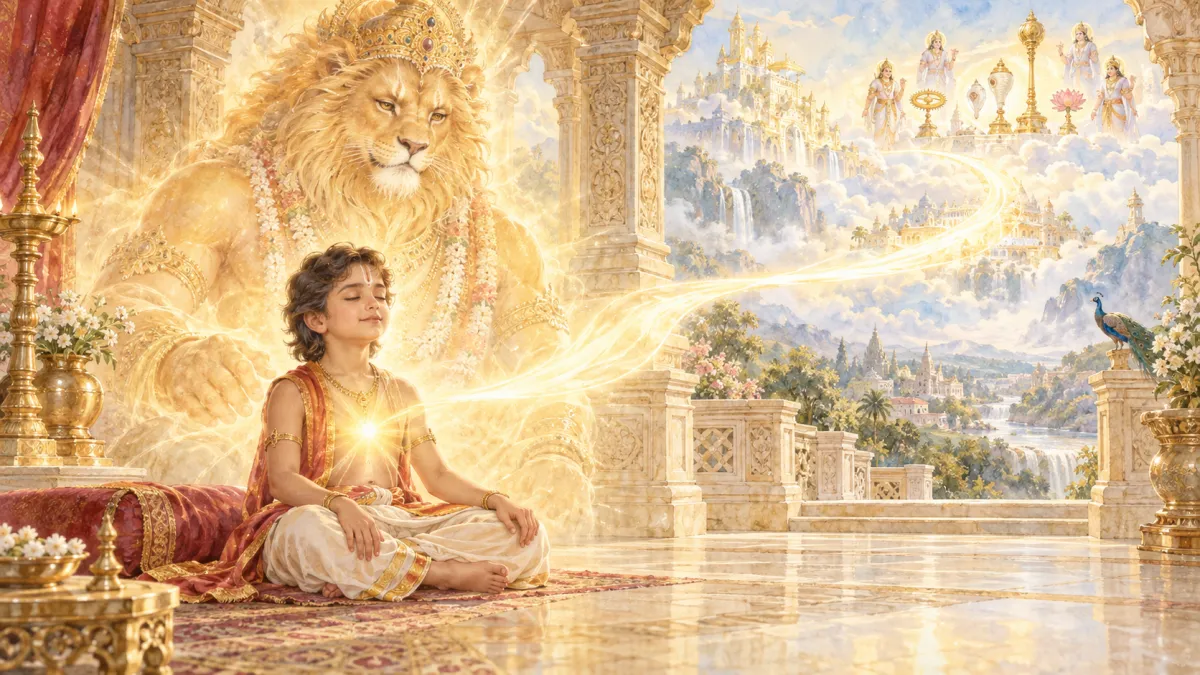
Summoning means that a yogin, having entered the nondual state, establishes a connection with a particular world or with certain beings and manifests that connection in the material world. All deities and these objects already exist within our subtle bodies; they are, as it were, different parts of our mind. And it was in this way that Prahlada summoned Narasimha, the wrathful form of Vishnu, by establishing a connection with the god Vishnu himself.
Prahlada’s Reflections on the Fate of His Lineage
“Prahlada thought:
‘Who can help us now? Entire families have been utterly destroyed by Hari. Alas, our enemy has swiftly reached the pinnacle of military victory. The gods, who could not raise their heads while my father was alive, have now taken possession of our world. My own kinsmen are dejected, left without occupation or inspiration, wretched and unhappy. The demons, who were strong and powerful only recently, have now become weak and meek, just as the gods once were.’
Prahlada himself belonged to the lineage of the asuras. He was not of the lineage of the gods, but was a member of Hiranyakashipu’s family—his son. And when Narasimha destroyed Hiranyakashipu, Prahlada became concerned that the entire lineage to which he belonged had begun to decline.
“Fate is a wondrous thing. Just as a timid deer brought into an unfamiliar village is frightened even by the sound of a falling leaf, so the demons, having witnessed the enemy’s might, are frightened by everything. The gods have taken the wish-fulfilling tree. Just as the demons once looked upon the defeated gods, so the gods now look upon the defeated demons.”
The Structure of the Worlds of Samsara
When “gods” are mentioned here, what is meant specifically are demigods—that is, beings from the Heaven of the Thirty-Three, from the world of Indra. They are not necessarily enlightened. The highest of these demigods are, of course, enlightened—for example, Indra and others. They, too, are disciples of the rishis. But often, when the gods of Indra-loka, the Heaven of the Thirty-Three, are described, this does not refer to Buddhas or awakened beings; rather, these are gods belonging to the realm of desire—kama-loka.
If we consider the six worlds of samsara, first comes the hell realm, then the animal realm (the realm of lower beings), followed by the realm of pretas and bhutas, then the human realm, and then the realm of the asuras. Hiranyakashipu belonged to them. They are also called rakshasas, danavas, daityas, and demons (they are not necessarily depicted as extremely frightening or horned). Next come the gods of the desire realm—the Heaven of the Thirty-Three Gods and other heavens. And all the stories that are usually described are connected specifically with this loka.
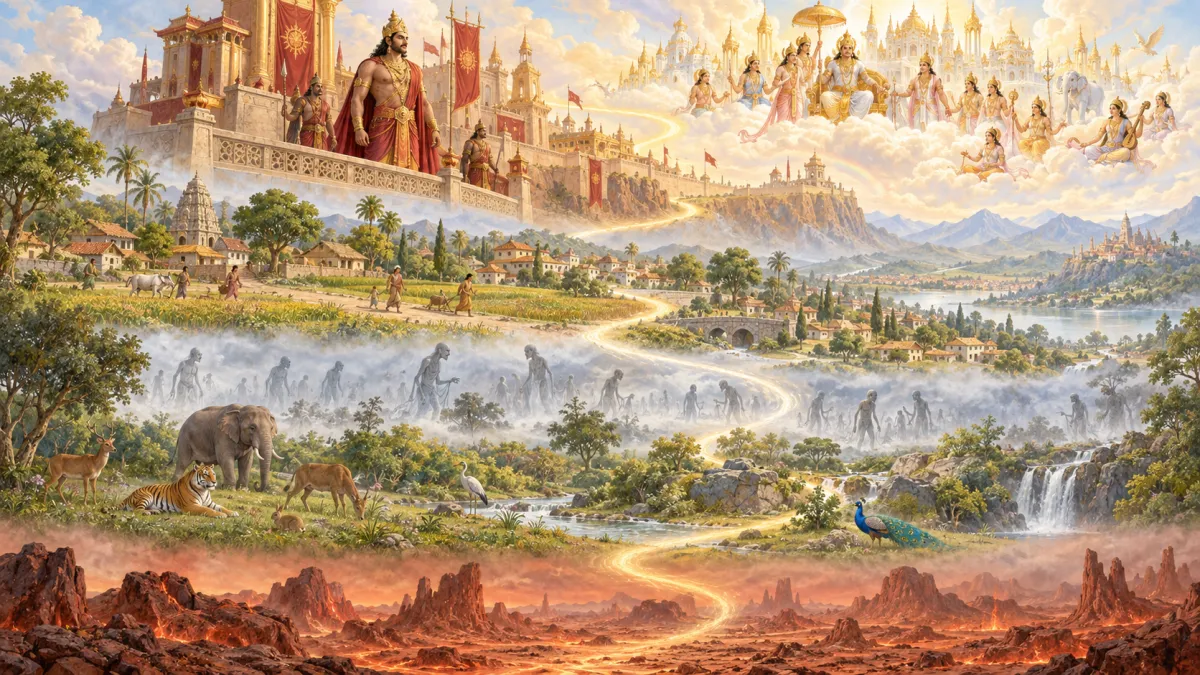
If we ascend still higher, into the upper astral world, rupa-loka, then, of course, no one wages war there anymore. There are no demons or asuras there, and there are no problems; it is the domain of pure realms of perception, the domain of pure enlightenment.
Many of the stories of the Mahabharata and the battles between the asuras and the gods belong precisely to the realm of kama-loka (the sphere of desires); it is still the world of samsara, where duality exists, where there is an eternal battle between good and evil. And as long as duality exists, there are different views of the path and the truth, different ethical systems. This is an eternal battle; it never ceases.
But when we rise higher, into the world of arupa-loka, the causal world, all ethical systems and all dualistic concepts self-liberate, and everything appears in a single “taste.” This realm is also called Jana-loka, Tapa-loka, and Siddha-loka. It is the abode of saints, siddhas, and rishis who govern all these processes.
As a rule, the gods and various asuric forces are under the patronage of a particular rishi or deity, such as Vishnu or Shiva, who grants them blessings and instructions. But because they have different natures and ethical systems, they often enter into conflicts and contradictions.
“The demigods and other beings who once served at the court have gone to the forests on Mount Meru and now live there like forest birds. My mother and the other queens are now the embodiment of grief. Alas, my father’s ceremonial fan now serves Indra. Because of Hari, we are in incomparable and indescribable misery. The very thought of our situation causes us to suffer hopelessly.”
Prahlada continued to think:
“Just as the snowy peaks of the Himalayas are never scorched by the sun’s burning heat, the gods who live in Vishnu’s shadow are never overcome by despondency. Just as a little monkey sitting on a tree branch taunts a huge dog on the ground, the gods, being under Vishnu’s protection, insult us demons. Vishnu protects and sustains the entire universe. Even when unarmed, no one can withstand him (Narasimha used no weapons). He alone is the hope and support of all beings in this world; therefore, one must seek his protection with all one’s might—there is no other way.”
When Prahlada saw that the gods had such patronage, he concluded that he should take refuge in Vishnu, since he saw that the asuras were always defeated. He realized that it was disadvantageous for his lineage to lack such support. Although the gods were less powerful, they always defeated the asuras by enjoying Vishnu’s patronage. And wishing somehow to save his lineage, Prahlada decided to turn to Vishnu for protection, even though he had already been his personal devotee.
Prahlada’s Transition to Nondual Practice
“No one has surpassed him, and he alone is the cause of the creation, existence, and destruction of the universe. From this moment on, I too shall become a worshiper of Vishnu and live as though filled with his presence. May the sacred mantra ‘Namo Narayanaya,’ dedicated to him and capable of blessing his worshiper, never leave my heart. However, one who is not Vishnu cannot attain any benefit by praying to Vishnu. One must not only pray, but also become Vishnu.”
This is a very important point. When devotees of various Vaishnava sampradayas that follow Vishishtadvaita, such as the International Society for Krishna Consciousness (ISKCON), speak of Vishnu, they often recount this episode in which Prahlada invoked Narasimha Deva, one of Vishnu’s avatars, and was saved by him. They speak of Prahlada’s monologue and his feats of devotion to Vishnu, but they never mention this particular statement by Prahlada. Yet this statement is the key point expressing the teaching of nondual bhakti—that is, not Vishishtadvaita or Dvaita, but precisely Advaita. And it fully accords with the Shaivite teaching that states: “You can worship Shiva only when you yourself become Shiva, when you identify with Shiva” (Shivam bhutva shivam yajet).
Read this statement once again:
“One must not only pray, but also become Vishnu.”
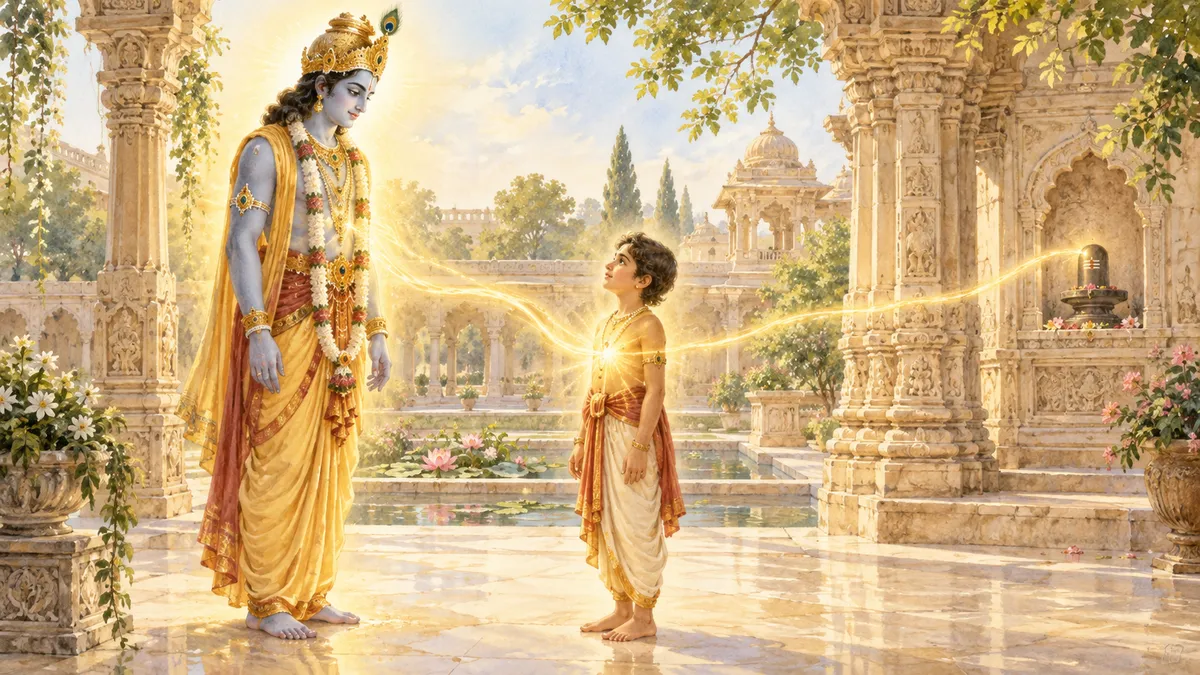
If you say this to some orthodox Vaishnava, he simply will not accept it; he will reject it completely, because identification (sayujya-mukti) is not accepted in the Vishishtadvaita and Dvaita schools. For our school, on the contrary, this is a very important point: one must not only pray to Vishnu, but also become Vishnu.
And we have no practices of dualistic worship, because all practices are performed in a nondual manner, that is, in the style of Anuttara Tantra, in the style of the siddhas’ pratyaksha advaita, which immediately presupposes identification with the object of worship. Moreover, there is no worship and no worshiper; instead, there is instantaneous integration from the very beginning.
The Practice of Divine Pride
“Therefore, I am Vishnu. He who is known as Prahlada is none other than Vishnu; there is no duality in this. Vishnu rides Garuda, and now Garuda carries me. In my hands are the things that Vishnu usually carries. Lakshmi, his consort, stands beside me. All of Vishnu’s divine splendor has become mine. All the symbols of Vishnu are now my symbols. The entire universe, which now appears and then disappears, manifests from my chest. My color is now Vishnu’s blue. I am dressed in yellow garments. Who is my enemy, and who can now oppose me? Since I am now Vishnu, anyone who opposes me is undoubtedly living out their final days. The demons standing before me cannot withstand my radiance.”
Thus, what is described here is the classical practice of divine pride and the yoga of the illusory body. That is, at first Prahlada worshiped Vishnu in a dualistic manner, but then he came to a deeper understanding of the principle of nonduality and moved on to the yoga of self-recognition (pratyabhijna), when he began to identify himself with Vishnu, practice the yoga of the illusory body by visualizing himself in the form of Vishnu, and saturate his consciousness with Vishnu-bhava, that is, divine pride or Brahma-aham-bhava.
Therefore, when stories about Prahlada are told, one can confidently say that he practiced the nondual teaching of Laya Yoga, the teaching of divine pride based on the ishta-devata Vishnu. That is, he practiced bhakti at a young age, when he was a boy, but when he matured spiritually, he moved on to the practice of Advaita, the practice of Laya Yoga, and the path of divine pride based on visualization, the yoga of the illusory body, and Jnana Yoga. And we shall see further evidence of this. Yet, for some reason, no one ever speaks about it anywhere.
“All the gods now praise me, because I am Vishnu. I have transcended all dualistic feelings and have myself become Vishnu. He in whom all three worlds are centered, who has subdued all hostile forces in the universe and dispels the fears and anxieties of others—he is me, and I salute him.”
Playing at Dualistic Relationships on the Basis of Nonduality
Vasishtha continued:
“Having thus become Vishnu, Prahlada thought that it would be good to pray to Vishnu. He thought: ‘Here stands another Vishnu, who also sits upon Garuda and possesses all the divine attributes, qualities, and powers.’”
Affirmation on the path of Advaita and self-recognition does not lead to contradiction when dualistic relationships, including prostrations, worship, and so forth, are adopted as a form of play. Someone may wonder: if he had already transcended duality and begun to identify himself with Vishnu, why would he then need to pray to Vishnu? But therein lies the depth of the practice: entering the process of identification and complete integration does not preclude returning to the play of dualistic relationships.
It is very important to understand that there is a vast difference—as great as that between heaven and earth—between dualistic worship and the play of dualistic relationships. Do you understand the difference? Dualistic worship is the eternalist acceptance of both the deity and oneself as self-existent realities, whereas the play of dualistic relationships is something entirely different: it is already a lila chosen by a saint who is fully identified with the Absolute, yet nevertheless enacts the play of dualistic relationships.
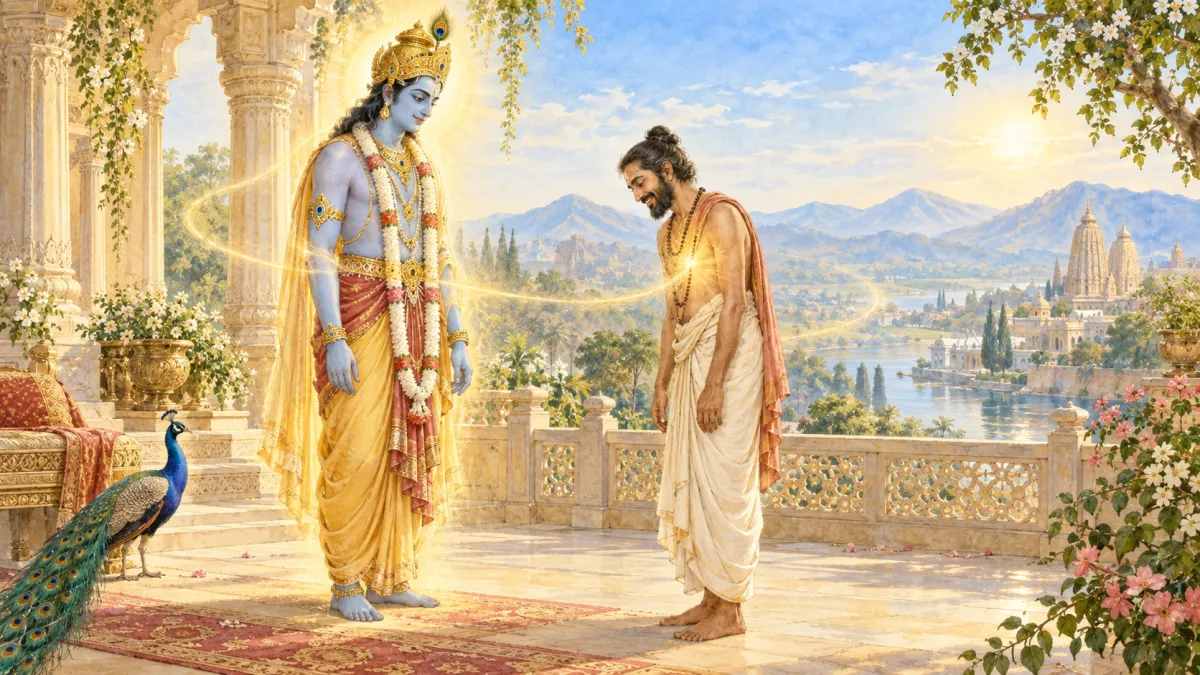
This is similar to how Shankara came to a temple and began praising Shiva and making prostrations. But before doing so, he said: “O Brahman, forgive me for this worship, for having limited you and imagined that there is something outside you, that I exist as a separate individual.” In other words, he showed the state of mind and the nondual view in which he abided while performing dualistic worship.
The actions performed may appear to be the same, but the crucial difference lies in the view from which they are performed. In the first case, the sahasrara chakra is not open, the higher circuits of consciousness are not active, and eternalist bhakti worship is performed. In the second case, everything is performed in integration, in nondual presence.
And it is precisely in this subtlety that the difference lies between Laya Yoga as a teaching of Advaitic self-knowledge and paths such as Vishishtadvaita, Dvaita, Bhakti Yoga, and others. For one who does not grasp this difference, the secret of Advaita Vedanta will not be revealed. But if we understand this difference, everything falls into place.
We understand that bhakti does not contradict Advaita, and Advaita does not contradict bhakti. Everything is in its proper place, while we do not lose sight of the highest view and work appropriately with external energies. This is absolute wholeness, the unity of all paths with priority given to the Advaitic view. This is a very valuable truth that many reach only after decades of agonizing doubts, insights, and searching. But you can understand it right now.
“Prahlada thought, ‘Here stands another Vishnu, who is also seated on Garuda and possesses all the divine attributes, qualities, and powers. I shall now pray to him in my mind, as prescribed by tradition.’ Having thus resolved, Prahlada prayed to Vishnu in his mind, as prescribed by tradition. Then he also prayed to him outwardly. After completing the long prayer, Prahlada rejoiced. From that time onward, Prahlada prayed to Vishnu every day.”
The Demons Become Devotees of Vishnu
Seeing Prahlada’s efforts and following his example, all the demons in the kingdom also became worshipers of Vishnu. News that Vishnu’s former adversaries had become his devoted worshipers spread like wildfire. The gods in heaven were astonished: how could demons become worshipers of Vishnu? They went to ask Vishnu about it. The gods said:
“O Lord, what a mystery this is! The demons have always been your adversaries. Their becoming your worshipers seems like a bad joke. What has become of their demonic nature, and how can they worship you, when such worship arises only in the final incarnation of individual consciousness?”
The Nature of the Asuras and Their Difference from the Gods
Why were the gods astonished? Because Vishnu is a deity associated with sattva-guna, preservation, and the maintenance of harmony and balance in the universe. Asuras, rakshasas, daityas, and danavas are races of a fundamentally different disposition and ethical system; they are civilizations in which the aspect of iccha-shakti is very strong, and personal will and individuality are of great importance. Moreover, this personal will and individuality often degenerate, become distorted, and stray away from the Absolute; that is, there is a very strong ego (ahamkara), great power, abundant energy, and pronounced aspects of iccha-shakti, aishvarya-shakti, and svatantrya-shakti, but no self-liberation.
And because there is no self-liberation, self-surrender, or self-transcendence, ahamkara leads them astray. It is like the description of an angel who fell away from God, who wanted to become God himself and who, possessing great powers and abilities, decided to exist on his own.
All civilizations of this class (asuras, rakshasas, demons) embody an immense and very powerful ego that seeks to exist on its own—that is, a nature that does not self-liberate. Why does it not self-liberate? Because the force of the ego is such that it feels and believes in its own reality, in its own will independent of the supreme Source, and follows that will. But the problem is that there can be no personal will independent of the supreme Source. Such seemingly independent will is also the play of the Absolute, but they do not understand this play and attach enormous importance to their own will while ignoring self-liberation.
Because there is no self-liberation, they cannot enter sattva-guna; rajas is very strong in them, constantly captivating and carrying them away. Because rajas is strong, they lack the strength to stop, enter sattva-guna, engender clarity and contemplative presence, and understand the very principle of self-liberation, the principle of the deities.
And the gods could not understand how it had come about that the asuras had entered the path of sattva and worshiped Vishnu while possessing such strong rajas, distorted will, and a great ego.
“The good and luminous qualities necessary for this are not befitting of demons; it makes no sense. After all, the qualities inherent in a being always correspond to its fundamental nature. It is painful to hear that such creatures became your devotees overnight. If this had happened gradually, through the development of good qualities and wisdom, we would have understood it. But it is almost impossible to believe that devilishly cunning creatures became your devotees nearly instantaneously.”
When aliens are described or creatures like the “Alien” are depicted, they are something along those lines; those races are roughly like that. And the gods could not comprehend that they had suddenly begun to meditate and humbly bow to the deities. In other words, they could not imagine how these powerful beings from such races and civilizations, endowed with supernatural abilities and rejecting sattva, had become devotees of Vishnu overnight. It was incomprehensible to them.
Vishnu’s Reply and Prahlada’s Transformation
“Vishnu replied, ‘O gods, do not suffer from doubts and disappointments. Prahlada has begun to pray to me. This is indeed his final birth, and he has earned liberation. The seeds of his ignorance have been destroyed; he will not be born again. It is painful and senseless to hear that a good person has become bad. But it is pleasant and good to hear of someone who had no good qualities and has become good. The changes in Prahlada are for your own benefit.’”
Vasishtha continued:
Having reassured the gods, Vishnu disappeared, and the gods departed. They became friendly toward Prahlada. Every day, Prahlada prayed to Vishnu in thought, word, and deed. As a result, noble qualities—wisdom and equanimity—arose and manifested within him very quickly. He did not seek pleasure; even the thought of it did not arise in his mind. Having cast aside the desire for pleasure, his mind was left without support.
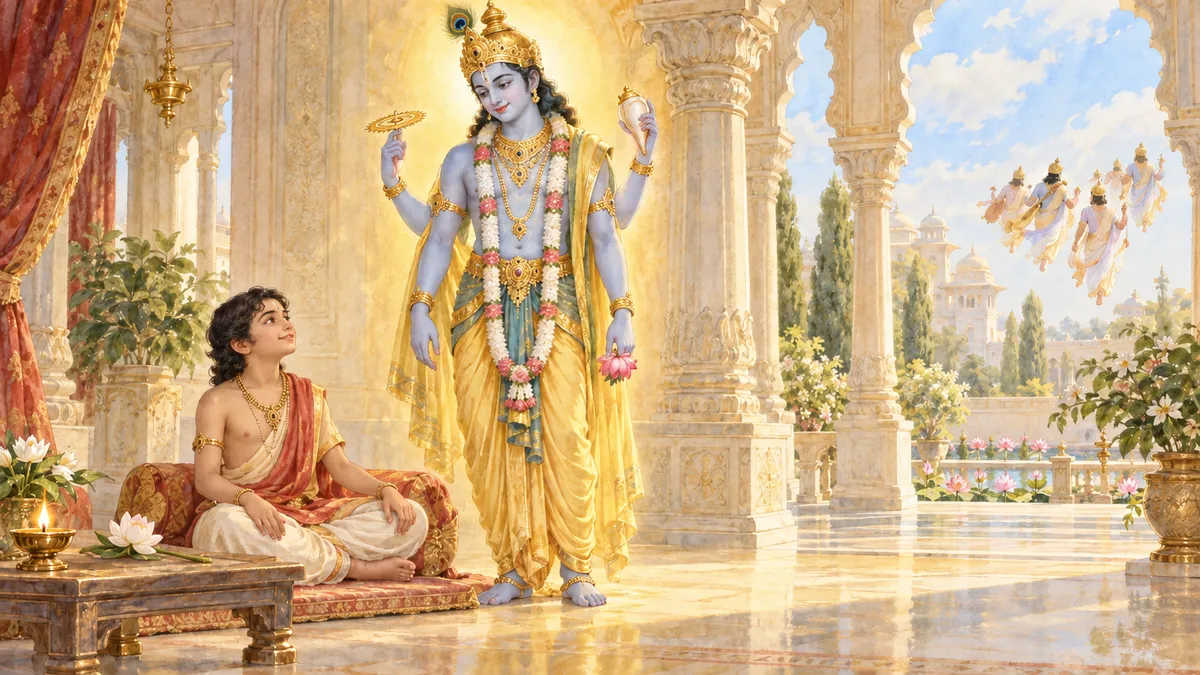
Vishnu learned of Prahlada’s state. He arrived at the place where Prahlada was praying to him. Seeing Vishnu himself in his palace, Prahlada rejoiced even more and continued to pray:
“I seek refuge in the God in whom all three worlds abide, who is the supreme light that dispels all darkness of misunderstanding and impurity, who is the best protection, the refuge of the helpless and those who have lost hope—the one unborn God whose refuge is worth seeking. I seek refuge in the one whose voice speaks the truth, who dwells in the hearts of all living beings, in whom this entire vast universe exists unchanged, who is unborn and immutable.”
