

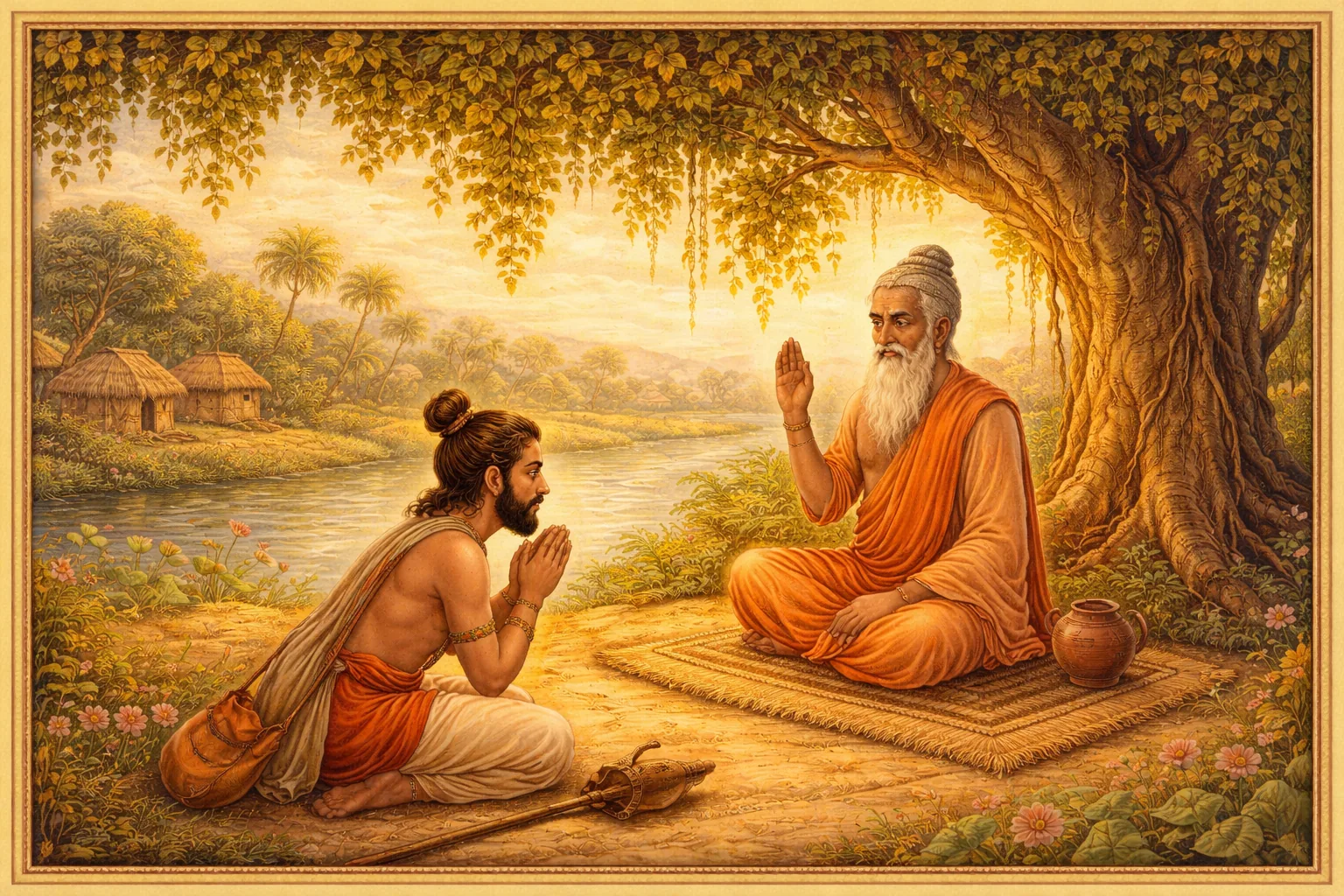
Commentary on the text “Shri Guru Charitra”
The text “Shri Guru Charitra” is the biography of an incarnation of the avadhuta Dattatreya. The chapter “A Sixty-Year-Old Barren Woman Became Pregnant.”
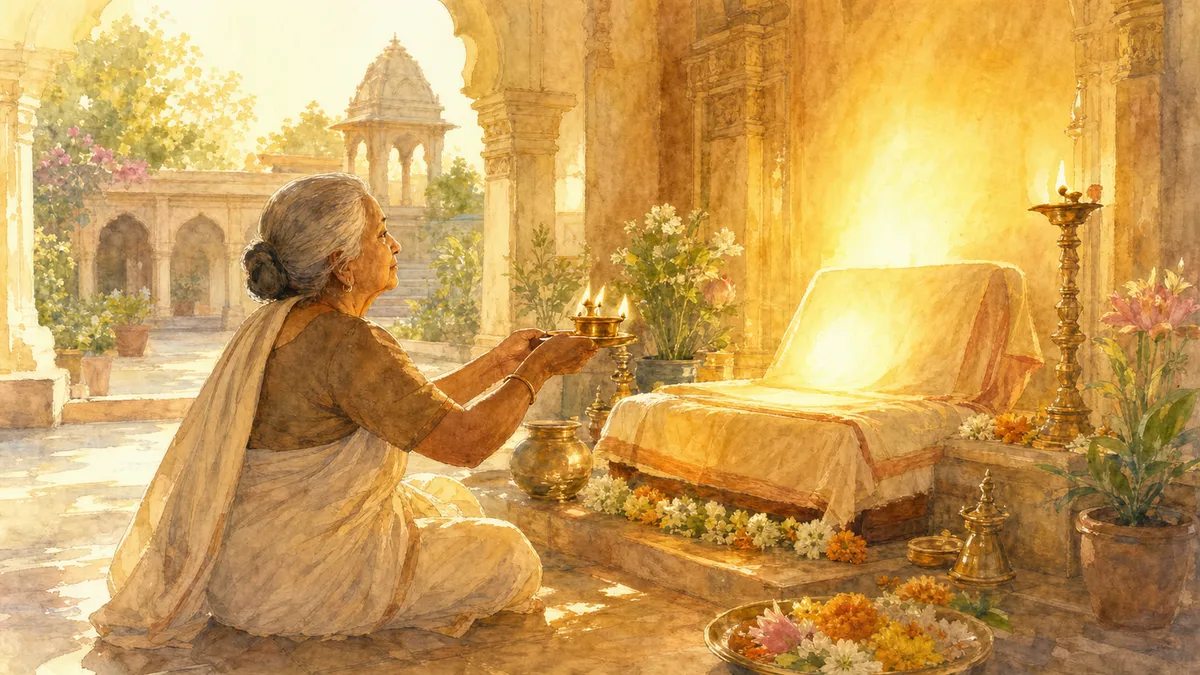
“There lived in Ganagapur a Brahmin named Somanath. He knew all the shastras. He had a devoted wife named Ganga. Although she was sixty years old, she had no children. She visited Shri Guru every day, lit a lamp, and performed arati for him.
Shri Guru was pleased, and one day he said to her: “What is your wish? Lord Shankara will fulfill it.”
Then Ganga prayed with folded hands: “O Guru, people speak badly of me and do not look me in the face because I have no children and I am sinful. There is no salvation without offspring. I do not possess the happiness of having children. Bless me to have children in my next birth.”
The Guru smiled and said: “Who has seen the next birth? You will give birth to children in this life.”
Ganga said: “How can I give birth to children in this life? I am already too old for that. I have gone on pilgrimages and served the ashvattha tree in order to have children. I performed vrata and upasana, but my wish was not fulfilled.”
Vrata is a vow; upasana is worship.
Of course, for a householder it is very important to have children. For a monk, not having children is a blessing. That is, everything depends on the status to which you belong. What is good for one is poison for another. Dattatreya says this: “What is good for gods and siddhas is bad for worldly people. What is good for worldly people is not suitable for yogis, monks, and siddhas.”
Living beings are placed in different karmic conditions, and therefore there is a huge difference between them. When you become a monk, you must remember that there are differences the size of the universe between you and worldly people. Perhaps your life in samsara will be the last, unlike that of ordinary people. Remembering this, you must always keep yourself as a monk and never mix with other statuses.
In the same way, if you are a lay disciple and your path is practice in the world, you must also remember that you are different from non-practicing worldly people. If you keep the secret vows and samayas, even while practicing in the world, you will also attain liberation. At the same time, you must not count yourself among householders. You are only playing the role of a householder, while in reality you are a practitioner who is not bound by anything worldly. Between a practitioner striving for enlightenment and one who is immersed in worldly goals, the difference is the size of the universe. And when interacting with worldly people, we must always take these differences into account. One should not offer another person one’s way of thinking if he does not ask for it himself, because he may not be ready to perceive it.
“Then Shri Guru said: “Your devotion is not useless. Serve the Ashvattha with faith. A daughter and a son will be born to you. Remove all doubt from your mind.”
After this, Shri Guru told the story of Ashvattha Narayana.
Once Narada, the son of Brahma, came to the ashram of the rishis after traveling through the three worlds. The hermits served him and asked him to tell the story of the Ashvattha. Narada said: “Brahma is in the root of the Ashvattha tree, Vishnu is in the center, and Shankara is at the top. Shankara is on the southern branch, Vishnu on the western, and Brahma on the northern.
In AUM, “A” symbolizes the main trunk, “U” the branches, and “M” the flowers and fruits. That is, OM is the form of Omkara. With every step you take, you receive a reward.”
After serving Swami for three days, Ganga had a dream in which a Brahmin told her to circumambulate Shri Guru of Ganagapur seven times with devotion and to eat the prasada that he would give, and then her wishes would be fulfilled.
Ganga immediately woke up and remembered her dream. She completed the ashvattha puja, went to the monastery, circumambulated the Guru, and bowed to him.
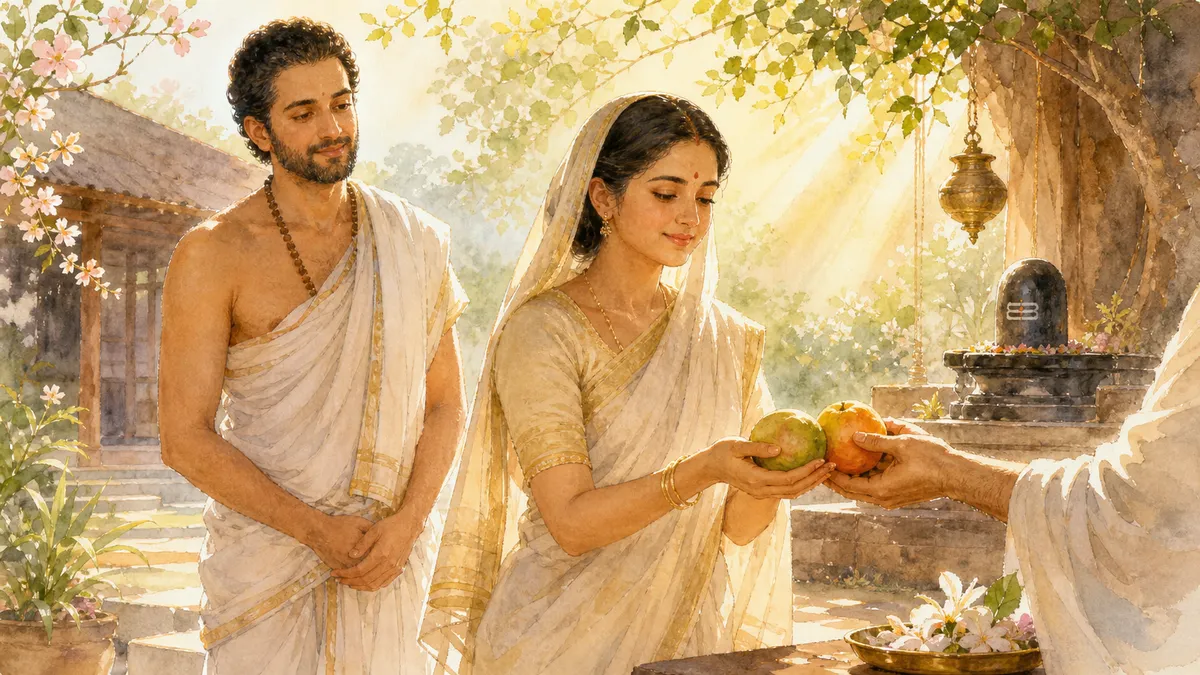
Shri Guru smiled and gave her two fruits as a gift. She ate them, first giving gifts to the Brahmins.
By the grace and blessing of Shri Guru, the old married couple regained their youth, and they were able to have children. She ate good food and concentrated on the Guru for three days. On the fourth day, after bathing, the spouses received the darshan of Shri Guru. Shri Guru blessed them: “Suputravati Bhava.” All the people were happy to learn that she was not barren. After nine months, she gave birth to a girl. The astrologers predicted that the girl would have eight children. Ten days later, Ganga took the child to visit the Guru. He blessed the child and bestowed a gift upon her, saying: “This child will live for one hundred years. Everyone will respect her, and the king of the south will visit her. She will have sons and daughters. Her husband will be an enlightened person, and she will be devoted to him.”
Then Ganga prayed for a son.
Shri Guru asked her: “Do you want to have an intelligent son who will live thirty years, or a foolish one who will live to one hundred?”
Ganga prayed: “I want to have an intelligent son, but he must be the father of five sons.”
By the grace of Shri Guru, she gave birth to a son who became an expert in the Vedas and Shastras, and he had five sons.
Shri Guru Murti is love for the devotees. How can anyone encounter difficulties when he prays to him with an aspiring mind? It is true that the Guru will give everything we ask for. Concentrate on him without doubts in your mind.”
Guru Yoga and Self-Recognition
When you read the life story of saints of Dattatreya’s level, it is not merely hagiography, not just listening to stories; it is a process of purifying the subtle body through Guru Yoga with the saint. It is said that such listening itself removes dual obstacles in the subtle body, obscurations, and karmic impediments. From the point of view of Laya Yoga, the process of listening is even more important for us because, by contemplating, we fully unite with what we are listening to and recognize it as our very self. This may be difficult to understand, but truly, Guru Yoga is accomplished when the yogin recognizes the absolute nature within himself. In other words, from the point of view of Advaita, to listen about Dattatreya means to recognize oneself as Dattatreya.
The deepest samskaras, which are our karma, and the ego are in the past. We constantly identify ourselves with past knowledge. When this identification is very strong, our ego is crystallized to the maximum. And then we have no freedom of choice at all; we cannot change our opinion of ourselves, we are bound by it hand and foot. Our opinion of ourselves consists of our own memory and of other people’s memory of us. Then we rigidly follow the need to constantly maintain and renew this opinion. Such maintaining and renewing of the opinion of oneself is called ahamkara, the false ego. And when we constantly maintain and renew it, we continuously identify with it. In childhood this is not yet very manifest, but after thirty or forty years it manifests with tremendous force, and therefore a person does not even have the thought that he could be someone other than what he is accustomed to considering himself.
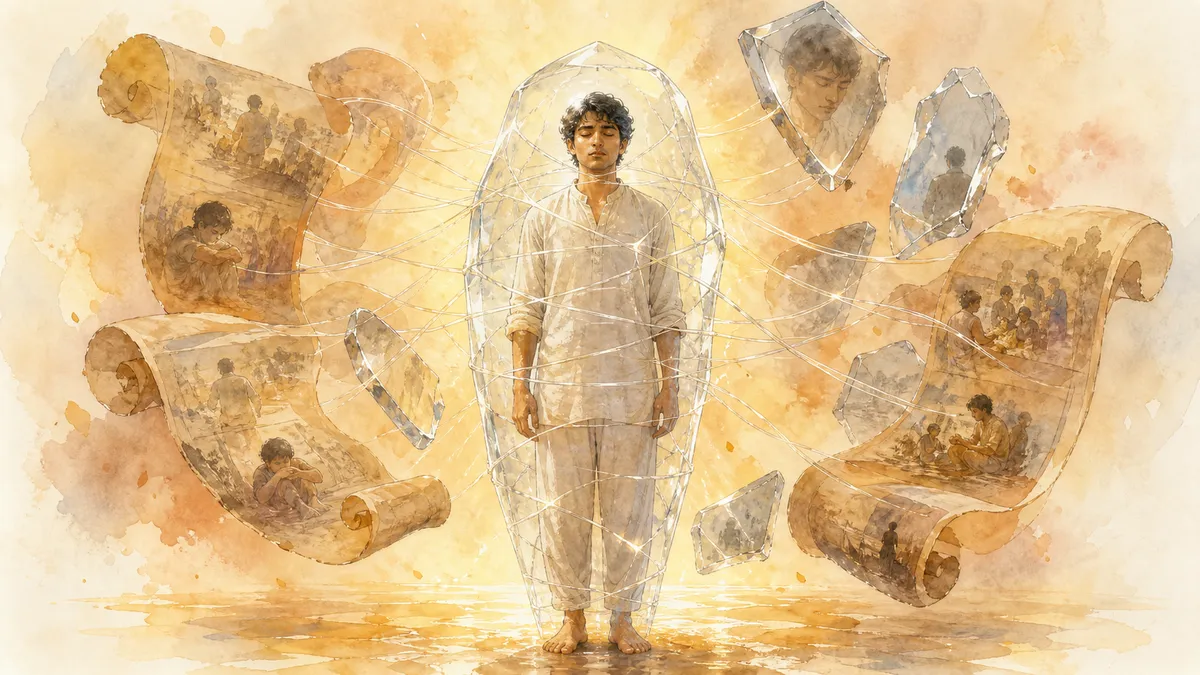
Such identification becomes strongly crystallized, as a result of which a person becomes accustomed to seeing only through the eyes of this formed experience. He looks at the world, at himself, and at others only through the prism of this experience. This is karma. No matter how much he may want otherwise, he looks precisely with these eyes and not with others. And because he looks through the eyes of such karmic vision, he is strongly conditioned by it. When we begin to change the memory of ourselves, discard our false ego, and become inwardly unpredictable, unidentified, and unlimited, the identification with our false “I” begins to depart, and our deep nature begins to emerge within. Gradually we discover that this deep state is indefinable: depending on the bhava and the mood of the sankalpa, we can appear in one or another hypostasis. We can demonstrate one or another part of our personality, but at the same time not identify with it.
The principle of divine pride means that we recognize brahma-aham-bhava as our true essence. We cease to identify with past experience, but continuously identify with brahma-aham-bhava. And the false ego that you are accustomed to considering yourself exists as a costume, as a convenient mask necessary for the convenience of relationships with others.
Self-recognition means continuously recognizing one’s absolute nature through contemplation. Perhaps what I am speaking about is difficult for some to understand; nevertheless, this is exactly how things truly are. If you contemplate correctly and comprehend the teaching, you come to the same conclusion.
Therefore, when we listen to the life story of Dattatreya, we should not think that it is speaking about something separate from us. While contemplating as we listen to the life story of Dattatreya, we must recognize ourselves as Dattatreya.
Trials and Obstacles on the Path
“Narahari Is Cured of Leprosy
One day, a brahmin named Narahari, who was suffering from leprosy, came to Shri Guru in Ganagapur. He bowed to the Guru with devotion and said: “O Guru, I have come here after hearing of your glory. I am suffering from this disease because of my sinful karma. I have studied the Yajurveda, yet people still avoid me. No one wants to look at my face; my life has become miserable. I have made pilgrimages to many places but have not been cured. Now I have no desire to live. Please have mercy on me.”
Shri Guru said: “You have leprosy because of the many sins you committed in your past life. Do with devotion what I tell you.”
Illnesses arise because of one’s own sins in past lives or because of the sins of other people that have been taken upon oneself. What is illness? It is coarse energy and information that enters the physical body from the subtle body. The manifestation of illness on the physical level is already the final stage. But illness begins at the energetic-informational level, manifesting as an imbalance of prana. For example, if someone has a lung disease, this indicates an imbalance of prana-vayu. Usually, illness is the result of careless handling of prana, or it is the consequence of some tendency of consciousness to close in on itself, to cling to something.
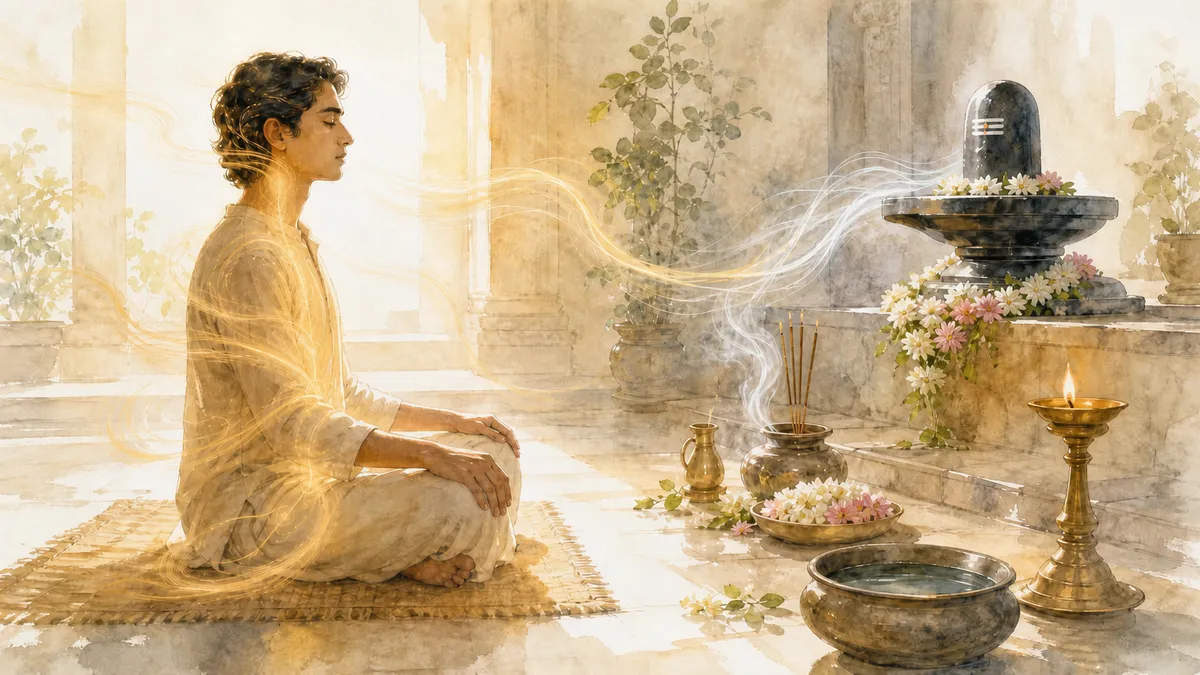
If an illness has appeared as a result of careless handling of prana, one simply needs to work with prana, for example: do pranayama, purify the nadis, concentrate on the chakras. Concentration on the chakras, if practiced for a long time, eliminates any illness. And if it is an energetic-informational illness, then one needs to work at the level of information with subtle astral currents and perform purification practices, for example: recite purifying mantras, perform fumigation with incense sticks, make prostrations before statues of saints, take certain purifying vows, practice repentance, bathe in holy springs. And these purification methods should be practiced until the information is completely purified and signs of purification appear in dreams. For example, if a person sees in a dream how he spits something out or how feathers and insects come out of his body, then this is a clear sign of the purification of the subtle body.
Why can such things happen? What are the sins of past lives? From a non-dual point of view, everything depends on what kind of consciousness a person has. For example, a saint may commit a so-called sinful action and yet accumulate merit. The sins of past lives are obscured states of mind that were generated as a result of certain actions. If, while being unconscious, a person performed certain actions and had obscurations, these obscurations became fixed and attracted a certain energy, which was imprinted in his astral and causal bodies, and in this life the trail of these negative energies follows him—this is what the sins of past lives are.
If, however, a yogin frees himself from dualistic thinking, ceases to experience obscured consciousness, and is constantly in presence, in deva-bhava, his consciousness is always positive, absolute, and pure. Then these impure astral currents leave him over time, and he becomes completely purified. We usually say that the best means of purifying sins is the natural state. If you trust it and are so deeply immersed in it that you feel as though light is emanating from your body, then be assured that even the most impure obscurations coming from past lives will certainly be purified, even without ritual practice. Nevertheless, certain things—reciting mantras, drinking consecrated water, fumigating with incense, and so on—can help in this if you perform them regularly. The bhajan mandala is also a most powerful purification practice; it is purification at the level of the pure lands or holy heavens. If you perform it for a long time, your subtle bodies are purified.
The Power of Faith and Devotion
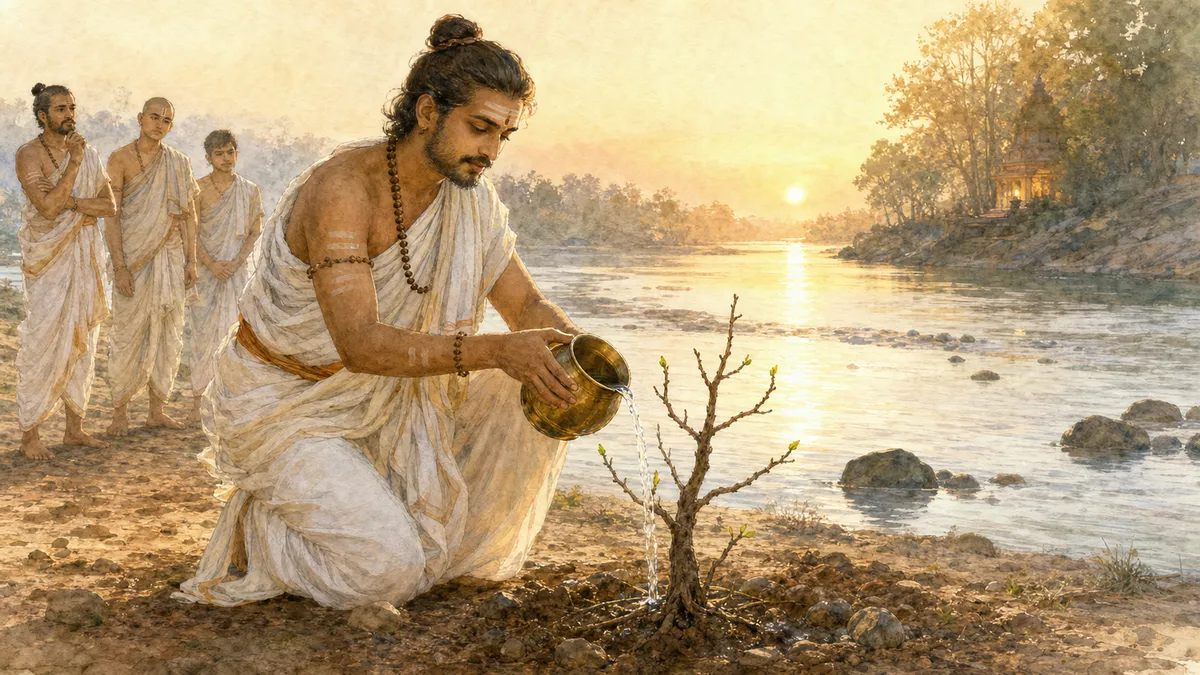
“Then he took a dry piece of the sacred fig tree, gave it to the Brahmin, and said: ‘Plant this to the east of the sangama. Bathe in the sangama, water the tree three times a day, and serve it with faith and devotion. You will be healed on the day the tree puts forth green shoots.’
The Brahmin did as Shri Guru advised. He observed a fast and performed service. Seven days passed. The disciples in the monastery said to him: ‘What is the use of watering a dry piece of wood? We do not think it will sprout and become a tree. Your accumulated sins cannot be destroyed. You are wasting your energy in vain.’
Narahari replied to them: ‘The words of the Guru never lie. I firmly believe that this tree will sprout, and therefore I will water it until the end of my life.’
The disciples from the monastery went to Shri Guru and said: ‘This fool is watering a dry tree. He does not listen to us. What will be his fate?’
Shri Guru replied: ‘O disciples, it is a matter of time and devotion. He will receive the reward for his faith in the words of the Guru.’
Then he told a story.
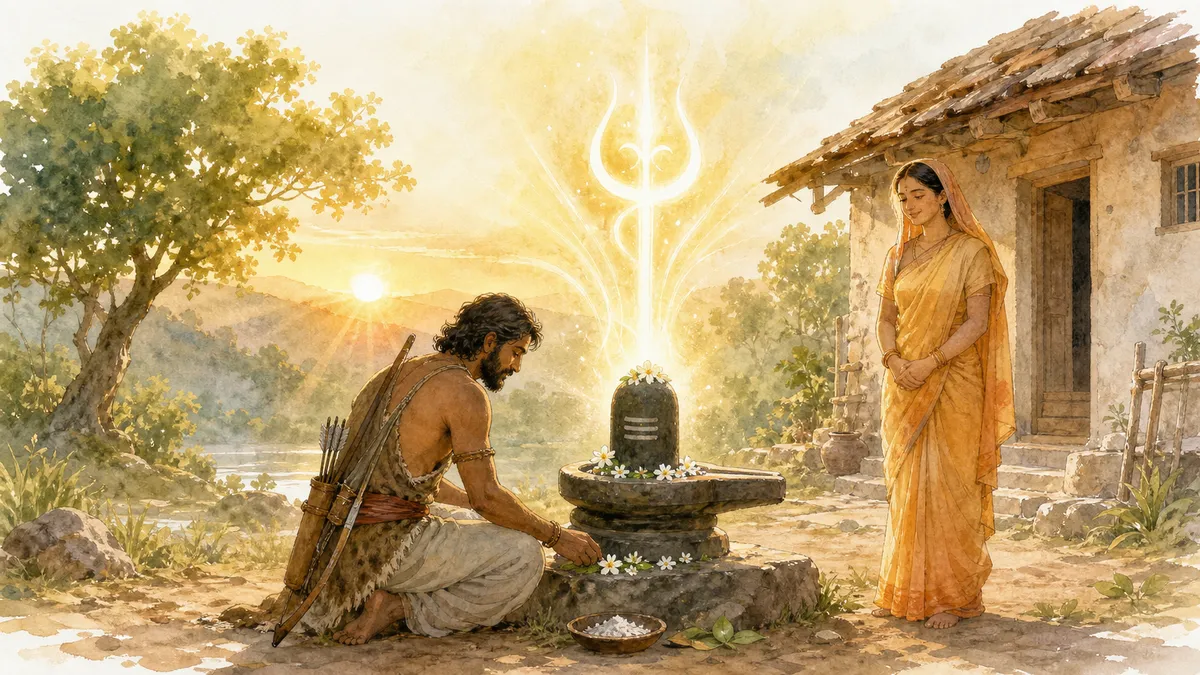
Long ago there lived a king named Simhaketu, who had a son named Dhananjaya. One day the prince went hunting and became thirsty. He met a hunter who gave him water. This hunter saw a temple of Shiva with a broken lingam. He wanted to serve the lingam, but it was broken. Then Dhananjaya said to him: ‘There are many stones around the temple that resemble a lingam; you can serve one of them. Serve the stone with faith and devotion.’ The hunter asked Dhananjaya how to serve the lingam. He accepted the prince as his guru and learned from him how to perform the service.
Then the hunter went home and told his wife everything that had happened. He served the lingam daily and offered chitabhasma to Ishvara. He obtained it from the ground after cremation. One day he could not obtain chitabhasma. He was troubled and told his wife about it. She said: ‘Why are you worried? Put me in the house, set it on fire, and you will obtain chitabhasma. Offer it to Ishvara. If you do this, you will not interrupt your service to Ishvara.’ The hunter did not agree with what his wife said, but she insisted. He did as she wished. He burned the house with her inside, took the chitabhasma, and completed his service. Then, as usual after the service, he called his wife for prasada, and she came. The house was untouched. The hunter was amazed and asked his wife: ‘How did you come?’ She replied: ‘I got up and came as soon as you called me.’ This was a miracle of Parameshvara. The hunter became completely devoted, and Parameshvara appeared before him.
Shri Guru said to his disciples: ‘If you have faith in the words of the guru, you will deserve his grace.’
As usual, Shri Guru went to the sangama. On the way back he was delighted to see Narahari watering the dry tree with faith in Shri Guru. Guru sprinkled holy water from his kamandalu on the tree. After a short time it shone and put forth green shoots. The dry stick turned into a sacred fig tree, and Narahari’s illness disappeared. Inspired by this, he began to sing hymns of devotion. Guru blessed him and said: ‘You are the first among my disciples.’ He addressed him as Yogeshvara. After that, Narahari lived in Ganagapura and was initiated into the Vidya-Sarasvati mantra.”
