

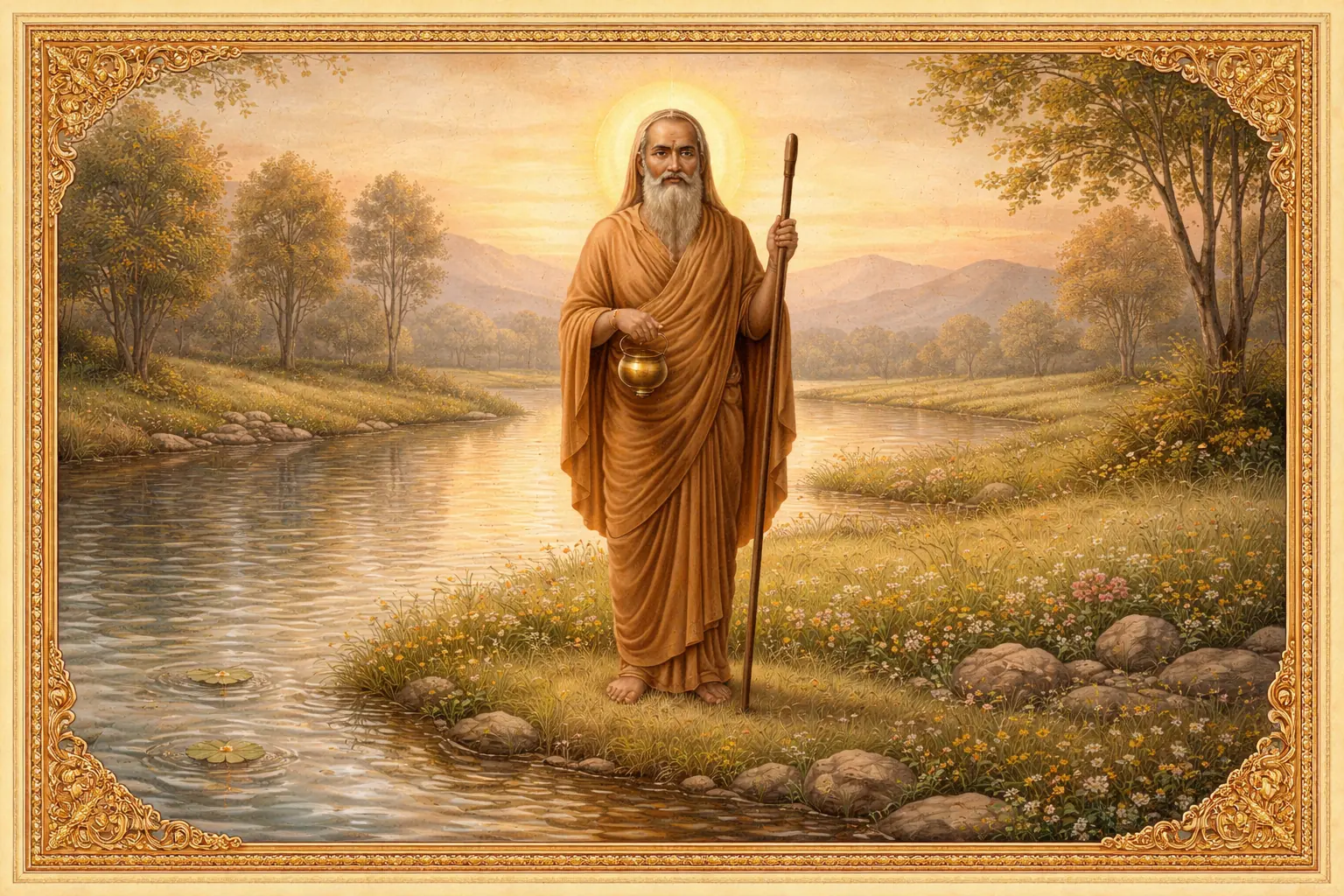
For a sadhu, the chosen deity is the form of God in which God comes; it is his future, his ideal, into which he gradually transforms and becomes in the process of practice. Ishta-devata yoga, the upasana of the ishta-devata, means gradually merging with the chosen deity on various levels.
At the level of fundamental consciousness, we merge with Dattatreya through jnana yoga, with Dattatreya’s body of wisdom, which is like the space of nondual emptiness. At the level of form, when we visualize ourselves in the form of Dattatreya, we acquire his subtle form and the abilities of this subtle form, depending on how successfully we do this. At the level of speech, when we recite the mantra of the ishta-devata, our speech is gradually transformed into Dattatreya’s prana. At the level of bhava, we gradually attune ourselves to Dattatreya’s divya-bhava and brahma-aham-bhava—to Dattatreya’s two bhavas.
Brahma-aham-bhava corresponds to Shiva-tattva, while divya-bhava corresponds to Shakti-tattva. For a sadhu, the ishta-devata is his ideal, his future, toward which he is moving. At first, it is very difficult to understand this ideal and this future; there is a great distance between where Dattatreya is and where we are, since initially the ishta-devata is perceived simply as a form, a name, a legend, a myth. Gradually, through practice, we begin to understand that it is consciousness, the energy behind it. Then, with the help of various methods, we gradually unite with this energy, and according to the principle, “Consciousness becomes what it thinks about,” this consciousness gradually acquires such enlightened qualities.
Attuning to Dattatreya’s Consciousness
In order for consciousness to remain constantly attuned and acquire such qualities, we must learn who Dattatreya is and what he thinks, compare the course of our thoughts with the course of Dattatreya’s thoughts, and see whether they coincide or not. If they coincide, it means that everything is correct and we are on the right path; if they do not coincide, it means that we simply adjust the course of our thoughts to the course of Dattatreya’s thoughts.
Then we analyze not only the course of his thoughts but also his awareness. For example, everything that is known to us can be understood through the seven grounds of wisdom, and Dattatreya is on the seventh ground of wisdom; beyond it lies—so we analyze what this ground of wisdom is and what precedes it. Gradually, we begin to understand the various aspects and facets of Dattatreya. For example, we begin studying the thousand names of Dattatreya and the one hundred and eight names of Dattatreya, understanding the aspects of Dattatreya’s awakened awareness and perceiving them as our own. Then we begin studying his attributes and his shaktis, and what they mean. An attribute in itself is a particular force of the universe, an energy that we learn to become aware of, discover, and cultivate within ourselves.
For example, if we want to understand the course of Dattatreya’s thoughts, we should read the “Avadhuta Gita.” When the course of our thoughts becomes the same, we will discover the principle of Dattatreya within ourselves, and our consciousness will begin to resemble Dattatreya’s consciousness to some extent. In order to transform energy, we must perform the sadhanas of the illusory body, diligently engage in visualization and mantra recitation, and gradually identify them as follows: my mind is the mind of my deity, my speech is the mantra of my deity, and my body is the form of my deity.
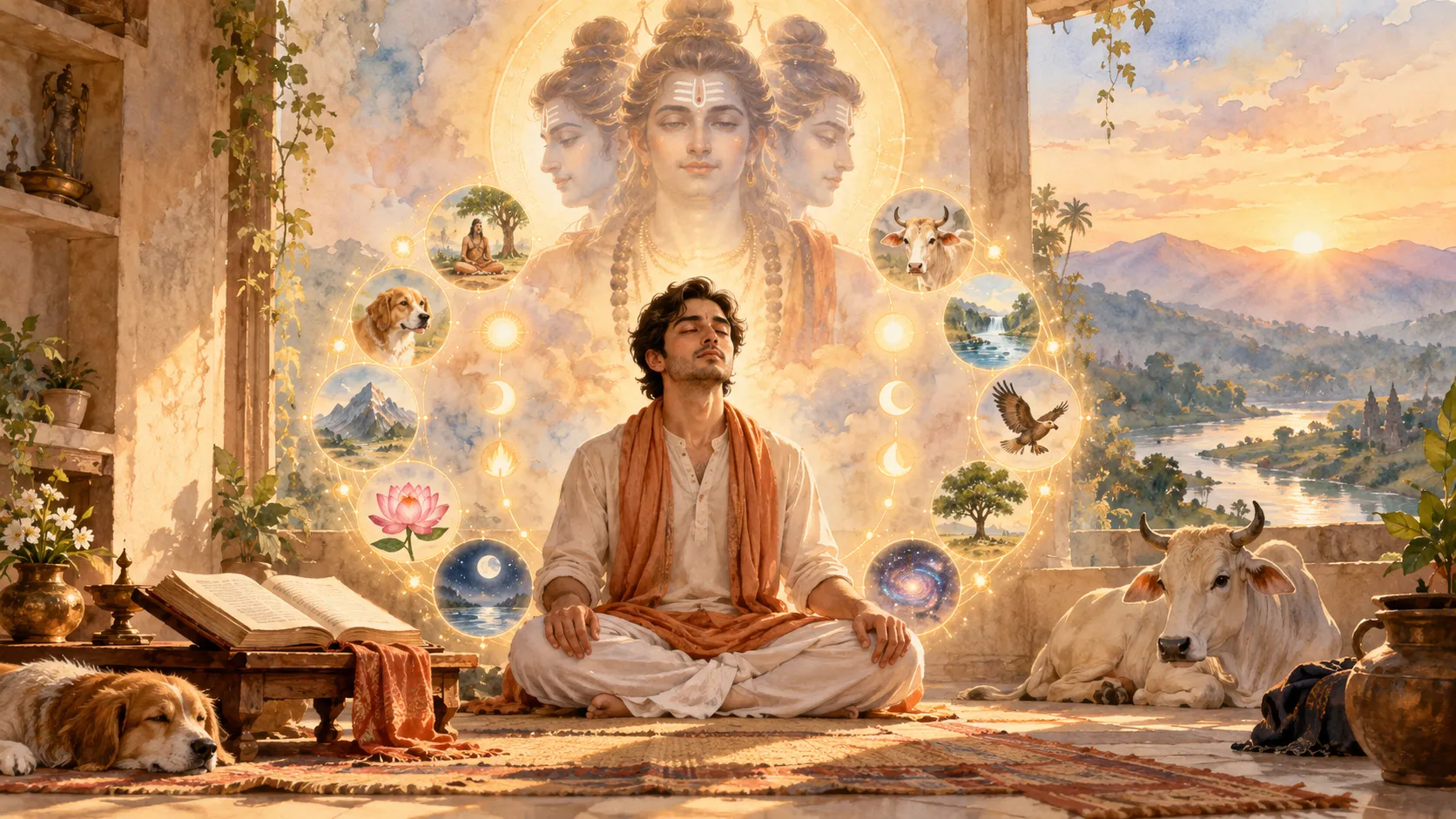
Commentary on the text “Avadhuta Gita,” Chapter One
Avadhuta said: “By the grace of God alone, the wise are granted the aspiration to realize the nondual Brahman. Through this they are freed from great fear. Truly, everything in this universe is filled with Atman, and since Atman is embraced and pervaded by itself, how can I worship this formless, indivisible, unchanging supreme bliss?”
There is a saying by another incarnation of Shiva, Shri Shankaracharya, who says: “Sat Eva Bodha, Bodha Eva Sattva” (“Existence itself is consciousness, consciousness itself is existence”).
“The universe, consisting of the five elements—ether, air, fire, water, and earth—is like water in a mirage, and being the one and immaculate Atman, whom shall I worship? Truly, Atman alone is everything, and in it there is neither division nor non-division. Statements such as ‘Atman exists’ or ‘Atman does not exist’ seem confused and meaningless to me.”
We must understand why Shri Dattatreya thinks this way, why his thoughts follow this course, and secondly, how we ourselves can acquire such a way of thinking. After all, behind these thoughts there is something more inconceivable—the awareness beyond concepts. Thoughts are merely an expression of that which lies beyond concepts. This means: how can we acquire the same awareness as Dattatreya?
Dattatreya follows a teaching called the Shankara Upanishad. “Shankara” is Shiva. “Sankaroti iti Shankarah” (“He who brings happiness and well-being is Shankara”), that is, Shiva. “Upanishad” means sitting at the feet and receiving instructions directly from the Guru in a state of devotion. Shankara Upanishad means an esoteric teaching relating to Shiva, the philosophy of Shaivism. Thus, Dattatreya himself is simultaneously a follower of Advaita, a follower of Shaivism, and at the same time the founder of Advaita, the founder of Shaivism, and an embodiment of Shiva.
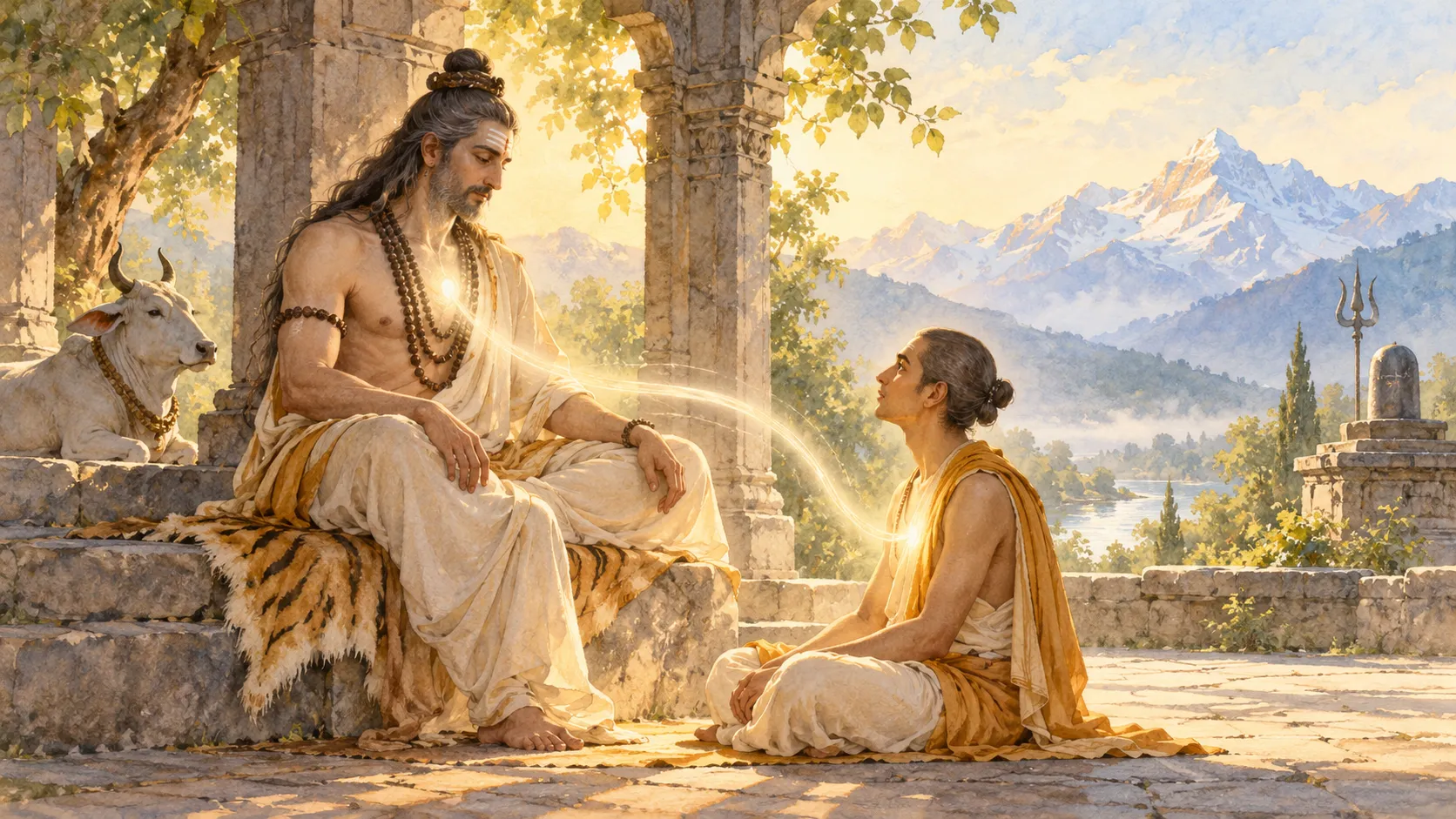
“The quintessence of all Vedanta is the knowledge and realization of the Atman. By my very nature, I am that formless, all-pervading Atman. Without a doubt, I am that omnipresent, self-luminous, indivisible Atman, like space and ether, pure in essence and untouched by maya.”
The Practice of Identifying with the Atman
This is how Dattatreya thinks and how he realizes. This means that, as we move toward our ideal, we must also learn to think, realize, and feel in the same way. For example, you are walking down the street and thinking: “By my very nature, I am that formless, all-pervading Atman.” Then, at night, you wake up and remember: “Without a doubt, I am that omnipresent, self-luminous, indivisible Atman, like space, pure in essence and untouched by maya.” Then you fall asleep, you dream, and you remember: “Without a doubt, I am that omnipresent, self-luminous Atman.” Then the dreams disappear, dreamless sleep begins, and in this dark space there is a flash of awareness that spreads across infinite lokas, across infinite spaces. Again, you remember: “Without a doubt, I am that Atman.”
When you think this way, what comes is samavesha. Samavesha is a word that means “sam,” “a,” “vesha,” that is, to enter somewhere or to enter into something. Samavesha means that divine grace enters you as a vessel. When grace touches you, the energy of Dattatreya, if you attune yourself in this way and always think as Dattatreya does, samavesha will inevitably occur. Then chit awakens within you—this is the power of Shiva’s universal consciousness, and you become aware of the first tattva. Chiti also awakens. Chiti is the power of Shakti’s universal consciousness. Chit and chiti are also like Shiva and Shakti—their active powers, the second energy of the second tattva. Within yourself, you begin to realize para-pramatri, that is, the supreme being, Paramashiva, experiencing his own experience; the Brahman of Vedanta. This is what it means to realize yourself as Dattatreya.
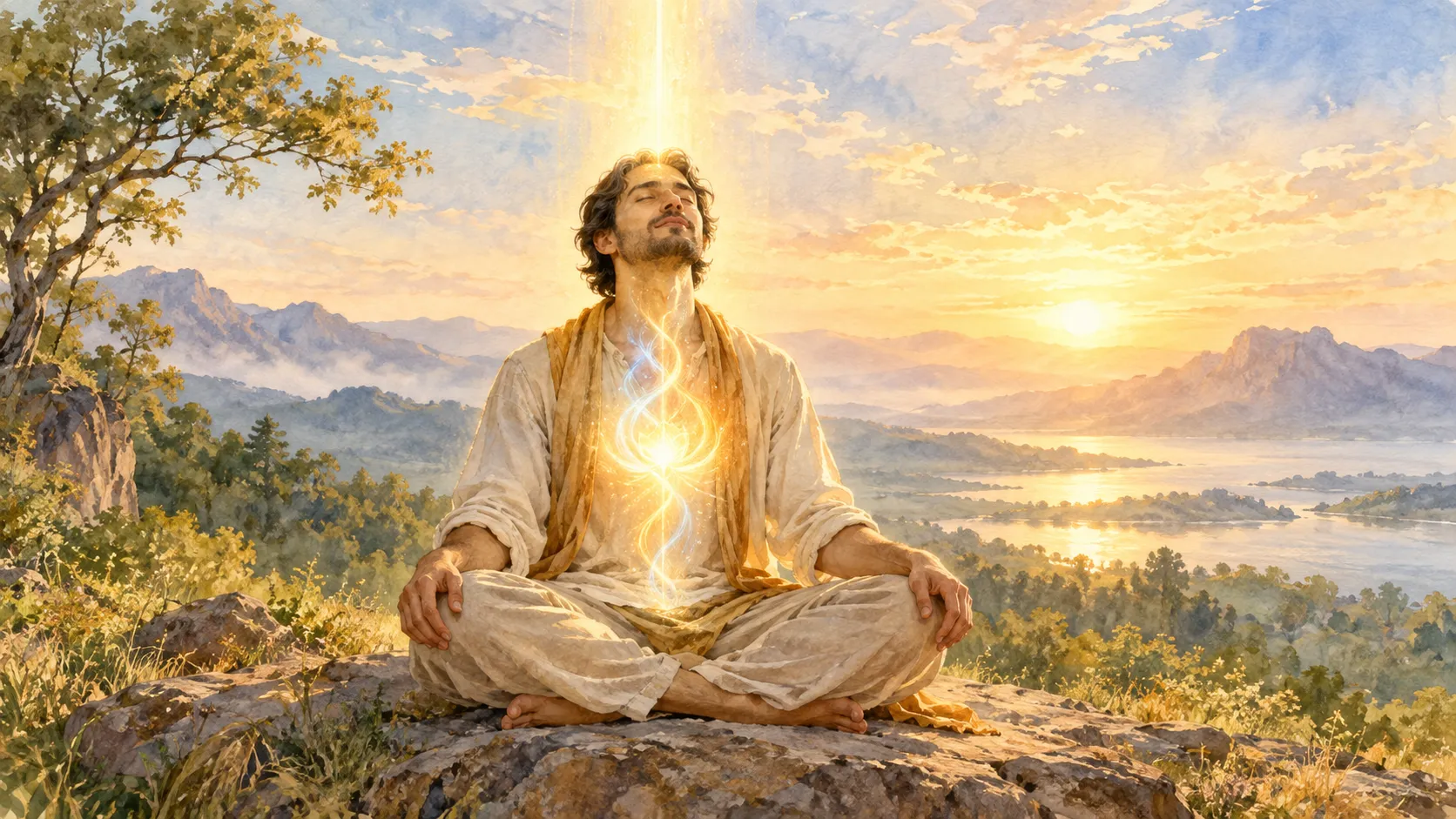
In the Avadhuta Gita, Dattatreya goes on to say:
“Indeed, I am imperishable, infinite, the embodiment of pure consciousness. I am unacquainted with sensations of happiness and suffering, or with the one who experiences them. For me, there is no mental activity, good or bad. For me, there is no physical activity, good or bad. For me, there is no verbal activity, good or bad. I am immortal consciousness, pure and transcendental.”
The Three Enlightened Bodies of Dattatreya
Dattatreya’s body, speech, and mind are completely enlightened and abide in the three freedoms. His mind is jnana-kaya (the divine body of wisdom). His speech is maya-kaya (the enlightened energy of speech), playing out in subtle dimensions and manifesting as divine illusory bodies. His physical activity is siddha-kaya—the enlightened ability to manifest diverse energies and states of non-action. Dattatreya is pure immortal consciousness manifesting through these three dimensions. Dattatreya’s body, speech, and mind are his manifestation in three dimensions, in the three feet of Brahman—vishva (physical), taijasa (astral), and prajna (causal). Dattatreya himself abides in the dimension of turiya, as pure consciousness, and it is said of this pure consciousness that the entire universe is already contained in the highest consciousness, in the supreme Self, just as the multicolored tail of a peacock is contained in the plasma of its egg. “Maya randarasanyena” is an expression that denotes nondual emptiness, which potentially contains the entire manifested universe.
“Indeed, the mind is like space; it appears to be directed in all directions; it appears to surpass everything; it appears to be everything, but in reality the mind does not exist. I am alone and in everything. I am unlimited and beyond the boundaries of space. How can I see my own ‘Self’ appearing or disappearing?”
At the foundation of all tattvas, all divine phenomena, lies divine consciousness—Shiva Bhattaraka. The root “bhat” means to nourish; bhata, bhatara, bhattaraka is a lord who nourishes or sustains. I think there is a Russian and Ukrainian word, “batrak,” “batraka,” meaning one who works and nourishes or supports someone, labors for others—perhaps this is where it came from. For example, someone leaves their family to work for another person, hires themselves out, labors, and sends money to their family, nourishing and supporting them; he is the lord who supports—batraka, Shiva Bataraka. This is how the word changed in the popular consciousness, but originally it means the lord who is worshipped, the one who nourishes or sustains everything. Dattatreya is that consciousness which supports everyone and nourishes everyone, because consciousness is not merely consciousness—it is always a source of energy, a source of power and nourishment, sustenance for all living beings. Living beings act according to their karmas only because they are nourished by this primordial, fundamental consciousness.
“Why do you not understand that you are truly that absolute? You are that eternal Atman in which everything is reflected equally. You are the boundless and ever-shining Lord. How, then, can you think of day (light) or night (darkness)?”
Dattatreya is nityadita. Nityadita consists of two words, “nitya” and “udita,” meaning eternally rising, eternally existing, that which never falls and is eternally ascending. Dattatreya eternally rises above the ordinariness of samsara. He rises above all pairs of opposites, including day and night, unlike another consciousness called shantidita— that which periodically both descends and ascends.
The Nonduality of Meditation and the Meditator
“Always contemplate the Atman. It is indivisible and the same everywhere. You say: ‘I am the one who meditates’ and ‘the one supreme’ is the object of meditation. Why, then, do you divide the indivisible? You were never born, and you will never die. At no time have you ever had a body. The Upanishads proclaim this universally known truth in many different ways: ‘All is Brahman.’”
Dattatreya embodies the power of the cognitive capacity of the supreme Self of the supreme divine being, its power of self-awareness. This is the power of the Atman, the power of the Self, by virtue of which it is always the subject and never the object—that is, the supreme subject, the supreme knower, and the supreme observer, the one who can observe everyone but whom no one can observe. This power is called baindavi-kala. “Baindavi” means relating to bindu, while “kala” means shakti (energy). The supreme Dattatreya, as the supreme self-aware being, through this power—the power of self-awareness—manifests as the power of cognitive capacity in every being, the power of the higher subject.
“For you and Me, there can be neither union nor separation. In reality, neither ‘I’ nor you nor this world exists. The Atman alone is everywhere.”
Dattatreya is divine consciousness which, however it may manifest, is always sovereign and independent of any external conditions. Therefore, another name for it is svatantra-chiti, that is, self-aware, self-dependent consciousness energy, relying on itself, which is always sovereign and, however it may manifest, never depends on external conditions. Therefore, Dattatreya is an avadhuta, meaning that Dattatreya sometimes manifests beyond the boundaries of varnas, ashramas, and caste conditions, but however he may manifest, he is tainted by nothing and always remains divine consciousness, sovereign and self-dependent.
“You do not belong to the five objects of the senses, such as sound, touch, form, taste, and smell; nor do they belong to you. Truly, you are that supreme reality. What, then, can grieve you? For you there is neither birth nor death; you have no memory; for you there is neither bondage nor liberation, neither good nor bad. Why are you weeping, my dear? Name and form belong neither to you nor to me.”
The Mystery of Our Transcendental Consciousness
Dattatreya is not saying some abstract philosophical things; he is revealing to us the mystery of our consciousness—this is a real mystery. Even if we cannot yet grasp, comprehend, and directly experience it, we should take with the utmost seriousness the fact that Dattatreya is revealing to us the mystery of our consciousness. Regardless of whether we have experienced it or not, whether we undergo it or not, it plays a role for us, it has significance, it exists within us. In fact, it is not lost, but it has not yet been recognized.
For example, if someone knows that there is a diamond, a precious stone, lying in your pocket, while you do not know about it and have never seen it, but they know this for certain and tell you: “There is a precious diamond in your pocket.” You may doubt it, since you have not seen it and do not even believe it, but the diamond itself does not disappear from your pocket because of this; it remains in its place. The person who reveals this secret to you is absolutely right; you simply have yet to learn about it, become accustomed to it, come to terms with this idea, and then learn how to use this diamond.
In the same way, Dattatreya reveals to us the secret of our transcendental consciousness. The expression “Pramāṇu parōha krameṇa” means proceeding by a gradual upward transition, from one step to the next, from the knowable (prameya), that is, the external, to pramāṇa (knowledge), the means of cognition, and from knowledge to the knower, that is, the supreme Self—the subject. The principle here is as follows: all pramāṇas are contained in the pramātṛ (the knower), all knowledge is contained in the knower, the entire knowable world is nothing more than knowledge, and all knowledge comes down to the consciousness of the one who knows.
There is a common saying that ordinary people discuss other people and events in the world. People of a higher rank, with greater abilities, do not discuss other people; they discuss ideas. The former discuss the knowable, the external world; the latter discuss knowledge itself—ideas. Finally, people with even higher consciousness do not discuss ideas—they discuss the one who experiences, the source, the subject; that is, they engage in vichara.
“O mind, why do you wander like a restless ghost? Realize this undifferentiated and uniform Atman. Renounce all passions and be happy. Truly, you are that immutable reality which is itself steadfastness, unity, and freedom. You experience neither passion nor dispassion. Why, then, do you wear yourself out and torment yourself by desiring objects of lust?”
Svetchhaya means that which exists by its own will, and not by the will of something else. Dattatreya is consciousness that relies on its unique sovereign will, which is separate from all external objects and the mind, and separate from all desires and passions. Svabhitau means that which, on its own screen—that is, within itself as its foundation, and not on anything else—manifests the entire existing world. Dattatreya’s primordial consciousness is like a screen; diverse objects appear on this screen, just as reflections arise in a mirror. When the power of our consciousness, viveka, becomes strong enough to distinguish the mirror from the reflection, we begin to recognize this mirror principle and begin to understand what Dattatreya is saying, how he is trying to reach us.
Dattatreya as Brahman and Chit-Chiti
“All the Upanishads assert that Brahman, or ultimate reality, has no attributes, that it is pure, unchanging, formless, and equally pervades everything. Know that I am this Brahman.”
This is Dattatreya’s direct instruction, so that we do not doubt; and when we say Dattatreya, we mean Brahman. Thus, Dattatreya is Chit and Chiti. Chit is the universal energy of Shiva’s consciousness, while Chiti is the universal energy of Shakti’s consciousness, and he unites these two aspects within himself. What are the characteristics of this consciousness, Chit and Chiti? First, it is free from limitation by space, time, or anything else; it is completely free and boundless. It possesses unlimited power. Furthermore, it is capable of bringing any thing into existence. It possesses svatantra (absolutely free will). It is both the simple means of liberation and the great reward, the fruit—that is, the completion of everything in itself—if we manage to discover this consciousness.

“Know this: that which has form is unreal because it is limited by its form; that which is formless is eternal. One who illustrates this truth through their own life is no longer subject to rebirth. The sages say that Reality is one and unchanging. When attachments are rejected, unity and diversity cease to exist in the mind.”
Meditation on the “Avadhuta Gita” and the Three Stages of Spiritual Practice
One should meditate on each shloka of the “Avadhuta Gita” if one aspires to liberation and enlightenment. Each line of the “Avadhuta Gita” is a direct transmission, a direct introduction to wisdom and natural awareness. Receiving such a direct transmission can be regarded as shravana. When clarity and revelation awaken within us, we must reflect on them, contemplate them through conceptual analysis, and then meditate through non-conceptual meditation.
Through this contemplation, we must attain what is called pancha-kosha-viveka (the discernment of the Atman and the five sheaths). We must also attain what is called drik-drishya-viveka—the recognition of the true subject, the true object, and the true observer. When our viveka becomes refined, we will be able to recognize turiya (primordial consciousness) and will be ready to move from manana—that is, having eliminated all our doubts—to nididhyasana.
From Manana to Nididhyasana: The Process of Spiritual Growth
The transition from manana to nididhyasana means that we have done a great deal of work. The transition from shravana to manana happens alongside it; shravana and manana always go together. At a simple level, this means: you listened to the Guru’s lecture—you need to think about it, to reflect on it; it is not all so quick and simple. They say that the percentage of assimilation is fifteen percent—which means that if you listen twice, it is thirty percent; three times, forty-five; four times, sixty; five times, seventy-five; seventy-five plus fifteen makes ninety, and a little will still remain, so you need to listen a seventh time. From the seventh listening, a complex teaching can be fully mastered—this is manana.
You do not merely listen; you do inner work and make sense of what you have heard. In the process of such reflection, revelation or insight may occur—shastra-kripa. Very subtle things become apparent; something dissolves—dualistic notions; you change your point of view and wonder: “How could I not have understood this at all?”
This is natural; that is how we grow. For example, when we were at school, we did not understand many things, and it seemed to us that everything was fine, but now we look at ourselves and laugh: we understand that we did not understand, whereas now we do understand. In the same way, after manana, you discover new knowledge, a new revelation that was actually always there, but seemed unclear—this is manana.
Nididhyasana means that you are not so much reflecting or discovering something new as trying to remain at this level. It is like this: in shravana, they show you a spirited stallion and tell you how good he is, while manana is when you jump onto him and he may toss you up and throw you off, but you climb onto him again and again. Nididhyasana is when you try to stay on him and stop falling, and you learn to ride him; nididhyasana means that we try to establish ourselves in, to become grounded in, the understanding acquired through manana, and then maintain it continuously.
The Paradoxes of Samadhi in Dattatreya’s Teachings
“How can a person attain samadhi while thinking of himself as something distinct from Atman? But, on the other hand, samadhi is unattainable for a person who thinks of himself as Atman. How can samadhi be attained while a person thinks that Atman exists and yet does not exist, and why strive to attain samadhi if all are one and free by their very nature?”
Dattatreya poses difficult questions to you; these questions could easily make the minds of a thousand professors and PhDs boil, because there is no direct answer at the level of everyday logic, at the level of concepts, philosophy, and notions. The logic of fragmented thinking, the logic of binary thinking, does not work here. What is needed here is the experience of going beyond non-conceptual awareness and intuitive insight.
However, when you begin to understand his phrases intuitively, it means that your manana is removing doubts within you and you are becoming established in true knowledge; you are moving toward nididhyasana. You then need to become firmly established at this level, to hold on and not fall out of it, just as if you were riding a young, unbroken stallion and trying to stay on.
Question: Gurujī, does it turn out that shravana is when you walk toward the paddock, looking for it, find it, and approach it, while manana is when you enter and try to saddle the horse, and nididhyasana is when you have already saddled and tamed it and simply ride it?
Yes, approximately so. Shravana is when you walk toward the paddock and they tell you: “This one is good—look at him. He doesn’t walk; he flies.” Manana means that you try to approach him from the right and from the left, put a saddle on him somehow, swing your leg over, and climb on—it is very difficult. Nididhyasana means that you have learned to sit in the saddle, but you must be extremely vigilant: the slightest careless movement, and you are in the mud—you have fallen out of the saddle.

A very spirited stallion, extraordinary, wondrous, magical—if you learn to ride him, he can lift you to the seventh heaven, but you must not fall out of the saddle and must always hold the reins. If you pull the reins too tightly, he will not go anywhere and will refuse to move; if you let them go, he will carry you away so swiftly that you will not even notice where—to put it another way, you must know the proper tension of the force.
Question: Om, Gurujī, from the perspective of energy, if we look at it—you said that vyana-vayu and udana-vayu could be called manana and nididhyasana, the subsequent levels. I simply wanted to ask: when the horse throws you off, where does it throw consciousness from udana-vayu? Since this prana, udana-vayu, is always active, right? It cannot be inactive.
It is active, but not conscious. The question is one of its awareness. It throws off prana-vayu, which operates in jagrat; and in sleep, apana-vayu, which is in the causal body, or samana-vayu at best. Prana operates in the waking state, apana in dream sleep, samana-vayu in the causal body, udana-vayu in turiya, and vyana-vayu in turiyatita.
