

Commentary on the text “Turyatita Avadhuta Upanishad”
The Path of the Avadhuta After the Turyatita Stage
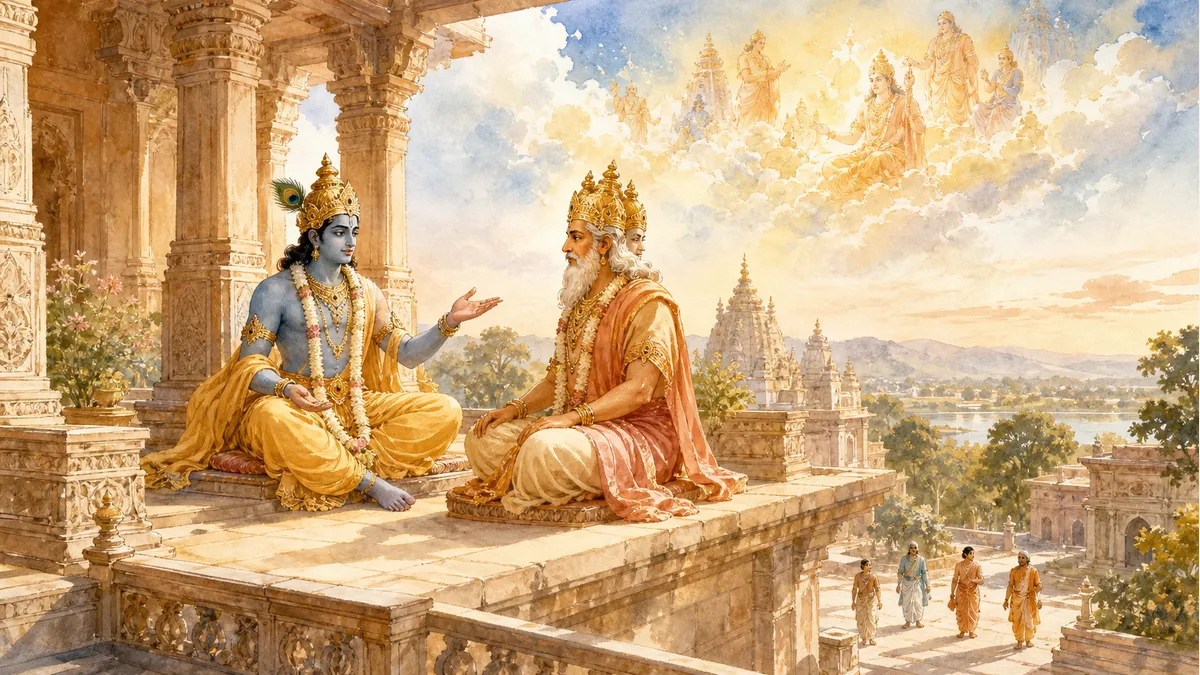
And then the progenitor of all people, Brahma, respectfully approached his father, Adi-Narayana (Vishnu), and asked: “O compassionate father, tell me about the path of the avadhuta after the turyatita stage. What secrets are there on this path?”
He asks: “Tell me about the path of the avadhuta after the turyatita stage,” that is, after the fourth state of consciousness has been transcended. This means that the true path of the avadhuta begins when we reveal the nature of the Mind, when we become aware of ourselves in dreamless sleep and even somewhat beyond that, when we unite all three states.
The state of the avadhuta is the same as the state of a siddha or a deity in a human body. It is like a spontaneous play, the dance of a deity in its mandala, which, in its inner clarity, has become so united with the Source that it freely manifests energies and enjoys them.
The avadhuta is not bound by any frameworks or prescriptions, unlike laypeople, who are conditioned by social frameworks; monks, who voluntarily take on restrictions; or tantric practitioners, who observe certain samaya commitments. Why is he not bound? Because he has no need of them by virtue of his complete realization.
Gods, siddhas, and humans are different beings. Even within the karma of two people there can be enormous differences; all the more so are the differences great when we speak of such highly realized beings as avadhutas.
Here the god Vishnu conveys an explanation of this exalted state to the god Brahma.
The state of the avadhuta is something we must nurture within ourselves as absolute truth, as vision. In the relative dimension, we should not, and indeed cannot, manifest this. Why? Because, at the very least, we will not succeed. Even if we wanted to imagine ourselves as avadhutas, we do not possess the proper qualities to be free from the laws of physics, the five material elements, prana, and many other things. Therefore, in the relative dimension we must follow other laws.
For example, if an avadhuta eats meat, he will digest it with the tremendous power of his fire element and will even benefit from it. But if we eat meat, we can expect nothing but dullness and tamas, because it is heavy food. Therefore, by virtue of the karma of our body and pranas, we do not correspond to the principles of the avadhuta in the relative dimension, at least not now, at this moment. Nevertheless, we can fully aspire to inner awareness of ourselves as avadhutas at the level of absolute truth, at the level of vision, since we say that vision, or absolute truth, must be completely beyond all limitations.
The Rarity of the Avadhuta Path and the Single “Taste”
Lord Narayana replied: “The sages say that one who follows the path of the avadhuta is very rare in all worlds. Such saints can be counted on one’s fingers, for this path is very difficult and suitable only for a few. The avadhuta is always pure; he is the embodiment of dispassion.”
What does “always pure” mean? Unlike ordinary people, including monks, who only strive to attain the single “taste,” the avadhuta already abides in the single “taste.” The single “taste” means that everything has become pure for him; he continuously perceives everything in a state of pure vision. What gives rise to this pure vision? The fact that he is continuously immersed in the Supreme Source. Such immersion allows him to see everything as the play of the primordial state; therefore his evaluations and interpretations do not arise during perception, and he has no projective thinking, no karmic vision.
Unlike avadhutas, people become entangled in their evaluations, in their projective thinking, and in their interpretations, which constantly, like dust, obscure the pure mirror of awareness. But the avadhuta is so immersed in presence that for him everything is always perfect and pure. The avadhuta does not originally live in the dimension of human beings, although on the physical level he may walk in a physical body, playing along with people. He lives in the dimension of the mandala of pure vision, which is created by his subtle mind, his subtle clarity.
There is a story called “Prabhu Linga Lila.” I believe it is found in the Advaita text “Yoga Vasistha.” It says that Prabhu Linga once visited Gorakshanath. He greeted Gorakshanath, who was performing tapas. Gorakshanath, in turn, also greeted him, but somewhat disdainfully, because he thought that this yogin was not comparable to him in level.
Prabhu Linga saw this and said: “Until you free yourself from duality and identification with the body, you will not know the Absolute, although you have achieved some success.”
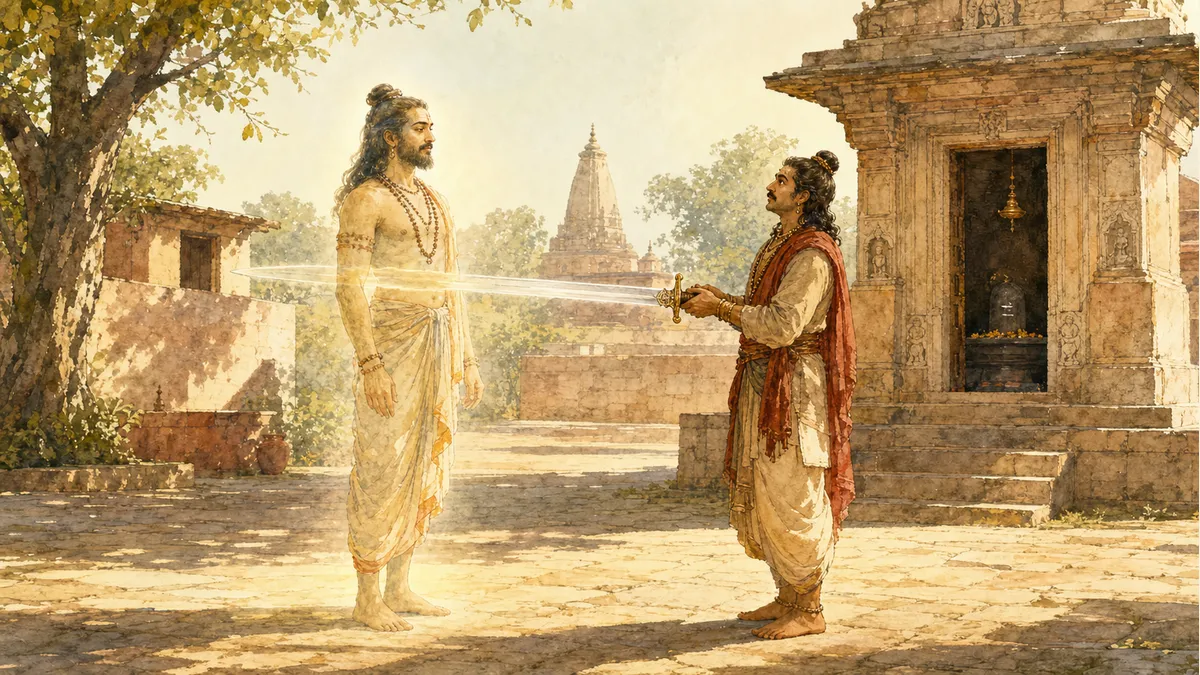
This offended Gorakshanath, and he said: “But I am not attached to the body. Here, try it—you may strike it with a sword.”
And when Prabhu Linga struck him, Gorakshanath experienced nothing; that is, his body was not killed or cut. He said: “I have mastered magical powers thanks to immortality practices (kaya-kalpa) and magical rituals that protect my body and make it immortal.”
Prabhu Linga then said: “Good, now try to strike my body. I will show you what it means to unite contemplation with the body and to be unattached.”
Gorakshanath refused, but then he nevertheless struck with the sword, and the sword passed right through without causing any harm to Prabhu Linga’s body (by the way, Prabhu Linga was from the Lingayat school). Gorakshanath struck again and again. He was very surprised, because his sword could not harm Prabhu Linga’s body, but passed through it. Thus, his pride was subdued, and he asked Prabhu Linga for instructions.
It later turned out that Guru Matsyendranath had sent Prabhu Linga to teach Gorakshanath several lessons that would free his mind.
One could say that Gorakshanath could protect his body with the help of magic, that is, something like prana-vidya, hard qigong. If an experienced master of hard qigong is struck with a sword when he has entered this state by means of the “iron shirt” method or another sadhana, no harm will be done to his body.
But Prabhu Linga demonstrated a completely different level of mastery, when the nature of Mind is fully united with the body and the elements of the body are dissolved to the state of clear light.
The Four Stages of Spiritual Development
“He is the ocean of all wisdom and the mystery of all the Vedas (Vedapurusha). He is truly a great person, since his mind is completely immersed in mine. He and I are indistinguishable and identical. At first he gives up attachment in the form of wife, home, family, and property, becoming detached (kutichaka). Through this he reaches the stage of a mendicant monk (bahudaka).”
Renunciation of attachment is a necessary beginning. Many consider it some important point in life and think that attachment should be renounced at the end of life. In reality, renunciation of attachment is the beginning of monasticism.
A monk is one who must become accustomed to owning nothing, to having nothing: neither property, nor friends, nor relatives. It is one who is ready always and under any conditions to be completely independent, autonomous, self-sufficient, and to have a connection only through the Dharma, since he has no other connections. When you put on a monk’s sanghati, you must always remember that now neither relatives, nor children, if there are any, nor friends in the world, nor even the gods of the world of passion have power over you, that you have only one line of connection—through the line of the teaching, the guru-parampara, and the Absolute.
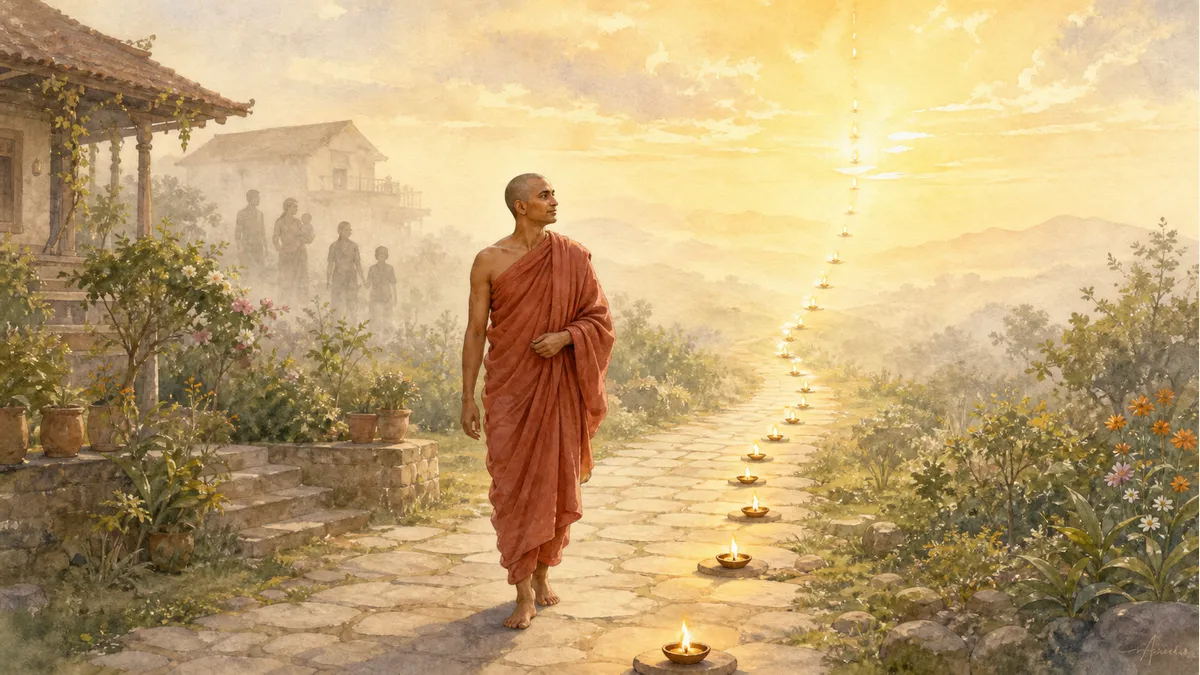
“After that he passes to the hamsa stage (hermit). And then he passes to the highest path, becoming a Paramahamsa. At this stage he understands the entire world as not different from himself. One who has become detached gives up property and performs the prescribed rituals. He discards the sacred thread, jewels, and, putting on a loincloth, performs practice.
At the stage of a mendicant monk, the practitioner renounces all things and has at his disposal only one garment, a staff, a water pot, a bowl for food, and for collecting alms.
At the stage of a hermit, the practitioner has only a garment made of deer skin.
At the Paramahamsa stage, the practitioner has no clothing, does not observe rituals, and carries out a practice understandable only to him. At this stage, as the sages say, he wears sandals on his head, he alone understanding this meaning.”
What is described here is the practice of ever greater and greater detachment. Detachment should not be understood only in an external way. It consists in the development of inner awareness and in freeing oneself from dependence, above all, of consciousness.
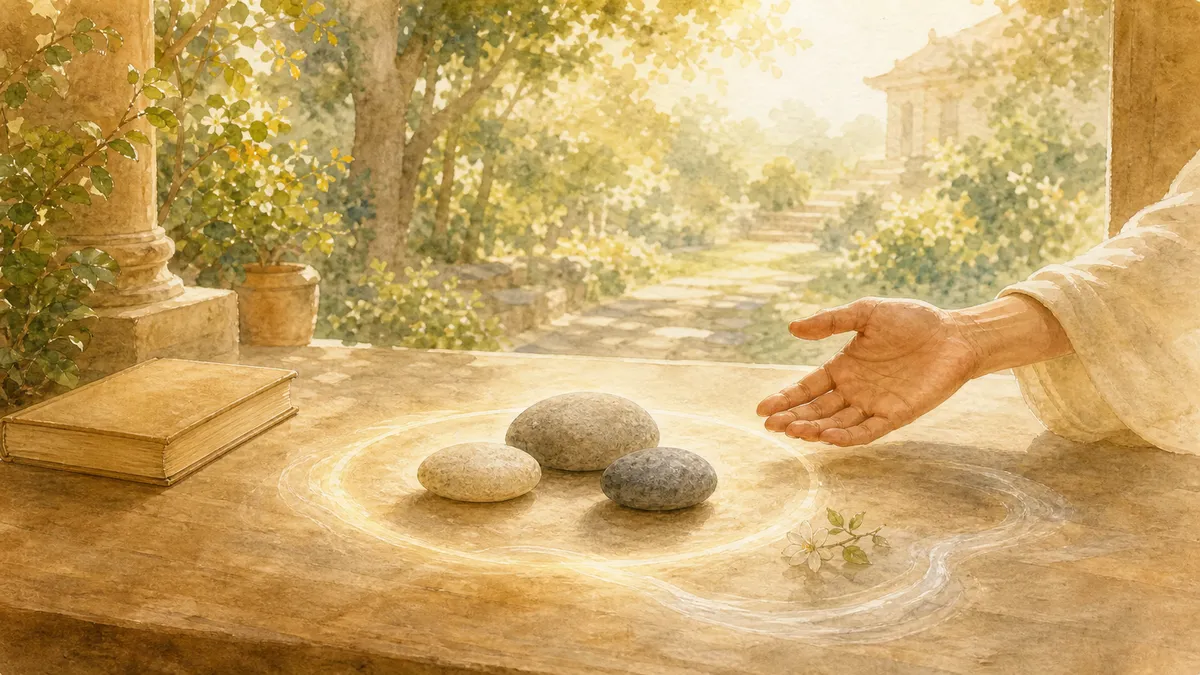
A king invited a sadhu to his palace for several days. This sadhu was accustomed to placing one stone under his head instead of pillows, another under his back, and a third under his hips. And that is how he always slept. One day the king invited him and said: “Look, do you see what a bed this is! Surely you have never slept on one like this in your life.” And a couple of days later he came and asked the sadhu: “How did you sleep on it?” He said: “I have always slept on such a bed.” The king was indignant, because these were the most refined and expensive chambers. He said: “That cannot be!” But the sadhu said to him: “Come, you will see for yourself.” And the king saw that on top of the bed lay three enormous boulders, on which the sadhu usually always slept. And then the king was filled with admiration for this great saint.
These “three stones” are a symbol of detachment and non-attachment when you come into contact with anything. Even if you are in contact with objects, you are always detached if you abide in the proper state of mind, in conscious contemplation. It never seizes you. Whatever you may be doing, no attachment to it arises in you, no dependence arises, because over all these objects you as though place these “three stones,” symbolizing detachment. If you feel that detachment is being lost, that you are being drawn in, this is a signal that an inattentive attitude toward some energy has been allowed. It may be some material things, service toward which clinging has arisen, friendly relations that have suddenly sunk into the soul and become something improper, generating attachment, a good book or concept when it has begun to influence and put pressure on your mind, specifically disrupting contemplation. Whenever you lose detachment and awareness, it is a sign that they must be restored.
The Symbol of “Sandals on the Head” and the Single “Taste”
So, it is said here:
“At the Paramahamsa stage, the practitioner has no clothing, does not observe rituals, and carries out a practice understandable only to him. He wears sandals on his head, he alone understanding this meaning.”
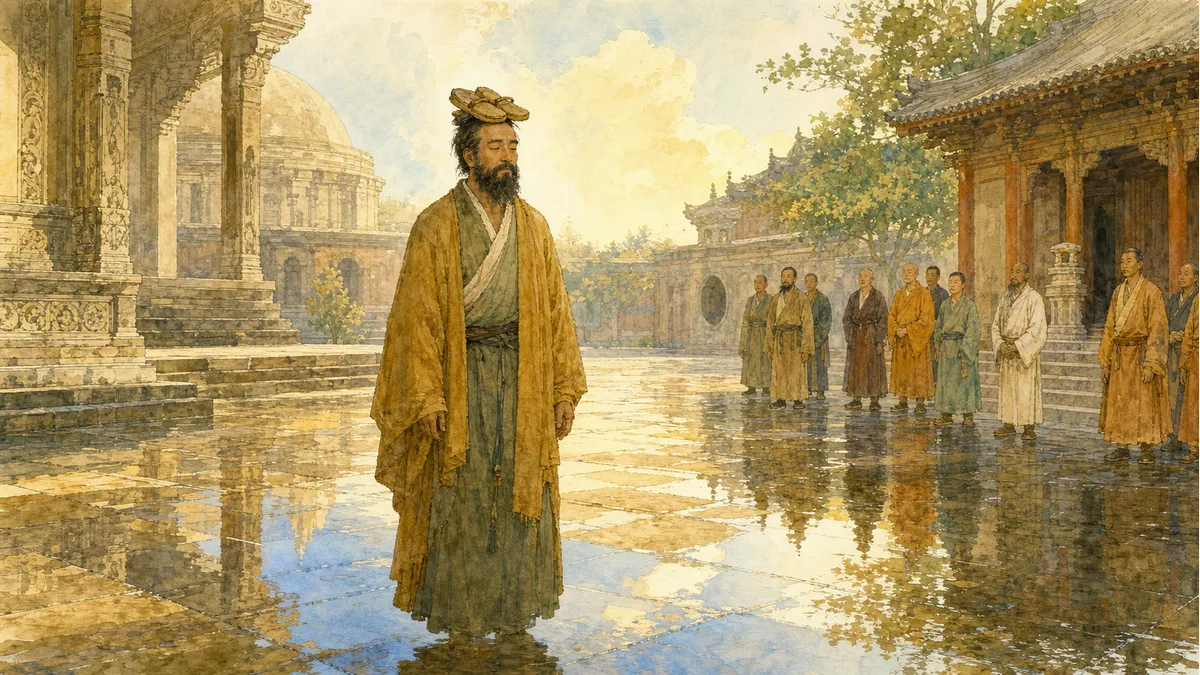
Bodhidharma is known for having met Emperor Wu with sandals on his head. “Sandals on the head” is a Vedic symbol of the ancient rishis, described in the Upanishads and symbolizing the single “taste” or “inverted” consciousness, when top has changed places with bottom, back with front, zenith with nadir, left with right, male with female, heaven with hell. The single “taste” is a state in which the yogin abides in a paradoxical, absurd state for an ordinary person, and only he himself knows his state. His state is unknown to others. Even the gods cannot recognize him if he does not wish it. If he wishes, he demonstrates his lila as an ordinary person. If he wishes, he demonstrates himself as a guru. He can reveal one or another part of his soul at will, but no one can understand him, because he is beyond any assessments and identifications.
Often, when we perceive teachers or more advanced practitioners, because of our projective thinking we are nevertheless inclined to evaluate them and see them stereotypically. But one should always remember that the avadhuta wears sandals on his head, he alone understanding this meaning.
The Qualities of an Avadhuta and Self-Liberation
“He does not shave, walks provocatively, and from the outside looks like a madman. All the gods sing his praise, and there is no limit to his holiness. He is the one who completes all religious and worldly duties. He is free from religious merit and is calm in any situation, like a mountain. Influences such as cold, heat, pain, happiness, suffering, shame, or dishonor no longer take control over him.”
Such a state grows as a result of the steady cultivation of a single “taste,” as a result of continuous entry into nonduality. It cannot be somehow imitated or manifested outwardly. Even if someone tries to imitate it, it will bring him no benefit. This state is connected with inner self-awareness, when the yogin can self-liberate very deep layers of karma.
“All the vasanas in the body are burned by the fire of wisdom: praise, condemnation, pride, ostentatious luxury, competition, arrogance, desire, hatred, love, anger, greed, delusions, joy, intolerance, envy, and clinging to life.”
Here it is said: “All the vasanas in the body are burned by the fire of wisdom.” What is this fire? Shuddhi-ushanam, or the mystical heat that arises as a result of the purification of the channels and contemplation; prana, which circulates through the body and washes impure karmic winds out of the channels. In an avadhuta, the identification connected with praise, condemnation, pride, envy, arrogance, hatred, love, anger, greed, and so on disappears. Why do they disappear? This does not mean that they are somehow blocked or cannot manifest. They are energy, and energy always has the property of moving. Therefore, they can manifest, but now they manifest not in earnest, but as play. Just as a snake whose fangs have been pulled out can no longer bite, in the same way all these experiences no longer have any significance for the avadhuta, since he is continuously immersed in transcendental contemplation. These experiences will be either a response to the surrounding situation or a play intended to give some lesson to other living beings.
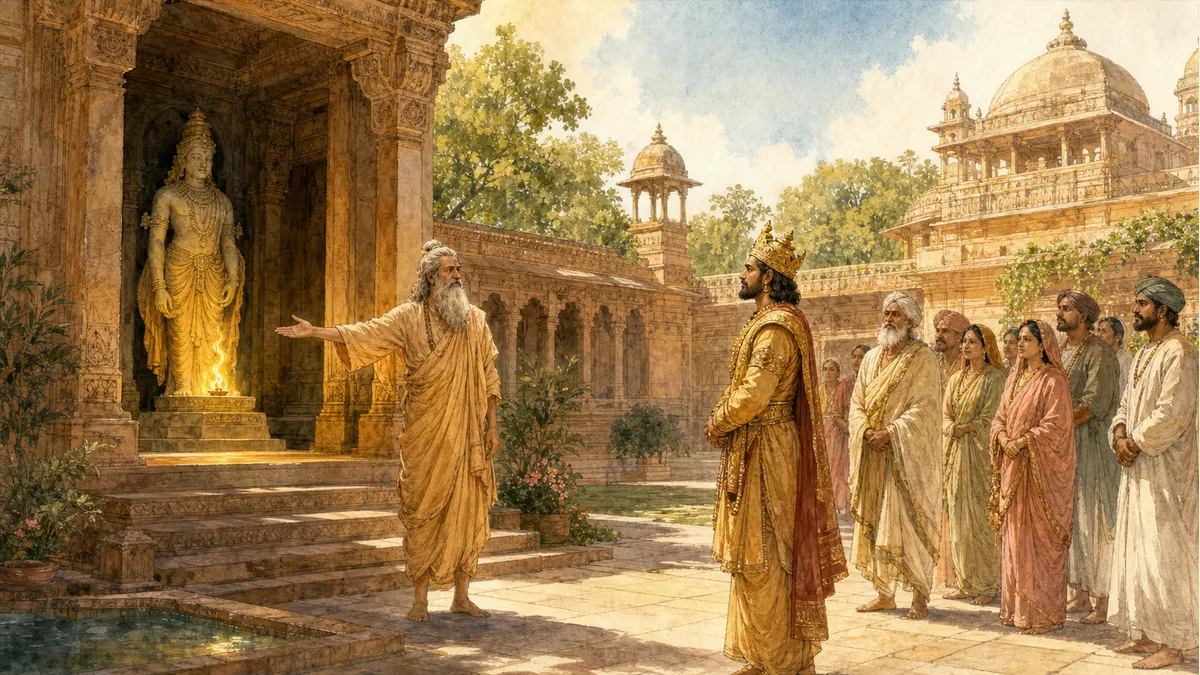
There once lived a rishi in the forest, leading a very righteous life of a hermit. The king envied him, so he hired a very beautiful dancer, one of the most beautiful courtesans, and sent her to seduce the ascetic. After living in the forest for a year, the courtesan returned, bringing a child. She said that this child was from the rishi, although in fact she had bought him in a neighboring village from a low-caste family. When the rishi came out of the forest, everyone began to mock him, saying, “This ascetic lived with a dancer for a whole year! So much for the sadhus in the forests!” Then the rishi came to the royal palace and said, “If my holiness has not been violated, let the main statue in the temple burn.” And the statue at which he pointed his finger did indeed burn.
Imagine that you are praised or condemned. Will judgments and dependence on this arise in your soul? Or imagine that you are placed second, fifth, tenth—that is, shown that you are nobody. You are told: “Your opinion is not taken into account. It is not important now and will not be important tomorrow. You are still only at the first stage, so there is nothing to discuss with you at all.” How would you feel if someone more senior in level looked at you with pity? Or imagine that you are placed in royal-level luxury: in the morning upon waking you are served a brocade sanghati embroidered with gold and silver threads; before sleep servants wash your feet; each time obliging people hand you a napkin for your hands; you have a mobile phone for forty thousand dollars, like the son of a president; your meditation cushion is inlaid with diamonds and gold. How would you feel? Would you react to this? Would some judgments, admiration, and so on arise? Or imagine that you are systematically driven into anger. How would you fare with your present level of self-liberation? Or imagine that you are provoked into attachment. What is your reaction? In which case will you be able to self-liberate it, and in which case will you “buy into” this energy and have it drag you in, suck you into its whirlpool?
In the state of an avadhuta, all of this is self-liberated even before it has arisen, and therefore produces no movements in the mind, no instabilities. Everything is seen equally and purely, simply as one consciousness.
The state of an avadhuta is a state in which you are so immersed in presence that no energies have power over you.
The Paradoxical Nature of the Avadhuta
“He becomes free, babbling strange words. Wherever he appears, he evokes fear, madness, and condemnation.”
This means that an avadhuta is incomprehensible to other people if he manifests himself openly. His consciousness is paradoxical, transcendental, absurd, and too terrifying for ordinary human consciousness. Therefore, he is forced either to cease contact with society, to be a “solitary bird” and communicate only with other avadhutas who can understand him, or to hide himself, to conceal his consciousness, remaining an avadhuta inwardly while outwardly observing certain social frameworks.
Examples of Avadhutas in History
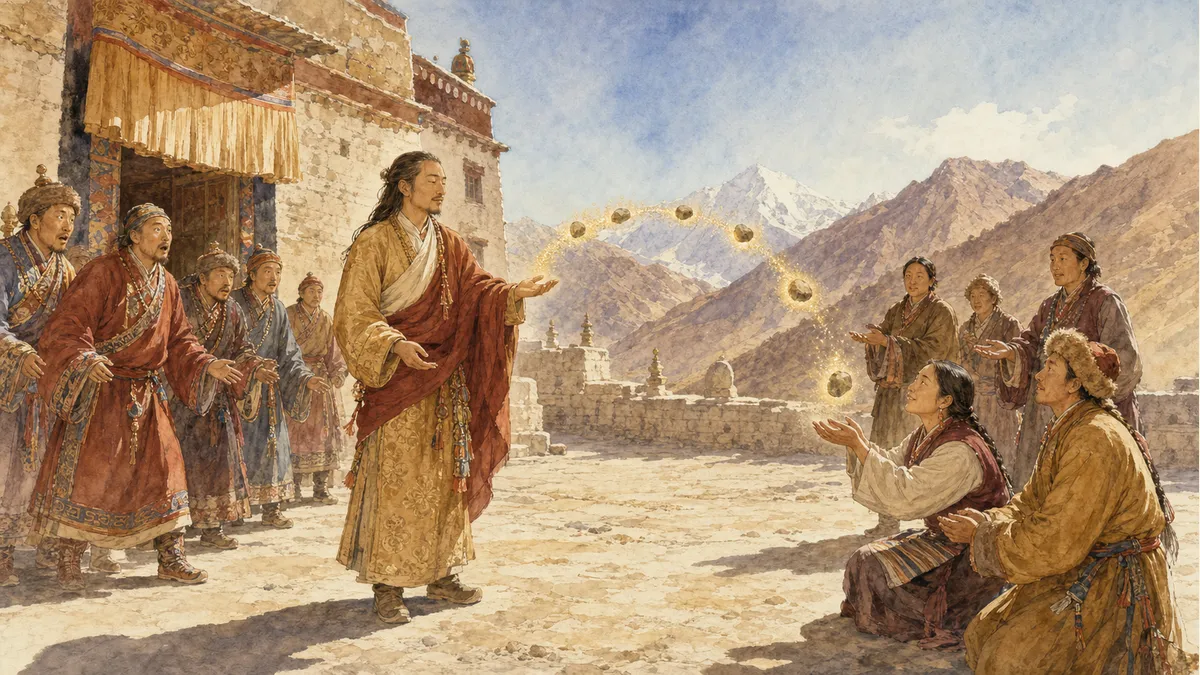
There was a Tibetan saint named Chokgyur Lingpa. He was at approximately this level. Many times his body became invisible, and when some Tibetan lama who had many dualistic notions came to him, he would stage various performances for him, demonstrating his consciousness. For example, once, when a person who was too bound by fixed ideas came to him, he ordered the boy servants to serve him tea naked. Another time he began throwing stones at the king, his ministers, and other companions. They thought that Chokgyur Lingpa was “not quite right in the head” and began to run away. But those who already knew his exalted level, on the contrary, considered it a blessing. They thought it would be good if Chokgyur Lingpa hit them with a stone. And later Chokgyur Lingpa said that those whom he had hit with a stone would have all obstacles completely removed in this life, while those who ran away were unlucky, because their obstacles remained. It was difficult to understand the logic of Chokgyur Lingpa. But he saw that that moment and the place where they had come were very auspicious, so even a small cleansing of karma freed one from obstacles. And, being an outstanding siddha master, he used that moment to help those who happened to be near him.
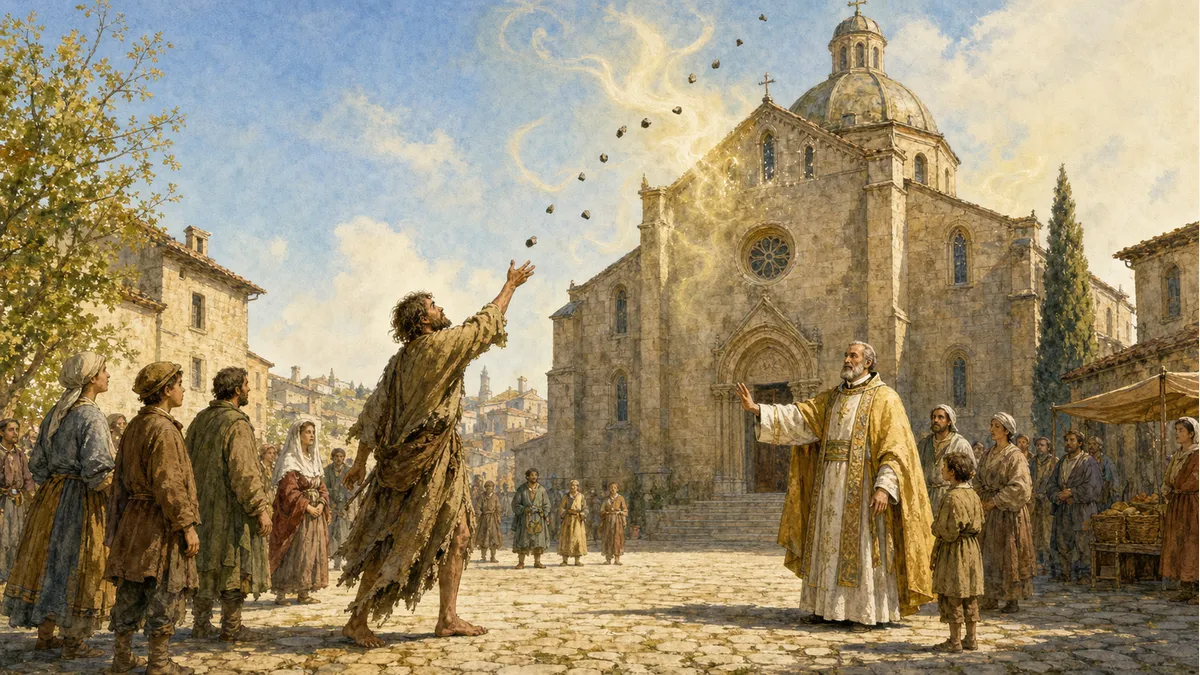
A similar case occurred with a Christian holy fool who once approached a church and began throwing stones at its upper part. There were windows there, which began to break from the blows of the stones. All this happened before a major feast day, so a large crowd of people had gathered near the church. Everyone began to scold this holy fool, and some even wanted to beat him with sticks. But when the chief priest came out and spoke with him, he said that they should not beat him with sticks, because he was an outstanding saint. He said that on the great Christian feast day, many evil spirits had gathered in the church under the dome. They wanted to bring down a large column, and this saint saw them and began to drive them away, throwing stones at them and shouting something wrathfully. If he had not done this, perhaps people would have suffered in some way. The chief priest of this church said: “The logic of this saint is inaccessible to us, because he abides in a vision that surpasses ours. We cannot judge his actions.”
The Divine Nature of the Avadhuta
“Only the gods know of his holiness; it is not given to others to understand it. Detached from everything, having no desires, he wanders wherever he pleases, needing nothing. He draws bliss from the spontaneity of his spirit. He is untouched by grief, indifferent to worldly happiness.”
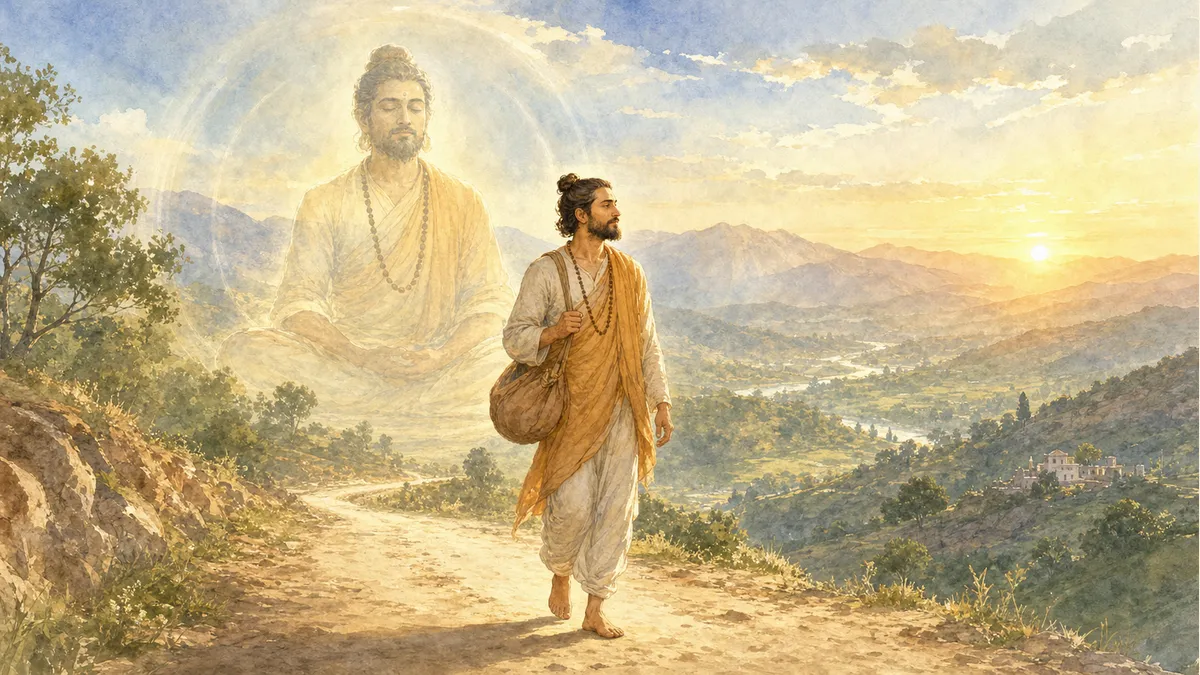
Here it says: “He wanders wherever he pleases.” What does this mean? It seems that he simply travels through different places. In reality, a true avadhuta wanders not only through the physical universe, but also through other times, through other dimensions. It can be said that he wanders through various alternative universes, appearing now here, now there, by the power of his consciousness.
Many believe that if a person wanders, has no permanent place of residence, then he is a true avadhuta. But it is not that simple. I too wandered. But a true avadhuta is a very profound state that allows one to pass into the subtle body, into samadhi, into other worlds.
The State of Unity with Brahman
“Free from desires and attachments, everywhere alone, in auspicious or ominous places. All his senses are inactive. He does not concern himself with the excellence of his conduct. He is devoid of dreams, for day and night are now one for him. His body exudes a magnificent fragrance and shines like the sun.”
You probably understand that this is said about Dattatreya.
“He rarely appears among people, but if they manage to meet him, it is a happiness that is indescribable. He always wanders alone, like a child, a spirit, or a madman. He always observes silence and contemplates God. He is absorbed in Brahman, becoming immortal, abiding in turiyatita. Such a hermit-avadhuta is completely absorbed in God. His body dissolves, since he is now one with pranava (OM). Thus the avadhuta attains his goal in life.”
