Consciousness Creates Reality: Yogic Powers and the Nature of the World
09.07.2026
0 мин. чтения
0
Share
copy
search
add
share
Commentary on the text “Tripura Rahasya,” Chapter 12, “The Manifestation of the Reality of the Universe Depends on the Willpower Invested in Creation”
“The world becomes the way one becomes accustomed to seeing it in one’s thoughts and ideas. This statement is supported by the realization (materialization) by yogis of objects that they imagine, wishing to obtain them.”
“The world becomes the way you become accustomed to seeing it in your own conception” is a fundamental postulate that should be remembered. When we encounter the diversity of phenomena, in reality all phenomena are mutually conditioned. The world is as it is because of the mind; the mind is as it is because of the world.
For example, when some disciples came to Marpa, some saw him as a pillar of light, others as a stream of water, and still others in some other form. And everyone asked why he manifested in this way. Marpa said: “Your vision is conditioned by the karmas present in your consciousness. I did nothing deliberately; I was simply in one of the forms of samadhi, but since your karmas were joining with my samadhi, some perceived me in one way, others in another.”
Through practice, we become accustomed to seeing the world in pure vision. Over time it truly manifests in pure vision and reveals itself to us as a mandala. For those who are not so fortunate, who continue to see the world in impure vision, the mandala does not reveal itself. And it will not reveal itself to them until they change something within themselves.
The Story of King Sushena and Rishi Gana
“In this connection, I will give an example of an ancient and wondrous incident.
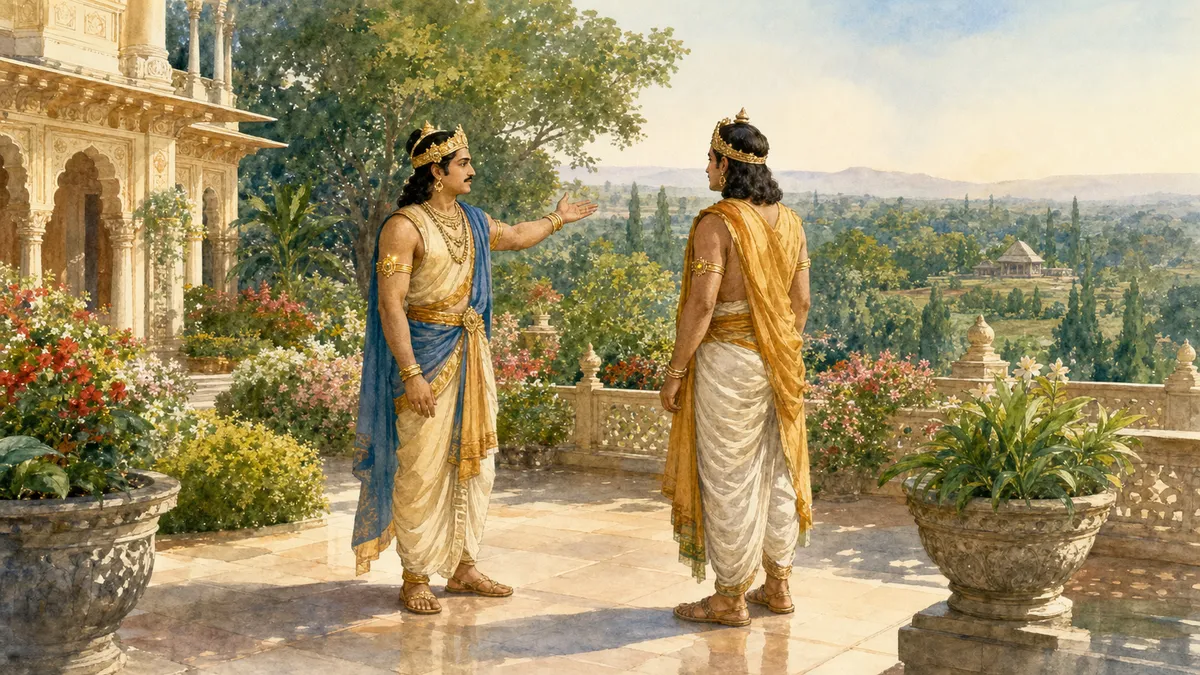
Once there lived a very wise and renowned king named Sushena, who ruled the very sacred city of Sundara in a country called Vanga. His younger brother, Mahasena, was his loyal and obedient subject. The king ruled his kingdom so well that all his subjects loved him.
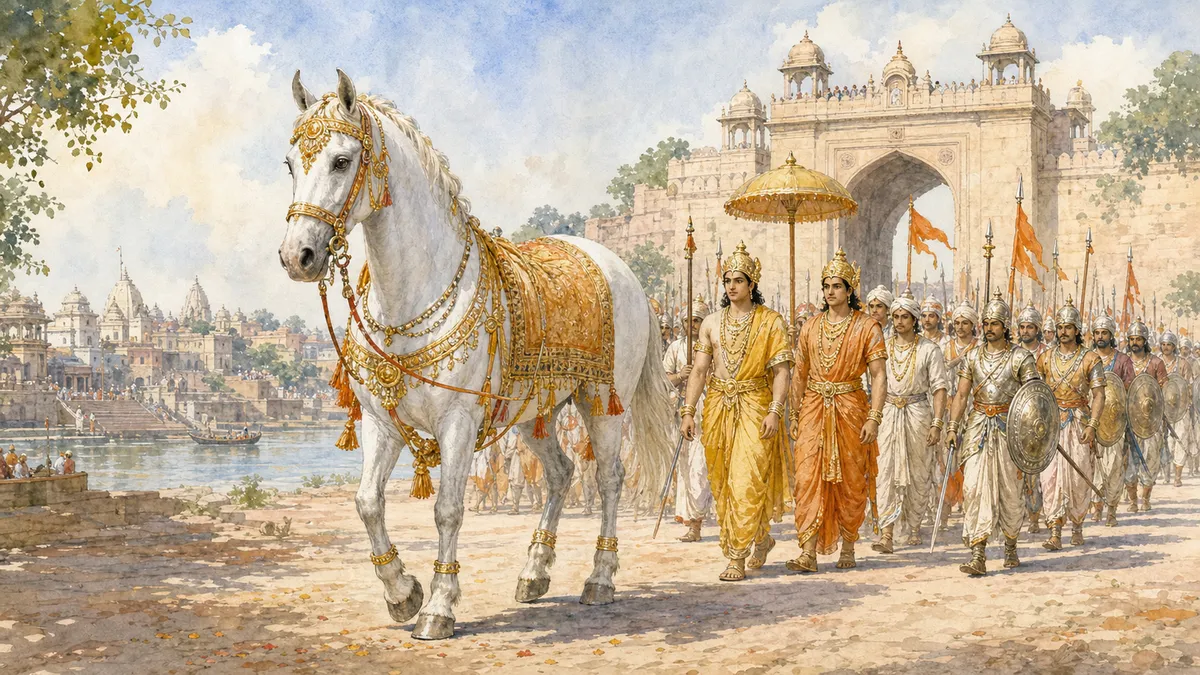
One day he performed the sacrificial ritual of the Ashvamedha. All the bravest princes followed the horse at the head of a great army.”
Ashvamedha-yajna (the horse sacrifice) is a famous ritual that was performed in Vedic times. “Ashva” means a steed, a horse. After the appropriate ritual, the horse, chosen in a special way and adorned with signs of royal authority, was set free. It was allowed to gallop beyond the borders of the kingdom, and the royal army followed in whatever direction it went. When it crossed a border, it invaded someone’s state. But since it was a royal horse, it was considered that the territory into which it had run now belonged to the state of the king who had performed this ritual. And if another king did not agree with this, he could dispute it by challenging the army that followed the horse and engaging in battle. If the king who performed the Ashvamedha-yajna was powerful and a large army followed the horse, then in a matter of days or weeks the horse would pass through several states, which were declared the property of that king. In this way the king expanded his domains. If another king did not like this, then war would begin.
In the same way, these brothers followed the horse in the hope that the entire kingdom would pass to them after this ritual.
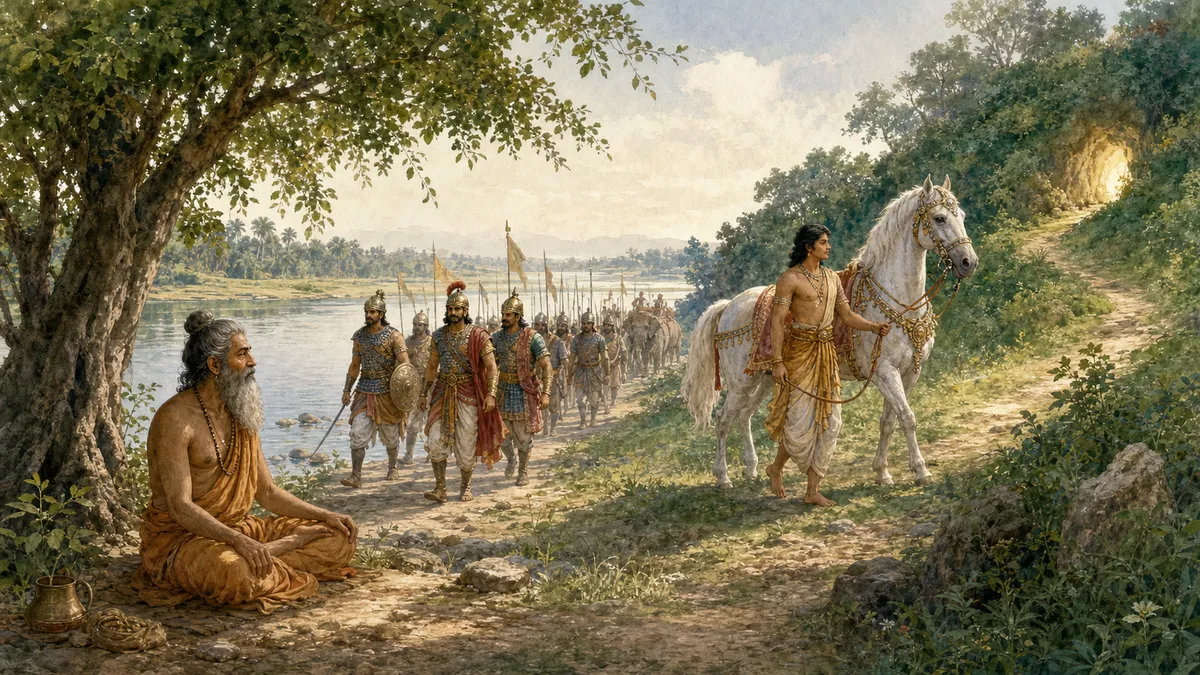
“Their march was victorious until they reached the banks of the Irrawaddy River.
They were so intoxicated by their victories that they passed by a rajarishi named Gana, who was sitting peacefully, without showing him the proper signs of respect.
Gana’s son noticed their offensive attitude toward his father, and this angered him. He caught the sacrificial horse and routed the heroes who were guarding it.
They surrounded him, but before their eyes he entered, together with the horse, the territory of a hill called Ganda. Seeing him disappear into the thickets of the hill, the invaders attacked the hill. The sage’s son appeared again, but this time with a huge army, fought the enemies, defeated them, and destroyed Sushena’s army. He captured many prisoners of war, including all the princes, and then returned once more inside the hill. Several warriors who managed to escape ran to Sushena and told him everything that had happened.”
The Nature of Time and Space in Yogic Understanding
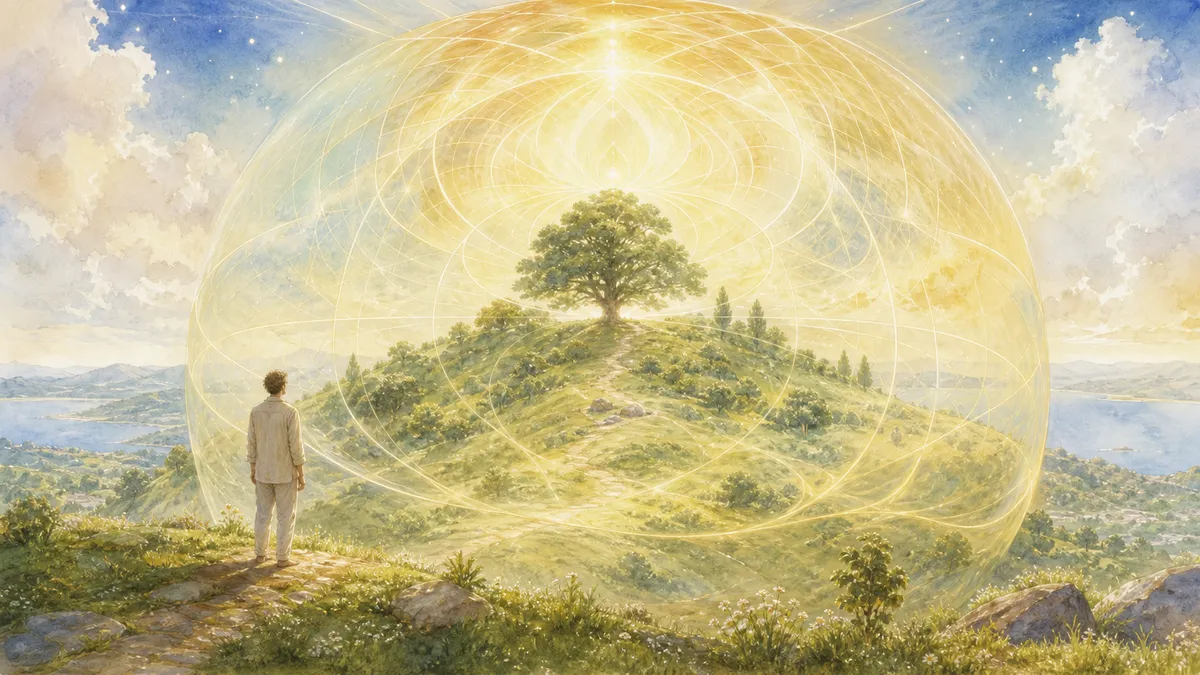
What is this hill? This hill, created in a mystical way, in the language of modern physics, was a “Schwarzschild sphere” – a black hole that curves time and space, a temporal cocoon in which light closes in on itself, not going beyond its bounds. Since a black hole possesses colossal mass, time and space within it cannot emerge outward; an entire universe can be enclosed within it.
From the point of view of ordinary consciousness, time and space exist on their own, independently, as certain constants of the material world. From the point of view of magic, and even more so from the point of view of spiritual teachings such as Advaita, time and space are secondary in relation to consciousness. This means that first there exists the subject, the observer, presence, and then the flow of time, space-time coordinates, and dimensions are generated by this consciousness.
Depending on the qualities of consciousness, time can flow in a certain way. In other worlds, where beings possess a different karmic vision, time can flow at an angle to ours. And if we enter that world, a space-time paradox will occur. For example, ten years may pass in our world, while in their world only one day may pass.
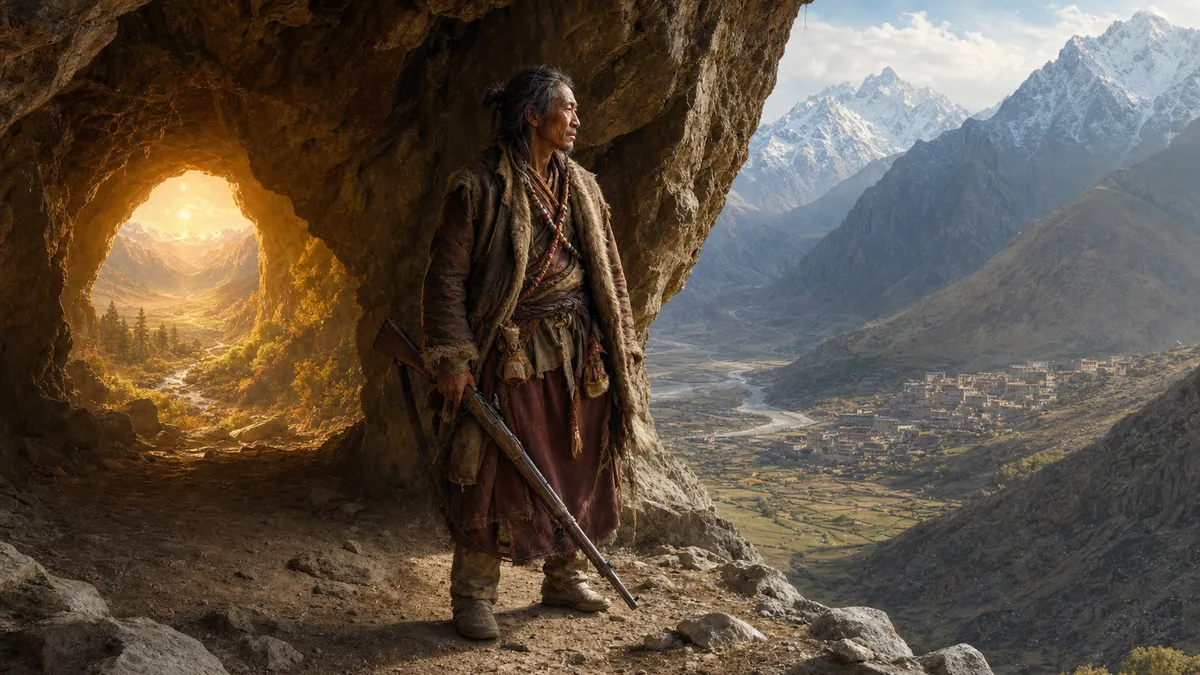
In the texts of Tibetan Buddhism there is a 19th-century story about a hunter who, while hunting in the mountains of Tibet, wandered into a cave. Having entered the cave, he experienced a clouding of consciousness and found himself in a place where people were very joyful and welcoming, and whose houses were well arranged. They talked with him, told him about the laws of their world, enlightened him on the path of awakening, showed him many wonderful things, and offered him to stay with them. But he refused, because his bride and family remained at home, and he returned. He had entered the cave with a rifle, but when he came back, he discovered that his rifle had decayed. It turned out that about 200 years had passed in the world of people. When he returned to the village, no one recognized him, and he himself did not recognize anyone either. Only after questioning the local residents did he find descendants, that is, those who were his relatives, to whom he himself was a great-great-great-grandfather. And these descendants said that there really had been such a hunter, who one day had gone into the mountains and had not returned; he was considered missing. He found his great-great-great-grandchildren, who were older than he was. One could say that he had entered another dimension of consciousness, where time flowed in a different way, while he himself had not changed in the slightest.
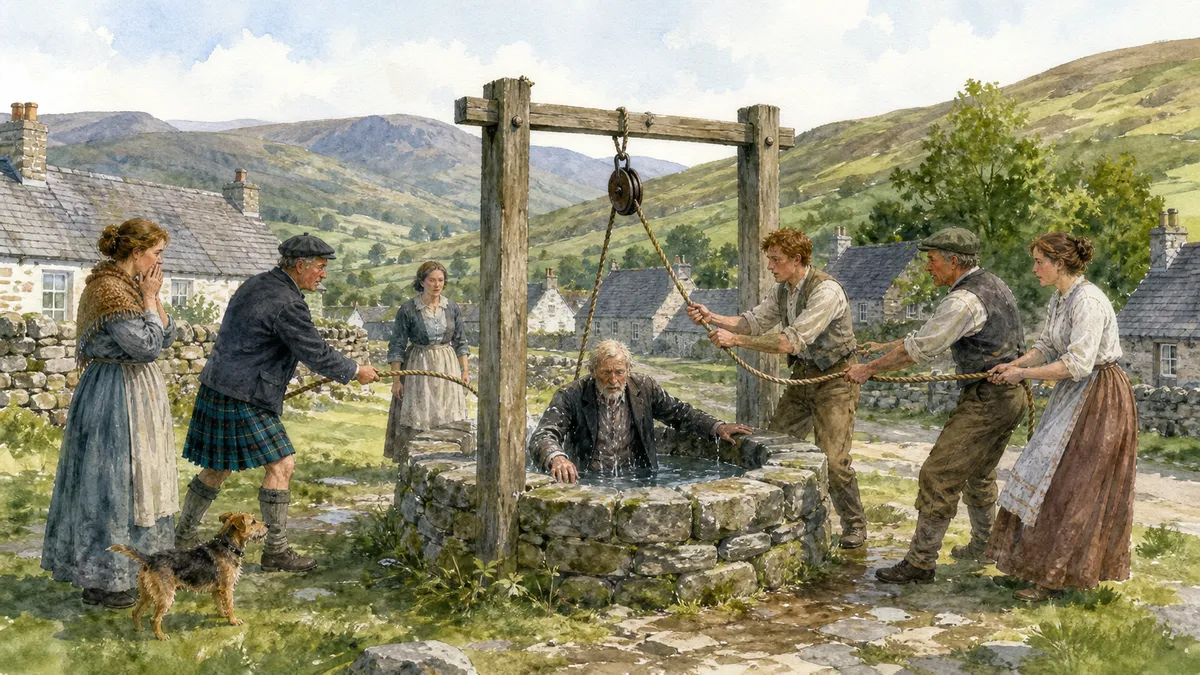
In our days, in Scotland, there was an incident in which a man set out to clean a well, and his fellow villagers, tying him with ropes, lowered him to a depth of about nine meters. Everything went normally until he began desperately tugging the rope so that they would pull him out. When they pulled him out, everyone was shocked by what they saw: when he was lowered into the well, he had been a healthy thirty-year-old man, but what they pulled out was an old man with a long beard, gray hair, and an aged body, who could not explain anything, being in a deranged state. Most likely, he fell into one of the so-called chronal holes, where time passed completely differently, and, having become entangled in it with his consciousness, spent a long time there.
This indicates that such physical constants as time and space are not something immutable: if you enter another karmic vision, everything flows there in a completely different way.
This opens up for the yogin the possibility of a broader understanding of the universe. He knows: if he deeply changes his consciousness, then the external world will also change profoundly. And this means that by shifting his consciousness, he can travel along the branches of time and space. He can slip off some branches of time and move onto others. I can say from my own experience that this is truly possible. When you have such experiences, it is, of course, always astonishing.
Mahasena’s Meeting with Rishi Gana
“Sushena was amazed and said to his brother:
“Brother! Go to the place where the sage Gana is. Remember that sages who perform tapas possess wondrous power, and even the gods are unable to overcome them. Therefore I ask you to appease him so that he may allow you to take back the princes and the sacrificial horse, for the time of the sacrifice is rapidly approaching. Pride shown before sages will always be put to shame, forcing the proud one to humble himself. If they are angered, they will destroy the world, reducing it to dust. Address him with due respect so that our aim may be accomplished.”
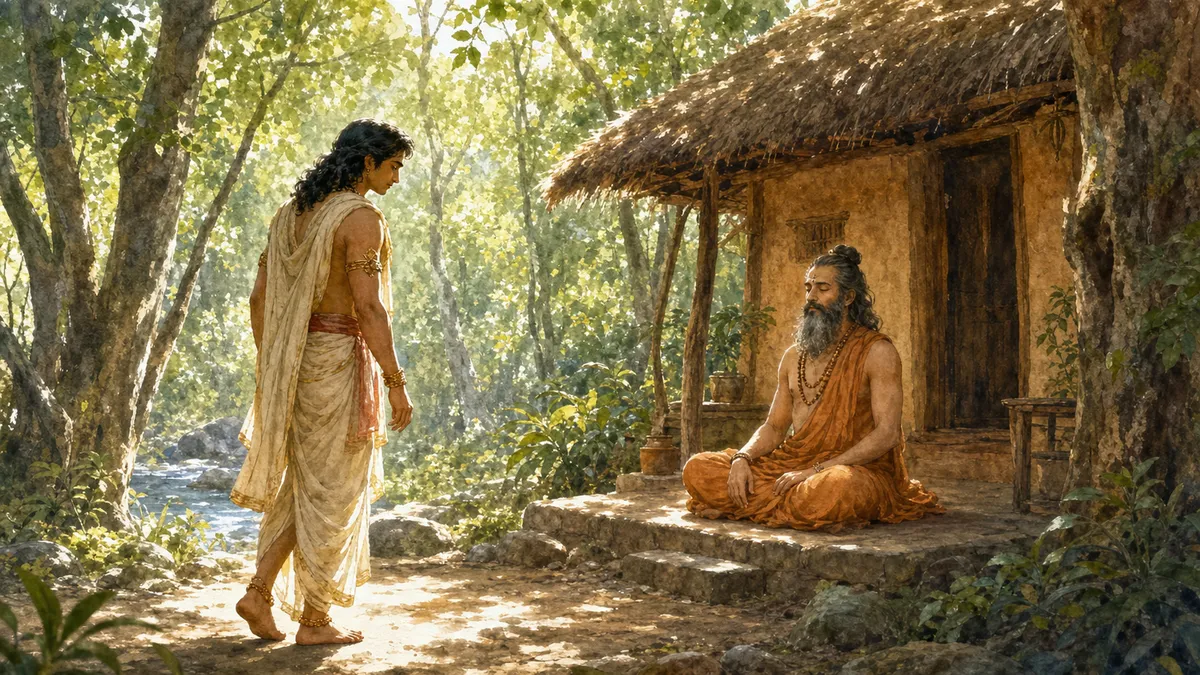
Mahasena obeyed and immediately set about carrying out the task entrusted to him. He came to Gana’s hermitage and found the sage sitting peacefully in an unmoving posture, like a block of stone, with his senses, mind, and intellect under perfect control.”
The king imagined himself to be a very powerful man, but in fact a simple rishi, an ascetic yogin, was far more powerful than he was. There are forces on Earth that can possess very great power, yet they may not manifest themselves. One may say that the Earth is a field of action for various forces. When a certain mighty force is actualized, it becomes visible, manifest, but this does not mean that it will always be so. The world is constantly in an unstable equilibrium, in constant motion, and each period of time has its own power-will operators—that is, mighty beings capable of conducting iccha-shakti. Some are replaced by others and can completely change the world, setting for it a new vector of direction, a new karmic vision. In essence, the whole world is the play of various karmic visions. In impure karmic vision this always manifests as the course of history, the collision and struggle of political, religious, or other kinds of clans, national egregores, and so on. In absolute, pure vision, all this is lilas, that is, the plays of the one Shakti through which Brahman manifests.
The Awakening of the Sage from Samadhi
“The sage, who was absorbed in the supreme Essence, resembled a serene sea whose waves of thought had subsided. Mahasena involuntarily prostrated himself before the sage and began to praise him, and with such a reverent feeling he remained at that place for three days.
The sage’s son, who was observing the new visitor, was pleased by this and, approaching him, said:
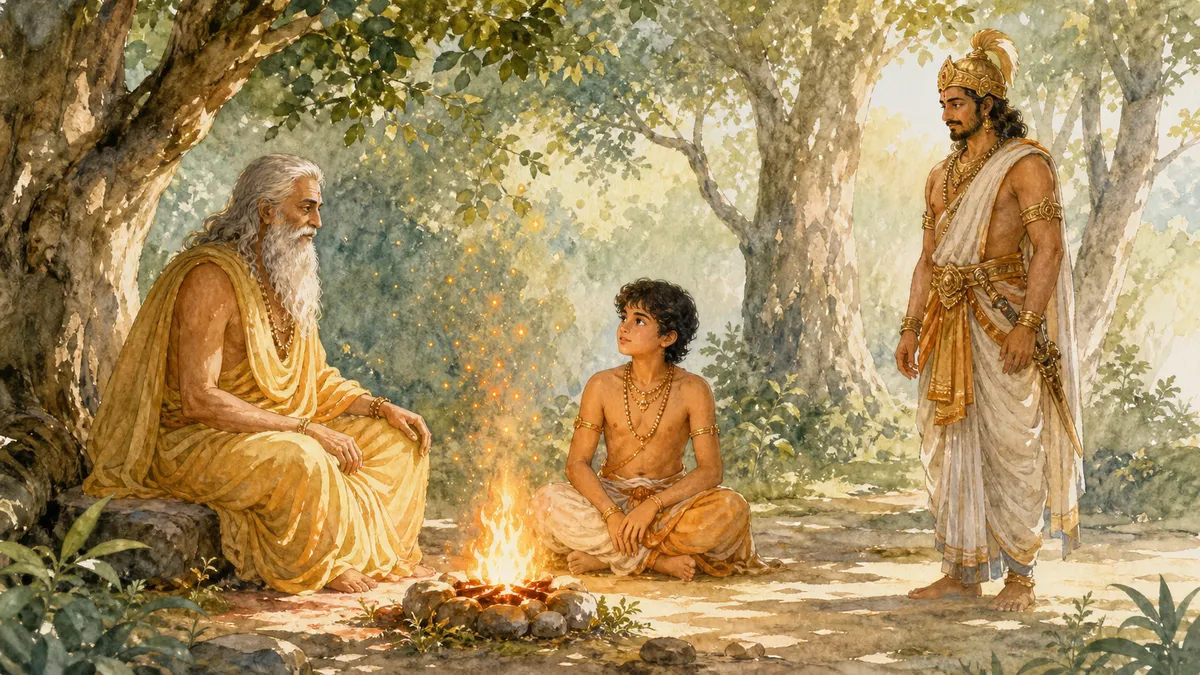
“I am pleased by the respect you show my father. Tell me what I can do for you, and I will do it at once. I am the son of this great Gana, an extraordinary ascetic. Prince, listen to me. Now is not the time to speak with my father. He is presently in kevala-nirvikalpa-samadhi, and he will emerge from this state only after remaining in it for twelve years, of which five have already passed and seven still remain.
Tell me now what you wish to obtain from him, and I will do it for you. Do not underestimate me, and do not think that I am merely a stubborn youth unworthy of his father. Nothing is impossible for yogis who perform tapas.”
Having listened to him, the wise Mahasena greeted him with folded palms and said:
“O son of the sage! If you are going to fulfill my wish, then first I want to address a small request to your wise father when he emerges from his samadhi. I ask you, help me in this, if it will not trouble you.”
To this the sage’s son replied as follows:
“Prince, your request is not an easy one. But, having promised to fulfill your wish, I cannot now go back on my words. Now I must ask you to wait an hour and a half, during which you will be able to observe my yogic power. My father now abides in transcendent peace. Can anyone awaken him by external efforts? Wait! I will do this at once by means of subtle yoga.”
Having said this, he sat down, withdrew his senses from the external world, joined the incoming and outgoing breaths, exhaled the air, and remained motionless for a short time.”
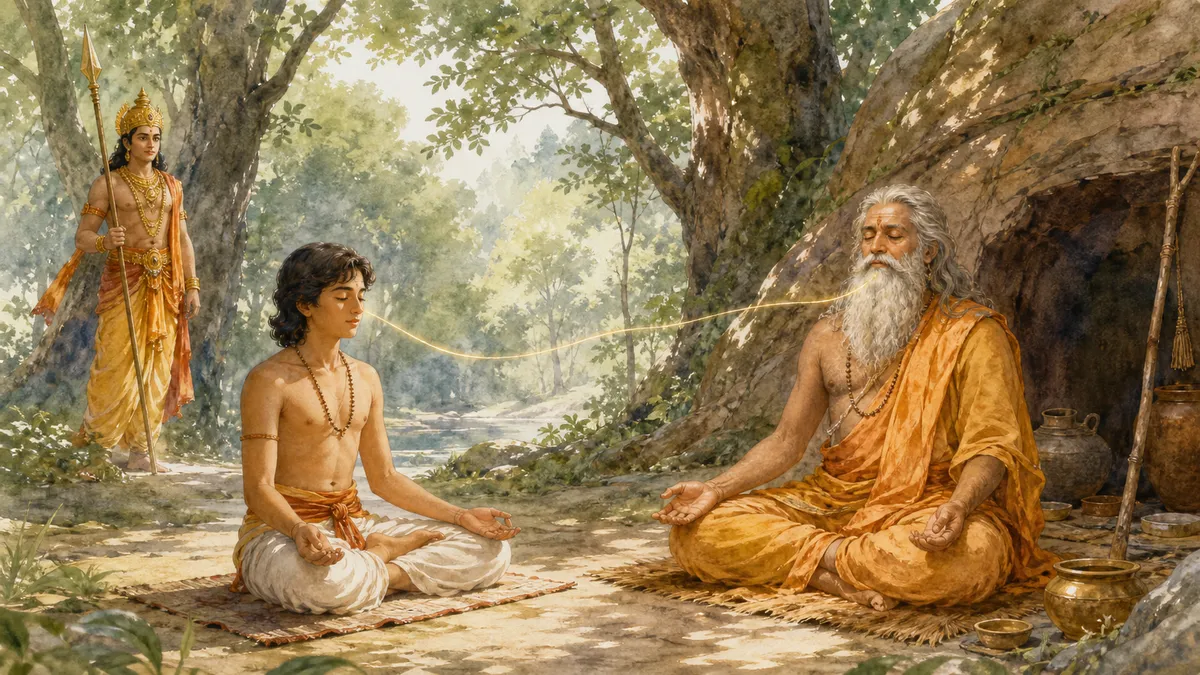
The son of the rishi decided to enter the state of savikalpa samadhi in order to unite his consciousness with the consciousness of his father and bring his father’s consciousness into the waking state. To do this, he performed one of the methods described in the “Vijnana Bhairava Tantra,” joining the incoming and outgoing breath—that is, he recognized the interval between two breaths, united presence with it, and introduced prana into the central channel.
“Thus he entered the mind of the sage and, stirring it, returned to his own body. Immediately the sage returned to this world of sensory perceptions and saw Mahasena right before him, prostrating himself before him and praising him.”
If you can withdraw the senses inward, direct consciousness into the subtle body, and introduce prana into the central channel, you can enter the minds of others. It is not as difficult as it seems. Entering the minds of others, you can see the subtle workings of their consciousness. You can see the astral body of this person with your subtle body, understand what he is thinking about, what his state and mood are. You can understand this to the extent that your receptivity allows. It manifests as an image that arises between the eyebrows or at the level of the heart. You can even speak with the subtle body of this person, find out the information you need or his opinion on a particular matter.
The Teaching on Tapas and Emotions
“He reflected for a moment, comprehending this entire situation through the power of his wondrous abilities.
Abiding in perfect peace and bliss, he called his son to him and said:
‘Boy, do not repeat such a mistake in the future. Anger destroys tapas. Tapas is possible only in that case, and it can progress unhindered only because the king protects yogis. Hindering the performance of a sacred sacrifice is always reprehensible, and it is never approved by virtuous people.’
Tapas is destroyed not only by anger, but by any emotional feeling with which we identify. Tapas (literally, “kindling” or “heat”) is the spiritual power accumulated as a result of contemplation, asceticism, concentration, and samadhi. It is the contact of our surface consciousness with buddhi (intuitive awareness) and with the Atman. Through contact with buddhi and the Atman, a yogi can engage his own power of knowledge (jnana-shakti). He can also engage the power of will (iccha-shakti) and manifest it as the power of action (kriya-shakti). When he engages these three powers, he can manifest them in the external world as acts of creation, the destruction of obstacles, the maintenance of harmony, the concealment or manifestation of the divine. If he allows emotions to intrude and identifies with them, his intuitive consciousness is obscured, contact with the Atman is obscured, and all his spiritual powers disappear.
Emotions as energy do not destroy siddhis only if the yogi knows how to unite with them. If he is a powerful master of the practice of contemplation, possessing great experience, he can allow any emotions to manifest, uniting presence with them, and these emotions self-liberate into the natural state. And then, instead of destroying tapas, they help him. This is indeed possible if the yogi can remain in presence and the emotion does not disrupt presence. Then what is called “integration,” or “making the kleshas into wisdom,” takes place. However, this is not easy; moreover, it is available only to genuine yogis. Even if angered, such a yogi will not destroy the result of his tapas, because he will not be identified with anger and will continue to remain in presence; his anger will be a manifestation of the play. Whatever emotional state he experiences, it will simply be lila, arising from the center of his presence and directed toward helping living beings. An ordinary person, seeing this, will not even be able to understand what is happening. Such manifestations are accessible only to masters.
The Liberation of the Captives and the Story of the Sage
“Be a good boy, and immediately return the horse and the princes. Do this right now so that the sacrifice may take place at the appointed time.”
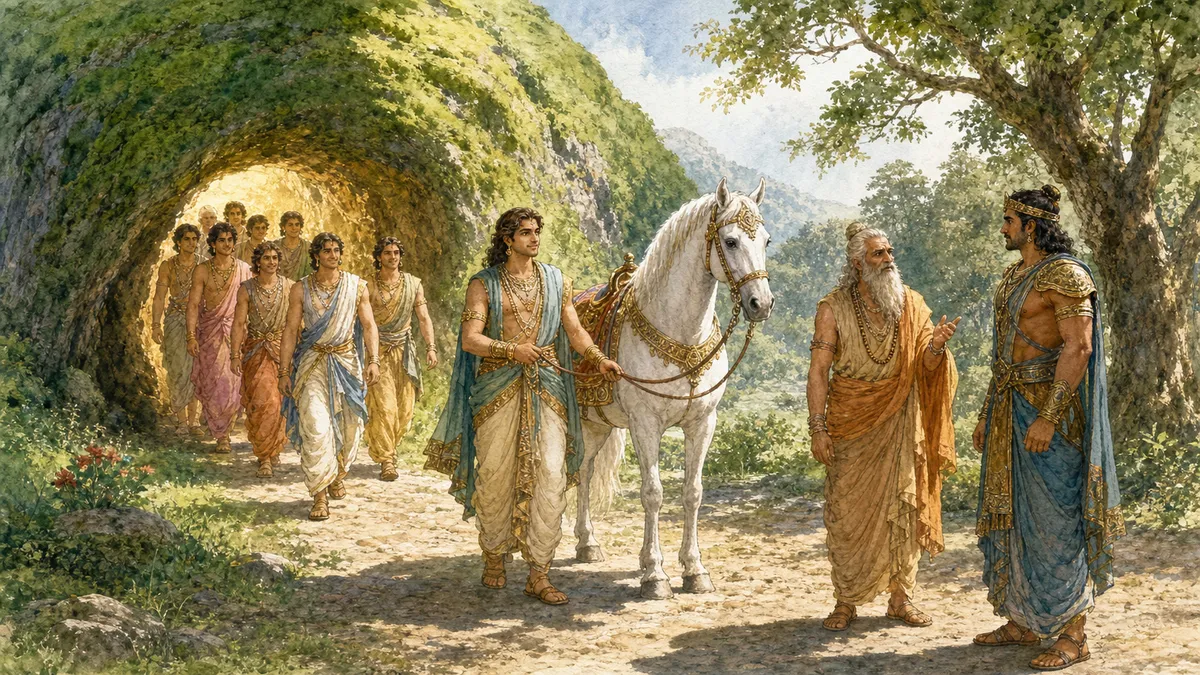
Having received these instructions, the sage’s son immediately cooled his anger. He ascended the hill, returned with the horse and the princes, and freed them with the greatest delight.
Mahasena sent the princes with the horse back to the city. He was amazed by what he had seen and, greeting the sage, respectfully asked him: “Lord, please tell me how the horse and the princes were hidden in the hill.”
Then the sage replied:
“Listen, O king, once I was an emperor who ruled an empire surrounded by seas. After many years of such reign, God’s grace descended upon me, and aversion to this world arose within me, as if I were nothing but refuse in the light of inner consciousness. I renounced the kingdom in favor of my sons and withdrew to this forest. My dutiful wife went with me. For several years we performed tapas. One day my wife embraced me, and this son was born to her while I was in samadhi. She brought me back to consciousness, left the child with me, and died.
This boy was raised by me with love and care. When he grew up, he heard that I had once been a king; he wished to become such a king himself and begged me to fulfill his request. I initiated him into yoga, which he practiced with such success that he became capable, through the power of his will, of creating his own world inside this hill, which he now rules. The horse and the princes were held there. Now I have told you the secret of this hill.”
Thanks to his tapas, the son of the king-yogin created his own tunnel of reality—a mandala in which he reigned as a deity. He created it because he managed to discover his own nature of Mind, enter the single “taste,” reunite with the one Sphere, and then activate the universal forces: jnana-shakti, kriya-shakti, and iccha-shakti.
Entering the World of the Hill
Having heard this answer, Mahasena asked again: “I have listened with great interest to your wonderful story about this hill. I want to see it. Can you fulfill my request?”
Hearing this request, the sage ordered his son: “Boy! Show him this place and fulfill his request.” Having said this, the sage again plunged into samadhi; and his son departed with the prince.
The sage’s son entered the hill without any difficulty and disappeared, but Mahasena could not enter the territory of the hill and therefore began calling out to the sage’s son. He, too, called to the prince from inside the hill. Then the sage’s son came out of the hill and said to the prince:
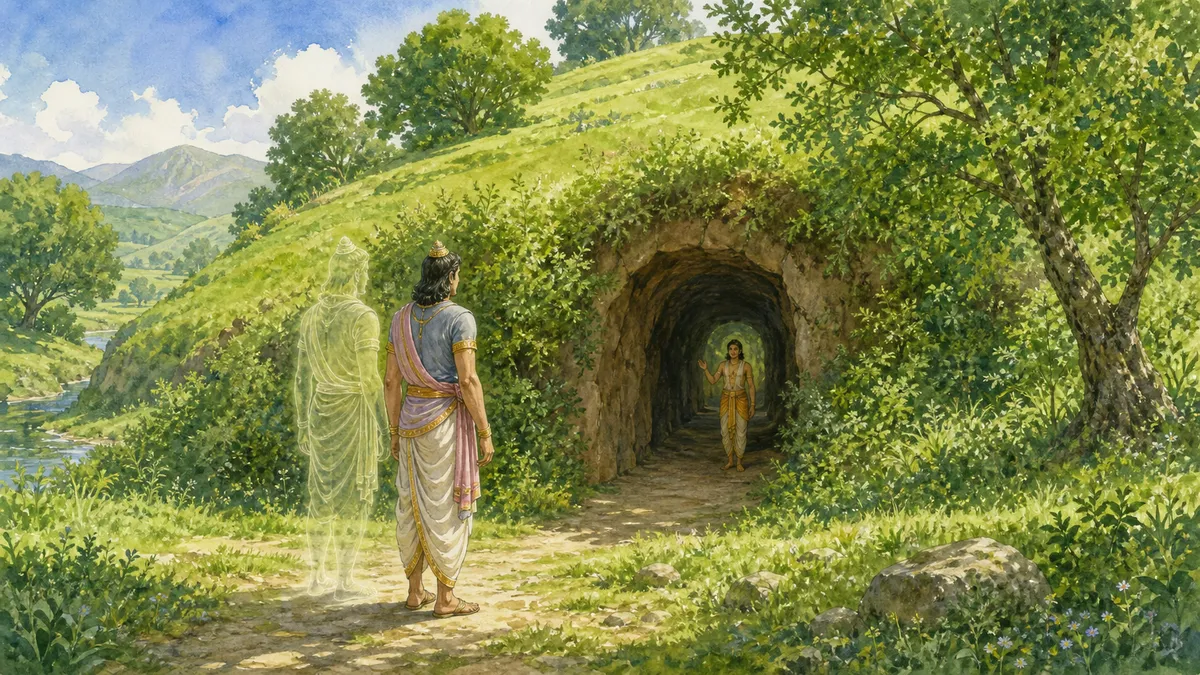
“O prince, this hill cannot be entered with the meager yogic powers you possess. For you it will be too dense an obstacle. But, in any case, you must get inside the hill, as my father commanded. Leave your gross body now in this tunnel hidden by shrubbery; enter the hill with me in your mental sheath.”
The sage’s son recommended that the prince leave his physical body and exit in the subtle body. But for the prince this was like mockery, since, of course, he could neither pass into the hill in his physical body nor extract his subtle body. The sage’s son did not need to separate out a subtle body—he passed into the hill directly in his physical body. Why? Because his physical body no longer consisted of impure elements, as the prince’s did, but of shuddha-tattvas—pure elements united with the energy of clear light.
This happens if we reveal the clear light and then engage for a very long time in the practice of integration with the five elements and unite bhava, contemplative presence, the energy of clear light with the form of the physical body. Then the form of the physical body is recognized as completely pure in its foundation.
When divine pride penetrates to the level of the pranas, nadis, and cells of the physical body, the physical body is recognized not as gross-material, but as subtle-material, vibrating at a very high frequency. This is precisely why the holy mahasiddhas, while in deep samadhi united with the body, could leave imprints in stones.
Methods of Separating the Subtle Body
The prince could not do this, and he asked: “Tell me, holy one, how should I cast off this body? If I do it by force, I will die.”
The holy man smiled at this and said: “It seems that yoga is unknown to you. Very well, close your eyes.”
There are many ways to separate the subtle body. If you successfully complete siddha yoga retreats, you will see this for yourself. One of the methods is the control of the winds and channels, mastery of the power of kundalini. When your prana has awakened in the Muladhara chakra and enters the central channel, you have so much energy that, simply by concentrating on the crown of the head, you can raise the prana upward. If you are in a lying posture (shavasana) or in a seated posture, the prana will gather completely in the head; you will feel the spine being filled, a bursting sensation in the area of the head, rotation; various visions and lights will flash before you. Then you will feel yourself slipping out through the crown of the head and hovering above your physical body. This is how the subtle body is separated by the method of kundalini yoga.
Or you will feel the prana gathering in one of the chakras, for example in the throat. At first the throat swells with pressure, and then you feel as if your subtle body is curling up into a tube; you sense rotation and slip out of the physical body. Such experiences are something very natural, especially when you practice intensively in retreat. I know this from my own experience.
But besides kundalini yoga, there are many other ways to separate the subtle body. One of them is dream yoga. If you have succeeded in separating the subtle body by the method of dream yoga, then, while in the waking state, you sort of fall asleep a little while awake, and the subtle body slips out of the physical body. This happens through the power of intention.
Shamans, sorcerers, and magicians usually use a specially prepared “flying ointment,” which they rub onto the physical body. It contains mandrake, jimsonweed, henbane, and many other ingredients. However, if your nadis and pranas are pure and your mind is strong enough, you do not need a “flying ointment” in order to separate the subtle body.
For a yogin, knowledge of the subtle body is very important in order to fully understand: “I am not this physical body.” It is also considered that if you successfully perform the retreat practices of shat-chakra yoga, concentrating on the Manipura chakra, and then learn to unite presence with the Manipura chakra, you will have many experiences of bardo yoga; in dreams you will experience many exits of the subtle body and, while alive, come to know the world of the bardo.
Transferring Consciousness to Another Being
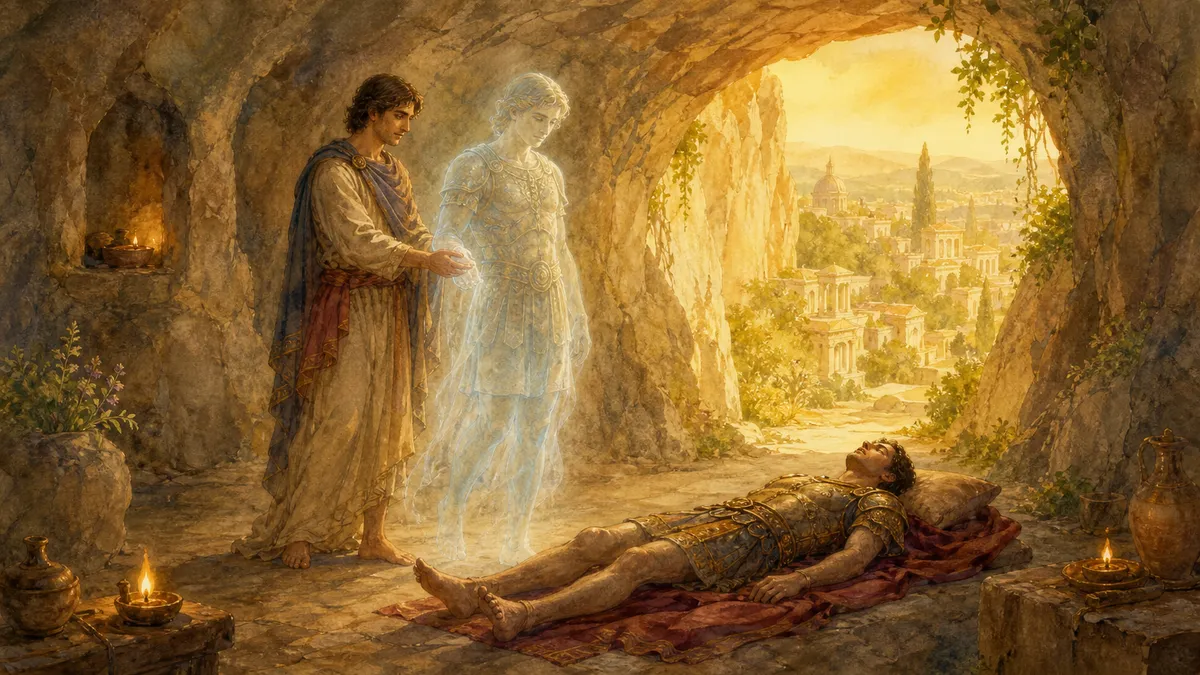
The prince closed his eyes, and then the saint at once entered his consciousness and drew the prince’s subtle body out of the gross one, leaving the latter in the tunnel.
Then, by means of his yogic power, the saint entered the hill together with this subtle body of the prince, drawn out of the gross one, in order to fulfill the prince’s desire to see the empire located inside the hill.
This child, who was probably many thousands of years old, possessed astonishing power and astonishing yogic abilities. It is believed that one can transfer consciousness to another by drawing his subtle body out of the physical one, if one knows how to do it. One of the methods consists in the yogin uniting his central channel with the central channel of another being. By performing such a union and engaging in visualization, one can “draw” another being’s subtle body out of the physical one and perform a transference for him, directing it by the power of one’s visualization or bhava.
At one time I experimented with such things, but on animals. Once I tried to unite my central channel with a cat’s central channel while practicing integration. As soon as I did this, the cat jumped about a meter and a half. That was the end of the experiment.
It is believed that you must have a serious motivation of compassion or help in order to engage in such things. Usually such practices are also applied in the yoga of consciousness transference (if it is the consciousness of a person leaving the body), in order to direct the soul to a higher world.
Read 15 times
Articles
Vidya AI
Search
Lectures
November 4, 2026
Mantra of the day
ОМ СИДДХАЙА НАМАХ ОМ Совершенному – поклонение!
Auspicious Times(Rome)
Brahma Muhurta:
04:55 - 05:50
Abhijit Muhurta:
11:33 - 12:14
Sayam Sandhya:
16:41 - 17:23
Mokshada Ekadashi (6 November)
Ekadashi of liberation. Helps to achieve spiritual enlightenment.