

Kleshas.
Every emotion implies thinking, and any thought is a movement of the mind. When we think, attention moves to one object, then to another, then to a third, does it not? The very root of emotion is your mobile attention. To cut off the root of this movement, it is necessary to understand where attention moves from.
Basically, when people speak of suffering, for example of suffering in samsara, what is meant first and foremost is the suffering of consciousness that arises from emotion. The suffering of consciousness arises following the movement of thoughts. When emotions arise, prana also moves after objects, and then suffering begins to be felt in the body. Therefore, if a strong emotion arises in you, then by concentrating on the breath and calming it, you will suddenly see that when the breath is calmed, the emotion goes away. The emotion will leave the energy, the body, and when you stop the mind, you will see that the emotion has gone completely, that empty clarity has been revealed. Suddenly you will laugh, seeing that neither your anger nor your sorrows have any essence behind them, that behind them is the same emptiness as always.
To self-liberate means to seek emptiness behind emotions, not to pay attention to emotions, but to see emptiness, constantly finding it. An experienced practitioner is always light and joyful, because he has become established in the understanding that behind all experiences there is one thing—emptiness. Then he lets his gaze glide over this world, taking into account and taking seriously none of the emotions, none of the thoughts. He knows that everything is emptiness, and emptiness is Brahman itself, perfection itself and the Absolute itself; therefore, there is no need to worry about emotions. Then he attains great dispassion and a single “taste.” Whether he is served delicious prasad or fish entrails, he can, smiling, eat both one and the other, knowing that compared with emptiness, all this is not so very important. Whether he hears flattery, or he is cursed with the very worst words, he knows that these words are merely the play of this emptiness. Whether he is in luxurious surroundings or is begging, he attaches no significance to it. Day and night his mind abides in bliss, contemplating emptiness.
In ordinary people, awareness of emptiness is disrupted by the stream of kleshas and emotions. All our monastic practice is aimed at subduing these kleshas and emotions. This is a battle in which we prevail. When a sufficient number of direct introductions, purification practices, and meditative experiences has accumulated, then our kleshas weaken, and emptiness is revealed. Those people who do not understand the need for purification may discourse on emptiness as much as they like. But the point is that time is needed for our kleshas to be purified. One could say that this is monotonous and not particularly joyful work that must be done day after day.
Three Traditional Methods of Working with Emotions
There are three traditional methods for dealing with emotions: to renounce them, to transform them, and to recognize their nature. All three levels of the higher teachings explain how to deal with kleshas. At no level has it ever been taught that you can be enlightened while remaining under the power of kleshas—never.
Yes, this should be understood. At no level was it said that you can be awakened while remaining under the power of your kleshas. Many, upon hearing the higher teachings, may interpret them incorrectly: if kleshas are wisdom, then there is no need to correct kleshas in any way; one should leave them in their own nature. They think that you can be awakened, but still have attachments to desires, that you can remain a slave to desires; that is, if your awakened nature is not stained, then it is enough to contemplate it, and you can be awakened. But the saints say that this should not be understood so superficially; what is meant is that kleshas cease to have power.
For example, one can sometimes read about mahasiddhas whose behavior may even seem to other people to be a manifestation of human kleshas. However, this is not the case at all. The difference between the state of mahasiddhas and ordinary practitioners is like the difference between heaven and earth. What are kleshas in people is, in them, a manifestation of their inconceivable play; their energy is completely transformed into the absolute. Feelings such as anger, lust, pride, greed, and attachment, which are inherent in ordinary people, manifest in them in a similar way, yet they are entirely deities; this is the play of absolute empty energy. For example, the feeling of pride manifests as dakinis and dakas, viras (heroes), as deities emanating from the mindstream, and so on. This means that mahasiddhas are completely free from the influence of kleshas; they simply play spontaneously with their manifesting energy.
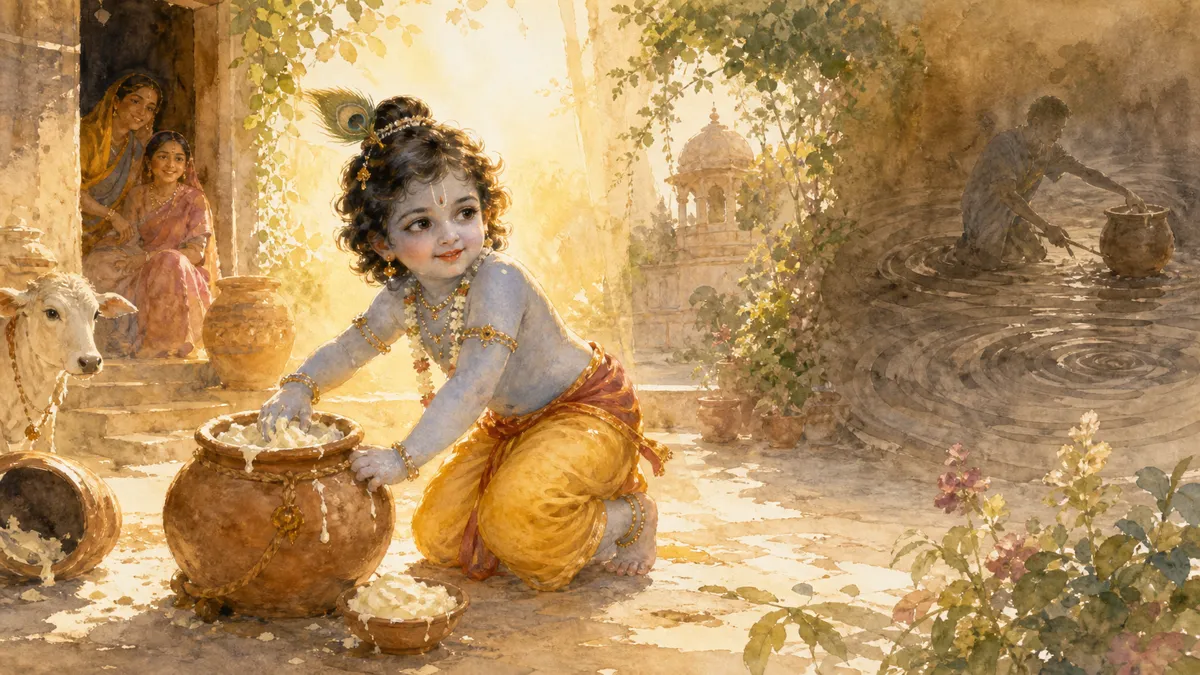
There is a story about how Krishna stole butter from the gopis. Can it be said that Krishna had greed or the karma of hungry ghosts (theft)? No, this was a way in which his absolute nature manifested. If an ordinary person does the same thing, his karma will deteriorate, he will have bad dreams, he will be robbed, and in his next life he will become a preta. So what is the difference? The difference is that when Krishna does it, he has absolute bhavana (brahma-bhavana), and then these actions manifest as blessed, sacred. When an ordinary person does it, he acts from the tendencies of his conditioned mind: greed, selfishness, and so on. If his bhavana were measured, it would correspond precisely to the karma of pretas. That is, the difference lies in the wave of consciousness. It is like comparing alpha waves and delta waves, which are located on the other side of the scale.
Recognition of the nature of mind as the true path
Each of the levels deals with emotions differently. Just as darkness cannot remain when the sun rises, so no klesha can remain when the nature of Mind is recognized. This is the moment of realizing primordial wakefulness, and it is the same for each of the five poisons. With regard to any of the five kleshas, we do not need to transform the emotion, the capacity of emptiness to know. The nature of emotion is already the inseparable capacity of emptiness to know. Recognition of the nature actually causes the kleshas simply to disappear. This is the true path.
Shankara says the following about this:
“One ascetic sits surrounded by five fires or sits at night with his knees clasped, eating from his palm instead of a bowl, but the truth is still not visible to him.”
In this verse, he says that external actions (even tapas) aimed at subduing the body, desires, and mind are not as important as abiding in awakened consciousness, because this awakened consciousness itself neutralizes the kleshas and eliminates any dependence on them. This is brahma-bhavana, which fills the mindstream, and then the bhavana that arises from a klesha becomes insignificant and drowns in the universal flame of brahma-bhavana.
Bhavana and its influence on consciousness
Each klesha, each emotion, gives rise to a certain bhavana. Everyone probably knows this. Suppose that if we now try to evoke an angry state, or even, as a game, try to scold one another, then after some time the bhavana here will change; you will feel that the atmosphere and karmic vision have changed. Or if you do something bad, after some time impurity will arise in your soul, and the level of your consciousness will decrease. This is the bhavana that is generated by a klesha, by one’s worldview. We pay attention to this, and every action provokes the emergence of bhavana from the channels and the mind. Even if we think, “Oh, it’s all right, all this is absolute,” if we are not abiding in true contemplation, then our subconscious mind, which divides things into pure and impure, will still register: “This is a pure action, and this is an impure one,” and the feeling of impurity will manifest anyway. In the case of genuine abiding in contemplation, we open the great flame of brahma-bhavana.
There are two main bhavanas that we adhere to: deva-bhavana and brahma-bhavana. Deva-bhavana is pure vision, the pride of the deity, and the entire state of sacredness that arises as a result of worship, prostrations, purification practices, bhajan-mandala practices, and so on. This is a very important practice, thanks to which your next life will not be in the world of humans, but in the world of the gods. This is a fact. Therefore, all monks transform into such deva-bhavana. Subtle changes take place. After a few years you discover that deva-bhavana is entering you, and you have a different karmic vision. Deva-bhavana is a feeling of purity and holiness that those who have kleshas or human karma do not possess; it is an exalted, majestic-sacred feeling that arises as a result of practice. However, this is not sufficient for awakening.
The next bhavana is brahma-bhavana. This is the feeling of purity, greatness, and divinity brought to perfection, when there is continuous awareness of absoluteness everywhere. When such bhavanas permeate our life, our karmic vision and worldview also change. Brahma-bhavana, if it is stable thanks to contemplation, is an entire ocean of absolute worldview. When we remain in it continuously, all the minor bhavanas that arise as a result of kleshas are simply absorbed, extinguished, or devoured; therefore the kleshas lose their value, cease to produce karma, and cease to rule over the yogin—this is the true way of liberating the kleshas.

For this, one must have great faith in this brahma-bhavana. For example, the stove in your little house has broken down, and you are told: “There will be no repair of the stove in your little house now or ever.” How does it feel to hear this? Dark thoughts appear in your mind: “How are they treating me? What do they think of themselves? I will suffer so much! I am already suffering now, and later I will suffer even more. I work in the sangha, and they ignore me like this. I am such an important person—how can they ignore me? How dare they say such a thing to me?!” But if you have immense brahma-bhavana, all these small things simply disappear. You say: “How wonderful! This is simply marvelous, this is such ecstasy, because all of this is absolute.”
