

Commentary on the text “Yoga Vasistha. Chapter 5. On the End”
When we make the “namaste” gesture, closing the right and left, lunar and solar channels, energy enters the central channel, and the state of our consciousness is purified. When we join our hands in this way, the winds enter the central channel, and our awareness increases. We need to relax, look into the space in front of us, and enter a state of awareness. This is called namaste-kriya or prardhana-mudra; usually people greet each other in this way, but for us it also means that we enter a state of awareness, a state of contemplation.
Then we try to concentrate on the syllable “Om” — the luminous syllable “Om” in the center of the chest, the source of divine consciousness. When the word “Om” sounds, we imagine how the light from the syllable “Om” begins to ignite, illuminate our entire body, and purify it.
So, we will continue the commentary on the text “Yoga Vasistha,” Chapter 5, “On the End.”
Why is it very important to listen to sacred texts, discuss them, and read them? In this way we establish a connection with the saints, with their consciousness, and open the path to liberation. This is called shravana. The three golden principles of Vedic culture, the philosophy of Sanatana Dharma, the tradition we follow, are shravana, manana, and nididhyasana.
Shravana means listening to the truth from the lips of the Teacher. Manana means: having heard about the truth, we begin to reflect on it, clarify it, make it clear, until it becomes your own truth within. Nididhyasana means: having clarified the truth, to live by it all the time, to abide in it, contemplate it, and become permeated with it. And these three main principles — listening to the truth, clarifying and contemplating it, and then constantly abiding in the truth — constitute the entire essence of Sanatana Dharma.
These three golden principles existing in Sanatana Dharma were later adopted by tantric Buddhism, penetrated into it, and became important principles in these Buddhist teachings as well. Many hundreds of millions of holy souls of the past and present follow this path and attain liberation. Therefore, for us, for our well-being, benefit, and happiness, it is very important to understand what these principles are.
Understanding True Shravana
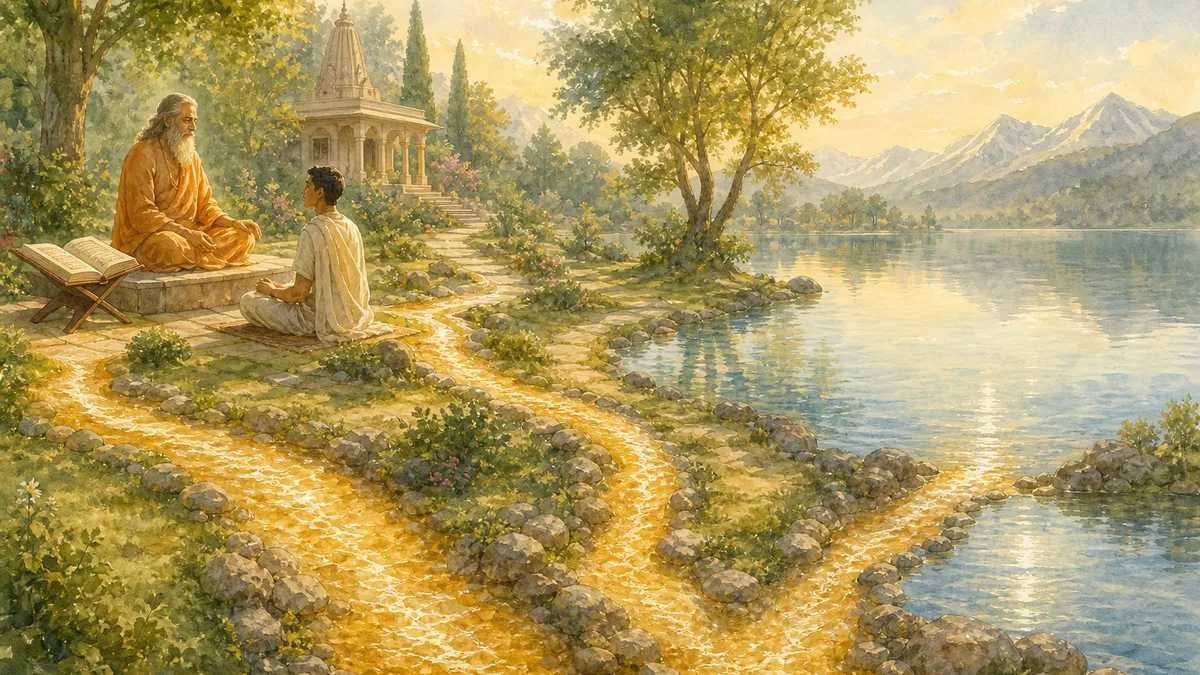
Shravana means listening about the Truth, listening about the Dharma. But what is Truth? For example, if we watch television, read newspapers about how the material world is arranged or how to become rich in it, this can hardly be called absolute truth. It is relative truth; it may be truth, it may be a half-truth, but it cannot be called the process of shravana. Because shravana is that which liberates us from the suffering, illusions, and samsara of the material world. Therefore, shravana is called that which comes either from the lips of the teacher, or that which comes from the sacred scriptures, the Vedas, Puranas, and Tantras. Finally, the highest level of shravana is when we can listen to our spirit, our divine “I,” and this begins to liberate us. Then we can listen to the voice of God within ourselves.
Manana means that we understand this well and thoroughly; we clarify for ourselves whether this is so, whether we understand correctly or not, whether this state is true or not.
And finally, nididhyasana is when we have become established at the right point of consciousness and have, as it were, recognized the face of God, but we still need to learn to abide in it all the time. A true spiritual seeker, a spiritual person, is one who abides in constant contemplation of God, in constant meditation on God, whatever he may be doing: whether he is doing pranayama, reciting mantras, practicing asanas, eating or walking, or listening to bhajans — his inner process, his nididhyasana, his inner alchemy continues all the time. Such a process of nididhyasana activates within us a kind of inner alchemical reactor, when subtle spiritual processes begin to take place within us, dissolving our karma.
The Essence of the Spiritual Path
Why is it very important for us to start these alchemical processes and turn on our inner reactor, which would dissolve our karma? Why is this so important? Because this is the very essence of the spiritual path, and if we follow Sanatana Dharma, then we walk the spiritual path in order to become a sadhu; otherwise, there will be no meaning in any of this. This is so because a sadhu, a spiritual person, does not seek happiness in the external world, in worldly life; he does not seek sensual pleasures. On the contrary, he seeks liberation, moksha; he seeks God.
All of Sanatana Dharma ultimately says something like the following: “Human being, do not be ignorant; understand your limitations; make efforts to attain divine consciousness. Leave behind your material attachments, leave behind your toys, leave behind your ego, and aspire to liberation, for this is the only meaning of human life.” Because Sanatana Dharma, Vedic culture, is not a path to attaining worldly happiness; it is a path of transformation, a path of becoming a divine being.
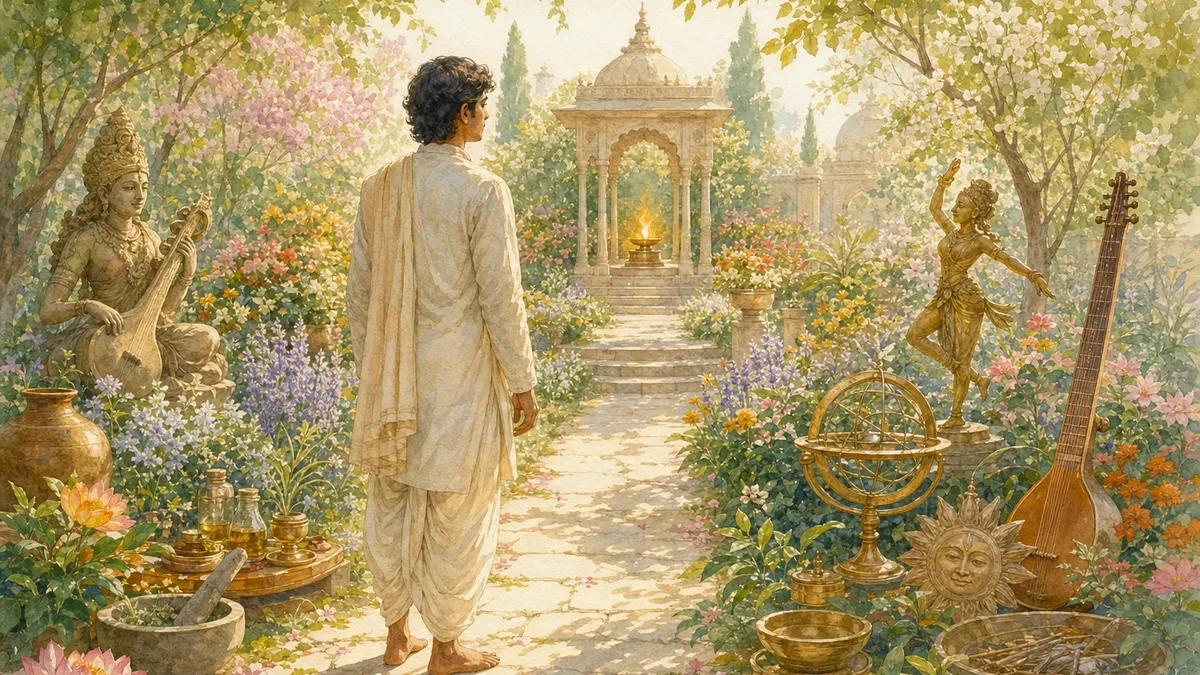
Of course, in Sanatana Dharma there are many interesting and beautiful things: for example, Ayurveda, Jyotish, Vastu, the Puranas and Tantras, beautiful mythology, magnificent, colorful rituals, and all of this is very interesting; dances and songs—all of it is so enticing. The study of Sanskrit, grammar, the art of palmistry, the art of divination by numbers, the interpretation of signs, and many other such subtle arts—all of this is merely flowers, merely an ornament of Sanatana Dharma, but it is not Sanatana Dharma itself; it is its garments, its coverings. And a skilled, good sadhu, with the help of his guru, must sort all of this out. It is said: “One should not become intoxicated by this flowery language of the Vedas, of philosophy, of culture, because an entire life can be spent on it. One must find the very essence; one must find where all of this leads, what benefit I will receive from it, and what is most important, because life is not so long, while there are very many things, and one can become scattered.”
The very essence of Sanatana Dharma is expressed very simply: to realize the dictum “Aham Brahmasmi” — “I am the Absolute,” to attain liberation from the illusions of samsara, and to awaken divine wisdom within oneself. Put more simply, to know divine wisdom, to understand the divine will, and through this to transform oneself, to become a divine being, to cease being a limited human being, and to become immortal.
The Path of Direct Entry into Nonduality
But how is this to be done? And here, too, there is a simple answer—we must attain samadhi. But then another question arises: how exactly does one attain samadhi? Great saints, siddhas, Bhagavan Dattatreya, the mahasiddha Gorakshanath, the rishi Vasishtha can sit down and attain samadhi. Then the question arises: how should we practice in order to become like them?
Then your Master says: “You cannot attain samadhi, because you must learn meditation. First meditation, and then samadhi.”
Then the disciple says: “All right, then I would like to learn to meditate.”
The Master replies: “No, you cannot meditate, because you have no concentration; you must first develop concentration, dharana.”
Then the disciple says: “All right, I am ready to take up dharana, concentration.”
And then the Teacher says: “But even if you take it up, nothing will come of it, because you need to learn pratyahara—to withdraw consciousness from external objects, to learn dispassion and patience. Try simply sitting in one place for a long time, focusing on something.”
The disciple says: “Yes, it does not work very well.”
Then the Master says: “Do you know what your problem is? Your prana is not purified, your channels are not purified, and your prana cannot circulate so that you could calmly detach yourself from everything and concentrate.”
Then the disciple says: “All right, then I will begin practicing pranayama in order to purify the channels and acquire all these qualities.”
But the Teacher says to him: “But you are not ready to go straight to pranayama, because your body has not been developed by asanas; you need to take up asanas.”
Then the disciple says: “All right, I would like to take up asanas.”
But the Guru says: “But in order for you to practice asanas, you lack yama and niyama; even if you do asanas, there are energy leaks, there are material attachments, there are many disturbances of the mind, and all the same it will not help.”
And then the disciple says in despair: “What am I to do at all? I cannot realize even the very lowest stage.”
And then the Guru says to him: “Well, actually, there is one secret method; it will allow you to bypass all of this. It is the method of direct entry into nonduality, right now.”
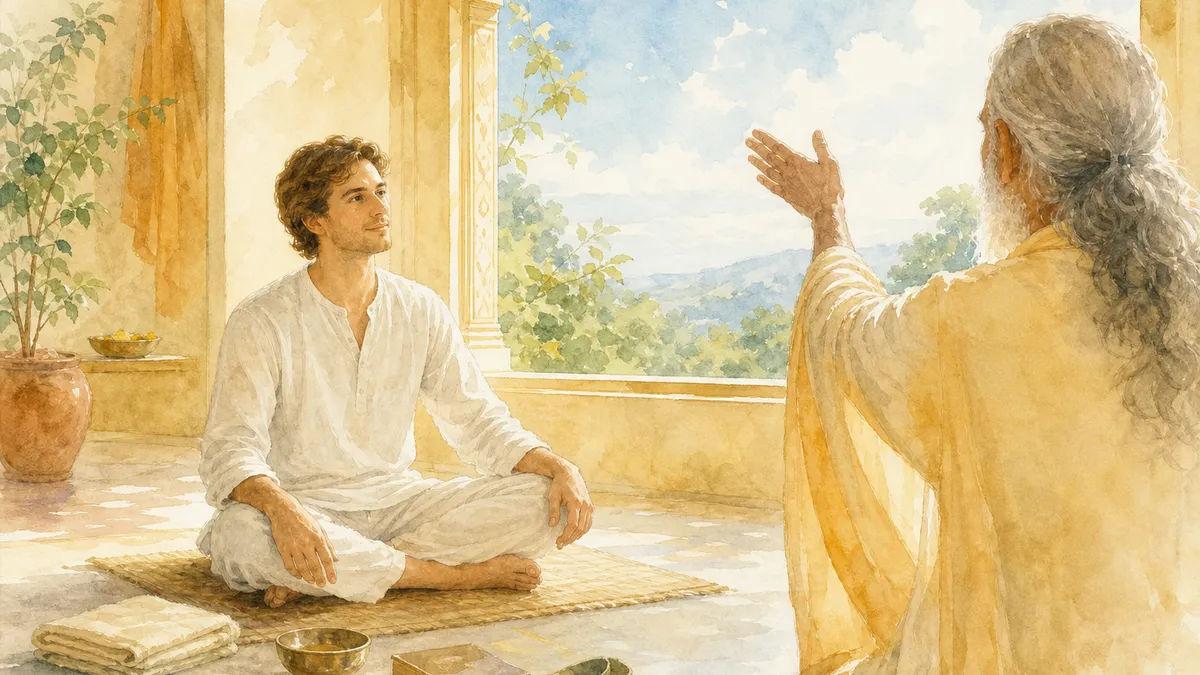
And at this stage the guru transmits to the disciple the view into nonduality, because no matter how much we practice, we will never be ready; we will never have perfection. However perfect we may be in asanas or pranayamas, our concentration will be lacking. Or whatever concentration we may have, we may never be very good meditators.
But our life goes on and time passes very quickly, and we have to do something. We have to become liberated right now, become enlightened right now. And this is why there are three golden principles — shravana, manana, and nididhyasana.
Then the Master says to the disciple: “All right, relax, set aside your mind, let go of the past and the future, and try to enter a state of awareness similar to infinite space, and make space your murti — the deity, the face of God — and learn to rely on this space. Discover this space within yourself as your heart essence and meditate on it day and night. Through this, your concentration and meditative abilities will develop, and yama and niyama will arise by themselves, because your behavior will begin to be purified through awareness. And the channels and chakras will also begin to be purified, because when we abide in awareness, the muladhara chakra opens, and an ascending flow of wind arises, which enters the sushumna nadi. At the same time, meditation increases, and gradually you will come to samadhi, even without being an ascetic, but living in the everyday thick of life. And in this way the divine within you will awaken, and you will experience the descent of the divine — Anugraha Shakti.”
When a person follows such a path — not from the bottom up, but from the top down — this is called the path of sahaja, the natural path followed by all saints in the past and followed now as well. We call our teaching pratyaksha-advaita — the direct perception of nonduality.
The Story of King Hemachuda and His Enlightened Consort
In the Tripura Rahasya — a sacred text of Dattatreya — there is such a story. A king had an enlightened wife, but the king did not know that she was enlightened; she simply seemed strange to him. And when he showed her signs of affection, she simply remained so relaxed, looked into the sky, in front of herself, and seemed distracted to him, and he thought: “Why are you not happy? I caress you, give you gifts, and yet you look so strange.” But this girl was the daughter of a holy rishi; in addition, she was enlightened and was constantly in sahaja samadhi.
The king thought approximately this: “Well, all women are a little strange, capricious; perhaps these are some whims of hers.” But his consort said: “O king, it is you yourself who are a little foolish; you simply do not understand that this world is impermanent and full of suffering, and the only value is the removal of ignorance and the attainment of enlightenment.”
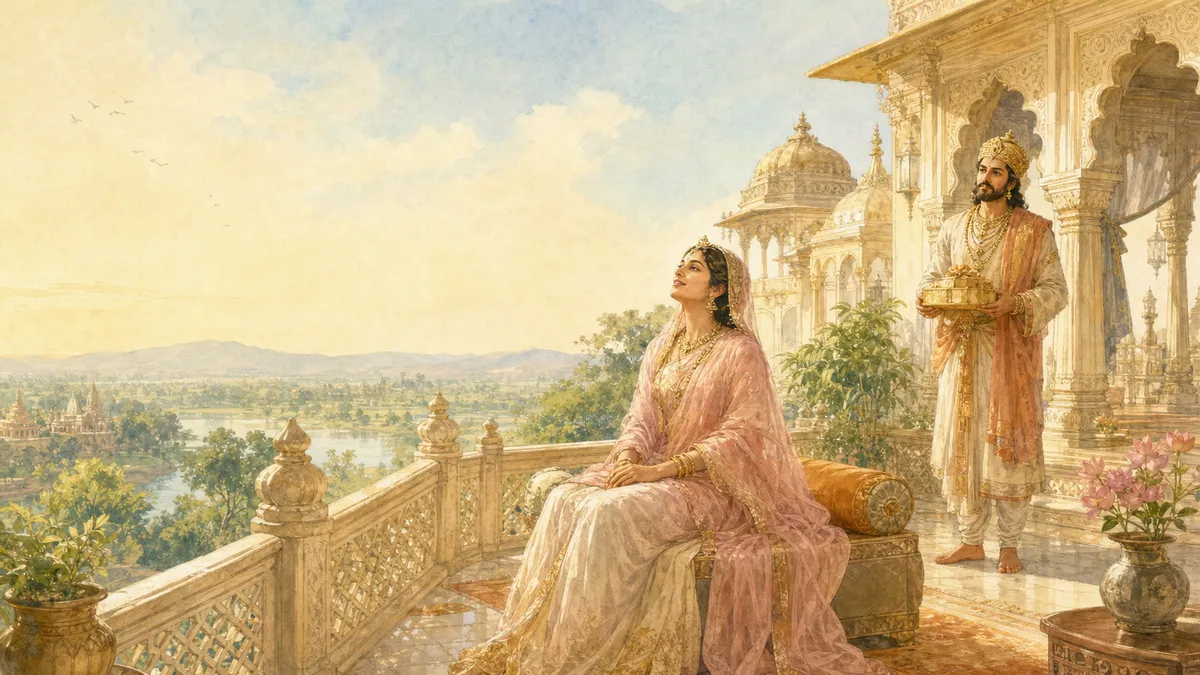
And then this king, whose name was Hemachuda, gradually began to listen to her instructions and to meditate as she had taught him. First he learned to meditate with his eyes closed; that is, he entered samadhi and experienced a state of light. He thought that this was the final state, and when his consort came, he said: “That is it, I no longer wish to see either the kingdom or you; I want to meditate all the time, to sit with my eyes closed. I have understood, probably, what even you do not understand, although you are intelligent, but you are still occupied with certain things, while I have understood everything, and now I have no attachments.”
But his consort said: “No, O king, you are still a little foolish, because you think that you gain something by closing your eyes and lose something by opening your eyes. But think for yourself: how can the Absolute, God, be hidden by a small eyelid?” And she again gave him instruction in contemplation with open eyes, so that he would not depend only on seated meditation, but could constantly abide in this state, even while attending to affairs of state.
And so several years passed, and his relatives began to notice changes in him: that he did not strive for entertainment, he had lost interest in worldly life, yet at the same time he took part in everything and did everything, but there was neither suffering nor attachment in him. His mind was always calm under any circumstances. And they began to take an interest, to ask what had happened to him. And then the king taught everyone the same thing—his father, his brothers, all his relatives; they too began to meditate in the same way. The ministers taught their children, wives, and servants, and they in turn taught their friends and relatives. And so, after several years, all the inhabitants of the city became enlightened and attained liberation.
It was such an amazing city: everyone in it practiced their craft in a state of enlightenment, and only from a state of enlightenment. They were government officials, warriors, artists, clowns, common people, soldiers. And all of them were enlightened. Everything was so permeated with Dharma that even the parrots gave lectures on Advaita and spoke sayings from the Vedas. When the rishis visited this city, they were amazed and called it the city of sages.
Different Paths in Spiritual Life
And the question arises: “How can we become like these inhabitants of this city, who in their time were liberated from samsara? How should we organize our life, what should we do in order to realize divine consciousness? How can we protect ourselves from the temptations and enticements of the samsara of the material world? How can we proceed along the spiritual path without turning aside, without stopping or stumbling?”
For this, it is beneficial to reflect on the paths that exist in our life. For example, there is the lowest path called karma-marga—this is the path of unconscious actions, when a person works and works, but does not even derive pleasure from the fact that he is working. He works because karma impels him; he does, does, does. For example, a person wants to earn money for the sake of survival, and all he does is work in order to provide for himself, his children, his family. He exhausts himself, and he has no time for anything else—this is karma-marga.
There is another, higher path, which is called maya-marga, when a person follows the whims of his soul, the whims of his ego. For example, he is in love with some person and seeks meetings with them, performs certain feats for their sake. Or he creates certain works and is very attached to them, expressing himself through them. Or he follows some ideology—communism or some other ism. His soul is in some illusion, in some desire.
For example, I had a student, and I asked him: “Well, are you progressing on the path of liberation?” He said: “No, I still haven’t made my best film, I haven’t written my best book.” Maya-marga works exactly like this: when we achieve this goal, another goal comes to us; we feel that there is still something we have not realized, that we have not earned our billion, and so on. Maya-marga means that the soul is deceived by illusions, just as a donkey is deceived—when it runs, a carrot is hung in front of it so that it will enjoy running; it runs, and the carrot runs along with it, and the donkey never reaches it.
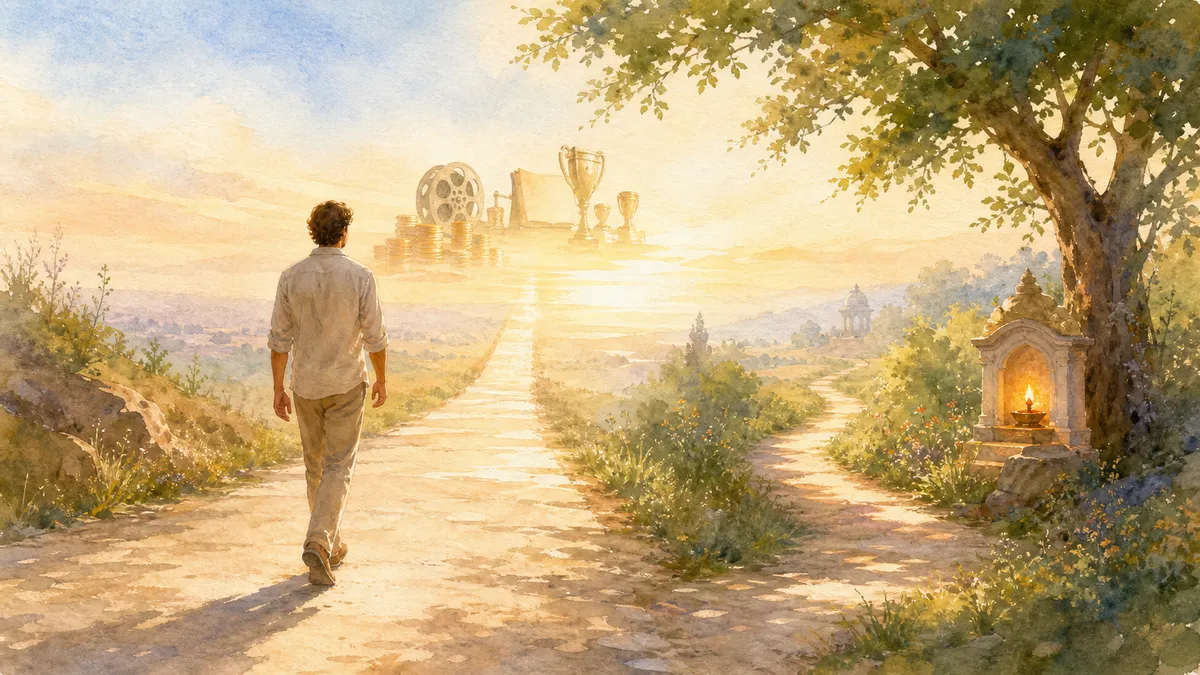
When a person refuses to run after illusions, he moves on to the next stage—anava-marga. He no longer wants any illusions; he wants only to develop himself, because anava-marga is the development of one’s ego, and this development is not so much material as subtle, intellectual, psychic, and magical. He invests in himself, in the development of himself. For example, there are various personal-growth trainings, everything that develops our mind, intellect, our ego. Or a person practices magic, develops psychic and magical powers. All of this is still limited, because it only polishes the ego, but it does not give divine wisdom, does not give renunciation of the ego, does not give the enlightenment of divine wisdom. And no matter how great such a person may be, he will still be limited; he may even possess great magical powers, or the power of the mind, or be an ascetic, but he does it for himself, he does not do it for God. On the contrary, he may even regard God as a rival. Many titans and asuras follow this path; they have developed magical powers and consciousness, and they are much higher than humans.
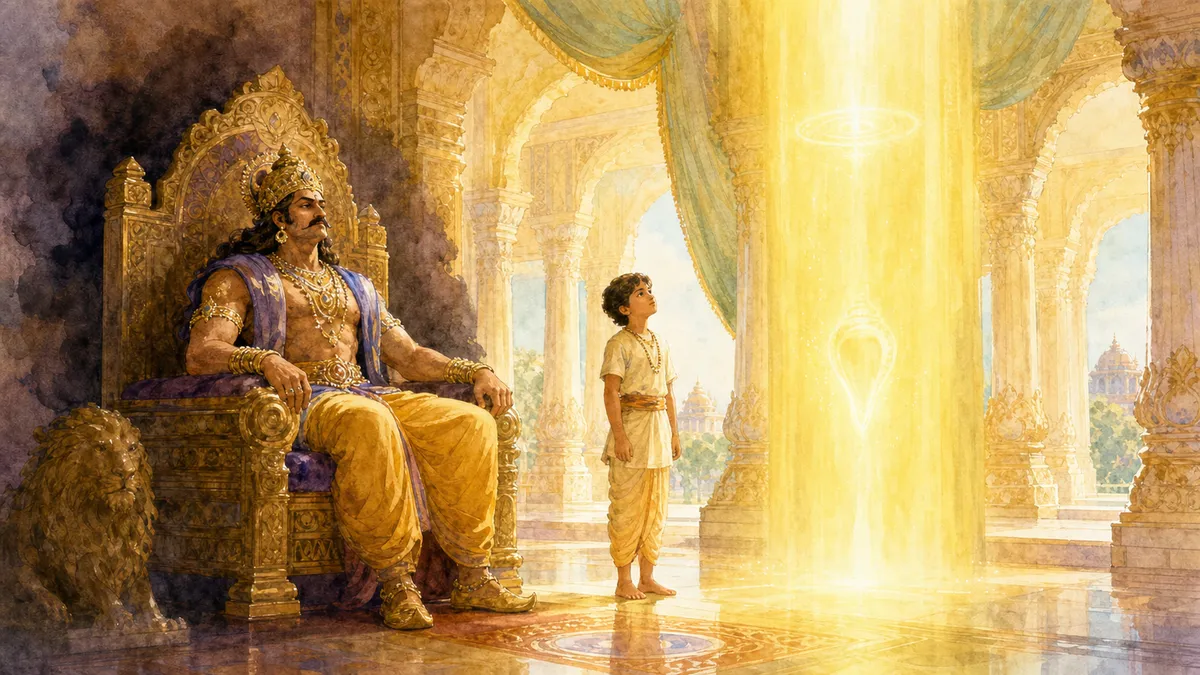
For example, Ravana followed this path, or Hiranyakashipu. Hiranyakashipu felt enormous envy toward Vishnu because Vishnu had killed his brother Hiranyaksha. Hiranyakashipu believed that he was Bhagavan. When his son Prahlad invoked Vishnu and worshiped Him, this made him very angry. When Lakshmi asked, “Why don’t you punish this foolish asura? After all, you can do it with one snap of your fingers.” Vishnu laughed and replied, “Why? He is already punished by his own ego. Nothing needs to be done to him; his ego itself will punish him.”
The Ego as Punishment and the Transition to Yoga-marga
From the point of view of divine enlightened beings, the egoistic state is already a punishment in itself. Not the ego itself—it is simply an instrument, a function, an energy that helps the soul mature—but attachment to it and identification with it. Because infinite, divine, immortal consciousness narrows itself down to the level of the ego and forgets its nature. This is the punishment.
Finally, when a person becomes disillusioned with the path of anava-marga, disillusioned with the ego, he enters the path of yoga-marga. Yoga means connection. He seeks a connection with the divine; the ego is no longer of interest to him. He performs sadhana, meditation, or concentration not to develop his ego, but to establish a connection with the Supreme Source, surrender, self-offering to the Supreme Source.
The Awakening of Divine Consciousness
Finally, when he passes through this stage as well, divine consciousness awakens within him; he eliminates his ignorance of “I am the body,” “I am the soul,” and he realizes: “I am the Absolute. I am Brahman.” And then karma gradually ceases to possess him, and the play—lila—begins. He begins to feel himself not as a person, not as a soul, but as infinite consciousness. He ceases to act because the doer dissolves within him.
Vasishta says the following about this:
“When desires fall away, the greatest bliss and peace are felt within. Just as a lamp completely dispels darkness, so knowledge of the Truth completely destroys concepts and attachments. Sages who know themselves attain fearlessness. They are dispassionate and shine in their own splendor. They are always self-sufficient and abide in a state of contentment. The sage sees pure consciousness as the essence of the entire universe. He sees it as the omnipresent God, who has no form yet fills all forms with Himself.”
Vasishta further says:
“When such a sage remembers his old past, when he was subject to passions and lust, he laughs at his own ignorance. He is far from bad company, free from mental anxiety, yet in self-knowledge and wisdom he is always steadfast. He is praised by all, everyone seeks his company, everyone worships him, but he himself remains dispassionate and indifferent to all of this. He lives without accepting or rejecting anything, neither rejoicing nor grieving, because he is absorbed in his wisdom. He has turned away from all desires and hopes and has become liberated while still alive.”
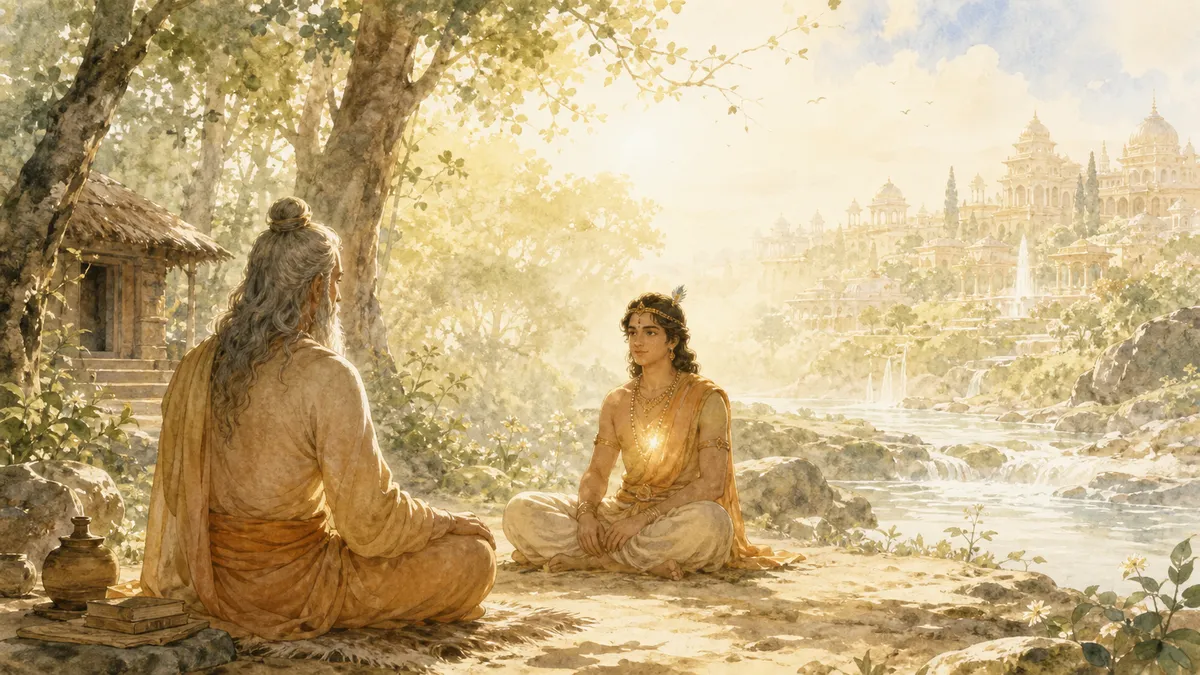
Vasishta speaks to his disciple Rama (“Yoga Vasishta” is a dialogue between Vasishta and Rama. Rama is the disciple, Vasishta is the Guru):
“Abandon all desires and abide in inner peace. No pleasures of the world can compare with ananda—the bliss that fills your heart when you completely abandon all desires and hopes. Neither in a kingdom, nor in heaven, nor in the company of a beloved can you experience this bliss.”
Vasishta further says:
“One who has no desires or hopes looks upon the whole world as a small calf’s hoofprint; he looks upon a huge mountain as a little stump; he looks upon all space as a small box; and he looks upon all three worlds (material, astral, causal) as a blade of weed. He simply laughs at the actions of people who are immersed in the affairs of this world.”
The Higher Paths of Spiritual Development
All of this we call the path of the sage, the path of divine wisdom — jnana. But the path still does not end there, because there are even higher paths; yet jnana is awakening, it is full realization, although in a relative sense development continues further, since there are energies. The state of which Vasistha spoke is the foundation for going further up the spiritual ladder.
Further on there is another stage, called siddha-marga — the path of divine perfection. Such a sage, using his wisdom, can control universal energies: time, space, the elements.
And when he attains this perfection, an even higher path opens before him — the path of the gods, the path of divine beings — Deva-marga. Then he ceases to be a human being and becomes a deity, for example such as Indra, Vayu, Varuna or Brahma, Vishnu or Shiva.
The Practical Path of a Sadhu
All of this is the path of our evolution, the path of our spiritual ascent. We must understand which path we are on now and which path we are currently moving toward, how we should live correctly, and what we should do in order to realize the path toward which we are moving. All of this is the path of a sadhu in Sanatana Dharma.
If we take the average sadhu, then most often he is either at the level of anava-marga or at the level of yoga-marga, and the entire task of his life consists in acquiring divine wisdom and moving onto the path of jnana-marga. Put more simply, to attain samadhi and enlightenment. And such paths as siddha-marga and Deva-marga will be attained later, perhaps in 100 years, 200, 300 years, 500 years, in the next life, because we are immortal beings and we will follow the spiritual path for millions, billions of years; it will never end, as long as this Universe exists.
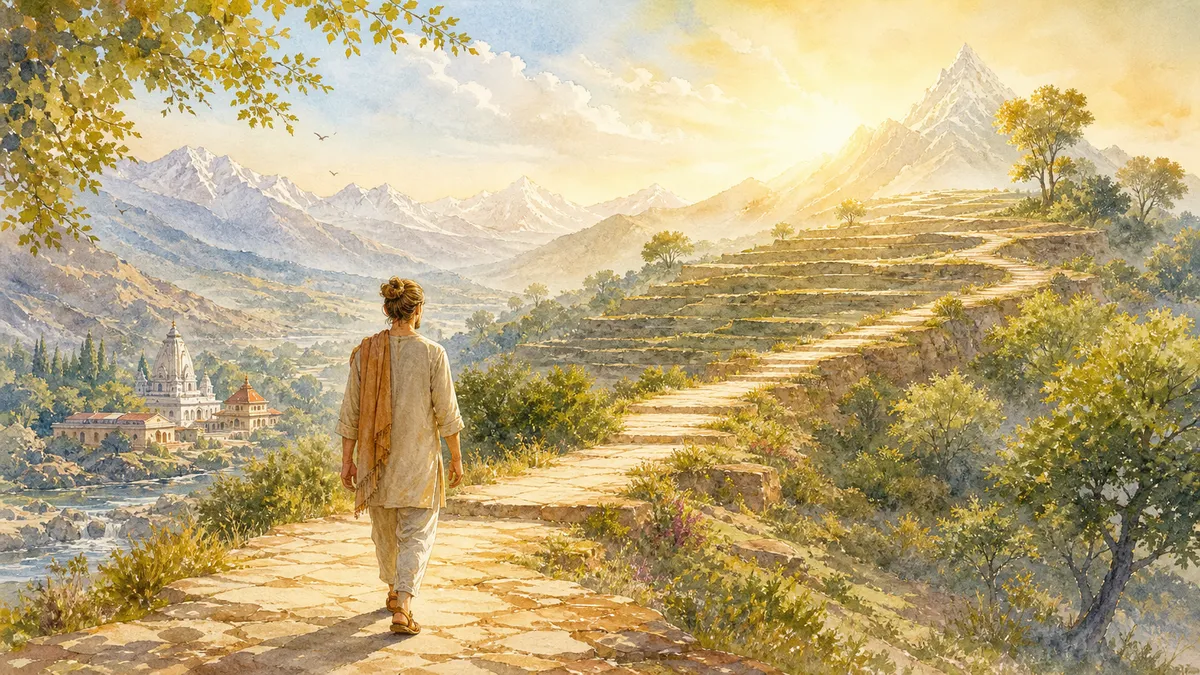
In this regard, the siddhas have a special behavior, a special tactic of life. This is called acharas, or types of behavior. There are eight types of Tantric behavior, that is, how to conduct oneself at each stage of life. If a disciple, consulting with his Master, follows these stages of life and passes through them correctly, then sooner or later he attains realization. And we will talk about these types of behavior tomorrow.
