

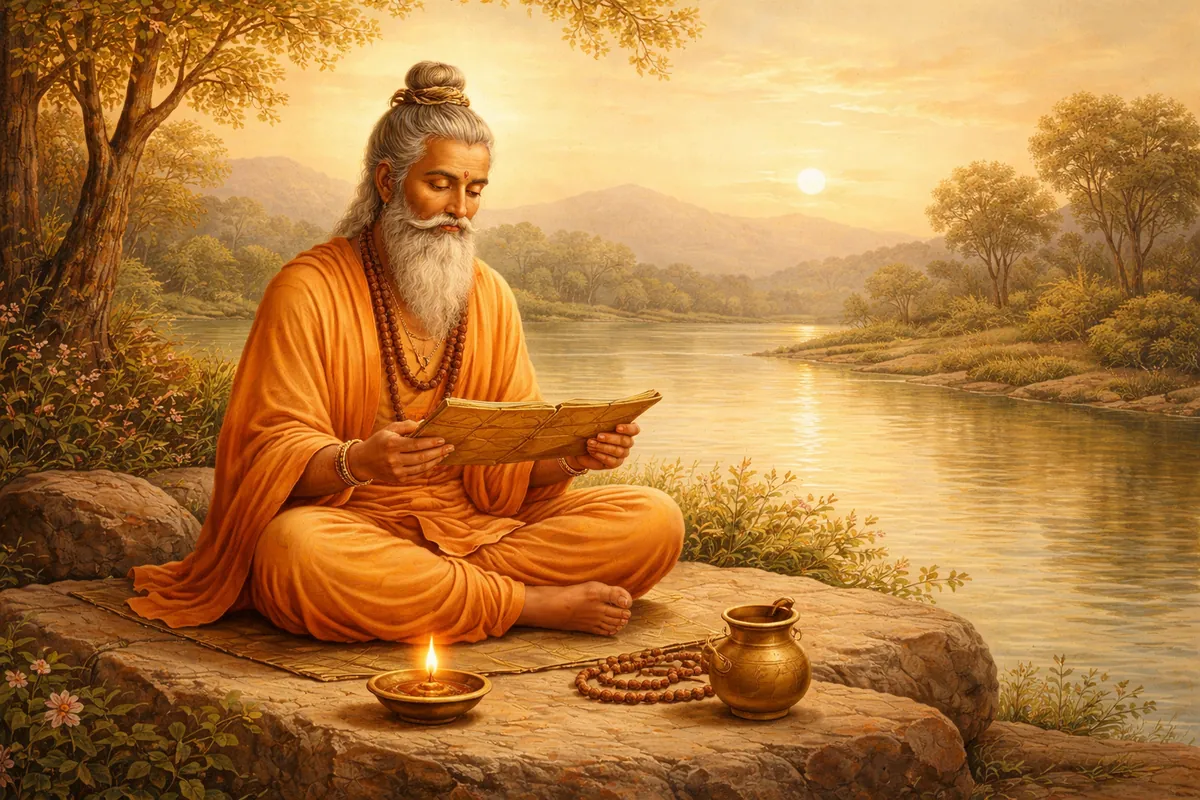
The teaching requires a particularly reverent attitude. It can be listened to with an open, calm mind; this state is called an “empty vessel.” Why is Dharma so important to us? Why is the teaching so important to us? Why should it be treated with reverence and received in a state of an empty, tranquil mind?
Because our future and our life depend on how deeply we understand Dharma and the teachings of the saints. And not only this life, but millions of years to come in future lives. For we seek happiness. We strive not to suffer, to understand our place in the universe, so that our life may be beautiful. We practice Dharma because we love ourselves.
But while we remain in ignorance, we do not know who we truly are; we do not know our place in the universe. Our mind is childish, and its problems are childish—this is ajnana, avidya: ignorance. Why do we have a childish mind and childish problems? Simply because we are human beings, born in samsara. We are not Gods, nor do we dwell in radiant bodies of light; we are in samsara.
The Nature of Samsara and the Path to Liberation
Samsara is a kind of trap for the immortal soul; it is an energetic, conceptual trap into which our soul has fallen because of its immaturity. We should not try too hard to settle comfortably in this samsara, because that is impossible. The world is impermanent. First and foremost, we need to think about how to escape from this samsara.
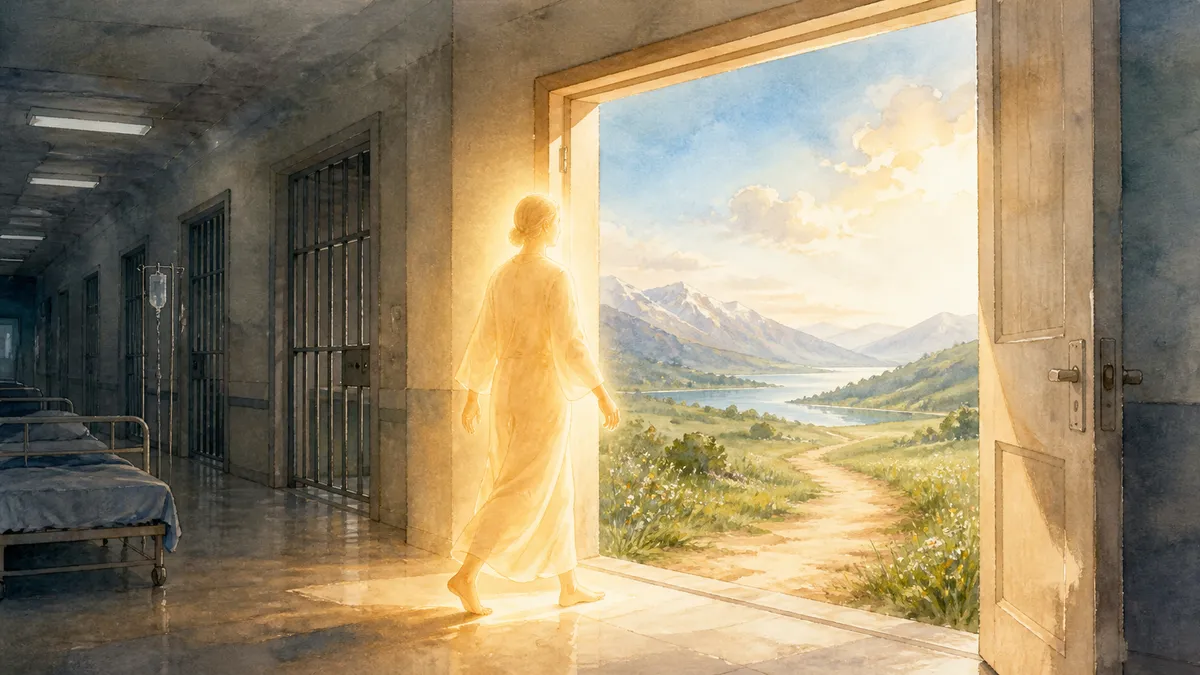
Samsara is like a hospital. When you leave a hospital, no one tells you, “Come again”; it is better not to return. Everyone understands that it is better not to end up in a hospital. If you are healthy, you do not need to go to a hospital, unless you are a doctor or an orderly.
Another comparison is that samsara is also likened to a prison. Likewise, when a person goes to prison, no one tells them, “Come back, visit us again, we will be glad to see you.” They say, “For God’s sake, I will never come here again.” And if anyone acts consciously in a hospital or prison, they are souls performing their seva by helping others—for example, doctors, human rights advocates, and orderlies.
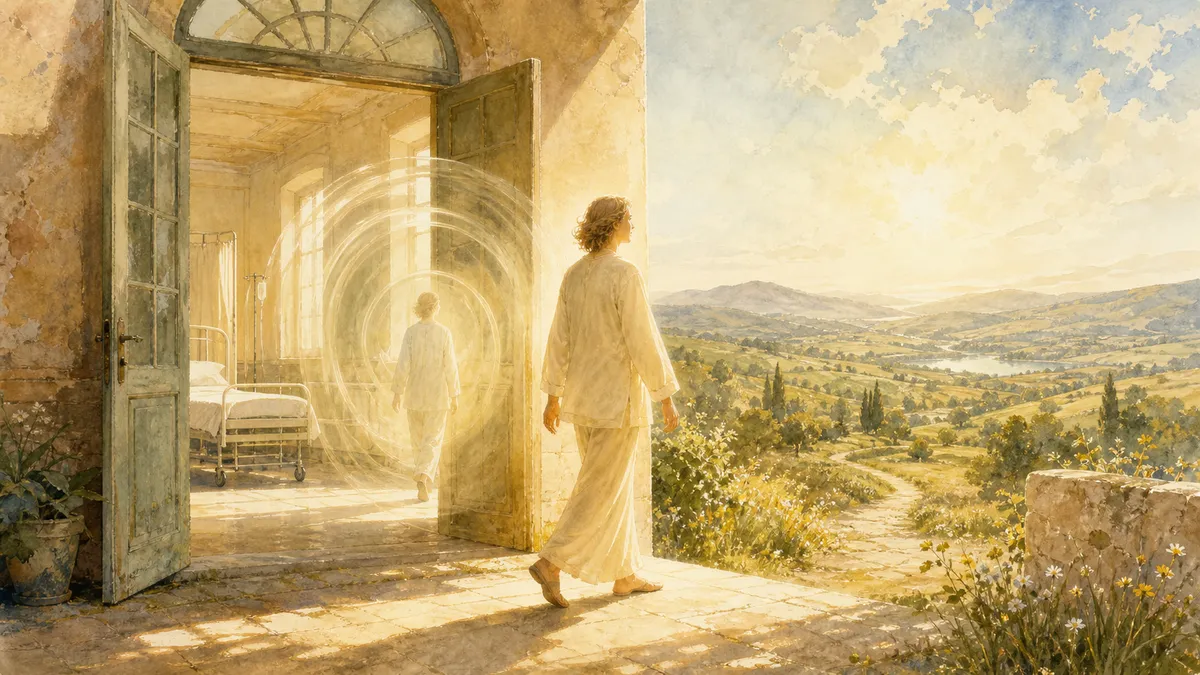
In this sense, the saints recommend regarding Dharma as medicine and the guru as a doctor who can help us heal. He will not heal us; we will heal ourselves, but we must participate in this process. To do so, we need to have some faith in the doctor and take the medicine.
Then we can free ourselves from samsara, because samsara is not a matter of geography. To free oneself from samsara does not mean flying to other planets or another dimension; it means changing one’s mind. Above all, it is our mind that holds us in samsara. Samsara itself does nothing, but our mind clings to it.
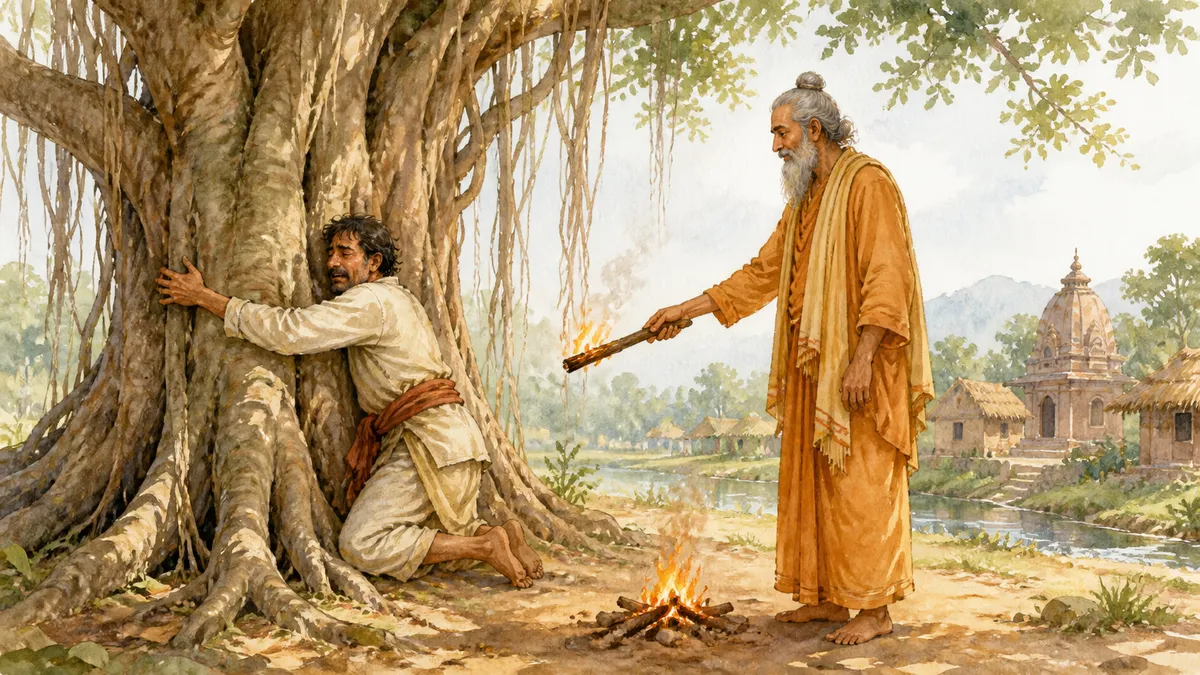
It is like the story in which a madman grabbed hold of a banyan tree, clung tightly to it, and began shouting, “Help, the tree is holding me!” The entire village gathered, wondering how to help him. Then they called the local saint. The saint said, “You are holding the tree; it is not holding you.” But the man was deranged, insane, and did not want to let go. The saint then wondered what to do. He took a stick, thrust it into a fire until it was burning, and prodded the man with it. The man shrieked and let go. The saint said, “So who was holding whom? Were you holding the tree, or was it holding you?”
Dharma, the teaching, is like such a stick: it changes us, and we let go of the tree of samsara.
And so, I will continue my commentary on Sri Adi Shankaracharya’s text “Contemplation of Brahman.” We will begin by purifying the mind and the space a little with the mantra OM.
Free from all limitations, I am eternal consciousness. I am That, the Supreme Brahman. Free from all limitations, I am eternal consciousness.
Having heard such a truth, how can one belong to any caste or station in life?
“Brahmanam Chintanam”—Contemplation of Brahman. Shloka 4
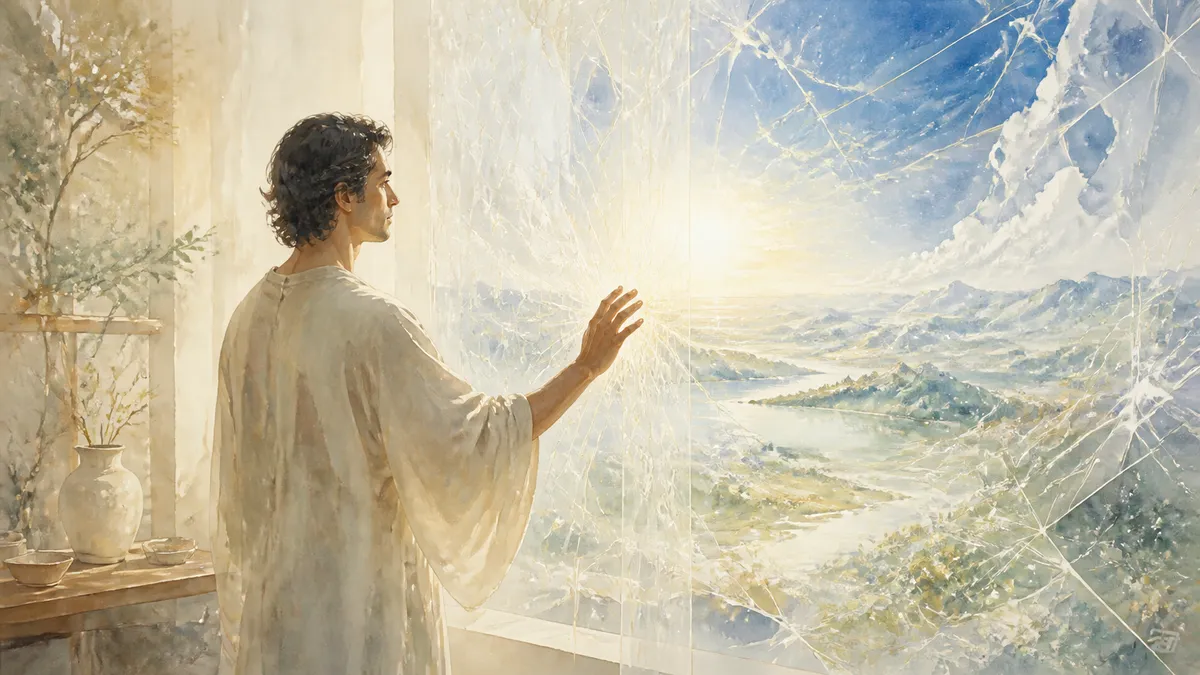
The teaching of Advaita says that within us there is boundless transcendental consciousness. This consciousness may be likened to a mirror, while our thoughts, emotions, and external events may be likened to reflections in that mirror. Until we discover this mirror of infinite consciousness within ourselves, we continually wander through labyrinths of reflections, and there is no end to it.
Reflection is when we consider ourselves to be the body, when we see the external world, when we interact on the subject-object level, when we become attached to something or someone—all of this is reflection. And when we live in a state of reflection, we do not understand who we truly are or how the world is structured; we are completely absorbed in karma.
The Three Impurities of Consciousness
For example, we think: I am a man, I am a woman, or I hold certain beliefs, I am a Hindu, I am English, I am Russian. We constantly dwell in duality. We are enchanted by all this diversity, both outside and within. Such diversity deprives us of purity of perception, which is why it is called mala, maya-mala.
Entangled in all these reflections, we begin to think: I am small, I am a human being, I am this body. And our consciousness becomes narrow and contracted instead of being infinite. This is another impurity of consciousness called anava-mala; anava means something small.
When we are deceived by external diversity and our mind is contracted because we consider ourselves to be the body, mind, or ego, we become subject to karma, to causes and effects. This is the third impurity, called karma-mala. These three impurities, these three limitations, prevent us from realizing who we truly are.
The True Nature of the One Consciousness
But Shankara says that we are neither limited human beings nor anyone else. In fact, we are not even separate; we are not many, but all one. We are all one infinite consciousness—Brahman.
It is as though the fingers on a hand began to think that they were separate from the hand and the body and started pursuing their own policies, but this is a delusion. A finger has no future of its own, does it? A finger cannot say: I will go for a walk by myself, separately from the body; I will go and eat by myself. A finger has no special, separate path of its own. If a finger becomes detached from the body, it will suffer, and the whole body will suffer.
But this state of duality resembles our own state, like that of such a finger, when we have forgotten this unity and devise our own approach to life, our own personal future, our own philosophy of life—but this is a complete illusion. Then all of it is destroyed by impermanence, by the factor of time, and we suffer, wondering: Why am I suffering? Why did this happen? But it was bound to happen, because from the very beginning there was an error of ignorance, the error of duality. Because we acted while taking ourselves to be something other than what we truly are.
For example, from the perspective of Advaita Vedanta, we are all one being; we are inseparable. We are not many, but one. It seems to each of us, for example, that we personally came here as individuals, with our own preferences and our own will, being a body or an ego. But if we look at it from another perspective, it is the Absolute, Brahman, that is playing, and all of this is one collective being. It is playing at Kumbh Mela, at a lecture, at satsang. And then we understand that this is a very paradoxical way of looking at the world. Indeed, Advaita Vedanta is, one might say, an elite, highly elevated philosophy that turns our consciousness upside down the very moment we encounter it.
The World as an Illusion of Consciousness
If you have seen the Hollywood film “The Matrix,” the protagonist thought he was living his own life, but it all turned out to be a computer-generated illusion. The Indian Parliament was even somewhat indignant about this and did not want “The Matrix” to be shown in India, because it was said that its creators had borrowed the Upanishadic idea of illusion, the idea of Brahman, and made a film based on it.
But this is indeed the case: from the perspective of the saints, the external world is an illusion, and we are one infinite consciousness. This world is like a dream, and our body, our friends, our work, everything we see—absolutely everything—is an illusion, as Shankara, Vasishtha, and many saints assert. Not in the sense that nothing exists at all, but in the sense that a dream manifests while remaining inseparable from the mind of the dreamer. In the same way, this world manifests, but it is not separate from the mind of the one who sees it. And in this dream there are beautiful, wonderful, beneficial illusions; there are harmful, bad illusions; and there are neutral ones—but they are all manifestations of consciousness.
Modern scientists studying quantum physics and developing a new scientific paradigm are gradually arriving at this conclusion as well. For example, if you read David Bohm and Amit Goswami, they say that the world is created by consciousness. And the world becomes what it is according to how the observer operates. Robert Wilson and others advance similar ideas—and these are the most cutting-edge theories. But are they really new? They are the ancient teachings of the Upanishads and the “Yoga Vasishtha.”
It is not enough for us to understand this intellectually, because intellectual understanding will make us scholars. But in reality, it will not give us any power or wisdom. We need to develop our understanding in such a way that we acquire the spiritual power, shakti, to change this reality and pull ourselves out of this samsara.
The Three Divine Powers and Their Source
We need the real power of wisdom, jnana shakti; the real power of divine will, iccha shakti; and the real power of action, kriya shakti. And when we attain these three powers, we can liberate ourselves from samsara. These three powers are called Brahmi, Rudri, and Vaishnavi—that is, Saraswati, Lakshmi, and Maheshwari. These powers lie dormant within us; they have not been awakened, so we cannot use them, but they must be awakened.
But under what condition can we awaken them? We must find their source, the one consciousness, Shiva, which is Bhagavan Dattatreya. And whatever we call this source—the Tao, the Great Ultimate, Nirvana, Brahman, Mahamudra—all these are merely words, concepts that point to this Source of infinite consciousness.
In Vedanta, this Source is called Brahman or Parabrahman. The word comes from the root brihat, meaning to expand, to spread. It indicates that this source is exceedingly vast, truly infinite. Shankara says: “I am Brahman”; whoever knows this becomes all of this, this entire universe. Even the gods cannot harm such a person, because he himself becomes the soul and heart of the gods. For from the state of this Source, this infinite mirror of consciousness, a person can control reality himself and can even create a new universe if he attains the status of Brahma the Creator.
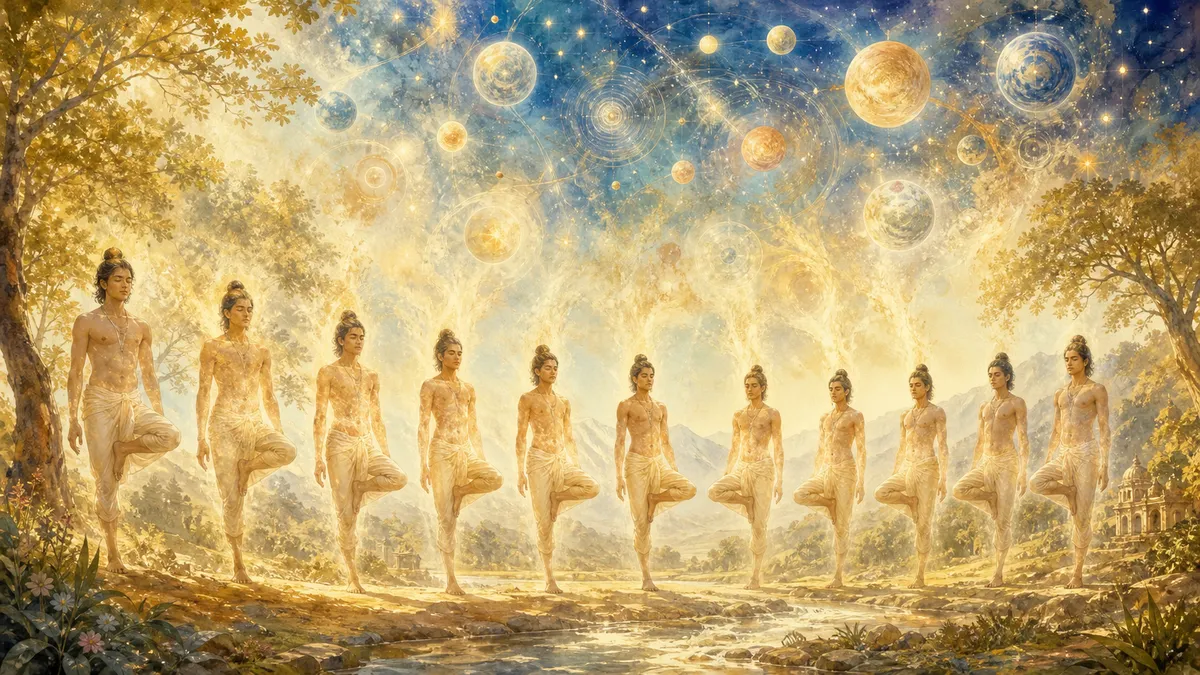
In the Yoga Vasishtha, there is a story about ten brothers named Indu who undertook tapas after their parents had left their bodies. They performed very severe tapas, standing on one leg and meditating on infinite consciousness with this conviction: “I am Brahman.” Many years passed; their bodies died, fell, and decomposed, but in their subtle bodies they continued meditating in this way for ten thousand years. Ultimately, each of them attained the position of Brahma, becoming a new creator and creating a new universe. For according to Vedanta, anyone can become Brahma, the creator of a universe.
The Difference Between Limited and Liberated Consciousness
But what is the difference between such an exalted being as Brahma, the creator of the universe, and us? We know that we are incapable of creating anything significant. The difference is that Brahma has realized the fullness of nondual divine wisdom, the fullness of jnana shakti, iccha shakti, and kriya shakti. He abides in the consciousness of Aham Brahmasmi spoken of by Advaita Vedanta, Shankara, and Dattatreya.
What, then, are we to do? We are limited beings, and there can be no question of our creating anything as Brahma does. If we can create anything at all, it is only something very, very small. We are limited by the body, by the five elements of nature, and by time. We are limited by karma: cause is followed by effect, and there are many different limitations; we can do nothing about them.
This state of limitation is samsara. If you are limited, samsara turns you whichever way it wants; you cannot turn it whichever way you want, as Brahma does. Samsara gives us a body, samsara takes the body away; samsara gives us a destiny, samsara destroys that destiny—it tosses us about. And it seems that there is no end to this, and we are like wood chips in the Ganges, rushing at great speed toward our destiny and able to do very little.
But Shankara and Bhagavan Dattatreya say: there is a way out. We can establish ourselves in a state of consciousness in which samsara cannot toss us about—or, at least, cannot reach us—and this is the consciousness of Aham Brahmasmi.
The Three Stages of Spiritual Practice
Where, then, does this process begin? This process begins with shravana—listening to the sacred texts and the Guru’s words, as well as receiving direct, nonconceptual transmission. We must hear this from the Guru’s words, but not merely hear it with the mind; we must also enter into bhava, direct experience. When we have not only intellectual understanding but even a slight sense of it, this is called rasa, the taste of the nondual state. This is a very important stage in our lives. It is like a woman becoming pregnant, after which a new life begins to grow within her.
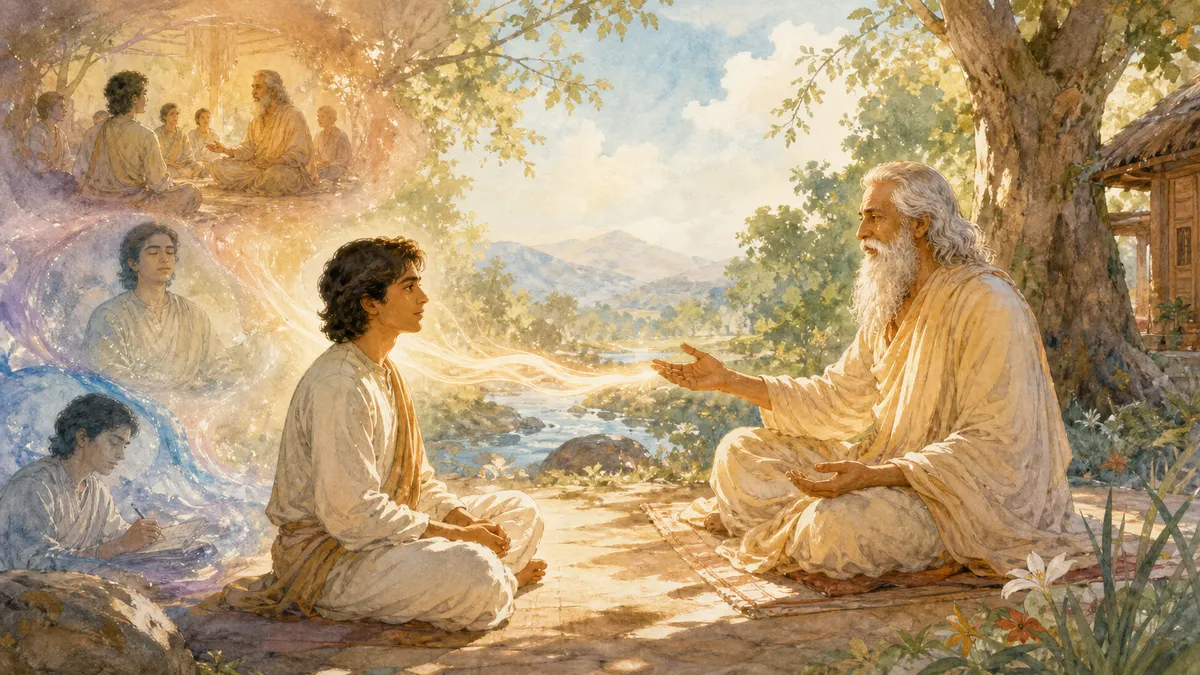
When a yogi or disciple gains such understanding and inner experience, he must go to his Guru and ask for guidance as to whether this is indeed the experience in question; afterward, he must contemplate it himself. This entire process of contemplation, instruction, and experience is called manana, reflection. One must test one’s consciousness and attune it properly so that there are no errors. For what lies ahead is the process of nididhyasana, so that we may remain in this state throughout our lives and continue onward.
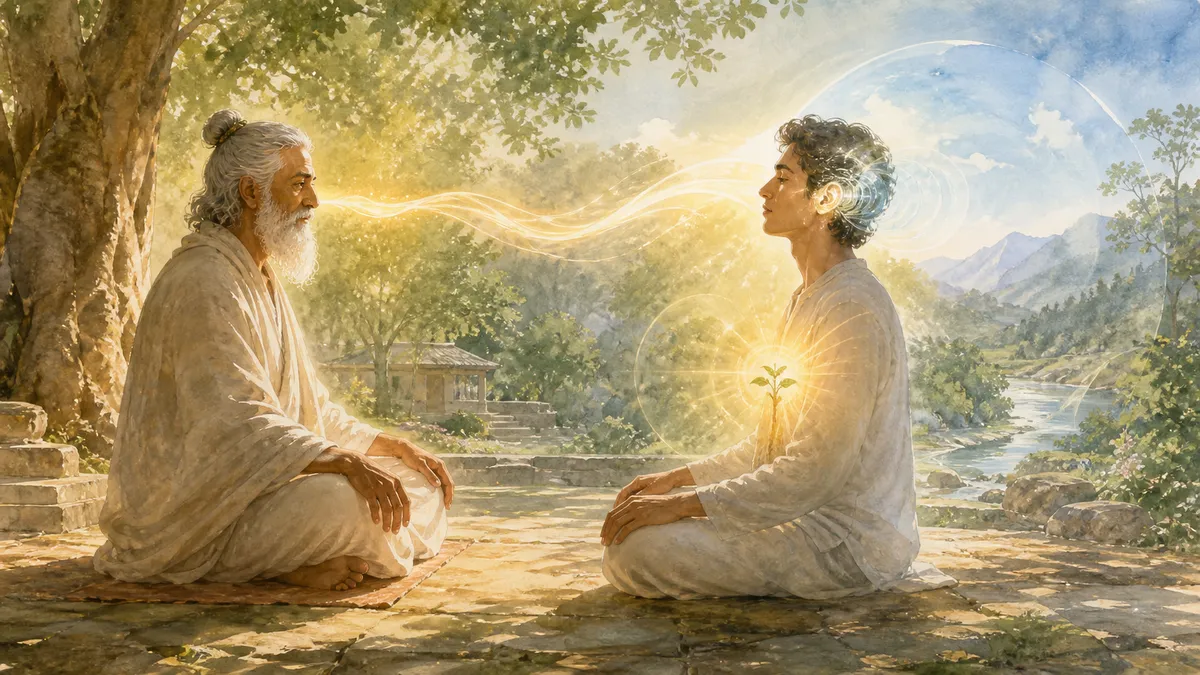
In all serious spiritual traditions of the world, masters test the consciousness of their disciples again and again, helping them find the right point, the right focus of consciousness.
For example, when a Zen monk comes to a master, he tries to convey his state to him. If the state is incorrect, the master takes a stick and strikes him. There is a saint, well known in Korea, a Buddhist saint who lives high in the mountains, whom no one can simply visit. If a journalist wants to visit him and conduct an interview, he must perform five thousand full-length prostrations. If journalists did that at the Kumbh Mela, they would not manage to film anything.
Once, an old man who had been meditating for a long time and was already advanced in years came to the saint and said, “I did not really want to come; I already know everything, but my friends nevertheless advised me to, so I came. My mind is already pure and boundless; I do not feel limited.” The saint said, “Good, but is this precious treasure of yours not lost during sleep?” The old man said, “I had never even thought about that.” Then the saint picked up a teapot and struck him on the head with it. “You are already so old, and you think this is the final state? Go and meditate properly.” The old man then realized that he had relaxed too soon, and for another twenty years he meditated with great diligence. Eventually, he attained the required state of enlightenment.
Even manana can unfold in this way. In the Siddha tradition, many saints tested their disciples’ consciousness simply by asking them paradoxical questions. For example, a Guru asks a disciple, “Why did Arjuna not fight at Kurukshetra?” Or he asks, “What is the name of a barren woman’s child?” Or he asks, “What does an oil lamp think about?” Or he asks, “Why is the table dancing?” And if the disciple has not reached the required point, he will interpret all these questions from the standpoint of the mind, and his mind will fall into confusion.
Then the teacher may also ask, “How can one climb a staircase seen in a mirror?” Or he may ask, “When the legless one dances, does the fingerless one play the drum?” If the disciple has realized the required focus of consciousness, the required point, he will answer all these questions. But if the mind interferes, if impurities of the mind arise and he answers from the ego, then all his answers will be wrong, and the master will tell him so; this too is part of the process of manana.
Thus, in the process of manana, we attune our consciousness to seeing the face of God immediately and directly, bypassing words and concepts. Once this attunement has taken place, the disciple has of course not yet attained enlightenment; it is something akin to what in Zen is called “kensho” or satori, a kind of mini-enlightenment, and it is very important. In the Dattatreya tradition, this is called transient samadhi.
Continuous Contemplation
After this, the yogi can enter the next process, called nididhyasana, that is, continuous contemplation and maintaining the required level of divine presence. This means that, with the help of the Guru and through his own personal efforts, the disciple has entered the state of the mirror and discovered nondual consciousness, but now he must deepen it further and further, because karma exists. Nididhyasana means that one must now abide in nondual consciousness, in the consciousness of the mirror, from second to second, minute to minute, hour to hour, day to day, week to week, year to year—for one’s entire life.
In the “Yoga Vasistha,” Vasistha says that this is the highest sadhana, the supreme way of worshiping God. Lord Shiva, whom Vasistha met in the jungle, taught him this method. He was walking through the forest with his disciples when he saw a dazzling light. When he went to see what it was, he saw Shiva and Parvati standing there. He bowed before Shiva and was beside himself with joy; he was simply speechless with happiness.
Shiva asked, “How is your sadhana? Are you happy?”
Vasistha said, “Seeing you is already the pinnacle of happiness. What more could I desire? But I have one question: what is the proper way to worship God?”
Then Shiva explained to him that it was necessary to enter this transcendental consciousness. We can worship God by performing arati, offering incense, reciting mantras, and conducting rituals. But the highest way is to abide in this transcendental consciousness every second. Whether we are walking, talking, eating, engaging in philosophical debates, experiencing various pleasures, or working, we continually strive to remain in this state of nondual consciousness as the highest form of worshiping God.
Sahaja Samadhi—the Natural State
When this becomes natural and we are deeply absorbed in it, it is called sahaja samadhi. Sahaja samadhi is the culmination of vikalpa and nirvikalpa, after which sahaja samadhi arises. At the level of sahaja samadhi, there is no need to practice pranayama, asanas, or concentration, or to recite japa—it all happens spontaneously and naturally, and we abide freely in our wide-open nature.
This state of the free play of sahaja samadhi gradually liberates us from karma and from cause and effect, because we relinquish effort and relax into this natural state. This is the very state in which all siddhas abide, and in ancient times there was even a movement called Sahajya, Sahajya-yana. In all traditions, this is considered the summit of the spiritual path. Yoga, Vedanta, Tantric Buddhism—they all agree on this, as does Chinese Taoism. And many say that Chinese Taoism is the fifth Veda. When Brahma’s head fell in China, Taoism arose.
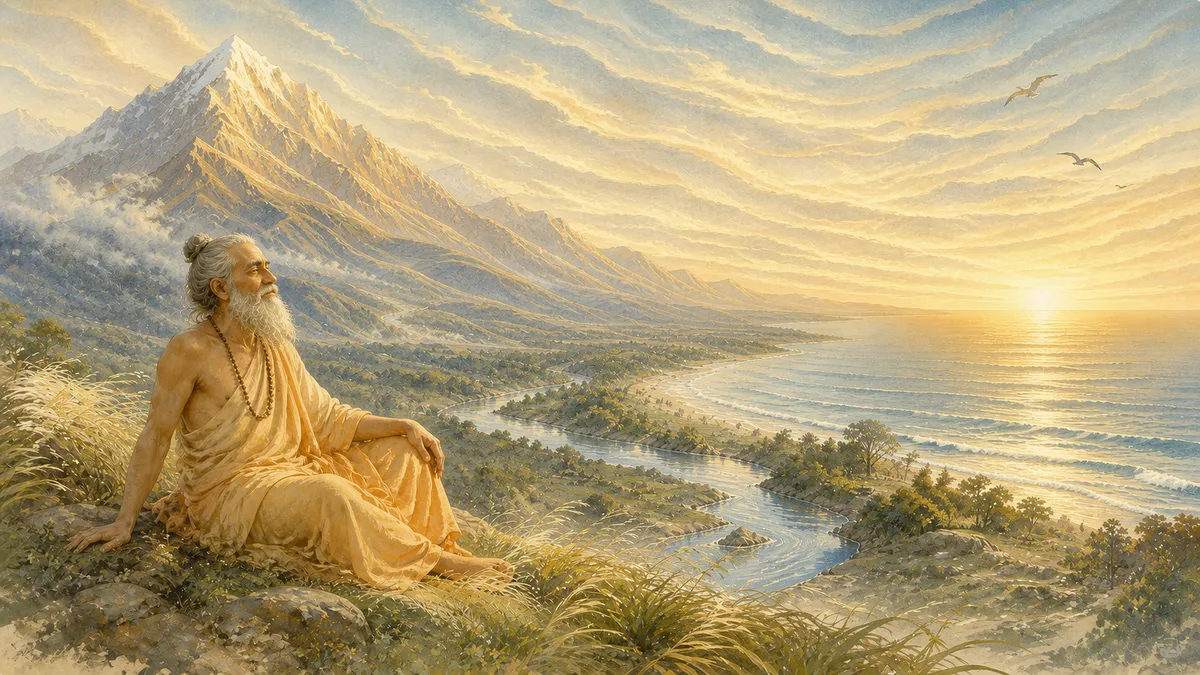
All teachings, all religions, all concepts, and all philosophical methods culminate in this state, just as all rivers flow into one ocean. At this stage, the sadhu no longer thinks, “Aham Brahmasmi”; he does not study the philosophy of Advaita—he abides directly in nonduality. Such a state is called pratyaksha Advaita. It is a natural, wide-open, unrestricted, freely flowing consciousness. The body, speech, and mind are released into complete freedom, and they play, they dance. It is said of such saints that at times they are motionless like a mountain, at times they flow with the river, at times they fly with the wind, and at times they dance in space. This is the essence of Bhagavan Dattatreya’s teaching as set forth in the Avadhuta Gita.
Preliminary Sadhana and Sankalpa
But entering sahaja samadhi immediately is not so simple—I would even say it is impossible—so preliminary sadhana is necessary. The master gives his disciple a sankalpa—a specific meditative instruction for contemplation. By continuously holding this sankalpa, the disciple transforms his worldview and moves toward this free, wide-open state of mind.
For example, I give my disciples the sankalpa of atma-vichara or “illusion, dream,” and recommend practicing it for a year or more, continuously and without distraction. Then the disciple asks, “And what is supposed to happen?” I reply, “You will see for yourself.” Therefore, if we want to see something, we simply need to begin walking this path.
My blessings to all of us as we follow the path of the saints.
