Levels of Wisdom: from the struggle against ignorance to unity with the Absolute
03.06.2026
0 мин. чтения
0
Share
copy
search
add
share
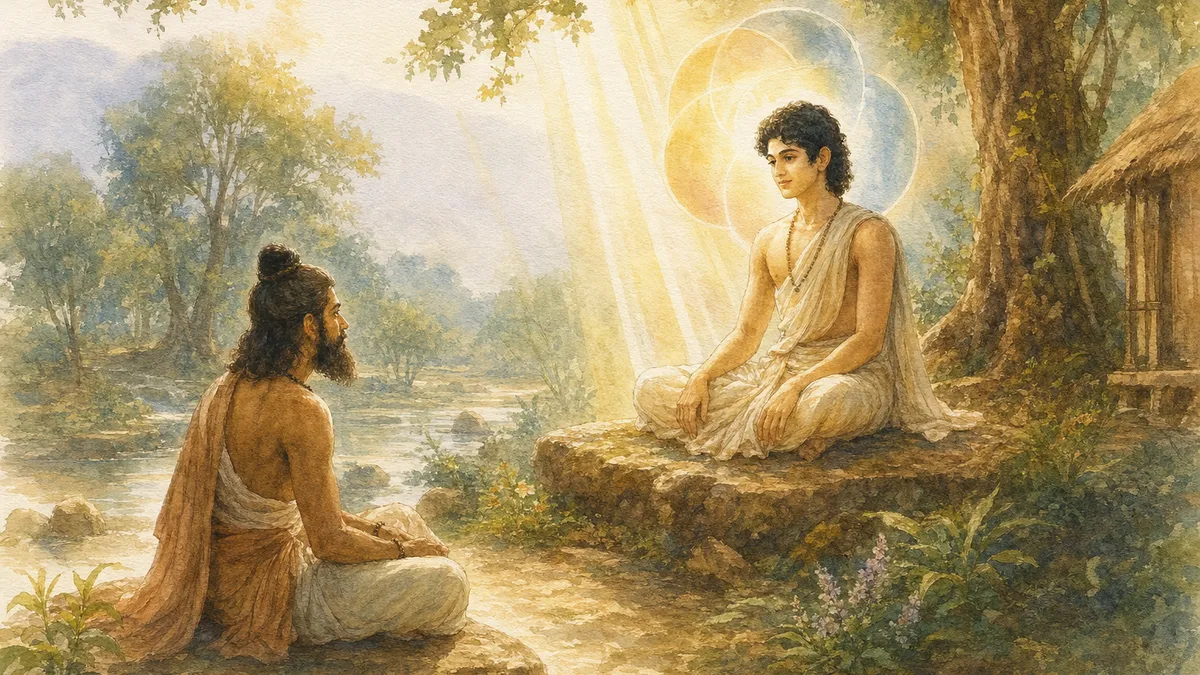
Commentary on the text “Tripura Rahasya.” Chapter 22
The questions of the brahmin Vasumana to Prince Hemangada.
“The manifestations of pleasure and pain are observed in sages of the lower category, but they leave no trace on them, unlike in the ignorant.”
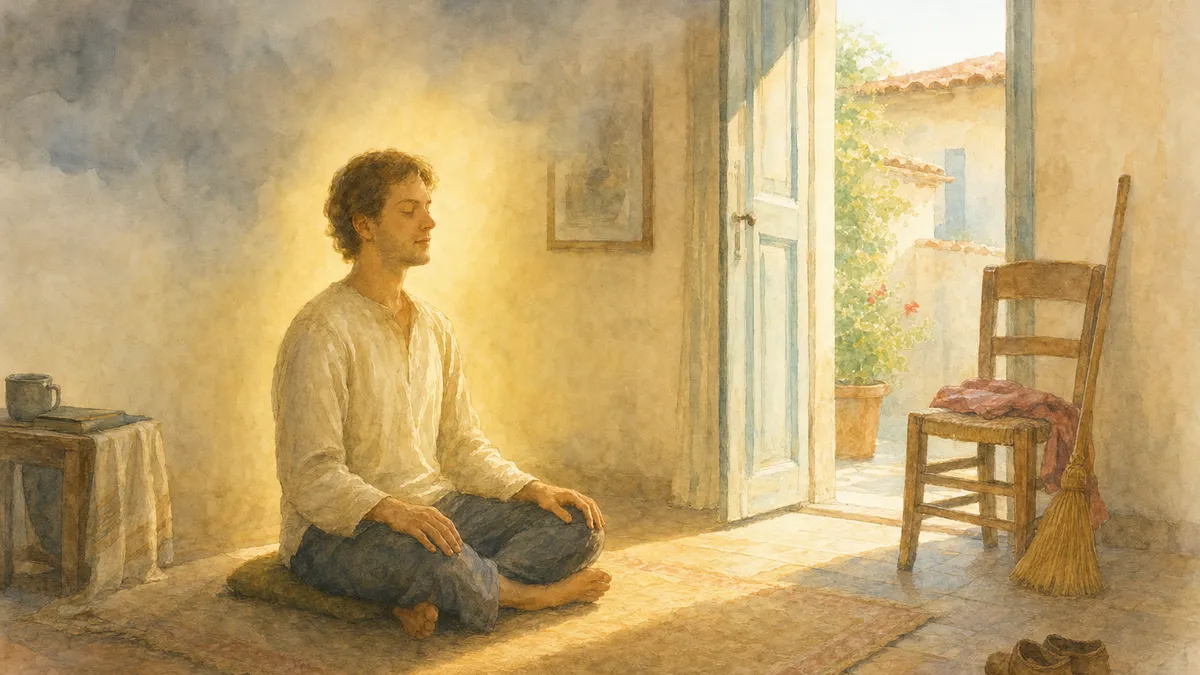
By sages we mean masters of contemplation. That is, this is not some kind of wisdom; it is precisely mastery of the practice of contemplation. And by an ignorant person is meant a beginner, that is, one who has not mastered non-conceptual awareness and is misled by his own inner data.
As long as we are beginners, there is confusion and delusion for us. When we become rooted and become masters of contemplation, we are never again misled either by our own thoughts, or by others’ words, or by emotions, or by situations. For example, there is a practice in which you are first praised and then scolded. Although everyone knows that this is a practice, even during this formal practice feelings still arise. This is an indicator that even an artificially modeled situation can influence consciousness.
When we become a practitioner rooted in contemplation, then, even at the moment of strong sensory or gross experiences, there occurs an effortless, spontaneous, instantaneous (in fractions of a second) shift of the focus of attention from the experience to the Clear Light, the Ground, the basic consciousness, the Supreme “I.”
At the moment of such a shift, even when some thought or emotion is being experienced, the basic consciousness manifests its immense power, instantly devaluing any experience. The great value of the basic consciousness is recognized. This is not some indifferent, apathetic state, like the insensible consciousness of “I don’t care.” On the contrary, when the basic consciousness is perceived, any experience receives the highest possible appraisal: it is seen as inseparable from the supreme basic Consciousness, it is experienced as absolute. Then whatever is experienced is experienced positively, as a manifestation of God.
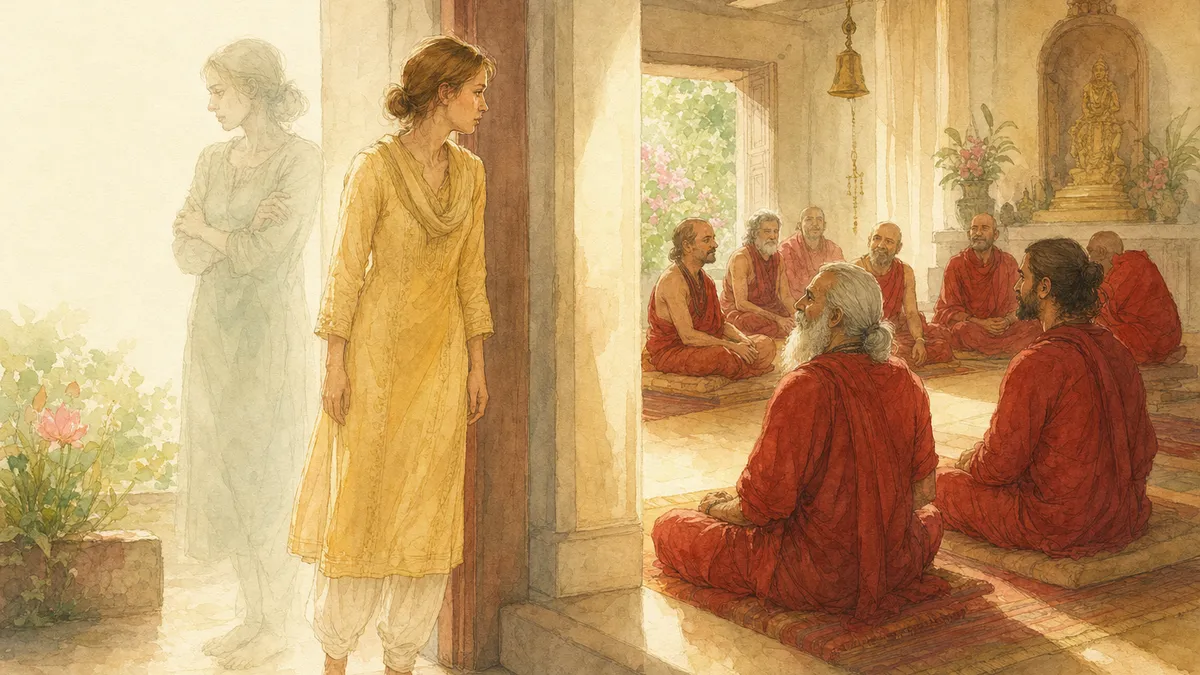
Suppose one mataji-brahmacharini was called to a gathering by the monks. But she did not go, having become afraid of something. Here there is an obvious rejection of the situation, when one part of consciousness rejects another part.
If everything is the Absolute, then correct contemplation consists in learning to understand not only the positive aspects, but even those that one does not like. One must reunite, attain wholeness with oneself, and act on the basis of this wholeness.
Why does the rejection of situations outside occur? Because there is a rejection of the situation inside. That is, the rejection of external situations is the consequence, while the cause is some kind of division, a lack of wholeness within. And when this cause is eliminated, everything will be restored instantly and become whole.
As long as we have not attained absolute purity, within us there is holy consciousness and there is impure consciousness, that is, worldly consciousness. The worldly must be rejected and suppressed, while the holy must be nurtured, displacing the worldly with it.
However, at a higher level we must discover that there is, in fact, nothing worldly at all, that only the holy exists. And when holy consciousness completely fills all manifestations within, then the reunion of all parts of the mind into one single whole will be achieved. We find ourselves in a state of unified purity.
When the karmic vision changes, then whatever we look at outwardly, we will see only holy consciousness. We will stop seeing people, cats, dogs, and will begin to see deities. We will stop seeing Chukhlonka and Slutka, stop seeing the ordinary world, and begin to see the mandala.
Three Categories of Sages
“Pleasure and pain affect sages of the middle category in the same way; however, they react only indistinctly to their environment, as a sleeping person reacts to a gentle breeze or to an insect crawling over him. The manifestations of pleasure and pain are again observed even in the best among sages; however, they perceive them as a mirage.”
Jnanis are realized masters of contemplation. It is very important to understand the workings of their consciousness in order to apply this to oneself.
Sages, contemplatives of the lower category, experience pain and pleasure, but these feelings leave no imprint in them, no wounds of the soul. The body, of course, experiences different things. As long as it exists, its karma consists in experiencing, because it is composed not of light, but of flesh. Nevertheless, no imprints arise in the minds of such sages. Of such a person they say: “He is very flexible, his consciousness is very light, he perceives everything joyfully, with a pure soul and in pure vision.”
A jnani of a higher category self-liberates experience. He scarcely reacts to them. Not only do no imprints, judgments, or emotional wounds arise in his consciousness, but he does not take anything seriously at all except the Absolute, since his mind abides in one-pointed contemplation of the Absolute. Experience, pain, anger, and bliss are like ripples on the surface of water.
“The ignorant anticipate pleasure and pain before they occur. They immerse themselves in them again and again when they occur and mentally return to them after they have ended; therefore pleasure and pain leave strong impressions in their minds.”
An ordinary person anticipates various experiences. Having experienced them, he recalls and savors them, and they leave a trace in his soul. Therefore a karmic trace remains in consciousness, which extends into the next life. This does not happen to a contemplator. If he imprints anything within himself, it is only the consciousness of the Clear Light.
Jnani of a Lower Order
“Jnani of a lower order also enjoy pleasure and pain like the ignorant, but their memories of these experiences are often interrupted by periods of realization.”
A contemplator of a lower order experiences various states that leave an imprint in his consciousness, but the fundamental consciousness taken as the basis, as it were, pushes all these experiences into the background; they all become unimportant compared with the fundamental consciousness.
If someone comes to him and says that he has certain troubles, he says, “Very good,” while continuing to experience deep absorption and joy as a result of that absorption. These enjoyments are much stronger for him than the report of troubles. This strong enjoyment is an example of unity with the basic consciousness. The report of troubles is an example of the perception of external senses, thoughts, and experiences.
“Thus, worldly pleasures do not leave impressions in their minds. Jnani of the middle category, accustomed to restraining their minds through long practice of austerity, keep their minds under control even when they experience pleasure or pain. And thus their response to the world is as indistinct as the response of a sleeping person to a gentle breeze or an insect crawling over him.”
A contemplator of the middle category can abide in contemplation despite experiencing pain or pleasure. His contemplation has become so strengthened that even if the senses are subjected to strain, he will not lose it. His basic consciousness is so vast and deep that he can always bring it to the forefront, even when the body or mind is subjected to a significant impact. He can always set the contemplation of the Clear Light against perception and thoughts. And this contemplation has great power in him.
At this level, yogins perform various practices that develop training and flexibility. If such a yogin trains in a place of power, then when he sits in meditation, obstacles may arise before him; for example, some local spirits may come and begin to create hindrances for him. An ordinary person’s head spins, and he may simply leave that place. But if the yogin has mastered contemplation, he simply opposes the hindrances with his strong contemplation, and then a struggle occurs according to the principle of “who overcomes whom”: either the contemplation will displace the energy of the obstacle, or the obstacle will displace the energy of contemplation. If the yogin is a master of contemplation, then his contemplation will displace the obstacle, subdue it as the strong subdues the weak. Therefore saints were often described as taming and subjugating various demons and spirits. For example, Padmasambhava tamed many demons of Tibet. He not only tamed them, but bound them with vows, made them protectors of the teaching, convincing them to accept the Dharma as their path.
Why does this happen? Because when a yogin abides in contemplation, the basic consciousness, the Clear Light, is the soul of demons, gods, and humans alike. The one in whom it is strong has power over other beings, who recognize the greatness of this consciousness, because this basic consciousness is the heart of all living beings, even gods.
Jnani of the Highest Order
“Jnani of the highest order remain unaffected, since they always remain like the burnt skeleton of a cloth, retaining its former shape but already useless. Just as an actor is not in reality subject to the passions he displays on stage, so this jnani, always aware of his perfection, is not affected by the apparent pleasures and pains that he regards as a mere illusion, like a mirage.”
A holy contemplative of the highest category only appears to others to be a person; in reality, he is already a vast radiant space. He has become deeply rooted in this radiant space of fundamental consciousness. It has become very strong. And when certain impressions arise on the periphery of consciousness, upon coming into contact with this vast space, they dissolve instantly. This is self-liberation at the moment of arising, when one can come into contact with such a vast radiant space of the Ground, when we become accustomed to mindfulness and empty our heart, when we become completely whole and reunite, when there is no clinging within us, no judgments, no interpretations.
In essence, this vast radiant space always belongs to us. But our mind, by making judgments and interpretations, constantly draws boundaries, separating us from this space. Therefore we must train in contemplation, in letting go and relaxing.
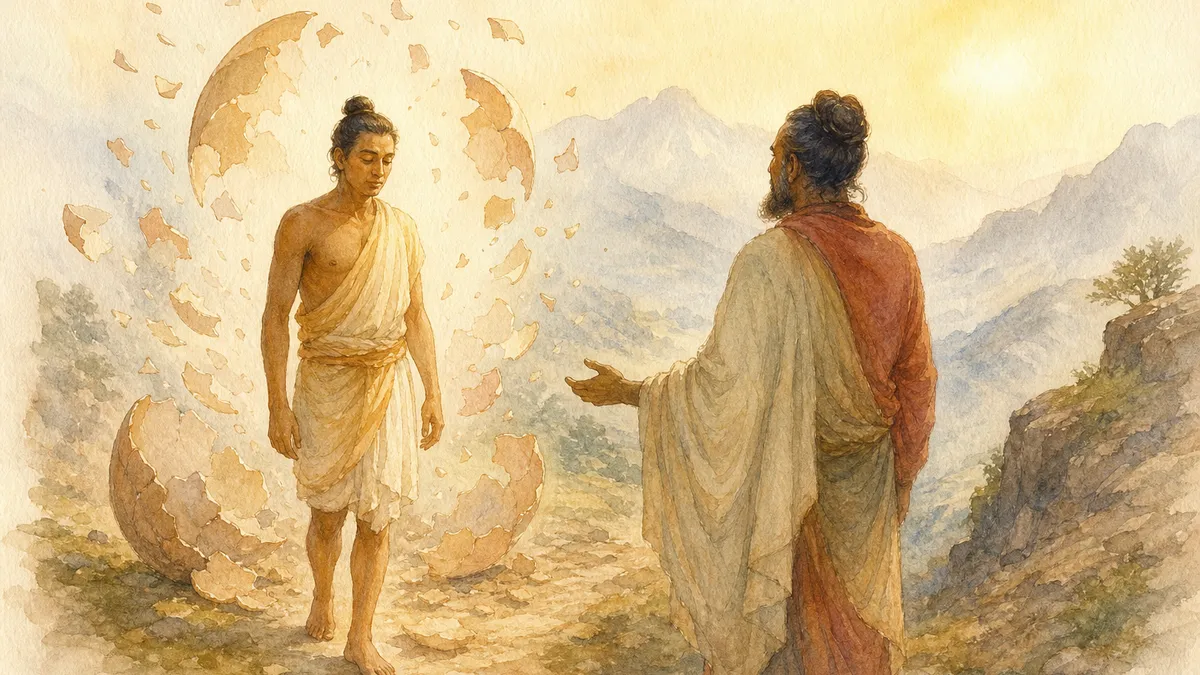
Naropa received the shocking transmission twenty-three times, because his clinging and boundary-making were strong. Twenty-three times, with the help of his teacher Tilopa, he was brought to the brink of survival, because the idea of “I,” of the personal ego, had become deeply rooted in him and was blocking him from realization. And only after all these trials was he able to receive the Guru’s transmission. However, when such a transmission took place, in just six months he attained the highest enlightenment and siddhis.
Differences in the Awareness of the Supreme Essence
“The ignorant do not realize the pure Supreme Essence; they always see it as clouded, and therefore believe in the reality of objective knowledge and, consequently, are subject to the effects of pleasure and pain that occur in their lives.”
When a beginning practitioner does not realize the basic consciousness, all he has is pleasure or pain, ordinary acceptance and rejection. Although infinite luminous consciousness is present, he cannot recognize it, because he distances himself from it.
“As for jnani of the lower category, they realize the Supreme Essence only from time to time, and periods of ignorance overtake them whenever predispositions overwhelm them, and they regard the body as the Supreme Essence and the world as real. They are often able to overcome and reject old tendencies, and thus a struggle goes on within them between wisdom and ignorance—each of them prevailing in turn.”
Contemplatives of the lower category realize the Supreme Essence (this radiant space) only from time to time, during meditation and direct transmission, roughly once a day or once every three days, sometimes even once a week. And periods of ignorance overtake them whenever they regard the world as real and follow their predispositions. That is, in a day there are about three minutes of awareness of the Supreme Essence, and the remaining twenty-three hours and fifty-seven minutes are a period of ignorance. Of course, this is not complete ignorance; however, in comparison with basic consciousness, it is called ignorance. Even if there is some mindfulness, it is not as bright as usual. At this time they are overwhelmed by karmic predispositions. Therefore the practitioner always struggles to shorten such a period by applying conscious mindfulness. He literally wins back minute by minute in the course of the day, until he gradually comes closer to basic consciousness. That is why it is said that he must close the circle of contemplation day and night.
They overcome and reject old tendencies, and therefore a struggle goes on within them between wisdom and ignorance, which prevail in turn. Until we are rooted in contemplation, such a struggle between awareness and unconsciousness must take place within us.
The jnani takes the side of wisdom and struggles against ignorance until falsehood is completely destroyed, until truth triumphs.
To take the side of wisdom means to accept basic consciousness as the foundation and always orient oneself toward it, trying to abide in it and struggle with distractions until they cease.
In fact, it takes one’s entire life. I have met many Teachers with gray temples who said that they were introduced to the nature of the Mind at the age of eight and had been trying not to become distracted ever since. They said: “I am sixty years old now, but I continue my practice.”
“Forgetfulness of the supreme Essence never occurs for representatives of the middle category of jnanis; wrong knowledge never takes hold of them.”
For a master of contemplation, even of the middle category, forgetfulness of the basic consciousness never occurs. Anything can be done to him, but it is fundamentally impossible to make him forget the basic consciousness. He remembers it always: when he sleeps, eats, goes to the toilet, and talks. His surface mind may function or switch off, his body may experience pleasure or pain, but he is constantly immersed in this basic consciousness; he holds to it one-pointedly.
“However, of their own free will they bring to light certain predispositions from the depths of themselves in order to maintain their body according to the action of prarabdha. Such is the conduct of a perfect jnani.”
Residual karmas are brought to the surface by such a yogin and made into a practice of uniting contemplation, in order to give an impulse to the radiance of the basic consciousness. This principle in tantra is called “making the kleshas wisdom.” That is, certain inner imprints remain. For example, among monks this is always merit: the tendency to print sacred texts, write poetry or play something, decorate the monastery or preach. These inner mental imprints can be brought to the surface as prarabdha, connecting them with contemplation. This is what develops the basic consciousness and gives it flexibility.
Samadhi and Everyday Life
“As for the seeker, there is no forgetfulness of the supreme Essence for him while he abides in samadhi. But the perfect jnani never forgets the supreme Essence, and he displays his own predispositions according to his own choice.”
A beginning seeker remembers the supreme Essence while he is in samadhi during meditation. He may experience great realizations (light and so on), but upon emerging from meditation this does not connect with the everyday state, because the surface mind turns on and begins to obscure and block this state.
But a master of contemplation does not forget the supreme Essence even when he emerges from this state; therefore it is said that a contemplator of the highest order makes no distinction between samadhi and worldly affairs. He never perceives anything as separate from the supreme Essence, and therefore for him there is no apostasy or deviation whatsoever.
“A jnani of the middle category loves samadhi and abides in it voluntarily. Accordingly, there is a deviation, though a small one, when he is occupied with worldly affairs or even when caring for the body.”
When a yogin has mastered samadhi and a certain degree of contemplation, his further struggle is directed toward equalizing the state of samadhi with the state of ordinary life after emerging from it; seated meditation with the post-meditative period. Because there is always a gap between the level in samadhi during seated meditation and the post-meditative period after emerging from it.
A lowering of the level of consciousness upon emerging from seated meditation always occurs when the sense organs begin to function.
Burning Karma with the Fire of Wisdom
“On the other hand, jnanis of the highest order abide in samadhi unintentionally and naturally, and any deviation is impossible for him under any circumstances. Jnanis of the middle and highest categories have no trace of karma within themselves, because they are in perfection and perceive nothing except the supreme Essence. How can any karma remain when the unrestrained fire of the jnani is raging, burning everything in its path?”
When, after prolonged practice and training, the unity of the stages of seated meditation and the post-meditative period has been attained, these two states are equalized, mixed, and merged, and there is only one even sahaja samadhi. When there is sahaja samadhi, it is compared to a raging flame of wisdom that burns all karma. Whatever falls into this raging flame will be dissolved. And then there is no karma for such a yogin. All actions self-liberate even before they arise.
“Such karma is merely a trick, although the viewer believes it to be real. I will now explain this point. The state of a jnani is considered identical to the state of Shiva. There is not even the slightest difference between them. Therefore, karma cannot defile a jnani.”
In such a state, the contemplator is one with the Absolute. In fact, he himself is the Absolute. There is no difference between his consciousness and the Absolute. The difference between categories of saints can only lie in the ability to manifest energies in the relative dimension.
With equality in absolute consciousness, there may be a difference in the abilities to manifest energies outwardly. One may only abide in unity with the Absolute; another may, by the power of consciousness, invoke and manifest global universal energies and, with their help, change reality, create mandalas, dispel delusions in the minds of others, awaken their inner light, and help them reveal their potential. Nevertheless, at the moment of such abiding in sahaja samadhi, both are inseparable from the Absolute.
“After this conversation with Hemangada, all of Vasuman’s doubts were dispelled. He gained a clear understanding of true realization. Vasuman and the prince said farewell to each other and parted.”
“Having heard all this, Parashurama nevertheless asked Sri Datta: ‘Teacher! I have listened to Your sacred words concerning realization and wisdom. My doubts have now been clarified. Now I understand the nondual state of absolute consciousness, which pervades everything and abides in the supreme Essence.’”
Equalizing the Two States as the Pinnacle of Practice
These instructions are very important because they are very profound. This is the pinnacle or quintessence of spiritual practice. Equalizing the two states (meditative and post-meditative) is truly the attainment of a real Master and the realization of sahaja samadhi, which comes after many years of training.
Through dhyana, one can quickly achieve a certain breakthrough; through concentration, one can quickly stop the breath, and so on. However, such practices are called merely preparation or the games of well-trained people. True practice begins when the equalization of the two states takes place: in meditation and in the post-meditative period.
This is precisely what we focus on when we train in walking practice and in other flexibility trainings. The best way to train in equalizing the two truths is pure vision. Even if a person is not particularly able to control the winds and has not gained great experience in contemplation, the practice of pure vision gives the ability to equalize these two states and introduces one into contemplation by itself.
Pure vision means that sacred consciousness displaces the dualistic mind and impure dualistic perception.
Clear light
Contemplation
Pure vision
Karma
Jnani
Samadhi
Sahaja-samadhi
Absolute
Tripura-rahasya
Read 14 times
Articles
Vidya AI
Search
Lectures
November 5, 2026
Mantra of the day
ОМ ЭКАЙА НАМАХ ОМ Единому – поклонение!
Auspicious Times(Rome)
Brahma Muhurta:
04:56 - 05:51
Abhijit Muhurta:
11:33 - 12:14
Sayam Sandhya:
16:40 - 17:21
Mokshada Ekadashi (6 November)
Ekadashi of liberation. Helps to achieve spiritual enlightenment.