

Commentary on the text “Special Instructions of the Wise and Glorious King”
“At any time, in any situation,
Abide in the flow of the dharmakaya.
Decide with absolute certainty that there is nothing beyond this.”
At any time, in any situation, abide in the flow of the wisdom body. The flow of the wisdom body is intuitive consciousness. Even to call it intuitive consciousness is also a certain erroneous designation, since the true wisdom body is higher than intuitive consciousness. Intuitive consciousness is nourished by the light of the wisdom body.
Usually, intuitive consciousness is called buddhi in Sanskrit, while the wisdom body is the Atman. Buddhi receives nourishment from the light that emanates from the Atman, but the Atman itself is higher than intuitive consciousness. Nevertheless, we cannot bypass the stage of intuitive consciousness. When you practice contemplative presence, you necessarily develop intuitive consciousness.
To abide in intuitive consciousness at any time, in any situation means gradually becoming accustomed to seeing the world through the eyes of the wisdom body. As a rule, as long as our intuitive consciousness is not developed, we trust only the superficial mind, consisting of concepts. But the true perception of life begins at the stage of intuitive consciousness. Unlike the superficial mind (manas), which is rigidly limited by fixed notions about life and oneself, intuitive consciousness is multidimensional, multistructured, multifaceted, and ambiguous.
A person rigidly conditioned by manas, the superficial mind, perceives the world in black and white: life — death, bad — good, one’s own — another’s, friend — enemy, subject — object, love — indifference. When reality is rigidly divided by dualistic notions into right and wrong, it is, of course, very difficult for such a person to live. Reality does not want to follow his dualistic notions, and therefore he constantly experiences suffering. But when intuitive consciousness arises, the dominance of fixed ideas and rigid notions of the conceptual mind begins to weaken. A person understands that the world is not dualistic, not subject-object, not black-and-white. A vision of a diversity of possibilities, half-tones, and shades arises in him. His mind becomes more branching, playful, spontaneous. He ceases to perceive himself and the world in a one-dimensional way.

The deeper you are in contemplation, the more your intuitive consciousness increases. When you listen to the Dharma with a rigid conceptual mind, you try to understand it intellectually; you expend a lot of energy, but the percentage of information absorbed is small, so you need to listen to the lecture many times in order to understand something. But when intuitive consciousness turns on, you seem to enter into the words and the meaning and receive much more.
For example, one nun wrote: “In retreat, my clarity increased. Reading the book The Radiance of the Precious Secrets of Laya Yoga, I now understand everything. Previously, I had to read one line ten times just to understand at least a little what it was talking about.”
In the same way, our perception of the Dharma changes when intuitive consciousness arises in us as a result of presence. We begin to see the Dharma in everything and understand that it is multidimensional and profound. The Dharma is like a crystal — depending on which side the rays fall upon it, such is the reflection. For example, when you read various texts, you may see that in some systems certain names of chakras and channels are used, while in others different ones are used; that the system of chakras and channels may differ, and even their location may vary. In Tibetan tantra, mainly three principal centers and three channels are used, while in the Indian system there are seven. You may then think that the mistake is either in one place or the other. In fact, both systems are equally valid; they are correct and work, since channels and chakras are not such an unambiguous thing as a physical organ in the body. They are part of the karmic vision into which you enter. If you enter one karmic vision, then the system with three main chakras will work; if you enter another, then the system with seven will work, and all of them are legitimate.
The Great Decision
“Here is the second essential instruction: ‘Resolve to abide in this single state and only in it.’”
In the language of laya yoga, this is called making the “great decision.” If you have not yet made it, then you will come to make it. If you have made it, then you understand what is being discussed.
The whole life of a yogin consists of two periods of life. The first is the search for this “great decision” through the instructions of the guru, independent practice, and study. And the second is the making of this “great decision.” Although you hear about this quite often, it is not easy to understand.
What does this decision concern? What does it mean to make the “great decision”? It means to completely change one’s concept of life, one’s perception of oneself, and to resolve to live in non-doing, to live in the natural state.
If life is divided into two segments, then from all the past billions of lives and from the moment of your present birth, you have been moving toward a certain stage. Before, there was only wandering in the blind labyrinths of samsara, accompanied by suffering. Finally, circumstances came together in such a way that, thanks to the convergence of thousands of fortunate conditions, you received the teaching, your intuitive clarity awakened, merits began to unfold, and therefore you discovered contemplative presence and non-doing. You have not yet realized it, but at least you have understood what it is. You discovered it for a moment and became somewhat established in it. And this point is called making the “great decision.” When you make such a decision, you generate an intention (sankalpa) within yourself: “For the rest of my life I will live based on this state. For the rest of my life I will abide in it, cherish it, and cultivate it. I will not fall out of it, and if I do, I will strive to return to it again.” It is like finding a pearl that completely changed your life by giving you immense wealth.
Sooner or later, a yogin comes to such a “great decision.” Before making the “great decision,” you must understand how to manifest it—what is the state of non-doing? You must be fully convinced whether it is correct or not. It is not enough to see some spirits in meditation and think that you have already entered the natural state; it is not enough to experience some exaltation or a breakthrough of some kind of clarity. This is not a matter of one day. You must truly become convinced of it, receive confirmation from a spiritual teacher, and repeatedly compare it with the texts. You have no right to make a mistake, because this mistake will cost you very dearly; the entire practice will be false. That is, you do not make such a decision immediately, but after years of clarifying the teaching; before that, you move toward this “great decision,” you mature for it, gradually clarifying it in meditative experiences and in personal contemplation.
Finally, when it has been clarified and has shone forth, when you have deeply clarified it and cut off all doubts with the help of instructions, the teaching, and confirmations from the guru, when you are convinced of it, you make this “great decision.”
To make such a decision means, in a certain sense, to already step onto the direct path and become established in enlightenment right now. There is nothing more important for a yogin than to realize and make such a decision.
Many call this “living here and now,” “living without choice,” “living spontaneously,” but as long as there is no personal experience, all of this will be just words.
When you make such a decision, your entire life changes. You live in non-doing, you learn as if you were living and dying every second. You do without doing; you speak without speaking; you think, but are not bound by thoughts; you look, but see nothing; you see everything, but nothing penetrates your soul; you seem to experience joy and sorrow, yet your heart is not struck by them. You relate to everything lightly, embracing the single “taste” with your consciousness. Your mind always remains serene, and prana is nurtured. Peace, joy, and spacious ease arise in the heart. Neither anger, nor envy, nor attachment can any longer cloud your consciousness. Everything is joyful, any work in your hands goes smoothly, everything becomes a play. Wherever you go, you do not move anywhere. Whatever you are occupied with, nothing happens. It is as if you have stood at one point and are growing ever more deeply into that point, instead of moving along the periphery. It is as if you are occupied with many things, but nothing concerns you. The spirit is liberated after you have made this “great decision.”
People who have made the “great decision” and those who have not made the “great decision” are clearly visible. The minds of those who have not made such a decision still rush about in doubts; they suffer even if they follow spiritual practice. Their spirit is vulnerable; they can easily be shaken, seduced by a concept, frightened by something, or become attached. The spirit of those who have made the “great decision” is invulnerable; in consciousness they are very flexible and light, they are unshakable in contemplation, self-sufficient, always joyful, their mind is very deep, they do not fall out of the flow of intuitive clarity, they easily grasp any teachings and overcome deviations. Thanks to their intuitive capacity, even what they do not know is revealed to them.

Self-Liberation of Thoughts and Emotions
“If, in the meantime, joy or sorrow, attachment or aversion arise,—
Any discursive thoughts, following one after another in succession;
Once recognized, they will leave no trace.
Recognize the dharmakaya in which they are all liberated.”
When such a decision has been made, any thoughts are liberated, because the wisdom body is recognized. As long as the wisdom body is not recognized and the “great decision” has not been made, the thoughts and emotions that arise in the stream of consciousness harden into a “dead weight,” pressing down on consciousness and unsettling it. But when the wisdom body is recognized, thoughts and emotions become fuel for it. They kindle the fire of clarity, which increasingly illuminates the understanding of the wisdom body. Therefore, the spirit of such people is always unshakable. It is like, instead of moving along the rim of a wheel, they stand in the center, in the hub, and no longer revolve with the wheel; they stand, rotating around their own axis, not along the rim.
To put it more simply, a yogin who has made the “great decision” and recognizes the wisdom body is able to change his state instantly. A yogin who does not recognize the wisdom body, who has not made the “great decision,” is not able to change his state instantly.
“Just as writing on water disappears,
The process of arising and liberation becomes natural and continuous.
Then whatever appears will become food for the emptiness of naked rigpa (the natural state).”

When the “great decision” has been made and the wisdom body is recognized, thoughts, emotions, and impressions become writing on water. It is like a person sitting on the sand and drawing hieroglyphs, and then a wave comes in, and the hieroglyphs are no more; they disappear.
But for a person who has not made the “great decision” and does not recognize the wisdom body, the situation is different: he has no sand, but a hard rock on which he carves hieroglyphs that do not disappear, but remain for life. This is the difference between self-liberation and the generation of thoughts that do not self-liberate.
Where does self-liberation arise from? From impeccable clarity, from discriminating wisdom that recognizes the wisdom body at the moment thoughts, emotions, or perceptions appear. Impeccable discriminating wisdom makes it possible to shift the focus of consciousness into the subtlest, pure foundation of the mind. It is precisely when the mind is established in this foundation that the self-liberation of thoughts, emotions, and feelings occurs.
At first, there is the self-liberation of coarse mental concepts; this is not so difficult. Even a well-bred person can extinguish his anger or slightly change his consciousness. First, the surface consciousness self-liberates, but the subconscious and the dream world do not self-liberate. To self-liberate the images of the subconscious, a yogin must learn to meditate at the level of the subconscious, that is, to be deeply immersed in the natural state.
When the images of the subconscious and the movements of the subconscious dissolve, this is already an attainment. But there still remain subtle fluctuations of the superconscious, located in the causal body. Therefore, the yogin still cannot contemplate in dreamless sleep and have continuous consciousness, or meditate in deep dreamless sleep. And when, at the cost of enormous effort, willpower, diligence in training, undistracted contemplation, cutting off egoism, renouncing his “I,” and completely surrendering himself to the Absolute, he enters the inconceivable space of the superconscious, only then are the subtlest dualistic notions cut off and the self-liberation of the subtlest levels takes place.
The Purity of the Primordial Nature
“Then whatever appears will become food for the emptiness of naked rigpa (the natural state),
And all movements of the mind—the inner energy of the king dharmakaya.
They are primordially pure and leave no traces. O joy!”
How can this be explained? When we do anything, impressions arise in us on an intuitive level; the mind records certain changes in mood or consciousness. Subsequently, these impressions give rise to new shoots, new karmas.
A shamaness described such a case from real life. During a wedding, a car from the wedding motorcade ran over a dog, and this shamaness said that the marriage would be unsuccessful, that it was a bad omen. A few months later, unpleasant situations happened to several participants in this process.
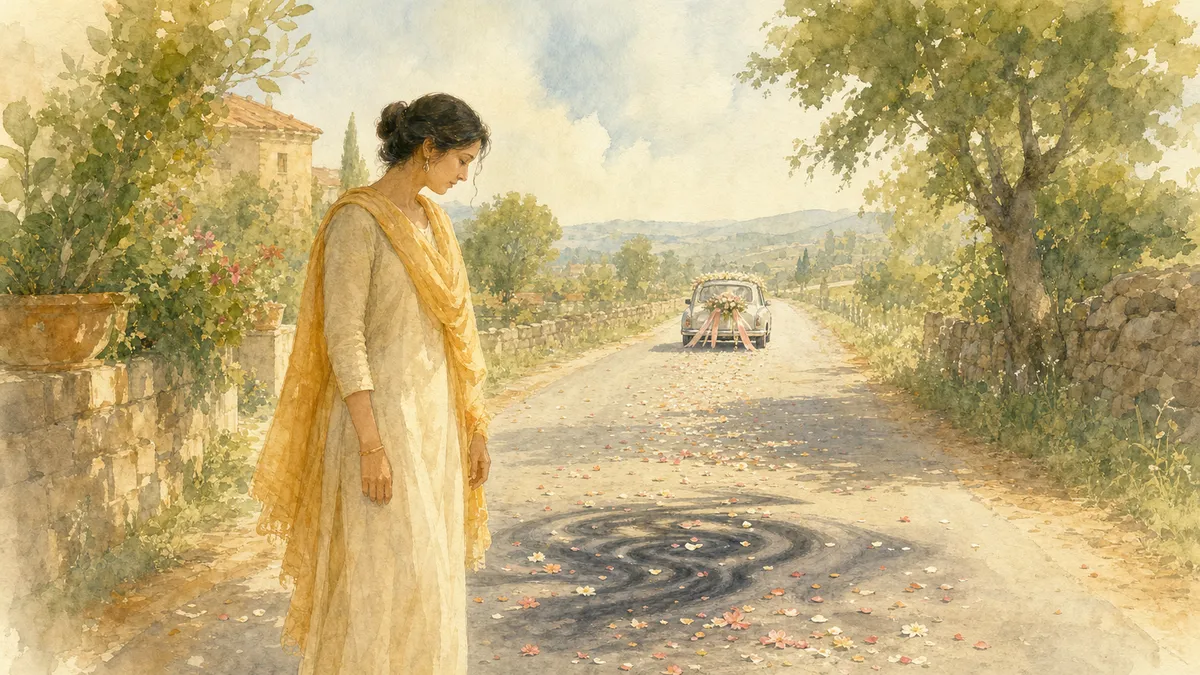
What happened? A wedding embodies a ritual, a magical action, pure vision. To run over a dog at such a time means to commit an aparadha, that is, to allow an impure dimension to intrude. This means that an impure imprint has entered the subconscious. And when an aparadha occurred within pure vision, it means that the entire situation born at that moment will be negative, and therefore karmic retribution was received.
At the moment of any action, a situation is born. This negative episode was imprinted in their minds, and so their minds went on to develop the situation impurely, negatively.
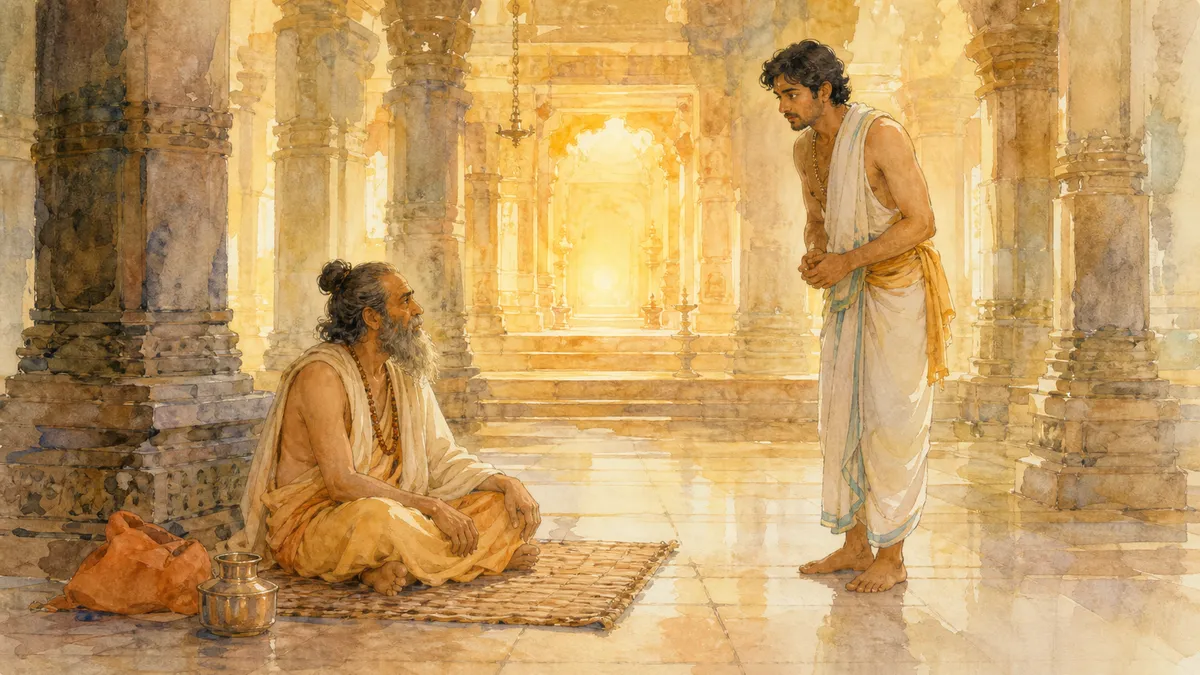
Another example. A certain saint entered a temple and lay down to sleep, turning his feet toward the deity. The temple attendant said: “You are committing an offense! The deity is there, so turn your feet in the other direction.” The saint got up and said: “Then show me where God is not, so that I may place my feet there.” The attendant began to think. The saint was a mahasiddha, and therefore even when he was lying with his feet toward the deity, there was no aparadha in his consciousness; there was no impurity in his consciousness, he did not take on impure karma. His mind was completely pure and self-liberated; there were no imprints in his mind; on the subtle level, situations did not develop negatively, and therefore he did not take on any karma.
These are two examples that show how a self-liberated mind and a non-self-liberated mind work. If the mind is self-liberated, subtle changes do not occur in it, and therefore further karmas do not unfold. If the mind is not self-liberated, then some situation may accidentally give rise to impure vision within it, and then the mind creates new universes with impure karmic vision, where a person is pursued by suffering, where their karma is being cleansed. In the case of a self-liberated mind, however, only pure universes with pure karmic vision are generated, where all situations are favorable.
Therefore it is said here that when the arising and liberation of thoughts becomes natural and continuous, then whatever appears will become food for emptiness. Then any situations, words, or actions will still be beneficial, will still strengthen emptiness and awareness. It is said here: “They are primordially pure and leave no traces.”
Everything is perceived as perfect and pure. No impure imprints or traces are left in the mind, and then karmic vision continues to develop toward purity.
Further on it says here: “Oh, joy!”
At this stage, the yogin feels as though he has arrived on a golden island; for him everything is always auspicious.
The Essence of Liberation
“Everything continues to appear just as before, but the difference lies in the manner of liberation — that is the essence!”
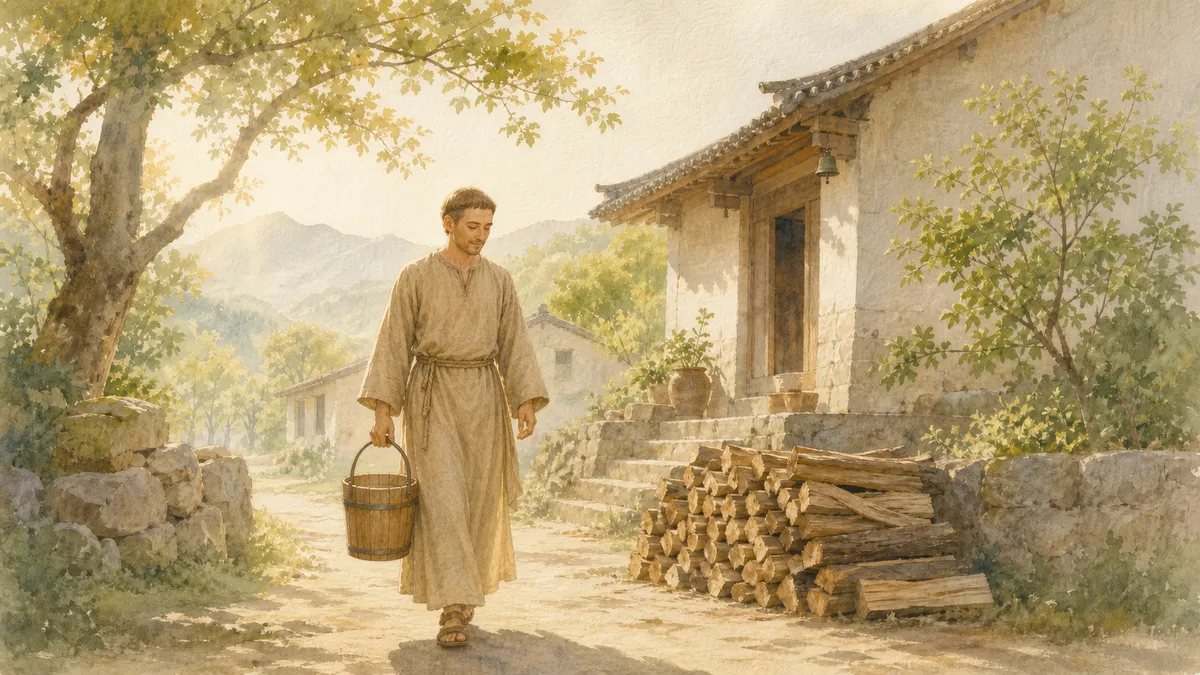
Everything is seen just as before. It is like the way one monk described his state: “Before enlightenment, I carried water and chopped wood. After enlightenment, I carry water and chop wood, yet now everything is different.” Why is everything different? Because before enlightenment, all actions were not liberated, but after enlightenment the “I” disappeared, and all actions are liberated.
Therefore it is said here:
“That is the essence!
Without this understanding, meditation becomes merely a path of multiplying illusions.”
Even if you meditate a great deal, but do not have such understanding, meditation may become the cultivation of new “horns.” Conversely, even if you have no meditation, but you continuously abide in presence, if you have intuitive knowledge, then you always recognize the wisdom body.
