

The Vision of an Awakened Siddha
1. The yogin-siddha, having entered the natural state, perceives the world as a share and part of himself.
When it comes to enlightenment or entering the natural state, many associate this only with consciousness, with a state of mind. Sometimes it may be felt as something psychological, something subjective, because the empty nature of the “I” is recognized only superficially. However, the realization of the natural state consists not only in consciousness, not only in emptiness; it also consists in mastering the second side of reality, namely energy, that is, the manifested side of reality.
When we come into contact with energy, we discover how boundless the potential possessed by the empty nature of the “I” is. The empty nature of the “I,” the absolute Mind, possesses the property of manifestation. When we observe these properties of manifestation, we discover that the empty nature of the “I” can manifest as sound, light, and radiations. And the understanding of the depth of the natural state arises precisely when we come into contact with energy.
2. Everything visible is perceived by him as the play of his own “I,” since he is at the center of the universe.
Before such a state is realized, a great deal of time must pass in contemplation, in purification, in becoming accustomed to presence, in the continuous pacification of kleshas and the ego, in self-surrender, in repeatedly cutting off the “I,” and in changing one’s vision of the world and oneself. First we must purify ourselves and cut off attachment to the ego, and this is not some simultaneous act, but a long-term one. If, without purifying ourselves, we try to enter deeply into certain states, then this contradicts the spiritual path.
The True Nature of Tantrism
The teaching of Tantrism often attracts people who may be completely unprepared for it. For example, many, having heard that narcotic substances, sexual relations, and exotic practices are used in Tantrism, and having the corresponding impurities, become very inspired by this and think that this is precisely the practice that would help them. At the same time, they completely forget that half of the tantras are written not for people like them, and the other half is written in Aesopian language (sandhya-bhashya), that is, in a figurative, symbolic, encrypted language.
The initial principle of Tantrism is that one must become divya. That is, for a pashu, Tantrism does not exist in principle; for pashu-yogins there is Vedanta-dharma: the path of vedachara and vaishnavachara — the initial paths of beneficial purification. A yogin must become, at the very least, a spiritual hero (vira), and then become divya, acquire divine qualities and stability in contemplation and in the performance of practice.
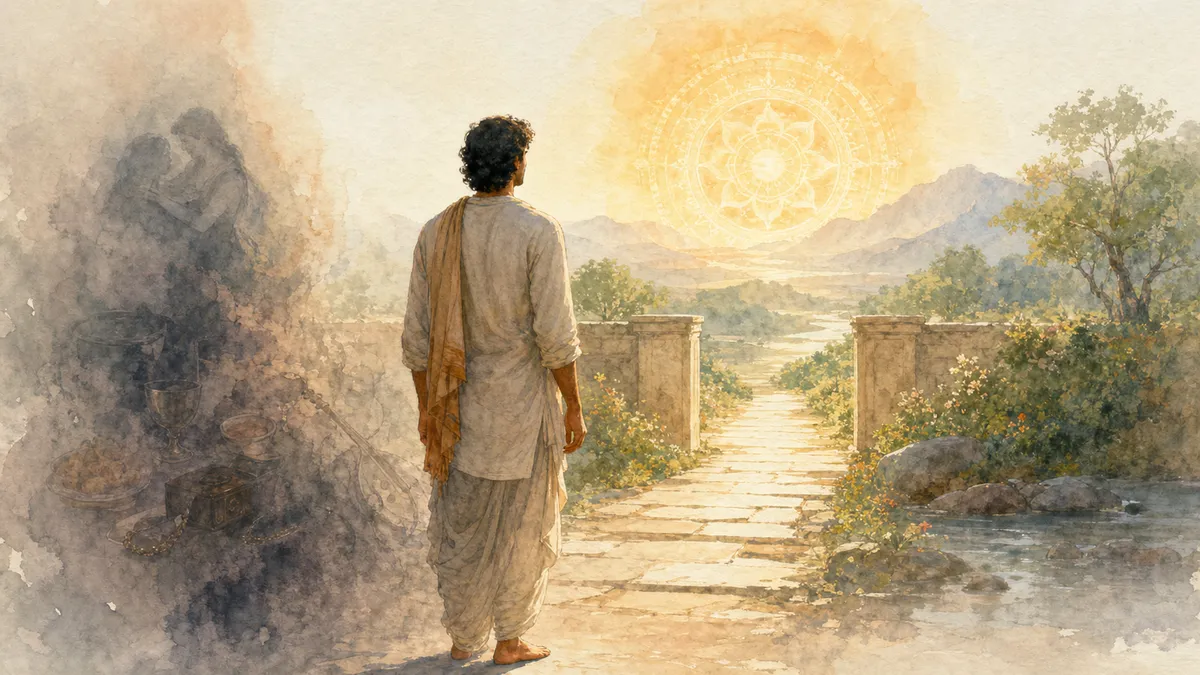
The path of tantra is the continuous, constant purification of one’s kleshas, one’s “I,” and one’s prana until the deity fully blossoms within us. It can be said that on the path of the lower tantras this is transformation into a deity, while on the path of the higher tantras it is the recognition of oneself as a deity. We do not transform ourselves into a deity as in some tantras (kriya-tantra, charya-tantra, or in Buddhist Vajrayana); to transform oneself artificially into a deity is not the most direct approach. We say that in the teaching of anuttara-tantra the approach consists in recognizing oneself as a deity.
Regardless of whether we purify the kleshas and reject them or self-liberate them, the kleshas must necessarily be purified. Our character must be harmonized, our pure vision must deepen, and our attentiveness and awareness in everyday life must be strengthened. Our motivation in spiritual life must become increasingly purified, becoming less and less selfish and more and more directed toward bringing benefit to all living beings. Our selfishly personal motivation in practice must grow into lofty ideals, service to the higher powers and the Absolute, simultaneously with the growth of nondual vision. Our channels and pranas must also be purified. And if this happens, then we gradually grow into divya — into a divine yogin.
Unity with the Absolute
3. Such a yogin experiences his “I” consciousness as indistinguishable from the Absolute.
When we become the possessor of the qualities of divya, natural contemplation within us begins to open. And it opens not only as empty consciousness, but also as unity with energy. It often happens that a person, having entered somewhat into a certain awareness, says: “I am in the natural state.”
Once I was giving a lecture in Yekaterinburg and was saying that a human being is the Absolute, is God, and then I spoke about the deities that govern karma. One of the practitioners began asking questions: “How can deities govern my karma if I am the Absolute?” I said to him: “When you are driving a car, even a traffic police officer can control you. And your boss at work does not know that you are the Absolute. Why should deities not govern your fate and life? They govern you quite easily. Do you light the Sun or give the commands ‘sleep,’ ‘eat’? Someone is always commanding you: the deities of prana, the deities of the body, the deities of the five elements, and so on. Do you determine your own lifespan?”
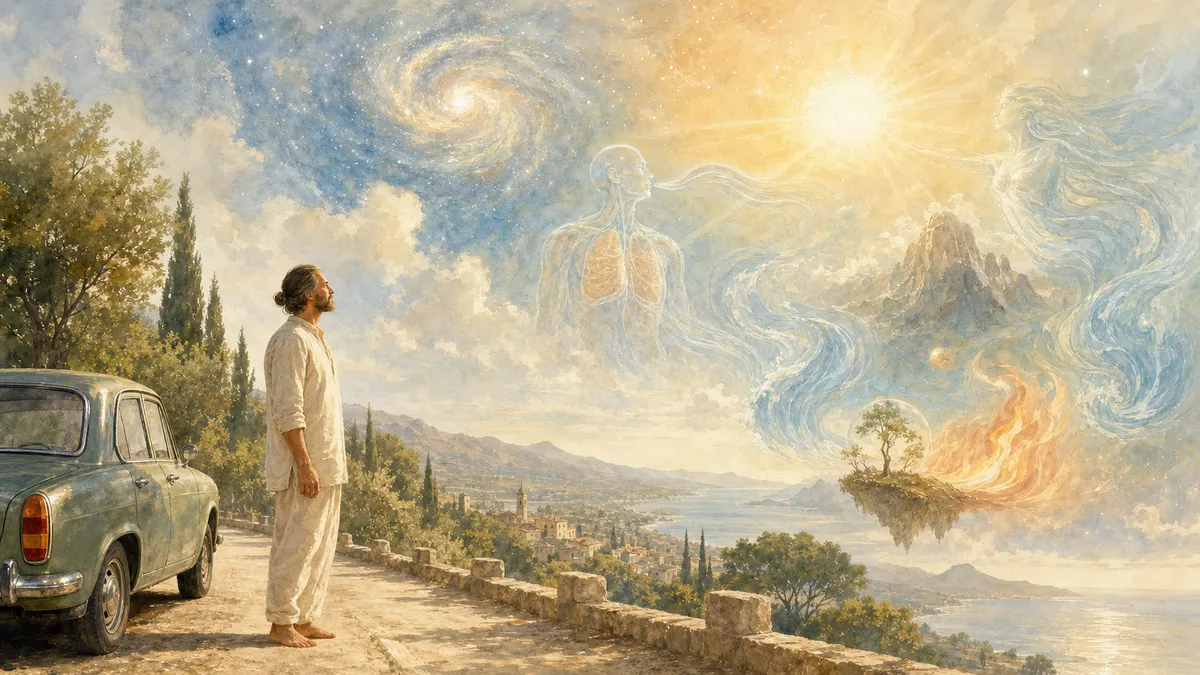
Control from the level of the Absolute still has to be realized. And in order to realize it, one must pacify these deities, bring them into the mandala of contemplation, make them part of oneself. But as long as they are not part of you, they govern you, just like worldly deities do. In other words, “I am the Absolute” is for now only a view for which you must struggle and prove it not only to yourself, but also to the surrounding energies, enlightening them so that these surrounding energies become friendly to you.
The aspect of coming into contact with energy always sobers the yogin and shows who he really is, because energy acts according to the principle of Shakti. If awareness acts according to the principle of Shiva, then energy acts according to a very simple principle: “yes” or “no.” Whatever you may think about yourself, here the principle is this: either you have transformed this energy into a mandala, or this energy simply does not yield to you, is not tamed by you.
Realization of the mandala of pure vision
Our task in practice is realization not only at the level of consciousness, but the realization of the mandala of pure vision, that is, the transformation of energy as well into the mandala of pure vision. This means that to enter the natural state means to enter the state of a creator god and, from the pure state of mind, to create a mandala of pure vision, enthroning oneself within it as a deity creating universes.
What is enlightenment? One could say that it is a transition. There is the world of samsara, the world of impure vision, that is, the world of people in which we live. And there is the world of saints and immortals, that is, the world of pure vision, the mandala. These are two different worlds. In the world of the immortals, the subtle elements are all one with the mind, but energy also moves there. Enlightenment is not only an act of realizing consciousness; if we take energy, then it is a transition from the world of impure vision into the world of pure vision completely, that is, together with energy.
How, then, is this transition accomplished? The point from which this transition is accomplished is sahaja-tattva, that is, pure Intelligence, into which we enter—the pure inactive presence “I am,” realized in all its depth, the natural essence of all living beings on earth. When it is realized as emptiness, light, divine pride, or space, it then begins to create energies. It necessarily begins to process energies, and from these energies the yogin creates a new world from within himself.
Just as a spider releases a thread and weaves a web, in the same way the yogin, occupying the status of a creator god in the natural state, creates a new world—a mandala. He creates it at the level where he is already able to do so, when, entering presence, he assumes such a status. Gradually this mandala unfolds as a manifestation of his mind in purity. No one except the yogin is responsible for this mandala; only he himself is.
By and large, to enter presence means to assume the status of a creator god and to take responsibility for such a mandala. This is what happens when your Mind is enlightened.
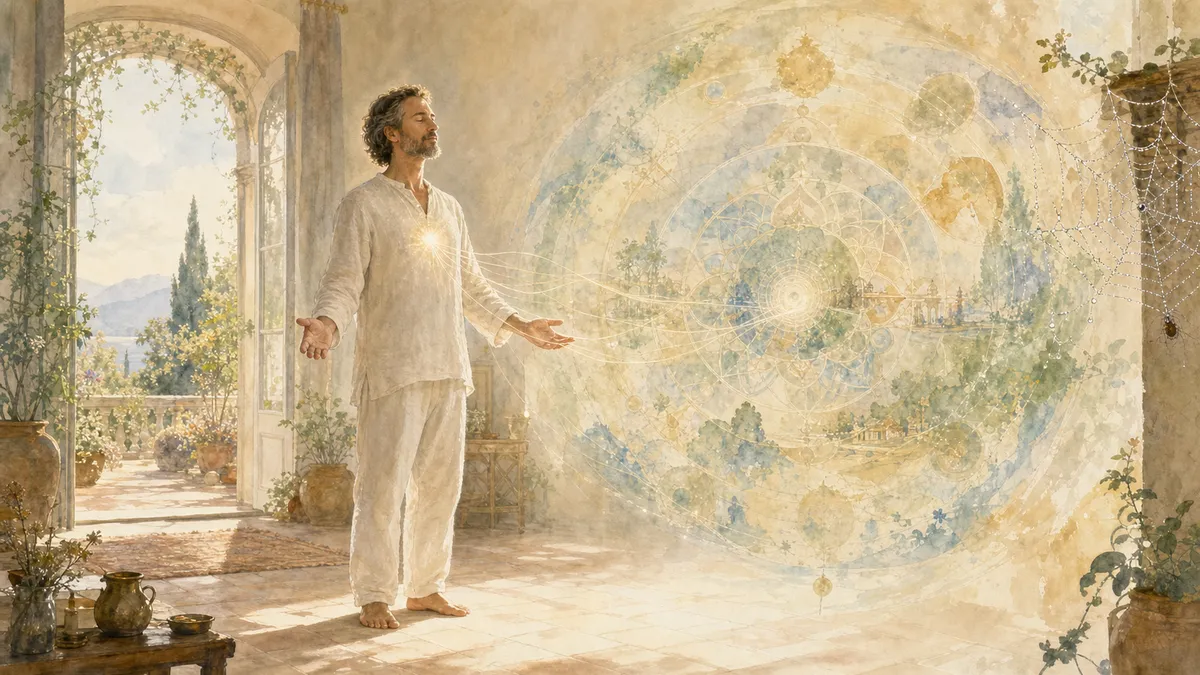
The next stage is the enlightenment of energies and the creation of the mandala of pure vision. Such creation of the mandala of pure vision happens by itself, naturally, simply thanks to the power of maintaining presence. This is what is called the “great transition” (kaya-vyuha).
True knowledge and the play of the Absolute
4. To see one’s play in everything is a sign of attaining the highest liberation; it is true knowledge.
Why does a yogin see the play of his “Self” in everything? Because he no longer lives in the ordinary world, but in the world of the mandala, created from pure vision, from presence. How is this mandala created? Through the power of sustaining contemplation itself, a subtle level of awareness appears, which unfolds, penetrating all aspects of life, and then the world, all connections and relationships are perceived differently. One could say that the mandala is a divine or fantastic world created by the yogin’s own consciousness, in which the yogin is the center of perception. His consciousness is empty, while the energies are always connected with his consciousness and play around his consciousness. At first this occurs only as clear knowing, an empty state, and then energies also participate in it; there is movement of forms.
5. One who does not see the world as his Mind, as his “Self,” who does not see that everything happening within it is the play of the energies of his “Self,” abides in the sleep of ignorance, is bound by the bonds of karma, and is subject to duality.
When we practice the path of non-dual contemplation, we are given very great freedom in seeing the world, but this also means accepting great responsibility for our choice. Usually a person does not take responsibility for his choice; he is always either in the role of the persecutor, or in the role of the victim, or in the role of the rescuer, identifying with one of these roles. The yogin, knowing that everything is within himself, takes responsibility for his choice and is not in any of the roles.
When we do not know that the whole world is the play of the energies of our “Self,” we abide in the sleep of ignorance. When we abide in the sleep of ignorance, it seems to us that there are external causes that are the cause of our dissatisfaction, suffering, or irritation. However, this is not so. The cause always lies precisely within ourselves and in no one else. Within ourselves lies the cause of both bondage and enlightenment. When we understand this secret, we simply smile at the world, at friends and enemies; for us there are no longer either friends or enemies. For us there are simply more friendly energies, purer ones, and some unstable or harsh ones that should be avoided until we have power over them.
The Principle of the Mirror and Reflections
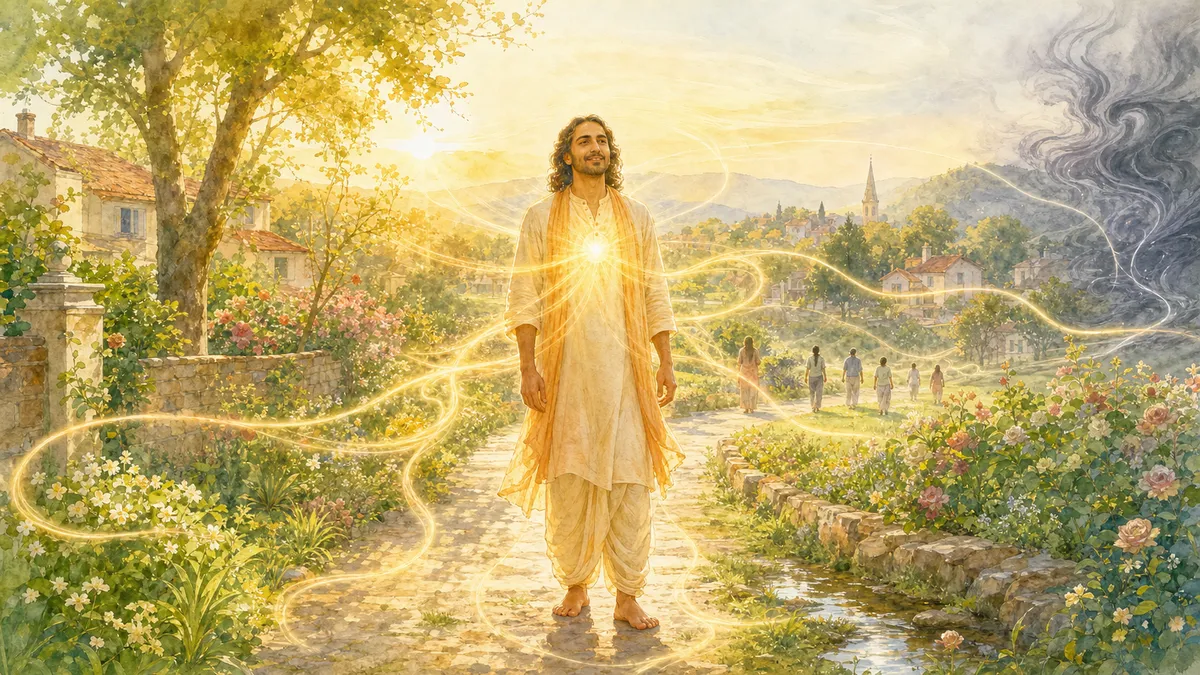
6. Primordial Consciousness is like a mirror; everything visible in the world is like reflections in it. One who has entered the natural state and has left behind being seized by reflections takes the position of the mirror, the source of reflections.
When we are in the mirror, reflections are seen as the play of the mirror’s energies. When we are seized by reflections, the mirror itself is not visible. To enter the center of Being means to leave behind being seized by reflections, to take the position of the mirror, the source of reflections. Everything visible is reflections, the play of the energy of emptiness. To enter the mirror means to enter the center of these reflections.
In essence, to accept the principle of natural self-recognition or the principle of divine pride is nothing other than to attempt to enter the status of a creator god, at least on a small level. Of course, simply by proclaiming that we are entering the status of a creator god, we will not immediately attain it, naturally, because there are levels of jnana yoga: kriya-jnana and shuddha-jnana.
Kriya-jnana is jnana that we practice as training. Shuddha-jnana is jnana that has already been realized. And at first we simply exercise ourselves in entering the status of a creator god, that is, the natural state. A long time is needed before we become established in this status. This is kriya-jnana, when we are simply training. But shuddha-jnana presupposes that we have already entered it and can truly operate with time, space, events, samskaras, and pranas solely through the power of this status.
The Path to the Center of the Mandala
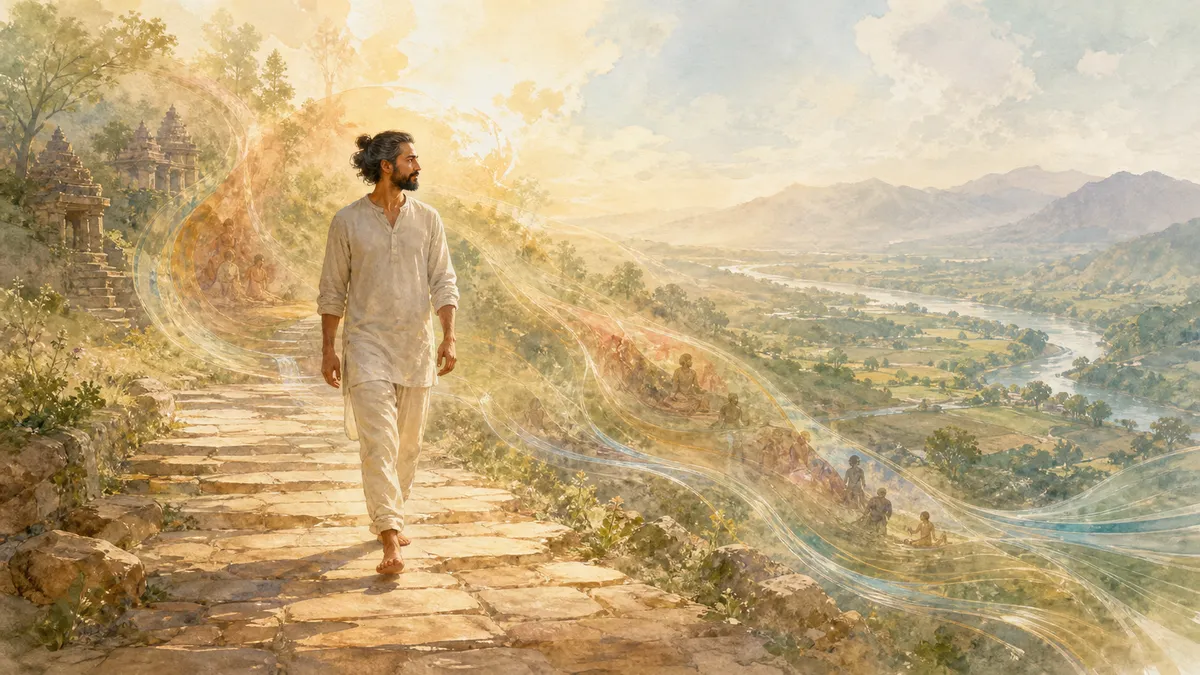
Each of you, on your path, must become such a creator god, a lord of the mandala, inseparable from non-dual consciousness. Each of you will, in time, occupy a certain status in the hierarchy of universal energies. You will be mind beyond duality, beyond all definitions; nevertheless, your energy will still live according to relative laws, be subject to hierarchy, know its dimensions, its status, and have its functions in accordance with the tendencies of karma and belonging to the family of certain deities.
Some of you will manage or spiritually guide practitioners, saving them in difficult moments in the subtle body. Some of you will manage events taking place in different dimensions. Some of you will maintain balance in the universe. Some of you will emanate your illusory bodies into the world of humans in the form of teachers, saints, and other beings. Some of you will develop certain divine projects in pure lands within pure vision. This is another life—very complex, very subtle. It is life in the dimension of play (lila), but it will proceed from the state of the creator god, of course, for the one who attains it. For the one who does not attain it, it will not proceed from this state, but simply from some purer state. And then he will be a retinue deity or a peripheral deity of some deity, siddha, or saint in the place where he is reborn in the next life—or in this life, if he becomes immortal. More or less as it happens now, perhaps in a more expanded form. But if the status of the creator god and the fullness of the natural state are realized, then any energies and their manifestations always arise from inner emptiness, and then the yogin lives as a deity at the center of the mandala.
One could say that an impure samsaric being is brought into the mandala and subdued. Therefore, in Tantrism, disciples are often called “those to be subdued.” Their consciousness was somehow attracted and purified by the power of the saints or by the power of the Dharma. Then, from being those to be subdued, they become part of the mandala—the so-called peripheral deities or retinue deities. And further practice consists in moving toward the center of the mandala. From being retinue deities, they move toward the center of the mandala.
This is not like a worldly career, such as: “I became a clerk at a company, and then I’ll become a manager. And then, who knows, I may even become the general director.” This is something entirely different—the refinement of consciousness, entry, through contemplative presence, into a subtler perception, into the center of Being. Movement toward the center of the mandala is in no way connected with external aspects.
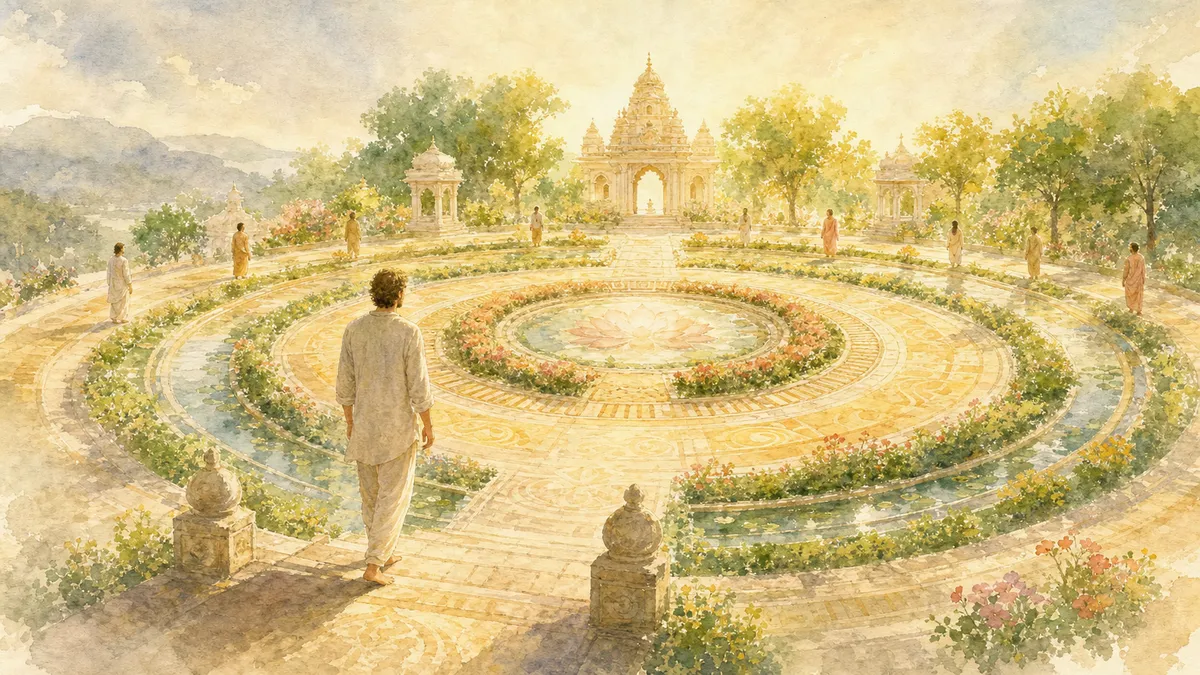
One can be at the center of the mandala while washing dishes in the kitchen, and one can be on the periphery while holding high positions—although this rarely happens, because you simply will not be entrusted with a high position if you are on the periphery. But in general, this is not a matter of the external; movement toward the center of the mandala is a subjective process. It is an ever-deepening immersion into the principle of primordial emptiness, when this principle of emptiness turns the outer world into a mandala and places you at the center of this mandala. In the process of moving to the center of this mandala, this transition from impure vision to pure vision, from karma to lila, takes place.
The Siddha-yogin and Play
1. The yogin who has realized the knowledge of the nature of Mind has understood: “I am the Creator, the Supreme Source of the visible universe”; then he sees everything manifested, all events and things, as the play of his energy.
2. In his vision, the entire world is a sacred space (mandala)—a field where the transcendental games of his energies unfold.
3. The yogin, being the Absolute, fundamentally unlimited by anything, seemingly accepts all the limitations imposed by participation in the game for the sake of maintaining it. These limitations do not exist for him and are seen as limitations only by others, whose minds cannot comprehend the yogin’s freedom.
4. The yogin is never bound by apparent limitations, knowing their source. He sees them as play. Moreover, only he can know the true meaning of limitations.
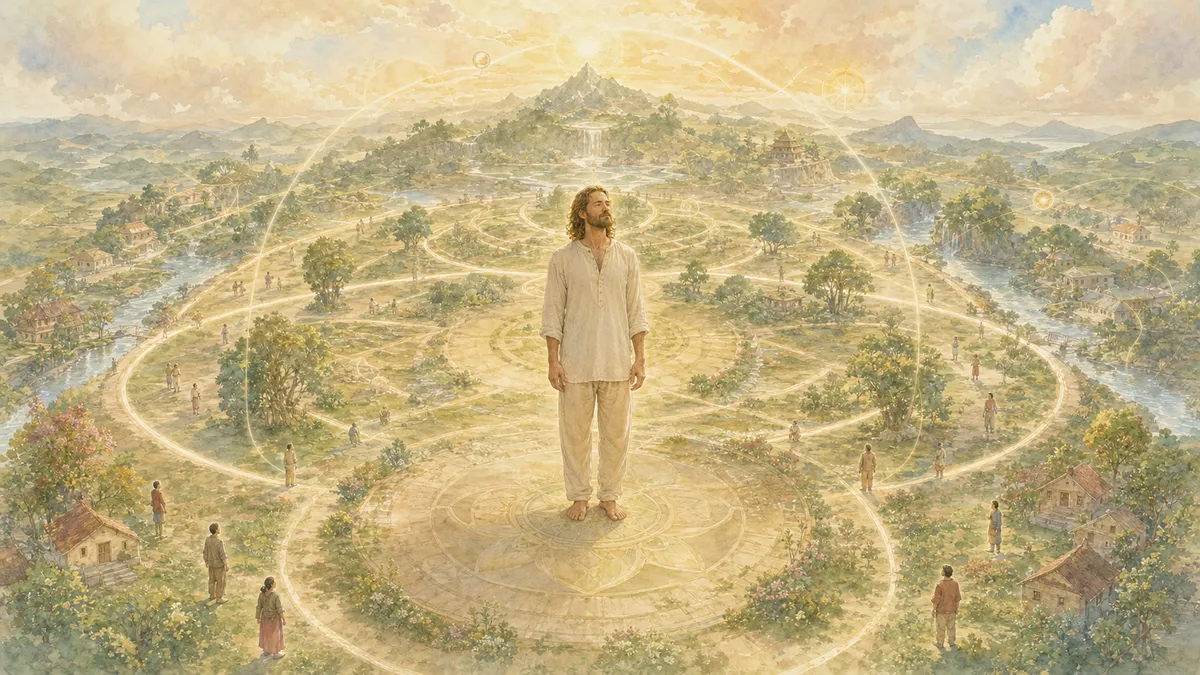
When you enter the state of the creator, into deep presence, this means that you step out of the reflections and are immersed in the mirror. Then, by the power of intention, you can govern the laws of time or space, change energies, and events begin to be connected with your consciousness. It is precisely at this stage that the mandala begins to be created.
I once heard this expression somewhere: “Things exist independently of us as long as you agree with that.” At the stage of pure vision, mandala, and lila, the yogin clearly realizes: “Things do not exist independently of us; they are always dependent on us.” Everything occurs because of interdependence. The guru exists because of the disciple; the disciple exists because of the guru. Events unfold because one person interacts with another; their subtle karmas interact. Karma exists because of ignorance. The world exists because of the subject. Even the sun does not exist by itself; it exists because you have a karmic vision of the sun.
The difference between a yogin and an ordinary person is that he comprehends everything as interdependent and connected with his consciousness.
2. The whole world in his vision is a sacred space (mandala) — a field in which the transcendental play of his energies unfolds.
The Subtlety of Consciousness and the Vision of the World as a Sacred Space
When do we see the world as a sacred space? When we have refinement of consciousness, a very great subtlety. Coarse consciousness cannot see this. Often, when I give lectures on some complex topics, such as self-liberation, I see some lay students openly begin to fall asleep, as if they had been given a sleeping pill. They cannot even do anything about it. This is a normal process. One mataji said: “I fall asleep so well during bhajan mandala.” This happens because a person enters the subconscious, udana-vayu is stimulated, and the surface consciousness simply switches off. This happens when the consciousness is still coarse and cannot grasp subtle things. But if your consciousness becomes truly subtle, it can recognize this pure vision, this mandala and lila.
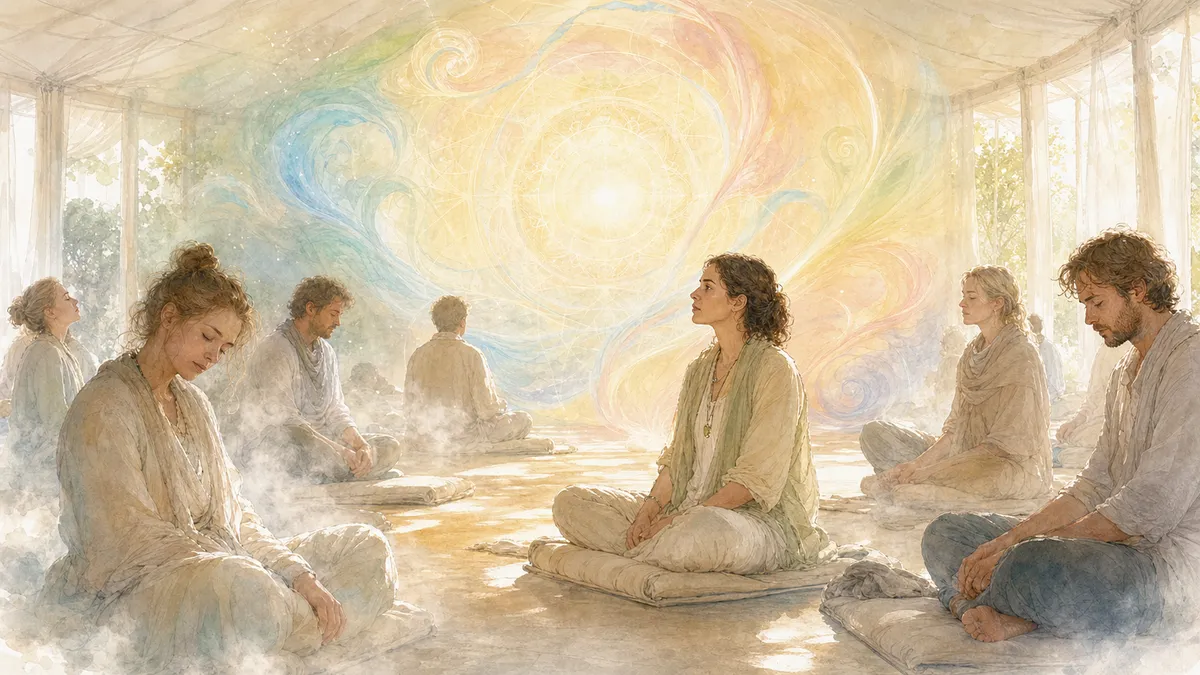
Through what does consciousness become refined? Through discriminating wisdom (viveka), which constantly accompanies you during contemplation. Viveka is the ability to distinguish one thing from another: emotions and thoughts from empty awareness. And you always see: “Here I was caught, and here I was liberated. Here he was caught, and here he was not caught.” In fact, you are not watching others, but yourself. It is just that others are also visible to you as if in the palm of your hand. Such viveka must be nurtured for years. When it appears, your consciousness will become very subtle.
What does subtle consciousness mean? Subtle consciousness is inherent in deities. It makes you harmonious, flexible, multifaceted, and multi-leveled in consciousness. It is precisely this multifaceted consciousness that allows such a mandala to be created. The mandala, the world of pure vision, is something very subtle. It is an energy that is intimately blended with the empty principle of consciousness, that emanates from it. When it is created by such subtle consciousness, it is considered that the yogin has made this transition. That is, you yourself, having entered the state of the creator-god, create the world of the mandala. Whether you create it or not depends on whether you enter the state of the mirror or continue to be seized by reflections, on how attentive you are every second of your life. Those who are impeccably attentive every second of their life, living in the mirror, inevitably create such a mandala; they become gods who operate with the categories of eternity and infinity, going beyond the limits of their small personality.
The Practice of the Divine State in Everyday Life
When you engage in service, always feel yourself to be a deity who has his own personal responsibility in service, who performs service not because the senior monk told him to, not because it is supposed to be done, but because it is his own interested choice; he wants to contribute to the mandala. When you practice, also feel yourselves to be gods who meditate with goals different from those of a limited being, because their essence is meditation.
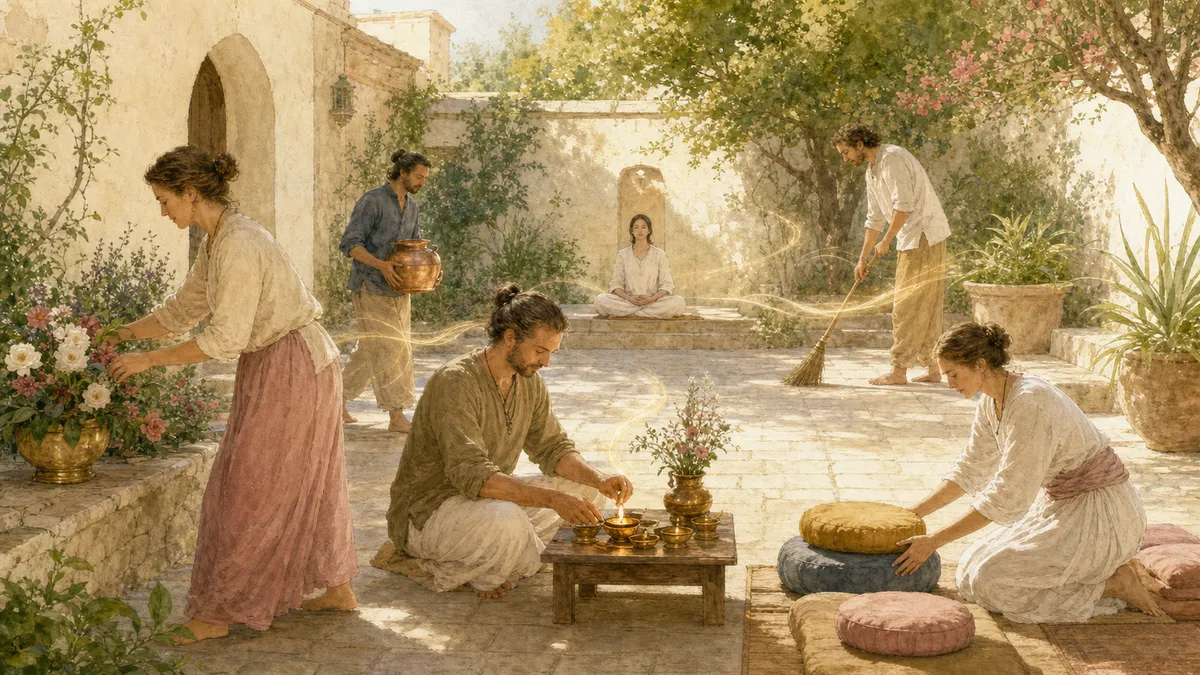
When you encounter misunderstanding, disharmony, or the impurity of others, also feel yourself to be a god. Do not react like a mediocre personality, but react like a deity who feels compassion and the desire to help another with his problem, who sees the problem not in the fact that someone has hurt or insulted him, but in the fact that he cannot help another overcome his own problem. If someone says harsh words to you, you should not think: “What a scoundrel he is; I must answer him in kind.” You should think this way: “Poor fellow, he still has a spiritual problem. What a pity that I cannot help him, since my level does not yet allow it.” This is how a deity thinks. A deity always possesses the state of one who gives, bestows, saves, and has compassion. He always has an abundance of awareness and energy. He has enough of this abundance to control himself and help others. If you have such a state, you will approach such a status of a creator-god, genuine natural contemplation.
