

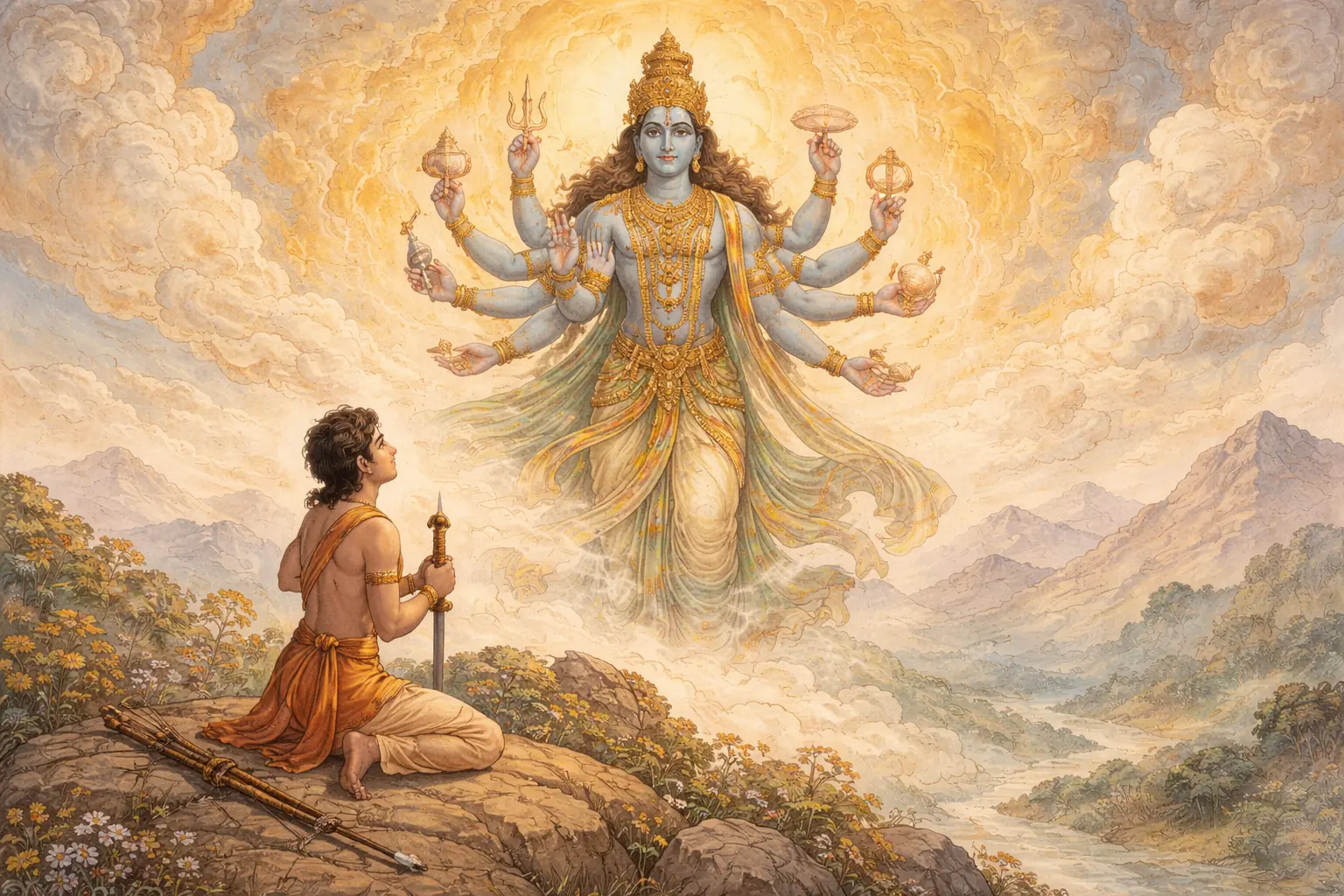
Commentary on the text “Shiva Gita,” Chapter 7, “Vishvarupa-Sandarshana Yoga” (2020-05-13)
Sri Rama said: “O Swami! I have not received clarification regarding my main doubt. How do all beings arise from your body in a comprehensible and limited form? How do they survive, and how do they dissolve into you again? How are you present in the form of Brahma and other deities who perform their duties, and how do you abide in the form of these vast fourteen worlds? Please explain this. You have already spoken about it, but this matter is still unclear to me, so I have this doubt, and only you can dispel it.”
Sri Bhagavan said: “O Rama, just as a giant banyan tree is contained within a tiny seed in this world, and when the time comes, a tree grows from the core of that tiny seed, so too do all creation and all beings arise from my body, and at the end of time they re-enter me alone. Salt dissolves in water and merges with it, and when the water evaporates, the salt regains its original form. In the same way, all these worlds are born from me and enter into me alone.”
The Fundamental Postulate of Shaivism
The fundamental postulate of the teachings of Shaivism is the idea that we are inside Shiva’s immense, gigantic body. We are inside a vast, great living being that gives birth to all worlds. All worlds are contained within this vast, great living being. And we are part of it. How we continue to live in this world depends on how we understand ourselves, become aware of our connection with this immense living being, our role, and our place; how we understand the way we should think and how to be in harmony with this immense living being; how we should contemplate and how we should interact with its energies.
Faith is when we resolve to establish a connection with this living being, when we accept this fact and decide to build a serious relationship with it in some way. Meditation means attuning ourselves to this living being in a state of stillness, having stopped the mind, while contemplation means attuning ourselves to it at all times while already in motion, regardless of whether the mind has stopped.
The more we are in harmony with this great, unified divine being, the more opportunities, freedom, happiness, and wisdom we have. The less we are in harmony with it, the more confusion, suffering, and disharmony we experience. The cause of suffering and happiness is not that someone has no money, or someone is unsuccessful, or someone has no relationships, or someone has no good fortune—all of these are consequences. The cause of suffering and unhappiness lies in whether or not one is in harmony with the consciousness of this unified divine being. Those who are in harmony with it abide in happiness and possess great opportunities. Those who are not in harmony with it abide in suffering, and their opportunities are limited—this is how the universe is structured. It does not depend on our notions of what we want or do not want; this is how the universe is arranged.
The Hierarchy of Divine Manifestations
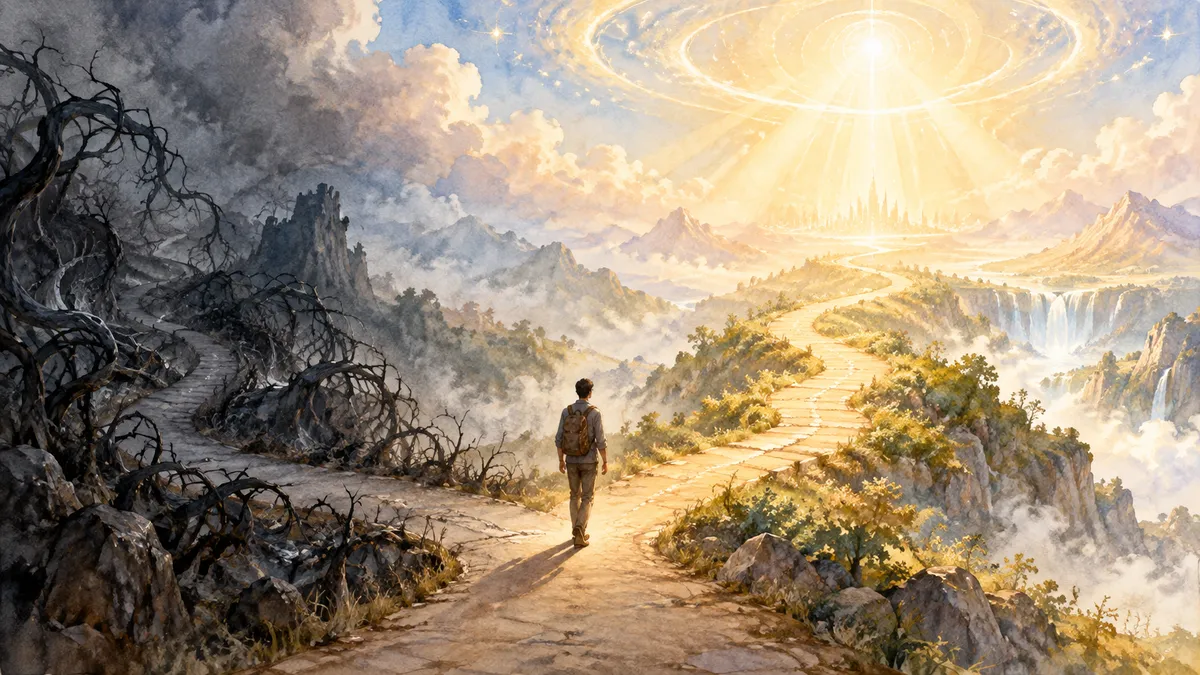
Paramashiva abides above all dimensions. Paramashiva is the transcendent Shiva beyond all limits, from whom all universes emanate. He is incomprehensible pure consciousness, and all the worlds that manifest on denser levels are contained within him as possibilities. The following example is often given: the entire peacock is already potentially contained within a peacock’s egg, including the colors of its tail. The egg represents potential, a condensed concentrate, and this is Paramashiva, this peacock’s egg. All worlds are contained within him as in a condensed concentrate.
Then the period of unfolding, the manifestation of the tattvas, begins, and Shiva as such manifests. First there was Paramashiva—this condensed concentrate in which nothing is manifest, though everything exists as possibilities—and then Shiva as such manifests. Shiva as such is the first Shiva-tattva; it is the infinitely perfect “I” without any admixtures, the ultimate, infinite, blissful subjectivity.
In the dimension of Shiva, he is the lord of this space, the lord of this primordial emptiness of the universe, but there are already living beings there who are aware of themselves as parts of Shiva; they are called akalas or shambhavas at the level of Shiva-tattva. Akalas, shambhavas, are infinitely aware of themselves as the perfect “I” without any admixtures, and they constantly enjoy the joy of being as infinite pure consciousness endowed with infinite power.
Then comes Shakti: a vibration, the potential of creation, a kind of reflection, emanates from Shiva—this is called Shakti-tattva. Shakti is the supreme deity of this dimension, and akalas also dwell there. Akalas means those without attributes, formless and without qualities, but they are already called shaktas. Shaktas are cosmic beings embodying the potential for the manifestation of energy, vibration. They too are infinitely perfect “I”s without admixtures and likewise enjoy the joy of being as infinite pure consciousness.
Following this, a being called Sadashiva appears. Sadashiva is a hypostasis of Paramashiva who controls Sadashiva-tattva, the supreme Lord of Sadashiva-tattva. The supreme Lord of Shiva-tattva is Shiva. The supreme Lord of Shakti-tattva is Shakti. The supreme Lord of Sadashiva-tattva is Sadashiva. At the level of Sadashiva-tattva, the deities subordinate to Sadashiva are the mantramaheshvaras. These too are formless beings who are pure consciousness; they realize nonduality and unity in various aspects and manifestations. They enjoy unity in eternal being in the state of “I am this.”
Following this comes the supreme deity of Ishvara-tattva, called Ishvara. Ishvara rules over the mantreshvaras. The mantreshvaras also enjoy the nonduality of consciousness in various states, in eternal being, but this eternal being is experienced as “this is I”—these are the deities of Ishvara-tattva. They are creator gods—infinite, eternal, perfect—who create the universe as though drawing its blueprint, producing the most transcendent designs of the universe and initiating the plan of creation. In Sadashiva-tattva, the deity of Sadashiva-tattva is dominated by the sense of “I,” while the deity of Ishvara-tattva is dominated by the sense of “this,” that is, tendencies toward what is already external.
Below Ishvara abides the deity Anantanatha. Anantanatha is the infinite Lord: “ananta” means infinite, and “natha” means Lord. Anantanatha controls Sadvidya (pure divine knowledge), the fifth tattva. His charges are the deities called mantras and vidyeshvaras—fully enlightened, pure, perfect beings. They are divinely powerful, pure, infinite superintelligences enjoying the bliss of being. Here, “I” and “this” already exist in separation; nevertheless, they share a single foundation of consciousness.
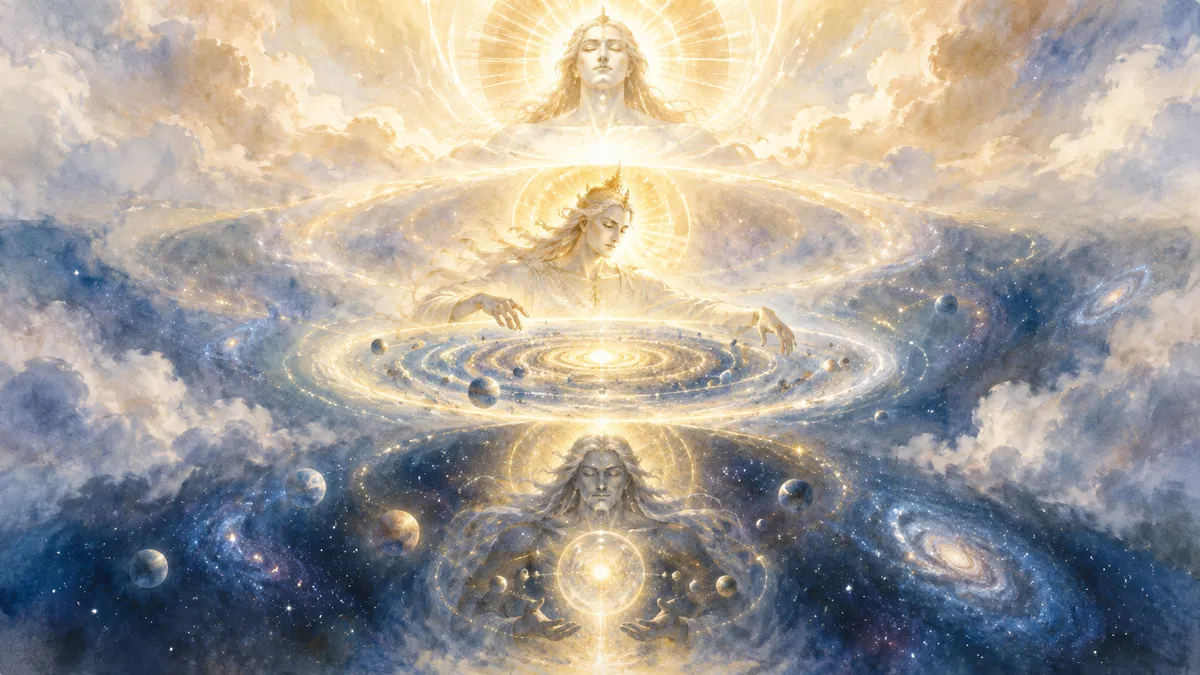
Below Anantanatha is a hypostasis of Shiva called Lord Shri Kanthanatha. Shri Kanthanatha is precisely the Lord of the entire material cosmos, the entire material universe. He encompasses the twenty-three tattvas from buddhi to earth: while Anantanatha controls the tattvas in the realm of buddhi, Shri Kanthanatha controls the tattvas from buddhi down to earth, to material Prakriti, to the very depths. It is believed that it is Lord Shri Kanthanatha who shakes Prakriti (material energy) at the moment of its destruction, though he also shakes it from time to time in general; to shake it means to bring about changes within it. When Shiva’s dance is depicted, it is precisely Shri Kanthanatha who dances in this way with the material gunas and tattvas.
The Shiva whom everyone knows from images—with the moon in his hair, with the Ganges, dwelling on Kailasa together with Parvati, and taking part in various divine plays as an avatar—is an avatar of Lord Shri Kanthanatha, one of the eleven Rudras. He is called Umapatinatha (the Puranic Umapatinatha), that is, the lord of Uma described in the Puranas, the husband of Uma dwelling on Kailasa. He is an avatar of Shri Kanthanatha, his manifestation. His principal manifestations are the eleven Rudras, which is why a Shiva yajna always lasts eleven days, with each aspect of the Rudras being worshiped in turn.
Thus, there is Paramashiva as the supreme transcendent Lord, then Shiva, then Shakti, then Sadashiva, then Ishvara, then Anantanatha, then Shri Kanthanatha, and then Umapatinatha; and we worship the form, and this form of Umapatinatha is Shiva as the Lord of Uma dwelling on Kailasa. Depending on our capacities, within this form we may discern Shri Kanthanatha, Anantanatha, Ishvara, Sadashiva, Shakti, Shiva, and even Paramashiva. When we worship in the spirit of Advaita, we discern Paramashiva. Paramashiva is the supreme Brahman. When we worship in the spirit of Shaivism, we mean Paramashiva, Shiva, and Shakti.
Thus, Shiva rules over the akalas known as Shambhavas. Shakti rules over the akalas known as Shaktas—not “rules” in the ordinary sense, since there is no element of control there as we usually understand it, but rather reigns over the realm inhabited by these divine beings. Sadashiva reigns over the realm of the Mantramaheshvaras and governs the Sadashiva Tattva; he governs the tattvas, while he reigns wherever divine beings dwell. Ishvara governs the Ishvara Tattva and reigns over the realm of the Mantreshvaras. Anantanatha governs the Sadvidya Tattva and reigns over the realm of the mantras and Vidyeshvaras. Shri Kanthanatha governs the twenty-three tattvas from buddhi to earth and, accordingly, reigns over all divine beings in this manifested abode. Such is the structure of the universe, the structure of Shiva’s inner body. To comprehend this inner body of Shiva is a great sacrament, a profound mystery.
Divine Vision and the Power of Consciousness
Shri Rama said: “O Mahanubhava! No matter how you explain this concept to me or what examples you give, I, like a bewildered person unable to grasp something, cannot understand it properly. What should I do?”
Shri Bhagavan said: “O Rama! All this moving and unmoving creation dwells within my womb. You do not possess sufficient power and capacity to witness this spectacle. With these physical eyes, without my grace, neither a human nor a deity can behold my radiant cosmic form. Therefore, O son of Dasharatha! I grant you divine vision (divya-drishti). Do not be afraid, and behold my divine cosmic form well.”
We are unable to discern the depth of Shiva’s consciousness, Brahman underlying the universe, because of insufficient power of consciousness and insufficient shakti (energy). Every living being possesses a certain power of consciousness; this power of consciousness is the ability to penetrate the mysteries of the universe, the mysteries of the tattvas, and the mysteries of the Absolute. For example, an insect possesses one degree of consciousness, an animal another, humans a higher degree of consciousness, the pitris an even greater degree, and the gandharvas and yakshas an even greater degree of consciousness. Siddhas and vidyadharas possess an even greater power of consciousness, rishis still greater, and devas and mahadevas greater still. All this is determined by our level of energy and by the strength and purity of our consciousness.
At a certain stage, liberation from impure, conditioned, dualistic vision occurs when our consciousness gains sufficient power. Shiva grants Rama divya-drishti (divine vision), temporarily lending him his own power of consciousness. If a deity, sadhu, or siddha is very powerful, he can temporarily give his power to another, lending him his strength.
For example, two siddhas were walking in the Himalayas. One of them left the imprint of his hand and foot in a rock. The other laughed, took his dog, transferred power to it, and left an imprint in the rock with the dog’s paw; that is, the dog temporarily acquired such siddhis.
Once, siddhas were traveling through the Himalayas, but another yogin was only a beginner. A siddha said, “Hold tightly to my bag.” He grasped the bag, and they were instantly transported from the Himalayas to Europe. These siddhas themselves were legless invalids because, sometime in the eighteenth century, they had taken part in a war and been wounded. After being injured, they spent the rest of their lives sitting in a cave in the Himalayas, attained liberation and siddhis, yet their physical bodies remained unchanged. They had no legs, but through the power of siddhi they could travel throughout the world and even transport other people. This is an example of how power can be transferred, and Shiva temporarily imparted a portion of his power so that Rama could behold him.

The Five Stages of Kundalini Yoga
What gives rise to such penetrating consciousness? Meditation, concentration, and kundalini yoga. Kundalini yoga has five stages, which are experienced in ascending order.
When kundalini awakens and the channels are purified, the first stage is called ananda, when a flash of realization and the taste of bliss are experienced, consciousness expands, and energy rises through the sushumna to the sahasrara.
The second stage is called udbhava. Udbhava means a brief penetration into the subtle light of pure consciousness, when you encounter a light flashing like lightning. This means that the sushumna is pure, the chakras are cleansed, the channels are cleansed, you have sat in padmasana long enough, sufficiently united prana, apana, and samana, and the kundalini has risen unobstructed; for a time, you have penetrated the inner subtle light, and this light lies beyond ordinary consciousness. This energy causes the body to experience a sudden upward jolt—this is called udbhava.
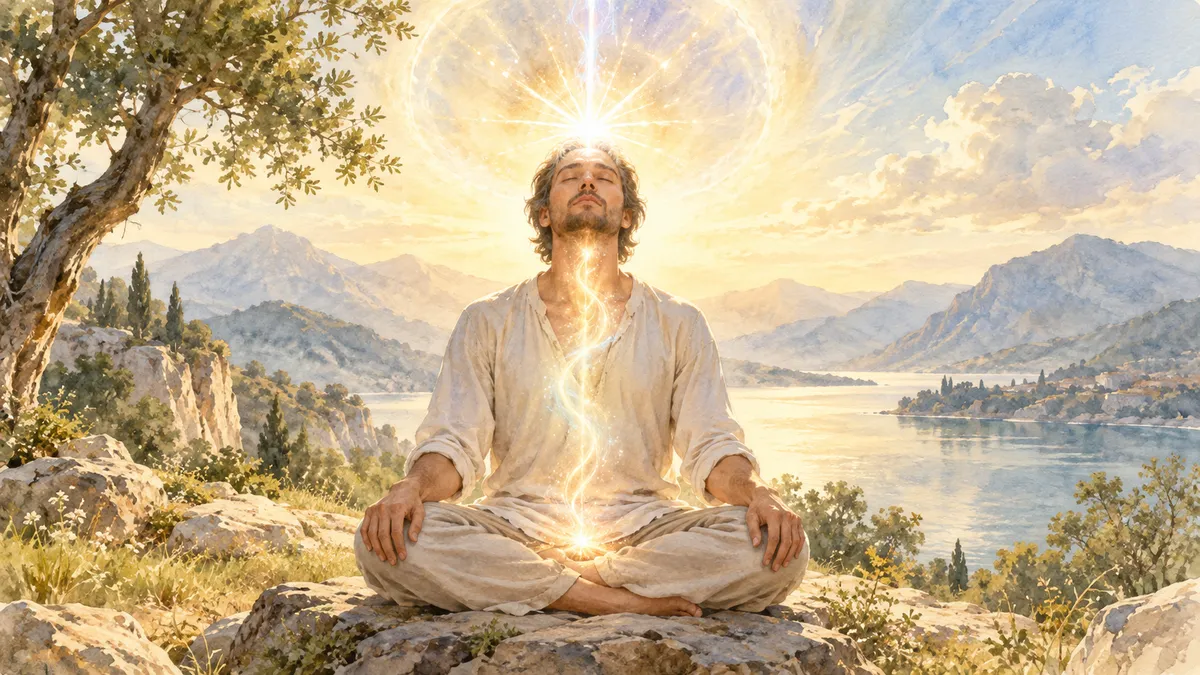
The third stage is called kampa. Kampa means the trembling of the body as ordinary awareness is filled with the experience of divine power and identification with the body dissolves into pure consciousness. Has anyone experienced their body trembling or bouncing during pranayama? Everyone should experience it; you need to practice kumbhakas properly: the body bounces, you do pranayamas, and it bounces even more. When your kumbhaka reaches two and a half or three and a half minutes, the body begins to tremble and bounce, and if you extend it to four kumbhakas, it begins to leap all over the room, because immensely powerful energy is surging from within, from the coccyx. During the retreat, try kundalini yoga.
This is also called dardri-siddhi, bhuchari-siddhi (the power to leap like a frog); it seems to you that you simply want to jump, while from the outside it looks as though you are leaping all over the room. But it is not that you are deliberately jumping—you simply feel the urge to leap because some incomprehensible force is bursting forth from the coccyx, tossing you up again and again. With a great deal of practice, the body may even become suspended in the air, but your channels must be exceptionally pure.
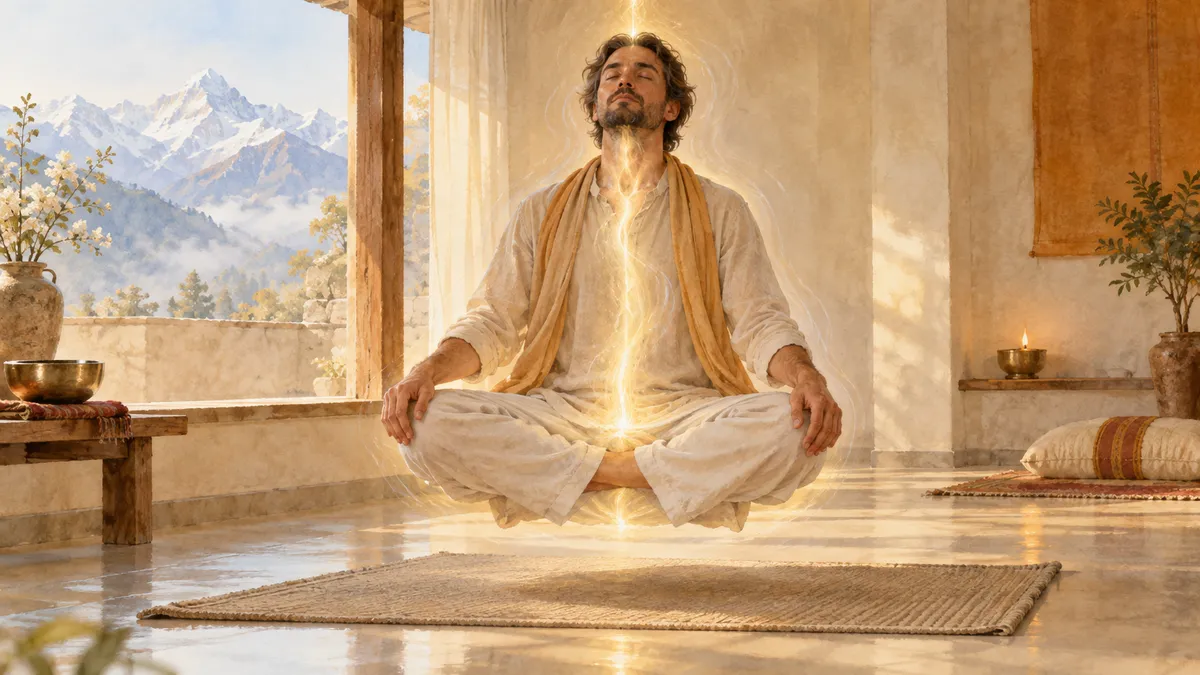
There is a method that allows one to make the body light and remain suspended in the air for some time, but one must concentrate on this a great deal. However, this is not the goal; the goal is to reach the stage called kampa. If you have reached the kampa stage, then as soon as you begin to practice pranayama at any moment, it means that your kundalini has awakened, and you have experienced baptism by fire and water and entry into the light; at this stage the subtle body also begins to emerge. You may also be able to read thoughts to some extent, see distant events or the future and the past, read the memory of a place, or glimpse past and future lives, and your dreams are vivid. This is a sign that you have reached the kampa stage in kundalini yoga.
The next stage is called nidra. Nidra means sleep, or ghurni, or maha-vyapti. At this stage, until the practitioner becomes established in pure consciousness, they experience drowsiness and a kind of transition into the subconscious, a transition into the subtle body; a slight spinning of the head occurs, caused by ecstasy upon realizing the universal I-consciousness. This is the ghurni stage. At the ghurni stage, or nidra stage, you often enter a trance-like state of the subtle body. Even if you have practiced only a little pranayama, vibrations arise, then the head begins to spin, and prana saturates the sushumna nadi and the bindu visarga; nectar begins to flow, the subtle body becomes activated, a vision arises, you are drawn into the vision, and you easily enter savikalpa samadhi. Or you lie down in shavasana, the energy rises through the sushumna, condenses in the ajna chakra, all the senses withdraw, the body becomes weightless, and you slip out of the body. Having slipped out of the body, you travel either to another world to communicate with some divine beings, or wander through this world, understanding that I am not this body.
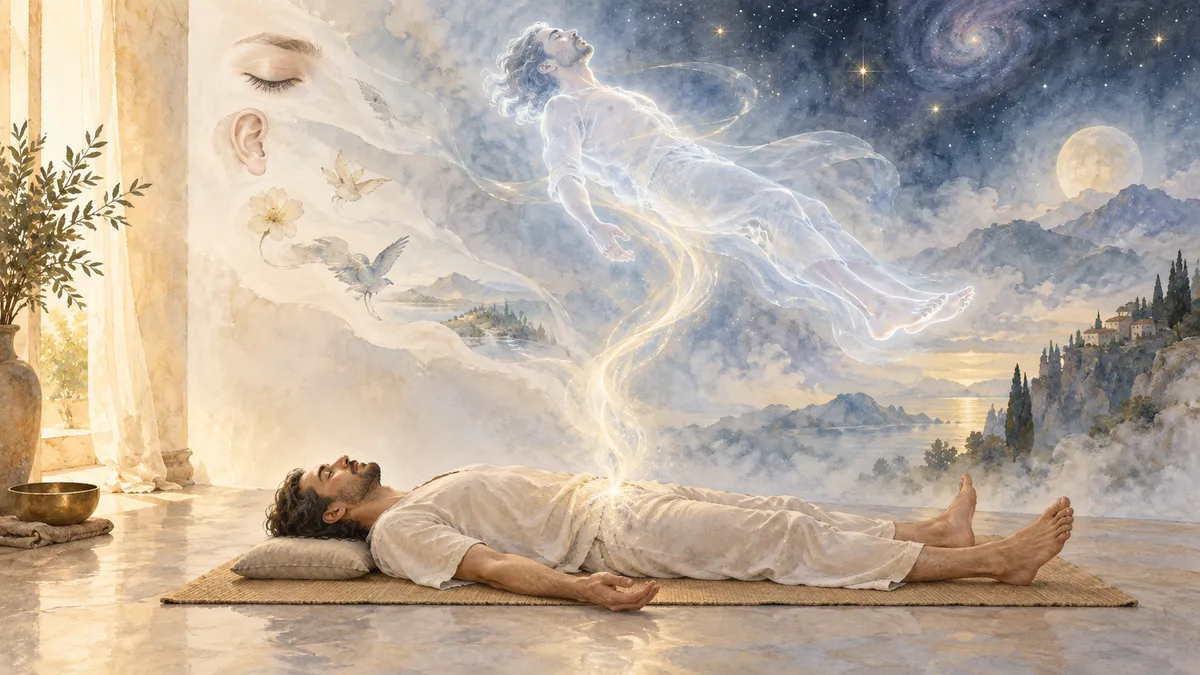
The next stage is called anava-samavesha, which means absorption in one's “I.” At this stage, you pierce the subtle body and enter the causal body; you are absorbed in the boundless space of pure awareness and light. At this time, white and white-golden light is experienced, like descending white dust above the crown of the head. Breathing stops, and the yogi can remain in samadhi for a long time.
Yogis who have successfully realized the kampa stage and the nidra stage can leave their bodies and travel in the subtle body, and can even make it visible temporarily, condense and materialize it for a time, and make it solid.
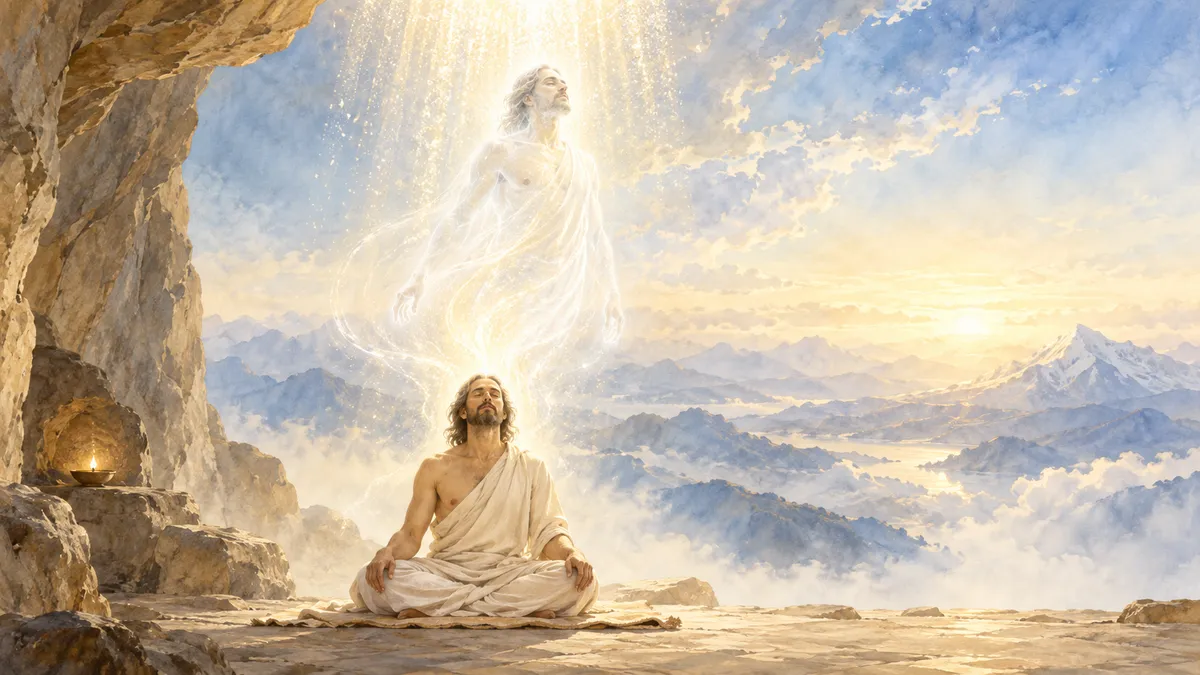
A long time ago, back in 1999, while practicing in a dark retreat, a disciple of mine had a similar experience. I personally sealed the door of his dark retreat room with a plasticine seal, so he could not leave, and I kept an eye on the seal. He left his body and went to communicate with a layman in his subtle body. He came to the layman’s home and spoke with him; the layman did not even realize that he was in a subtle body. Then he dissolved—simply vanished—and the layman was so shocked that he donated his country house for retreats and left for Israel.
This is the nidra stage, but at the stage of anava-samavesha, the yogi transcends the subtle body and becomes absorbed in his higher Self. He drinks the nectar of divine Self-realization and proceeds to the next stage, called Shiva-samavesha. He goes beyond the experiences of Kundalini Yoga, and this is where Jnana Yoga and Laya Yoga begin. He begins to be absorbed in Brahman.
Traveling in the Subtle Body and Exploring the Subtle Worlds
Many yogis are in no hurry to become absorbed in the higher Self, attain Shiva-samavesha, and reach the highest stages after realizing Kundalini Yoga, because their karmas still require them to develop the subtle body. Instead, they enter samadhi, leave their physical body in a cave, and live in the subtle body for extended periods—several months or even years. They create a subtle body and travel through the subtle world, studying the structure of the universe and communicating with gods in various worlds.
Some create a gross physical body and travel the earth unrecognized. Their physical body sits in a cave in samadhi, while their subtle body condenses and becomes dense, and they create another physical body. If they have any unfulfilled desires, they can fulfill them in this body.
For example, the siddha Hari Baba—once Pilot Babaji saw him in Europe, at a casino in London, wearing an elegant suit. He was placing bets there, won a great deal, gave all the chips to Pilot Babaji, and then disappeared. Yet this was not his physical body; it was a gross body created by the power of the mind—the physical body had not crossed any borders.
Many enter the bodies of animals or birds in this way; others walk among people and amuse themselves while their physical body remains in samadhi. They simply play in this world; that is, they truly perceive this world as an illusion, as a dream, and genuinely abide in the dimension of lila. It is difficult even to say what they do, what mysteries and unfathomable games they engage in.

Some, in such a body, can preach, perform seva, and build temples, even though their physical body may remain in samadhi for a long time. Guru Nanak helped carry earth and build temples together with others while in his divine illusory body.
There was a Tibetan saint, Mother Machig Labdrön, the founder of the Tibetan practice of Chöd, but in reality she was an ascetic who sat in a cave and left his body, creating an illusory body in the form of a woman. He preached the teaching of Chöd, and this woman had five children, a husband of some sort, and she herself was a novice nun. These five children later became siddhas—all of this was the mad play of that hermit-ascetic sitting in a cave. Many were displeased that she was preaching the teaching and came to find out what kind of teaching it was. He would say, “I am not a woman. I am an ascetic, and my body is sitting there in the cave.”
Question: Guruji, how can one attain true devotion? Genuine devotion, so as to truly relinquish the ego.
It is the work of a lifetime. Pure devotion is the greatest thing, even more difficult than Kundalini Yoga. One must invoke divine grace always and everywhere, through japa and through attunement with the saints.
Many people remain at the nidra stage in order to explore the subtle world and the subtle body, and gradually arrive at anava-samavesha (absorption in the higher Self) and Shiva-samavesha, because it is an enormous leap to jump directly from the earthly world of the thirty-sixth tattva to the first tattva. A great deal of subtle karma must be dissolved in the subtle and causal bodies; therefore, there are many sadhus whose bodies have been preserved on earth for thousands of years and who are jangamas in the subtle body—cosmic wanderers throughout the entire universe. All of these are processes of Kundalini Yoga.
Shiva’s Universal Form
Shiva lent his energy so that Rama could see his universal form; therefore, this chapter is called “Vishvarupa-Sandarshana-Yoga.”
Suta said: “Having said this, Lord Shiva blessed Rama with divine sight. Then Lord Shiva opened his mouth. It was as vast as Patala-loka and shone brightly with billions of lightning flashes. Seeing this terrifying sight, Shri Rama, trembling with fear, fell to his knees on the ground. He prostrated himself on the ground and prayed to Lord Shiva many times.
Then the mighty, armed warrior Rama, having regained some strength, once again looked upon the cosmic form of Ishvara, the destroyer of the three cities. He beheld billions of universes, like peanuts being scorched by blazing fires. In Mahadeva’s mouth, he saw Meru, Mandara, Vindhya, immense mountains, the seven great oceans, the sun, the moon, the planets, the five elements, all the deities, and all the dense forests.
He also saw the mighty serpent Adi-Shesha and the fourteen worlds; in each universe, he witnessed the wars between the deities and demons, as well as their causes and consequences. He also saw the ten principal incarnations of Lord Vishnu and their roles, duties, and deeds. He beheld the valor of God and Shiva’s destruction of the three cities. He saw all beings who were yet to be born, those who had been born in the past, and those who were being born in the present.”
Shiva showed him his universal form. The universal form means, first and foremost, the five Tattvishvaras (the five ruling deities) that we discussed, who govern the five pure tattvas—namely Shiva, Shakti, Sadashiva, and Ishvara, as well as Lord Shri Kanthanatha, the ruler of this universe and all the worlds under his governance.
The universal form appearing as various avatars and deities is a distinctive feature of Ishvara. If you have read the “Bhagavad Gita,” Krishna likewise showed his universal form to Arjuna when Arjuna asked questions, and Krishna granted him darshan in the form of Ishvara. Here Shiva grants Rama darshan of the universal form.
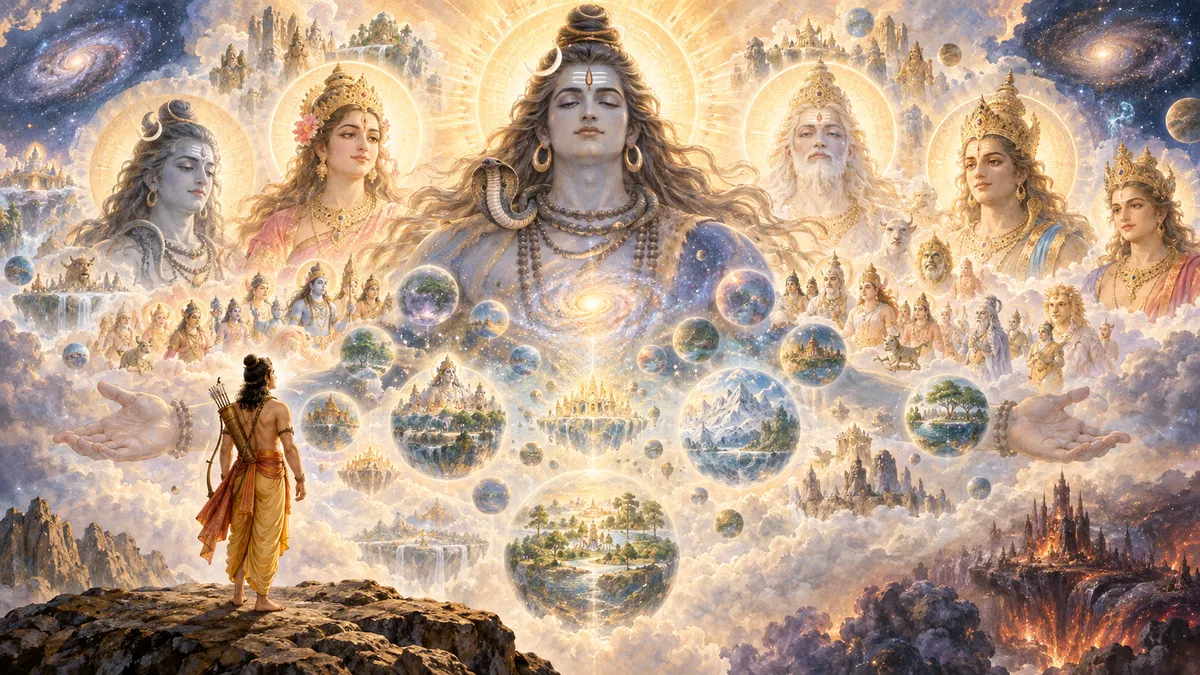
The universal form signifies the complete union of the nondual view and relative conduct, the complete union of relative and absolute truth, which is inherent only in Ishvara. The universal form means that a living being is able to see reality as it is—the divine reality in its pure dimension, as it is not ordinarily visible—and to perceive all worlds, all times, all deities, and all tattvas simultaneously.
“Moreover, he saw the destruction of all creation. Seeing this terrifying sight, Shri Rama, although he was a wise man, trembled with fear and paid homage to Lord Shiva again and again.”
Rama’s Hymn in Praise of Shiva
Then Rama sang the quintessence of all the Upanishads as a hymn in praise of Lord Shiva: “O Supreme God! O Lord who removes suffering whenever it pleases him! O Lord of the Universe (Vishveshvara)! O You who are worshiped by the world (Vishvavandhya)! O Lord who bears the Goddess Ganga upon his head! O You who wear the crescent moon! Be merciful to me. I am now like an orphan. Please protect me from the fear of samsara.
O Ishvara! Just as trees are born and die upon the earth, so too all these universes were born from you, abide in you, O Shiva, and dissolve into you alone! O Bearer of the Trident! Brahma, Indra, the Maruts, Gandharvas, Yakshas, Asuras, and Siddhas; the Ganga and other great rivers; the seven great oceans—all abide in you, O You who wear the crescent moon.
Your Maya (illusion) created this entire universe; it becomes visible only within you, yet because of ignorance, people remain under the influence of illusion without realizing it. You alone are the one whose radiant light illuminates all these worlds. O Primordial Lord! O Mahadeva! If your light were absent for even a moment, these universes would cease to be visible!
A tiny particle cannot support an immense object, yet within your mouth I see all creation being sustained. All this is your Maya. O Nilakantha, just as a snake dwells in an anthill, so too within you, the one and only Atma-svarupa, all universes are born under the influence of your supreme power of illusion.
Even if, upon comprehensively analyzing reality, I say that your body is the foundation of this entire cosmos, this would merely testify to my ignorance. You abide in everyone in the form of consciousness and bliss.”
Types of Bliss in Brahma-vichara
If you practice Brahma-vichara, you experience different kinds of bliss. These kinds of bliss are a reflection of the universal bliss of Ishvara (Shiva). If you practice Brahma-vichara, viveka arises within you, and you begin to discern the forms of Ishvara and the various powers and energies. Your mind acquires a certain line of reasoning (yukti), a certain rigor that always directs you toward God.
Acquiring such yukti, connected with God, with Ishvara, is very important because your mental energy becomes ordered, and you never fall prey to delusions associated with feelings, emotions, or thoughts. Always and everywhere direct your mind toward God.
Question: Guruji, when some intense karmic fear surfaces, that is the very moment when you either offer it up or succumb to it. This fork in the road arises periodically—this is the very time to make the offering.
It is indeed the right time; never miss it. Experienced sadhus offer it while abiding in sahaja-amanaska, in sahaja-avastha (the natural state). Beginners make such an offering through the mantra “Om Namah Shivaya” or other mantras, such as the “Brahma mantra,” and so on, or the mantra of their ishta-devata.
What types of bliss are experienced?
The first type is called nijananda—this is bliss associated with emptiness (shunya), the natural experience of bliss when contemplating one’s own individual self-consciousness. It is experienced in the waking state and allows one to enter the dream state (jagrat-svapna), and this bliss is associated with prana.
The second type of bliss is called nirananda—this is the bliss of contemplating empty individual self-consciousness; it is also associated with prana and is experienced in the state of jagrat-svapna. When you begin to experience these types of bliss, it means that you are beginning to experience the profound levels of Shiva.
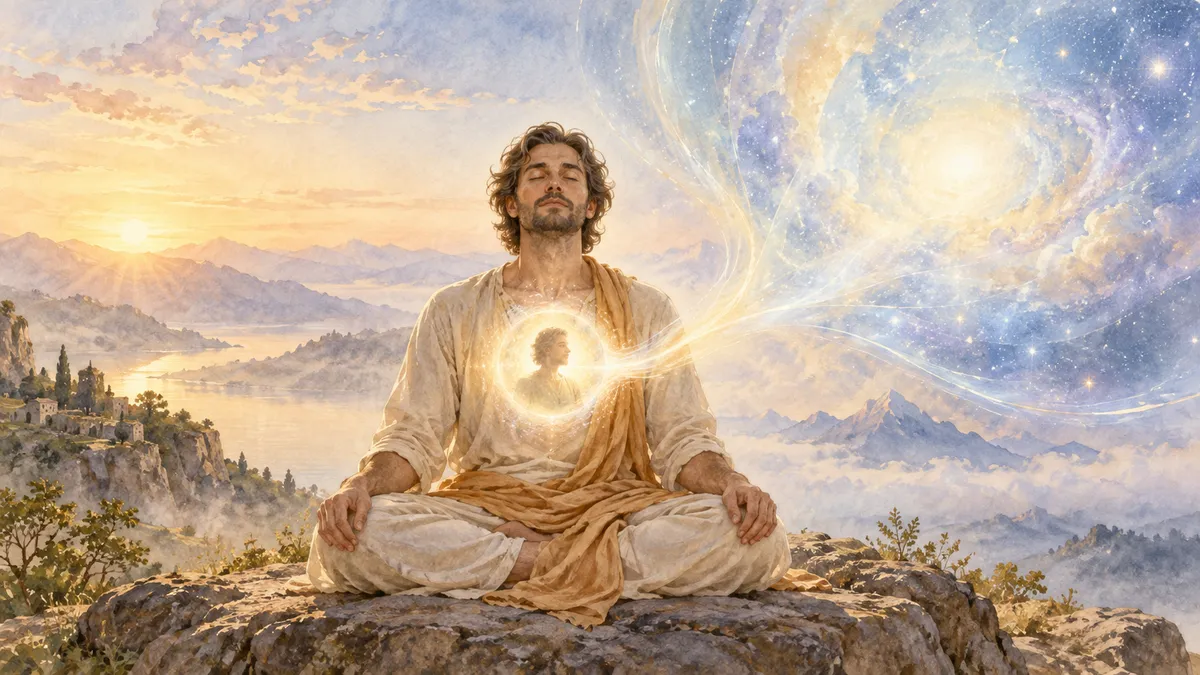
The third type of bliss is called parananda. This bliss is associated with apana, and it too is experienced in the dimension of jagrat-svapna. The practice of relaxing as active prana rises, joyfully absorbing all objective existence and being contemplated in apana, produces a surge of the state of bliss—this is how parananda is experienced. To put it more simply, your contemplation or your energy comes to rest in the svadhisthana chakra; the svadhisthana chakra is purified, and empty awareness awakens in the svadhisthana chakra. Apana enters the sushumna, and subtle bliss arises—an experience of emptiness in the area of the svadhisthana chakra.
The fourth type of bliss is called brahmananda. In it, the unified aspect of all manifestations of the external world is contemplated, ecstasy occurs, and this is attained through the work of samana-vayu. One enters the dimension of sushupti (dreamless sleep). One who has attained bliss at the level of brahmananda begins to be aware of oneself in dreamless sleep. One who has attained the first three types of bliss begins to be aware of oneself while dreaming.
The experience of awareness in dreamless sleep is attained through control of samana-vayu and entry into the causal body—this is control of the fire element (samana-vayu).
The fifth type of bliss is called mahananda. Udana-vayu dissolves all notions of objects, the knower (pramata), the means of knowledge, pramanas, the object of knowledge (prameya), and the means of knowledge (pramana). The yogin enters the unity of subject and object. Mahananda is experienced when working with udana-vayu, when udana-vayu is active through meditation, contemplation, and kundalini yoga; with the help of udana-vayu, mahananda is experienced in the dimension of turiya—going beyond dreamless sleep into the transcendent fourth state.
The sixth type of bliss is called chidananda—this bliss is experienced through vyana-vayu and is associated with entering turyatita, an even higher dimension. Chidananda is the all-pervading vital force of vyana-vayu, the cosmic universal prana, eternally free from all external vessels, upadhis (limitations), and independent of any external things. It gives rise to bliss without requiring any object. It is the subtlest cosmic prana, vyana-vayu, universal and diffused throughout the entire universe, throughout all creation. It makes it possible to enter the dimension of turyatita. It is from vyana-vayu that the divine illusory body is created in the yoga of the illusory body.
Finally, there is also jagadananda—the highest and subtlest bliss. It is the fundamental, infinite, supreme bliss of absolute consciousness, shining through its universal omnipresence, which eternally increases through the nectar of perfect consciousness. This is how it is described in the Tantra-loka. Jagadananda is the very bliss of Shakti-tattva, the subtlest bliss as the happiness inherent in primordial creation, no longer connected with any of the winds in the human body. It is experienced only by pure consciousness.
Absolute and Relative Truth in Worship
“O Destroyer of the Three Cities (Tripurari)! It is said that you bestow rewards upon those who satisfy you by performing great deeds, but this too has now become an absolute falsehood, for there is nothing other than you (or distinct from you), O Lord. In their recklessness, ignorant sages teach that you are pleased by worship, upachara, and gifts of various offerings. Of what use are comfort and pleasures to you, who are beyond form?”
Rama penetrated the non-dual essence of tattva; he attained insight. This does not mean that he fell into nihilism; rather, he understood the absolute aspect of Shiva and realized how insignificant human offerings and human conceptions of Shiva are.
“You become greatly pleased with a person who offers you bilva leaves with water, and you can grant him the kingdom of the three worlds as a gift, yet I still doubt this belief as a conviction born solely of ignorance. You are the primordial Purusha (Consciousness), who alone pervades the directions and the entire world. Even when they are destroyed, you remain indestructible, pervading the ether (space).
Just as a single sun appears as many when seen reflected in many pots, so you alone exist, yet to the eyes you appear dual. There is no particular benefit to you in the creation, preservation, and dissolution of the universe. Because of the accumulated bodies founded on karma, you cause them to arise, remain, and dissolve within you, and you unfold them as a game in a dream.”
Since all creation is entirely unreal, the Absolute (Shiva) does not actually need anything such as offerings.
Here Rama sets forth the true facts of Vedanta, but this does not mean that what the sages said was absolutely wrong and absurd. After Rama saw the cosmic form of the Absolute, he became filled with Vedanta, and so he uttered the words above; but in reality, both Rama and the sages are right.
There are two orders of reality: the absolute order of reality and the relative order of reality—vyavaharika. Since all creation is entirely unreal and the Absolute (Shiva) does not actually need anything such as offerings, because there is nothing other than him, then, within the absolute order of reality, it is true to say that making offerings to Shiva is foolish. Understanding can be attained only after realization, but God does not have a heart of stone that would reject what is offered with love. If we are devotees and offer bilva leaves—or indeed anything at all—with complete love and feeling, Shiva will certainly be pleased.
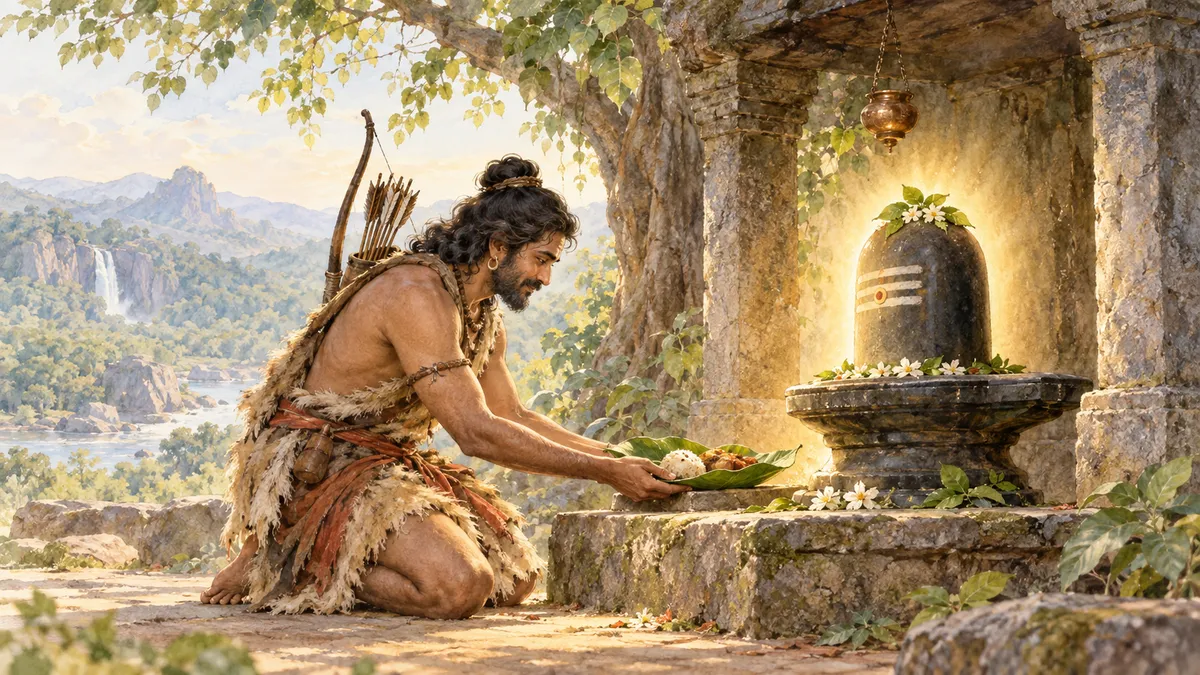
The devotee (bhakta) Kannappa was a hunter. Out of pure devotion and love for Shiva, he thought that Shiva might be hungry. To fill Shiva’s stomach, he offered him pork, and Shiva gladly consumed it. Here the ultimate truth, the absolute order of truth, does not apply. This is a tattva that should be understood in light of the relative order of truth. Shiva did not assess what knowledge of the Absolute this person possessed. Shiva valued him on the basis of the magnitude of his love for the Lord.
There are different paths to attaining Shiva. The most important among them are bhakti and jnana. Bhakti exists within relative truth, while jnana operates in the absolute, but ultimately both lead to Shiva. Therefore, what the sages said, they did not say out of ignorance, but in the sense of relative truth. What Rama realized is an absolute fact in the sense of absolute truth, and therefore Rama is also right in his own way.
Consequently, both Rama and the sages are right from their respective perspectives, and readers, based on their inclinations, may choose the path of bhakti or jnana.
“O Lord who destroyed the three cities! There is not the slightest difference between you and the gross, subtle, and causal bodies of the jiva. That is why the Vedas say that you alone are the cause of all happiness and sorrow. O Lord of lords! O Mahadeva! I offer my respects to you—the swan in the ocean of existence, consciousness, and bliss. My respects to you, O Nilakantha (Blue-throated One), to you, Kalatmaka, to you, O Destroyer of sins.
In the matter of the import and export of the three bodies, which are in fact unreal, you remain as the enjoyer of the fruits of karma (as the jiva); therefore, my respects to you in that form.”
Suta said: “Addressing Ishvara in his cosmic form, Rama, with folded palms and bowed head, said: ‘O all-pervading Lord Mahadeva! Please withdraw your cosmic form. By your grace, I have witnessed the unity of the entire universe with you.’”
Sri Bhagavan said: “O Ramachandra! Behold my cosmic form! Understand that, apart from me, there is no one who exists.”
Suta said: “After Lord Shiva told this to Rama, he withdrew his cosmic form. After that, Sri Ramachandra became completely satisfied and, in the blink of an eye, saw before him Lord Shiva, three-eyed, five-faced, and blue-throated, sitting on a hill in the posture of a tiger. He wore a tiger skin as clothing, his entire body was smeared with ash, his hair was matted, and a crescent moon adorned his head. One of his hands was held in a blessing gesture; he had many arms holding an axe, a deer, and other objects. He was the sole lord of the entire world. Rama saw this Mahadeva once again. Then Rama paid his respects to him again and, with Shiva’s permission, sat before him.”
Sri Bhagavan said: “O Sri Rama, if you have questions on any other subjects and would like me to answer them, you may ask. There is no better Guru than I to dispel your doubts, O Rama.”
Thus ends the seventh chapter of the “Shiva Gita” from the Uttara Khanda of the “Padma Purana.”
