Inner emptiness as the path to attaining the eight great siddhis
16.07.2026
0 мин. чтения
0
Share
copy
search
add
share
Commentaries on the text by Rishi Tirumular, “Tirumantiram,” Tantra 3, Chapter 11, “The Eight Great Siddhis.”
“Realization of the eight siddhis. One who prays in humility and seeks God without being distracted by anything can attain the eight siddhis.”
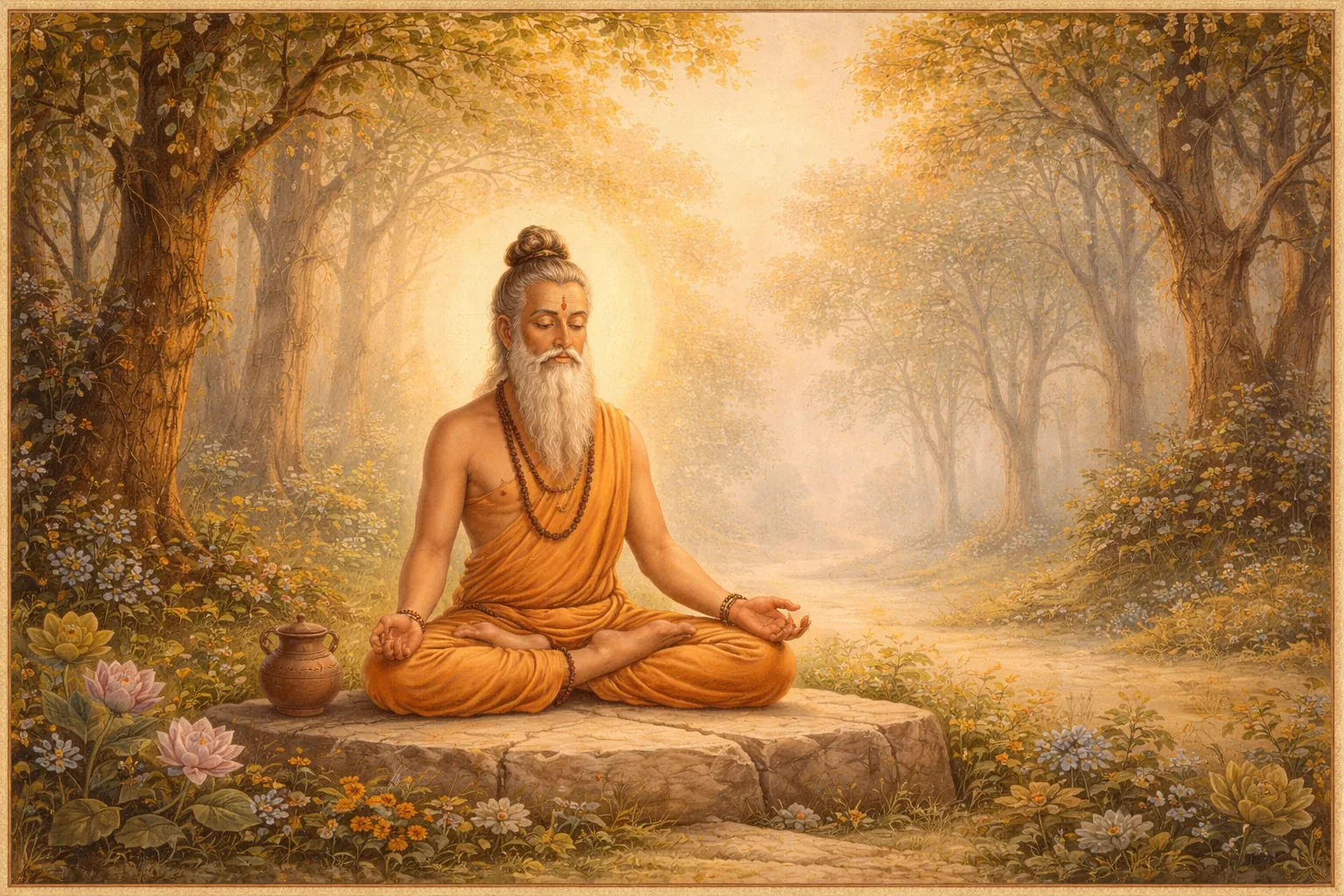
Here the first condition for attaining such realization is indicated: “Prays, seeks God in humility, without being distracted by anything.” “Prays” means that there is continuous aspiration. Whether you recite a prayer or not is not so important. In Laya Yoga, prayer is not the main practice. Our main practices are visualization, contemplation, and meditation. Nevertheless, your sankalpa, your aspiration, is very important. If you have sankalpa, you mentally model your own future. Just as a caterpillar continuously thinks about how to become a butterfly and becomes one, in the same way a yogin, by generating the right sankalpa, fully realizes it over time. This sankalpa is called by different names: Refuge, Guru Yoga, determination, devotion. But its essence is that we set a certain direction for consciousness and nurture it.
Humility as the Foundation of Spiritual Realization
The second quality is humility. Humility means that we try to eliminate the sense of significance of our own ego. Until we manage to do this, we will always fail on the spiritual path, because we will not be able to attain inner emptiness. Of course, humility does not mean self-abasement, falling into feelings of guilt or sinfulness—it would be a mistake to understand humility in this way. Humility means ceasing to worry about how your ego appears; taming the false ego; transforming the sense of pride, egoism, and self-importance into something light, empty, playful, self-liberated, and radiant.
For example, if you meet a person who lacks humility, it can be difficult to be around him. People say that he is “heavy.” That is, he is uncomfortable to deal with, he has many sharp edges: if you say something to him in the wrong way, he may misinterpret it and take offense; if you behave in some way he does not like, he may become angry. In other words, he has many different complexes, phobias, and grievances. And when you are near him, you feel a certain problematical quality, that is, you are constantly running into some sharp edge and cautiously trying to go around it. This means that the person lacks lightness, playfulness, emptiness, and self-liberation; his ego-personality is too crystallized, and he has a great many such sharp edges.
But if, on the contrary, you meet a humble person, one who is empty within, it is very easy to be with him. You will not even find where he is. You try to feel him, but it is as if he is not there. Even if you want to somehow provoke him to anger, pride, or attachment, even if you play some such game with him, you still will not find him. He seems to slip through your fingers; he is like the wind, like a cloud, like rain. He has no fixation on the “I,” on the ego. He is very fluid and flexible; he is truly empty within. He does not have, as people say, “cockroaches in his head”; he has no fixations at the level of mental awareness or at the level of emotions. It is inconceivable that such an empty person could be seized by emotions or by some fixed ideas. He accepts any situation very easily; he is open to the world. He truly loves the world every second, and not only when the world loves him. Even when the world hates him or treats him in some unfriendly way, he still loves it and perceives it with gratitude, because he knows that the nature of Being is deep goodness, that originally there are no problems. Even if the world turns some inconvenient side toward him, for example, when some suffering, illness, or conflict comes, he accepts this too as part of the divine darshan, as part of shaktipat.
If you communicate with such a person, you feel an unusual lightness, and if you yourself become such a person, you feel unusually light. This lightness is spiritual. Of course, it is not physical in nature. You experience joy, pleasure, happiness, fullness, and an overflowing gratitude toward Being not because of anything, but simply so, because such is the nature of the world, such is the nature of consciousness. And you have no major problems: whether you are given tasty prasad or tasteless prasad, whether you are surrounded by beautiful objects or you are cold and uncomfortable, whether you are exalted to the heavens and worshipped or, on the contrary, constantly disregarded. That is, you have no problem with this at all; you understand that it is not about you, but simply that this is how the various games of residual energies manifest, and therefore you perceive them very lightly. In an essential sense, you are always open to these energies; you are overflowing with love for them, with gratitude and happiness. Why do you experience this? Because emptiness has now taken up residence within you; inside there is no evaluator, no doer who would strive for something or become attached, no shriveled mind fixated on ahamkara (egoism), but there is an openness of consciousness, an inner emptiness that nothing can harm: neither obstructing spirits, nor circumstances, nor any inconveniences, nor, of course, theoretical mental complications.
When you have this inner emptiness, you have constant awareness, a constant abiding in unity with the Supreme Source. And then the third condition is fulfilled, when Tirumular says the phrase “never becoming distracted.” That is, you are never distracted from this inner emptiness. And because this inner emptiness exists, there is great flexibility in the mind. Since you have inner emptiness, you no longer need to make plans, compete, or envy. All of this is absurd, because you are so overflowing that it is simply ridiculous to envy anyone. It is you who should be envied. To make any plans other than abiding in this emptiness would also be absurd. Then you are capable of experiencing extraordinary immersion, extraordinary ecstasy even from the most ordinary things: from eating, washing dishes, walking — all of this becomes a single principle in which you abide. Whether you are doing asanas, chopping wood, engaged in some form of service, or sitting in programmed meditation — all of this now ceases to be differentiated, as if the past, present, and future have blurred and you have, as it were, entered a certain unified space-time tunnel. If this exists, it means that you are approaching the state of which Rishi Tirumular speaks.
The Nature of Siddhis and the Approach to Their Development
“God is the basis of creation, and all powers flow from Him. One who faithfully serves God, suppressing his desires and lusts, attains the eight great siddhis as a sign that he has realized union with divine energy and will.”
This chapter is devoted to siddhis — mystical powers. For some, this topic is very intriguing. But in the teaching of Laya Yoga, we say that we do not pursue siddhis as some goal in itself. Moreover, Patanjali says that fascination with siddhis can become an obstacle to realization. In this regard, a distinction is made between artificial siddhis (kalpita) and siddhis that arise from the natural state (akalpita). There is also another kind of siddhi — one that relies on the external (prakrita-siddhi). When we speak of siddhis, we primarily mean akalpita-siddhis. These are siddhis that manifest from presence, from the natural state; siddhis that you do not desire, do not chase after, do not cling to, but accept simply as a blossoming, as a manifestation of the blossoming energies of your “I,” which you allow to occur as the natural result of your spiritual practice. Such an approach to siddhis is the true approach recommended by the saints, since for us the realization of wisdom (jnana) is of primary importance. Ramana Maharshi said: “Those who possess siddhis desire jnana, but those who possess jnana desire nothing.”
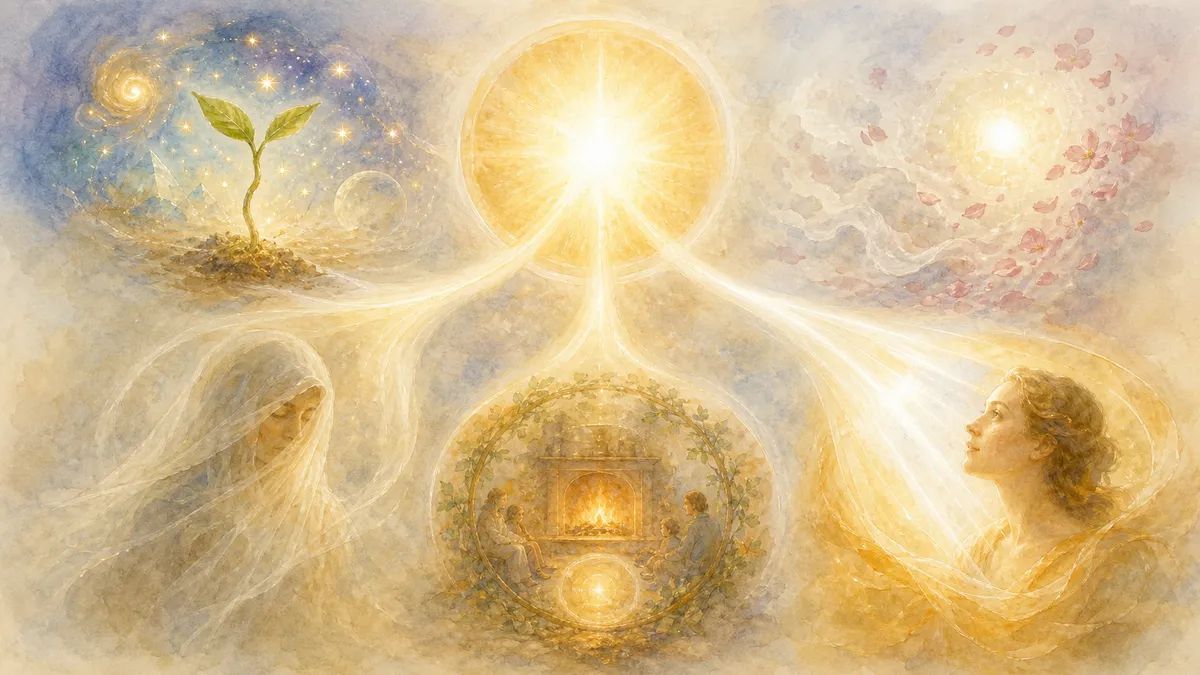
Siddhis manifest as a result of integration with various universal forces. There are three main energies inherent in the Absolute:
the energy of knowledge (jnana-shakti)
the energy of action (kriya-shakti)
the energy of irresistible will (iccha-shakti)
In the school of Kashmir Shaivism, two more are added:
the energy of bliss (ananda-shakti)
the energy of self-awareness (chit-shakti)
At the same time, the energy of action is in turn subdivided into five other energies subordinate to it:
the power of creation
the power of destruction
the power of maintenance
the power of concealing the divine first principle
the power of its self-disclosure, manifestation
When the yogin has become established in inner emptiness and the one “taste,” he can open himself to these forces, thanks to which these forces enter the yogin’s life. Gradually he can tame and manifest them.
The Evolutionary Path of Spiritual Development
On the path of spiritual practice, the transmutation from an ordinary person into a superbeing occurs approximately as follows. At first we are ordinary people. Then we become practitioners, sadhus. A sadhu is not an ordinary person, but one who performs sadhana (practice), that is, who exercises continuously, having entered a lineage of transmission, built a relationship with the teacher and the teaching, and communicates with a community of those like himself. Finally, when a sadhu achieves the result in his sadhana, he becomes a master. A master is one who has obtained certain fruits and has become a very experienced sadhu, who can transmit the teaching and practice to others. Finally, when the qualities of the master blossom, he becomes a siddha — one who has tamed certain energies and who victoriously completes his path of realization. When these energies manifest on a large scale, he becomes a mahasiddha. When the elements completely transmute from impure vision into pure vision, he becomes a deity — one who has fully freed himself from impure samsaric elements and has passed into the mandala of the pure dimension. Finally, when a deity develops its qualities through the continuation of activity in contemplation, it becomes a great deity, for example a companion of Brahma or Brahma himself, who can send tens and hundreds of magical emanations into various spheres, who can create universes. If you look at your “career” as practitioners, this is exactly your future. This is an evolutionary stage that no one can avoid. The question is simply the amount of time in which this evolutionary future will be realized.
Transmutation of the Body in the Teaching of the Siddhas
If we speak from the point of view of the teaching of the siddhas about the transmutation of the body, then transmutation occurs approximately in this way. The physical body is purified and becomes yoga-deha. Yoga-deha means that your elements are balanced, your illnesses have disappeared, your internal obstacles have been removed. As long as the elements are not balanced and illnesses exist, the yogin has not yet fully realized yoga-deha and needs to continue working with this. At the stage of yoga-deha, the yogin feels extraordinary pliability and lightness of the body, has clear prophetic dreams, controls the channels, and most of his channels are purified and expanded. He has no obstacles from spirits, all his elements are balanced, he feels great comfort and bliss in the chakras, in the body, and he has nectar.
Then yoga-deha is transmuted into siddha-deha. Siddha-deha means that the physical body dissolves the elements. The physical body becomes multidimensional and can act on different planes.
Then siddha-deha is transmuted into a body of vibration or pranava-deha, which in some traditions is also called the body of light. Pranava-deha means that there are no longer any gross elements in the body. This body consists entirely of pure prana; it has no gross wind, gross earth, or gross water. Its analogue in Buddhism is the sambhogakaya.
Finally, pranava-deha dissolves into jnana-deha, into a completely empty body of wisdom or into the state of Brahman. With the realization of all these bodies, spiritual practice is completed; the yogin reunites with the Absolute. Until these bodies are fully realized and the yogin reunites with the Absolute, there are countless kalpas of life in various dimensions of humans, gods, and saints.
There are intermediate levels of liberation. When we speak of enlightenment, liberation, we are speaking primarily of the intermediate or initial level of liberation. The highest level of liberation is available only to those who have passed through the intermediate levels. Siddhis manifest precisely at the intermediate level.
The Path to Mystical Emptiness
“There is nothing impossible. God is the beginning of the creation of everything; I devotedly sought Him in order to bow down at His lotus feet. With great effort, faith, and devotion, I found Him and merged with Him; all sins and desires vanished in an instant, like sand from the palm of the hand in a powerful storm.”
Then Tirumular says:
“I became a mystical emptiness for which nothing is impossible. All eight great siddhis revealed themselves to me as the natural power of creation, which began to flow into me, severing the bonds of birth and death.”
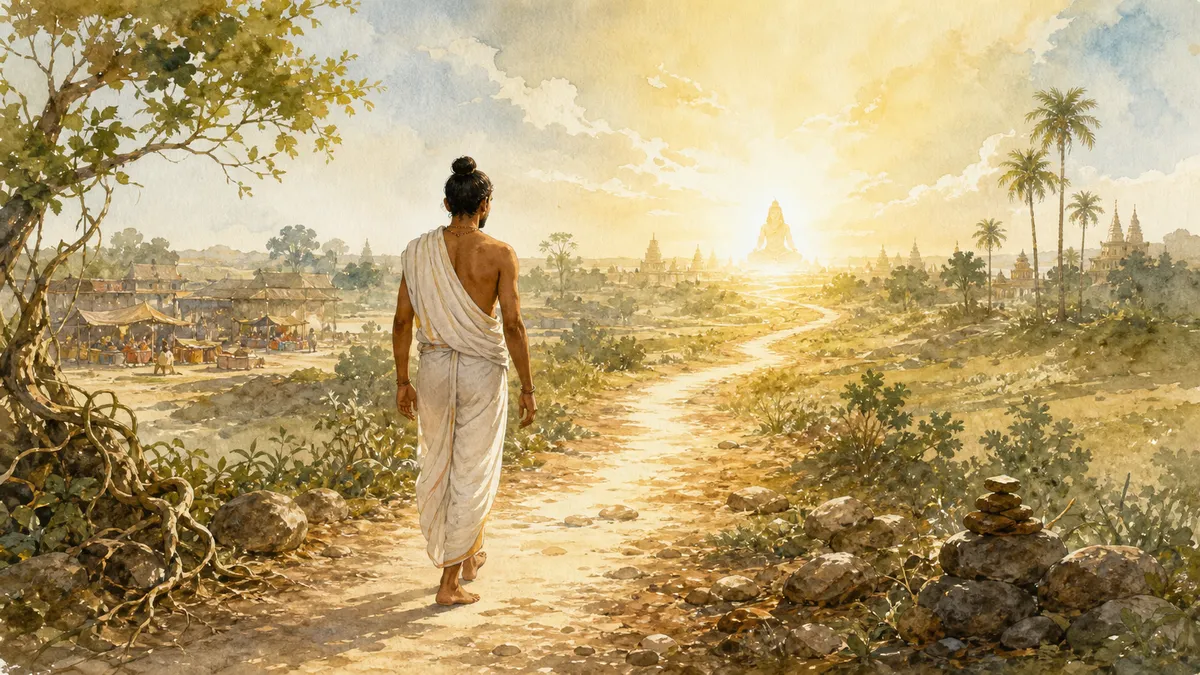
When you step onto the path, day and night you devotedly seek the Absolute, God, realization, prajñāna, primordial wisdom, sahaja-tattva. This is a process of eternal seeking. You move from one level of the natural state to another. This process never ends; it grows. It is an eternal deepening, an eternal search that never stops.
Tirumular says: “With great effort, faith, and devotion, I found Him.” When you have such continuous faith, great devotion, and you overcome various difficulties in the form of worldly desires, attachments, and your own egoism, you find Him. For some, this path stretches over decades and even dozens of lifetimes, while for others it becomes short by virtue of previous realization.
Karmic Obstacles on the Path
If a person has karmic creditors from past lives, life is always difficult for him in this life. For example, one person in a past life was the abbot of a small temple. Donations were made to this temple, and he constantly took a little for himself and became accustomed to doing so. Having been reborn, he now experiences various material difficulties because of this. This is the karmic debt that must be repaid in this life.
Another person in a past life held a high position. Once, when a sadhu appealed to him, he treated the request with disdain. In this life he wants to draw closer to teachers, but some unknown force repels him, placing him in various, utterly inconvenient situations, even when he himself does not want this. This is a karmic debt (ṛṇānubandhana) that must be worked out due to past cause-and-effect connections.
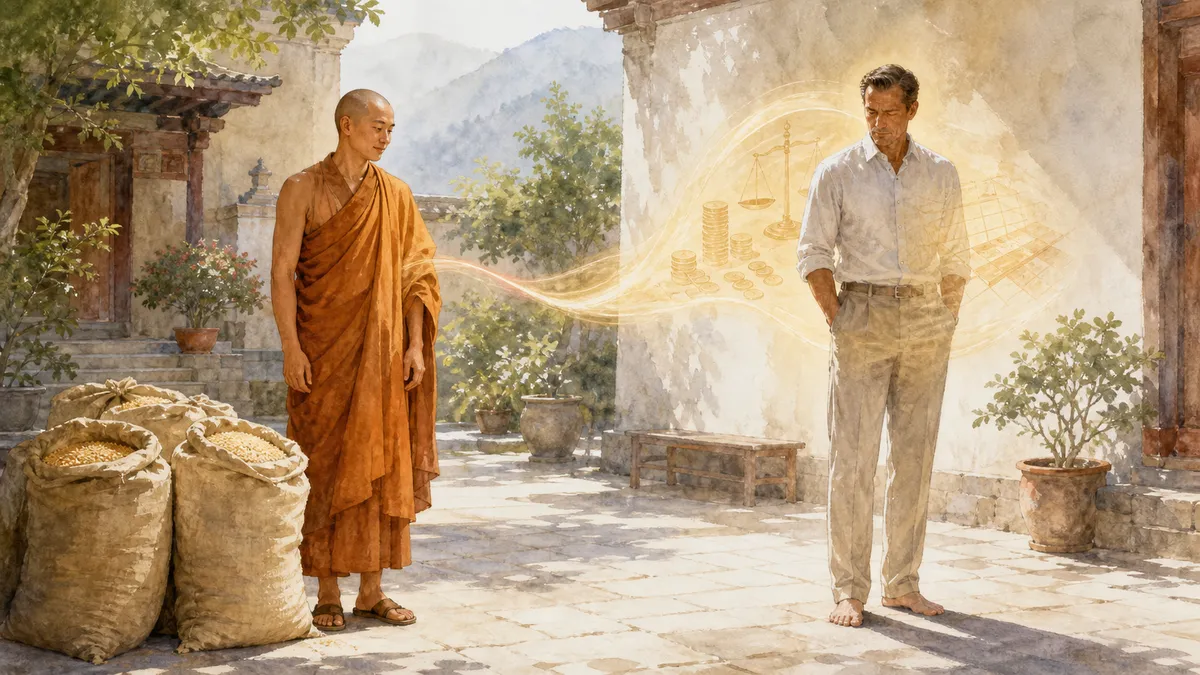
One person in a past life was a monk, but he did not apply himself particularly diligently to the teaching. For the most part, he spent his time selling sacks of grain at the market and putting the proceeds back into circulation. He practically did not engage in practices; instead, almost all the time he dealt with precisely such matters, without awareness. In his next life he became a wealthy businessman, and since he had a karmic connection with monks, he understood that one should make offerings to monks and monasteries. But when it came to the teaching, to practices, he would strive under any pretext to engage once again in such worldly things. Even when he was sitting in retreat, he had thoughts about how to buy and sell something.
All these are varieties of karmic debts. When these karmic debts are exhausted, the yogin truly becomes “a mystical emptiness for which nothing is impossible.”
Read 14 times
Articles
Vidya AI
Search
Lectures
November 4, 2026
Mantra of the day
ОМ СИДДХАЙА НАМАХ ОМ Совершенному – поклонение!
Auspicious Times(Rome)
Brahma Muhurta:
04:55 - 05:50
Abhijit Muhurta:
11:33 - 12:14
Sayam Sandhya:
16:41 - 17:23
Mokshada Ekadashi (6 November)
Ekadashi of liberation. Helps to achieve spiritual enlightenment.