

When we are dealing with the relative dimension, that is, with behavior, the law of karma always exists within it. If one looks at the law of cause and effect from the standpoint of the View, then karma does not exist; karma is the spontaneous play of the energies of the Absolute, lila, chit-shakti-vilasa, the free illusory manifestation of energies. However, this is precisely the standpoint of the nondual View.
But which of us abides entirely in the View, together with the body? It is obvious that you will not find a single living being who abides in the View twenty-four hours a day together with his causal, astral, etheric, and physical bodies, with manas, buddhi, karma-indriyas, and jnana-indriyas. If he abided in the View with all his subtle and gross bodies, he would not be human. He would perhaps be Lord Brahma, since Brahma has a body that is one with the View; the entire universe is his great physical body, Vishvarupa; that is precisely why he can freely create and destroy universes. You can raise your hand, clench your fist, or do something else with your body, so why should Lord Brahma not do the same with the universe? He can emanate it, draw it back in, and then emanate it again. And just as you put your body to sleep at night, there is likewise the night of Brahma, when he draws in his energies. Then, when the night of Brahma passes and a new cycle of the creation of the universe begins, the energies unfold again, the five elements are activated again; just as a spider weaves its web again, so Brahma releases his great universal body, Vishvarupa, from the unmanifest state.
In this sense, it is legitimate to say that Brahma possesses a body that is absolutely one with the View. And as souls possessing bodies created from the element of earth and others, we are also part of this Brahma. Of course, in our deepest essence we are Parabrahman itself. The Parabrahman within us and the Parabrahman within Brahma (the creator of the universe) are one and the same Parabrahman. This is like the space in a beautifully decorated pitcher and in a tin can—it is, in its essential characteristics, one and the same space. But in terms of relative qualities, our energy is part of Brahma the creator. Our causal, astral, mental, etheric, and physical bodies, as well as the entire surrounding universe, are his creation.

For us, our body is not one with the View; it is separate from the View. We will be able to understand the unity of the pranas, mind, and body with the View precisely when we ourselves attain the status of Brahma and merge with his consciousness. That is why, in the relative dimension, the law of karma, the law of cause and effect, operates. According to it, there are actions that are sinful and impure, and there are actions that are pure. Sinful, impure actions mean obscuration in consciousness and the pranas, which creates new causal connections.
Understanding Sin in the Teaching of the Siddhas
Various systems of religious thought interpret sin as a cultural and moral concept. That is, they have a certain moral system of values, formed over centuries, in which one thing is considered virtue and another sin. And often great confusion is caused by the discrepancy between moral and ethical scales of values. For example, the Roman Catholic Church says that birth prevention and euthanasia are sins, while European philosophical thought says that they are manifestations of a person’s free will, and therefore he should be given the right to them. The Roman Catholic Church has its own list of mortal sins, while other religions have their own lists. And if we turn to Islamic culture, there are entirely different notions of sinful and virtuous actions. And many people, seeing different ethical systems, remain confused because they do not understand what should be considered sin and what virtue.
But the teaching of the siddhas views everything in a completely different way. Here the question is not which actions to perform and which not to perform. The question is in what state these actions are performed. The teaching of the siddhas says that what is one thing for people is another for yogis and gods. Everything depends on what our motivation is, on what state of awareness we are in at that moment. One and the same action can obscure one person, while to another, on the contrary, it can bring merit. This depends on what the motivation, the true aim, and the level of awareness are. The morality of the siddhas differs both from Catholic morality and from generally accepted morality; it is of an entirely different order and is connected with the deeper principle of Anuttara Tantra and the unified samaya. It is connected above all with awareness.
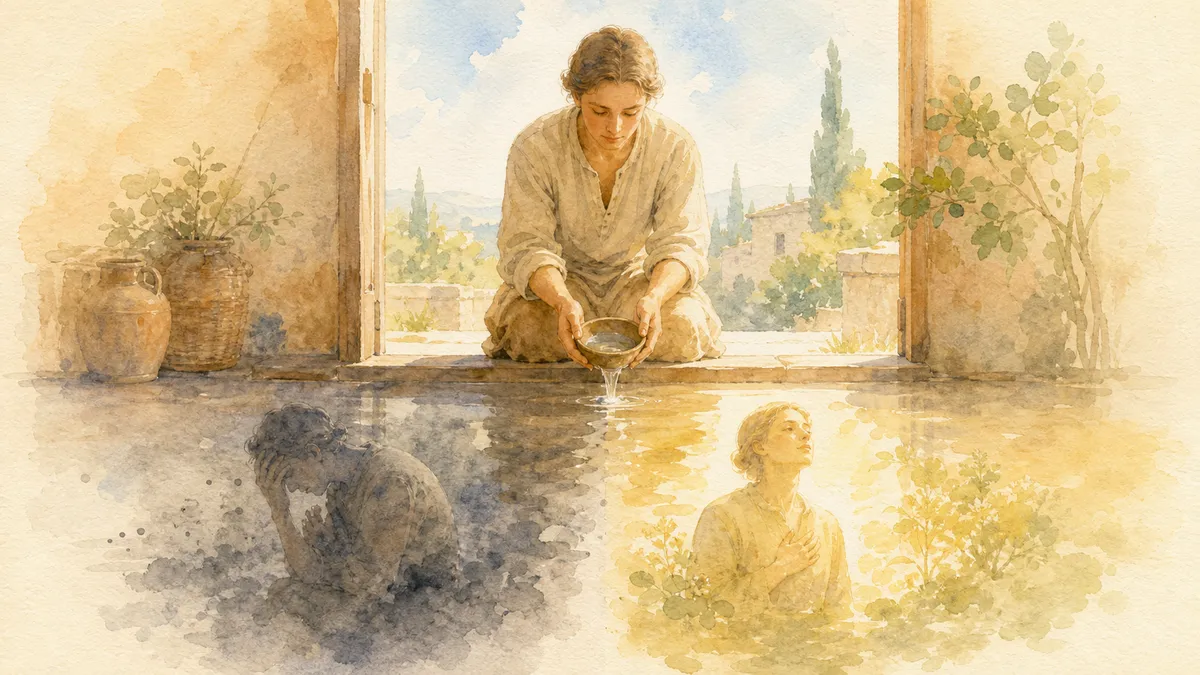
On the basis of awareness, an understanding of causes and effects arises. It is said that when we act consciously, new consequences are not generated; right motivation naturally arises, and therefore no obscuration occurs. Here a subtle balance and clarity arise with regard to what our awareness is, how this awareness can control the winds and channels, how it is integrated into everyday life and corresponds to our bhava, that is, the type of temperament, our spiritual status and principles. A state of obscuration occurs when such awareness is absent and an action is performed.
If an action is performed unconsciously, comes into conflict with generally accepted canons of behavior, ethics, and morality, is accompanied by a sense of guilt and defilement, and, moreover, at that time there was selfish motivation in the mind, then this is called a sin, an impure action that creates an imprint, leaves a karmic trace. And depending on the level of such a karmic trace, the living being will receive corresponding fruits. The stronger such a karmic trace of obscuration, the heavier the retribution.
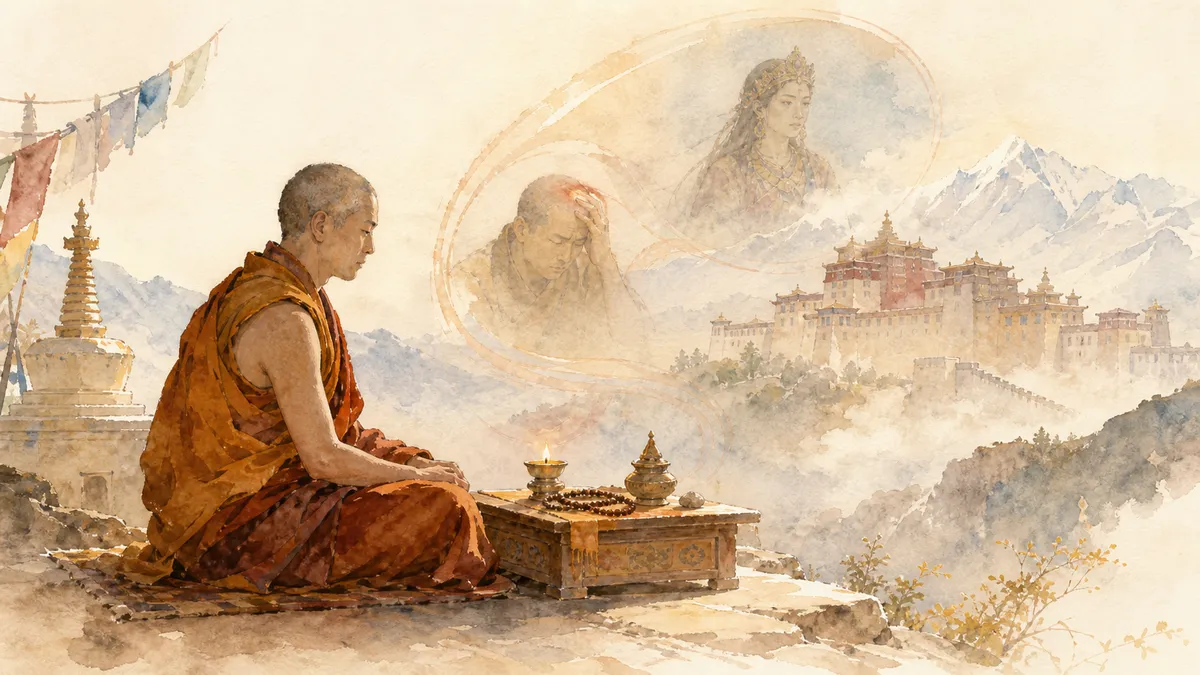
One Tibetan monk performed special practices for some time. He disliked the fact that the queen of Tibet opposed the spread of Buddhism, so he invoked a wrathful deity, as a result of which this queen constantly had headaches. The monk decided to neutralize the queen by reciting mantras and performing rituals invoking deities. As a result, she was unable to oppose the spread of this monk’s teaching. But in the next life, when this monk was reborn, he had constant headaches, migraines. This is an example of how our actions manifest in the next life.
For an action to manifest in full, motivation, an unconscious state, and satisfaction from the performed action are needed. If all these three factors are present (wrong motivation, an obscured unconscious state, and subsequent reinforcement), then the factor of karma is called mature. And then the fruit of karma in the next life will manifest in its fullness.
Methods of Purifying Karma
What should be done if such actions have been manifested? Should it be said that all this is a play, everything is pure, perfect, and self-liberated? Of course, at the level of view, it should definitely be said; we are followers of Advaita, therefore to hold a different view would mean losing the path of Advaita. But at the level of behavior, it is necessary to apply the right methods and efforts. Since, for now, our view is weak and does not possess real purifying power, certain actions are needed. For example, there are principles described in the “Manu-smriti” (the Laws of Manu), according to which penance is prescribed for every action. If one has committed some wrong action, one must read a sacred text for a month. If one has committed another wrong action, one must refrain from eating grains for a month. If one has committed a third wrong action, one must make a certain number of prostrations every day for a week. And there are very many such penances. For example, if a peasant killed a cow due to careless handling, then, to atone for this sinful deed, he was required to put on dirty clothes and a yoke around his neck and walk around for a month, playing the role of a cow.
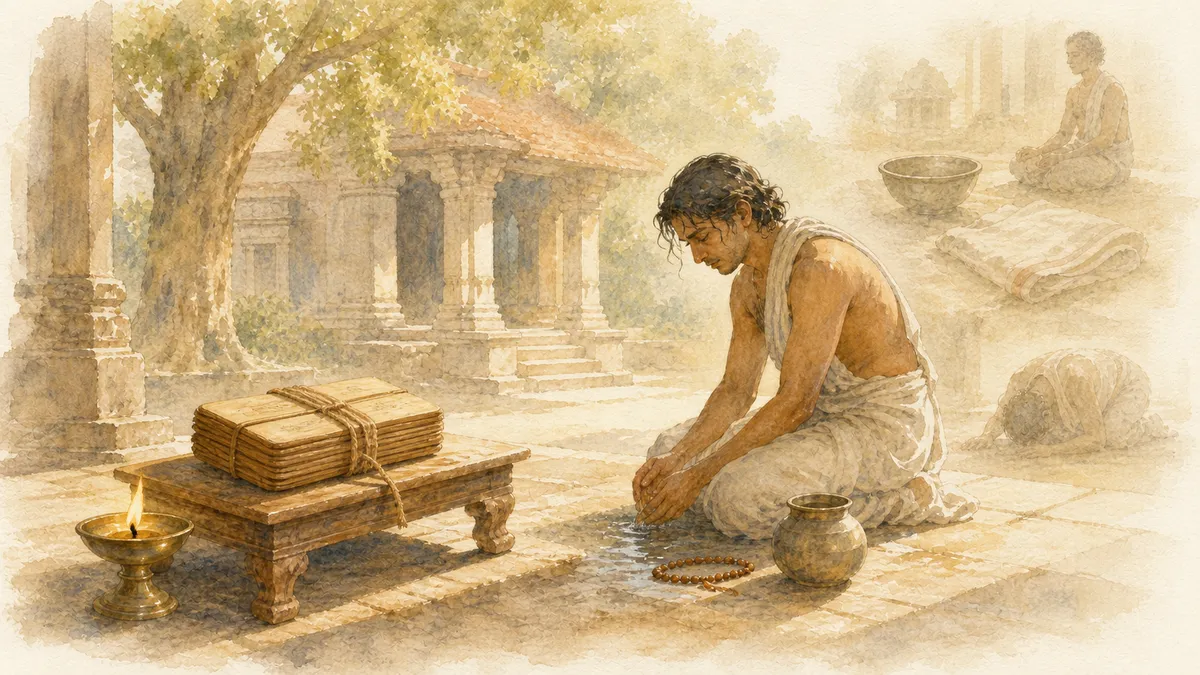
What do such actions mean? This means that if obscuration has occurred in the mind or a wrong action has been committed, it must be purified, eradicated. It can be eradicated through contemplation and various purifying actions. Of course, a practitioner of the highest classification may be satisfied with contemplation alone. But if he is truly a practitioner of the highest classification, he will not allow an obscured action. That is, it is completely impossible that you are aware and at the same time perform an obscuring action. Such a thing cannot exist in principle, because it is the same kind of contradiction as dry water or hot snow.
However, if an obscuring action has been committed, then it is not enough to be satisfied with the principle of view or with awareness alone. On the relative level, it is necessary to engage work with the winds and channels, purify prana, and perform samskara-shuddhi. It is necessary to search for this obscuration in the subconscious and erase it by any means, because if it has been created, then inevitably it will bear fruit in the future. Perhaps this obscuration was not noticeable, but it still exists in the form of an imprint, and therefore it will manifest one day if it is not erased.
Sometimes a person does not create anything bad, but simply fears something, is apprehensive. Perhaps this fear is caused by samskaras from a past life, and the person unconsciously paints this negative picture. Several times every day he imagines something negative, and then cuts it off, suppresses it. Over the course of a year, the number of such visualized pictures may exceed a thousand. And if a person enters deeply into his subconscious, he will discover an entire area of impure states that he himself carelessly created through this subconscious fear. At rebirth, his subtle body may enter a region made up of such karmic traces. This region, if it truly possesses energy, can seize his subtle body and create a future rebirth in that form. This is exactly how it often happens. Or, by creating such images, a person materializes this situation already on the physical plane; that is, it turns out that precisely what he feared most of all manifests. This is how karma works. A person can curse himself or cast the evil eye on himself if he works with his mind incorrectly.
In one Russian village there lived a folk healer. She was an ordinary Russian woman. She used incantations to relieve toothache, treated children, sometimes practiced magic to harmonize marital relationships, and in return people brought her food and so on. One day her husband said to her: “You are occupied only with your healing and magic, and you pay no attention to me at all.” And she thought: “Indeed, I don’t really love my husband very much. Why shouldn’t I use my art to bewitch myself a little into loving him?” And she began to recite incantations to make herself love her husband. But she slightly miscalculated her own power, and after some time she literally began to “pine away” for him. She did everything that was indicated in the folk-healing books, recited the appropriate incantation, drank a certain infusion, and soon felt a strong dependence, from which she then could not free herself for a long time. Having cast a spell on herself, she could not resist her own spell, so she had to turn to another sorceress, who helped her get rid of this obsession.

This is funny, but the situation with practitioners looks roughly like this: they often become victims of their subconscious fears, projections, and obscurations. It seems that everything begins harmlessly, with certain thoughts to which we attach no importance, and ends with the fact that, unconsciously and uncontrollably, we create in the subtle world a large area made up of our subconscious images. They are deposited in the storehouse of mental impressions and after some time shape our destiny. Since subconscious images possess great power, sometimes even our sankalpa and spiritual practice may be weaker than these images. This is the operation of the mechanism of the law of karma.
And often a yogin’s view may not reach the storehouse of these images. That is, the view may be excellent, but it is like a weak lantern. If you have a flashlight and try to shine it so as to reach the moon or the clouds, you will not succeed. In the same way, the view and awareness of an inexperienced practitioner may be completely insufficient to purify these images. That is precisely why methods of purifying consciousness are needed: control of behavior, samskara-shuddhi, repentance, opening of one’s thoughts, and certain external things. If we do this, then we can cut off obscured states.
Understanding this, an experienced yogin is always very sensitive about not encouraging impure states. If they arise, he always purifies them immediately. This is the principle of sadhana, when we vigilantly take into account the law of cause and effect. That is, it should not be the case that a person has some obscured state but does nothing with it—such work with one’s consciousness is illiterate.
Diseases as a Manifestation of Impure Vision
What are diseases? They are a disruption in the flow of prana, a lack of circulation in certain places, in the chakras. The lack of circulation occurs because the nadis are blocked not only in the energy body, but also in the astral body. The nadis in the astral body become blocked because dense, coarse, obscured images come from the astral space together with the flows of the grahas, with prarabdha karma. That is, diseases are various kinds of impure vision, impure images that exist in the astral body. In order to heal a disease, it is often not necessary to take medicines, undergo therapy, and so on; one can simply change the vision at the level of the subtle body to a purer one. When this happens, the channel can be cleansed instantly, the winds will begin to circulate, and the physical body will heal itself.
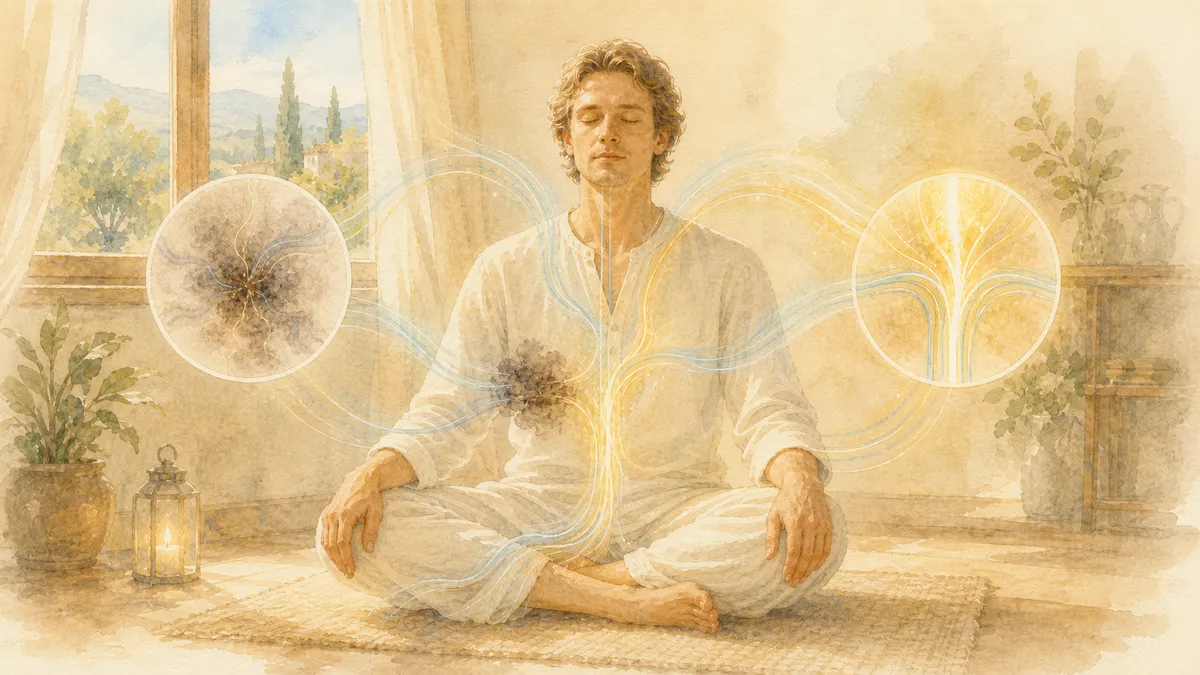
For this purpose, saints sometimes prescribe various kinds of repentance, rituals, ceremonies, invocation of deities, visualizations, mantra recitation—all of this works not at the level of energy and the physical body, as in the case of ordinary medicine, but eliminates the cause at its root—at the level of the astral body. In essence, any disease is an absence of pure vision, an absence of divinity in some area of the subtle body, and this is then projected through the chakras onto the physical body. As a result of such projection, an imbalance of the winds occurs, and this manifests on the physical level. Repentance, purification, and invocation of deities are aimed at restoring divya-bhava in the areas of the subtle body.
Rituals and the Connection with the Deity’s Mandala
Why are rituals auspicious and healing? Because they establish a karmic connection with the deity’s mandala, with the realm of pure vision. For example, when we recite the “Dattatreya Ashtottara Shatanama Stotra,” we establish a connection with Dattatreya’s mandala, with the realm of pure vision that already exists, with Dattatreya’s illusory bodies, with the single “taste,” with the space of Dattatreya’s awareness. And the more we establish a connection with this realm, the more it begins to be projected and manifested in this world. And the mandala of any deity, the realm of pure vision, is a zone free from karma, where there are no sufferings, causes and effects, limitations, diseases, and so forth. When a connection with such a realm is established, the disease is healed, because consciousness has shifted into another realm, into a different karmic vision, into that variant universe where diseases do not exist from the very beginning.
Vidyas and Grahas: Divine and Negative Forces
When we invoke divine forces, we have contact with vidyas. Vidyas, in contrast to grahas (negative astral forces, invaders), are subtle purifying divine forces that are able to take up our subtle body and direct it to the necessary realms. If grahas come against our will, seize our astral body, and then draw it into negative realms and states, then vidyas do not come without our knowledge; they come only when we invoke them. They guide our subtle body, protecting it from the influence of grahas, directing it toward a divine state and realms, thereby changing our karmic vision, healing or changing our destiny. To connect with a vidya means to change one’s karmic vision, to move into another version of reality. It is very difficult to do this on one’s own, but with the help of invoking a vidya it is much easier.
If there is a properly established connection, then any object of Dharma is such a vidya. That is, a vidya is a vessel of divine knowledge. For example, Dattatreya is such a vidya. Any statue is the physical material body of a vidya’s manifestation. The question is how to properly establish a connection with such a vidya, invoke it into one’s life and into one’s subtle body.
As a vidya is invoked, the influence of the grahas weakens. Even if a person was obscured and strongly limited by the law of karma, if the grahas held his subtle body so tenaciously that he could not resist his limitations, then as the vidyas are invoked, the grahas are displaced and the person gains ever greater freedom; for him, many things that were previously impossible become possible. The more strongly a vidya enters a person’s subtle body, the easier it is for him to advance and enter into pure vision.
Finally, a moment comes when the subtle body is purified and itself becomes vidya. Such people are called vidyadharas, holders of the vessel of knowledge. Such people can embody a deity, be a manifestation of a deity, and have a mission to spread the Dharma. At this level, the yogin’s subtle body itself is transformed into the illusory state of the deity. Our task, when we invoke Dattatreya and meditate on him, is to transform our subtle body into the illusory body of Dattatreya, into the body of the deity, and then manifest our energies in the form of a mandala.
Various divine worlds exist right now. They are nearby, but we do not notice them because we lack subtlety and a proper connection with them. And through invocations, these worlds become closer to us.
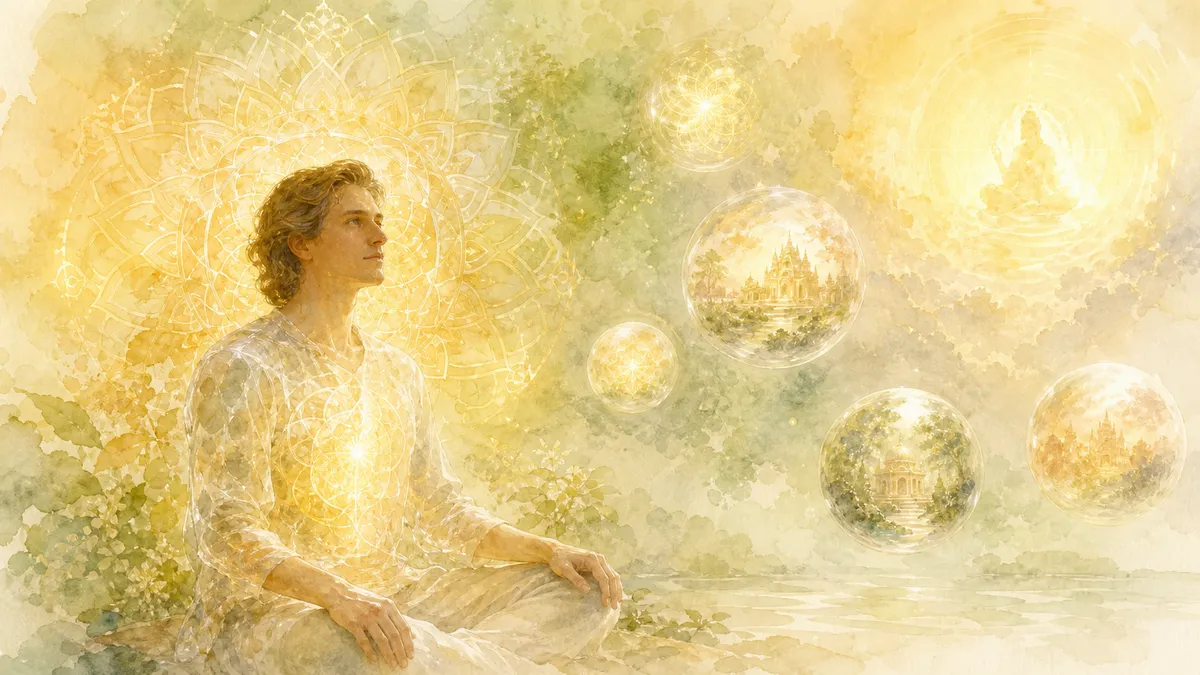
Thus, by combining contemplation with the sadhana of invocation, we activate vidya in our subtle body. The fruit of invoking vidya is the manifestation of the illusory body in the pure dimension, in the mandala, that is, the realization of pranava-deha. And the fruit of contemplative presence is the realization of jnana-deha.
Karmic Vision and Access to Spiritual Dimensions
You can imagine it this way. Next to a worldly person there may be a monastery where there is an opportunity to engage in spiritual practice and study sacred scriptures, but he may not even suspect it. He may be very close to all of this, but for him it is closed and incomprehensible. Even in his dreams he cannot imagine that there is a world of Advaita Vedanta saints, monks, vinaya, samaya, sadhana, and spiritual experiences. In his karmic vision, there is none of this at all. Nevertheless, all of this is right next to him. So why can he not experience it or even know about it? Because there is no karmic connection, no samaya, no entry there.
In the same way, the realm of the gods is very close to us. There it has its own ethics, aesthetics, science, culture, Dharma, path, relationships, art, laws, hierarchy, and so on. All of this exists right now, but it is inaccessible to us. Why? Because we are too absorbed in our human karmas, in our human vision of the world. And we do not have enough pure vision to enter this dimension.

But when we perform contemplation, practice divine pride and pure vision, and also reinforce this with the invocation of vidya, a special portal opens for us, and so this becomes possible.
Dattatreya is one of the greatest vidyas for us. The natural state itself is also the greatest primordial vidya, mahaadi-vidya. All sankalpas are self-sufficient vidyas. When we invoke and practice them, they seem to open the way for us into such a dimension.
