Conception of Wisdom: Experiencing the “Taste” of the Natural Mind
25.06.2026
0 мин. чтения
0
Share
copy
search
add
share
The Sixth Stage: Conception and the Experience of “Taste”
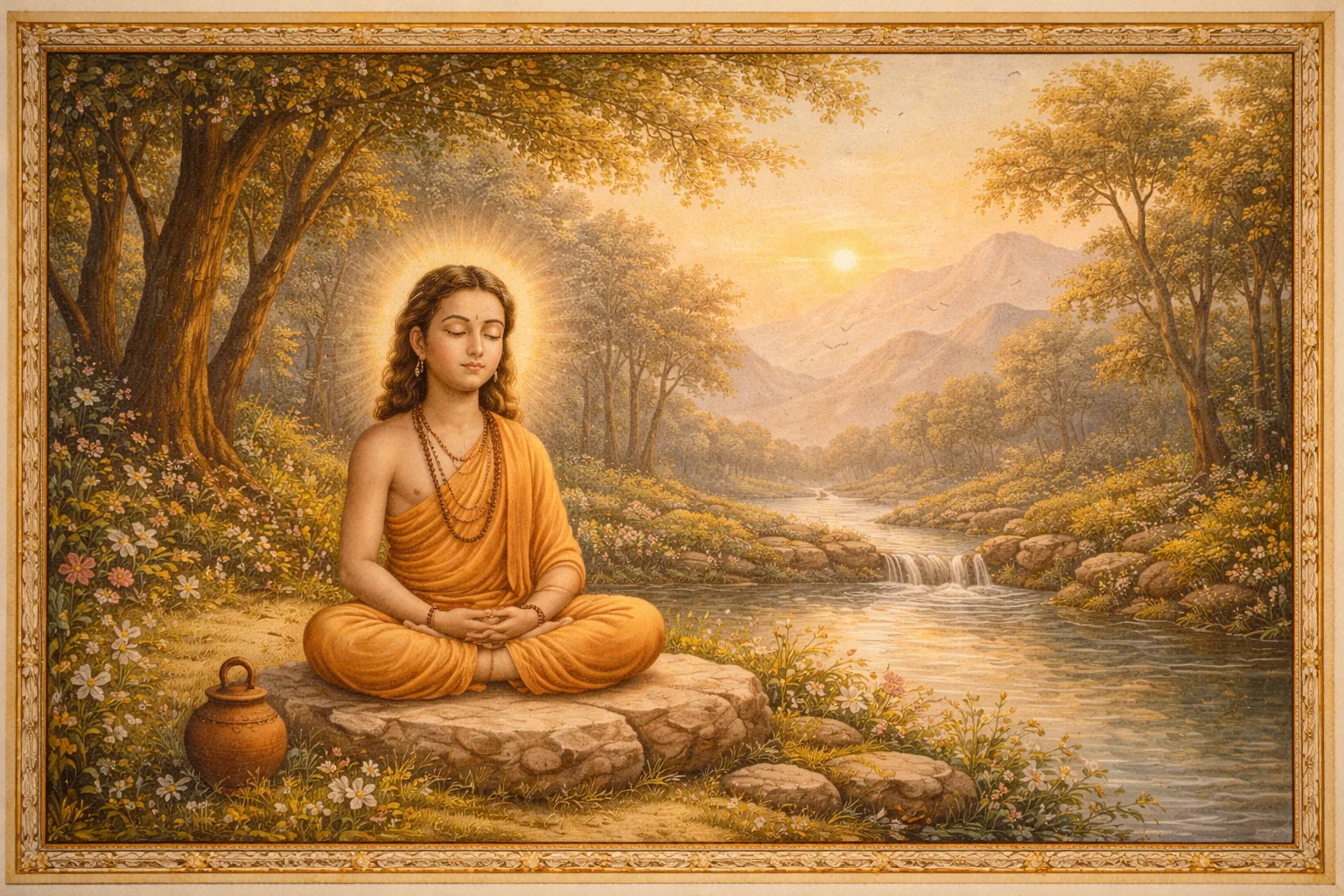
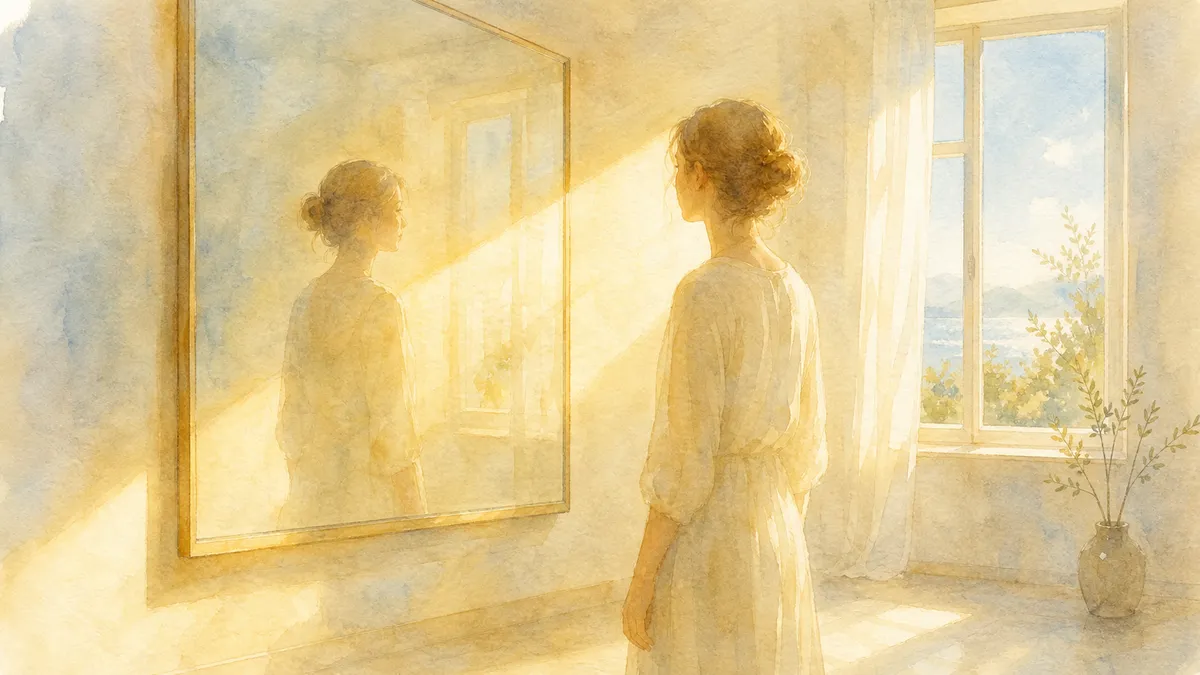
“When the tamed mind, having ceased to wander and dream, contemplating its own nature, has immersed itself in awareness and opened wide—oh, wonder! The illusion of ‘I’ instantly dissipates, revealing the mirror—the great Ground; this is the ‘taste’ of the natural mind, the great moment of conception of the immortal child of wisdom.”
The sixth stage is very important: all the preceding ones were necessary for this sixth stage to occur. After the sixth stage has occurred, many processes develop on their own. But if this stage has not occurred, these processes do not develop. It is like this: if conception has taken place, then everything proceeds by itself, and the child is born at the proper time. But if conception has not taken place, then, accordingly, nothing will be born. Here the sixth stage is likened to the conception of the inner, immortal child of wisdom. This conception takes place not in some external body, but in the yogin’s own body. Instead of giving birth to children outwardly, the yogin gives birth to himself in the form of an immortal child.
During the experience of “taste” (bhava), the mind opens wide, the initial unveiling of one’s own nature takes place. This is also called fleeting samadhi. The process itself consists of shravana, manana, and nididhyasana. That is, our task is to listen to the teaching, reflect on it, and meditate. And in the context of Laya Yoga, shravana, manana, and nididhyasana are interpreted, unlike in other schools, in a special way:
shravana is connected with direct transmission
manana is connected with cutting off and clarifying the natural state received as a result of direct transmission
nididhyasana is connected with continuous maintenance
Taming the Mind and the Initial Experience
A tamed mind means that the mind has been trained, like a disobedient dog, to find its place instead of following the emotions and concepts of dualistic perception. One whose mind is not tamed and not trained is like a disobedient dog. He is constantly drawn now to external objects, now to sensory pleasures; sometimes he is inclined to be carried away by his own emotions and thoughts, to branch out, to create illusions (dreams), and then to fall under their influence and be obscured by them.
One can often observe how a yogin or a novice practitioner with an untamed mind gets into trouble, that is, into amusing situations in which someone takes offense at him, he offends someone, or he does not understand something. This is the ordinary samsaric state in the human world. Sometimes we sort out relationships in some Dharma center, settle certain situations, analyze who said what to whom and in what way it was wrong. From the point of view of a practitioner, all this looks rather funny, since all these grievances and emotions are completely inappropriate. But for a person whose mind is not tamed, all of this is real; he experiences it all quite genuinely. Yet when we begin to sort things out and clarify them, it turns out that no one is to blame; only the undisciplined and untamed mind is to blame, creating illusions out of nothing.
When repentance occurs, purification through the practice of samskara-shuddhi samaya is performed, and Refuge is taken anew, this tamed mind is put in its place by an experienced monk, as Ananda Lila did in one of the Dharma centers. When the mind is tamed and put in its place, harmony, a joyful and clear state, is immediately restored. A tamed mind, unlike an untamed one, ceases to wander and project. It ceases to create dreams. Why? Because it finds its master, it finds its own Source, its primordial nature, and takes Refuge in this Source. Thanks to this, it naturally becomes tamed and ceases to be like such a “jumping dog.”
As soon as the mind takes refuge in deeper awareness, it begins to open wide, because this deeper awareness is boundless openness, profound clarity, and limitless spaciousness. That is why the text says: “Oh, wonder!” At that moment, the full depth of this openness is experienced, and for the relative mind, which thinks in the categories of subject-object dualistic notions, this always appears as a wonder. At the moment of such an experience, the illusion of “I” begins to dissipate. When this illusion dissipates and this is imprinted in consciousness, it is said that the initial conception of the moon of inner awareness has occurred. That is, a certain experience has appeared that can be used as a support; there is already something to work with for the rest of one’s life. If this has not happened, then there is no support yet, and therefore one cannot work with it.
If a support has appeared in the form of deeper awareness, then this is like a seed being placed in a woman’s womb; now this seed forms a fruit in the form of an embryo, and the child will be born at the appointed time. This experience is such a seed. If we draw a parallel with the Zen tradition, this is kensho, that is, a brief flash of clarity; it is also partially satori. But this is not yet enlightenment that you can truly make your support. For now it is only its seed, which will bear fruit in the future. For a moment, the great Ground is laid bare, and the yogin experiences the “taste” of the nature of Mind.
Shiva’s Instructions on the Nature of Consciousness
In the text “Yoga Vasistha,” the god Shiva, explaining this stage to Vasistha, gives him the following instructions:
“Here and there this consciousness becomes space, here and there—action, somewhere else—matter, and so on, always without any intention of doing exactly that. Just as all the ‘different’ oceans are one indivisible mass of water, this consciousness, though described in different ways, is one vast mass of consciousness. In this universe, all the diverse beings (gods, demons, mountains, oceans, and so on) arise from infinite consciousness, as foam and waves appear on the surface of the ocean. Even this wheel of misunderstanding, which makes the wheel of life and death revolve, revolves in this cosmic consciousness, whose energy is constantly in motion.
It was consciousness that took the form of the four-armed Vishnu, who defeated the demons, as a thunderstorm quenches the thirst of the earth. It is consciousness and nothing more that took the form of Shiva and Parvati, of the creator Brahma, and of other diverse beings. This consciousness is like a mirror, as if containing a reflection within itself, while undergoing no changes. Without any modifications, this consciousness appears as all the diverse beings in this universe.
It is only through this infinite consciousness that all this is thought, all this is done, and all this is expressed. It is only infinite consciousness that shines in the Sun. This infinite consciousness manifests in all bodies, which are in fact inert and, coming into contact with one another, give rise to various sensations.”
The feeling “I am this body” is very strongly rooted in us. We have adapted ourselves to it for a very long time, and it has finally become established in us. But when the experience of “taste” occurs and the child is conceived (the moon of inner awareness), a flash of true understanding takes place: “I am not this body. The body is simply an illusory figure moved by my will, while the will itself is rooted in the space of awareness and light. My will moves this body, which is only an obedient figure; it directs its actions and gives it voice. It is just that before, I did not pay attention to the will and awareness, because I was relying on mental concepts. I paid too much attention to the body, and therefore became accustomed to the idea ‘I am the body’ and stopped distinguishing my true self from this figure.”
Vasistha says:
“This consciousness is like the wind, which in itself is invisible, but in which dust and dry leaves rise and dance as if by themselves. In this body, thoughts and concepts lead to action only in the light of this very consciousness.”
The True Author of All Actions
Before sankalpa, acts of will, perception, thinking, and intuitive awareness arise in us, there exists boundless luminosity, openness, and clarity. It is this luminosity that is the author of everything within us, of all actions, thoughts, perceptions, and volitional sources. That is, we think that we do all this, but in reality all of it has another author. And we do not yet know this author. It is Atman that is the true author of all our thoughts and actions.
Living souls have absolutely no idea who the author of everything within them is. They are born, live, learn, think, bring children into the world, experience emotions, and produce material goods, not even suspecting that an invisible author of all this is acting within them. This author is very powerful. And people are infinitely astonished when, at the moment of death, they meet him in the bardo of clear light and say that they saw a dazzling light, God. They really did see God, but this God is their own Atman, and he can be perceived within oneself every second, without waiting for him to appear precisely at the moment of death and astonish them.
If this author is discovered, one can identify with him and live with him every second without interruption. But because the ego, the mind, memory, and various kinds of conditioning by the body exist, people attribute authorship to themselves as the ego and the mind, and therefore many delusions arise. But the true lord and master of our actions, thoughts, emotions, and everything else is precisely this supreme light. The problem arises because the emotions, thoughts, the pranas of the body, and the mind are strongly mixed together and confused. This lord and author of all these actions is not distinguished, not recognized, because he is very subtle. He acts much more subtly than the plane of thoughts.
Vasishtha says:
“Without this consciousness, sensation and understanding of an object are impossible, even if it is placed directly before a person. This body cannot act or exist without this consciousness.”
It is very amusing to see such a situation: all people act in this consciousness, but if you talk about it with non-practitioners, they will still deny it. Then you look at this and think: “Imagine that! This light in this body may not recognize itself—that is the kind of game it plays.” It may not understand itself, since it acts through coarse, obscured levels: manas, memory, the body, and so on. It has not yet broken through.
“This body cannot act or exist without this consciousness. It grows, eats, and dies. This consciousness creates and sustains all moving and unmoving beings in the universe. This infinite consciousness is the only thing that exists; there is nothing else. Only consciousness can arise in consciousness.”
This consciousness skillfully hides itself in bodies, presenting itself as men, women, relatives, and so on, but if you investigate it deeply, you will see that in reality this consciousness shines in the depths of everyone, while different names and labels are not so important. This consciousness plays with the bodies and minds of living beings as if they were characters with artificial intelligence, granting them their own will to a certain degree so that the play may acquire greater fullness. There are vectors of intention of one’s own will, various kinds of intelligence and individuality; nevertheless, this consciousness stands behind all of this, giving a certain possibility for the self-manifestation of individuality and freedom of will to various souls, so as not to limit them in their development.
How Consciousness Immerses Itself in Illusion
Vasishtha asked Shiva:
“If this consciousness is omnipresent, how can someone lose consciousness and become unaware, become immersed in illusion? How can one who has consciousness lose it?”
Shiva praised his question and answered:
“The omnipresent consciousness, which is all in all, exists in this body in a changeable and an unchangeable state. Just as a woman may dream that she is not herself and that her husband is someone else, so one and the same consciousness may take itself to be something else. Just as one person may behave differently in an ordinary state and in a state of rage, so consciousness associates itself with its other aspect and acts accordingly. Gradually it becomes unconscious and inert.”
That is, within this consciousness there may be its changeable part, which can identify itself with certain aspects and, by virtue of such identification, become unaware and immerse itself in illusion. Then this identified part begins to dominate, obscuring the unchanging part. Such a changeable part is the active function of consciousness: prana, manas, buddhi, memory, chitta. Then consciousness becomes its own object, creating space, air, and the other elements. By creating time and space within itself, and by becoming an individuality, it limits its reason and intellect.
Why does rebirth occur? Not because some inexorable forces compel the soul to enter the womb of a future mother so that rebirth may take place. It happens spontaneously. One could say that the soul wants to take shelter from the constant changes in the intermediate state, and it seeks a comfortable place. It is like a person wanting to enter a park, rest in the shade of the trees, and relax. In the same way, the womb of a future mother seems like such a cozy and peaceful place; then the soul itself makes this choice, because it wants to find a certain peace, and immerses itself in it. And when conception occurs, all the higher contours of the psyche and consciousness weaken and become greatly obscured, because a physical body appears. This example of rebirth shows precisely how, due to its immaturity, the changeable part identifies with something and gradually becomes unconscious.
Cycles of Delusion and Suffering
Vasishtha says that the cyclical manifestation of the world, various concepts, arise precisely from this changeable part.
“Consciousness becomes its own object, creating space and then air and their corresponding qualities. At the same time, creating within itself time and space, and becoming individualized consciousness, it limits its reason and intellect. From this arises the cyclical appearance of the world and notions such as ‘I am untouchable,’ and so on. Infinite consciousness itself becomes, as it were, inert, just as water freezes and turns into ice. Therefore the mind begins to fall into delusion, desires arise in it, and it becomes a victim of lust and anger, experiences good or bad times, suffers from pain and delights in pleasures, hopes, suffers, and becomes filled with what is desired and undesired, which only intensifies delusion. Sufficiently fooled, it moves from error to error and from misunderstanding to even greater misunderstanding.
In childhood this deluded consciousness depends completely on others; in youth it strives for wealth and is filled with anxieties; in old age it sinks into sorrow; and in death it follows its own karma. In accordance with this karma (tendencies), it is born in hell or in heaven, in the underworld or on earth as a human being, an animal, or something inanimate. It is the same consciousness that appears as Vishnu, Shiva, Brahma, and others. It is the same consciousness that functions as the Sun, the Moon, the wind, and the factors that change the seasons, days, and nights. It is the same consciousness that is the life force in seeds and the various qualities of all material objects. This consciousness, limited by its own limitations, fears itself! Such is the nature of individual consciousness.”
Then Shiva says:
“Consider the power of misunderstanding and inertia! Simply by forgetting its own true state, consciousness suffers and passes through horrors and falls.
Consciousness wrongly thinks (feels or imagines) that ‘I am unhappy,’ just as a deranged woman may think she is destitute when she is not. Just as one who is alive laments, ‘alas, I have died,’ and one who has not gone anywhere cries, ‘oh, I am lost’—all because of distorted misunderstanding—so too consciousness wrongly imagines that it is unhappy and limited.
Just as there is no oil in a stone, so in consciousness there are no diverse distinctions between the one who sees, what is seen, and the very act of seeing. Likewise, the difference between ‘I’ and ‘you’ is only imagined. The difference between one and many is only words. All this does not exist at all, just as darkness does not exist in the sun. Opposing notions—materiality and immateriality, emptiness and non-emptiness—are only concepts. As clarity dawns, they disappear and only unchanging pure consciousness remains.
Consciousness in fact undergoes no changes and never loses its original purity. Impurity itself is only imagined; imagination is impurity.”
This can be demonstrated by various examples showing the conventionality that exists in the world of people. For example, somewhere in tropical Africa there is a small tribe with the following custom: when all girls reach maturity, their lip is cut, pulled strongly downward, and a clay plate is inserted into it. In order for a girl to be respected and loved, she is forced to cut her lip and walk around with a clay plate in her cut lip. And if she does not want this, she will even be despised and considered ugly. The old women say to her: “If you do not cut your lip like this and wear a clay plate, you will not get married; everyone will consider you abnormal.” To us this seems like complete madness, and we may think: “My goodness, what idiocy!” However, to them their ideas and customs seem quite normal, while a white person with his habits and views, on the contrary, may seem very strange to them; that is, they may think the same thing about us.
When we analyze many different customs and habits, they may seem very strange and curious from our point of view, but to those who follow them they seem quite normal and acceptable. Then we come to the conclusion that all these notions have no foundation, that they are simply derivatives of a certain mind that arose in the space of the relative dimension.
Shiva says here:
“Impurity in itself is only imagined; imagination itself is impurity.”
That is, imagination is reflection, an evaluative judgment of the mind that gives rise to an entire universe of dreams. And it is very difficult to get rid of this reflection. Often even experienced meditators are guilty of this if they have not yet mastered genuine self-liberation, while clarity as a result of meditative practice increases. And as soon as they begin to speak, you see: “Yes, you still have so much self-reflection that grows into whole imaginary worlds in retreat!” A person can sit in retreat and think up three wagonloads of something instead of simply abiding in thoughtlessness.
Shiva says:
“Imagination itself is impurity.”
Abiding in Pure Awareness
It is much more difficult to abide in pure, naked awareness without reflection, without judgments and evaluations. It is said: “If you can, abide without reflections, without judgments and without evaluations, simply in bhava, in naked, bare awareness; if you cannot, then allow them to manifest as energies, but do not identify with them. That is, let reflection move, but let it not affect you in any way. Finally, even if you identify with your reflection, do not allow emotion to manifest.”
Then Shiva says:
“When this is realized, imagination is abandoned, and impurity disappears. However, even in those who have realized this, impurity can arise again if there has not been a complete renunciation of imagination.”
Complete renunciation of imaginings, of vikalpas (modifications of the mind), is what we need. For example, someone comes up and slaps you in the face. Immediately a very intense, feverish work of the mind begins in you. You start thinking, evaluating, remembering, pondering: “Why did this happen? How can this be?” But if you have no reflection, you simply continue to abide in awareness. What can be said here? There is not even anything to say. And you simply go on.
You have no emotions; you do not even have thoughts about this person. That is, a good practitioner can self-liberate emotions concerning himself; he may feel sorry for the other person and think: “Yes, this poor fellow probably has problems.” But you do not even have that. Everything is simply fine, and you continue contemplating. There are no difficulties, nothing needs to be resolved or clarified. This is the absence of reflection, the absence of vikalpas (imaginings). There is only bhava, which absorbs you so completely that you have no time to trade yourself for all these trifles and petty things: who knows what may happen there.
Consciousness Without Reflection
Such a saint walks as if in dreamless sleep; he is completely immersed in bhava, and it becomes the main thing in his life. It may be difficult for us to understand the consciousness of avadhutas, holy fools, mahasiddhas when they manifest themselves in some way, but it is precisely such a consciousness — consciousness without reflection, life in bhava, the continuous breath of bhava, while everything else is instantly cut off and imagination is not generated.
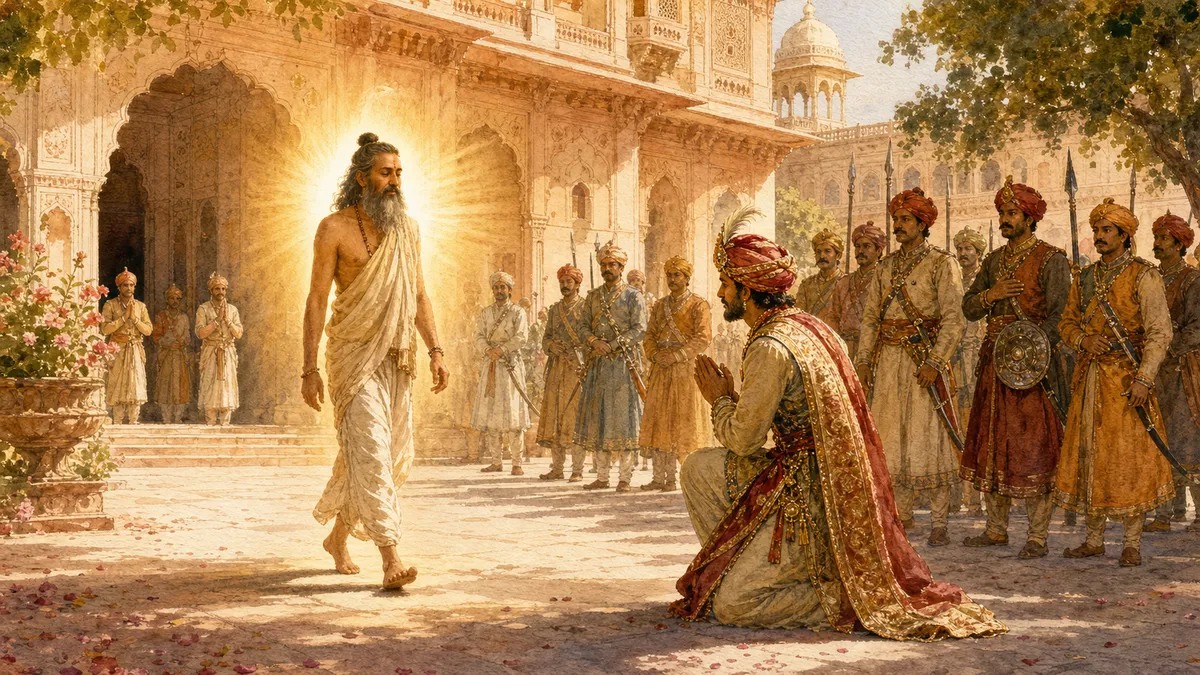
When a certain siddha wandered into the women’s quarters of the maharaja’s courtyard, the maharaja, possessed by anger and jealousy, thought that some robber had entered his harem and wanted to seduce one of his wives. He ordered the soldiers to cut off his arm. When they cut off the man’s arm, he said nothing to them, but only laughed and walked away. Then the maharaja realized that this was a holy man, since an ordinary person could not have behaved like that: his arm had been cut off, yet he was walking and laughing. He ran after him, began prostrating before him and asking his forgiveness. Then this siddha took the severed arm, attached it back on, and went on his way. This was possible because his consciousness, pranas, and the cells of his body were completely united with the primordial light, thanks to such immersion in bhava.
Shiva says to Vasishtha:
“By one’s own efforts, it is fairly easy to renounce imagination. If you can cast aside a single straw, then with the same ease you can cast aside the three worlds as well. What cannot be attained if one makes an effort?”
The experience of such non-reflective consciousness, cut off from imagination, is precisely the experience of “taste,” the sixth stage. This is not yet enlightenment, but it is its true seed, which inevitably bears fruit.
When this experience occurs, the seventh stage, called “gestation,” naturally begins. It is spoken of as follows:
“Then the yogin should, day and night, steadily and carefully gestate this ‘taste,’ as a mother carries in her womb a long-awaited child.”
You have reached the right point of consciousness, and now your task is not to fall out of this point of consciousness.
Read 14 times
Articles
Vidya AI
Search
Lectures
November 3, 2026
Mantra of the day
ОМ САДРЩАЙА НАМАХ ОМ Видящему равно – поклонение!
Auspicious Times(Rome)
Brahma Muhurta:
04:54 - 05:49
Abhijit Muhurta:
11:33 - 12:14
Sayam Sandhya:
16:43 - 17:24
Mokshada Ekadashi (6 November)
Ekadashi of liberation. Helps to achieve spiritual enlightenment.