


We will talk in more detail about the types of karma and the forces that represent karma.
“Nothing in our world happens simultaneously, owing to the known limitations of time and space, as well as the presence of the causal conditioning of phenomena. A tree and the seed from which that tree developed cannot develop simultaneously. The second of the events named must precede the first in time. Events in our universe occur according to the sequence outlined in accordance with the law of karma in the vast calendar known to us as time.”
Karmana (cause) and phala (fruit) — such is the essence of the unfolding of karma in the relative dimension, to which we are all subject. If we create any cause, it inevitably grows into an effect. Any thought, word, or action of ours creates a cause that will necessarily grow into an effect. As long as we have not reached the nondual level, the law of karma is constant and inexorable; no living being can avoid it. In order to transcend and avoid it (and this is precisely the goal of our practice, our spiritual life, our spiritual exercises), it is necessary to clearly understand the principles of the law of karma and how it manifests.
“As soon as Prakriti separates itself from Purusha, the law of karma comes into effect. And everything that happens afterward is ultimately a consequence of this very first event in the world.”
The sphere of influence of the law of karma extends to such a karmic vision in which Prakriti is separated from Purusha. Prakriti is the primary undifferentiated material energy that has already separated from Brahman, the Absolute, which in Sankhya is regarded as Purusha. In other words, the law of karma does not operate only when our mind goes beyond the realm of the separation of Prakriti and Purusha, when our mind is in an undifferentiated state.
For example, you have been practicing for twenty years, and one day you had a very deep spiritual experience in nonduality, a profound samadhi that lasted three seconds. You immersed yourself in light, your breathing stopped, there was neither the sense of “I,” nor above, nor below, nor subject, nor object, nor thinking, nor anyone who could analyze. It was pure consciousness in an ocean of light. Those three seconds literally transformed your perception of yourself. Out of twenty years, during those three seconds you were independent of the law of karma, while for all the remaining nineteen years, eleven months, twenty-nine days, twenty-three hours, fifty-nine minutes, and fifty-seven seconds you were subject to the action of three or four types of karma, to which all living beings are subject, even when you said: “I am Brahman.” This is a fact that must be investigated very deeply.
“Every action inevitably causes some effect. It, in turn, has its own effects, just as ripples spread in all directions from a stone thrown into water.”
We live in a continuously branching causal universe, where chains of causes generate new effects, which, like ripples on water, generate further chains of causes. For example, depending on your karmas, today’s lecture will generate certain causes that will manifest as certain effects also in your consciousness. On the basis of these effects, you will perform certain actions with body, speech, and mind, and therefore effects will again be generated.
Usually, the effects we want to generate through spiritual practice are sattva, that is, thoughts, actions, and deeds in the guna of sattva. This is the only guna that contributes to contemplation and liberation. Rajas and tamas are a departure from equilibrium, while sattva represents equilibrium. When a person abides in rajas or tamas, he is thrown out of balance, out of the natural state, because only sattva is close to the natural state. It represents a favorable equilibrium.
As soon as rajas or tamas takes hold of us and we move out of the equilibrium of the natural state, the flow of karmic influence sharply intensifies, and the grahas (planets) begin to affect us strongly. That is, it can be understood that abiding in such equilibrium in the state of sattva is a powerful protection from the influence of karma, from the law that is continuously radiated.
“As countless actions accumulate, both they themselves and their consequences become intricately intertwined, forming an incredibly complex, tangled picture and immersing us in this strange, puzzling mixture of causes and effects that bind the whole world and us within this world into one immense, boundless, self-regulating system.”
We live in a world of continuous causes and effects. If we analyze why we are here now and have entered monasticism, this was preceded by many different causes and effects which, intertwining, produced a particular picture. If your karmas had not been sufficient and in childhood your destiny had taken a slightly different course, then other karmas would have been activated, and therefore you would not have received a spiritual book, would not have met a monk, and would not be sitting here. But those of you who had enough factors would still be sitting here, because you would have met a monk the next time, would still have found this book, and would still have come to reflections on spiritual practice.
The law of karma is extraordinarily complex in the relative dimension. In the same way, living beings dwelling in the worlds of hell, in the bodies of animals, living as asuras or gods in the heavens, have created certain causes in order to abide in such worlds and reap the fruits.
Time is the continuous unfolding of causes and effects. Since a cause does not manifest immediately, and is separated from its effect by psychological states and the states of the elements, this is called time. But in essence, no such absolute substance as time exists; this substance is a psychological separation and a difference in the state of the tattvas.
Level of Responsibility and Karmic Impact
“With regard to living beings, the law of karma operates mainly at the level of ahamkara. Since human beings possess a much higher degree of self-awareness than animals and plants, they also have a greater capacity to identify themselves with their actions. Consequently, they both sow more and reap more than other sentient beings. What exactly they sow and what they reap depends on the specific ratio of the three gunas in each person’s personality.
If sattva predominates, a person performs an altruistic type of karma, without becoming attached to the results of their actions, whereas the predominance of rajas compels a person to act on the basis of passion and to be blinded by their desires. Those who act without troubling themselves with reasoning are under the predominant influence of tamas. Only those whose mind is focused exclusively on the Absolute remain untouched by the influence of the three gunas.”
Some people ask the question: “What is the point of ahimsa? For example, when we walk along a road, we crush thousands of insects, paramecia, microbes, and so on. It turns out that observing absolute ahimsa is impossible. Perhaps it is not so important to observe ahimsa, and it is enough simply not to have a sense of guilt, to self-liberate it? And what is the difference between killing a cow and killing a bacterium? After all, in both cases there is the fact of killing.”

But here everything is intertwined in a very complex way. Since in our consciousness a cow is a very weighty karmic object, while a bacterium is completely weightless, when a cow is killed the level of identification of consciousness, due to our relative karmas, may be a thousand times greater than when a bacterium or an ant is killed. Accordingly, the imprint, the samskara, that arises in the stream of consciousness is also much greater. Since we possess free will and decisions are made precisely at the level of free will, this implies responsibility. It is precisely the combination of these factors—the karmic imprint, the energetic and karmic weight of the object, and the level of responsibility, when we are given free will—that determines the result according to the law of karma.
For example, if a child, who does not yet have free will and therefore responsibility, accidentally does something, then they do not accumulate the same karmic result as an adult who possesses free will and responsibility.
The greater our level of free will, the more our karmic responsibility increases. For example, if a person does not engage in spiritual practice, then he does not understand the various subtleties of the teaching, and therefore cannot bear responsibility for what he does not understand: for observing the vinaya, the principle of samaya, the fourteen root vows, the principle of pure vision, the monastic hierarchy, and so on. Even if he violates this, it happens because he lives in another stream, where such things simply do not exist, and therefore he bears no responsibility for it, but is accountable according to the laws concerning samsara.
But for a monk, on the contrary, such things are very important, since he already falls under the jurisdiction of another domain. His spiritual self-awareness has awakened, spiritual obligations and vows have been accepted, he identifies himself with a certain status, and therefore a certain level of responsibility arises for him: for preserving samaya, for following the accepted principles, for his own work on himself. This happens because his consciousness has awakened to these principles and has accepted them as its own basic semantic matrices. That is, these deities have been initiated in the stream of his consciousness.
If a person receives initiation into a certain deity, then, while worshipping it, he must observe certain principles. As long as the connection has not been established, he may not adhere to these principles; but if such a connection is established, then the principles also begin to operate, provided that initiation into this deity has been received.
Four Types of Karma
“Karma is usually divided into four categories. They are called:
sanchita — the sum of all types of karma;
prarabdha — the karma that will have to be experienced in the near future;
kriyamana — the totality of current karmas;
agama — the future karma of the individual.”
Sanchita karma can be likened to a storehouse in which all recorded impressions from previously performed actions of body, speech, and mind are kept. Prarabdha karma can be likened to that which is manifesting now.
All sanchita karma cannot manifest instantly; it manifests only when the corresponding circumstances are present. For example, there is a monk, but at the same time he is the son of his parents; he is also a man, as well as a martial arts master, a poet, and an artist. But all these karmas cannot manifest simultaneously. The karma of “the son of his parents” cannot manifest in a monastic community; it can manifest only when he goes on vacation and meets his parents. In the same way, other types of karma will manifest only in the corresponding roles.
Or there is a woman who is someone’s mother, wife, daughter, and lawyer, but all these roles will not be acted out at once. When she comes to work, she will be a lawyer. When she comes to her family, she will be a mother. When she comes to her husband, she will be a wife. This is an example of prarabdha karma. Although all types of karma exist, prarabdha manifests only when the corresponding circumstances initiate such a manifestation.
What is kriyamana karma? Kriyamana is our current actions. In fact, it is our efforts, our purushakara.
Agami karma is our planning, our vision of the future. Even if we are not doing anything yet, but create an intention, imagine the result, and in some way inscribe ourselves into this future, then this is agami karma.
“It is not always easy to attribute a particular action to a specific type of karma, because the cause-and-effect link is essentially an indivisible whole. Dividing such a whole into any conditional parts makes it easier to understand. But it should be kept in mind that in reality all four types of karma mutually overlap one another.”
For example, we are building a temple of Dattatreya. Undoubtedly, if there were no such causes in our sanchita karma, this would never have happened; we would be building an opera house or perhaps fortresses and firing positions. But we are building precisely a temple of Dattatreya, and this means that we have the corresponding sanchita karma. We are building it in this life because certain conditions have ripened — prarabdha. We perform actions — this is the manifestation of kriyamana karma. We create an intention, make plans, draw sketches, visualize the temple, and fit it into the overall development strategy of “Divya Loka” — this is agama karma. Thus, it unfolds as a complex result of the action of the four karmas.
Subtle Bodies and Karmic Levels
However, everything is not so simple. As a rule, sanchita karma connected with our belonging to a clan, a nation, and all of humanity is recorded in the causal body (anandamaya kosha). That is, we share the collective karma of humanity, which is contained in our causal body. Individual characteristics, more personalized karma, are contained in the mental body (vijnanamaya kosha). Gradually, these two bodies, interacting, combine collective and personal karma. And by entering into interaction with other people, we unite in a common karmic vision on the basis of the interaction of the anandamaya kosha and the vijnanamaya kosha.
For example, we share the karma of all humanity, as well as the karma of Russia. This means that in our causal body there is something in common with all people of humanity and with Russians. Nevertheless, the karmas of our subtle body also contain the karmas of spiritual practice, and, moreover, we engage in spiritual practice. This means that at the causal level there is also information about spiritual practice, about the connection with the guru, with the lineage, with the teaching of Advaita. These two karmas, intertwining, lead to the fact that into the karma (the karmic dimension) of all humanity, into the karma of being Russians, and into the karma of the Nizhny Novgorod region (this region), we bring spiritual practice. This is how the two bodies involved in karma act: anandamaya (the causal body) and vijnanamaya (the mental body).
Detailed Description of the Types of Karma
“Sanchita karma.
Sanchita karma (lit. “karma gathered together”) is the sum of all past actions, known and unknown, performed by a given living being, recorded in his or her karmic account. By known karma (that is, known personally to you), one should understand the karma that you know you have carried out. And by unknown karma, that karma of yours of whose existence you are not even aware.

Prarabdha karma.
Prarabdha karma is that part of sanchita karma which must be experienced by the individual in the current incarnation. It represents the sum of the consequences of past actions that have already manifested or will manifest later, subjectively perceived as a manifestation of fate.
Kriyamana karma.
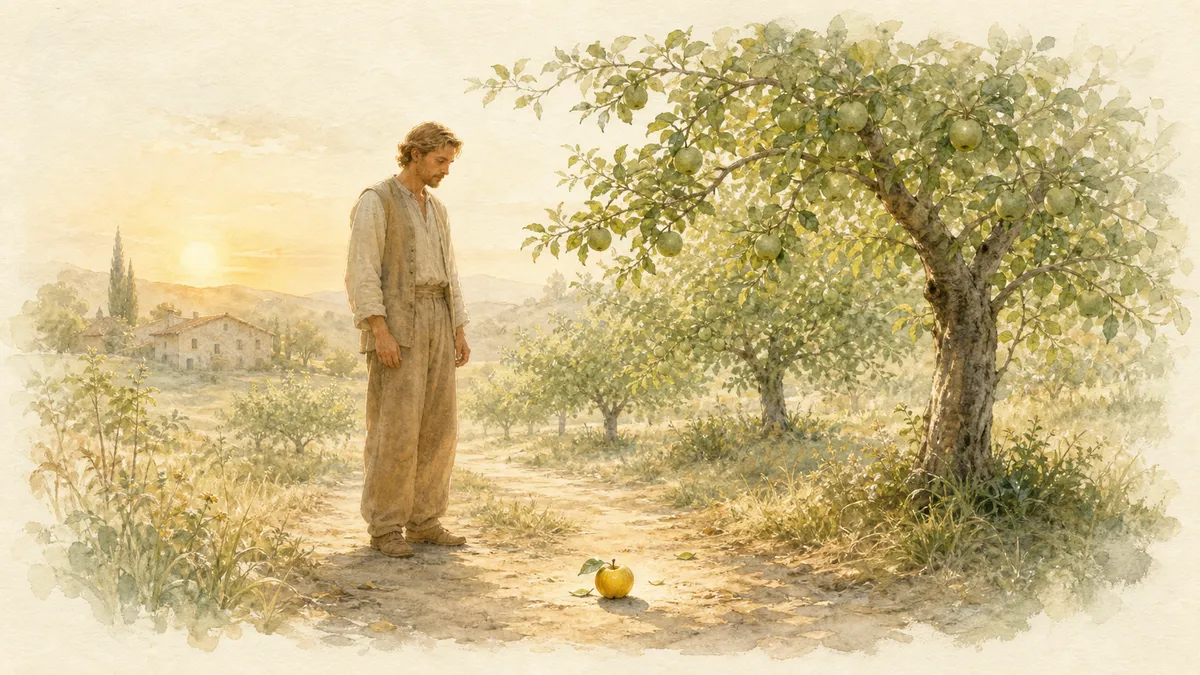
Kriyamana karma includes the sum of all possible consequences created by a person’s current actions. People are not merely puppets mechanically controlled by one or another consequence of their past deeds. We are capable, by applying conscious effort, of performing new actions in the present according to our own choice.

Sanchita and prarabdha karma, in a certain sense, are assigned or predestined to us, being the product of actions already performed.”
Be very attentive! Your future depends on how well you understand this. It is right now, when we are engaged in spiritual practice, that we have freedom of will. We can use it or not use it. For example, if the mind is in prostration (in tamas) or in an agitated, excited state (rajas), it will not grasp the essence of the law of karma, will not create an intention (sankalpa), and therefore will not be able to manage its future, to direct it in the right direction. And vice versa. Such moments exist always, every second. But the point is that they are not so easy to make use of.
What is called destiny relates to sanchita karma and prarabdha karma. This is precisely what the definitions “fatum,” “doom,” and “fate” refer to. And people who are strongly subject to sanchita karma or prarabdha karma are called “victims of circumstances,” and so on.
All beings of the lower worlds are victims of circumstances, since in the lower worlds (in hellish dimensions, in the worlds of animals or pretas) sanchita and prarabdha karma act very strongly, while kriyamana and agama karma are almost reduced to nothing. That is precisely why it is too difficult to get out of them. Why is it said that a person falls into Raurava hell for a thousand kalpas? Because it is very difficult to manifest freedom of will when one gets there. Kriyamana and agama karma are very greatly weakened; they almost do not function there. And what remains? Only to wait passively until sanchita karma and prarabdha karma change, and that takes a very long time. If here, in the world of human beings, we can manifest our freedom of will well, then in the lower worlds this is impossible.
On the contrary, the higher the spiritual level, in the higher worlds, the more powerfully one can manifest kriyamana karma and agama karma. Why is this possible? Because the gods have very highly developed iccha shakti, jnana shakti, and kriya shakti, and consequently they have an enormous potential for action and for forming intention.
The Consciousness of the Gods and the Manifestation of the Higher Shaktis
If gods were here in our place, they would immediately think about how this situation could be changed for the better. For example, to make the hall larger or to create the possibility for everyone to listen to the lecture in such a way that it would reach directly into consciousness, into the heart, bypassing all limitations and even the logic of the conceptual mind. They would immediately think about how to improve the weather, how to become independent of the sun, how to create round-the-clock illumination. That is, this is enormous kriya shakti and iccha shakti, the ability to manifest will and change all karmic limitations.
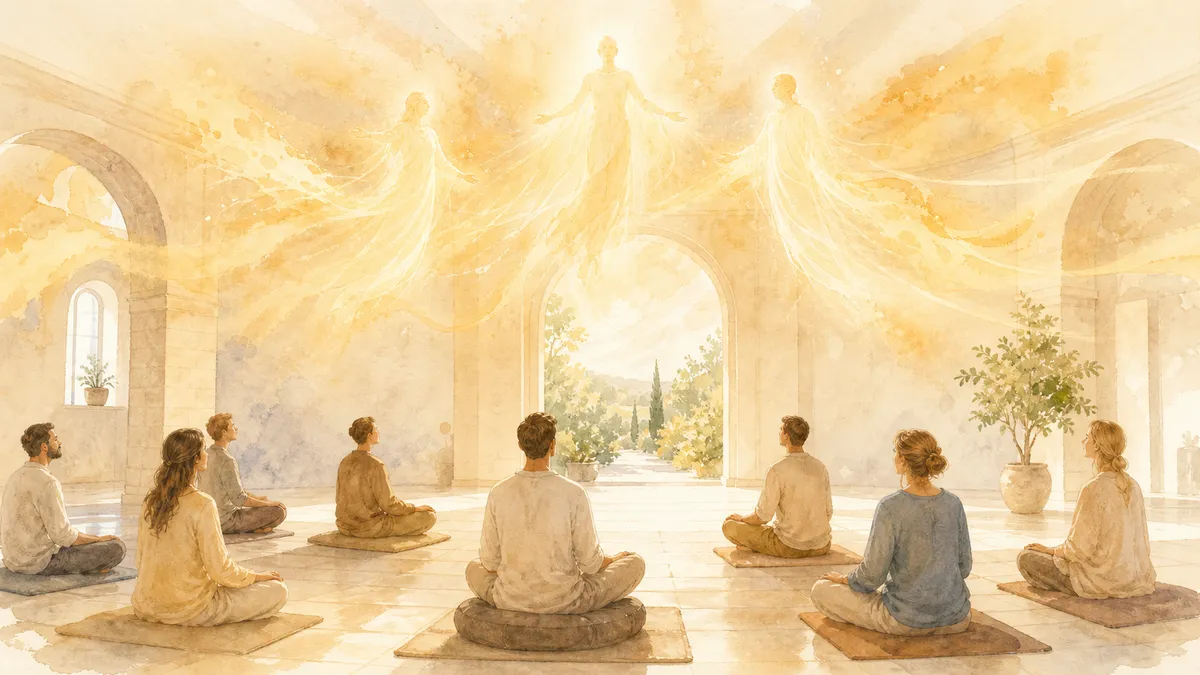
Then they would think: “But why do we need to sit on the ground? Let us levitate, independent of gravity. And why do we have only this body, which coughs, sometimes catches cold, depends on the cold? Let us direct clarity onto the body and create energetic or rainbow bodies. Why do we need such prana and such consciousness, which falls asleep and needs rest? Let us change this.” That is, this is a consciousness that constantly moves forward and improves everything. This is the state of gods who possess enormous potential of kriyamana and agama karma. But in the world of human beings everything is quite different. In the world of human beings, kriyamana and agama karma are still limited, while prarabdha karma and sanchita karma are strong (though not as strong as in the lower worlds).
Kriyamana Karma and Freedom of Will
“Unlike sanchita and prarabdha karma, our kriyamana karma is what we do at each moment of the present time, possessing the capacity for choice and conscious creation. It, therefore, is what we call freedom of will.”
Freedom of will manifests in the acts of our choice. We always have a choice. Sometimes it is a small choice, and sometimes a big one. For example, to be a monk or to be a layperson is a duality, a branching of the situation. And we stand before a choice. Whatever choice we make, that is how our future will proceed. To study the teaching and pass to the third stage, or to remain at the second stage, is also an example of choice. There are smaller choices, for example:
to practice sankalpa while walking or to drift somewhere with one’s thoughts;
to cut off agitation and meditate in mahashanti for thirty minutes or to sink into blurring;
to struggle for the waking state or to let the mind go and enter prostration;
to do anuloma-viloma in the morning or not to do it;
to get distracted out of habit during a conversation or to hold sankalpa, and so on.
Our whole life is made up of thousands of such choices, which ultimately form a certain new vector of the situation, one that extends into the future. And if many such positive choices accumulate, then an entire world is formed, consisting of kriyamana and agama karma—our future universe, in which we will live.
The task of spiritual practice is to neutralize prarabdha and sanchita karma through the power of kriyamana and agama karma. When there is a strong intention and sufficient effort has been applied, such neutralization takes place. Then prarabdha and sanchita karma are displaced by the power of kriyamana and agama karma. But if the effort is insufficient and few choices have been made, they cannot be displaced. And here a great deal depends on our will (iccha-shakti) and clarity.
Agama Karma and the Capacity for Planning
“Agama karma consists of those actions that you plan to perform in the future. This fact reflects your ability to foresee your possible actions in the future, regardless of whether you will actually carry them out.”
Agama karma is your capacity for planning, for strategic foresight. As a rule, free will in agama karma is also the ability of siddhas or gods. Ordinary people, non-practitioners, do not purposefully plan cause-and-effect relationships and do not foresee future events. Even if something is predicted to them, they perceive the future as something that cannot be changed, as a kind of fate. However, the higher the level of jnana, the greater the yogin’s ability to direct his agama karma through the power of intention and the manifestation of iccha-shakti.

Where, then, do iccha-shakti and the power of intention manifest from; where can they be obtained? They manifest from tapas. By performing tapas, the yogin separates his subtle body from the momentary flow of time. Usually people are very strongly caught by the momentary flow of time. Causal streams move along, sequences of events unfold and are experienced through body, speech, and mind. Everything is constantly flowing, and people’s consciousness is strongly seized by this current. All living beings are in this current and drift along with it. And in order to be independent of this current, one must detach from it, constantly remain dispassionate toward it, and stay slightly aside. If we detach consciousness from the stream of causes and effects and from the constant movement of karmas, then this is tapas. Tapas is called warmth or heat, an ignition resulting from ascetic practice.
Why is this so difficult to do? Because consciousness very strongly falls under the spell of present time and cause and effect. Everything that happens to us from morning until evening has an enormous influence on it. And when we detach consciousness from objects, it is always difficult or even boring. But it is precisely those who can do this who become free from the momentary and the vain, and then they can model the future, control the present, and even change the past. Tapas should be understood not only as external tapas, but also as the tapas of awareness, vigilance, and contemplation. For example, if we pull the mind out of rajas, out of being seized by the external, and diligently practice sankalpa, then all of this is also tapas.
The Mutual Transformation of Karma and Will
“Every current state in a person’s life arises as a result of the dynamic influence of fate and free will. Fate is predominantly an expression of sanchita and prarabdha karma. And free will is kriyamana and agama karma, acting together. Over time, agama and kriyamana karma inevitably pass into sanchita and prarabdha karma.”
This is the most interesting point. What used to be our free will itself becomes agama and sanchita karma in the future. Everything changes places. There is a saying: “Yesterday’s heresy is tomorrow’s dogma.” At first we have sanchita karma and prarabdha karma as limitations, and we also have our small will or our thought. But if we manifest will sufficiently or concentrate thought sufficiently, and they become so strong that they can cancel sanchita karma, prarabdha karma, and their laws, then over time our will and thought replace them and themselves become lawgivers. Thus, the will itself already becomes sanchita karma or prarabdha karma.
For example, you are an ordinary person and are subject to the limitations of sanchita and prarabdha karma, but you express your will and manifest the thought: “I will become a deity or a siddha!” If you say this to someone, they will object: “That is simply ridiculous! Look—you are limited! What you are thinking about will not bring anything.” But you manifest tremendous will, concentrate on it, and practice for a very long time; it becomes your destiny, an entire current in your life. Then your will and intention displace the old human karma, and you truly, little by little, turn into what you wanted—a siddha, a deity, a saint (depending on your intention). And now you already have the sanchita karma and prarabdha karma not of a human being, but of a deity, siddha, or saint. Your will and intention now become your new legitimate karma.

Time as the Axis of Karma
“Time is the very cosmic axis around which the wheel of karma revolves. What today was created by free will becomes the cause of what tomorrow we will call destiny.”
Your visualization today will become your destiny in the future. For example, if you perform the meditation of the pure land, or the illusory body, or divine pride, and succeed in making your actions powerful, then this will become your future life, your future destiny, when many future lives may already unfold in such a state. But whether or not it becomes your future depends on how you practice now, on what you do at a particular moment. For example, every second we generate certain causes which, having accumulated, will produce a certain picture and lead to certain consequences. When you understand this, you will begin to value every second of your life. You think: “To be unconscious is more trouble than it is worth. I am losing my future; it is slipping through my fingers when I am unconscious.”
Businesspeople value time very highly; they say: “In two minutes I can lose or earn a couple of million.” And they are very focused on what they are doing. Businesspeople are the kind of people who let a great many karmic currents pass through themselves. Accordingly, the results can also be great. This also applies to politicians, leaders, and so on. All those who let large streams of karma pass through themselves receive great results. But when they make mistakes, their losses are also great. That is, as a result of wrong decisions, in one day a businessperson may lose ten million, and a politician may end up behind bars instead of at the heights of power. In other words, the losses can also be very great. But what is the point? Such people know the value of time very well. Sometimes they even sleep only four hours a day. They understand that one must not be in a stupor, must not be inactive, must not be unconscious, must not make mistakes. Their future depends on every decision, even a small one, and therefore they are constantly in a state of vigilant attentiveness. But since all of this is worldly and external, it is constant rajas. And it is said that such a person does not work, because for him the constant holding of some mandala by the power of consciousness is not work, but a way of life. A spiritual practitioner is like such a person, but the difference is that all his work lies in the inner state. Whether he gains or loses such opportunities depends on whether he loses time or does not lose it.

Conditions of Transformation
“No one is governed by destiny alone. But at times it may seem that this is exactly the case, until free will enters the stage. Only in these cases can the quantity and quality of the effort invested in changing the situation, in its effectiveness, equal or even exceed the quantity and quality of the effort that created this situation. And only then can genuine transformation take place.”
When does transformation occur? It occurs when freedom of will, personal intention, and effort neutralize sanchita and prarabdha karma and displace it. In fact, understanding the principle of will and the principle of effort is a cornerstone in the spiritual practice of yoga. It can be said that if a person has not discovered this principle, then he is a plaything of circumstances and is inclined to blame everything on circumstances. For example, he says: “You see, circumstances turned out in such a way that there was no time to do this.” But another person does not say this; he has a result. Why? Time did not flow differently for him in some way, yet he used his will differently; he surpassed the circumstances. He manifested his will in such a way that time appeared.
If we say: “There was no opportunity,” or “There was no time,” or “I couldn’t,” it means that we underestimate the principle of will and intention and overestimate the principle of circumstances, sanchita and prarabdha karma. On the contrary, if a person possesses a developed will and the power of intention, such things do not exist for him. Even if something does not work out for him, he says: “I simply did not apply enough effort,” or “My intention was not strong enough.” Since anything can be done, it is only a question of intention.
The Experience of Concentrating on Iccha-Shakti
Once, when I was practicing in retreat for a long time, I concentrated on the principle of iccha-shakti and truly felt it. And I thought that there is nothing impossible, nothing unbelievable; there is only sufficient or insufficient effort. When your mind is very strongly concentrated, causes and effects begin to change their tactics; they begin to condense, restructure, and submit to your consciousness. Here it is no longer the laws of worldly logic that operate, but the laws of parasattarka logic. If your kriyamana and agama karma are strong, if your intention and will are strong, then you can literally tear apart cause-and-effect connections even from the very distant past (some long-standing, thousand-year-old events), draw probabilities together by the power of your intention, and achieve the desired result. This happens on the condition that you truly apply genuine iccha-shakti and that your intention is strong.

If you understand this, then you will no longer say: “It was so because circumstances turned out that way,” because as a subject of will, as a subject manifesting shakti, you can become stronger than circumstances. You can make it so that circumstances begin to work for your intention (sankalpa).
This applies to the teaching, sadhana, service, relationships, anything at all. That is, this principle can be applied universally. And conversely, if a person does not understand this principle, he looks for the cause in external circumstances and says: “I have no money,” or “I do not have enough time,” or “You yourself understand that this is impossible.” But to a person who has revealed this principle, it is funny in his soul; he thinks: “There are no obstacles. If sufficient intention is created and will is applied, this will be realized; everything will certainly manifest.” That is, these are fundamentally different pictures of the world, different visions.
Karmic Vision and Its Influence
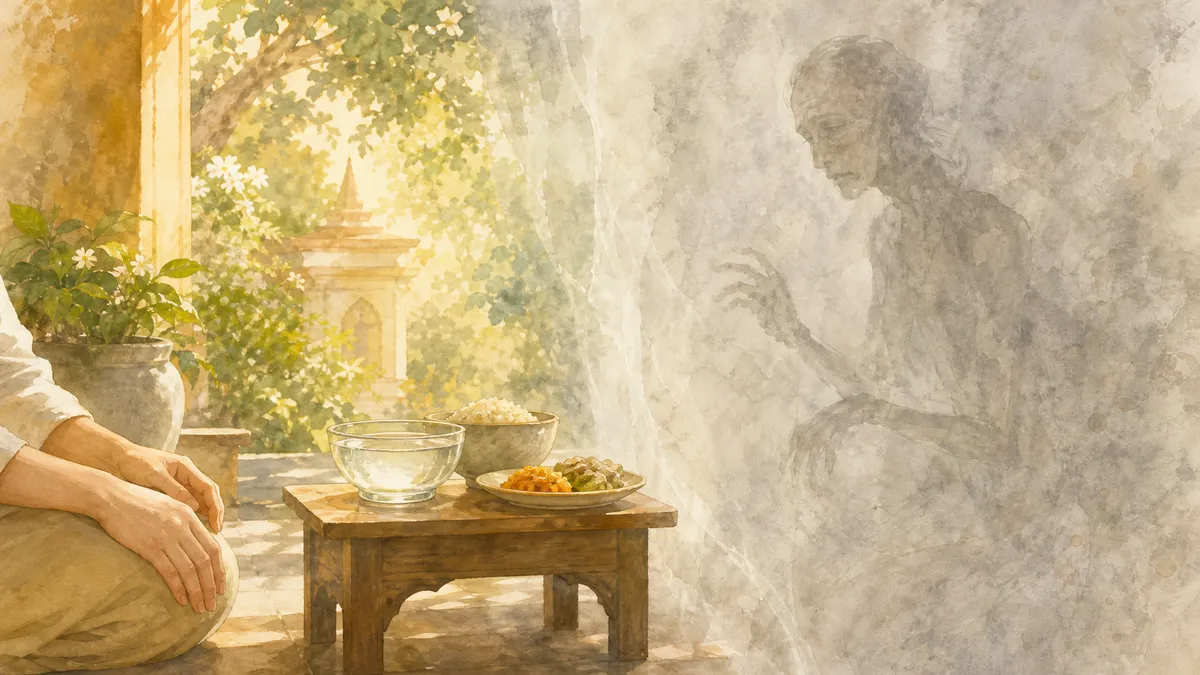
For example, in the consciousness of a hungry ghost there is no food; if you pour water into a cup and give it to him, it will not flow into his stomach, even if he wants to drink it. Why? Because the vision of a hungry ghost is such that it is forbidden to eat delicious food and quench thirst. That is, the hungry ghost has forbidden himself to experience any good sensations. He has entered into such a karmic vision where everything is impure, where everything is bad, where everything spoils. Even if you offer a hungry ghost a cake, it will turn into excrement, into something inedible, into moss, grass, and so on. If you offer him milk, it will turn into slop, because in his vision the hungry ghost has forbidden himself to see and feel anything pure, beautiful, tasty, and so on. He cannot even benefit from offerings until he changes the basic settings in his consciousness. The same can be said about beings of hell.
However, if we change karmic vision, then the management of karma, the materialization of intention, and the realization of goals become something entirely natural, a normal style of your life. First and foremost, of course, we strive to materialize intention not in the external world, but in the inner one, for our spiritual practice. Because spiritual practice is nothing other than the transmission of intention and its materialization. One may practice yoga a great deal, do techniques or visualizations, but if there is no powerful sankalpa behind it, no powerful faith, no powerful conviction, no powerful transmission of intention, then all of this may yield no result. And conversely, if you have strong faith and a powerful sankalpa, then you will receive results from all techniques. It will feel as though everything in your life is going smoothly. Whatever you take up, everything works out. You take up practicing sankalpa—you enter clarity. You sit down to meditate on mahashanti—you experience the third dhyana. You practice pranayama for a week—you awaken kundalini. That is, this is a kind of reality tunnel where you are accompanied by continuous good fortune. And this good fortune appears because you have strong ichchha-shakti, a strong transmission of intention. Intention shapes all events and all results in such a way that everything comes together.
An Example from Personal Practice
For example, when I was diligently practicing kundalini yoga in retreat, I did not experience any particular difficulties with the awakening of kundalini, with bringing out the subtle body, with pranayama, and so on. It did not take very much time. It took about a year to obtain full experiences. I had the strongest faith in the guru’s instructions and in the sacred texts. I did not doubt this in the slightest, so when performing techniques and pranayama, everything happened exactly as it is described in the texts, literally one to one. But this happened because my strong will was being transmitted. Everything came together into a picture of the world in which these experiences are possible and become your reality. And such an approach is very important. In other words, when you perform technical practices or meditations, you must clearly understand why you are performing them, what their fruit is, and already be in the state of the fruit. That is, if you perform the “Dattatreya Kavacha,” you must clearly understand what its fruit is, and by intention literally live into the kavacha in order to obtain the result. And then you will begin to receive real results from your sadhana. The same applies to the practice of asanas, pranayamas, or walking in contemplation.
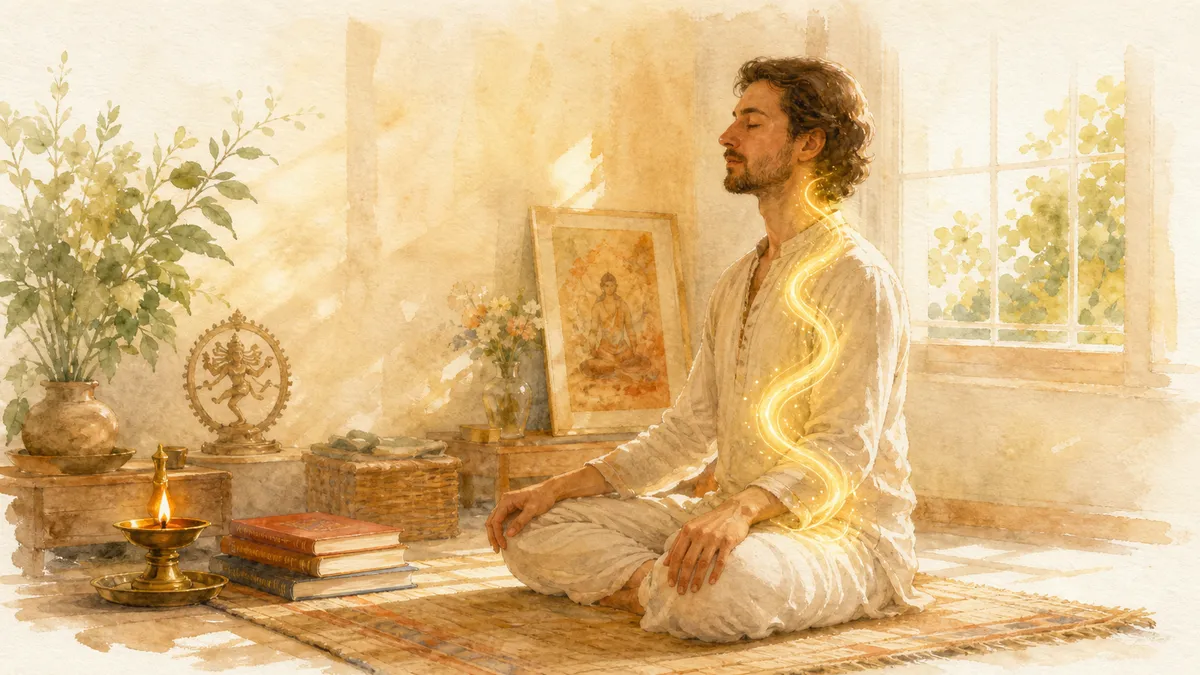
It is very important to have such a gathered consciousness that directs ichchha-shakti during spiritual practice.
Types of Prarabdha Karma
“In other words, transformation can occur only when agama karma and kriyamana karma neutralize sanchita karma and its current actualization, prarabdha karma. The amount and quality of effort necessary to change former karmas depends on the magnitude or degree of expression of prarabdha karma in each specific case.
Depending on the degree of expression of prarabdha karma, it is customary to distinguish three of its types, each of which may affect one, several, or all spheres of a person’s life. They are called:
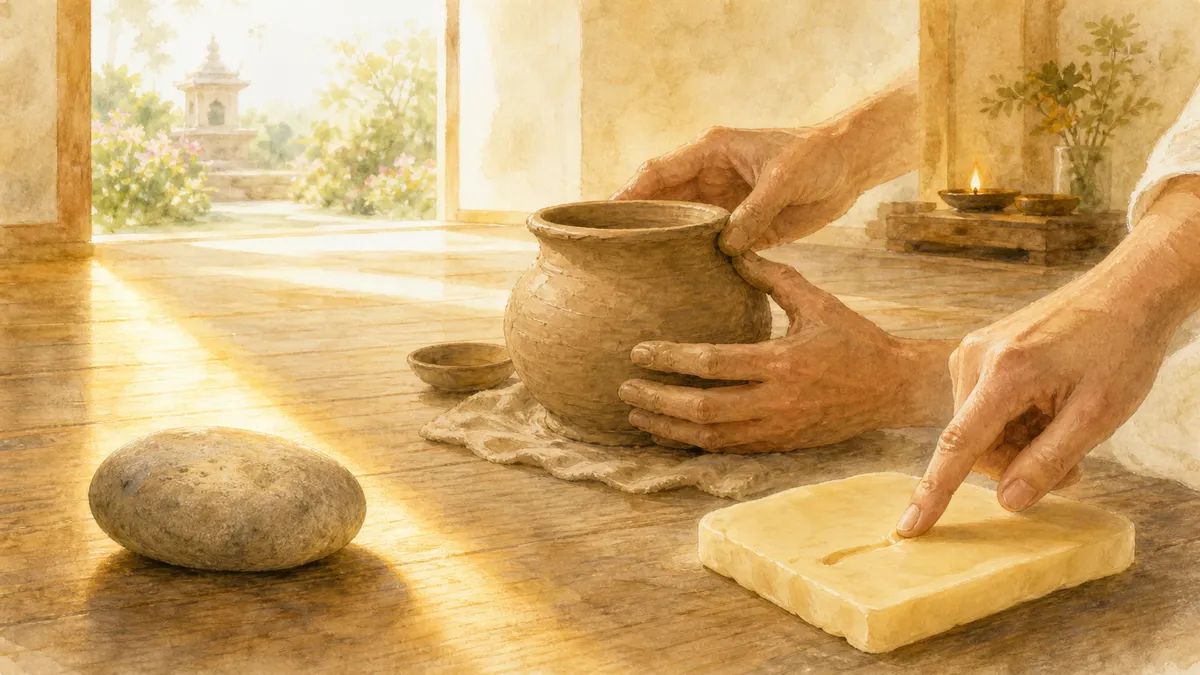
–dridra – hard, fixed karma that cannot be changed;
–dridra-adridra – soft-hard karma that can be partially changed;
–adridra – soft karma, changeable by conscious effort of will.”
Dridra karma is karma that cannot be changed, or if it can, then only with incredible effort. Dridra-adridra is half-soft, half-hard karma that can be changed, but only if powerful effort is applied. And finally, adridra karma is karma that can be changed even by a small conscious effort.
Dridra Karma: Unchangeable Karma
Dridra-karma is rigid, fixed karma; its consequences are very difficult to change through conscious will. For example, dridra-karma includes our belonging to the class of human beings, our possession of a physical body. This is fixed, rigid karma, which is extraordinarily difficult—practically impossible—to change until you go beyond this karmic vision.
Dridra-karma means that certain events or experiences, pleasant or unpleasant, are given to us as mandatory; it is not within our power to avoid them. That is, the causes that produced them were very strong. For example, we created a cause in the intermediate state—we entered the mother’s womb, acquired a body. And now it is impossible to transcend this cause. It is mandatorily given to us in the form of the body and the material world until we generate some surpassing cause in the form of liberation, a body of light, and so on.
For example, if a person wanted to avoid certain circumstances, but they still happened to him, this is an example of dridra-karma. Dridra-karma manifests when there is a convergence of signs, that is, when many astrological factors come together in the horoscope, in a person’s karmic field. And the more such signs come together, good or bad, the greater the likelihood that this dridra-karma will be fulfilled and manifest itself in life.
For example, a pregnant woman has good health, the best medical care, and good heredity, yet she gives birth to a child with some congenital pathology. In such a case, it can be said that she experienced the action of dridra-karma, that is, inevitable karma that is not connected with current circumstances. The child was also subject to dridra-prarabdha-karma—inevitable current karma that cannot be prevented by external circumstances.
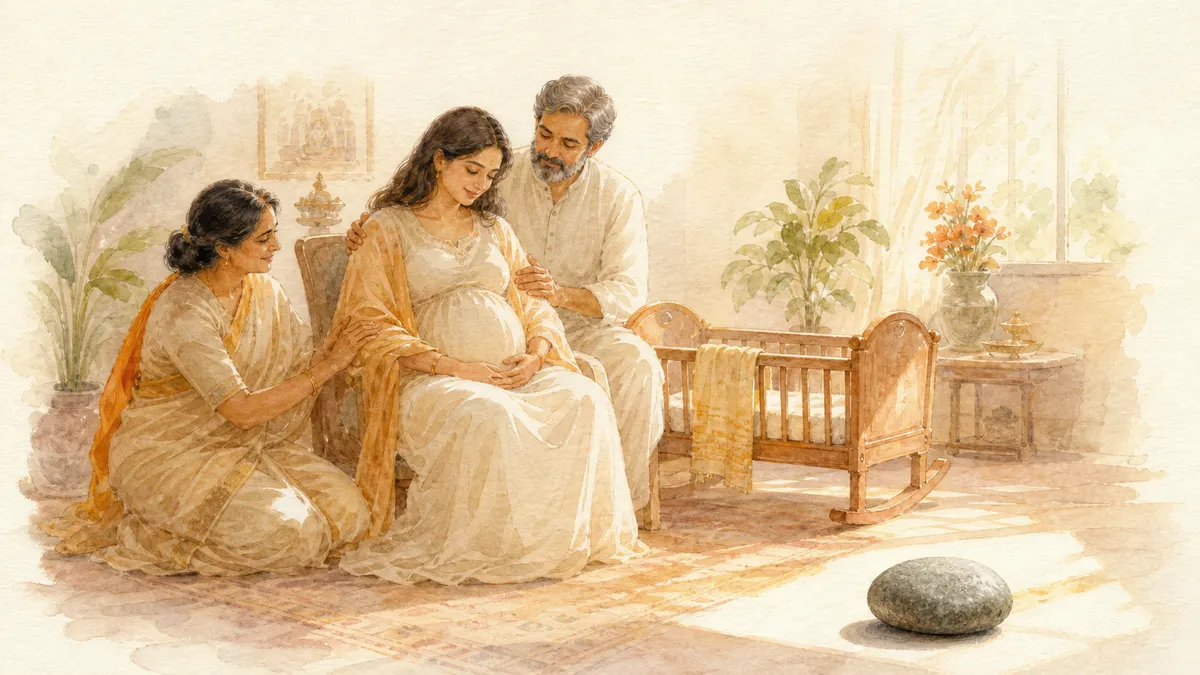
Dridra-adridra-karma: partially changeable karma
Dridra-adridra-karma is karma that is neither heavy nor light; it is half soft and half rigid. It is like the prescriptions of fate, which can be changed by a concentrated manifestation of will, although in this case the effort must be great. Such karma can be both changeable and unchangeable—this depends on your efforts. That is, if you make no effort, this karma cannot change, but if you make great efforts, you can shift it.
For example, if a person has a weak memory or underdeveloped abstract thinking, and he simply leaves it as it is, these abilities will not develop in him. This can be called the dridra-adridra-karma of this person. But if he has a strong intention to develop his consciousness, makes great efforts toward this, practices concentration, and applies various methods, then over time he will obtain such a result.
There was a yogin who could not understand and memorize sacred texts. He began to pray to the goddess Saraswati, performed fasting and tapas in her honor, and recited a mantra, invoking her. After some time he received the blessing of the goddess Saraswati, after which he first began gradually to memorize a large number of texts, and in his next life became a mahapandit. Thus the result of applied effort manifested, and dridra-adridra-karma was transcended.
For example, even if a child was born with a pathology, but great efforts are made, he receives good treatment, professional surgical intervention, and therapeutic exercises, then the karma changes, the child recovers, and this congenital pathology no longer affects him. This is thanks to the manifested kriyamana- and agama-karma of the parents. The child grows up healthy. This is an example of prarabdha-karma being changeable; it belonged to the category of dridra-adridra.

Adridra-karma: easily changeable karma
Adridra-karma brings unstable, easily changeable results. It is like a clean slate on which you can write anything you wish. Everything depends on whether you manifest will or not. If an event belongs to adridra-karma, then even a small effort quickly changes it.
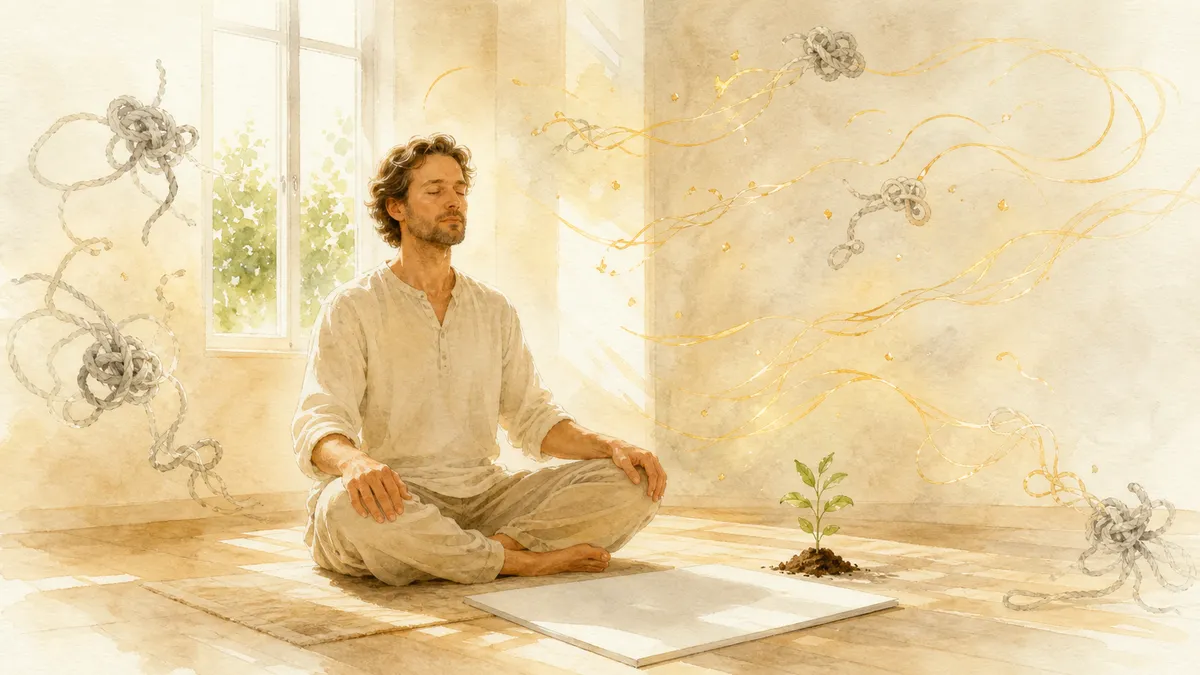
For example, a yogin had certain worldly desires or limitations, but as soon as he began to make efforts, purified the channels, and subdued the mind, all of this ceased to affect him. This means that his karmic kleshas and worldly desires belonged to easily changeable karma, adridra karma. That is, as soon as he practiced contemplation a little, purified the channels, and studied the theory of self-liberation, all of this completely ceased to touch him, and therefore he began to progress successfully in sadhana.
Methods of Correcting Karma through Upaya
What, then, are the ways to correct these types of karma? They lie in upaya. Upaya means method. There are countless methods that can soften bad karma and strengthen good karma. And the entire sadhana of Laya Yoga consists in providing a skillful means to purify these types of karma.
“A conscious and strong-willed person, when given means capable of neutralizing certain undesirable karmic circumstances, will use this method for as long and with as much effort as necessary. On the other hand, a lazy and less conscious person will most likely show insufficient discipline or will continually discover some obstacles preventing him from following the prescriptions. Such obstacles will arise especially often in cases where we are dealing with dridra karma, since the force inherent in this type of karma persistently resists any change in the area of life it affects. Thus, karma itself will interfere with the motivation of the person trying to put into practice the means given to him. Conversely, in cases where we are dealing with a soft type of karma, there is every reason to expect an immediate change in the situation for the better as soon as the person begins to apply upaya. If the karma he is dealing with is soft-hard, the results may come after a sufficient amount of focused effort has been applied. Often this happens after a period of forty days has passed. However, if the karma is of the hard type, then, regardless of the persistence shown, it is unlikely that it can be transformed within the present incarnation. Although somewhere in the depths of the soul there will still remain hope for at least a small modification of its results. And certainly, if upaya is patiently and consistently carried out throughout the present life, it will sow in the soil those seeds that will bring a worthy harvest in a future incarnation.”
When we make efforts in the form of upaya (skillful means) to neutralize prarabdha and sanchita karma, everything depends on which type this karma belonged to. Whether it was unchangeable karma, whether it was half-heavy and half-light, or whether it was light. It is impossible to determine this immediately. It becomes possible only after you have applied these skillful means for a long time and see which type your limitations belong to.
As a rule, there is a correlation between the three temperaments of tantric practitioners (divya, vira, and pashu) and the three types of karma. Those who have easily changeable karma are divya. Those whose karma is neither light nor heavy are vira. Those who have karma that is very difficult to change or unchangeable in this incarnation are pashu.
What, then, is upaya for us? Undoubtedly, in Laya Yoga, upaya, the supreme skillful means, is abiding in contemplative presence. It is also called mahaupaya, or the great method. If you have mastered mahaupaya and the single samaya, then this is undoubtedly the best neutralizer of sanchita and prarabdha karma, the best conductor of intention and will. But until this state is realized, there are many secondary, additional upayas that should be applied.
Spiritual Practice as a Game with Karma
Spiritual practice is a kind of continuous game with sanchita karma and prarabdha, for which we apply kriyamana karma and agama karma. It is a game in which a yogin can win, can lose, or can bring everything to a draw. And whether we want it or not, whether we know it or not, this game takes place continuously. As one saint said, a person may forget about the law of karma and about time, but they do not forget about him for a single second.
It cannot be said that we are not playing now, that we have a timeout, an offside, a break, lunch. No, the law is such that the game lasts continuously, and our task is to close the circle of day and night, that is, to develop the power of our consciousness in such a way that we could play such a game even in a dream and could outplay our karma. This is precisely why the teaching speaks of the importance of attentiveness, vigilance, and the correct application of effort. And this is not such a passive process in which one can simply take everything and freeze it. The unfolding of karmic causes and effects cannot be frozen; they develop continuously.
It is like a game of tennis. Prarabdha karma is like a ball that is sent to you, and you must receive it and return it. And if you do not receive it, then this ball flies past, and therefore a defeat is recorded for you.

Prarabdha karma is realized through the vijnanamaya kosha. From the vijnanamaya kosha it enters the manomaya kosha (the astral body). From the astral body it enters the pranamaya kosha (the etheric body), and the etheric body gives an impulse to the physical body to perform certain actions. And this process lasts continuously.
In what case do we return the stroke of this ball? In the case when we apply skillful upaya and self-liberate a movement, a thought, an emotion, that is, any vibration, if we are sufficiently vigilant to catch this ball sent to us from the causal and mental body and return it or direct it in the right direction.
Question: When some situation happens to a person, people usually say that this is how his karma is being washed away. Is this karma really being completely washed away, or is it a trace that will repeat itself again someday? For example, a person has fallen ill with something and thinks that his karma is being washed away. But is this very thought not itself a cause for it to repeat someday?
Everything depends on your position in the present. There can be two options. The first option is that the karma is indeed being washed away. What is meant when people say that karma is being washed away? It means that possibilities have ripened in sanchita karma, and therefore this illness manifests as prarabdha, that is, the conditions have been created for it to happen. For example, there is a cold in sanchita karma, but outside it is summer, warm, your mood is elevated, your tone is high, there is enough prana, and therefore it cannot manifest in any way. But spring comes, vitamin deficiency, a draft, a lowered mood, that is, conditions are created for the realization of prarabdha, and you develop a cold during this period; this karma is being washed away.

But everything depends on your position. If you take the position of iccha shakti and perform active actions (concentrate on the chakras, generate a visualization in which you see yourself as absolutely healthy, take preventive remedies), then you push all these kinds of karma back into the causal body; you return this ball. Accordingly, your kriyamana and agama karma do not support such a situation; they push it out.
Another option is that you indulge it. That is, you fall into despondency, make no effort, and then the cold develops, for example, into chronic bronchitis. That is, everything depends on your specific position.
Question: In the “Yoga Vasistha,” Vasistha tells Rama that in the previous kalpa he asked the very same thing. That is, Rama asked some question, and Vasistha replies: “Yes, in the previous kalpa you asked me the same question. Now I will tell you.” Is this a manifestation of karma? That is, Vasistha is a rishi, Rama is an incarnation of Vishnu. It would seem that they should not have been subject to the law of karma. But this regularity is precisely traced, and Vasistha says that this is indeed so.
For now we are discussing the law of karma as applied to the lower type of creation of the universe, that is, gradual creation. But Vasistha speaks from the point of view of the instantaneous creation of the universe and from the point of view of non-creation. That is, he speaks from the point of view of ajata-vada and drishti-srishti-vada, while we speak from the position of srishti-drishti-vada. What Vasistha discusses with Rama concerns even more complex aspects of karma. These are variable universes, illusory double bodies, reality tunnels that are initiated by a simple sankalpa, and human consciousness as the consciousness of the creator of the universe. I think a separate lecture should be devoted to this.
Question: Regarding the application of iccha-shakti. As far as ordinary practice is concerned, that is clear. That is, the more iccha-shakti there is, the greater the result we receive. But if it concerns certain external actions, then other living beings stand behind everything. Everyone has their own tendencies and willpower; they have exactly the same right to it. And when you concentrate on something, you see how other people’s strategy changes and everything adjusts to what you are concentrating on. To what extent do we have any ethical limitations in the application of willpower?
How ethical is it to manifest iccha-shakti if it also concerns others? A good question. When we are in the sangha, in the mandala, sharing samaya and vinaya, questions of ethics arise very seriously, because we care not only about ourselves but also about others. If we live alone, then we are not limited by anything. But in the mandala its own laws operate, and these are the laws of ethics. And here the principle is this: we must always take into account place, time, and circumstances in the manifestation of our iccha-shakti.
As far as sadhana is concerned, in this sense iccha-shakti can manifest without limitation, but in external relationships it must always take into account vinaya, samaya, ethics, and so on. For example, you have a lot of will, iccha-shakti, and you strive to perform your service while taking shakti from other mandalas, and you think: “My mandala is more important.” But it is necessary to look for ways to draw out shakti without taking it from others, so that it does not interfere with others. And this must be done from inner potential, not from the external.
Question: But if, let’s say, these people are karmically connected, then it turns out that what you are engaged in simply pulls them in, their attitude changes. They want to do something, but karma has drawn them to what you were concentrating on.
This means that you have the siddhis of influence, the siddhis of enchantment, when you can persuade others. How ethical is it to use them? First, to the extent that the laws of vinaya and samaya allow; second, to the extent that your status allows. For example, if you are in the status of a brahmachari, that is one thing, but if you are in the status of a manager, that is another. Simply act in accordance with these circumstances and status.
In any case, the manifestation of will should not cause disharmony. Sometimes, in an external sense, it is necessary to free one’s will in order to maintain harmony. This is not about sadhana, but about external forms of service. Sometimes one must synchronize one’s will with others, merge it with the will of the mandaleshwar (manager) of a particular mandala. Sometimes it can simply be adjusted, taking into account the will of others. We are, in a sense, operators and transmitters of iccha-shakti. If we know how to transmit iccha-shakti harmoniously, then we do not make mistakes, and others receive benefit from it.
