

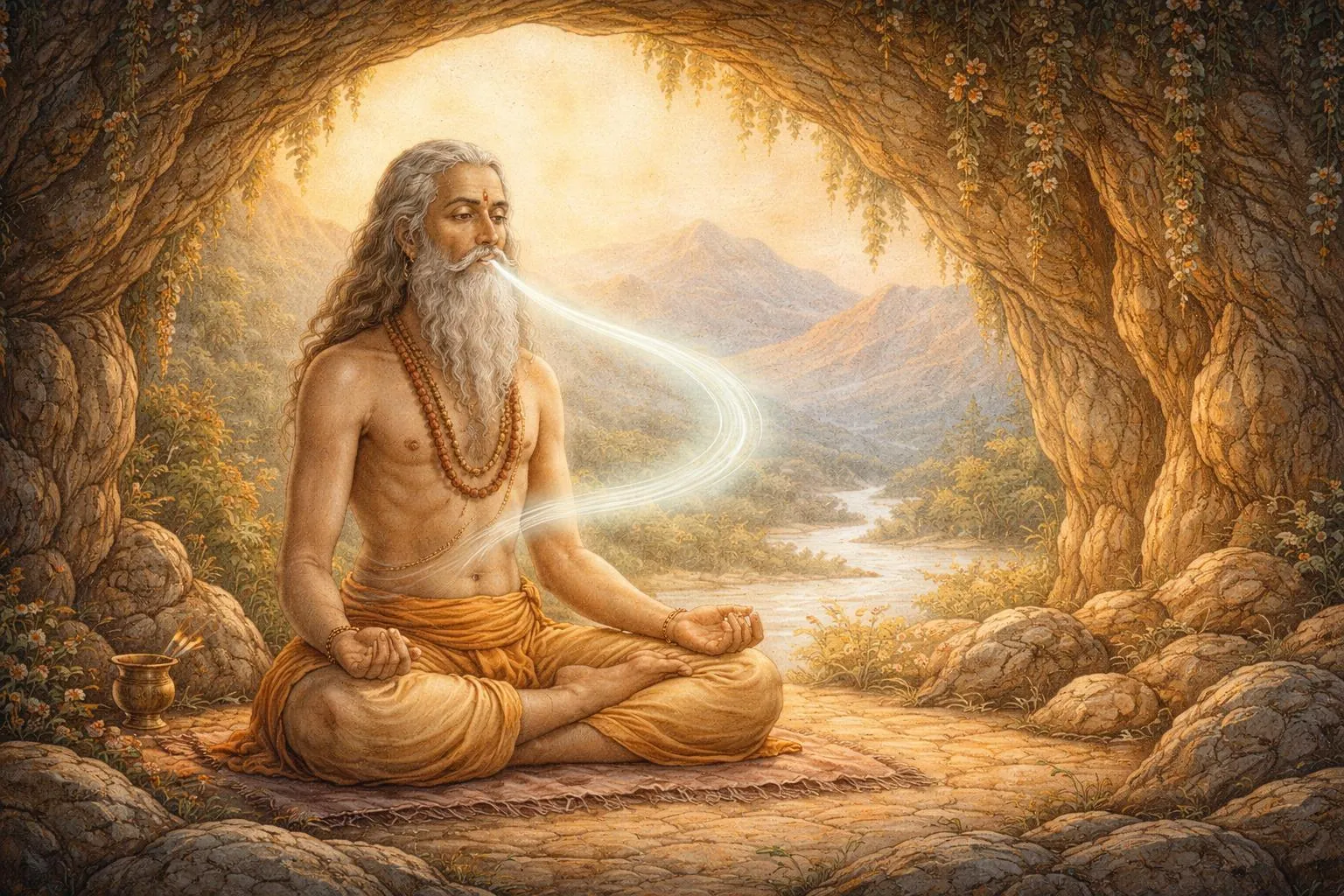
Channels and Winds
“Life force is vitality, which is closely connected with primordial awareness, the natural state. Like the natural state, life force is boundless and impersonal, but unlike the natural state, life force can be lost or accumulated.”
As long as we have a physical body, the elements and prana—that is, the life force—are very important for us. The level of life force we possess depends on whether our elements are balanced, whether they are harmonious or, on the contrary, out of balance. The degree to which we deeply reveal the natural state depends on the level of prana. Of course, there are religions that pay no attention to prana at all, for example Theravada Buddhism and Chinese Zen. But tantra pays attention to prana, so we work not only with consciousness but also with prana. When you begin the practice, you work with prana. This means that during the course of practice your channels are purified, your life force increases—that is, your physiology changes.
Texts sometimes describe that when working with prana, previously hidden chronic illnesses may even worsen for a time and then leave. However, this happens only when very intensive work with prana is taking place. Our method is gentle. This means that we harmoniously strengthen the life force, purify the channels and the elements in the chakras, doing all this against the background of contemplative presence.
Pure Vision and Life Force
“When we feel aversion toward what is perceived, our life force diminishes. When even in the worst situation we see beauty, the life force increases.”
Here it is said that when our mind is strongly seized by clinging or rejection, when aversion to something or non-acceptance arises in us, we lose life force. This means that we are distracted from the Source. Conversely, when even in impure, foul, or irritating situations we see purity, beauty, holiness, harmony, our life force grows and our lifespan increases; this is a fact. That is why it is so often said that it is necessary to practice pure vision. After all, in addition to the practice of contemplative presence, you must also be very stable from the point of view of life force.
There is a story about the famous Tibetan mahasiddha Drukpa Kunley. He was known for publicly disgracing his mother. But he did this not out of malice, but out of compassion; his method was simply like that. He told all kinds of indecent tall tales about her, but because she was nevertheless able to see this as practice, in pure vision, her life force increased, dualistic states of mind disappeared, and her lifespan increased. Thus, Drukpa Kunley led her to progress; he helped her wash away impure karmas and states of mind. Since her dualistic states were eliminated, the state of her prana also changed.
In the same way, Marpa increased Milarepa’s life force by giving him severe tasks. Milarepa had committed a sin by killing many people with magic in his youth, out of ignorance. Even under harsh conditions, he was able to manifest devotion and pure vision of the Guru’s practice. Thanks to his increased life force, Milarepa was able to free himself from the karma of hell that he had accumulated.
“The beauty of the relative can reveal something to us and inspire the mind, but beholding the beauty of the purity of Being nourishes the life force on a deeper level. Sincere prayer, the pure expression of feelings, increases the life force; sensory perception of the colorfulness and magnificence of nature, the capacity for living sensation, strengthens the life force. If you do not feel the joy of life, generate it with the help of the mind: ‘This is a good place, a beautiful tree, a wonderful person,’ and so on.”
In our terminology, this is the practice of pure vision.
“Life force can be returned from any dimension if one is open, receptive, and grateful. People who have beloved partners, or at least beloved pets, live longer and recover faster than lonely people.”
When you turn your mind toward saints and mahasiddhas, feel great devotion, practice samaya and Guru Yoga, reflect on reunion with the great Source, open your mind wide, transcend your ego, and learn to let yourself go, you open yourself to impersonal, transpersonal, global forces (shakti). These forces enter and begin to work within you. Conversely, when you close yourself off within your own personality, within your small ideas, and have a strongly clinging or non-accepting mind, you leave part of your power in subtle realms. This happens to all people: when there are worldly desires, prana departs; and conversely, when we open wide, we receive energy from the universal Source.
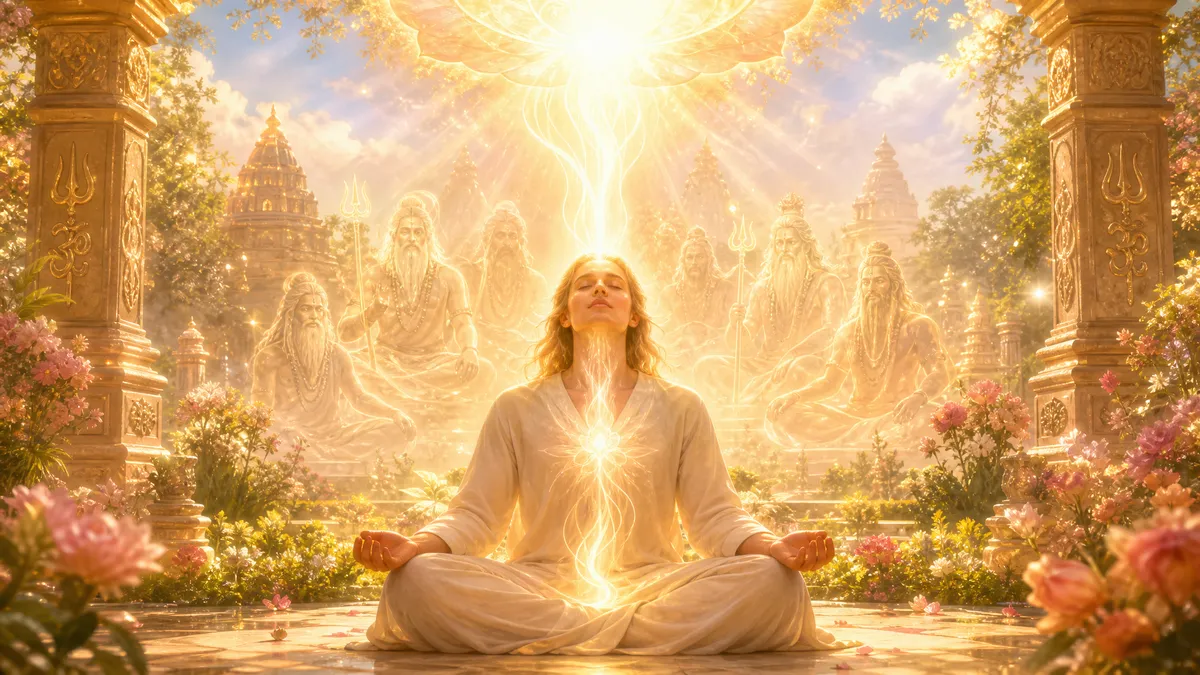
“When there is love, there is mutual connection and gratitude. Through connection, the energy of the earth element increases and the life force is strengthened.”
If you have devotion, reverence, compassion, and sincere love for the Absolute, for the saints, and for all living beings, this contributes to the accumulation of your life force. Those who have uncontrolled anger, who cause harm or bring problems to others, who kill animals, cut off their own life force. They do not have a long life, and in their next lives they will encounter obstacles and illnesses. This is a fact; this is karma. Those who feed, heal, protect, and save other people or animals increase their own life force by accumulating merit. They will be protected by gods, guardians, and inner deities both in this life and in the next. This is also a fact.
Elements and Various Vehicles
“Since connection with nature, the primordial elements, and the beauty of the natural world is very important, it is useful to make it a practice of attentive regard for earth, air, sky, warmth, and water. Beneficial contacts with spirits associated with the elements can also strengthen the life force.”
There is the shamanic vehicle, sutra, tantra, and anuttara-tantra. In the shamanic vehicle, much attention is given to relationships with the elements, spirits, deities, and the restoration of life force. In anuttara-tantra, the approach is different: it is considered that we automatically solve all the other problems inherent in the lower vehicles simply by entering the natural state and uniting with the element. We harmonize the elements and prana when we are in the natural state and unite contemplative presence with the elements. If we are not yet sufficiently skilled in uniting contemplative presence, we need to perform practices for controlling the wind, that is, all the methods we practice: channels, winds, kumbhakas, pranayamas, asanas, and so on. Thanks to these techniques, if we practice them correctly, the channels are purified and the life force increases.
“The vehicles of shamanism contain a large number of practices, including meditations and visualizations.”
Yoga-tantra studies the five elements, the winds that circulate in the body, the pranas, and how, with the help of the pranas, one can direct the mind to the necessary point. In fact, yoga-tantra teaches how to control prana in such a way as to introduce it into the sushumna nadi. First it is necessary to accumulate it in sufficient quantity, then to allow it to circulate freely throughout the body, and only after that to introduce it into the sushumna nadi. It is assumed that over six to twelve years a good monk prepares himself energetically in such a way that he can do this. He masters minimal pranayama, can attain lightness in the body, see light during meditation, and lead the subtle body out through the crown of the head or through a chakra; he hears the sounds of nada, his prana circulates through the channels, he sleeps little, has few worldly desires, and those he does have are under control. He has few worldly desires because the channels are pure and the mind does not scatter. He experiences pleasant sensations and can sit in meditation for a long time due to the fact that his body is light. Of course, this is the state of an experienced yogi. One must make an effort to realize such a state and then maintain it.
The Tantric Approach to the Elements
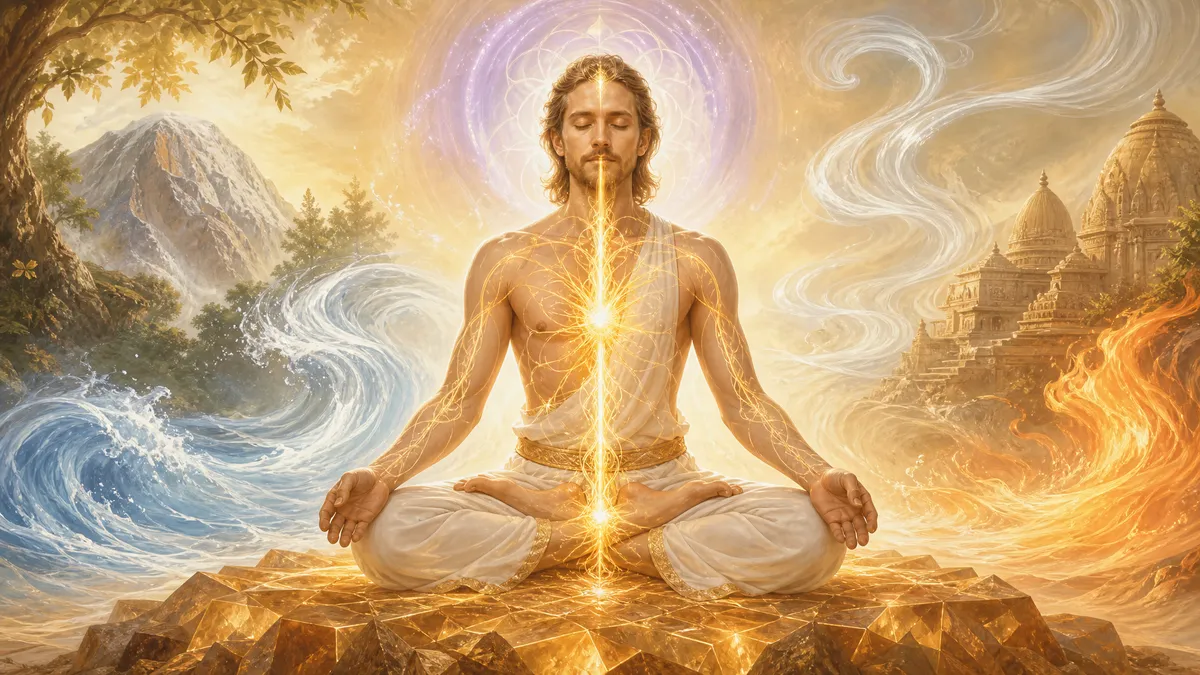
“In tantra, the elements are considered primarily from the point of view of their manifestation as the vital energies of the body. They are not reduced to biological or physical energies, although both of these types of energy are manifestations of the elements. The elements are considered sacred original energies of Being, which can be discovered in the energetic dimension of a person. Unlike shamanism, which establishes a connection with the energies of the elements through their gross natural aspects or with the help of immaterial beings, followers of Tantra discover the energies of the elements in their own body as channels, pranic energies, seed essences, and sacred source syllables of the energy body. In tantra, such practices ultimately lead to the attainment of the body of a deity, which is not the goal of shamanism. However, tantra does not exclude the approach of shamanism.
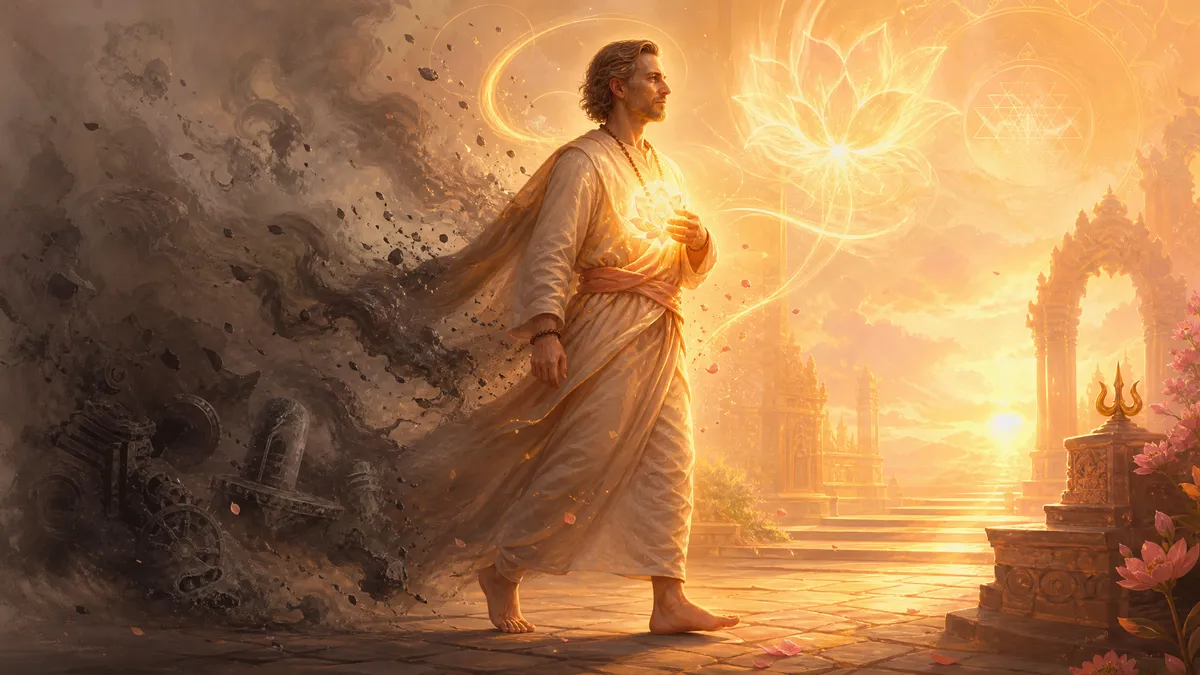
Tantra is the path of transformation. The five harmful emotions correspond to the five elements and are transformed into five beneficial qualities: anger into love, greed into generosity, jealousy into openness, pride into peace, ignorance into wisdom.”
In tantra, very great importance is attached to transformation, to transfiguration. It is said that by working with the mind and energies, one can turn anything into anything. This is so. There are tantras in which visualization is done gradually: visualizing oneself in the form of a deity, the arising of divine pride, the mandalas of pure vision, and the manifestation of the empty aspect of the deity. The higher the level of tantra, the less one needs to create artificial constructions in the mind and visualizations. In the lower tantras, the deity is constructed gradually. In the higher tantras, visualizing oneself in the form of a deity is done instantly: in a flash, manifestation. In still higher tantras, the deity is not visualized, but only divine pride (deva-bhavana) is generated; the feeling is emphasized (this is what we practice). In the highest tantras, neither the first, nor the second, nor the third is generated; everything is reduced to the nature of the Mind (this is what constitutes our main practice). Transformation means that we must turn the human feeling of perceiving ourselves into the divine, and then even this divine must be completely dissolved into the absolute.
One who can immediately realize the natural state does not need the practice of divine pride as such, because he immediately realizes the final point of divine pride—Aham Brahmasmi. It can be said that this is the highest peak of divine pride. But one who is unable to immediately obtain the taste of non-duality will receive very great benefit by transforming himself, practicing the principle of deities.
Radical Transformation
“A suffering being is transformed into an enlightened one; even the material body is transformed into a body of light.”
When we practice the path of transformation, it means that we must change—and not just a little; rather, it is assumed that we change radically at a very deep level. There should be nothing left within us that is old, dark, ignorant, or clinging. Step by step, we must gradually transform our personality completely and reveal the maximum potential of the mystical creative abilities inherent in the deity. Suppose many years pass, yet a monk or nun still holds on to certain ideas or attachments; this indicates a lack of understanding that all things, even subtle ones to which there are subtle attachments, should be worked with and turned, transformed, changed.
The Horse, the Path, the Rider, and the Armor
“In general terms, the practice of tantra is divided into two levels: practices of the generation stage and practices of the completion stage. To understand these practices, it is necessary to have some understanding of the energetic structure of the body.
The horse, the path, the rider, and the armor.
The horse, the path, the rider, and the armor, which are encountered in tantra, help one understand the components of the practice and the relationships between them.”
In the concepts of tantra there are metaphors—a special language that deciphers and provides images more understandable to us in practice. The horse is prana, which circulates in our bodies. The path is the energy channels (nadis) along which prana moves. The rider is the mind, that is, our consciousness, which travels on prana along the roads of the channels. Therefore it is said: “The rider of our mind travels on the horse of prana along the roads of the channels of our body.” And our complete awakening or awareness depends on how we control prana.
The Nature of Prana
“Prana is the energy that nourishes everything and the substance of all things, material and immaterial. It is the original energy from which everything arose. This energy is the basis of Being. At its most subtle level it is non-dual, whole, and has no location. The first distinction that arises within it is the five pure lights of the elements, which are also extremely subtle, and therefore we cannot perceive them with the ordinary mind. However, we can sense prana directly at a grosser level, in the air we breathe. In addition, we can feel its flow in the body.”
How does an ordinary person feel the flow of prana? He feels that his prana exerts pressure in those places where the nadis are clogged. Desires arise in these places, and he feels that if he does not satisfy this desire, his mind will feel bad. A practitioner feels that prana does not stop anywhere, and instead of exerting pressure on the chakras and causing desires, it circulates freely through the central channel, nourishing the brain. This gives rise to joy, various states of inspiration and clarity; wakeful awareness is always present, and there is never any tamas. Such a person is full of vital force, his mind is always clear; if he sleeps, his body sleeps, but his mind remains awake; he wakes up very easily—in fact, he does not need to wake up, he simply opens his eyes, gets up, and immediately does something, as if he had not slept at all.
Working with Prana and the Elements
“In tantra, this very level is used—the level at which prana can be felt in its movement and in the effects it produces. We acquire sensitivity to the flow of prana and develop it by using the mind, imagination, breathing, postures, and movement. By directing the grosser manifestations of prana, we can influence more subtle levels. As our sensitivity increases, we can directly perceive the prana of subtle dimensions. Generally speaking, prana is associated with the element of air. This is the element closest to space, the first to arise from space and the last to dissolve into the basis at the time of death. It permeates everything and everyone.
When we speak of the five elements as the five pranas, we mean the aspect of fire and air within each of the elements. According to one definition of the elements of the body, flesh is earth, blood is water, digestive heat is fire, breath is air, and consciousness is space. This is an approach to the elements in their more earthly aspect, in the more tangible material aspect of the manifestation of the elements in the body. The five prana energies are the more airy, less tangible manifestations of the energies of the elements in the body.”
When a person is born, the central channel appears first. It appears in the mother’s womb as a rudimentary organ. Then the eyes appear, and the life force of the subtlest dimension enters them. Then the five pranas appear, and the organs of the body begin to develop. From the point of view of yoga, complete liberation into the rainbow body occurs in the reverse order; that is, the yogin must bring the five pranas into the central channel. At present they are outside and tend to flow out when one leads an improper way of life or is captivated by the senses. If we practice correctly, prana does not flow out; on the contrary, it accumulates and circulates. But the highest attainment is the ability to bring the maximum amount of prana into the central channel. In fact, meditative experience, the state of health, life span, inspiration, the capacity for samadhi, levels of clarity, continuous consciousness, and the separation of the subtle body depend on the extent to which the pranas gather toward the central channel and enter it.
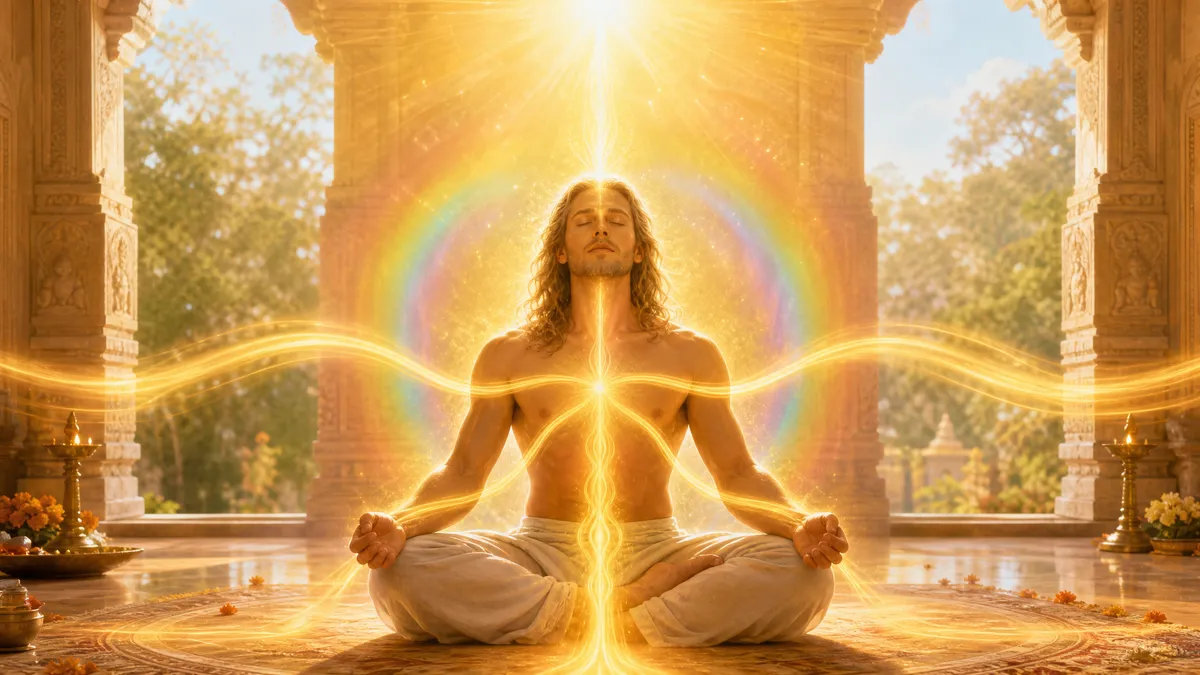
It is considered that practitioners of the highest class (divya), such as Saint Ramalinga, can bring the pranas into the central channel without performing any practices at all, but solely through the power of contemplation or the power of self-surrender. Of course, in this case there must be genuine contemplation and self-surrender. Then the primordial Clear Light takes control of the pranas and the mind into its own hands, directing them to the right place in the most harmonious way. Therefore, what yogis achieve through the power of tapas and pranayama, such a saint can achieve solely through the power of self-surrender or contemplation. However, the mind of such a yogin must be absorbed in the Absolute from morning to evening, and then immense joy arises in him, because the Absolute always gives tremendous inspiration.
Signs of an Advanced Yogin
You can definitely determine whether you are meeting an advanced yogin or one who is not very advanced. The mind of an advanced yogin, whatever he may be engaged in, is always firmly fixed on the Absolute, and therefore he receives immense shakti and experiences great joy.
A not very advanced yogin firmly fixes his mind on himself, and therefore he does not have very much shakti and, accordingly, not very much joy. He constantly lives by calculating what will benefit him and what will not; he constantly takes care of his personality, of how to protect it or assert himself; he is always caught up in a multitude of petty choices. He may quarrel with another monk over where he should sit, choose prasada or be indignant that the prasada is not tasty, become upset when he is scolded and become touched when he is praised, thinking: “What a rather nice mataji; I should take a closer look at her.”
This is the state of a not very advanced yogin, who thinks about anything at all except God. Of course, with such thoughts he has little joy, and his life force is also limited to the human level.
But a true saint does not think about any of this, or if he does, then only very slightly. That is, somewhere on the periphery, a part of his mind thinks about it if, in a relative sense, he lives in a community, but the greater part of his mind is directed only toward the Absolute. Everywhere he sees only the Absolute, contemplates the boundless Clear Light, and therefore is filled with incredible, immense joy, inspiration, and prana even while in the body; he does not have a single thought of becoming distracted, doing something separate from the Absolute, or clinging to his ego. He knows that he has attached himself to the greatest of all, and everything else comes of itself.
Whenever you act, you should orient yourself toward the supreme yogi.
