Biography of the Buddha: The Path of Renunciation and Enlightenment
18.07.2026
0 мин. чтения
0
Share
copy
search
add
share
Commentary on the text “Uttara Tantra Shastra”
Hagiography. The Buddha
This is the canonical account of the Buddha’s life according to the “Uttara Tantra Shastra.” The Buddha is considered an incarnation of the god Vishnu, an avatar who came at a time when the tantric teachings had fallen into decline, while the six darshanas of Vedic philosophy and the Vedas themselves were too ornate and difficult for people from the common castes to understand.
It is said that the Buddha took incarnation, descending from the Tushita heaven of the gods, in order to bring about a new manifestation of the Dharma. Since we follow the Sahajayana teachings of the mahasiddhas, we venerate the Buddha as one of the avatars, or manifestations of the primordial Light, who emphasized the aspect of emptiness, the absence of inherent existence, and the suffering arising from worldly desires.
Birth in Tushita Heaven and Descent to Earth
The Buddha. Birth in Tushita Heaven and descent to earth.
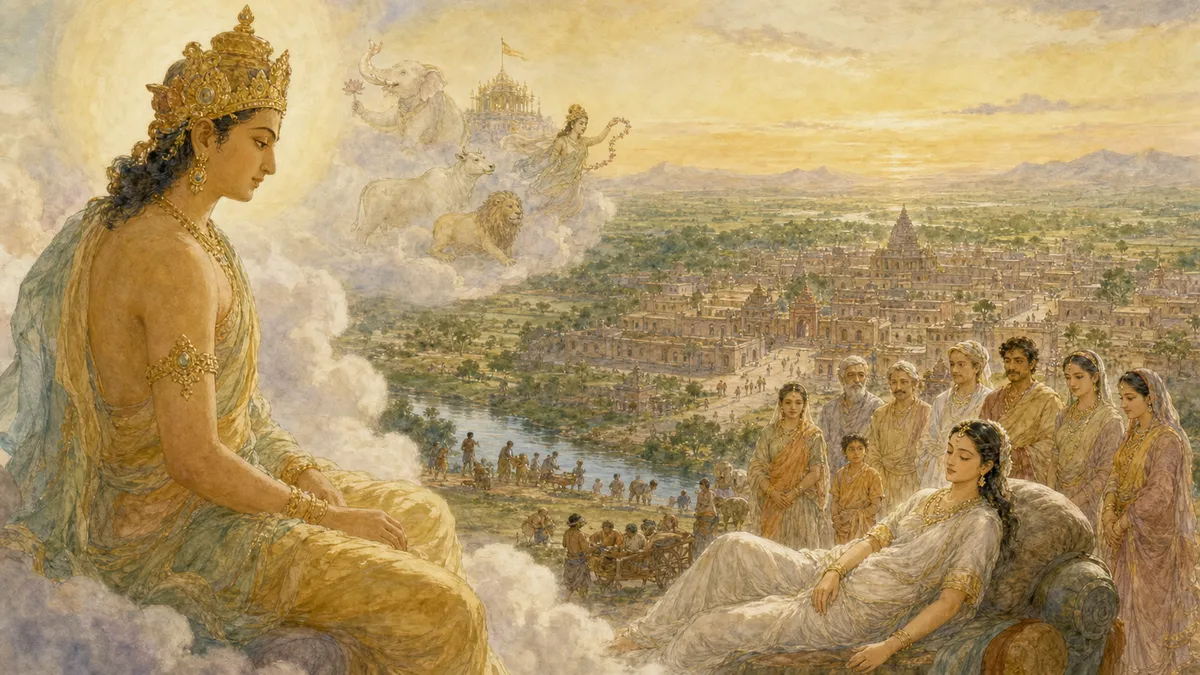
Before descending to earth, Buddha Shakyamuni was born in Tushita Heaven in the form of a Devaputra. He possessed a clear mind and a profound memory. Seated upon a lion throne, he imparted the teaching to all the gods.
One day, he heard divine music and the perfect chants of the buddhas of the three times, addressed to him: “Samsara is burning in the flames of the kleshas. O great warrior, fill the clouds with your nectar, so that a sweet rain may extinguish the fire in those who are not divine beings.”
Samsara is burning in the flames of the kleshas. Everyone who resides in the monastery should remember this. Although the kleshas have the nature of Clear Light, when identification with them occurs, there is samsara, burning in these flames. Those of you who shaved your heads and became monks came because you understood that samsara is burning in the flames of the kleshas and decided to escape these flames as quickly as possible.
Once you have understood this, you should never forget it; otherwise, various thoughts will arise in us: “Should I attain enlightenment, or perhaps not?” or “Monasticism is a very serious choice; I need to think about it.” You are drowning, a lifebuoy is thrown to you, and you think: “Grabbing the lifebuoy is a very serious choice.” But you simply have no choice, so all this reasoning about the seriousness of the choice may seem like something real to a worldly person, but to a saint it is a bluff, a chimera, nothing but a joke. There is no choice. There is a choice when you go into retreat or practice bhakti, when you practice Mahashanti or nirālambha meditation—there is a choice in that, but in the other matter there is no choice.
Listening to their words, the Buddha began to look for five signs: the continent of Jambudvipa, six cities like Champaka, the Shakya clan, which had remained unstained by incest for seven generations, a mother named Mahamaya, free from the thirty-two harmful qualities, and the time of the five worsening degenerations—a time when people’s sufferings are great and arouse compassion, for they are not easily subdued; they hold false views, their life spans continually diminish, they are poisoned by the five poisons of the mind, and they acquire wealth dishonestly. Seeing them, he said to the gods:
“These signs bear witness to the kleshas of the living beings of Jambudvipa and to the pleasure they derive from their harmful deeds.”
When he said this, the gods replied:
“All of Jambudvipa has been ruined by six skilled disputants, six followers, and six contemplatives. You should not go there.”
The Devaputra did not listen to them and declared:
“I shall blow the conch of impermanence, I shall strike the gong of emptiness, I shall utter the roar proclaiming selflessness.”
Then he blessed Maitreya to take his place upon the throne and three times announced to the six realms of the gods his descent into the human world. He manifested in the form of a precious elephant with a huge yet beautiful and gentle body and six tusks. A golden net and a delightful red cap adorned him. He exuded the enchanting fragrance of the medicinal herbs that served as his food.
Entering His Mother’s Womb and Birth
Entering his mother’s womb.
At midnight on the fifteenth day of the second month, during the full moon, while Mahamaya was in seclusion, the Buddha entered her womb through her right side. Mahamaya then dreamed that a mountain had become her pillow and that the sun had risen within her body. Mahamaya saw herself imparting the teaching to a multitude of living beings. She felt light and free. During the following months, she had many auspicious dreams and experienced supreme bliss. Her mind became completely free from the kleshas.
Birth.
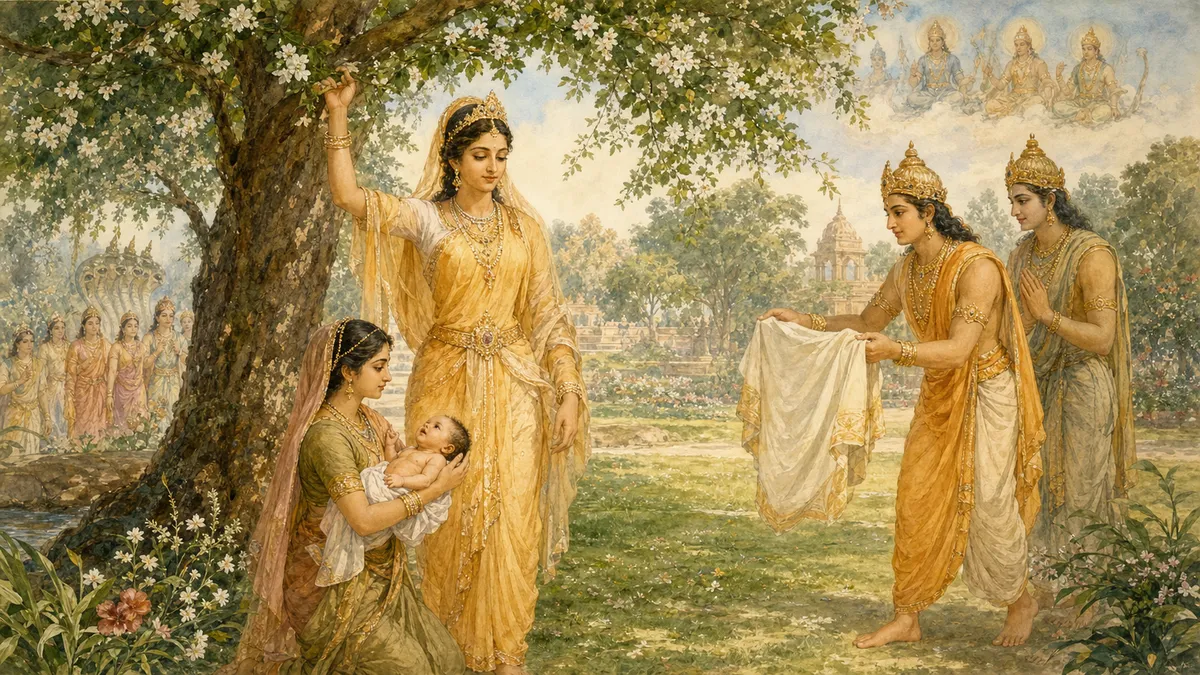
Ten months later, the time came for her to give birth. Mahamaya was walking in the Lumbini Garden. Suddenly, swift as a flash of lightning, she grasped a branch of the laksha tree with her right hand. The child emerged from her right side. Brahma and Indra descended to earth to make offerings. They wrapped the infant in a cloth of pure silk. Then the gods and nagas bathed him, and the child took seven steps in each of the four cardinal directions. At that moment, he manifested many precious treasures and fulfilled his father’s wishes; therefore, he was named Siddhartha, which means “fulfiller of wishes.”
To pay homage to the Yaksha, the Bodhisattva mounted a chariot and, taking his place upon a throne made of four kinds of precious stones, set out for the city of Kapilavastu. There gathered those members of the Shakya clan who, because of their indomitable nature, respected no one. But when the Bodhisattva passed by them, they immediately submitted to him. Thus, he received another name—Shakyamuni, meaning “the subduer of the Shakyas.” When he approached the temple of Shakya Phela, the god came out to meet him and prostrated himself. Thus, he came to be known as the God of Gods.
Seven days after the birth of her son, his mother died, and the boy was entrusted to the care of thirty-two wet nurses. All the Brahmins and astrologers were unanimous in their predictions. They said that if the child renounced the throne, he would become a Buddha, but if he remained in the palace, he would become the ruler of the Universe.
The Prophecy of Rishi Krishna
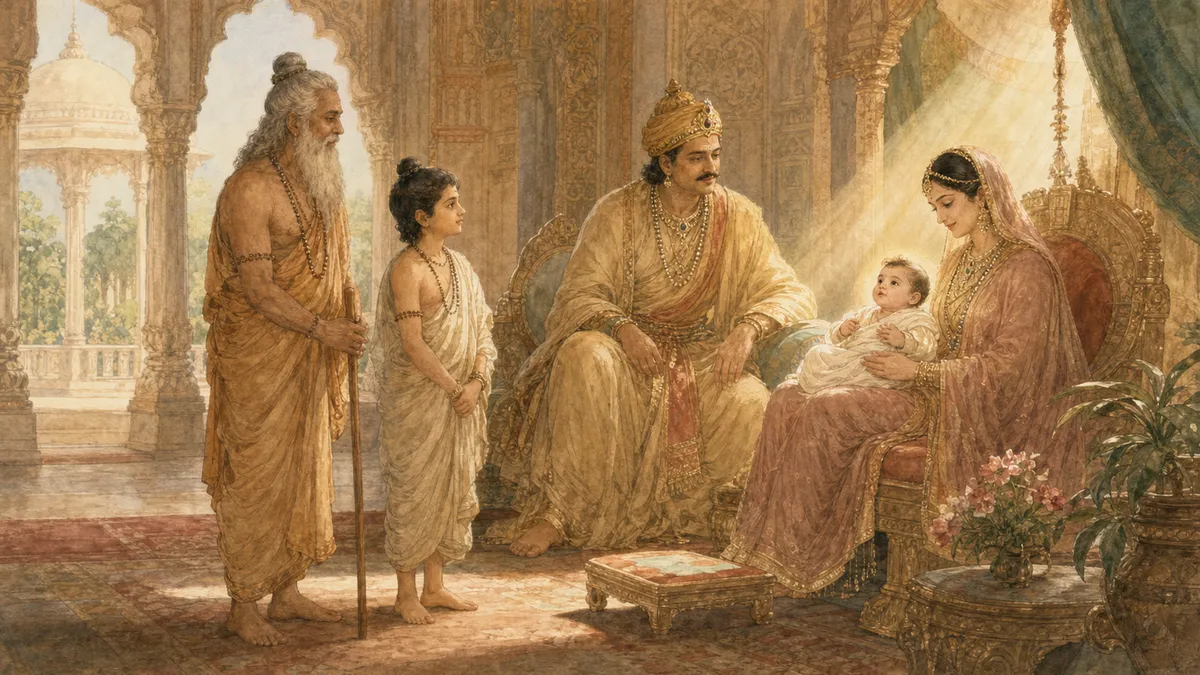
One day, a rishi named Krishna came to the kingdom from the Himalayas together with his nephew.
“Why have you come here?” King Shuddhodana asked him.
And the rishi replied:
“Great King, I have come to see your son. I have come to behold the sage, the savior of all beings. What destiny have the astrologers and sages predicted for him?”
“He will become the ruler of the Universe,” King Shuddhodana replied.
“Listen, lord of the earth,” Rishi Krishna then said, “the minds of those who speak thus are deluded. In this difficult age, there is no one who could rule the Universe. This treasury of the teaching contains all virtues. He will attain Buddhahood and conquer all defilements.”
The king saw the rishi’s eyes fill with tears and asked:
“Why are your eyes full of tears? Is there a danger that my son’s life will suddenly be cut short? Please tell me, do you see even a single ill omen?”
And the rishi replied:
“Even if a rain of vajras were to fall from the heavens upon the earth, it would not harm a single hair on this boy’s body. Your son is a great saint.”
“Then why are you weeping?” the king asked him.
And the rishi replied:
“O ruler of men, having found the treasury of the teaching, I am dying without fulfilling my wish. I know that I will not be able to attain nirvana; I see my own defilements, and tears fill my eyes.”
Later, the rishi’s cousin, Medjin, became one of the Buddha’s monks and received the name Katyayana.
Perfect Mastery of the Arts and Marriage
Perfect mastery of the arts.
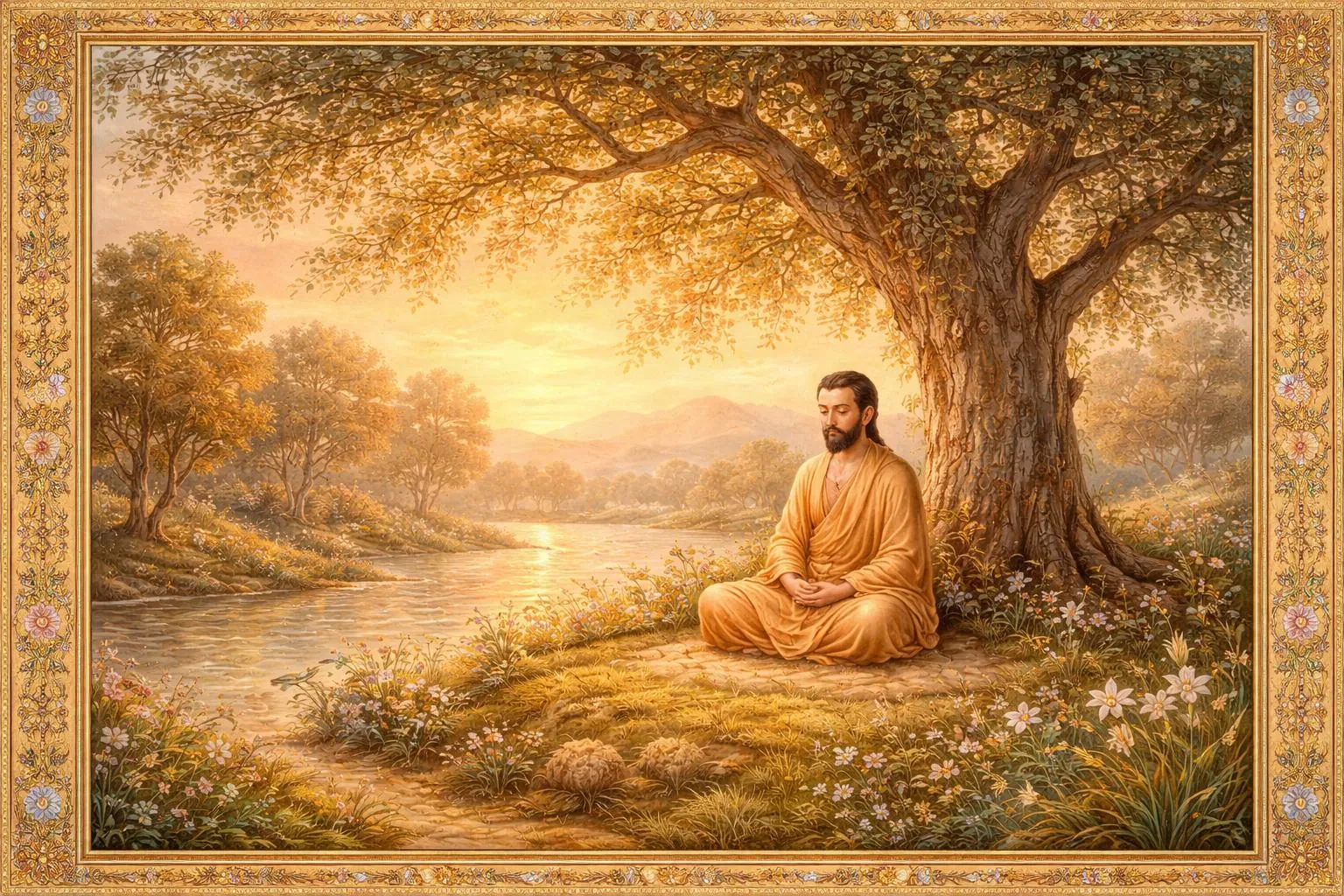
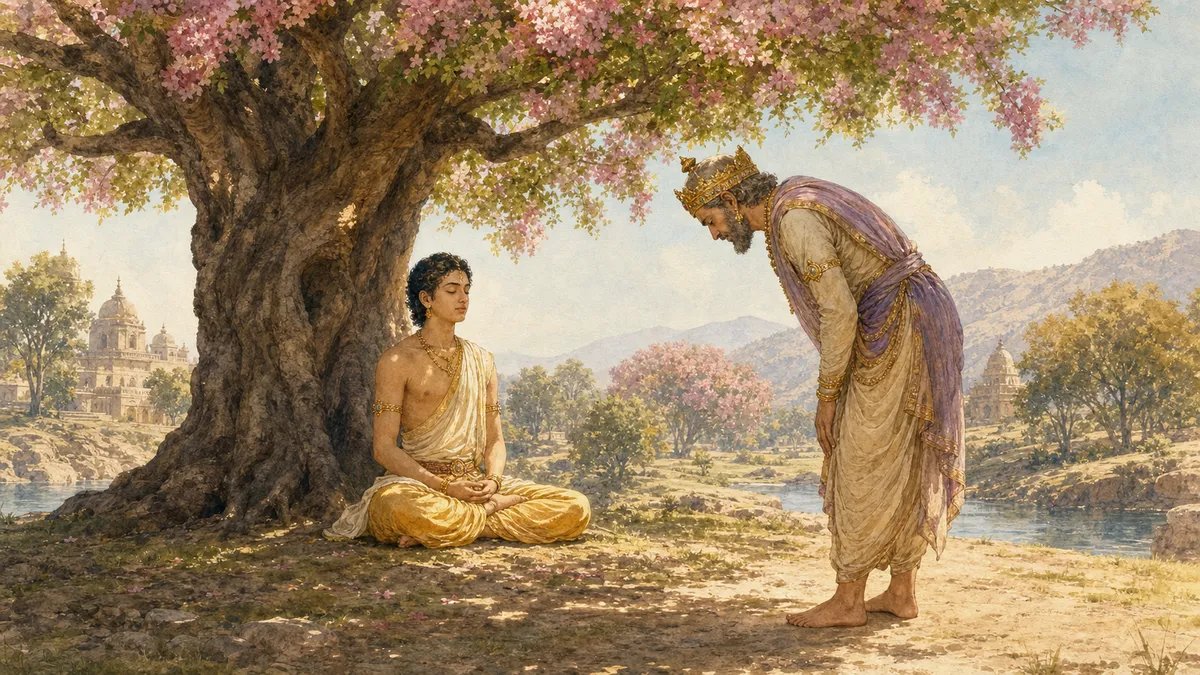
Adorned with every ornament, he became an expert in astrology and literature. When he left the city, he entered samadhi in the shade of the jambu trees, praised by the six sons of the gods.
Enjoyment of royal life.
Seeing his son in the shade of the jambu trees, his father praised him: “O wise one, twice have I prostrated myself at your feet. The first time was when you were born. And the second time is now, as you abide in samadhi, O liberated one.”
The time came, and all the Shakyas asked the Bodhisattva to find himself a wife.
“The consequence of pernicious passion—marriage—is like a leaf of poisonous grass, bringing suffering, discord, and resentment. It is unwise to be with a woman,” the Bodhisattva replied.
Later, reflecting on this, he said:
“The previous bodhisattvas had wives and children. I will follow their example,” and he consented to marry.
“Whom would you like to take as your wife?” they asked him.
The Bodhisattva wrote down the qualities his chosen bride should possess and handed the list to the minister, saying:
“If you find such a woman, bring her to me.”
When the minister brought this list to the daughter of the Shakya Lakna Bechen, she asked him:
“Why have you come to me?”
And he replied:
“The son of Suddhodana, indescribably beautiful, adorned with the thirty-two special marks and magnificent signs, has listed the virtues he would like to see in his queen.”
Then the maiden said:
“Brahmin, I possess such virtues. The Mahasattva may become my husband. If he agrees, let us not postpone the wedding.”
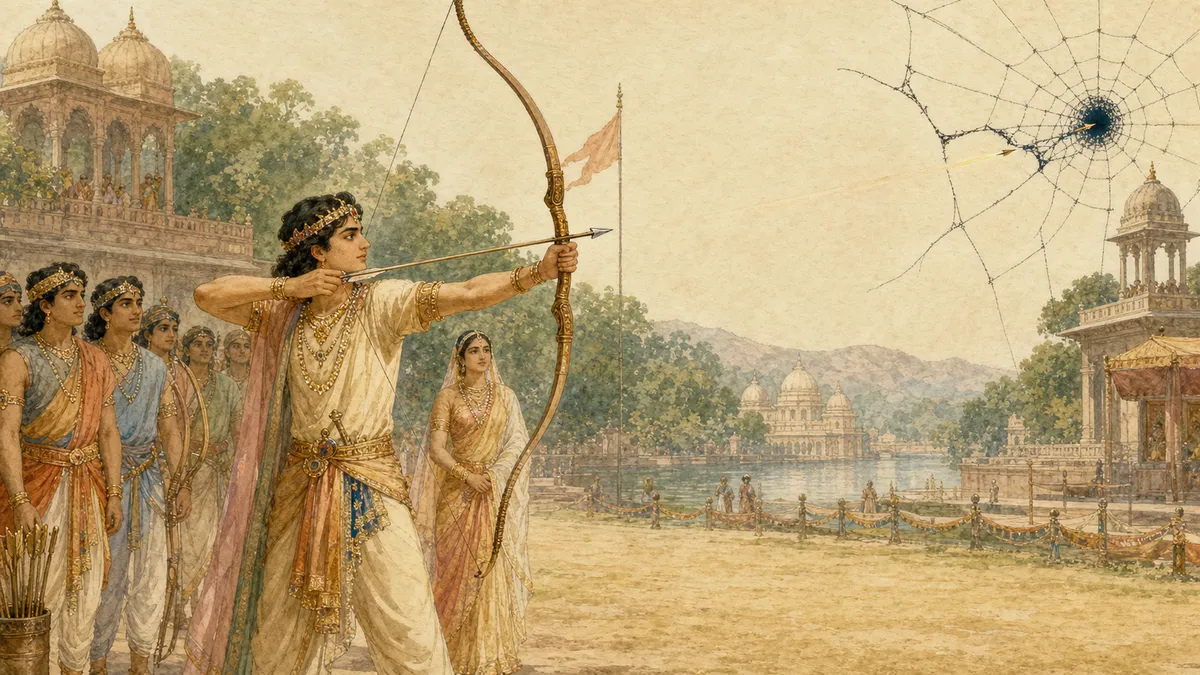
King Suddhodana asked that the maiden be brought to the palace, but her father, believing that the Bodhisattva was not very skilled in contests and games, refused to give his daughter to Shakyamuni. To console the king, Shakyamuni decided to take part in a contest. He defeated all his rivals, and when he shot with a bow, everyone was astonished by his skill. The Bodhisattva said: “This heart of the earth, where all the previous buddhas abided, remains at peace. The arrows of wisdom, freed from ego, killed the enemies—the kleshas—and tore apart the nets of erroneous views. Thus the buddhas attained nirvana, peace, and precious enlightenment, free from every defilement.
This describes the Buddha’s qualities during his worldly life, that is, before he renounced the throne. It is said that he mastered various arts: military arts, martial arts, wrestling, philosophy, and others. This means that mastery of various abilities represents qualities of clarity that come together in different situations in your life. This is considered a sign that the spiritual practice of such a being in this life will progress without serious obstacles.
In other words, to attain enlightenment, you must have potential carried over from past lives, and if you do not have it, you must develop it in this life. An ordinary person cannot practice yoga; they cannot attain awakening. A timid, indecisive person who is attached to material possessions, lacks self-confidence, lacks the ability to understand the teachings, lacks a spirit of adventure and even inner madness in the positive sense of the word (not insanity), and lacks tremendous courage and determination cannot attain liberation, because when we set an absolute goal, it implies that we can make absolute efforts and give absolutely everything for it.
Swami Sivananda said: “To practice yoga and obtain results, in addition to the ordinary qualities of sattva, you must also possess extraordinary qualities: determination, perseverance, and even a certain desperation.” He said that sometimes even a robber can become awakened or become a mahasiddha sooner than a person conditioned by their ego, mind, and attachments.
Although all these qualities manifest outwardly, you do not need to display anything externally; all of this is realized inwardly. Tremendous determination is needed when you renounce the world. Tremendous attentiveness is needed when you practice precepts, meditations, or other practices. Desperation is needed when your consciousness changes under the influence of desires or kleshas, yet you still resist them, maintaining presence when obstacles arise and it seems that you are losing everything, but nevertheless you continue your practice. Tremendous strength and perseverance are needed to practice techniques and sadhana daily for years, even though it sometimes brings no enjoyment at all. However, if you possess such qualities, all of this goes without saying; there is no need even to speak about it. But if you do not possess such qualities, there is no alternative but to cultivate them within yourself.
Renunciation of the Throne
Renunciation of the throne.
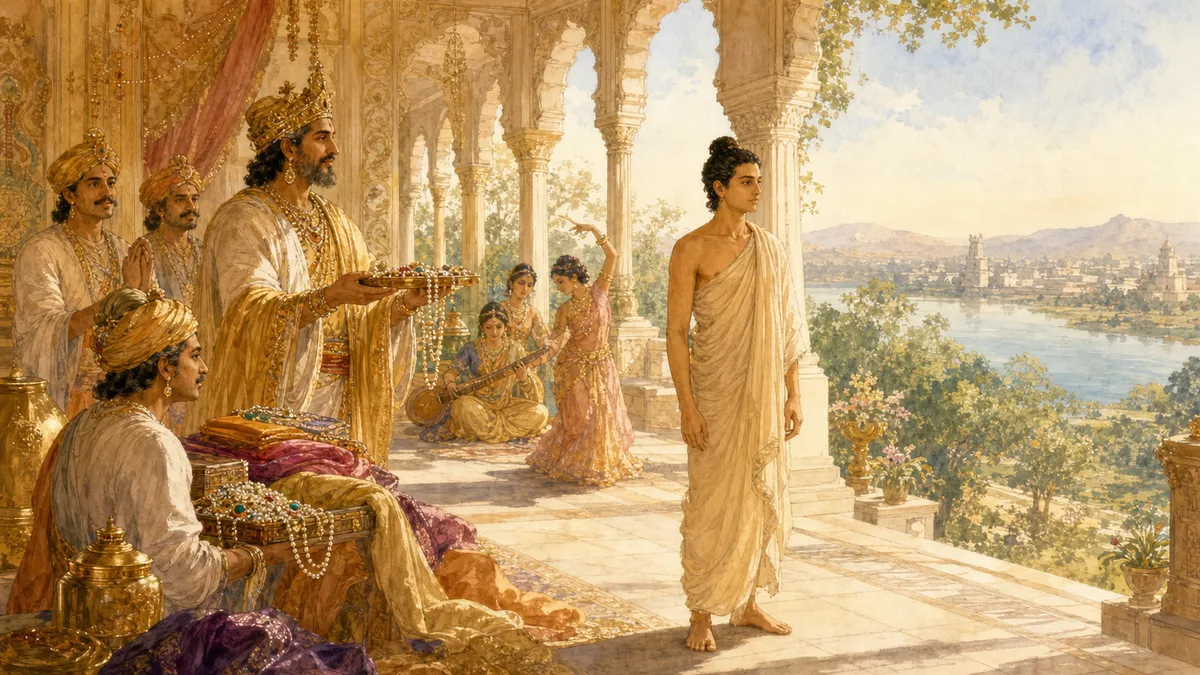
At that time, the Bodhisattva was absorbed in music and singing. Just as the rishis had predicted, the Bodhisattva’s father dreamed that his son had renounced the throne. Frightened, he began showering the Bodhisattva with every earthly treasure and ordered the guards not to let him out of their sight.
It is said that the Buddha’s wife engaged in charity and was a devout woman. The Buddha himself visited various philosophers, but found no satisfaction. He soon became disillusioned with his way of life and decided to follow the path of liberation. From that moment on, he began devising plans for how to do so. His wife was also inclined to embark upon the path of liberation, but they already had a child, and she lacked firm resolve. Seeing this, his father surrounded him with every kind of pleasure and luxury, ordered a palace to be built for each season, and strengthened the guard. But a true lion cannot be kept in a cage—what are palaces and guards to him?
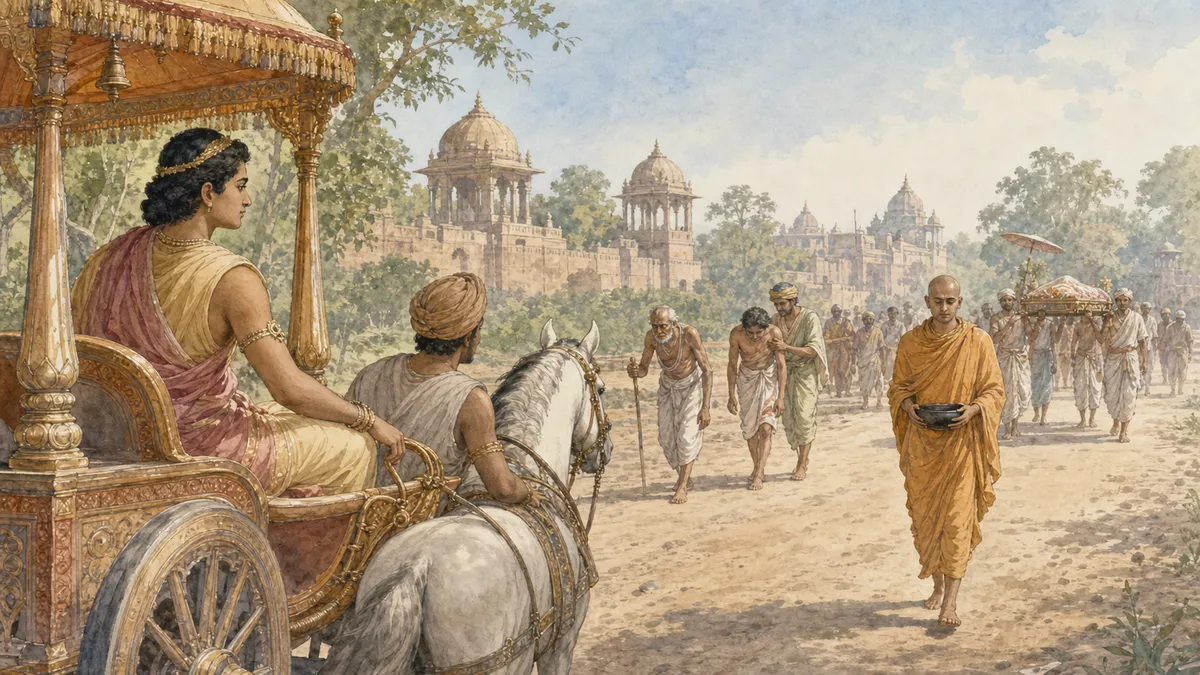
But one day, the Bodhisattva and his servant Dunpa went for a ride in a chariot. Their route led first to the east, then to the south, and then to the west. Thus, for the first time, the Bodhisattva saw old age, sickness, and death. Upon learning about human suffering, the Bodhisattva was deeply shaken.
Then he said, “What is the use of youth if, with the passing years, not a trace of it remains? What is the use of health if it is undermined by sickness? What is the use of worldly wisdom if this life is not eternal? Old age, sickness, and death inevitably follow one another.”
Turning the chariot northward, he encountered a monk and felt a sense of profound devotion. He then asked his father for permission to renounce the world, but his father refused.
Whenever you first ask your father for permission to become a monk, he refuses if he is not a practitioner. Naturally, such a father does not want to let his son become a monk.
When the Zen monk Kidzena asked his parents for permission to become a monk, he cut off his finger and told them, “Here is my offering to you, so that you will let me become a monk. If you do not, my head will be next.” Seeing such determination, his parents agreed.
When we discover our purpose, we understand that we were born into this world not to fulfill other people’s ideas of happiness, but to realize our own awakened nature. Then not only our parents, but also the maras of the six heavens, the gods Brahma and Vishnu, and absolutely anyone else will be unable to oppose our intention. When we have such strong motivation for awakening, it is a sign that this life will become a path to awakening for us, that we will fulfill our purpose and attain enlightenment.
Anyone who practiced before and attained a high spiritual level encounters the teaching and a teacher in this life while still young or middle-aged. Without regret, they renounce the world and move forward along the path of awakening, like the horn of a rhinoceros. Even if they encounter obstacles due to the obscuration of the mother’s womb and accumulated karmas, they pay them no heed, as though this were perfectly natural, and continuously advance toward their goal.
Leaving the Palace
“If that is so, then fulfill my wish: free me from the torments of old age, sickness, and death,” said the Bodhisattva. Of course, his father was unable to grant his request. Instead, he began showering his son with worldly luxuries more lavishly than ever and strengthened the guard.
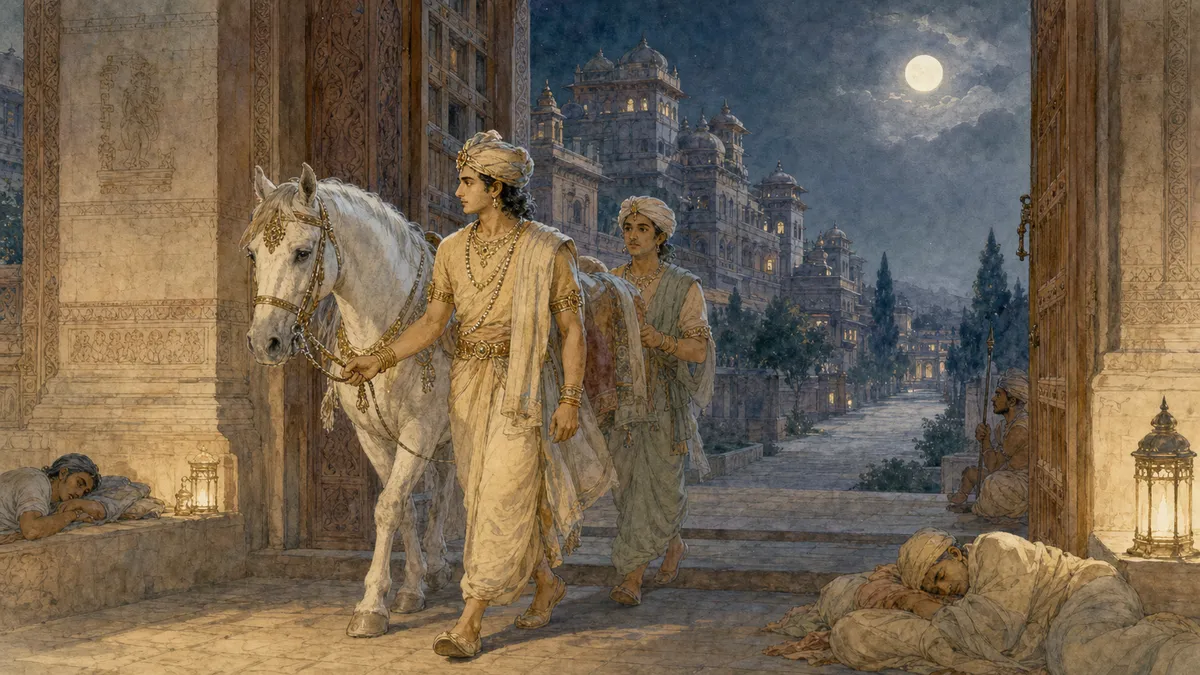
One night, while all his servants were asleep, the Bodhisattva realized that the hour had come to leave the palace. He then summoned Dunpa and said:
“Wake up and quickly bring me the magical steed Ngakden. I am setting out in search of the garden of austerities, where the previous buddhas went in pursuit of enlightenment. I know this will bring joy to all the sages.”
Then Dunpa said:
“This is no time to leave for the garden of austerities; no one here bears you any ill will. You have no enemies, so why do you need a horse at midnight?”
And the prince replied:
“Dunpa, you have always obeyed me; do not contradict me now, when the hour of our parting has struck.”
Dunpa brought him his horse, but the horse resisted when the Bodhisattva tried to saddle him. Then the prince said to him: “Ngakden, I shall saddle you one last time. So carry me without delay to the grove of austerities. When I attain enlightenment, I shall bathe living beings in the blessed rain of samadhi, instantly fulfilling all their wishes.” For the last time, the Bodhisattva walked around his sleeping father and disappeared into the night, saying in farewell: “Until I have completed the supreme path followed by all the buddhas, I shall not return to this city of Kapilavastu.”
In half a day, he covered a journey that normally took twelve days. Dismounting, he removed his ornaments and gave them to Dunpa, ordering him to return to the palace with Ngakden. His servant objected:
— The prince should not remain alone.
To which the Bodhisattva replied:
— All beings come into this world alone and leave it alone as well. Throughout their lives, they are alone in their suffering. There are no friends in samsara.
Then, before an immaculately pure stupa, he cut off his hair and gave it to Dunpa. Indra, appearing in the guise of a hunter, brought monastic robes and gave them to the prince in exchange for his exquisite silk garments. The prince made a bowl from a karavira leaf and went to King Bimbisara to “equalize virtues.” The king felt great devotion toward the Bodhisattva and addressed the assembly: “Adorned with the supreme marks and many signs of perfection, he is one step ahead of others; behold him, O sages.”
While walking with Siddhartha, the king began speaking of the luxury and riches that life in samsara contains, and then, upon returning to the palace, showed the prince every kind of entertainment. But Siddhartha said to him: “Earthly pleasures do not stir me. Even if this entire earth with its oceans were filled with the seven kinds of precious stones, a person would not be satisfied; it would be like burning firewood in summer. All desires lead to attachment and aversion. It is very difficult to cross the ocean of suffering. O king, your power is like a filthy swamp. It is a source of pain and fear. Only the ignorant could desire it.
Asceticism
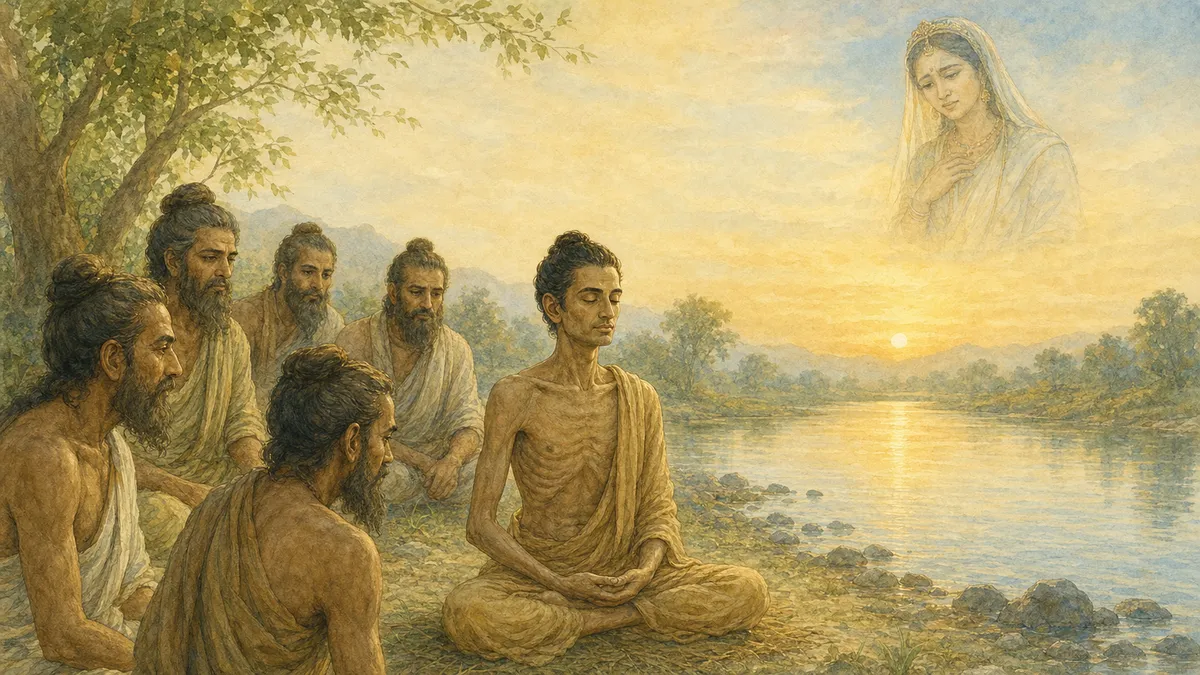
For six years, Siddhartha, together with five ascetic rishis, endured privation on the bank of the Nairanjana River. He led such an austere life that, looking at his back, one could see his ribs. The deities who watched over him mourned him, believing that the prince’s days were numbered: “Son of the Shakyas, essence of living beings, it would have been better had you remained to give teachings in the Tushita heaven. You promised to liberate all beings. And what now? You stand on the threshold of death.”
They told Mahamaya that her son Siddhartha would soon die. Upon hearing this, his mother descended from heaven and began to mourn her son:
When my son was born in the Lumbini grove, Like a lion, he fearlessly took seven steps, Surveyed the four directions and proclaimed: “This is my final incarnation.”
You will not fulfill your noble intention. The prophecies of the rishi Krishna are not destined to come true. You will not attain Enlightenment. All I see is the impermanence wrought by death. Who will give life to my only son?
And Siddhartha replied:
This earth may turn to dust, The sun, moon, and stars may fall from the vault of heaven. But even if I were an ordinary being, I would not die. Soon I shall attain buddhahood.
Later, he realized that by following the path of extreme asceticism, he would not be able to fulfill his vow, and so he decided to devote himself to meditation in order to restore his body’s strength. Rishi Deva, who had been a friend of the Bodhisattva before his renunciation of the throne, took pity on him and asked two village women, Gamo and Gatومpa, to make offerings to him. When the Bodhisattva ate the milk porridge, his body shone like pure gold. Believing that he had broken his vows, his five disciples abandoned him. The Bodhisattva asked the women to whom they would dedicate the merit accumulated by making the offerings. And they replied: “All the merit we have accumulated by bringing you these gifts, O glorious fulfiller of every wish, we dedicate to you. May you attain complete enlightenment and fulfill your virtuous intentions.”
Dharma
Enlightenment
Kleshas
Samsara
Buddha
Renunciation
Siddhartha
Shakyamuni
Asceticism
Read 18 times
Articles
Vidya AI
Search
Lectures
November 5, 2026
Mantra of the day
ОМ ЭКАЙА НАМАХ ОМ Единому – поклонение!
Auspicious Times(Rome)
Brahma Muhurta:
04:56 - 05:51
Abhijit Muhurta:
11:33 - 12:14
Sayam Sandhya:
16:40 - 17:21
Mokshada Ekadashi (6 November)
Ekadashi of liberation. Helps to achieve spiritual enlightenment.