

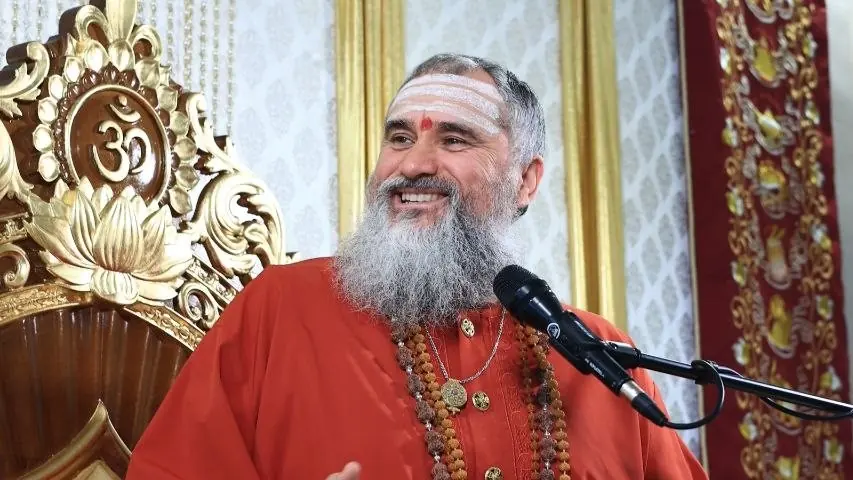
Full spiritual name: Shrotriya Brahmanishtha Anant Shri Vibhushit Mahamandaleshwar Swami Vishnudevananda Giri Ji Maharaj
Explanation of the titles:
Mahamandaleshwar (Sanskrit mahāmaṇḍaleśvara) — from mahā (“great”), maṇḍala (“circle,” “sphere of spiritual influence”) and īśvara (“lord,” “guardian”). Literally: “Great guardian of the gates of the teaching.” The highest spiritual title in the hierarchy of Hindu monastic orders (akharas), bestowed upon a sannyasi who has attained spiritual realization and received the authority to transmit initiations.
Swami (Sanskrit svāmī) — from the root sva (“one’s own,” “belonging to oneself”), meaning “master of oneself,” “self-sufficient.” The title of a renunciate monk who has attained mastery over the mind and senses.
Shrotriya (Sanskrit śrotriya) — “one who has heard from the teacher,” indicating authentic belonging to the chain of oral transmission of sacred knowledge.
Brahmanishtha (Sanskrit brahmaniṣṭha) — “established in Brahman,” denoting a jnani who has attained unwavering abiding in the nondual Absolute.
Affiliation with the parampara: Bearer of the Sahajayana lineage (sahajayāna — “the natural path”), tracing back to the siddha tradition of Advaita Vedanta.
Monastic affiliation: Juna Akhara (jūnā ākhaḍā), the oldest of the thirteen monastic orders of the Dashanami Sampradaya, founded by Shri Adi Shankaracharya (8th century CE).
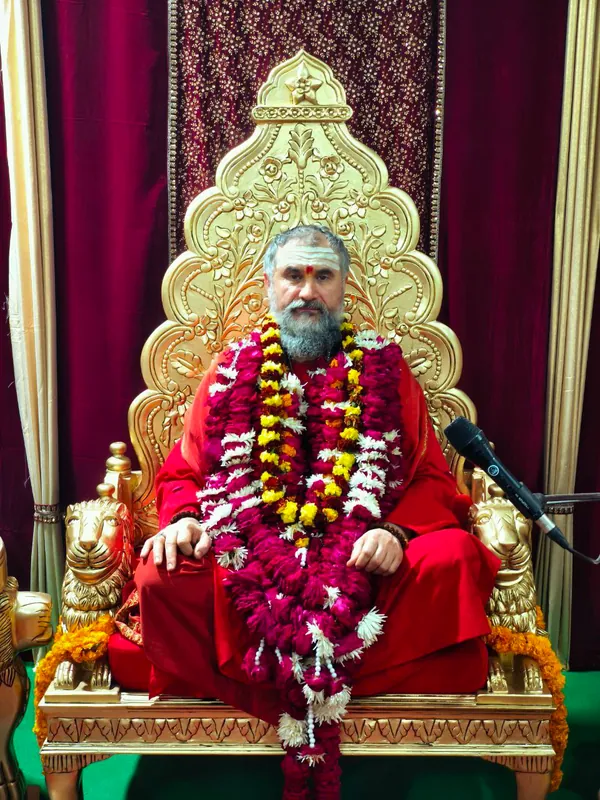
Lineage
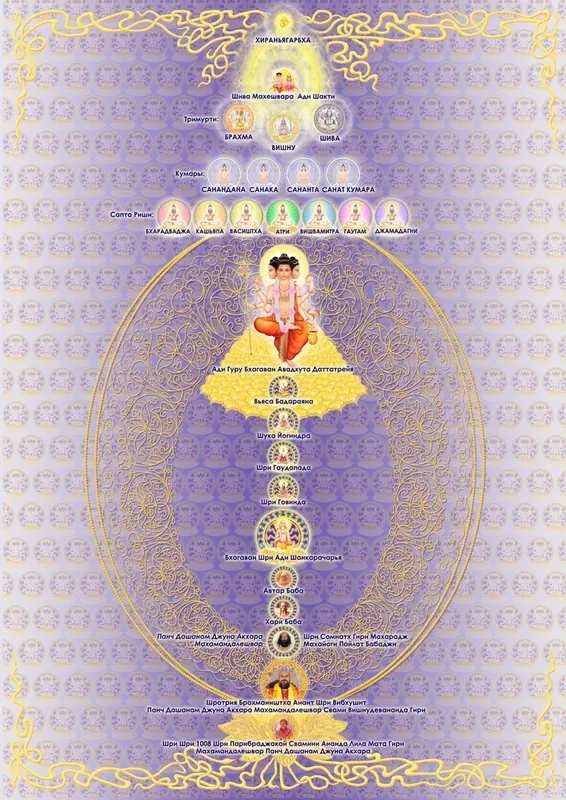
Swami Vishnudevananda Giri is a link in an unbroken chain of spiritual transmission (guru-paramparā), whose structure corresponds to the classical threefold division described in Tantric texts:
Divyanga (divyāṅga — “divine link”): from Paramatman (the Supreme Self) through Bhagavan Narayana, Brahma, the Four Kumaras to the Seven Rishis (saptarṣi), including Vasishtha.
Siddhanga (siddhāṅga — “link of the perfected ones”): transmission through realized siddhas (siddha-puruṣa) who have attained the eight great perfections (aṣṭa-mahā-siddhi).
Manushyanga (manuṣyāṅga — “human link”): embodied teachers living among people.
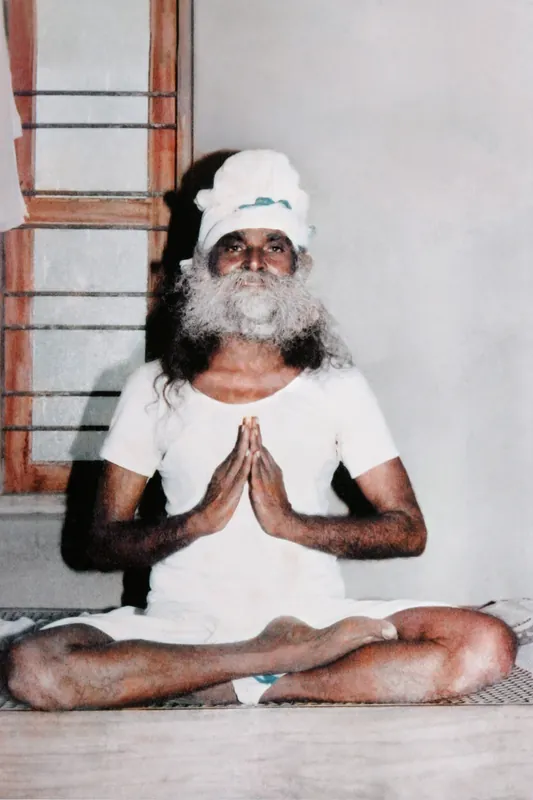
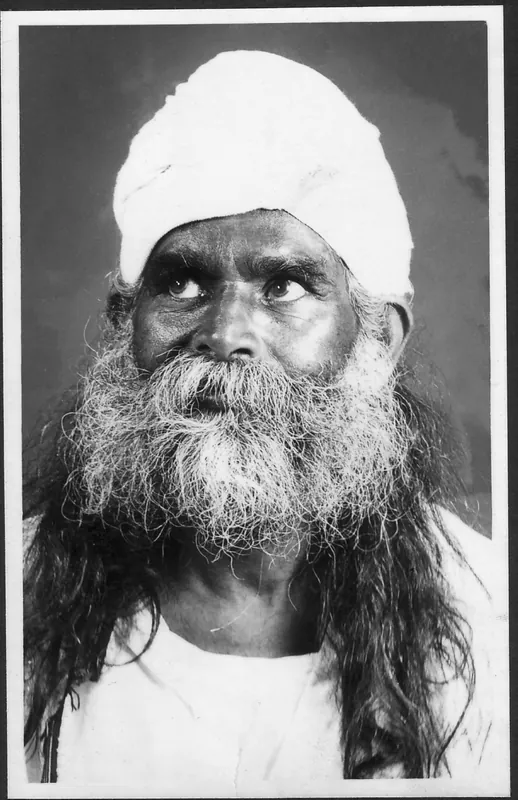
His direct root teacher (mūla-guru) is Swami Brahmananda, also known as Achintya Baba (acintyā bābā — “the inconceivable sage”), an avadhuta (avadhūta) who attained the immortal body of light (divya-deha).
Scriptural foundations of guru-tattva
The qualities of a satguru that, according to tradition, a genuine spiritual teacher should possess are set forth in classical texts:
The Shvetashvatara Upanishad (1.2) defines:
“Only one who has realized Brahman can bestow liberation. He is free from attachments, possesses knowledge of the Vedas, and is established in Brahman.”
The Mundaka Upanishad (1.2.12) states:
“Let the disciple approach the guru, carrying firewood [a symbol of service], humble and with the senses restrained. Let him turn to a shrotriya-brahmanishtha — one who knows the Shruti and is established in Brahman.”
The Kularnava Tantra (13.105-106) describes the signs of a satguru:
“One who dispels the darkness of ignorance and bestows the light of knowledge; who destroys doubts and establishes one in truth; who burns the seeds of karma and liberates from the cycle of births — that one is the Guru.”
In the context of the siddha tradition (siddha-sampradāya), the guru appears not merely as a mentor, but as the embodiment of Shakti itself (śakti), awakening kundalini and leading to direct realization (sākṣātkāra).
Juna Akhara
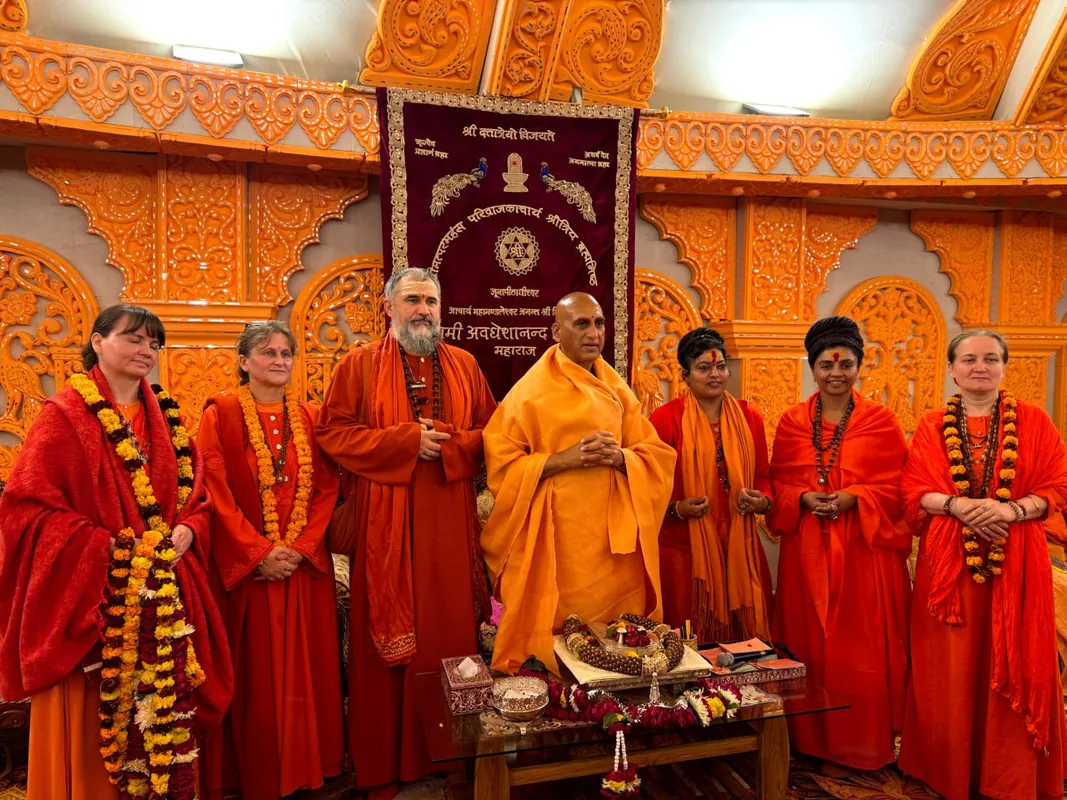
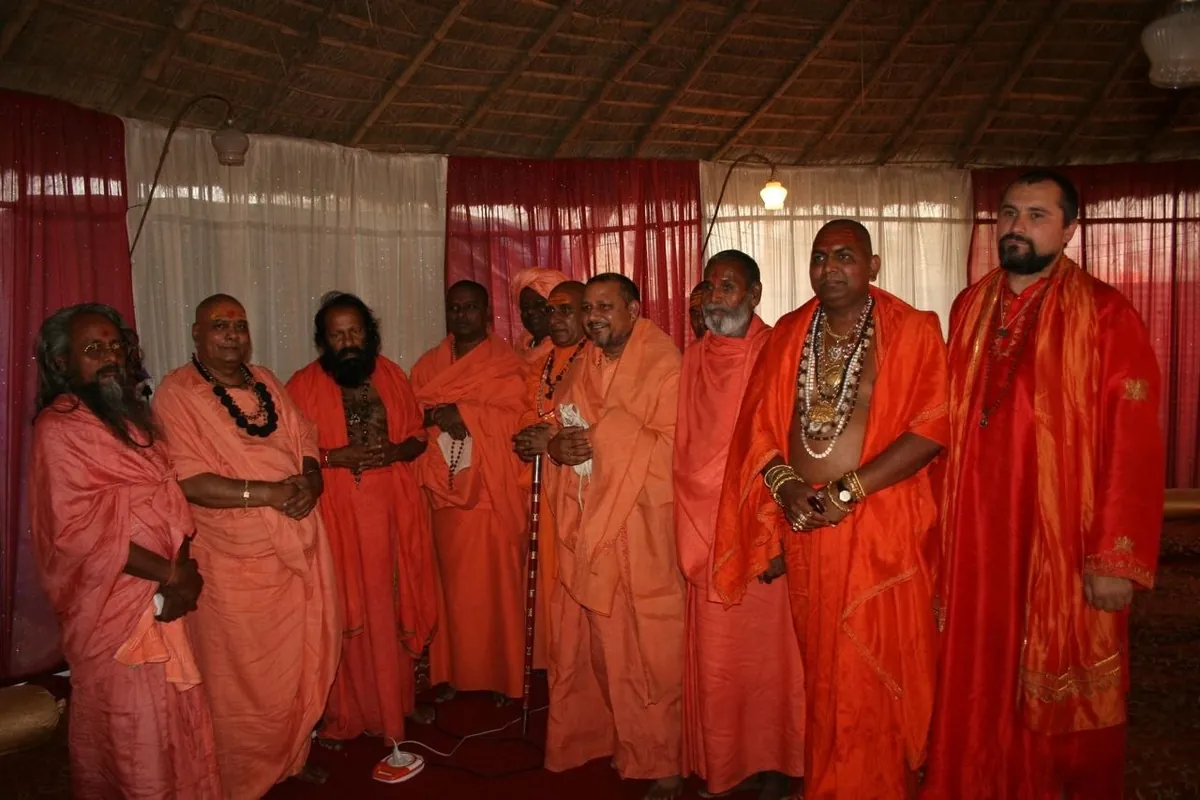
The initiation as a Mahamandaleshwar of the Juna Akhara (February 2010, Kumbh Mela, Haridwar) represents recognition of spiritual authority within the oldest continuous monastic structure of Hinduism. The Juna Akhara, founded by Adi Shankaracharya as part of the Dashanami Sampradaya (daśanāmī-sampradāya — “tradition of the ten names”), is the guardian of orthodox Advaita Vedanta and the Shaiva tradition.
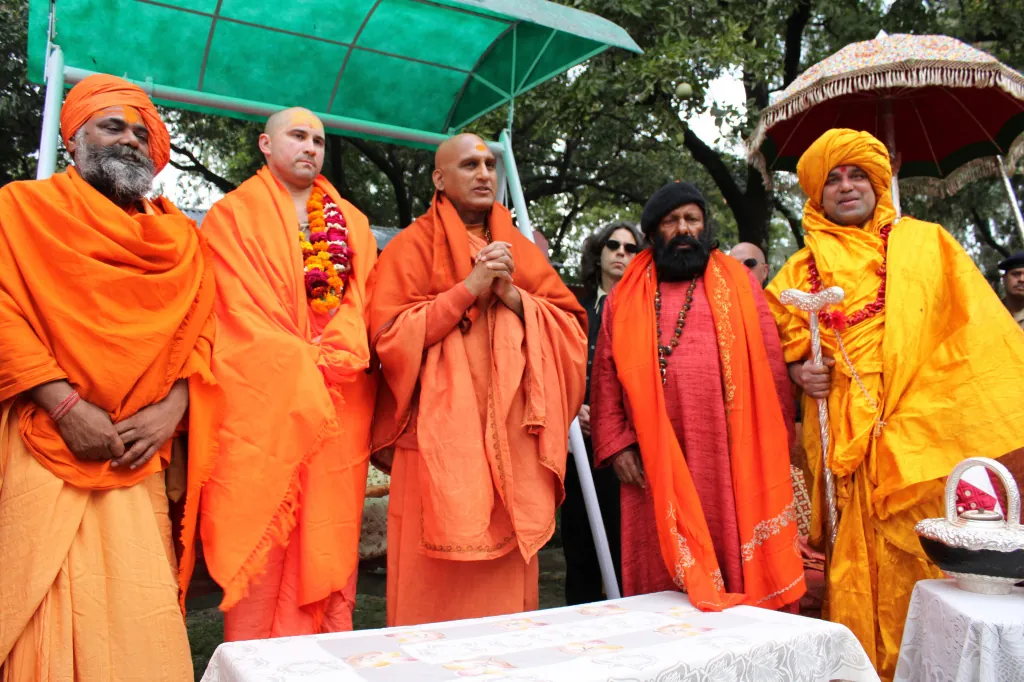
The title of Mahamandaleshwar grants authority (adhikāra) to conduct all types of initiations, including sannyasa-diksha, and is recognized in all schools of Hinduism as evidence of genuine spiritual realization.
Biography and spiritual mission
"For me there is no past, no future, but only continuous metamorphoses against the backdrop of the playing energies of consciousness in the present."
He was born in 1967 (secular name — Valery Viktorovich Mintsev). According to autobiographical accounts, from early childhood he manifested spontaneous experiences of non-duality (advaita-anubhava) and the ability for visionary perception of the subtle planes of existence.
In his youth, he combined intensive martial arts practice with meditative self-inquiry, which led to his first profound experience of samadhi. The study of Western philosophy and the Vaishnava tradition preceded his encounter with the root teaching.
The turning point was his meeting with Swami Brahmananda, from whom he received initiation and the direct transmission of the teaching of Laya Yoga.
Period of tapas (1992–1995)
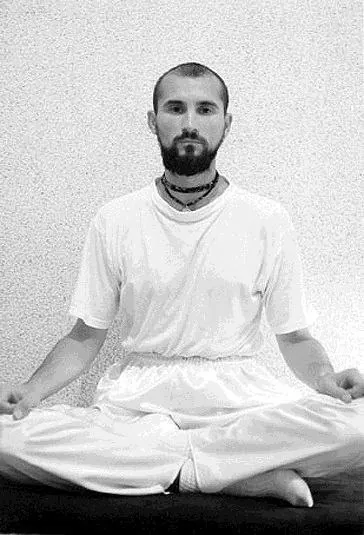
Three years of strict seclusion (ekānta-vāsa) in complete silence (mauna-vrata) constitute a classical form of spiritual asceticism (tapas). During this period, numerous experiences of samadhi with pranayama-rodha (complete cessation of breathing), encounters with divine forms, and visionary contacts with teachers of the parampara were recorded. The culmination was an experience described as complete spiritual realization and establishment in sahaja-samadhi (sahaja-samādhi — “natural samadhi”), a state of continuous effortless abiding in non-dual awareness.
This experience correlates with the mahavakya “Aham Brahmasmi” (aham brahmāsmi — “I am Brahman”) from the Brihadaranyaka Upanishad (1.4.10).
A secondary consequence of the realization was the manifestation of siddhis: vak-siddhi (materialization of the spoken word), the ability to see the past and the future (trikāladṛṣṭi), and the awakening of spiritual energy in others through intention (saṅkalpa-śakti).
Founding of the community and spreading of the Dharma (since 1995)
In accordance with the command of his guru, he ended his seclusion in order to transmit the teaching. He founded a monastic community, which later took shape as “Sri Guru Datta Ashram” (original name — “Assembly of Mysteries”).
In 2008, he initiated the International Congress of Advaita Vedanta in Moscow, establishing connections with representatives of various traditional lineages, including Mahayogi Pilot Babaji.
The initiation as a Mahamandaleshwar of the Juna Akhara (2010) legitimized his status within the orthodox hierarchy and provided institutional support for missionary activity.
Teaching and philosophical position
The teaching transmitted is defined as Pratyaksha Advaita (pratyakṣa-advaita — “direct non-duality”), a form of Advaita Vedanta characteristic of the Siddha tradition, emphasizing direct realization rather than intellectual analysis.
"I do not offer you any theory based on thoughts, but only say: “Observe any thoughts without making evaluations or judgments, and you will understand everything yourself, discovering the pure awareness ‘I am’."
Key components:
Advaita Vedanta: Strict monism affirming the identity of Atman and Brahman. The practical goal is the realization of the mahavakya “Aham Brahmasmi.”
Laya Yoga: A synthetic system comprising five yantras (methodological directions): contemplation (dhyāna), work with kundalini shakti, and practices of sound (nāda yoga), light (jyoti yoga), and dreams (svapna yoga).
Unmani Avastha (“mad wisdom”): The state of a realized jnani whose actions transcend the conceptual frameworks of ordinary reason. It corresponds to the behavior of the avadhuta described in the “Avadhuta Gita.”
Universalism: The recognition of the unity of all religious paths at the level of their highest expression — a principle rooted in Vedanta (“Truth is one; the sages call It by various names” — “Rigveda,” 1.164.46).
Organizational activity
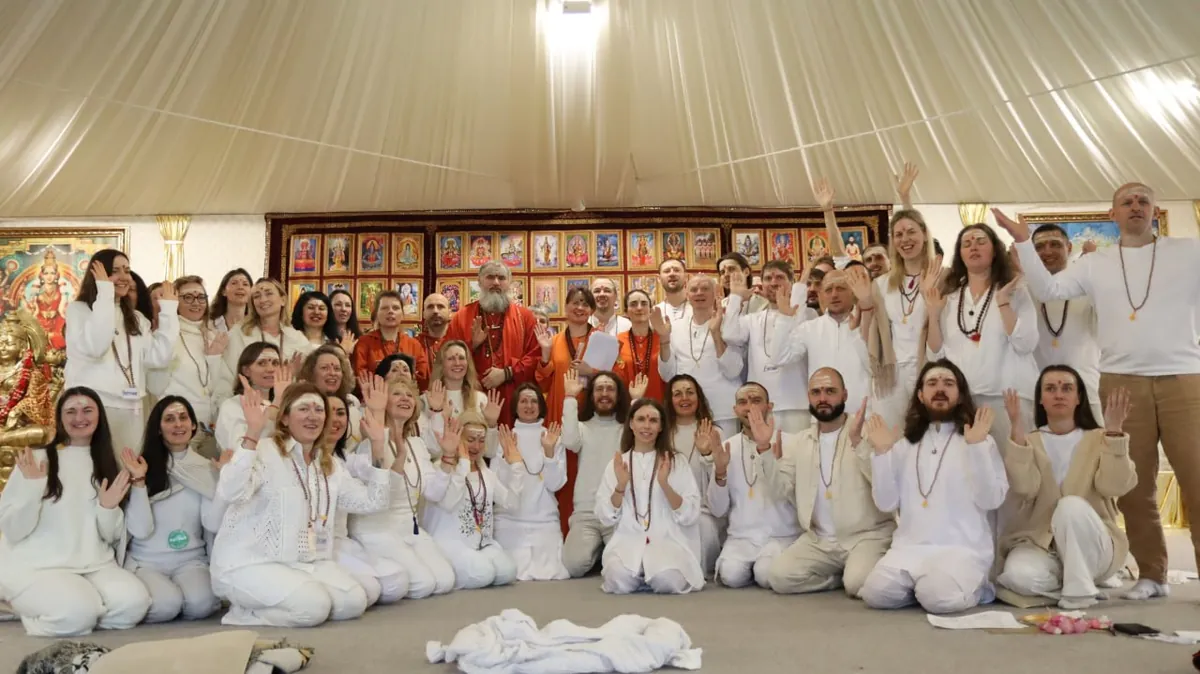
He founded the World Community of Sanatana Dharma (Viśva Sanātana-dharma-saṅgha) — an international structure uniting monks and lay practitioners, with ashrams and dharma centers in Russia, Ukraine, India, Nepal, Europe, and America.
Transcendental Transhumanism is the author’s philosophical concept synthesizing Vedic cosmology with modern technologies, viewing spiritual evolution in the perspective of attaining immortality (amaratvam) and divya-deha (the divine body).
The “Aryans-Indoslavs” Project: A cultural studies initiative exploring the presumed spiritual and linguistic connections between Vedic and Slavic civilizations. The term “Aryans” (ārya) is used in its original meaning — “noble ones,” denoting a spiritual rather than an ethnic quality.
Literary legacy
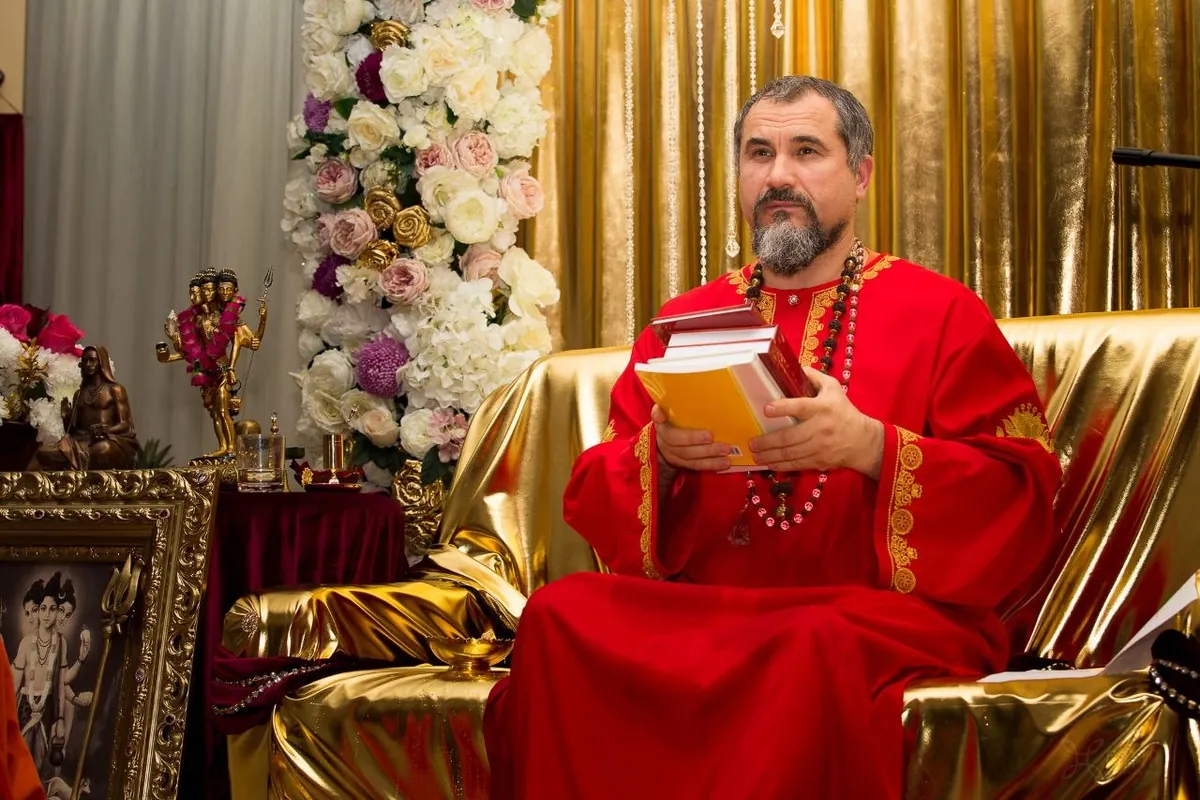
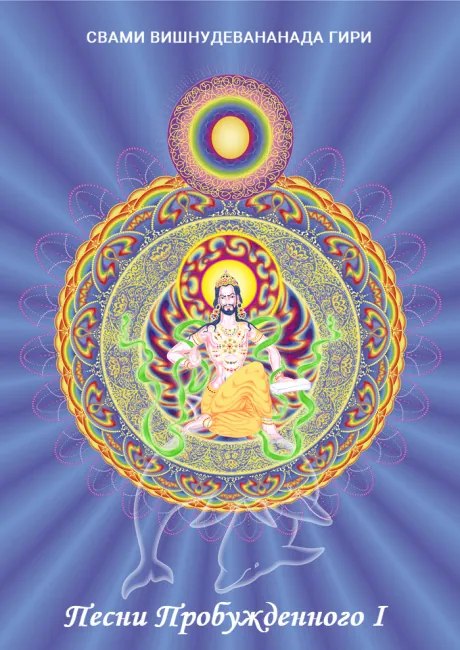
Author of more than 90 books covering the entire spectrum of the practical philosophy of Advaita, from introductory texts to advanced technical manuals on yogic methods.
Epistemological note
The biography of a realized jnani presents a methodological difficulty for historical description. According to Advaita Vedanta, for one who has attained jnana-nishtha (establishment in knowledge), personal history loses its ontological status. As formulated in the “Ashtavakra Gita” (18.100):
“For one who is free, there is neither bondage nor liberation. All this is merely a play of the mind.”
Consequently, the life story should be regarded not as an objective chronicle, but as an upaya (upāya — a skillful means) intended to inspire sadhakas on their own path of self-knowledge. True understanding of the teacher is attained not through studying his biography, but through applying the teaching he transmitted.
What can be said about the Awakened One?
"I was never born and have never died, so where could the date and place of my birth come from?
I have done nothing since the creation of the Universe, so what is there to speak of at all in terms of “I did this” or “I did not do this”?
I have been nowhere, and I do not come from anywhere or go anywhere, so what sense is there in speaking of where I have been and where I have not been?
Although this may seem true and real to those who think they are the body, to me it is like the tales of a sleeper about his imaginary life in a dream, the babbling of a madman, the fantasies of a small child, the magic trick of an illusionist."
Swami Vishnudevananda Giri Maharaj
This article has been compiled on the basis of autobiographical testimonies, published texts, and documented facts related to the activities of Swami Vishnudevananda Giri Ji Maharaj.
