

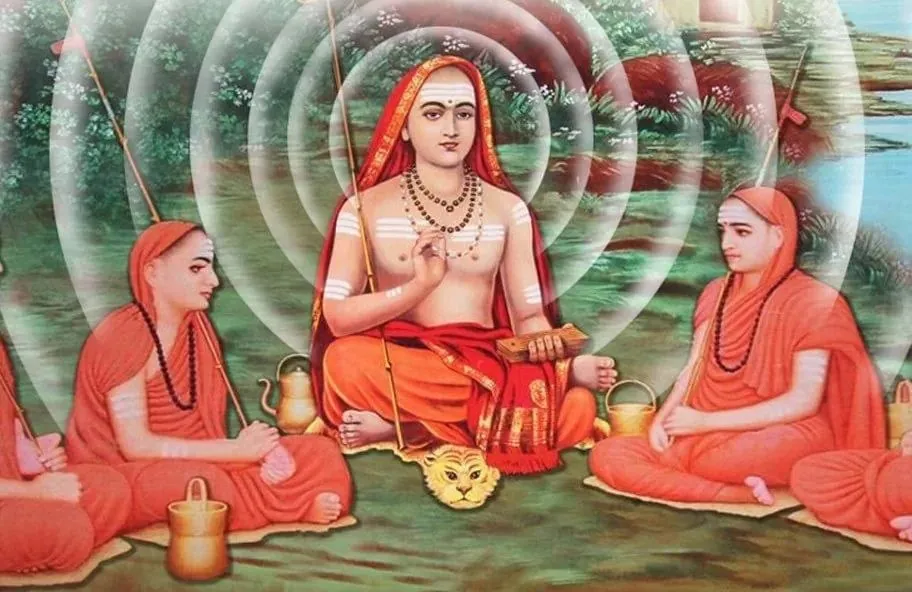
Sri Adi Shankaracharya is not merely a historical figure or a philosopher of the past; he is the embodiment of Lord Shiva Himself, who appeared on earth at a critical moment in the history of Indian spirituality. When the divine truths of the Vedas were obscured by humanity’s karmic defilements, when Buddhism and Jainism had displaced the Vedic tradition, when organized religions, ritualism, and philosophical disputes had pushed the essence of spiritual knowledge into the background — it was then that this beacon of wisdom appeared on earth to restore the lost authority of the Vedas and return humanity to the path of non-dual Truth.
Life and Hagiography
Birth and Early Years (788–820 CE)
According to traditional sources, Sri Shankaracharya was born in the small village of Kaladi (present-day Kerala) into the family of pious Brahmins Shivaguru and Aryamba. His parents had remained childless for many years and prayed at the temple of Vrishadrinatha (a form of Lord Shiva) in the mountains of Thrissur. Their prayers were heard, and a vision was granted to them in which Lord Shiva offered them a choice: to live a long life with an ordinary son, or a short life with a son who would become a great saint and teacher. They chose the latter.
From birth it was already clear that this was an extraordinary child. At the age of two, little Shankara spoke and wrote Sanskrit fluently. By the age of four, he knew all the Vedas by heart — an achievement that would have required decades of diligent effort from an ordinary person. By the age of seven, he was already deeply studying the Vedas and demonstrating extraordinary spiritual maturity.
Taking Sannyasa
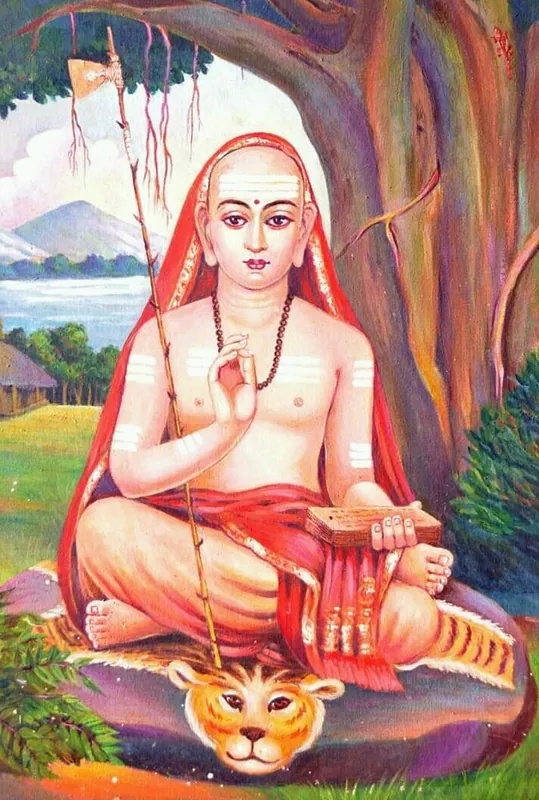
At the age of eight, an event occurred that determined the entire future path of Shankara. According to all hagiographical sources, one day, while he was bathing in the river with his mother Aryamba, a crocodile seized him and began to drag him underwater. At this critical moment, Shankara appealed to his mother, asking her to allow him to take sannyasa (the monastic vow of renunciation), otherwise the crocodile would kill him. His mother, realizing that this was the only way to save her son, gave her consent. As soon as she uttered these words, the crocodile released the child.
This was not a random event, but a manifestation of divine lila (play). Shankara had been called to the path of spiritual service, and nothing could prevent this destiny. Having received his mother’s formal permission, the eight-year-old Shankara left home and set out on a spiritual journey that would forever change the face of Indian philosophy.
Meeting Guru Govindapada
From the southern state of Kerala, the young Shankara walked about 2,000 kilometers, crossing rivers, mountains, and forests, until he reached the banks of the sacred Narmada River in central India. There, in a shrine near Omkareshwar, he met his Guru — the great master of Advaita, Govindapada (also known as Govinda Bhagavatpada).
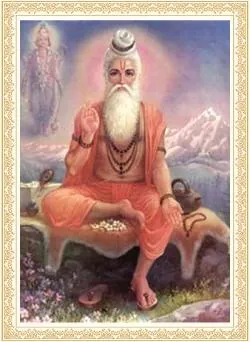
In various sources, the first meeting between disciple and teacher is described as an event of profound mystical significance. When Govindapada asked the young Shankara, “Who are you?”, the eight-year-old boy answered with ten extemporaneous verses known as the “Dashashloki.” In these verses, he described his true nature as the Atman, non-dual Consciousness, beyond the body, the mind, and all temporal attributes. Struck by the child’s spiritual maturity and poetic talent, Govindapada accepted him as his disciple.
Shankara spent four years at the feet of his Guru, studying the “Gaudapadiya Karika” (a philosophical treatise on Advaita written by Gaudapada, the teacher of Govindapada), the “Brahma Sutras,” the Upanishads, and comprehending the depths of Vedantic philosophy. Under Govindapada’s guidance, the young Shankara mastered all the Vedic scriptures, attained perfection in meditation, and realized the non-dual nature of the Absolute.
There is a legend about how, one day, the cave in which Govindapada was meditating came under threat of flooding due to the swelling of the Narmada River. The other disciples did not dare disturb the teacher, who was immersed in deep samadhi. Then the young Shankaracharya placed his kamandalu (water vessel) at the entrance to the cave and said that it would contain all the waters of the flood. His words came true — the floodwaters were unable to interfere with the Guru’s meditation. Pleased by this manifestation of spiritual power, Govindapada blessed Shankara with the words: “Just as you contained the waters of the flood in your kamandalu, so must you write commentaries in which the essence of the Vedantic scriptures will be set forth.”
Literary Period (Ages 12–16)
When Shankara turned twelve, Guru Govindapada recognized that his disciple was ready to write commentaries on the principal Vedantic texts. At his teacher’s instruction, Shankara began composing his monumental bhashyas (commentaries). By the age of sixteen, he had completed all the major treatises — a truly superhuman achievement.
During this period, the following were created:
- Brahma-sutra-bhashya — a commentary on Badarayana’s “Brahma Sutras,” systematizing the teaching of the Upanishads
- Bhagavad-gita-bhashya — a commentary on the “Bhagavad Gita”
- Commentaries on the ten principal Upanishads: Isha, Kena, Katha, Prashna, Mundaka, Mandukya, Aitareya, Taittiriya, Chandogya, and Brihadaranyaka
- Commentary on the “Mandukya Karika” of Gaudapada
- “Upadesha Sahasri” (A Thousand Teachings) — an original philosophical work
These works represent the pinnacle of Indian philosophical thought. In them, Shankara systematically expounded the teaching of Advaita Vedanta, resolved the apparent contradictions between various Vedantic texts, and created a coherent philosophical system of non-duality.
The Period of Wanderings and Debates (ages 16–32)
From the age of sixteen to thirty-two, Shankaracharya undertook several journeys on foot across India — from the Himalayas in the north to Cape Kanyakumari in the south, from Dvaraka in the west to Puri in the east.
He triumphed in philosophical debates
Shankara entered into debates with representatives of all the major philosophical schools of that time — Buddhists, Jains, Mimamsakas, Naiyayikas, Vaisheshikas, Sankhyas, and other Vedantins. His intellectual superiority, logical acuity, and depth of spiritual realization were such that he invariably emerged victorious from these debates.
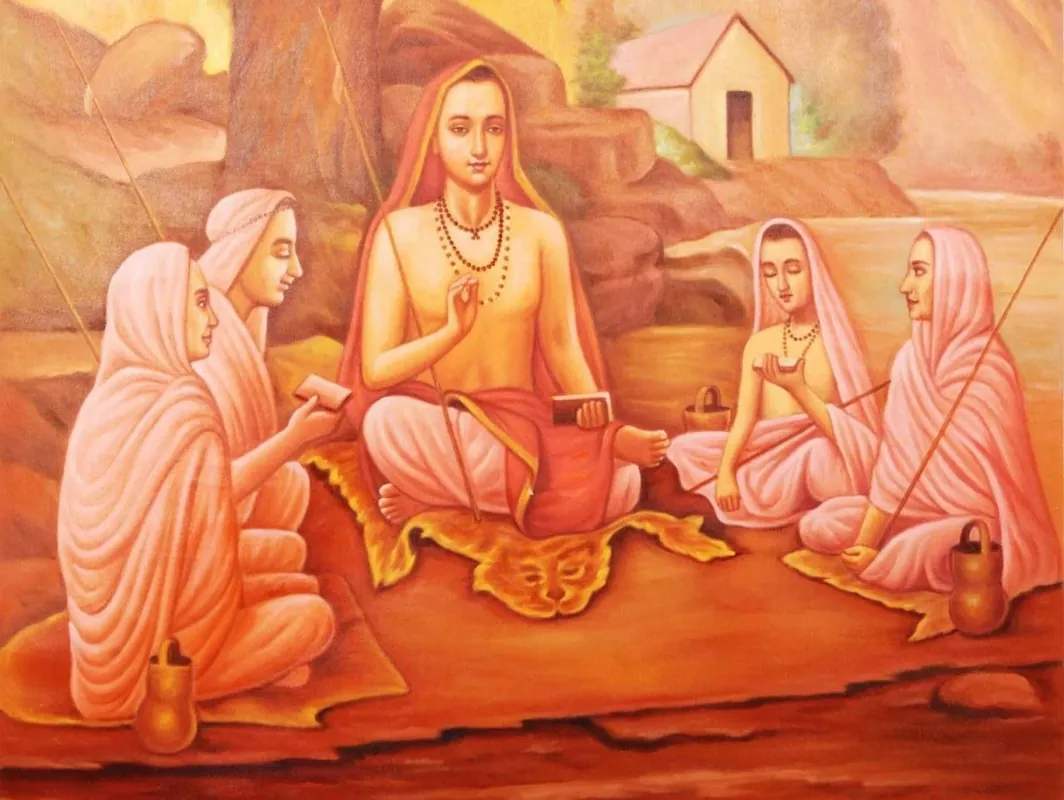
One of the most famous debates took place with Mandana Mishra, an outstanding philosopher of the Purva Mimamsa school. The debate lasted several days, and Mandana’s wife, the learned Ubhaya Bharati, served as the judge. When Mandana Mishra was defeated, Ubhaya Bharati, wishing to continue the debate, began asking Shankara questions about marital relations and sensuality — subjects in which Shankara, being a brahmachari (one observing the vow of celibacy), had no personal experience.
Then an astonishing event occurred. Shankara asked for a month’s postponement and, using his yogic powers, left his body in a safe place (under the protection of his disciples) and entered the body of a recently deceased king. Having lived for a month in the royal body, he acquired the necessary experience and, returning to his own body, was able to answer all of Ubhaya Bharati’s questions. After this, both Mandana Mishra and his wife acknowledged Shankara’s superiority. Mandana took sannyasa and became one of Shankara’s chief disciples under the name Sureshvaracharya.
The encounter with the chandala: a lesson in true Advaita
In Kashi (Varanasi), an event occurred that had a profound influence on Shankara himself. One day, while heading to the Ganges River for ablution, he met a chandala (a person of the lowest caste, considered “untouchable”) with four dogs. Shankara, fearing ritual impurity, told him to step aside.
To his astonishment, the chandala replied: “O venerable teacher! You preach Advaita Vedanta, the teaching of non-duality, yet you yourself make distinctions between people. Are there any distinctions in the Atman between a Brahmin and a chandala? How does this accord with your teaching of non-duality? Or is Advaita only a theory?”
Shankara immediately understood that the chandala was none other than Lord Shiva himself, who had assumed this form in order to teach him a lesson. He fell at the chandala’s feet and at once composed five verses known as the “Manisha Panchakam” (Five Verses on Wisdom). Each verse ends with the words: “One who has learned to see all phenomena in the light of Advaita is my true guru, whether he be a chandala or a Brahmin.”
This episode shows that even the great master of Advaita, Shankara, was ready to learn and acknowledge his limitations. He not only intellectually comprehended non-duality, but also lived in accordance with this principle.
The establishment of the four mathas
To preserve and spread the teaching of Advaita Vedanta, Shankaracharya founded four main monasteries (mathas) in the four corners of India:
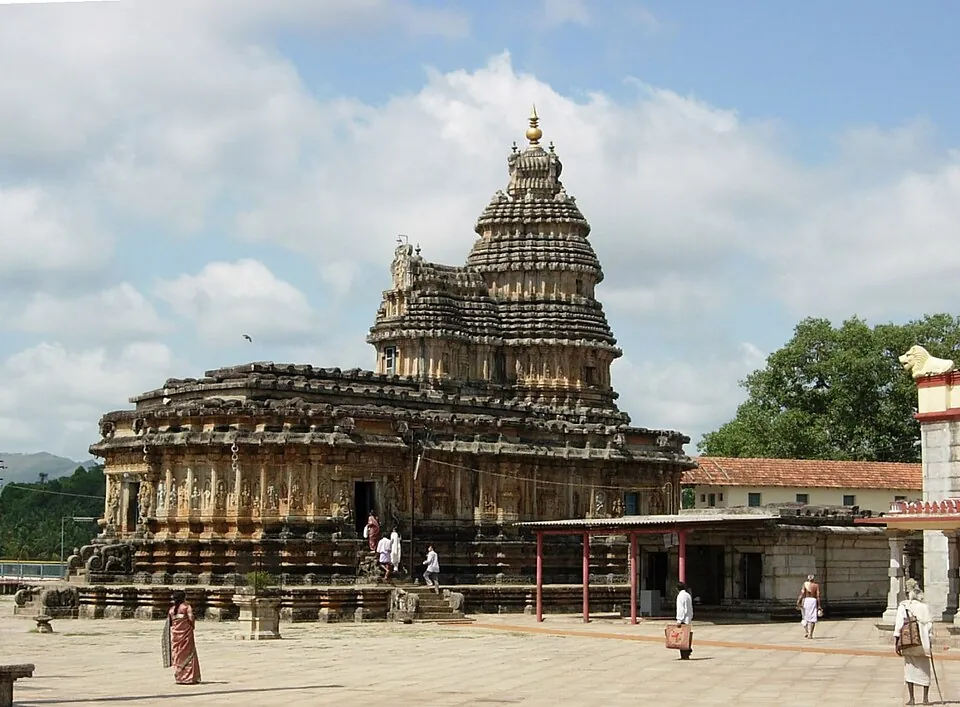
Sringeri Sharada Peetham (Dakshinamnaya) in southern India, in Karnataka — the guardian of the Yajurveda. Sureshvaracharya (the former Mandana Mishra) became the head of this matha. Mahavakya: “Aham Brahmasmi” (I am Brahman).
- Govardhana Pitha (Purvamnaya) in Puri in the east — the custodian of the Rigveda. It was headed by Padmapadacharya. Mahavakya: “Prajnanam Brahma” (Pure consciousness is Brahman).
- Sharada Pitha (Pashchimamnaya) in Dwaraka in the west — the custodian of the Samaveda. Hastamalakacharya became its head. Mahavakya: “Tat Tvam Asi” (You are That).
Jyotir Math (Uttaramnaya) in Badrinath in the north, in the Himalayas, — the custodian of the Atharva Veda. It was headed by Totakacharya. Mahavakya: “Ayam Atma Brahma” (This Atman is Brahman).
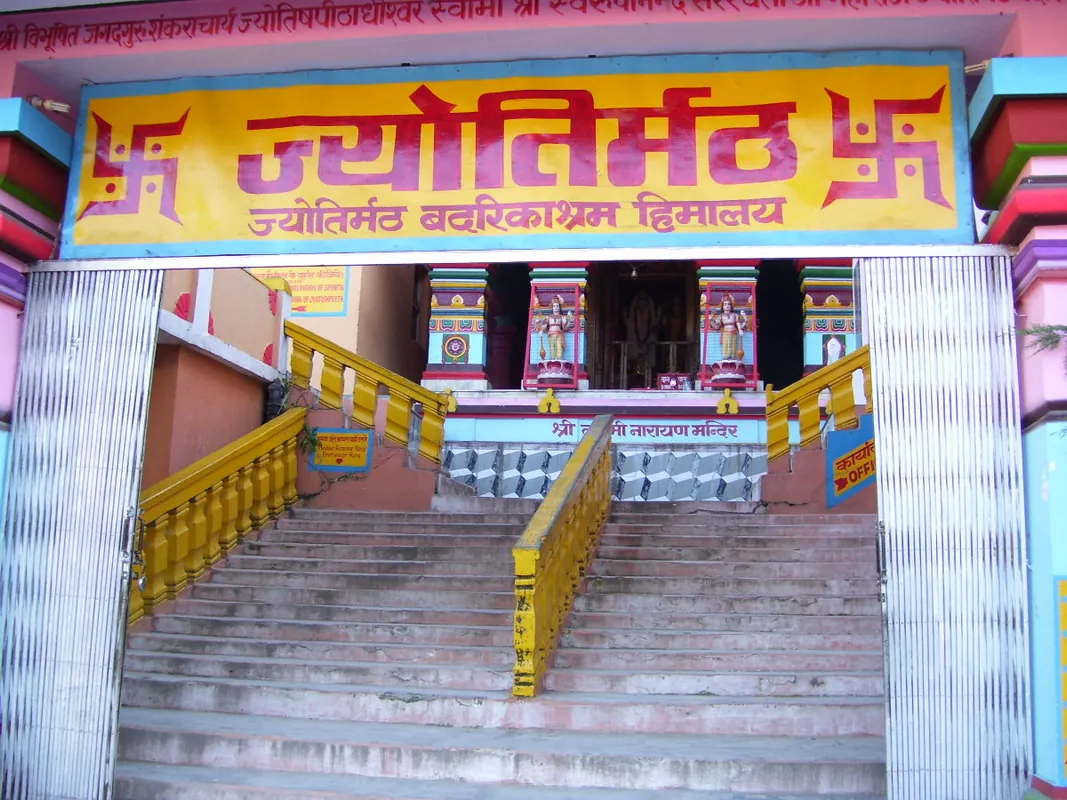
These four mathas, located at the four ends of the Indian subcontinent, symbolize the all-embracing nature of Shankara’s teaching and his aspiration to unite all of India under the banner of spiritual knowledge. To this day, these mathas continue the tradition established by Shankaracharya, and their heads bear the title “Shankaracharya.”
Organization of the Dashanami Sampradaya
Shankara reorganized all the sannyasins of India, dividing them into ten main groups (Dashanami Sampradaya) and assigning them to different mathas:
- Giri, Puri, and Bharati — belong to the Sringeri Math
- Vana and Aranya — belong to the Govardhana Math in Puri
- Tirtha and Ashrama — belong to Dwaraka
- Saraswati, Sagara, and Parvata — belong to the Jyotir Math in Badrinath
This organization created a unified structure for the monastic orders and helped spread Advaita Vedanta throughout India. The sannyasins of Mata Amritanandamayi, for example, belong to the Puri tradition associated with the Sringeri Math.
Shankara’s Main Disciples
Although Shankara had many disciples, four of them attained the greatest heights and were appointed heads of the four mathas:
1. Padmapadacharya
Born under the name Sanandana, he became one of the most devoted followers of Adi Shankaracharya. He received the name “Padmapada” (he whose feet are like lotuses) thanks to a miracle. When Padmapadacharya learned that his Guru needed him and was on the opposite bank of the Ganges, he rushed into the water without hesitation. His devotion was so great that wherever his feet stepped, lotuses appeared, keeping him afloat. Padmapada became the head of Govardhana Pitha in Puri.
2. Sureshvaracharya
As already mentioned, Sureshvara (formerly Mandana Mishra) was an outstanding philosopher of the Purva Mimamsa school before becoming Shankara’s disciple. After his defeat in the famous debate, he accepted sannyasa and became one of the greatest exponents of Advaita Vedanta. He wrote many important works, including the “Naishkarmyasiddhi” and the “Brihadaranyaka Upanishad Bhashya Vartika.” Sureshvara headed the Sringeri Math and founded the “Naduvil Matham” in Thrissur.
3. Totakacharya
Born under the name Giri, he became a disciple of Adi Shankaracharya at a very young age. Shankara’s other disciples considered him a simpleton — he showed no particular interest in study, but was completely devoted to his guru. One day, when Shankaracharya postponed the beginning of the teaching while waiting for Giri, Padmapada insisted that they begin.
Then Shankaracharya decided to reward Giri for his boundless devotion. By the power of his will, he mentally transmitted all his knowledge to Giri. Suddenly Giri composed a poem called the “Totakashtaka” (eight verses in the “totaka” meter), demonstrating a profound understanding of Advaita Vedanta. From then on, he became known as Totakacharya. He founded the monastery “Vadakke Modam” in Thrissur and headed the Jyotir Math in Badrinath.
4. Hastamalakacharya
When Shankaracharya visited a village near Kollur (Karnataka), a brahmin named Prabhakara came to him with his son, who seemed mentally challenged and could not speak. Shankara asked the boy: “Who are you? Whose son are you? Where did you come from? Where are you going? What is your name?” The boy unexpectedly answered with twelve verses, known as the “Hastamalaka Stotra,” in which he set forth the pure philosophy of Advaita.
Shankara immediately recognized him as a great soul (jnani) and accepted him as a disciple under the name Hastamalaka (one for whom the knowledge of the Atman is as clear as an amalaka — a gooseberry fruit — on the palm of the hand). Hastamalaka became the head of Sharada Pitha in Dwaraka.
Other Important Disciples and Encounters
In addition to the four main disciples, Shankara had many other outstanding followers:
- Anandagiri — author of glosses (sub-commentaries) on Shankara’s works
- Sri Harsha — a great poet and philosopher of Advaita
- Chitsukha — author of the “Chitsukhi,” an important treatise on Advaita
According to tradition, Shankara also met the rishi Vyasa himself, the author of the Vedas and Puranas and the compiler of the “Brahma Sutras.”
Shankaracharya’s Connection with Guru Dattatreya
Dattatreya — the Adi Guru of the Tradition
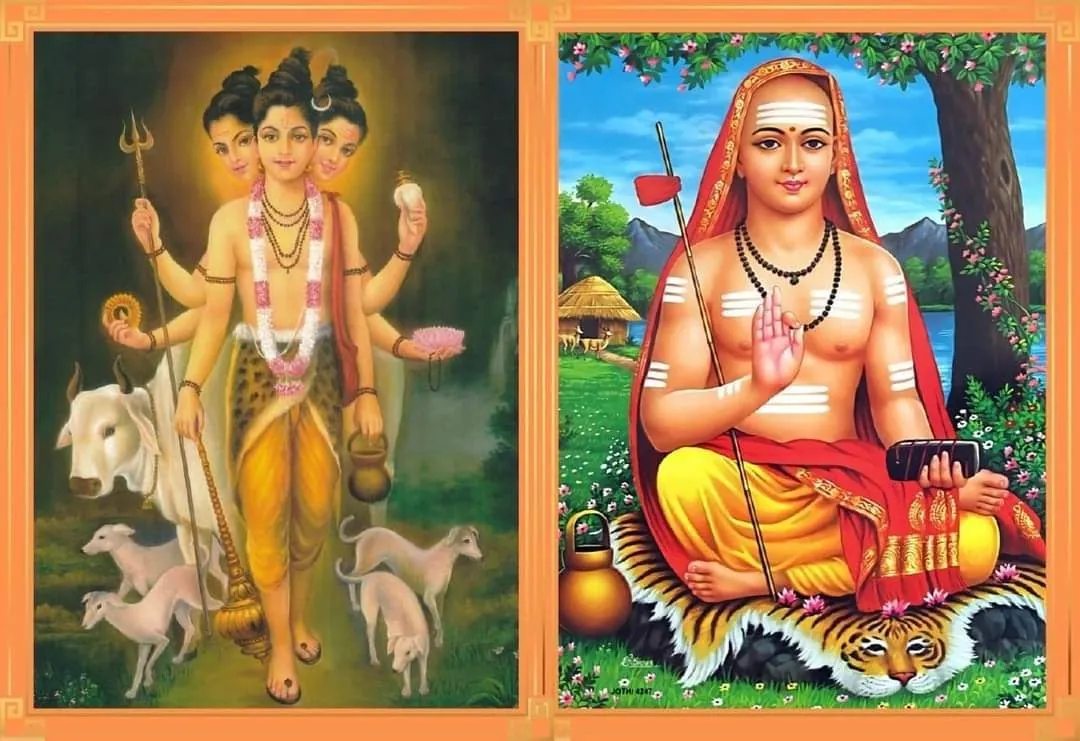
Avadhuta Dattatreya occupies a special place in the spiritual tradition of Advaita Vedanta and yoga. He is the embodiment of the three main gods — Brahma, Vishnu, and Shiva — in one body. Dattatreya is considered the Adi Guru (primordial teacher) of all saints and young people, an immortal avadhuta.
In the tradition of the Juna Akhara (a monastic order founded by Shankaracharya), Dattatreya is revered as the Ishta Devata (chosen deity).
Two Stories of a Mystical Connection
1. The Blessing of the Order of Sannyasins
According to Guru Chakradhar’s account, Shankara once asked Sri Dattatreya for a blessing so that the order of sannyasins he had founded would be well received by society. Dattatreya fulfilled his wish. This explains why sannyasins enjoy respect and recognition in Indian society.
2. The Meeting in Dattatreya’s Ashram
Shankara was a great devotee of Bhagavan Dattatreya. He is credited with the authorship of various hymns, such as the “Dattatreya Bhujanga Stotra.” The text “Guru-vamsha Kavya” tells how, at the end of his life, Shankara went to Dattatreya’s ashram in Mahur (Maharashtra). There a miracle occurred: Shankara stuck his staff (danda) into the ground, and it turned into a tree that grows there to this day.
The Final Disappearance
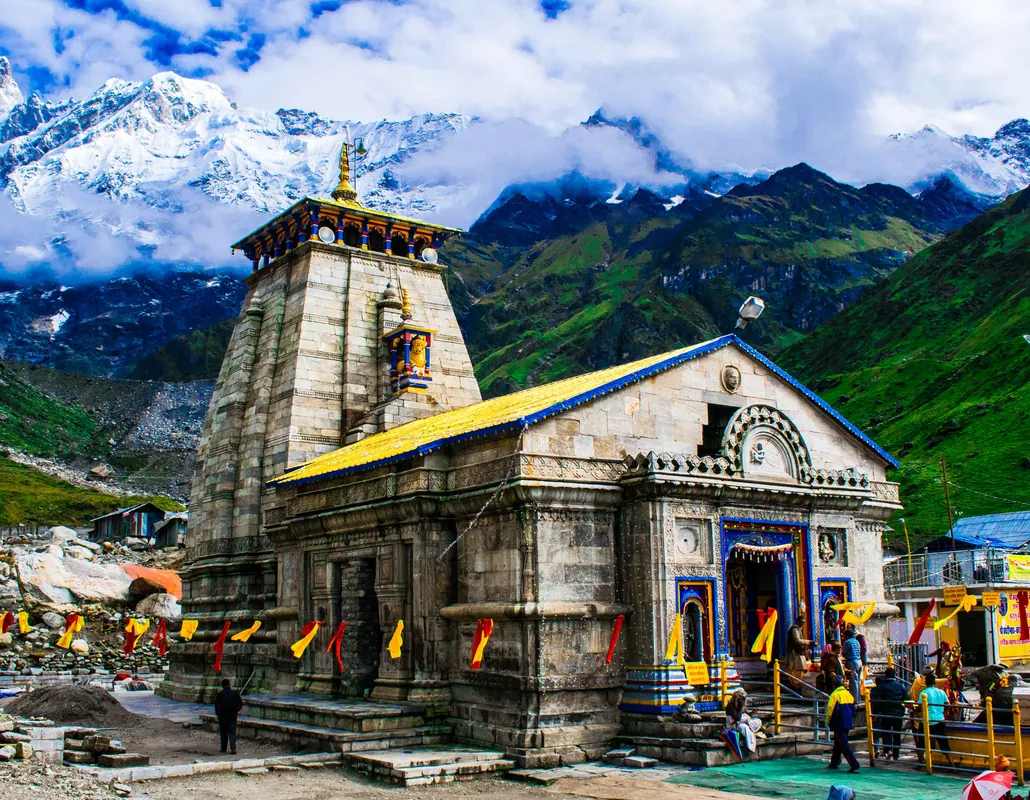
Before Shankara’s disappearance, Dattatreya appeared to him in Badrinath. The immortal yogin took him with him into a nearby cave, from which they never emerged again. This indicates that Shankara attained mahasamadhi and continues to exist in a subtle body. Some sources point to the cave behind the Kedarnath temple as the place of Shankara’s final samadhi.
Line of Succession
The line of succession that Shankara followed passes through:
Shankaracharya → Govindapada → Gaudapada → Shuka → Vyasadeva → Brahma the Creator → Vishnu/Shiva/Parabrahman
Shankara’s Philosophical Teaching
The Essence of Advaita Vedanta
Shankara’s philosophy can be expressed in his famous formula:
“Brahman is real — the world is unreal (illusory). The jiva (individual soul) is identical with Brahman.”
This formula contains three main propositions:
- Brahman satyam (Brahman is the only reality): Absolute Consciousness is the only true reality.
- Jagat mithya (the world is illusory): the phenomenal world is maya (illusion) or mithya (appearance). It has practical reality, but not absolute reality.
- Jivo Brahmaiva naparah (the individual soul is not different from Brahman): the true nature of every being is the pure Atman.
The Four Mahavakyas
Shankaracharya singled out four great sayings (mahavakyas) in the Upanishads:
- "Prajnanam Brahman" — "Pure Consciousness is Brahman"
- "Aham Brahmasmi" — "I am Brahman"
- "Tat Tvam Asi" — "You are That"
- "Ayam Atma Brahma" — "This Atman is Brahman"
The Path to Liberation
Shankara taught that liberation (moksha) is attained through jnana (knowledge).
The Four Necessary Qualities (sadhana-chatushtaya):
- Viveka (discernment) — the ability to distinguish between the eternal and the non-eternal.
- Vairagya (dispassion) — absence of attachment to objects of the senses.
- Shatsampatti (the six spiritual treasures):
- Shama (calming of the mind)
- Dama (control of the sense organs)
- Uparati (aversion to worldly objects)
- Titiksha (the ability to endure opposites)
- Shraddha (faith in the teaching and the teacher)
- Samadhana (one-pointedness of mind)
- Mumukshutva (a passionate desire for liberation).
The Three Stages of Knowledge:
- Shravana (listening) — studying the teaching under the guidance of a guru.
- Manana (reflection) — contemplation and the removal of doubts.
- Nididhyasana (meditation) — constant meditation on the truth of the Atman.
Uniting the Three Paths
Shankara brilliantly united the three paths of yoga:
- Jnana Yoga (the path of knowledge) — the highest path.
- Bhakti Yoga (the path of devotion) — a means of purifying the heart.
- Karma Yoga (the path of action) — a way of eliminating egoism.
Shanmata: Uniting the Six Forms of Worship
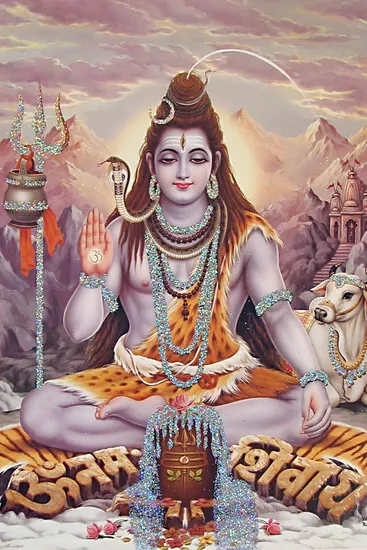
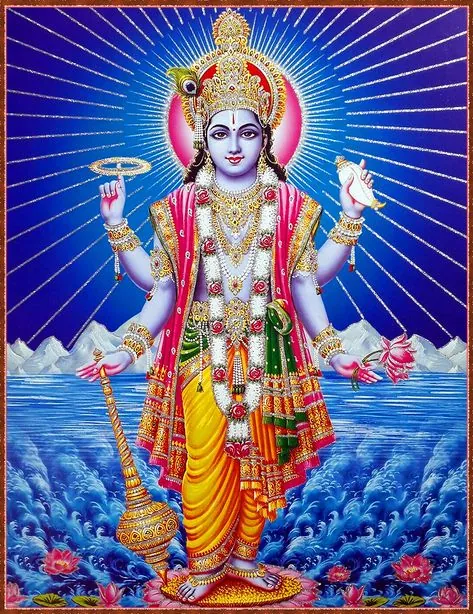
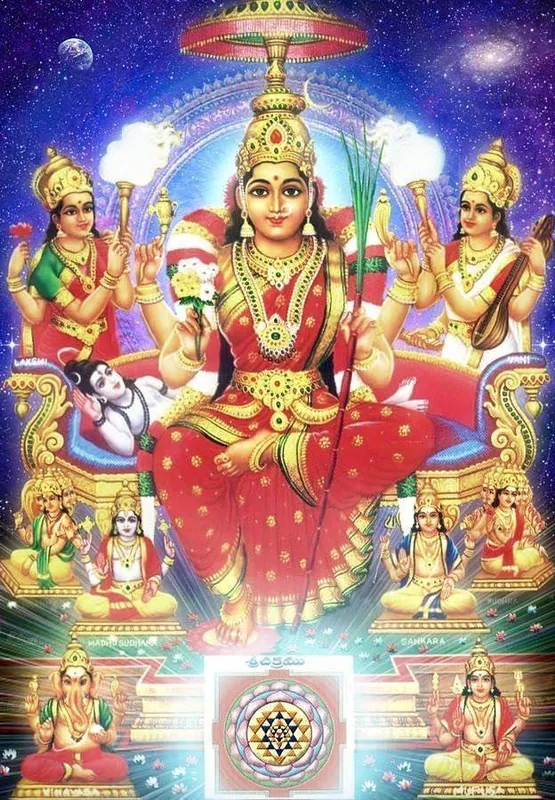
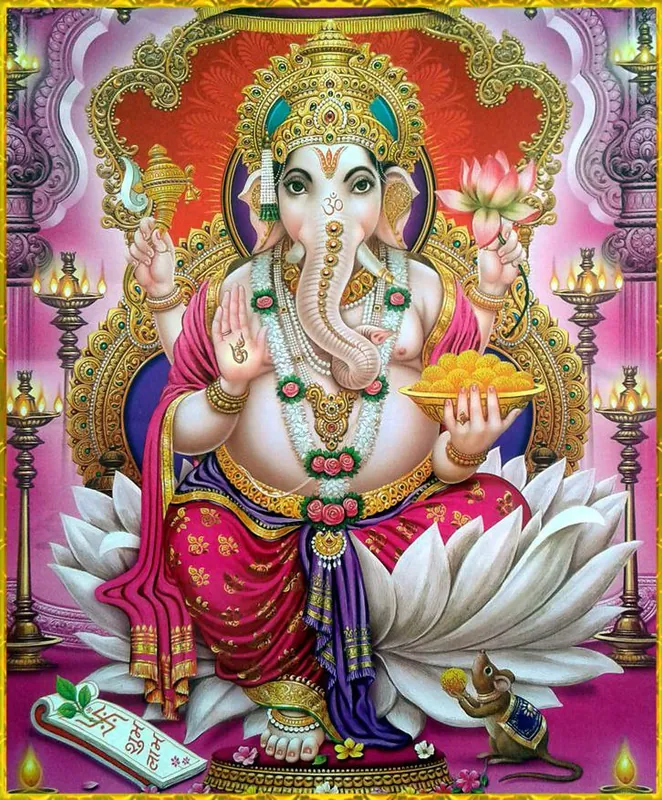
Shankara introduced a system of worship of six principal deities:
Shaiva — Shiva
Vaishnava — Vishnu
Shakta — Devi
Ganapatya — Ganesha
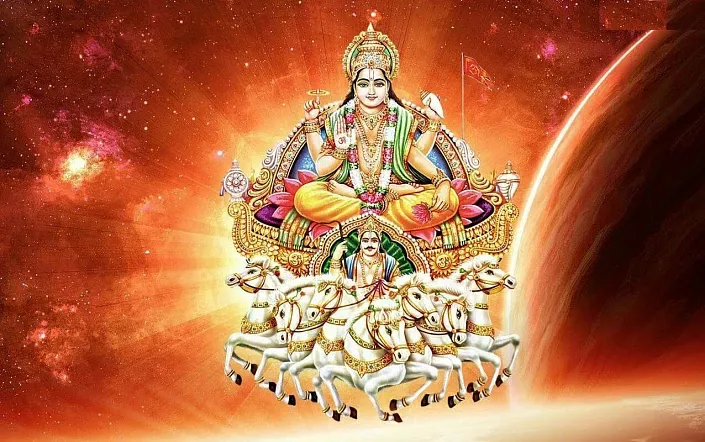
Saura — Surya
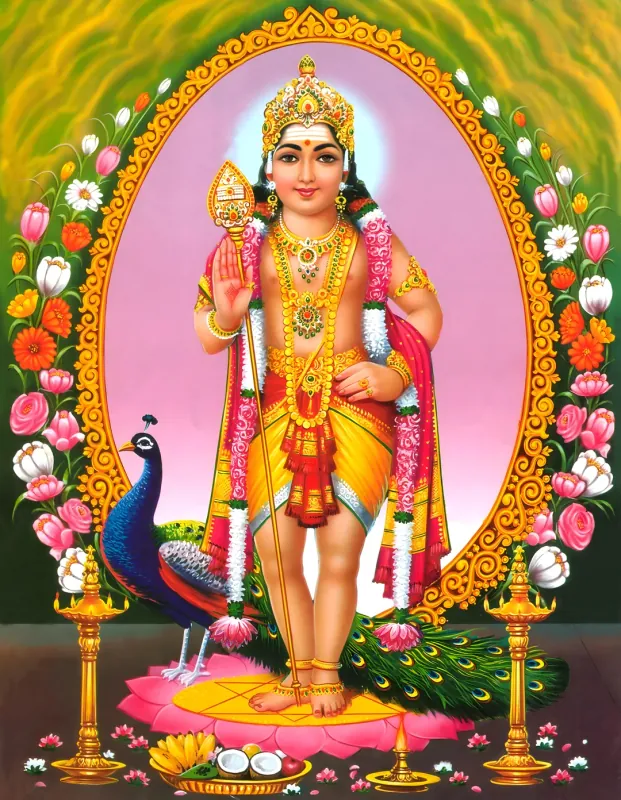
Kaumara — Kartikeya
Literary Legacy
Authentic Works
Commentaries (bhashyas):
- Brahma-sutra-bhashya
- Bhagavad-gita-bhashya
- Commentaries on the ten principal Upanishads
- Gaudapada-karika-bhashya
Original philosophical works:
- Upadesha Sahasri (A Thousand Teachings).
Works of Uncertain Authorship
Prakarana granthas (introductory texts):
- Atma Bodha (Knowledge of the Atman)
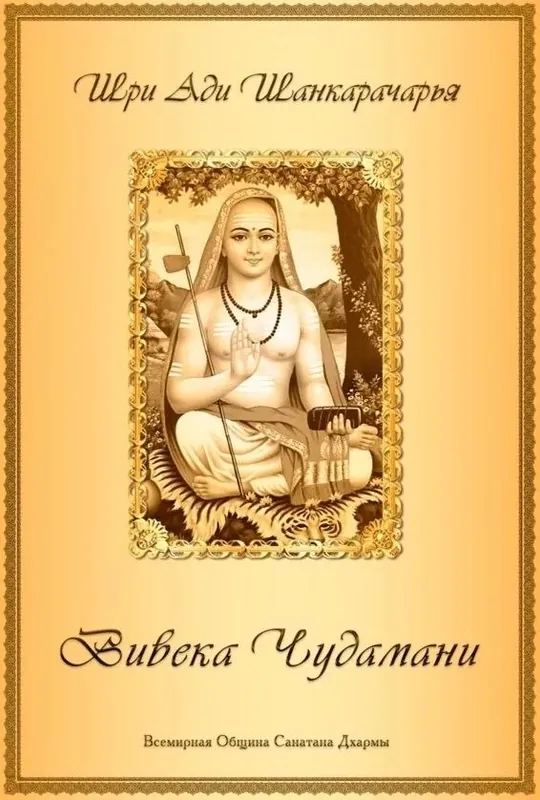
Viveka Chudamani (The Crest-Jewel of Discrimination)
- Tattva Bodha (Knowledge of Truth)
- Aparoksha Anubhuti (Direct realization)
- Sadhana Panchakam (Five Verses on Sadhana)
Stotras (hymns):
- Bhaja Govindam
- Dakshinamurti Stotra
- Saundarya Lahari
- Shivanandalahari
- Nirvana Shatakam
- Guru Ashtakam
- Kanakadhara Stotra
- Manisha Panchaka
Mark on History and Culture
The Spiritual and Cultural Revival of India
Shankara accomplished:
- Intellectual revival — he created a coherent philosophical system.
- Spiritual renewal — he restored the focus on the direct experience of the Atman.
- Cultural unification — he established four mathas in different parts of the country.
- Social reform — he sowed the seeds of social equality through the philosophy of non-duality.
- Institutional foundation — he created monastic orders.
The Mysteries of Shankaracharya’s Texts
One of the sacred texts — “Atma Bodha” — blesses followers in a special way. One must meditate on these texts. Over the decades, the mysteries of these texts will be revealed more and more, because there is no final knowledge of the realization that Shankara expressed in his works.
Jnana and viveka
In the first verse of “Atma Bodha,” Shankara says:
“Wisdom is the essential thing that leads to liberation. Just as food cannot be cooked without fire, so perfect freedom cannot be attained without wisdom.”
Jnana comes to a sadhu when viveka arises in him, enabling him to separate his consciousness from that which it is not. Viveka is discriminating wisdom. A sadhu is not a slave to desires — all desires are under his power, like subjects under the power of a wise king.
Conclusion: Shankaracharya’s Eternal Message
Shankaracharya’s message can be expressed in several key calls:
First message: the non-dual nature of reality
Brahman is the only reality, the world is an illusion, and your true “Self” is Brahman. This is not a philosophical theory, but a living truth for direct experience.
Second message: the necessity of liberation
“Seek God, fool, seek liberation from the cycle of birth and death! Awaken!” These words express the necessity of the spiritual quest. Shankara called for striving toward moksha as the highest goal of life.
Third message: the unity of all paths
Shankara showed that there is no contradiction between the various paths of yoga and the worship of different forms of God. All paths lead to the one non-dual Truth.
Fourth message: the importance of the Guru and the parampara
Shankara invariably emphasized the necessity of personal guidance and an unbroken lineage of knowledge transmission.
A Living Tradition
Shankara left behind:
- A door to infinity that is always open
- Four mathas that continue the tradition
- Texts that reveal the path to liberation
- A line of succession leading to Truth
As stated in the “Atma Bodha”:
“Just as a mirror covered with dust begins to shine again when the dust is removed, so too the embodied being, having seen the truth of the Atman, becomes one, attains the goal, and is freed from sorrow.”
This is the eternal message of Sri Adi Shankaracharya: You are already free. You have always been free. Know yourself as the Atman, and all suffering will cease. Om Sri Guru Shankaracharyaya Namaha
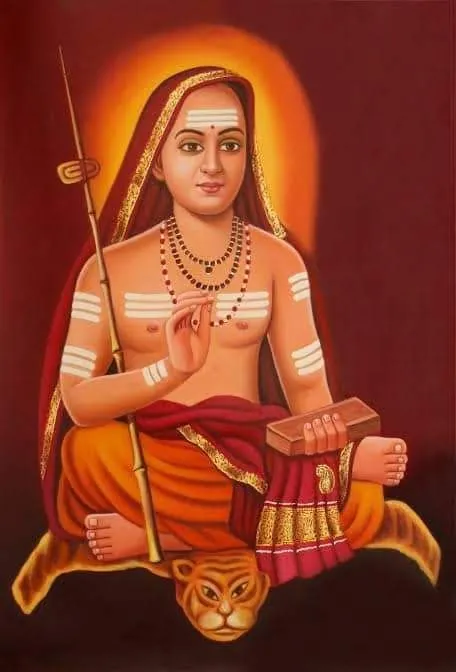
Sri Shankaracharya is an incarnation of Shiva, the great reformer of the teaching of Advaita. All his activity and works were directed toward achieving a single goal—to restore the lost authority of the Vedas and return humanity to the path of Truth. He has no equal. Om Namah Shivaya Om Tat Sat
