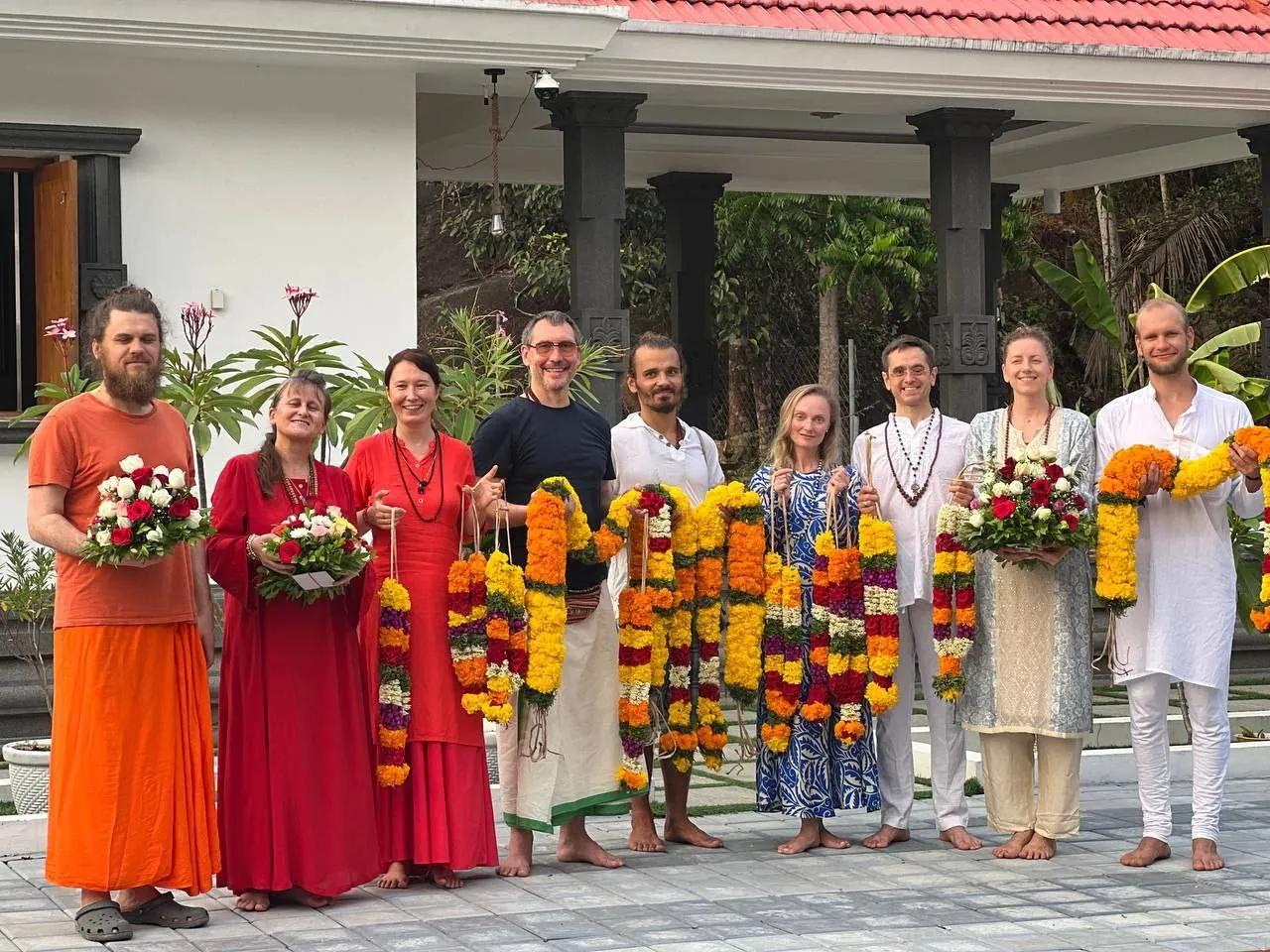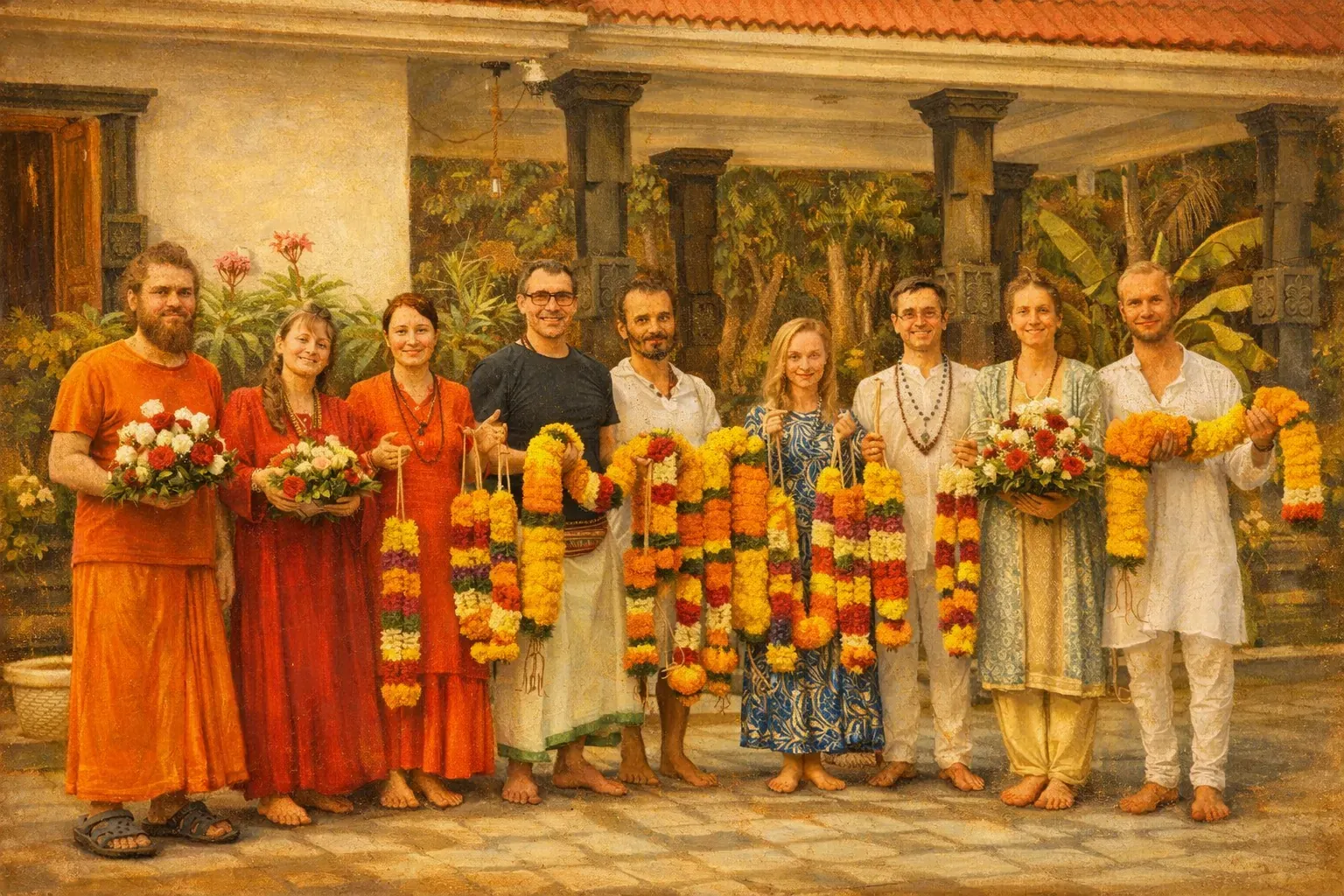
Pilgrimage, or Yatra (Sansk. yātrā — "journey", "procession"), in the context of Sanatana Dharma, is not a simple movement in space. It is a conscious movement toward a Tirtha (Sansk. tīrtha — "crossing", "ford") — a sacred point where the mundane plane intersects with the spiritual.
According to the "Puranas," performing a yatra under the guidance of realized teachers promotes the purification of the antahkarana (the inner instrument of consciousness) and the accumulation of spiritual merit (punya) necessary for the realization of Advaita (non-duality).
Guru Swami Vishnudevananda Giri explains the importance of pilgrimage to holy places:
"While being there, one can receive the blessing of a specific saint... who has saturated this world and connected it with their mandala."
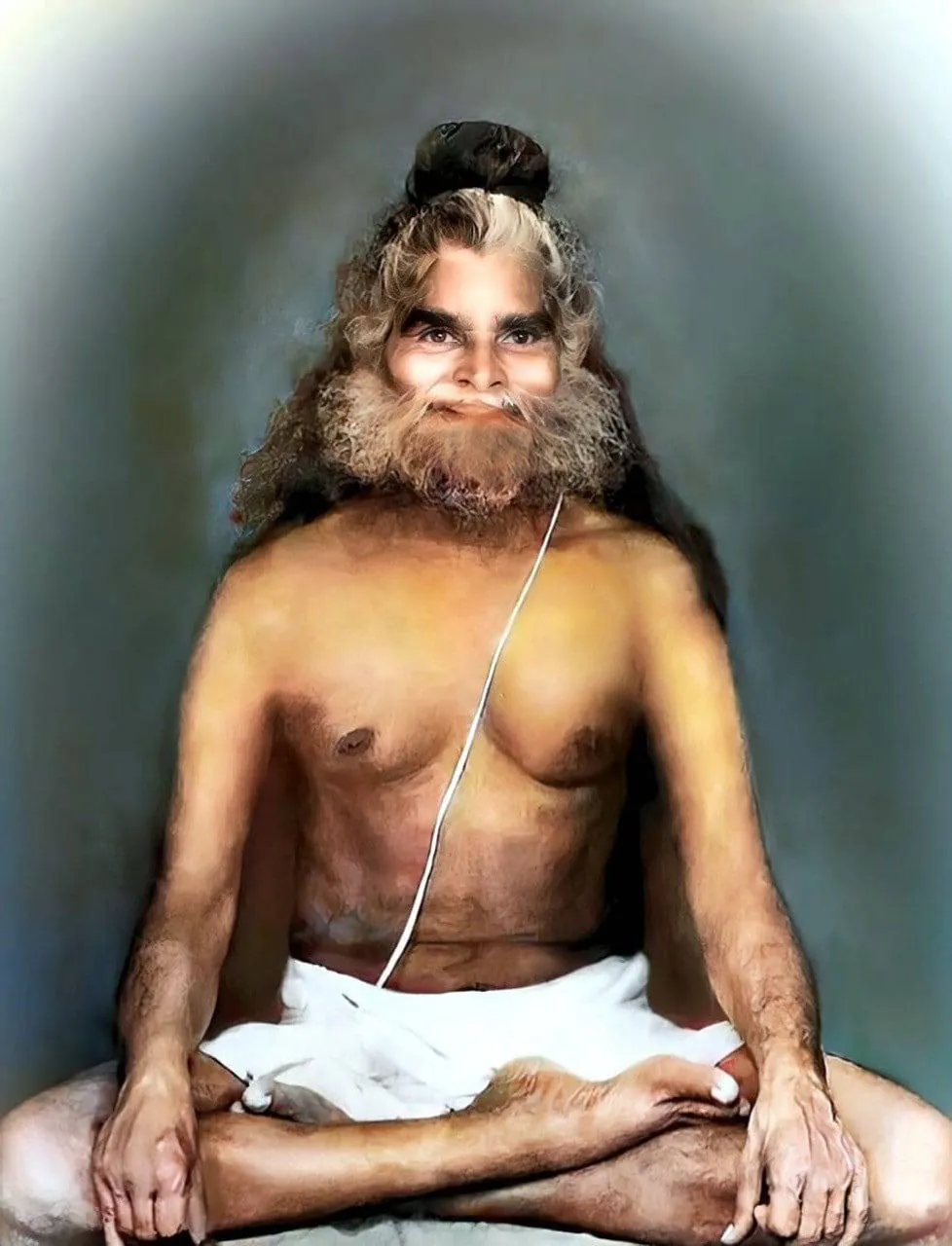
The upcoming pilgrimage in March 2026 is structured as a sequential encounter with the three pillars of the tradition: lineage (parampara), divine incarnation (avatar), and the path of direct self-inquiry (atma-vichara).
Pilgrimage Program
The pilgrimage program is divided into three stages, each based on specific historical milestones and authoritative lineages of Southern and Northern India.
1. The Avadhuta Tradition and Mahasamadhi of the Paramguru (March 17–20)
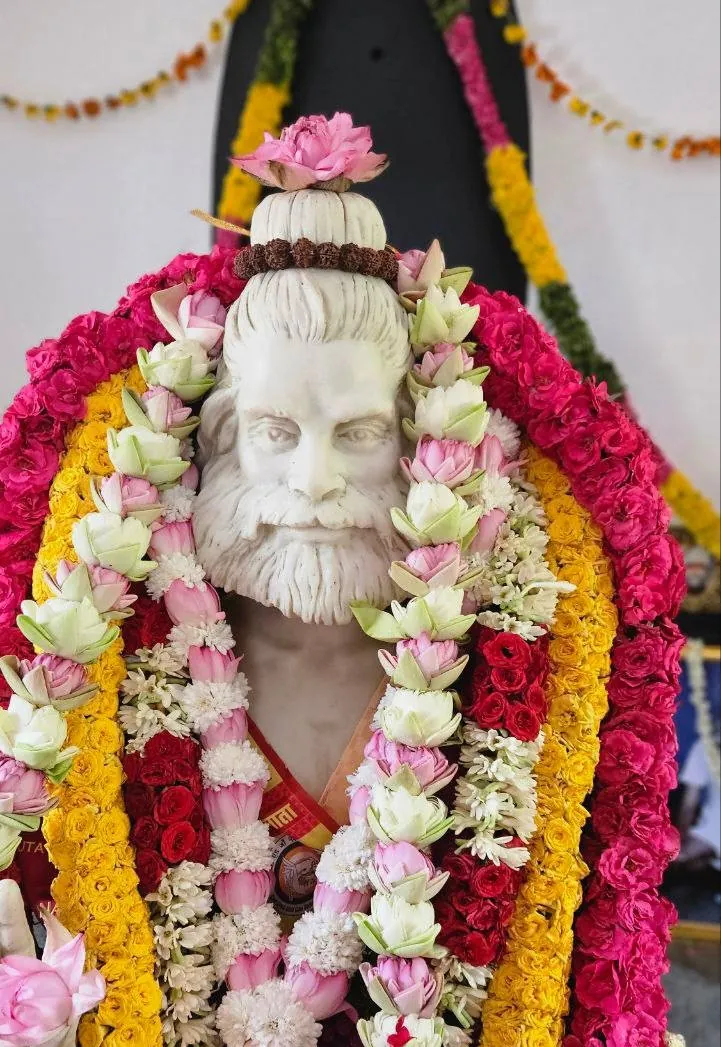
The first part of the yatra is timed to coincide with Brahmananda Jayanti — the appearance day of the outstanding siddha and ascetic Paramguru Brahmananda.
The year 2026 marks exactly 40 years since his entry into Mahasamadhi (Sansk. mahāsamādhi — the final conscious leaving of the body by a great yogi).
- Location: "Avadhuta Siddha Ashram" (Kerala state), the resting place of the saint's physical body in the state of samadhi.
- Event: Solemn rites with the participation of Mahamandaleshwar Swamini Ananda Lila Giri, an officially recognized hierarch of the tradition.
- Historical context: Visiting the sites of the Tamil Siddhas — a lineage of mystics whose contribution to yogic science is recorded in classical Tamil texts (Tirumantiram, etc.).
2. Phenomenology of Incarnation: Shri Dattatreya (March 21–25)
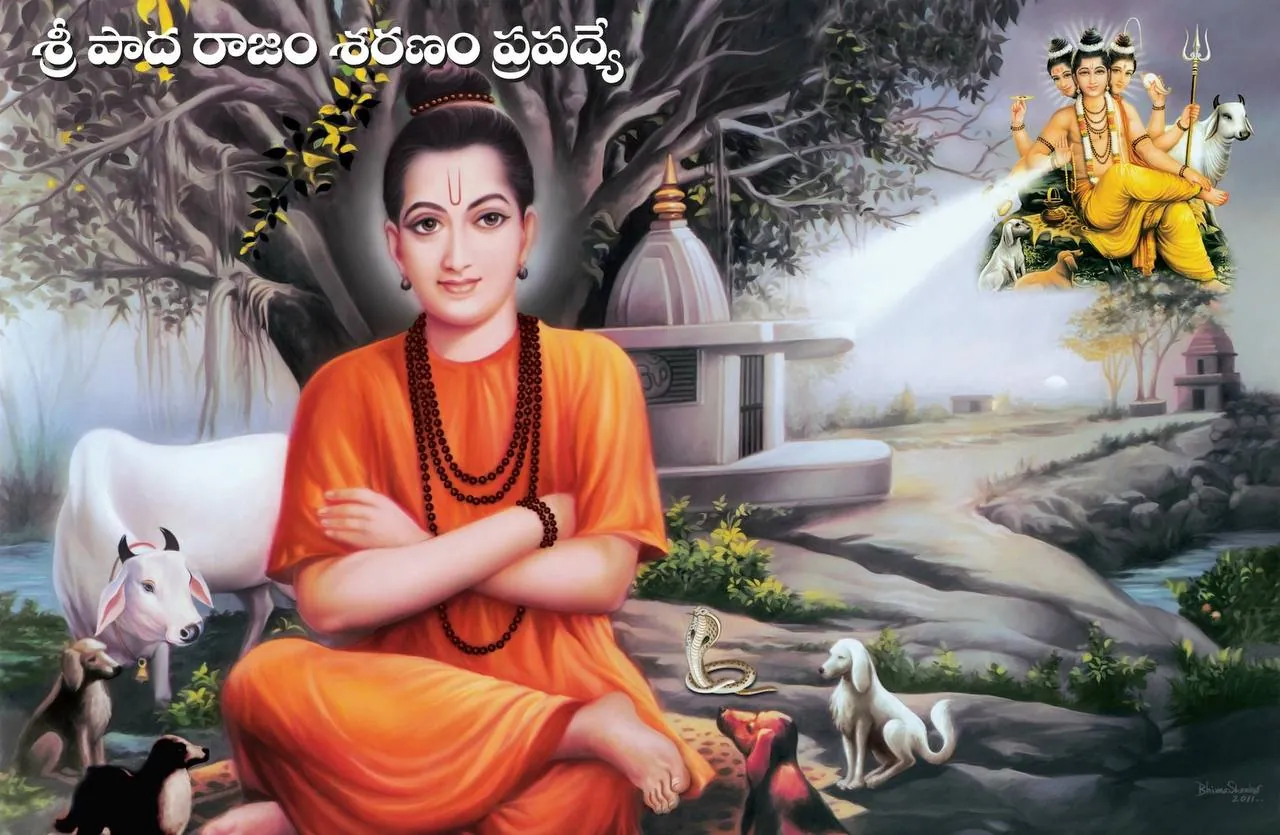
The second stage is dedicated to exploring the places associated with Shripada Shri Vallabha (14th century), who is considered in the tradition to be the first full incarnation (avatar) of Lord Dattatreya in the current era.
- Theological justification: Dattatreya is regarded in the shastras as the single guru of all traditions, uniting the energies of Brahma, Vishnu, and Shiva. A pilgrimage to the places of his earthly journey allows one to come into contact with the archetype of the "primordial teacher."
3. The Path of Grace and Self-Inquiry: Arunachala and the Siddha Tradition (March 26–29)
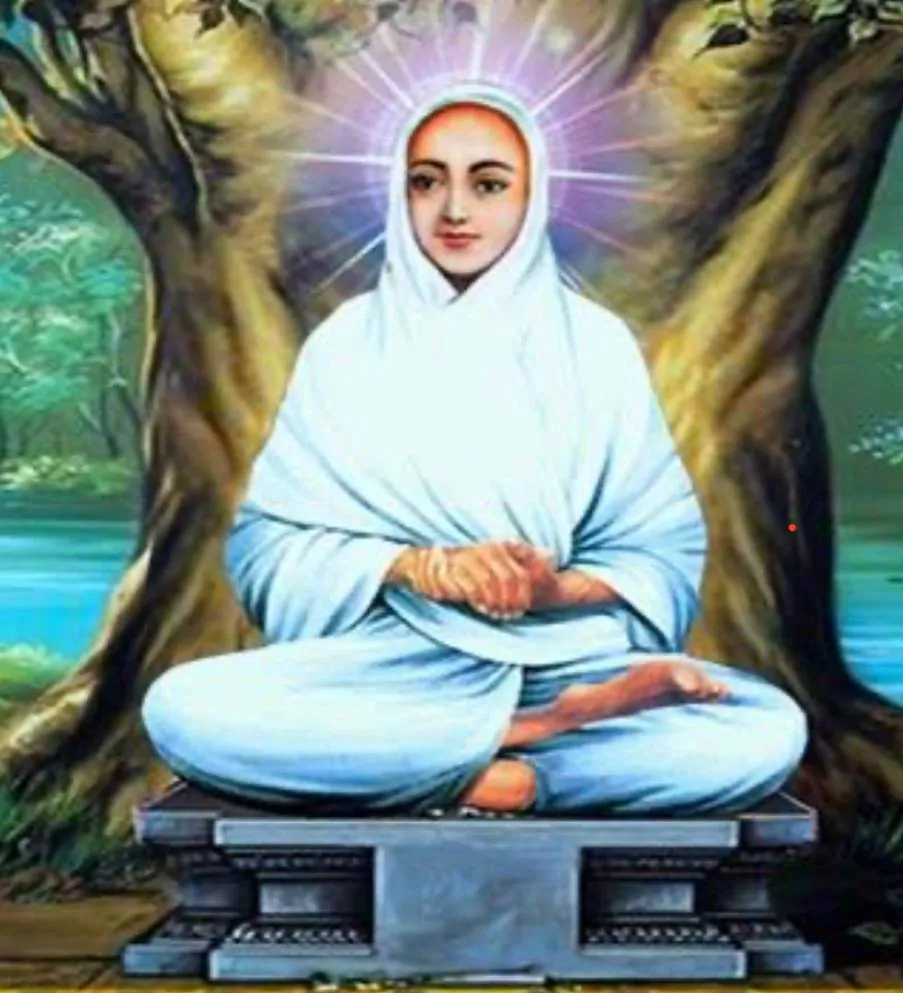
The final part is dedicated to two of the greatest figures of Tamil spirituality in the 19th and 20th centuries — Swami Ramalinga (Vallalar) and Bhagavan Ramana Maharshi.
Swami Ramalinga: The preacher of the "Path of Supreme Grace" (Arut Perunjothi), whose teachings on the transformation of the physical body into light are documented in the "Thiruvarutpa" texts.
- Ramana Maharshi and Mount Arunachala: According to the Skanda Purana, Arunachala is the incarnation of Shiva himself in the form of a pillar of fire (Tejas-tattva). Here, the emphasis shifts to the practice of Atma-vichara (self-inquiry), as outlined in the classical works of Maharshi.
Pilgrimage in Sanatana Dharma is not a sightseeing trip, but an intensive spiritual discipline (sadhana). Participation in the yatra under the guidance of tradition holders — Swamini Ananda Lila Giri and nun Aravindini Giri — ensures a correct interpretation of the experience.
For the modern seeker, this event provides:
- Connection with the Parampara: Direct blessing at places of power (shakti-pithas), which, according to the "Shiva Samhita," manifoldly accelerates the results of any practice.
- Geographical authenticity: Contact with an undistorted tradition in its original cultural context (South India).
- Inner transformation: Through being in the field of the Mahasamadhi of saints and participating in temple rituals, a deep retuning of consciousness occurs, which is impossible in conditions of armchair study of philosophy.
Registration Information
The World Community of Sanatana Dharma invites all those who strive for a deep study of the tradition and the practical realization of the ideals of Vedanta and Tantra to participate.
- Dates: March 17 – 29, 2026.
- Participation format: It is possible to complete the entire route or join any of the three parts of the program.
- Contact person: Nun Aravindini Giri
- More details in the pilgrimage group
May this yatra serve for the benefit of all living beings and the establishment of the eternal Dharma.