

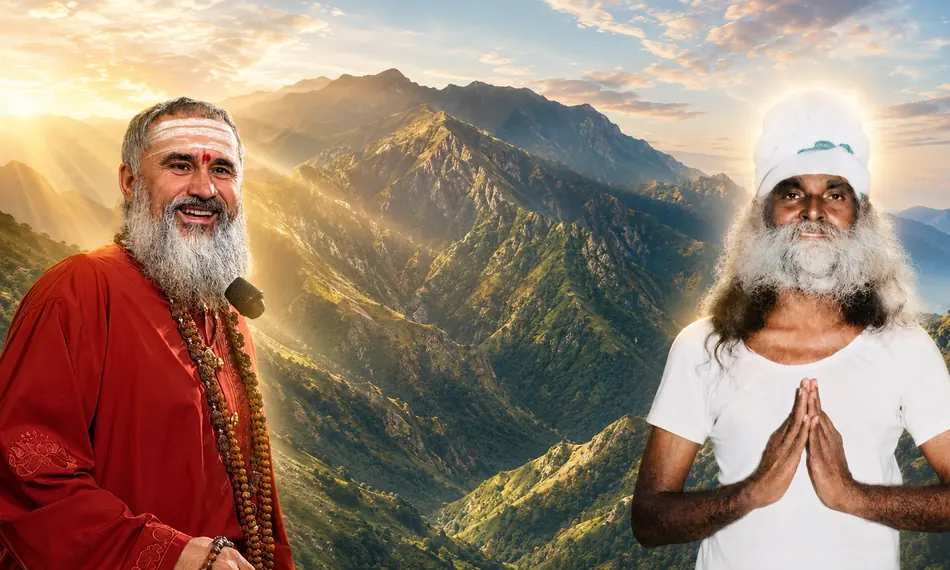
A five-day practical seminar, “The Path to Attaining the Three Enlightened Bodies in the Siddha Tradition,” will be held at the Avadhuta Siddha Ashram, located in the Indian state of Kerala, from September 6 to 10, 2026:
1. Jnana-deha — the “body of knowledge” or “body of spiritual wisdom.”
2. Pranava-deha — the “body of Pranava,” that is, a body associated with the sacred syllable Om.
3. Shuddha-deha — the “pure body” or “purified body.”
Sacred ceremonies of taking spiritual Refuge and entering the Tradition (Sharanagati Samskara) and of spiritual initiation (Ashta-avarana-diksha) will also be held.
The event will take place at an ashram near the mahasamadhi site of Paramguru Swami Brahmananda Sri Shiva Prabhakara Siddha Yogi, a revered saint and teacher of the southern lineage. The program includes teachings from the Guru, traditional methods of meditation and contemplation, temple worship, practices under the guidance of monks, as well as ceremonies of taking spiritual refuge and initiation.
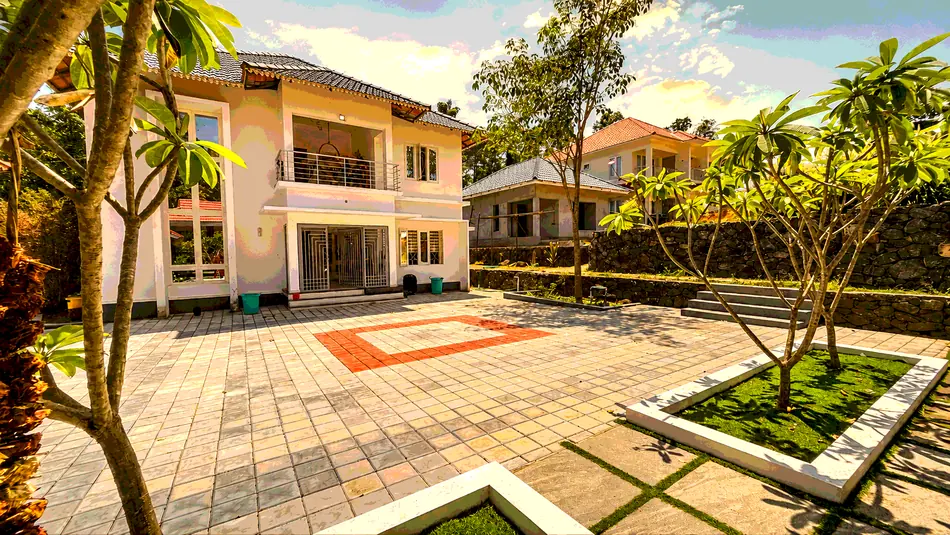
Program
September 5 — Arrival and Accommodation
arrival of participants;
accommodation near the ashram;
orientation to the grounds and the established schedule;
organizational meeting;
evening group practice at the temple of Swami Brahmananda.
This day is intended for adjustment, familiarization with the ashram rules, and preparation for the main cycle of classes.
September 6–10 — Five-Day Practical Seminar
Over the course of five days, participants will be introduced to the teachings and practical methods of the southern Siddha lineage.
The program includes:
teachings and explanations from the Guru;
methods of working with consciousness, transmitted in accordance with the participants’ level of preparation;
meditation, visualization, and contemplation;
practices for purifying and regulating prana under the guidance of monks;
answers to questions about the teachings and practice;
evening satsangs with the Guru;
Tantric temple worship practices;
the performance of bhajans—traditional devotional chants;
a sequential study of shuddha-deha, jnana-deha, and pranava-deha.
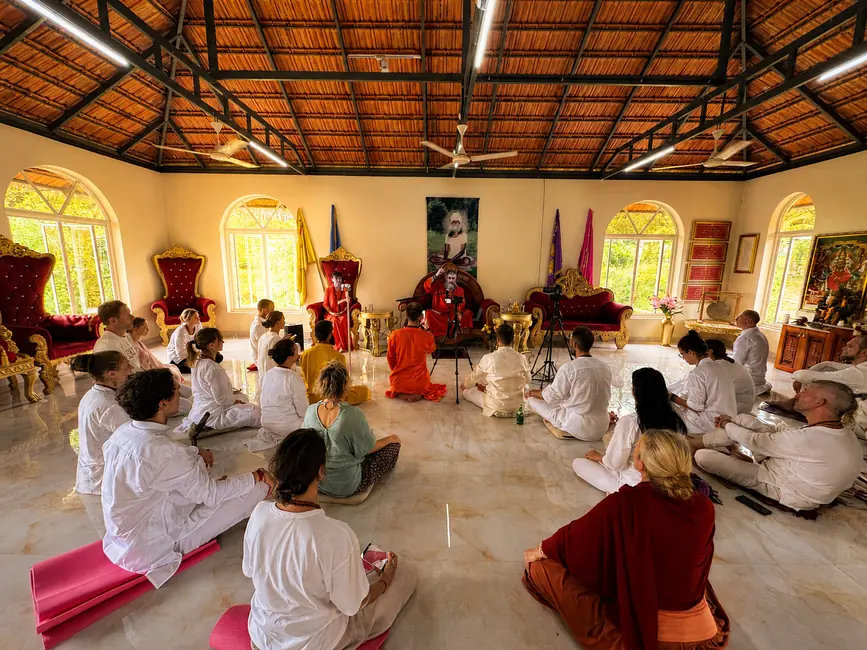
September 9 — Sharanagati Samskara
Sharanagati means “surrendering oneself to refuge” or “seeking spiritual protection.” Samskara is a sanctifying rite that establishes a steadfast spiritual orientation and marks the transition to a new stage of religious life.
Sharanagati Samskara is a ceremony of taking spiritual refuge, acknowledging the Guru’s guidance, and entering the discipline of the tradition. Its essence lies in consciously affirming one’s intention to follow the path of liberation, observe the teachings, and maintain a respectful attitude toward the parampara.
Participation in the ceremony must be voluntary and based on an understanding of the commitments being undertaken.
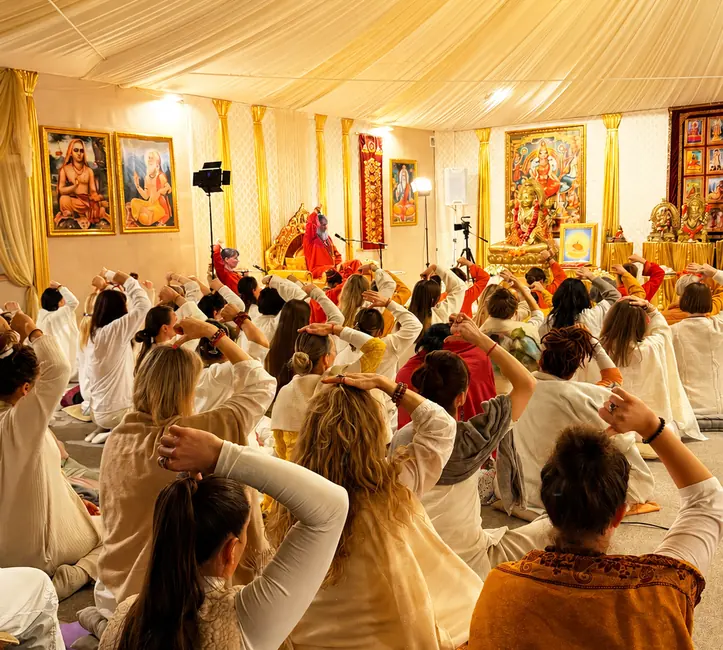
September 10 — Ashta-avarana-diksha
Diksha is a spiritual initiation performed by an authorized Guru. In the Shaivite tradition, diksha signifies not only the transmission of a mantra or ritual knowledge, but also the disciple’s admission into an established system of spiritual practice.
The term ashta-avarana means “eight coverings,” “eight protections,” or “eight forms of spiritual safeguarding.” Within this program, ashta-avarana-diksha is an initiation into the eight protections of Shiva and the corresponding set of disciplines for disciples.
During the initiation, in accordance with the traditional procedure, the following may be transmitted:
a spiritual name;
a mahamantra;
rules for the daily repetition of mantras;
protective practices and ritual prescriptions;
mantras used in worship;
consecrated attributes for personal practice;
instructions regarding the disciple’s further path.
Whispering the mantra into the ear is an ancient method of individual initiation. It emphasizes the personal nature of the bond between the Guru and the disciple and entails the responsible observance of the instructions received.
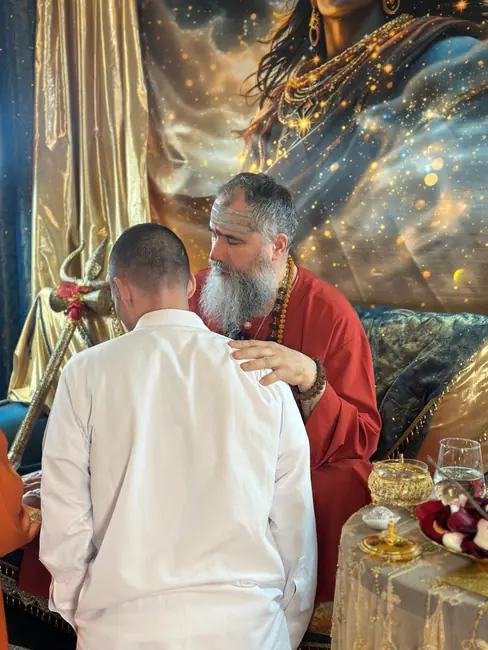
Diksha is not merely formal participation in a ceremony. It signifies the beginning of an established sadhana—a regular spiritual discipline that includes mantra, contemplation, ethical commitments, and adherence to the Guru’s instructions.
Who the Program Is Intended For
The seminar is open to:
beginners becoming acquainted with the tradition;
people already engaged in meditation or mantra practice;
long-standing disciples;
participants considering taking refuge and receiving initiation.
Prior experience is not required. Participants must respect the ashram’s rules, be prepared to follow its schedule, and take the instructions imparted seriously.
Sharanagati-samskara and ashta-avarana-diksha are available to program participants who wish to receive them. Before the ceremony, participants are advised to obtain a full explanation from the organizers regarding the content of the initiation, the rules of practice, and the commitments undertaken.
Organizational Information
Venue: Avadhuta Siddha Ashram, Kerala, India
Arrival: September 5, 2026
Main program: September 6–10, 2026
Sharanagati-samskara: September 9
Ashta-avarana-diksha: September 10
The organizational fee covers the program and participation in all scheduled seminar activities. The organizers provide information and assistance in finding accommodation and meals near the ashram. The exact list of included services, the fee amount, refund terms, and accommodation arrangements should be clarified before registration.
Questions and Answers
How do I register?
Choose one of the contact methods listed on the page and submit an application. The organizer will contact the applicant and provide information about the participation terms, payment, documents, accommodation, and travel route.
Is prior experience in spiritual practice required?
No. The seminar is open to beginners and experienced practitioners. Participants are expected to have a sincere intention to learn, respect the tradition, and observe the ashram’s rules.
What does the organizational fee include?
The fee includes participation in the program and the activities listed in the schedule. Accommodation, meals, airfare, transfers, visas, and insurance are included only if explicitly stated by the organizers in the registration terms.
How do I get to the ashram?
After registration, participants will receive detailed instructions specifying the recommended route, the nearest transport hubs, and available transfer options.
Is a visa required?
Entry requirements depend on the participant's nationality. Many foreign nationals require an Indian visa; in some cases, an electronic e-Visa is available. Before purchasing tickets, you must check the current requirements on the official visa portal of the Government of India and ensure that the selected visa category corresponds to the purpose of your trip.
Is it possible to attend only part of the program?
Participation in the entire program is recommended, as the sessions form a sequential cycle of preparation and practice. The possibility of partial participation should be agreed upon with the organizers in advance.
Is it possible to ask the Guru a question?
The schedule includes question-and-answer sessions during satsangs. Participants will also be able to ask the monks for clarification.
Important Recommendations for Participants
Before the trip, you must:
check the validity of your passport;
obtain a visa of the appropriate category;
purchase medical insurance valid in India;
obtain the exact address of the ashram from the organizers;
clarify the accommodation and meal arrangements;
inform the organizers of any significant medical limitations;
familiarize yourself with the rules regarding conduct, clothing, photography, and video recording;
obtain written confirmation of registration and a list of the services paid for.
Registration contact details are provided below.
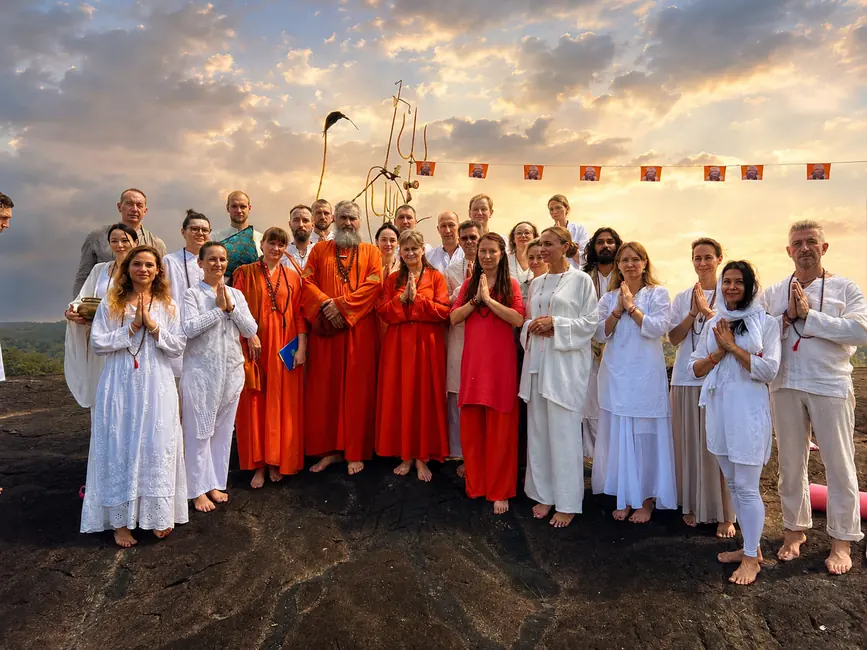
Video about the previous seminar in India:
