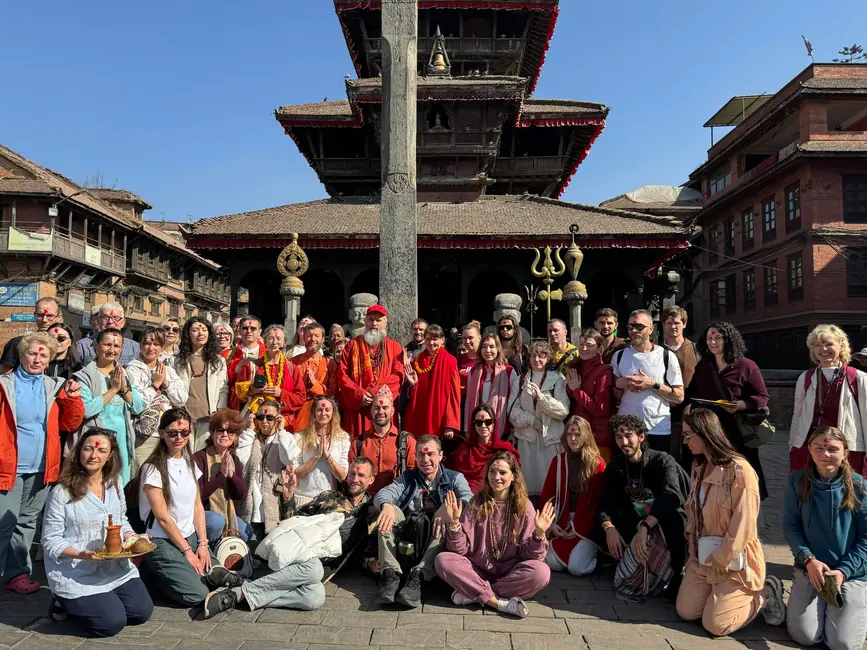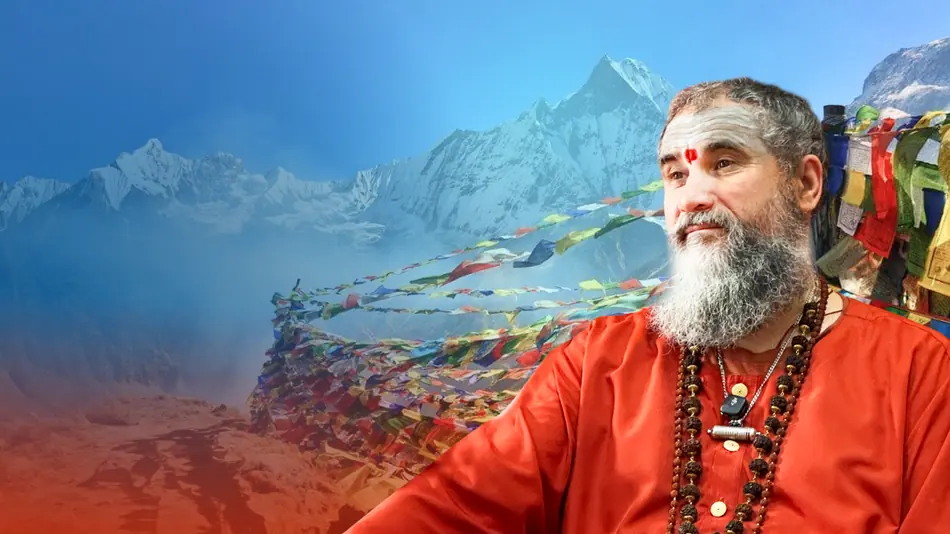
The World Community of Sanatana Dharma invites followers and practitioners to participate in a pilgrimage and retreat program in Nepal (Kathmandu, Pharping, Hetauda, and Trikhandi) with Guru Swami Vishnudevananda Giri and with the support of the community’s monks from January 21 to February 3, 2027.
The program includes visits to the traditional sacred sites of the Kathmandu Valley, a seven-day retreat, receiving Sharanagati Samskara, a stay at the Sadhu Loka Ashram, and a pilgrimage to places associated with the Northern Lineage of the Teaching.
Program of Events
January 21 — Arrival in Kathmandu
participants’ arrival in Kathmandu;
group meeting;
hotel accommodation;
organizational meeting;
preparation for the pilgrimage and retreat parts of the program.
January 22–23 — Pilgrimage to the Sacred Sites of the Kathmandu Valley
Visits to the following places are planned:
Pashupatinath
The Pashupatinath temple complex is located on the banks of the Bagmati River in the eastern part of Kathmandu. It is dedicated to Shiva in the form of Pashupati, the “Lord of Living Beings,” and is one of the most important centers of Shaivism in South Asia.
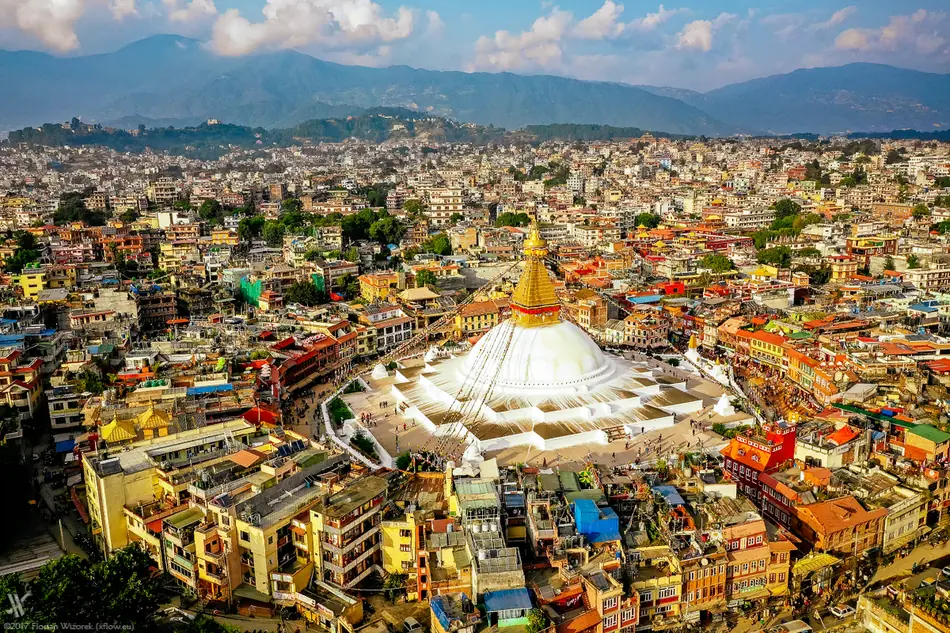
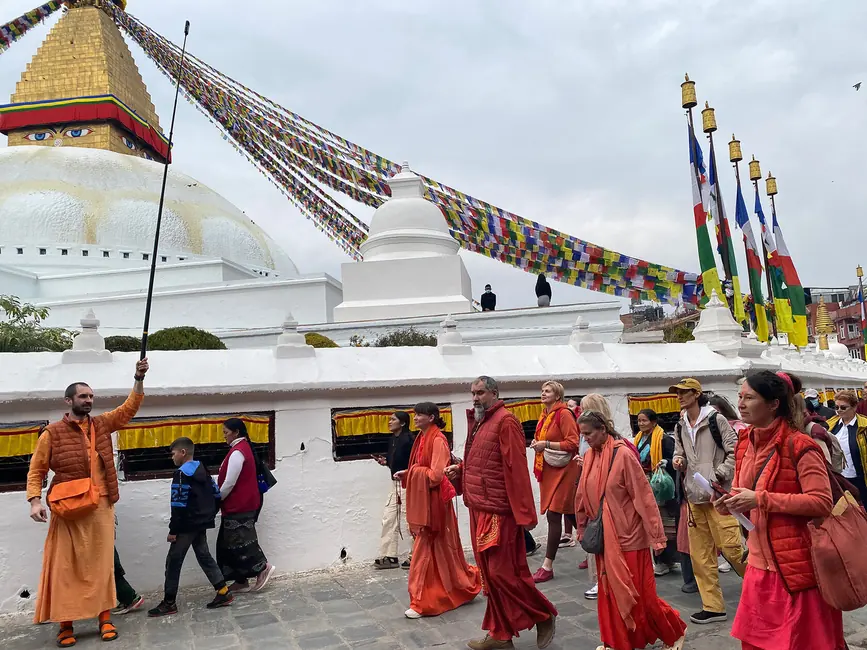
Boudhanath
Boudhanath is one of the largest Buddhist stupas in Nepal and the most important center of Tibetan Buddhism in the Kathmandu Valley. The stupa acquired its present appearance over centuries of development; after the earthquake of April 25, 2015, the structure was restored and reconsecrated in November 2016.
Swayambhunath
Swayambhunath is an ancient Buddhist complex located on a hill west of central Kathmandu. It is revered by followers of various Buddhist schools and is historically associated with the religious culture of the Newars of the Kathmandu Valley.
Budhanilkantha
Budhanilkantha is located north of Kathmandu, at the foot of Shivapuri Hill. Its principal shrine is a stone image of Vishnu-Narayana reclining on the cosmic serpent Ananta-Shesha.
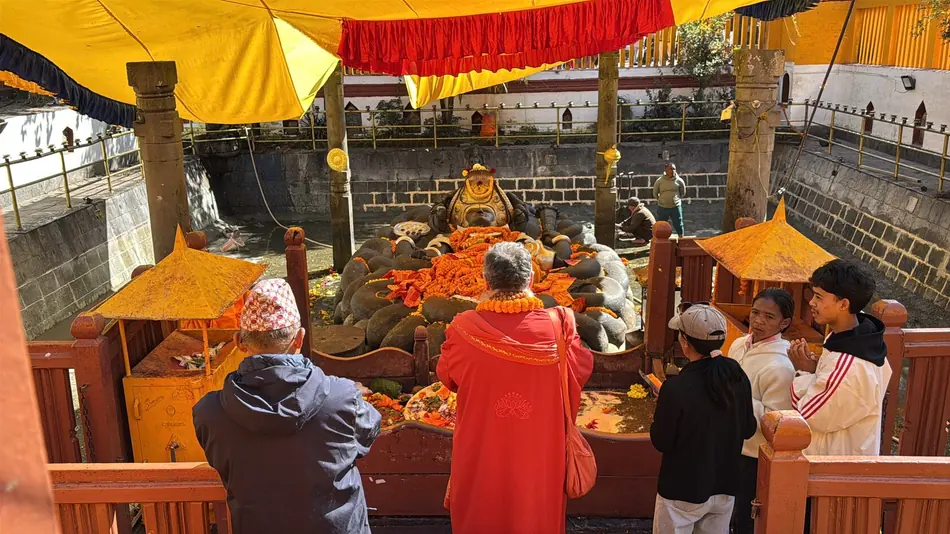
During the pilgrimage, the following will be offered:
guidance and lectures by the Guru;
meditation and contemplation;
explanations of the traditional significance of the sacred sites visited;
preparation for a period of intensive retreat practice.
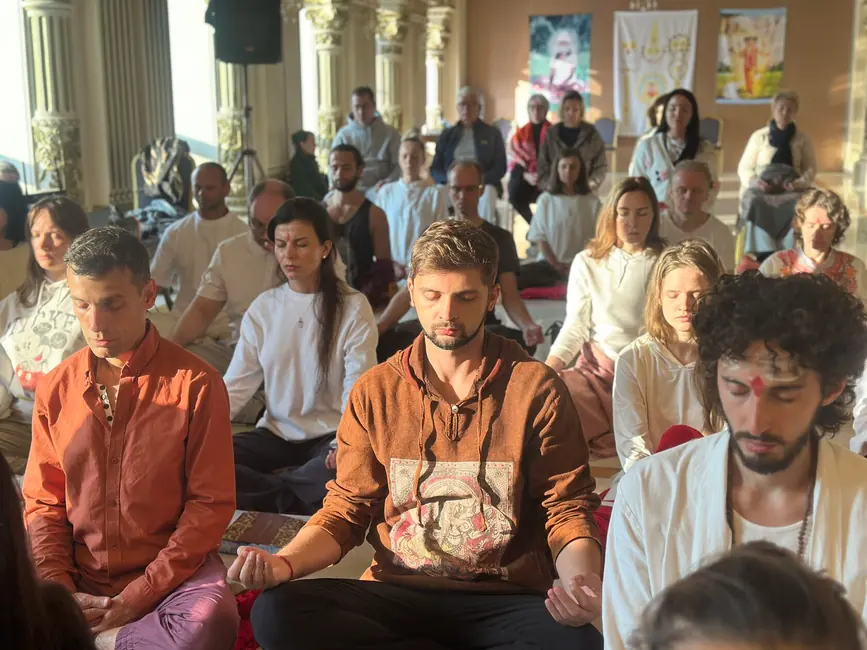
January 24–30 — Seven-Day Retreat
“The Path of Secret Mantra and Tantric Transformation in the Siddha Tradition”
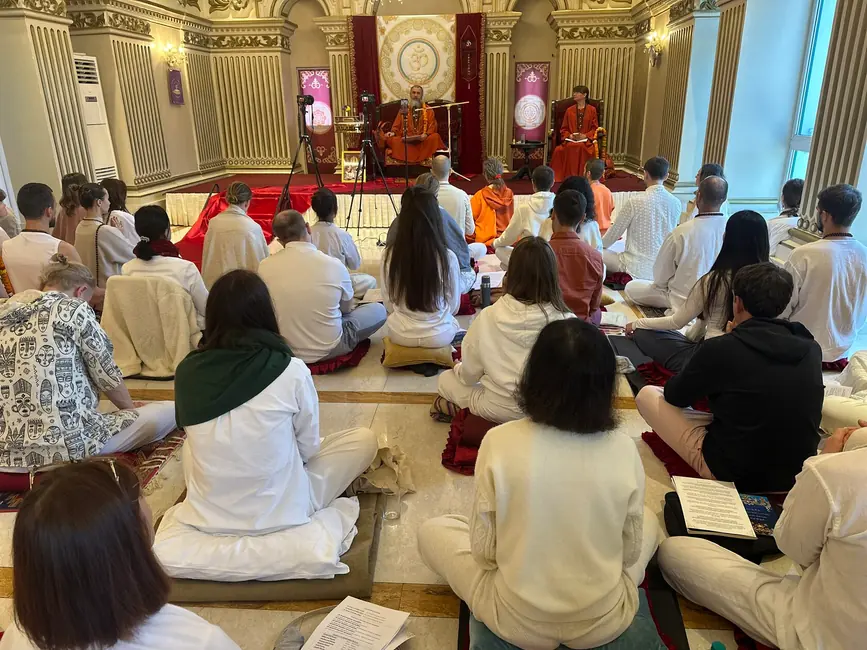
The retreat is conducted under the direct guidance of the Guru and with the support of the community’s monks.
Main areas of practice:
jnana yoga — the path of liberating knowledge;
kundalini yoga — the discipline of working with the vital force and the subtle body;
atma-vichara — inquiry into the nature of the true Self;
meditation and contemplation;
mantra sadhana;
mauna — an established period of silence;
the Guru’s guidance;
study of the principles of practice in the Siddha lineage.
January 29 — Sharanagati Samskara
Sharanagati (Sanskrit: śaraṇāgati) means “taking refuge,” “surrendering oneself to the spiritual path.” Samskara (Sanskrit: saṃskāra) is a consecrating rite that establishes a steadfast spiritual orientation and marks the transition to a new stage of religious life.
Sharanagati samskara expresses the conscious acceptance of spiritual discipline and reverence for the Guru, the Teaching, and the lineage of transmission. It is a responsible decision to follow the established principles of sadhana.
Journey via Pharping to Hetauda
After completing the main part of the retreat, the group will travel to Hetauda, visiting Pharping along the way.
Pharping is located south of Kathmandu and is known as a Hindu and Buddhist pilgrimage site. It is associated with the shrines of Vajrayogini, caves revered in the Tibetan tradition, and the Dakshinkali Temple—one of the renowned Shakti centers of the Kathmandu Valley.
This stage of the program is devoted to carrying deep contemplative practice into the circumstances of travel, communication, and outward activity.
January 30–31 — Sadhu Loka Ashram and Pilgrimage to Trikhandi
The program includes:
a stay at the Sadhu Loka Ashram near Hetauda;
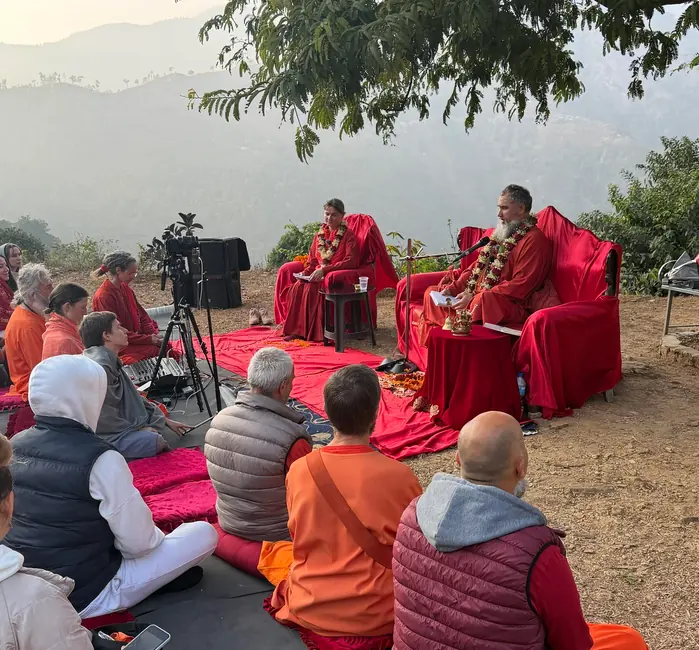
satsang with the Guru;
continued meditation and atma-vichara;
a pilgrimage to a place associated with Mahayogi Pilot Babaji;
a visit to Trikhandi—the place of mahasamadhi of saints of the Northern lineage of transmission of the Teaching, the teachers of Pilot Babaji.
February 1 — Return to Kathmandu and Departure
After the pilgrimage portion concludes, participants will return to Kathmandu and depart by air. The remaining days through February 3 may be used for an individual itinerary, an independent stay, or departure in accordance with purchased tickets.
The practical outcome of the program should be the continuation of atma-vichara, meditation, and mindful discipline in the ordinary circumstances of life. In the yoga tradition, the depth of a retreat is determined not only by experiences during the period of seclusion, but above all by the steadiness of discernment, self-mastery, and inner attentiveness after returning to everyday responsibilities.
Organizational Information
Program dates: January 21–February 3
Country: Nepal
Main locations: Kathmandu, Pharping, Hetauda, Sadhu Loka Ashram, Trikhandi
Format: pilgrimage, seven-day retreat, satsang, and independent practice.
Participants are advised to confirm the following in advance:
the exact meeting time and place in Kathmandu;
accommodation and meal arrangements;
the participation fee;
Nepal’s visa requirements;
medical insurance requirements;
a list of required clothing and personal items;
the conditions for participating in the retreat and sharanagati samskara;
the final departure date and transfer arrangements.
Contacts for Inquiries and Registration
Europe: +39 327 195 3127 Russia: +7 994 425 0090 WhatsApp: +7 916 007 7917
Email: Shrinandini108@gmail.com
We invite followers and practitioners to take part in a program that combines pilgrimage to Nepal’s traditional sacred sites, the Guru’s guidance, and a consistent contemplative discipline.