

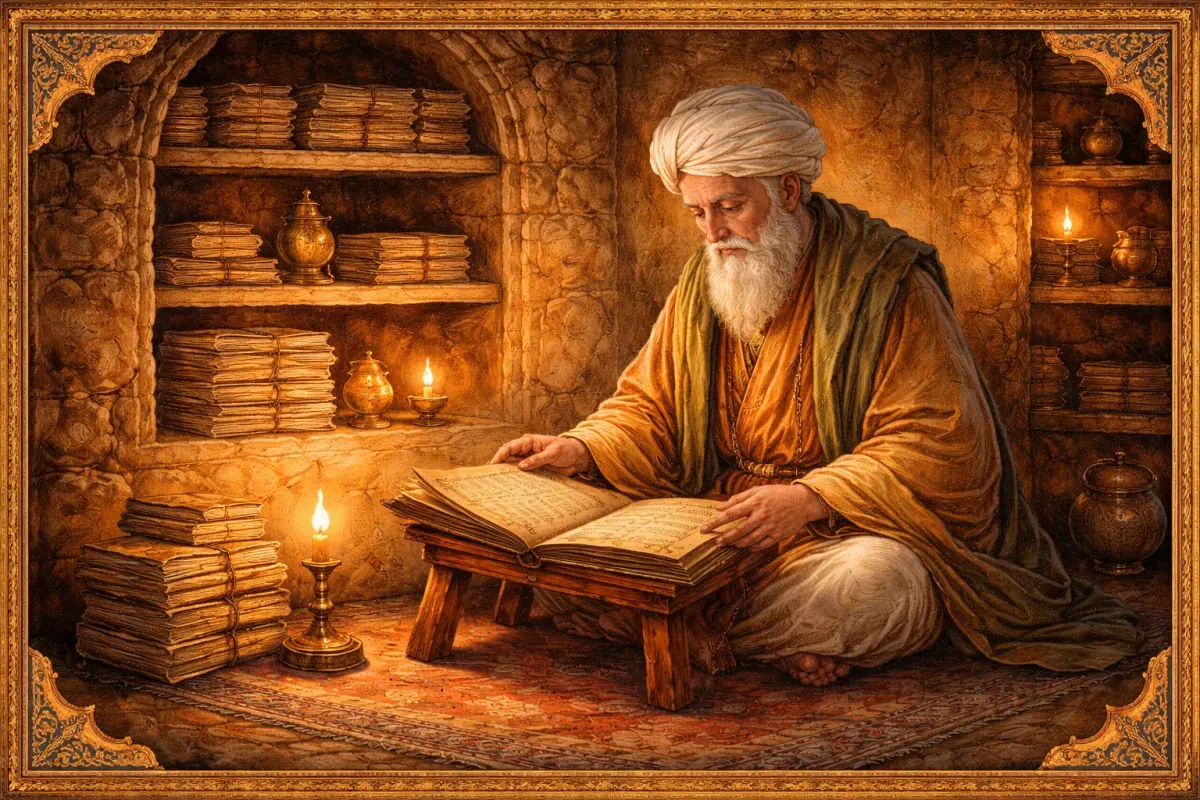
The foundation for forming a correct view is reliance on the Shastras (Sanskrit: śāstra) — canonical texts that possess the status of revelation (Shruti) or tradition (Smriti). The word "Shastra" originates from the root shas (to govern, to instruct) and the suffix tra (instrument), which defines the scriptures as an instrument for disciplining the mind and transforming consciousness.
Entry into the teaching requires a strict hierarchical approach that excludes fragmentarity. Spiritual practice in the traditions of Advaita Vedanta and classical Tantrism (specifically, Kashmiri Shaivism) implies a gradual transition from basic philosophical concepts to the direct experience of non-duality.
According to the principles of succession (parampara), the following order for studying canonical texts is recommended:
1. Vivekachudamani (Sanskrit: Vivekacūḍāmaṇi)
Author: Adi Shankaracharya (c. 8th century AD).
Meaning: "The Crest-Jewel of Discrimination."
A foundational text that lays the groundwork for the philosophy of Advaita Vedanta. It systematizes the concepts of viveka (discrimination between the real and the unreal) and vairagya (dispassion). This is a necessary step for forming the "intellectual purity" of the practitioner.
2. Avadhuta Gita (Sanskrit: Avadhūta Gītā)
Author: Avadhuta Dattatreya.
Meaning: A text expounding the highest stage of non-duality. The word "Avadhuta" indicates one who has "shaken off" all worldly attachments and limitations.
It is studied to form a deep understanding of the nature of the Atman.
3. Ashtavakra Gita (Sanskrit: Aṣṭāvakra Gītā)
Historical context: A dialogue between the sage Ashtavakra and King Janaka.
Meaning: A classical monument of radical Advaita.
The text emphasizes instantaneous liberation through the realization that the individual soul is identical to Brahman.
4. Ribhu Gita (Sanskrit: Ribhu Gītā)
Origin: Part of the Shiva Rahasya Purana.
Meaning: One of the most revered songs of non-duality, which gained special prominence in modern times due to the high esteem of Sri Ramana Maharshi.
The text is aimed at the complete elimination of the concept of duality.
5. Yoga Vasistha (Sanskrit: Yoga Vāsiṣṭha)
Scope and structure: An extensive philosophical treatise presented in the form of instructions from the sage Vasistha to the young Prince Rama.
Meaning: It reveals the concept of Drishti-Srishti-Vada (the world arises simultaneously with perception) and Bimba-Pratibimba-Vada (the concept of the mirror and reflections).
The text is important for understanding the illusoriness of the manifested world and the mechanisms of the mind's functioning.
6. Tripura Rahasya (Sanskrit: Tripura Rahasya)
Author: Avadhuta Dattatreya.
Meaning: "The Mystery Beyond the Three States." Through accessible parables and profound philosophical instructions, the text explains the supreme truth of Divine Consciousness manifesting as the Universe.
7. Pratyabhijnahrdayam (Sanskrit: Pratyabhijñāhṛdayam)
Author: Kshemaraja (11th century AD), school of Kashmiri Shaivism.
Meaning: "The Heart of the Doctrine of Recognition." A concise work of 20 sutras that synthesizes the fundamentals of the metaphysics of recognizing one's Divine nature. It serves as a transition from classical Vedanta to the mystical theology of Tantra.
8. Tantrasara (Sanskrit: Tantrasāra)
Author: Abhinavagupta (10th–11th centuries AD).
Meaning: "The Essence of Tantra." A brief summary of the monumental work "Tantraloka." The text is intended for those beginning the practical mastery of methods of mindfulness and ritual within the Trika tradition.
Clarification and Order of Application
Sacred texts are not objects for superficial reading. Tradition prescribes three stages of working with a text:
- Shravana (listening/reading): becoming acquainted with the authoritative word.
- Manana (reflection): deep contemplation of what has been read, eliminating doubts.
- Nididhyasana (contemplation): integrating knowledge into everyday experience.
Recommended trajectory: Entry into the teaching begins with "Vivekachudamani", which builds the ethical and conceptual foundation. Subsequent study of the Gitas (Avadhuta, Ashtavakra, Ribhu) strengthens the non-dual view. The final stage is the transition to texts of a high level of realization — "Pratyabhijnahrdayam" and "Tantrasara", which reveal the dynamic aspect of consciousness.
Adherence to this order allows the seeker to form a "diamond core" of the correct view, protecting them from incorrect interpretations and spiritual delusions. The study of these Shastras is a mandatory requirement for full participation in the life of the Community and advancement on the path of self-realization.
