

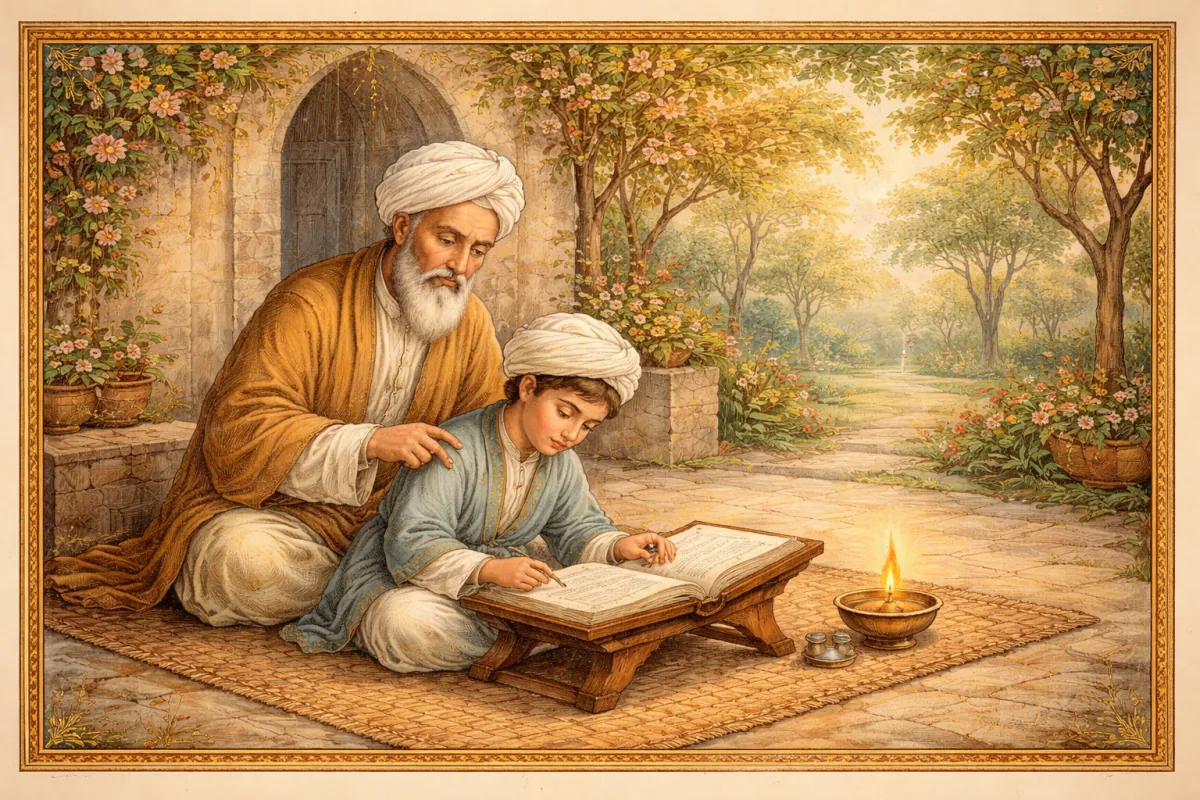
Paroksha-jnana is mediated or indirect knowledge obtained through traditional sources of knowledge, such as sacred texts or a teacher's instructions. It is an intellectual understanding that, although valuable, is considered a preparatory stage for the direct experience of Truth.
Etymology
The term "paroksha-jnana" consists of two Sanskrit words: "paroksha" (parokṣa) and "jnana" (jñāna). "Paroksha" is derived from "para" (para, other, external) and "aksha" (akṣa, eye, organ of perception), literally meaning "beyond direct perception" or "invisible to the eye." "Jnana" means "knowledge" or "wisdom." Thus, paroksha-jnana means "knowledge that is not directly perceived," that is, indirect or mediated knowledge.
Philosophical Significance
In Advaita Vedanta philosophy, the concept of mediated knowledge plays an important role in the process of spiritual cognition. This is knowledge obtained through traditional means of knowledge (pramana), including sacred texts (shastra), logical reasoning, and the instructions of a teacher (Guru. Edits).
Paroksha-jnana refers to a theoretical or intellectual understanding of the truth about Brahman and Atman that has not yet become a direct experience. It is "second-hand" knowledge or knowledge "about something," rather than direct knowledge "of something."
In the context of the spiritual path, paroksha-jnana is considered a necessary but insufficient stage for attaining liberation (moksha). It helps eliminate gross forms of ignorance (avidya), forms a correct understanding, and prepares the mind for the direct experience of truth.
Advaita recognizes that initially all knowledge of the supreme reality comes as paroksha-jnana. When a disciple (shishya) first hears great sayings (mahavakyas) such as "Tat Tvam Asi" ("You Are That," the Mahavakya Tat Tvam Asi), they receive paroksha-jnana—an intellectual understanding of the unity of individual consciousness and supreme consciousness. However, this is only theoretical knowledge that requires further transformation through practice.
The key distinction between paroksha-jnana and direct knowledge can be illustrated by the example of honey: reading about the taste of honey or hearing it described is paroksha-jnana; directly tasting honey on the tongue is aparoksha-jnana.
Advaita emphasizes that although paroksha-jnana is important, it does not lead directly to liberation. To realize the truth, one must progress from indirect knowledge to direct knowledge, which occurs through deepening one's practice after acquiring theoretical knowledge.
In the Advaita tradition, Shankaracharya and his followers developed a process for transforming paroksha-jnana into aparoksha-jnana through the method of shravana-manana-nididhyasana (listening, reflection, and deep meditation).
Practical Application
In practical terms, paroksha-jnana is realized through the first two stages of traditional Advaita practice:
shravana (listening to the teaching);
manana (reflection on what has been heard).
During shravana, the disciple receives paroksha-jnana through studying sacred texts and receiving the teacher's instructions. This stage focuses on the careful study of shruti (revelations), especially the Upanishads, as well as the explanations given by a teacher of the Advaita tradition.
At the stage of manana, the disciple reflects deeply on the knowledge received and removes doubts and obstacles through logical analysis. This strengthens paroksha-jnana and makes it clearer and more stable.
Only after these two stages, when paroksha-jnana has been thoroughly assimilated, does the practitioner proceed to nididhyasana —deep meditation intended to transform mediated knowledge into direct experience.
It is important to note that paroksha-jnana helps establish a correct worldview and avoid errors in understanding nondual reality. It serves as essential preparation and guides practice, but it should not become the ultimate goal.
In the Texts
The concept of paroksha-jnana is discussed in many key texts of Advaita Vedanta:
The Brihadaranyaka Upanishad (1.4.10) discusses how Brahman is first known through scriptures and instruction.
The Brahma Sutras (1.1.2) and Shankara's commentaries on them explain the role of the scriptures as a source of indirect knowledge of Brahman.
In Vivekachudamani (verses 56–59), Shankara explains the difference between knowledge acquired from books and realization.
In Upadesha Sahasri, Shankara describes in detail how paroksha jnana should be transformed into aparoksha jnana.
See also:
Direct Knowledge
Three Stages of Cognition
Sources of Knowledge
Ignorance
Higher Knowledge
Scriptural Testimony
True Knowledge
Categories:
Epistemology
Methods of Practice (Sadhana)
Philosophical Categories and Methodology
