

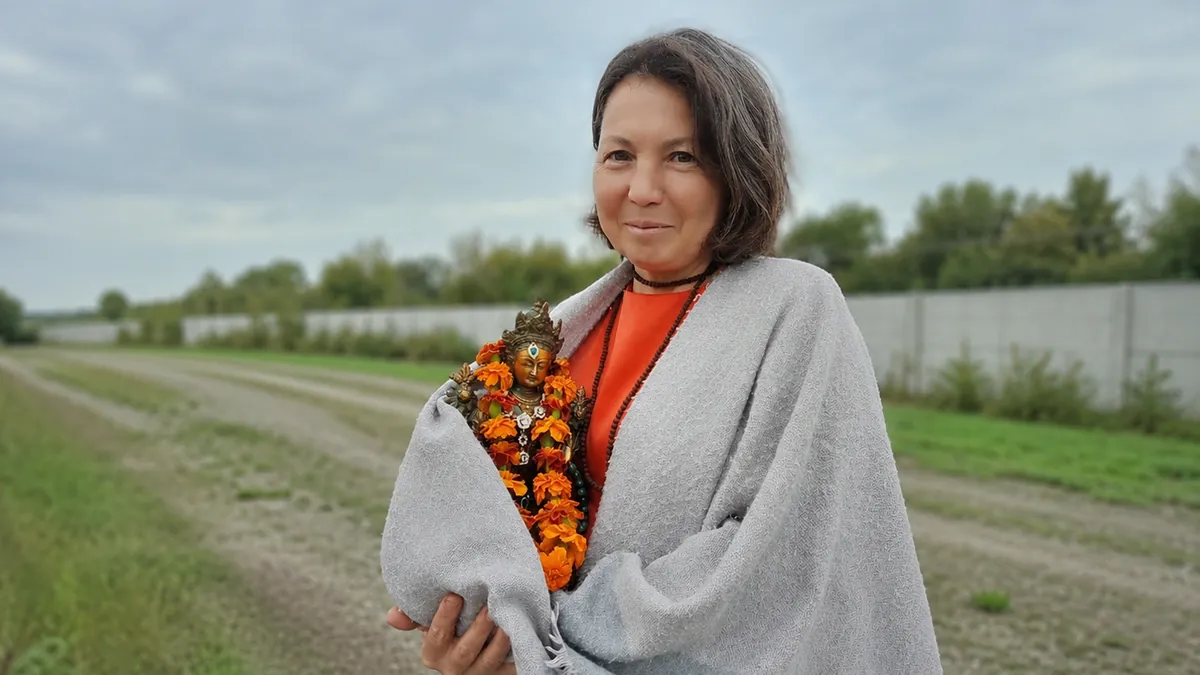
2012 Interview
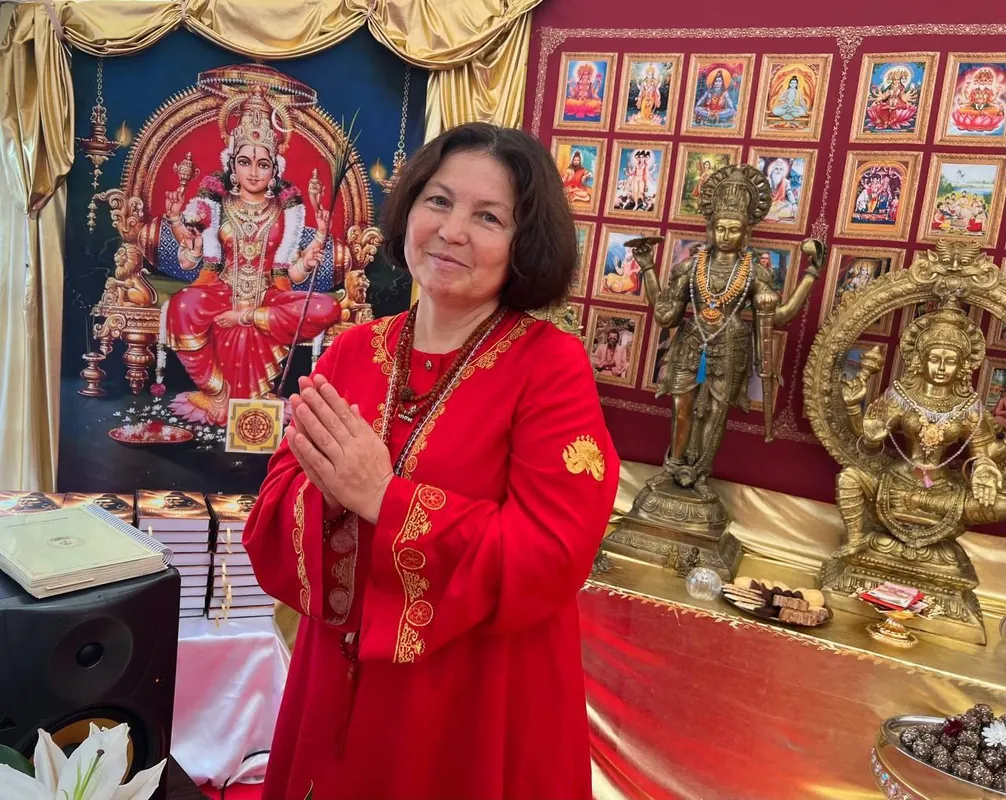
Mahant Swamini Satya Tejasi Giri has been a member of the sangha since 1997 and a monastic since 1998. She is a member of the Monastic Council, head of the Aruppadai movement of volunteer servants of the Universal Forces of Enlightenment of the Laya Yoga World Community, and chair of the Organizing Committee for Advaita Vedanta Congresses and Forums.
The Beginning of the Path
V.R.: Please tell us how your spiritual quest began.
Satya Tejasi: I think people who choose the monastic path have already had the experience of spiritual seeking in the past. Therefore, it did not begin for me in this lifetime. Our life is not limited to this birth on Earth; we have already had many different bodies countless times in the infinite worlds of the universe. According to Vedic teachings, the soul is immortal. The soul reincarnates in a physical body, entering one world and then another according to its karma.
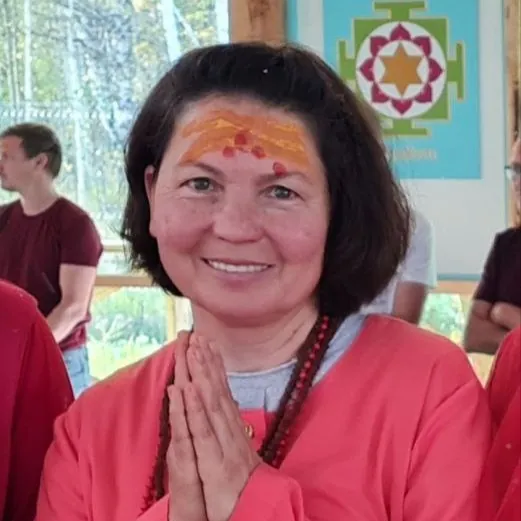
Samsara is what this world is called: the endless cycle of birth and death, a “vicious infinity,” a semantic trap, a realm of distorted meanings—many epithets have been given to it. Do we gain experience in it, learn new lessons, or is it merely a succession of accumulated causes that shape our destiny?
One day, we begin to understand that the law of evolution, the law of spiritual growth and the evolution of consciousness, operates in the universe; sooner or later, it becomes evident to us.
This law is Absolute, and it prompts us to begin our spiritual quest. For me, the questions—why do I live, what is the meaning of my life, is there truly nothing sacred or mystical in life, nothing worth living for?—have never been trivial.
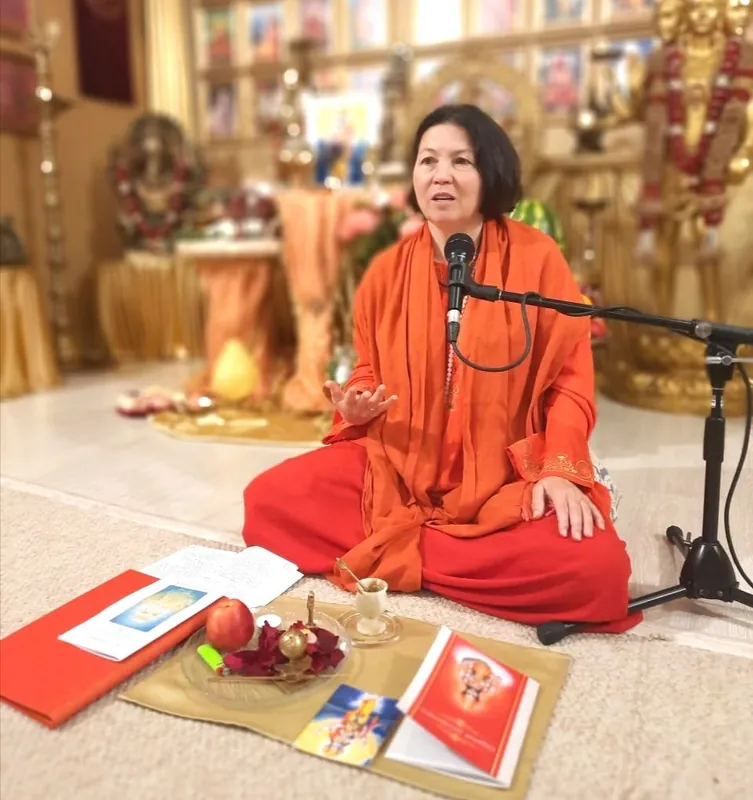
I think everyone asks themselves these questions at some stage of life. The search begins with them, but it becomes truly spiritual when none of the answers offered by this materialistic world can satisfy you. When you feel that you need to seek the spiritual world, that it is part of this world and even more than that—it is its foundation, its subtle foundation—and that without it, the world becomes merely mundane reality and life in it is boring. This is because the soul is nourished by the spiritual world; it cannot live on material values alone. The material world provides a great deal of comfort and benefits for the physical body, but we are not only the body. There is also a soul within us.
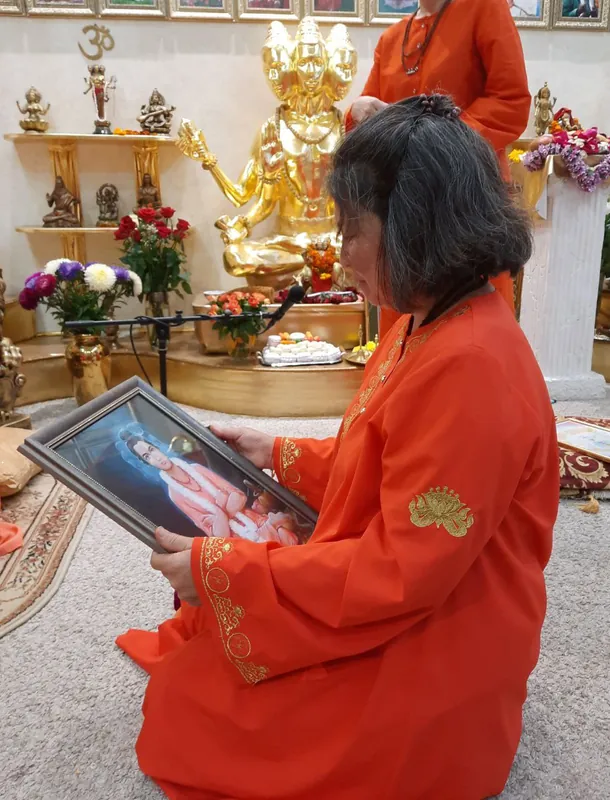
Faith and the Choice of Monasticism
V.R.: What played the main role in your acceptance of the Creed, and what later inspired you to become a nun at the “Assembly of Mysteries” Yoga Monastery-Academy?
Satya Tejasi: If by the “Creed” you mean the text written by Guruji, it appeared much later than when I became a nun. In this text, Guruji expressed the meaning of our Faith, our convictions, and the practices of the path of Advaita and Laya Yoga.
This is what we live for, what constitutes the very breath of our life, our meaning, and our destiny.
Of course, no spiritual practice is possible without faith. After all, the spiritual world is not something your physical eyes can see, something our five senses can perceive, or something scientific instruments can investigate.
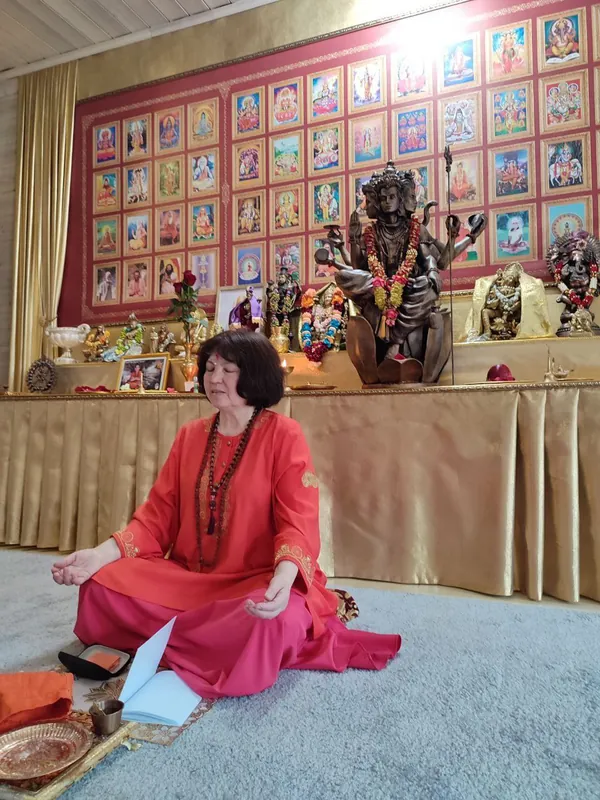
No one can say how faith is born. Where does it come from? Perhaps it is Grace, the blessing of saints and of your Guru; it is a gift we receive when we sincerely open ourselves to something greater than us. Therefore, I accepted the Creed consciously, as an initiation, as a blessing. But my faith had appeared earlier. It prompted me to follow the spiritual path, the monastic path. It was weak, to some extent unconscious, like a piece of intuitive knowledge that this was what I had to do; but it grows stronger within me as I progress spiritually, and I am glad of that.
The Sangha as a Spiritual Family
V.R.: What does the monastic sangha mean to you?
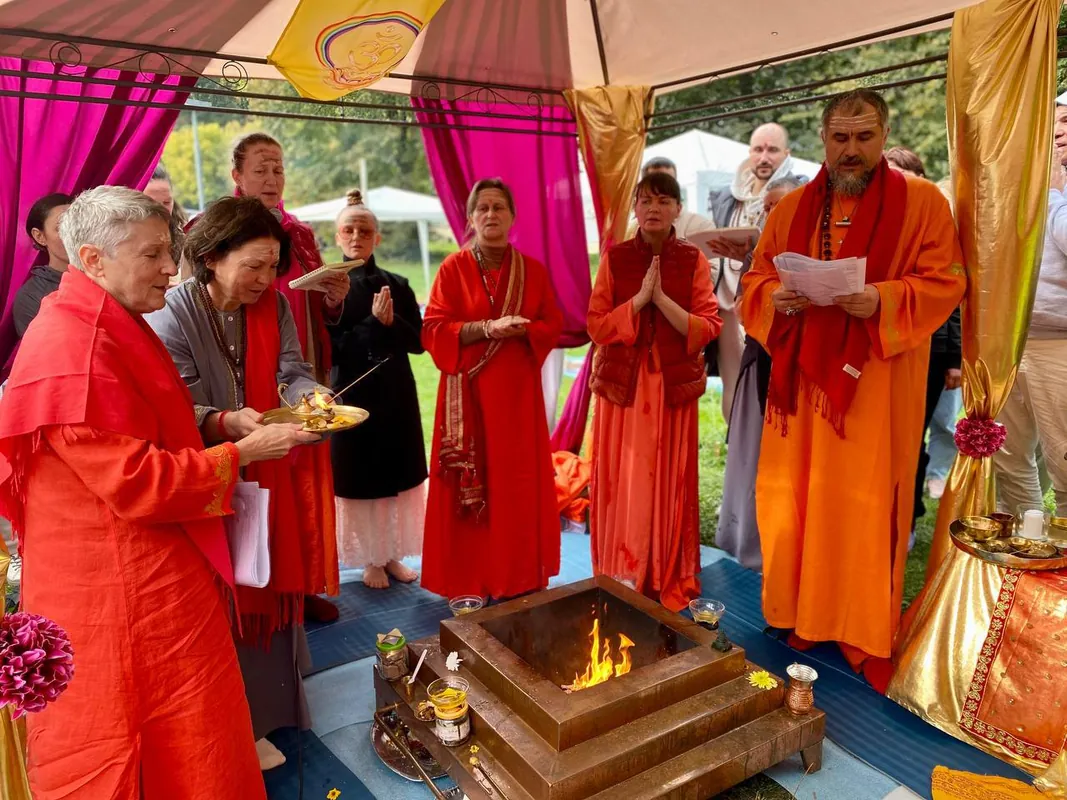
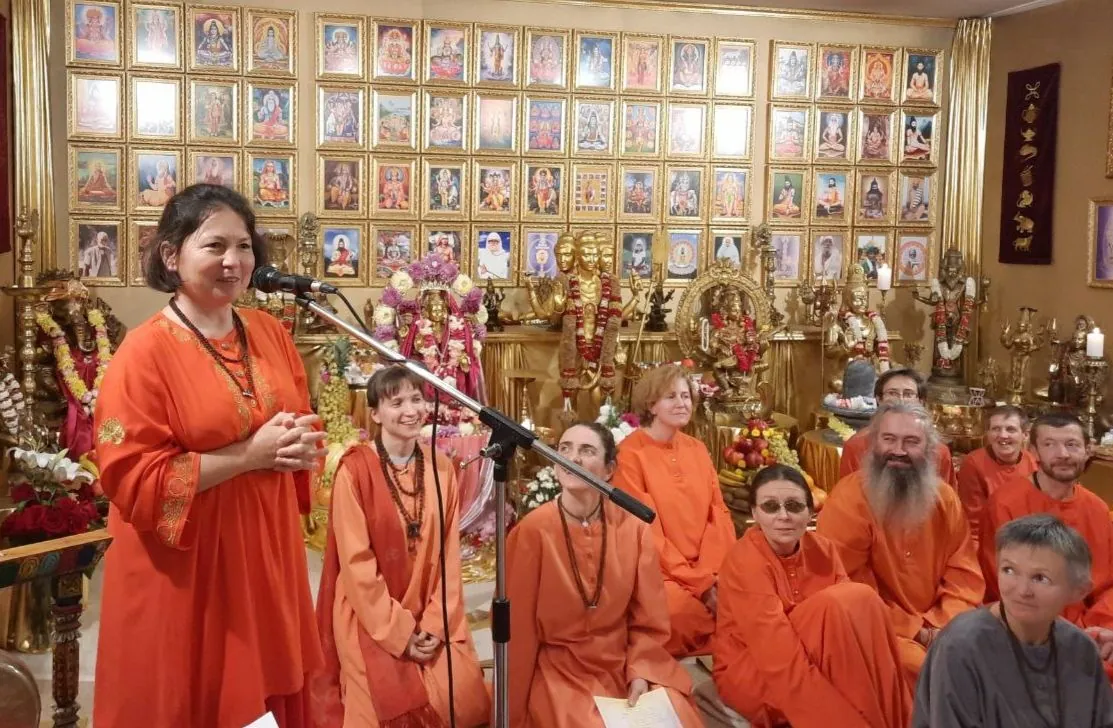
Satya Tejasi: In our tradition, it is called the Third Jewel. Everyone values something in life, gives preference to something, and makes something the purpose of their life. For a sadhu, these are the Guru, the Dharma, and the sangha. The sangha is a spiritual family. These are people who share the same views and values as you, and who, just like you, strive to accomplish certain goals and objectives. These are kindred spirits. They are closer than relatives. Spiritual kinship is incomparable to any relationship in the human world. You can understand this only when you find such a family. It is also a space, a community in which you can pursue your spiritual quest and develop spiritually.
A human being is a social being and cannot live in a vacuum. A person always belongs to something greater—a society, a family, a people. This determines their self-identity. And the higher the level of that space—the idea and meanings that brought it into existence—the higher a person's self-determination. I can say that, for me, the sangha is my life.
Service: The Masculine and Feminine Principles
V.R.: Are there any differences between the spiritual life and service of a male monk in a monastery and those of a female monastic?
What is the role of a female monastic in the development of the monastery and the dissemination of the teachings of Advaita?
Satya Tejasi: Woman and man are categories of the human dimension. One must understand that other worlds exist; they operate according to different laws and may differ greatly from our conceptions. They may be inhabited by beings whom you would be unable to define as a woman or a man, or by any other concepts belonging to this reality.
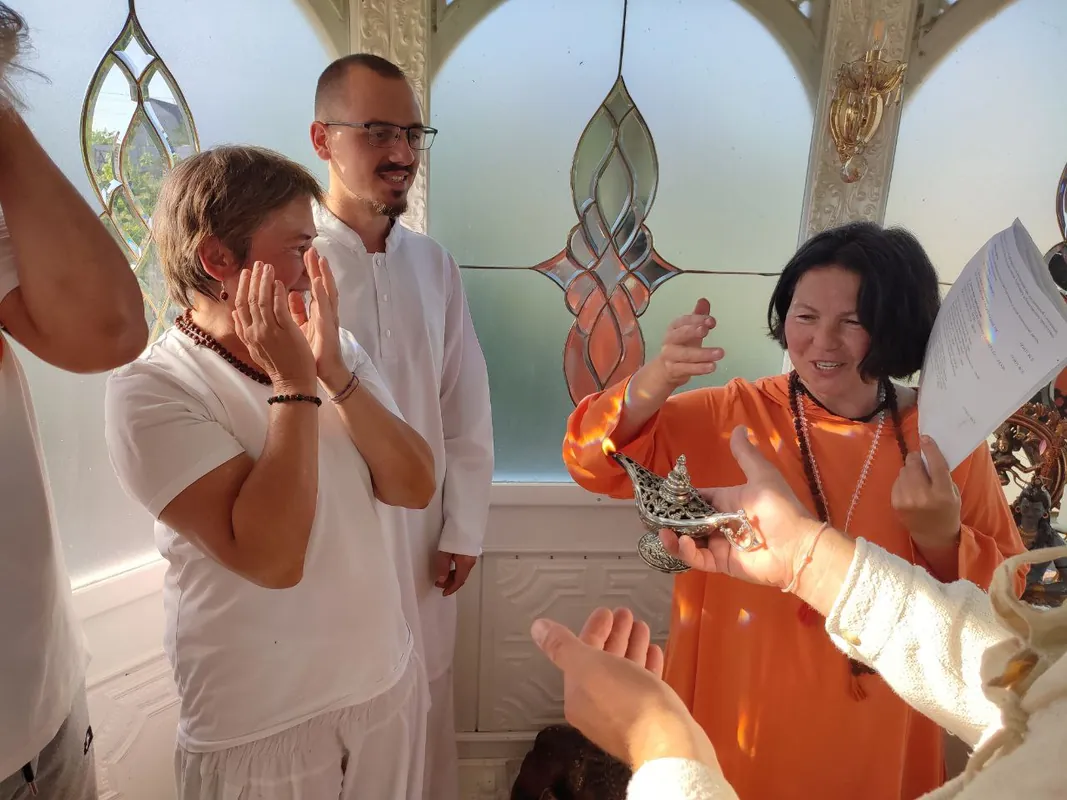
A sadhu is a universal being. A sadhu strives to penetrate the diversity of the universe and comprehend the nature of reality. The nature of reality is the same in women and men. It is the nature of consciousness.
A sadhu seeks the Truth, the foundation of everything, and seeks it within their own mind. They comprehend reality by exploring the depths of their consciousness. Therefore, there is no essential difference. Spiritual life is the comprehension of reality as it truly is.
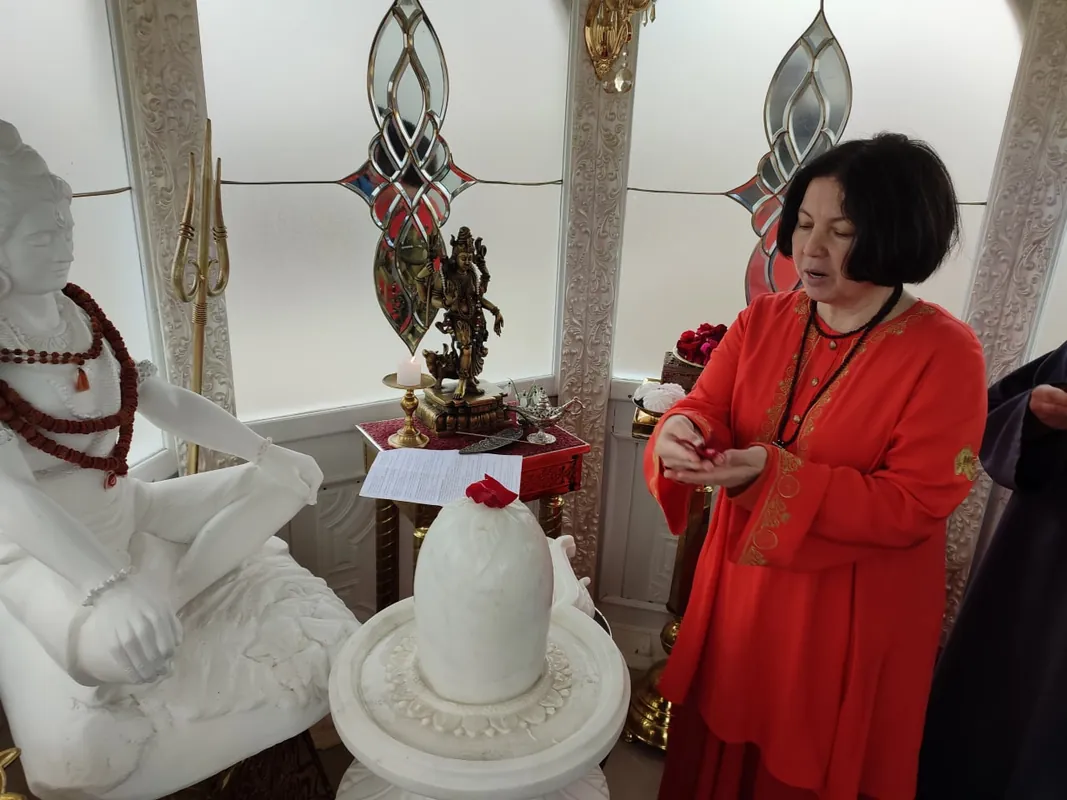
Service is the opening of individual consciousness to the Supreme Source, the Higher Self, the Absolute, through selfless motivation. How we do this is secondary. It is important to understand the principle. The principle works for both men and women. All of these are conventions, a way of seeing this world. But if we speak of the human world, then in the relative world both men and women possess certain qualities that can help them in their practice. I would say that a female monastic does not have any particular special role.
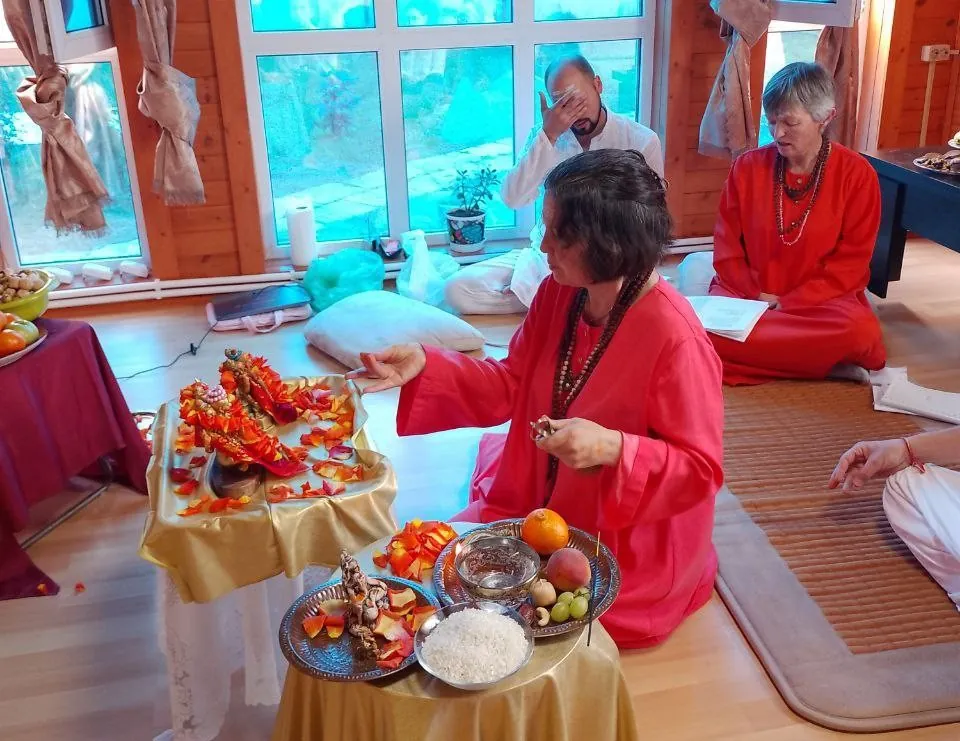
We all have one role—by changing ourselves for the better, we change the world for the better. We all need to begin with ourselves. The more spiritual people there are in the world, the more beautiful and happier the world will become. That is why we must spread the Dharma. We must develop monasteries. People must acquire the right goals in life and have spiritual authorities to look up to.
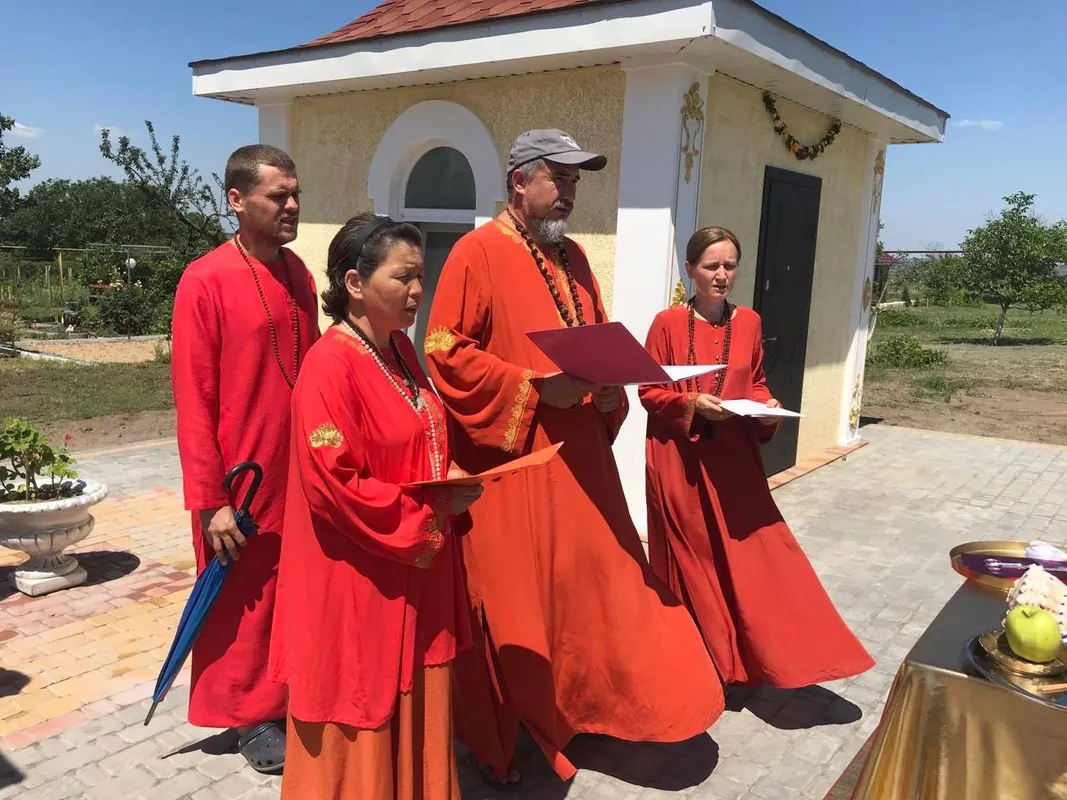
V.R.: What qualities should a female monastic possess in order to advance along the path of spiritual perfection?
Satya Tejasi: These are the qualities of a sadhu. After all, one who has embarked on the spiritual path is a sadhu, someone who has made spiritual perfection the purpose of their life. These qualities were described by the great Shankara in the text “Vivekachudamani.” They are also the qualities emphasized by many saints from various spiritual traditions: devotion, love, trust, kindness, openness, mercy, patience, diligence, fearlessness, the aspiration to comprehend the Truth, compassion, modesty, harmony, flexibility, pure vision…
The Goal of Practice and the Future of Humanity
V.R.: Does spiritual practice have an ultimate goal for you?
Satya Tejasi: Guruji says that everything in this universe has the nature of an infinite beginning, so I believe that the process of spiritual perfection is endless. But I would like to point out that this process is so blissful and enchanting for the soul that if it truly is endless, then I am infinitely happy to follow it. Believe me, this is the true happiness we are all seeking so earnestly.
V.R.: What do you think our world will be like in 20 years? Will humanity undergo spiritual and moral renewal?
Satya Tejasi: Yes, I believe it will. This is my Guru’s sankalpa, and I believe in it completely because I know the power of my Teacher’s sankalpas. It gives me strength and nourishes my faith. But this applies only to a disciple. There is no single predetermined world. The world is created by the power of our consciousness. Whatever world you believe in is the world you will live in. Whatever you believe yourselves to be is what you will become.
The blessings of teachers occur when, through devotion, faith, and openness, a disciple can enter the reality in which their Master lives. Therefore, I believe in the spiritual reality of the world.
I believe that many people will awaken to true faith. I believe that our people will find their great dream—an exalted, cosmic dream—and strive to make it a reality. I believe that the predictions of Vanga, Edgar Cayce, and others will come true. And we are making every effort to ensure that this happens.
V.R.: Thank you very much for the interview.
