

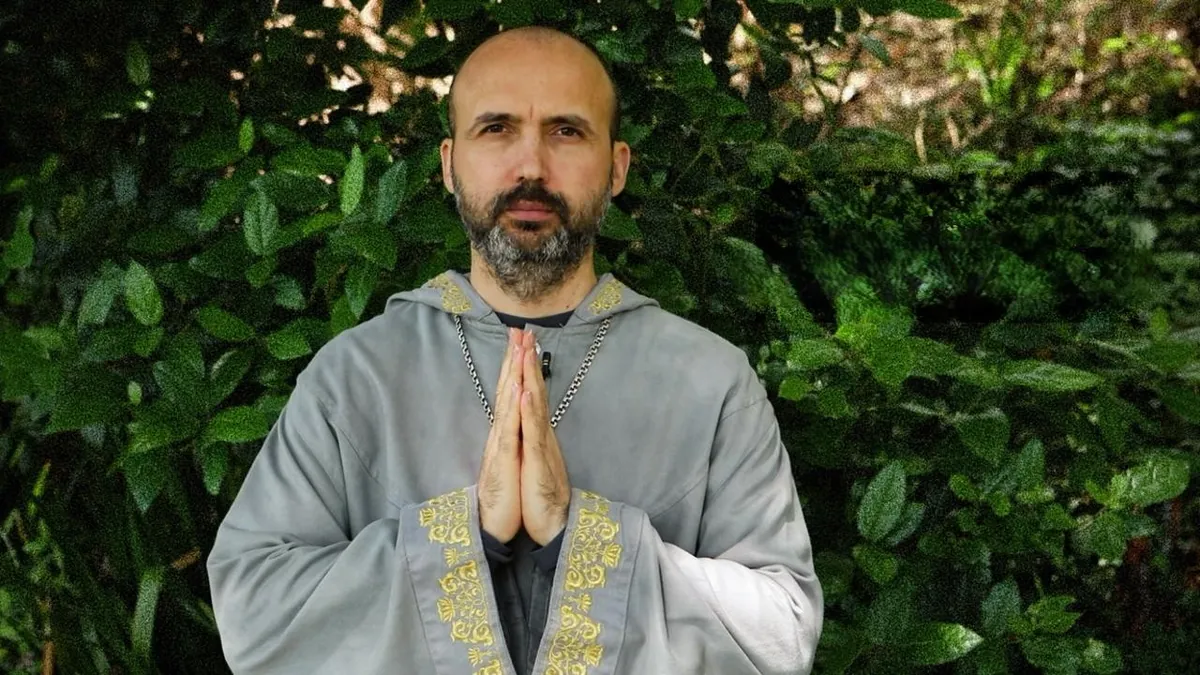
An interview about spiritual practices and service to God. Spiritual endeavor and the monastic path as the only direct path to union with God.
How I Became a Monk
Please tell us how you became a monk. Is it easy to be one in our time? Are there any difficulties, and how do they manifest themselves?
Frankly speaking, in my youth I wanted to become a successful person. A believer in God. When I was about 20, I met several monks who followed Hinduism, and later several who followed Buddhism. They were Ukrainians and Russians. Slavs just like me. During those periods, an inner transformation took place within me.
It was as though I recalled profound meanings, as though I recognized my karmic task—the path of a sadhu, monasticism, asceticism. In 2003, circumstances unfolded in such a way that my worldly channels of communication, work, and friendships began to close down, and I realized that the direction of my life was changing in the way my soul desired.
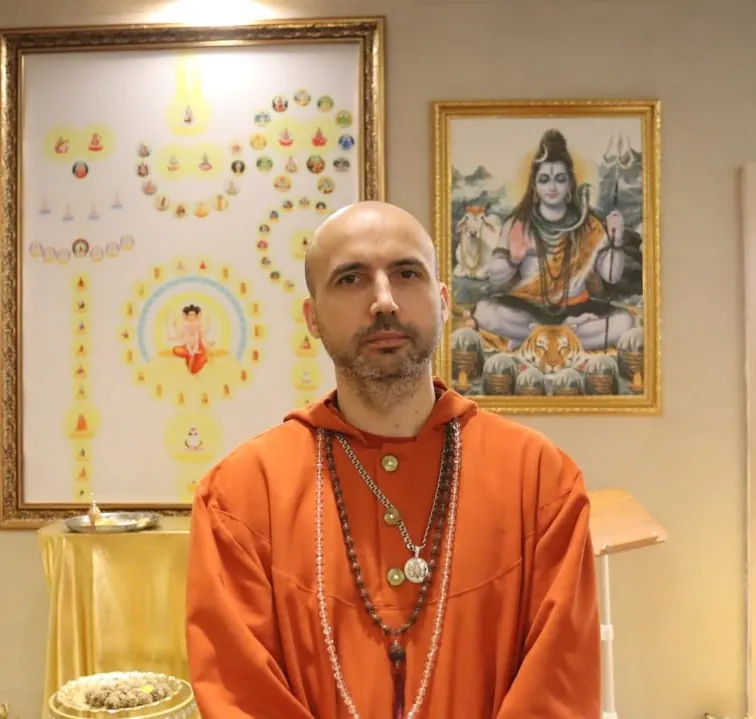
In December 2003, I arrived at the monastery. “Forever.” I did everything possible to burn all my bridges. I told everyone, “Farewell,” “Never expect me to return,” “I am dead to society.” That was what I wanted. It was only nine years later that I visited my homeland. Out of compassion for my parents. With such a firm resolve to follow the monastic path, it is “easiest of all.”
For spiritual duty is higher than duty to one’s family lineage. If you fulfill your spiritual duty, your family duty is nourished by that merit.
There are always difficulties in monasticism. And there probably always will be. After all, monasticism is merely a social status. But being is above all human conventions. Perhaps when I am able to live in complete harmony with being, all difficulties will disappear. Life will become a game rather than a hardship.
The Mission and Benefits of Monasticism for Society
What kind of service do you engage in, and what do you see as your mission?
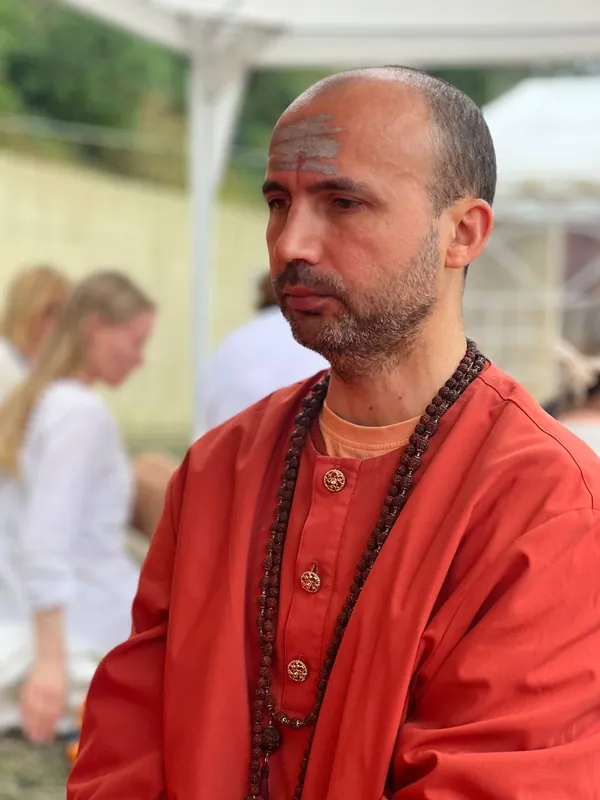
I see my mission as recognizing my karmic task, or tasks. If I succeed in doing so, then I will be able to help others do the same—fulfill their life tasks. Sometimes I hear spiritual seekers say that they do not see their purpose, that they lack creative enthusiasm and a sense of meaning in life. But deep down, that is not true. Everyone’s life has meaning. It is important to discern it with great sensitivity.
What benefit does monasticism, regardless of spiritual denomination, bring to society as a whole?
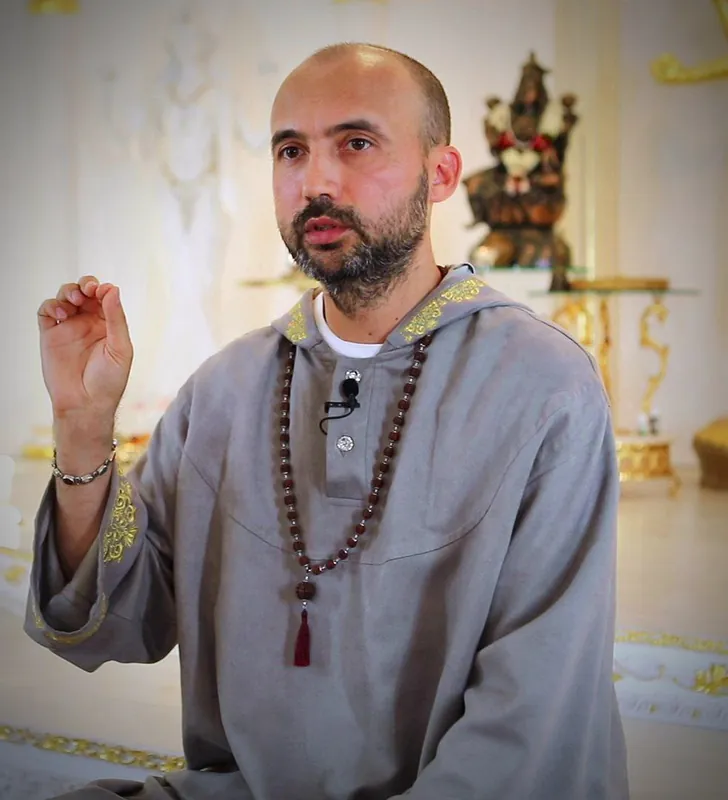
I would answer this question on a personal level. I had a social circle, a circle of friends who were spiritual seekers. For a long time, I felt that this field lacked “breakthroughs,” lacked merit. I felt that by choosing monasticism, I would reveal subtle contours in the consciousness of the people who knew me.
That is, even if only to a small extent, I would become a beacon, a guide into the Spirit.
Retreat: One-on-One with Yourself
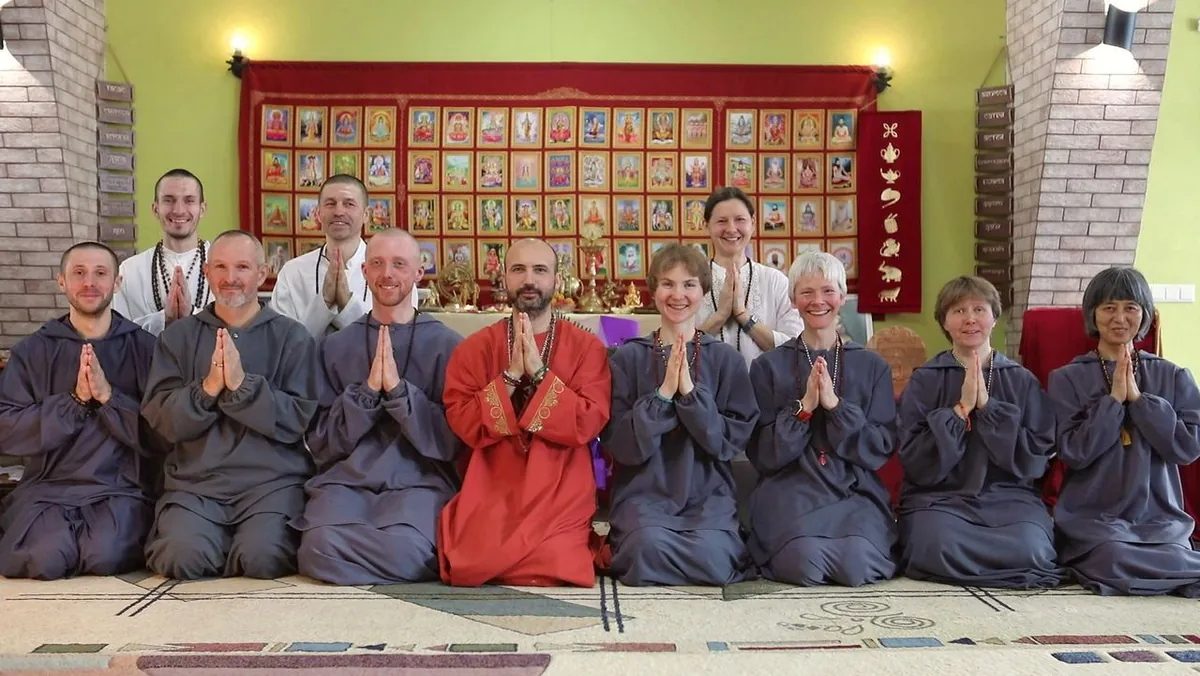
You recently emerged from a retreat. Please tell us what a retreat is, what kind of practice it is, and what it is needed for. How long did your retreat last?
I undertook my first solitary retreat in 2001. It lasted one month. It was a serious challenge to my karma. I entered it with determination and entirely of my own free will. What is it like to be alone with yourself and no one else, from morning until evening, day after day, entirely voluntarily, with austere and simple food, simply remaining in the state of asking, “Who am I?”
Did I find the answer... and will I find it? Will I continue searching? Why not? And what if I do not find the answer?..
It is not so important. After that first period of seclusion, there were many, many other retreats—from three days to three months and longer. Solitary and group retreats.
Does it ever become easy to practice during a retreat? Yes, for a few minutes or hours. And then the karmas return. They come subtly, descending from the causal body to the astral body, from the astral to the etheric and physical. Such cycles alternate. I have noticed that they last from 5 to 15 days. In other words, things are never only good or only gloomy. There is always a shift between polarities.
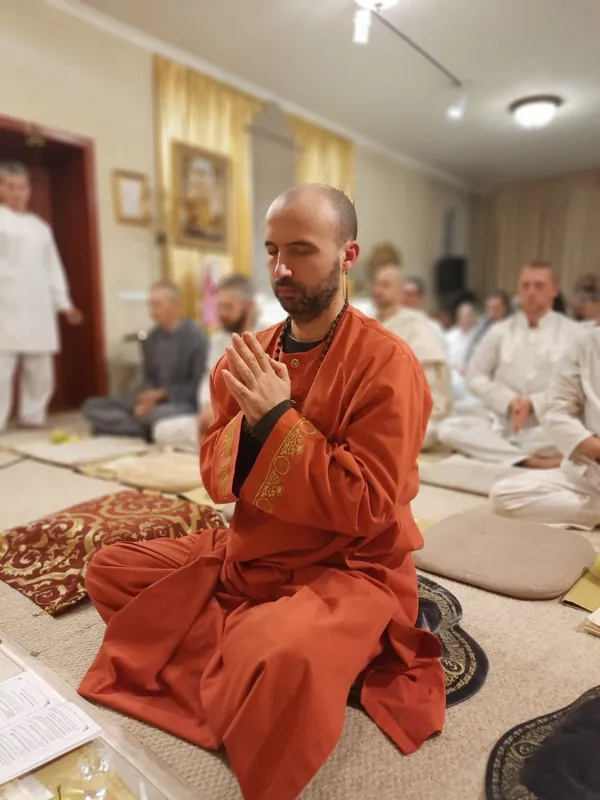
I came to terms with the rhythmic nature of things long ago. Although I once dreamed of a steady “takeoff” and a lofty “flight.” Alas. Existence is not so primitive, not so linear, not so predictable.
Only one strategy for life remains: to live in presence, here and now, in everyday life, in retreat, always. With God.
Choice, Destiny, and Karma
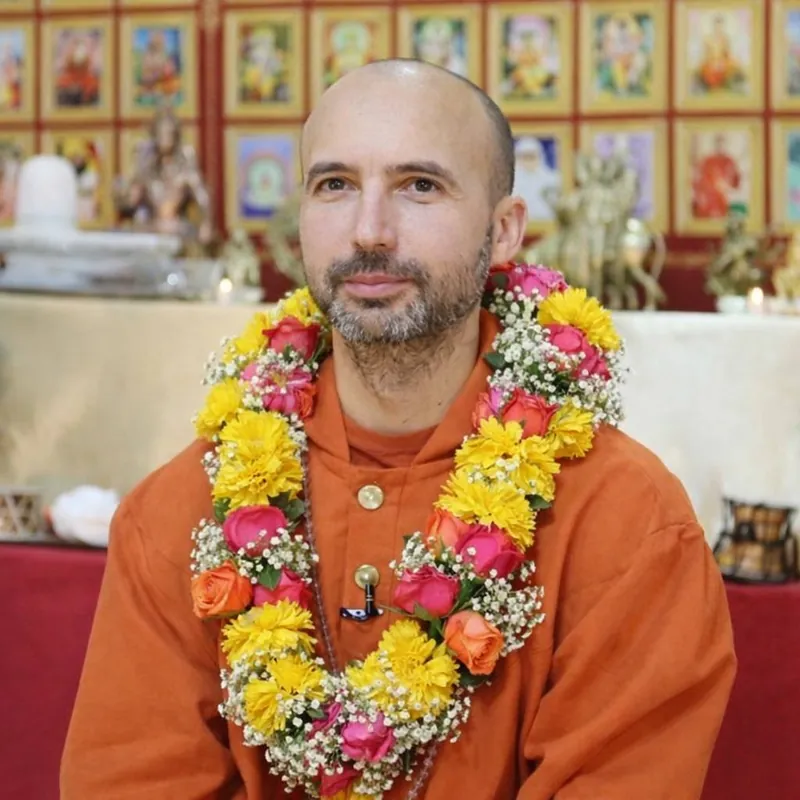
Are you satisfied with your life and your choice? Serving God for the benefit of all is a spiritual feat. As a rule, monks are not envied—what do you ultimately hope to gain from monasticism?
Am I satisfied with my choice? My soul is satisfied with this choice. When I came to the Teacher and asked to be accepted into the monastic community, he asked whether I was ready to make such a choice. I replied, “There is no other path, after all.” He nodded in agreement and said, “Yes—there is no other path.” (Implying that the monastic path is the only direct path to union with God).
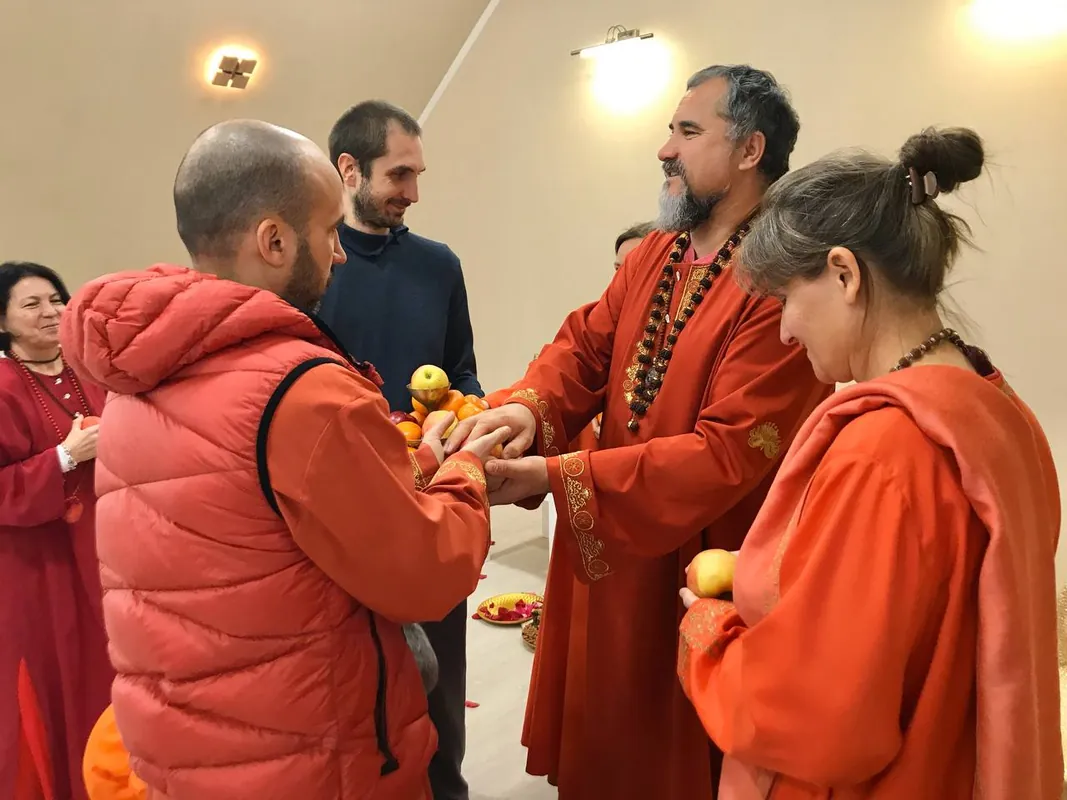
Naturally, being a monk is a matter of destiny, a calling. Not everyone needs it. Each person has their own calling, their own destiny. It is pointless to force things and move out of rhythm with your destiny.
Only from the outside can monasticism seem like an occupation undertaken “for the sake of something.” It is a way of life. It is simply different. There are hippies, punks, gays, lesbians, communists, social democrats, ordinary people, sadhus, and jnanis. Different classes of beings, different Universes, different systems of meaning, different systems of values and goals.
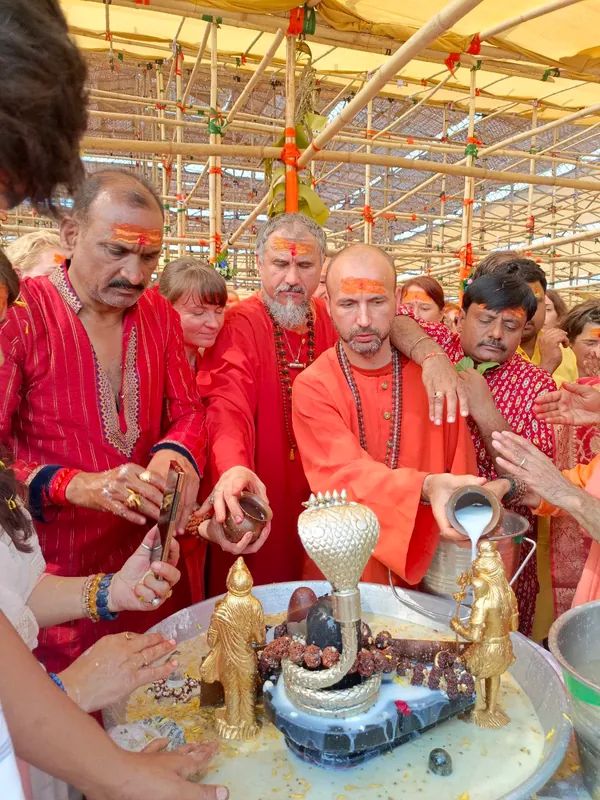
But all classes of beings should coexist peacefully and help one another, presumably, or look to those who are wiser? After all, we are all different, but we are all connected, and there is only one path, as you yourself said—there is no other. It is simply shorter for some and longer for others?
We are all part of a vast, wondrous organism—the Universe. We are strung upon the threads of time and space. We live out our destinies in accordance with our choices. In principle, it is difficult even to determine which path is longer or shorter. In relation to the Absolute, all paths are the same. No one is faster, no one is slower. As in a Sufi story.
A man was walking through the desert. He found a jug. He opened it. A genie flew out and said:
— Make a wish, my savior!
The man was delighted and said:
— I want to get to the nearest city because I am very hungry and thirsty.
— It shall be done! — replied the genie, took him by the hand, and they set off on foot. The man became anxious and exclaimed:
— Hey, perhaps you did not understand? I want to get there quickly!
— Ah, — replied the genie, — then let us run!
That is what we are like. Both ordinary people and sadhus.
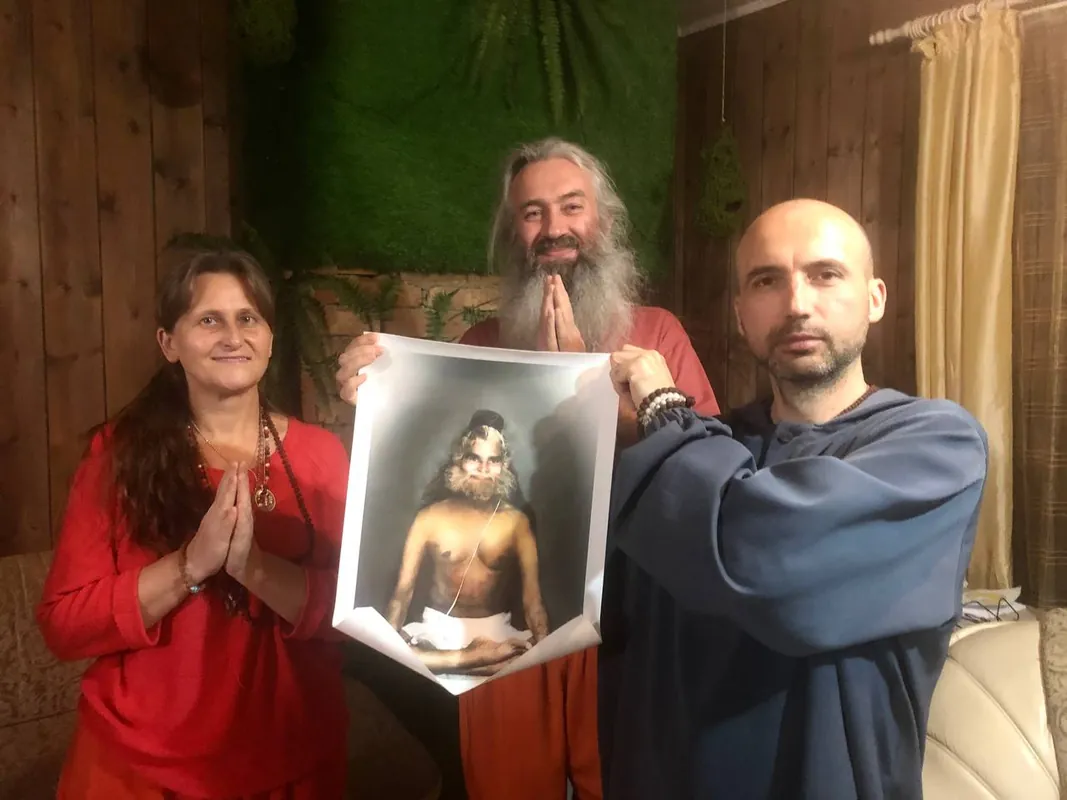
Literally different classes of living beings :), even though we breathe the same air.
Within the confines of your karma, all you can do is run. But you cannot escape it. How well put! But karma can be improved, changed, can it not?
Yes, that is what is called “running.” Masters are also subject to karma. They can escape only by leaving this world. But that is not the goal. For a master, it is not a problem. It is the field of their play. They improve their karma too. But for them, it is like a game. We improve our karma too. But for us, it is karma)
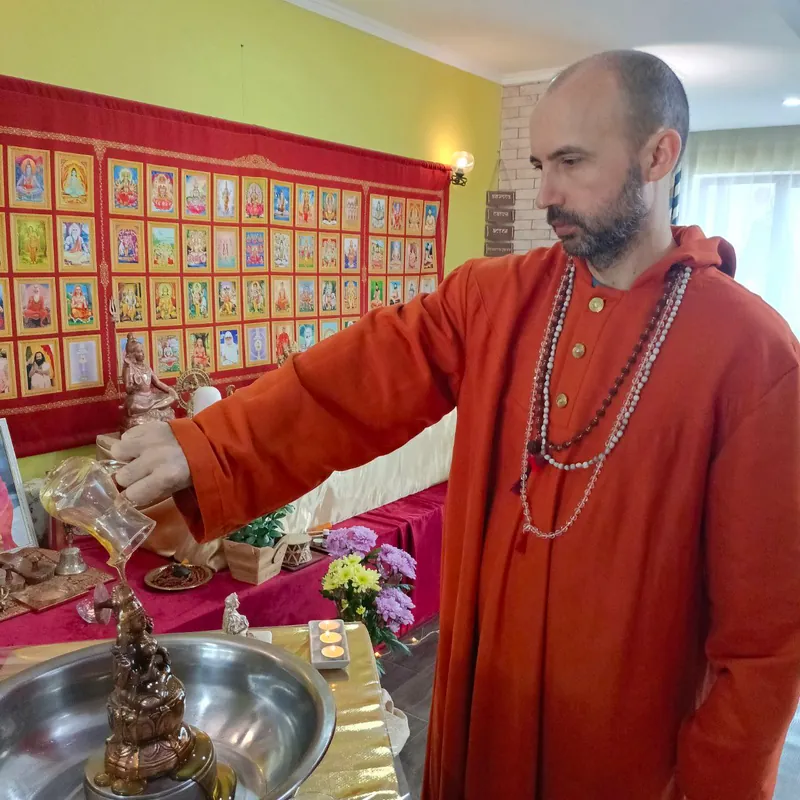
So monks are constantly running a race, a marathon? I suppose every monk dreams of becoming a master so they can play?
Yes, monks are running something of a marathon. Some drop out along the way. Some get injured. Some switch from running to walking. At first, monks dream of becoming masters. Later, they think about at least staying in the race or, at worst, switching to walking.
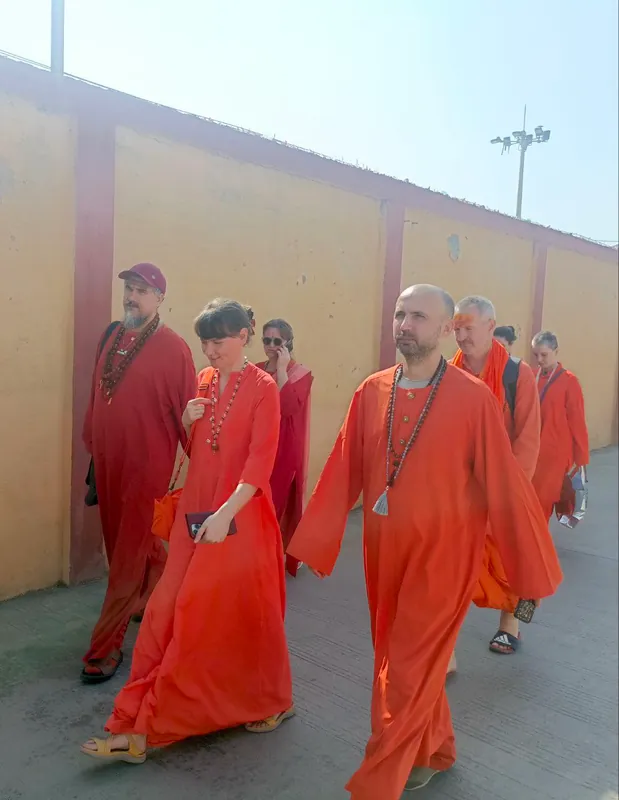
And do some return to worldly life?
Yes, they drop out of the race.
Ramanatha, do you think worldly life is easier than monastic life?
Worldly life is easier if your system of values is worldly. And it is difficult if your values are spiritual.
You are like a white crow—an odd one out. The question is not so much where life is easier. People choose the community that resonates with their karmic task. After all, people often choose a far from easy lot in life. Many people live without even knowing that they have karmic tasks :)
Can the World Be Changed?
Is it possible to change everyone’s system of values? That of society as a whole? What do you think would happen in that case, and is it even possible?
You can influence the world according to your abilities and connections. But it is impossible to change the world completely. It is too complex; too many different forces intersect, too many different wills are involved. Ignorance of the laws does not negate their existence. That is what ignorance is.
Yes, I agree with you. For our magazine, “Ecology of Thought,” we select articles about pure vision, the benefits of positive thinking, and the culture of thought and speech, believing that elevated, pure, and positive thoughts work wonders and that together we can change our world a little and bring it into harmony. What do you think about this?
I support it.
Thank you very much! What would you like to wish our readers?
Whenever you suddenly feel bad, think of something good. It is so simple, yet so powerful!
Thank you for the interview, Ramanatha!
(The interview was first published in the magazine Ecology of Thought in February 2015.)
