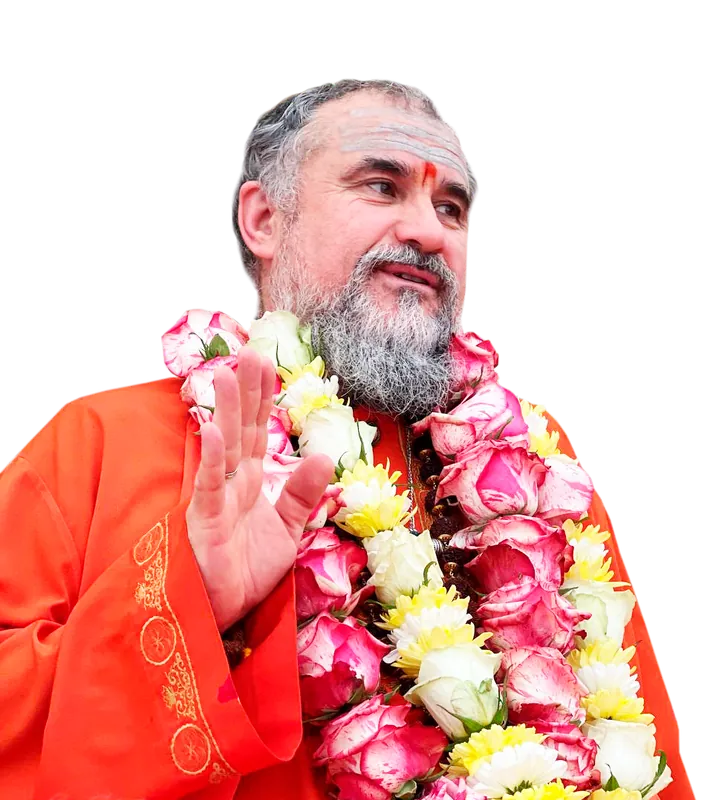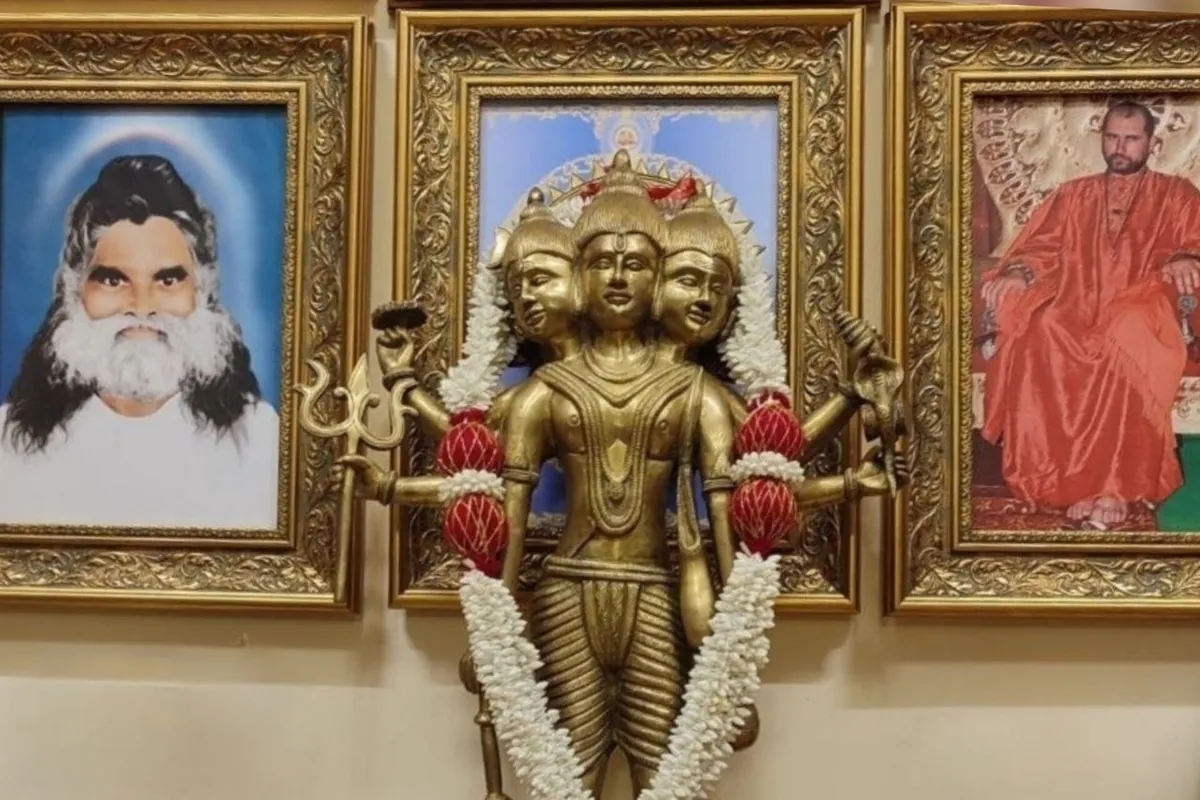
Parampara (Sanskrit: paramparā) is an unbroken line of spiritual transmission, a chain of succession from teacher to disciple.
The term derives from the Sanskrit root para (“other,” “next,” “higher”) with reduplication, indicating sequence: one after another, continuously. The suffix -ā forms a feminine noun denoting a process or state. Thus, parampara literally means “an unbroken sequence,” “that which is passed from one to another,” a “tradition” transmitted through a chain of generations without interruption.
In a spiritual context, parampara denotes the sacred chain of transmission of knowledge, where each link is simultaneously a recipient and a transmitter of divine wisdom — guru-shishya parampara, the “teacher-disciple” lineage.
Definition
Parampara is a fundamental principle of Sanatana Dharma, according to which genuine spiritual knowledge (vidya) cannot be attained through intellectual effort alone or through the independent study of scriptures, but must be received directly from a realized mentor (sadguru), who himself received this knowledge from his teacher in an unbroken chain ascending to the original source — divine revelation or the Absolute itself.
The concept of parampara is affirmed in all authoritative texts of the Vedantic tradition. The “Mundaka Upanishad” (1.2.12) states unequivocally:
“In order to know That (the Supreme Truth), let him approach only a guru, holding in his hands sacred fuel for the sacrificial fire, one who is versed in the Vedas and established in Brahman.”
The “Bhagavad Gita” (4.34) establishes the method of attaining knowledge through parampara:
“Understand this through prostration (humility), through inquiry, and through service. Those who know, who see the truth, will instruct you in knowledge.”
The “Shvetashvatara Upanishad” (6.23) affirms the necessity of transmission from a realized teacher:
“To that great being who has supreme devotion (parabhakti) to God and the same devotion to the guru, these proclaimed truths become manifest.”
In the philosophical system of Advaita Vedanta, parampara has special significance. Adi Shankaracharya, in his commentary on the “Brahma Sutras,” emphasizes that knowledge of the non-duality of Atman and Brahman must be received through an authoritative line of transmission ascending to the Upanishads themselves. He traces the parampara of Vedantic teachers: Narayana → Brahma → Vasishtha → Shakti → Parashara → Vyasa → Shuka → Gaudapada → Govindapada → Shankara.
According to the traditional texts of the Dharma Shastras, a genuine parampara must possess three characteristics:
Anapakshinna — “unbroken,” without missing links in the chain of transmission. Each teacher must have received formal initiation (diksha) and instructions (upadesha) from his predecessor.
Apratihata — “unobstructed,” free from heretical distortions or admixtures of teachings that contradict Vedic revelation.
Apaurusheya-mula — “having a superhuman root,” ascending to a divine source, whether the direct revelation of a rishi or the incarnation of a deity who founded the tradition.
The Dual Nature of Parampara
Traditional interpretation distinguishes two dimensions of parampara. The first is prakatika-parampara, the “manifest lineage,” representing the visible historical succession of teachers, documented in chronicles with the names, dates of initiations, and transmitted texts indicated. This is the external structure that ensures the institutional legitimacy and preservation of the teaching in the material world.
The second, deeper dimension is anubhava-parampara, the “lineage of experience” or “lineage of realization.” It indicates that the true guru in the chain does not merely transmit what has been heard, but speaks from his own direct mystical experience of realizing the Absolute (sakshatkara). Each link in such a parampara is brahma-nishtha — “established in Brahman,” jnani — “one who knows,” tattva-darshin — “one who sees the Truth.” It is precisely this living experience, transmitted through spiritual power (shakti-pata) and a subtle energetic connection (samaya), that makes parampara an effective instrument of liberation, and not merely a historical chronicle.
Thus, genuine parampara is not a horizontal transmission from one limited being to another, but the vertical descent of divine grace (anugraha-shakti) through a chain of enlightened intermediaries.
The Parampara of the World Community of Sanatana Dharma
The metaphysical foundation of this parampara is Advaita Vedanta — the doctrine of non-duality, which represents the pinnacle of Vedantic thought. The term is formed from a- (a negative particle) + dvaita (“duality”) + vedanta (“the culmination of the Vedas,” from veda + anta, “end”), indicating the doctrine of absolute monism expounded in the Upanishads — the concluding part of the Vedic corpus.
The central thesis of Advaita is formulated in three brief statements attributed to Adi Shankaracharya: “Brahma satyam, jagan mithya, jivo brahmaiva naparah” — “Brahman is real, the world is illusory, the individual soul (jiva) is not different from Brahman.” This formula expresses the essence of the teaching: there exists only one, single, indivisible Reality — Brahman, pure being-consciousness-bliss (sat-chit-ananda), and the individual “I,” Atman, is neither a part, nor an emanation, nor a creation of this Brahman, but is identical with Him. The realization of this identity, expressed in the great sayings of the Upanishads (mahavakyas) such as “Tat tvam asi” (“Thou art That”) and “Aham brahmasmi” (“I am Brahman”), constitutes the goal of human existence, called moksha or kaivalya, absolute liberation from the cycle of rebirths (samsara).
Although the roots of this teaching are laid in the Upanishads themselves, its systematic philosophical development was carried out by Gaudapada (6th century) in his “Mandukya Karika” and reached its classical form in the works of Adi Shankaracharya (approximately 788–820), who wrote authoritative commentaries (bhashyas) on the canonical texts of Vedanta — the Upanishads, Badarayana’s “Brahma Sutras,” and the “Bhagavad Gita.”
Shankara’s Advaita Vedanta asserts that the perceived multiplicity of the world is a product of avidya— fundamental ignorance, which superimposes illusory forms upon the one Reality, just as a rope in twilight may be mistakenly taken for a snake. This cosmic illusion is called Maya, the creative power of Brahman, which creates the appearance of multiplicity in the absence of a second reality.
Advaita Vedanta is not one of many equal philosophies of Hinduism, but is recognized as its culmination, uttama-darshana — the highest philosophy, for it points to the ultimate truth, after the realization of which nothing remains to be known. It is precisely this non-dual metaphysics that forms the conceptual framework of the Lineage, defining its supreme goal — atma-jnana, self-knowledge, which dissolves the illusion of a separate “I” and reveals eternal identity with the Absolute.
Lord Dattatreya as the Adi-Guru
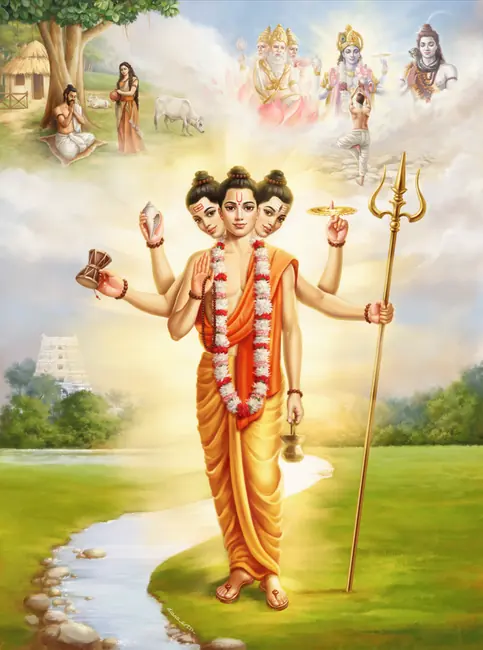
If Advaita Vedanta represents the intellectual foundation of the Lineage, then its spiritual primordial source, the adi-guru, is the divine figure of Lord Dattatreya. In the hierarchy of revelation, he occupies the position not of a historical teacher, but of an eternal avatar — a divine descent embodying the very essence of the yogic path and the principle of non-duality.
The name “Dattatreya” is etymologically interpreted as “given (by God) to the rishi Atri” (datta-atreya), pointing to the legend of his birth. According to the Puranic tradition, in particular the “Markandeya Purana” and the “Bhagavata Purana,” Dattatreya was born to a Brahmin couple — the sage Atri and his wife Anasuya — through the blessing of the divine trinity: Brahma, Vishnu, and Shiva. The three deities, pleased by Anasuya’s austerity, united and incarnated in a single being — Dattatreya. Thus, his three-headed iconography symbolizes the unity of the three hypostases of the Absolute in one form, which is a visual expression of the Advaitic principle: the apparent differences of divine forms dissolve in the one Brahman.
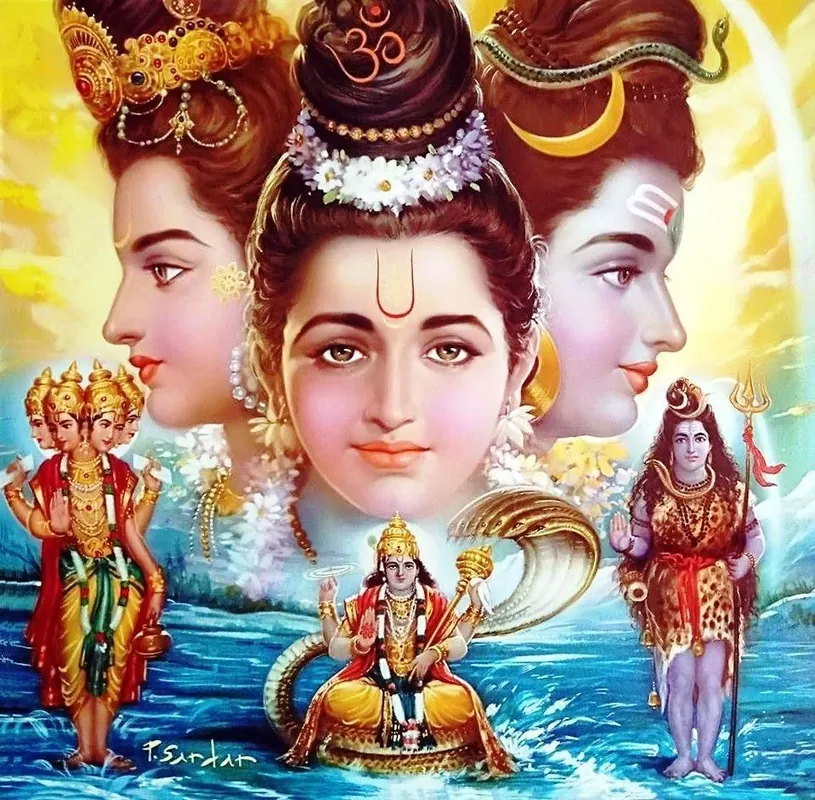
Dattatreya is revered as an avadhuta — a term derived from the root dhū (“to shake off”) with prefixes, meaning “one who has shaken off” all conventions, social norms, ritual restrictions, and even the very sense of separate individuality. The “Avadhuta Gita,” attributed to Dattatreya, is one of the most radical texts of Advaitic literature, in which absolute non-duality is proclaimed with utmost clarity. It says (1.11):
Why do you not realize that you are the One? You (Atman), in whom everything is equally perceived. You are the all-pervading and eternally shining Lord. How can you think of day or night?
For the parampara, Dattatreya is not an abstract symbol but a living spiritual reality, ishta-devata — the chosen deity to whom one turns for guidance and strength. Oral tradition attributes to him the founding of the original brotherhood of yogi-hermits, known as the Datta Akhara, in the remote age of the Treta Yuga. This community of ascetics, who practiced severe tapasya (austerity) in the Himalayas and forests, was the prototype of all later monastic orders of Hinduism. Thus, Dattatreya stands at the origins of organized monasticism, as its divine architect and eternal patron.
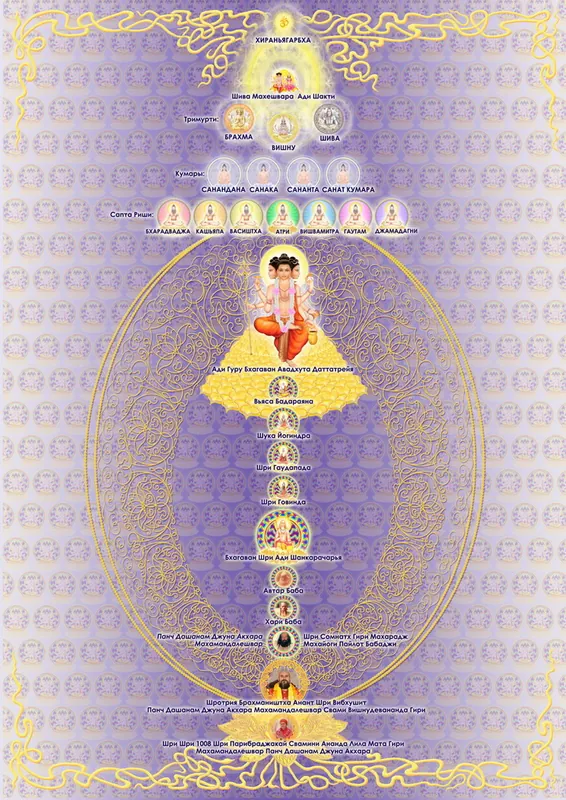
His presence at the beginning of the Lineage gives it several dimensions of meaning. First, it points to the superhuman, divine source of the teaching, satisfying the requirement of apaurusheya-mula. Second, the ideal of the avadhuta sets a spiritual orientation — not formal observance of rules, but inner liberation, spontaneity, and direct abiding in non-duality. Third, it emphasizes the unity of philosophy and practice: Dattatreya does not merely expound the doctrine of non-duality — he lives it in every moment, demonstrating sahaja-avastha, the natural state of unity with the Absolute.
The Formation of the Earthly Structure: Adi Shankaracharya and the Institutionalization of the Parampara
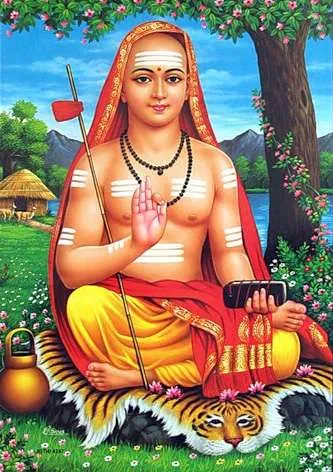
Divine revelation and the archetype of the avadhuta, though eternal, needed an earthly structure for their preservation and transmission through historical epochs. This monumental task was accomplished by Adi Shankaracharya, whose organizational genius created durable institutional forms that allowed the Vedantic tradition to survive the centuries and preserve its purity.
Shankara, also called Bhagavatpada (“the one with divine feet”) and Jagadguru (“world teacher”), lived during the period traditionally dated to 788–820, although some scholars propose earlier dates. Born into a Brahmin family in Kaladi (Kerala), he displayed outstanding intellectual abilities from early childhood. After taking sannyasa — the vow of complete renunciation of worldly life — at a young age, he wandered throughout India, engaging in philosophical debates (shastrarthas) with representatives of various schools of thought and invariably defeating them through the power of logic and knowledge of scripture.
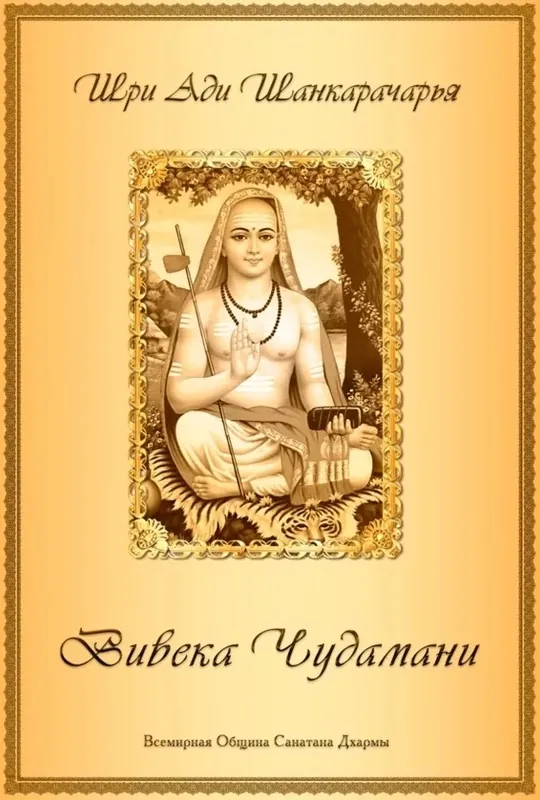
Shankara’s philosophical contribution cannot be overstated. In an era when Buddhism dominated India’s intellectual sphere, and numerous schools of Hinduism — such as Mimamsa, Samkhya, various currents of Vaishnavism and Shaivism — offered diverse and at times contradictory interpretations of the Vedas, Shankara identified and systematized what he regarded as their authentic, highest meaning — the teaching of non-duality. His bhashyas (भाष्य) — commentaries on the “Brahma Sutras,” the ten principal Upanishads, and the “Bhagavad Gita” — represent the pinnacle of Sanskrit commentarial literature, combining philological precision, dialectical rigor, and the depth of spiritual insight. He also wrote numerous independent treatises, such as “Viveka Chudamani” (“The Crest-Jewel of Discrimination”) and “Atma Bodha” (“Knowledge of the Atman”), as well as many hymns (stotras) expressing devotion to various forms of the divine.
However, intellectual work alone was not enough for the survival of the tradition. Shankara also possessed a rare gift for organization and an understanding of the necessity of institutional structures. His reform of monasticism was twofold.
First, he created the system of the Dashanami Sampradaya — the “Tradition of the Ten Names.” Before Shankara, there were many scattered ascetic groups in India, following various teachings and lacking a unified organization. Shankara gathered all Vedantic sannyasins and divided them into ten orders, each of which received one of ten name suffixes: Giri (“mountain”), Puri (“city”), Bharati (“goddess of learning”), Vana (“forest”), Aranya (“wilderness”), Parvata (“mountain peak”), Sagara (“ocean”), Tirtha (“sacred place of pilgrimage”), Ashrama (“abode”), and Saraswati (“goddess of wisdom”). Upon taking sannyasa, a monk renounces his family name and receives a new one, consisting of a spiritual name and one of these suffixes. For example, “Swami Vishnudevananda Giri” indicates affiliation with the Giri order. This system created a sense of unity, an organizational structure, and a clear line of succession within the monastic community.
Second, Shankara founded four main monasteries, mathas, at the four ends of the Indian subcontinent, symbolically encompassing all of Bharatavarsha: Sringeri in the south, in Karnataka; Dvaraka in the west, in Gujarat; Puri in the east, in Odisha; and Jyotirmath in the north, in the Himalayas, near Badrinath. Each matha was entrusted with one of the four Vedas and a specific group of Dashanami names. These monasteries became centers of Vedantic learning, repositories of manuscripts, and strongholds of the orthodox tradition. The abbots of these mathas, who are the direct spiritual heirs of Shankara, bear the honorary title Shankaracharya (“Teacher [in the tradition] of Shankara”), recognized as the highest spiritual authority in the Advaitic tradition.
In the context of our parampara, Shankara’s role is of decisive importance. Earlier ascetic brotherhoods, such as the Datta Akhara, were integrated into the pan-Indian structure he created. He gave them philosophical clarity — Advaita Vedanta as their doctrinal foundation — and an organizational form that allowed them not merely to survive, but to become an influential force in the religious and social life of India for centuries. Thus, within the Lineage of Transmission, a harmonious interaction of two principles is established. Dattatreya embodies the eternal, unconditioned spirit — avadhuta-bhava, spontaneous freedom, radical non-attachment, and direct abiding in non-duality. Shankaracharya represents vyavastha, order — intellectual rigor, institutional stability, and the preservation of the purity of the teaching through an organized parampara. The Lineage is strong precisely because it holds these two poles in balance: unconditionedness and structure, freedom and discipline, mystical experience and philosophical system.
The Order of Sri Panch Dashnam Juna Akhara
The specific institutional structure within whose fold this parampara is preserved and flourishes is the monastic order of Sri Panch Dashnam Juna Akhara. The name is multilayered. Sri is an honorific title; Panch means “five,” indicating five of the ten Dashanami names assigned to this order (Giri, Puri, Bharati, Vana, and Parvata); Dashnam means “ten names”; Juna means “ancient”; Akhara means “arena,” “assembly,” “circle,” a term that originally denoted a place for martial exercises, and in a spiritual context, an organized community of ascetic warriors.
As already indicated, this order was originally called the Datta Akhara, emphasizing its origin from Lord Dattatreya. According to the oral tradition transmitted by senior teachers, Dattatreya founded this brotherhood in the era of the Treta Yuga, one of the four cosmic ages (yugas) of Hindu chronology, separated from our time by many millennia. In the eighth century, Adi Shankaracharya reorganized this ancient brotherhood, incorporating it into the system of the Dashanami Sampradaya and giving it a more clearly defined monastic structure. Over time, when other, younger akharas arose, the original Datta Akhara came to be called the Juna Akhara — the “Ancient Akhara” — in order to emphasize its primacy and seniority among all ascetic orders.
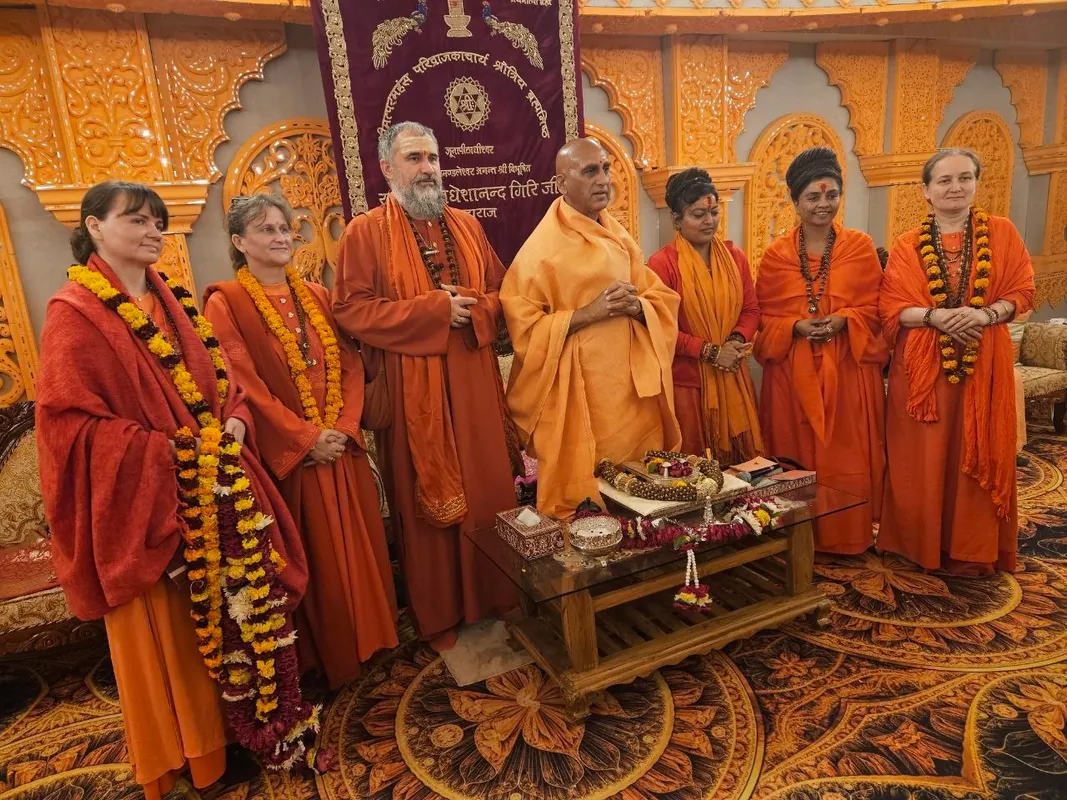
The philosophical and religious foundation of the Juna Akhara is a synthesis of Advaita Vedanta and Shaivism. The members of the order are sannyasins who have taken a vow of complete renunciation of worldly life (sannyasa-diksha) for the sake of attaining moksha — liberation, understood as the direct realization of one’s true nature as Brahman. Their path includes strict tapasya (ascetic discipline), dhyana (meditation), svadhyaya (study of sacred texts — the Upanishads, the “Brahma Sutras,” the “Bhagavad Gita,” as well as the works of Shankara), and seva (service to the guru and to Dharma). Many members of the order practice naishana-diksha, the highest vow, which entails complete nudity (digambara), renunciation of a permanent place of residence, possession of property, and even the use of clothing, like Dattatreya himself. These naga sadhus (“naked saints”) are the most recognizable and revered part of the order, embodying the ideal of complete freedom from material attachments.
At present, the Juna Akhara is the largest and most influential of all thirteen traditional akharas of India, numbering hundreds of thousands of monks. Its ashrams, temples, and meditation centers (sadhana-sthalas) are located throughout the country, especially in places of pilgrimage (tirthas) — such as Varanasi, Haridwar, Rishikesh, Nashik — and in the foothills of the Himalayas, the traditional refuge of yogins. The order plays a central role in the greatest religious gathering on the planet — the Kumbh Mela, which is held once every twelve years in four sacred places. During the Kumbh Mela, the members of the Juna Akhara lead the ceremonial processions (shahi snana-yatras, “royal bathing processions”) and are the first to perform ritual ablutions in the sacred rivers, which is considered the highest honor and recognition of their spiritual primacy.
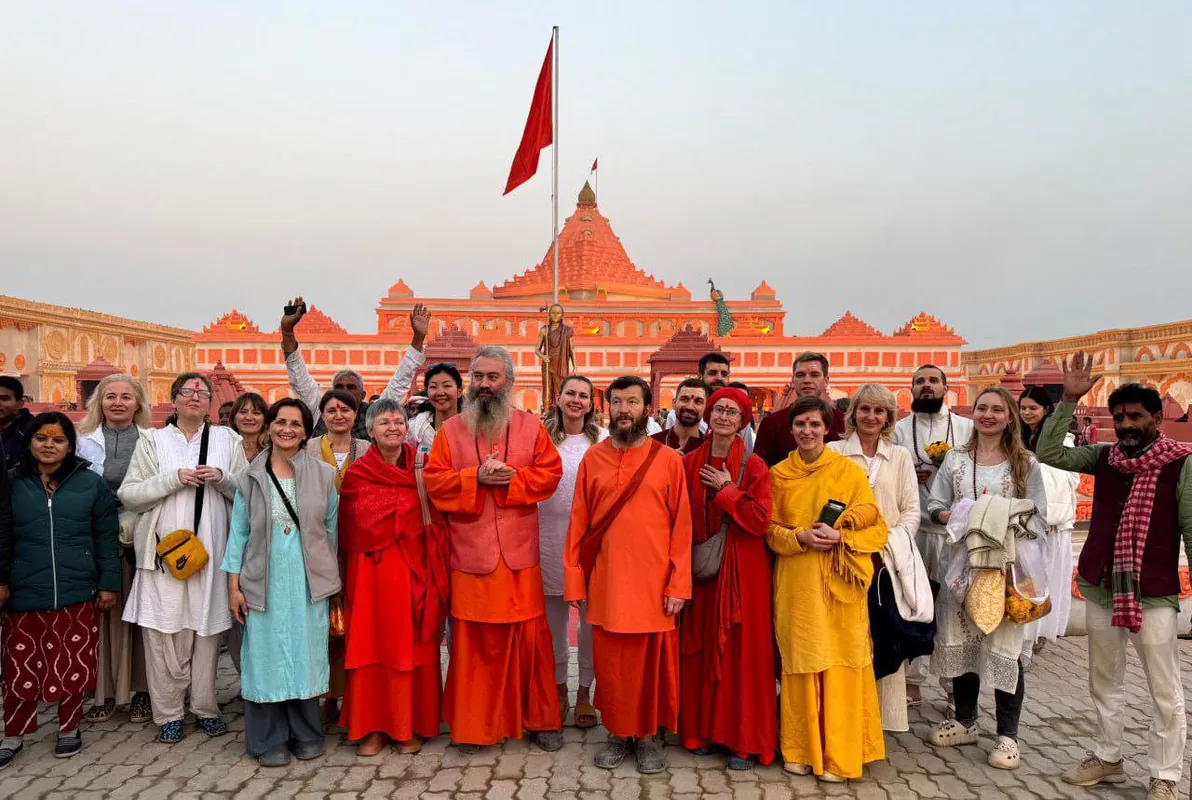
For this parampara, formal affiliation with the Juna Akhara order has profound spiritual and symbolic significance. It is the manifestation, in the visible social dimension, of that eternal spiritual connection which has always existed on the subtle plane with the great teachers of this tradition, with Shankaracharya himself, and with the divine patron of the order — Lord Dattatreya. It is an entry into the living stream of the most ancient and most authoritative of all Hindu paramparas, which for centuries has preserved and transmitted unaltered knowledge of the non-dual Truth.
The initiator and organizer of the Community’s formal affiliation with the Juna Akhara order was Mahayogi Pilot Babaji (Swami Somnath Giri Ji Maharaj), who, in relation to the disciples of Swami Vishnudevananda Giri, holds the position of dada-guru — literally “guru-uncle,” that is, the spiritual brother of the Guru, a senior member of the same spiritual family.
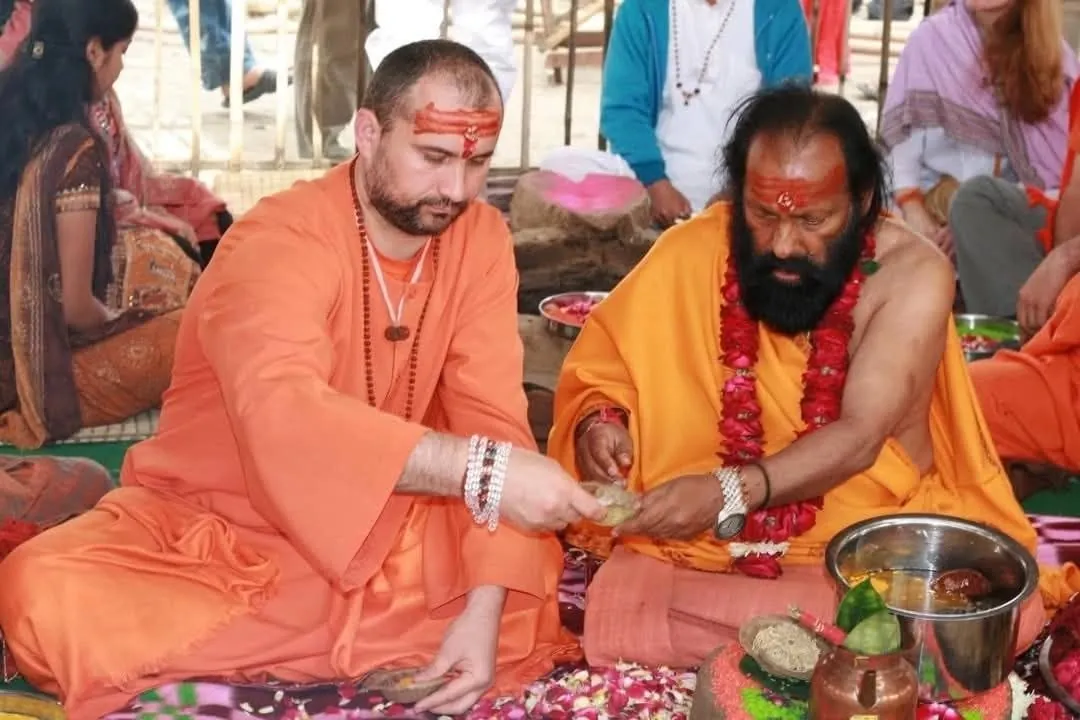
The life path of Pilot Babaji is a modern illustration of the power of the guru-parampara and divine providence. Born into a Sikh family, he made a brilliant military career, becoming a fighter pilot in the Indian Air Force and attaining the rank of squadron commander. However, a series of miraculous events occurred in his life: during critical situations in flight, when the aircraft was losing control, his future guru, Hari Baba, a yogin from the Himalayas, appeared to him and miraculously saved him. These mystical interventions led to a radical turning point: leaving military service, he withdrew to the Himalayas, where he spent twelve years in severe ascetic practice, receiving initiations and instructions from several great teachers, including, according to his testimony, the immortal Babaji of the Himalayas himself and Lord Dattatreya, who appeared to him in a vision. His public demonstrations of samadhi — remaining in a hermetically sealed pit underground for up to thirty-three days or underwater for up to seven days without breathing — serve as evidence of complete control over pranic energy and vital processes, attained through yogic practice.
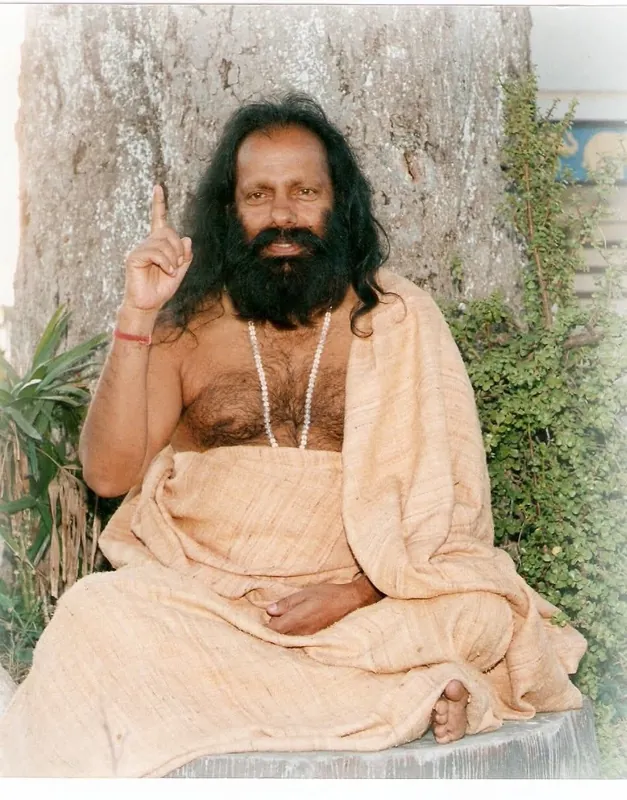
As Swami Vishnudevananda Giri noted, joining the order was an important step for strengthening and spreading the Dharma, but it merely made visible and formal what already existed on the spiritual plane: “This is an external recognition of the connection that has always been there, and the blessings have always been there”. Formal institutionalization does not create a spiritual connection, but gives it social expression and ensures continuity in the manifested world.
The Siddha Tradition
Sri Paambatti Siddhar and the path of direct realization
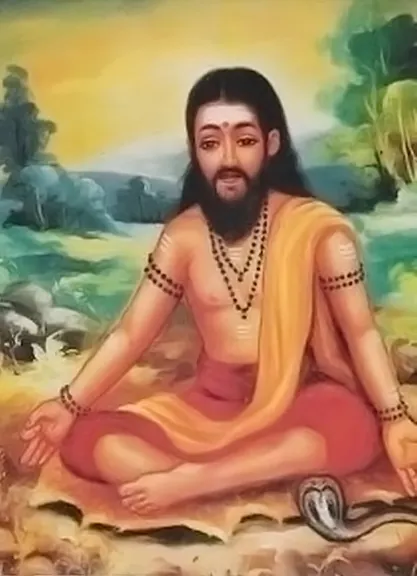
Alongside the Vedantic tradition of the Brahmin philosopher-sages of North India, in the Dravidian South, especially among the Tamils, there has existed since ancient times a parallel mystical tradition of the Siddhas. The term siddha comes from the Sanskrit root siddh (“to attain perfection,” “to accomplish”), while the noun siddhi means “perfection,” “attainment,” “supernatural ability.” Siddhas are realized yogic masters who, through intensive practice, attained not only spiritual liberation (jivanmukti, “liberation while living”), but also gained complete control over the body, prana, and even the forces of nature. In the Tamil tradition, a canon of eighteen maha-siddhas (great perfected ones) is revered, among whom the best known are Agastyar, Boganathar, Tirumular, and others. The teaching of the Siddhas was transmitted mainly orally, from guru to a chosen disciple, in an atmosphere of strict secrecy (guhya-vidya). The Siddhas often expressed their teaching not in Sanskrit, the language of Brahmanical learning, but in vernacular languages — Tamil, Telugu, Kannada — which made it accessible to broader strata of society. Their poetic works (pattukal) abound in alchemical, yogic, and esoteric symbolism, intelligible only to initiates. Unlike Vedantic philosophers, who emphasized the study of the scriptures (shravana) and logical reflection (manana), the Siddhas stressed the primacy of direct experience (anubhava) and practice, especially work with Kundalini-shakti — the primordial spiritual energy lying dormant at the base of every person’s spine.
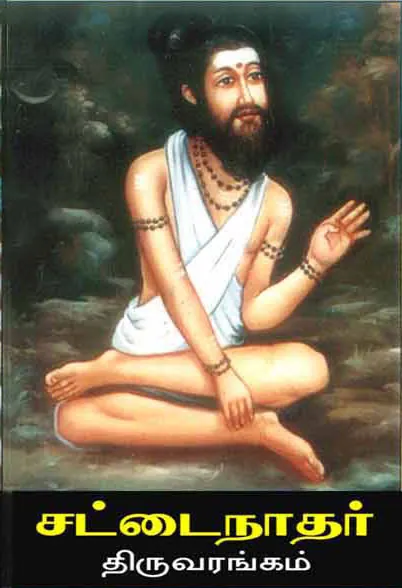
One of the outstanding figures in this lineage is Sri Paambatti Siddhar, whose name literally means “the snake-charmer Siddha” (from Tamil paambu — “snake” and aatu — “to dance,” “to control”). According to tradition, he was born into a family of snake charmers who earned their living through street performances with cobras. His life changed when he met the great Sattaimuni Siddhar, one of the eighteen maha-siddhas. The teacher revealed to Paambatti the profound meaning of his craft: the true snake that must be awakened and learned to control is not an external reptile, but the inner Kundalini — a serpent-like energy coiled in three and a half turns, resting in the muladhara-chakra, the root energy center at the base of the spine.
Having received initiation and instructions, Paambatti immersed himself in severe tapasya — ascetic practice that included long periods of motionless meditation, breathing exercises (pranayama), and visualizations. He withdrew to a cave on Mount Marudamalai, a sacred place near the city of Coimbatore, where he spent years in solitude. As a result of this intensive sadhana, he attained the awakening of Kundalini and acquired the ashtamahasiddhis — the eight great supernatural abilities listed in Patanjali’s “Yoga Sutras” (III.45): anima (the ability to become atomically small), mahima (the ability to become infinitely large), laghima (levitation), garima (the ability to become infinitely heavy), prapti (the power to attain anything), prakamya (the impossibility of being obstructed), ishitva (supreme lordship), and vashitva (control over everything).
The poetic legacy of Paambatti Siddhar, written in simple Tamil, is imbued with the nonconformism and directness characteristic of the siddhas. He addresses the serpent—the symbol of Kundalini—calling upon it to awaken and dance, ascending along the spine to the sahasrara chakra at the crown of the head, where the mystical union of Shiva and Shakti takes place, leading to liberation. His poems often end with the refrain “Adu Pambe”, “Dance, O serpent!” In his works, he ridiculed caste distinctions, external ritual purity, and ostentatious religiosity, emphasizing that without inner transformation and love in the heart (bhakti), no rites will lead to salvation. His path is the path of unmatta-jnana, “mad wisdom,” characteristic of the tradition of the siddhas and avadhutas, where radical nonconformism serves as a means of destroying mental constructs and social conventions that hinder the direct realization of Truth.
It was this great master, Sri Paambatti Siddhar, who became the guru for the next link in our parampara—Swami Brahmananda, transmitting to him the esoteric knowledge and yogic power of the lineage of Tamil siddhas.
Swami Brahmananda: The Master Who Transcended Limits
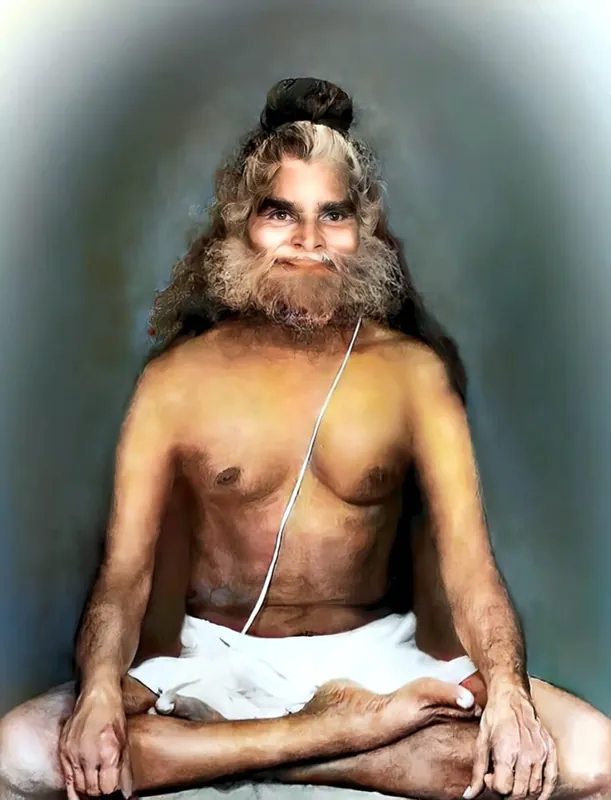
Swami Brahmananda Sri Shiva Prabhakara Siddha Yogi Paramahamsa is a truly legendary figure, in whose life the boundary between myth and history is erased, demonstrating the boundless possibilities of realized consciousness. His full titular name contains the keys to understanding his spiritual status: Swami—“lord,” the title of a sannyasin; Brahmananda—“the bliss of Brahman”; Shiva Prabhakara—“the Radiance of Shiva”; Siddha Yogi—“perfected yogin”; Paramahamsa—“supreme swan,” a title denoting the highest degree of spiritual realization, complete liberation while living.
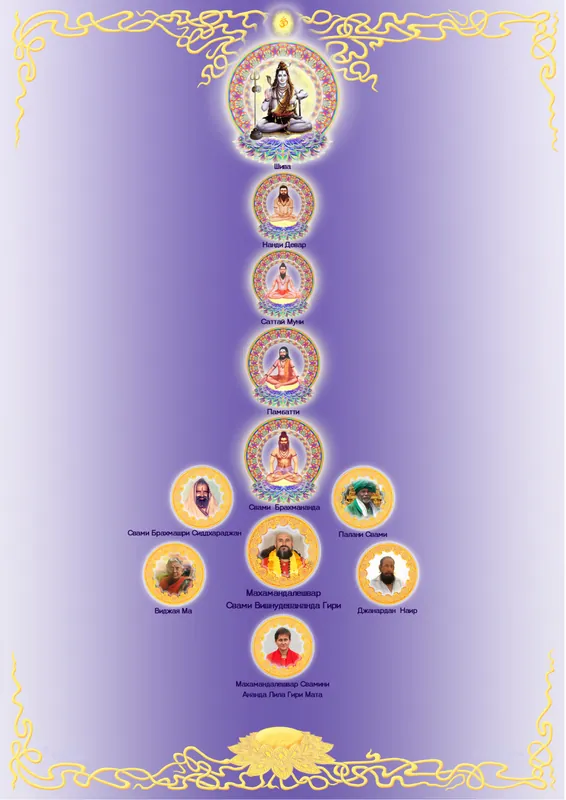
Swami Brahmananda was a direct disciple of Sri Paambatti Siddhar, which establishes a direct connection with the tradition of the Tamil siddhas. However, the scope of his spiritual identity is considerably broader. Formally, he belonged to the school of Shaiva-Kaula-Siddhanta and to the lineage of the avadhutas. These designations point to a striking synthesis:
The Avadhuta-parampara connects him directly with the archetype of Lord Dattatreya, emphasizing his state of complete vairagya (dispassion) and nirdvandva (freedom from duality). An avadhuta is not bound by any social norms, ritual prescriptions, or moral imperatives of ordinary society; his behavior may seem insane or shocking from an everyday point of view, but it spontaneously arises from his inner abiding in nonduality.
Shaiva-Kaula-Siddhanta represents the fusion of three powerful currents:
- Shaivism: the veneration of Lord Shiva as the Supreme Reality, both transcendent (nishkala, “without parts”) and immanent (sakala, “with parts”). In nondual Shaivism, especially in the Kashmir tradition, Shiva is parama-Shiva—Absolute Consciousness, identical with the Brahman of Advaita Vedanta.
- Siddhanta: literally “established conclusion,” “doctrine.” In this context, it points to the teaching of the siddhas of South India, with their emphasis on yogic practice, alchemy (rasayana), the awakening of Kundalini, and the attainment of siddhi.
- Kaula: an esoteric tantric tradition that takes its name from the term kula (“family,” “clan,” but also “the energy of Shakti”). Kaula Tantra works with the energy of the Divine Mother (Shakti), regarding her not as separate from Shiva, but as his dynamic aspect. Kaula practices include rituals involving the pancha-makara (“the five Ms”), work with the chakras and subtle channels (nadi).
Thus, the spiritual identity of Swami Brahmananda presents an integral synthesis: the philosophy of nonduality (shared by both Advaita Vedanta and nondual Shaivism), the path of devotion to Shiva, the yogic methods of the siddhas, and tantric practices of energy transformation.
The life story of Swami Brahmananda goes far beyond ordinary human understanding and may be perceived as myth or allegory. However, within the tradition it is regarded as historical reality, bearing witness to the possibilities that open to those who attain the full realization of Advaita. According to the oral tradition transmitted by his disciples, Swami Brahmananda lived for 723 years, successively changing about fifteen physical bodies. He is considered to have been a master of the rarest and highest yogic technique known as parakaya-pravesha, which literally means “entering another body.” This siddhi, mentioned in classical yoga texts, allows a realized yogin to leave an old, worn-out body at will and transfer his consciousness into a new one—either into the body of a recently deceased person or, according to the most esoteric teachings, into a specially created body. Thus Swami Brahmananda, like certain other legendary siddhas such as Gorakhnath or Babaji himself, overcame the ordinary limitations of mortality, continuing his mission of instructing chosen disciples over the centuries.
He lived under various names in different parts of India, never aging, and was known as an unmatta—a divine madman, a holy fool, a master of “crazy wisdom.” His behavior could be eccentric and unpredictable; he was completely indifferent to the opinions of others, to social conventions, and to his own comfort. This outward madness served both as a method of teaching—destroying the mental stereotypes of disciples—and as an expression of his inner freedom: abiding in sahaja-avastha, the natural state of nonduality, he acted spontaneously, without calculation or intention.
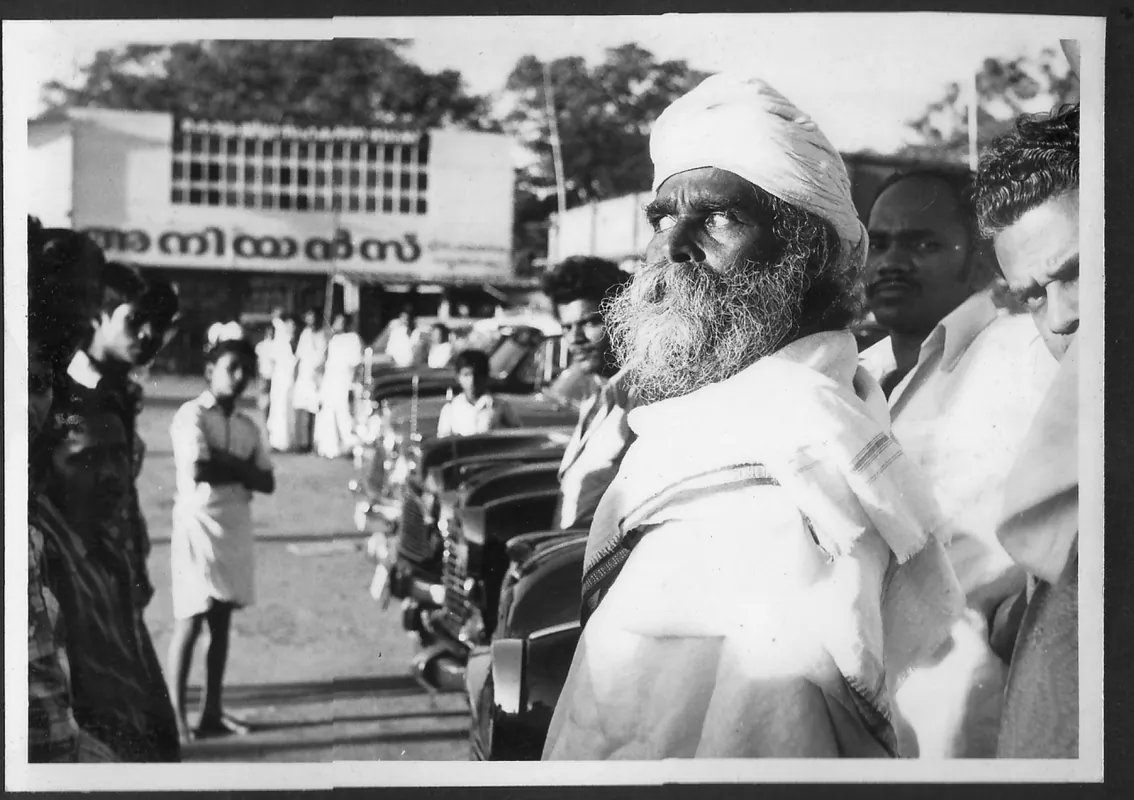
His departure from his last physical body became a demonstration of absolute mastery over matter and the laws of nature. There is a belief that even great yogins cannot attain mahasamadhi—the final conscious leaving of the body and dissolution into the Absolute—on the day of their own birth, for this would violate certain cosmic principles. However, Swami Brahmananda, having transcended all laws, dissolved his body into Light (jyoti-samadhi) precisely on the day of his birth, in the presence of many disciples who had gathered in his ashram. But even after this, as his disciples testify, he repeatedly appeared in his sukshma-sharira (subtle body) to chosen disciples, continuing their instruction and demonstrating that for a realized being death is merely a change of form, not the cessation of conscious existence.
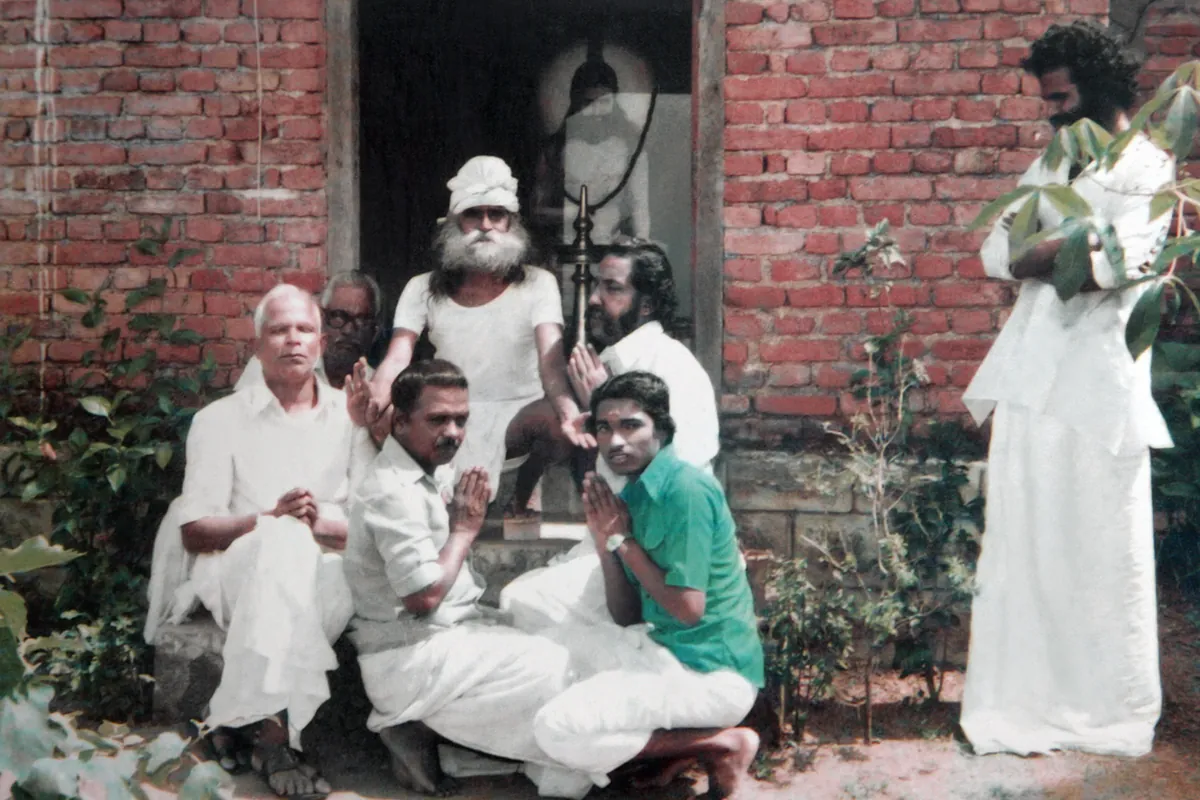
The life of Swami Brahmananda is not merely the biography of a saint, but a living teaching, jivan-shastra. It demonstrates to disciples that everything proclaimed in the scriptures about the possibilities of yoga and the nature of realized consciousness is not metaphor, but literal truth, attainable by those who follow the path with absolute devotion and intensity. He is the embodiment of how the philosophy of Advaita (nondual understanding), the practice of the siddhas (mastery of pranic energy and matter), the path of Shaiva bhakti (love for Shiva), and tantra (the transformation of all energies) merge into a single whole, giving rise to a being who lives as a jivanmukta—liberated while alive, as God in human form.
The Modern Embodiment of the Parampara: Swami Vishnudevananda Giri
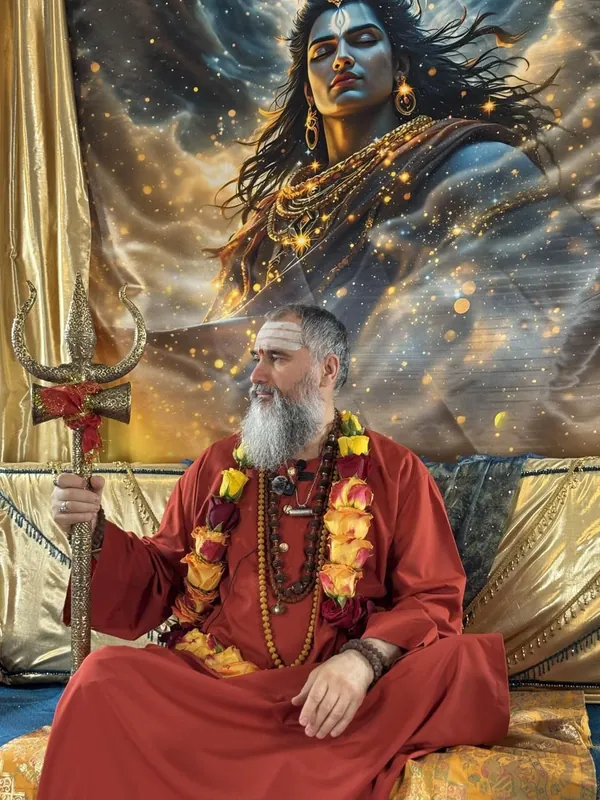
In the twentieth century, Swami Brahmananda had only two disciples who received the full transmission from him: Swami Sidharajan and Swami Vishnudevananda Giri. Thus, the present Guru of the World Community of Sanatana Dharma is a direct disciple of the great siddha-avadhuta, which establishes the continuity of the guru-parampara at the formal level. The Guru himself describes the circumstances of receiving the transmission as follows:
“Guru Brahmananda, manifesting an excellent double form and hovering in space in the divine radiance of the body, gave me a direct symbolic transmission and voiced prophecies that came true in full. From Guru Brahmananda I received the transmission of the text ‘Yoga Sadhana Hridaya Sutra’; then, in the astonishing experience of the manifestation of the double rupakaya, I received from Avadhuta Brahmananda the teaching of Laya Yoga, in particular the sections of Prajna Yantra, Jyoti Yantra, and Nidra Yantra, the transmission of the upadesha ‘The Liberating Nectar of Precious Instructions,’ the teaching of samarasyavidya (the single taste), and the teaching of shambhavi mudra.”
This testimony points to several important aspects:
Dual form (dvaya-rupakaya) or sukshma-sharira-darshana (vision of the subtle body) indicates the ability of a realized master to appear to a disciple not only in physical form, but also in a subtle, radiant body (pranava-deha or siddha-deha_), which is one of the siddhis. This confirms the nonphysical, supraordinary nature of the transmission.
Direct symbolic transmission (pratika-upadesha or anakshara-upadesha, “transmission without letters”) indicates the highest level of instruction, where knowledge is transmitted directly, from consciousness to consciousness, through manasa-darshana (mental vision), shakti-pata (descent of energy), or mystical symbols, bypassing words and concepts.
Laya Yoga — “the yoga of dissolution” — represents the highest teaching of this parampara, being a synthesis of the methods of Advaita Vedanta and Kashmir Shaivism. The goal of Laya Yoga is to lead the practitioner to the direct recognition of his or her primordial nature (svabhava) as boundless awareness (chit) and the subsequent dissolution (laya) of all dualistic perceptions and concepts in this awareness.
Samarasya-vidya — “the knowledge of one taste” — is a central teaching of the Nath and Tantric tradition, asserting that for a realized yogi all experiences, whether pleasant or unpleasant, spiritual or worldly, pure or impure, possess one taste (rasa) — the taste of nondual bliss (anandasya rasasya). This is not an intellectual understanding, but a living experience of total nonduality.
Shambhavi Mudra— “the seal of Shambhu (Shiva)” — denotes a state of deep meditation in which the gaze is directed inward, toward the Atman, while the external world is perceived but does not affect the yogi’s consciousness. This is one of the signs of sahaja-samadhi, the natural abiding in nonduality in ordinary life.
Receiving such a transmission establishes Swami Vishnudevananda Giri as an authentic link in the chain of the guru-parampara, possessing both the formal right (adhikara) to teach and initiate and, far more importantly, the inner realization that is the true source of his ability to guide disciples toward liberation.
The Dual Role of the Guru: Formal Succession and Mystical Realization
A true Guru in a living parampara performs a twofold function, both aspects of which are necessary for the integrity and effectiveness of the Lineage of transmission.
On the one hand, he is a link in the visible, historical chain of prakatika-parampara. He receives formal initiation (diksha) from his Guru, studies with him, and serves him.
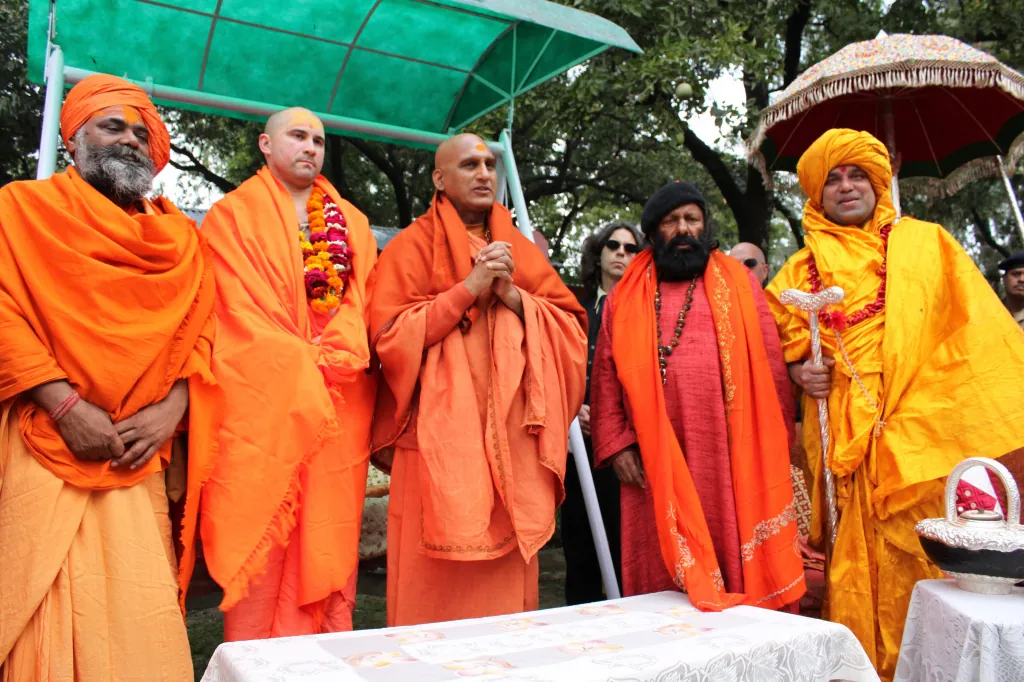
In the case of our tradition, Swami Vishnudevananda Giri was accepted into the ancient monastic order of Juna Akhara through Mahayogi Pilot Babaji, received the title of mahamandaleshwar (“great lord”), indicating a high status in the hierarchy of the order, and thereby entered the formal structure of the Dashanami Sampradaya founded by Shankaracharya. This official recognition confirms his belonging to an ancient and authoritative tradition and gives him paramparika-adhikara— the right, arising from succession, to teach and transmit initiations to subsequent generations. This formal connection is the “manifestation, the acquisition of form” (rupa-dharana) of the eternal spiritual bond, the support of Dharma in the manifested, social dimension (vyavaharika-satya).
On the other hand, and this is the most important point, a true Guru is a direct channel for timeless Truth, a living embodiment of anubhava-parampara. His true authority (pramanya) is based not so much on formal status as on his own profound mystical experience of Enlightenment. He does not merely quote the scriptures, but speaks from the depth of his own realization, from sva-anubhava, personal experience. This direct connection with the source of Knowledge often manifests in mystical events — visions (darshanas), appearances of deities in subtle bodies, spontaneous revelations (pratibhas) — which go beyond ordinary understanding and cannot be explained by logic or obtained from books.
As Swami Vishnudevananda Giri himself recounted, his connection with Mahayogi Pilot Babaji existed on the subtle plane long before their physical meeting. Possessing the radiant light of jnana and a powerful energetic field (tejas), realized souls are capable of meeting and communicating on higher planes of being, without being limited by physical time and space. The external, historical parampara makes manifest and socially accessible to others that inner, mystical parampara which exists eternally in the consciousness (chiti) of the great sages.
Thus, the Guru serves as a bridge between two dimensions: with one foot he stands in the world of form, order, and tradition, and with the other — in the boundless space of direct realization. Without the first, the Lineage would lose its historical continuity and recognizability; without the second, it would turn into a dead letter, devoid of living spiritual power.
The Essence of the Transmitted Teaching: Sahajya-vidya
Sahajya-vidya: The Natural Path
The heart of the teaching transmitted in this parampara is Sahajya-vidya or Sahaja-marga — the “Natural Path,” “Knowledge of the natural state.” The term sahaja is formed from saha (“together with,” “jointly”) and ja (from the root jan, “to be born”), literally meaning “innate,” “primordial,” “spontaneous,” “natural.” In the context of spiritual practice, sahaja points to the primordial, uncontrived nature of the true “I,” which is not created through effort, but is only recognized through the removal of the superimpositions of ignorance.
Sahaja-marga represents the apogee of spiritual practices, the summit of the path, based on contemplative non-doing (anupaya, the “non-method”) and the direct revelation of one’s primordial nature. This teaching, belonging to the class of anuttara-tantra, the “unsurpassed tantra,” is present in various traditions as their essential core: in Kashmir Shaivism it is called anupaya, in the tradition of the siddhas — sahaja-yoga, in Dzogchen — trekchö (breakthrough), in Zen — the direct pointing to the nature of mind (kensho).
This is not something that can be taught by means of words or concepts. It is not an object of intellectual analysis. It is beyond the mind (manasatita). It is transmission without symbols and attributes (niranjana-upadesha). It is a direct connection with the Absolute, which the tradition calls God, Brahman, Shiva. It is divya-prajna, divine wisdom, prema, love, and ananda, bliss, inseparably merged. As the Guru teaches:
“This is not something that can be studied with the mind of a scholar, analyzed by the intellect. If it came from the mind, such wisdom would be worth little. But it is that which is transmitted from teacher to devoted disciple ‘from heart to heart,’ through the invisible mystical channel of samaya and Refuge.”
The Guru in this chain is the key link. He is not merely a mentor transmitting information, but a dvara, a gateway to the energy and consciousness of the entire Lineage of transmission. Through him, the disciple receives not dry knowledge (jnana-matra), but living spiritual power (kripa-shakti), blessing (ashis), and “connection” (samparka) to the consciousness of the Tree of Refuge, to parampara-chetana, the living consciousness of the Lineage.
Conclusion: the grace of the Boundless
Ultimately, parampara is the path by which the Boundless, Ananta-Brahman, cares for its vikshipta-amshas, dreaming emanations — human beings immersed in the dreams of the mind (manasa-svapna), who have forgotten the Boundless and identified themselves with the limited body-mind. Parampara is karuna-dhara, a stream of compassion descending from the transcendent sphere into the immanent world in order to remind lost souls of their true nature and lead them back Home.
For one who walks this Path, parampara is the guarantee that the Path is open, that it has been verified by thousands of realized masters who have traversed it to the end, and that, sincerely following it under the guidance of the Guru, with faith and diligence, the traveler will unfailingly reach the goal — kaivalya, absolute freedom, and reunite with the Boundless, realizing:
Aham brahmasmi” (I am Brahman),
Shivoham (I am Shiva). The parampara of the World Community of Sanatana Dharma, uniting within itself the clarity of Advaita philosophy, the mystical power of the siddha tradition, the devotion of Shaivism, and the transformative power of tantra, under the patronage of the eternal Dattatreya and within the organizational framework established by Shankaracharya, represents a complete and effective path to liberation for the modern seeker who is ready to surrender himself to Truth.
Om Namah Shivaya
Om Shri Gurave Namah