

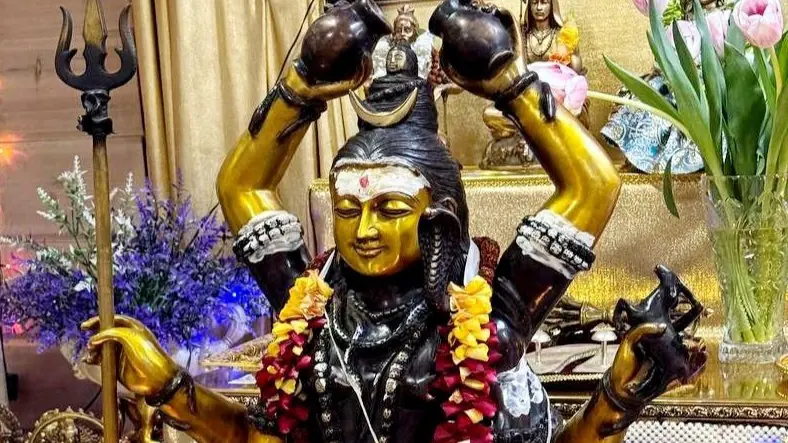
In the tradition of Advaita Vedanta and Kashmiri Shaivism, refuge is structured through the Pancharatna system (Skt. pañca-ratna — "five jewels"). The term "ratna" (jewel) is not used metaphorically here: these five pillars are considered truly precious because, unlike transient worldly riches, they lead the soul to eternal Liberation.
1. Shiva
Shiva (Skt. Śiva) — the Original Lord (Adi-deva), the source of all beings and the supreme good (shreya). In the philosophy of Kashmiri Shaivism, Shiva is understood as Paramashiva — absolute Consciousness (Chit), identical to the Brahman of Advaita. Shiva is the transcendent aspect of refuge.
2. Shakti
Shakti (Skt. Śakti) — the divine energy of the universe, the creative force (spanda) that manifests all forms. According to tantric texts, Shakti is inseparable from Shiva, just as heat is inseparable from fire. If Shiva is pure Consciousness, then Shakti is His dynamic aspect, the power of self-recognition (vimarsha). Shakti is the immanent, active aspect of the Divine.
3. Sadguru
Sadguru (Skt. Sadguru) — the True Spiritual Teacher. The term is composed of "sat" (truth, reality) and "guru" (dispeller of the darkness of ignorance). The Sadguru is the living bearer of the Teaching and a link in the chain of spiritual succession (guru-parampara).
The Kularnava Tantra (XIII.106) states:
"Guru is Brahma, Guru is Vishnu, Guru is Maheshvara (Shiva). Guru is truly Parabrahman. To him, I offer my reverence."
Through the Guru, the blessing (shaktipat) of the entire lineage descends.
4. Dharma
Dharma (Skt. Dharma) — the sacred Teaching. The term originates from the root "dhr" (dhṛ — "to hold, to support") and signifies that which supports the cosmic and moral order. In the context of sharanagati, dharma refers to the body of methods, practices, and philosophical wisdom leading to enlightenment (bodha). This includes shastras (sacred scriptures), upadeshas (instructions from the Teacher), and sadhanas (spiritual practices).
5. Sangha
Sangha (Skt. Saṅgha) — the spiritual community. The Sangha includes three levels: saints and siddhas (perfected yogis), divine beings (devas and dakinis) who support the practice, and living spiritual brothers and sisters walking the same path. The Sangha creates a protective field (kavacha) in which spiritual practice becomes stable and safe.
