

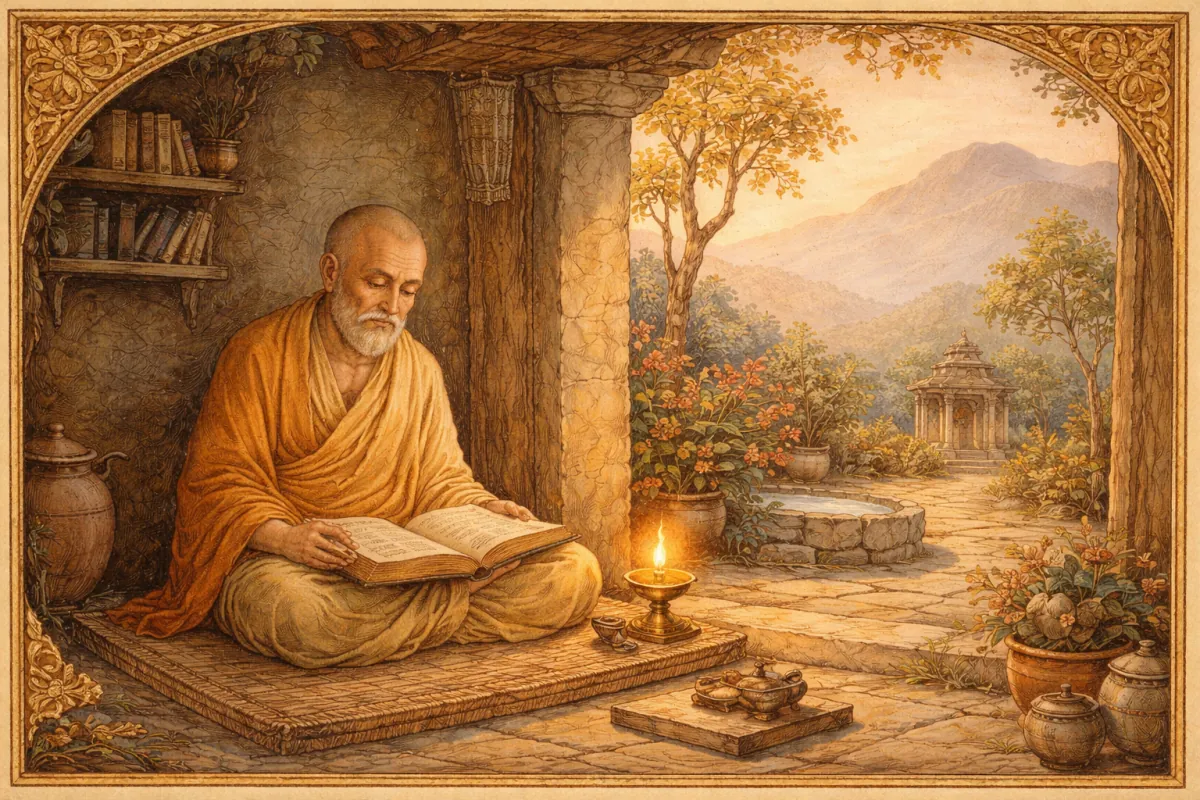
The training program in the Siddha tradition is a holistic system of spiritual development. This program opens a clear path from the first steps in practice to profound spiritual realization.
Program Structure
The training includes 12 courses organized into 4 stages. Each course lasts 24 weeks and covers four key areas:
Jnana (philosophy) — theory and philosophy of the teaching, study of sacred scriptures
Dhyana (meditation) — mastering the practices of concentration and meditation
Shakti (technical practices) — performing asanas, pranayamas, mudras, bandhas, and kriyas
Upasana (ritual practices) — correct performance of rituals. Such a comprehensive approach ensures the harmonious development of the practitioner in all aspects of the spiritual path.
Four Stages of Attainment
First Stage: Sanatana Dharma (Courses 1-2)
The foundation of spiritual practice is laid. This stage covers the basics of Vedic knowledge, the history and branches of Hinduism, and the basic principles of working with energy and consciousness. This stage forms the correct worldview and prepares the practitioner for further advancement on the path.
Second Stage: Advaita Vedanta (Courses 3-5)
In-depth study of the philosophy of non-duality. Practitioners master self-inquiry meditation (Atma-vichara), emptiness meditation (Maha-shanti), and other contemplative methods. This stage leads to the realization of one's true nature through the teachings in the lineage of Sri Adi Shankaracharya.
Third Stage: Siddha Shaivism (Courses 6-9)
Study of Shaiva Siddhanta and Kashmiri Shaivism. The practice includes the yoga of light, the yoga of sound, and working with subtle dimensions of consciousness. This is a period of mastering high methods of transformation, untying the knots of ignorance, and knowing the world of divine energies.
Fourth Stage: Anuttara Tantra (Courses 10-12)
The pinnacle of training — the philosophy and practice of Laya Yoga, the path of the Avadhutas of Sahajayana. This stage explores the processes of dissolving the elements of body and consciousness, entering the Clear Light, and tuning into the enlightening impulse of divinity. These are practices of supreme realization to achieve Liberation.
Three Levels of Depth
Each stage is divided into three levels of attainment:
Kanishtha (beginner) — fundamentals and basics of the teaching
Madhyama (intermediate) — in-depth understanding
Uttama (advanced) — complete mastery and realization
This gradation allows each practitioner to move according to their abilities and pace of learning.
Basis of the Tradition
The program is based on the monastic training system in the ashrams of the Swami Vishnudevananda Giri lineage. It integrates the traditions of the Siddhas, Advaita Vedanta, Shaivism, and Anuttara Tantra into a single path. Special attention is paid to:
- Practical yoga classes and training
- Developing skills in concentration and meditation
- Contemplation in movement
- Working with inner energy (Kundalini Yoga, Prana Vidya)
Flexible Pace of Learning
The timeline for completing the courses has no rigid time limits. You can study at a convenient pace, taking an assessment after mastering each stage. On average, one course is designed for a year of study; however, each practitioner moves at their own pace. Some complete the course faster, while others delve deeper into the material and practices — the system flexibly adapts to your capabilities and aspirations.
Learning Outcomes
Upon successfully passing the assessments for a course, a certificate of achievement for the corresponding stage is issued. The evaluation includes four aspects:
- Theoretical knowledge
- Practical methods
- Observance of retreat rules
- Signs of attainment in meditation and contemplation
This training system provides answers to key questions of the spiritual path:
✓ Where to start?
✓ How to practice?
✓ How to progress and what are the signs of progress?
✓ What should we achieve as a result of the practice?
After completing the full cycle of training, the practitioner receives a systematic spiritual education and tools for the profound practice of Liberation.
This system of religious-philosophical yogic education is authentic — based on the sacred texts of the tradition, blessed by saints, and intended for followers of the Sanatana Dharma tradition.
